
Sales Win Rates by Industry: Benchmarks, Gaps, and What to Fix in 2026

How often do you lose deals that felt almost done?
The calls went well. The proposal was solid. The buyer showed interest. And then suddenly, it goes quiet, or worse, you lose to a competitor you didn’t expect.
This happens more often than most teams admit. Deals move through the pipeline, but far fewer actually convert into revenue. In fact, industry data shows that average B2B sales win rates still sit between 20% to 30%, depending on deal complexity and sales cycles. That means most teams are losing more deals than they win.
And that’s the real problem. Without knowing what a strong win rate looks like, or where you stand, you’re left guessing what’s going wrong.
This is where clarity matters. In this article, you’ll break down sales win rate benchmarks for 2026, understand how to measure them correctly, and see practical ways to improve the deals you close.
Key Takeaways
- Most B2B teams win only 20–30% of deals, and win rates drop further as deal size and complexity increase. Enterprise deals can go as low as 5–10%.
- Win rate shows how well your team converts opportunities into revenue, not just how big your pipeline is. It reflects deal quality, proposal strength, and sales execution.
- Industry, deal size, and sales motion (like RFPs) heavily impact win rates, so you need to compare performance within your segment, not against generic benchmarks.
- Improving win rate comes from better qualification, faster responses, and stronger proposals, not from adding more leads or expanding pipeline.
- Fixing your RFP process has a direct impact on win rate, since response quality, accuracy, and speed often decide whether you win or lose deals.
Sales Win Rate Explained: What It Really Measures?
Your sales win rate shows how effectively your team turns opportunities into actual revenue.
It answers a simple but important question: Out of all the deals you pursued, how many did you actually close?
This metric goes beyond pipeline size. It tells you whether your efforts are converting into real outcomes.
A strong win rate usually means:
- You’re targeting the right opportunities.
- Your proposals are clear and relevant.
- Your team is aligned with what buyers expect.
A low win rate, on the other hand, points to gaps that are harder to ignore. It often shows up when deals are poorly qualified, proposals miss the mark, or responses fail to address what buyers care about.
In short, the win rate is not just a number. It reflects how well your entire sales and response process is working.
Also Read: RFP Response Trends and Benchmarks: Key Insights for 2026
Sales Win Rate Benchmarks Across Industries in 2026?

Win rate benchmarks vary by industry, deal size, and sales cycle length. There is no universal "good" number, but knowing where your industry sits helps you calibrate expectations and identify gaps.
Here's a breakdown based on current pipeline performance data:
Professional Services: ~28%
Professional services leads all measured sectors with a 28% sales win rate and a 51-day average sales cycle, the highest win rate and shortest cycle among benchmarked industries. Responsive, personalized proposals consistently win in this sector because buyer needs are relatively well-defined and procurement cycles are shorter.
Technology and SaaS: ~22%
SaaS and technology companies see win rates of around 22%, with average deal sizes near $12,400 and sales cycles averaging 67 days. This sector sees wide variation, enterprise SaaS deals above $100K ACV average closer to 15%, while SMB-focused SaaS teams can reach 30–35%. The gap is driven by deal complexity, buying committee size, and procurement formality.
Healthcare and MedTech: ~25%
Healthcare and MedTech generate a daily pipeline velocity of $1,523, with average deals near $18,700 and a 25% win rate over 72-day cycles. Multi-stage compliance requirements and risk-averse buying committees keep conversion rates moderate despite strong deal values.
Financial Services: ~18%
Financial services achieves an 18% win rate with average deal sizes of $31,200 over 89-day cycles. High-value deals and heavy regulatory scrutiny mean longer evaluation periods and stricter vendor qualification requirements.
Manufacturing: ~19%
Manufacturing sees a 19% win rate with significantly higher average deal sizes of $47,800, spread over 124-day cycles. Complex procurement processes, multiple stakeholder sign-offs, and technical evaluation requirements all contribute to longer timelines and lower conversion rates.
Real Estate and Construction: ~16%
Real estate and construction posts high pipeline velocity ($2,456 daily) despite only a 16% win rate — driven by exceptionally large average deals of $89,300 over 147-day cycles. Relationship-driven sales processes and extended procurement timelines make this one of the most challenging sectors to convert quickly.
A clear pattern holds across all industries: as deal size and complexity increase, win rates fall. At the enterprise extreme, complex deals with long buying committees can push rates down to 5-10%, that's the math of selling $200K+ contracts to an average of 13 decision-makers per deal in 2026. It's not a failure. It's the reality of high-value procurement.
For RFP-specific win rates: The industry average sits at 44%, and top-performing teams consistently achieve 60%+ win rates on the same opportunities. The difference isn't luck; it's a systematic approach to proposal excellence.
Industries with heavy RFP usage tend to have lower win rates due to competition and complexity.
Also Read: Property Management RFP Template: Craft Winning Proposals in 2026
Why Does Your Sales Win Rate Matter More Than Your Pipeline?
Your win rate directly impacts how efficiently your team turns opportunities into revenue. It gives you a clear view of what’s working and where deals are falling apart. Here’s why it matters:
- Improves forecast accuracy: When you know your win rate, your revenue projections become more reliable and less dependent on assumptions.
- Increases pipeline efficiency: You focus on opportunities that are more likely to close instead of spreading effort across low-quality deals.
- Clarifies resource allocation: It becomes easier to identify where your team should invest time, whether in qualification, proposal quality, or follow-ups.
- Strengthens decision-making: You can spot patterns in wins and losses, helping you refine your sales approach over time.
- Drives revenue without expanding pipeline: Even a small increase in win rate leads to more deals closed from the same number of opportunities.
For example, moving from a 20% to a 30% win rate means you close 50% more deals without adding new leads.
5 Steps to Calculate Your Sales Win Rate the Right Way

Getting reliable win rate data starts with agreeing on definitions across your team before you run the numbers.
Step 1: Define what counts as an "opportunity"
Use only qualified opportunities — prospects who have formally engaged in an evaluation, received a proposal, or entered a procurement process. Including every inbound inquiry inflates your denominator and produces a misleadingly low win rate.
Step 2: Apply the standard formula
Win Rate = (Deals Won ÷ (Deals Won + Deals Lost)) × 100
If you want a more conservative view, include "no decision" outcomes in the denominator. This is harder to hit but more accurately reflects real conversion performance.
Step 3: Set a consistent timeframe
Track monthly, quarterly, and annually. Monthly tracking catches trends early. Quarterly gives you enough deal volume for statistical relevance. Annual benchmarking shows directional movement over time.
Step 4: Segment your win rate by everything that matters
A single aggregate win rate hides more than it reveals. Segment by deal size, sales rep, prospect industry, inbound vs. outbound source, and sales motion (RFP vs. direct). You might find your team wins 50% of mid-market deals but only 15% of enterprise bids. Those require completely different fixes.
Step 5: Track win rate by deal stage
Don't wait until a deal is closed to learn from it. Track how many deals advance from discovery to proposal, proposal to shortlist, shortlist to contract. Each stage drop-off is a signal about where the process breaks down.
Pro Tip: Never use industry benchmarks as your primary yardstick. Your trajectory matters more than your absolute number. A team at 22% trending upward quarter over quarter is outperforming a team stuck at 35% that hasn't moved in two years.
Also Read: Top 8 AI Tools to Boost Win Rates in 2026 (Sales & Proposals Edition)
7 Strategies That Actually Improve Your Sales Win Rate
Improving win rate comes from working the right deals in the right way. Most losses can be traced back to a few recurring gaps, and fixing those has a direct impact on outcomes.
1. Qualify deals more strictly
The fastest way to improve your win rate is to stop pursuing deals you are unlikely to win. Before you commit time and effort, check if the deal fits your strengths, if you have any connection with the buyer, and if you can realistically win against competitors. When you focus only on deals where you have a real chance, your win rate improves without extra effort.
2. Customize proposals beyond templates
Generic proposals are easy to recognize, and even easier to reject. Strong proposals reflect the buyer’s language, address their specific challenges, and clearly show how your solution fits their needs. The executive summary plays a major role here. It often shapes the first impression, and if it feels generic, the rest of the proposal rarely changes that perception.
3. Respond faster without sacrificing quality
Faster responses signal that your team is organized and reliable, while delays create doubt about your ability to execute. At the same time, rushing at the last minute often leads to weaker proposals. The advantage comes from responding early with a well-structured and complete submission.
4. Build relationships before the RFP stage
Winning becomes easier when you are not starting from zero. When a buyer already knows your team, there is more trust and better context around your capabilities. This changes how your proposal is evaluated. Instead of being just another response, it becomes part of an ongoing conversation.
5. Keep your content organized and up to date
When information is scattered or outdated, responses become inconsistent and harder to customize. Having a central, reliable source of content makes it easier to create accurate and tailored proposals without starting from scratch every time.
6. Analyze every lost deal
Most teams move on quickly after losing a deal. That limits improvement. When you take the time to review what went wrong, you start to see patterns. It could be pricing, positioning, competition, or gaps in the proposal itself. Without this clarity, the same issues continue to affect future deals.
7. Improve coordination between sales and proposal teams
Sales teams have valuable insights into buyer priorities, stakeholder concerns, and previous conversations. When this information is not shared properly, proposals become generic. When it is, the response feels more relevant and aligned with what the buyer actually needs.
Win rate improves when your process becomes more intentional. Better qualifications, faster and more structured responses, and stronger alignment across teams lead to more consistent results over time.
Turn Better Responses Into Higher Win Rates With Inventive AI
Improving win rate comes down to one thing. How well you respond to each opportunity. Most teams already have the right information, but it’s scattered, outdated, or hard to use under tight deadlines. That’s where deals are lost.
Inventive AI’s AI RFP Agent is designed to simplify your RFP response process. It helps you respond faster, stay accurate, and create proposals that actually reflect what buyers are looking for.
1. 2× Higher Quality Responses
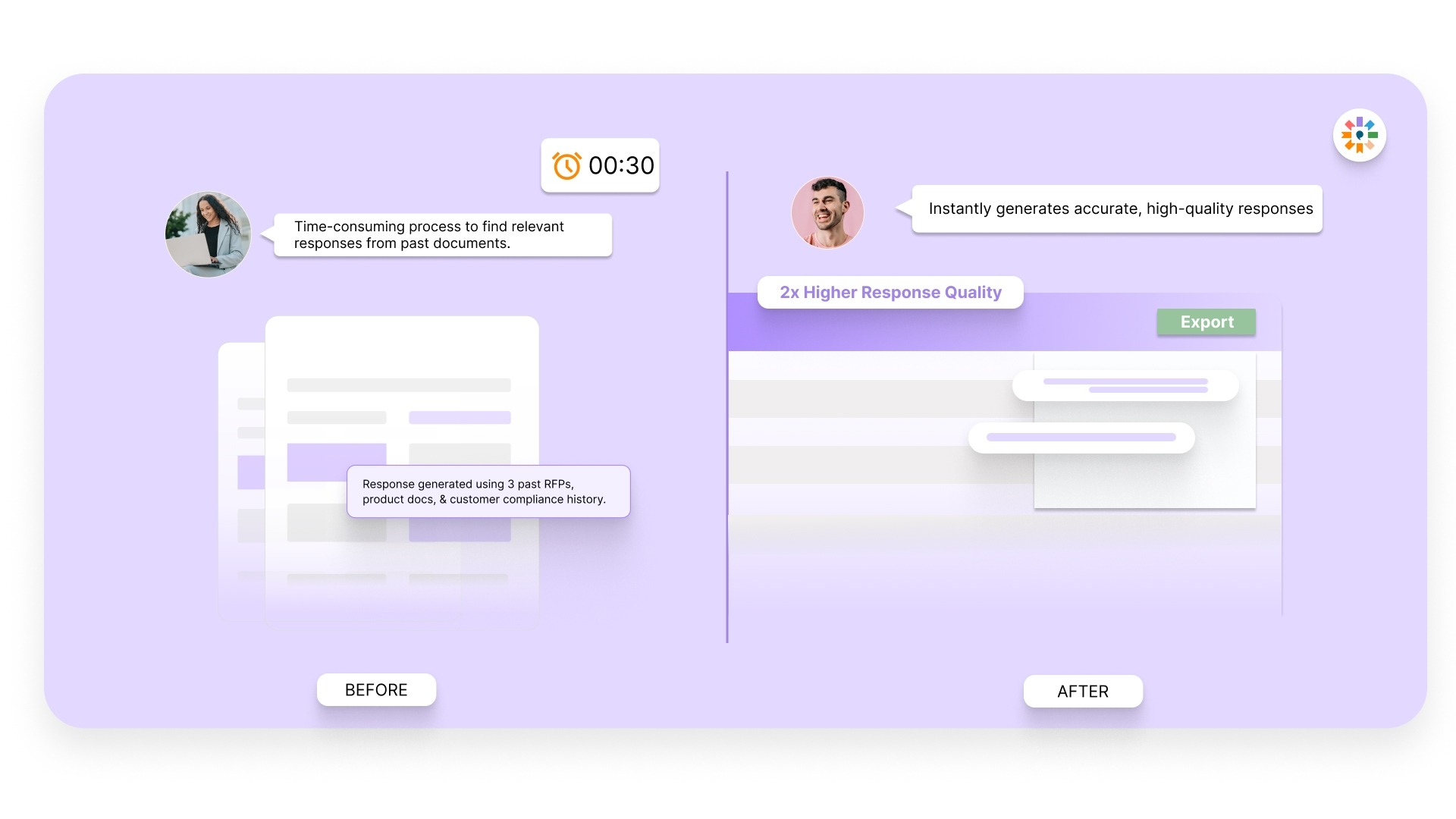
Your responses improve when they are built on the right information. Inventive AI pulls from your past RFPs, documents, and internal systems to generate structured drafts. This helps your team start with strong, relevant answers instead of writing from scratch.
2. Context Engine
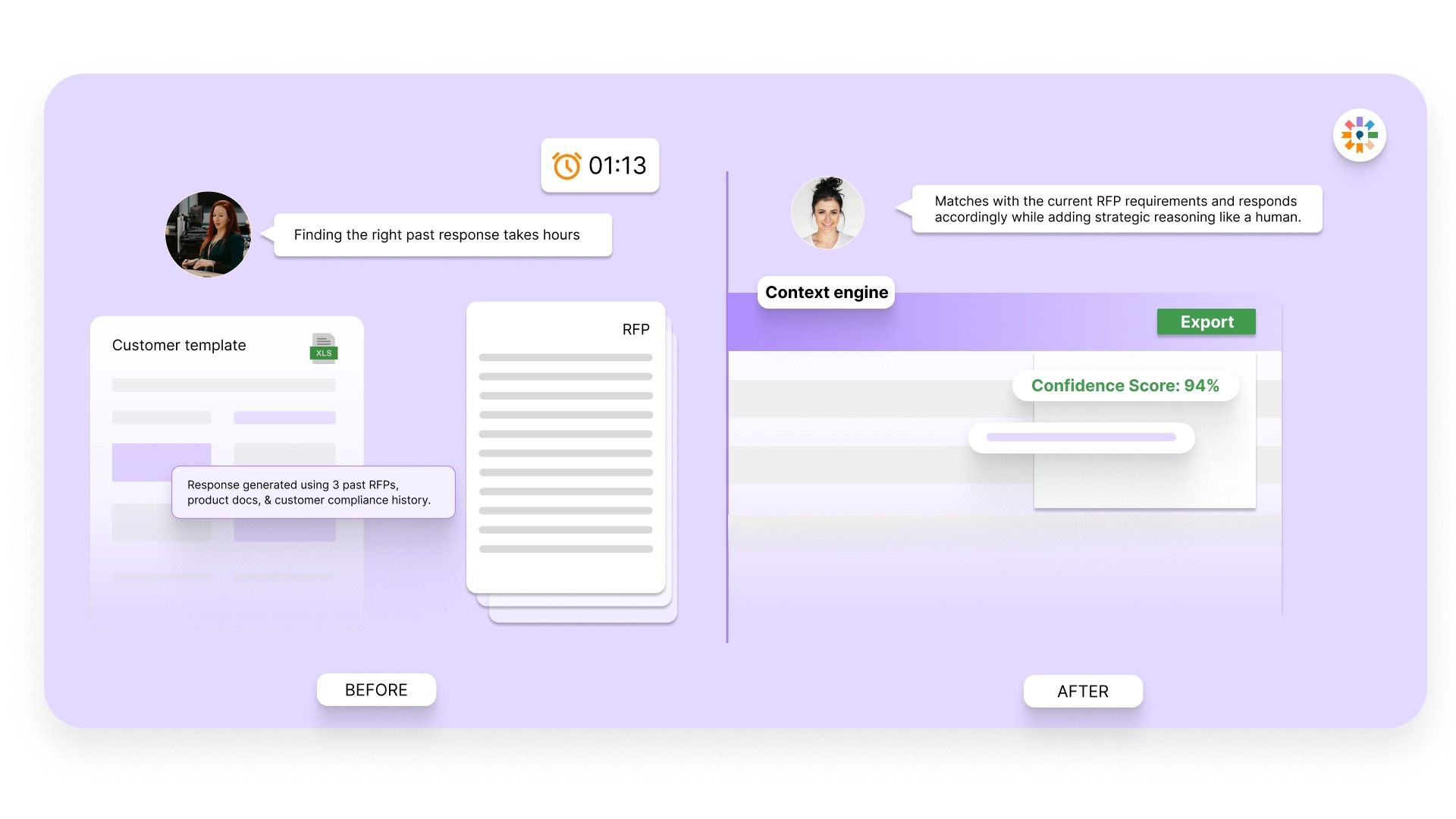
Every proposal needs context to stand out. Inventive AI connects inputs from emails, Slack, calls, and past responses to build answers that match the specific deal. This makes your proposals feel more aligned with what the buyer expects.
3. Conflict Detection
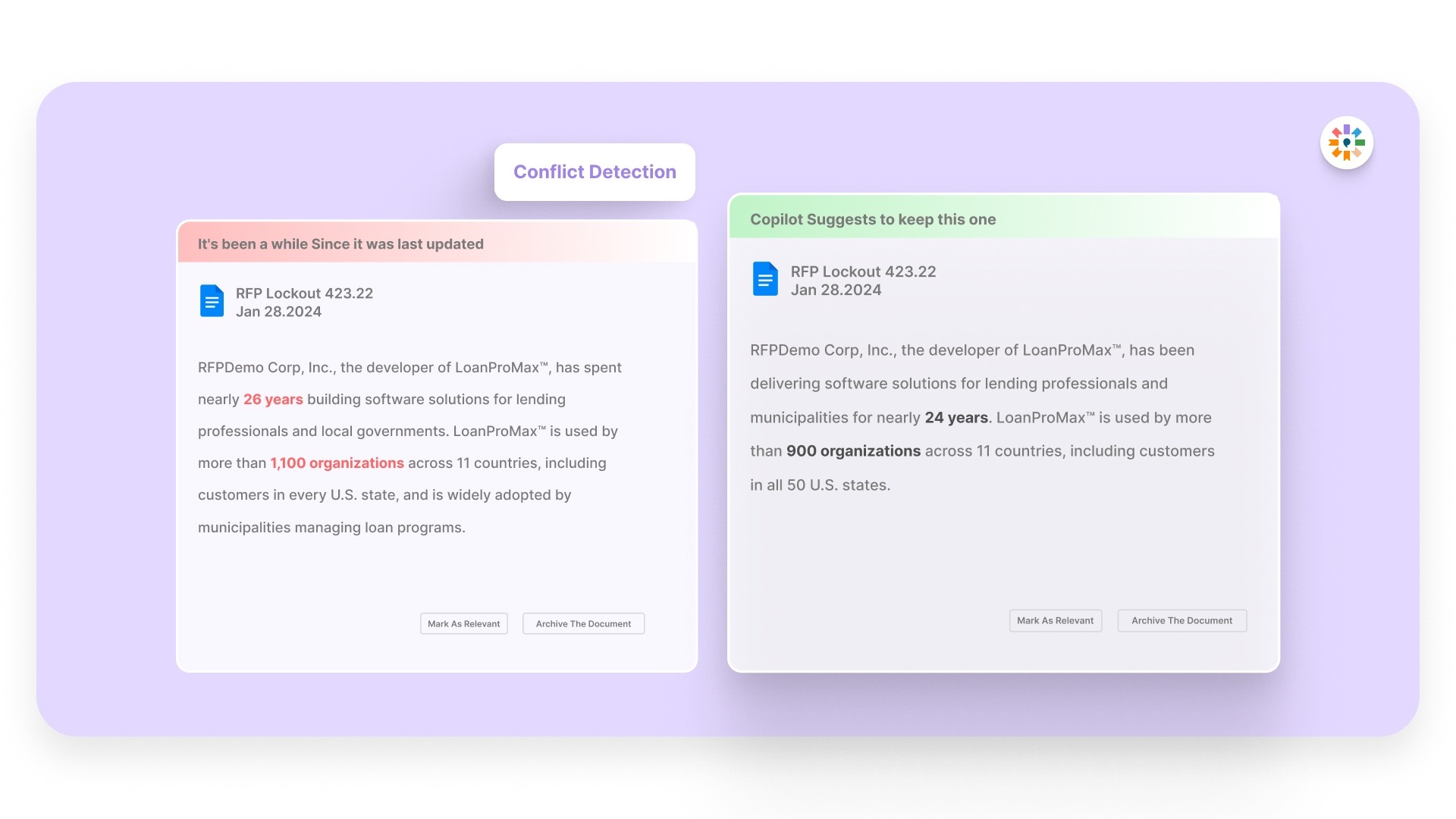
Conflicting answers across documents can weaken your proposal. Inventive AI identifies inconsistencies in your content and flags them early. This helps you avoid sending mixed or inaccurate information.
4. Outdated Content Detection
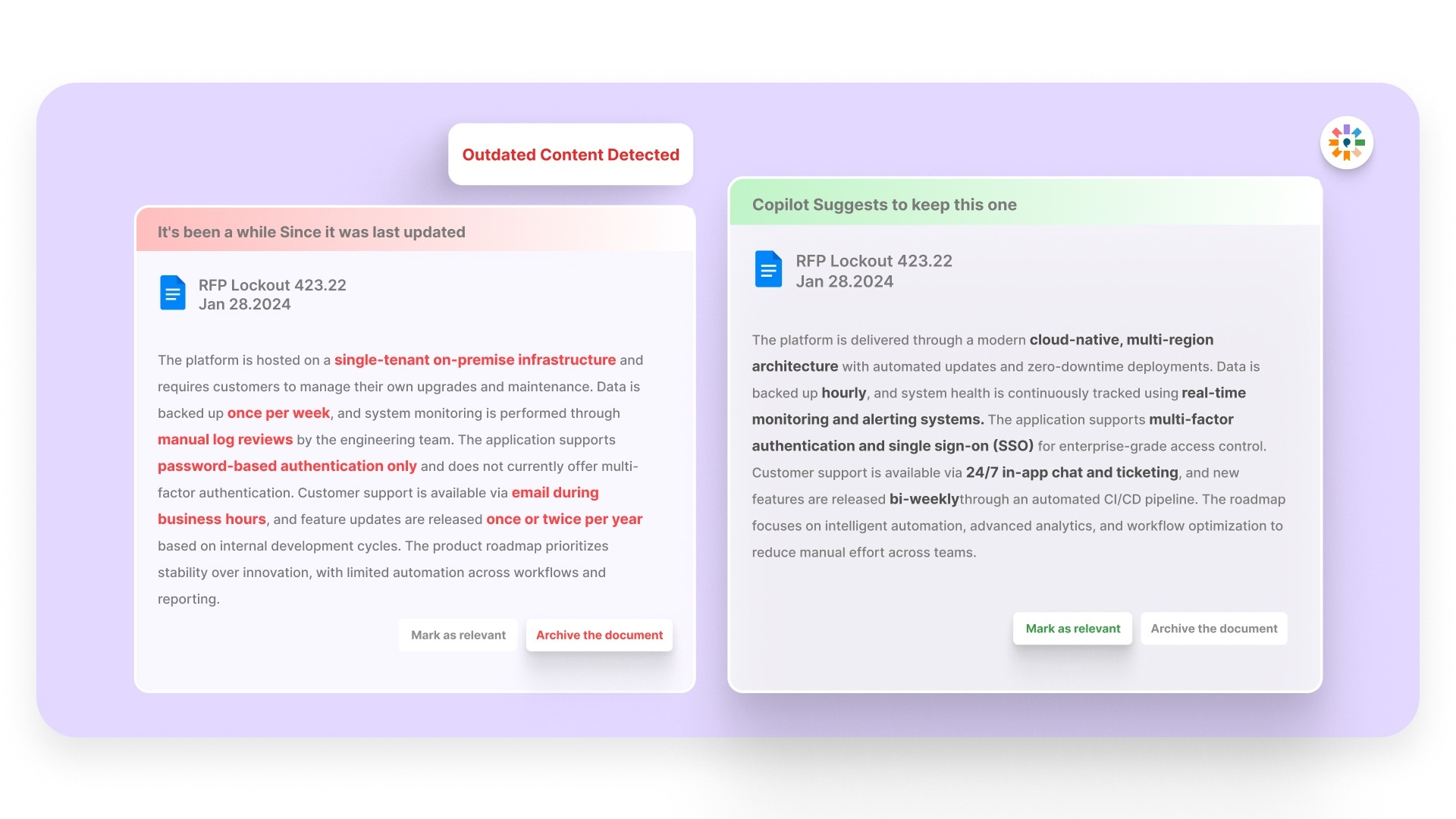
Using outdated data can damage credibility. Inventive AI continuously checks your knowledge base and highlights content that needs updating. This ensures your responses stay accurate and current.
5. Narrative-Style Proposals
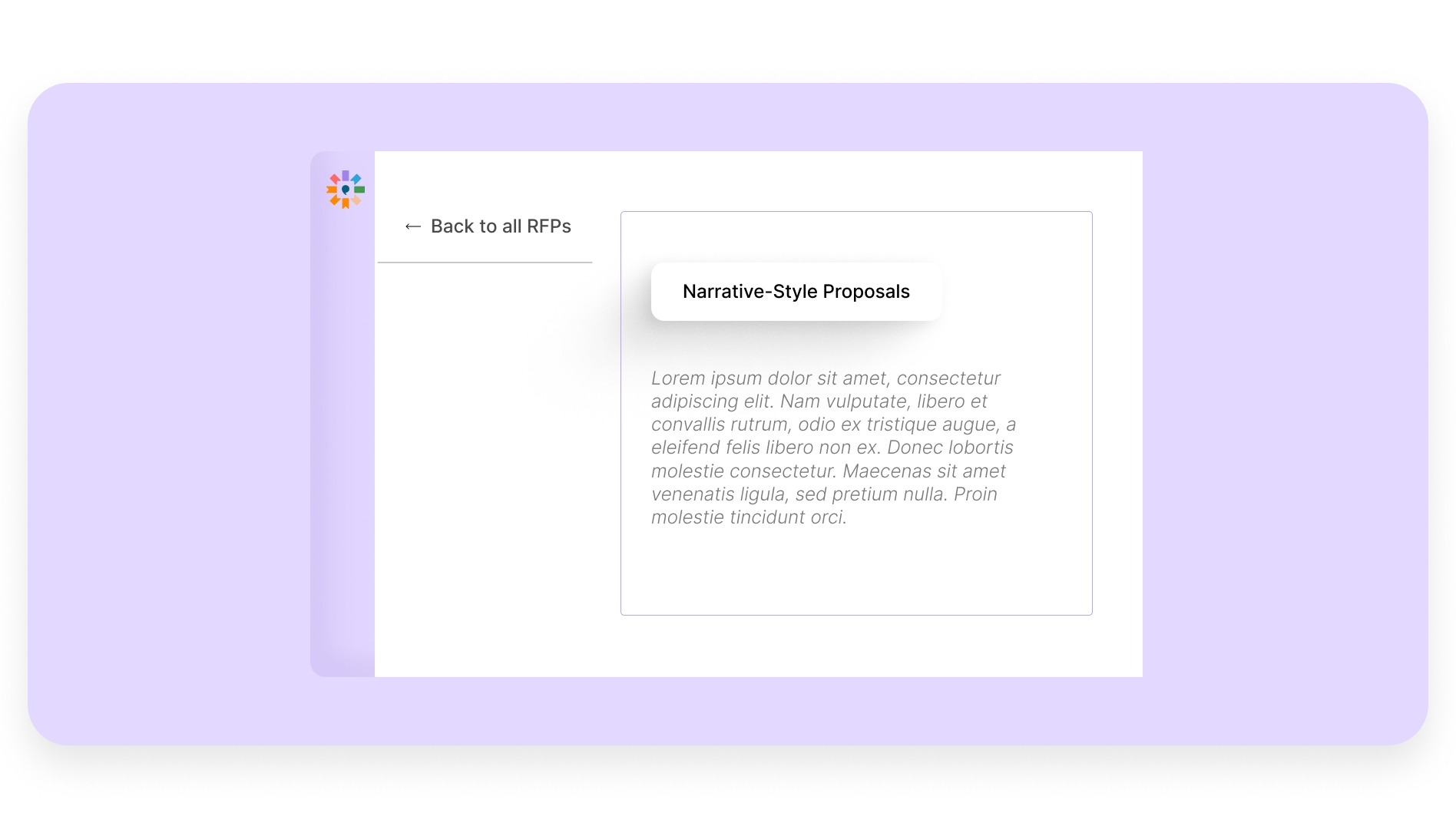
Strong proposals are not just a collection of answers. They tell a clear story. Inventive AI helps structure your responses in a way that is easier for evaluators to read and understand, improving how your proposal is perceived.
6. Simple, Easy-to-Use Interface
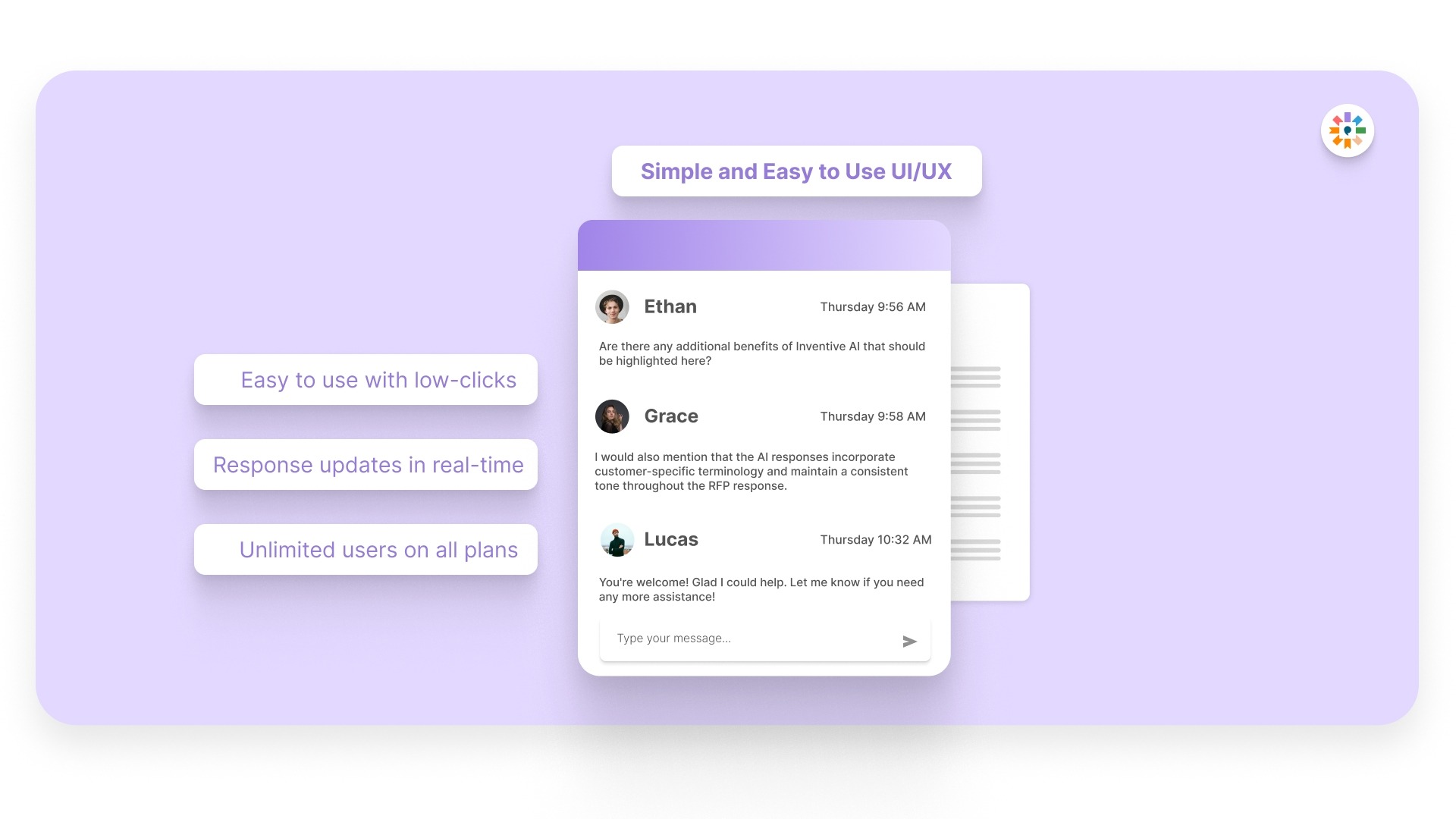
Your team does not need complex systems to improve performance. Inventive AI is designed to be easy to use, so sales and proposal teams can collaborate without friction and focus on winning deals.
Win rate improves when your responses become faster, clearer, and more consistent. With the right system in place, your team spends less time managing content and more time improving the quality of each proposal.
Frequently Asked Questions (FAQs)
1. What is considered a strong sales win rate in B2B?
Most B2B teams operate between 15% and 30%. If your win rate is consistently above 25%, you are performing better than average. Crossing 35% usually indicates strong deal qualification and a well-structured sales process.
2. Why do enterprise deals have lower win rates?
Enterprise deals involve larger budgets, more stakeholders, and longer evaluation cycles. With multiple decision-makers involved, the chances of rejection increase, which naturally brings down win rates compared to smaller deals.
3. Should you track win rate across all deals or only qualified ones?
You should track both, but focus more on qualified opportunities. Including unqualified leads can make your win rate look lower than it actually is. Qualified win rate gives a clearer picture of how well your team converts real opportunities.
4. How do you know if your win rate problem is qualification or execution?
If you are losing early in the process, the issue is usually poor qualification. If deals reach the final stages but don’t close, the problem is often in proposal quality, positioning, or pricing. Tracking stage-wise drop-offs helps identify this clearly.
5. How can RFP responses impact your overall win rate?
RFPs are often where deals are won or lost. Slow, generic, or inconsistent responses reduce your chances, while fast and well-structured proposals improve them. Improving how you handle RFPs can directly increase your overall win rate without changing your pipeline.

90% Faster RFPs. 50% More Wins. Watch a 2-Minute Demo.
.avif)
Mukund Kumar
Understanding that sales leaders struggle to cut through the hype of generic AI, Mukund focuses on connecting enterprises with the specialized RFP automation they actually need at Inventive AI. An IIT Jodhpur graduate with 3+ years in growth marketing, he uses data-driven strategies to help teams discover the solution to their proposal headaches and scale their revenue operations.

Gaurav Nemade
After witnessing the gap between generic AI models and the high precision required for business proposals, Gaurav co-founded Inventive AI to bring true intelligence to the RFP process. An IIT Roorkee graduate with deep expertise in building Large Language Models (LLMs), he focuses on ensuring product teams spend less time on repetitive technical questionnaires and more time on innovation.