Property Management RFP Template: Craft Winning Proposals in 2026

Responding to a property management RFP often feels challenging. With so many details to address, from property specifications to performance metrics, even the smallest oversight can cost you the deal. Worse yet, without the right approach, you might find yourself spending days or even weeks crafting proposals that fail to stand out in a sea of similar responses.
The sales team spends countless hours aligning content, formatting, and ensuring compliance, time that could otherwise be spent on high-impact sales activities.
But here’s the silver lining: With the right RFP response template and AI-powered RFP tool, you can reduce drafting time by up to 90%. This boosts your chances of winning the deal and positions you as a strategic partner who understands the buyer’s unique needs.
In this blog, we'll guide you through the ultimate property management RFP template, showing you how to tailor it to your advantage and craft responses that stand out to potential clients.
The Ultimate Property Management RFP Template in 2026
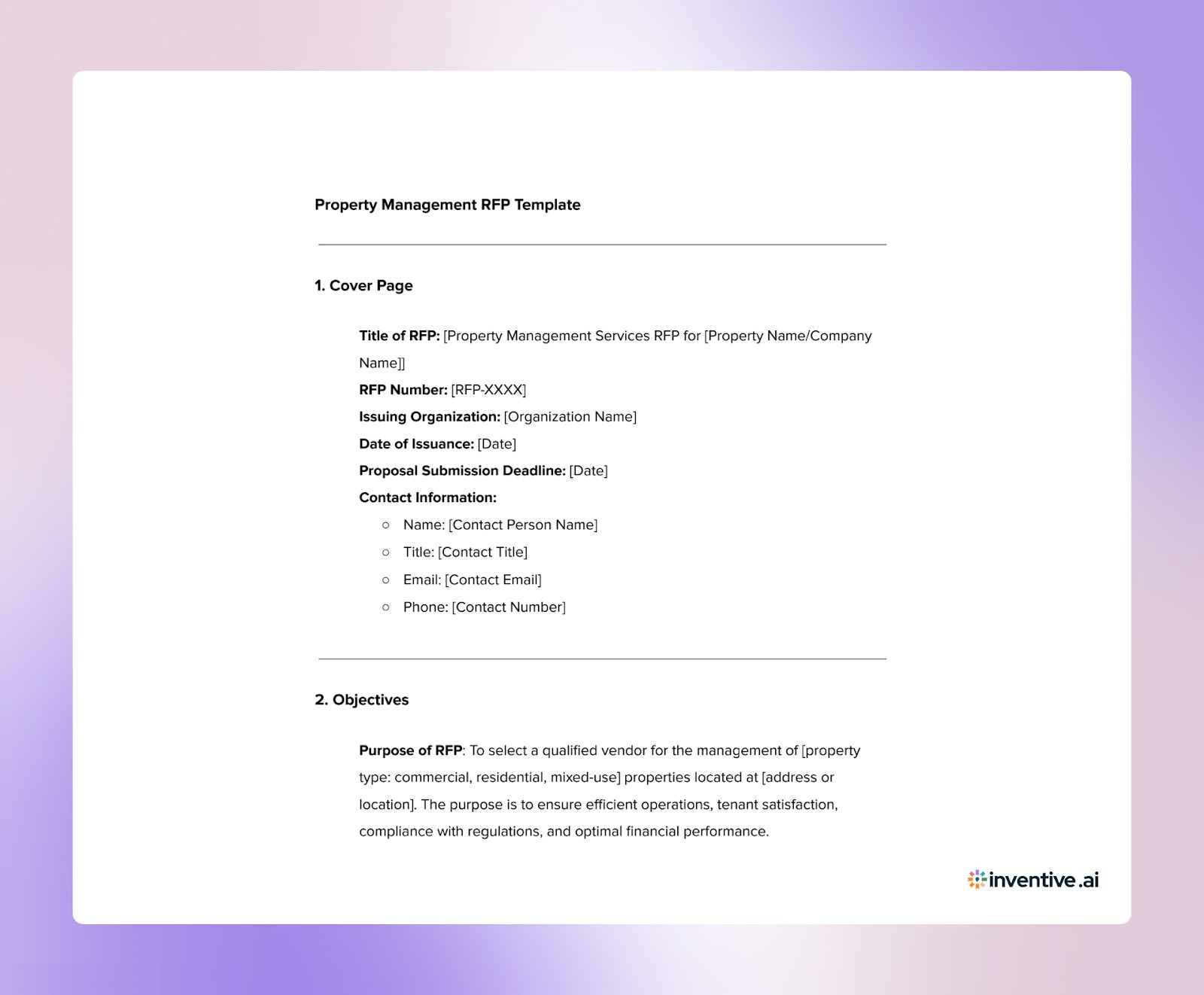

Why Do Buyers Issue a Property Management RFP?
Buyers issue RFPs to simplify the procurement process, ensuring they get comprehensive and comparable proposals from potential vendors.
Here are some common reasons buyers prefer issuing an RFP:
- Clear Comparison: Standardized formats make it easier for buyers to evaluate responses on equal terms.
- Consistency: RFP templates ensure that all essential details are covered by vendors.
- Time-Efficiency: They save time by eliminating unnecessary back-and-forth with vendors, making the evaluation process quicker.
- Alignment: RFP templates ensure that all responses align with the buyer's internal goals and objectives.
- Risk Mitigation: A detailed template helps mitigate the risk of receiving incomplete or unclear proposals.
Issuing an RFP allows buyers to obtain consistent, detailed proposals, simplifying the vendor selection process.
Now that you understand what buyers are looking for, let’s turn the tables and focus on how you can use the right template to craft a response that truly stands out.
The Ultimate Property Management RFP Response Template for Vendors in 2026
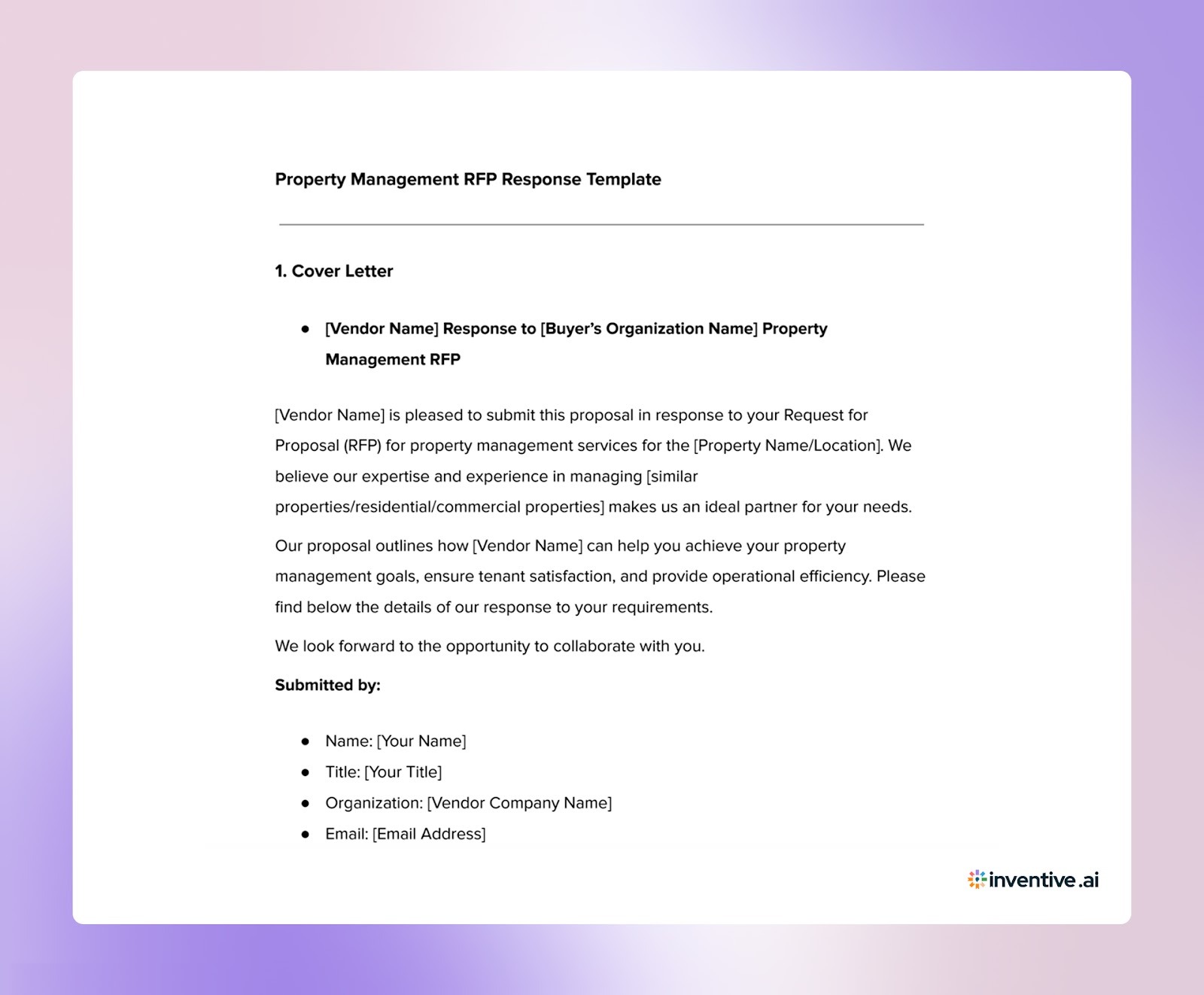
Maximize Efficiency with a Property Management RFP Response Template
An RFP response template is a powerful tool that provides a structured framework for vendors to organize responses efficiently. By using a pre-built template, your proposals remain consistent, comprehensive, and aligned with the buyer’s expectations, while reducing the time spent on repetitive tasks.
Why Use a Template?
1. Time Efficiency: Instead of starting from scratch, you can build on a solid foundation, reducing the time it takes to create high-quality responses for each new RFP.
2. Consistency Across Proposals: A template ensures that every response is aligned with your company’s messaging, tone, and brand, giving your proposals a professional and cohesive feel.
3. Streamlined Content Management: The template helps organize your content in a clear and logical way, making it easier to adapt and reuse sections for different RFPs.
4. Tailored Responses: While the template provides a structure, it also offers the flexibility to customize your response according to the buyer’s unique needs and specifications.
5. Enhanced Proposal Quality: By providing a clear format and predefined sections, the template helps ensure that all important elements are included, reducing the risk of missed information.
By using a well-designed RFP response template, you can focus your efforts on tailoring the response to the buyer’s needs. This ensures both speed and quality in every proposal.
Also Read: How AI in Presales is Redefining Speed, Accuracy, and Win Rates
What to Expect in a Property Management RFP Template: Key Components?
When buyers issue a property management RFP, they typically include certain key components that vendors must address. Here are some common elements:
- Property Details: Information about the property or properties requiring management, including size, location, type of property (commercial, residential, mixed-use), and special requirements.
- Scope of Services: The specific services the buyer expects from the vendor (e.g., maintenance, tenant management, leasing services, financial reporting, emergency repair services).
- Performance Metrics: Criteria used to measure the vendor’s success in managing the property, such as tenant satisfaction, property upkeep, and occupancy rates.
- Budget and Cost Structure: An outline of the expected cost structure, including management fees, maintenance costs, and payment terms. Buyers may also include incentives tied to cost-saving measures or revenue targets.
- Legal and Compliance Requirements: Any local, state, or national regulations the vendor must comply with, including health and safety standards, fair housing laws, and environmental regulations.
- Service Level Agreements (SLAs): Expectations for response times, service delivery standards, and key performance indicators (KPIs) to ensure that the vendor meets agreed-upon service benchmarks.
- Risk Management and Insurance: Requirements for insurance coverage and how the vendor will mitigate potential risks related to property management (e.g., liability, property damage, tenant disputes).
- Technology and Reporting: Specifications on the technology tools and platforms that should be used to manage the property, such as property management software, online payment systems, and reporting dashboards.
- Tenant Communication and Engagement: Expectations for how the vendor will communicate with tenants, handle complaints, manage requests, and ensure high levels of tenant retention.
- Exit Strategy and Transition Plan: Terms for the end of the contract, including how the vendor will transition responsibilities back to the buyer or to a new vendor, and how any outstanding issues will be resolved.
By understanding these components, you can ensure your response is comprehensive, aligns with the buyer’s goals, and demonstrates your ability to meet their specific needs. This will set you apart as a vendor who’s not only capable but also proactive in addressing key concerns.
Also Read: How to Develop Effective RFP Win Themes for Proposal Success
7 Effective Strategies for Customizing Your Property Management RFP Response

Every property management RFP is unique, so customizing the template is essential. Here are some tips for ensuring your response stands out:
1. Align with Buyer’s Pain Points: Address the specific challenges the buyer is facing in managing their properties.
2. Highlight Relevant Experience: Customize your experience section to showcase your track record with similar properties or clients.
3. Use Buyer’s Language: Mirror the buyer’s language and tone in your proposal to show alignment.
4. Tailor the Scope of Services: Adjust the services you offer to fit the buyer's specific needs and preferences.
5. Focus on Results: Demonstrate how your past work has delivered measurable outcomes, such as improved tenant satisfaction or cost savings.
6. Be Clear About Your Unique Value Proposition: Highlight what sets your services apart from competitors and why your solution is the best fit for the buyer’s needs.
7. Ensure Scalability and Flexibility: Showcase how your services can scale as the buyer's property management needs grow or evolve over time, offering long-term value.
By customizing your response, you ensure that your proposal is relevant and compelling to the buyer, while positioning yourself as the ideal solution for their needs.
Also Read: How to Write a Sales Proposal Template That Drives More Wins
How Inventive AI Helps You with Your Property Management RFPs?
Responding to property management RFPs can be time-consuming and complex, but with Inventive AI, you can significantly streamline the process, ensuring your proposals are not only faster but also more accurate and tailored to the buyer’s needs.
Here’s how Inventive AI enhances your RFP responses:
1. 2x Higher Quality Responses

With Inventive AI, you can create high-quality responses faster and more accurately, ensuring your proposal stands out from the competition.
2. Context Engine
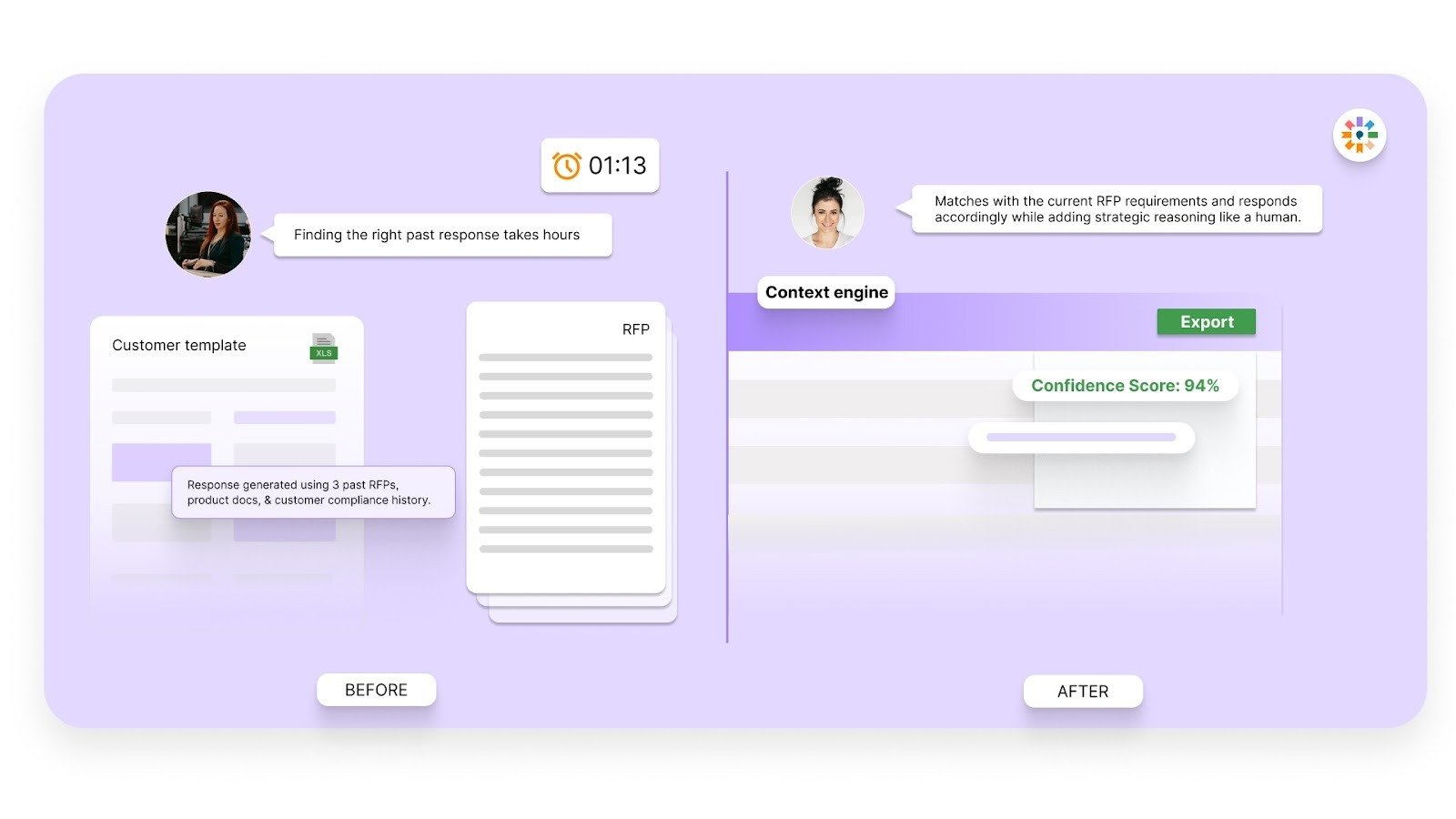
Inventive AI's context engine ensures that your response is always relevant and aligned with the buyer’s needs by pulling in the right information at the right time.
3. Conflict Detection
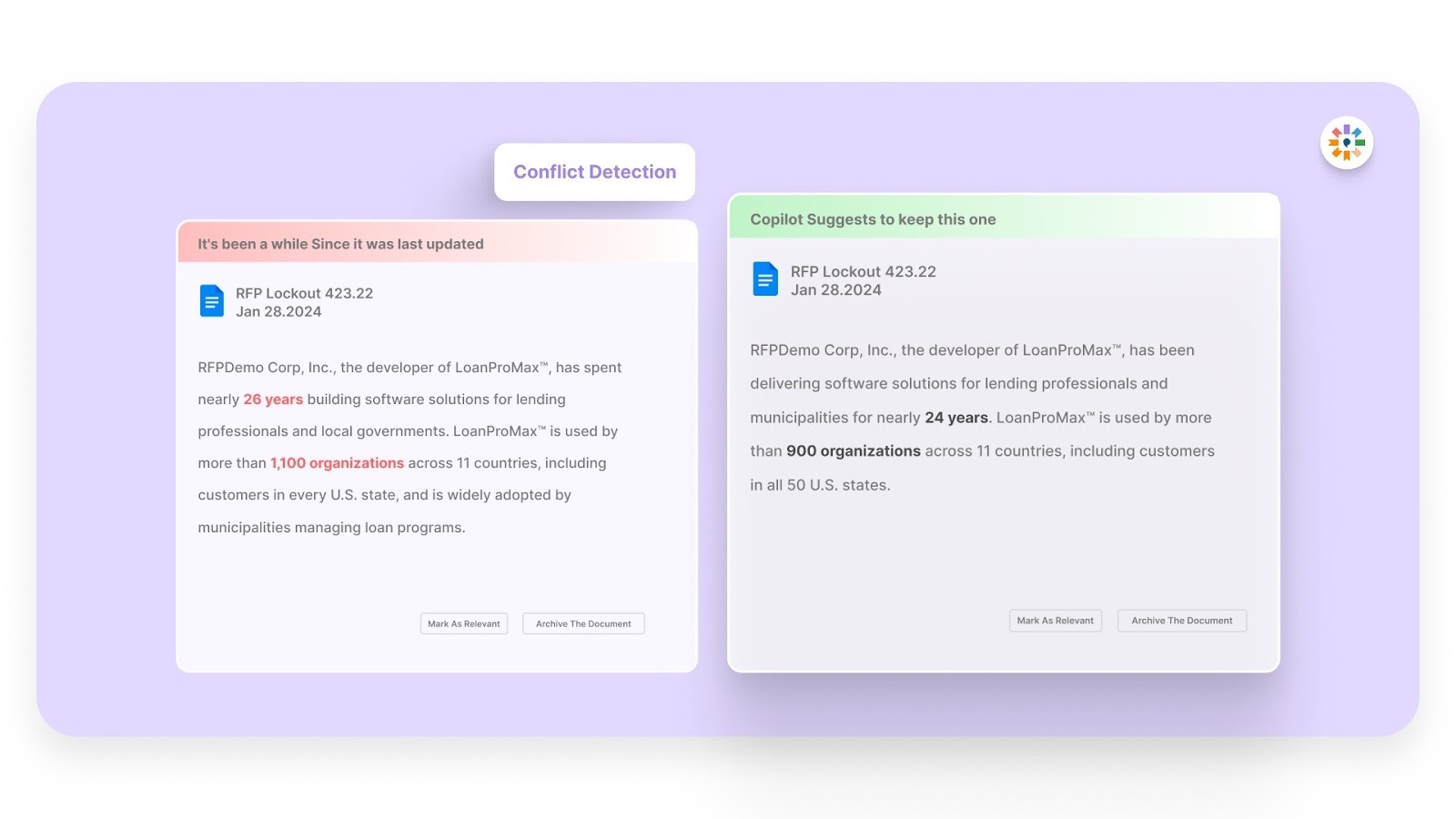
Our AI detects conflicts within your response, ensuring all content is consistent and aligned with your company’s objectives, reducing errors and inconsistencies.
4. Outdated Content Detection
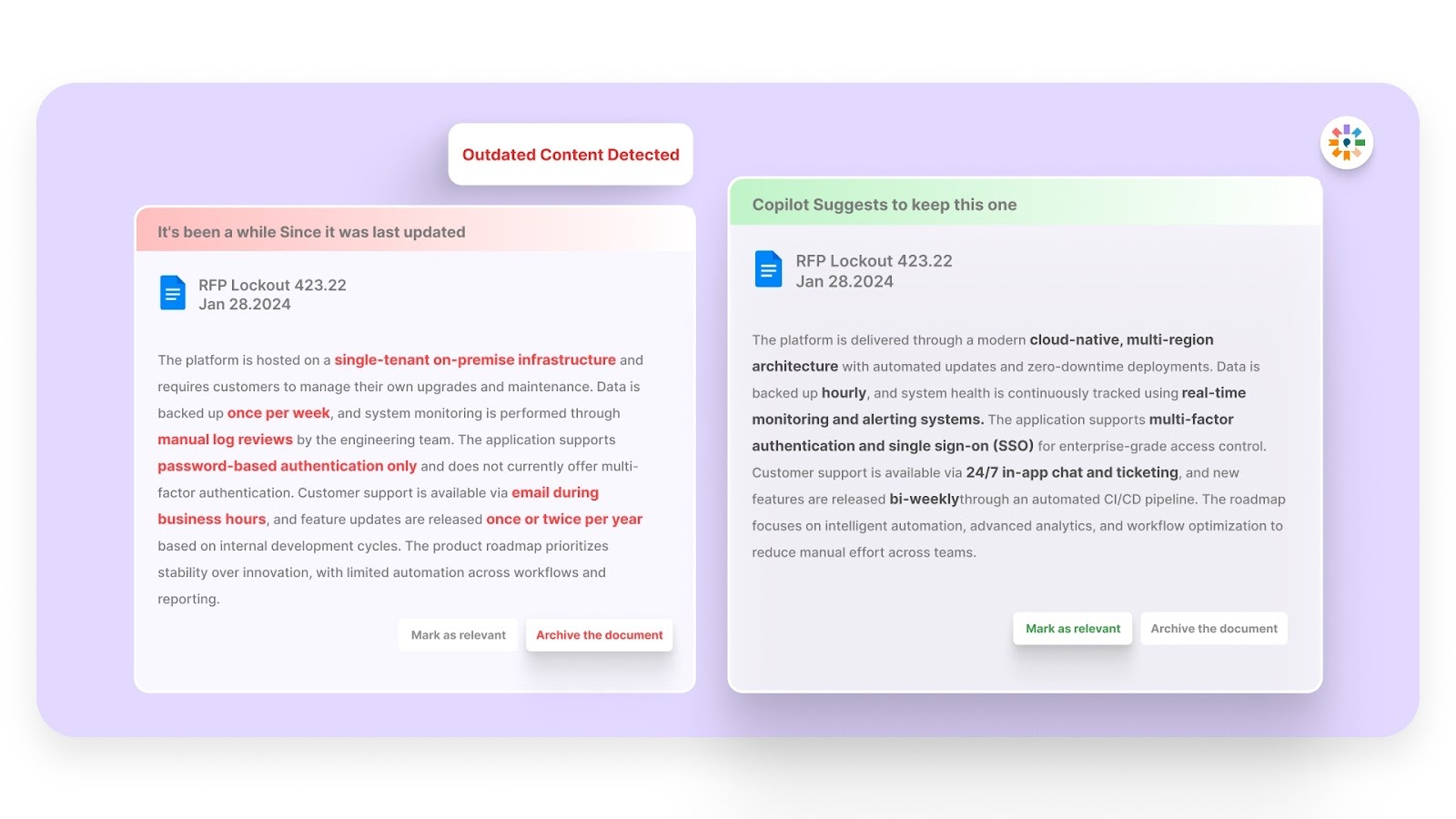
Inventive AI flags outdated content, ensuring your response is always up-to-date with the latest data, improving the quality and relevance of your proposal.
5. Simple, Easy-to-Use Interface
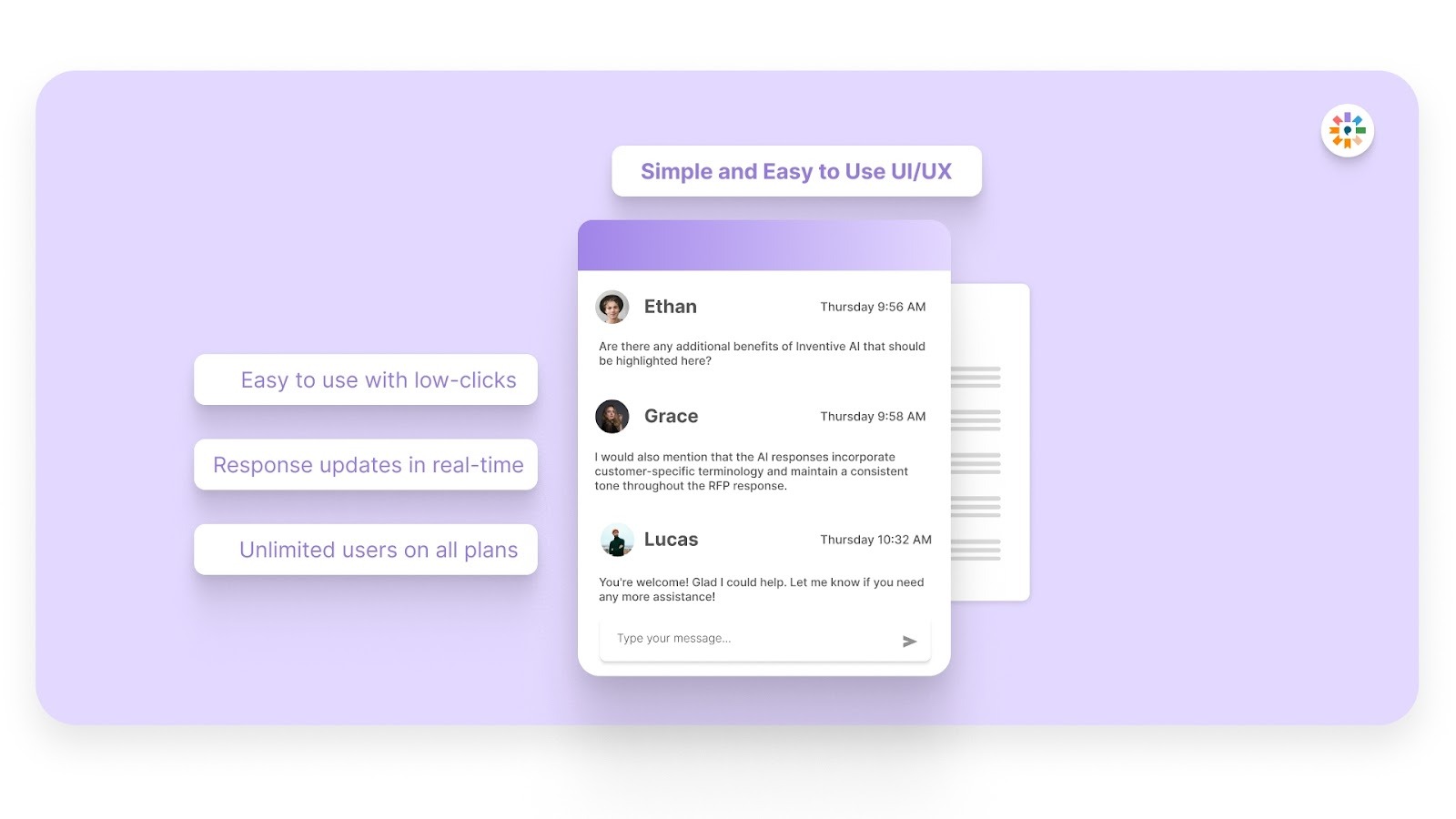
With Inventive AI, you don’t need to be an expert to create a winning proposal; our intuitive interface guides you every step of the way.
By using Inventive AI, you can increase proposal accuracy, save time, and improve your chances of winning property management RFPs.
Frequently Asked Questions (FAQs)
1. What are the typical challenges vendors face when responding to property management RFPs?
Vendors often struggle with aligning responses to the buyer's exact needs, managing conflicting information across teams, and dealing with tight deadlines. Lack of standardization and inadequate content management also complicate the process.
2. How can vendors ensure their property management RFP responses are competitive?
Vendors can improve their competitiveness by addressing the buyer’s specific pain points, showcasing their relevant experience, and providing measurable results from past projects. Additionally, tailoring the scope of services to fit the buyer’s needs and aligning the response with the buyer’s values will help stand out.
3. What is the role of technology in streamlining the RFP response process?
Technology, such as AI-powered RFP response tools, helps streamline the process by automating repetitive tasks like document organization, content generation, and formatting. It also improves accuracy and consistency, allowing vendors to respond faster and more effectively.
4. How do property management RFPs differ from other industry-specific RFPs?
Property management RFPs often have unique components such as tenant management requirements, maintenance expectations, and specific property compliance regulations. Vendors must ensure that they address these property-specific needs while showcasing their ability to handle complex and varied tasks.
5. What should vendors do if they miss an RFP deadline?
If a vendor misses an RFP deadline, they should immediately contact the buyer to express interest in future opportunities and request to be kept in mind for upcoming RFPs. While late submissions are rarely considered, building a strong relationship with the buyer can increase future chances.
.avif)



.jpg)