
Master Vendor Performance Management Best Practices to Win More Business in 2026

As a vendor, building a strong relationship with your buyer depends on trust, communication, and consistently meeting their expectations. But what happens when that trust is tested? When your performance is under the microscope?
This is where Vendor Performance Management (VPM) steps in.
In 2026, buyers are looking for more than just a one-time delivery. They want reliable vendors who keep things consistent, who can adapt when things change, and who can be counted on for the long haul. So, how do you become the vendor that buyers can’t stop coming back to? The good news is, you’re in the right place.
In this blog, we’ll walk you through the best ways to manage your performance, keep your buyer happy, and turn each performance review into a chance to shine.
Key Takeaways
- Vendor Performance Management (VPM) is about meeting buyer expectations, aligning with their goals, and continuously improving your service.
- Top practices for success include setting clear expectations, proactive communication, and consistently tracking service quality and performance.
- VPM helps vendors by improving relationships with buyers, leading to better contract terms, more business, and reduced risks.
- Inventive AI helps vendors respond faster, reduce inconsistencies, and present their performance clearly during buyer evaluations like RFPs and reviews.
- The vendor lifecycle involves stages from selection to renewal, with performance management crucial at every step to maintain trust and secure long-term business.
What is Vendor Performance Management?
Vendor Performance Management (VPM) is the process by which buyers monitor, assess, and evaluate the performance of their vendors. However, it’s not a one-way street; vendors also need to actively manage their performance to meet buyer expectations and improve relationships over time.
Buyers use VPM as a tool to measure whether vendors can deliver on time, on budget, and meet quality standards. For you, as a vendor, VPM is the key to showing that you are a reliable, adaptable, and committed partner.
In other words, VPM is a continuous feedback loop that lets you exceed buyer expectations. By understanding the buyer's expectations and applying the best practices, you can improve your performance and ultimately win more business.
Also Read: The Ultimate Professional Services RFP Template And Response Guide
10 Proven Vendor Performance Management Practices That High-Performing Vendors Swear By
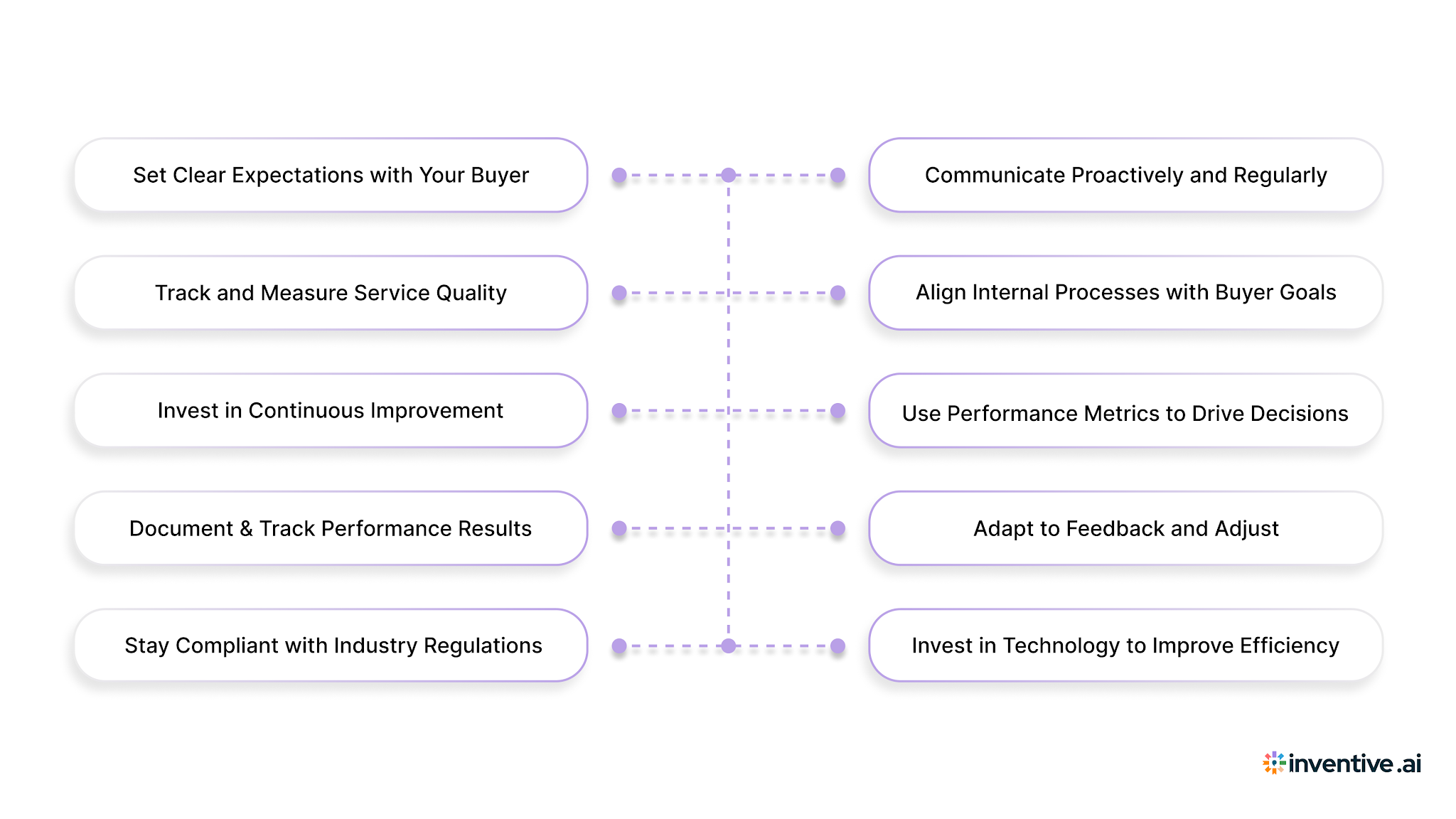
To succeed in Vendor Performance Management, you need to go beyond simply meeting expectations. Proactively managing your performance builds trust, strengthens relationships with buyers, and positions you as a reliable partner for the long term.
Here are 10 best practices that will help you elevate your vendor performance:
1. Set Clear Expectations with Your Buyer
It all starts with understanding exactly what your buyer expects from you. What are their needs when it comes to delivery speed, quality, and communication? Agree on Key Performance Indicators (KPIs) that will define success for both sides. Setting these expectations from the beginning helps you avoid confusion and keeps everyone aligned throughout the relationship.
2. Communicate Proactively and Regularly
Don’t wait for the buyer to ask about delays or issues. Take the lead by sharing progress updates, potential risks, and any changes as they arise. Open, transparent communication helps you build trust and demonstrate your commitment to the relationship.
3. Track and Measure Service Quality and Timeliness
It’s not enough to just deliver on time; you need to track service quality and timeliness consistently. Use clear metrics to measure your performance. Whether it’s delivery speed, quality control, or response time, having a system in place to measure your progress will help you identify areas for improvement before your buyer points them out.
4. Align Your Internal Processes with Buyer Goals
Take the time to understand your buyer’s long-term goals and ensure your internal processes are aligned to support those objectives. Mapping your internal workflows to the buyer’s needs not only ensures smoother deliveries but also positions you as a vendor who understands their business and contributes to its success.
5. Invest in Continuous Improvement
Never settle for “good enough.” The market and buyer needs change over time, and so should your service. Invest in ongoing improvements - whether through training, process adjustments, or upgrading systems. By embracing continuous improvement, you stay adaptable and ready to meet evolving expectations.
6. Use Performance Metrics to Drive Decisions
Data is your ally. Collect performance data at every stage of the process, from production to customer feedback. Use these insights to spot trends, identify inefficiencies, and make informed decisions on where to adjust your approach. Data-driven decisions lead to better outcomes and help you continuously enhance your performance.
7. Document and Track Performance Results
Keep a record of your performance milestones, challenges you’ve overcome, and the improvements you’ve made. Not only does this help with internal tracking, but it also strengthens your position in future negotiations. Having clear documentation of your progress proves that you are committed to constant growth.
8. Adapt to Feedback and Adjust Accordingly
Feedback isn’t just for the buyer’s benefit - it’s a tool for your improvement. Whether it’s about product quality, delivery time, or communication, always take feedback seriously. By acting on feedback quickly, you show the buyer that you are committed to improvement and that their needs are a top priority.
9. Stay Compliant with Industry Regulations
Your buyer will want to know that you meet industry standards and regulatory requirements. Staying up-to-date with relevant compliance standards ensures that you’re aligned with industry norms and that there won’t be any unexpected legal or operational issues down the line.
10. Invest in Technology to Improve Efficiency
Technology is your partner in managing performance. Use tools, automation, and AI-driven systems to monitor and manage workflows, track performance in real time, and identify potential issues early. This allows you to adjust quickly and keep everything on track without having to rely solely on manual processes.
By following these 10 best practices, you’re positioning yourself as a high-performing vendor that buyers can depend on.
The Real ROI You See By Following Vendor Performance Management Best Practices
Vendor Performance Management isn’t just about checking boxes on an evaluation list; it’s about building a partnership. Here’s why it’s so important for your business:
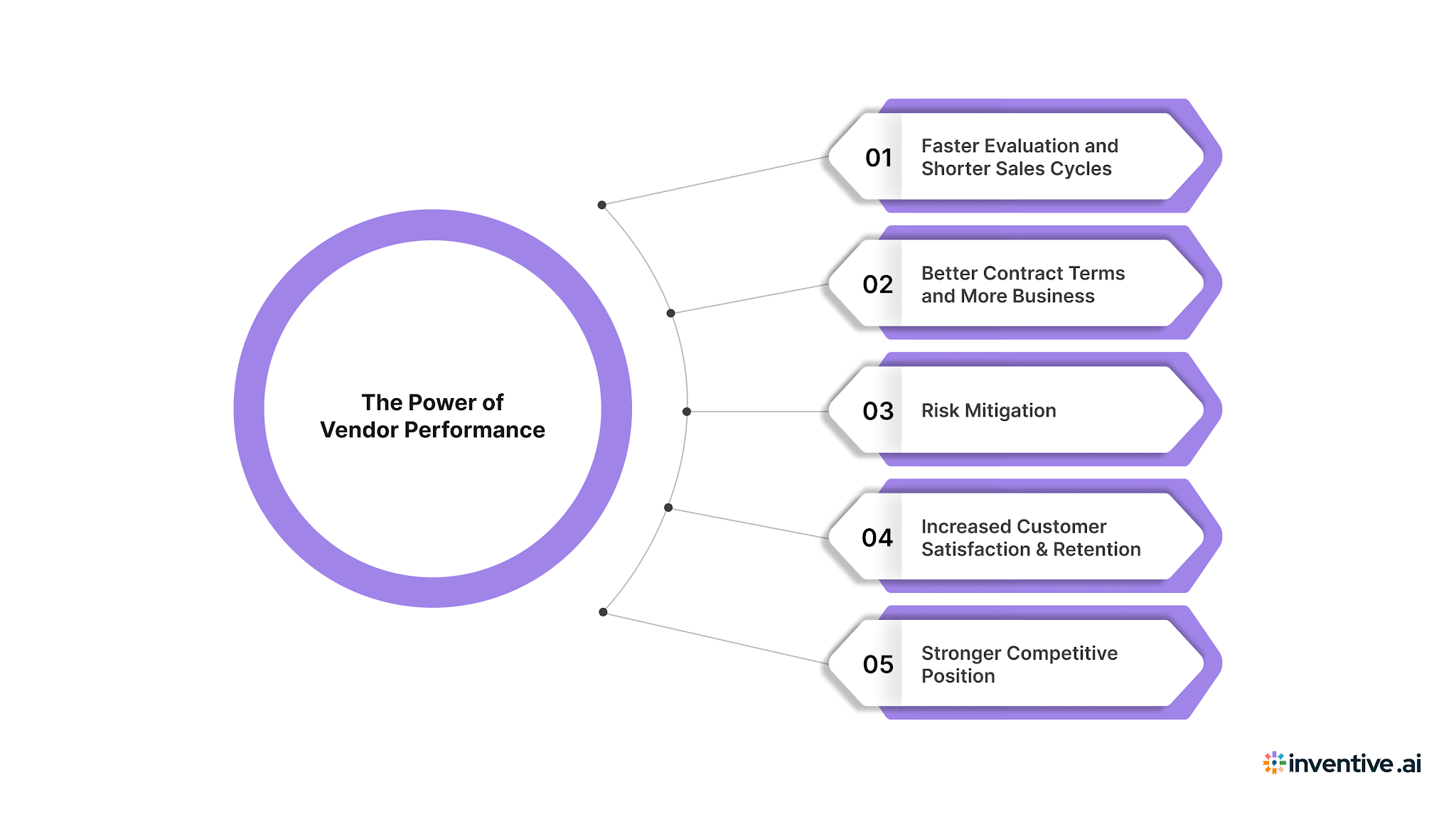
1. Faster Evaluation and Shorter Sales Cycles
Buyers prefer vendors who can demonstrate their value quickly. If your performance is already strong, the evaluation process becomes smoother, leading to shorter sales cycles and faster decision-making.
2. Better Contract Terms and More Business
High-performing vendors often secure better contract terms, larger order volumes, and long-term partnerships. Consistent performance is directly linked to higher renewal rates, repeat business, and expanded opportunities.
3. Risk Mitigation
Continuously assessing and improving your performance helps you minimize the risk of costly mistakes or unmet expectations. Buyers want a vendor who can handle challenges with ease, meet their needs, and reduce potential risks.
4. Increased Customer Satisfaction and Retention
A focus on performance management leads to improved customer satisfaction, which increases the likelihood of repeat business. Satisfied customers are more likely to become long-term advocates and partners.
5. Stronger Competitive Position
By maintaining a high standard of performance, you position yourself as a top choice among competitors. This gives you a strategic advantage in attracting new buyers while strengthening your position with current ones.
Vendor performance management is a strategic advantage that drives better relationships, improved business outcomes, and long-term success.
The 5 Key Stages of the Vendor Lifecycle You Need to Master
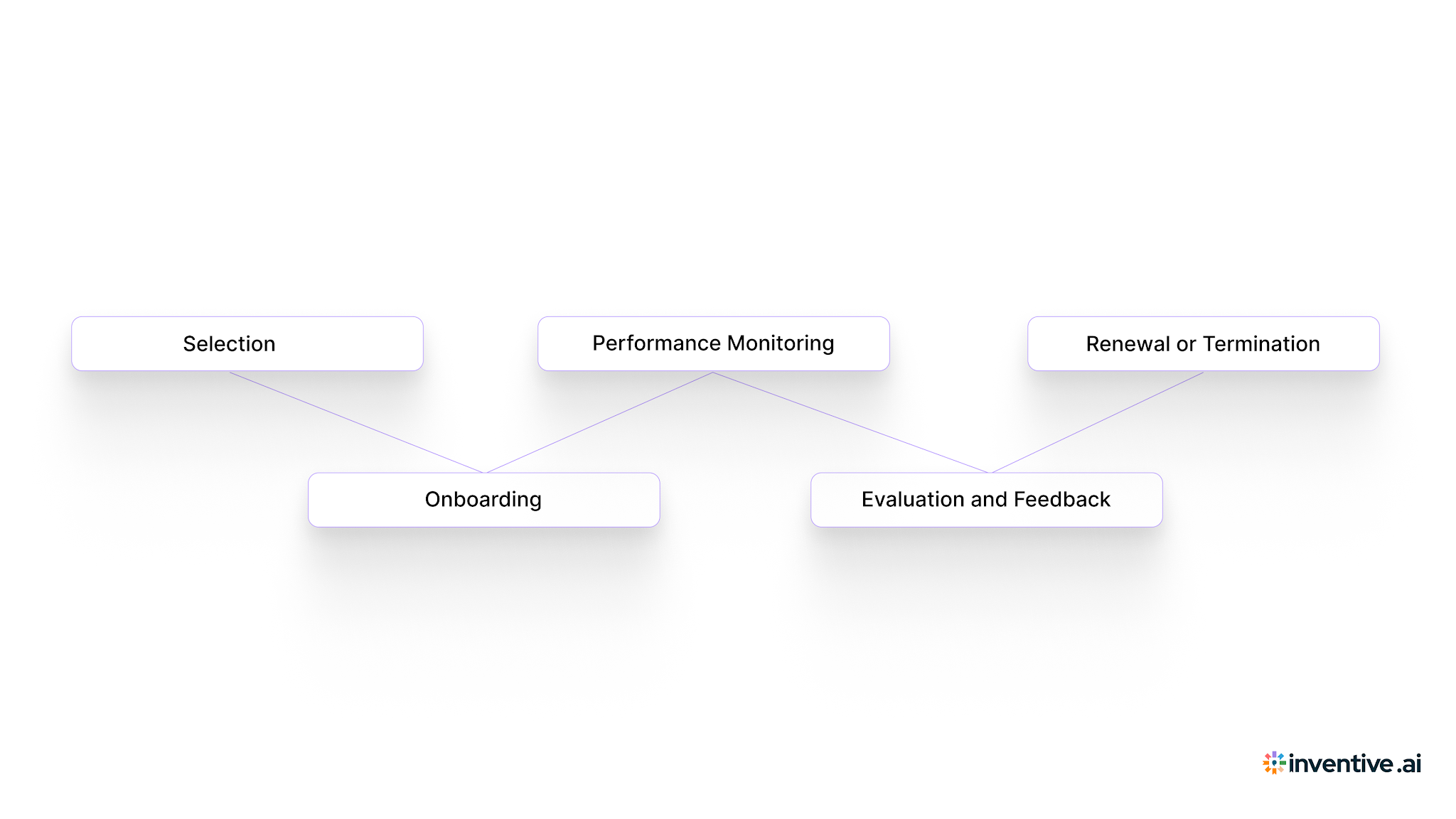
Understanding the full vendor lifecycle is important for improving your performance at each stage. Each phase offers an opportunity to align better with your buyer’s needs, ensuring long-term success and growth. Here are the 5 key stages of the vendor lifecycle:
1. Selection
The first stage is all about being chosen by the buyer. This is where you make your first impression and prove that you can meet the buyer’s needs.
You need to:
- Show how your products/services are a perfect fit.
- Ensure you align with the buyer's goals and performance expectations.
- This is your chance to stand out, so focus on providing clear, accurate, and relevant information.
This stage is where the relationship begins, and how well you perform here can set the tone for the rest of the vendor lifecycle.
2. Onboarding
Once selected, the onboarding phase is about setting the foundation for the relationship. Clear agreements, expectations, and Key Performance Indicators (KPIs) should be established to ensure everyone is on the same page.
A smooth onboarding process:
- Establishes the communication flow and sets expectations early.
- Ensures that your team is aligned with the buyer’s goals, timelines, and quality standards.
- Sets clear performance metrics to track success from the start.
A strong onboarding process sets the tone for a long-term, successful relationship.
3. Performance Monitoring
At this stage, the focus shifts to actively tracking your performance. Buyers are closely monitoring how well you deliver on the promises you made during the selection and onboarding stages.
To stay on top:
- Regularly assess your performance against the KPIs set during onboarding.
- Track the quality of your product/service, delivery timelines, and customer satisfaction.
- Identify potential issues early, so you can address them before they impact your relationship.
Being proactive during this phase will help you avoid surprises and make adjustments when necessary.
4. Evaluation and Feedback
This stage is about feedback loops—both from you and the buyer. Buyers assess your performance regularly, and this is your opportunity to get feedback and make improvements.
Key steps in this phase:
- Seek regular feedback from the buyer to understand their satisfaction level.
- Evaluate whether your products/services are still aligned with their evolving goals.
- Adapt to feedback quickly and make necessary changes to improve performance.
This is also a time for you to assess your own performance and ensure you’re still meeting the buyer’s expectations.
5. Renewal or Termination
At this stage, the future of the partnership is determined. If your performance has been consistent and strong, the relationship will likely move toward renewal. However, if issues persist, termination may become a possibility.
To secure renewals and expand the relationship:
- Maintain consistent delivery and meet the agreed-upon KPIs.
- Address any issues or gaps raised during the feedback and evaluation stages.
- Keep communication open to ensure that both parties are aligned.
A strong performance record at this stage can lead to more opportunities, contract extensions, or even larger volumes of business.
This five-stage lifecycle emphasizes continuous improvement and alignment with buyer goals at every step. Managing your performance throughout these stages helps build strong, long-lasting relationships and maximizes business opportunities.
Also Read: Vendor Comparison Template for Procurement and Evaluation Teams
4 Silent Vendor Performance Killers That Are Costing You Renewals
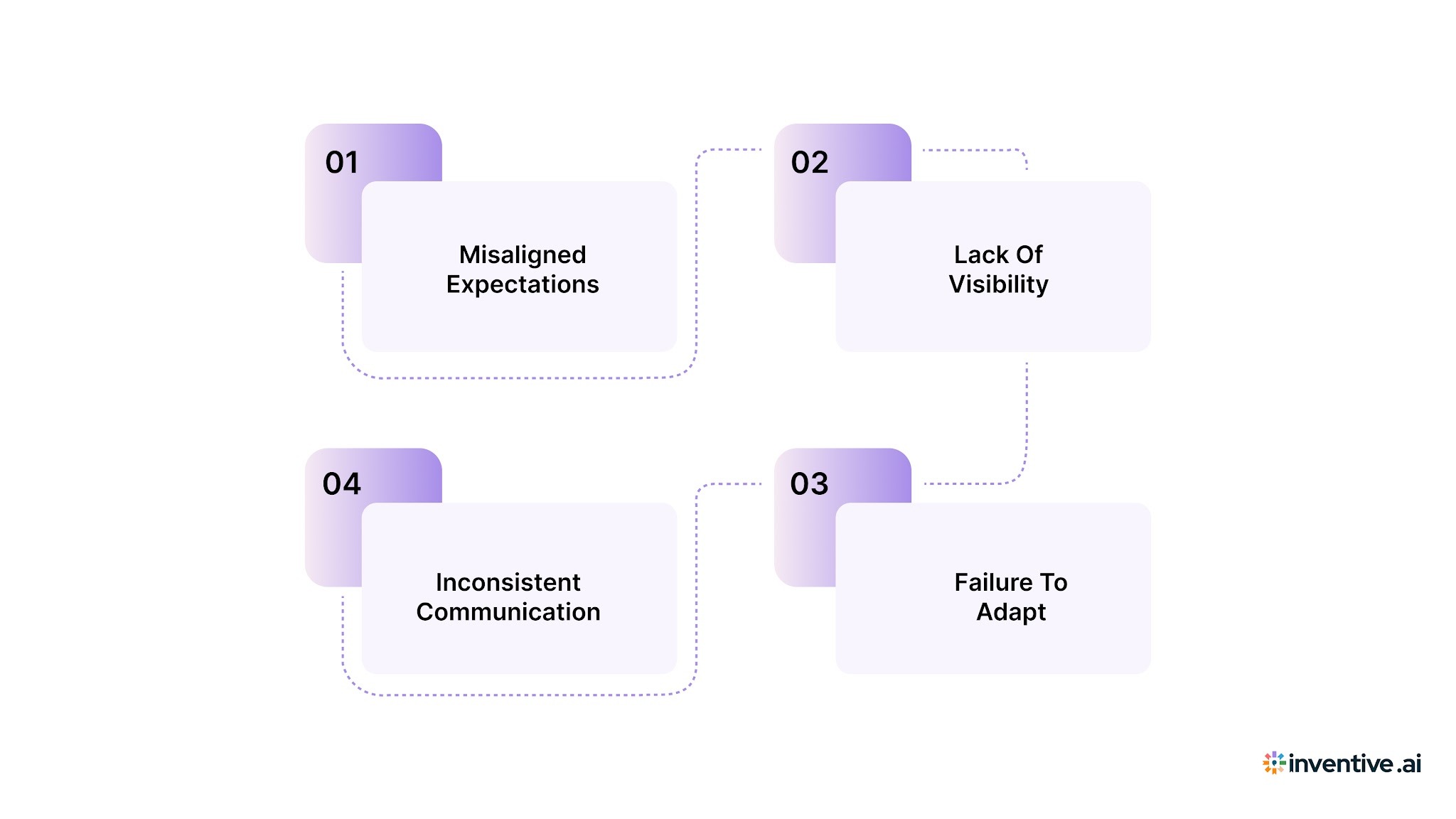
Managing your performance through a buyer-driven system isn’t always easy. Here are the common challenges vendors face in VPM, and how to tackle them:
1. Misaligned Expectations
Buyers and vendors sometimes disagree on performance metrics, leading to misunderstandings and poor evaluations. To overcome this, always clarify expectations upfront and ensure both parties are aligned on Key Performance Indicators (KPIs). Setting clear goals from the start helps keep everything on track.
2. Lack of Visibility
Without the right tools, it’s hard to track performance and make improvements. To address this, invest in performance management tools or AI-driven systems that help you track progress and offer insights into how to improve. These tools give you a clearer picture and guide your decisions.
3. Failure to Adapt
Vendors often fail to adjust to feedback, which leads to stagnant performance. By regularly asking for feedback from buyers and acting on it, you demonstrate your commitment to improvement. Listening to feedback ensures you stay aligned with buyer needs and continue to evolve your service.
4. Inconsistent Communication
Poor communication can cause errors, delays, and mismatched expectations. Set clear communication channels within your team and with the buyer to avoid confusion. Regular updates and transparent conversations keep performance on track and prevent issues from escalating.
Addressing these challenges head-on can drastically improve your performance and win the buyer’s loyalty.
Also Read: Ultimate RFP Response Toolkit for US Vendors (2026)
Turn Your Performance Into Trust-worthy Answers With Inventive AI: Top RFP Solution
Managing vendor performance is one part of the equation. Communicating it clearly to buyers is where most teams struggle.
During RFPs, evaluations, and performance reviews, inputs come from multiple teams. Financials say one thing, operations say another, and responses start to feel inconsistent. That’s where deals slow down and confidence drops.
You can now generate clear, structured, and consistent responses that reflect your business accurately using Inventive AI's AI-powered RFP tool. Your every answer stays aligned, every claim is backed, and every response reads like one cohesive story.
This is how you move from scattered inputs to buyer-ready answers, without second-guessing what you’ve submitted.
1. 2× Higher Quality Responses
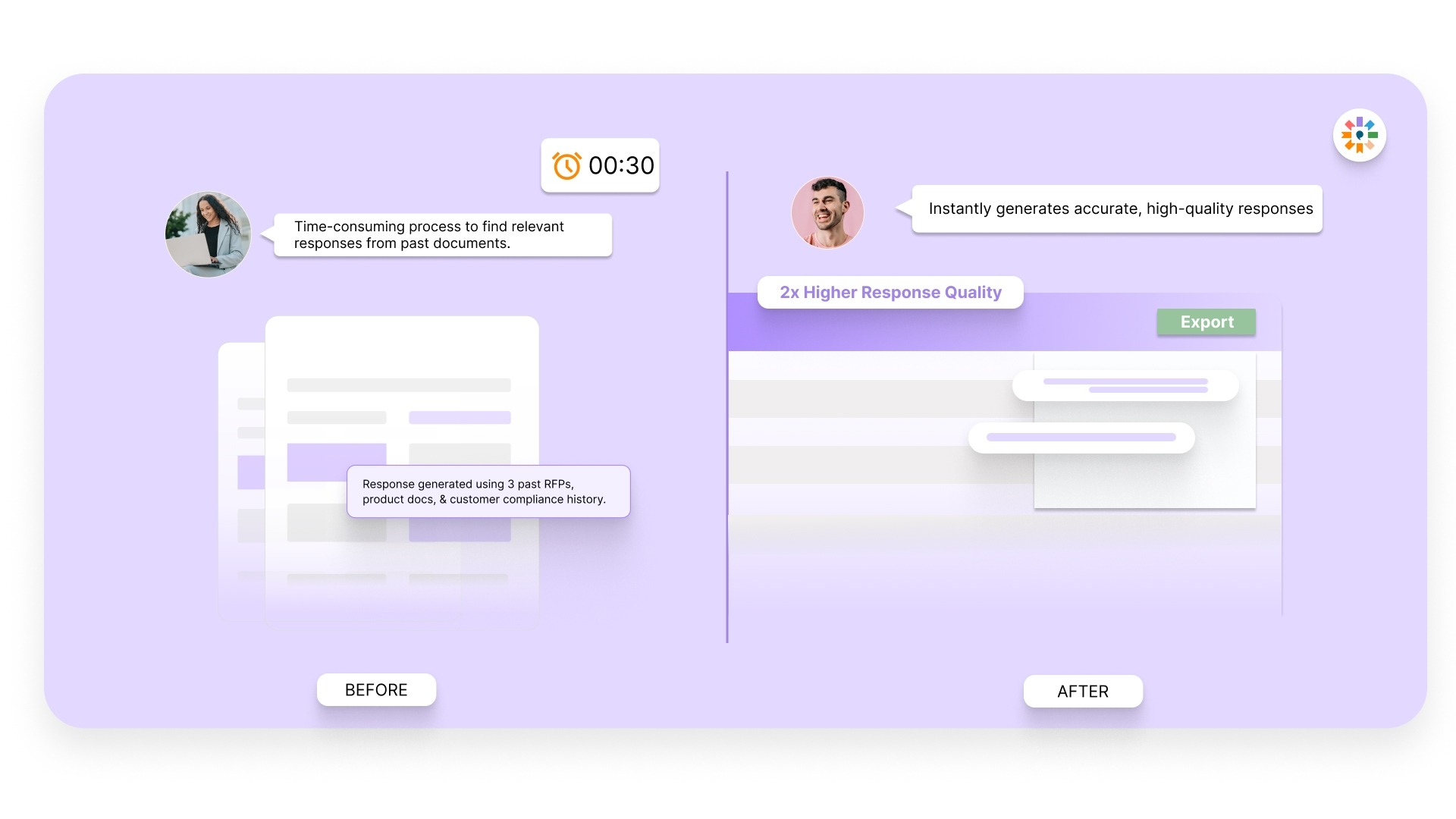
Inventive AI helps you generate structured responses using your past RFPs, documents, and knowledge sources. This keeps your answers consistent across sections and ensures they match buyer expectations, without conflicting inputs from different teams.
2. Context Engine
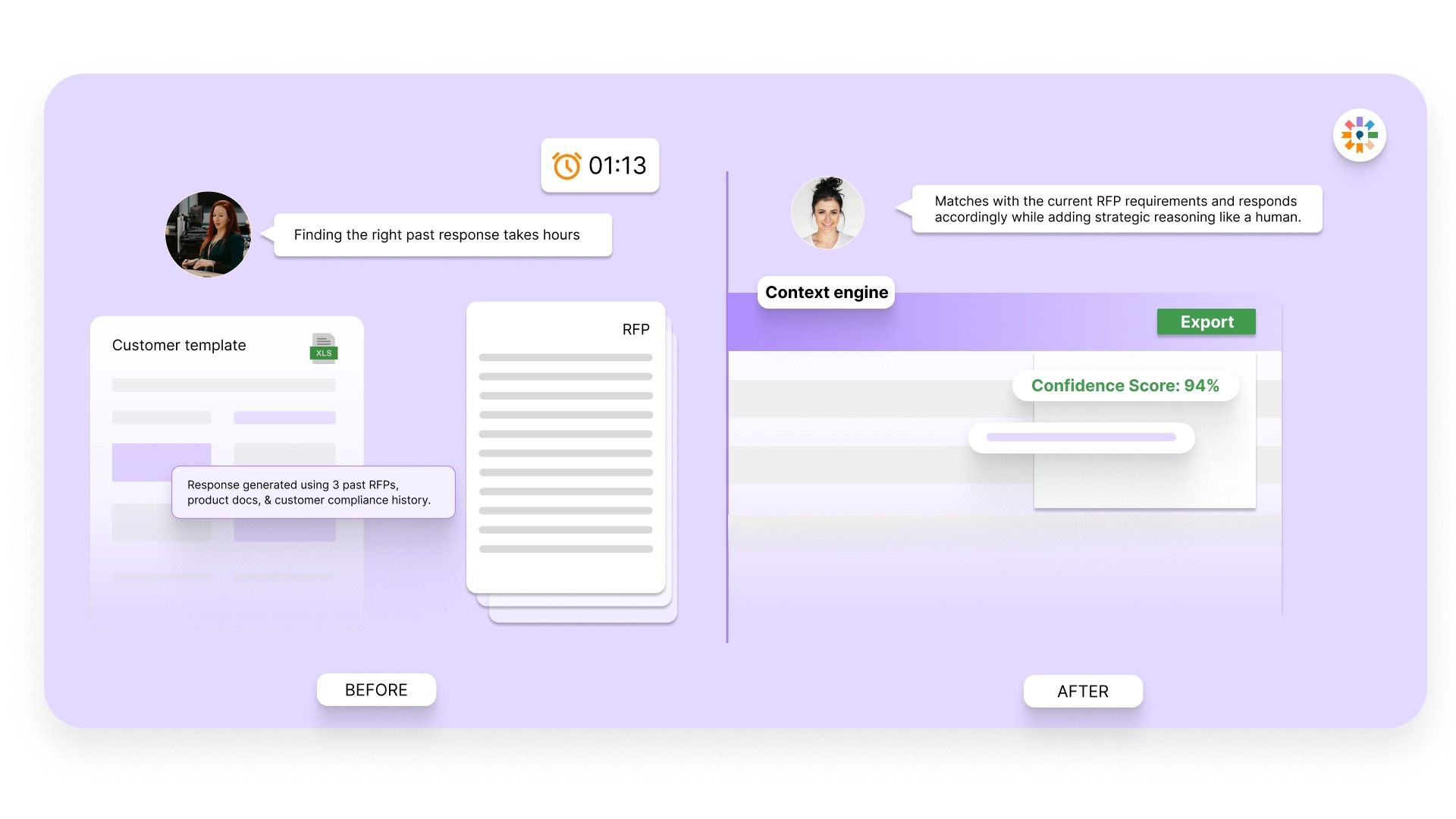
Inventive AI’s Context Engine connects your past responses, internal documents, and knowledge sources in one place. Instead of searching across tools, you get relevant, context-aware answers instantly, so you can respond faster with confidence.
3. Conflict Detection
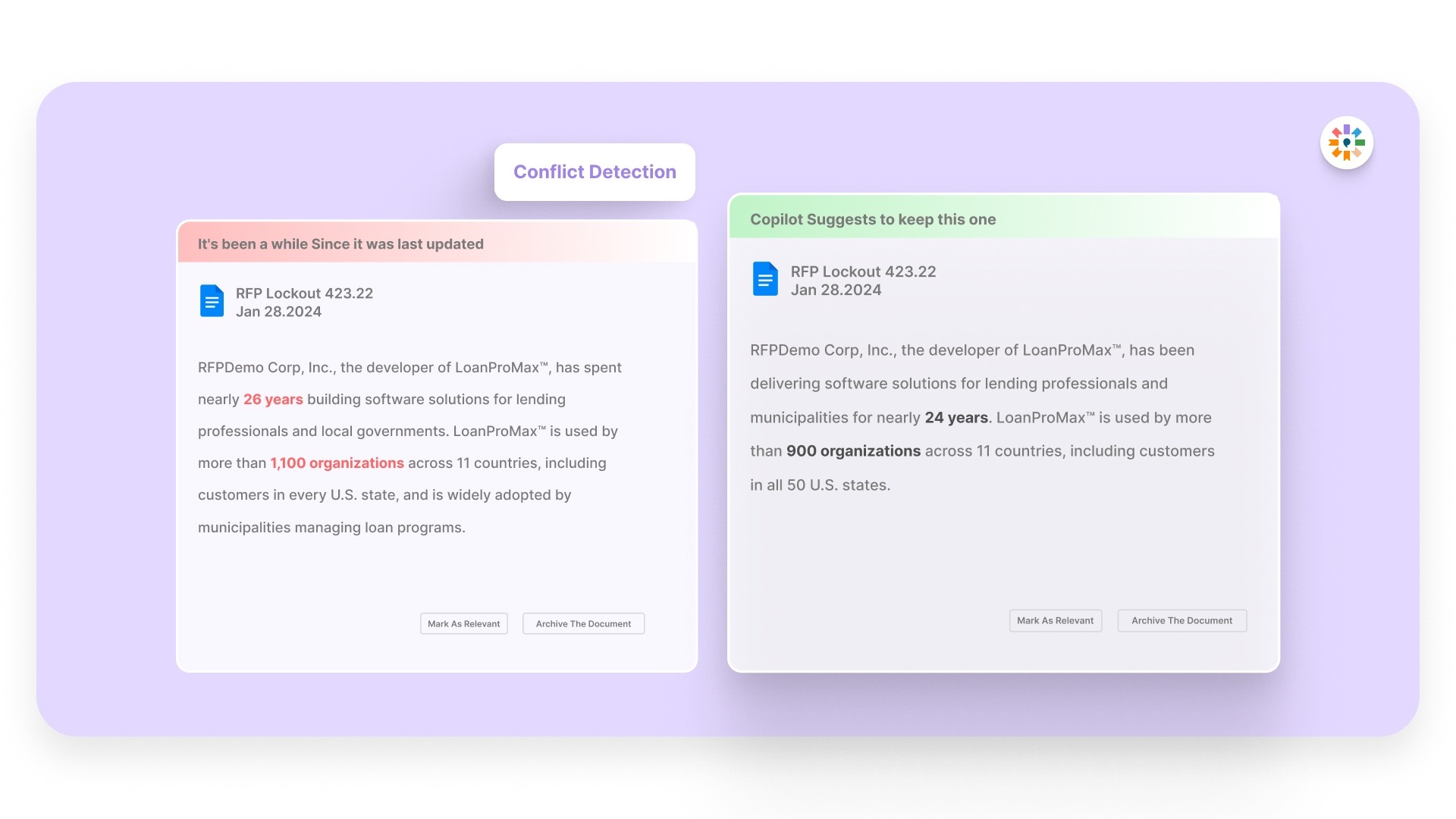
Inconsistencies or conflicts across your responses can raise red flags for the buyer. Inventive AI flags these issues before submission, so you can clear them up and reduce unnecessary back-and-forth. No more surprises during evaluation!
4. Outdated Content Detection
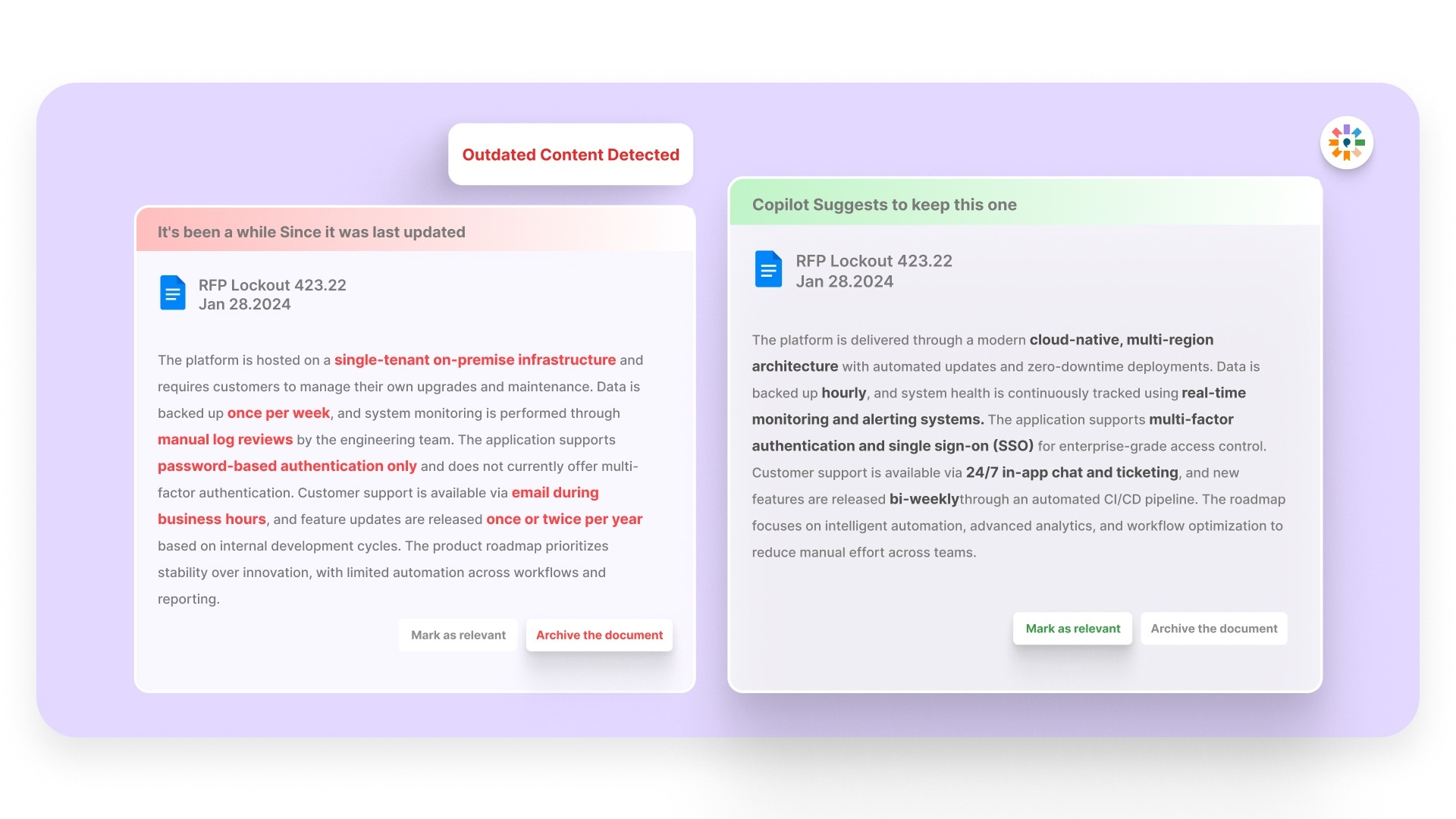
Sharing outdated information can hurt your credibility. With Inventive AI, you’re always working with the most up-to-date data. Whether it’s your product specs, contracts, or performance metrics, you’ll never have to worry about using information that no longer reflects your business.
5. Narrative Style Proposals
No one wants to read a disjointed proposal. Inventive AI helps you turn fragmented inputs from different teams into a cohesive, engaging narrative. It helps present your value clearly, making it easier for the buyer to see how well you can meet their needs.
6. Simple, Easy-to-Use Interface
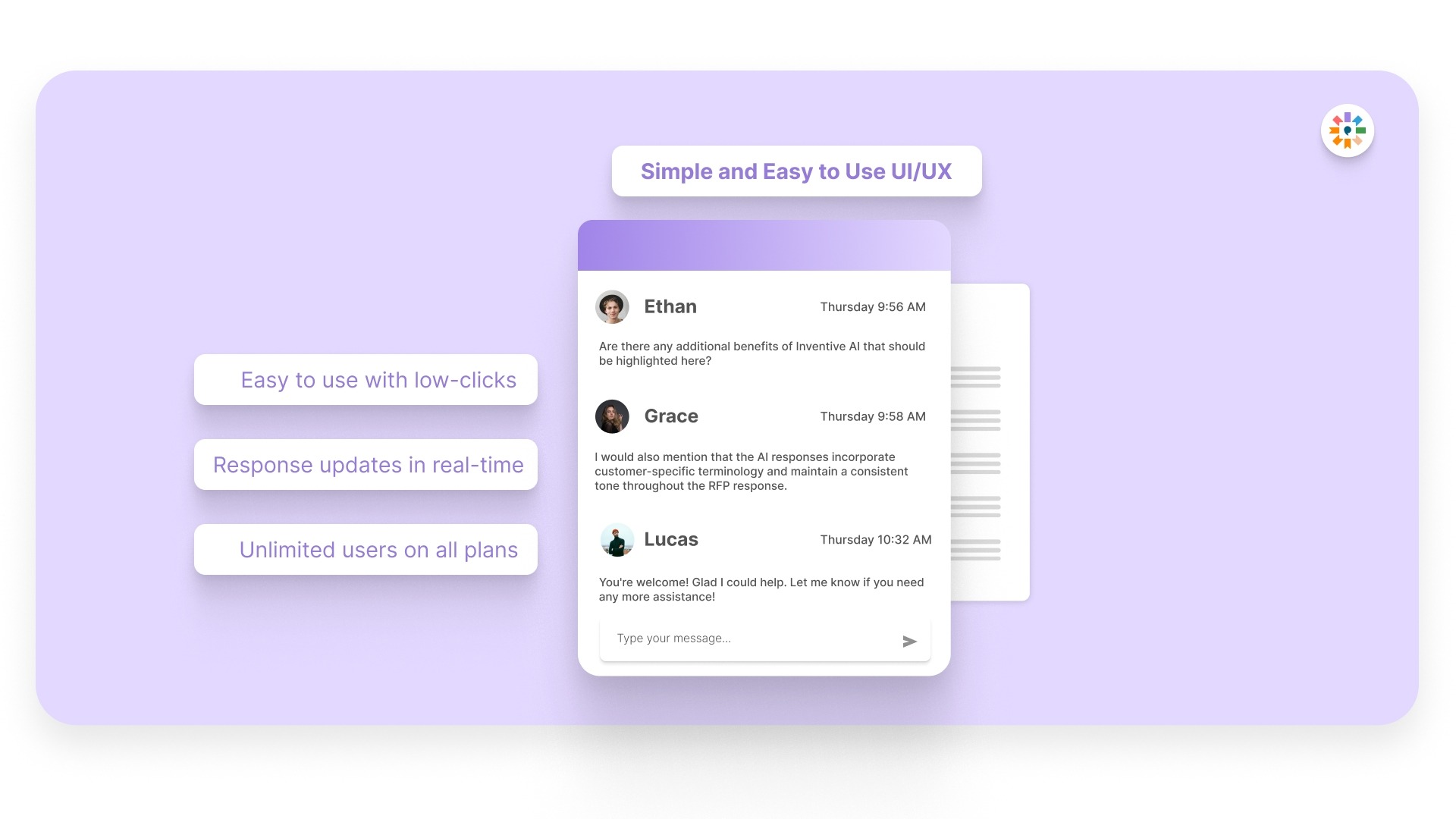
Forget the confusion of managing multiple tools or systems. Inventive AI brings all your data together in one place. With a user-friendly interface, everyone on your team can stay aligned and focused. No more silos, just faster collaboration.
With Inventive AI on your side, vendor performance management becomes simpler, smarter, and more effective. Whether you're looking to improve communication or align better with buyer expectations, Inventive AI has got you covered.
Frequently Asked Questions (FAQs)
1. How can I track my performance as a vendor?
You can use performance management tools to track key metrics such as delivery timelines, quality benchmarks, and customer feedback. Regularly reviewing these metrics helps you identify gaps early and stay aligned with buyer expectations.
2. What happens if my performance isn’t meeting expectations?
If your performance is falling short, quickly identify the root cause and create a clear action plan for improvement. Communicate this plan to the buyer, showing that you’re committed to making adjustments and addressing their concerns proactively. Taking swift action demonstrates your dedication to resolving issues.
3. How do I adapt to changing buyer expectations?
Buyers’ needs evolve, and so should your approach. Stay open to feedback and regularly engage with the buyer to ensure you’re meeting their updated expectations. Be willing to implement changes in your processes or service offerings based on the feedback you receive, keeping your performance on track.
4. What is the best way to ensure my performance remains consistent?
To maintain consistent performance, invest in tools and processes that provide real-time visibility into your progress. Make sure your internal teams are aligned with the buyer’s expectations and regularly monitor performance against established KPIs to identify and address any potential issues early.
5. How can AI help improve my performance?
AI tools like Inventive AI help you present your performance clearly during RFPs, evaluations, and buyer reviews. They ensure your responses are consistent, accurate, and aligned across teams, reducing errors and helping buyers understand your business with confidence.

90% Faster RFPs. 50% More Wins. Watch a 2-Minute Demo.
.avif)
Mukund Kumar
Understanding that sales leaders struggle to cut through the hype of generic AI, Mukund focuses on connecting enterprises with the specialized RFP automation they actually need at Inventive AI. An IIT Jodhpur graduate with 3+ years in growth marketing, he uses data-driven strategies to help teams discover the solution to their proposal headaches and scale their revenue operations.

Gaurav Nemade
After witnessing the gap between generic AI models and the high precision required for business proposals, Gaurav co-founded Inventive AI to bring true intelligence to the RFP process. An IIT Roorkee graduate with deep expertise in building Large Language Models (LLMs), he focuses on ensuring product teams spend less time on repetitive technical questionnaires and more time on innovation.