Vendor Comparison Template for Procurement and Evaluation Teams

Selecting the right vendor requires more than reviewing proposals individually. Organizations need a structured way to compare vendor capabilities, pricing, experience, and overall fit side by side. Without a clear comparison framework, teams risk choosing vendors based on incomplete or inconsistent information.
To simplify this process, we’ve created a complete vendor comparison template for buyers and structured response templates for vendors. These templates help procurement teams evaluate vendors consistently and help vendors present their qualifications clearly and competitively.
You can download and customize these templates to compare software providers, service vendors, agencies, and other partners across criteria such as capabilities, pricing, compliance, and performance.
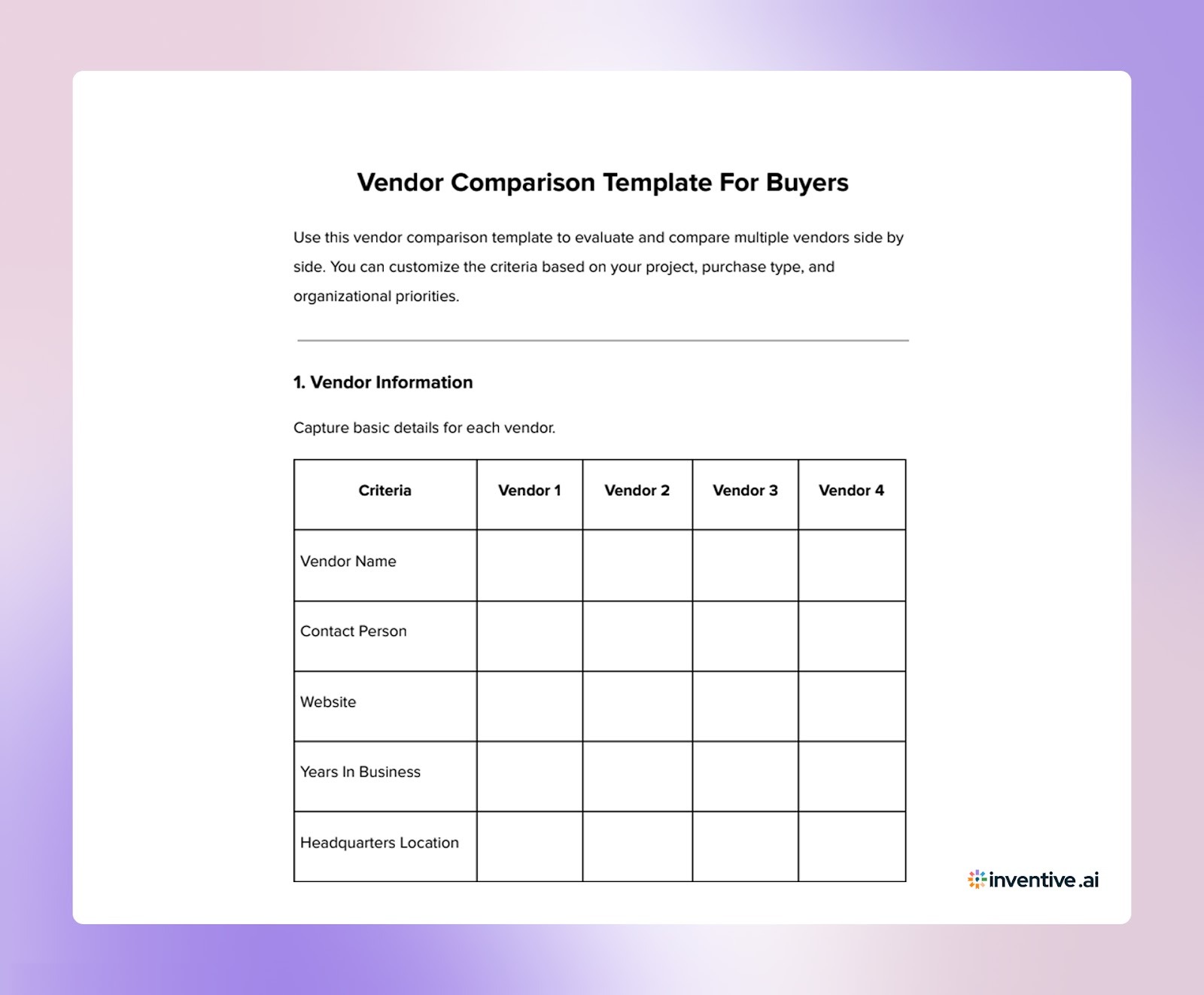
Vendor Comparison Template For Buyers And Procurement Teams
If you are using a vendor comparison template, your document must create clarity across vendor capabilities, pricing, compliance, experience, and evaluation criteria. Vendor comparisons vary based on purchase type, project scope, and risk level, but several evaluation factors remain consistent across most procurement decisions.
While requirements may differ for software vendors, service providers, agencies, or operational partners, the following components form the foundation of a well-structured vendor comparison template.
Vendor Comparison Templates for Vendors in 2026
When buyers evaluate multiple vendors, they use structured comparison sheets to assess capabilities, pricing, experience, and overall fit. Vendors that present their information clearly and align with these evaluation criteria are more likely to get shortlisted and win the final decision.
The templates below help you organize your responses, highlight your strengths, and compete more effectively in vendor comparisons.
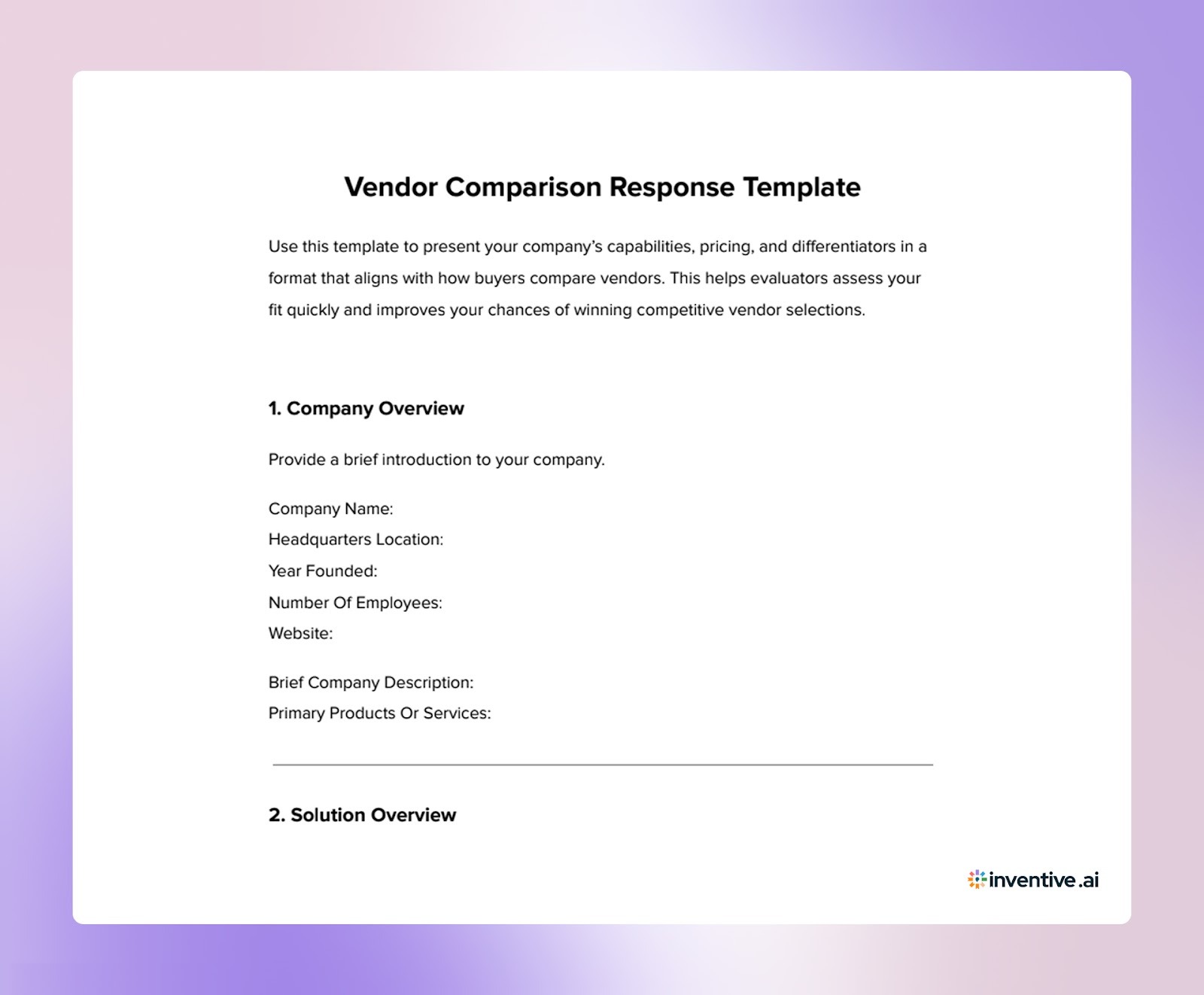
Template 1: Vendor Comparison Response Template
Use this template to present your capabilities, differentiators, pricing, and delivery approach in a format that matches how buyers compare vendors.
Template 2: Vendor Capability Statement Template
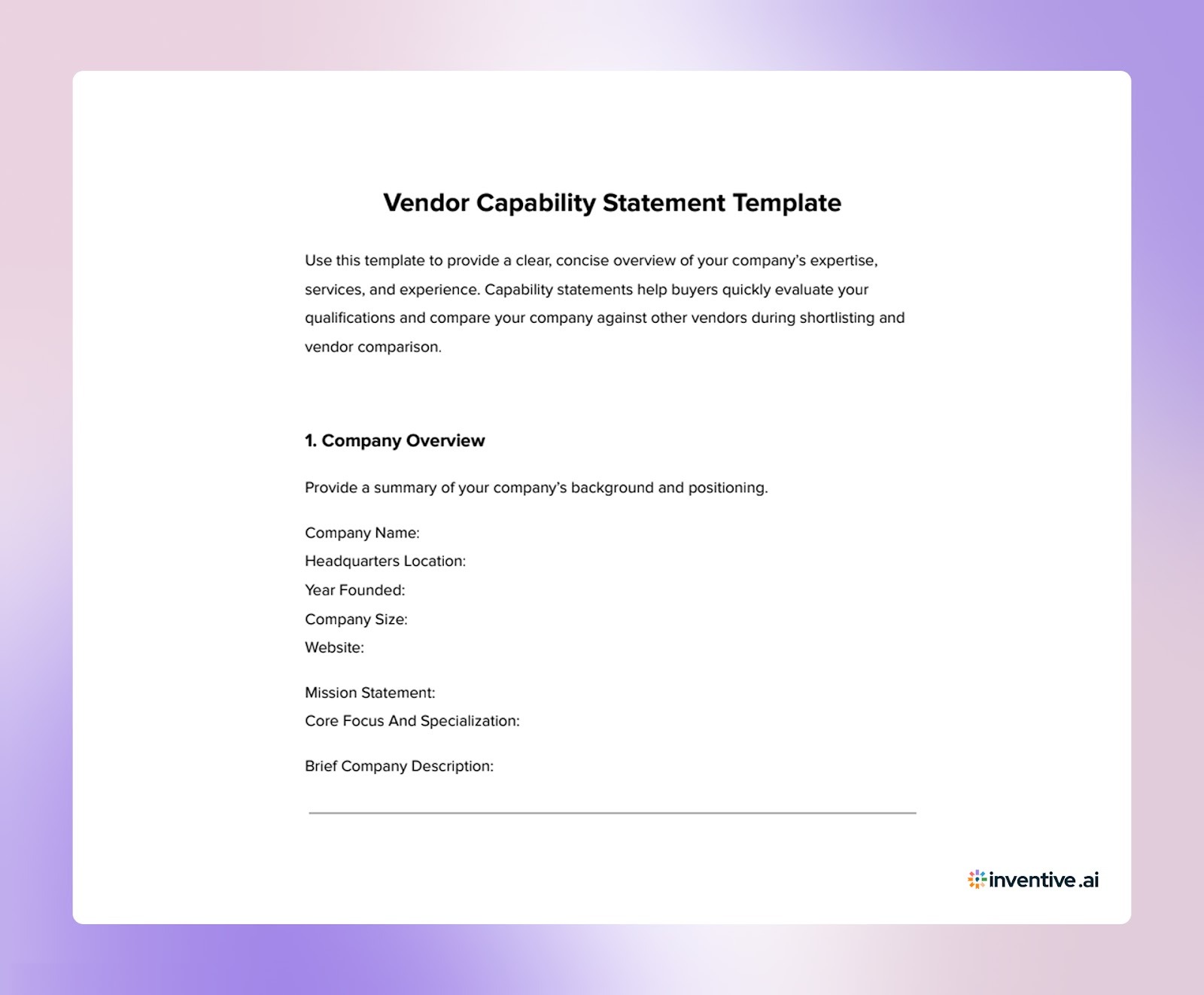
Use this template to provide a clear overview of your company’s expertise, services, and experience. Capability statements help buyers quickly assess whether your company qualifies for their requirements.
Template 3: Vendor Proposal Template
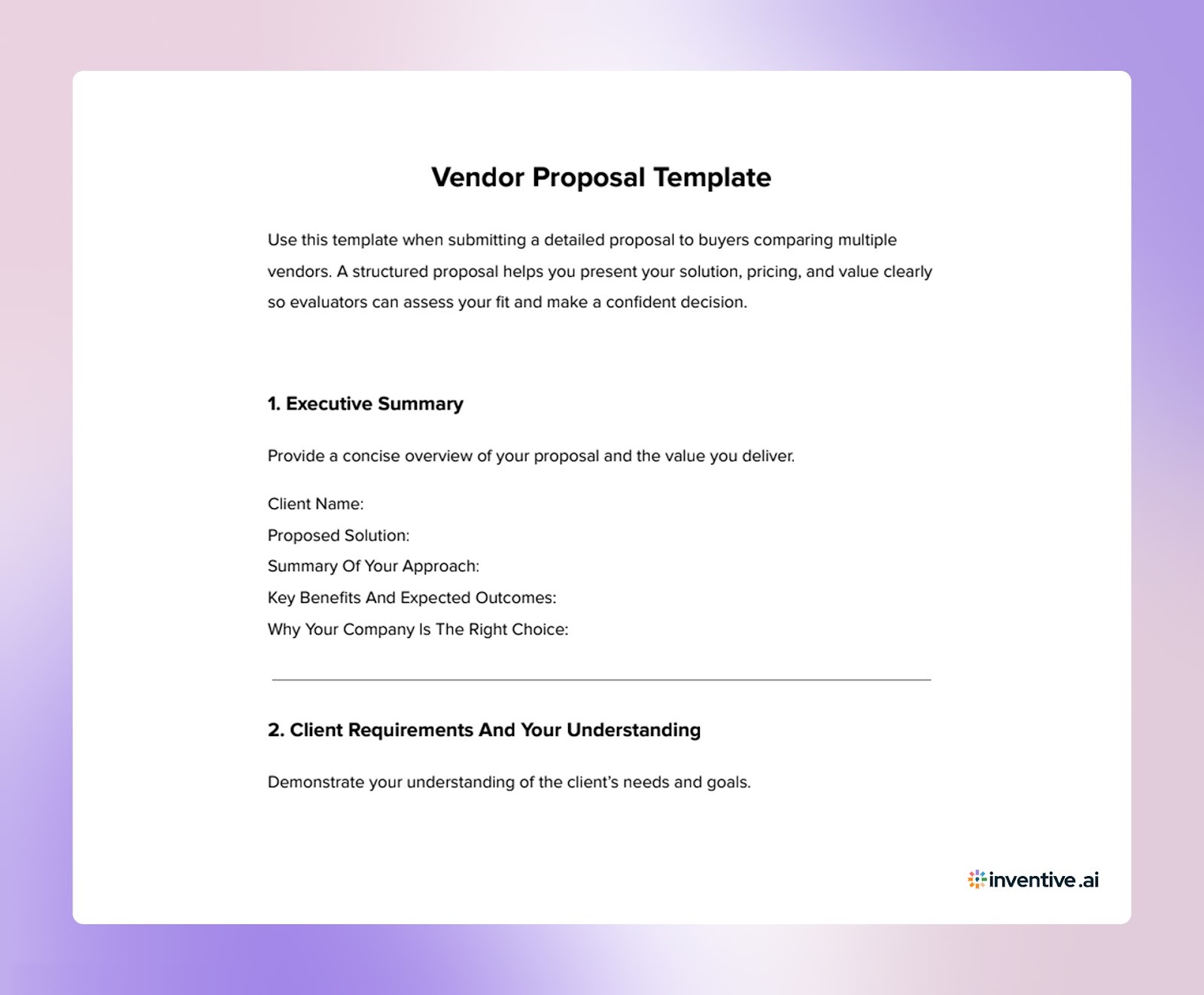
Use this template when submitting detailed proposals to buyers who are comparing shortlisted vendors. A structured proposal helps you present your solution, pricing, and value clearly.
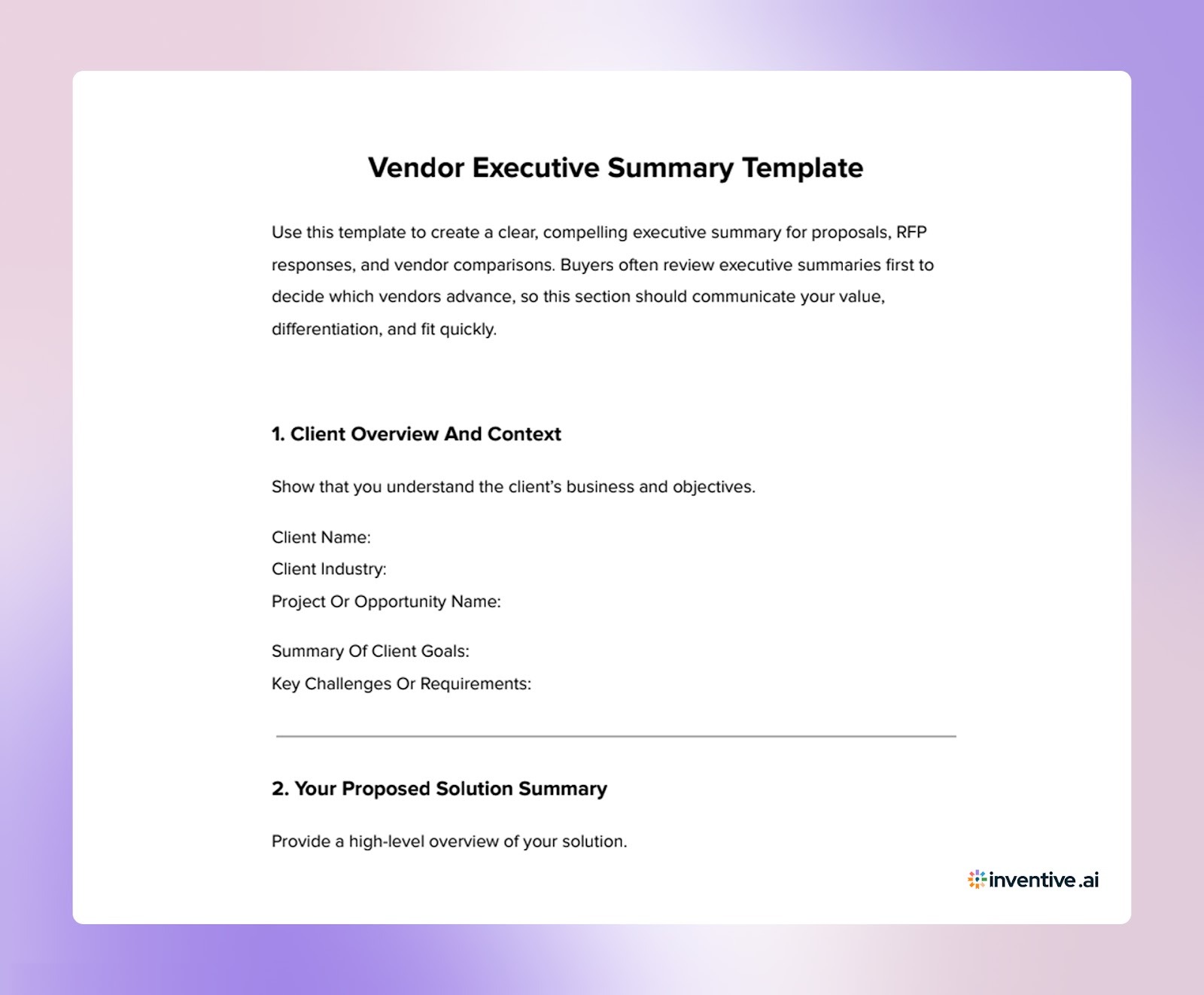
Template 4: Vendor Executive Summary Template
Use this template to create a strong executive summary that highlights your value, differentiators, and expected outcomes. This is often the first section buyers review during vendor comparisons.
Why Vendor Comparison Templates Matter For Buyers And Vendors?
Vendor comparison templates help both buyers and vendors bring structure, clarity, and consistency to the evaluation process. They ensure decisions are based on complete, comparable information rather than scattered documents or subjective judgment.
For procurement and evaluation teams, comparing vendors across multiple proposals can be complex and time-consuming.
Buyers can use vendor comparison templates to:
- Evaluate multiple vendors using consistent criteria
- Identify strengths and weaknesses across proposals
- Improve transparency in decision-making
- Reduce selection risk and errors
- Support internal approvals with structured data
This helps buyers select vendors more confidently and efficiently.
For vendors, comparison templates help:
- Understand what buyers prioritize during evaluation
- Present capabilities in a clear and comparable format
- Highlight differentiators and strengths effectively
- Avoid missing important response information
- Improve shortlist and win rates
Well-structured responses improve evaluation outcomes and increase the chances of winning new business.
6 Tips To Optimize Vendor Comparison Templates
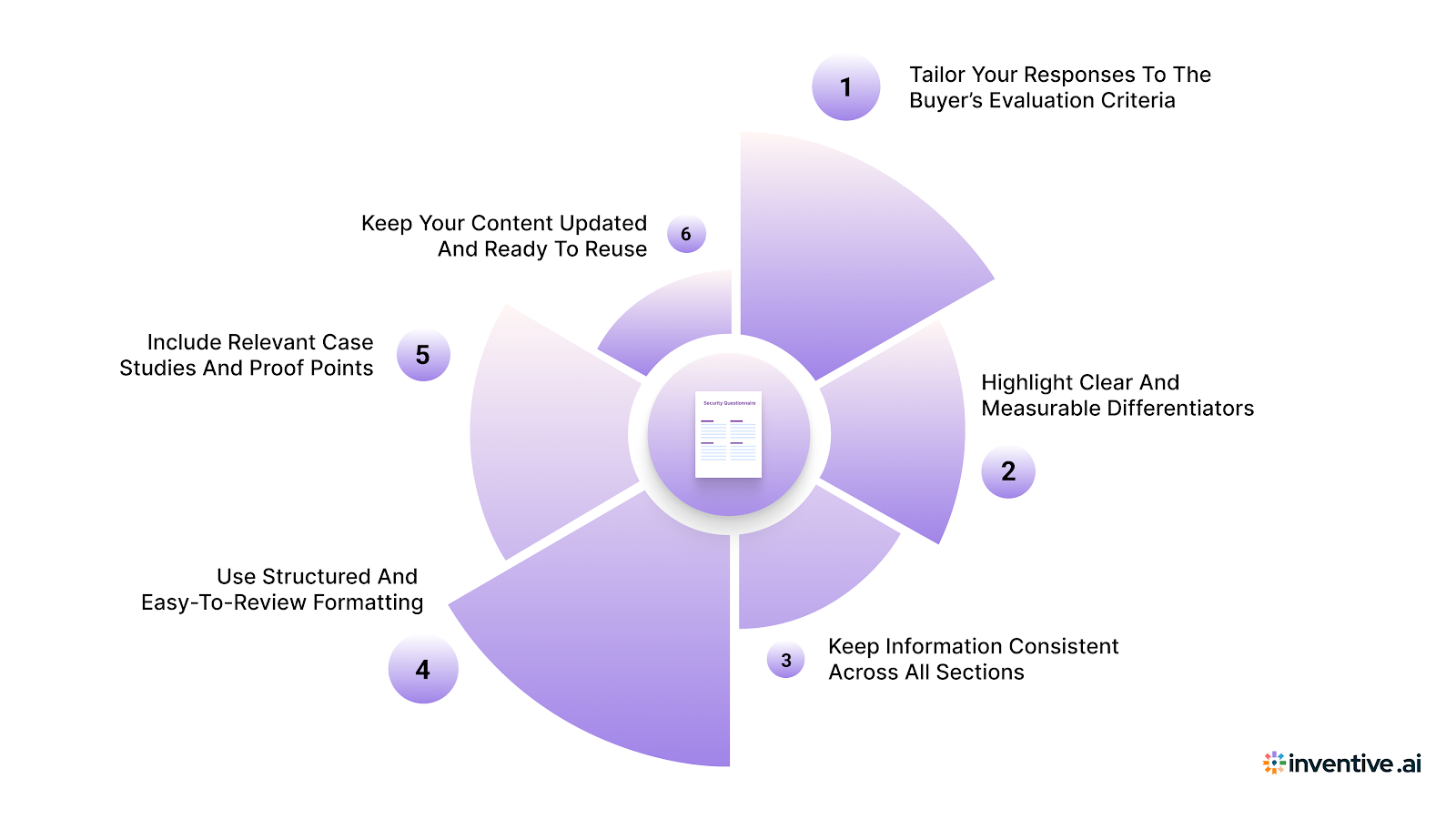
Vendor comparison templates define how buyers evaluate competing solutions. Optimizing your responses ensures evaluators can quickly understand your strengths, differentiate your offering, and score your proposal accurately.
1. Tailor Your Responses To The Buyer’s Evaluation Criteria
Buyers compare vendors based on specific requirements such as capabilities, pricing, implementation, and experience. Align your responses directly with these criteria and avoid generic company descriptions.
Clearly explain how your solution meets each requirement and supports the buyer’s goals.
2. Highlight Clear And Measurable Differentiators
Comparison templates are designed to identify differences between vendors. Focus on what makes your solution stronger, such as faster implementation, better performance, or deeper industry experience.
Use specific examples and measurable results whenever possible.
3. Keep Information Consistent Across All Sections
Inconsistent information across executive summaries, proposals, and comparison responses creates confusion and reduces credibility. Ensure pricing, timelines, capabilities, and case studies are aligned across all documents.
Consistency improves evaluator confidence.
4. Use Structured And Easy-To-Review Formatting
Buyers review multiple vendors at the same time. Use clear headings, concise answers, and structured tables to make your responses easier to evaluate.
Well-organized responses improve readability and scoring.
5. Include Relevant Case Studies And Proof Points
Proof strengthens your position in vendor comparisons. Include case studies that match the buyer’s industry, use case, or project scope.
Demonstrating proven results increases trust and improves shortlist chances.
6. Keep Your Content Updated And Ready To Reuse
Vendor comparison responses often reuse company information, certifications, and case studies. Maintain updated content so your team can respond quickly without risking outdated information.
This improves response speed and accuracy.
Optimizing your vendor comparison templates helps you present your strengths clearly, improve evaluation scores, and increase your chances of winning competitive opportunities.
Must Read: RFP Software Comparison for Transportation 2025
How Inventive AI Helps You Win Vendor Comparisons Faster?
Vendor comparison responses often reuse boilerplate content across proposals, capability statements, and executive summaries. Over time, this leads to outdated case studies being reused, inconsistent positioning across documents, and generic responses that fail to align with buyer evaluation criteria.
Better answers = higher win rate. That’s why response quality matters more than any feature or price.
Inventive AI applies contextual evaluation across the full vendor comparison response instead of generating isolated answers. It produces responses aligned with the buyer’s evaluation criteria, flags contradictions before submission, and detects outdated content that should not appear in competitive proposals.
Want proof of how much faster and more effective your vendor comparison responses can be?
FAQs
1. What Do Buyers Typically Look For In Vendor Comparison Responses?
Buyers often start with executive summaries to understand overall fit and value. They also review differentiators and relevant experience early in the process. Clear positioning helps buyers decide whether to evaluate the rest of the response in detail.
2. How Can Vendors Make Their Responses Easier For Buyers To Compare?
Vendors should follow the structure and terminology used in the buyer’s comparison template. Using clear headings, direct answers, and requirement-aligned responses improves readability. This makes it easier for evaluators to score and compare vendors accurately.
3. Why Is Consistency Important Across Vendor Proposals?
Buyers often review multiple documents, including proposals, capability statements, and comparison sheets. Inconsistent messaging creates confusion and reduces trust. Consistent positioning strengthens credibility during evaluation.
4. What Role Do Internal Teams Play In Vendor Comparison Responses?
Sales, product, security, and leadership teams often contribute information to responses. Coordinating across teams ensures responses are complete and accurate. Efficient collaboration helps vendors meet deadlines without delays.
5. How Do Vendor Comparisons Influence Final Purchasing Decisions?
Vendor comparisons help buyers narrow down options and justify their final selection internally. These evaluations often determine which vendors move to final negotiations. Strong comparison responses increase the likelihood of advancing.
6. How Can Vendors Prepare In Advance For Future Vendor Comparisons?
Maintaining updated case studies, pricing information, and capability documents helps vendors respond faster. Preparing reusable, structured content improves readiness. This allows vendors to pursue more opportunities efficiently.




%2010%20Free%20Response%20Templates%20By%20Industry%20%26%20Service.jpg)
%20Craft%20Winning%20Vendor%20Responses%20Quickly.jpg)

%20Free%20Excel%20Checklist.jpg)
.jpg)