The Ultimate CPQ RFP Template and Response Guide for 2026

Have you ever opened an RFP and noticed that half the questions revolve around product configuration logic, pricing rules, CRM integrations, and quoting workflows? That is usually the moment you realize you are dealing with a configure price quote (CPQ) RFP software.
This is no ordinary RFP. You may need to explain configuration rules, pricing governance, system integrations, and implementation capabilities across multiple sections. When deadlines are tight and information sits across different product documents, preparing a structured response becomes difficult.
Without a clear template, teams often spend hours organizing product details instead of strengthening their proposal.
To make this process easier, we have created a CPQ RFP template to help you understand what buyers typically request. We have also included a CPQ RFP response template so you can prepare structured proposals quickly with only a few adjustments.
A Practical CPQ RFP Template in 2026 for Buyers
A CPQ RFP template is a structured document buyers use to evaluate Configure, Price, Quote software vendors. Organizations use these templates when selecting CPQ platforms to support sales teams, automate pricing processes, and improve quote accuracy.
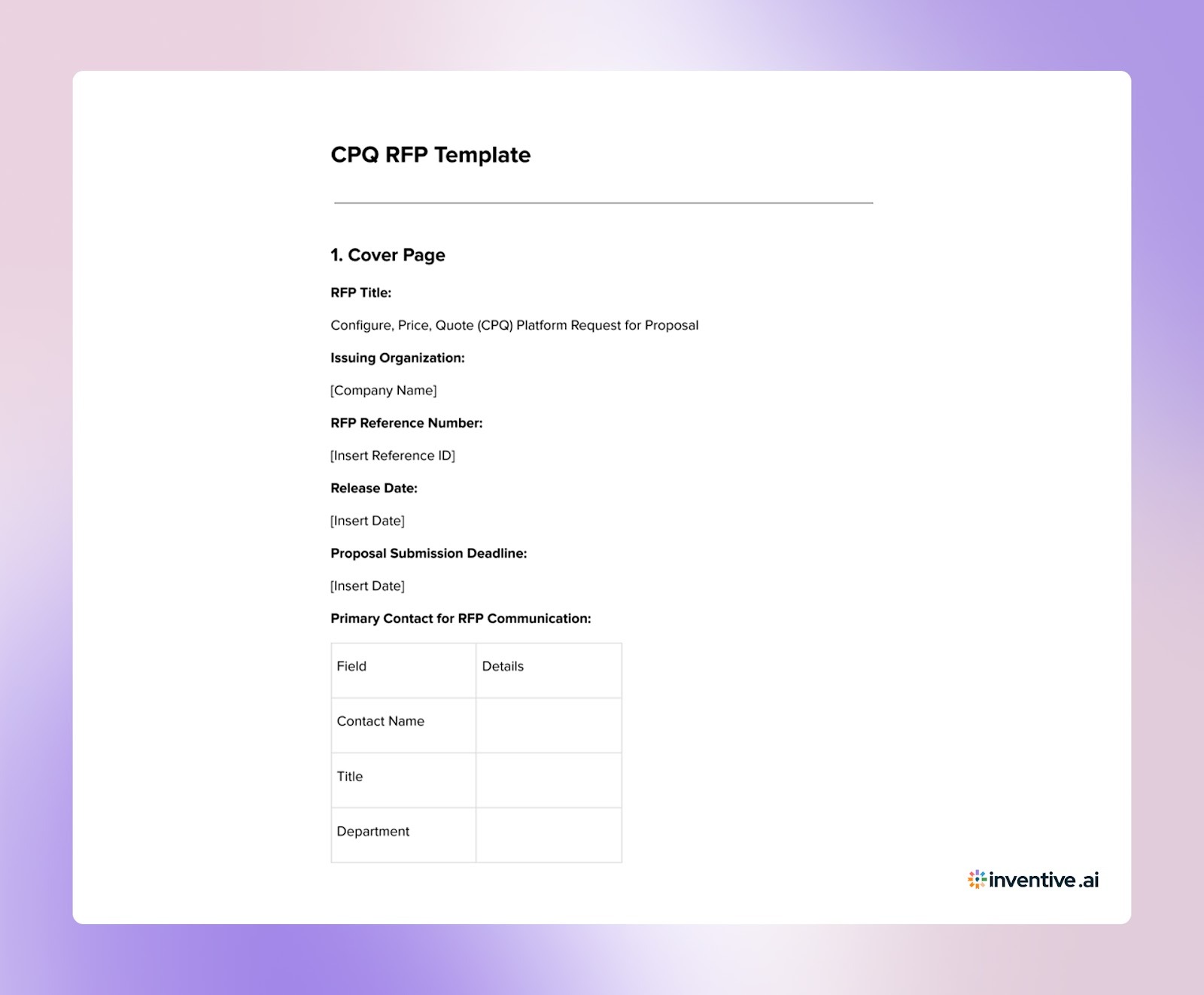

The Core Sections That Shape CPQ Vendor Assessments
Common components include:
- Business objectives: Buyers describe sales process challenges and goals for improving quoting efficiency.
- Product configuration requirements: Buyers outline product catalog complexity and configuration logic required for their offerings.
- Pricing and discount rules: This section defines pricing structures, discount controls, and approval workflows.
- Integration requirements: Buyers specify integration expectations with CRM, ERP, billing, and other enterprise systems.
- Implementation requirements: Buyers request details about deployment timelines, onboarding support, and migration processes.
- Security and compliance requirements: Vendors must demonstrate data protection standards and security controls.
- Vendor experience: Buyers evaluate the vendor’s experience implementing CPQ systems for similar industries.
- Pricing structure: Buyers compare licensing models, subscription costs, and implementation fees.
Now that you understand what a buyer’s CPQ RFP typically includes and how proposals are evaluated, the next step is preparing a structured response. This is where a well-designed response template helps you organize your answers and present your CPQ capabilities clearly.
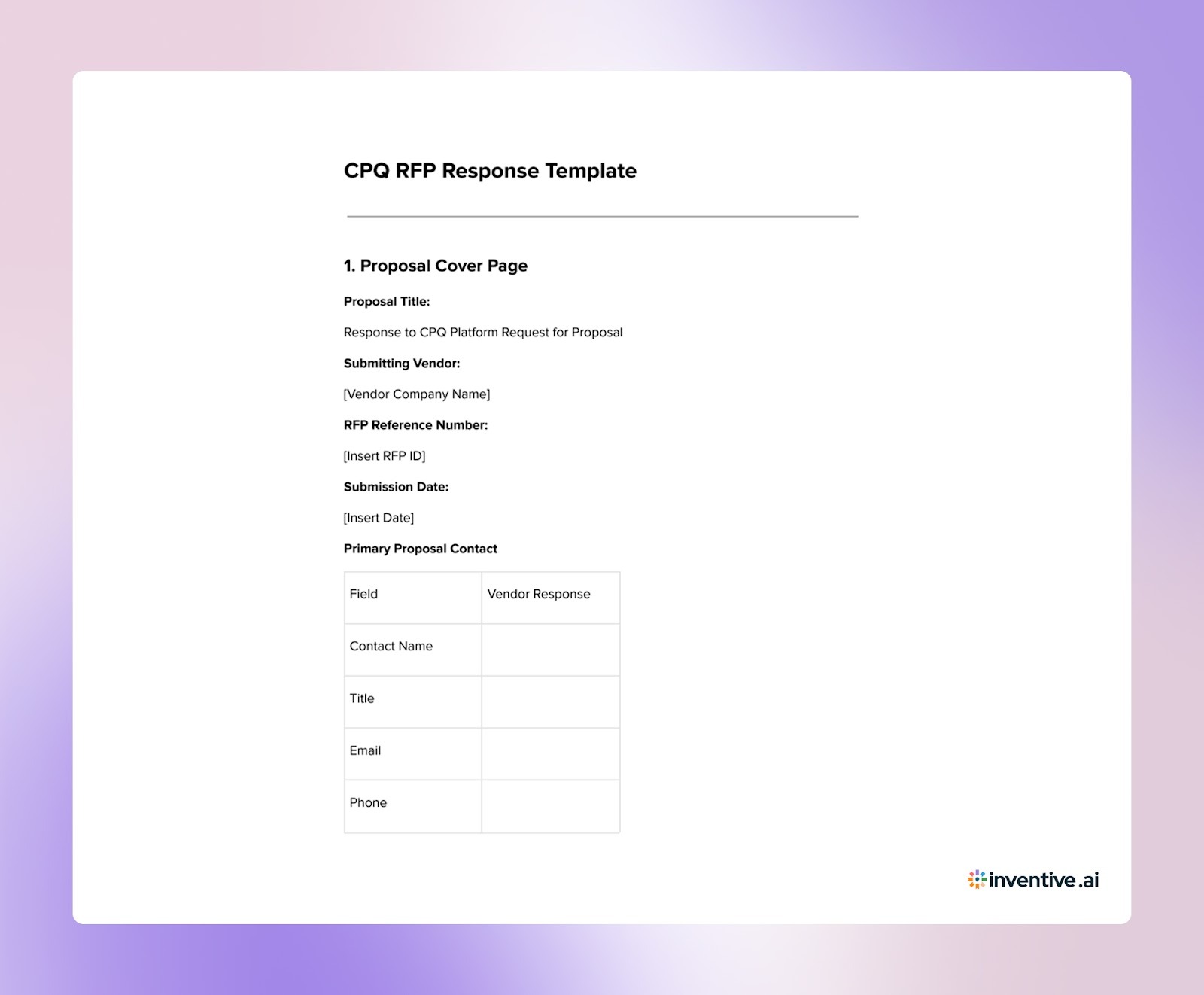
Build Stronger Proposals With a Standard CPQ RFP Response Template (For Vendors)
Instead of drafting responses from scratch for every RFP, vendors can maintain a template containing product capabilities, technical documentation, and implementation details.
When a CPQ RFP arrives, your team can quickly adapt the template to match the buyer’s requirements.

7 Proven Customization Tips to Strengthen CPQ RFP Template
Even with a structured template, strong CPQ proposals require customization aligned with the buyer’s priorities. You should adjust your response to reflect the buyer’s sales workflows, product complexity, and system integrations.
Key customization strategies include:
- Align product capabilities with sales workflows: Show how your CPQ platform supports the buyer’s quoting process, sales approvals, and deal configuration requirements.
- Highlight relevant implementation experience: Include examples of CPQ deployments in similar industries or organizations with comparable product complexity.
- Customize integration responses: Address the specific CRM, ERP, billing, or eCommerce platforms mentioned in the CPQ RFP.
- Match pricing models to buyer expectations: Adjust licensing structures, user tiers, and pricing flexibility based on procurement requirements.
- Demonstrate measurable business outcomes: Provide examples of improvements in quote turnaround time, pricing accuracy, or sales productivity.
- Address product catalog complexity: Explain how your CPQ system handles complex product catalogs, bundled offerings, configuration rules, and multi-level product hierarchies.
- Explain implementation and onboarding approach: Outline how your team manages CPQ deployment, data migration, and training to ensure smooth adoption.
Customized responses help buyers see how your CPQ platform fits their sales processes and quoting requirements.
The Evaluation Factors That Determine CPQ Vendor Selection
Buyers assess CPQ proposals using defined criteria to compare software vendors.
Typical evaluation factors include:
- Product configuration flexibility: Ability to handle complex product catalogs and rule-based configuration.
- Pricing automation capabilities: Support for pricing rules, discounts, and approval workflows.
- System integrations: Compatibility with CRM, ERP, and billing systems.
- Scalability and performance: Ability to support growing sales teams and product portfolios.
- Implementation and support: Vendor expertise in onboarding and long-term system support.
These criteria help buyers determine which CPQ vendor best fits their sales and pricing operations.
Respond to Complex CPQ RFPs Faster With Inventive AI
CPQ RFPs often require detailed responses covering product configuration rules, pricing automation, CRM integrations, and quoting workflows. Preparing these responses repeatedly can slow down proposal teams, especially when information is spread across multiple documents.
With AI-powered RFP response software, Inventive AI helps you organize your proposal knowledge and generate structured responses faster for CPQ RFPs.
1. 2× Higher Quality Responses
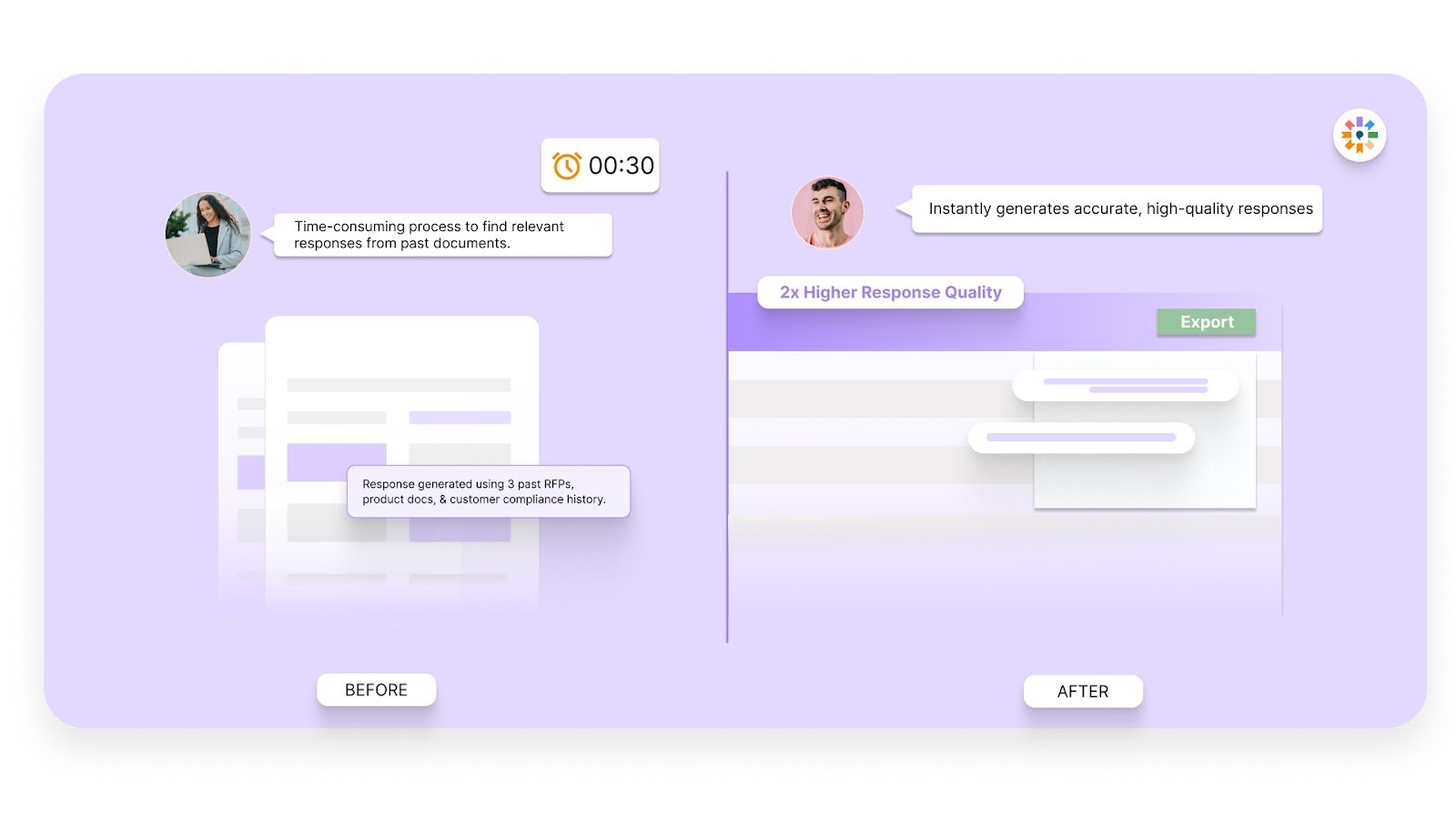
Inventive AI uses your internal knowledge sources, past proposals, and product documentation to generate structured drafts aligned with CPQ RFP requirements. This helps your team present configuration capabilities, pricing automation features, and integration details more clearly in every proposal.
2. Context Engine
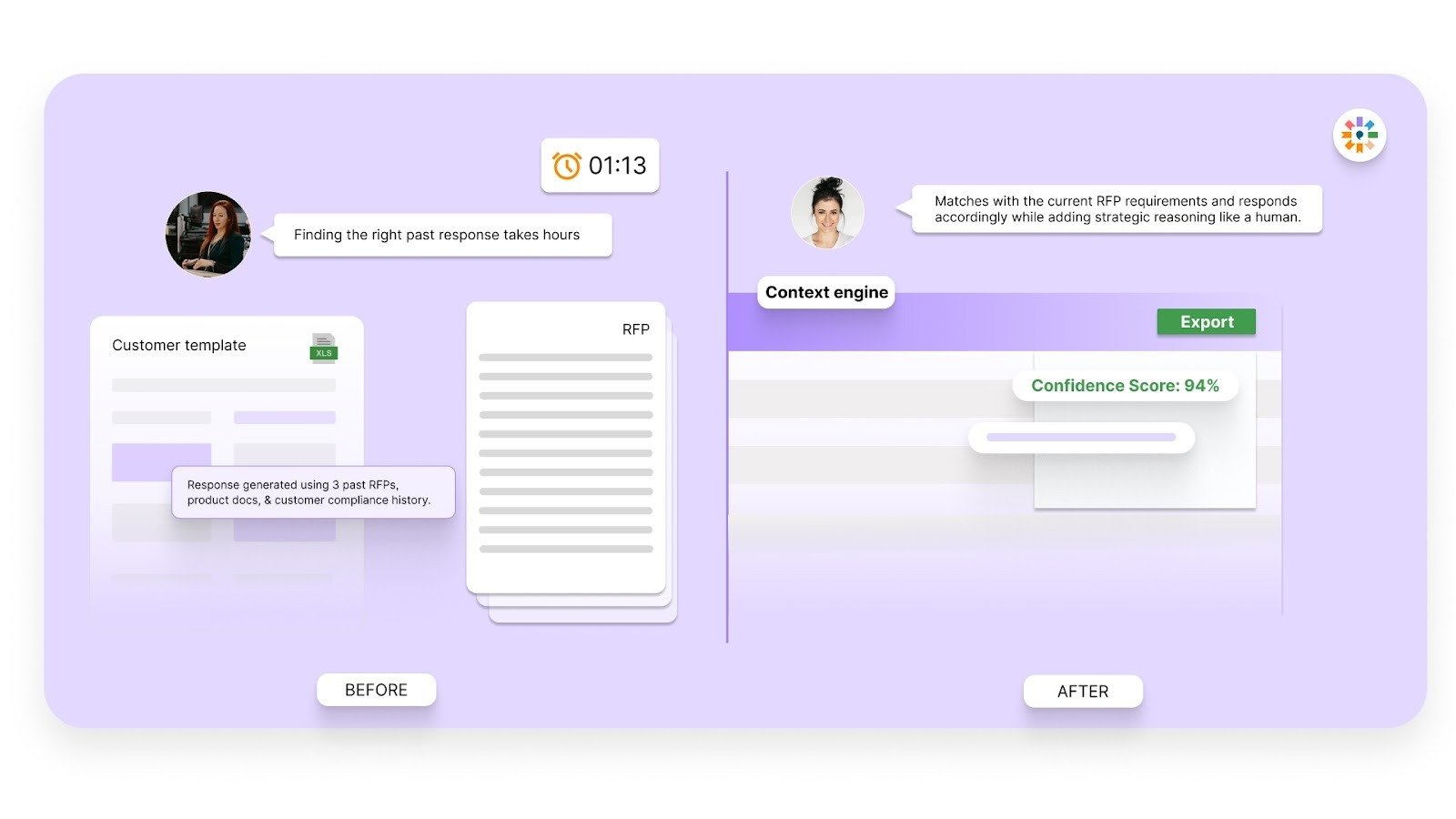
The platform analyzes previous RFP responses, product documentation, and internal knowledge sources. It then suggests relevant responses that align with the specific CPQ requirements outlined in the RFP.
3. Conflict Detection
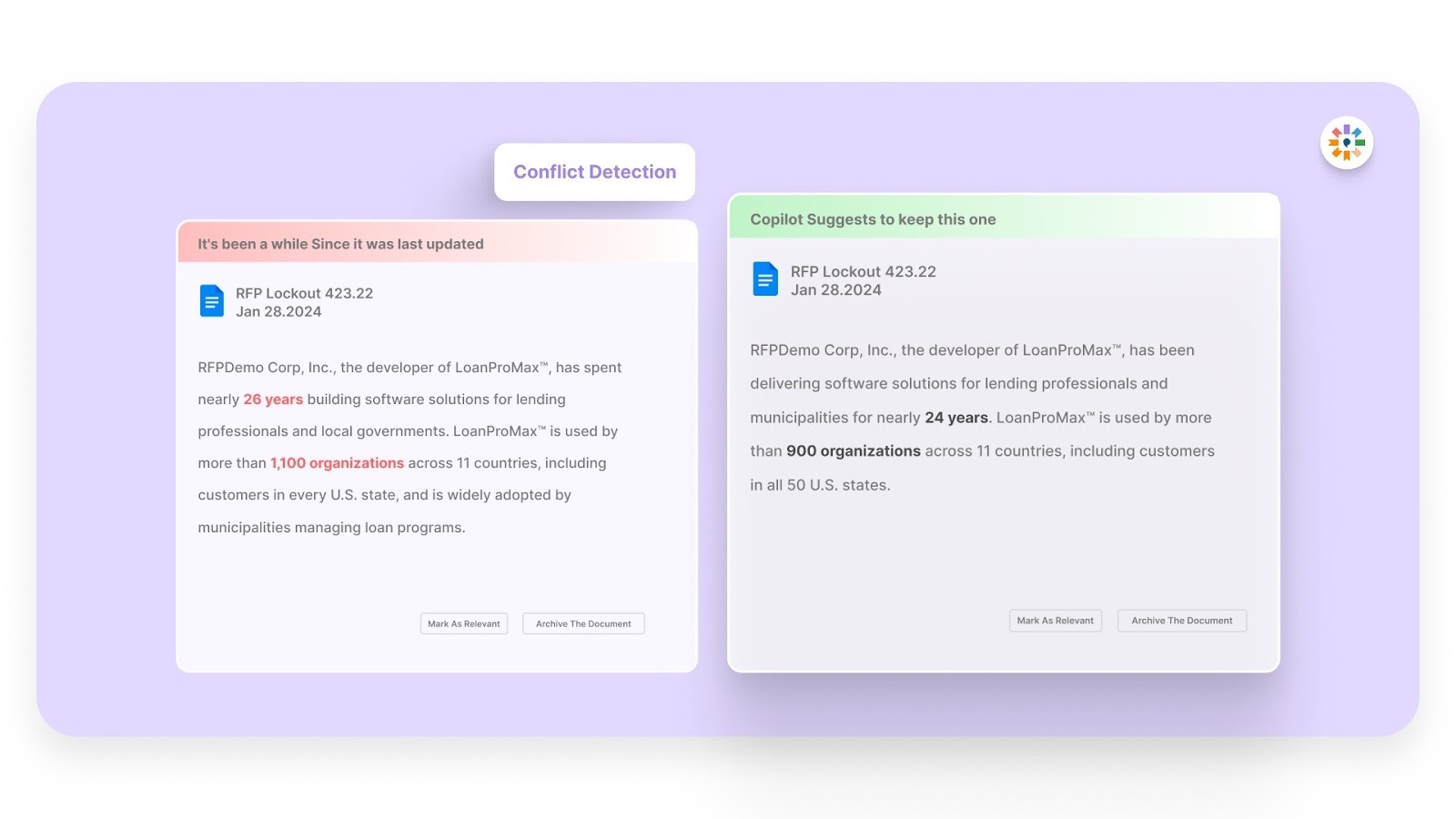
Inventive AI automatically identifies conflicting product descriptions, pricing details, or feature explanations across proposal documents. This helps prevent inconsistent responses that could weaken your proposal.
4. Outdated Content Detection
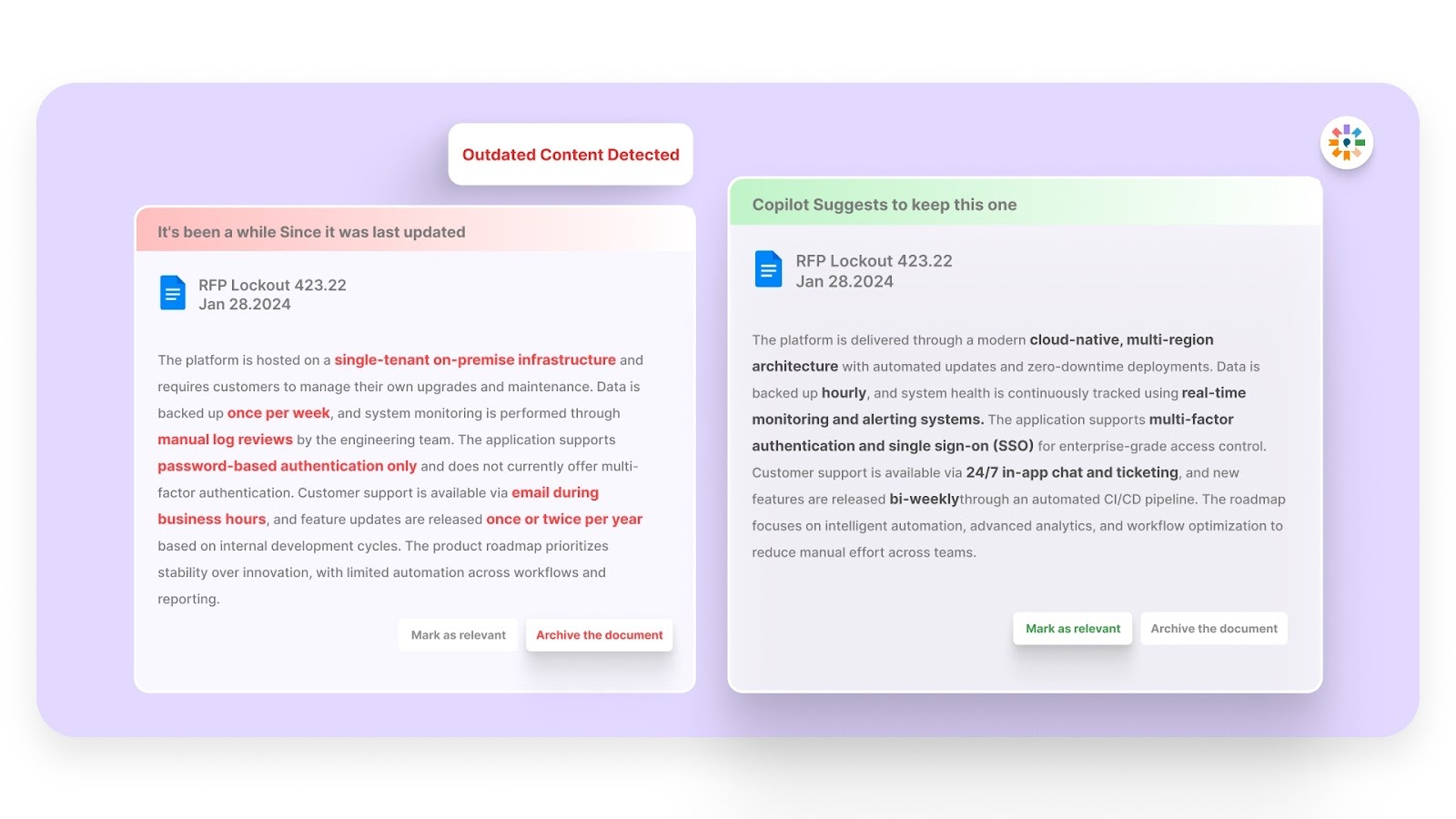
The AI Content Manager flags outdated product information, technical documentation, or implementation details before they appear in responses. This ensures that your CPQ capabilities are always presented accurately.
5. Simple, 6Easy-to-Use Interface
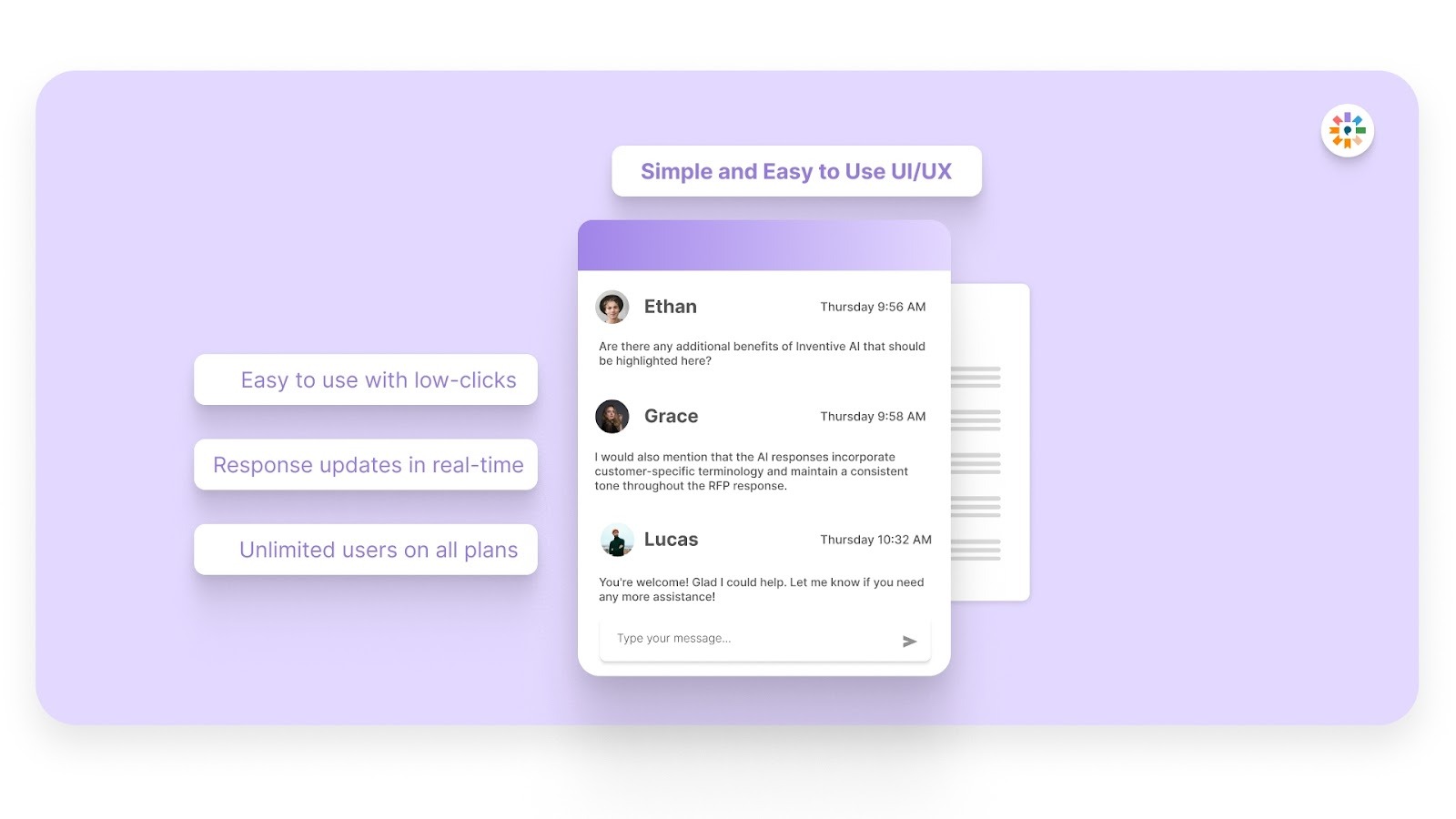
Your team can quickly search previous responses, collaborate on proposal sections, and organize CPQ RFP responses in a single workspace without switching between multiple tools.
6. Narrative-Style Proposals
Inventive AI goes beyond simple Q&A by generating complete, long-form documents like executive summaries and one-pagers. This allows you to move past basic spreadsheets and build a persuasive, well-written story that truly explains your value to the buyer.
These capabilities help proposal teams respond to CPQ RFPs more efficiently while maintaining consistent, accurate, and well-structured proposals.
Frequently Asked Questions (FAQs)
1. What information should vendors prepare before responding to a CPQ RFP?
Vendors should prepare product documentation, integration capabilities, pricing models, implementation plans, and customer case studies relevant to CPQ deployments.
2. How long does it typically take to respond to a CPQ RFP?
Responses can take two to four weeks, depending on the complexity of the CPQ implementation and the number of technical questions in the RFP.
3. What technical areas are commonly covered in CPQ RFPs?
CPQ RFPs typically include questions about product configuration rules, pricing automation, CRM integration, security controls, and quote generation capabilities.
4. What makes a CPQ proposal stand out during vendor evaluation?
Proposals that clearly demonstrate product flexibility, integration capabilities, implementation experience, and measurable business outcomes tend to perform better.
5. How can vendors reduce the time required to complete CPQ RFP responses?
Maintaining structured response templates, centralized documentation, and automated drafting tools can significantly reduce response preparation time.

.avif)

.jpg)