RFP Security Guide for Vendors: What Buyers Look For?
Security sections trip up most RFP responses. This guide explains what buyers really want to see and how to answer security questions confidently and fast.

How often does a security RFP land in your inbox and suddenly everything speeds up? Teams get pulled in, questions start piling up, and deadlines feel tighter than expected.
You’re expected to provide detailed, accurate answers across security, compliance, and risk, all while coordinating with multiple teams. One unclear answer or mismatch can trigger follow-ups and slow down the entire process.
At this stage, the challenge isn’t just answering questions. It’s making sure your responses are consistent, complete, and easy for buyers to evaluate.
In this guide, you’ll see how to handle security RFPs more efficiently, improve the quality of your responses, and move through evaluations faster using a more structured approach.
What You Need to Know About Security RFPs?
A security RFP is where buyers take a closer look at how your company handles security in practice. It’s not about your product features. It’s about how you protect data, manage risk, and stay compliant.
You’ll see questions around certifications like SOC 2 or ISO 27001, how you control access, how you respond to incidents, and how you manage third-party vendors. These aren’t surface-level checks. Buyers use them to understand how reliable and secure you are to work with.
What makes this tricky is that your answers don’t go to just one person. Security, compliance, and legal teams all review different parts. That’s why even small inconsistencies can slow things down or raise concerns.
At this stage, it’s less about writing more and more about being clear, consistent, and easy to verify. When your responses are structured well, it becomes much easier for buyers to evaluate you and move you forward.
Also Read: How to Write a Website Design RFP in 2026? Template + Best Practices
6 Common Components Found in Security RFPs
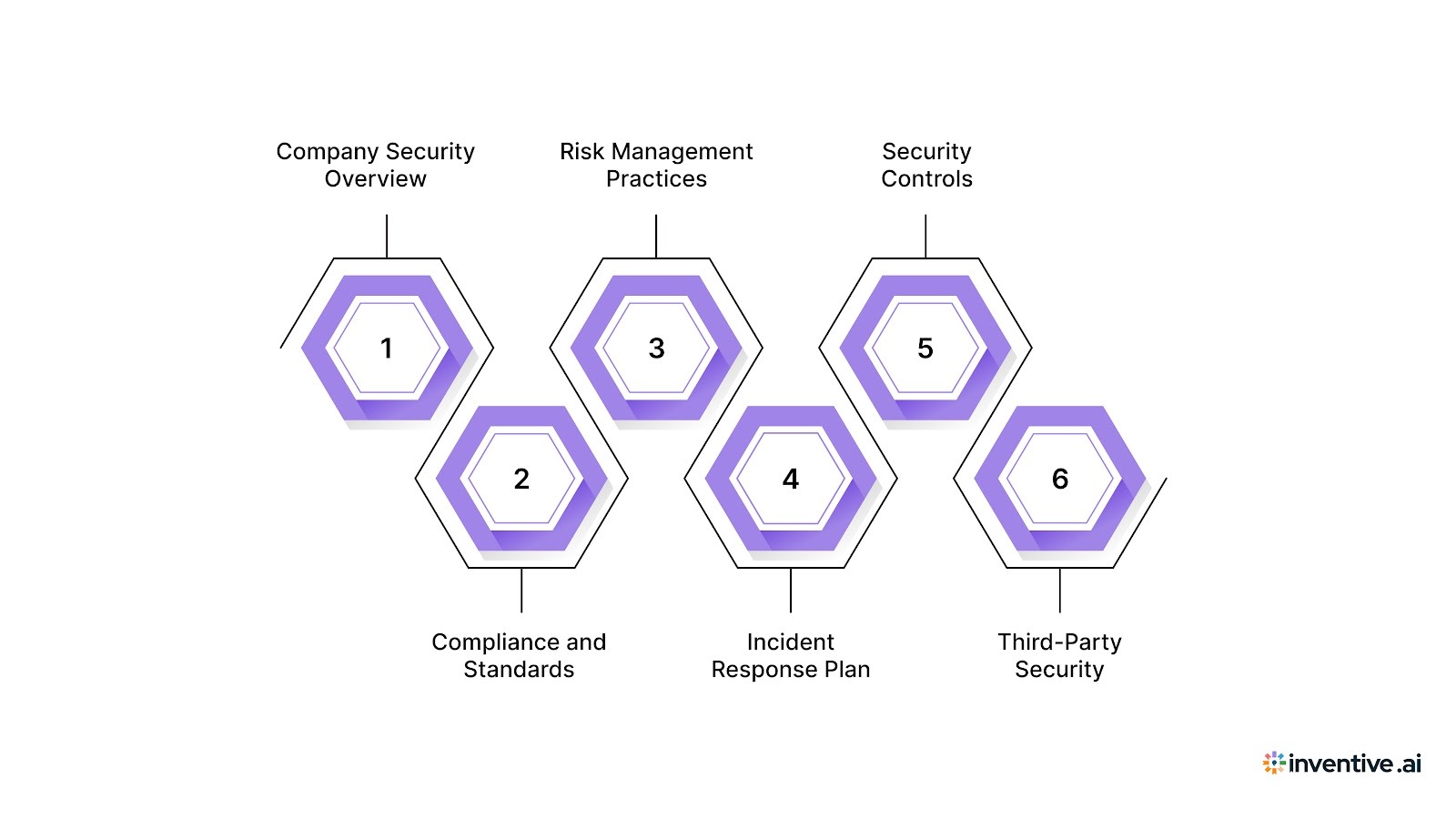
A Security RFP usually includes several key sections that the buyer uses to assess a vendor’s ability to provide secure solutions. However, every Security RFP is different and can vary based on the buyer’s specific needs and requirements. While each template may contain different components, the following are some of the common and important sections that you’re likely to encounter:
- Company Security Overview: Details on the vendor’s security policies, procedures, and certifications.
- Compliance and Standards: Information on adherence to industry standards such as ISO 27001, SOC 2, GDPR, or HIPAA.
- Risk Management Practices: Overview of the vendor’s approach to risk management and how they address potential security threats.
- Incident Response Plan: Details on the vendor’s procedures for handling security incidents or data breaches.
- Security Controls: Specific security technologies and practices in place, including encryption, firewalls, and access controls.
- Third-Party Security: Information on how the vendor ensures the security of any third-party services or partnerships.
These sections help the buyer evaluate how well a vendor can meet their security needs and whether the vendor can manage security risks effectively.
Why Security RFP Responses Directly Impact Your Deal Outcomes?
Security RFPs don’t sit on the sidelines. They influence whether your deal moves forward, slows down, or quietly drops off.
When you respond, you’re not just answering questions. You’re showing buyers how much they can trust you with their data, systems, and risk.
Here’s what actually happens on the buyer side when your security responses come in:
1. You get evaluated beyond your product
Your features might be strong, but buyers look at your security posture to decide if you’re safe to work with long term. Weak or unclear answers can outweigh a strong product.
2. Your response affects how quickly the deal progresses
Clear, complete answers help security and compliance teams approve you faster. Gaps or inconsistencies lead to follow-ups, which slow everything down.
3. You either build confidence or create doubt
When answers are consistent and easy to verify, buyers move forward with fewer questions. If something feels off, they start digging deeper.
4. You reduce or increase internal friction on the buyer’s side
Buyers often share your responses across multiple teams. If your answers are structured well, they’re easier to review. If not, you create extra work for them.
5. You shape how seriously your company is perceived
Well-prepared responses signal maturity. Disorganized or rushed answers suggest gaps in your internal processes, even if that’s not actually the case.
At this stage, you’re not competing on features alone. You’re competing on how clearly and confidently you can prove your security practices.
That’s why improving how you handle security RFP responses doesn’t just save time. It directly improves how often you move forward in deals.
Also Read: What Is a Request for Qualifications (RFQ)? Meaning, Examples & Uses
4 Common Challenges in Handling Security RFP Responses
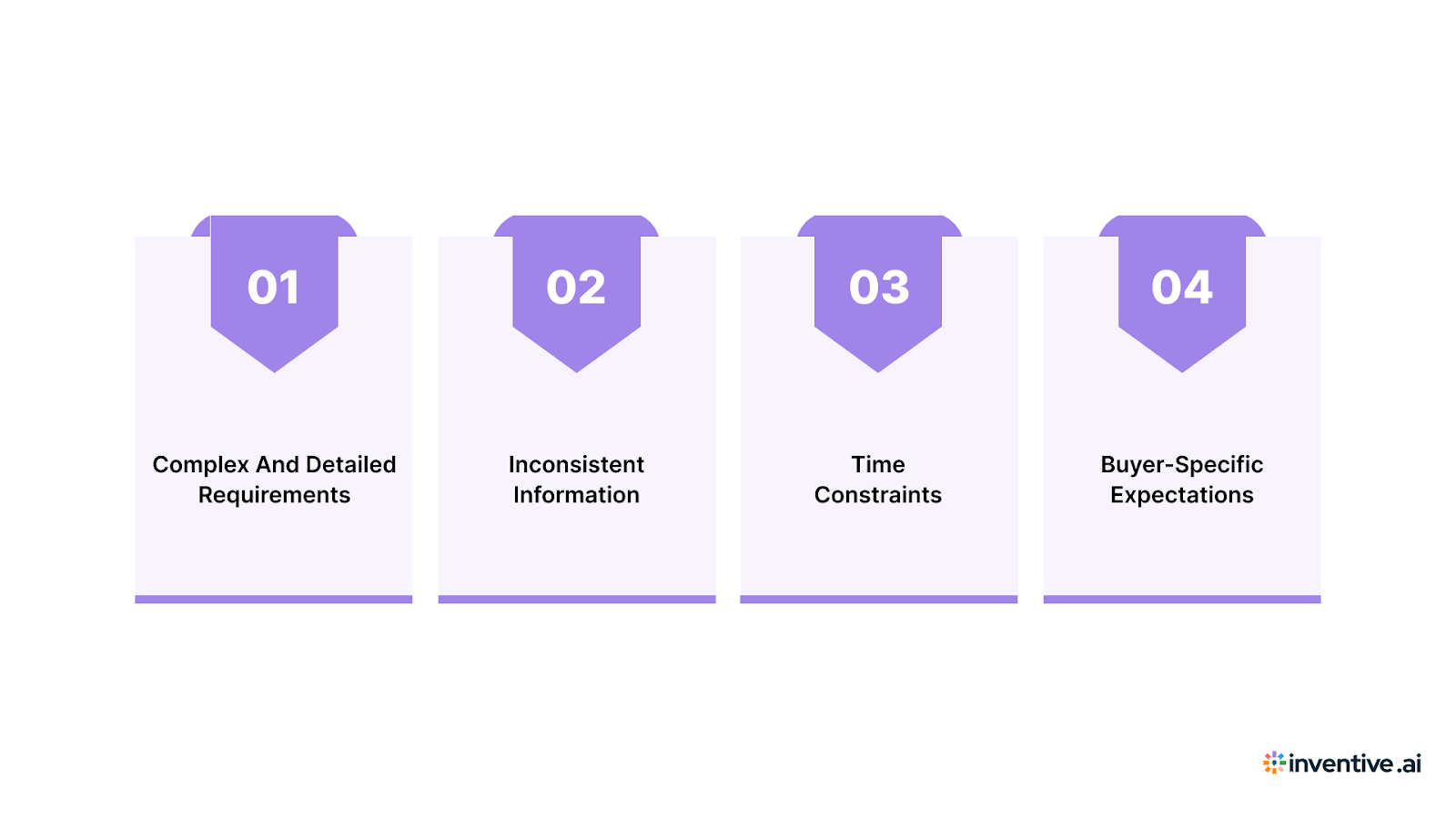
Responding to security RFPs can be challenging for several reasons. Here are some common challenges vendors face:
- Complex and Detailed Requirements: Security questions can be complex and may require a lot of technical details, making it hard to respond quickly.
- Inconsistent Information: Without a template, it’s easy to overlook important security details or provide inconsistent information across different RFPs.
- Time Constraints: Meeting tight deadlines can make it difficult to provide thorough and thoughtful responses to security-related questions.
- Buyer-Specific Expectations: Every buyer has different security needs, so customizing each response can be time-consuming without the right tools.
By using a response template, you can overcome these challenges and submit high-quality, customized responses more efficiently.
Also Read: Create Effective Templates for Saas RFP: A Complete Guide
7 Measures You Should Take to Ensure Strong Security RFP Responses
Strong security RFP responses don’t come from last-minute effort. They come from how well you prepare, organize, and manage your answers before the RFP even arrives.
If you want to respond faster and avoid back-and-forth, here’s what you should focus on:
1. Build a verified answer library you can rely on
Start maintaining a central place for your security answers, certifications, and policies. More importantly, make sure everything is reviewed and approved. This avoids rewriting answers and reduces the risk of inconsistencies.
2. Standardize how your answers are structured
Don’t respond in different formats every time. Use a consistent structure so buyers can easily scan and understand your responses. This also helps internal contributors stay aligned.
3. Assign clear ownership for each section
Security, compliance, and legal inputs shouldn’t overlap randomly. Define who owns what. When ownership is clear, you avoid conflicting answers and unnecessary delays.
4. Validate information before reusing it
Reuse saves time, but only when the information is current. Always check certifications, policies, and processes before including them in a new response.
5. Keep responses aligned across teams
Before submitting, review answers holistically. Even small contradictions between sections can trigger follow-ups and slow down approvals.
6. Prepare for buyer-specific customization early
Not every buyer expects the same level of detail. Identify where customization is needed and plan for it instead of adjusting everything at the last minute.
7. Review responses from a buyer’s perspective
Ask yourself: Is this easy to understand? Can someone verify this quickly? If the answer is no, refine it. Clarity often matters more than length.
When these measures are in place, your responses stop feeling rushed and start feeling reliable. You spend less time fixing errors and more time moving deals forward.
Common Mistakes That Slow Down Your Security RFP Responses
Security RFPs don’t usually go wrong because you lack the right answers. They slow down because of how those answers are managed, shared, and submitted.
Here are some common mistakes that create delays and unnecessary back-and-forth:
- Starting from scratch every time: Many teams rewrite answers for each RFP instead of reusing what already exists. This wastes time and often leads to slight variations in responses.
- Using outdated or unchecked information: Reusing old answers without verifying them can introduce errors. Buyers often flag outdated certifications or policies, which leads to follow-ups.
- Searching across multiple tools for answers: Important information is scattered across documents, spreadsheets, and emails. Finding the right answer takes longer than expected, especially under tight deadlines.
- Conflicting inputs from different teams: Security, legal, and product teams may respond separately. Without alignment, answers can contradict each other, which slows down the review process.
- Missing key details in responses: Incomplete answers create gaps. Buyers then come back with additional questions, extending timelines, and adding more work.
- Rushing responses close to deadlines: When everything is done at the last minute, errors slip through. This often leads to corrections, resubmissions, and delays in approval.
These mistakes are common, but they’re also fixable. Once you improve how responses are prepared and managed, you can avoid delays and move through security RFPs much faster.
Also Read: A Practical Guide for High-Quality Cybersecurity RFP Responses
Inventive AI: How Faster Responses Led to Better RFP Outcomes
With Inventive AI, responding to security RFPs becomes faster, more accurate, and far less stressful. Here’s how Inventive AI improves your RFP response process:
1. 2× Higher Quality Responses
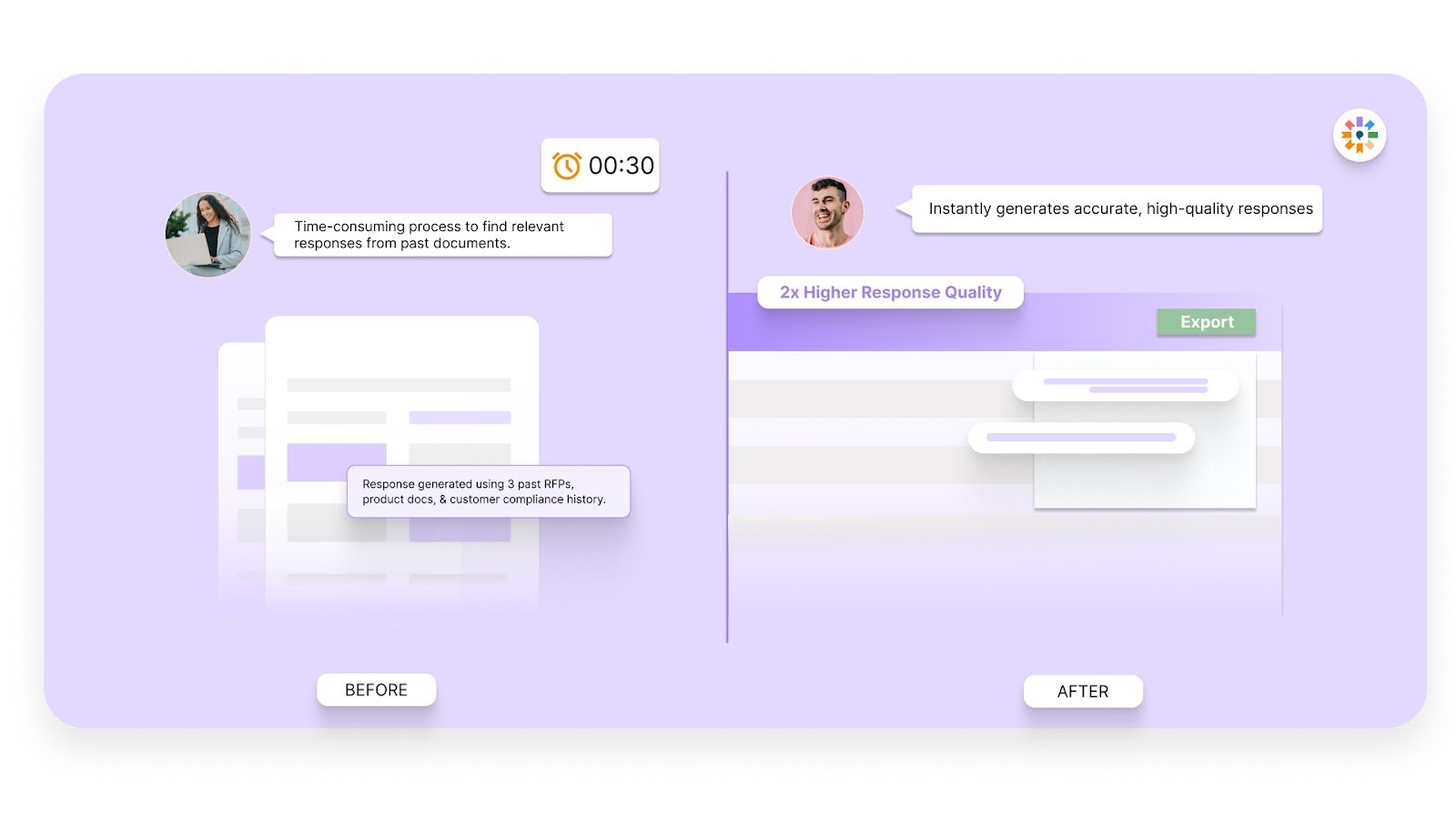
Inventive AI enables you to generate precise, high-quality responses to security-related questions in half the time. By automating much of the manual effort, the software helps you meet buyer expectations with consistently accurate and comprehensive answers, leading to stronger, more professional proposals every time.
2. Context Engine
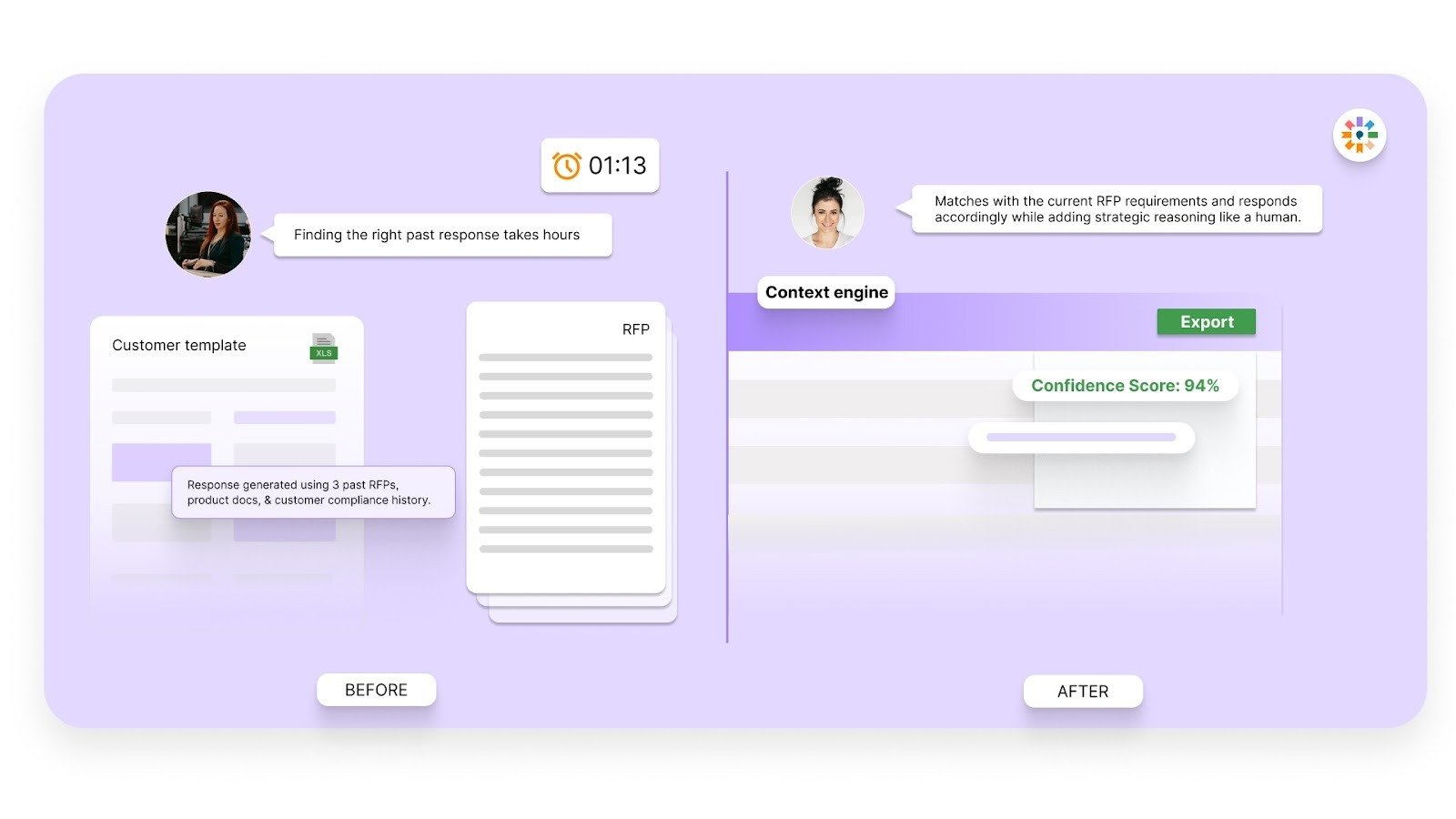
Inventive AI’s context engine uses historical RFP responses, pulling relevant data from previous submissions to simplify your process. This helps you reuse important information and ensures your answers are not only customized to the specific buyer's needs but also align with the buyer's exact expectations and requirements, reducing manual effort and time.
3. Conflict Detection
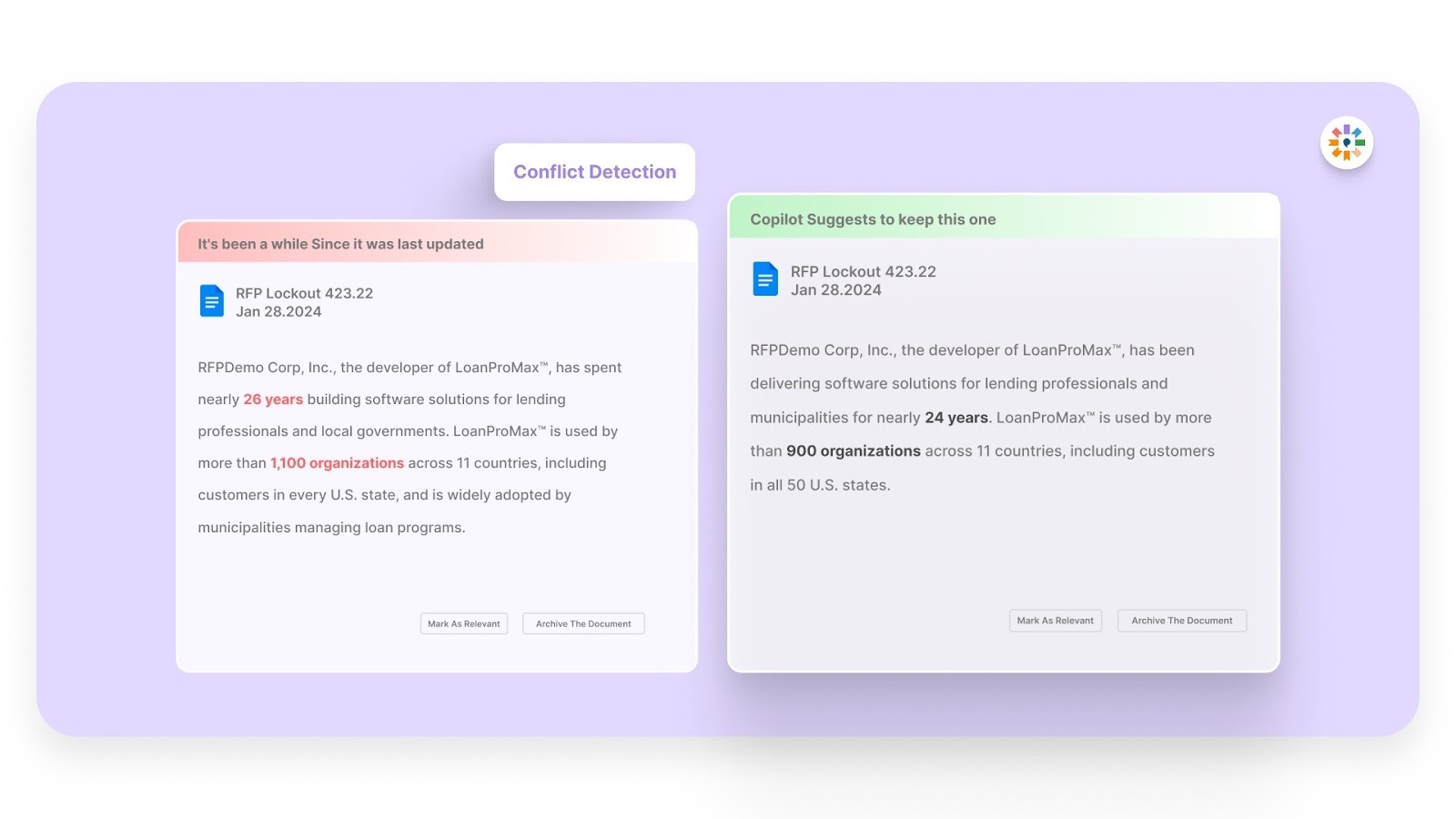
With Inventive AI’s built-in conflict detection, inconsistencies in your responses are automatically flagged. This minimizes the risk of errors or conflicting information, ensuring your proposal is both cohesive and accurate. The AI keeps your responses aligned and error-free, so you can confidently submit your proposals without worrying about overlooked mistakes.
4. Outdated Content Detection
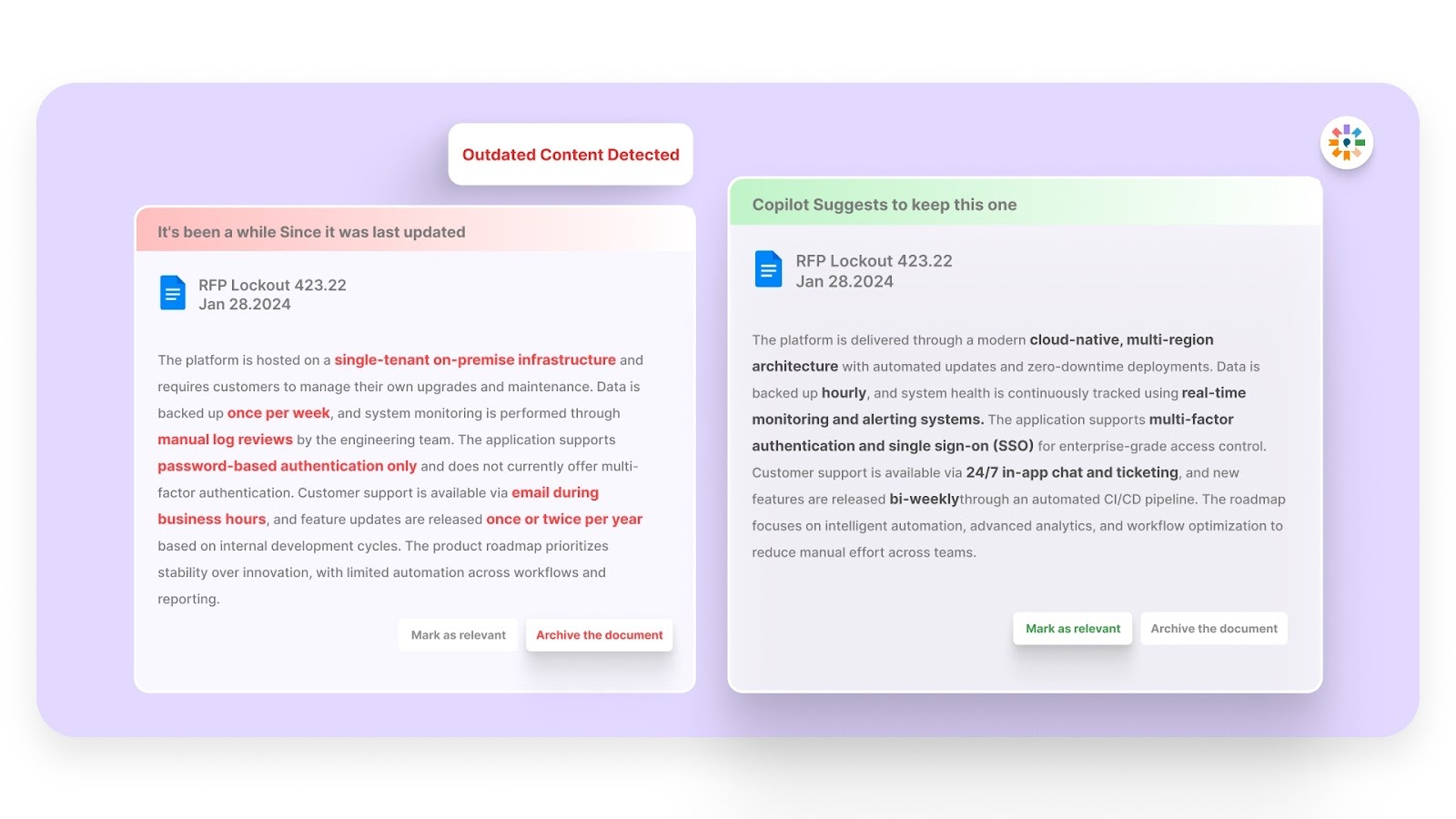
Inventive AI actively scans for outdated security information, ensuring your responses are always up-to-date with the latest compliance standards and industry regulations. By flagging obsolete content, it helps you avoid the risk of submitting outdated or non-compliant information, which can be important for winning the bid and maintaining trust.
5. Simple, Easy-to-Use Interface
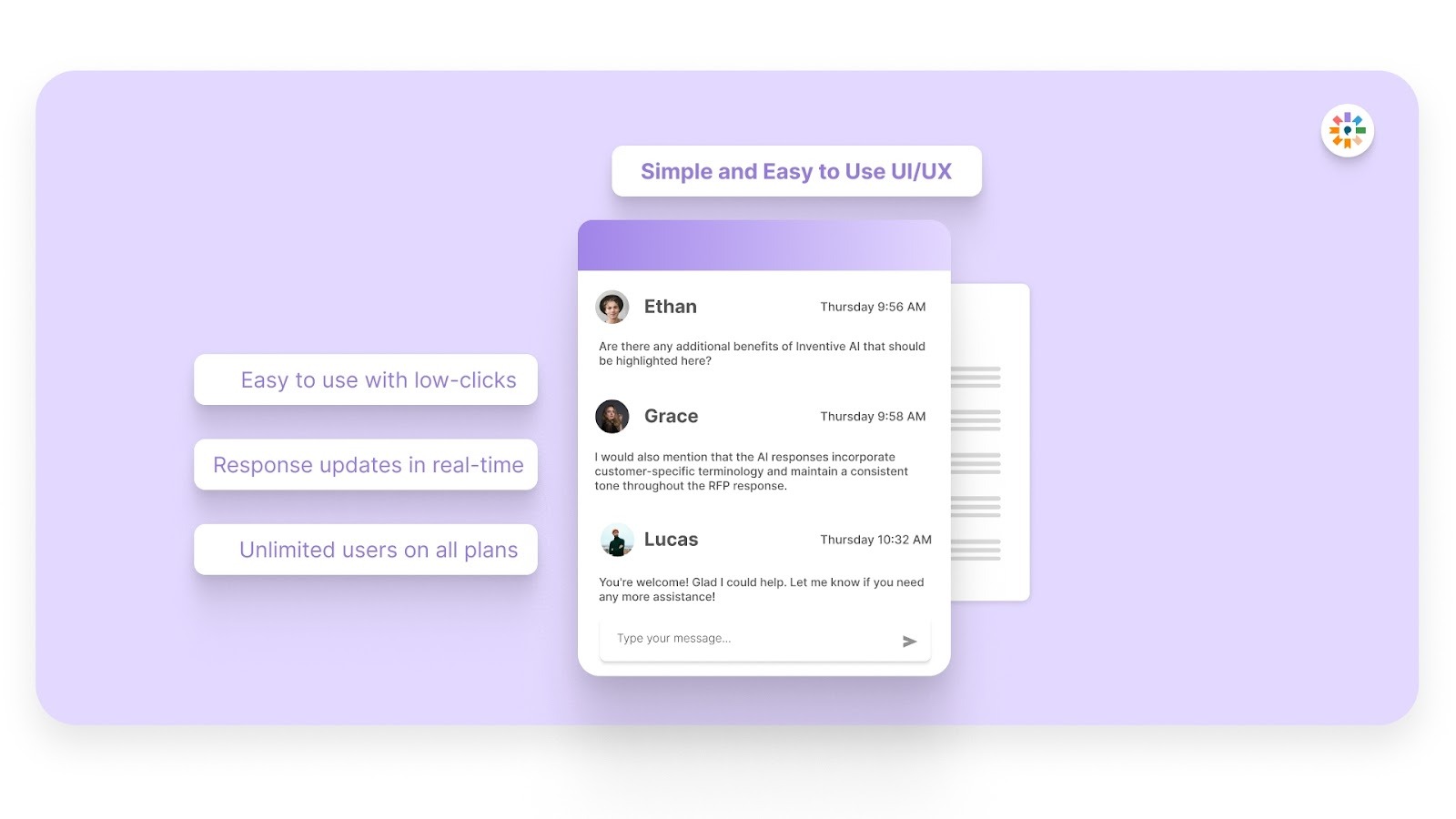
Inventive AI’s platform is intuitive and user-friendly, so your team can quickly adapt and start using it with minimal training. The software enables you to focus on high-value tasks, like customizing your proposals to the buyer’s specific context, while automating the repetitive, time-consuming aspects of the process.
6. Narrative Style Proposals
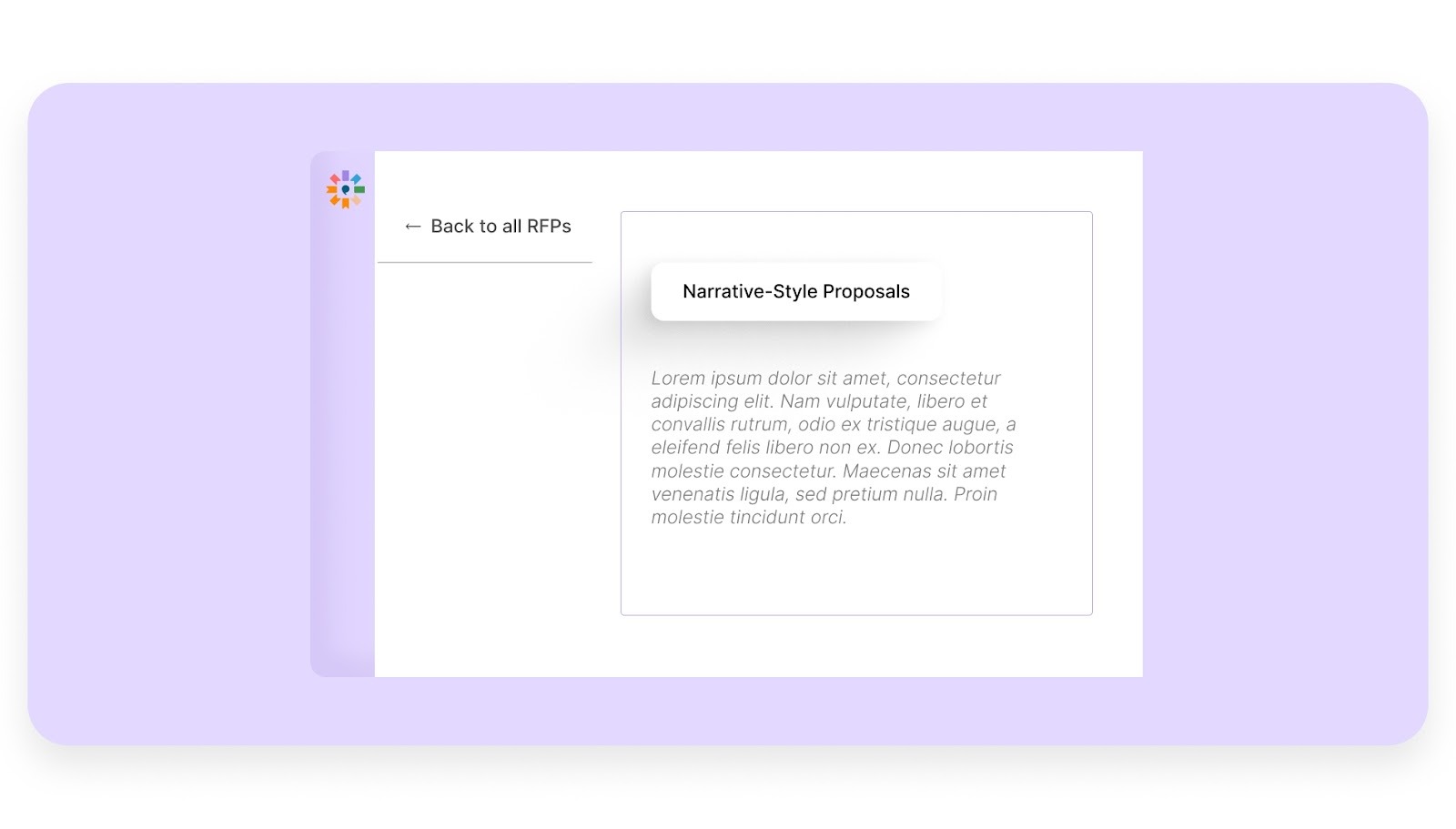
Inventive AI helps you present responses in a clear, structured narrative instead of fragmented answers. This improves readability and helps buyers better understand your solution and security approach.
With Inventive AI’s RFP Automation, you can turn your security RFP responses into a competitive advantage. Save valuable time, reduce the risk of errors, and submit high-quality, accurate proposals with confidence.
1. How should vendors handle questions about employee security practices in their RFP responses?
Buyers are interested in how vendors handle training, background checks, access controls, and policy enforcement. Provide clear descriptions of your workforce security measures, training frequency, and how access rights are monitored and updated.
2. How detailed should my security documentation be when responding to a security RFP?
Provide enough detail so the buyer can understand your security posture. Include policies, certifications, audit summaries, and any third‑party assessment reports. Do not include overly sensitive internal documentation unless explicitly requested.
3. Are buyers more likely to ask for third‑party audit reports in a security RFP?
Yes. Buyers increasingly request independent audit reports, such as SOC 2 or ISO assurance reports, because these provide objective evidence of your security practices and reduce the need for follow‑up questions.
4. Can vendors respond to security RFP sections with redacted documents?
If buyers request sensitive information, you can provide redacted versions of audit reports or compliance documents. This helps protect proprietary details while still showing proof of controls and certification status.