Recruitment Services RFP Template for Stronger Proposals in 2026

Have you ever opened a recruitment services RFP and realized the response deadline is only two weeks away? Many proposal teams face that moment. You must gather recruiter performance data, compliance details, pricing models, and hiring workflows quickly.
Recruitment RFPs are rarely simple. They often ask for hiring metrics, sourcing strategies, DEI commitments, and technology integrations across dozens of sections. Without a structured template, teams spend hours reorganizing information instead of improving proposal quality.
This guide explains how an RFP template for recruitment services works and how vendors can prepare stronger proposals in 2026. We have included an example RFP template to show what buyers usually request. We have also added a response template so you can prepare proposals faster with only a few adjustments.
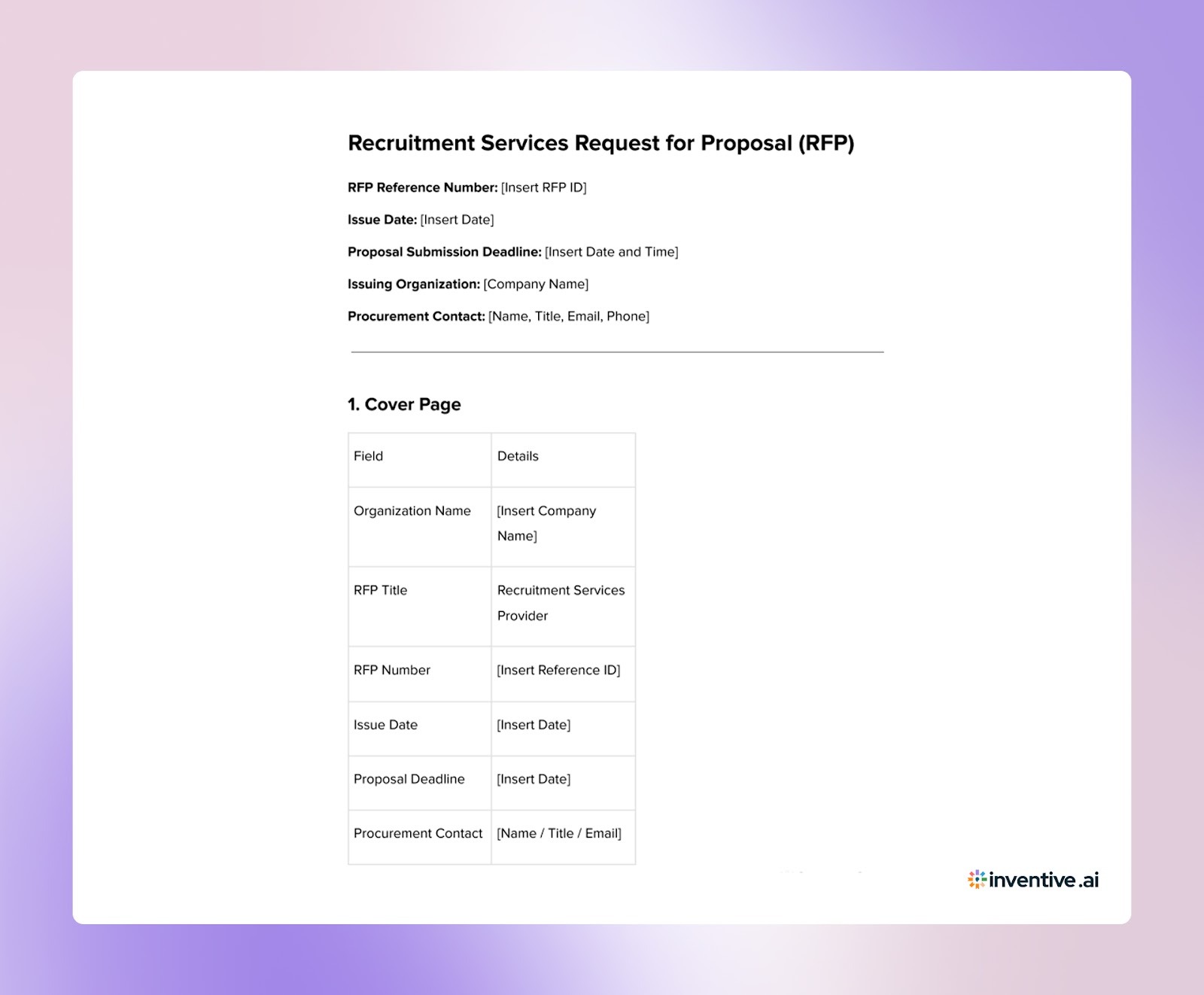
A Practical Recruitment Services RFP Template (For Buyers)
Organizations use these templates when selecting partners for services such as talent sourcing, executive search, contingent staffing, or recruitment process outsourcing (RPO).

The Standard Structure of a RFP Template for Recruitment Services
Common components include:
1. Business hiring objectives: This section outlines the roles to be filled, expected hiring timelines, workforce growth plans, and hiring targets across departments or locations.
2. Company background: Buyers describe their organization, industry, workforce size, and current hiring challenges so vendors understand the hiring environment.
3. Scope of recruitment services: This defines the exact services required, such as candidate sourcing, screening, interview coordination, onboarding support, or recruitment process outsourcing.
4. Position categories and hiring volume: Buyers specify job types, seniority levels, expected hiring volume, and geographic hiring locations.
5. Recruitment technology requirements: This section outlines expectations around ATS integration, reporting dashboards, data security standards, and recruitment analytics capabilities.
6. Diversity and inclusion expectations: Many buyers include DEI hiring goals, diversity reporting requirements, and outreach strategies for inclusive talent pipelines.
7. Vendor qualifications: Buyers request details about recruitment experience, industry expertise, recruiter certifications, and similar hiring engagements.
8. Performance metrics: This section defines expected KPIs such as time-to-hire, candidate retention rates, interview-to-offer ratios, and hiring success benchmarks.
9. Pricing structure: Buyers specify the preferred pricing model, including placement fees, retained search pricing, subscription models, or performance-based pricing.
10. Service level agreements (SLAs): This outlines expectations for response times, candidate quality standards, reporting frequency, and communication processes.
11. Proposal submission guidelines: Buyers explain the required proposal format, submission deadlines, evaluation process, and contact information.
These sections help buyers review proposals consistently while making it easier to compare recruitment vendors side by side.
However, once an RFP is released, the responsibility shifts to vendors who must deliver clear, well-structured proposals.
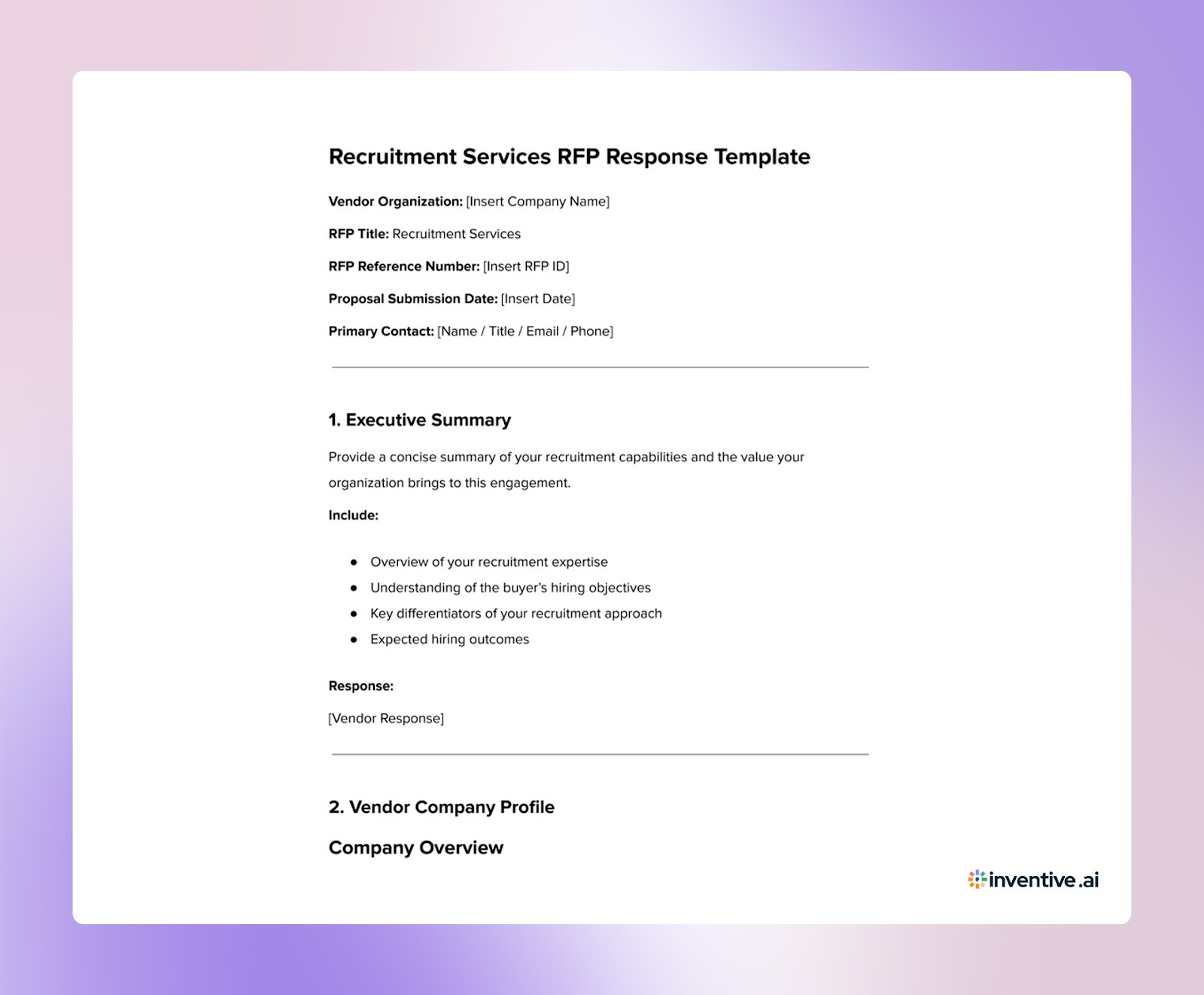
A Ready-to-Use Recruitment Services RFP Response Template (For Vendors)
Instead of building every response from scratch, a response template provides a reusable structure where teams insert company data, hiring capabilities, and recruitment strategies.
When a new RFP arrives, your team can simply adapt the template to the buyer’s requirements rather than rebuilding the proposal each time.

5 Customization Tips That Makes Your RFP Template for Recruitment Services Stand Out
Even with a structured template, strong proposals require customization based on the buyer’s hiring priorities.
You should adjust your response to reflect the hiring challenges, workforce needs, and evaluation criteria defined in the RFP.
Key customization strategies include:
1. Match recruitment strategy to hiring goals: Align your sourcing approach, screening process, and hiring workflow with the roles and timelines described in the RFP.
2. Highlight relevant hiring success metrics: Include measurable outcomes such as time-to-hire, candidate retention rates, or placement success for similar roles or industries.
3. Customize candidate sourcing methods: Explain how your sourcing channels, talent networks, and outreach strategies will support the buyer’s hiring locations and job categories.
4. Align pricing structure with the buyer’s hiring model: Adjust your pricing proposal based on hiring volume, engagement model, and contract structure mentioned in the RFP.
5. Demonstrate understanding of hiring challenges: Address the buyer’s workforce goals and hiring constraints to show that your recruitment process fits their needs.
Customized responses help buyers see how your recruitment approach supports their hiring priorities and workforce plans.
Benefits of Using an RFP Template for Recruitment Services
Recruitment vendors often manage multiple RFPs simultaneously. Templates help teams maintain structure and consistency across responses.
Major benefits include:
- Faster proposal preparation with reusable sections
- Consistent messaging across proposals
- Improved collaboration between sales and recruiting teams
- Reduced risk of missing critical RFP requirements
- Higher proposal quality through structured responses
Templates help you focus on refining strategy rather than recreating proposal documents repeatedly.
The Evaluation Factors That Decide Recruitment RFP Winners
Buyers review recruitment proposals using defined criteria so they can compare staffing vendors consistently.
Typical evaluation factors include:
1. Recruitment expertise and industry specialization: Buyers assess your experience in hiring for similar roles, industries, and workforce environments.
2. Hiring performance metrics: Proposal reviewers look for measurable outcomes such as time-to-hire, candidate retention rates, and placement success.
3. Candidate sourcing strategy: Buyers evaluate how strong your talent networks are and how effectively you attract qualified candidates.
4. Technology integrations and reporting: Vendors are often assessed on their ability to integrate with ATS systems and provide hiring analytics.
5. Pricing model and long-term value: Buyers compare pricing structures while considering overall recruitment efficiency and hiring outcomes.
These criteria help procurement and HR teams identify the vendor that can deliver the most reliable and effective recruitment support.
Faster, More Accurate Recruitment RFP Responses With Inventive AI
If your team handles several RFPs each quarter, organizing this information repeatedly becomes difficult. This is where Inventive’s AI-powered RFP response software helps you prepare structured, consistent proposals without rebuilding responses each time.
With Inventive AI, you get:
1. 2× Higher Quality Responses
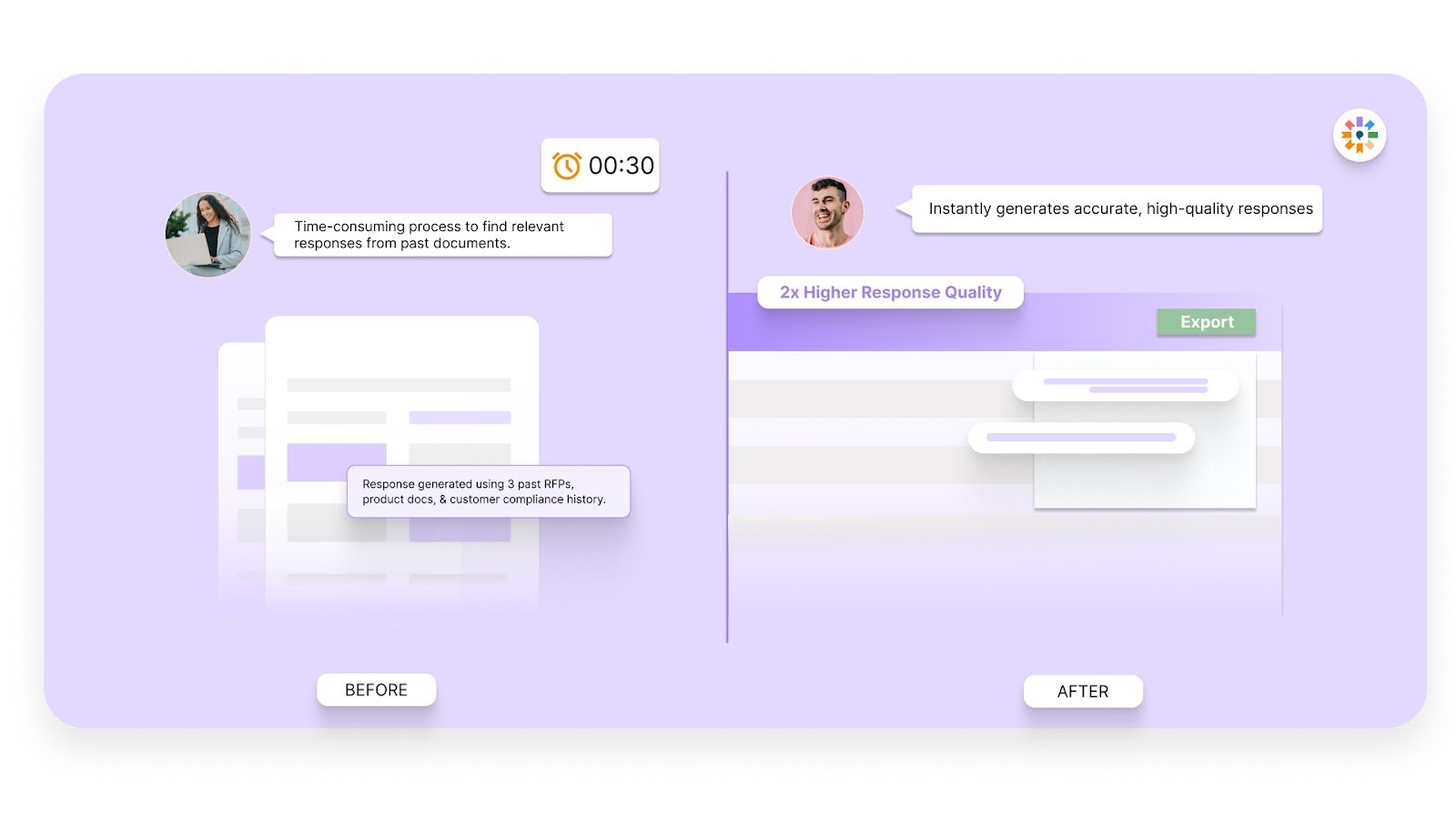
Inventive AI uses your internal knowledge sources to generate structured proposal drafts aligned with recruitment RFP requirements. This helps your team present clearer hiring strategies, performance metrics, and service capabilities.
2. Context Engine
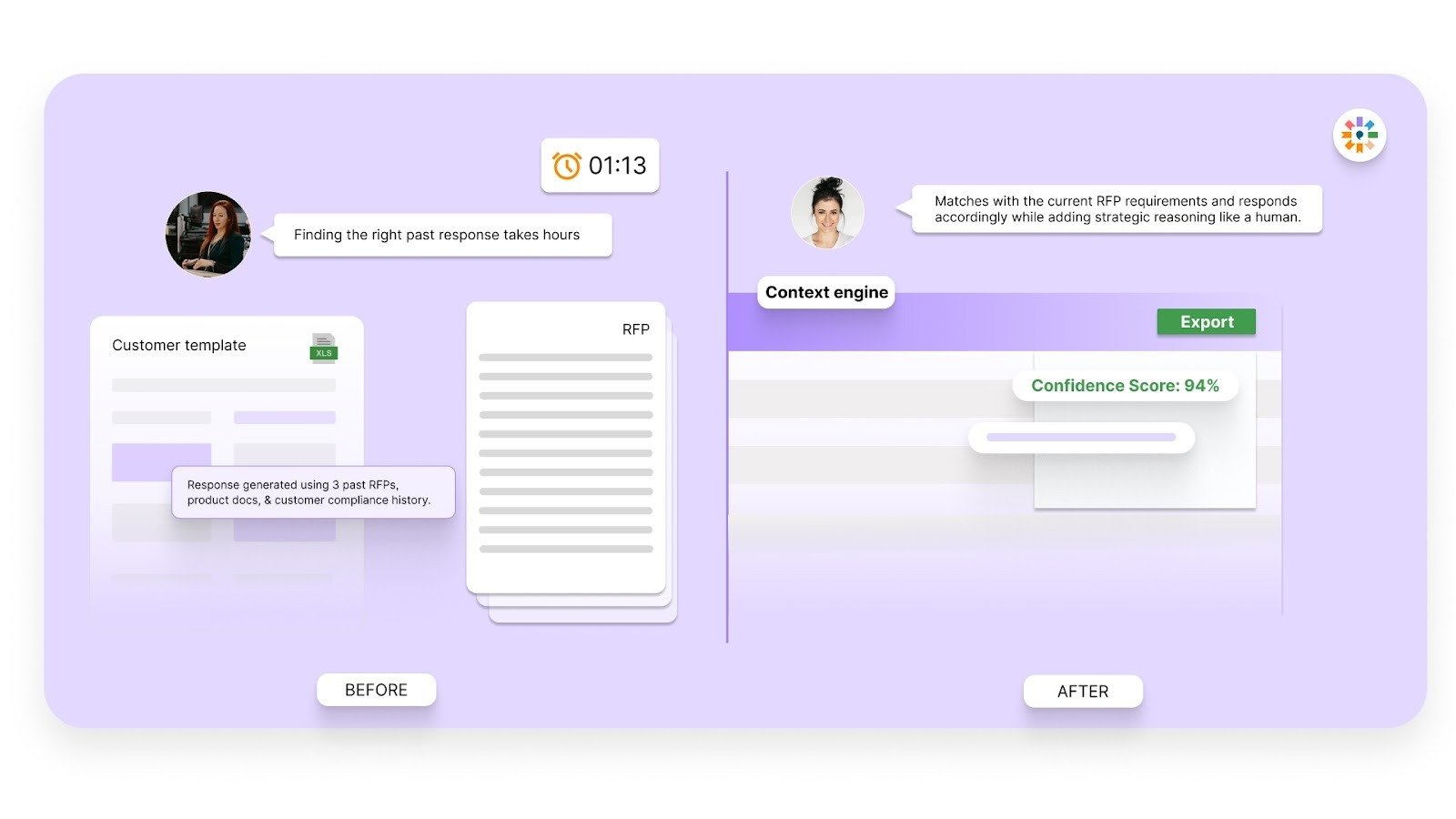
The platform analyzes the full RFP requirements and then suggests relevant content so your responses stay aligned with the buyer’s hiring requirements.
3. Conflict Detection
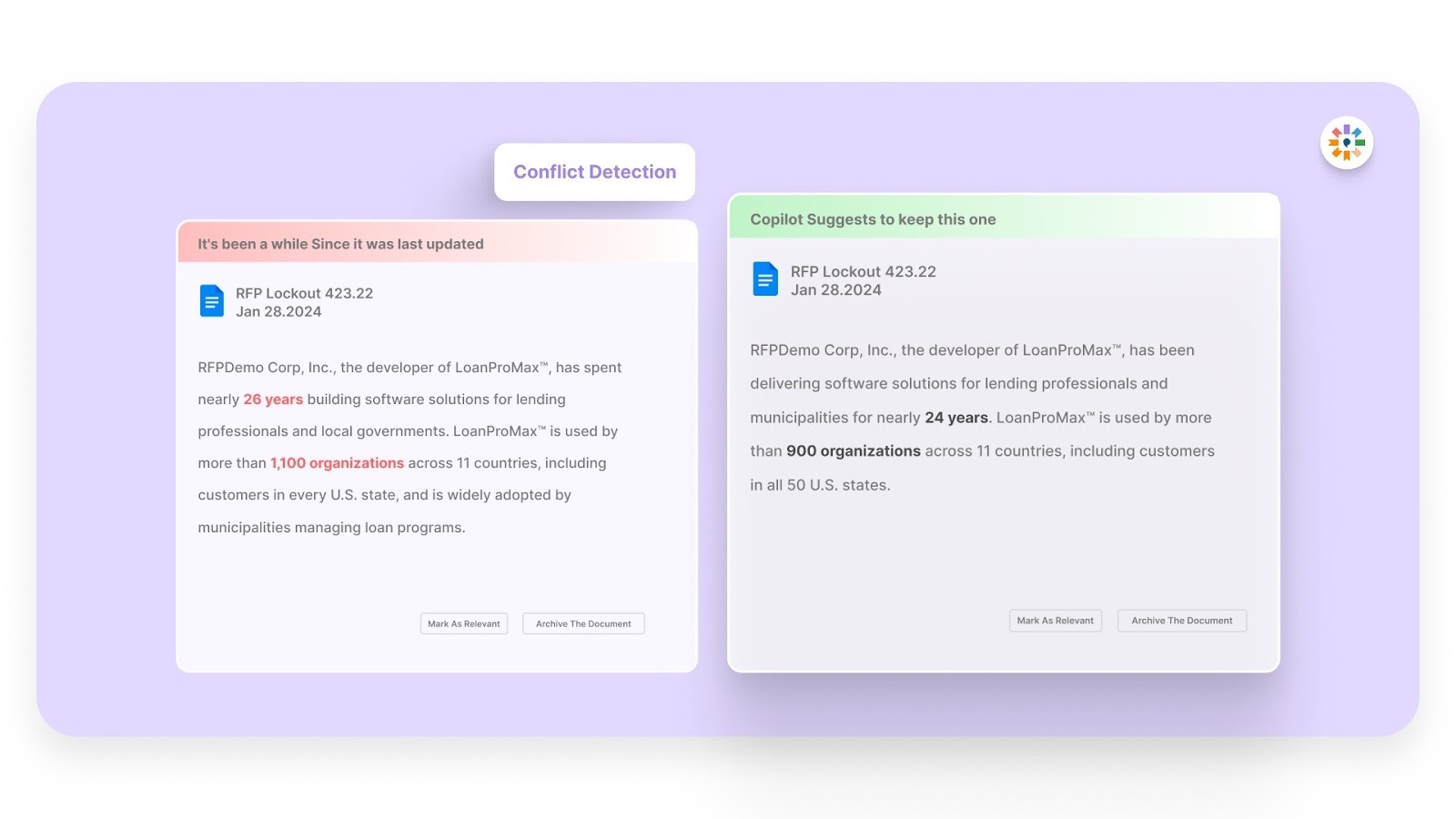
Inventive AI identifies conflicting information across proposal documents. This reduces the risk of submitting inconsistent hiring metrics, recruiter qualifications, or service descriptions.
4. Outdated Content Detection
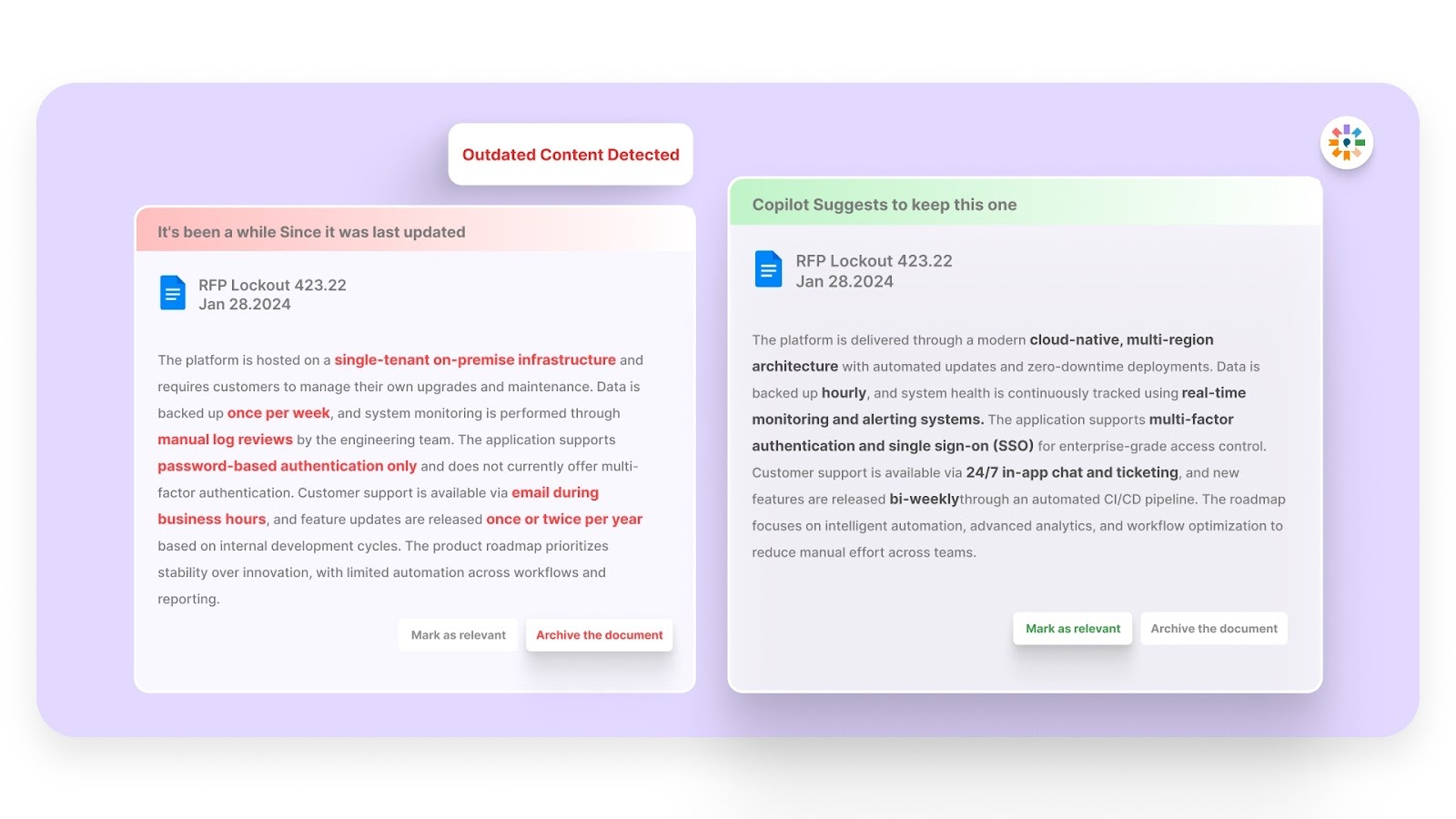
The AI Content Manager flags outdated hiring metrics, case studies, and recruitment process details. This helps you ensure your proposal always reflects your most current recruitment capabilities.
5. Simple, Easy-to-Use Interface
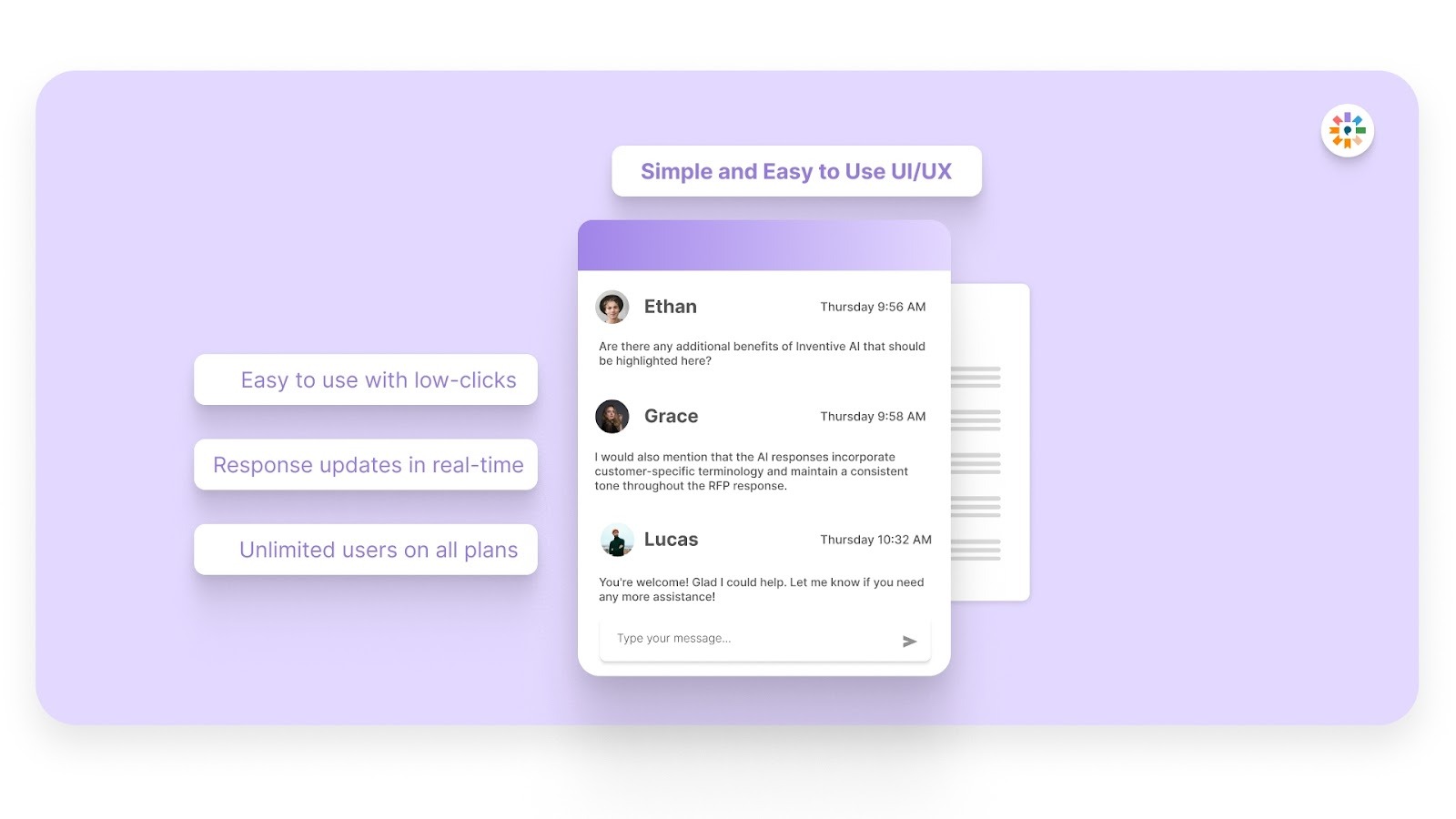
Your team can quickly locate past responses, collaborate on proposal sections, and organize recruitment RFP responses in one workspace.
These capabilities help proposal teams produce accurate drafts up to 10x faster while maintaining 95% response accuracy.
FAQs
1. What should recruitment vendors prepare before responding to an RFP?
Vendors should prepare hiring performance metrics, recruiter expertise details, technology integrations, and pricing models. Having these resources ready helps teams respond to RFPs more efficiently.
2. How long does it typically take to respond to a recruitment services RFP?
Depending on complexity, responses may take one to three weeks. Large recruitment RFPs often require collaboration between recruiting teams, sales teams, and legal departments.
3. What documents are commonly requested in recruitment RFP proposals?
Buyers often request recruitment methodologies, hiring performance reports, case studies, diversity hiring plans, recruiter qualifications, and compliance documentation.
4. How can recruitment vendors improve proposal response speed?
Maintaining structured templates, storing proposal content centrally, and using automated drafting tools can significantly reduce response preparation time.
5. What makes a recruitment proposal stand out during evaluation?
Clear hiring metrics, relevant case studies, customized recruitment strategies, and structured responses aligned with the buyer’s hiring objectives often strengthen proposal evaluation outcomes.