Staffing RFP Template + Proposal Samples for Staffing Vendors

Hiring great talent shouldn't be a guessing game.
Most staffing RFPs use generic templates that fail to define critical requirements like recruiter capacity, pipeline depth, and role urgency. This forces vendors to estimate your workload based on their own assumptions, leading to inconsistent pricing and mismatched talent.
To get the right results, you must standardize your hiring expectations. This guide provides a structured staffing RFP template for buyers and a mirroring proposal framework for vendors to ensure total alignment on workforce projections and delivery expectations.
Staffing RFP Template to Define Workforce Requirements to Vendors (for Buyers)
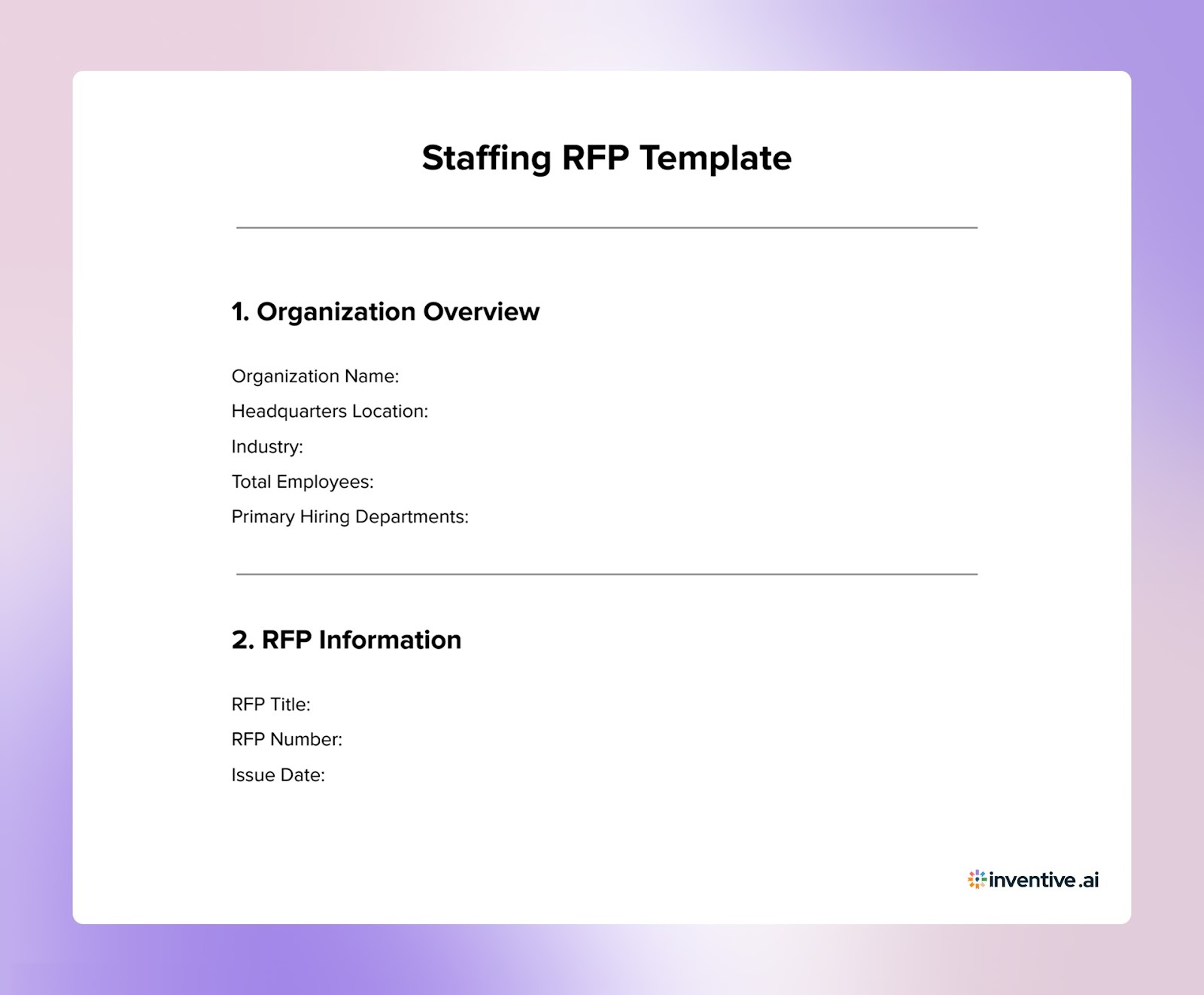
Staffing programs involve multiple role categories, hiring timelines, recruiter capacity limits, and pricing structures. Buyers must document these clearly so vendors can accurately estimate recruiter workload, sourcing effort, and bill rate structures.

Components to Capture Vendor Delivery Requirements
Below are the core sections every staffing RFP should contain:
- Program Overview: Organization background, hiring objectives, departments requesting staffing support, and geographic hiring locations.
- Workforce Demand Forecast: Expected requisition volume, projected hiring periods, peak hiring months, and anticipated contractor headcount.
- Role Categories and Skill Requirements: Job titles, experience levels, required technical or functional skills, certifications, and contract duration ranges.
- Recruiting Delivery Expectations: Candidate submission timelines, interview coordination process, recruiter coverage expectations, and replacement requirements for early contractor exits.
- Technology and System Requirements: Vendor Management System (VMS) platform used, applicant tracking integrations, candidate submission workflows, and reporting expectations.
- Vendor Performance Metrics: Required fill rate, time-to-submit targets, interview-to-hire ratios, and contractor retention expectations.
- Pricing Structure: Bill rate formats, markup percentages, overtime policies, and contract-to-hire conversion fees.
- Compliance Requirements: Background screening standards, worker classification policies, insurance minimums, and payroll compliance requirements.
- Submission Requirements: Proposal format, recruiter staffing plan, sourcing methodology, references from comparable staffing programs, and pricing breakdown.
A structured staffing RFP ensures vendors evaluate the same hiring demand, recruiter workload expectations, and pricing format before submitting proposals.
If you are responding to a staffing RFP as a vendor, use the proposal template below to structure your response.
Staffing RFP Response Template to Structure Competitive Proposals (for Vendors)
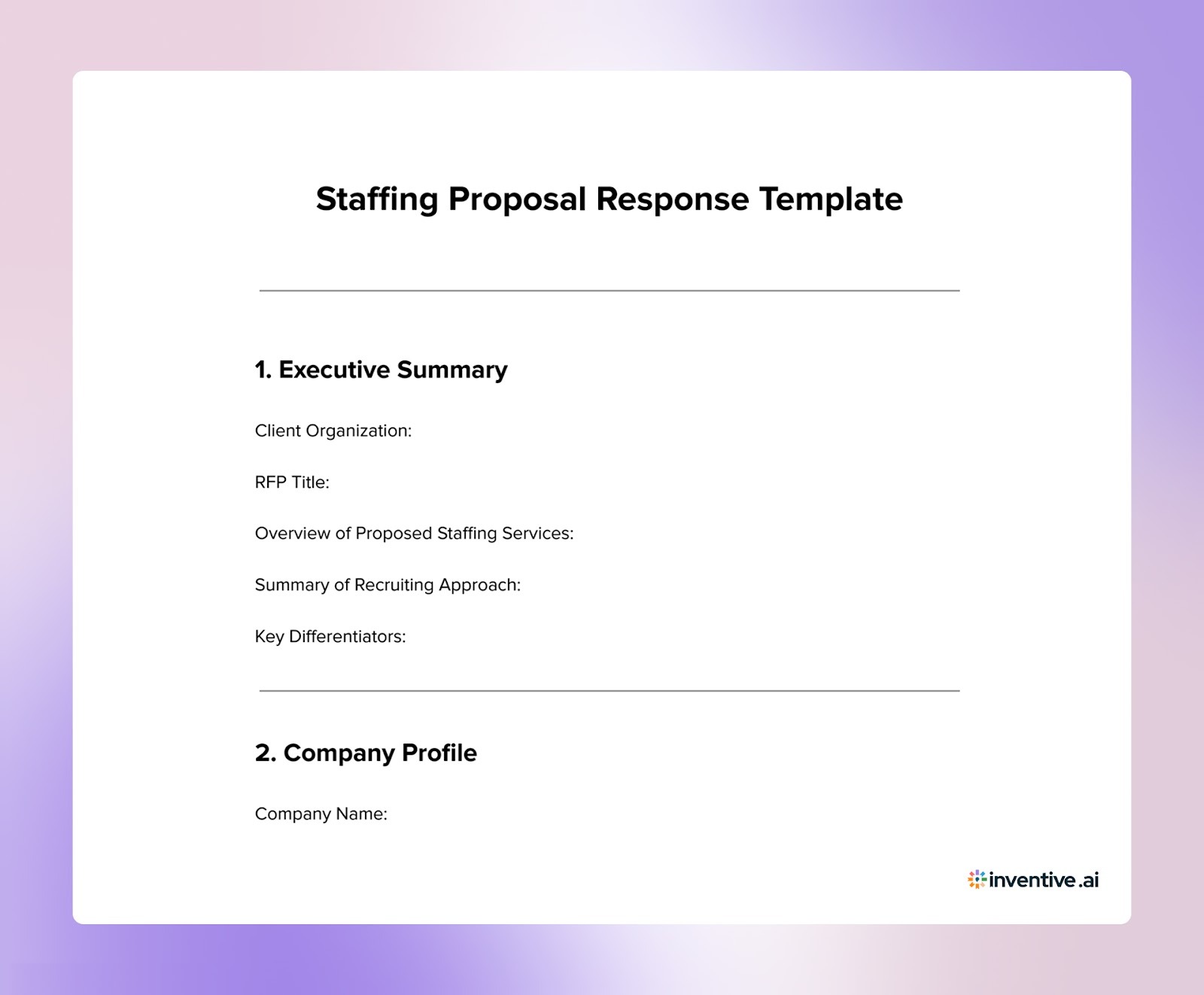
Procurement teams review recruiter coverage, candidate pipeline depth, submission timelines, and pricing structures before awarding staffing contracts.

Each section below corresponds to operational details you must document when responding to a staffing RFP.
1. Executive Summary
This section confirms your understanding of the client’s hiring demand and summarizes your recruiting delivery model. Reference projected hiring volumes, role categories, and recruiter coverage.
Example: We propose dedicated recruiting support for your projected demand of 85 contract hires across engineering, data analytics, and IT support roles. Our delivery model assigns three specialized technical recruiters and one sourcing specialist to maintain candidate pipelines for high-demand positions.
2. Company Profile and Recruiting Capacity
Buyers evaluate financial stability and recruiting scale before awarding staffing contracts. Demonstrate your recruiting team size, industry specialization, and annual placement volume.
Example: Established in 2012, we operate recruiting teams across technology, healthcare, and professional services staffing. Our firm places approximately 1,200 contract professionals annually and currently supports contingent workforce programs for eight enterprise clients.
3. Understanding of Workforce Requirements
Restate the hiring demand described in the RFP to confirm you understand the workforce requirements. Mirror the structure used in the buyer’s RFP.
Example: Your staffing program expects approximately 60 contractor hires across backend engineering, QA automation, and IT infrastructure roles. Peak hiring demand occurs during Q2 product development cycles with an average requisition duration of four months.
4. Recruiting Strategy
Explain how you source candidates for each role category. Buyers evaluate sourcing channels, recruiter specialization, and candidate pipeline strategies.
Example: Our recruiting strategy combines LinkedIn sourcing, internal candidate databases containing 75,000 technical professionals, and referrals from specialized developer communities. Senior engineering roles receive targeted sourcing from technical recruiter specialists with five or more years of placement experience.
5. Recruiter Coverage Model
Show how many recruiters will support the program and how requisitions will be distributed. Buyers evaluate whether recruiter coverage aligns with hiring demand.
Example: The program will be supported by two senior technical recruiters responsible for engineering roles, one recruiter handling IT support positions, and one sourcing specialist responsible for candidate pipeline development.
6. Candidate Screening and Evaluation
Buyers expect you to explain how candidates are screened before submission. Describe resume evaluation, technical assessments, and interview preparation.
Example: Candidates complete a structured screening process, including resume verification, technical skills assessment, and role-specific interview preparation, before submission to hiring managers.
7. Technology and Recruiting Tools
Staffing programs rely on recruiting platforms for candidate sourcing and submission tracking. Document the systems you use to manage recruiting workflows.
Example: Our recruiting operations run through a cloud-based applicant tracking system integrated with sourcing tools and candidate relationship management software. This allows recruiters to track submissions, monitor pipeline activity, and generate weekly hiring reports.
8. Pricing and Rate Structure
Provide pricing formats that align with the buyer’s requested structure. Staffing pricing typically includes bill rates, markup percentages, and conversion fees.
Example:
- Software Engineer bill rate: $110–$130 per hour, depending on experience level
- Vendor markup: 28% above contractor base pay
- Contract-to-hire conversion fee: 15% of first-year salary
9. Compliance and Risk Management
Explain how you maintain employment compliance and contractor management standards.
Example: All contractor placements undergo background screening, employment eligibility verification, and payroll compliance checks. Our firm maintains $2M general liability coverage and full workers’ compensation insurance for all contractor placements.
10. References and Comparable Staffing Programs
Provide examples of staffing programs similar to the buyer’s hiring requirements.
Example:
TechWorks Corporation – Austin, TX
Supported 70 annual contractor hires across engineering and data roles.
Average candidate submission time: 48 hours.
Program fill rate: 91%.
3 Types of Staffing RFP Templates Based on Use Case
Below are proposal templates tailored to common staffing procurement scenarios. Each template helps you structure responses that align with the buyer’s hiring demand, workforce timelines, and staffing program structure.
1. Temporary Staffing Proposal Template
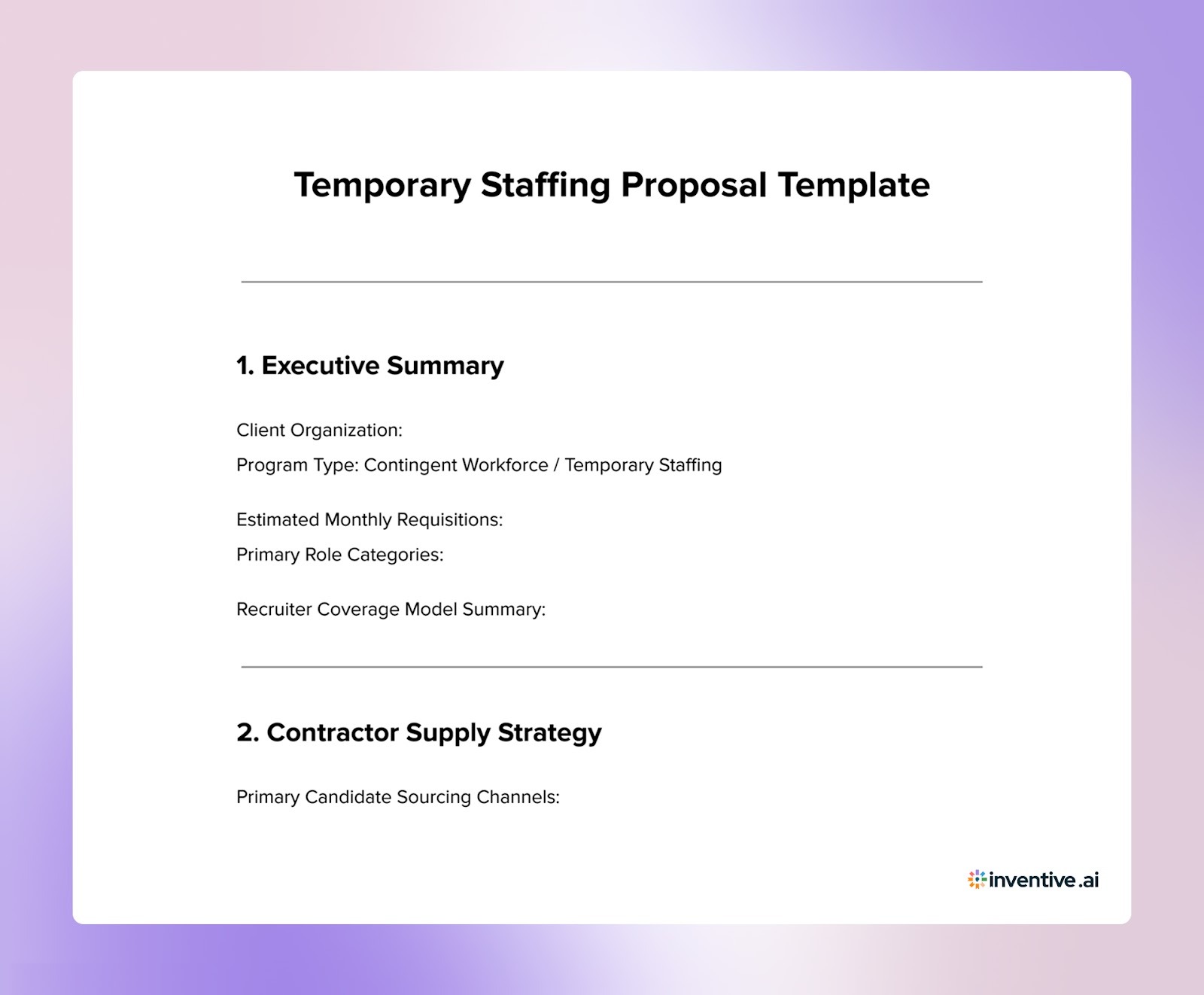
This template supports staffing firms responding to RFPs for contingent workforce programs where buyers need contract professionals quickly. Procurement teams evaluating these proposals typically focus on recruiter capacity, candidate submission timelines, and bill rate structures.
The structure reflects:
- High-volume contractor hiring across defined role categories
- Recruiter coverage models aligned with requisition volume
- Candidate sourcing pipelines for specialized technical roles
- Candidate submission timelines and interview coordination
- Bill rate structures and vendor markup expectations
This format works best for staffing firms supporting technology companies, healthcare providers, and operations teams that rely on contract talent to manage fluctuating workforce demand.

2. Recruitment Agency Proposal Template
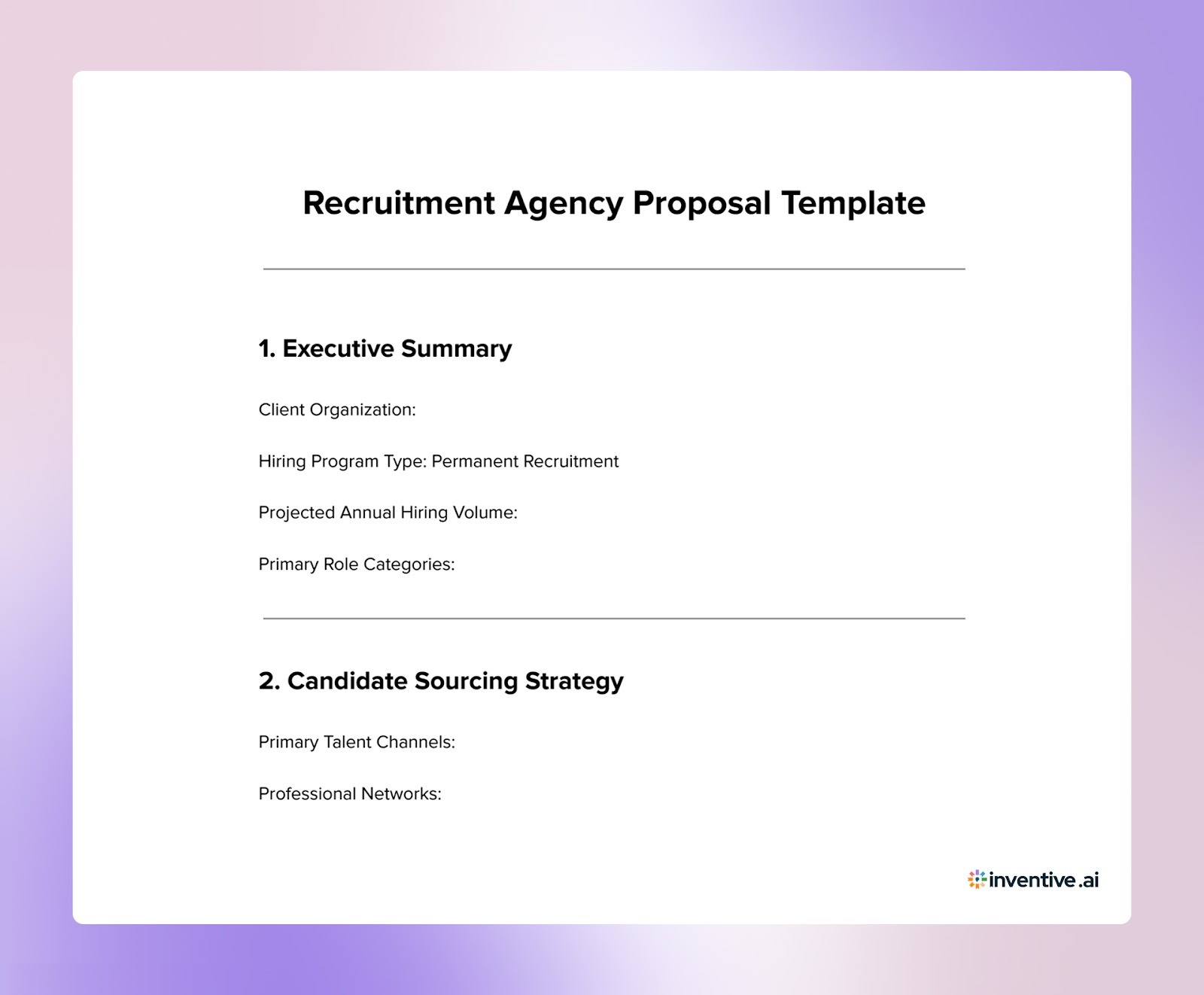
This template supports recruiting firms responding to RFPs for permanent hiring programs. Buyers issuing these RFPs typically evaluate sourcing methodology, recruiter specialization, and placement success rates.
The structure reflects:
- Candidate sourcing strategy across professional networks and talent databases
- Recruiter specialization aligned with role categories and industries
- Screening processes, including resume evaluation and interview preparation
- Candidate presentation formats and hiring manager coordination
- Placement fee structures and replacement guarantees
This format works best for agencies competing for enterprise recruiting partnerships across technology, finance, and professional services hiring programs.

3. MSP Staffing Program Proposal Template
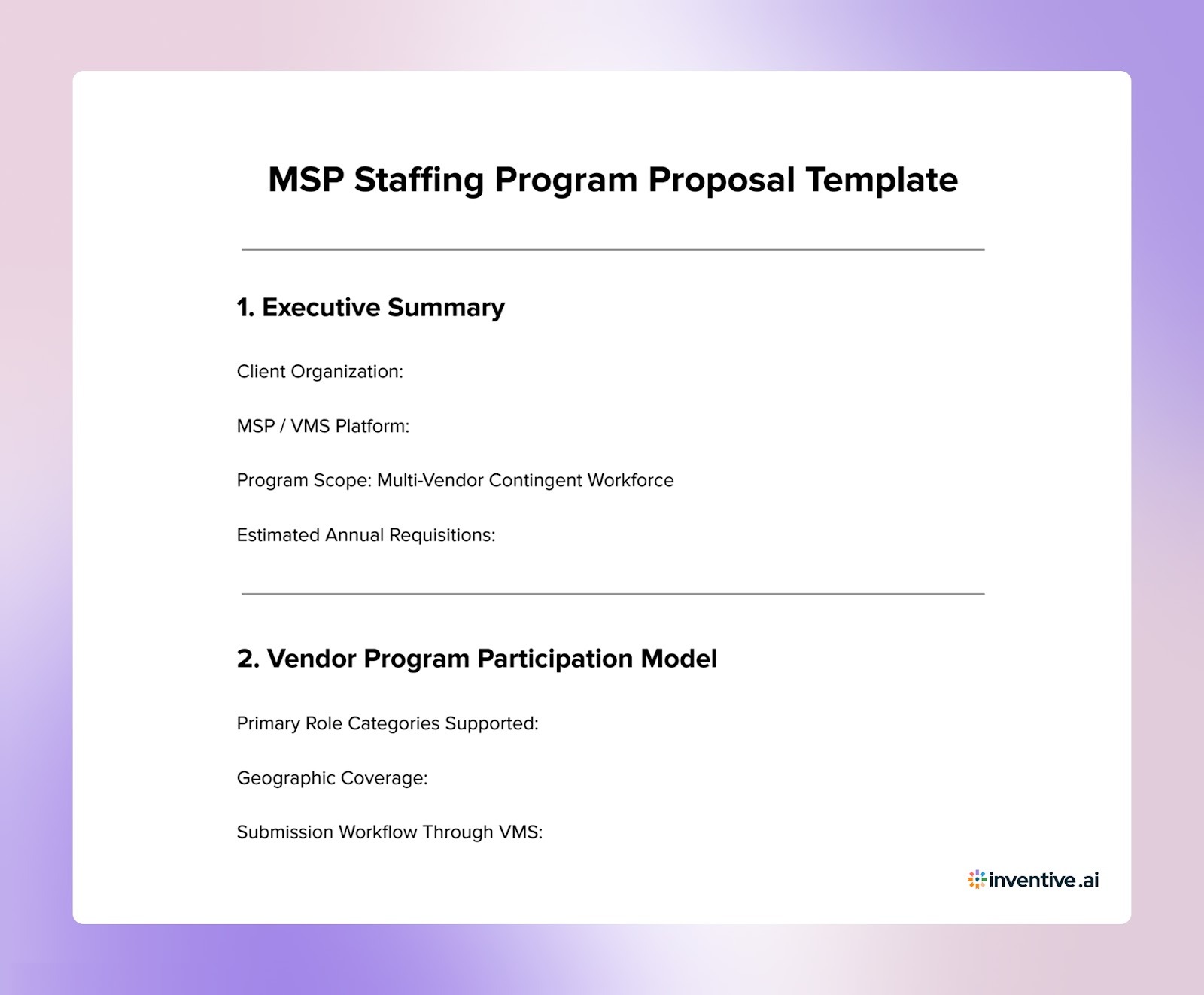
This template supports staffing vendors responding to enterprise contingent workforce programs managed through Managed Service Providers (MSPs) or Vendor Management Systems (VMS). Buyers evaluating these programs focus on compliance, reporting, and recruiter capacity for high-volume requisitions.
The structure reflects:
- Recruiter coverage models for large multi-role hiring programs
- Candidate submission processes through VMS platforms
- Compliance procedures for contractor classification and payroll management
- Reporting requirements for requisition status and hiring metrics
- Standardized bill rate structures aligned with program rate cards
This format works best for staffing firms participating in enterprise vendor panels where multiple vendors compete to supply contract professionals across departments.

Draft Evaluator-Ready Staffing RFP Responses with Inventive AI
Staffing firms responding to RFPs must document recruiter capacity, sourcing strategies, compliance procedures, and pricing structures clearly. Preparing these responses manually often requires assembling information from previous proposals, recruiter documentation, and rate cards. This slows proposal cycles and increases the risk of inconsistent responses.
Inventive AI solves this challenge with AI-powered RFP response software designed for vendors. Instead of drafting responses manually, teams generate structured answers aligned with the buyer’s hiring requirements.
Below are the key capabilities that improve staffing RFP responses.
1. Context Engine
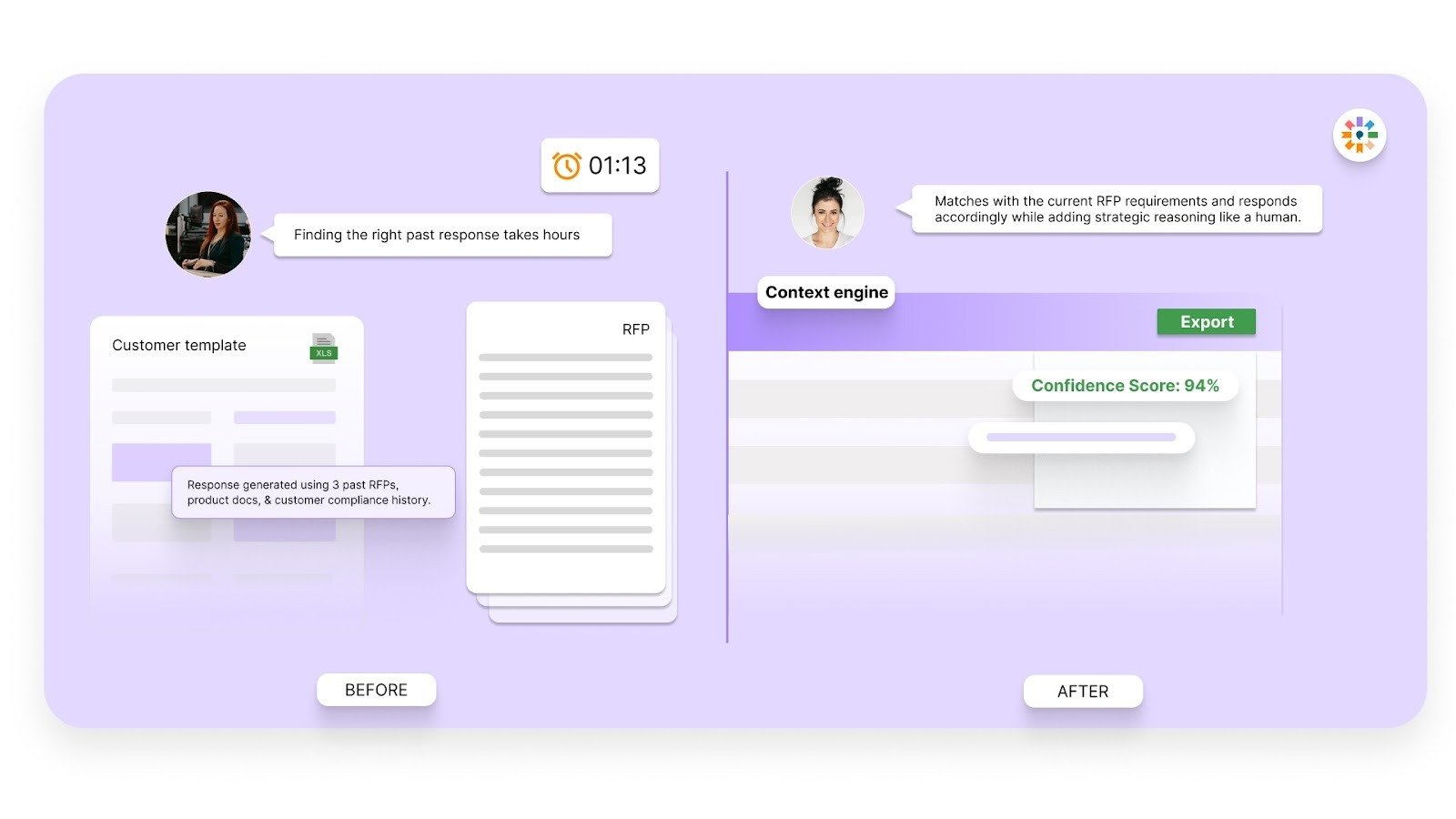
Most proposal tools rely on keyword retrieval that produces generic answers. Inventive AI analyzes the entire RFP, including hiring demand, recruiter coverage requirements, and pricing structures.
This allows the platform to generate responses aligned with the buyer’s staffing program instead of generic recruiting language.
2. Conflict Detection
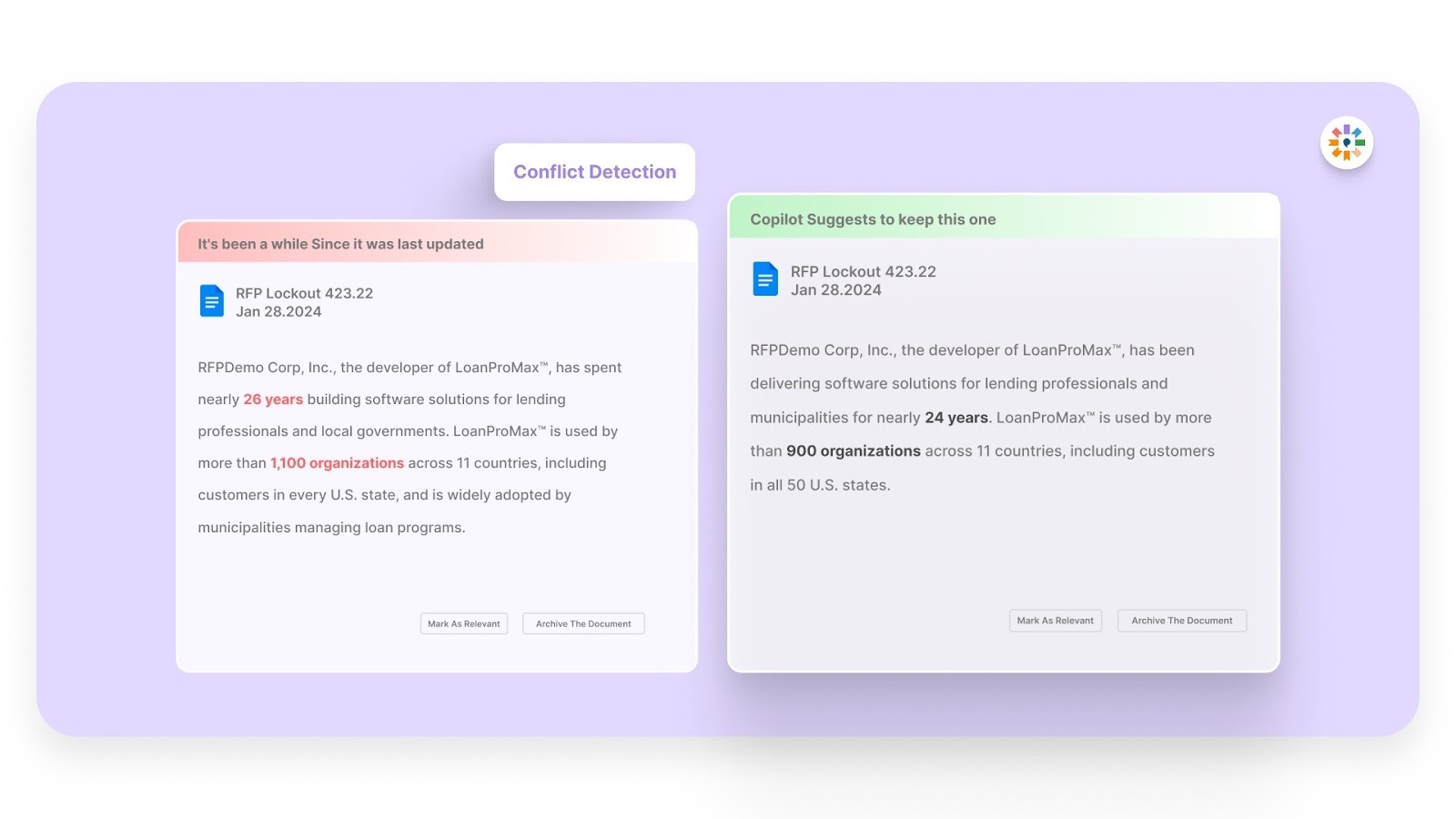
Staffing proposals often include overlapping sections such as recruiter coverage models, sourcing timelines, and pricing explanations. Manual proposals frequently introduce conflicting information across these sections.
Inventive AI automatically detects contradictions before submission, so responses remain consistent throughout the proposal.
3. Outdated Content Detection
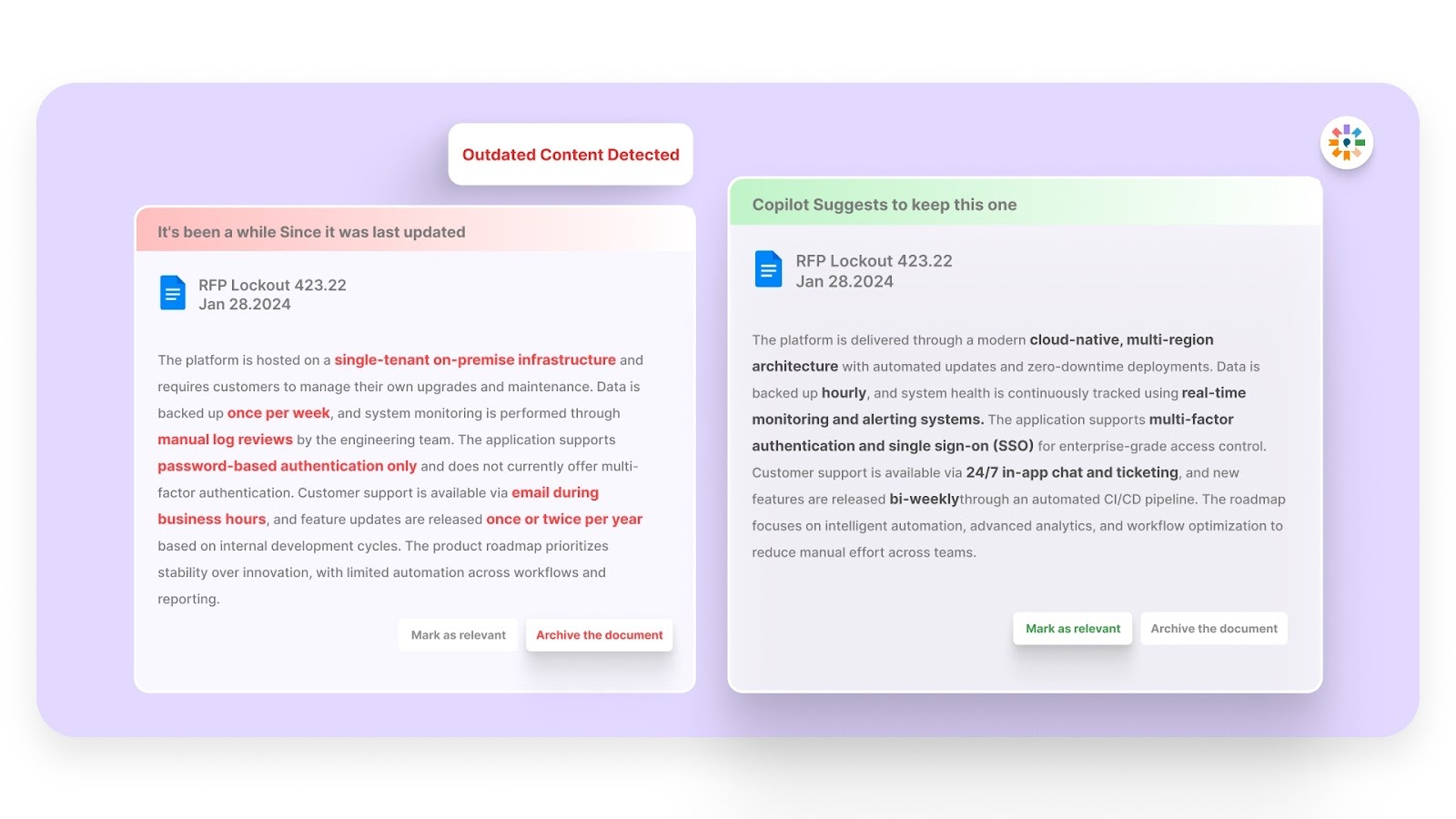
Staffing proposal libraries often contain older responses referencing outdated compliance documents, expired insurance coverage, or previous recruiting capacity statements.
Inventive AI flags outdated content before it appears in the proposal, ensuring responses reflect current capabilities and documentation.
4. 2X Higher Quality Responses
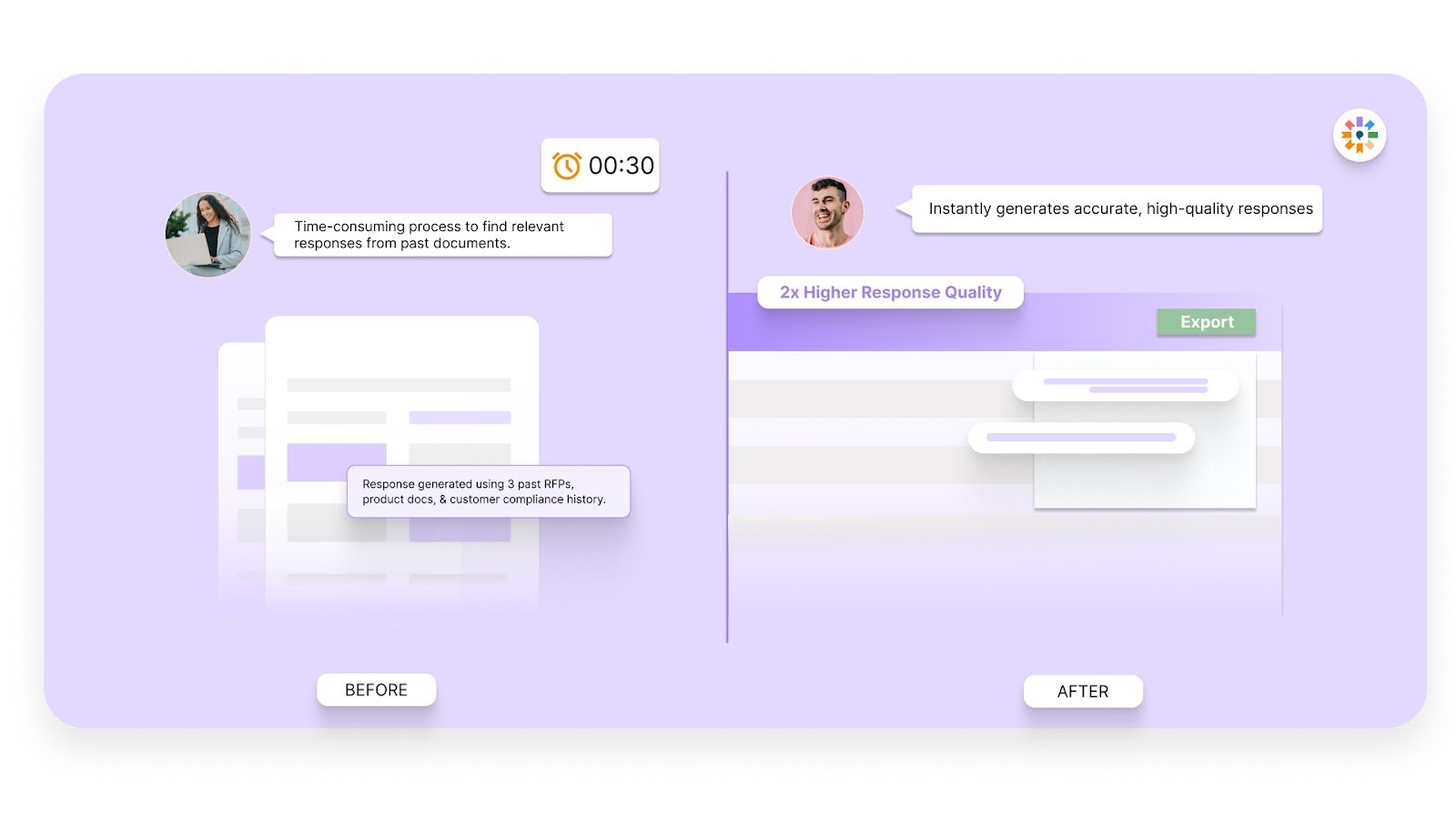
Inventive AI’s multi-agent system generates responses with greater clarity and completeness. The platform analyzes buyer requirements and produces answers that directly address project scope, preparation methods, and execution plans.
This improves proposal quality and strengthens vendor positioning during evaluation.
5. Narrative Proposal Generation
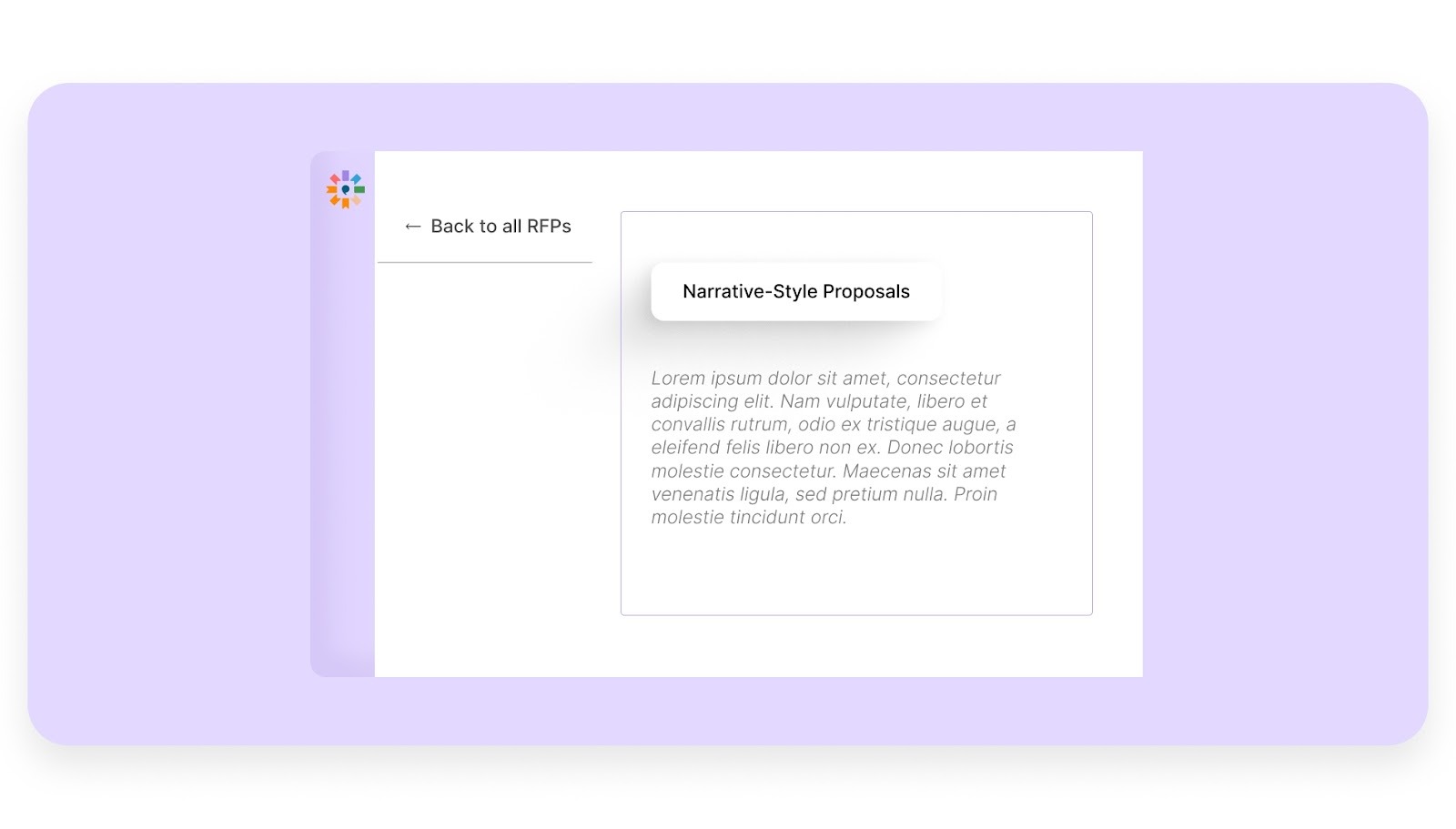
Many staffing RFPs require narrative explanations describing recruiting methodology, sourcing strategies, and delivery models.
Inventive AI generates structured narrative responses that clearly explain how your recruiting team will meet the buyer’s hiring demand.
6. Simple and Easy-to-Use Interface
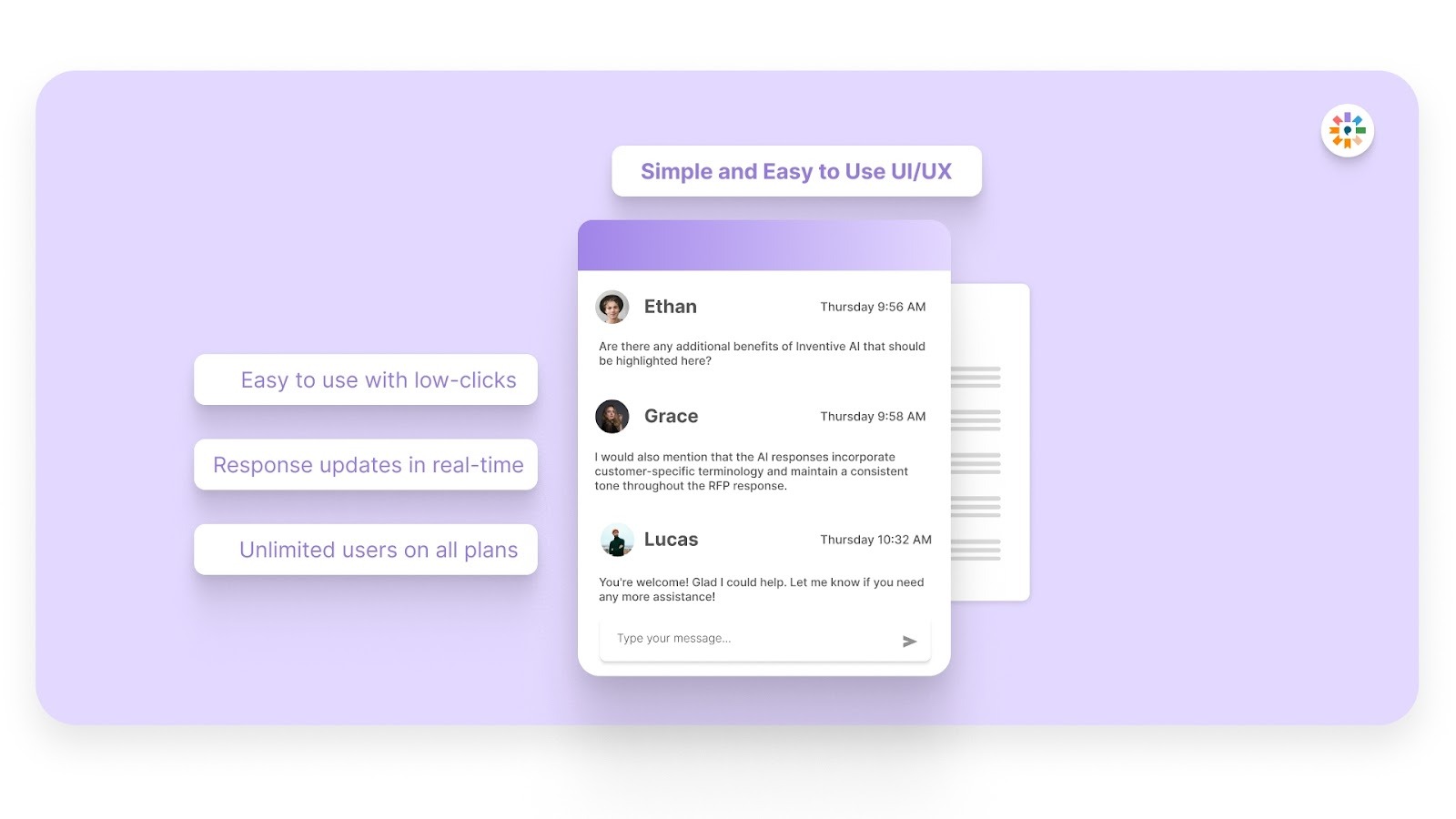
Proposal teams often work under tight deadlines while coordinating with recruiters, sales teams, and operations managers.
Inventive AI provides a simple interface that allows teams to generate structured RFP responses quickly without complex setup or training.
FAQs About Staffing RFPs
1. How Do Buyers Determine the Right Number of Staffing Vendors for an RFP?
Most staffing programs operate best with three to five vendors per role category. Fewer vendors reduce candidate supply and increase hiring risk. Too many vendors often produce duplicate candidate submissions and inconsistent communication with hiring managers.
2. What Information Do Staffing Vendors Need to Estimate Recruiter Capacity?
Vendors estimate recruiter coverage using expected requisition volume, role difficulty, submission targets, and time-to-fill expectations. For example, a technical recruiter supporting niche engineering roles may handle five active requisitions simultaneously, while general staffing roles may allow ten or more concurrent searches.
3. Why Do Staffing Proposals Often Contain Inconsistent Pricing?
Pricing inconsistencies usually occur when buyers allow multiple pricing formats in the RFP. Some vendors submit bill rates, while others quote markup percentages above candidate wages. Standardizing pricing structure requirements prevents confusion during proposal evaluation.
4. What Causes Staffing Vendors to Miss Candidate Submission Deadlines?
Missed submission deadlines often result from unclear role requirements or unrealistic timelines in the RFP. Vendors must understand required experience levels, location constraints, and compensation ranges before sourcing candidates. Incomplete role descriptions slow recruiter sourcing activity.
5. How Can Vendors Improve Their Success Rate in Staffing RFPs?
Successful staffing proposals mirror the buyer’s evaluation criteria closely. Vendors should structure responses around recruiter capacity, sourcing strategy, compliance documentation, and measurable hiring outcomes. Providing specific hiring metrics from comparable staffing programs strengthens proposal credibility.




.png)

.avif)