Vendor Risk Assessment Template (2026): Free Excel Checklist
%20Free%20Excel%20Checklist.jpg)
Evaluating vendor risk requires more than informal reviews or scattered documentation. Teams need a structured vendor risk assessment template in XLS format to identify potential risks, document compliance status, and evaluate suppliers using consistent criteria. Without a standardized assessment format, important risk indicators such as security gaps, compliance issues, and operational weaknesses may be missed, increasing exposure to vendor-related disruptions.
To simplify this process, we’ve created a practical vendor risk assessment template in XLS format that helps teams record risk factors, assess vendor controls, and compare supplier risk levels side by side. It ensures all risk information is documented clearly and reviewed efficiently.
Vendor risk assessment templates are widely used by procurement, compliance, IT, and risk management teams to support vendor onboarding, monitor supplier risk, and ensure regulatory compliance.
Vendor Risk Assessment Templates Updated for 2026
Most buyers use this risk assessment template to collect detailed information about your security controls, compliance status, and operational risk. This structure defines how your organization’s risk posture will be reviewed and approved.
Vendors who submit clear, structured responses make it easier for buyers to complete risk assessments and are more likely to pass vendor onboarding.
The templates below help vendors prepare risk assessment responses faster, present their controls clearly, and improve approval outcomes during vendor risk evaluation.
Template 1: Vendor Risk Response Questionnaire Template
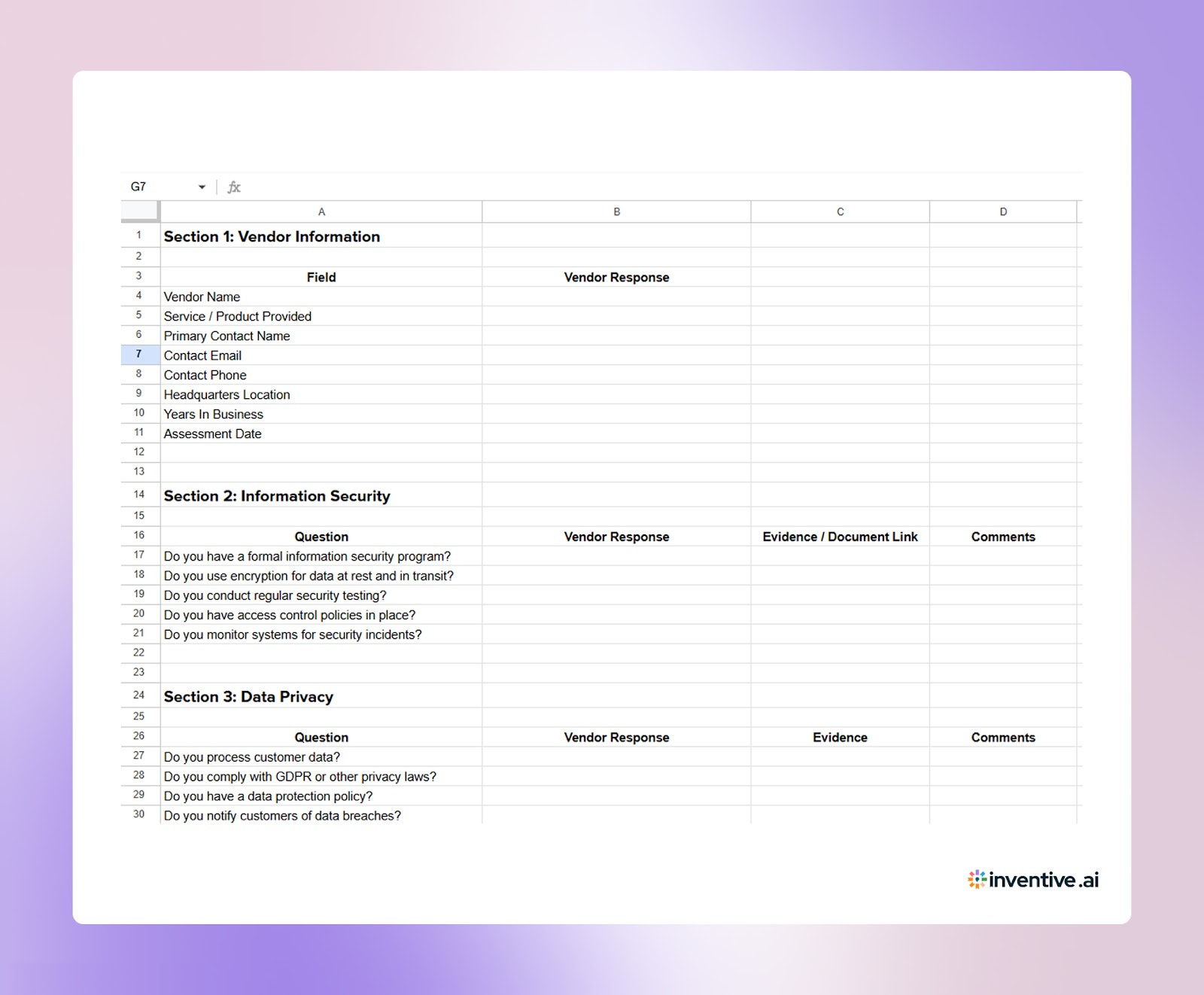
Use this template to respond to buyer risk assessment questions across security, compliance, and operational areas. It helps buyers evaluate your organization’s risk posture accurately.
Template 2: Vendor Security And Compliance Evidence Template
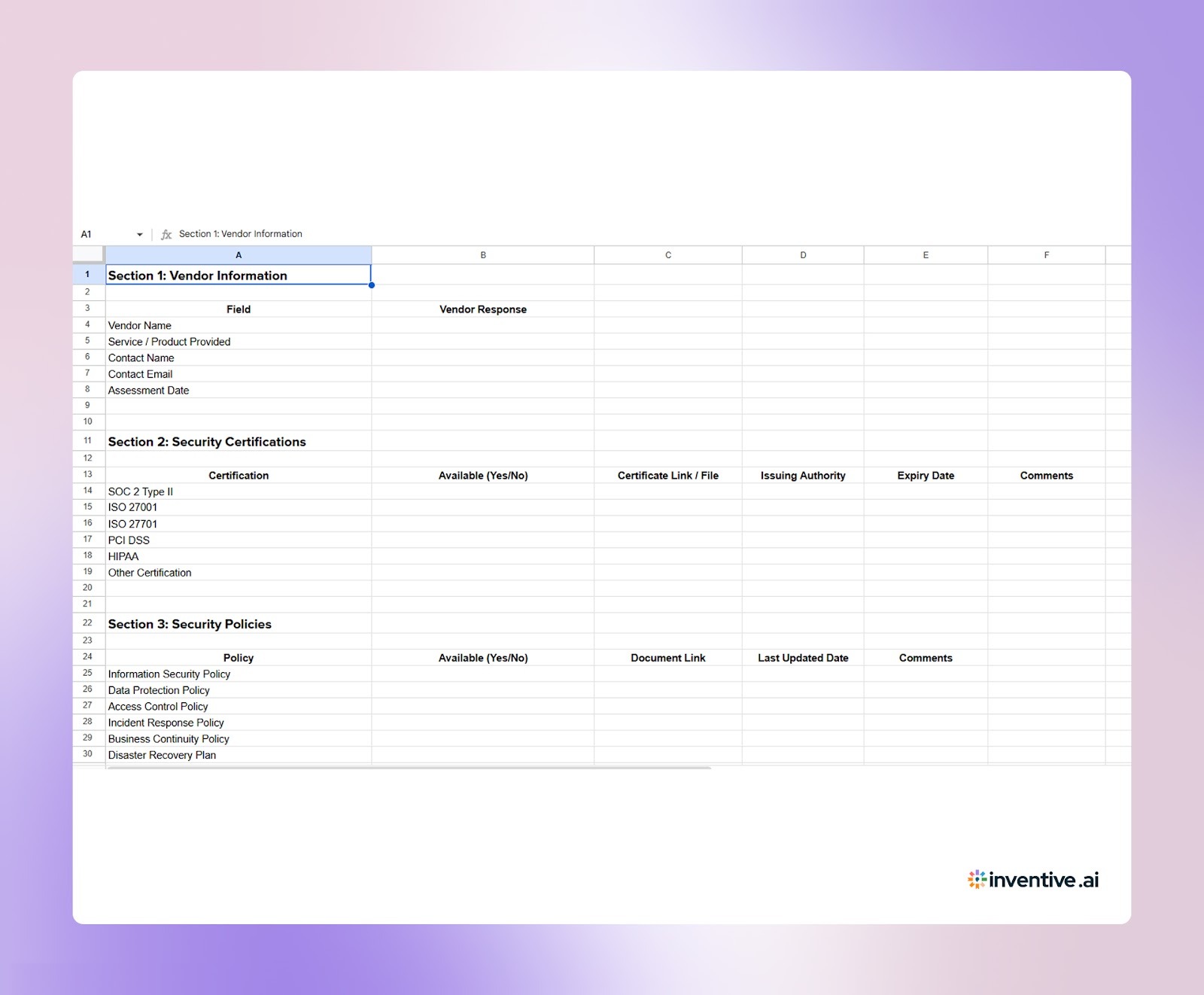
Use this template to provide certifications, policies, and compliance documentation. It helps buyers verify your controls and complete risk reviews efficiently.
Template 3: Vendor Risk Mitigation Plan Template
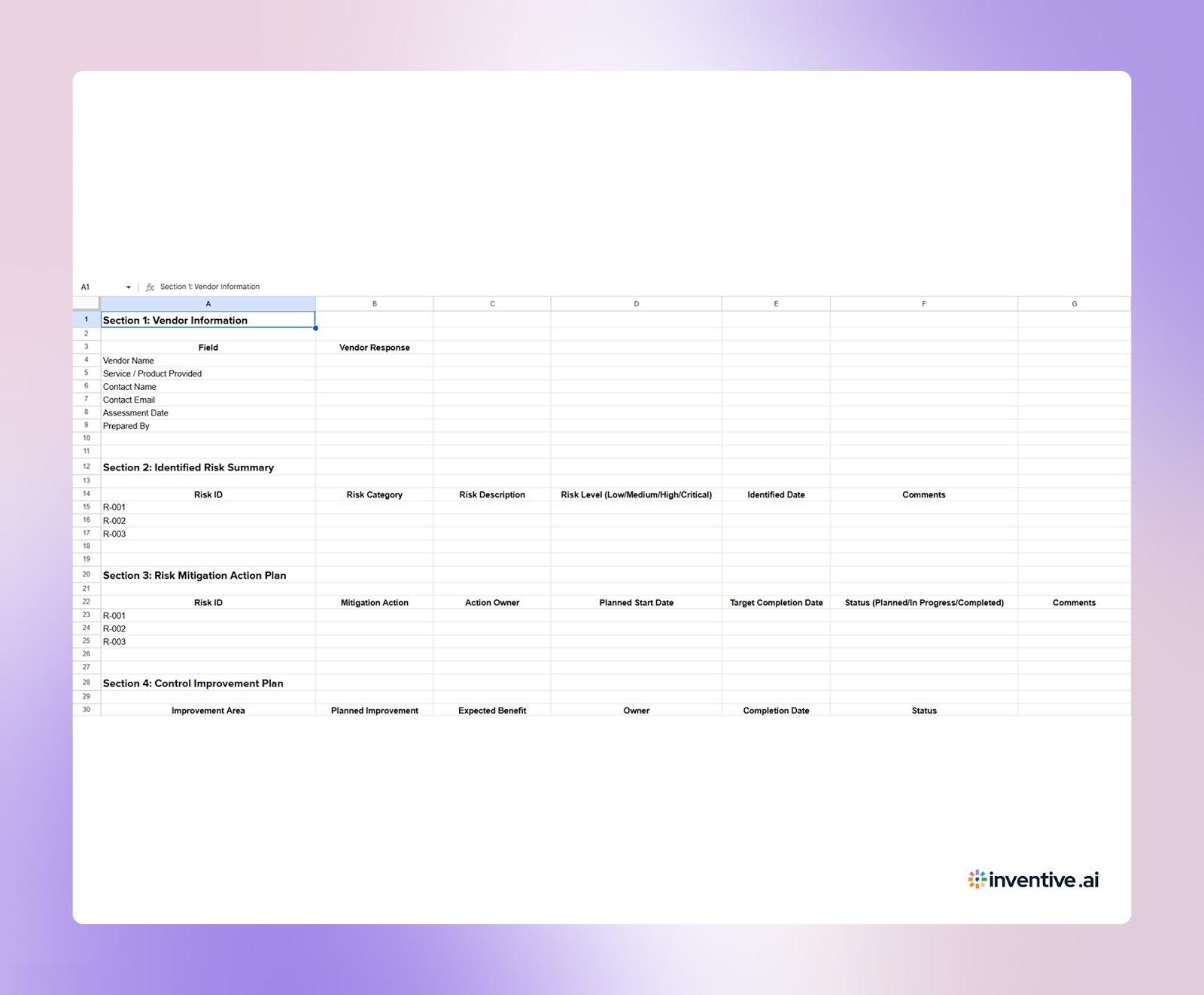
Use this template to explain how you address identified risks and improve your control environment. It helps buyers understand your mitigation approach and risk readiness.
Vendor Risk Assessment Template for Buyers (XLS): Free Download
If you are using an Excel-based risk assessment template, your document should clearly capture vendor details, risk categories, scoring criteria, and mitigation actions. Vendor risk templates may vary depending on regulatory requirements, industry, and vendor type, but most include structured sections to identify, evaluate, and manage supplier risks consistently.
While the exact risk factors may differ for IT vendors, service providers, or third-party partners, the following elements form the foundation of an effective vendor risk assessment template.
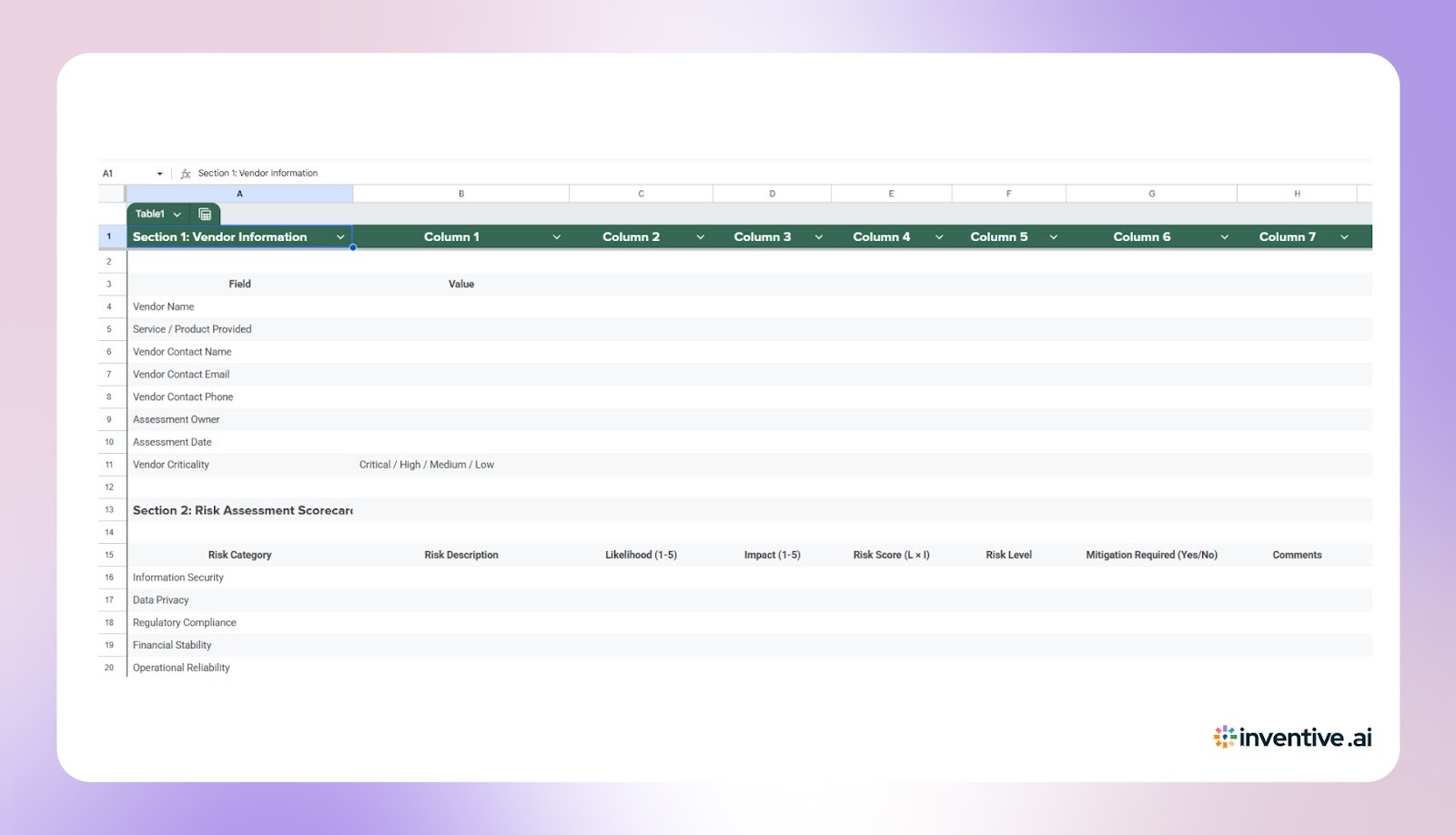
For vendors (suppliers), vendor risk assessment templates determine how their security, compliance, and operational controls are reviewed.
Understanding the assessment structure helps vendors provide accurate information, address risk areas clearly, and ensure their responses align with buyer risk evaluation criteria.
Why Vendor Risk Assessment Templates are Important in 2026?
Vendor risk assessment template files provide a structured framework that buyers and vendors use to identify, evaluate, and manage third-party risk. They ensure all vendors are assessed using the same risk categories, making evaluations more consistent and reliable.
Buyers use vendor risk assessment templates to:
- Identify security, compliance, operational, and financial risk factors
- Assign risk scores based on likelihood and business impact
- Compare risk levels across multiple vendors consistently
- Document mitigation plans and risk ownership clearly
- Maintain audit-ready records for regulatory and internal review
This improves risk visibility and reduces the likelihood of onboarding high-risk vendors.
Vendor risk assessment templates help vendors:
- Understand buyer expectations around security and compliance controls
- Provide structured responses to risk and due diligence questions
- Present certifications, policies, and control information clearly
- Reduce delays caused by incomplete or unclear risk responses
- Improve their chances of passing the vendor risk review and approval
Since vendor risk assessment templates directly influence vendor onboarding and approval decisions, submitting accurate, structured, and complete responses is essential for remaining competitive.
Prepare Strong Responses Using a Vendor Risk Assessment Template
Vendors who submit clear, complete, and well-structured responses make it easier for buyers to assess risk accurately.
Well-prepared submissions improve approval chances and speed up vendor onboarding.
- Answer Every Risk Question Completely and Accurately: Risk templates include specific questions about your controls and processes. Vendors should respond to each item directly and avoid leaving gaps. Complete responses help buyers finish assessments faster.
- Provide Supporting Evidence for Your Risk Controls: Buyers often require proof such as certifications, policies, and audit reports. Including supporting documents strengthens your credibility and reduces follow-up questions.
- Clearly Describe Your Security and Compliance Practices: Buyers evaluate how you protect data and manage risk. Clear explanations of your controls help buyers understand your risk posture and readiness.
- Ensure Consistency Across All Submitted Information: Conflicting answers between questionnaires and supporting documents create risk concerns. Consistent responses improve trust and assessment outcomes.
- Address Identified Risks With Mitigation Plans: If there are known gaps, explain how you are resolving them. Providing mitigation actions demonstrates accountability and preparedness.
- Maintain Updated Risk and Compliance Information: Vendor risk assessments are repeated regularly. Keeping your certifications, policies, and responses current helps your team respond faster and stay ready.
Preparing your submission using a structured vendor risk assessment template helps buyers evaluate your organization confidently, improves approval outcomes, and strengthens your position as a trusted vendor.
Must Read: RFP Software Comparison for Transportation 2025
How Inventive AI Helps Vendors Pass Vendor Risk Assessments Faster and Better with AI RFP Software?
Inventive AI’s AI RFP Agent helps vendors generate structured, accurate, and complete vendor risk assessment responses aligned with buyer evaluation criteria. This ensures your security, compliance, and risk information is clear, verifiable, and approval-ready.
1. Context Engine
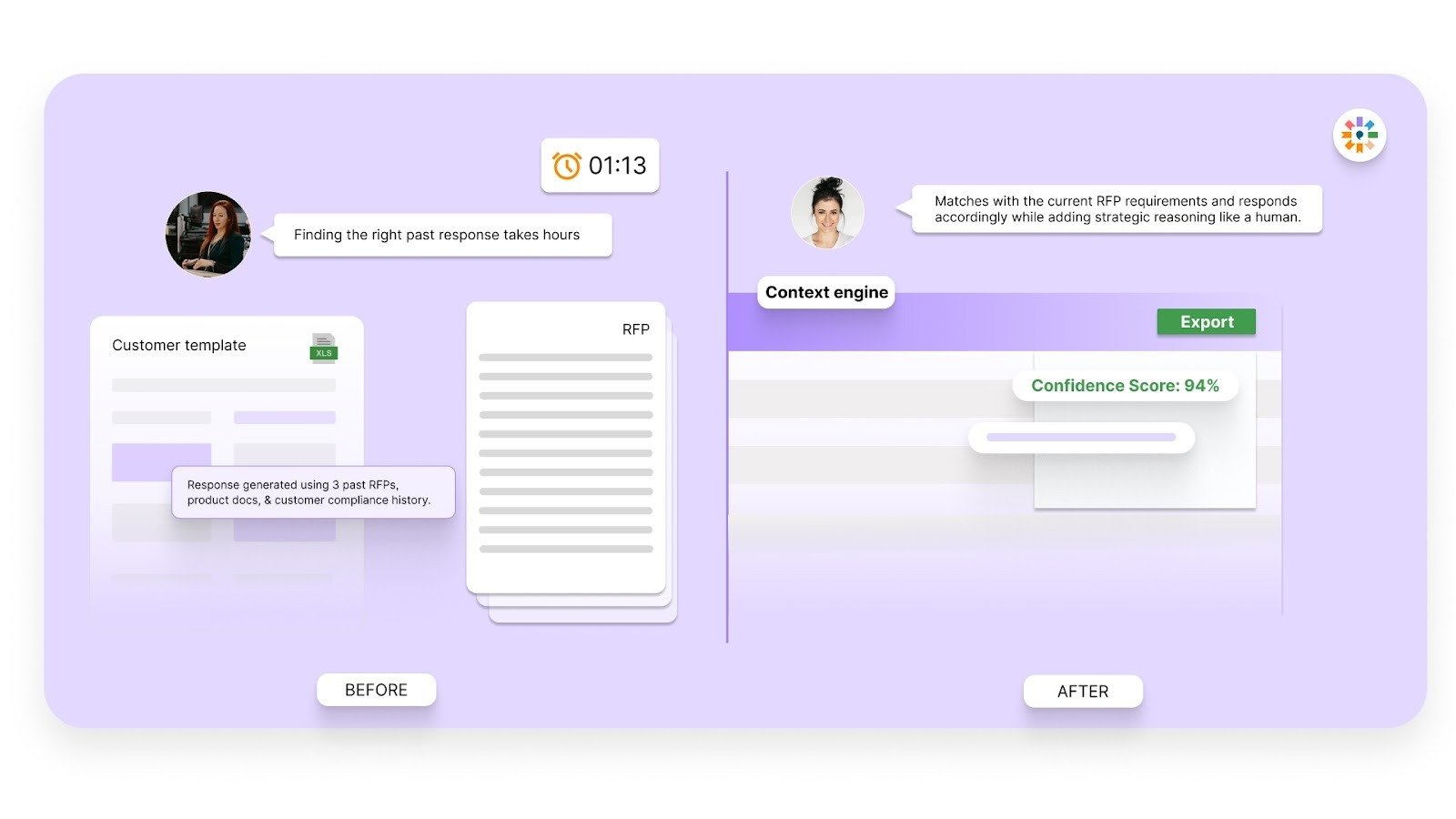
Inventive AI analyzes the full vendor risk assessment, including security questionnaires, compliance requirements, and risk criteria. It generates responses aligned with what buyers actually evaluate.
This ensures your submission is complete, relevant, and audit-ready.
2. Conflict Detection
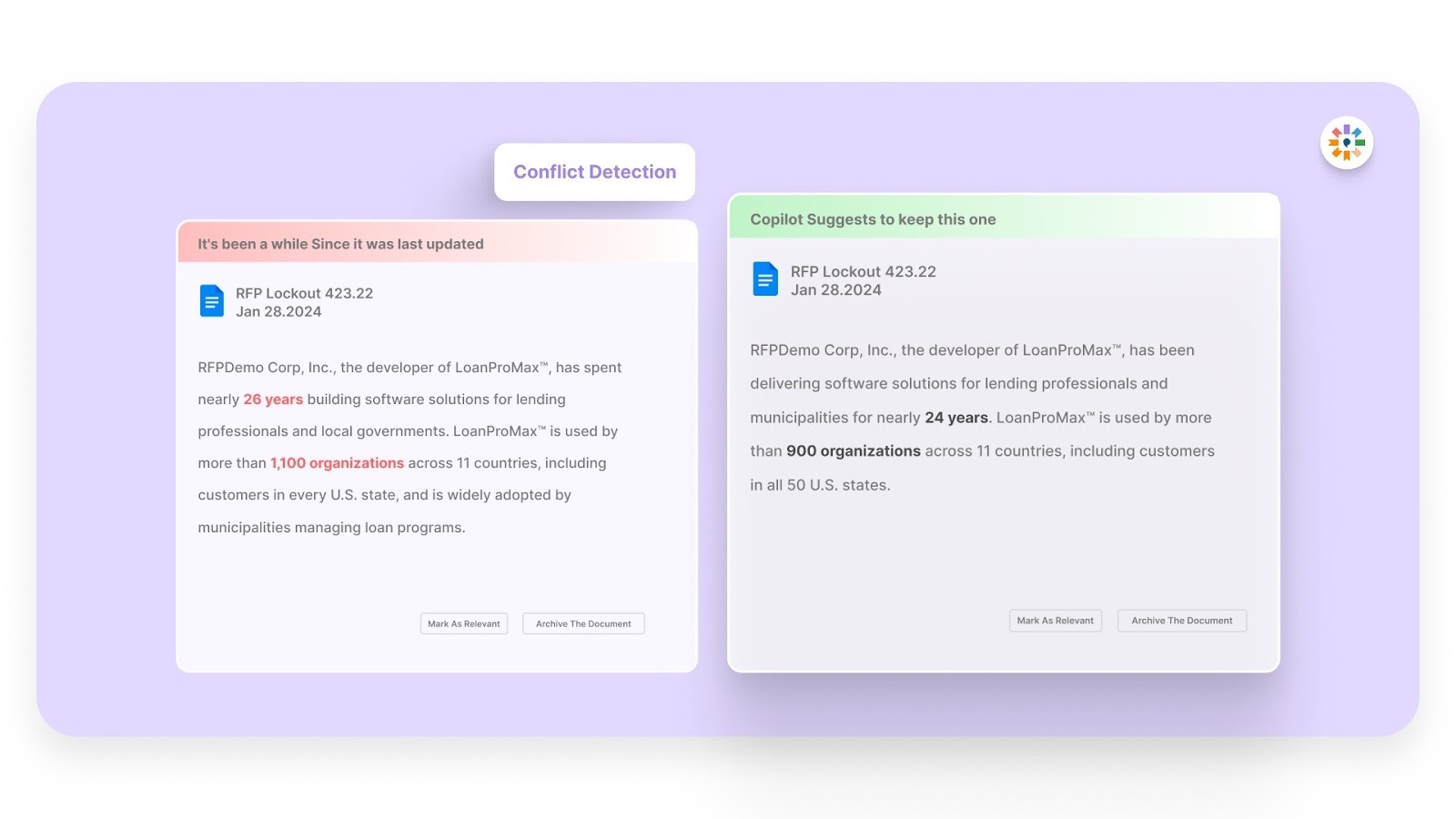
Vendor risk assessments require consistency across policies, certifications, and questionnaire responses. Inventive AI detects conflicting information automatically.
This helps prevent risk flags and improves approval outcomes.
3. Outdated Content Detection
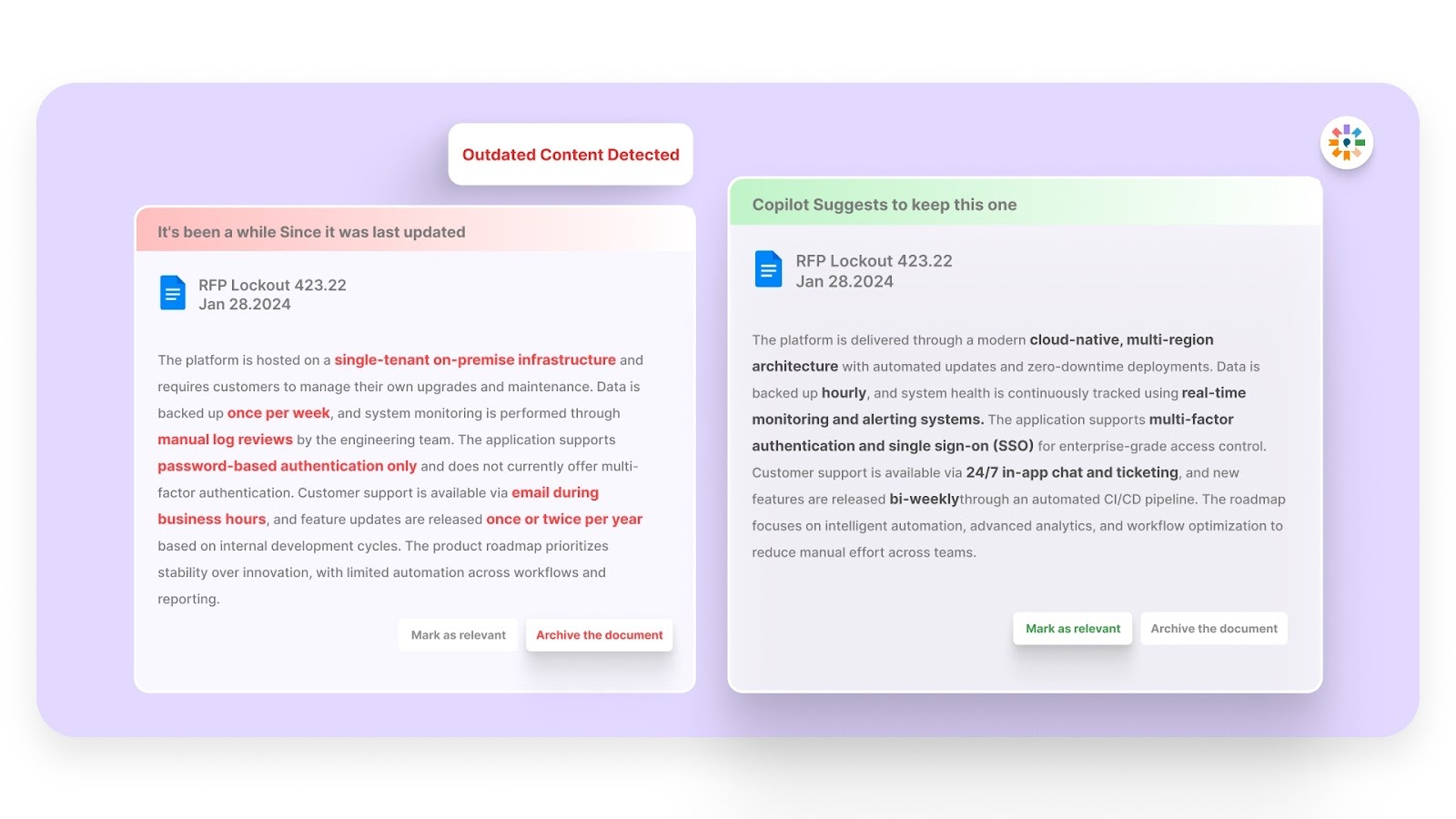
Expired certifications and outdated policy information can delay approval. Inventive AI flags outdated content before submission.
This ensures buyers evaluate your most current risk and compliance posture.
4. 2× Better Quality Responses
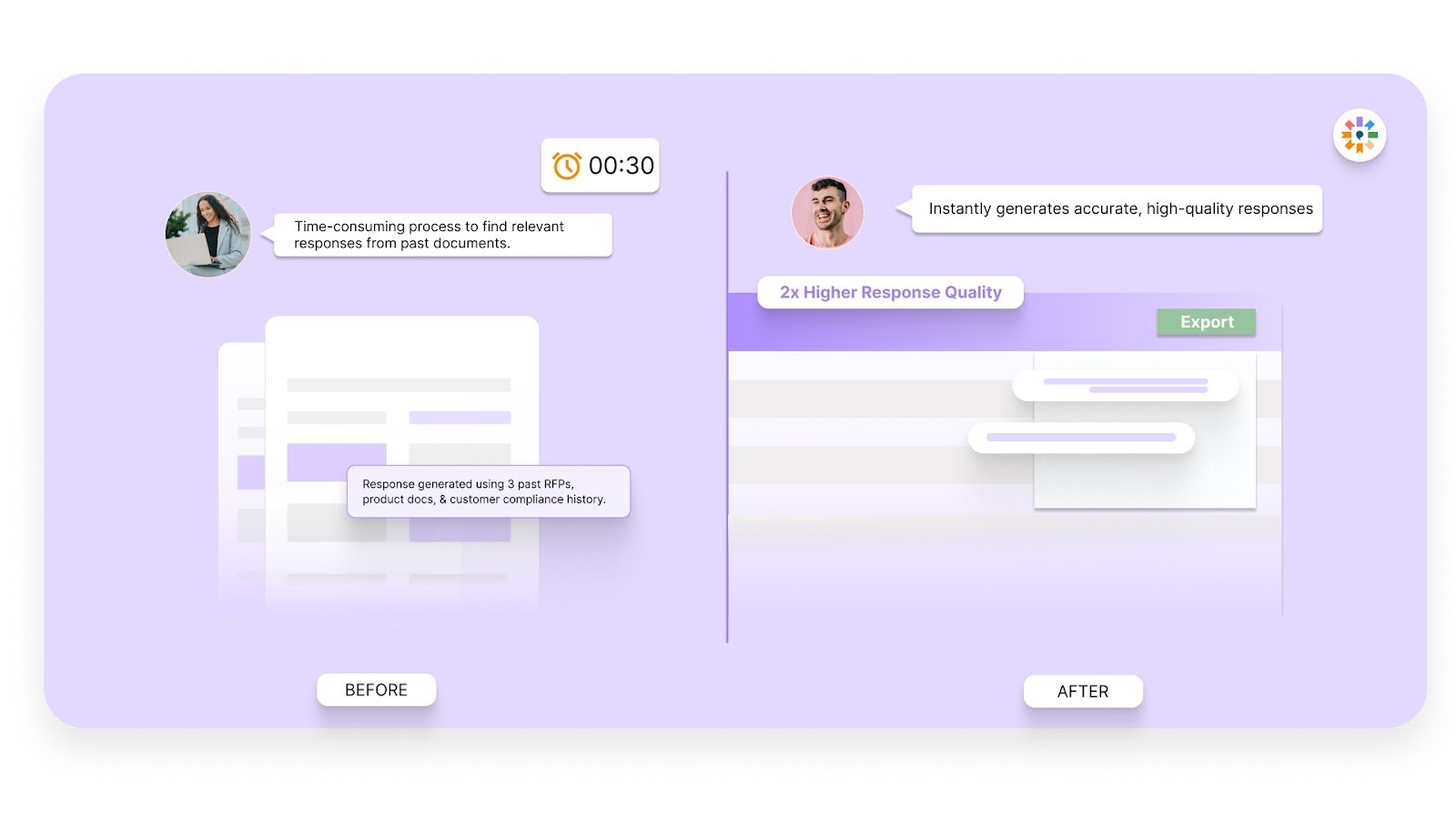
Inventive AI’s multi-agent system generates structured responses aligned with vendor risk assessment formats. Responses are clear, complete, and require minimal editing.
This improves risk assessment scores and speeds up vendor approval.
5. Simple and Easy-To-Use Interface
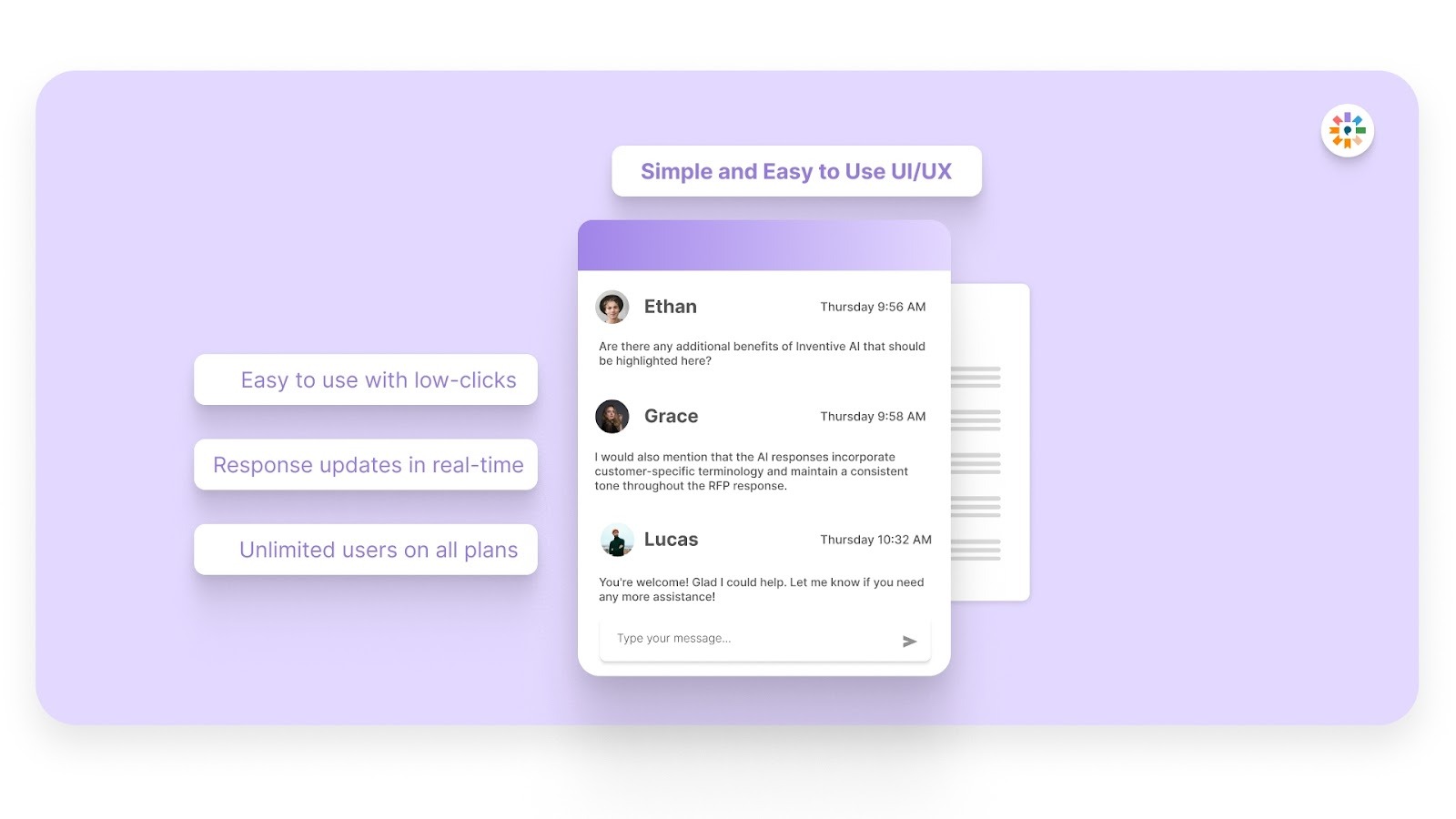
Teams can quickly generate and update risk assessment responses without managing multiple spreadsheets and documents. The platform supports fast adoption across compliance and proposal teams.
This helps vendors complete assessments faster and reduce manual effort.
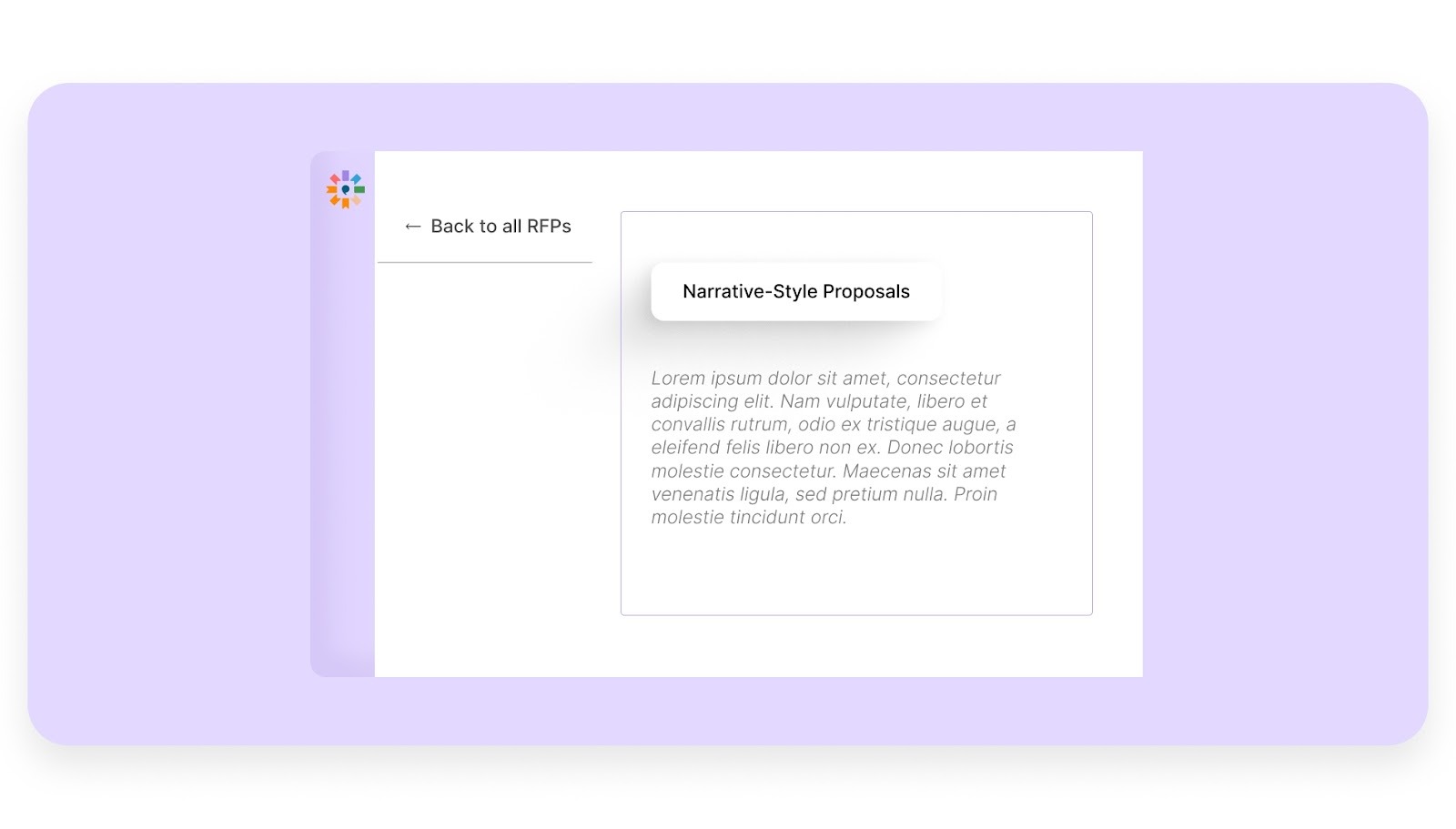
6. Narrative Proposal Generation
FAQs
1. When Should a Vendor Risk Assessment Be Performed?
Vendor risk assessments are typically conducted before onboarding a new vendor and repeated periodically afterward. This helps buyers monitor risk levels and ensure vendors continue to meet security and compliance requirements over time.
2. Which Teams Are Usually Involved In Vendor Risk Assessments?
Vendor risk assessments often involve procurement, IT security, compliance, legal, and risk management teams. Each team evaluates different risk areas such as data protection, regulatory exposure, and operational reliability.
3. How Do Buyers Determine Vendor Risk Levels?
Buyers usually assign risk scores based on likelihood and impact across different categories. These scores are combined to classify vendors as low, medium, or high risk, which helps guide approval decisions.
4. What Happens After a Vendor Risk Assessment Is Completed?
Once the assessment is complete, buyers may approve the vendor, request additional controls, or require mitigation actions. In some cases, vendors may not be approved until risks are resolved.
5. How Often Do Vendors Need To Update Risk Assessment Information?
Many organizations require vendors to update their risk assessment information annually or whenever major changes occur, such as new certifications, system upgrades, or security incidents.
6. Why Do Some Vendors Fail Vendor Risk Assessments?
Vendors may fail due to missing documentation, weak security controls, compliance gaps, or incomplete responses. Providing clear, accurate, and well-documented information improves approval chances.
.avif)




%20Craft%20Winning%20Vendor%20Responses%20Quickly.jpg)