Where Procurement Fits in US Organizations in 2026: Roles, Structure, and Key Priorities

In most organizations, procurement sits under Finance, Operations, or Supply Chain, depending on whether the business prioritizes cost control, operational continuity, or strategic supplier management.
In larger or more mature companies, the Chief Procurement Officer (CPO) may report directly to the CEO, reflecting procurement's growing strategic role. According to the GEP-sponsored 2024 Annual ProcureCon CPO Report, 46% of enterprises say their CPO now plays a bigger role in high-level decision-making.
But here's the challenge with procurement teams: even with strong proposals, many vendors still lose RFPs. Why? Because they fail to align with the evolving priorities of procurement teams, which can vary dramatically based on where they sit within the organizational structure.
In this blog, we’ll explore how procurement's role impacts your RFP responses and why understanding this structure is crucial for crafting winning proposals.
Key Takeaways
- Procurement Controls Vendor Selection and Contracts: Procurement manages vendor choices and contracts, so aligning your proposal with their decision-making process is crucial. Show how your solution offers more than just cost savings.
- Where Procurement Sits Determines What They Care About: Procurement’s priorities change based on their reporting line. CFO-led teams focus on financial metrics, while CEO-led teams prioritize strategic fit and long-term value.
- Procurement Structure Influences Who Evaluates Your Proposal: The procurement model (centralized, decentralized, or hybrid) affects who reads and scores your proposal. Adapt your approach based on whether one team or multiple units are involved.
- Vendors Lose Deals Due to Misalignment, Outdated Content, and Weak Compliance: Misaligned proposals, outdated content, and incomplete compliance sections are major reasons vendors lose RFPs. Keep your proposal up-to-date and ensure all sections are complete.
- Inventive AI Helps You Align Responses and Improve Accuracy: Inventive AI makes responding to RFPs faster and more accurate by aligning your content with procurement’s needs, reducing effort and improving win rates.
The Role of Procurement Inside an Organization
Procurement is a strategic function that varies significantly across organizations. It’s responsible for selecting suppliers, managing contracts, and ensuring that the organization acquires goods and services in the most efficient and cost-effective way possible. But the way procurement is structured can vary greatly depending on the organization's size, maturity, and industry focus.
At its core, procurement can sit under several different departments within an organization. In most companies, procurement is often positioned under Finance, Operations, or Supply Chain:
- Finance-led procurement focuses on cost savings and financial controls, aiming to manage the company's budget effectively.
- Operations-led procurement ensures that the goods and services needed for daily business operations are reliably sourced and delivered on time.
- Supply Chain-led procurement is vital in industries that depend on complex supplier networks and logistics, such as manufacturing and retail.
This organizational shift reflects the evolving role of procurement in driving long-term value, sustainability, and risk management across the business.
Understanding the procurement structure in an organization helps you tailor your RFP responses to the right priorities, ensuring your proposal addresses the needs of the right decision-makers.
Centralized, Decentralized, or Hybrid - Who Are You Really Writing For? Insights for Vendors
The reporting line tells you what procurement cares about. The structural model tells you who you're actually writing for and how the decision gets made.
1. Centralized Procurement
In a centralized procurement model, a single team makes all the purchasing decisions for the organization. The main benefit is consistency across all departments, as everyone follows the same evaluation criteria.
However, the risk is that if one section of your proposal is weak, it can affect the entire evaluation. Vendors should focus on ensuring compliance, a strong pricing section, and a clear solution overview since every part of your response matters.
2. Decentralized Procurement
In decentralized procurement, individual departments manage their own purchasing. This allows for faster decision-making and more flexibility, but it can be complex as each department may have different priorities.
Vendors should personalize their proposals for each department while keeping a unified, credible message for the organization as a whole.
3. Hybrid (Center-Led) Procurement
In a hybrid model, a central team sets overall policies, while business units handle their own purchasing within those guidelines.
The benefit of this approach is a balance between control and flexibility. However, the risk is that vendors must address two different sets of needs: the central team’s focus on compliance and cost efficiency, and the business units’ focus on solution fit and implementation. Vendors should tailor their responses to meet both audiences.
Before you write your next response, figure out which model you're dealing with. It changes everything from your tone to your proposal structure.
Also Read: RFP Scoring Templates for High-Impact Proposals: The Ultimate Guide
What’s the Difference Between Direct vs. Indirect Procurement?
Procurement can be split into two categories: direct and indirect procurement. Understanding the distinction between these two is essential to how you frame your proposals.
- Direct Procurement focuses on goods and services directly related to production, such as raw materials, components, or items essential for creating the company’s end product. It’s often more strategic, as it directly impacts production timelines and quality.
- Indirect Procurement involves everything that supports the organization’s operations but isn’t directly related to production, such as office supplies, IT services, or marketing. While it’s not as high-profile as direct procurement, it still represents a significant portion of spend.
Knowing which type of procurement your target company focuses on helps you adjust your proposal. If you're responding to an RFP for direct procurement, you’ll want to emphasize product quality, reliability, and cost efficiency. For indirect procurement, your proposal should highlight value-added services, innovation, and long-term impact.
Understanding the difference between direct and indirect procurement will help you craft more targeted and relevant RFP responses, showing that you truly understand what the buyer needs.
Procurement vs Purchasing: What Most Teams Get Wrong?
A common mistake many vendors make is treating procurement and purchasing as the same thing. While they’re closely related, they actually serve different purposes within an organization, and understanding this difference is key to writing the right proposal.
What Is Procurement?
Procurement is all about the big picture. It’s the strategic side of acquiring goods and services, and it plays a key role in long-term business success. Procurement teams are responsible for:
- Choosing the right suppliers
- Negotiating contracts
- Managing supplier relationships
- Reducing risks
These teams focus on aligning purchases with the company’s goals, making sure that what’s bought supports the overall strategy and growth.
What Is Purchasing?
Purchasing, on the other hand, is more about getting things done. It’s the day-to-day task of placing orders and receiving products or services. Purchasing teams handle:
- Creating purchase orders
- Processing transactions
- Managing invoices
While purchasing is important for smooth operations, it’s more about executing the plans set by the procurement team. It doesn’t deal with strategy or long-term planning.
Why This Matters for Vendors?
As a vendor, it’s important to know which team you’re talking to. If your proposal focuses only on pricing or features, you’re probably speaking to purchasing. But if you want to impress procurement, you need to go beyond the basics. Procurement is looking for:
- Risk management.
- Cost savings over time.
- How does your solution align with their strategic goals?
So, make sure your proposal highlights how your solution can bring long-term value, not just an affordable price tag.
Knowing the difference between procurement and purchasing will help you write a proposal that speaks to the right priorities. Address procurement’s broader goals, and you’ll be more likely to stand out.
Also Read: Staffing RFP Template + Proposal Samples for Staffing Vendors
Where Procurement Teams Reports And What It Tells You About the Buyer?
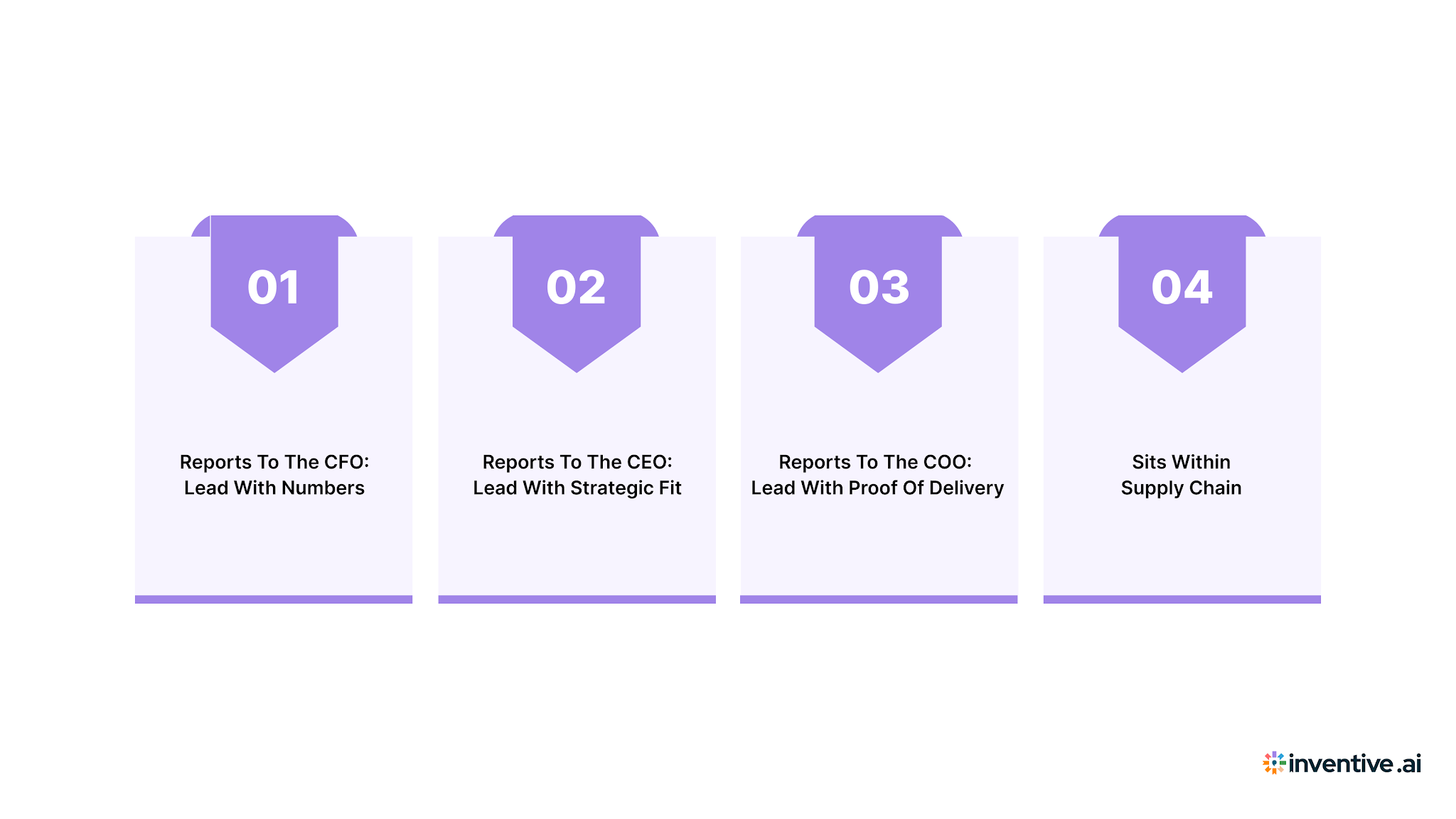
Procurement’s role and where it reports can vary widely across organizations. The reporting line isn’t random; it shapes what procurement focuses on and how your proposal will be scored. Here's a breakdown:
1. Reports to the CFO: Lead With Numbers
When procurement reports to the CFO, cost savings are the priority. The focus is on financial metrics, so make sure to highlight ROI, total cost of ownership (TCO), and efficiency gains upfront. Don’t bury these in the details; lead with the numbers.
2. Reports to the CEO: Lead With Strategic Fit
Procurement teams that report to the CEO are more strategic. They’re looking at how your solution aligns with the company's long-term goals. Focus on the value your solution brings, innovation potential, and how it supports the company’s vision for the future.
3. Reports to the COO: Lead With Proof of Delivery
COOs care about business continuity and efficiency. They want to see how your solution keeps things running smoothly, so emphasize implementation timelines, SLA commitments, and real-world references that show you can deliver.
4. Sits Within Supply Chain: Focus on Reliability
In industries like manufacturing and logistics, procurement often sits within the supply chain. Here, the focus is on delivery reliability and supplier track records. Keep your proposal clear and show that you can meet operational needs seamlessly.
5. Tech and Growth Companies: A Flexible Approach
In tech-heavy or growth-stage companies, procurement may operate more flexibly. These companies often prioritize innovation and speed. The CPO might report to the CEO or CTO, and procurement is focused on scalability and quick execution. Tailor your proposal to show you can move fast and add value.
Pro Tip: Always research the CPO on LinkedIn before starting your response. Their background and reporting line will tell you which priorities to focus on in your proposal.
Procurement’s reporting line tells you what matters most to the buyer. By understanding where procurement reports are and how it’s structured, you can tailor your RFP response to align with their needs.
Procurement Doesn't Work Alone. Who Else Is Scoring Your Proposal?
Here's something most vendors miss entirely: by the time an RFP reaches you, it already represents the compiled requirements of multiple internal teams. And when your response comes back in, those same teams often score it.
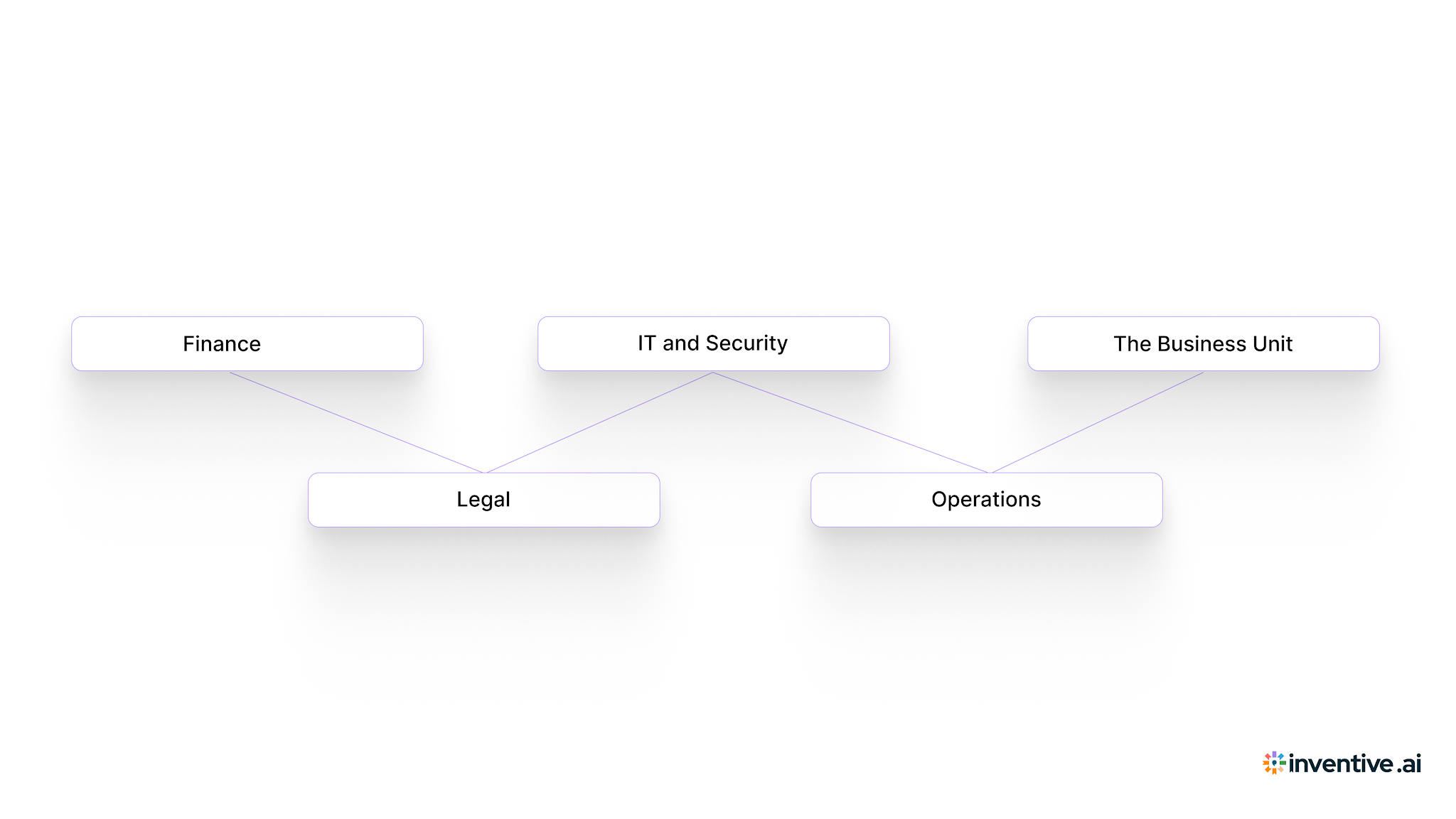
This is how it typically breaks down:
1. Finance: It validates your pricing model and TCO math. If your numbers don't add up or your commercial model is confusing, Finance flags it.
2. Legal: It reviews your contract terms, data processing agreements, and liability clauses. One unfavorable clause can kill a deal that the business already wants to do.
3. IT and Security: It scrutinizes your security questionnaire responses and integration requirements. An incomplete security section isn't just a low score; it can be an automatic disqualifier.
4. Operations: It evaluates your implementation timeline, SLA commitments, and onboarding process. They want to know the transition won't be painful.
5. The Business Unit: It contributed to the actual requirements in the first place. They're checking whether your solution genuinely solves their problem or just sounds like it does.
The practical implication: your proposal is never read by one person. It's read by a committee, each person scoring the sections that touch their function. A technically excellent response that skims the security questionnaire will be outscored by a competitor who took every section seriously.
Also Read: Risk Management RFP Template and Vendor Response Framework for 2026
Why Procurement's Bar Keeps Rising And What That Means for Your Proposals?
Five years ago, a clean proposal with strong pricing and solid references could win most RFPs. That playbook is outdated, and vendors still running it are losing deals they shouldn't.
The Goalposts Have Moved
Procurement's mandate has expanded well beyond cost savings. The person scoring your next proposal isn't just asking "can this vendor deliver?" They're asking, "Does this vendor understand what we're being held accountable for?"
ESG compliance. Data security. AI readiness. Supply chain transparency. These are scored sections in modern RFPs now. Not footnotes. Not nice-to-haves.
Here's the Opportunity Most Vendors Miss
Most procurement functions are still early in their transformation. Digital tools handle some basic tasks, but most processes still rely on manual efforts. Procurement is actively trying to evolve.
Vendors who show up with proposals that reflect that evolution get noticed. The ones submitting boilerplate responses from two years ago? Easy to spot. Easy to pass over.
What This Looks Like in Practice
- Dedicated ESG, security, and compliance sections now appear in most enterprise RFPs. Give them the same attention you give your pricing section.
- Procurement teams are using AI tools to evaluate submissions. A templated response reads like one.
- If your proposal pulls from a content library that hasn't been updated in 18 months, it shows.
The vendors consistently winning competitive RFPs aren't always the ones with the best product. They're the ones with the most relevant, current, and strategically aware response. That's entirely within your control.
Also Read: RFI Response Template (Word) That Gets Shortlisted
5 Real Reasons Vendors Lose RFPs And How You Can Avoid Those Mistakes
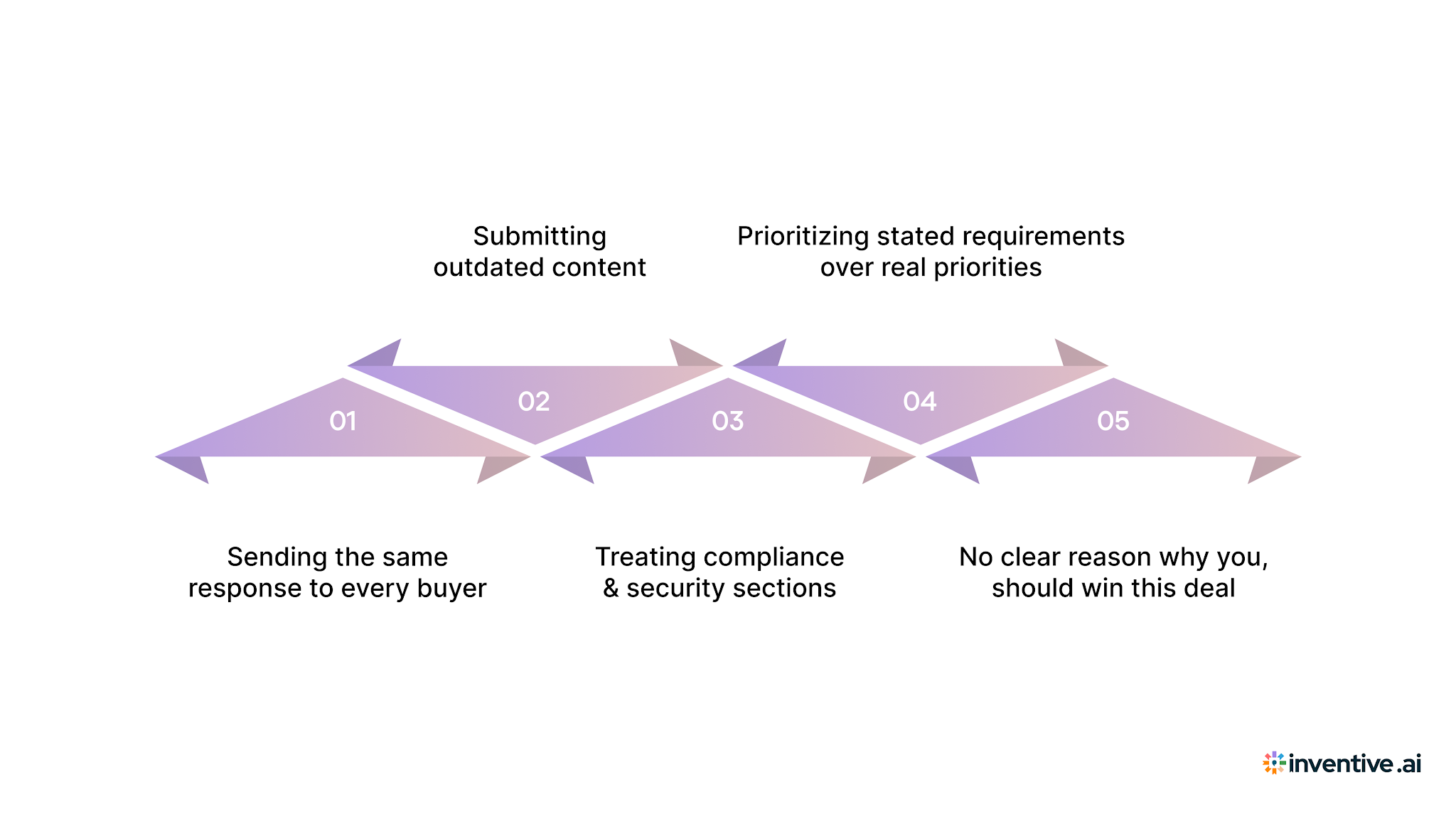
Let's be direct. Most proposal losses are preventable. Here are the patterns that show up again and again:
1. Sending the same response to every buyer
You now know that a CFO-aligned procurement team and a COO-aligned team evaluate through entirely different lenses. A standard template can't serve both. The proposal that wins against a cost-focused evaluator isn't the one that wins against an operations-focused evaluator.
2. Submitting outdated content
Your response pulled from a content library that references a product feature you've since replaced, a partnership that ended, or a pricing structure that's no longer current. Procurement teams fact-check. Inconsistencies damage credibility fast.
3. Treating compliance and security sections as a formality
These sections are scored by people with real decision-making authority. An incomplete security questionnaire is often an automatic disqualifier, regardless of how strong your main proposal is.
4. Responding to the stated requirements, not the real priorities
The RFP document tells you what they're asking for. The org structure, the reporting line, and the industry context tell you what they actually care about. The best proposals answer both.
5. No clear reason why you, specifically, should win this deal
Most proposals describe what the vendor does. A winning proposal explains why this vendor is the right choice for this buyer's specific situation, referencing their stated goals and challenges directly.
None of these is a capability problem. There are execution problems, and every single one of them is fixable.
Also Read: The Ultimate PR RFP Template: Free Download
Your Proposals Deserve to Win, Inventive AI Makes Sure They Do
You now know how procurement is structured, who reads your proposals, and what each evaluator cares about. The harder question is: how do you consistently act on all of that across every RFP, every deadline, every buyer?
That's exactly what Inventive AI's AI RFP Agent is built for. With AI-powered RFP response software, Inventive AI automates the complex RFP management workflow. Now your team can spend less time assembling responses and more time making them genuinely competitive.
Here's what that looks like in practice:
1. 2x Higher Quality Responses
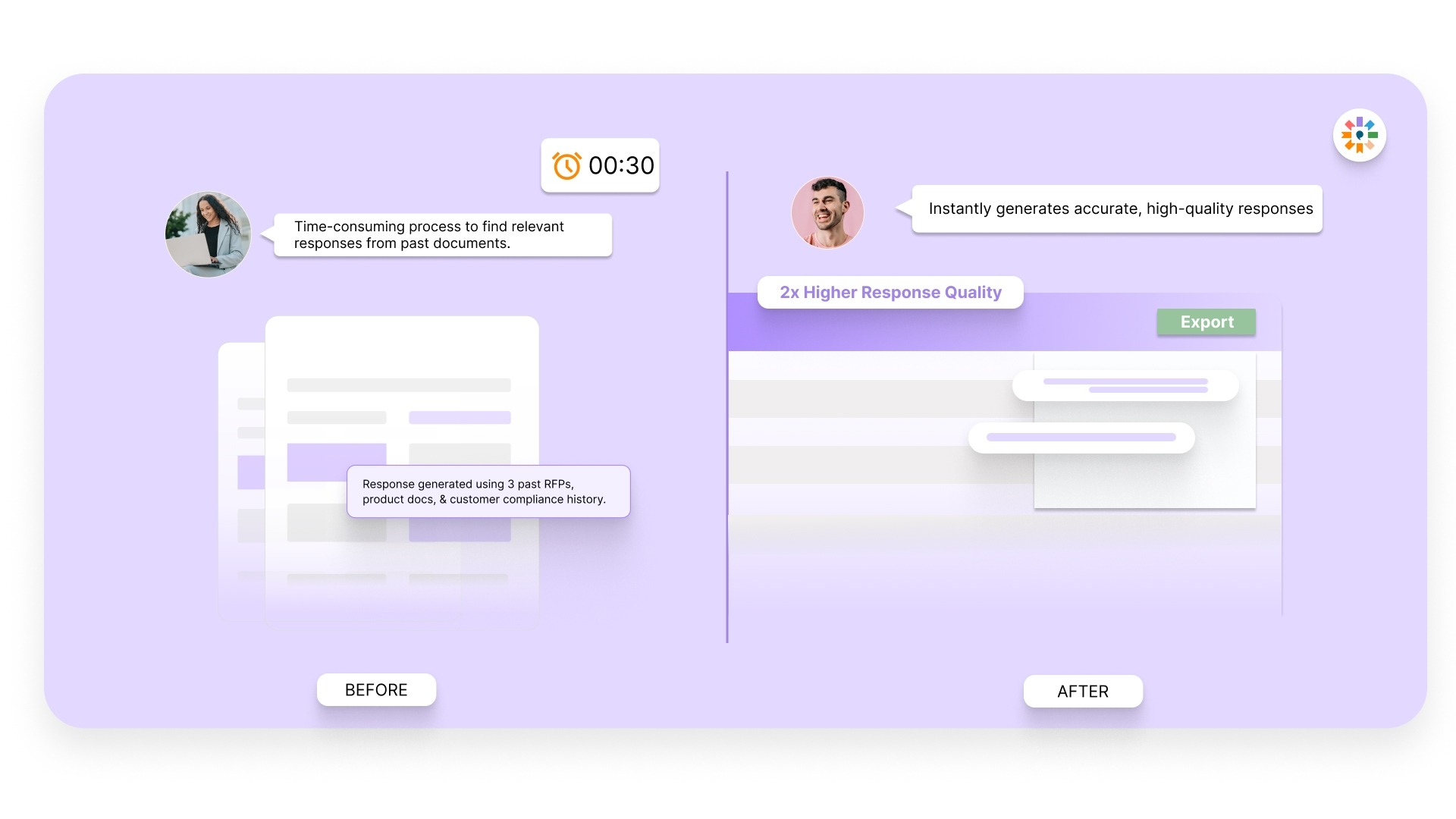
Most AI tools generate generic drafts that your team spends hours rewriting. Inventive AI delivers responses that are significantly more accurate and context-rich than competing tools. Every answer aligns with your approved messaging, buyer intent, and strategic positioning. The result: proposals that read as if your best person wrote them, not like they were pulled from a template.
2. Context Engine
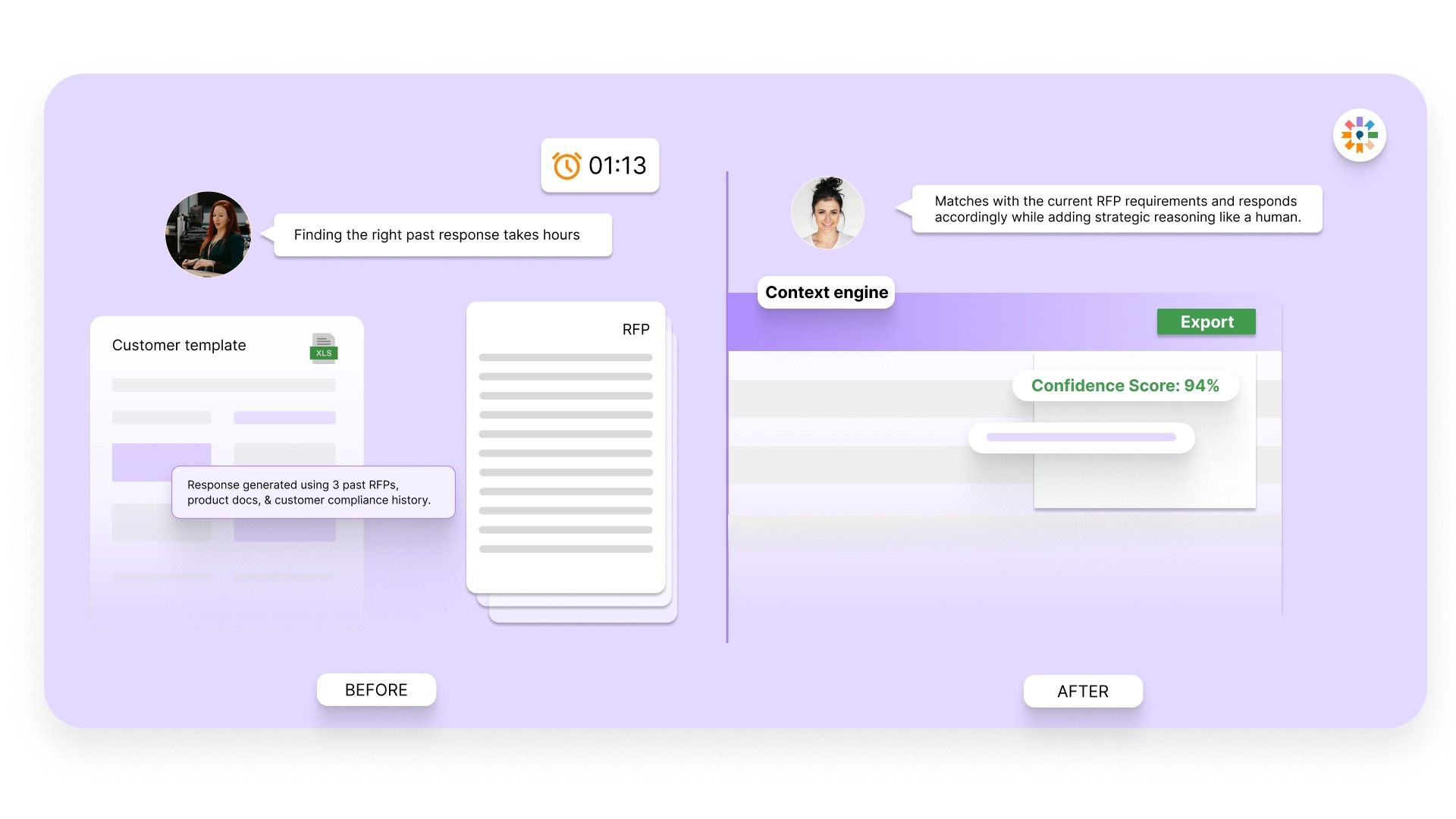
Inventive's Context Engine pulls from your relevant documents, project instructions, and tone and voice guidelines so responses are never generic. When answering RFP questions or long questionnaires, the answers come out structured, detailed, and aligned with your messaging. Whether you're responding to a CFO-focused cost evaluation or a CEO-level strategic review, your proposal speaks the right language.
3. Conflict Detection
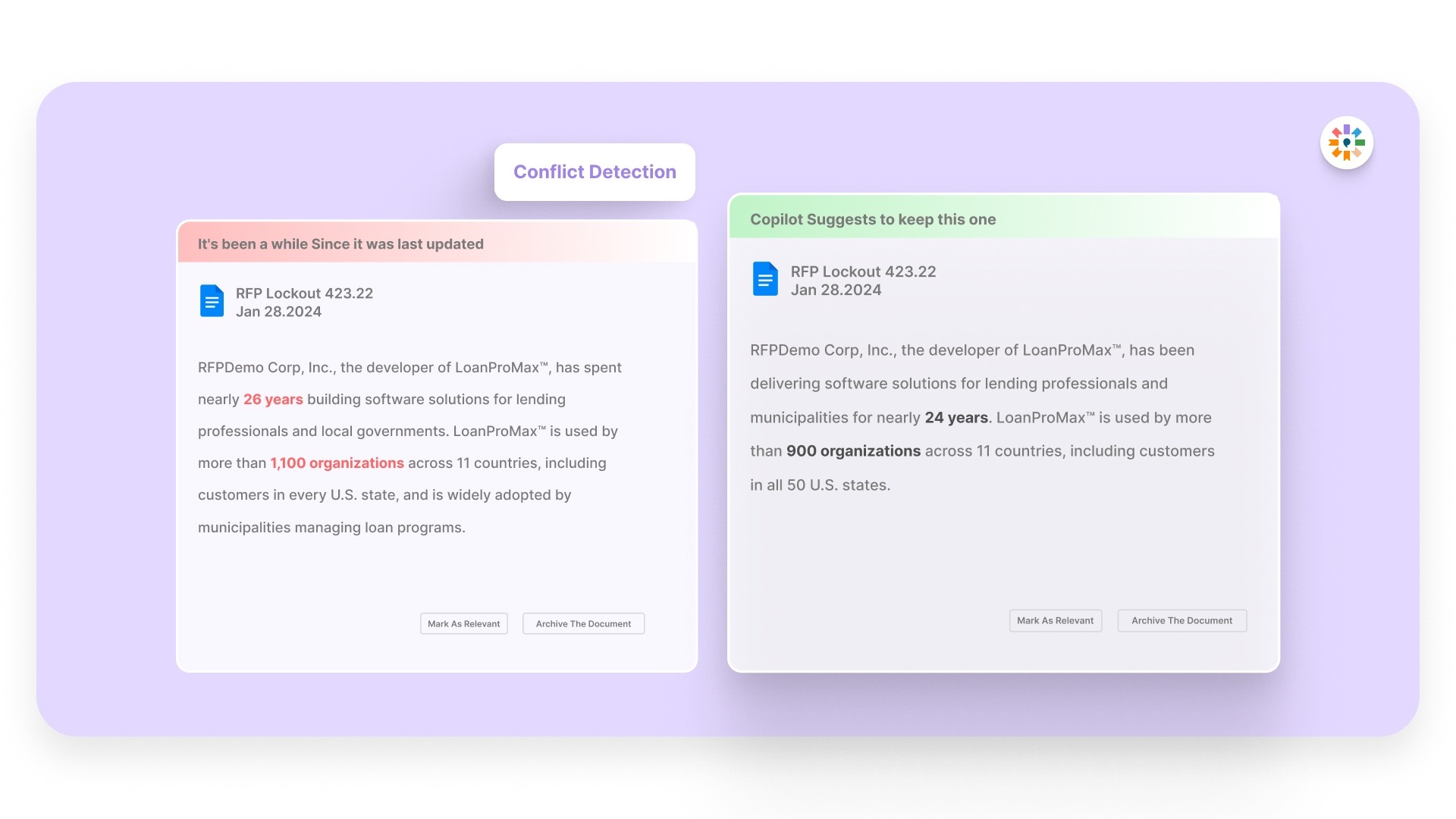
Large organizations carry a lot of content and a lot of contradictions. Inventive flags conflicting information proactively across your sources so you don't accidentally send outdated or inconsistent claims in a live proposal. No more discovering a discrepancy after you've already submitted.
4. Outdated Content Detection
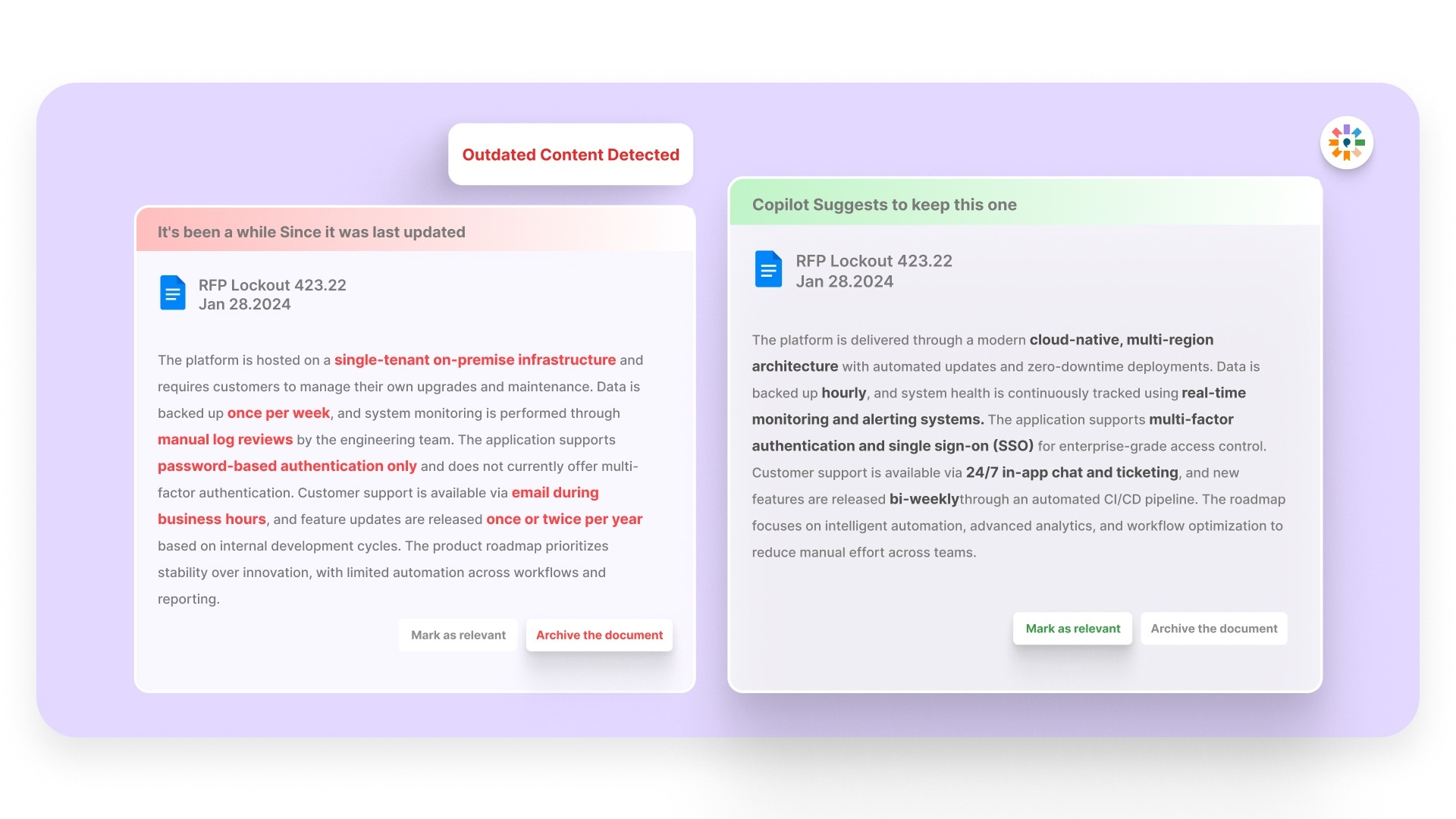
Inventive AI automatically detects and flags outdated or non-compliant content so you're never submitting a proposal that's out of sync with your current offerings or regulations. That security section from 18 months ago won't slip through.
5. Narrative Style Proposals
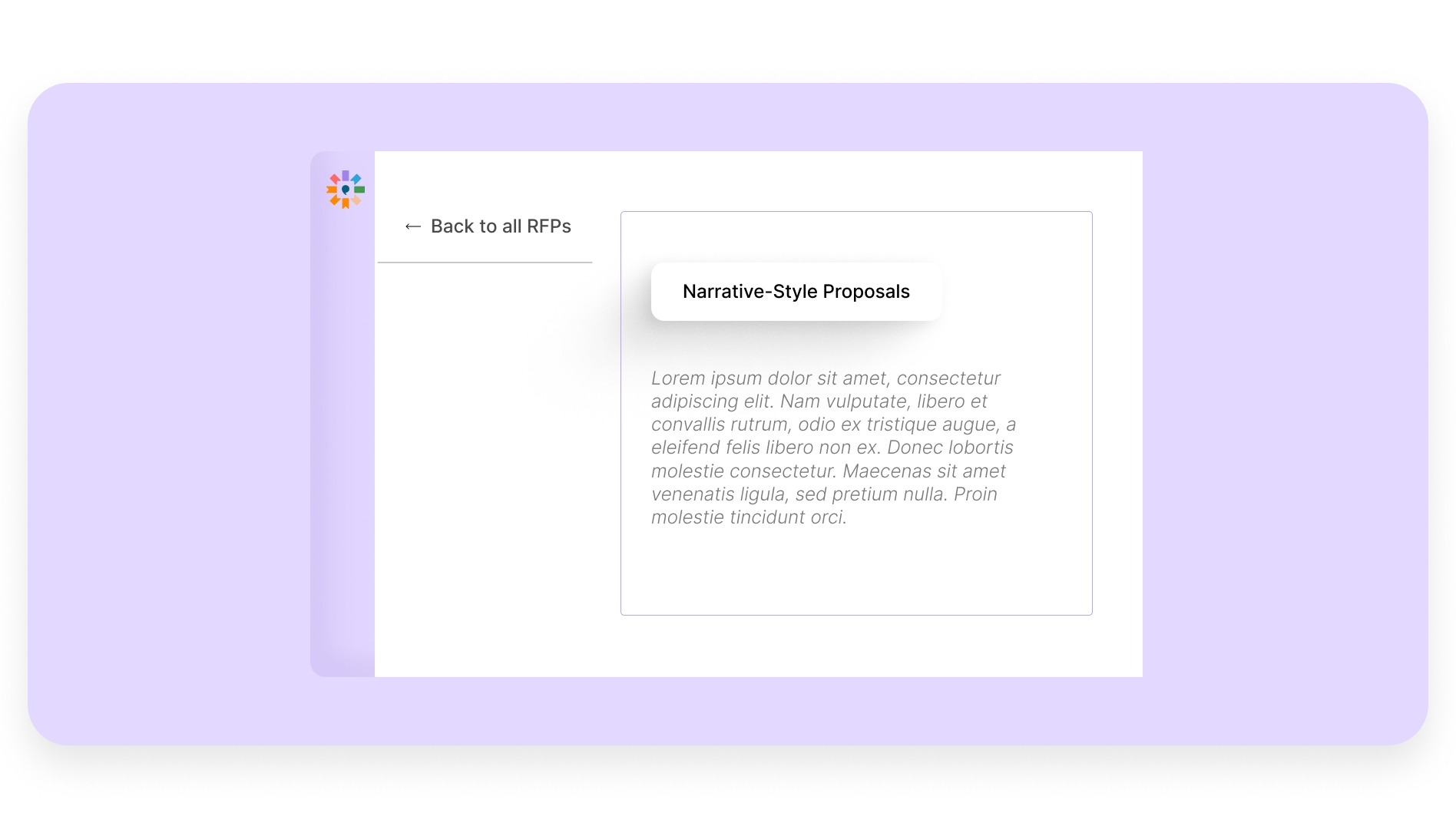
Most RFP tools stop at Q&A. Inventive AI supports narrative proposal writing, creating value statements, executive summaries, and long-form proposal sections that actually engage the procurement team when reading them. When you are selling to a CEO-level buyer, this decides whether your proposal gets read properly or quickly skimmed.
6. Simple, Easy-to-Use Interface
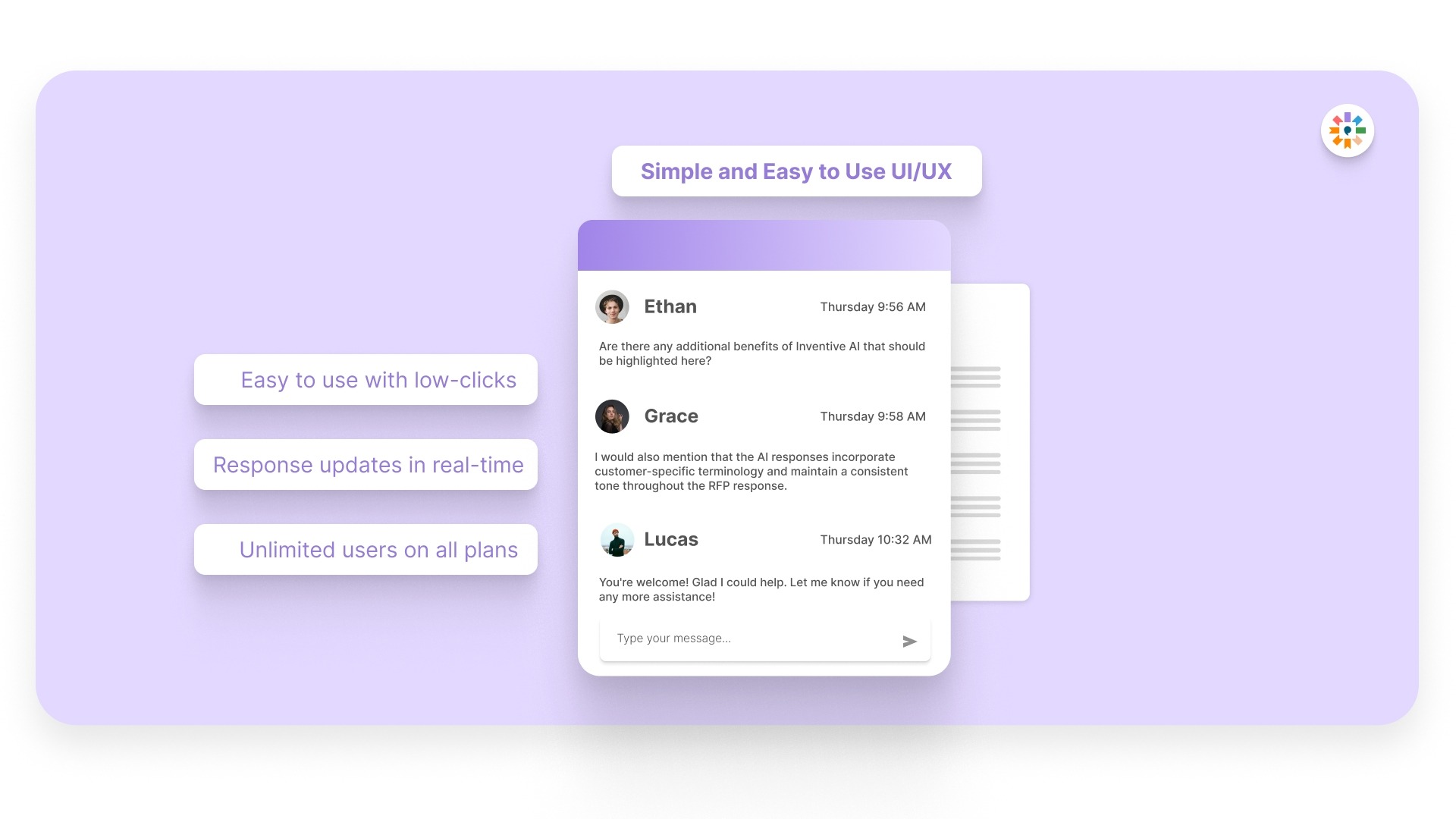
Despite handling complex enterprise content, Inventive AI is extremely easy to use. Proposal managers and SMEs get productive with minimal training, and the interface removes friction rather than adding another layer of process. Your team adopts it fast, and the results show up immediately.
The numbers back it up:
- 90% faster response times
- 95% accuracy
- 50% improvement in win rates
- 0% hallucination on knowledge gaps.
Procurement teams are raising the bar. Inventive AI makes sure you clear it every time.
Frequently Asked Questions (FAQs)
1. How can you identify a company’s procurement structure before responding to an RFP?
Check procurement leaders on LinkedIn and see who they report to. Review the RFP for terms like company-wide standards or department-specific requirements. Company reports and press releases can also indicate whether procurement is finance-led, operations-led, or strategic.
2. Does procurement influence decisions after a business team selects a vendor?
Yes. Procurement reviews pricing, compliance, and contract terms before final approval. It can delay or reject a vendor if requirements are not met.
3. How do procurement teams measure vendor performance after selection?
Procurement tracks performance using defined metrics such as delivery timelines, service levels, cost adherence, and contract compliance. Some teams also evaluate vendor responsiveness and issue resolution time.
4. Why do similar RFPs differ across companies?
Even if the problem is similar, internal priorities differ across organizations. Industry, company size, leadership structure, and risk tolerance all shape how procurement builds RFPs. This is why a single standard response rarely works across different buyers.
5. How early should vendors align with procurement expectations?
Alignment should begin before the RFP is issued. Vendors that research the company, understand its procurement structure, and tailor their messaging early are better positioned when the RFP arrives. Waiting until the response stage limits your ability to adjust positioning, which can reduce your chances of scoring well.
.avif)




%20(10).avif)
%20(32).avif)