RFP Scoring Templates for High-Impact Proposals: The Ultimate Guide

RFP responses often represent a make-or-break moment for securing new business. Yet, many vendors remain stuck in a cycle of rushed, disorganized proposals that fail to resonate with buyers.
Missing critical criteria or failing to highlight your strengths correctly often results in lost deals and wasted effort. RFP scoring templates solve this by providing a clear framework to structure your proposal effectively.
These templates align your responses with the buyer's predefined criteria, such as pricing, technical capability, and service quality. By adopting this structured approach, you ensure your proposal covers all essential requirements while objectively highlighting your competitive advantages.
Also Read: Top and Best Software for Automating Security Questionnaires in 2026
The Ultimate RFP Scoring Template in 2026: Free Download
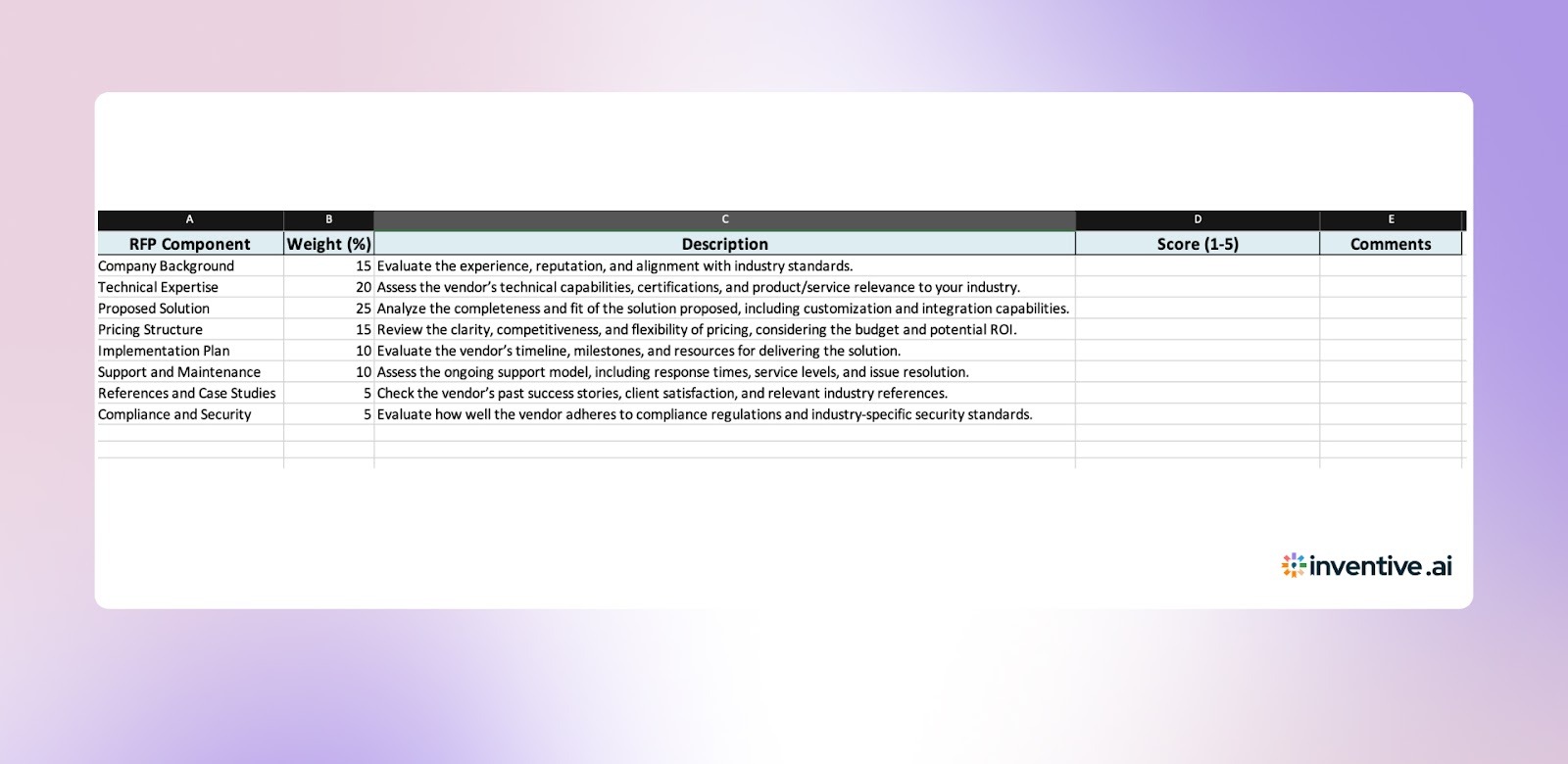

Key RFP Scoring Components That Can Drive Your Proposal to the Top
Before you can craft the best response, understanding what buyers typically look for in an RFP scoring template is essential. These key components are frequently included to ensure vendors are evaluated thoroughly and consistently:
1. Project Requirements
Clear and detailed specifications of what the buyer needs, including project scope, objectives, and any specific conditions. This serves as the foundation of the RFP and helps vendors understand exactly what’s expected.
2. Evaluation Criteria
The key factors buyers use to score vendors include technical expertise, cost competitiveness, delivery timelines, and the ability to meet specific requirements or standards. Each of these aspects plays a vital role in determining the vendor's suitability.
3. Budget and Cost Breakdown
This section includes price estimates and a breakdown of costs associated with the project. Buyers want to see transparent and detailed financial evaluations, which help them understand how the vendor plans to deliver within the budget.
4. Technical Expertise
How well the vendor can meet the technical requirements of the project. Buyers often look for demonstrated experience with similar technologies or processes, ensuring that the vendor can handle any technical challenges that arise.
5. Timeline
The proposed project timeline, including key milestones and deadlines. Buyers need to know that the vendor can deliver within the required timeframe, making this a crucial part of the evaluation process.
6. Previous Case Studies/Experience
Real-life examples of past successful projects or relevant experience that demonstrate the vendor’s ability to handle similar projects. Case studies help buyers assess the vendor’s track record and competence in delivering results.
7. Risk Mitigation Strategy
A well-developed strategy outlining how the vendor plans to identify, assess, and mitigate potential risks throughout the project lifecycle. This ensures that the vendor has considered potential obstacles and has a plan in place to address them effectively.
By understanding these components and tailoring your response to address them, you can better align your proposal with the buyer’s priorities. This not only ensures that you meet the buyer’s expectations but also significantly improves your chances of scoring higher in the evaluation process.
Also Read: RFI, RFP, and RFQ: Understanding the Key Differences
The RFP Process: How RFP Scoring Templates Improve Your Response?
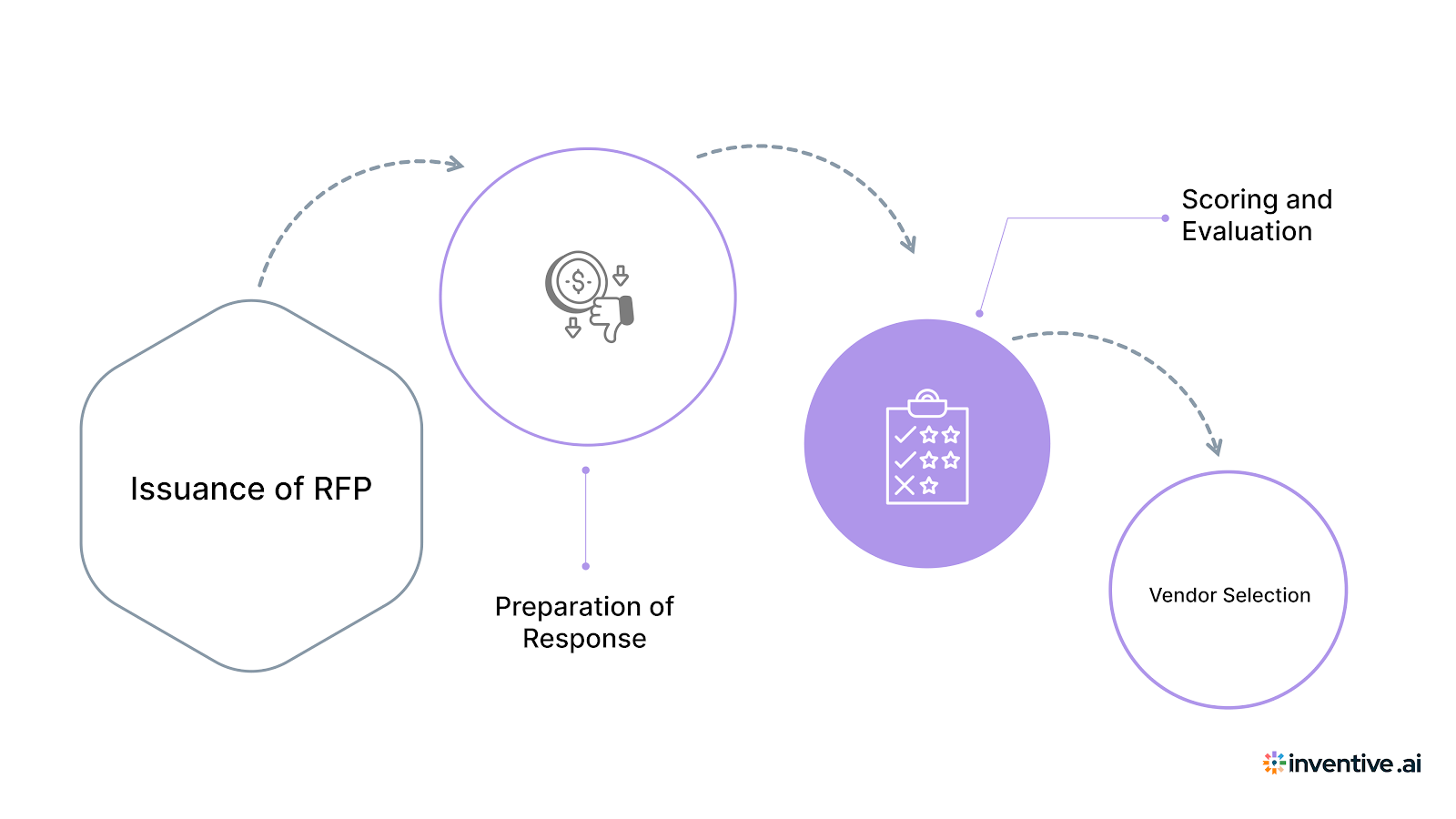
The RFP process is a critical part of winning new business, and understanding how RFP scoring templates fit into each stage can make the process smoother and more efficient. Here's how the RFP process typically unfolds and how you can use scoring templates at every step:
1. Issuance of RFP: The buyer issues an RFP outlining their needs, requirements, and evaluation criteria. This is where you can first get an idea of the buyer’s expectations and the specific scoring components they’ll use to evaluate proposals.
2. Preparation of Response: Vendors craft their proposals based on the RFP guidelines. Using an RFP scoring template at this stage ensures you address every criterion in a structured way, ensuring your proposal is comprehensive and meets all requirements.
3. Scoring and Evaluation: Once you submit your proposal, the buyer uses an RFP scoring template to evaluate responses. This is where your ability to meet the buyer's criteria shines. Having a scoring template of your own allows you to score your own response first, ensuring you've addressed all important points and maximizing your chances of scoring highly.
4. Vendor Selection: The buyer reviews all proposals, scores them using the template, and selects the vendor that best meets their needs. By aligning your response with the buyer's scoring template, you can be confident that your proposal stands out and increases your likelihood of being selected.
By using an RFP scoring template throughout the process, you not only ensure consistency in your responses but also streamline your internal review and submission process.
Who Uses an RFP Scoring Template?
An RFP scoring template is a valuable tool for anyone involved in the vendor selection and procurement process. Ensuring that all proposals are evaluated fairly and consistently, it helps make the decision-making process more transparent and aligned with the organization’s goals.
Here's who typically uses it:
1. Procurement Managers: They rely on the scoring template to assess vendor proposals, ensuring the selection process is objective, fair, and aligned with the organization’s procurement strategy.
2. Project Managers: They often use the template to evaluate proposals against specific project needs, ensuring the vendor can meet key project criteria, such as timeline, budget, and scope.
3. Contract Managers: These professionals use the template to ensure vendors meet contractual obligations, including compliance, performance guarantees, and other legal considerations.
4. Evaluation Teams: Teams from various departments (e.g., IT, legal, finance, operations) collaborate to score proposals. The template ensures a comprehensive, cross-departmental evaluation, bringing in multiple perspectives to assess vendor suitability.
5. CFOs/Finance Teams: The finance team uses the scoring template to evaluate the financial aspects of vendor proposals, ensuring they align with budget constraints and financial objectives.
6. Vendors/Suppliers (You!): In some cases, vendors may also review scoring templates to understand how their proposals will be evaluated. By knowing what buyers value most, you can tailor your response to meet those expectations, increasing your chances of success.
In short, anyone involved in the vendor selection process can benefit from using an RFP scoring template to ensure all proposals are evaluated thoroughly.
7 Practical Steps to Improve Your RFP Evaluation Results
When you respond to an RFP, your proposal will be scored against specific criteria. Buyers often review several proposals side by side, so your goal is to make your response easy to evaluate and clearly aligned with what they care about.
Here are a few ways you can prepare and stand out during the evaluation process.
1. Start by Studying the Evaluation Criteria
Before writing your response, carefully review the evaluation criteria in the RFP. Buyers often assign weight to factors such as technical capability, pricing, implementation approach, and past experience.
When you know what carries the most weight, you can focus your effort on the sections that matter most and avoid spending too much time on lower-priority areas.
2. Match the Structure of the RFP
Evaluators usually review multiple proposals in a short period of time. If your proposal is difficult to follow, it can slow down the review process.
Try to mirror the structure of the RFP whenever possible. Use the same headings, section order, and terminology. This makes it easier for evaluators to compare your response with others.
3. Write Directly to What Buyers Will Score
A strong proposal does more than describe your company. It clearly shows how your solution meets the buyer’s requirements.
If the RFP asks about technical capabilities, explain your approach with clear examples. If it asks for past experience, include relevant case studies. Always connect your answers to the criteria the buyer will use to score vendors.
4. Support Your Claims with Evidence
Buyers often see many proposals with similar claims. Statements like “high-quality service” or “industry expertise” are not enough on their own.
You can stand out by including proof. Add customer examples, measurable results, certifications, or implementation outcomes that demonstrate your experience.
5. Review Your Proposal for Consistency
Large RFP responses often involve several teams. Sales, product, legal, and technical teams may all contribute to the final proposal.
Before submission, review the entire document carefully. Make sure timelines, pricing details, and product descriptions are consistent across sections. A clean and consistent proposal builds trust with evaluators.
6. Score Your Own Proposal Before Submission
One effective way to prepare for evaluation is to score your own proposal internally.
Look at the likely scoring criteria and review your response section by section. This helps you identify weak areas, missing information, or sections that may not score well. Making these improvements before submission can strengthen your proposal significantly.
7. Make Your Proposal Easy to Read
Evaluators often review several proposals in one sitting. Clear structure can make a big difference.
Use headings, short paragraphs, bullet points, and tables where helpful. When evaluators can quickly find the information they need, your proposal becomes easier to review and score.
You may not control the scoring framework, but you do control how clearly and convincingly you respond to it. The vendors that stand out are usually the ones who prepare for evaluation before they start writing, not after the proposal draft is finished.
How Inventive AI Helps You with Your RFP Process?
Understanding the RFP process requires more than just a template - it demands precision, speed, and consistency. That’s where Inventive AI can make a huge difference.
1. 2x Higher Quality Responses
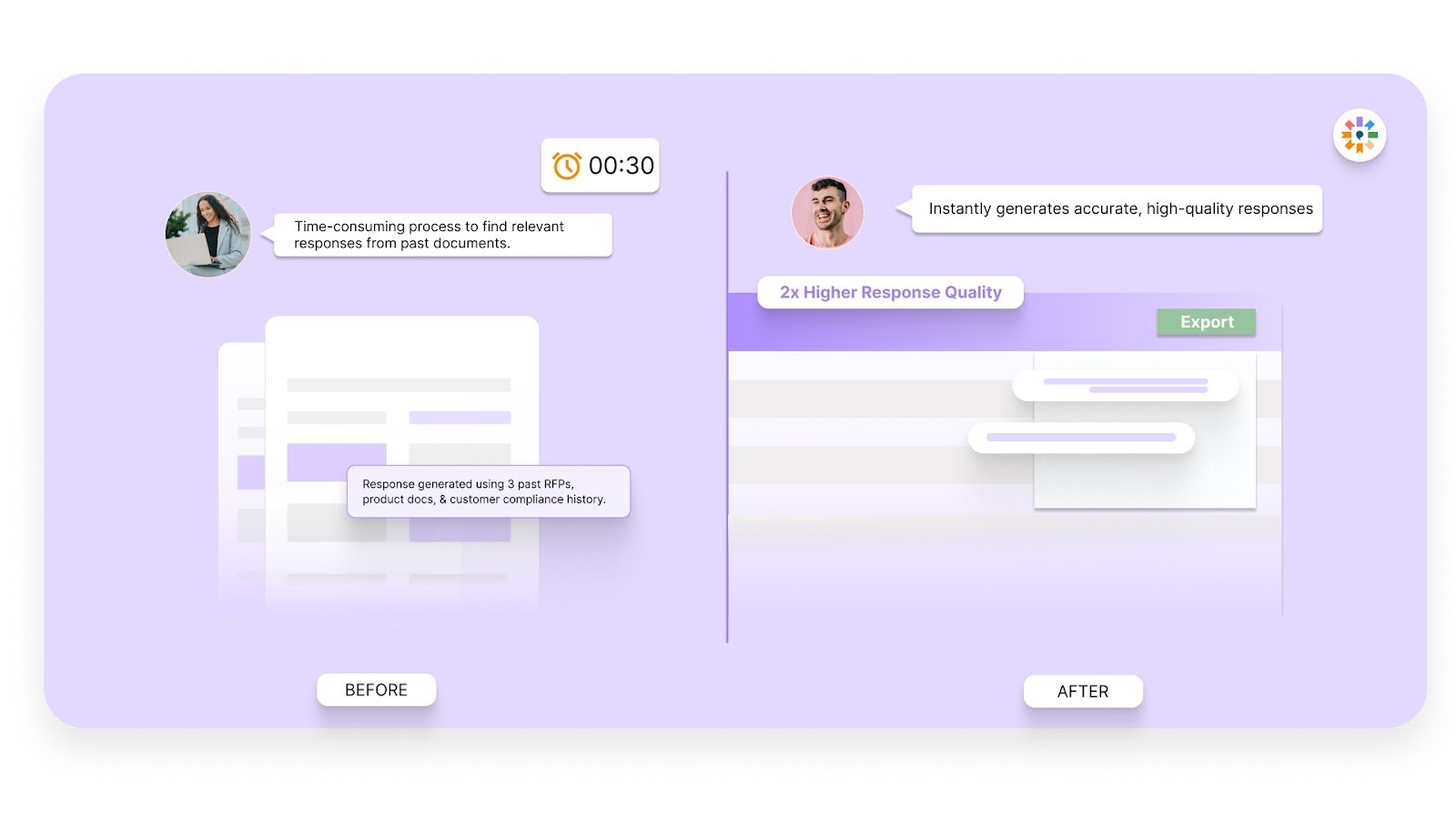
With AI-generated first drafts, your team can focus on refining high-quality content instead of starting from scratch. This not only saves time but also ensures that every response is of the highest standard.
2. Context Engine
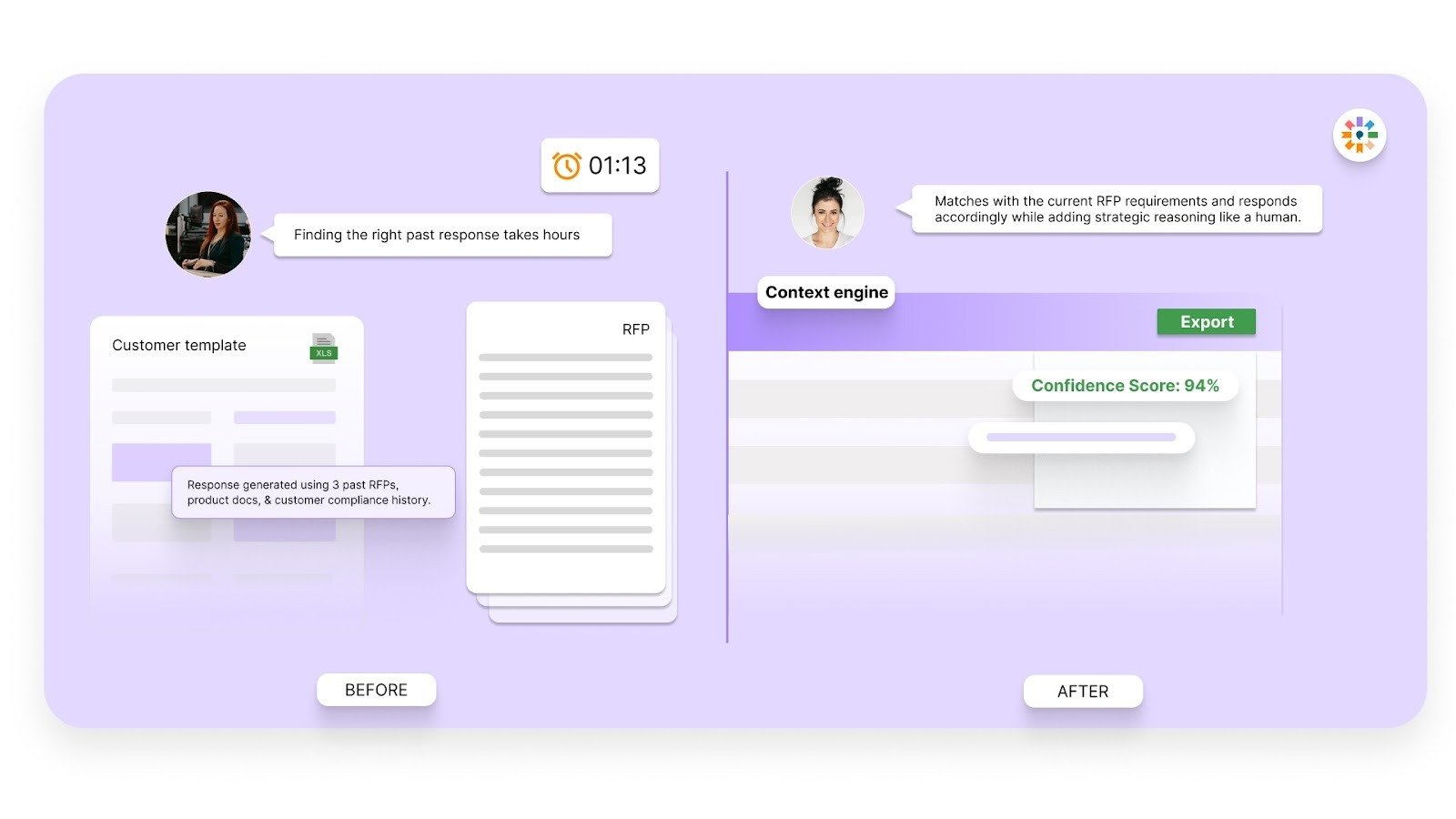
Our context engine ensures your responses are always aligned with buyer needs by taking past responses and feedback into account, allowing you to craft proposals that resonate more with buyers’ expectations.
3. Conflict Detection
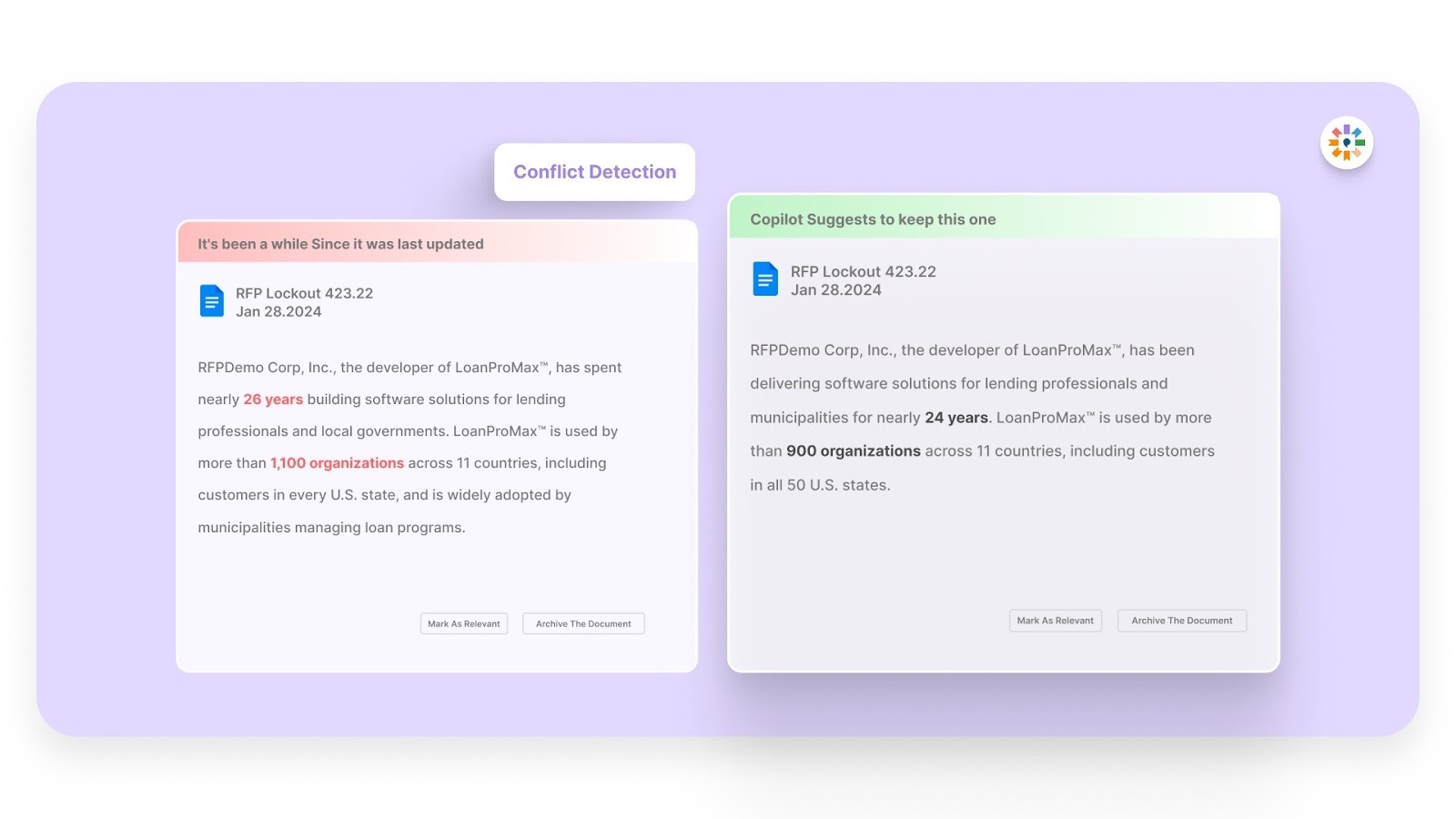
Avoid inconsistencies in your responses with AI-powered conflict detection. This feature flags conflicting information, ensuring your proposal is both accurate and cohesive throughout.
4. Outdated Content Detection
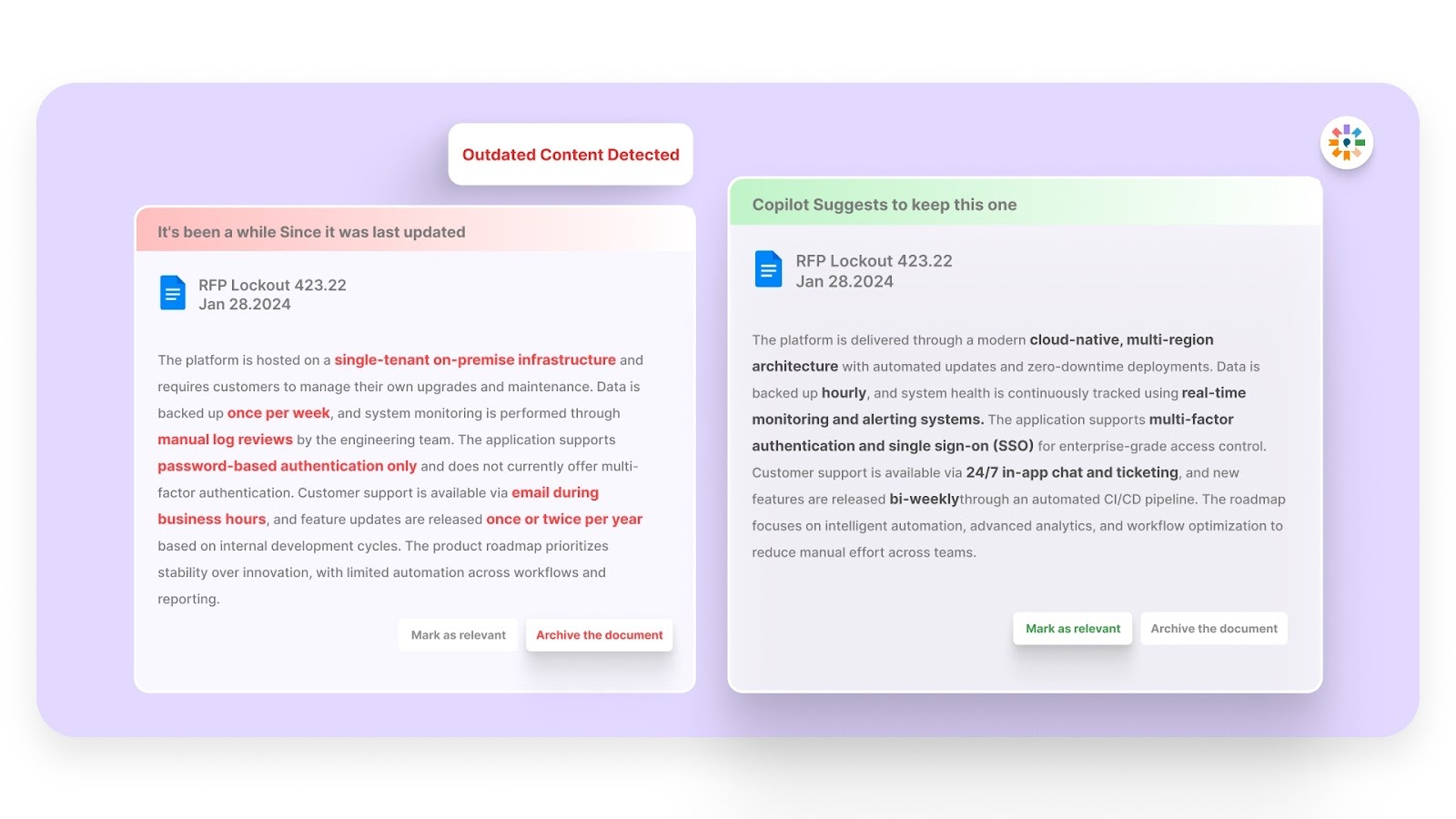
Stay current with our AI-driven content manager that proactively detects and updates stale content, ensuring that your responses are always fresh and relevant.
5. Simple, Easy-to-Use Interface
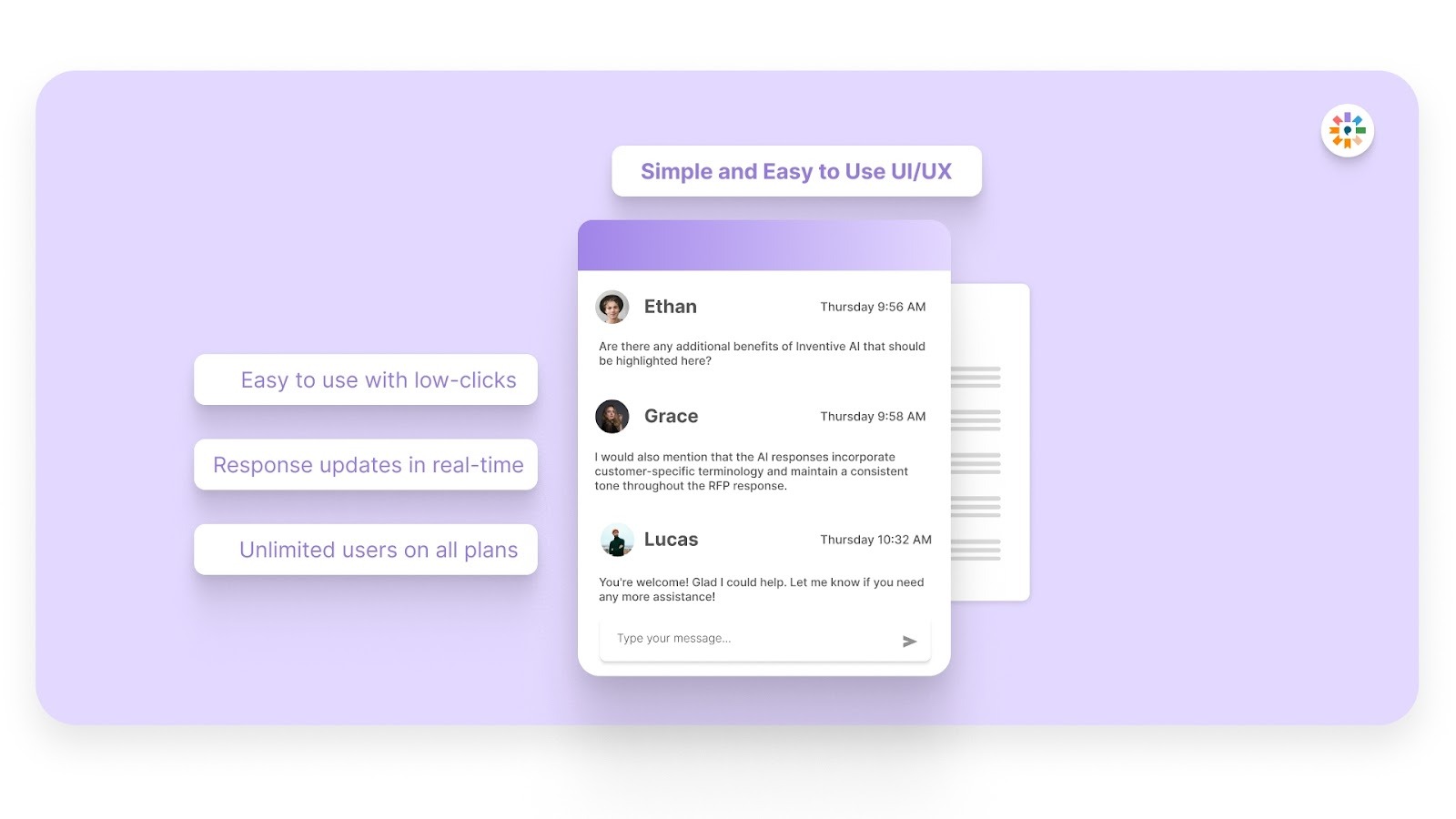
Inventive AI makes it easy for your team to use the platform, even if they aren’t tech-savvy. Its user-friendly interface ensures that your team can quickly learn and navigate the software with minimal training.
Frequently Asked Questions (FAQs)
1. How does an RFP scoring template benefit vendors?
For vendors, an RFP scoring template provides a clear framework for crafting responses that align with buyer expectations, helping to improve the quality and accuracy of proposals and increase win rates.
2. Can the RFP scoring template be used across different industries?
Yes, RFP scoring templates can be customized for various industries, including technology, healthcare, finance, and more. By tailoring the template to specific industry needs, vendors can deliver more relevant and targeted proposals.
3. How do RFP scoring templates improve collaboration within the team?
RFP scoring templates enable better collaboration by providing a consistent evaluation framework. Different team members can easily contribute by reviewing and scoring specific sections, ensuring that the proposal is comprehensive, consistent, and aligned with internal goals.
.avif)



.avif)