
Commercial Construction RFP Template: How Vendors Improve Bid Success

Did you know that many RFPs remain incomplete, and buyers report proposals often contain missing information? This highlights the risks vendors must address to remain competitive in bidding.
Using structured commercial construction RFP templates, vendors can submit organized, evidence-backed proposals that meet buyer requirements, demonstrate compliance, and improve audit readiness, credibility, and their chances of winning.
In this blog, you'll learn how buyers evaluate commercial construction RFPs and how you can respond with clear, evidence-backed templates to improve competitiveness and audit readiness.
Commercial Construction RFP Template: How Buyers Evaluate Proposals?
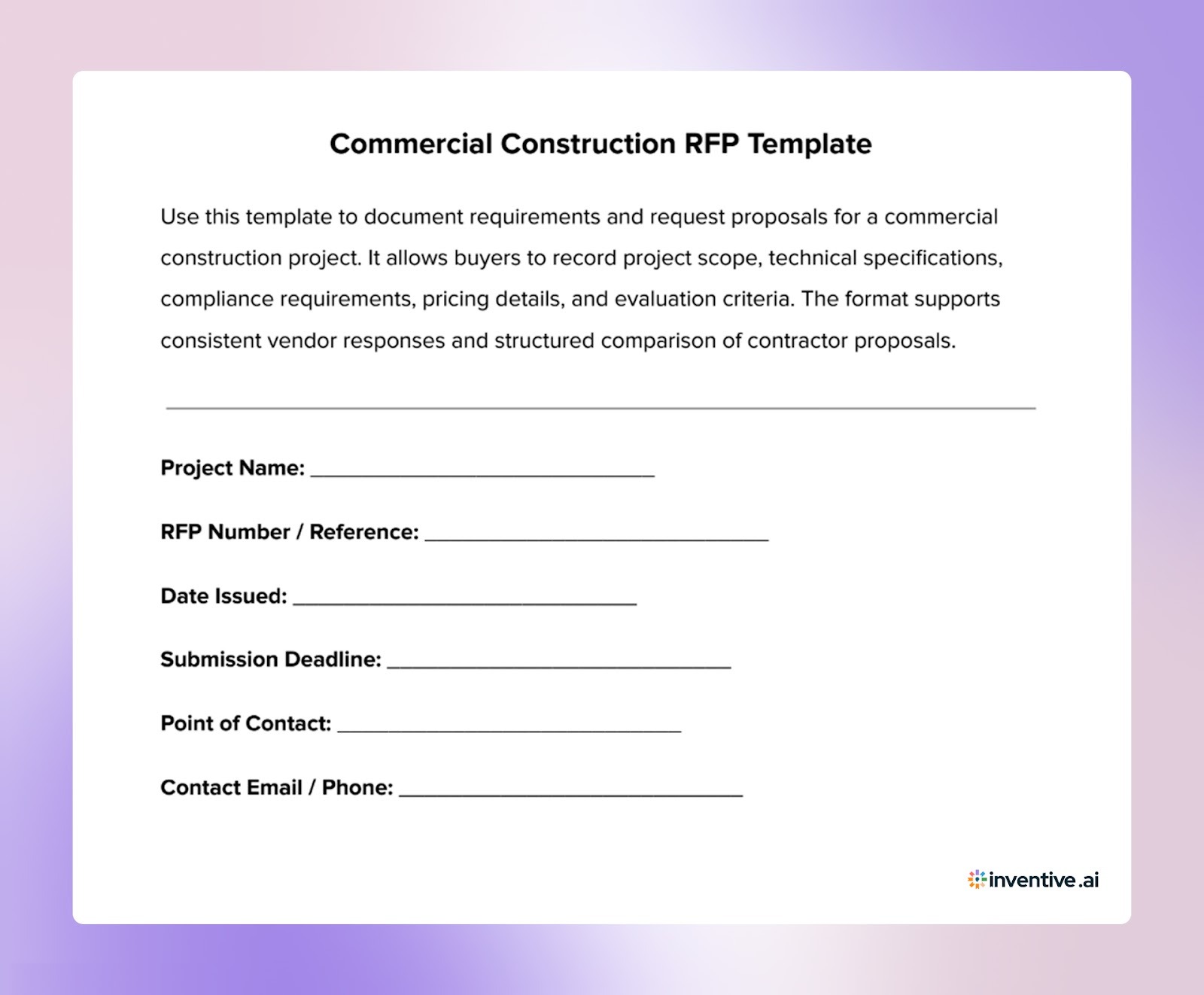

Buyers use RFP templates to systematically compare vendors across financial, operational, legal, and technical dimensions. These evaluations guide project selection, risk mitigation, and contract award decisions.
- Project Overview: This section lets buyers describe the commercial construction project, including scope, location, timeline, and objectives. It ensures vendors understand the project clearly before preparing proposals.
- Vendor Profile & Experience: Buyers collect contractor details, including company background, years in business, and relevant project experience. This helps assess whether vendors have handled similar commercial construction projects.
- Technical Requirements: This section outlines design standards, construction specifications, materials, and safety requirements. Buyers use it to ensure vendors meet the project's technical requirements.
- Financial & Pricing Requirements: Buyers request a detailed cost breakdown covering labor, materials, equipment, and other expenses. This allows procurement teams to compare pricing and evaluate financial stability.
- Compliance & Legal Requirements: This section lists required licenses, permits, insurance coverage, and regulatory obligations. Buyers review these details to confirm vendors meet legal and safety requirements.
- Proposal Evaluation Criteria: Buyers define how proposals will be assessed by assigning weights to factors such as cost, experience, compliance, and project timeline. This creates a consistent method for comparing vendor proposals.
- Submission Instructions: This section explains how vendors must submit proposals, including format, submission channel, and deadlines. Clear instructions help buyers receive complete and comparable proposals.
- Supporting Documents: Buyers request documents such as certifications, proof of insurance, financial records, and project references. These documents help verify vendor claims during evaluation.
- Risk Assessment / Scorecard: This section allows buyers to rate vendor risk across financial, operational, safety, and delivery factors. The scorecard helps procurement teams identify potential risks before selecting a contractor.
While buyers use structured RFP templates to evaluate vendors, your response determines how clearly your capabilities, compliance, and project experience are understood.
Commercial Construction RFP Response Template: Streamline Your Submissions (For Vendors)
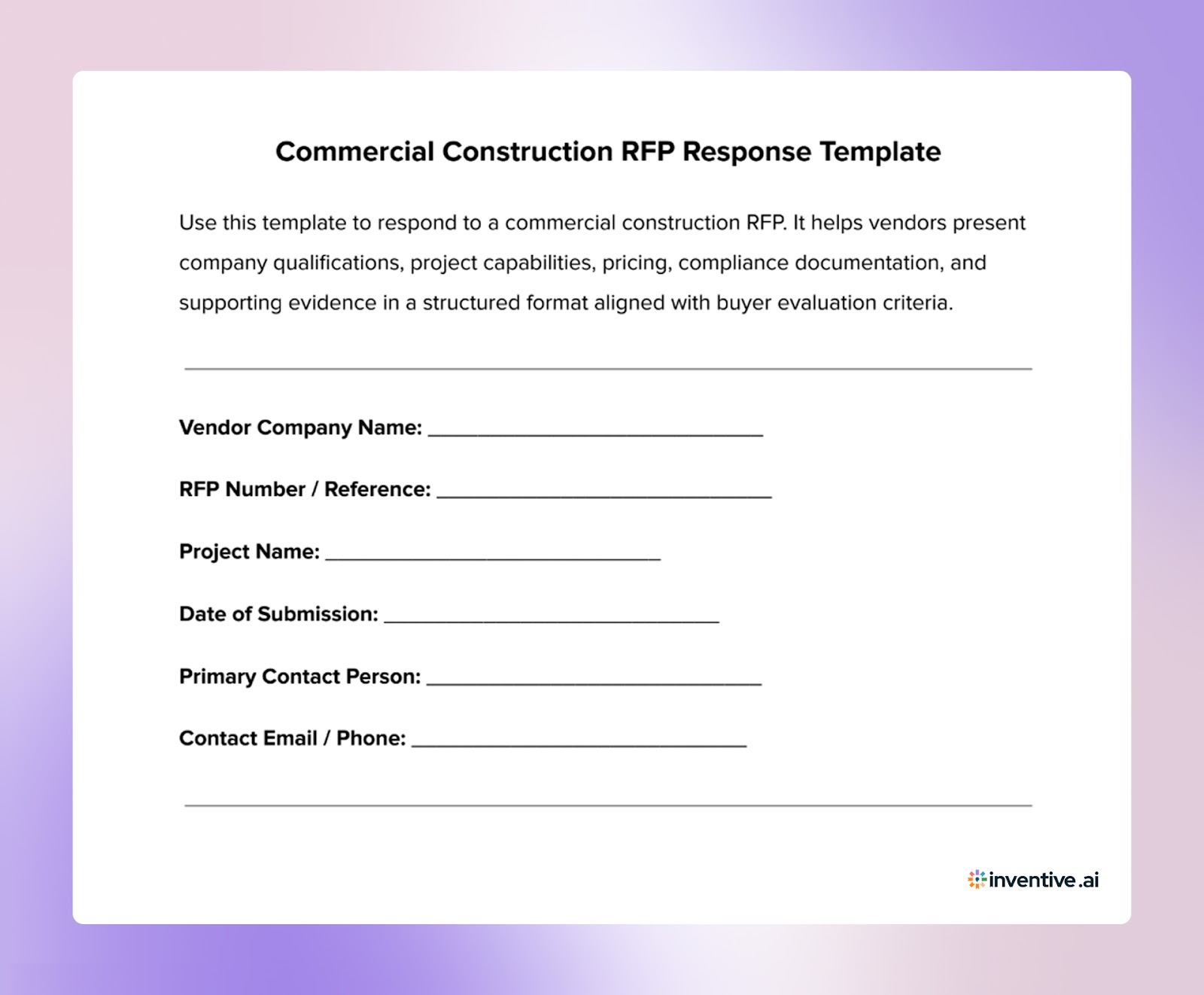
To compete effectively, you must submit an RFP response that clearly addresses buyer requirements and provides verifiable evidence of experience, capability, compliance, and pricing.
- Project Understanding & Overview: Use this section to demonstrate your understanding of the project scope, objectives, and expected outcomes. Clearly explain how your proposed approach aligns with the buyer’s construction requirements and project goals.
- Company Profile & Relevant Experience: Provide key details about your company, including years in business, locations, and experience with similar commercial construction projects. Highlight relevant projects and client references to show that you have successfully delivered comparable work.
- Technical Response: Explain how your team will meet the project’s technical specifications, including design standards, materials, safety practices, and construction methods. Use this section to demonstrate your technical capability and ability to meet the buyer’s requirements.
- Pricing & Financial Proposal: Provide a detailed cost breakdown covering labor, materials, equipment, subcontractors, and other project expenses. A clear pricing structure helps buyers evaluate cost transparency and compare proposals effectively.
- Compliance & Legal Information: Confirm that your organization meets all regulatory, licensing, and insurance requirements required for the project. Include relevant documentation to demonstrate compliance with safety standards and legal obligations.
- Project Timeline & Resource Plan: Outline your proposed project schedule, key milestones, and team structure. This helps buyers understand how you plan to deliver the project within the expected timeline.
- Supporting Documentation: Attach documents that support your proposal, such as past project references, certifications, financial records, and proof of insurance. These documents help buyers verify the information provided in your response.
- Risk Management & Mitigation Plan: Identify potential project risks, including delays, safety issues, and supply challenges. Explain how your team plans to manage and mitigate these risks during the construction process.
- Final Response Summary: Use this section to briefly reinforce why your company is well-suited for the project. Summarize your strengths, relevant experience, and any advantages that differentiate your proposal.
While using a structured response template helps organize your submission, many vendors still lose opportunities due to avoidable mistakes in their RFP responses.
Common Pitfalls to Avoid in Commercial Construction RFP Template
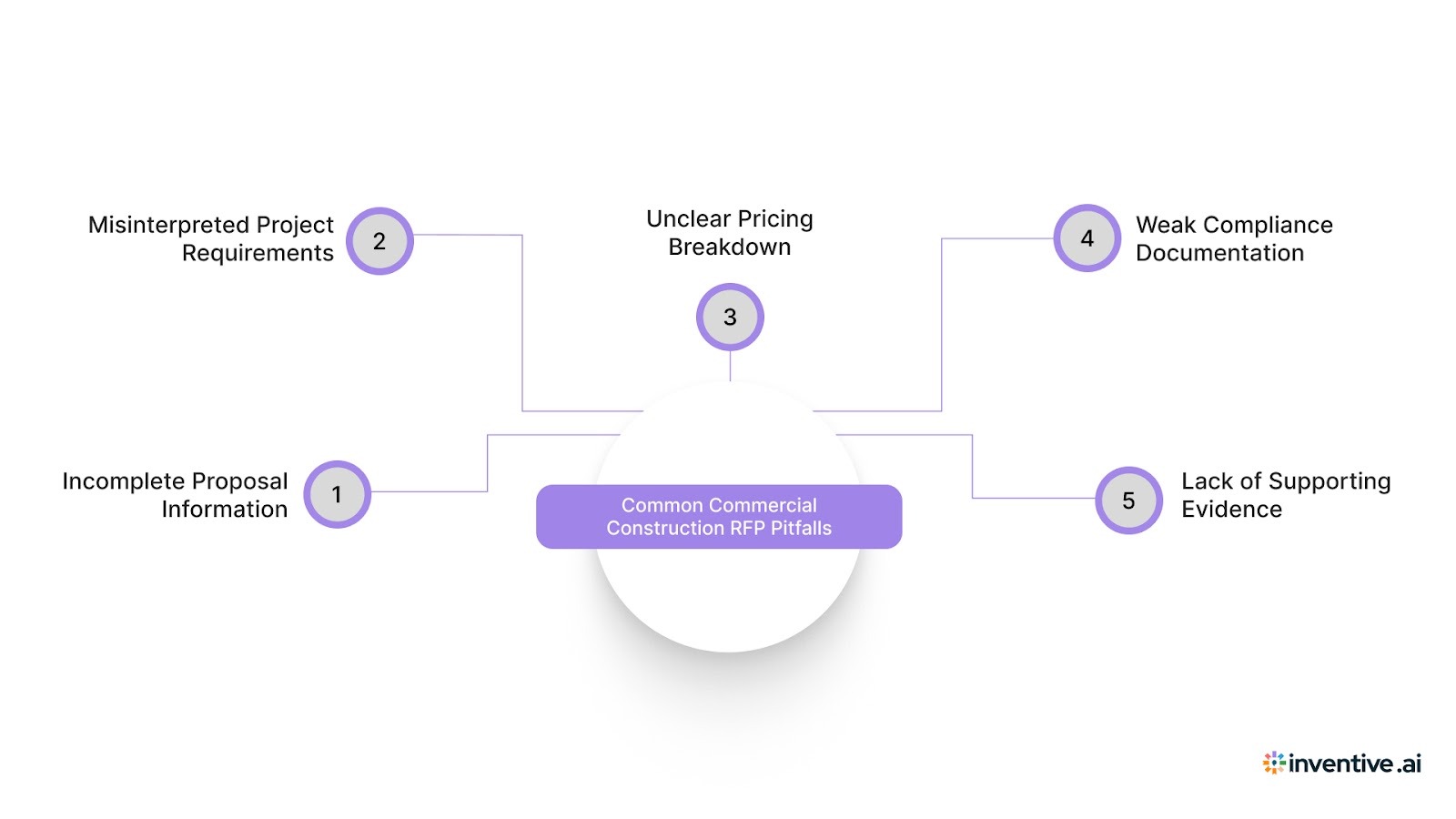
Even experienced vendors make mistakes when responding to commercial construction RFPs. These issues often lead to incomplete proposals, lower evaluation scores, or rejection during procurement review. Recognizing these common pitfalls helps vendors submit clearer, compliant, and competitive responses.
- Incomplete Proposal Information: Many vendors leave sections partially filled or omit requested documentation. Missing details about experience, pricing, or compliance can lead buyers to mark proposals as non-responsive.
- Misinterpreting Project Requirements: Some responses fail to align with the scope, technical specifications, or timelines defined in the RFP. Misinterpretation of requirements signals weak project understanding and reduces evaluation scores.
- Unclear Pricing Breakdown: Submitting only a total project cost without detailed cost categories makes it difficult for buyers to compare proposals. Buyers expect transparent pricing across labor, materials, equipment, and overhead.
- Weak Compliance Documentation: Failure to provide licenses, proof of insurance, safety certifications, or regulatory documentation can raise legal and operational concerns for buyers evaluating contractors.
- Lack of Supporting Evidence: Claims about experience or technical capability without project examples, references, or case studies weaken credibility and make evaluation difficult.
Avoiding these pitfalls helps vendors present complete, structured responses that align with buyer expectations and improve the chances of progressing to contract negotiations.
Also Read: RFP Response Trends and Benchmarks: Key Insights for 2026
As RFP volumes grow, maintaining consistency and accuracy manually becomes difficult. This is where intelligent automation plays a critical role.
Streamline Commercial Construction RFP Responses with Inventive AI
Responding to commercial construction RFPs manually is time-consuming, and critical information is often scattered across multiple teams and documents. Inventive AI centralizes knowledge and automates response drafting, helping vendors create accurate, structured proposals more efficiently.
Key Capabilities of Inventive AI:
2x Higher Response Quality

Multi-agent AI generates structured, complete responses that typically require minimal revision, improving submission consistency and enabling RFPs to be completed up to 90% faster.
Context-Awareness
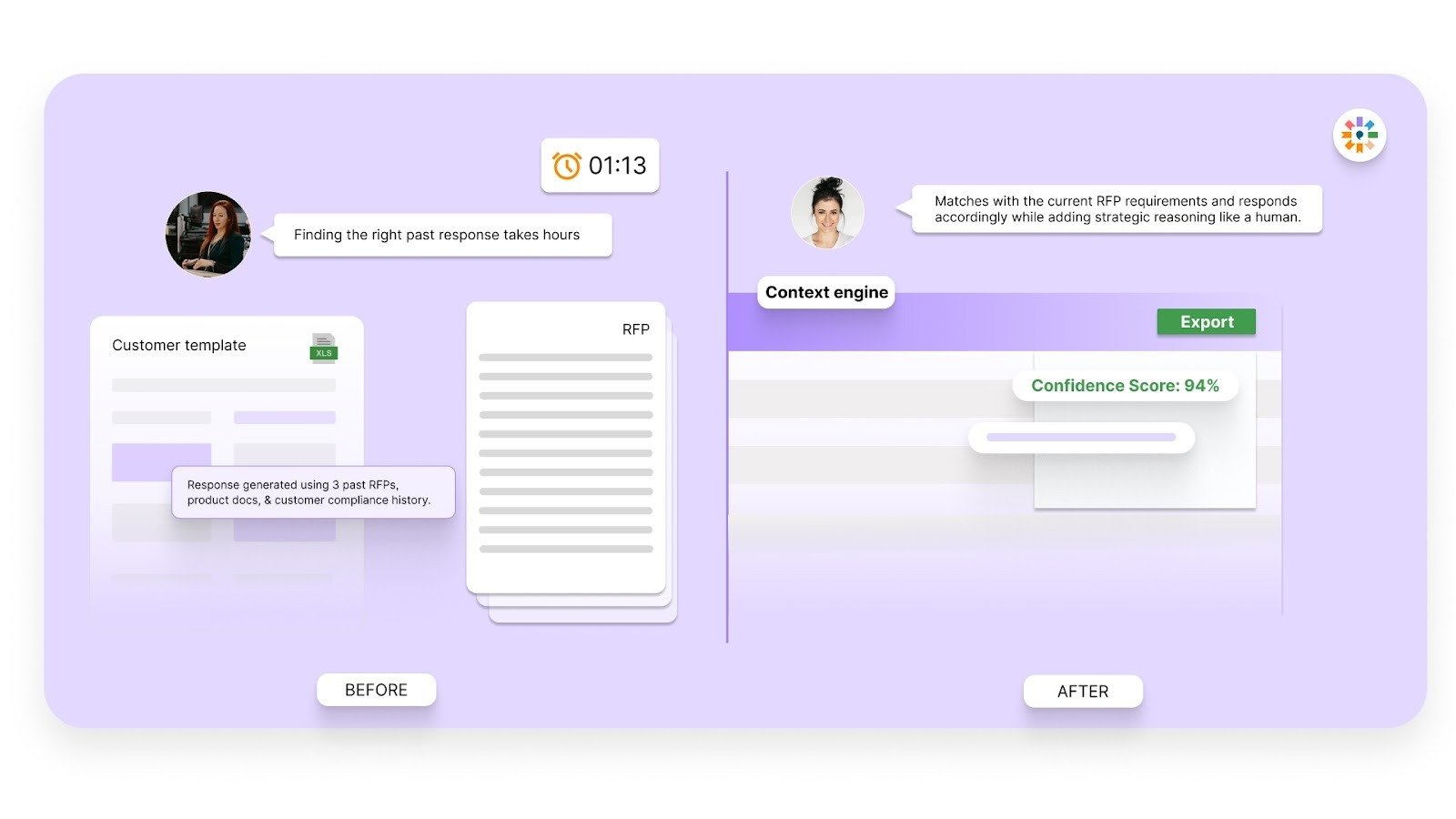
Inventive AI evaluates the entire RFP, including scope, compliance requirements, and evaluation criteria. Responses align with project-specific requirements rather than relying on static boilerplate, helping vendors achieve up to 50% higher win rates.
Instant Conflict Detection Before Submission
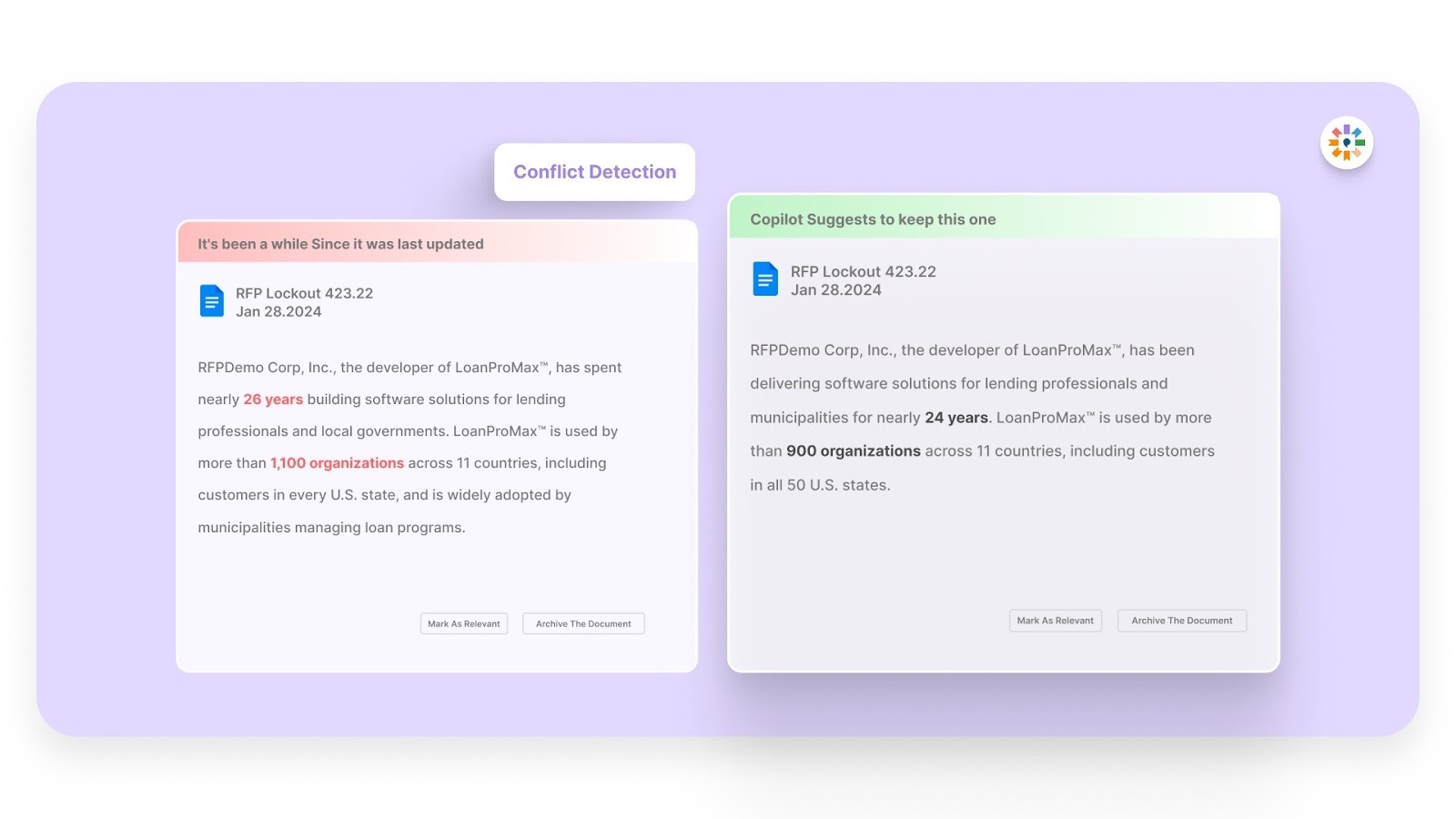
Avoid costly mistakes by having Inventive AI identify and resolve any inconsistencies or conflicts in your responses before submission, ensuring that everything is aligned and accurate.
Outdated Content Detection
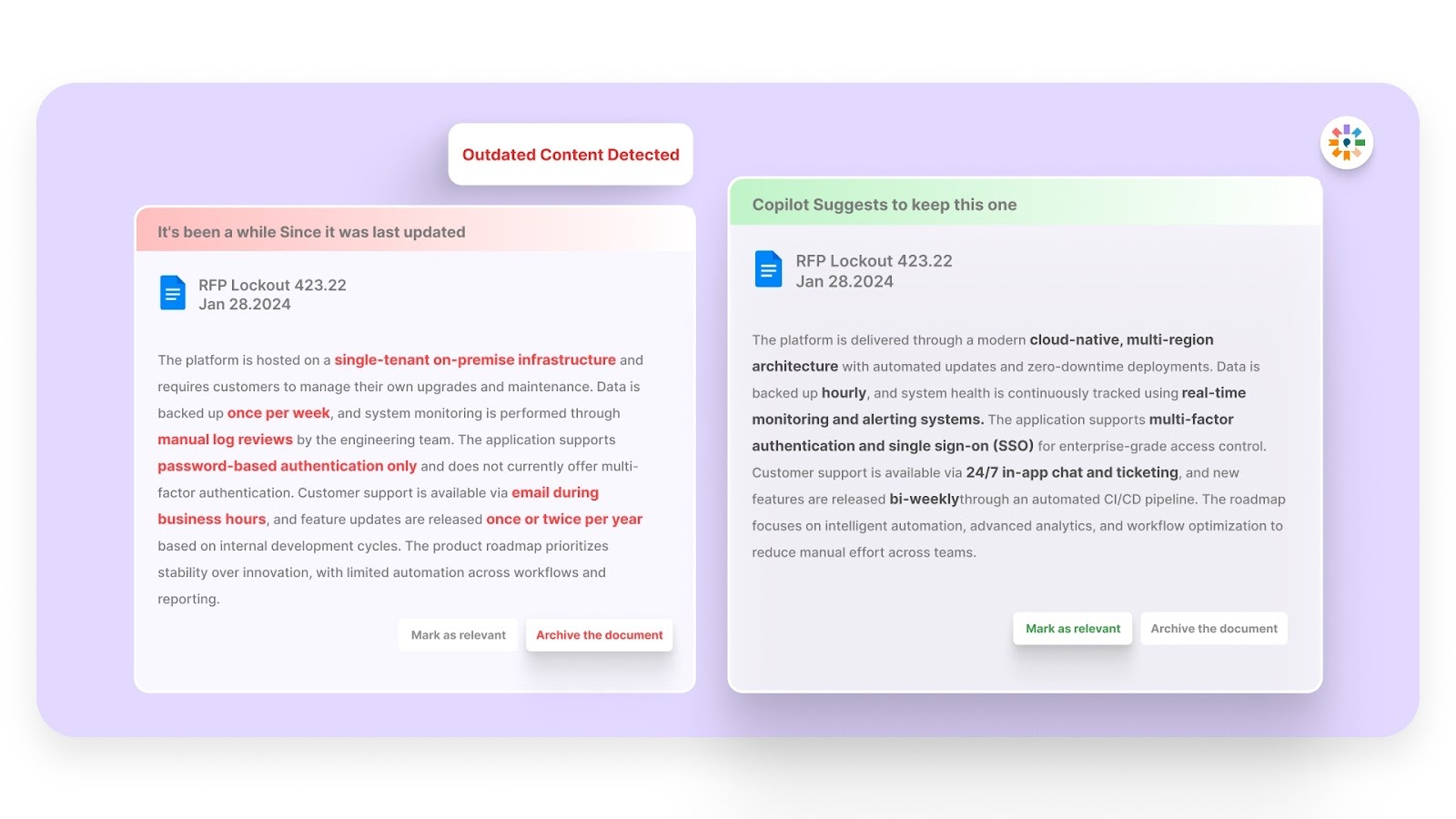
Never submit outdated information again. Inventive AI automatically flags and updates any content that is no longer relevant, so your responses stay fresh and aligned with the latest industry standards.
Narrative-Style Proposals
Say goodbye to fragmented, disjointed answers. Inventive AI ensures your proposals are cohesive, professional, and tell a compelling story that resonates with the buyer.
Simple, Easy-to-Use Interface
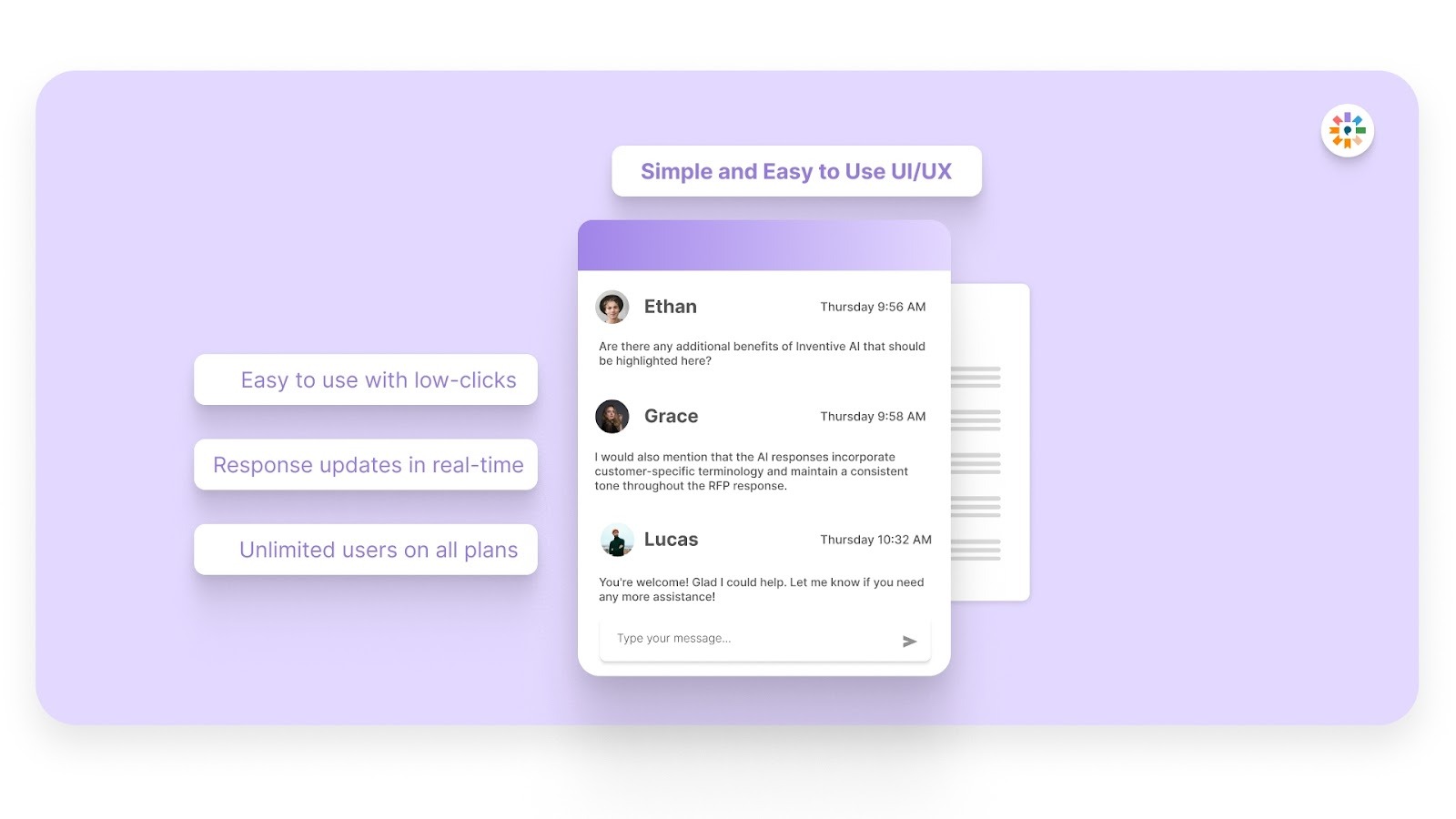
Inventive AI is designed for real proposal teams, not just technical users. Stakeholders across HR, sales, legal, and compliance can contribute without training overhead, reducing coordination friction and keeping responses moving forward.
Inventive AI enables vendors to create complete, polished proposals, including executive summaries, value propositions, and capability narratives. Automating these tasks helps you respond faster, improve quality, and compete more effectively.
Discover how vendors like you streamlined submissions and enhanced accuracy. View the Case Study.
FAQs
1. How often should vendors update their commercial construction RFP response templates?
Vendors should review and update their response templates at least quarterly or whenever major regulatory, safety, or certification changes occur. Regular updates ensure pricing models, compliance documentation, and company information remain accurate and aligned with current project requirements.
2. Can vendors reuse the same commercial construction RFP template for different projects?
Vendors can reuse a base template, but each response should be tailored to the specific project scope, technical specifications, and evaluation criteria. Customizing the response helps demonstrate project understanding and prevents generic proposals that buyers may score lower.
3. How can vendors coordinate internal teams when preparing commercial construction RFP responses?
Successful RFP responses often require collaboration between engineering, finance, legal, and project management teams. Establishing clear responsibilities and collecting inputs early helps ensure technical accuracy, pricing clarity, and compliance documentation are included before submission.
4. What role does documentation management play in commercial construction RFP responses?
Maintaining organized records of project references, safety certifications, insurance documents, and financial statements allows vendors to quickly attach required evidence. Proper documentation management reduces delays and helps ensure proposals contain all supporting materials requested in the RFP.
5. How can vendors track and improve performance in commercial construction RFP bidding?
Vendors can analyze past submissions by reviewing win rates, buyer feedback, and evaluation scores. Tracking these insights helps identify weaknesses in proposals, refine response strategies, and improve future RFP submissions for commercial construction projects.

90% Faster RFPs. 50% More Wins. Watch a 2-Minute Demo.
.avif)
Mukund Kumar
Mukund Kumar is Growth Marketing Manager at Inventive AI. An IIT Jodhpur graduate with 3+ years in growth and performance marketing, he specializes in data-driven strategies that connect sales and RFP teams with the automation they actually need, helping revenue teams cut through generic AI hype and win more deals.

Somya Nahar
Somya Nahar is a Senior Content Writer with 5+ years across tech, SaaS, and finance. She writes about AI and RFPs for the people doing the work, the proposal managers, sales teams, and writers who deal with tight deadlines and long questionnaires, and want practical ways to make that easier.