How to Answer Security Questionnaires in 2026 and Close More Deals

The security questionnaire is already in your inbox. The deal is active, expectations are high, and now your answers will be reviewed line by line. Not for effort, but for gaps, inconsistencies, and signals of risk. You are not trying to explain your product anymore. You are proving your organization can be trusted. And this is where most responses fall short, because the answers do not hold up together.
Security certification and data privacy are now central to buying decisions. According to Gartner, 46% of buyers select a vendor based on security certification and data privacy factors. That means your responses directly influence whether the deal moves forward.
This guide shows you how to do exactly that, so your responses move the deal forward instead of putting it at risk.
Key Takeaways
- Security questionnaires directly impact deal velocity and win rates, especially in enterprise sales cycles.
- Most questionnaires follow repeatable sections like data security, access control, compliance, and incident response.
- Manual workflows lead to delays, inconsistent answers, and a higher risk of errors across responses.
- A structured approach with a centralized knowledge base and clear ownership improves response quality and speed.
- Inventive AI helps teams respond 90% faster with 95% accuracy while improving win rates by 50%.
The Importance of Security Questionnaires
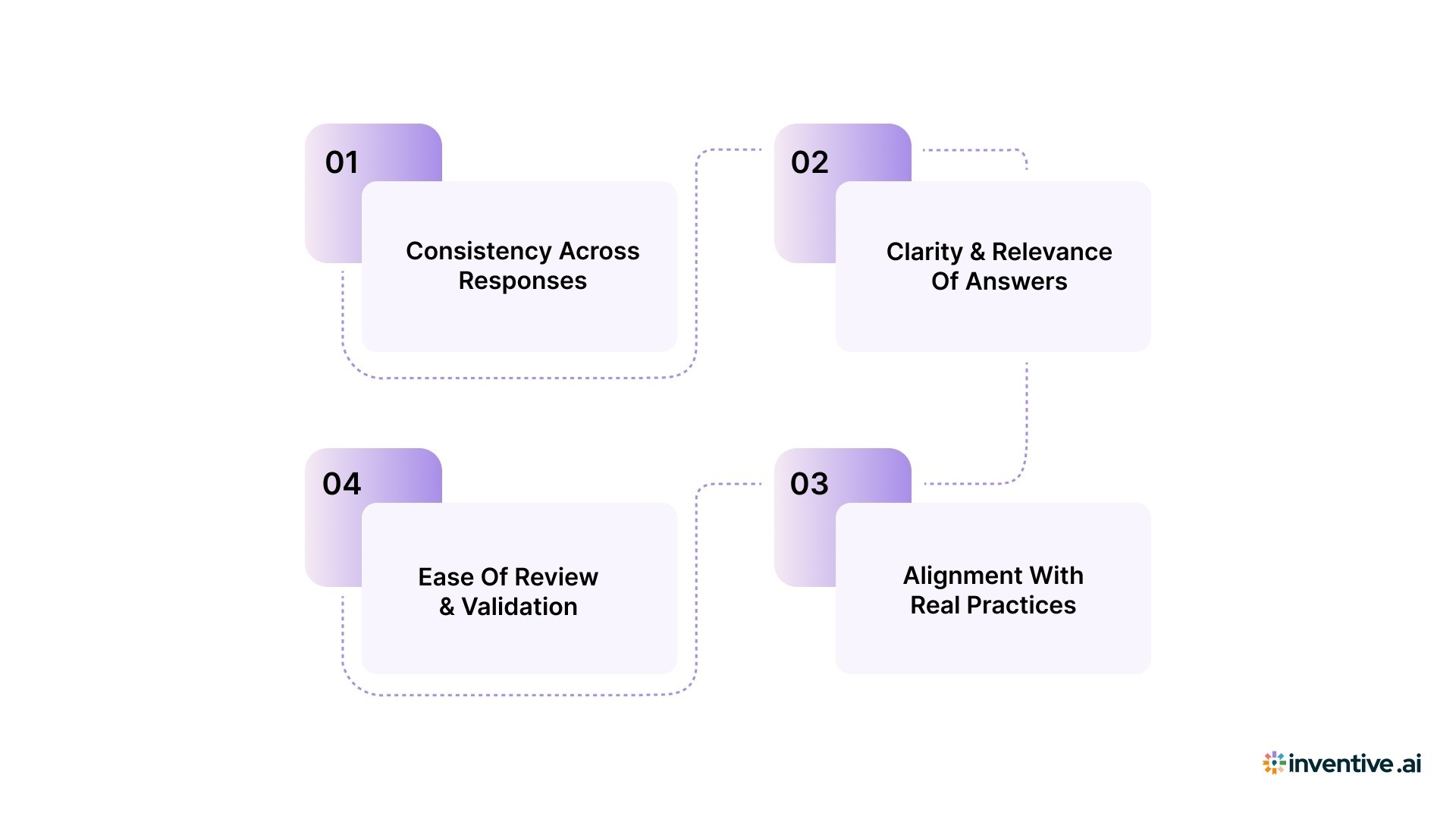
Security questionnaires get rejected because the answers do not hold up under review. When your response reaches the buyer’s security team, they are not reading it from top to bottom. They are scanning for patterns, comparing answers across sections, and checking if everything aligns.
This is where most vendors lose control:
1. Consistency Across Responses
A single answer rarely raises concern, but conflicting answers across sections do. When encryption standards are described differently, access controls do not match policy documents, or incident timelines feel unrealistic, it creates doubt. That doubt leads to follow-ups, delays, and deeper scrutiny.
2. Clarity and Relevance of Answers
Vague answers raise questions, while overly detailed answers expose gaps. Generic responses fail because they do not address the actual intent behind the question. Strong responses are clear, precise, and directly aligned with what the buyer is trying to validate.
3. Alignment With Real Practices
Security teams can quickly identify when responses sound correct but do not reflect how systems actually operate. If your answers describe ideal scenarios instead of actual workflows, they lose credibility. Buyers are not evaluating what you claim. They are evaluating how believable and verifiable your claims are.
4. Ease of Review and Validation
Your response is judged on how easy it is to review. If answers are scattered, repetitive, or difficult to validate, the process slows down. Reviewers spend more time questioning your responses instead of approving them.
When your answers are consistent, precise, and aligned with real practices, the questionnaire moves forward without friction. When they are not, you enter cycles of clarification, revisions, and delays.
6 Key Security Questionnaire Sections and How Each Response Should Differ
Security questionnaires may look different, but they follow the same evaluation logic. They test how well your controls hold up across different areas and whether your answers stay consistent throughout.
If you understand what each section is validating, you can prepare responses that are accurate, aligned, and easier to approve.
1. Data Protection and Encryption
This section checks how you secure data across its lifecycle.
You are expected to explain encryption in transit and at rest, storage practices, and access controls. Listing standards like AES-256 or TLS is not enough. Your answer needs to show how those controls are applied in real systems.
2. Access Control and Identity Management
This section evaluates how access to data is controlled and monitored.
Buyers look for clarity on how users are granted access, how permissions are managed, and how access is revoked. If your response only lists RBAC or MFA without explaining the process, it creates gaps.
3. Compliance and Audit Readiness
This section validates whether your controls are formally audited.
Certifications like SOC 2 or ISO 27001 are expected, but buyers also check how often audits happen and how controls are maintained. Outdated or static responses reduce credibility.
4. Incident Detection and Response
This section tests your ability to handle security events.
You need to explain how incidents are detected, how quickly teams respond, and how communication is managed. Unclear timelines or vague processes often lead to follow-up questions.
5. Third-Party Risk Management
This section evaluates the risk introduced by your vendors.
Buyers expect you to explain how third parties are assessed, monitored, and controlled. Simply listing vendors without describing the process weakens your response.
6. Business Continuity and Disaster Recovery
This section checks how your systems perform during disruptions.
You need to define recovery timelines and data loss thresholds clearly. If RTO and RPO values are inconsistent or missing, it signals poor planning.
Each section is reviewed in relation to the others. If your answers are not aligned, inconsistencies appear quickly. When they are consistent and grounded in actual practices, the review process moves faster with fewer clarifications.
Also Read: AI Agents for Security Questionnaire Automation [2026]
How to Answer a Security Questionnaire Effectively in 2026
Answering a security questionnaire is a validation process. Your goal is to produce responses that are consistent, accurate, and easy for a buyer to approve without repeated follow-ups.
To do that, you need a structured system that works across deals, not a one-time effort for each questionnaire.
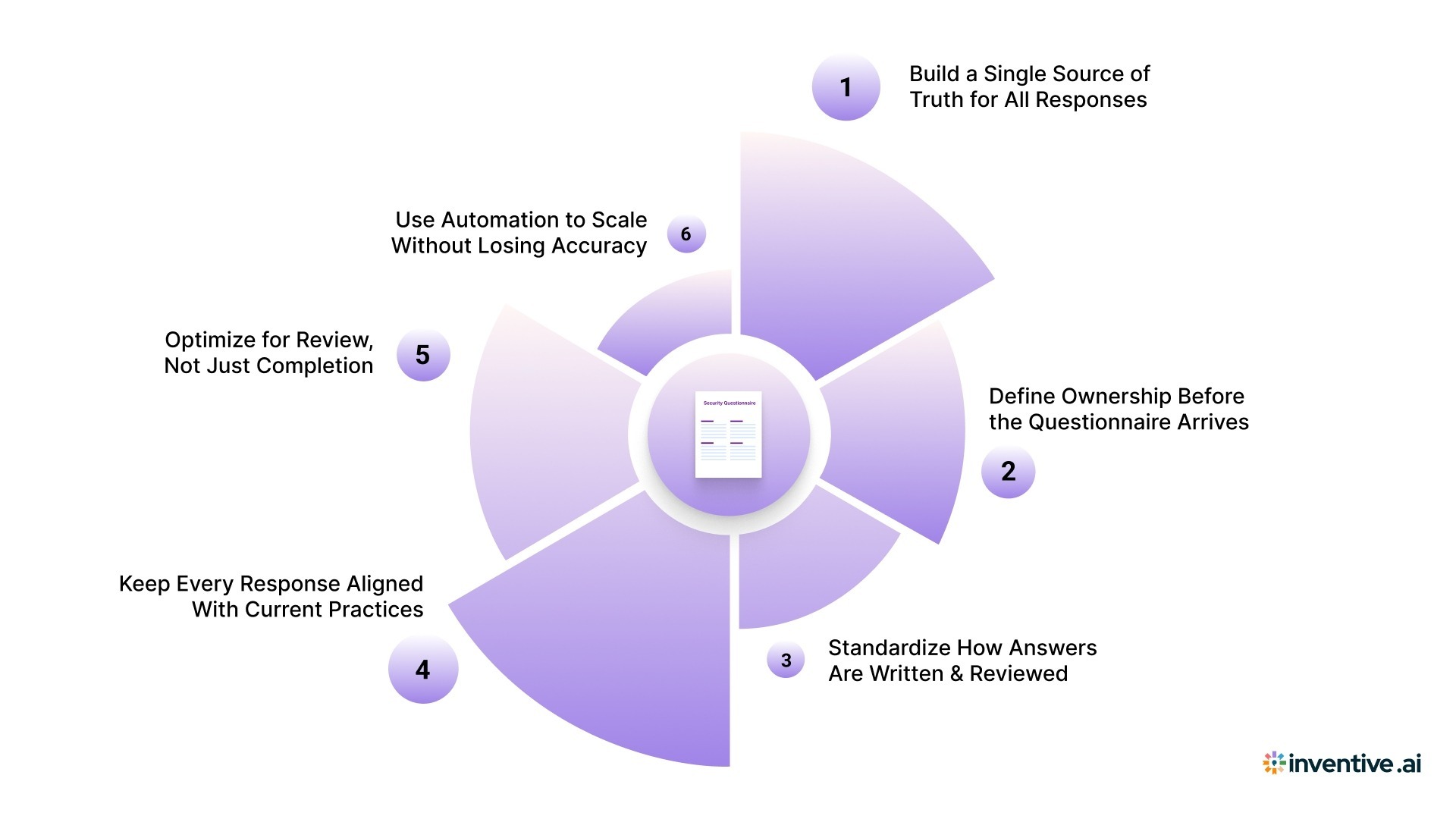
Here’s how to fill a security questionnaire that wins:
1. Build a Single Source of Truth for All Responses
Most teams lose time searching for answers they have already written.
Instead of recreating responses, you need a centralized system where every approved answer is stored, categorized, and maintained. This includes past questionnaires, policy references, and supporting documents.
When your answers come from a single source, they stay consistent across sections and across deals. This reduces contradictions and eliminates repeated work.
2. Define Ownership Before the Questionnaire Arrives
Delays usually start when teams are unsure who owns which part of the response.
You need a clear structure where each function is responsible for specific areas. Security teams handle compliance-related answers, IT teams validate infrastructure details, and legal teams review policy language.
When ownership is defined early, responses move faster and require fewer internal follow-ups during deadlines.
3. Standardize How Answers Are Written and Reviewed
Buyers do not evaluate answers in isolation. They compare them across the entire document.
If your language, structure, or level of detail changes from one section to another, it creates doubt.
You need a standard way of writing responses, including consistent terminology, aligned explanations, and a defined review process before submission. This ensures every answer supports the others instead of conflicting with them.
4. Keep Every Response Aligned With Current Practices
Outdated answers are one of the fastest ways to lose credibility.
Security questionnaires often include questions about certifications, policies, and operational processes that change over time. If your responses do not reflect the latest state of your systems, buyers will question their accuracy.
You need a process to regularly review and update responses so they stay aligned with current practices.
5. Optimize for Review, Not Just Completion
Most teams focus on finishing the questionnaire. Strong teams focus on how quickly it gets approved.
Your answers should be structured so that a reviewer can validate them without searching for context. That means clear explanations, direct answers, and minimal repetition.
When your responses are easy to review, approval cycles become shorter and smoother.
6. Use Automation to Scale Without Losing Accuracy
Manual workflows break when the volume of questionnaires increases.
To scale effectively, you need systems that can reuse past responses, surface relevant answers, and reduce dependency on multiple stakeholders for every question.
Automation helps you maintain consistency while significantly reducing response time.
Pro Tip: Create a quality response set for high-frequency questions. These answers should be reviewed, approved, and reused across all future questionnaires.
When these steps are in place, your response process becomes predictable and scalable.
Instead of reacting to each questionnaire, you operate with a system that produces consistent, review-ready answers every time.
7 Mistakes That Cause Security Questionnaires to Fail Review
When you are learning how to respond to a vendor security questionnaire requests, the mistakes are rarely obvious. Most issues appear during review, when responses are compared, validated, and questioned.
These are the mistakes that directly impact approval speed and deal momentum:
1. Treating Each Question in Isolation
A security questionnaire is reviewed as a complete document, not as separate answers.
When responses are written independently, inconsistencies appear across sections. Differences in how controls are described create confusion and trigger follow-ups. Teams that avoid this build responses from a centralized source and review them together before submission, so every answer supports the others.
2. Reusing Answers Without Context
Reusing responses helps when you are trying to complete a security questionnaire quickly, but copying answers without adjusting them creates gaps.
Each buyer frames questions differently. Answers that are not adapted to the specific context often feel incomplete or misaligned. High-performing teams treat reusable answers as a starting point, refining them to match the buyer’s exact intent and expectations.
3. Adding Excess Detail Instead of Clarity
Long answers may feel safer, but they often introduce risk.
Extra detail can create contradictions, unclear timelines, or statements that are difficult to validate. Clear and direct responses make it easier for reviewers to approve without hesitation. The focus shifts to answering the exact question with precise, verifiable information, removing anything that does not support validation.
4. Describing Processes That Do Not Match Actual Execution
Security responses must reflect how systems operate in practice.
Answers that describe ideal workflows instead of actual processes raise concerns during validation. Reviewers look for alignment between what is written and what can be verified. Strong teams validate responses with internal stakeholders before submission, ensuring every answer reflects real, current workflows.
5. Skipping Cross-Validation Before Submission
Even well-written answers can conflict when reviewed together.
Without a final validation step, inconsistencies in terminology, timelines, or controls remain unnoticed. These issues often lead to revision cycles after submission. Teams that avoid this run a final cross-check across all responses, aligning terminology and resolving conflicts before the document reaches the buyer.
6. Focusing on Completion Instead of Approval
Finishing the questionnaire is not the outcome that matters.
The real goal is approval. Responses that are difficult to review slow down decision-making. Structured, clear answers help reviewers validate faster and move the process forward. This is why strong teams optimize responses for readability and validation, not just completion.
7. Relying on Manual Processes for Every Questionnaire
Manual workflows limit how efficiently you can handle security questionnaires at scale.
As volume increases, coordination delays and repeated edits become more common. This affects both response speed and consistency. Teams that scale effectively introduce systems that reuse validated responses and reduce dependency on repeated manual coordination.
Avoiding these mistakes improves how you fill out a security questionnaire, how quickly you complete a security questionnaire, and how effectively you respond to vendor security questionnaire requests.
Also Read: Complete Guide to Security Questionnaire Templates for Fintech
How Inventive AI Makes Security Questionnaire Responses Automation Faster and Defensible
At this point, the challenge is clear. You are not struggling to answer questions. You are trying to ensure every answer is consistent, accurate, and easy to validate across the entire questionnaire. That is where manual processes fall short.
With AI-powered RFP response software, Inventive AI improves how you respond to vendor security questionnaire requests, making every response aligned and review-ready.
1. 2× Higher Quality Responses
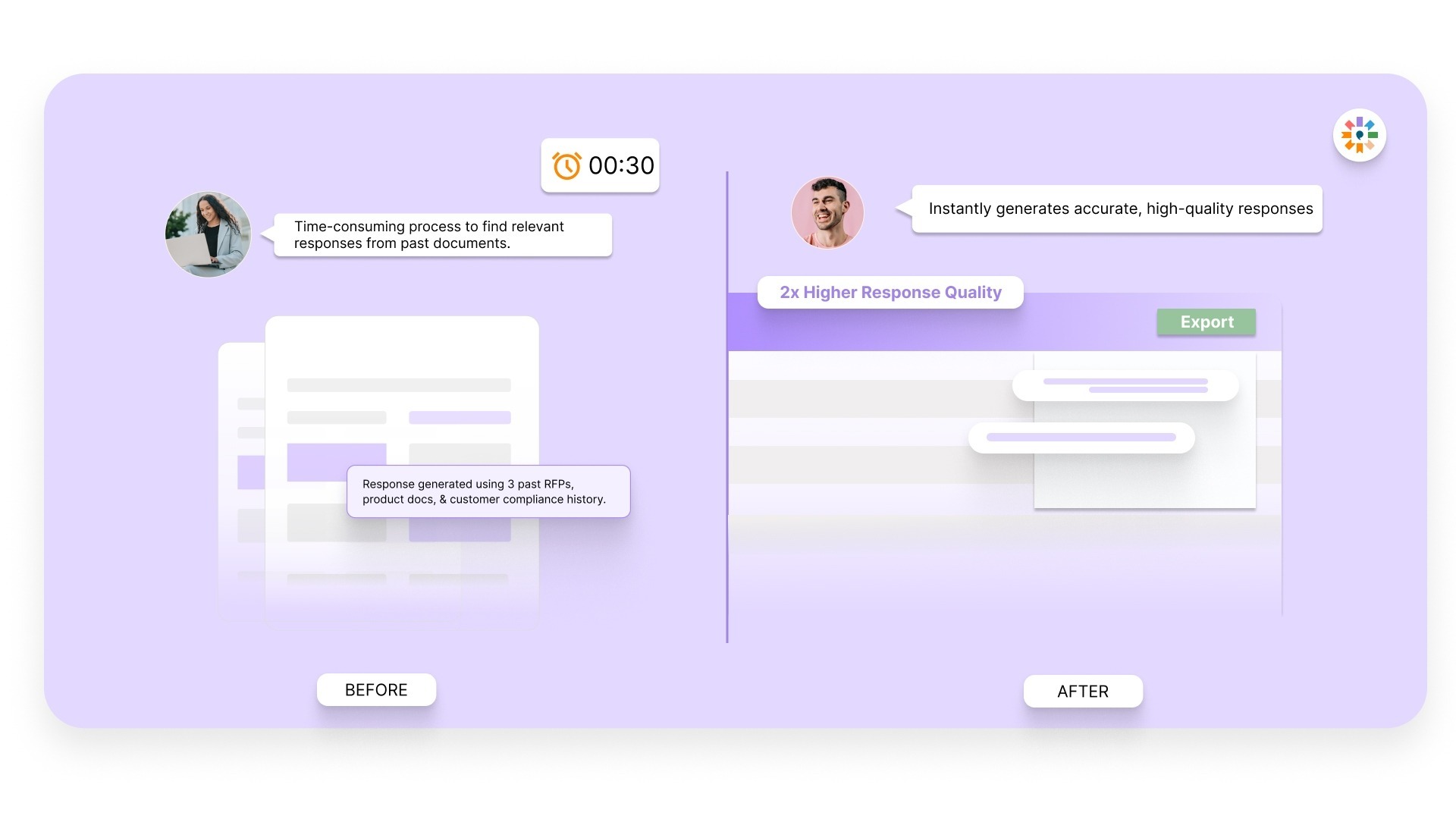
When responses are created from scattered sources, quality varies across sections.
Inventive AI improves response quality by generating answers that are complete, consistent, and aligned with your existing knowledge base. This helps you fill out a security questionnaire with fewer revisions and stronger responses.
2. Context Engine
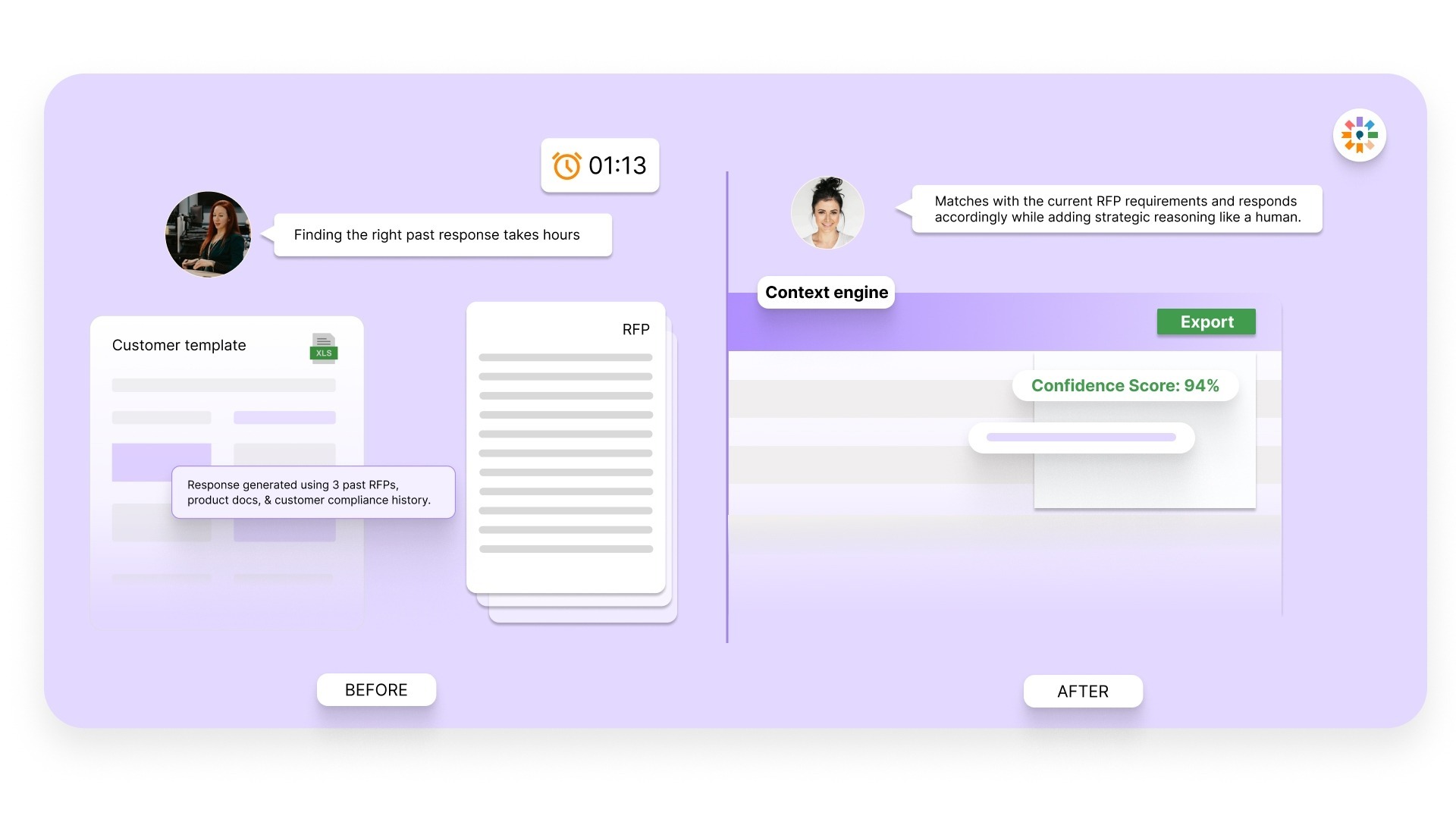
Every question in a security questionnaire has a specific intent.
Inventive AI’s Context Engine understands intent and generates answers that directly address it. This helps you complete a security questionnaire with responses that are relevant and accurate without adding unnecessary detail.
3. Conflict Detection
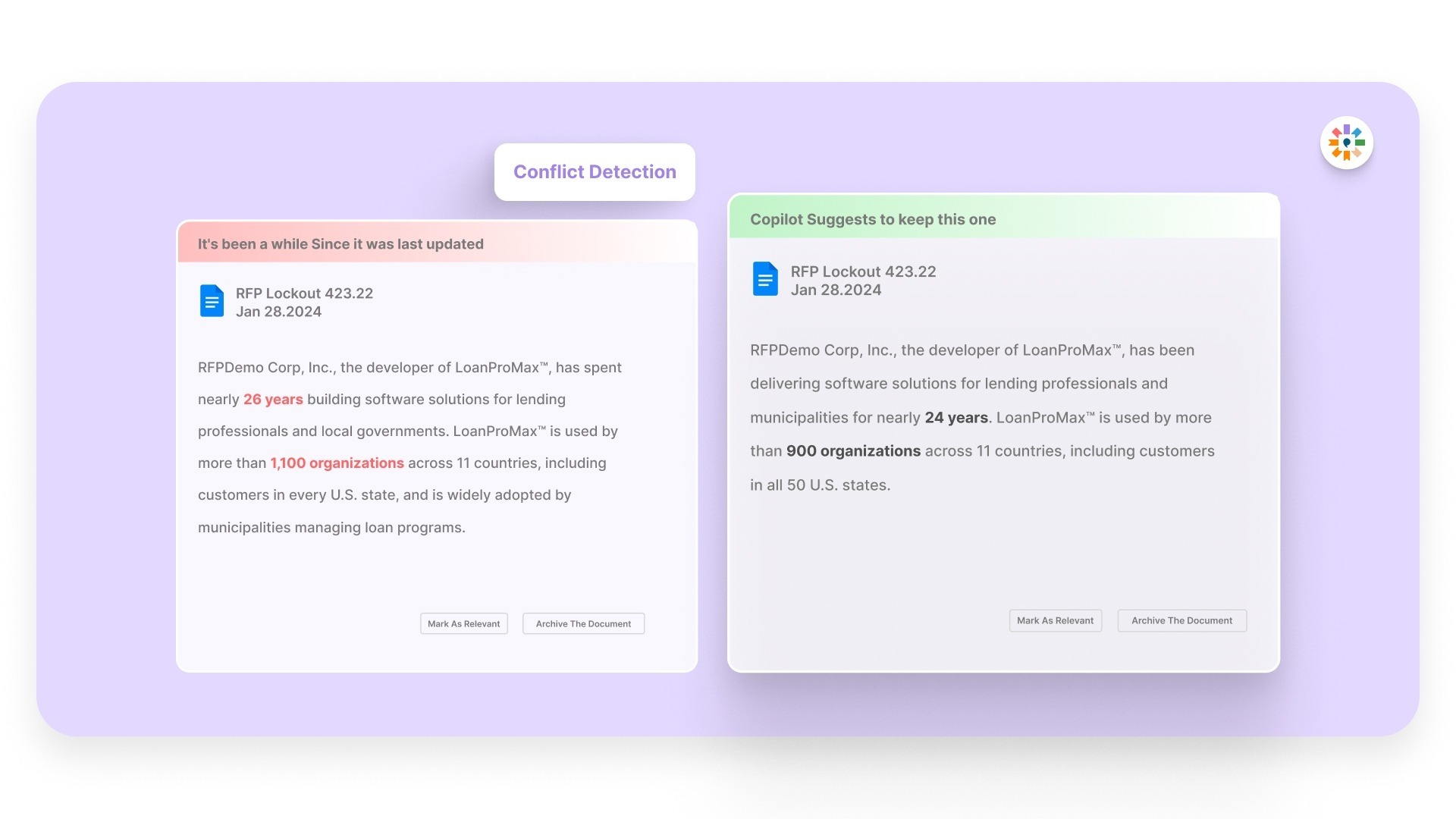
Inconsistencies across answers are one of the biggest reasons questionnaires get delayed.
Inventive AI automatically identifies conflicting responses across sections before submission. This ensures your answers stay aligned and reduces the need for follow-up clarification.
4. Outdated Content Detection
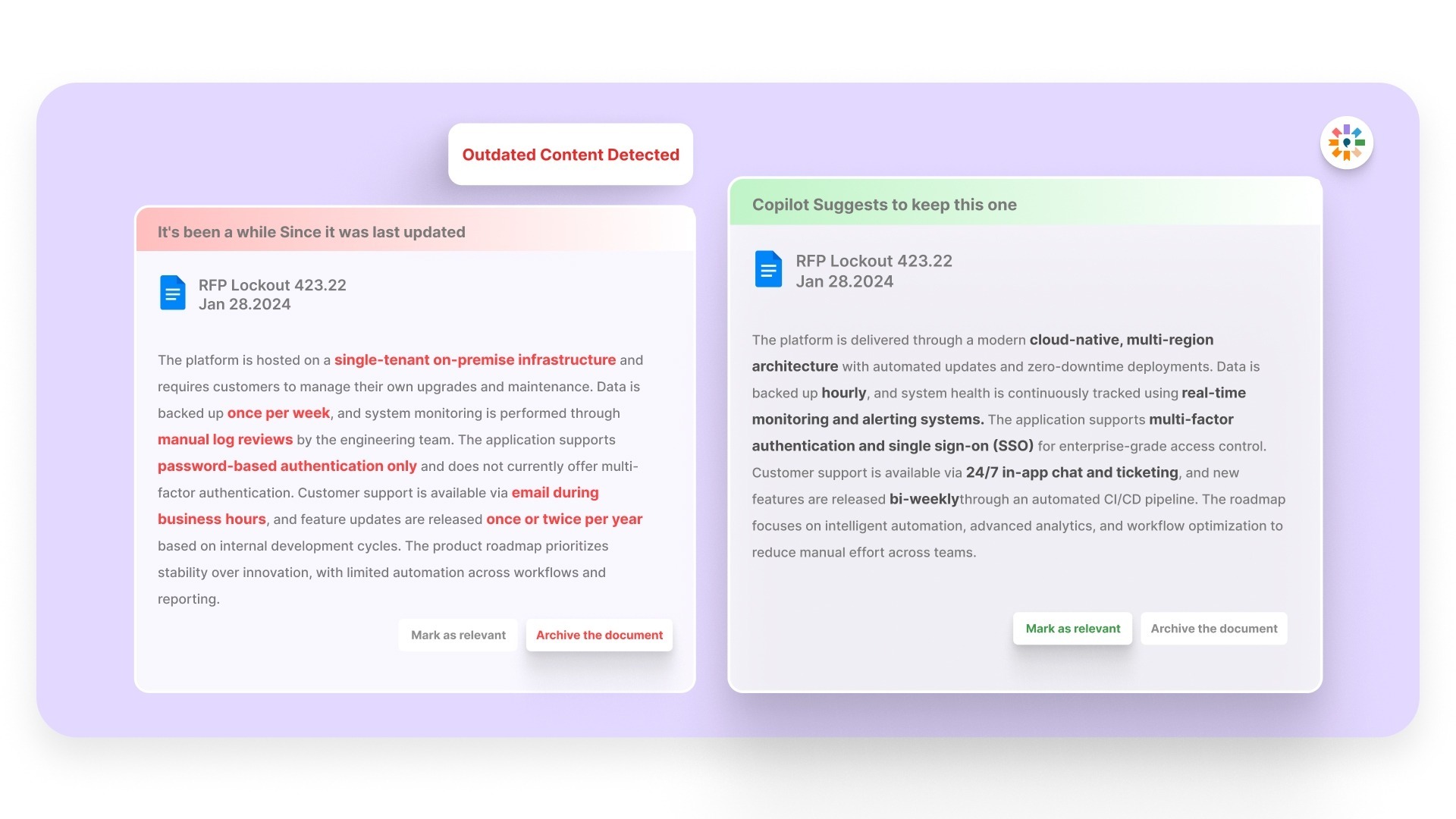
Security responses need to reflect current policies and certifications.
Inventive AI detects outdated answers and flags them before they are used. This ensures every response remains accurate and compliant with your latest practices.
5. Narrative-Style Proposals
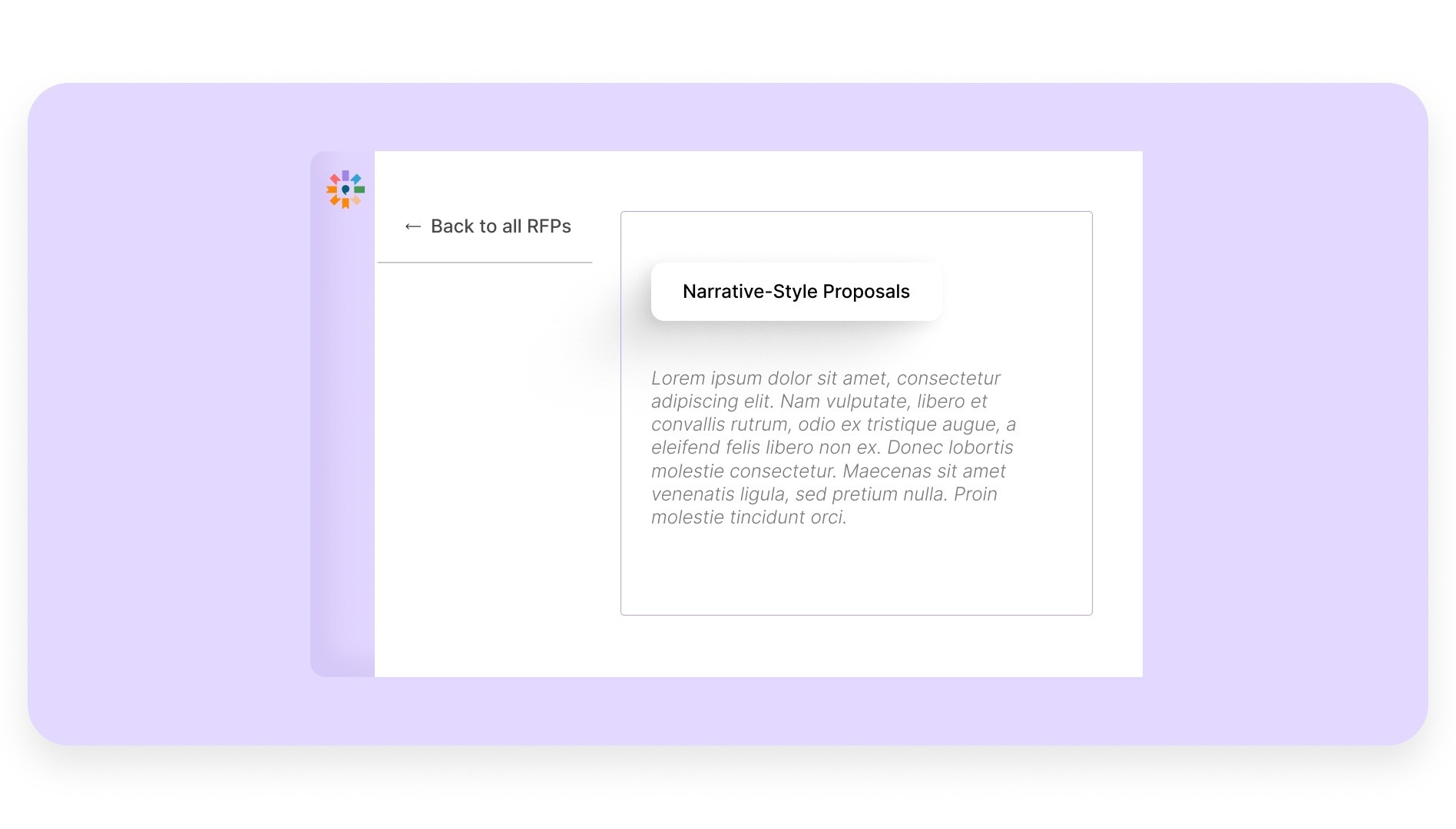
Security reviewers validate responses as a complete document.
Inventive AI structures your answers in a clear, connected format so they are easier to review and approve. This improves readability and reduces friction during validation.
6. Simple, Easy-to-Use Interface
Adoption often slows down response workflows.
Inventive AI provides an intuitive interface that allows your team to start responding quickly without extensive training. This reduces delays and improves collaboration across teams.
Measurable Impact for Revenue Teams
- Respond 90% faster
- Achieve 95% accuracy
- Improve win rates by 50%
Inventive AI’s AI RFP Agent is designed to simplify your RFP response process and help you handle security questionnaires at scale without losing consistency or control.
Frequently Asked Questions (FAQs)
1. How long does it take to complete a security questionnaire?
The time to complete a security questionnaire depends on its size and depth. Without a structured system, it can take several hours or even days, especially when multiple teams are involved.
2. Why do security questionnaires involve multiple teams?
Security questionnaires cover areas like infrastructure, compliance, legal policies, and incident handling. No single team owns all of this information. That is why inputs typically come from multiple stakeholders, even though the final response needs to feel unified.
3. How detailed should a security questionnaire response be?
The right level of detail depends on how easily the answer can be validated. Responses should be specific enough to prove credibility but concise enough to avoid confusion. Over-explaining often introduces risk instead of strengthening your answer.
4. How do buyers verify the accuracy of your answers?
Buyers validate responses by comparing answers across sections, checking for alignment with certifications, and sometimes requesting supporting documents or follow-up discussions. If responses do not hold up under comparison, they often trigger additional review cycles.
5. How do you fill out a security questionnaire faster?
To fill out a security questionnaire efficiently, you need a centralized response library, clear ownership, and standardized answers. This reduces repeated work and improves consistency across responses.
6. How to handle security questionnaires at scale?
To handle security questionnaires at scale, you need a repeatable process supported by automation. This reduces dependency on manual coordination and helps maintain consistency across multiple responses.