Free Request for Qualifications Template with Examples

Why do qualified vendors still get rejected before the proposal stage even begins? Often, it's because their capability answers lack clarity, consistency, or the specific proof that evaluators expect.
Teams spend hours rewriting company experience, certifications, and team details across documents, only to find that each RFQ asks for the same information in a different structure. The repetition introduces inconsistencies and creates mismatched answers.
This guide explains how RFQs are evaluated and shows how to structure responses that pass the shortlist stage.
Request for Qualifications Template Buyers Use to Evaluate Vendors
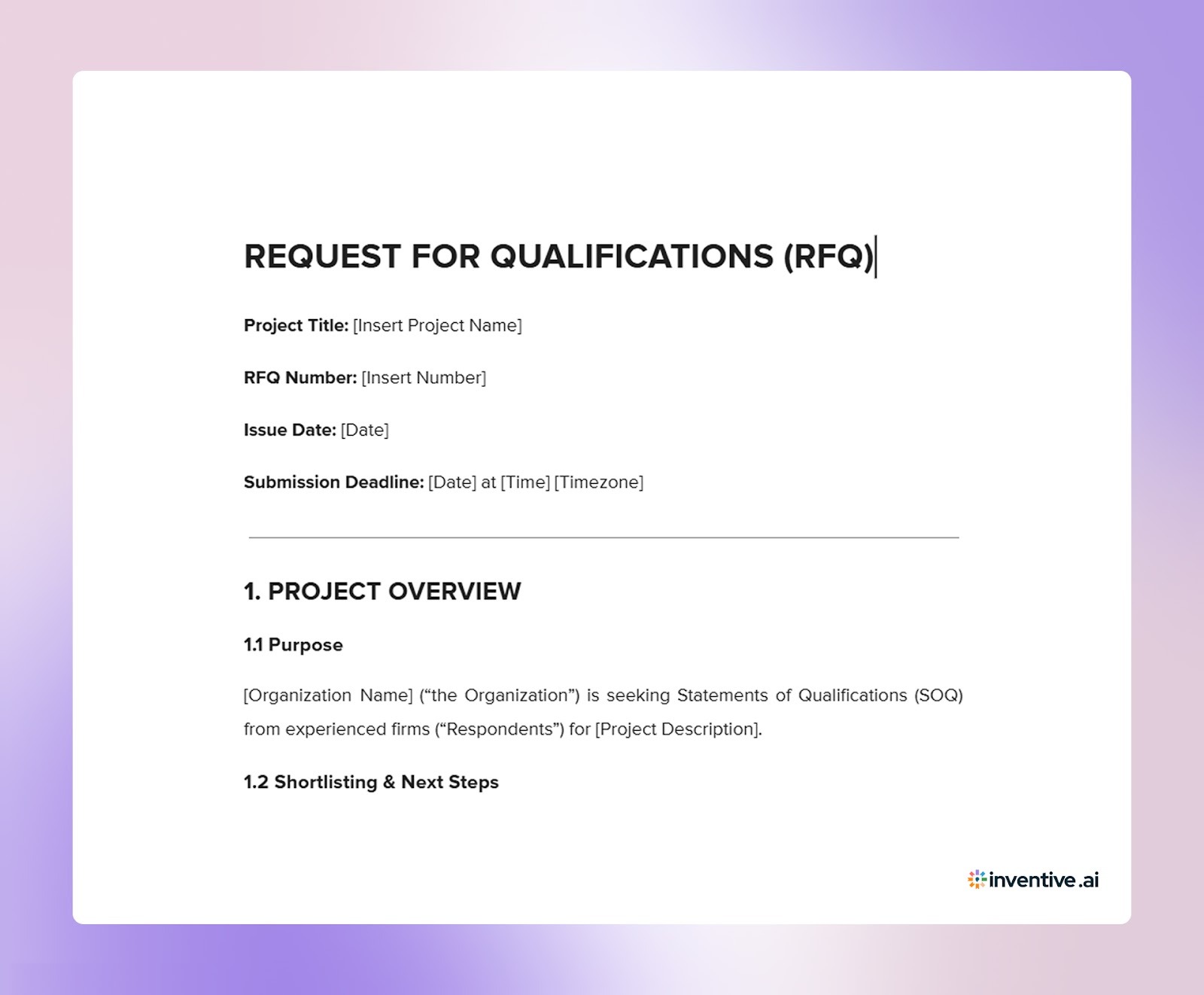

Reviewing the template shows what buyers request, but passing screening depends on how you present your qualifications within that structure.
Creating a Winning Response to a Request for Qualifications Template
During an RFQ, reviewers decide whether your firm is safe to invite into the proposal stage. Your objective is clear proof that your team fits the project without extra interpretation.
Follow the practices below to match how reviewers read and score submissions:
- Run a go/no-go check first: Confirm project type, location, capacity, and mandatory certifications match your firm before committing time to the response.
- Mirror requested headings: Keep the same section titles and order so reviewers can score responses quickly.
- Lead with similarity: Begin each project example with sector, size, and year before describing work performed.
- Identify assigned personnel early: Present the project manager and leads in the opening pages with their roles and related project references.
- Quantify experience: Use counts, capacities, timelines, and outcomes instead of general capability statements.
- Write for scanning: Use concise sentences and clear spacing so key facts appear within seconds.
- Follow submission rules exactly: Respect page limits, file naming, signatures, and addenda acknowledgements since compliance affects eligibility.
- Use buyer terminology: Reuse the RFQ wording when describing services to reduce interpretation effort during scoring.
- State availability: Confirm workload and planned allocation to show the team can start and finish on schedule.
- Place mandatory forms correctly: Insert required forms in the listed order rather than attaching them separately.
- Front-load proof: Place the most relevant project, metric, or credential in the first sentence of every section.
The guidance above becomes easier to apply when your content is organized into a format reviewers can read without interpretation effort.
RFQ Response Template That Reviewers Can Score Quickly
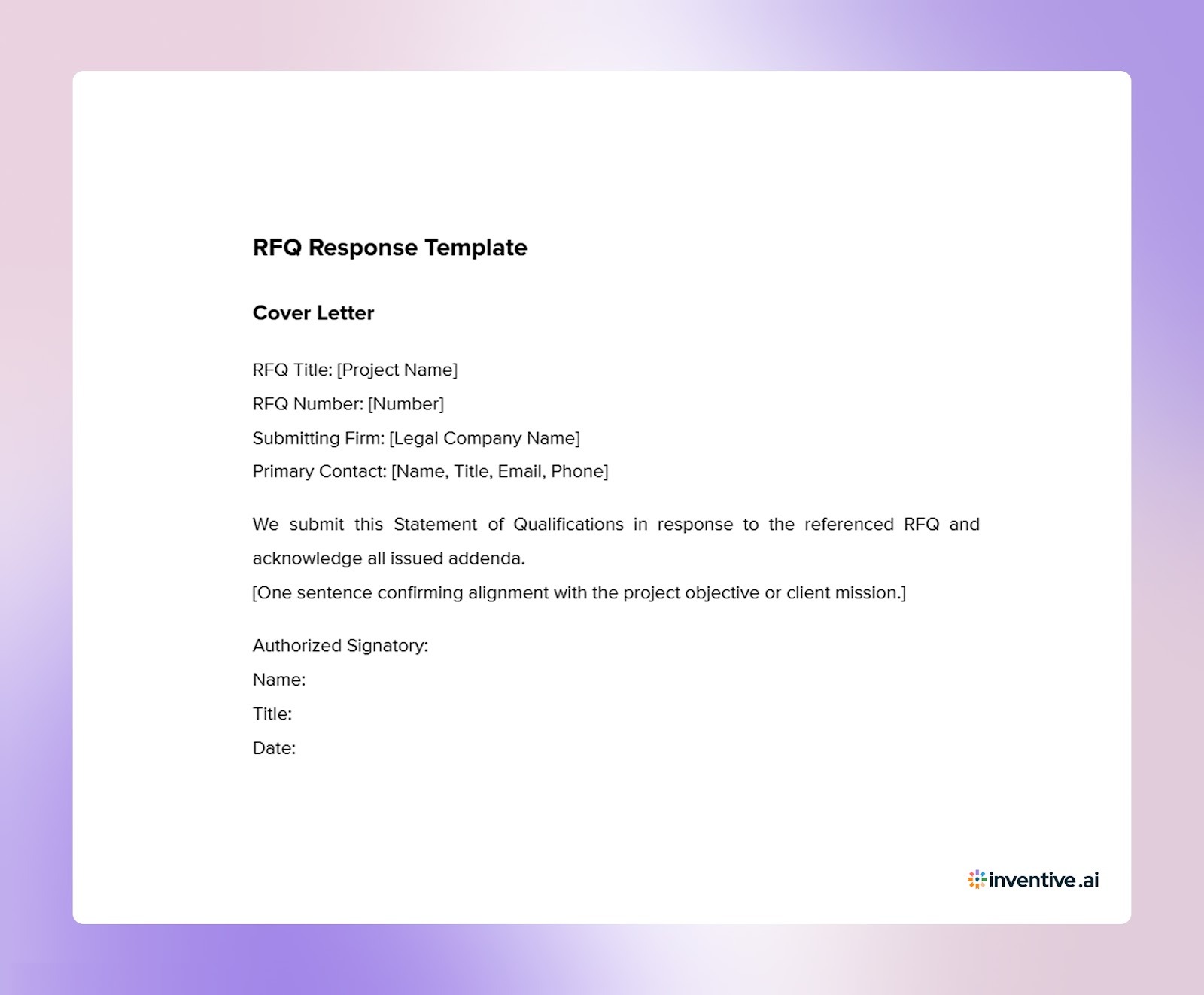

The structure below reflects how evaluators typically organize scoring sheets when reviewing qualification submissions. Preparing your responses in this format helps reviewers verify requirements quickly and reduces the chance of missed points during comparison.
Use the template as a working format for your Statement of Qualifications and replace bracketed fields with your project-specific information.
Cover Letter
RFQ Title: [Project Name]
RFQ Number: [Number]
Submitting Firm: [Legal Company Name]
Primary Contact: [Name, Title, Email, Phone]
We submit this Statement of Qualifications in response to the referenced RFQ and acknowledge all issued addenda.
[One sentence confirming alignment with the project objective or client mission.]
Authorized Signatory:
Name:
Title:
Date:
1. Firm Profile
Legal Name:
Headquarters Location:
Year Established:
Ownership Structure:
Office Serving This Project:
Value Proposition
2–3 sentences describing specialization relevant to this project type and sector.
Primary Services:
Relevant Licenses:
Years Performing Similar Work:
2. Requirement Understanding & Compliance Matrix
Provide direct mapping of RFQ requirements to your response.
Brief summary confirming understanding of objectives, constraints, and expected outcomes.
3. Relevant Project Experience
Project Similarity Overview
Provide detailed descriptions for [N] projects.
Project Name:
Client Organization:
Sector:
Completion Year:
Project Size or Value:
Services Provided:
Key Results:
Relevance to [Project Name]:
Reference Contact: [Name, Title, Email]
4. Key Personnel
Provide brief role descriptions and certifications.
Confirm that the listed personnel are committed to the contract duration.
Attach resumes in the appendix if requested.
5. Methodology and Project Approach
Methodology (Standard Working Framework)
Describe the structured process your team consistently uses.
Project Approach (Specific to This Project)
Planning and initiation
Communication and reporting
Quality control practices
Risk management actions
6. Capacity and Availability
Office supporting the work:
Start availability date:
Confirm key personnel availability for the project timeline.
7. Compliance and Certifications
Attach documentation where required.
8. Mandatory Forms
Addenda acknowledgement
Conflict of interest declaration
Non-collusion certification
Other RFQ required forms
Insert in the exact order listed in the RFQ.
9. Additional Information (Only if Requested)
Subconsultants
Financial capacity
Safety record
Security or data handling practices
Appendices
Resumes
Certificates
Insurance documentation
Project sheets
Do not include marketing brochures unless requested.
Evaluation priorities differ across sectors, so the same response structure should be adjusted to match industry risk concerns.
Specialized RFQ Response Templates by Industry Type
Qualification criteria vary by project type, and reviewers score relevance based on risks specific to their sector. Adjusting your response structure by industry helps evaluators confirm suitability quickly instead of interpreting generic answers.
The examples below explain what reviewers expect to see emphasized in each case and how your submission should reflect it.
1. Construction RFQ Response Template
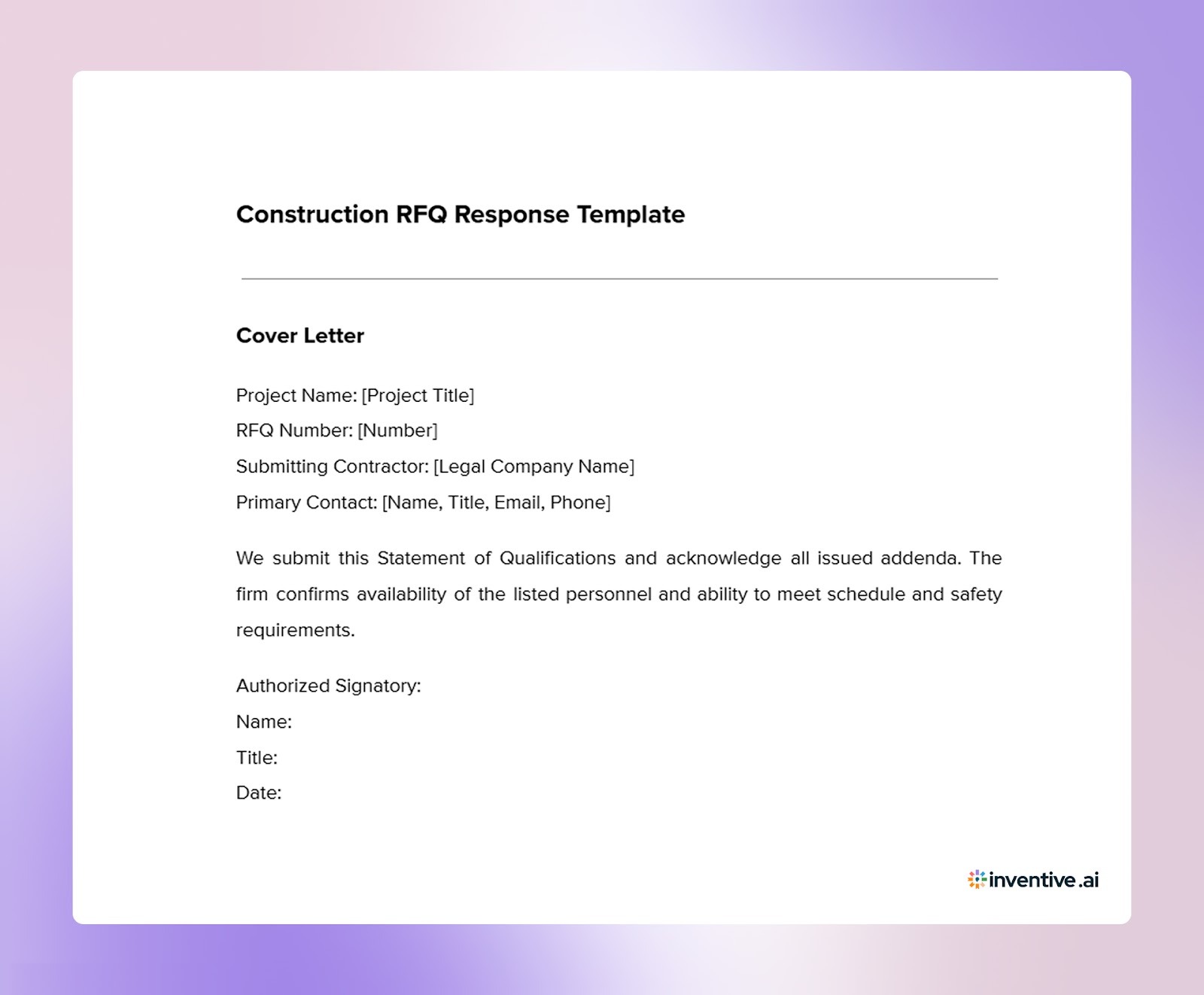
Construction RFQs evaluate delivery risk, operational planning, and financial capacity before inviting price proposals. Reviewers focus on documented safety performance and predictable completion rather than company size or promotional material.
Your response should emphasize:
- Verified safety record, including EMR, incident rates, and training practices
- Bonding limits, insurance coverage, and current work commitments
- cd fr4
- Assigned personnel, workforce availability, and equipment capacity
- Schedule control methods, subcontractor oversight, and quality inspections
- Digital coordination practices, site logistics planning, and disruption management
Use this structure to present qualifications clearly so evaluators can confirm your capability and advance your firm to the proposal stage.

2. IT / SaaS Vendor RFQ Response Template
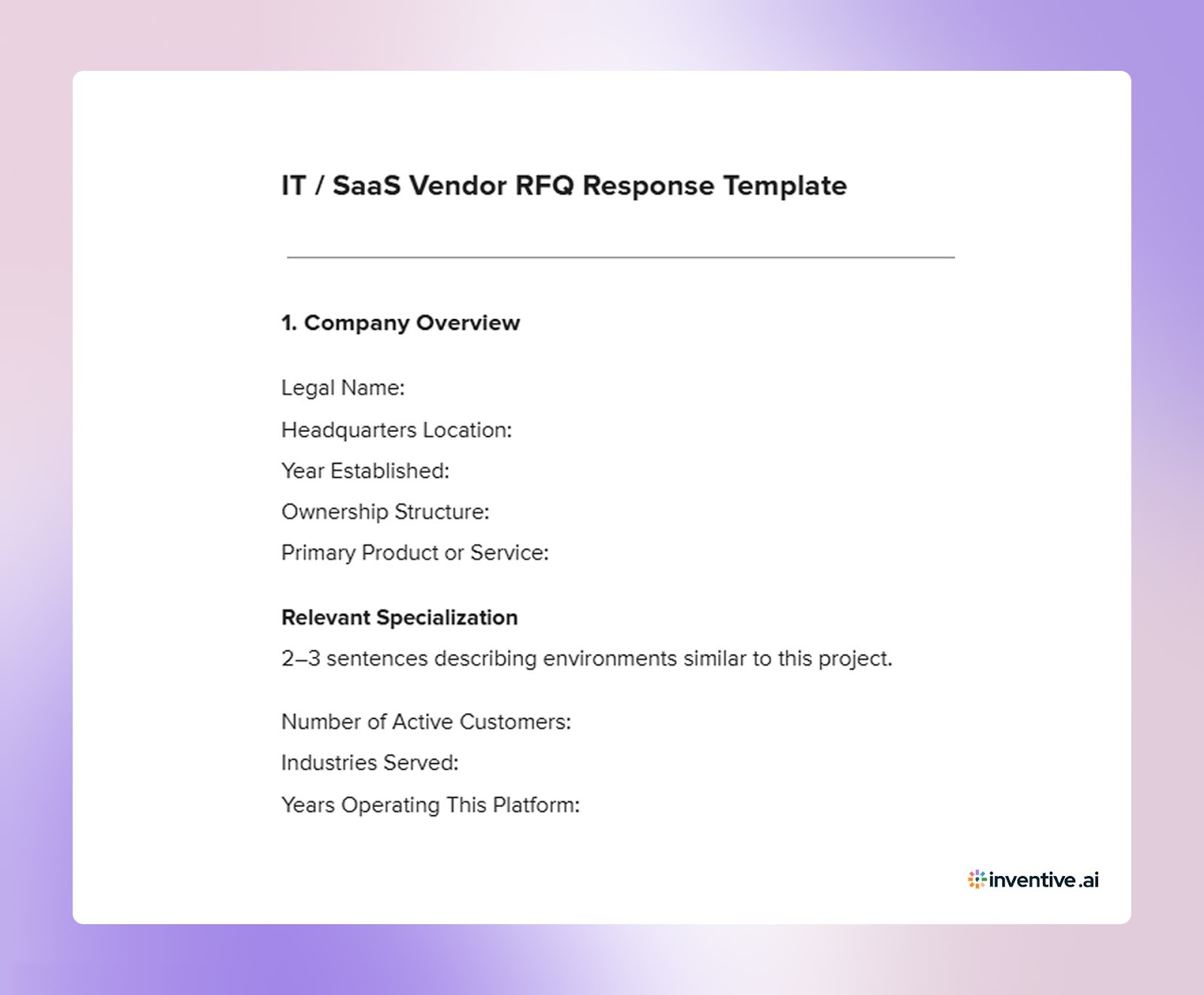
This template is used when responding to qualifications requests for software platforms or managed technology services. Reviewers assess security controls, platform reliability, and dependency exposure before inviting detailed proposals.
The structure emphasizes:
- Security and privacy disclosures
- Architecture design, uptime record, and scalability evidence
- Compliance certifications such as GDPR, HIPAA, or PCI DSS
- Subprocessor listing and third-party dependency transparency
- Data portability, exit procedures, and transition support
Use this format to present technical credibility clearly and advance to the proposal stage.

3. Professional Consulting Services RFQ Response Template
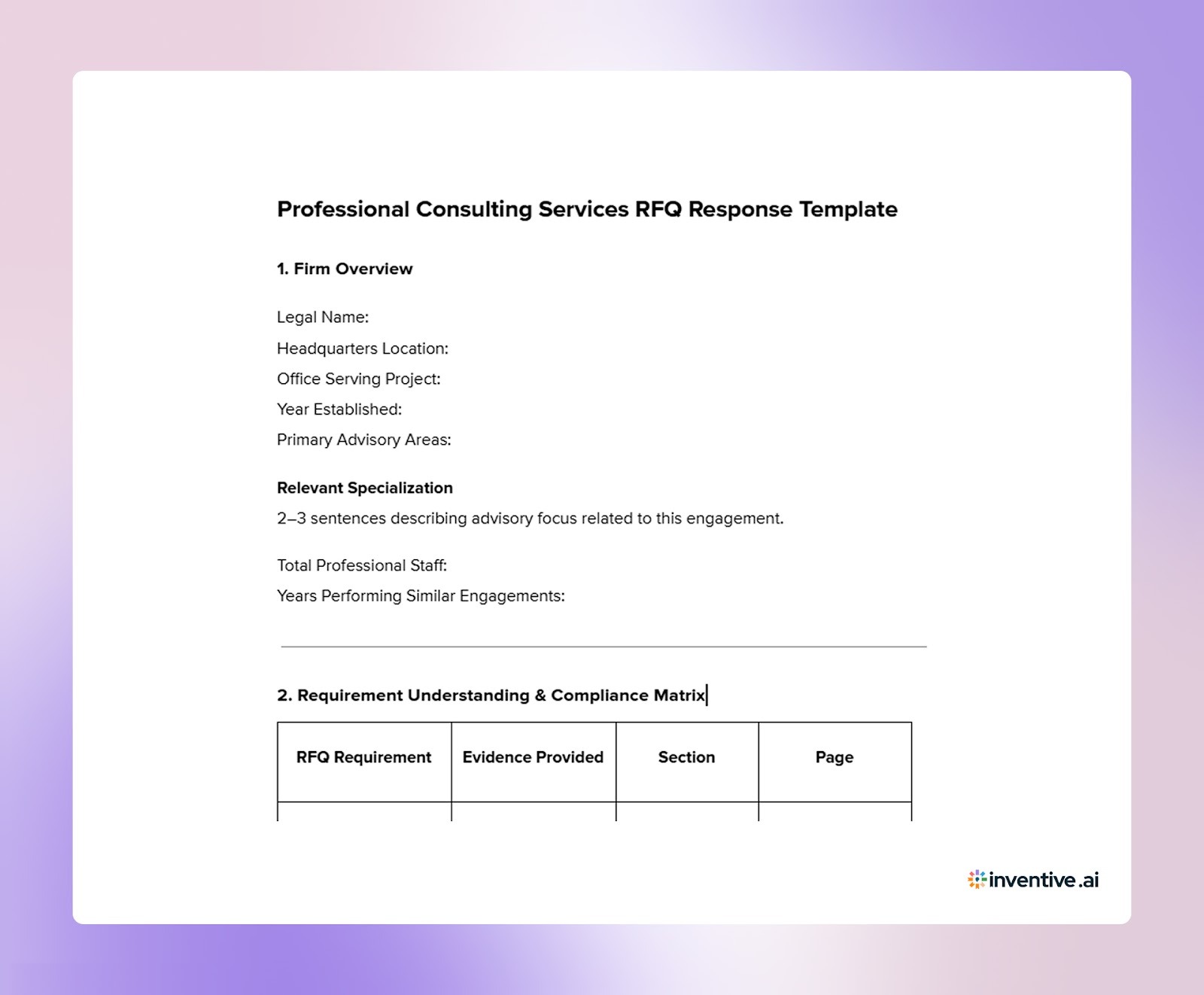
This template applies to advisory and consulting engagements where evaluators focus on expertise, judgment quality, and the credibility of the assigned team before requesting detailed work plans.
The structure emphasizes:
- Named consulting team, credentials, and relevant publications
- Methodology, proprietary analytical frameworks, and quality review practices
- Comparable engagement outcomes and reference contacts
- Personnel continuity and substitution approval rules
- Confidentiality controls, data handling procedures, and knowledge transfer approach
Use this format to present advisory capability clearly and advance to the proposal stage.

After selecting the closest example, you should still refine the details to align with your project scope and evaluation priorities.
How to Customize an RFQ Response Template?
Each qualification request evaluates different risks, so a generic response rarely scores well without adjustment. Tailoring your answers to the project context helps reviewers confirm relevance quickly and prevents your submission from appearing reused.
Review each section and adapt it to match what the client is actually screening for:
- Clarify the objective: Restate the client’s intended outcome in your own words and align your experience examples to that result, not just the listed tasks.
- Match qualification thresholds: Highlight certifications, licenses, and minimum experience levels that meet or exceed the stated requirements.
- Prioritize scored criteria: Expand sections carrying higher evaluation weight and keep lower-weighted areas concise.
- Follow submission instructions exactly: Adjust page limits, file naming, and structure so reviewers can score without reorganizing your document.
- Address required compliance: Include regulatory, privacy, safety, or insurance proof relevant to the engagement type.
- Remove unrelated material: Omit capabilities that do not connect directly to the requested scope.
- Reflect project constraints: Note location coverage, staffing availability, transition timing, or operational limitations.
Once responses are structured correctly, the remaining challenge is maintaining identical answers across every submission stage.
How Inventive AI Keeps Qualification and Proposal Answers Consistent?
RFQs, proposals, and security questionnaires often repeat the same topics in different wording. Teams end up searching past files, rewriting approved material, and reconciling edits from multiple reviewers.
Here’s how Inventive AI supports RFQ response teams:
Context Engine
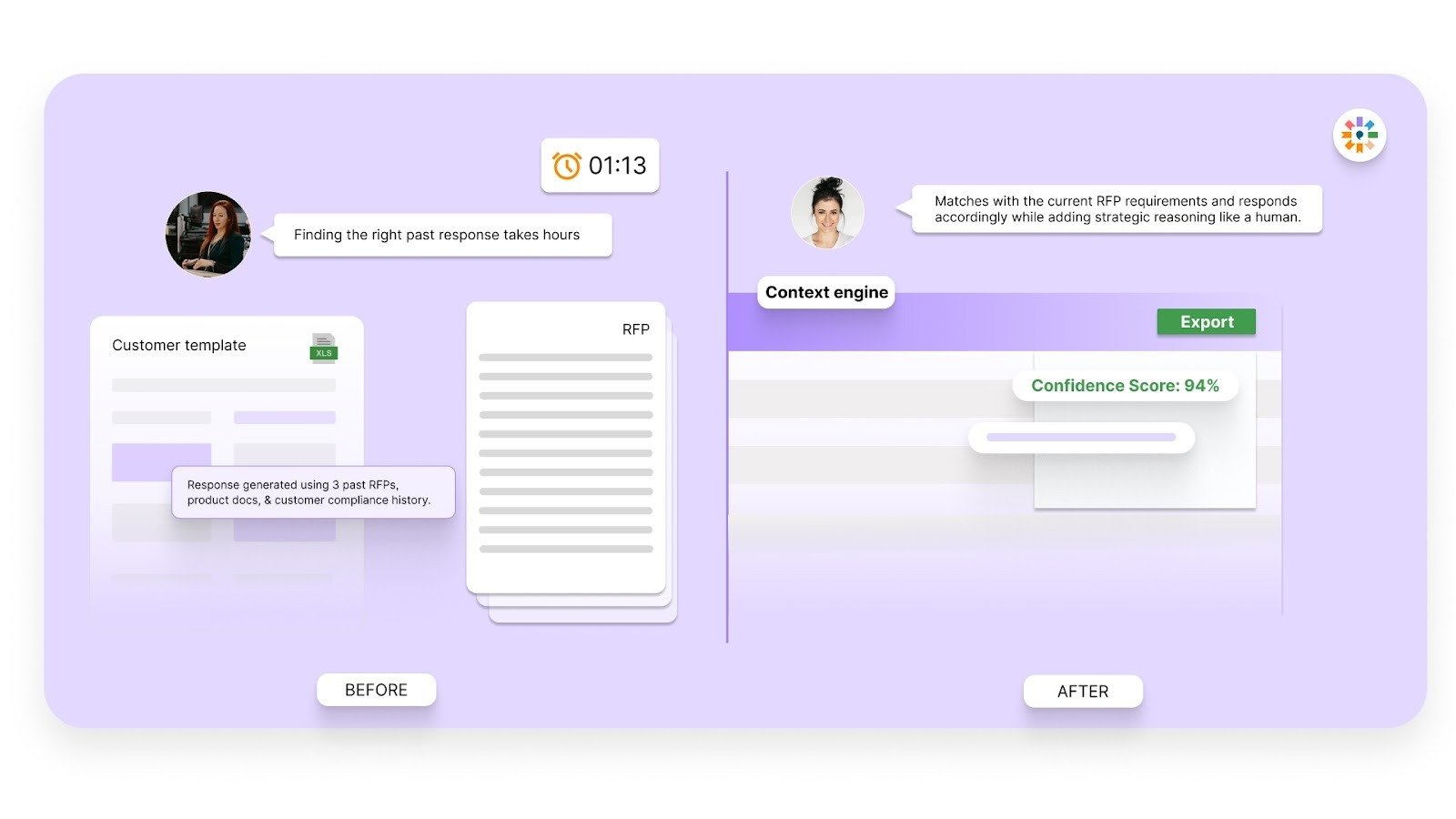
Many competitors rely on shallow ChatGPT or basic RAG lookup, which generates generic capability statements pulled from isolated content. Inventive uses multi-layer reasoning that understands the full RFQ context, including evaluation criteria, mandatory forms, and scoring priorities. This yields accurate, tailored answers that feel like a human SME wrote them.
Conflict Detection
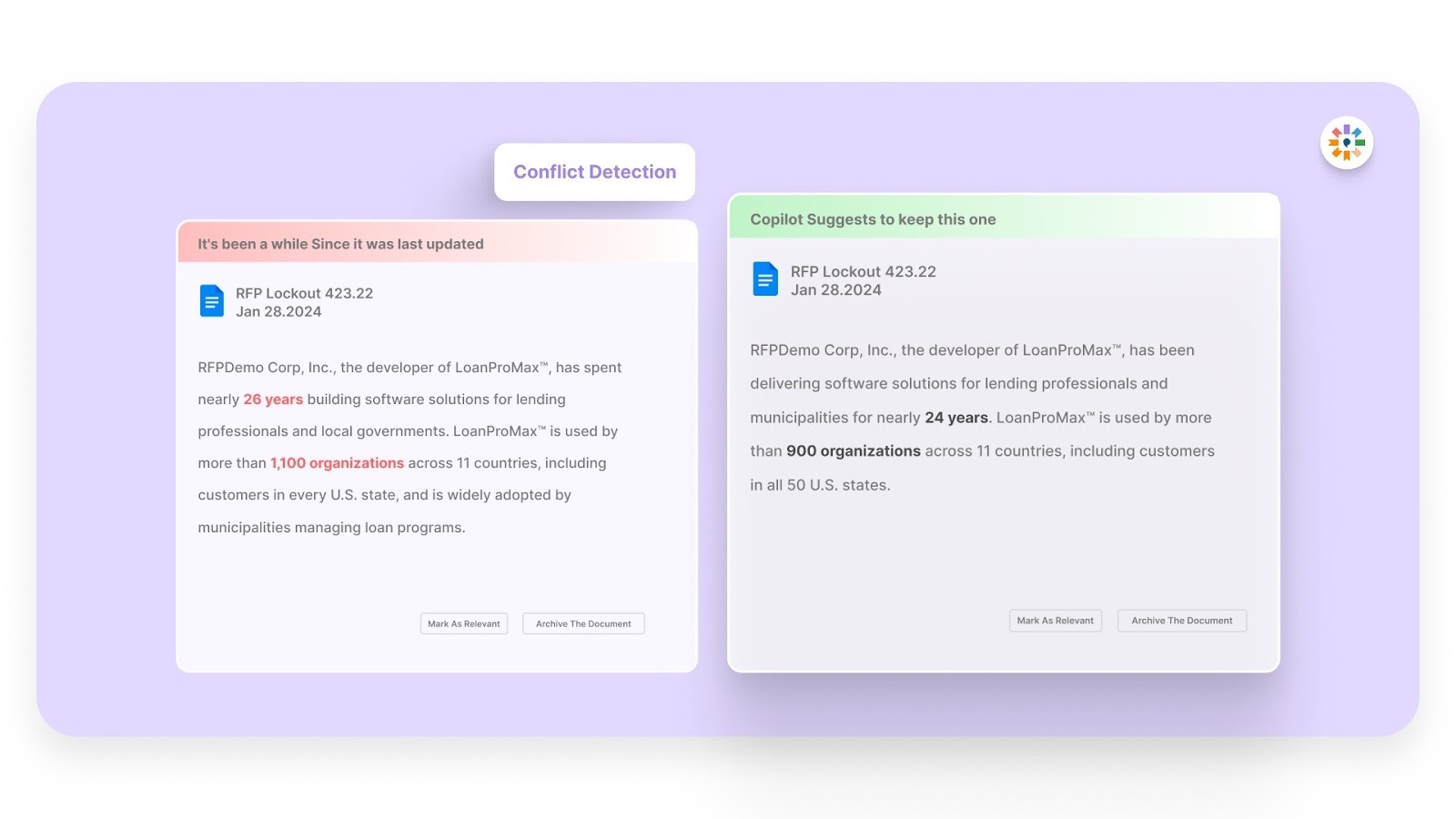
Other tools cannot detect internal contradictions across RFQs, proposals, and security questionnaires. Inventive flags conflicting statements instantly, such as mismatched staffing allocations, inconsistent project metrics, or certification discrepancies. This prevents teams from submitting risky or inconsistent responses that can block shortlist selection.
Outdated Content Detection
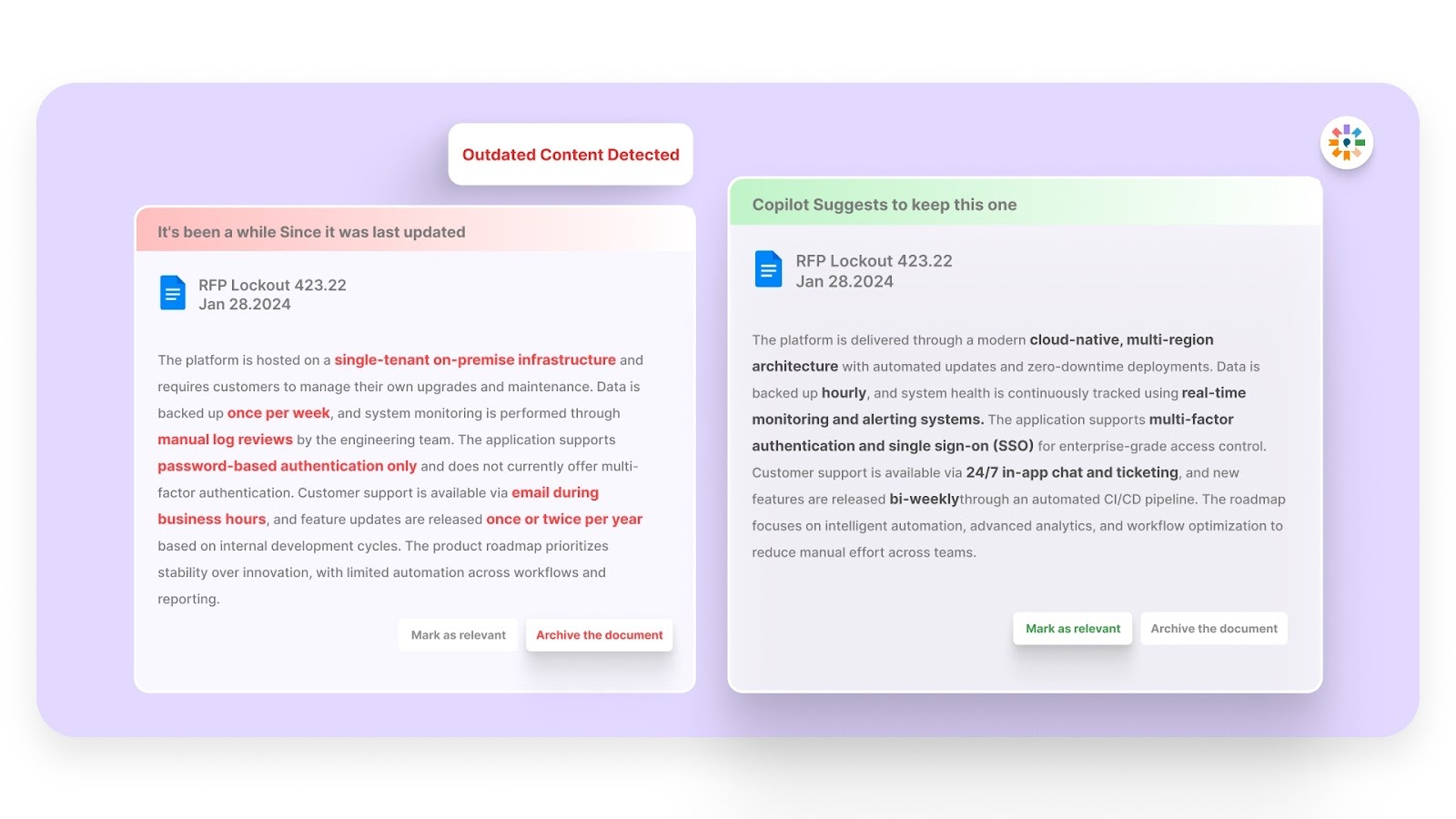
Most firms maintain large libraries of past project sheets, resumes, licenses, and insurance certificates. Over time, some of this information becomes outdated or non-compliant. Inventive automatically catches stale content before submission. This drastically reduces the time spent on manual review and rewriting.
2X Quality Response
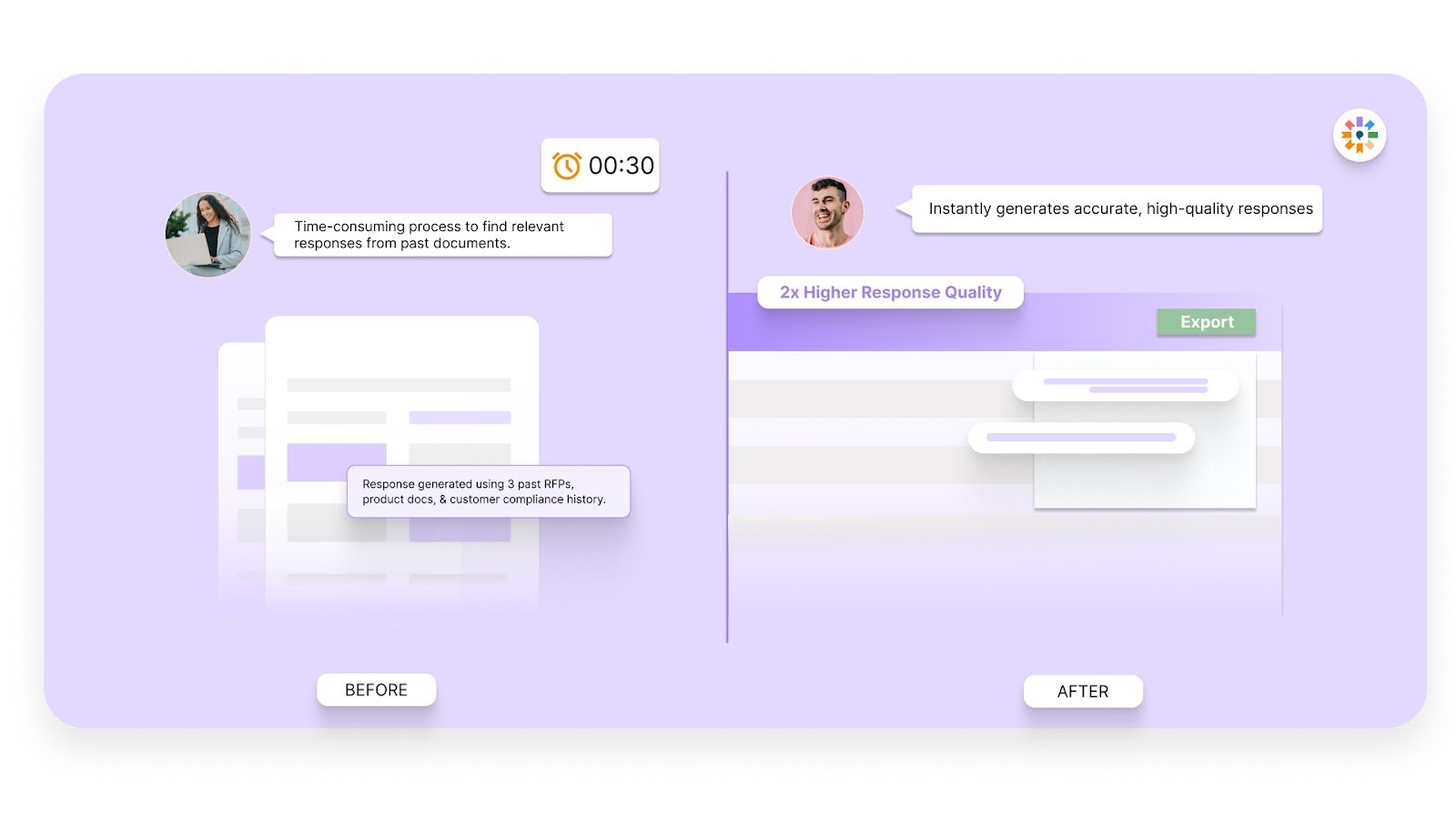
With its multi-agent AI system, Inventive offers strategic answers that interpret the true intent behind qualification questions. Responses are accurate, clear, and complete, helping reviewers verify requirements quickly and score submissions with confidence.
Simple and Easy to Use UI and UX
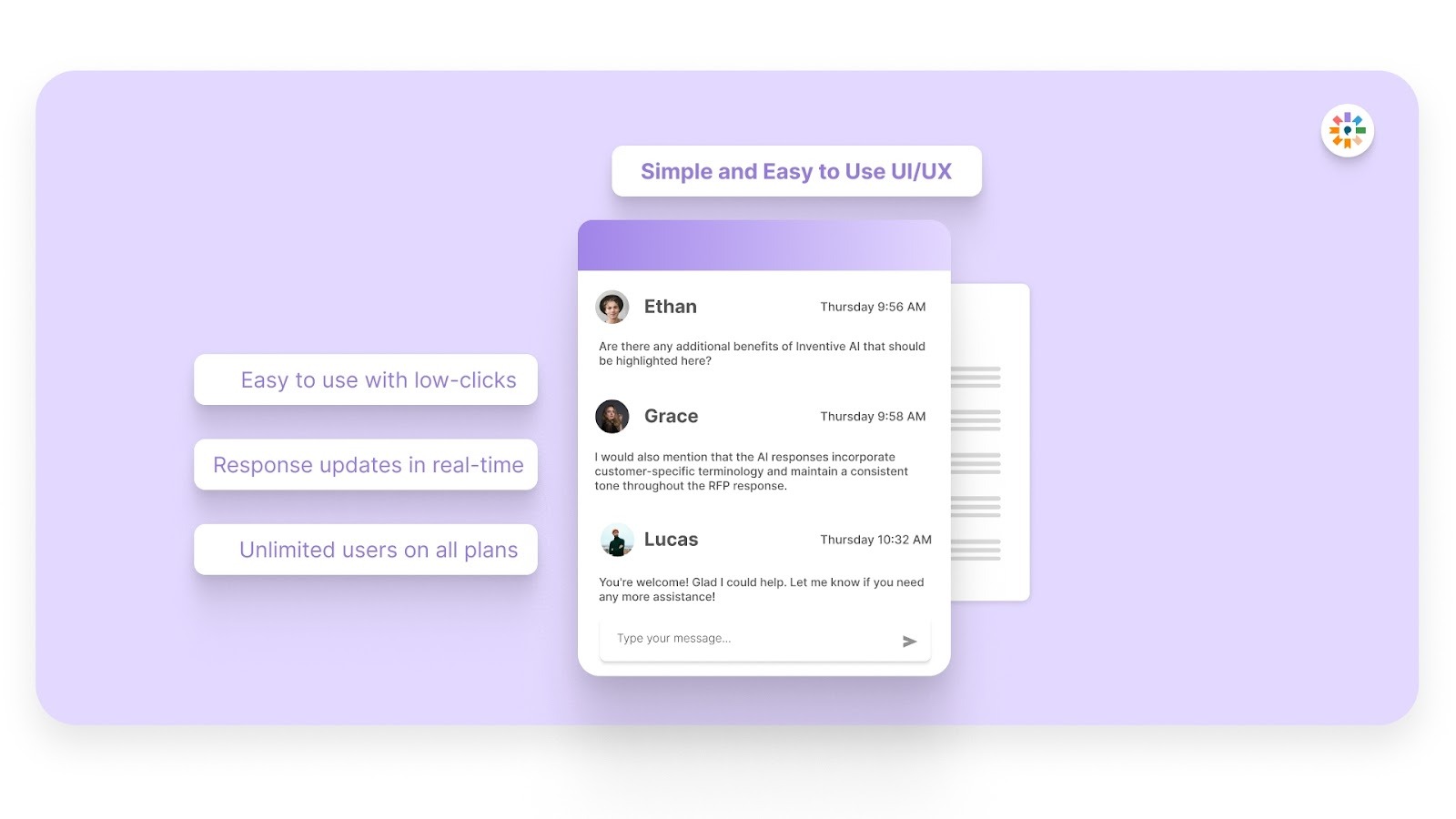
Inventive maintains a 100% adoption rate among its current customer base and is ranked the easiest-to-use RFP software on G2. Qualification and proposal teams can adopt the platform quickly, even if they are new to AI-based response tools.
FAQs
1. How long should an RFQ response be?
Most RFQ responses range between 10 and 25 pages unless a limit is specified. Shorter submissions score faster if all requirements are clearly addressed.
2. How many vendors are usually shortlisted after an RFQ?
Most organizations shortlist three to five firms, though large public procurements may shortlist more if scores are close. The number is typically stated in the RFQ instructions.
3. What makes an RFQ response non-responsive?
Submissions are rejected when they ignore page limits, miss mandatory forms, lack signatures, fail to acknowledge addenda, or do not follow the requested structure. Even strong firms can be excluded for formatting or compliance mistakes.
4. Should resumes be tailored for each RFQ submission?
Yes. Highlight only relevant project experience, certifications, and roles that match the requested service. Generic resumes make evaluators question whether the team truly fits the project.
5. Can a firm submit additional information beyond the requested sections?
Only if allowed in the instructions. Many RFQs impose strict page limits and scoring rules, so extra marketing material may be ignored or cause the submission to be marked non-compliant.

.avif)