What is an RFI? A Complete Guide to Request for Information (RFI) for Businesses
Learn what an RFI is, how it benefits businesses, key components, and best practices for issuing and responding to RFIs. Get expert insights and templates.
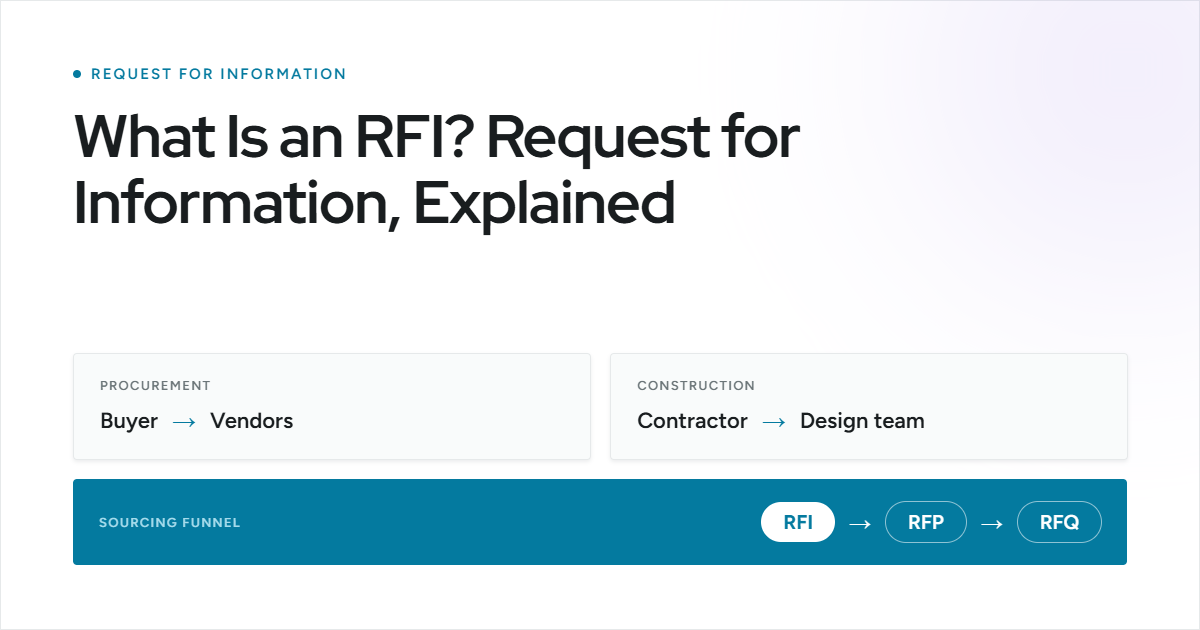
RFI stands for Request for Information, and it is an important tool in the context of business and procurement. It is used for the collection of information, for clarification of details, and to pave the way for calculated decision-making. RFIs also allow organizations to compare different vendors available. Using RFIs, businesses can explore market status and new innovative solutions, which can help in generating a clear future plan.
RFIs also indicate the willingness of organizations to collaborate. They demonstrate that organizations are open to external inputs. Also, it is the preliminary stage of procurement, so businesses need not rush into decision-making. They can make informed decisions after evaluating the available options.
This blog covers a wide range of details about RFIs. It starts with a brief introduction of RFIs and the areas where they are important. This section is followed by a detailed explanation of the components of an RFI. This will help you to understand an RFI in depth. Deep into the blog, you’ll read about the method to issue an RFI, and at the end, you will read about some tips on how to respond to RFIs. This blog is a complete solution for anybody wanting to learn about RFIs.
What is an RFI?
An RFI is a formal process that is used to structure an organizational process through which information is gathered from potential vendors or suppliers. This marks the initial step of the purchasing process to enable the company to get familiar with the solutions and services that exist and then present a more detailed request for a proposal.
RFIs are not binding documents and are typically used for fact-finding and exploration rather than decision-making or contracting. RFIs are usually applied in the preliminary procurement process of an organization that has not yet defined its needs and is only asking for alternatives. RFIs guide an organization to decide whether it should pursue a formal RFP process and which alternative to consider.
For example, if a retail major wants to replace its POS system, then it would issue an RFI to several POS manufacturers. In the RFI, the experience of the vendor in the retail domain, the features of the POS system, and the integration capabilities of the system with the existing inventory management systems will be sought.
Strategic Benefits of Using an RFI
VPs and proposal managers are focused on efficiency, decision-making, and competitive advantage. This section will highlight why RFIs are essential beyond just information gathering. A well-crafted RFI is more than just a fact-finding tool; it is a strategic asset for organizations looking to optimize procurement and vendor evaluation. Key benefits include:
- Risk Mitigation: An RFI helps organizations avoid costly mistakes by ensuring a clear understanding of vendor capabilities before proceeding with an RFP or RFQ.
- Market Intelligence: By collecting insights from multiple vendors, companies gain a broader perspective on industry trends, pricing structures, and innovation.
- Stronger Negotiation Leverage: A well-structured RFI allows procurement teams to benchmark pricing and service offerings, improving their negotiating position during later stages.
- Operational Efficiency: Organizations can streamline their procurement process by eliminating vendors that do not meet their requirements early in the process.
This strategic approach ensures that decision-makers are not wasting time evaluating vendors who are not aligned with their business objectives.The Role of RFIs in a Broader Procurement StrategyAn RFI is not an isolated document—it plays a crucial role in shaping an organization’s long-term procurement and partnership strategy. It serves as the foundation for:
- Vendor Relationship Management: RFIs help businesses identify not just qualified vendors but strategic partners for long-term collaboration.
- Innovation and Competitive Benchmarking: By issuing RFIs regularly, companies stay updated on emerging solutions and best practices in their industry.
- Data-Driven Procurement: RFIs allow procurement teams to make objective, data-driven decisions rather than relying on assumptions or limited vendor outreach.
For organizations operating in fast-evolving industries, integrating RFIs into a continuous procurement intelligence process can provide a competitive advantage.
RFI vs. RFP vs. RFQ: Key Differences
Many people confuse RFIs with RFPs (Requests for Proposals) and RFQs (Requests for Quotations). Here is how they differ:
To have an in-depth understanding of RFP and RFQ, access these blogs.Key Components of an RFIA well-structured RFI ensures clarity and increases the likelihood of receiving useful responses. Below are the essential components:
1. Introduction
- The introduction of an RFI lays down the base for the rest of the document. It provides relevant context for the vendors, allowing them to understand the positioning of the organization. A brief introduction, industry size, and other key details are added in the introduction section. Furthermore, it clearly communicates the actual purpose of the RFI and complementary objectives. Also, an introduction is considered relevant if it highlights the specific problem or opportunity the organization is presenting. An introduction allows vendors to properly know what they are getting into.
2. Scope of Inquiry
- Scope of inquiry specifies the domain of an RFI and defines the areas where the RFI will be positioned. This ensures that there is no misunderstanding between the organization and vendors. This section specifies the technical specifications, capabilities, or services that the organization is interested in. It might include detailed descriptions of desired features, compliance requirements, or functional expectations. For example, an organization might seek information about a vendor’s experience in handling projects of similar scale or complexity. By clearly outlining the scope, the organization ensures that responses remain relevant and focused, avoiding unnecessary or extraneous details.
3. Questions for Vendors
- The questions mentioned in an RFI are of main importance to both the issuing organization and the submitting vendor. These questions extract useful information from vendors and present it to organizations. These questions should be precise and to the point, without any general or unnecessary ask. Questions should be clearly suited to an organization's need and aim. Questions need to clearly fit an organization's needs and objectives. The questions may include the core competencies of the vendor, previous project experience, and the unique value propositions.
- Sample Questions
- What level of experience does your company have in implementing POS systems for large retail chain operations?
- What are some key differences in this POS system compared with similar rivals?
- What can you include as a summary of your implementation process, and what is the average length for a typical implementation?
- How do you connect to live inventory management software in your business system?
4. Submission Guidelines
- Submission guidelines should be clearly mentioned in an RFI. This allows the submissions to be punctual and standardized. This section may contain guidelines like favorable file formats such as PDF, DOC, or any other. Also, this section includes a clear deadline for response submission. Additionally, submission guidelines should provide contact information for any questions or clarifications, ensuring that vendors can seek assistance if needed.
5. Next Steps
- The next steps section of an RFI provides vendors with a roadmap of what will happen after they submit their responses. This might include information about the timeline for evaluating submissions, criteria for shortlisting vendors, and whether subsequent stages such as RFPs or RFQs will follow. With this, an organization manages the expectations of the vendor and ensures that the process is transparent. For example, respondents could be given advance notice of whether shortlisted bidders would be required to present further detail in proposals or participate in discussions. It keeps the interested vendors engaged and informed with further steps.
How to Write an Effective RFI
Crafting an effective RFI is essential for achieving your objectives. Here are some best practices:
1. Define Your Goals Be clear about what you want to achieve. Are you exploring new technologies? Evaluating vendor capabilities? Understanding pricing structures? Defining your goals will help you create targeted questions.
2. Be Specific Ambiguity leads to unhelpful responses. For example, instead of asking, “What services do you offer?” ask, “Can you provide cloud-based solutions for enterprise-level organizations?”
3. Maintain Consistency Use a consistent format and structure. This makes it easier to compare responses and extract insights.
4. Encourage Transparency Encourage vendors to provide honest and detailed answers by assuring them that the RFI is not a commitment to purchase.
Common Challenges in RFI Creation and How to Overcome Them
Many organizations struggle with RFIs due to unclear objectives or inefficient processes. This section helps decision-makers refine their approach.While RFIs are valuable, they can become ineffective if not structured properly. Common challenges include:
- Lack of Clarity in Objectives Organizations sometimes issue RFIs without a clear understanding of what they want to achieve, leading to vague or irrelevant responses. Define key business objectives before drafting the RFI. Align internal stakeholders to ensure the RFI serves its intended purpose.
- Overly Broad or Generic Questions Generic RFIs lead to superficial responses that do not provide actionable insights. Ask specific, well-defined questions that align with business needs and procurement goals.
- Low Response Quality from Vendors If vendors are unclear on expectations, they may submit incomplete or misaligned responses. Provide detailed submission guidelines and examples to help vendors tailor their responses effectively.
- Failure to Act on Insights Organizations sometimes gather RFI responses but fail to use the insights effectively in the next stages. Establish a structured evaluation framework to compare vendor responses and determine next steps.
Best Practices for Optimizing the RFI Process
Executives want actionable strategies to improve efficiency and decision-making. This section provides a structured approach.To maximize the effectiveness of an RFI, organizations should follow these best practices:
Align Internal Stakeholders Early – Ensure that procurement teams, sales leaders, and key decision-makers collaborate to define RFI objectives.
Use Standardized Templates – Establish a consistent format for RFIs to streamline vendor evaluation.
Set Clear Evaluation Criteria – Define how responses will be assessed to avoid subjective decision-making.
Maintain Transparency with Vendors – Provide clear submission guidelines, deadlines, and expectations.
Integrate Technology – Leverage AI-driven tools to automate response analysis and extract meaningful insights faster.
By following these principles, organizations can ensure that RFIs are structured efficiently, yielding high-quality responses that support strategic procurement decisions.
Tips for Vendors Responding to RFIs
If you’re a vendor, responding effectively to an RFI can increase your chances of being shortlisted for future opportunities. Here’s how:
1. Understand the Client’s Needs Carefully read the RFI to understand the organization’s goals and tailor your responses accordingly.
2. Provide Clear and Concise Answers Avoid vague or overly technical language. Provide relevant details and examples to demonstrate your expertise.
3. Highlight Unique Value Propositions Emphasize what sets you apart from competitors, such as innovative solutions, proven results, or cost advantages.
4. Meet Deadlines and Follow Instructions Ensure that your response is submitted on time and complies with all formatting and content guidelines.
Conclusion
An RFI is much more than a document; it is a strategic tool to guide businesses in the complex decisions and opportunities. RFIs allow organizations to collect necessary insights in pursuit of new possibilities, assess the market landscape, and find the best partners to meet their needs. It helps decision-makers avoid costly mistakes as they proceed.
For vendors, RFIs offer a platform to showcase their expertise and build trust with potential clients. A thoughtful and well-crafted response can pave the way for future collaborations and solidify a reputation for reliability and innovation. It’s a chance to stand out in a competitive market.In a rapidly evolving business environment, RFIs play a crucial role in aligning organizational goals with external expertise. By mastering the art of creating and responding to RFIs, businesses and vendors alike can pave the way for success, making informed choices that drive long-term value.Using inventive.ai, you can save time while reducing errors; you can save up to 70% of your response time. It's time to upgrade your old processes and use the power of AI to revolutionize your RFP responses and eliminate the manual, repetitive tasks and focus on crafting high-quality, tailored proposals that stand out with inventive.ai.
.avif)