Why AI-Native RFP Software is Replacing Legacy Tools Like Responsive and Loopio


Most teams adopting RFP automation software discover the same uncomfortable truth: the tool promises to save time, but the library demands it back.
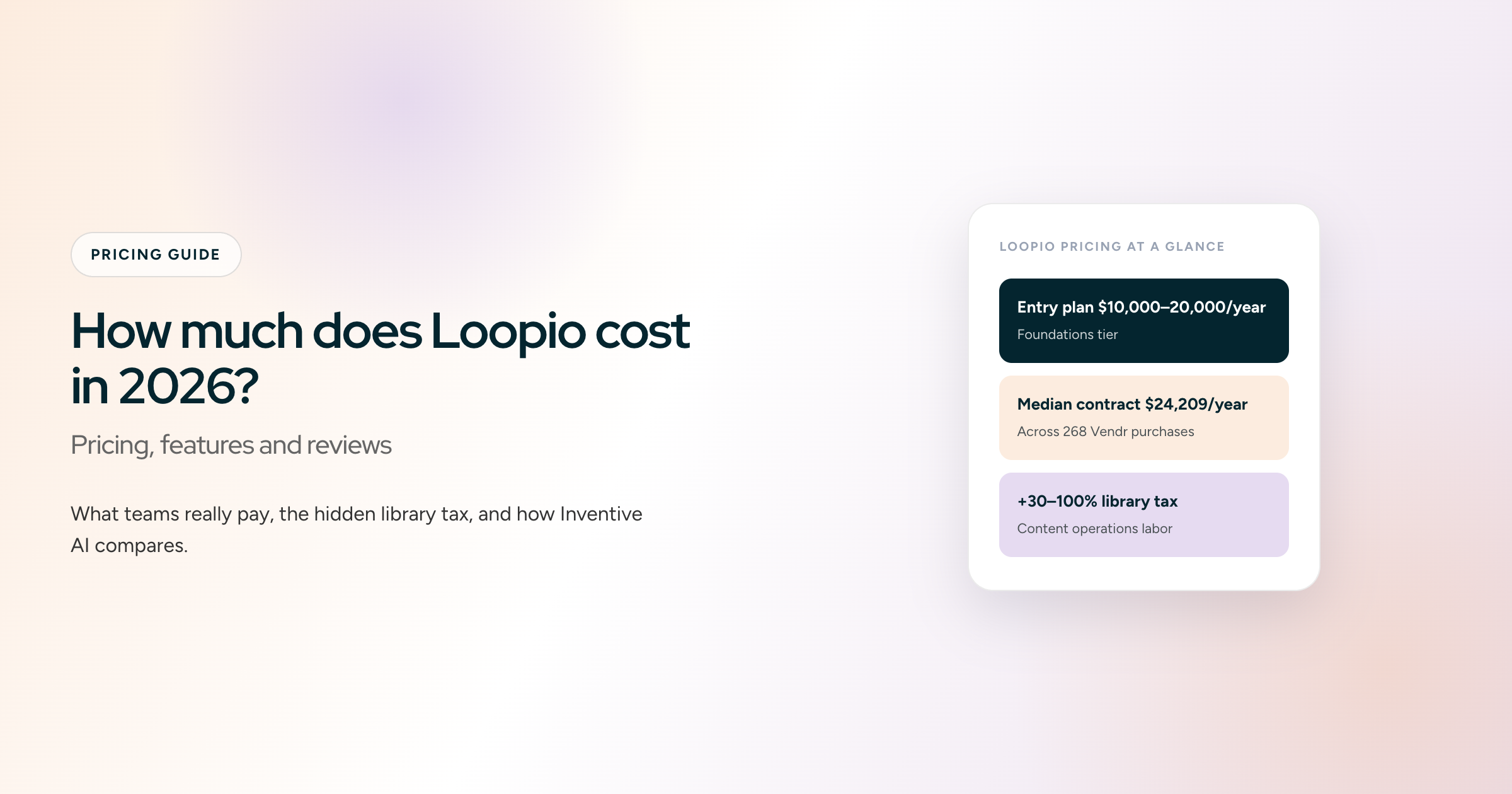
This is the "library tax," the invisible overhead that accumulates every time a team member manually tags a new answer, hunts down an outdated response, or audits content that quietly expired months ago. According to the Association of Proposal Management Professionals, legacy RFP software users spend up to 40% of their time managing and tagging content in stale knowledge libraries rather than actually writing proposals. This statistic aligns with industry-recognized RFP benchmarks, highlighting the inefficiencies in legacy systems.
The stale content cycle is self-reinforcing. Outdated answers get reused because no one has time to update them. That erodes response quality, which forces manual review on every submission, leaving even less time for library upkeep. Round and round it goes.
The contrast between the marketing promise and the daily reality is striking. Legacy platforms were built on the premise that a well-organized content library would accelerate responses. In practice, maintaining that library becomes a second job. This scales poorly as a company's products, pricing, and compliance posture change. Teams exploring faster ways to respond to RFPs often find that the bottleneck isn't writing speed at all; it's the weight of the system underneath.
That weight is largely architectural, which is exactly why bolted-on AI fixes are falling short.
Why Bolted-On AI is Not Enough for Modern Proposal Teams

Comparison: Legacy vs. AI-Native RFP Architecture
Source: Gartner Research
Legacy proposal automation software with an AI layer is still a legacy tool. The underlying architecture hasn't changed, only the interface has. What vendors often call "AI-powered" is frequently a thin wrapper around a general-purpose language model, grafted onto a rigid database built for keyword retrieval. The result looks modern but behaves like the system it was before.
Three structural limitations expose the gap:
Clara Shih of Salesforce AI emphasizes the urgency of this transformation: "Businesses that don't deploy AI and data to help them innovate in everything they do will be at a disadvantage." As Forrester Research notes, "The shift from 'AI-enabled' to 'AI-native' means moving from a search-and-paste workflow to a generative workflow where the system understands the intent of the question." That distinction, intent understanding, is precisely what contextual AI engines are built to deliver.
The AI-Native Advantage: Contextual Engines vs. Keyword Search

AI-native platforms don't search your content library; they understand it, and that distinction defines everything about output quality.
Legacy tools rely on rigid database structures that require clean, tagged, pre-formatted content to return usable results. Feed them a raw PDF deck or unstructured case study, and they'll either miss the content entirely or surface irrelevant snippets. AI-native platforms built for generative AI for RFP responses take the opposite approach. Contextual engines ingest unstructured data directly, reading PDFs, slide decks, and prior proposals without manual pre-formatting. According to G2 peer insights, AI-native platforms achieve 10X faster drafting speeds as a direct result.
Architectural Debt in Legacy Systems
Legacy vendors like Loopio and Responsive struggle with retrofitting intelligence due to what is known as 'Architectural Debt.' This term describes the limitations imposed by outdated infrastructures that are not designed to accommodate advanced technologies like AI. Thus, attempts to integrate AI features often result in inefficient and cumbersome systems that fall short of modern requirements.
Human-in-the-Loop Model
AI-native tools not only generate high-quality first drafts but also leverage a 'Human-in-the-Loop' model. This approach ensures that while AI handles the initial drafting, human experts refine the content to align strategically with business objectives, enhancing both accuracy and relevance.
The draft quality gap is equally significant. Legacy tools assemble patchwork answers; AI-native systems generate coherent, proposal-ready responses that read as though a senior writer crafted them. Explore how modern platforms compare across these capability dimensions.
That continuous learning loop, where every submitted bid silently trains the model, points directly to a deeper content management challenge worth examining next.
Automated Content Management: Ending the Manual Tagging Era

Stale content libraries are the silent killer of RFP response automation, and AI-native platforms solve this at the architectural level, not through workarounds.
The problem with legacy tools is that keeping a content library accurate requires constant manual effort. Someone has to flag outdated answers, delete duplicates, and re-tag reorganized content. In practice, that never happens consistently. Proposal managers spend hours reconciling conflicting versions of the same boilerplate, and outdated compliance language slips through undetected. The library that was supposed to save time becomes a liability.
The AI solution changes this dynamic entirely. AI-native platforms like Inventive AI ingest raw documents: contracts, past proposals, product specs, and generate responses instantly without requiring anyone to manually curate a structured library. The system detects duplicate or conflicting information automatically and surfaces the most current, relevant content. Rather than siloed folders organized by whoever built the library years ago, teams get a Unified Knowledge Hub that reflects the actual state of the business. For teams managing multiple integrations across tools, real-time syncing means content stays compliant as source documents update.
The resulting freedom is significant for proposal managers. Administrative overhead drops sharply when AI handles content hygiene. That reclaimed time doesn't just reduce burnout; it creates space for the kind of strategic personalization that actually moves win rates. Modern automation can reduce proposal creation time by 83–96%, dropping from 25 hours to under 5 hours, which further emphasizes the efficiency gains.
Improving Response Quality and Win Rates by 50%

AI proposal software doesn't just accelerate output; it fundamentally raises the quality ceiling that manual processes can never reach. When drafting happens in hours rather than days, proposal teams reclaim the time needed for genuine strategic personalization: tailoring executive summaries, adjusting value propositions by vertical, and crafting compliance narratives that directly mirror the buyer's stated priorities.
Compliance is where legacy tools consistently leak deals. AI-native platforms cross-reference every RFP requirement against the draft automatically, flagging missing sections, mismatched terminology, and unanswered sub-questions before submission. The result is responses that score higher on evaluation rubrics, not by accident, but by design.
That quality differential translates directly to outcomes. Organizations using AI-native platforms report a 50% increase in win rates attributable to higher response quality and compliance, a number that reframes AI adoption from an efficiency play into a revenue strategy.
The compounding benefit is bid volume capacity. Strategic benefits teams typically realize include:
Explore how AI transforms RFP responses end-to-end to see these gains in practice. As win rates and volumes both rise, the next challenge becomes choosing the right platform, and not every tool delivers equally.
Evaluating Loopio & Responsive Alternatives: What to Look For in 2026

Not all Loopio alternatives are built equal; the gap between a legacy tool with an AI badge and a genuinely AI-native platform can directly cost you deals.
Before committing to a new platform, run every contender through this checklist:
For a side-by-side breakdown of leading platforms on these criteria, this comparison of AI-driven RFP tools is a useful starting point.
Few AI Native Alternatives
Inventive AI
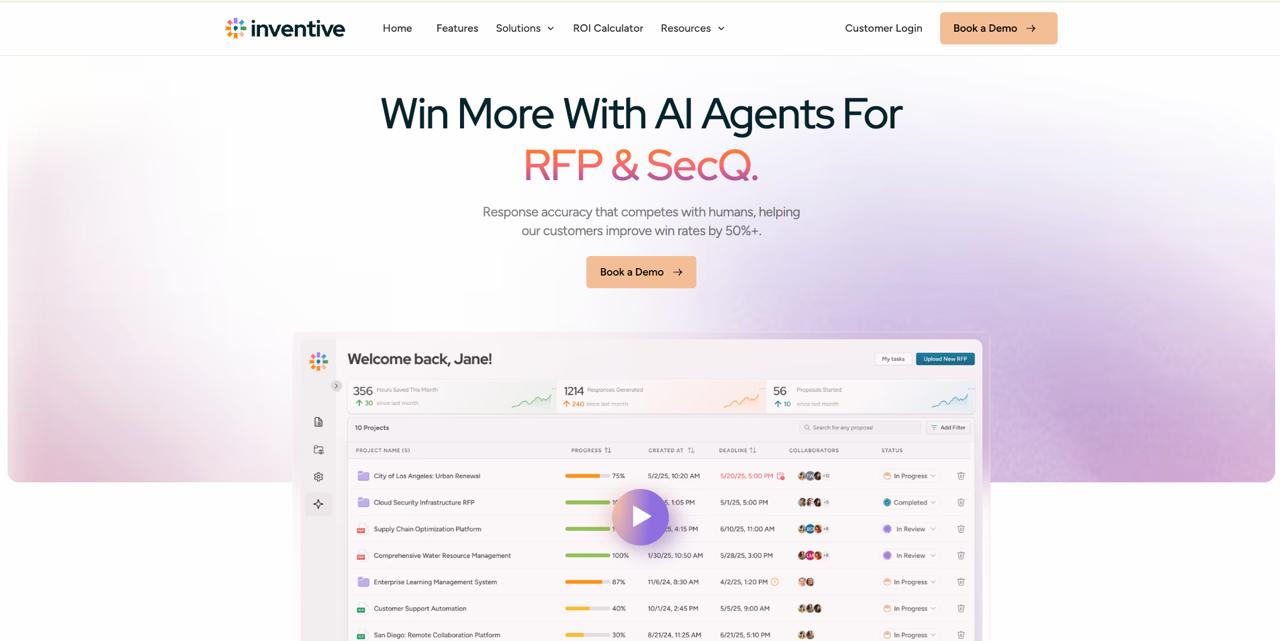
Inventive AI is built for enterprise teams ready to eliminate the "library tax" for good. Using autonomous AI agents, the platform processes complex PDFs and Excel files end-to-end without manual intervention. Inventive AI users have reported 90% faster RFP responses and better response quality than before AI, resulting in 2x more wins. Unlike legacy RFP automation software that requires constant manual tagging, Inventive’s AI Content Manager identifies and resolves outdated or conflicting data across your Unified Knowledge Hub automatically. This shift from manual curation to autonomous management reduces knowledge maintenance time by 70%. Designed for rapid deployment, the intuitive UI allows entire global teams to fully adopt this AI proposal software in just one week.
Heyiris
Heyiris focuses on speed and an intuitive user experience. It is optimized for sales teams that need to reduce "time-to-first-draft". By prioritizing a sleek interface and rapid AI synthesis, it serves as a high-velocity RFP response automation tool for organizations that handle high volumes of standard questionnaires and need to eliminate the friction of manual search-and-paste workflows.
1up
1up leverages AI engine to act as an automated sales assistant. It excels at synthesizing information across disparate internal sources without requiring a pre-formatted content library. For teams looking for AI proposal software that can handle technical depth, 1up is known for its high accuracy in answering complex compliance questions by understanding the underlying intent rather than just matching keywords. Its intent-based mapping feature further enhances its precision and effectiveness.
Making the right choice here sets the stage for a smooth migration, which, despite common assumptions, may be far less painful than teams expect.
The Transition: Moving from Responsive & Loopio to an AI-Native Platform

Switching platforms feels daunting, but the actual migration to an AI-native tool is far less painful than teams expect.
For proposal teams weighing Responsive alternatives, the fear is understandable. Years of curated content, painstakingly tagged and organized, sits locked inside a legacy library. Walking away feels like abandoning hard-won work.
Here are the frustrations showing up repeatedly among proposal professionals ready to make the move:
"I've spent hundreds of hours tagging content that the tool still can't find when I need it."
"Our whole team avoids the library because updating it takes longer than just rewriting the answer."
"I want to ditch it, but I'm terrified of losing everything we've built."
These concerns are valid but largely obsolete with modern AI-native platforms. AI-native engines ingest your existing documents, past proposals, and unstructured data automatically, eliminating the need to manually rebuild a library from scratch. The system learns from what you already have.
In practice, intuitive interfaces mean most teams reach full productivity within days, not months. And the ROI arrives fast. Teams using AI-native platforms routinely report measurable time savings and higher-quality responses within the first 30 days.
Migration isn't the obstacle it once was. The real cost is staying put. Before exploring what all of this means for proposal leads, it's worth stepping back to consolidate the core lessons.