Win-Loss Analysis Template: Capture Feedback and Improve Sales Responses

Did you know that organizations with formal win‑loss programs can achieve higher win rates and revenue growth? It clearly shows that structured feedback from won and lost deals helps internal teams identify trends, evaluate performance objectively, and guide future sales and product strategies.
For vendors, win‑loss insights directly influence deal execution, proposal quality, and future opportunity targeting. Knowing how buyers interpret wins and losses, and preparing responses or utilizing insights in a structured way, is critical for improving win probability and strengthening client relationships.
In this blog, you will learn how organizations capture actionable deal feedback and how vendors can use a Win-Loss Analysis Response template to submit accurate, consistent, and impactful feedback.
Win-Loss Analysis Template: How Buyers Capture Insights to Improve Decisions
Download the win-loss analysis template to capture buyer feedback, understand decision factors, and document insights from closed opportunities.
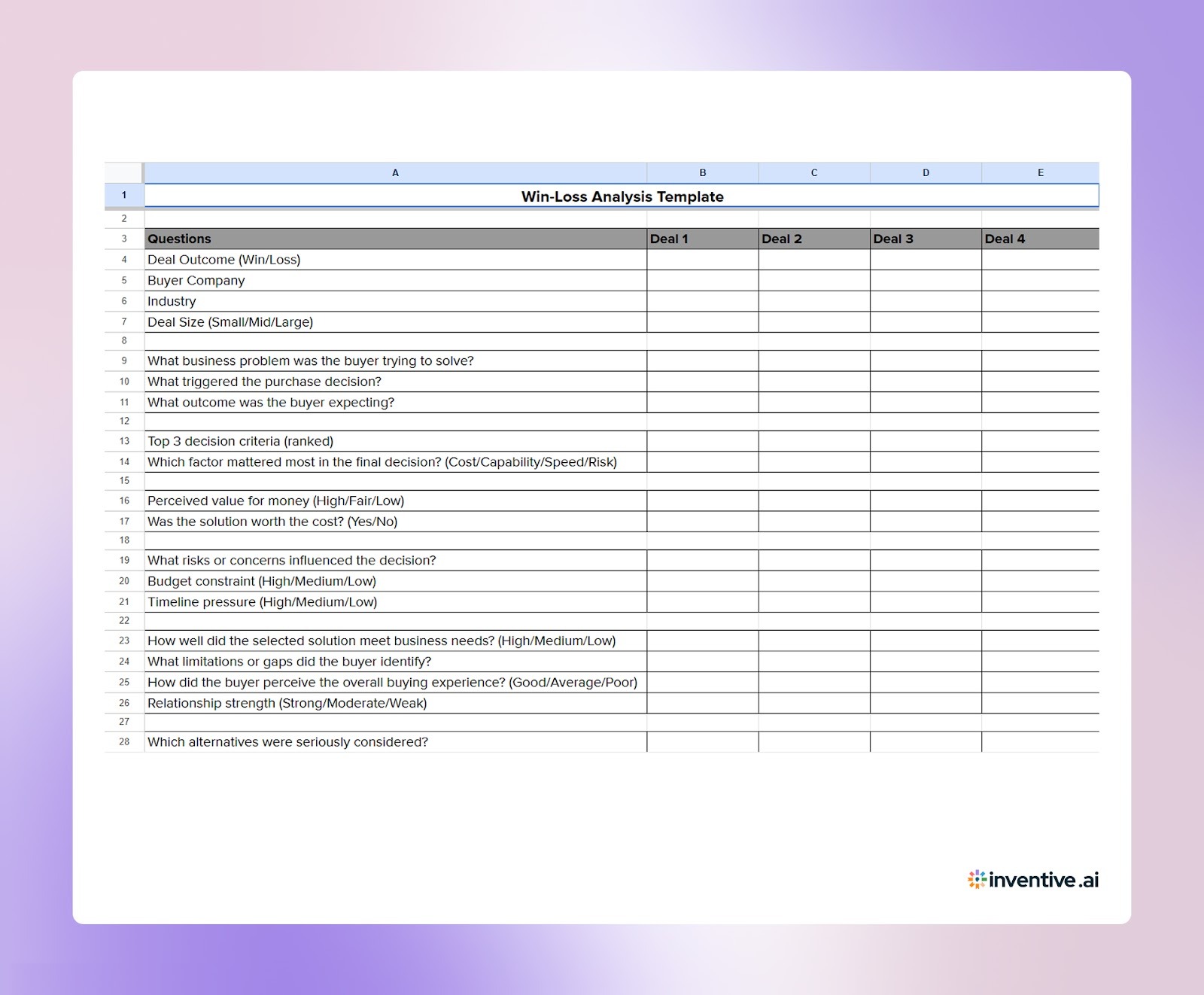
A structured win-loss analysis helps organizations understand how buyers evaluate solutions, what factors influence their decisions, and how they compare different vendors during the evaluation process. It captures direct buyer feedback about priorities, concerns, and decision criteria, helping reveal why customers choose one solution over another.
- Deal Context: This section captures the buyer, their industry, the deal size, and the outcome (win or loss). It provides a clear snapshot of the deal context, helping identify patterns across different buyer segments.
- Business Problem & Purchase Trigger: Here, the focus is on why the buyer initiated the purchase and what outcome they expected. Understanding the problem, urgency, and goals ensures insights are centered on the buyer’s actual needs and priorities.
- Decision Criteria & Evaluation: This section records the top factors the buyer considered, including the primary deciding element, perceived value, and cost justification. It highlights how buyers prioritize trade-offs and what drives their final choice.
- Risks, Constraints & Experience: Buyers often face limitations, including budget constraints, timeline pressure, and other risks. Capturing their concerns, experience with the solution, and relationship strength shows how external and experiential factors influenced their decision.
- Competitive Consideration: This area identifies the alternatives evaluated by the buyer and explains why the chosen solution was preferred. It reveals buyers' perceptions of market alternatives and the key differentiators that shaped their decisions.
- Reflection & Satisfaction: Post-decision reflection records satisfaction, willingness to choose the same solution again, and what the buyer would change about the solution. It provides honest feedback directly from the buyer, showing true sentiment and areas for improvement.
- Final Insights & Recommendations: The final part captures the decision reason in the buyer’s own words, key takeaways, and suggested improvements for pricing, product, or sales. It translates buyer feedback into actionable insights to better align in future deals.
- Segmentation & Competitive Analysis: Optional tables track patterns across buyer segments and win rates against competitors. This section provides a high-level view of buyer behavior trends, enabling teams to adjust strategies based on real buyer preferences.
Also Read: How to Master Vendor Selection and Boost Win Rates?
While buyers use win‑loss analysis to understand their decision-making, vendors use the same process to evaluate performance and improve future deals. Choose the template below that matches your industry type to capture insights consistently.
Win-Loss Analysis Templates for Vendors Across Different Industries
These templates allow vendors to systematically capture insights from completed deals. By recording performance, client feedback, and competitive positioning, teams can identify strengths, gaps, and actionable improvements for future opportunities.
1. Deal Performance Win-Loss Response Template
This template records the vendor’s view on each deal, including sales execution, proposal quality, and client engagement. It captures competitor activity, pricing alignment, and internal lessons learned. Teams can use this information to improve future deal strategies and track performance metrics.
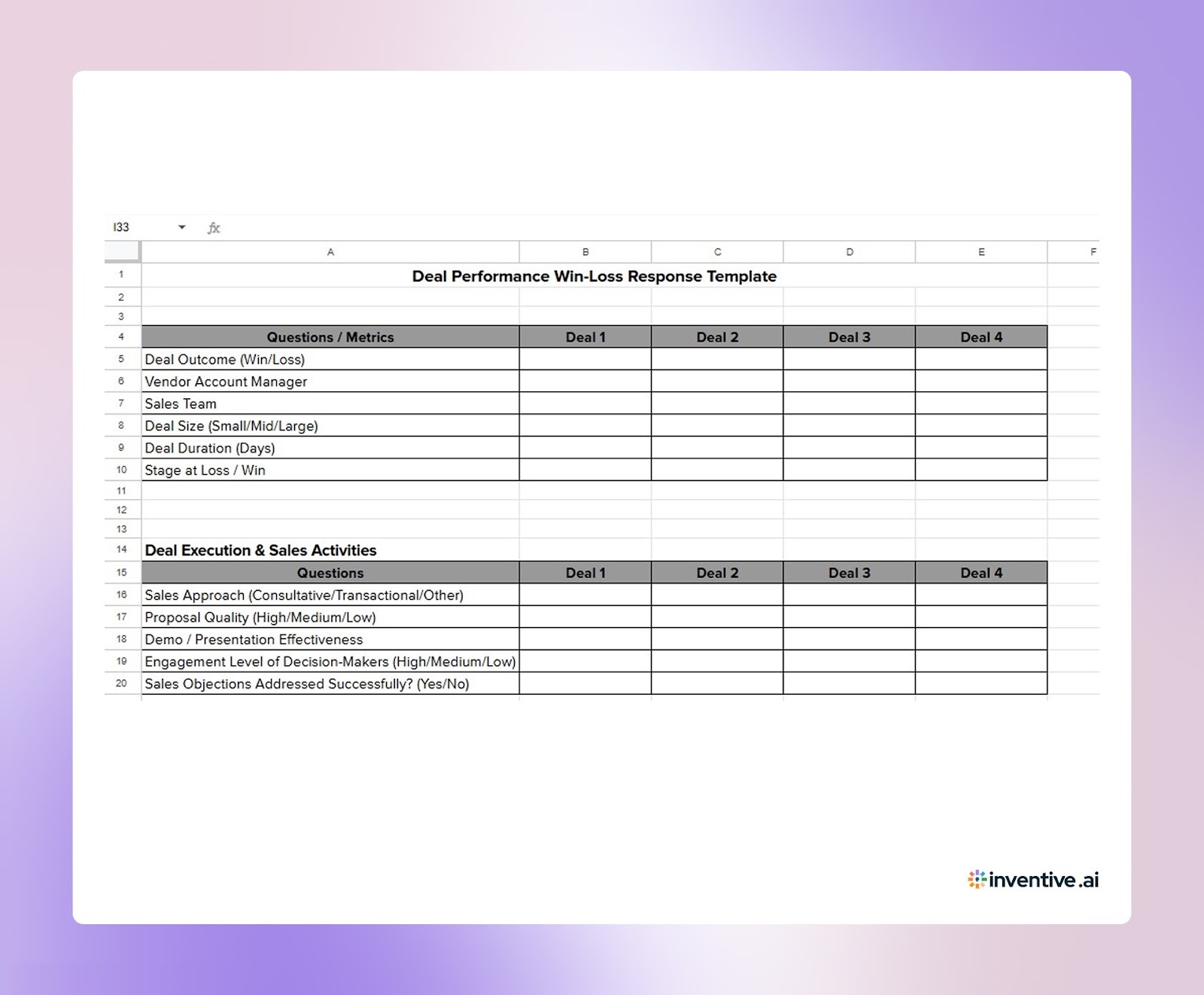
Download the deal performance template to record opportunity details, track outcomes, and document lessons learned from closed deals.

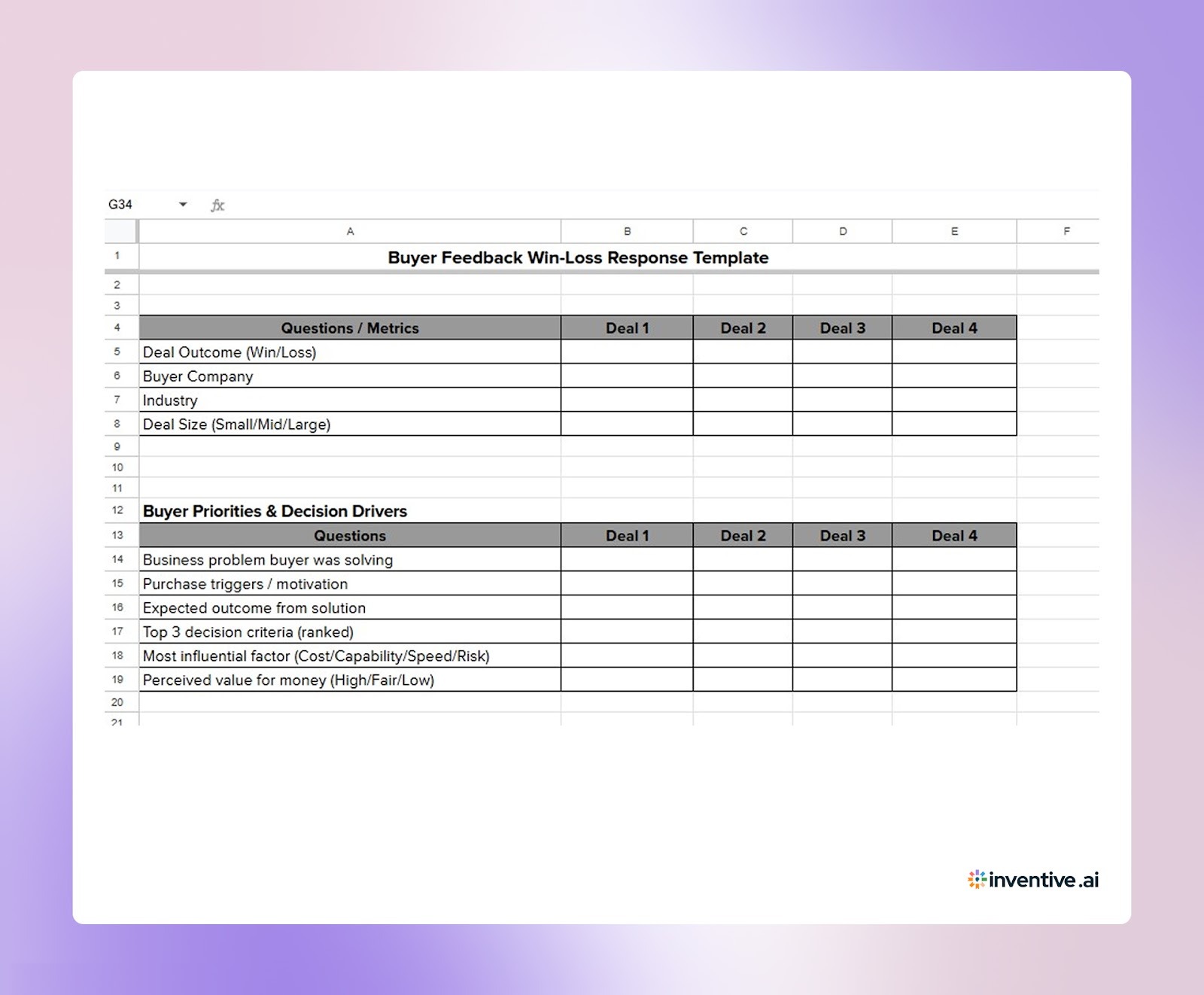
2. Buyer Feedback Win-Loss Response Template
This template allows vendors to capture structured feedback from buyers after a deal is closed, including what drove their decision, perceived value, satisfaction, and experience with the sales process. It helps teams understand buyer priorities, competitor comparisons, and areas for improvement.
3. Competitive Win-Loss Response Template
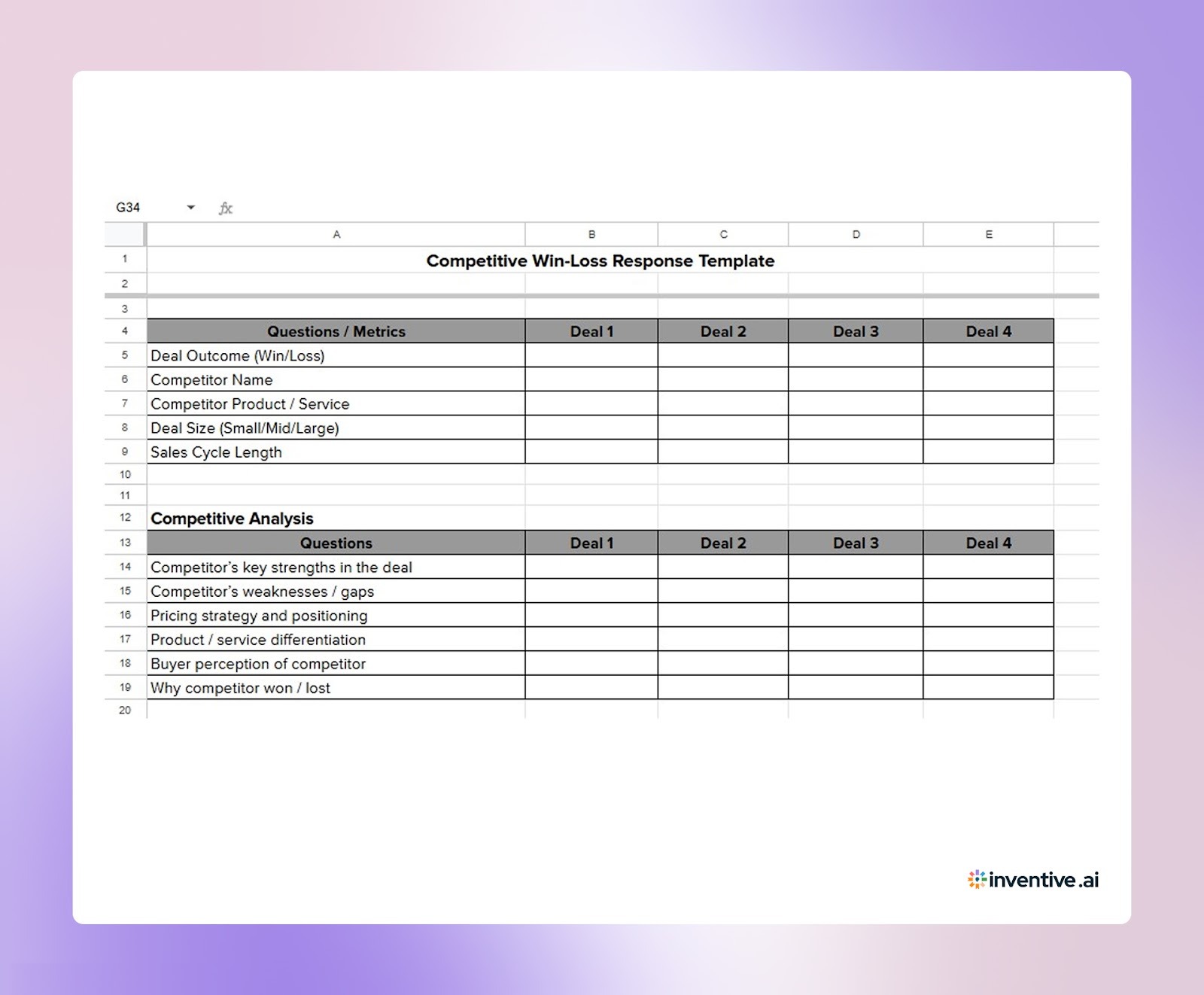
This template helps vendors analyze how competitors performed in closed deals, capturing win/loss trends, pricing strategies, product positioning, and buyer preferences. Teams can use this information to benchmark performance, identify strengths and weaknesses against competitors, and refine future sales and marketing strategies.
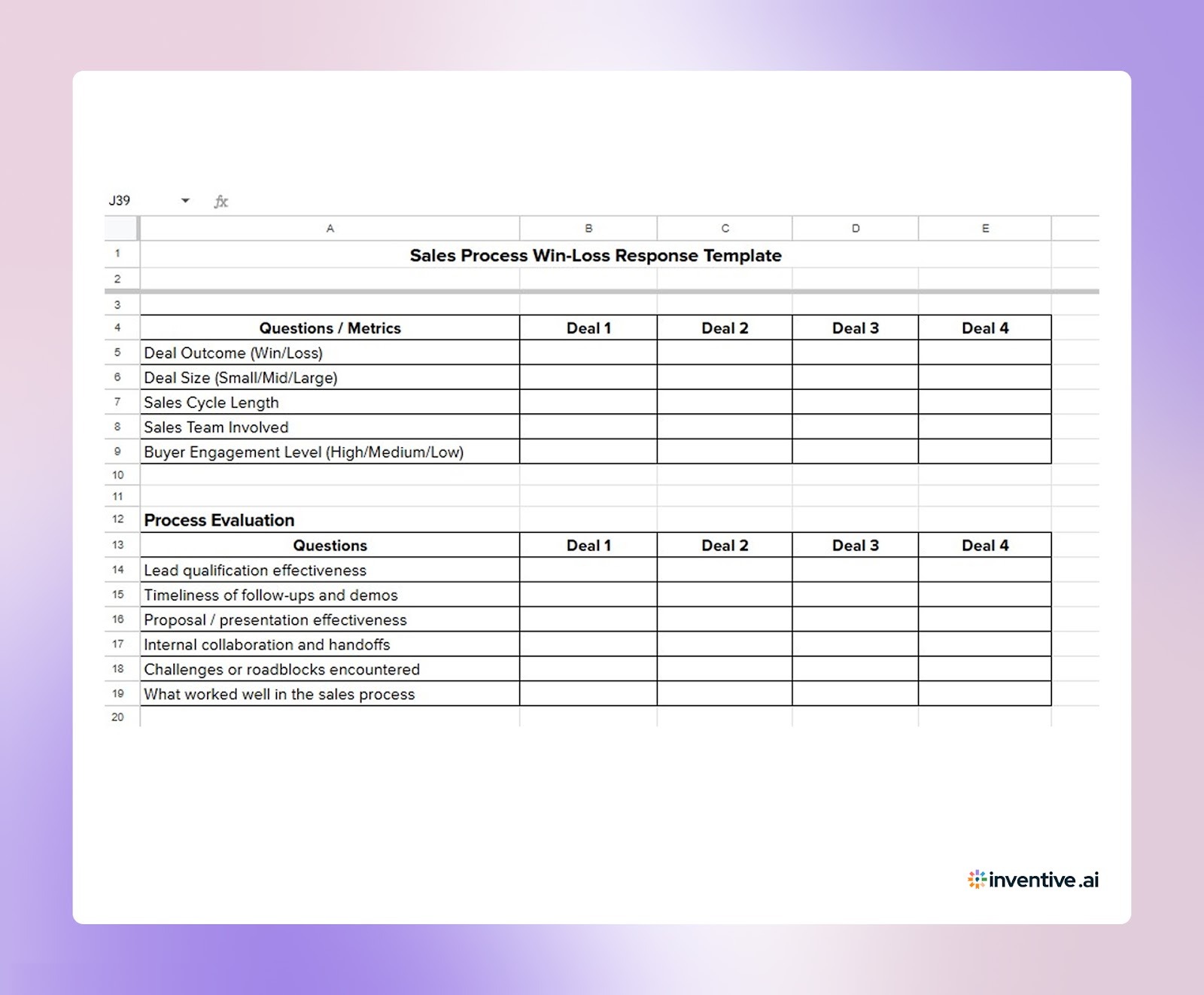
4. Sales Process Win-Loss Response Template
This template allows vendors to analyze their internal sales process for each deal, identifying what worked, where delays or gaps occurred, and how effectively the team engaged with the buyer. It helps teams optimize sales steps, improve deal execution, and enhance alignment between sales, marketing, and product teams.
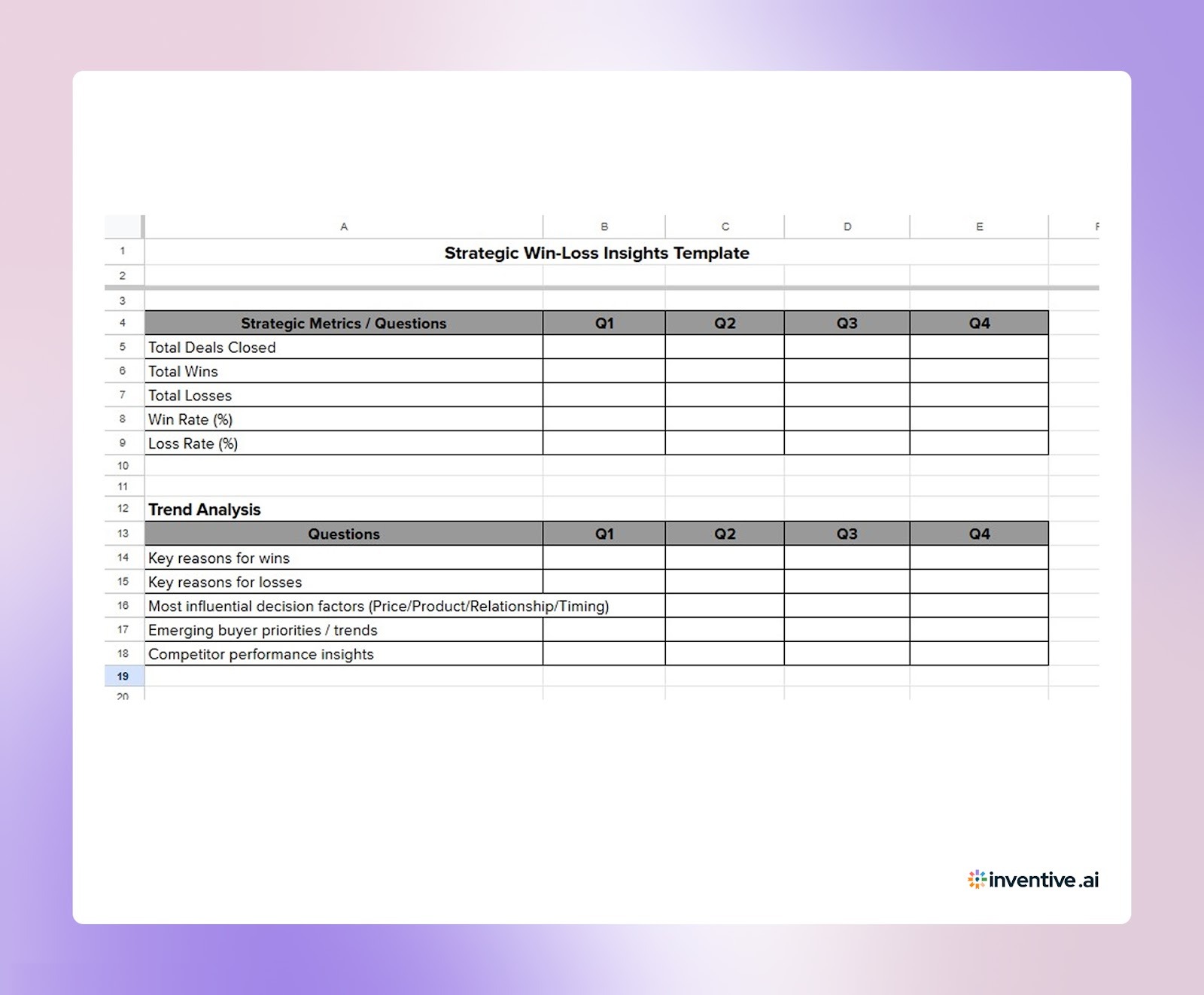
5. Strategic Win-Loss Insights Template
This template helps vendors analyze trends across multiple deals, identifying strategic patterns in wins and losses, market dynamics, and emerging buyer priorities. It enables teams to refine overall sales strategy, prioritize high-impact opportunities, and align product, marketing, and sales efforts with market needs.
Even with a structured Win-Loss Analysis Template, vendors may struggle to capture all insights from deals, missing key lessons that could improve future performance.
Win-Loss Analysis Gaps Vendors Should Address
Win-loss analysis provides valuable insight into how buyers evaluate solutions, but many vendors struggle to translate deal outcomes into clear lessons. The challenges below highlight common issues vendors encounter when reviewing buyer decisions and practical ways to address them.
1. Limited Buyer Feedback After the Decision
Vendors often rely only on internal sales notes rather than direct buyer input. This creates gaps in understanding the real reasons behind the customer’s decision.
Fix: Conduct short post-decision interviews with the buyer or key stakeholders to capture feedback about priorities, concerns, and decision criteria.
2. Missing Context Around the Buyer’s Evaluation Process
Many win-loss reviews record the outcome but overlook how the buyer actually evaluated vendors. Without this context, vendors cannot identify where competitors influenced the decision.
Fix: Document the buyer’s evaluation steps, including demos, trials, procurement reviews, and internal approval stages.
3. Incomplete Competitive Comparison
Vendors frequently record the competitor’s name but miss details about how the buyer compared solutions. This limits insight into the strengths or weaknesses perceived during evaluation.
Fix: Capture buyer comments about vendor strengths, product limitations, and differentiators mentioned during the comparison process.
4. Unclear Decision Criteria
Some reviews focus on assumptions rather than the criteria buyers used to select a solution. As a result, vendors may misinterpret what actually mattered in the purchase decision.
Fix: Record the specific factors buyers prioritized, such as product capabilities, pricing, integrations, implementation timelines, or vendor experience.
5. Buyer Feedback Is Collected but Not Used
Many vendor teams gather win-loss data but fail to translate insights into improvements. Valuable buyer feedback often remains stored in reports without influencing strategy.
Fix: Summarize insights from multiple deals and assign clear actions for sales, product, and marketing teams based on recurring buyer feedback.
Addressing these issues helps vendors improve the quality and reliability of their win-loss feedback, reduce bias, and turn insights into actionable improvements for future deals.
Also Read: RFP Response Trends and Benchmarks: Key Insights for 2026
As win‑loss analysis feedback becomes more structured and critical for sales strategy, many vendors are turning to templates and AI-assisted workflows to capture accurate, actionable insights at scale.
Inventive AI: Helping Vendors Win More Deals
Capturing reliable win-loss insights can be difficult when vendors manage multiple deals, stakeholders, and feedback sources. Inventive AI helps teams organize proposal data, buyer responses, and deal information, enabling vendors to review outcomes more efficiently.
Key Capabilities of Inventive AI:
Context-Aware Response Generation
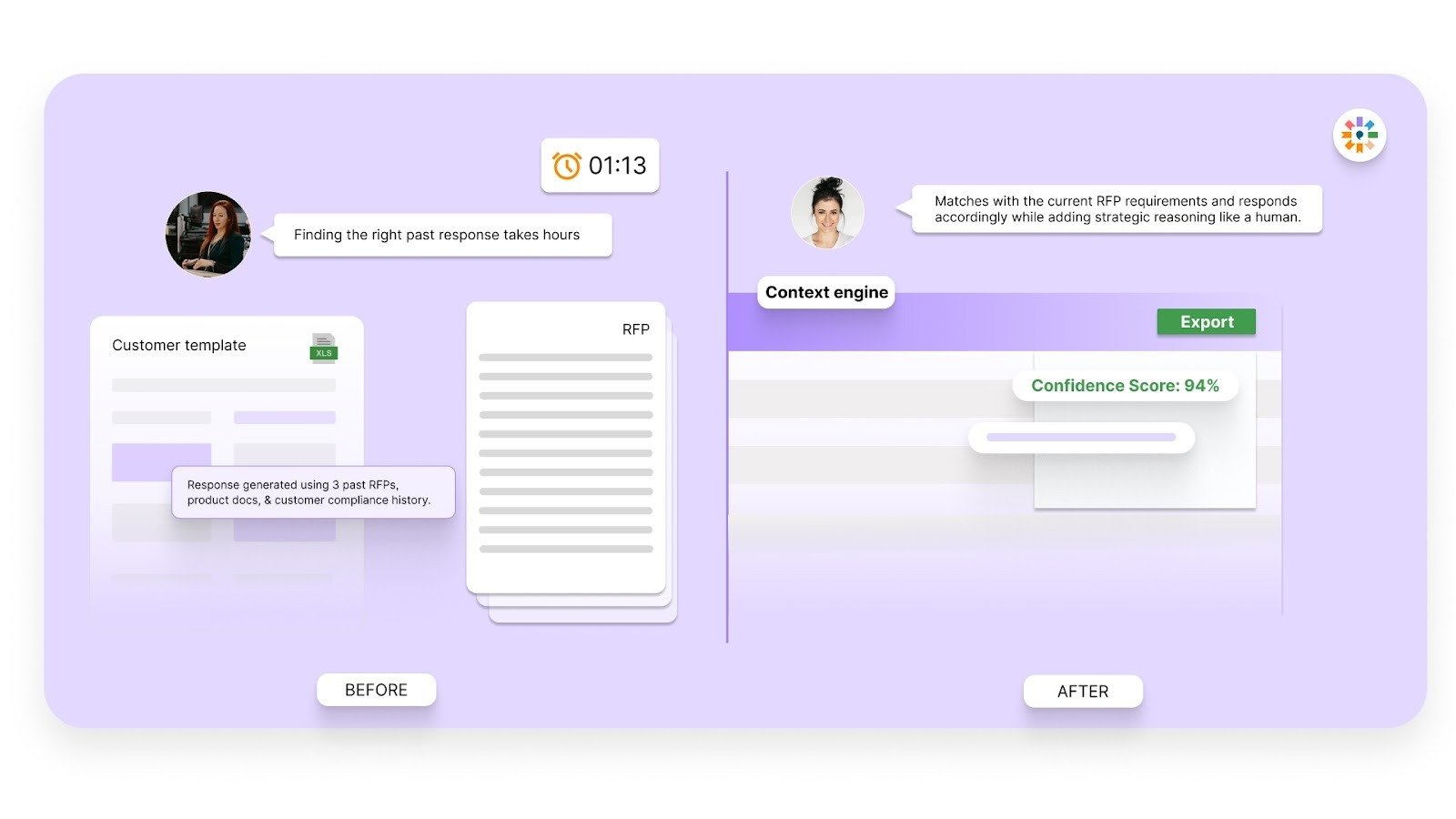
Inventive AI evaluates the entire RFP, including scope, compliance requirements, and evaluation criteria. Responses align with project-specific requirements rather than relying on static boilerplate, helping vendors achieve up to 50% higher win rates.
Conflict Detection
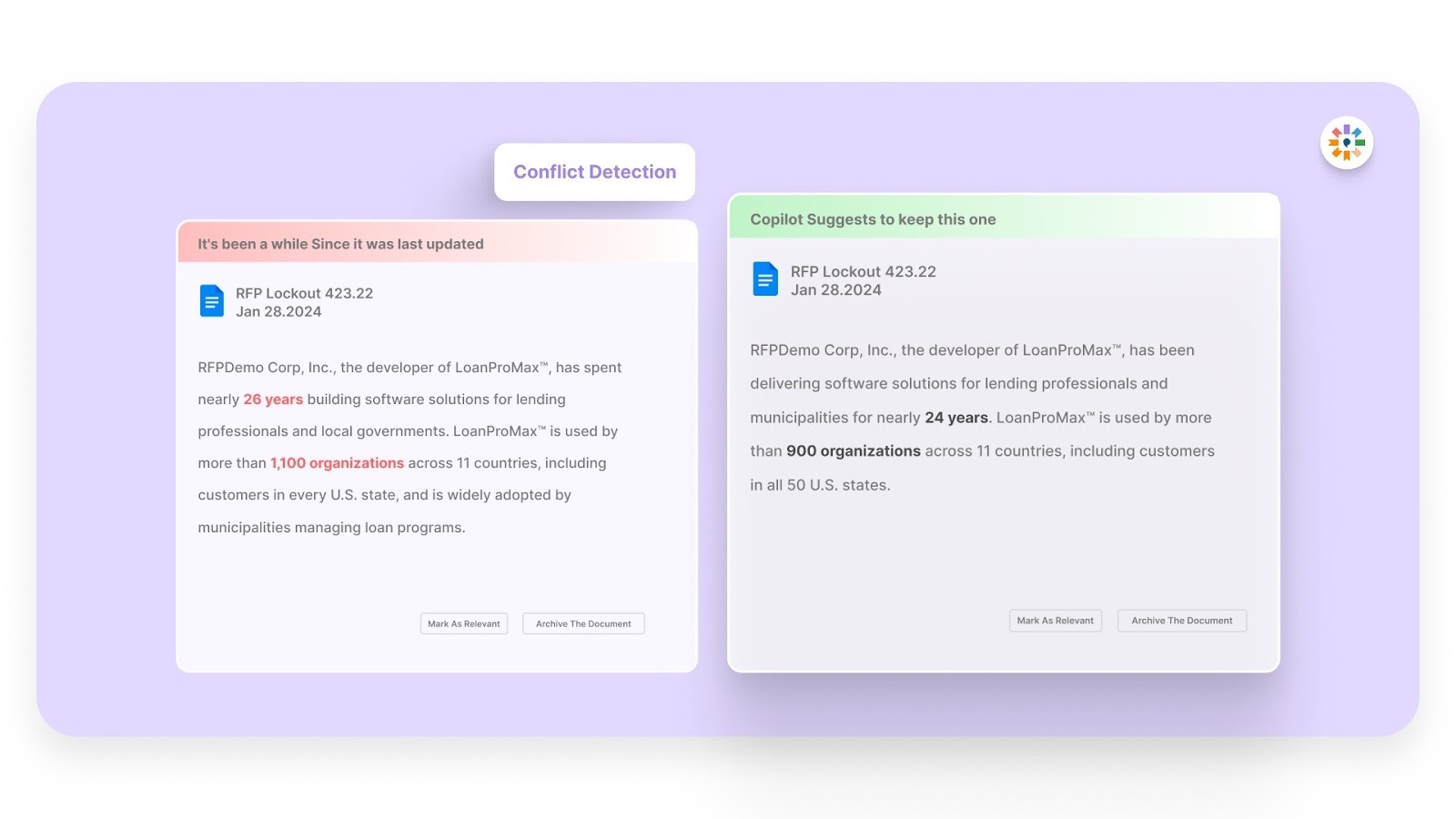
The system automatically identifies contradictory statements across technical plans, pricing sections, and compliance disclosures, reducing submission risk.
Outdated Content Detection
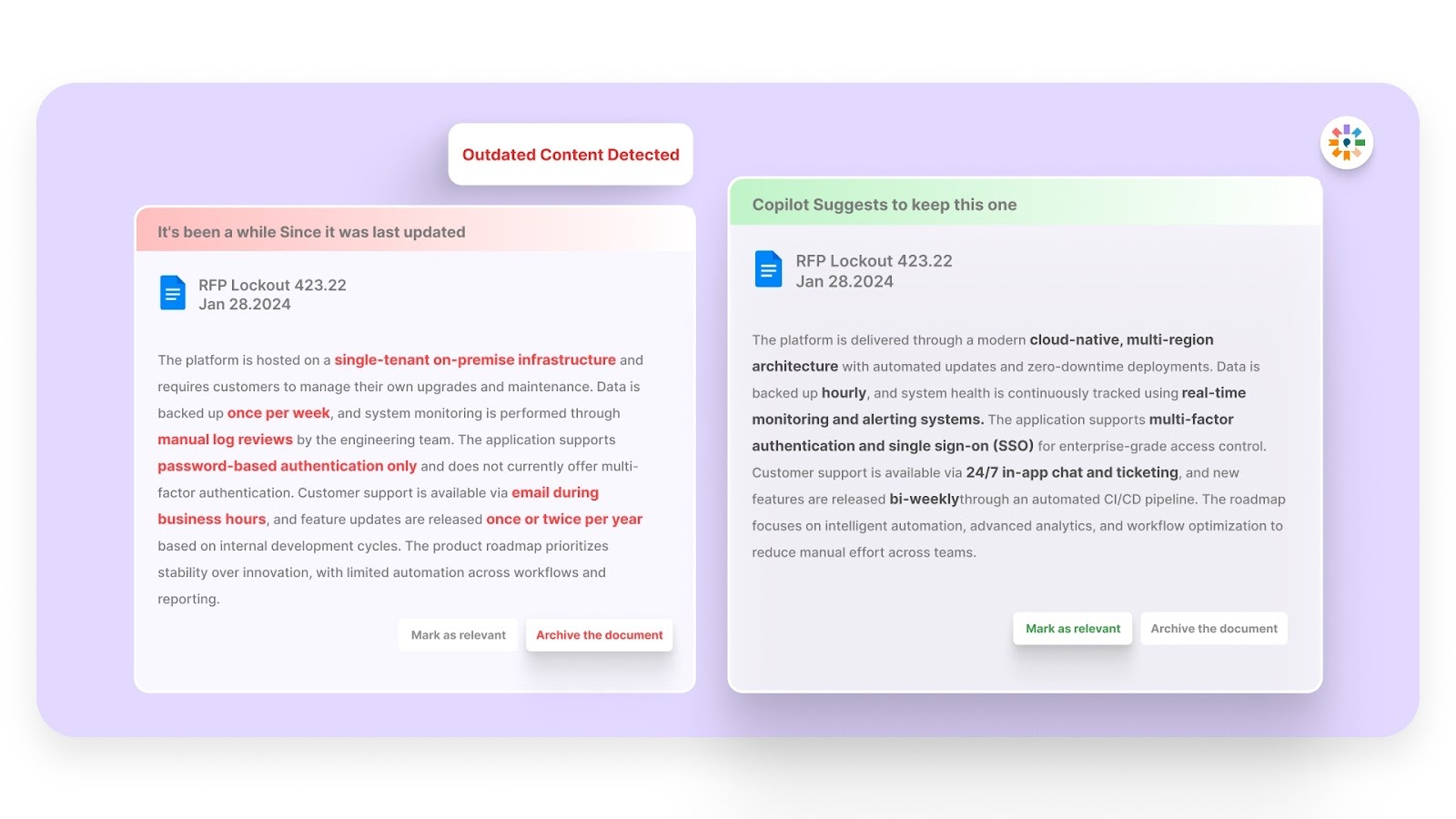
Inventive AI flags expired licenses, superseded safety language, or stale project references before they are reused in new bids.
2x Response Quality
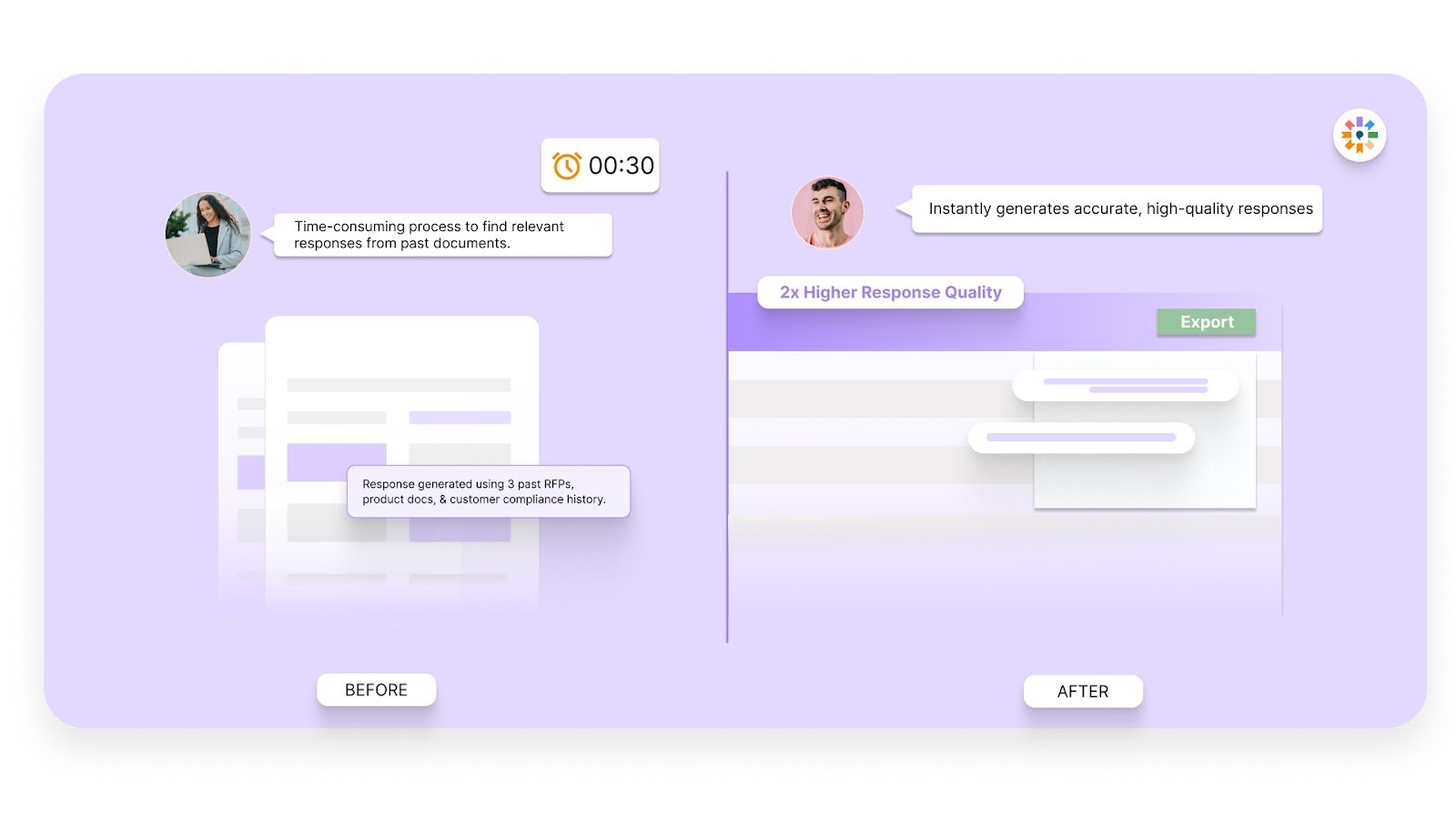
Multi-agent AI generates structured, complete responses that typically require minimal revision, improving submission consistency.
Simple, High-Adoption Interface
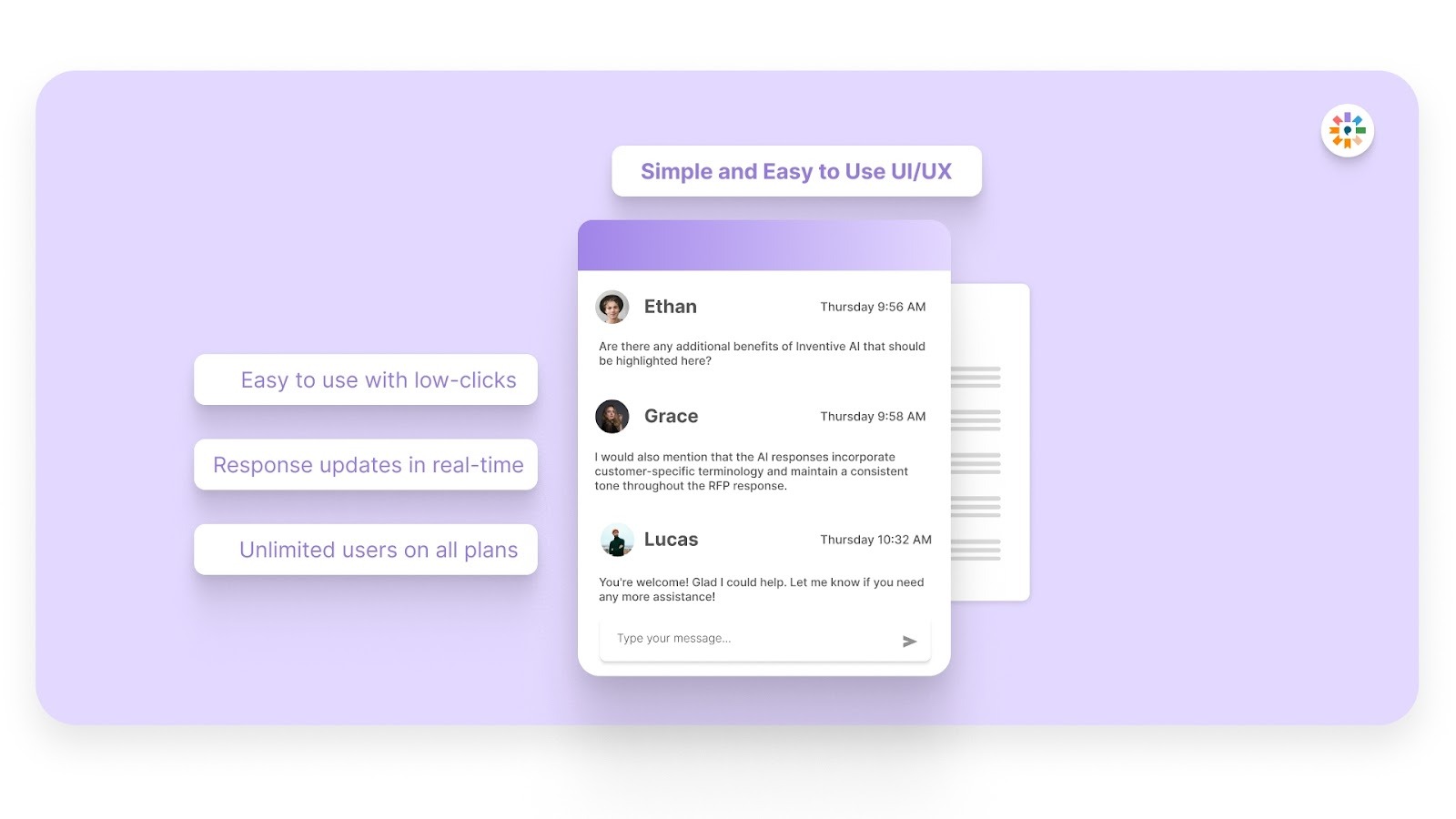
The platform supports fast onboarding and practical daily use across sales, preconstruction, and proposal teams.
Narrative Proposal Generation
Beyond Q&A responses, Inventive AI generates executive summaries, methodology narratives, safety statements, and value-engineering explanations for full construction proposal documents.
By centralizing deal documents, evaluation feedback, and competitor context, Inventive AI makes it easier to analyze buyer decisions, identify recurring patterns, and apply those insights to improve future sales strategies.
FAQs
1. How often should vendors complete a Win-Loss Analysis?
Vendors should complete a Win-Loss Analysis after every closed deal, whether won, lost, or no decision. Regular reviews ensure the timely capture of insights, maintain accuracy, and allow continuous improvement in proposals and client engagement.
2. Can insights from one industry be applied to another?
While patterns like pricing sensitivity or demo effectiveness may translate, vendors should adapt templates to each industry’s context. Industry-specific factors, such as compliance, delivery complexity, and regulatory standards, require tailored analysis.
3. How should vendors handle conflicting internal opinions in the analysis?
Vendors should document all perspectives, but weigh evidence from client interactions and measurable metrics higher than subjective opinions. Structured rating scales and supporting examples ensure clarity and reduce bias.
4. Should Win-Loss Analysis influence future RFP or bid responses?
Yes. Insights into product gaps, pricing perceptions, and competitive positioning help refine future proposals, enhance solution positioning, and increase the likelihood of winning similar deals.
5. Can AI assist in vendor Win-Loss Analysis?
AI tools can automate data extraction, identify patterns, and generate summaries from multiple deals. This improves consistency, highlights key trends, and reduces manual effort, enabling faster, actionable reporting.

.avif)