Painting RFP Template + Commercial, Residential & Industrial Examples

Painting RFPs often leave critical details unclear. Surface conditions, preparation requirements, coating systems, and finish expectations may be loosely defined or missing.
When vendors respond to the same RFP with different assumptions, bids become difficult to compare. One contractor may price basic cleaning, while another includes repairs, primers, and multiple coats.
Buyers then struggle to evaluate proposals, while vendors risk underestimating the scope. Clear RFPs and structured proposal responses reduce these gaps.
This guide provides a practical painting RFP template for buyers, a structured proposal response template for vendors, and real-world use cases showing how contractors tailor their responses to different painting projects.
Painting RFP Template to Attract Accurate Contractor Bids (For Buyers)
Painting projects involve multiple surfaces, preparation methods, paint systems, and site constraints. Buyers must document these clearly so contractors can accurately estimate labor hours, material quantities, and equipment requirements.
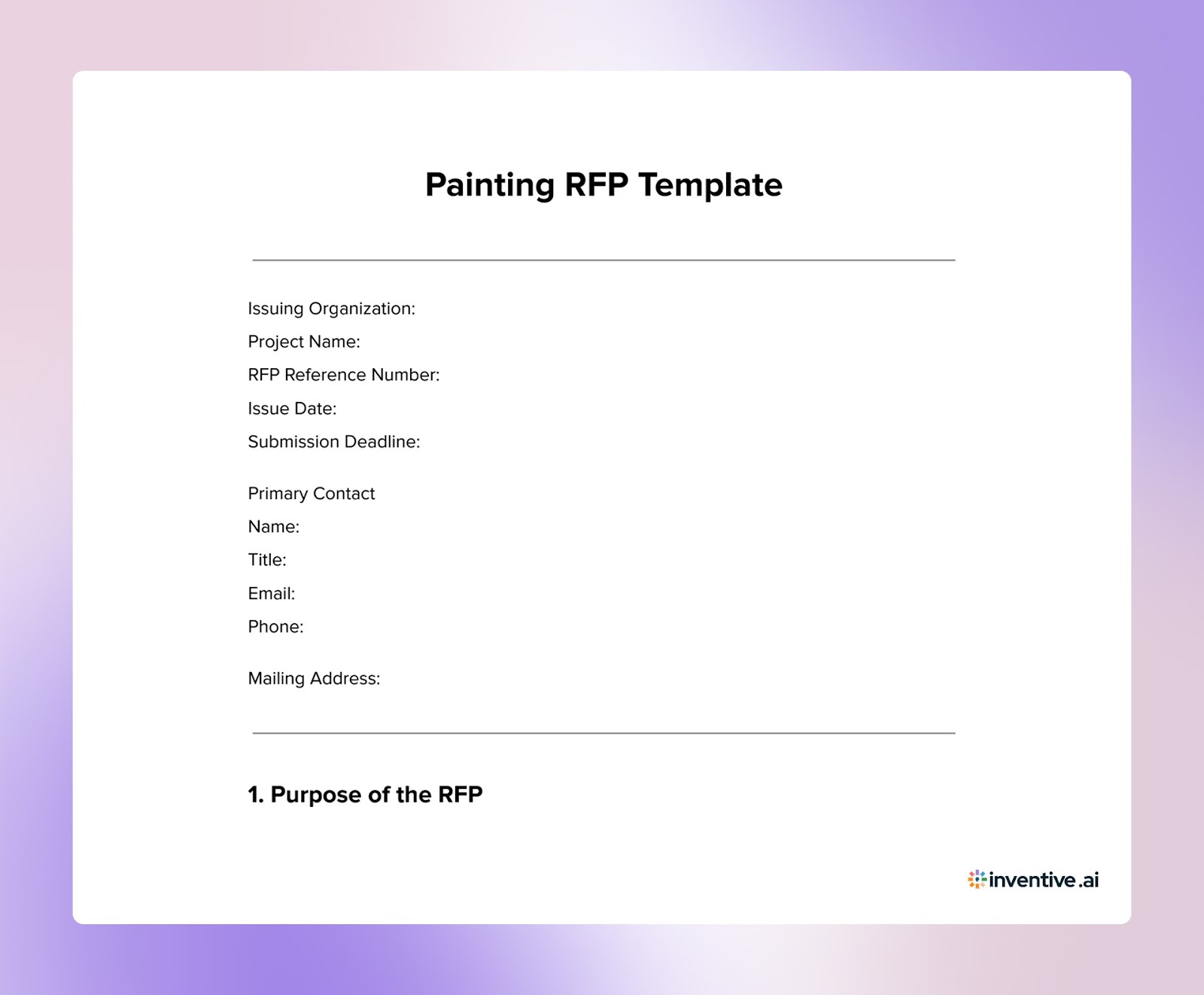

Below are the core sections every painting RFP should contain:
- Project Overview: Property background, painting objectives, building type, and project location.
- Scope of Work: Surfaces to be painted, preparation tasks, areas included or excluded, and the number of paint coats.
- Surface Preparation Requirements: Power washing, paint removal, sanding, patching, priming, and other pre-painting treatments.
- Paint and Material Specifications: Paint type, brand or equivalent quality, finish, durability requirements, and color guidelines.
- Property Areas and Measurements: Square footage of paintable surfaces, building height, number of floors, and access constraints.
- Contractor Qualifications: Required contractor licenses, insurance coverage, safety certifications, and prior commercial painting experience.
- Timeline and Milestones: Proposal deadline, project start date, expected duration, and completion target.
- Pricing Structure: Labor costs, materials, equipment rental, and required cost breakdown format.
- Submission Requirements: Proposal format, required documentation, contact details, and submission method.
A structured painting RFP template ensures vendors evaluate the same scope, preparation standards, and material specifications before submitting their proposals.
If you are responding to a painting RFP, the proposal response template below shows how contractors structure their submissions.
Painting Proposal Response Template for Vendors: Structure Proposals That Match the RFP
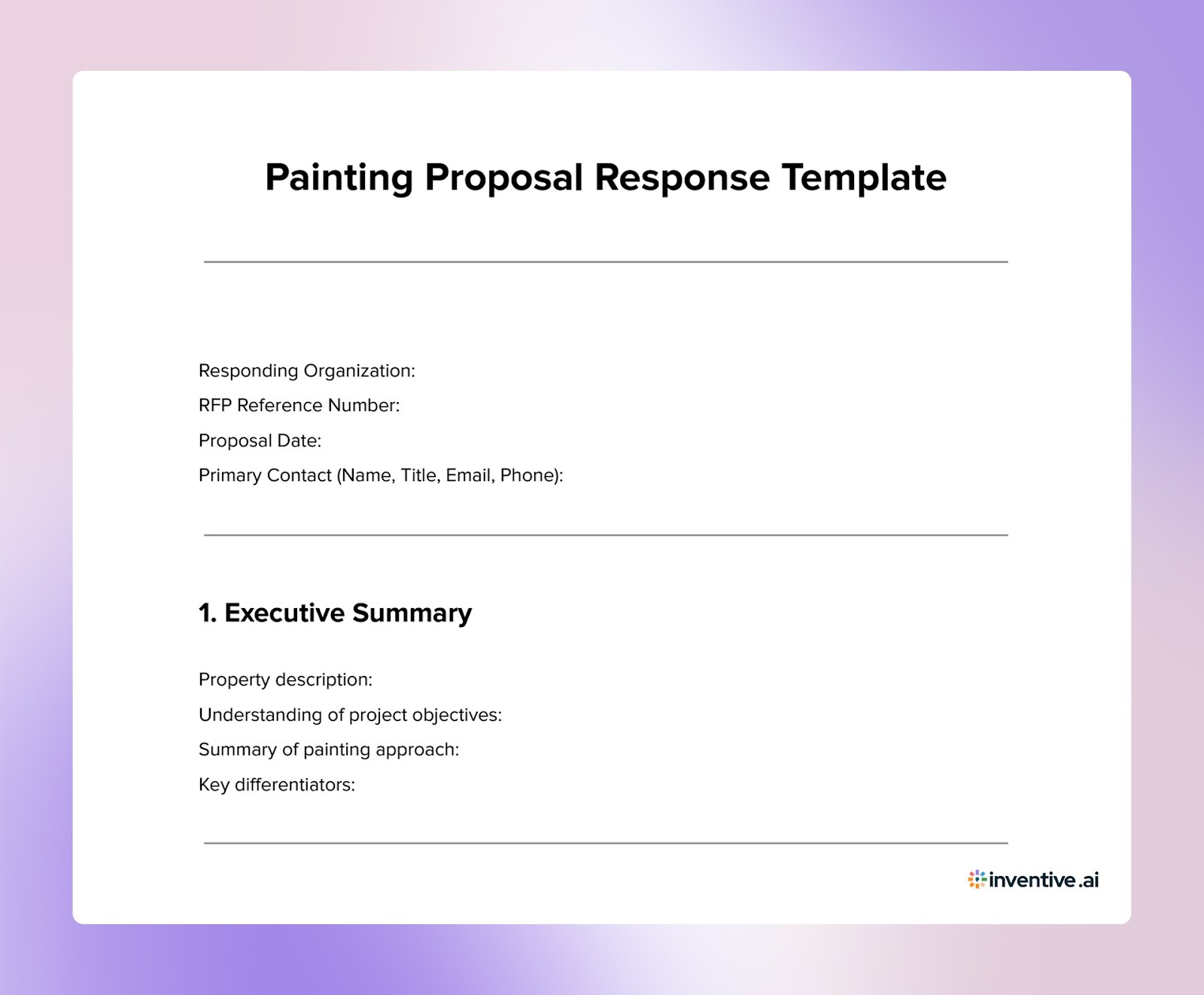
Painting contractors responding to RFPs must demonstrate more than technical capability. Buyers evaluate whether vendors understand the project scope, preparation requirements, material specifications, and operational constraints defined in the RFP.
Generic proposal templates rarely succeed at this stage. Buyers expect responses that mirror the project documentation. Contractors must explain how they will prepare surfaces, apply coatings, manage site access, and complete the work within the required timeline.
The proposal structure below helps contractors present their approach clearly so evaluators can assess execution capability, pricing transparency, and operational readiness.

1. Executive Summary
The executive summary sets the context for decision-makers reviewing multiple proposals. Property managers, procurement teams, and project stakeholders often begin their evaluation here to understand whether the contractor’s approach aligns with the project goals.
Rather than repeating marketing language, the summary should demonstrate a clear understanding of the property, the painting scope, and the expected outcome.
Example: “Our team will repaint the exterior of the retail plaza using weather-resistant acrylic coatings designed to withstand coastal humidity and high sun exposure. The project will include full surface preparation, primer application, and two finish coats across storefront façades and signage structures.”
2. Company Background and Relevant Experience
Buyers evaluate contractor experience to assess reliability and project quality. Painting projects often involve coordination with tenants, weather constraints, and surface preparation challenges. Demonstrating experience with similar properties reduces perceived project risk.
Vendors should highlight projects that match the buyer’s property type and scope.
Include:
- Company history and specialization
- Crew size and operational capacity
- Relevant commercial painting projects
- Certifications or safety credentials
Example: “Our team has completed exterior repainting for multiple retail plazas and office complexes across California, including projects exceeding 10,000 square feet of paintable surface.”
3. Painting Methodology
Buyers use this section to evaluate how the contractor plans to execute the work. The methodology should explain the technical process used to prepare surfaces, apply coatings, and ensure paint durability.
Clear documentation of the painting process demonstrates technical expertise and helps buyers compare approaches between vendors.
Include:
- Preparation process
- Paint application methods
- Equipment and tools used
- Environmental or safety considerations
Example: “All exterior surfaces will be pressure-washed to remove debris and loose paint. After sanding and patching damaged areas, the crew will apply primer followed by two coats of exterior acrylic paint using airless spray equipment.”
4. Surface Preparation Plan
Surface preparation is one of the most critical factors influencing paint longevity. Buyers often evaluate this section carefully because inadequate preparation can lead to premature paint failure.
Include:
- Cleaning and power washing procedures
- Removal of peeling paint
- Surface repair methods
- Priming techniques
Example: “Loose paint will be scraped and sanded before applying primer to exposed surfaces. Cracks in stucco areas will be patched and smoothed to ensure uniform paint adhesion.”
5. Materials and Paint System Specification
Buyers evaluate this section to understand the quality and durability of the materials used in the project. Paint systems vary significantly in longevity, weather resistance, and maintenance requirements. Clearly documenting the materials ensures the buyer understands exactly what coatings will be applied to the property.
Vendors should specify the paint brand, coating system, and performance characteristics rather than using vague descriptions such as “commercial-grade paint.”
Include:
- Paint brand and product line
- Type of coating system (acrylic, latex, epoxy, elastomeric)
- Finish type (matte, satin, gloss)
- Number of coats and primer system
- Expected durability or lifecycle
Example: “The project will use Sherwin-Williams SuperPaint Exterior Acrylic Latex with a satin finish. Surfaces will receive one primer coat followed by two finish coats designed for UV resistance and long-term weather protection.”
6. Staffing Plan
Buyers assess staffing plans to determine whether the contractor has the resources to complete the project within the required timeframe. The staffing section should clarify crew structure, supervision, and project coordination.
Include:
- Crew size
- Site supervisor assignment
- Specialized roles (e.g., equipment operators)
- Work shift scheduling
Example: “A six-person crew will be assigned to the project, including one site supervisor responsible for coordinating daily activities and quality checks.”
7. Project Timeline
The project timeline demonstrates how the contractor plans to organize the work from preparation to final inspection. Buyers evaluate this section to confirm whether vendors can meet the requested completion deadline.
Include:
- Preparation phase duration
- Painting phases
- Inspection and cleanup schedule
- Total project timeline
Example: “Surface preparation will be completed during the first week. Painting activities will follow over the next two weeks, with final inspection and site cleanup scheduled during the final two days.”
8. Pricing Breakdown
Pricing transparency helps buyers compare proposals across vendors. Contractors should present a clear cost structure that separates labor, materials, and equipment.
A standardized breakdown reduces ambiguity during evaluation and helps procurement teams assess whether pricing aligns with the documented scope.
Include:
- Labor costs
- Material costs
- Equipment or lift rental
- Total project cost
Example:
- Labor: $18,000
- Materials: $7,000
- Equipment: $2,000
- Total Project Cost: $27,000
9. Warranty and Post-Project Support
Warranty terms help buyers evaluate the long-term reliability of the contractor’s work. Paint failures such as peeling, blistering, or fading often occur when surface preparation or material selection is inadequate. A clear warranty signals confidence in workmanship and materials.
Contractors should define both workmanship warranties and manufacturer coating warranties when applicable.
Include:
- Workmanship warranty period
- Coverage for peeling, blistering, or adhesion failure
- Manufacturer paint warranty (if applicable)
- Maintenance or inspection support
Example: “The contractor provides a two-year workmanship warranty covering paint adhesion and surface defects. Paint materials include a manufacturer-backed limited warranty for exterior coating durability.”
Painting Proposal Templates by Use Case to Match Different Project Types
Below are proposal templates tailored to common painting project scenarios. Each template helps contractors structure responses that align with the buyer’s scope, timeline, and material expectations.
1. Commercial Building Painting Proposal Template
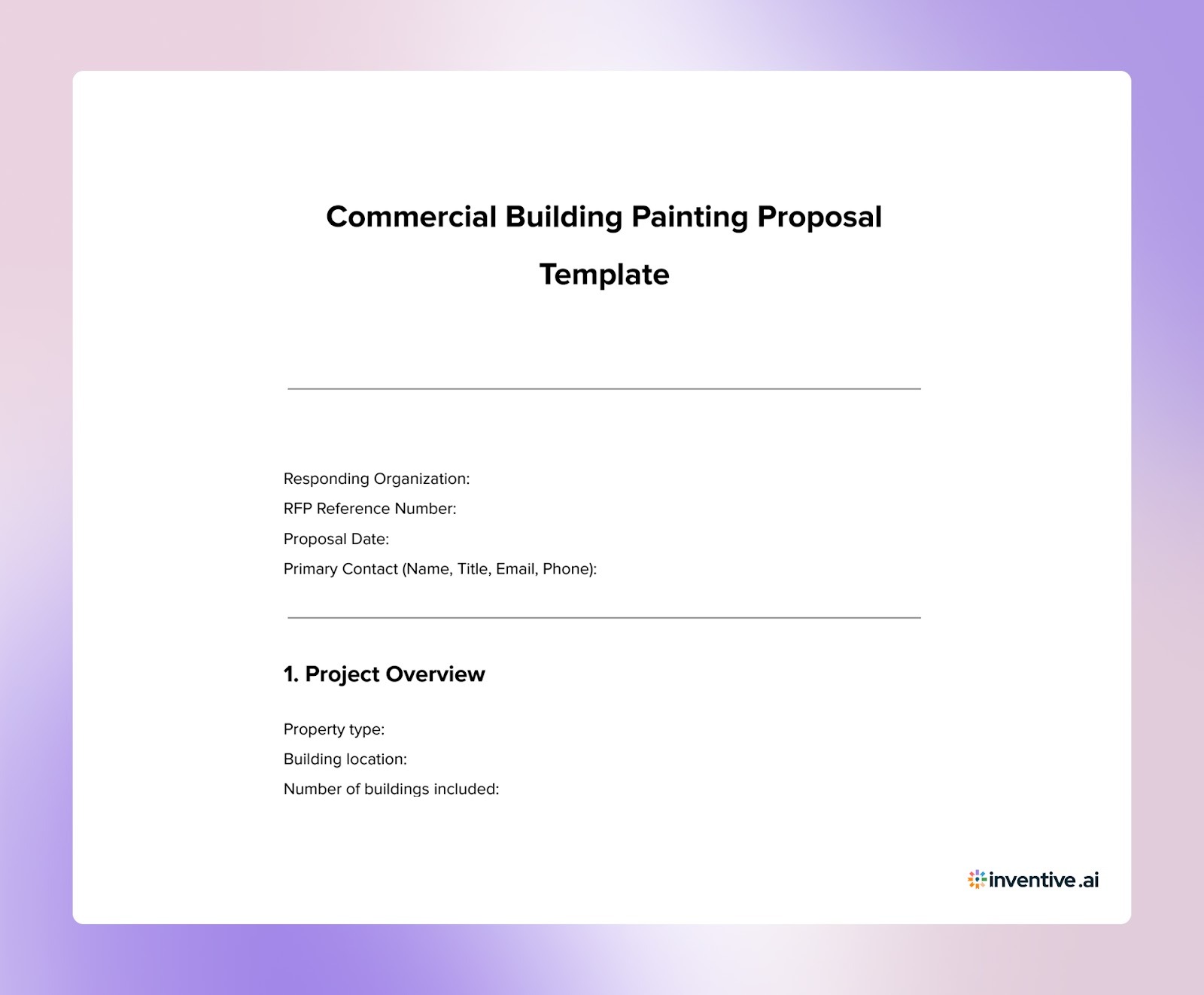
This template is designed for contractors responding to RFPs for office buildings, retail plazas, and mixed-use commercial properties. Buyers evaluating these projects typically focus on surface preparation standards, paint durability, and coordination with tenant operations.
The structure reflects:
- Exterior façade and storefront repainting scope
- Surface preparation and repair requirements
- Commercial-grade paint systems and finishes
- Work scheduling to minimize disruption to business operations
- Safety compliance for occupied commercial properties
This format works best for contractors bidding on shopping centers, office parks, and commercial real estate renovations.

2. Residential Complex Painting Proposal Template
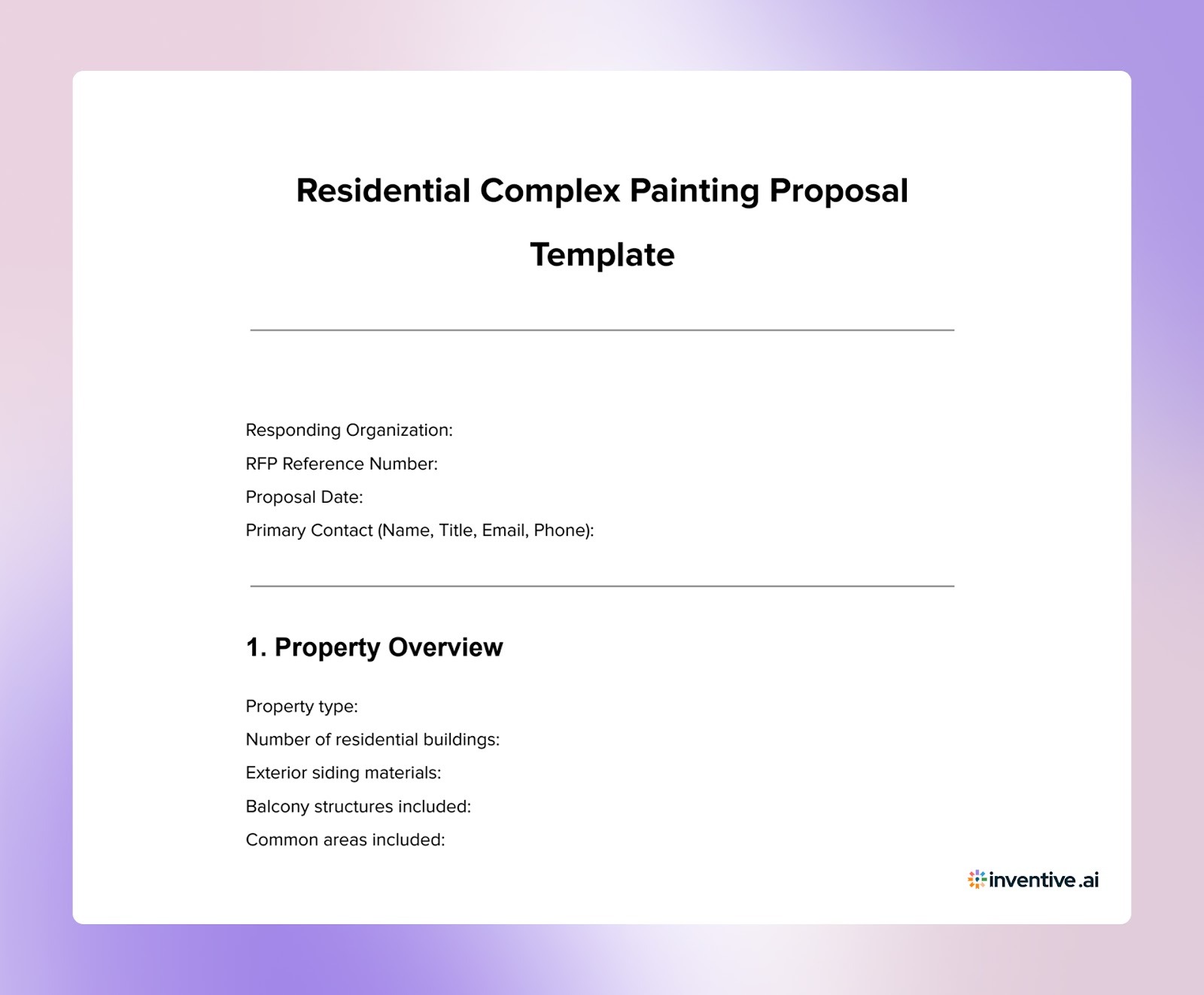
This template supports contractors responding to RFPs from property managers overseeing apartment buildings, condominiums, and HOA communities. Buyers in these scenarios prioritize project scheduling, resident safety, and phased work execution.
The structure reflects:
- Exterior siding and balcony repainting scope
- Resident notification and access coordination
- Phased painting schedules for multi-building complexes
- Surface repair and weatherproof coating systems
- Cleanup procedures to maintain common areas
This format works best for contractors managing large residential painting projects where tenant coordination and phased execution are critical.

3. Industrial Facility Painting Proposal Template
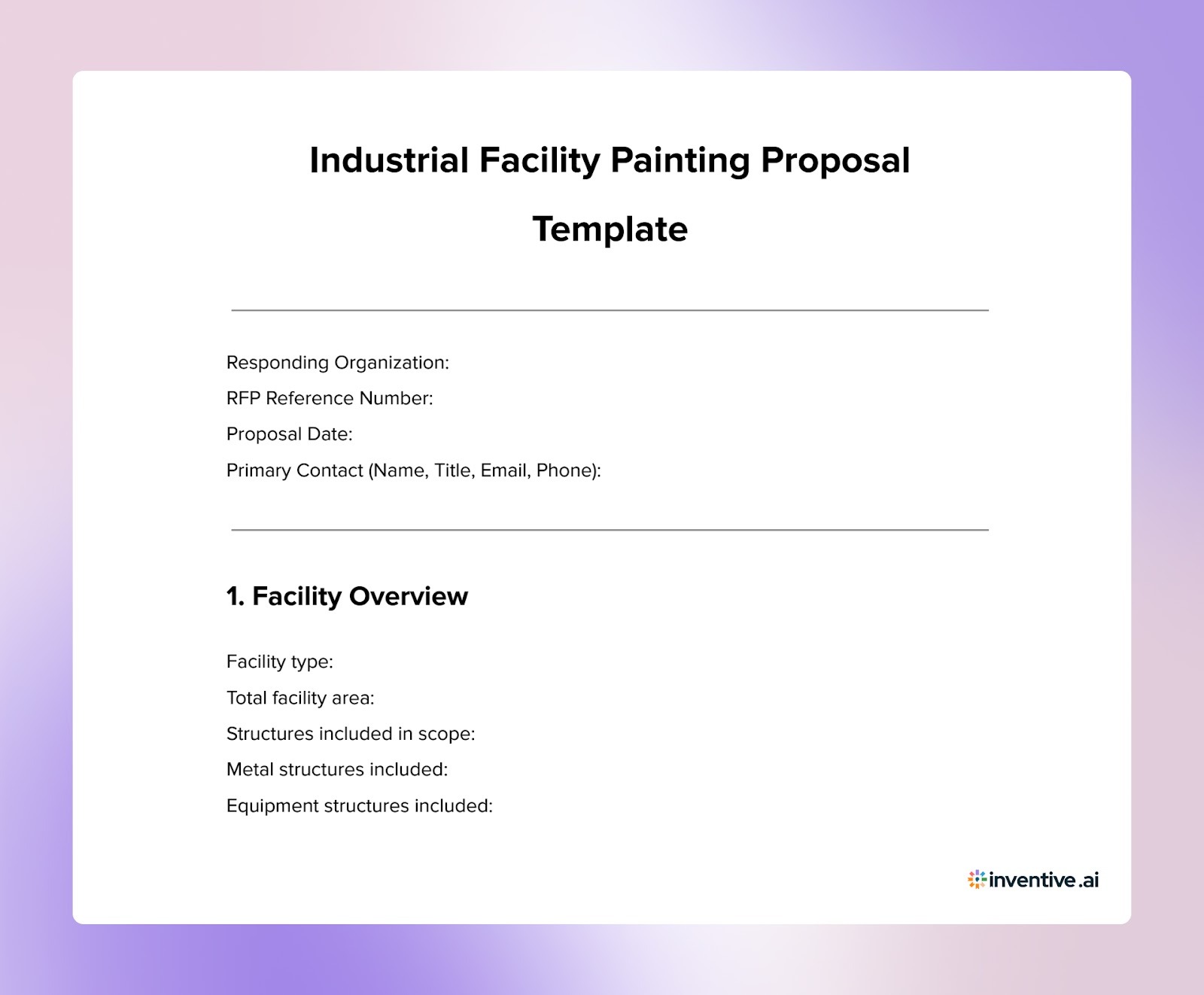
Industrial painting projects often involve specialized coatings designed for durability, corrosion resistance, and safety compliance. Buyers evaluating industrial proposals focus heavily on preparation methods, coating systems, and site safety protocols.
The structure reflects:
- Surface treatment for metal structures and machinery
- Industrial-grade protective coatings and primers
- Compliance with facility safety and environmental standards
- Equipment access, such as lifts or scaffolding
- Work scheduling around operational production areas
This format works best for contractors responding to RFPs for warehouses, manufacturing plants, and logistics facilities.

4. Government Facility Painting Proposal Template
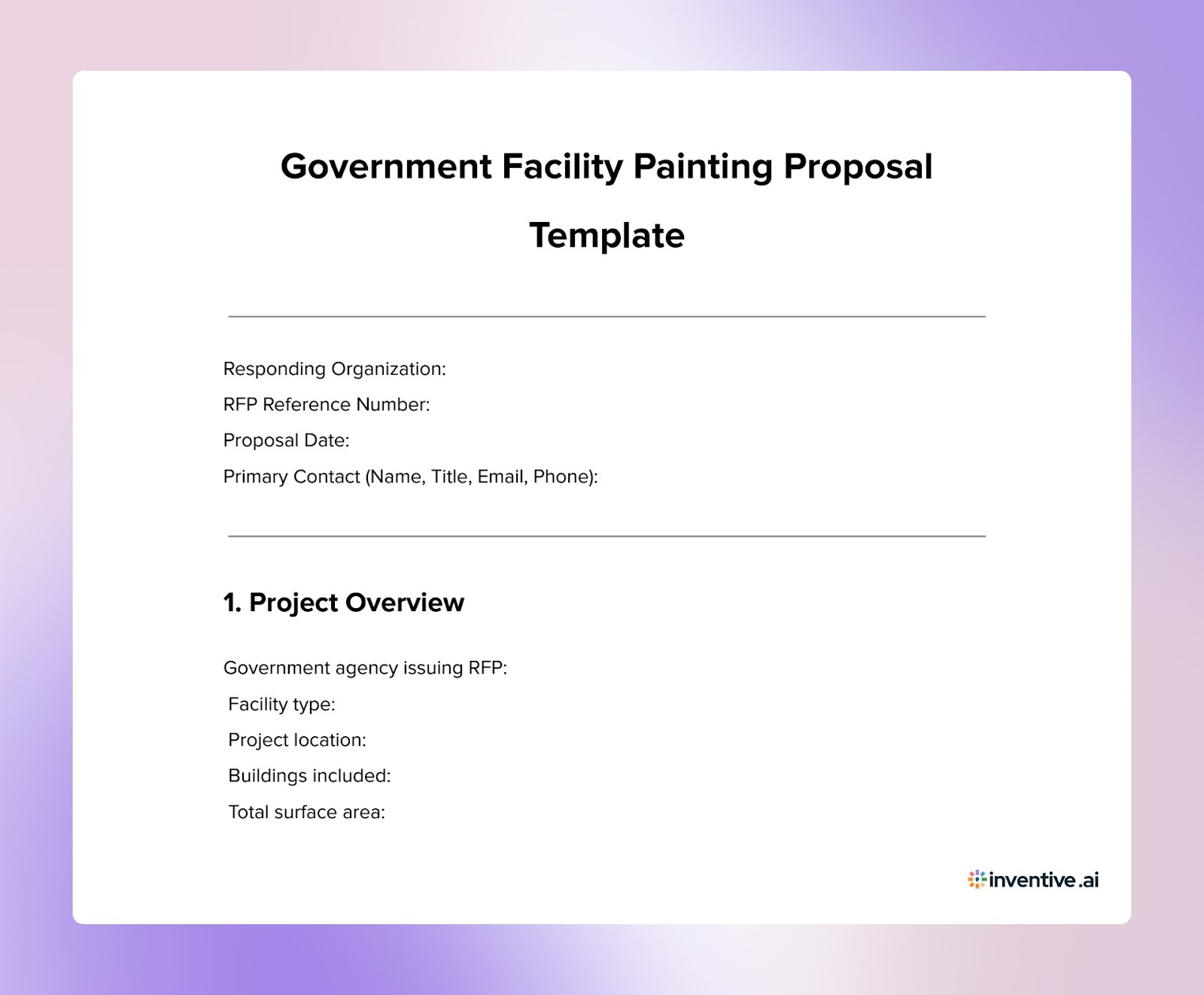
Public sector painting projects require strict compliance with procurement rules, licensing requirements, and documentation standards. Government buyers evaluate proposals carefully to ensure regulatory compliance and contractor reliability.
The structure reflects:
- Contractor licensing and compliance documentation
- Detailed scope definitions for public infrastructure
- Safety and environmental compliance requirements
- Structured pricing formats for procurement evaluation
- Past performance references for public-sector projects
This format supports vendors responding to municipal, educational, and government facility painting RFPs.

Submit Accurate Painting RFP Responses Faster With Inventive AI
Painting contractors responding to RFPs must interpret detailed scope requirements, preparation standards, coating systems, and project timelines. Preparing these responses manually often requires assembling information from past proposals, safety documentation, and material specifications. This slows proposal cycles and increases the risk of inconsistent responses.
Inventive AI solves this challenge with AI-powered RFP response software designed for vendors. Instead of assembling answers manually, teams generate structured, context-aware painting RFP responses aligned with buyer requirements. The result is 95% accurate drafts, 0% hallucinations, and response cycles that are up to 10x faster.
Here are Inventive AI’s key capabilities that improve painting RFP responses.
1. Context Engine

Most proposal tools rely on keyword retrieval that produces generic answers. Inventive AI uses multi-layer reasoning to understand the entire RFP, including project scope, material requirements, and preparation standards.
This allows the platform to generate responses that align with the buyer’s documented painting requirements rather than producing boilerplate answers.
2. Conflict Detection
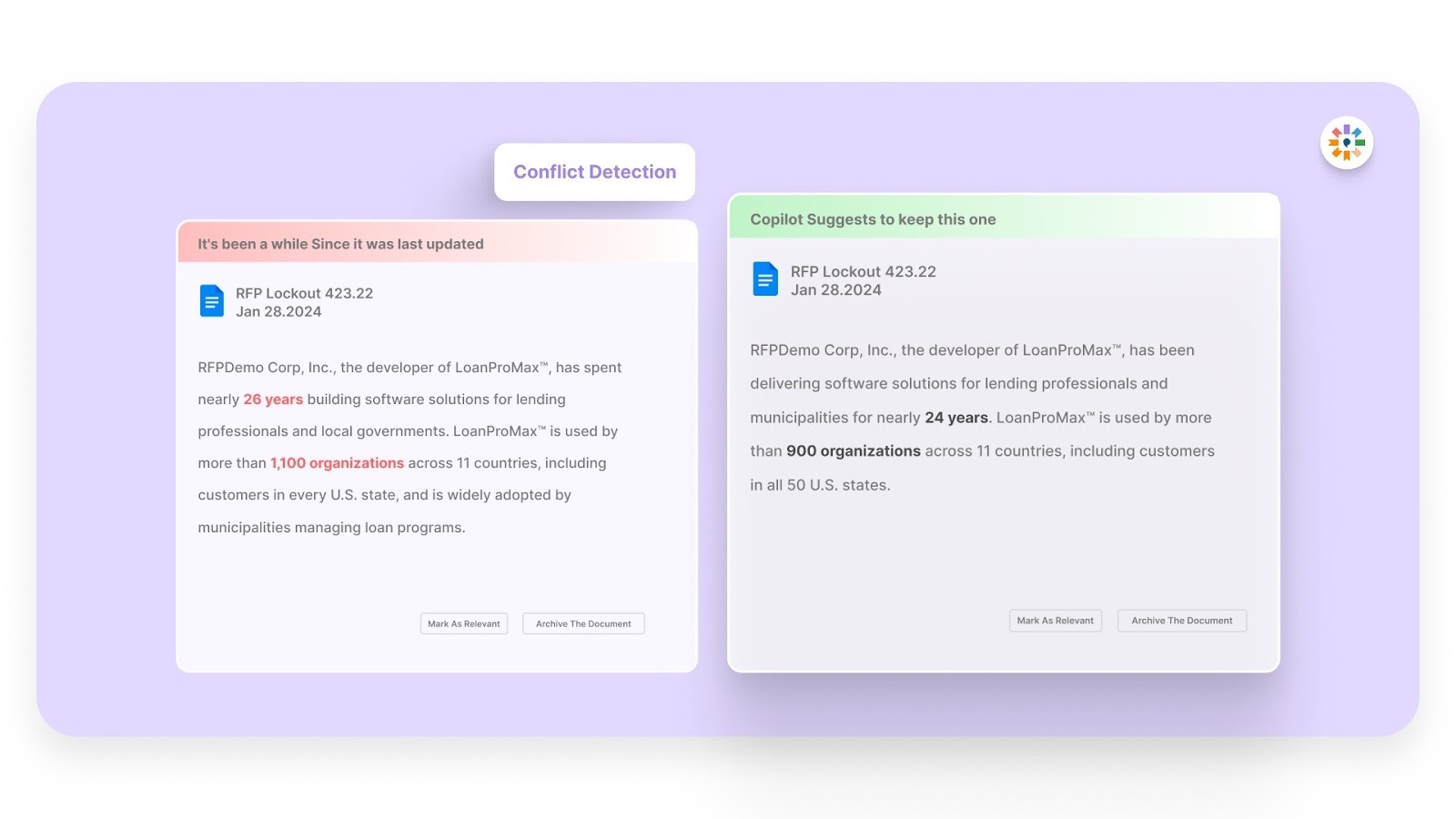
Painting RFP responses often include overlapping sections such as staffing plans, surface preparation details, and project timelines. Manual proposals can easily introduce conflicting information across these sections.
Inventive AI automatically identifies contradictions before submission, helping vendors maintain consistency throughout the proposal.
3. Outdated Content Detection
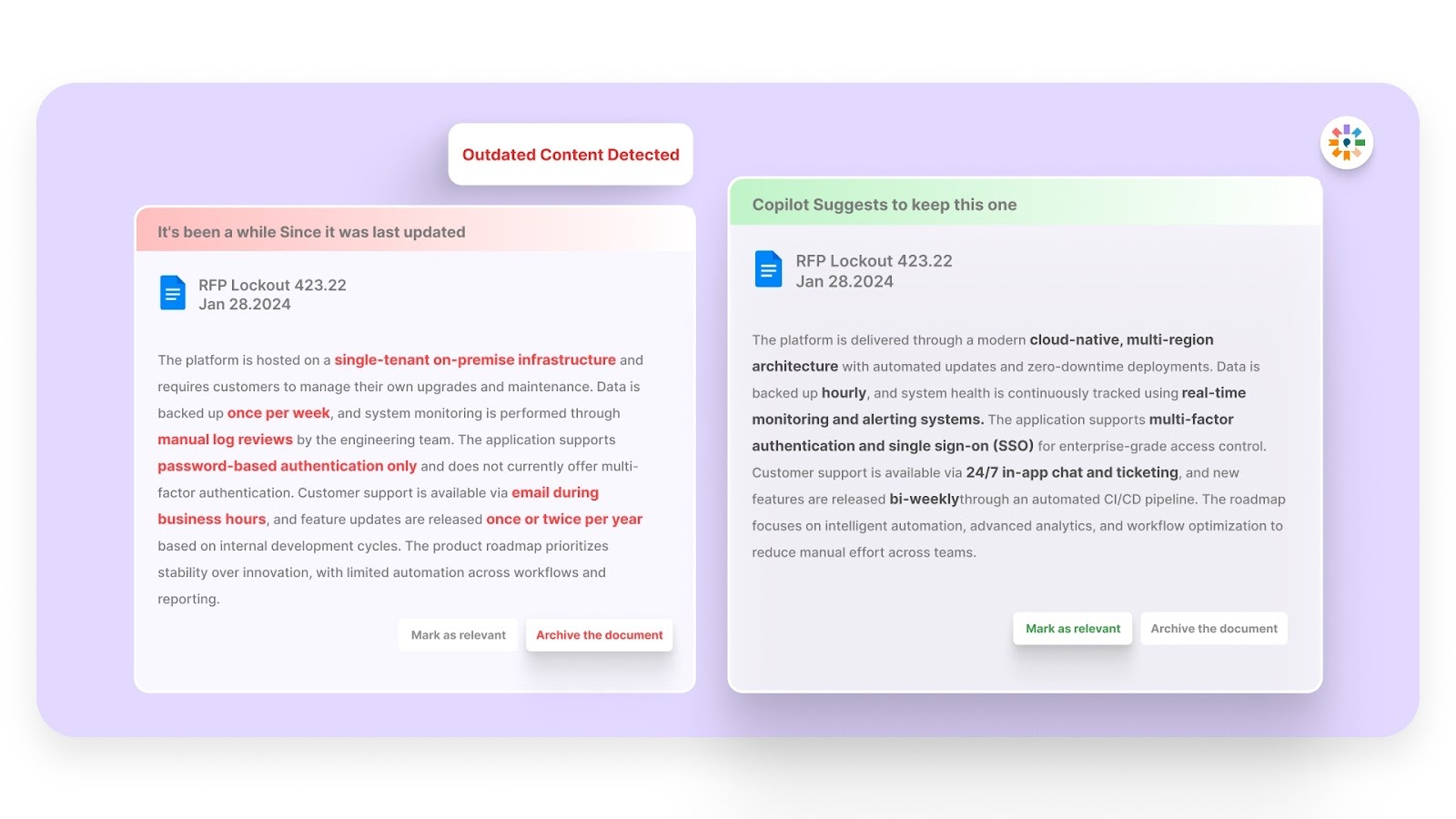
Proposal libraries often contain older responses referencing outdated certifications, expired insurance documents, or previous project details.
Inventive AI flags outdated content before it appears in the response, ensuring vendors submit proposals that reflect current capabilities and documentation.
4. 2X Higher Quality Responses

Inventive AI’s multi-agent system generates responses with greater clarity and completeness. The platform analyzes buyer requirements and produces answers that directly address project scope, preparation methods, and execution plans.
This improves proposal quality and strengthens vendor positioning during evaluation.
5. Simple and Easy-to-Use Interface

Proposal teams often operate under tight deadlines while coordinating with sales, technical, and operations teams.
Inventive AI provides an intuitive interface that allows teams to generate structured responses quickly without complex setup or workflow friction.
6. Narrative-Style Proposal Generation
Many RFPs require more than structured question-and-answer responses. Buyers often request executive summaries, project narratives, or methodology descriptions.
Inventive AI generates narrative-style proposals that explain the contractor’s approach clearly while aligning with the RFP requirements.
FAQs About Painting RFP Template
1. When should a property owner issue a painting RFP instead of requesting quotes?
An RFP is typically used when the project is large, involves multiple buildings or surfaces, or requires formal evaluation of contractors. Smaller projects may use simple quote requests, while RFPs allow buyers to compare proposals across multiple vendors using standardized criteria.
2. How do contractors estimate pricing for a painting RFP?
Contractors estimate pricing based on surface area, preparation requirements, paint system specifications, labor hours, equipment needs such as lifts or scaffolding, and project duration. Site inspections are often required to validate surface conditions before final pricing is submitted.
3. What common mistakes make painting RFPs difficult for contractors to respond to?
RFPs become difficult to price when they lack surface measurements, preparation requirements, paint specifications, or access constraints. Without these details, contractors must make assumptions, which can lead to inconsistent bids across vendors.
4. How long does it typically take contractors to prepare a painting RFP response?
Preparation time varies depending on project complexity. Smaller proposals may take a few hours, while large commercial or multi-building projects can require several days to document preparation methods, staffing plans, material specifications, and pricing structures.
5. Do painting contractors usually conduct a site inspection before submitting a proposal?
Yes, most contractors conduct a site inspection before finalizing their proposal. Surface conditions, accessibility, existing paint damage, and building height can significantly affect preparation work, labor requirements, and equipment needs. A site visit allows contractors to verify these factors and provide a more accurate estimate.

.avif)




%20(1).avif)