Supplier Risk Assessment Template: How Vendors Can Improve Audit Readiness

In 2025, 47 % of procurement leaders said managing supply chain disruptions would be their top challenge, and nearly 30 % reported increased cyber-attacks on suppliers. To address these risks, enterprises are adopting formal supplier risk assessment frameworks for renewals, RFP evaluations, and audits.
These assessments are data-driven, repeatable, and directly influence supplier eligibility and mitigation actions. For vendors, understanding buyer risk criteria and providing evidence-backed responses is essential for audit readiness and maintaining eligibility for renewals and future RFPs.
In this blog, you’ll learn how enterprises assess supplier risk and how a supplier risk assessment response template can help you respond clearly and accurately.
Supplier Risk Assessment Template For Download: How Buyers Evaluate Supplier Risks?
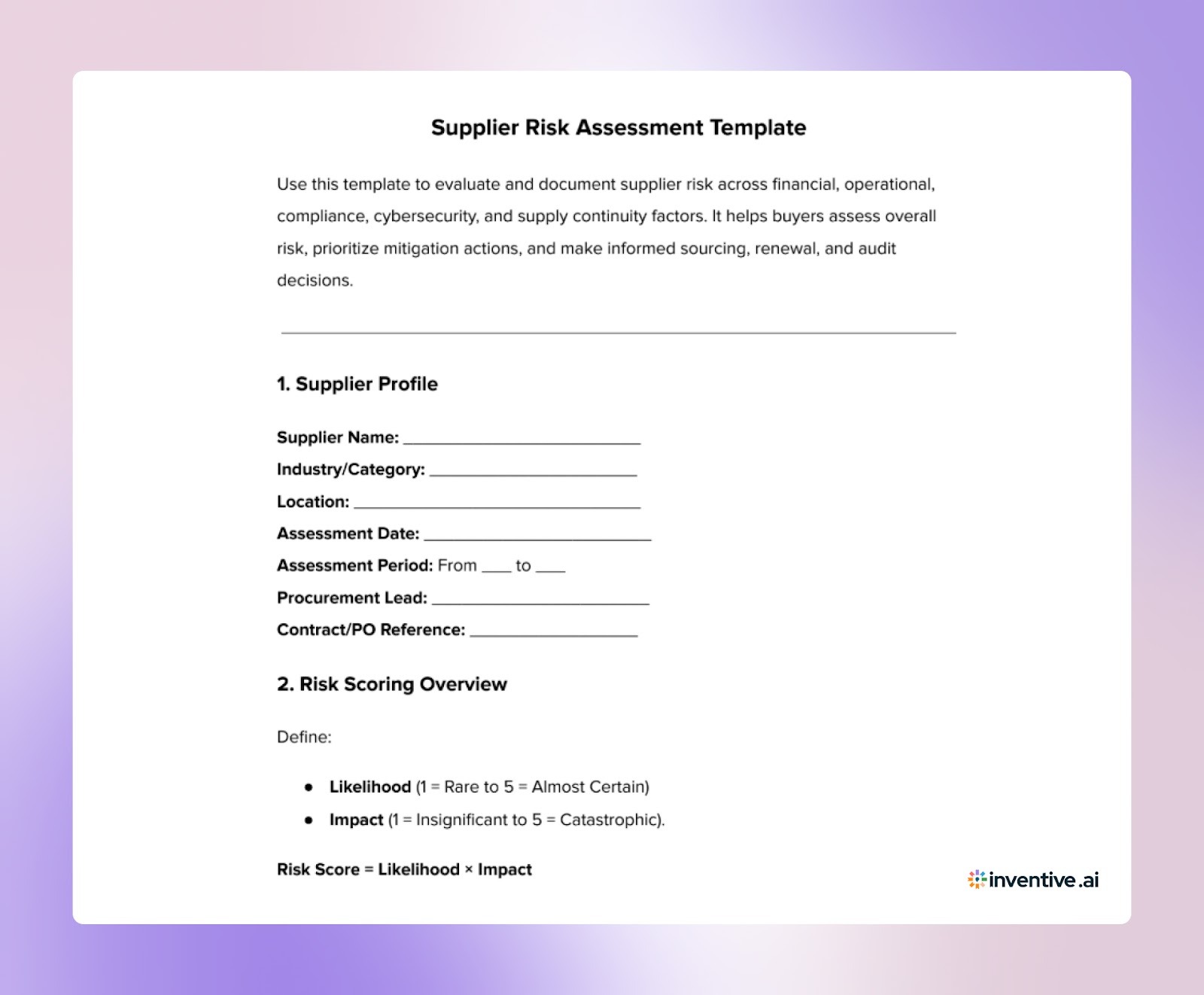

Enterprises use structured risk assessment templates to evaluate potential vulnerabilities across operational, financial, compliance, and strategic dimensions. These evaluations guide sourcing decisions, risk mitigation, and contract management.
Key Sections Include:
- Supplier Profile: Captures supplier, contract, and engagement details to ensure accurate assessment linking. Supports traceability, auditability, and accountability in buyer decision-making.
- Risk Scoring Overview: Quantifies supplier risk by combining likelihood and impact across categories. Helps buyers prioritize mitigation, visualize risk with color codes, and standardize reporting.
- Financial Risk: Assesses supplier stability, solvency, and payment reliability. Buyers use audited statements, credit ratings, and payment history to identify financial exposure.
- Operational Risk: Evaluates delivery performance, capacity, and scalability. OTIF metrics, production reports, and volume-handling data help buyers identify operational bottlenecks or inconsistencies.
- Compliance Risk: Measures adherence to regulations, permits, and contracts. Buyers review licenses, SLAs, and audit documentation to ensure suppliers meet legal and contractual obligations.
- Cybersecurity Risk: Assesses supplier data protection and incident management. Security certifications, penetration tests, and breach history inform buyers about exposure to cyber threats.
- Supply Continuity Risk: Analyzes dependence on single-source suppliers and the reliability of logistics. Buyers examine redundancy plans, lead-time variability, and past disruptions to assess continuity risk.
- Overall Risk Summary: Consolidates findings into a comprehensive risk profile. Buyers use this to assign overall ratings, plan mitigation actions, and make sourcing, renewal, or remediation decisions.
- Risk Governance & Documentation: Records assessor identity, approvals, and attached supporting evidence. Ensures accountability, transparency, and audit readiness for procurement teams.
- Scorecard Dashboard (Optional): Visualizes supplier risk trends and category averages. Helps buyers quickly identify high-risk suppliers and track changes across reporting periods.
The buyer’s assessment determines risk scores and decisions, but your evidence shapes their understanding. Here’s how to respond effectively and protect your eligibility.
Supplier Risk Assessment Response Template: Streamline Vendor Submissions
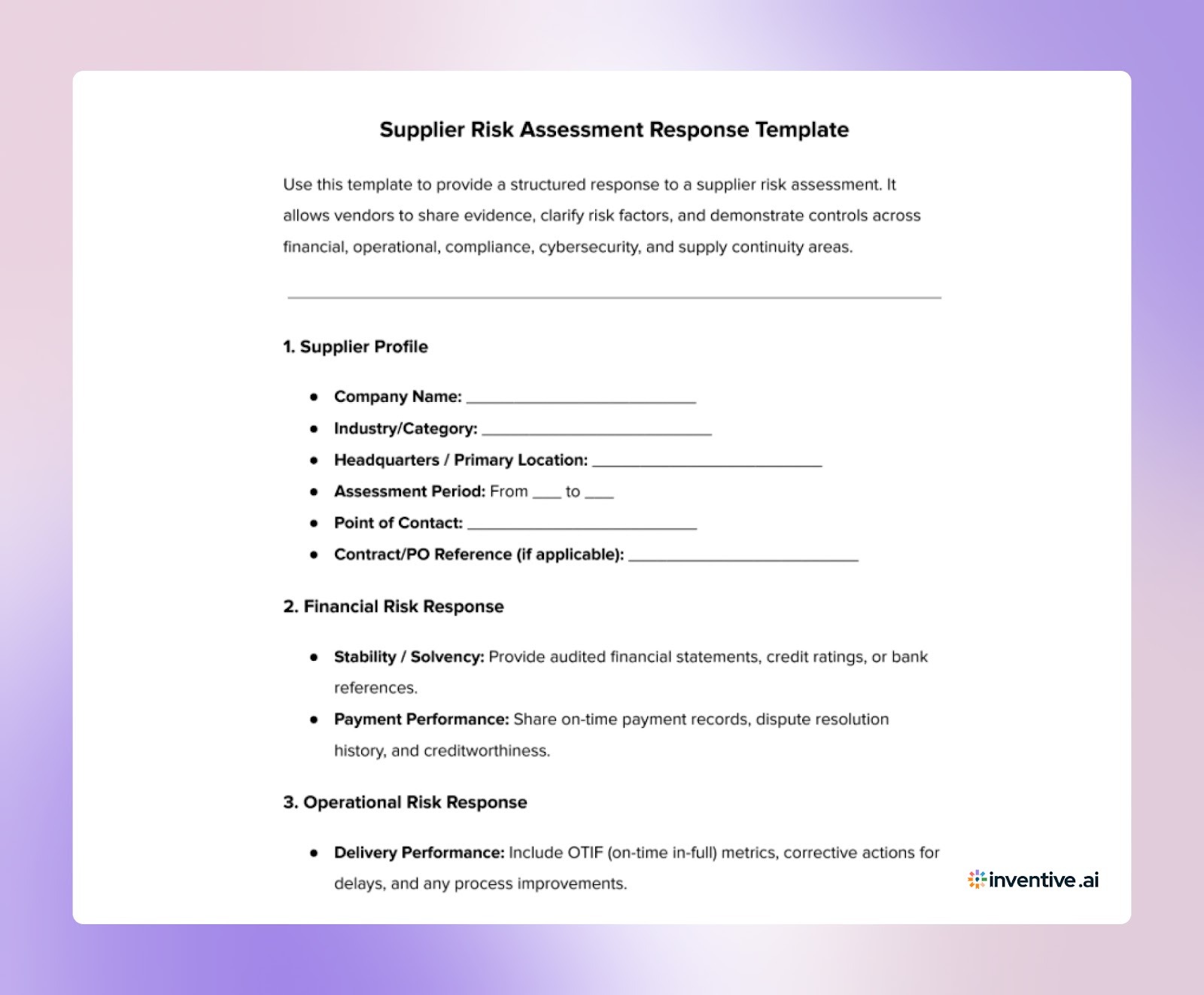

To show buyers your true performance, provide structured, evidence-based inputs. This template helps you document financial stability, operational reliability, compliance, cybersecurity, and continuity, ensuring your eligibility for renewals, RFIs, and future RFPs.
- Supplier Profile: Captures your company and contract details so buyers can accurately link your responses to the correct engagement. Ensures traceability and accountability in the assessment process.
- Financial Risk Response: Shows your financial stability, creditworthiness, and payment reliability. Providing audited statements and references reassures buyers about solvency and financial risk management.
- Operational Risk Response: Demonstrates your ability to deliver consistently and handle fluctuations in demand. Metrics like OTIF, corrective actions, and capacity plans highlight operational reliability.
- Compliance Risk Response: Provides proof of regulatory adherence and contract fulfillment. Licenses, permits, SLA evidence, and audits demonstrate to buyers that you meet legal and contractual obligations.
- Cybersecurity Risk Response: Details your data security posture and incident history. Security certifications and mitigation steps help buyers evaluate your ability to protect sensitive information.
- Supply Continuity Risk Response: Illustrates how you manage single-source dependencies and logistics risks. Sharing redundancy plans and mitigation strategies reassures buyers that service will remain uninterrupted.
- Overall Response Summary: Consolidates strengths, improvements, and proactive measures into a single narrative. Optionally, highlight mitigation plans for any gaps to show accountability and transparency.
- Supporting Documents: Attach all evidence referenced in the responses, including financial reports, audits, compliance certificates, and KPIs. Helps buyers verify claims and reduce perceived risk.
- Optional Scorecard / Metrics Dashboard: Visualizes performance trends and weighted risk averages for easy buyer review. It can be implemented in Excel or BI tools to clearly present your risk profile.
Also Read: How to Create an AI Supplier Questionnaire for Vendors
Even with a strong response template, vendors risk losing points if submissions are incomplete or unsupported. Avoiding common pitfalls ensures credibility and protects RFP and renewal eligibility.
How Vendors Can Avoid Losing Points in Supplier Risk Assessments?
Submitting a risk assessment response can be tricky, and even small mistakes can affect how buyers perceive your reliability. Understanding common challenges helps you address issues proactively and maintain credibility for renewals, RFIs, and future RFPs.
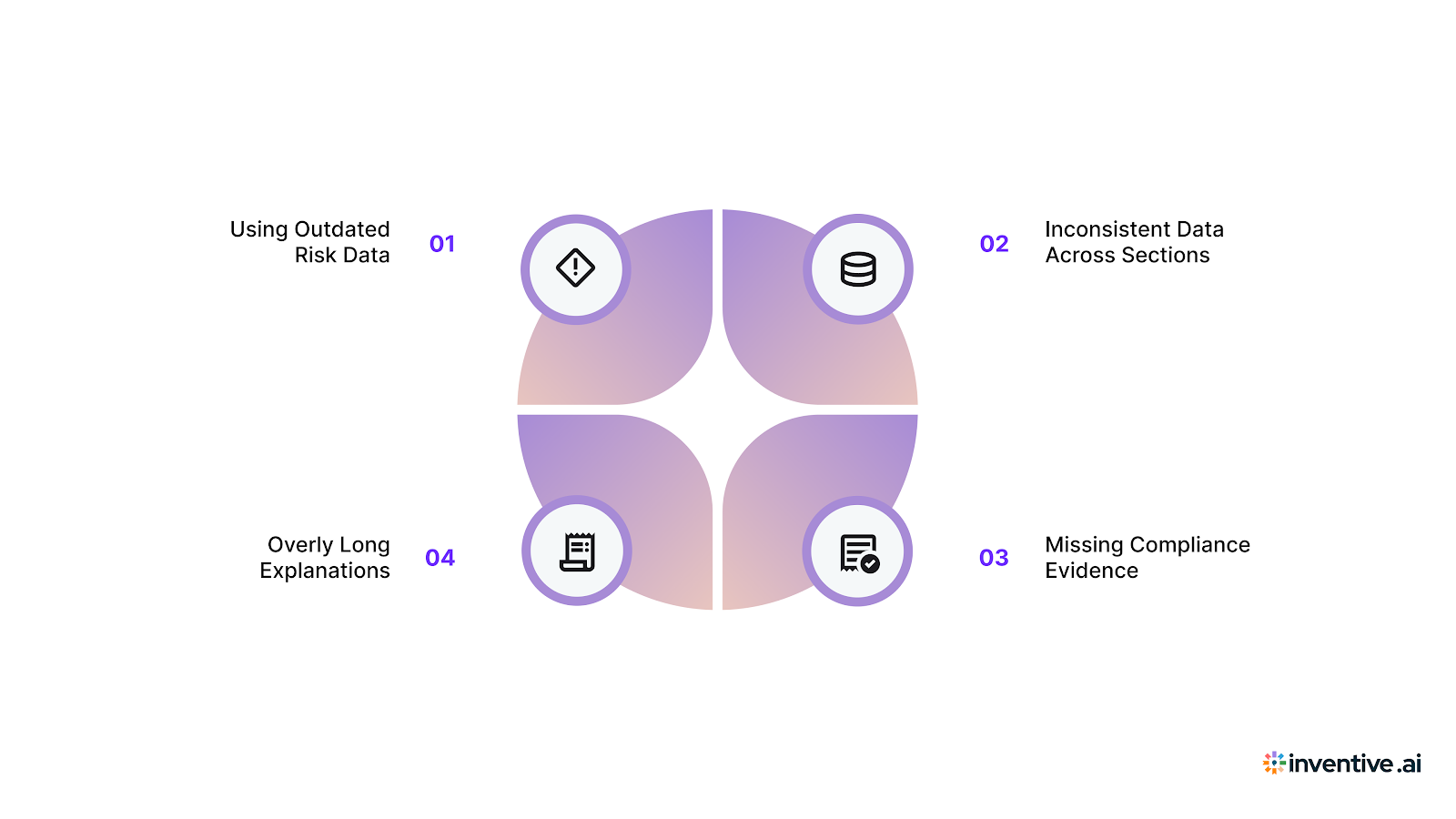
1. Using Outdated Risk Data
Vendors sometimes reference expired certifications or historical performance metrics, which can make buyers question the accuracy and relevance of their submissions.
How to Fix: Ensure that all sections of your response are updated with the most current performance metrics, compliance records, and certifications before submission.
2. Inconsistent Data Across Sections
Conflicting numbers or metrics in different sections can confuse buyers and undermine trust in the submission.
How to Fix: Cross-check all data against a single source of truth and ensure that figures are consistent throughout every section of the template.
3. Missing Compliance Evidence
Stating compliance without attaching proper supporting documents can raise risk concerns and reduce buyer confidence.
How to Fix: Always include audit reports, licenses, certificates, and policy documents in the relevant sections to substantiate your compliance claims.
4. Overly Long Explanations
Writing long narratives that do not directly address the assessment criteria can obscure key metrics and diminish the clarity of your response.
How to Fix: Keep all explanations concise, focused, and directly aligned with the buyer’s risk assessment criteria, highlighting measurable outcomes where possible.
Also Read: RFP Response Trends and Benchmarks: Key Insights for 2026
Structured templates help, but scaling and maintaining accuracy across submissions often requires intelligent tools like Inventive AI.
Streamline Supplier Risk Assessment Responses with Inventive AI
Completing supplier risk assessment responses manually can be slow and error-prone. Inventive AI centralizes content, detects inconsistencies, and aligns responses with buyer criteria, helping vendors submit faster, accurate, and professional assessments.
Key Capabilities of Inventive AI:
2x Higher Response Quality
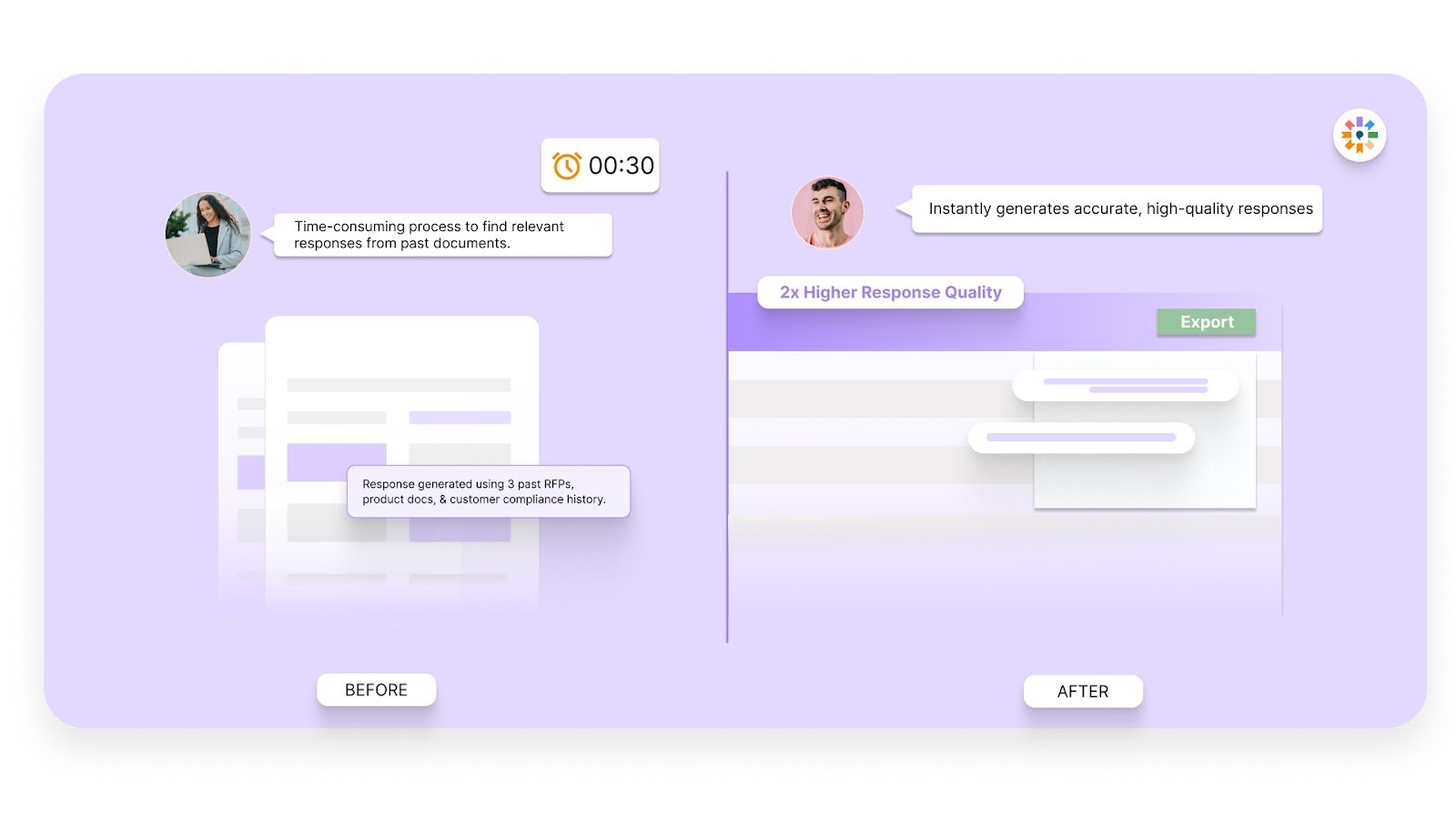
Multi-agent AI generates structured, complete responses that typically require minimal revision, improving submission consistency and enabling RFPs to be completed up to 90% faster.
Context-Aware RFPs
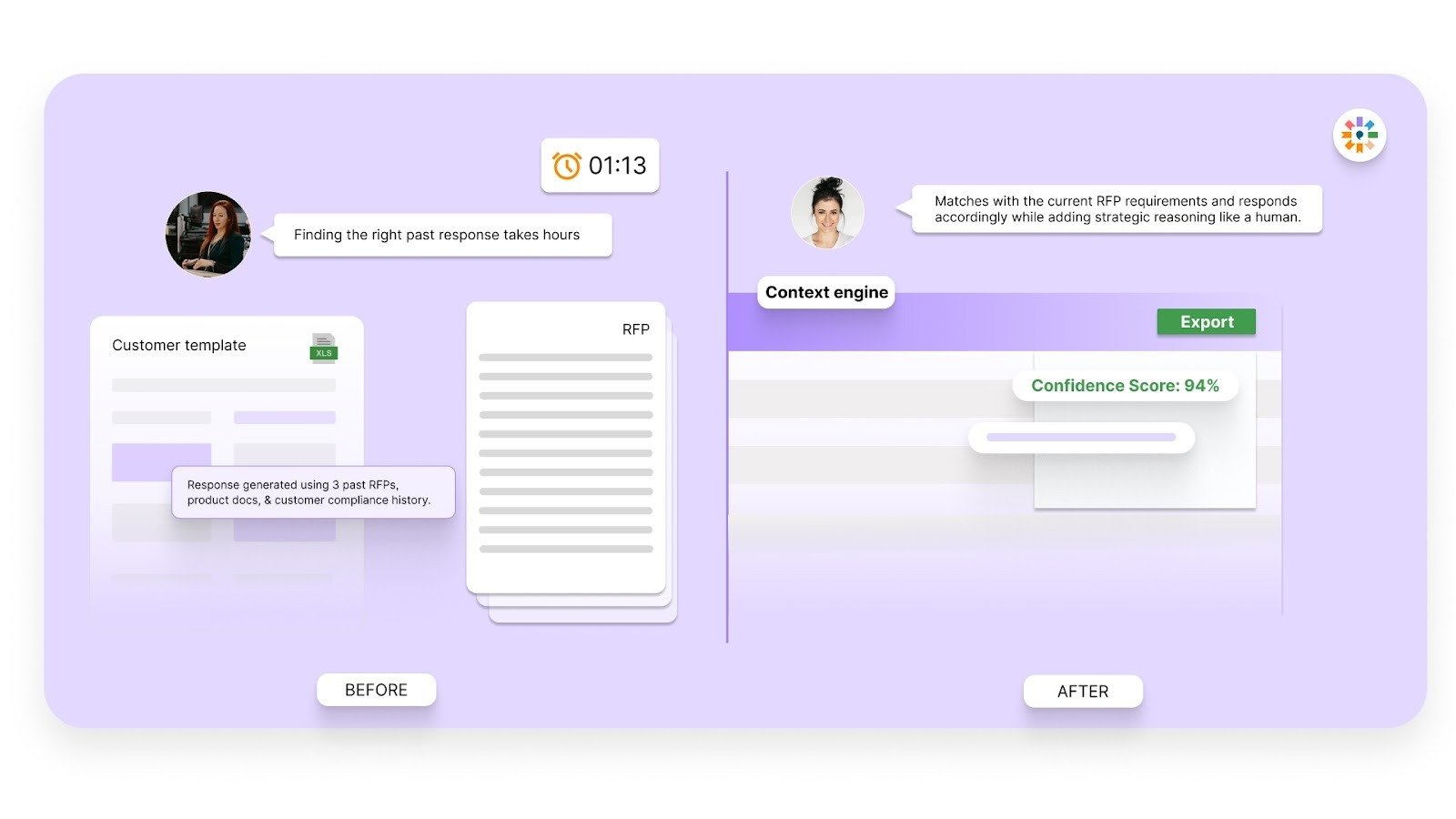
Inventive AI evaluates the entire RFP, including scope, compliance requirements, and evaluation criteria. Responses align with project-specific requirements rather than relying on static boilerplate, helping vendors achieve up to 50% higher win rates.
Instant Conflict Detection Before Submission
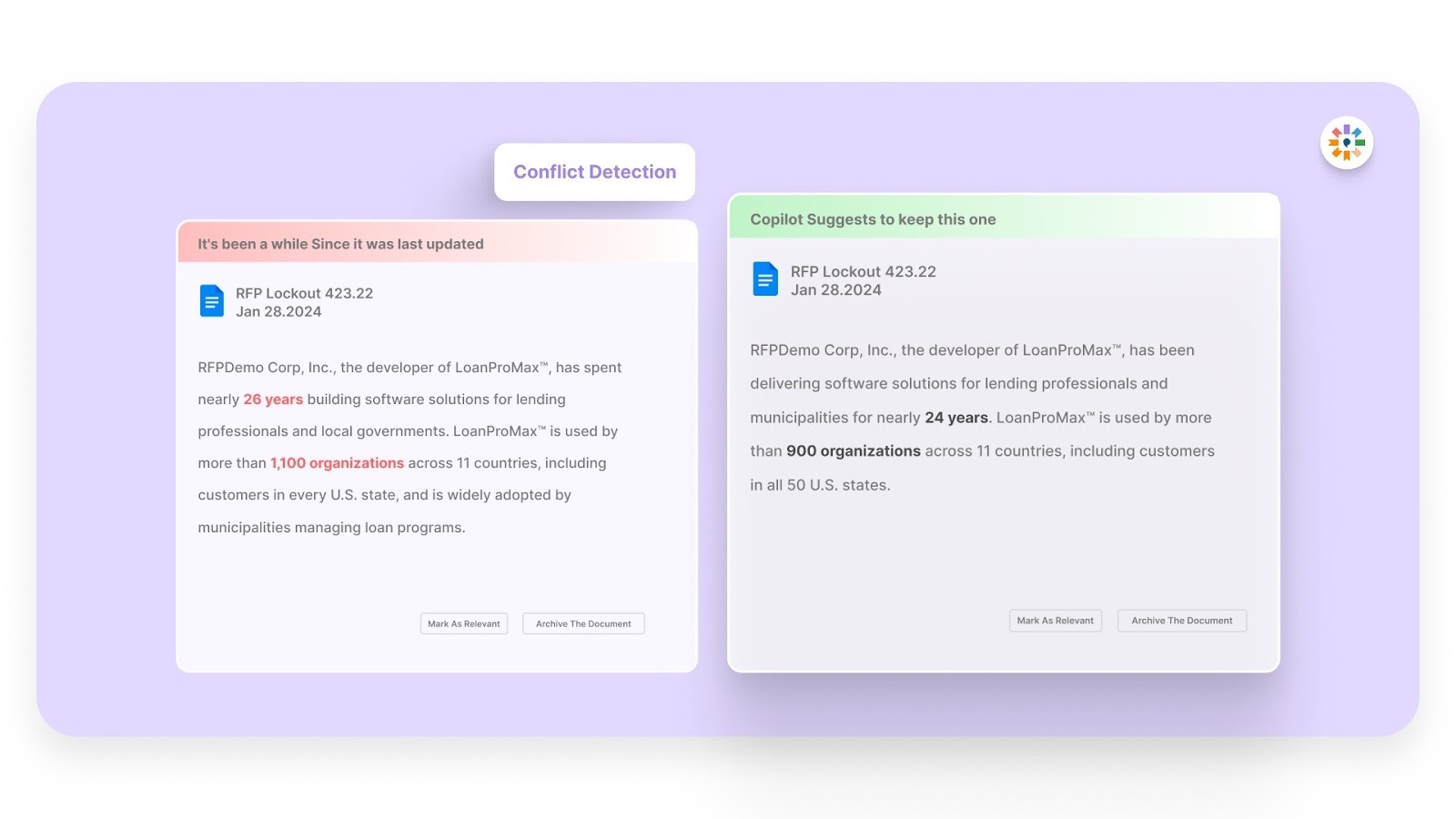
Avoid costly mistakes by having Inventive AI identify and resolve any inconsistencies or conflicts in your responses before submission, ensuring that everything is aligned and accurate.
Outdated Content Detection
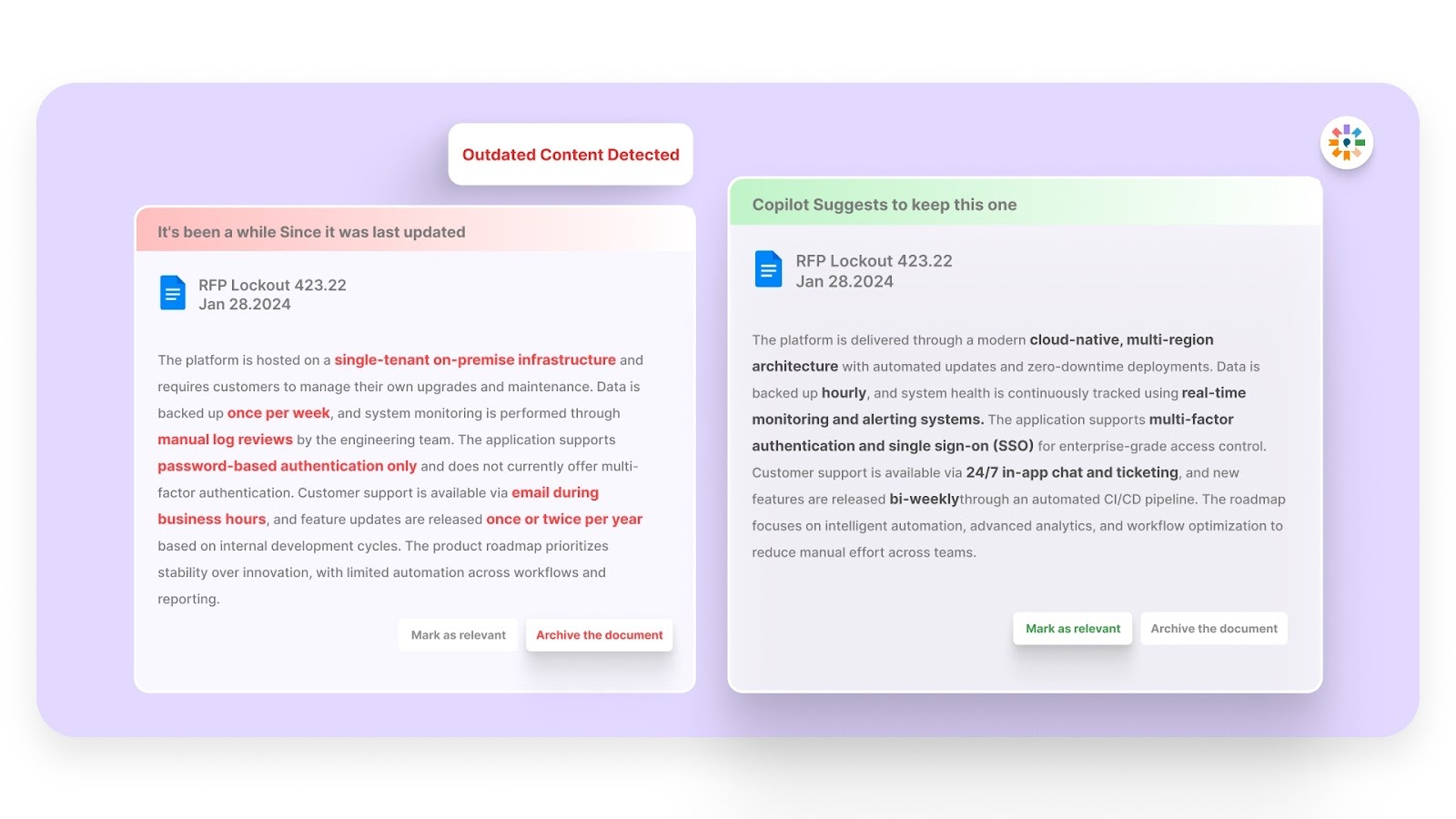
Never submit outdated information again. Inventive AI automatically flags and updates any content that is no longer relevant, so your responses stay fresh and aligned with the latest industry standards.
Narrative-Style Proposals
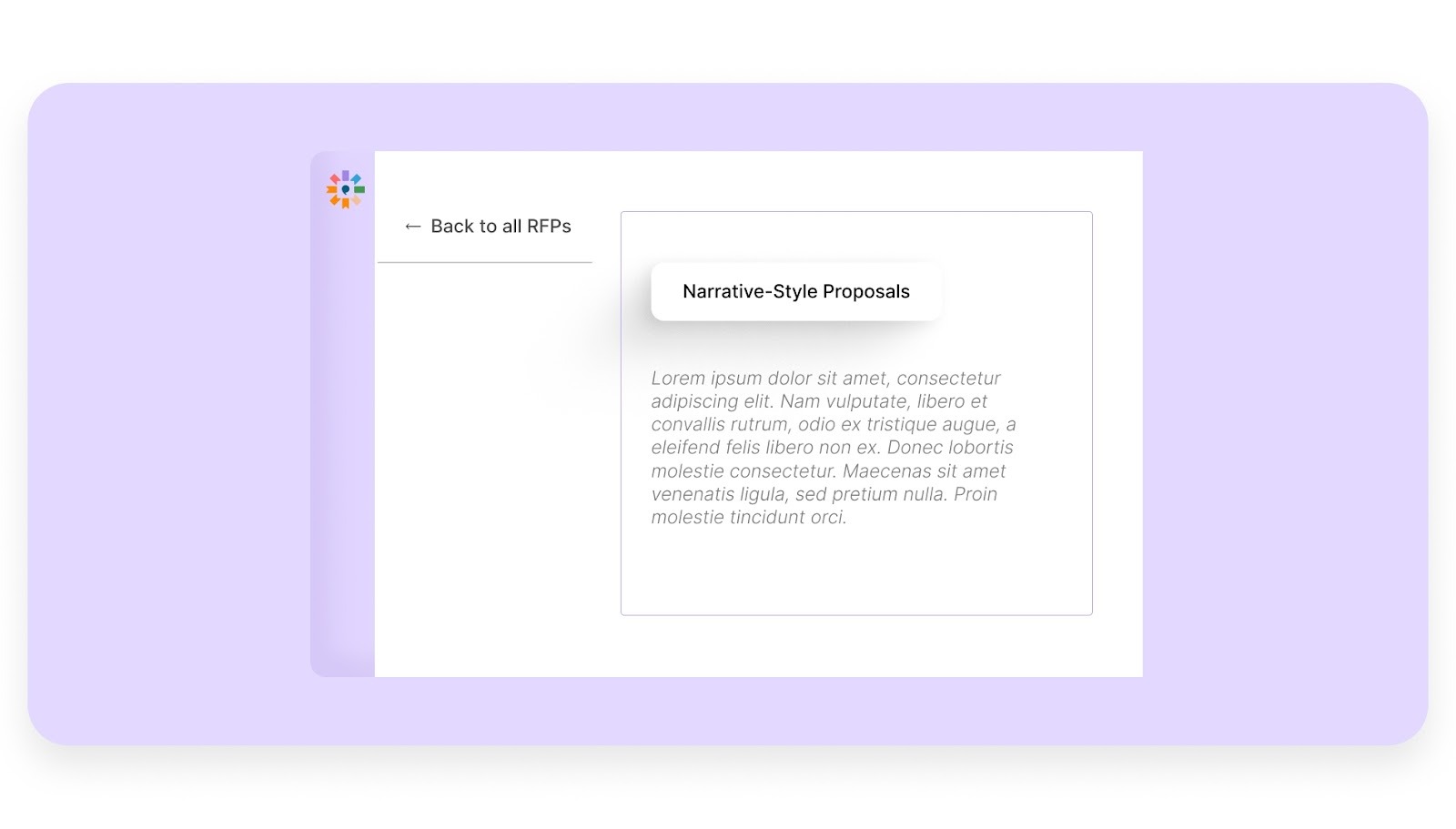
Say goodbye to fragmented, disjointed answers. Inventive AI ensures your proposals are cohesive, professional, and tell a compelling story that resonates with the buyer.
Simple, Easy-to-Use Interface
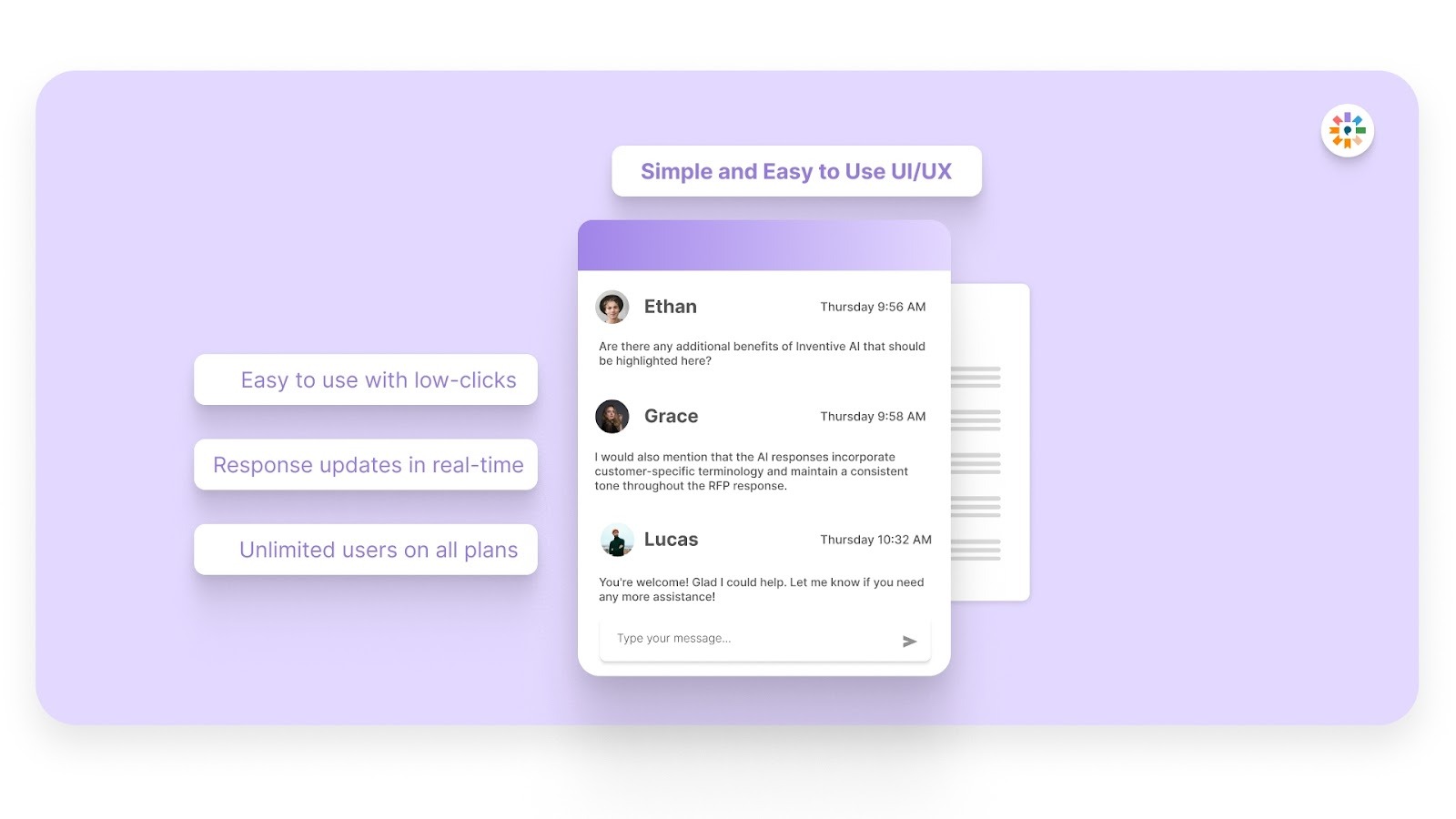
Inventive AI is designed for real proposal teams, not just technical users. Stakeholders across HR, sales, legal, and compliance can contribute without training overhead, reducing coordination friction and keeping responses moving forward.
With Inventive AI, vendors can improve the clarity, consistency, and quality of their supplier risk assessment responses, reduce the risk of errors, save time, and strengthen readiness for renewals, audits, and future RFPs.
FAQs
1. How often should vendors update their supplier risk assessment responses?
Vendors should update responses quarterly or whenever critical events occur, such as new certifications, operational changes, or cybersecurity incidents, to ensure buyers receive accurate, credible, and audit-ready information.
2. Can multiple vendors share the same response template effectively?
Yes, templates can be standardized across vendors, but each response must include company-specific metrics, evidence, and corrective actions to maintain credibility and reflect true performance.
3. How can vendors showcase improvement in operational risks?
Vendors can highlight recent OTIF performance, capacity expansions, process optimization, and corrective action measures to demonstrate consistent delivery and ability to handle demand fluctuations.
4. What role does cybersecurity documentation play in buyer decisions?
Detailed records, such as certifications, penetration tests, and incident management policies, reassure buyers that sensitive data is protected, thereby reducing perceived risk and strengthening a vendor's eligibility for contracts.
5. How can vendors make their responses stand out without adding fluff?
Focus on concise, structured, and evidence-backed content. Use metrics, KPIs, and dashboards to communicate performance, improvements, and mitigation plans, ensuring clarity and professionalism in every submission.
.avif)


%20Free%20Excel%20Checklist.jpg)

.jpg)


%20Craft%20Winning%20Vendor%20Responses%20Quickly.jpg)