Vendor Due Diligence: 12 Best Practices to Win More RFPs in 2026

Did you know that around 47% of organizations complete 11 or more vendor questionnaires each year, spending about 2 hours per questionnaire? That adds up to hundreds of hours lost annually to repetitive RFP tasks.
Much of this time is consumed by vendor due diligence, which involves reviewing financials, compliance documents, security protocols, and past performance for each RFP. When documents are scattered and responses inconsistent, your team spends even more time, slowing the sales cycle and increasing the risk of errors or missed opportunities.
In this blog, you'll learn 12 vendor due diligence best practices that optimize RFP responses, save time, and improve your chances of winning deals.
Key Takeaways
- Centralize due diligence documents to eliminate search time, reduce errors, and ensure every response uses verified financial, compliance, and operational data.
- Automate drafting and formatting to speed up responses while maintaining consistency, freeing your team to focus on review and customization.
- Keep all content current by regularly updating certifications, policies, and templates to avoid outdated or conflicting information in submissions.
- Standardize and track processes using checklists, templates, and clear ownership to prevent missed requirements and ensure complete, compliant responses.
- Personalize responses for each buyer by aligning with industry needs, evaluation criteria, and relevant proof points to strengthen credibility and win more RFPs.
- Inventive AI helps to automate the drafting and formatting of RFP responses, speeding up processes while ensuring consistency, freeing your team to focus on review and customization.
Vendor Due Diligence Explained: What It Means for RFP Success
Vendor due diligence is the process of evaluating a vendor’s financial stability, compliance, operational capabilities, and risk profile. This assessment is done before engaging in a business partnership or responding to an RFP to ensure you can reliably meet the buyer’s requirements and demonstrate your capabilities with evidence.
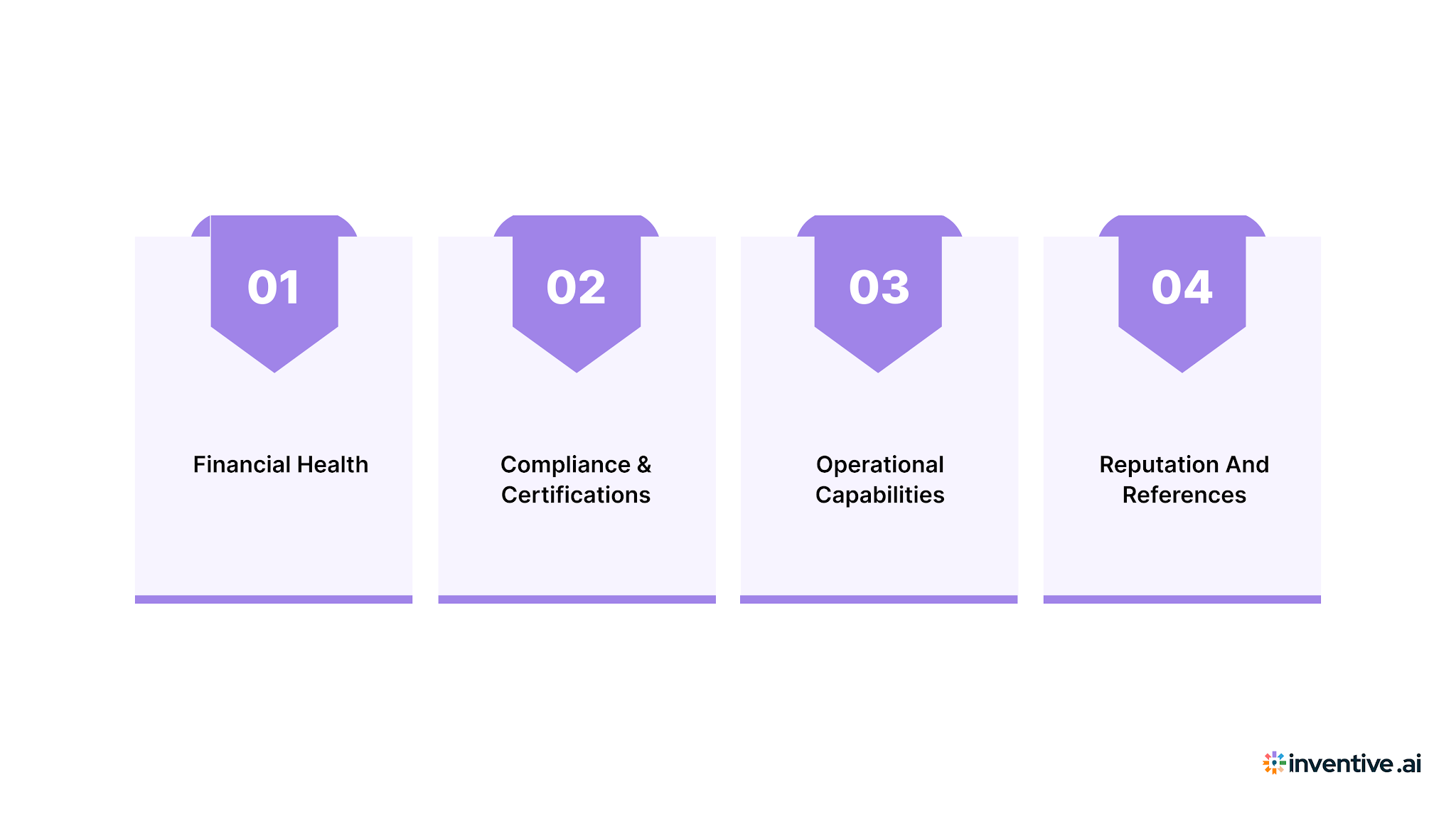
Key areas typically assessed include:
- Financial health: Profitability, stability, and creditworthiness.
- Compliance & certifications: Regulatory adherence, industry standards, and security protocols.
- Operational capabilities: Ability to deliver on RFP requirements consistently and at scale.
- Reputation and references: Client testimonials, case studies, and past project performance.
For example, a vendor responding to a healthcare RFP may need to demonstrate HIPAA compliance, provide relevant security certifications, and show successful past implementations.
Why Vendor Due Diligence Matters for You?
Thorough vendor due diligence is key to winning RFPs and earning buyer confidence. It ensures your proposals are complete, accurate, and stand out from the competition.
- Builds Credibility with Buyers: Clear, documented evidence of capability increases buyer confidence.
- Reduces Delays: Providing complete, organized documentation up front allows buyers to evaluate your proposal faster.
- Improves Win Rate: Vendors who demonstrate thorough due diligence are more likely to stand out and secure deals.
- Mitigates Risk: Ensures your services, operational standards, and compliance measures meet buyer expectations, reducing the chance of post-contract issues.
By completing vendor due diligence effectively, you improve your RFP process and position yourself as a reliable, professional partner.
To stay competitive and win more RFPs, vendors need a structured approach that addresses these hurdles efficiently. The next section outlines 12 actionable best practices for vendor due diligence that help you strengthen processes and improve your chances of winning deals.
Vendor Due Diligence Best Practices: 12 Strategies to Win More RFPs
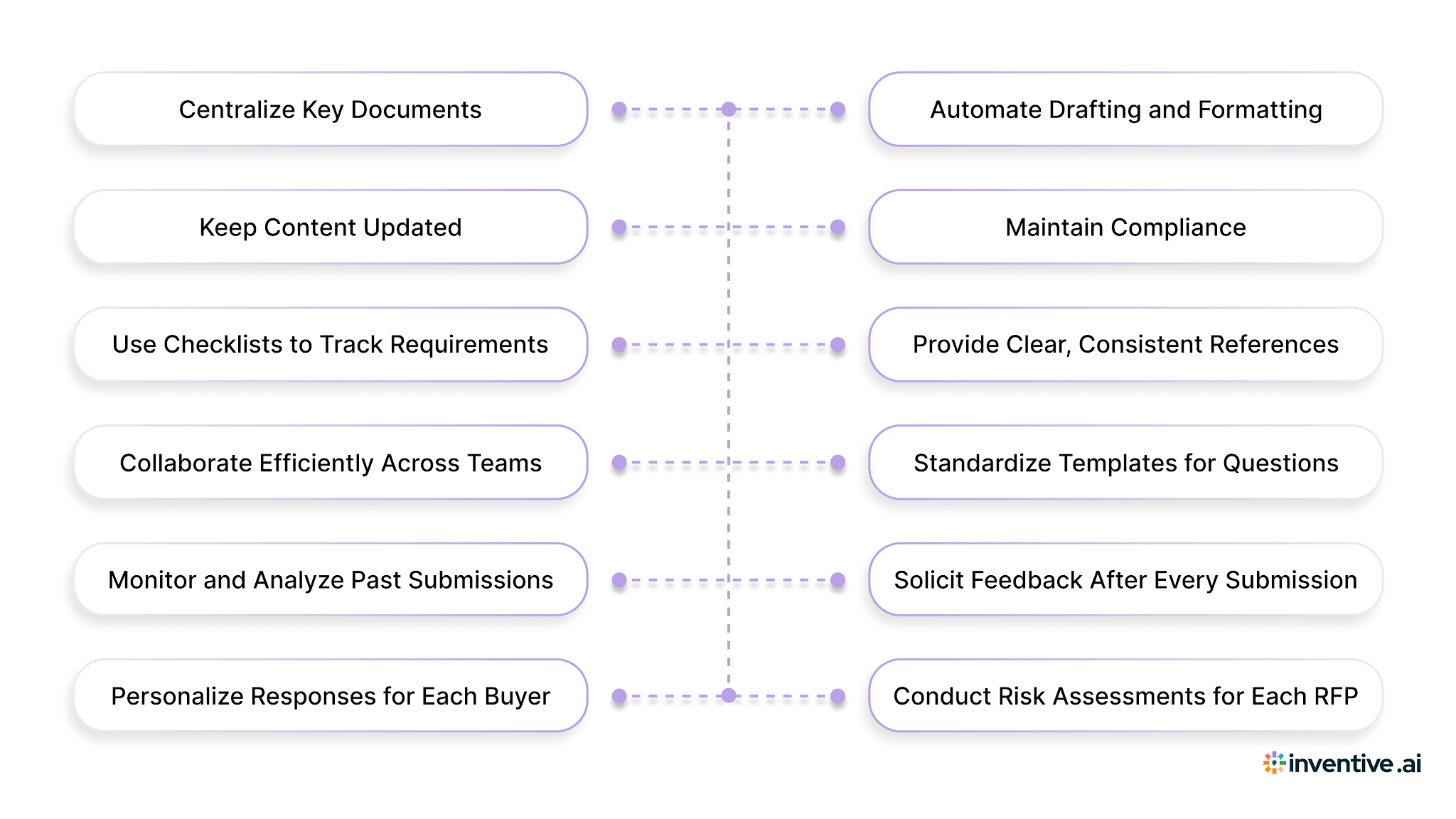
Responding to RFPs effectively requires you to follow a structured vendor-due-diligence approach. By implementing these best practices, you can simplify your processes, stay consistent, reduce errors, and improve your win rate while saving valuable time.
1. Centralize Key Documents
Vendors often waste hours searching for scattered files, increasing the risk of errors and delays. Centralizing documents ensures your team can access everything quickly and respond consistently.
Actionable Steps:
- Maintain a single hub for financial records, compliance certificates, and project evidence.
- Use cloud storage or AI-powered knowledge hubs to make retrieval easy.
- Ensure all teams access the same source to avoid duplicated efforts.
Example: A technology vendor centralizes SOC 2 reports, client references, and security certificates in a single hub, reducing the time spent finding information and cutting RFP response time by up to 90%, enabling instant access during submissions.
2. Automate Drafting and Formatting
Manually writing responses is slow and error-prone, especially when multiple contributors are involved. Automation speeds up preparation and maintains professional formatting.
Actionable Steps:
- Use AI to generate initial drafts of responses.
- Automatically format documents to meet RFP standards.
- Focus your team on reviewing and customizing content rather than rewriting it.
Example: A healthcare vendor can pre-fill HIPAA compliance responses using AI, enabling teams to focus on personalizing details to each RFP.
3. Keep Content Updated
Using outdated or inconsistent content can reduce credibility and cost deals. Regular updates ensure that buyers always see accurate, relevant information.
Actionable Steps:
- Review templates, certifications, and references periodically.
- Flag expired or outdated documents automatically.
- Ensure each submission uses the latest information.
Example: A finance vendor can update its ISO 27001 certificate before each submission to ensure compliance and maintain credibility.
4. Maintain Compliance and Security Readiness
Buyers prioritize vendors who clearly demonstrate regulatory and security compliance. Staying prepared prevents last-minute scrambling and increases trust.
Actionable Steps:
- Keep all regulatory and security documents ready for submission.
- Conduct regular audits to verify compliance.
- Align documentation with buyer requirements for each RFP.
Example: A cloud services vendor should maintain CCPA and other US data privacy compliance records to make them easy to include in RFPs.
5. Use Checklists to Track Requirements
Missing a required document can delay evaluation or disqualify your submission. Checklists provide clarity and ensure nothing is overlooked.
Actionable Steps:
- Create RFP-specific checklists covering financials, certifications, and references.
- Track completion and assign responsibility for each item.
- Review checklists before submission to ensure all requirements are met.
Example: A logistics vendor should ensure safety compliance records and client testimonials are current for multi-state RFP submissions.
6. Provide Clear, Consistent References
Strong references reinforce credibility and help buyers verify your claims. Consistency and relevance make your submission stand out.
Actionable Steps:
- Include past projects, certifications, and client testimonials.
- Maintain a consistent format for all references.
- Customize references to align with buyer priorities.
Example: A logistics vendor can share case studies highlighting on-time delivery and safety compliance for similar projects.
7. Collaborate Efficiently Across Teams
Disorganized teamwork slows RFP responses and causes inconsistent answers. Efficient collaboration ensures accuracy and speed.
Actionable Steps:
- Use collaboration tools with defined workflows.
- Assign roles for content review, compliance checks, and approvals.
- Ensure all teams work from the same knowledge base
Example: A tech vendor should integrate Slack with an AI knowledge hub, allowing sales, legal, and finance teams to review content simultaneously.
8. Standardize Templates for Common Questions
Rewriting standard responses wastes time and can create inconsistencies. Templates save effort while maintaining quality.
Actionable Steps:
- Maintain approved templates for frequently asked questions.
- Customize templates only for unique buyer requirements.
- Store templates centrally for easy access.
Example: A cybersecurity vendor should keep pre-approved responses ready for common vendor questionnaire encryption standards.
9. Monitor and Analyze Past Submissions
Learning from past wins and losses helps you refine responses and improve future outcomes.
Actionable Steps:
- Track which responses led to successful deals.
- Identify gaps or areas needing improvement.
- Update templates and knowledge hubs based on insights.
Example: A SaaS vendor should emphasize implementation speed in future RFPs based on lessons learned from previous submissions.
10. Solicit Feedback After Every Submission
Feedback is a critical tool for improving future submissions and strengthening relationships with buyers.
Actionable Steps:
- Request debriefs after both wins and losses.
- Analyze feedback to identify strengths, gaps, and areas for improvement.
- Update knowledge hubs and templates based on lessons learned.
Example: A software vendor should adjust security compliance responses based on feedback to address any gaps, such as missing ISO certifications.
11. Personalize Responses for Each Buyer
Generic responses reduce credibility. Customized answers show buyers that you understand their specific needs.
Actionable Steps:
- Align responses with the buyer’s industry, priorities, and RFP requirements.
- Highlight relevant projects, certifications, or metrics.
- Include success stories that demonstrate your expertise.
Example: A logistics vendor should highlight same-region multi-state projects for a regional buyer to demonstrate operational capability.
12. Conduct Risk Assessments for Each RFP
Every RFP carries different operational, financial, or compliance risks. Understanding risks helps prioritize high-stakes proposals.
Actionable Steps:
- Identify potential risks related to compliance, finance, or project scope.
- Evaluate whether your team and systems can meet RFP demands.
- Prioritize high-risk RFPs for early review or specialized team collaboration.
Example: A vendor responding to a government RFP should review cybersecurity and legal obligations before submission to ensure compliance and readiness.
Also Read: A Practical Guide for High-Quality Cybersecurity RFP Responses
Even well-prepared vendors face roadblocks when applying these practices at scale. Let’s explore the key challenges that slow down due diligence and impact your RFP responses.
5 Common Vendor Due Diligence Challenges That Slow Down RFP Responses
Even experienced vendors face hurdles when performing due diligence for RFPs. Understanding these challenges helps you prepare, simplify responses, and avoid costly delays.
1. Scattered Documentation: Critical financial records, compliance certificates, and past project evidence are often stored across multiple systems or formats, making it hard to gather information quickly.
2. Inconsistent Responses: Multiple contributors can create variations in tone, accuracy, and completeness, increasing the risk of errors or missed requirements.
3. Time-Consuming Processes: Manual review and document compilation consume significant time, slowing the sales cycle and reducing your team’s capacity to focus on high-value tasks.
4. Complex Compliance Requirements: Different industries and buyers demand strict regulatory and security standards. Ensuring every requirement is met without overlooking details can be overwhelming.
5. Limited Visibility into Past Submissions: Without a centralized knowledge hub, vendors struggle to reference past RFP responses or lessons learned, leading to duplicated effort and missed opportunities for improvement.
Also Read: Due Diligence Questionnaire Template for Finance and Banking
With these challenges and best practices in place, vendors can significantly optimize due diligence and RFP processes. Platforms like Inventive AI further enhance efficiency by reducing errors, saving time, and minimizing risk at every stage of vendor due diligence.
Ensure Accurate, Consistent Vendor Due Diligence Responses with Inventive AI
Inconsistent or outdated due diligence responses slow reviews, reduce buyer confidence, and risk losing deals, directly impacting revenue and proposal success. Inventive AI’s RFP Agent simplifies the process, helping vendors produce consistent, accurate, and defensible responses across RFPs, DDQs, and security questionnaires.
Below is how Inventive AI reduces due diligence risk in practice:
2x Better Response Quality With Context-Aware Drafting
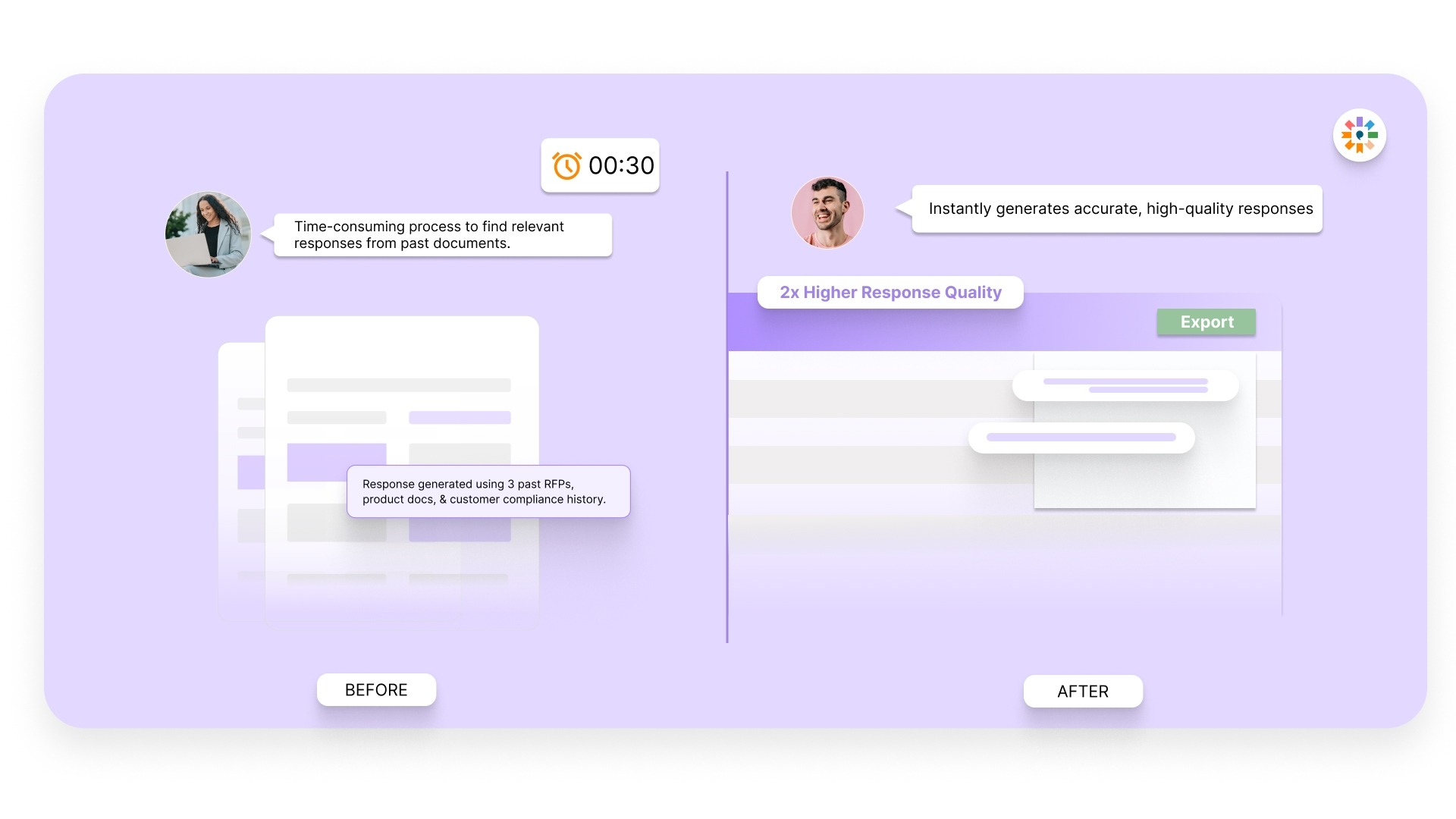
Inventive AI generates answers from your internal content, not generic templates. Its Context Engine links policies, processes, and past responses to ensure consistent answers across all sections.
AI-Powered Context Engine That Maintains Internal Consistency
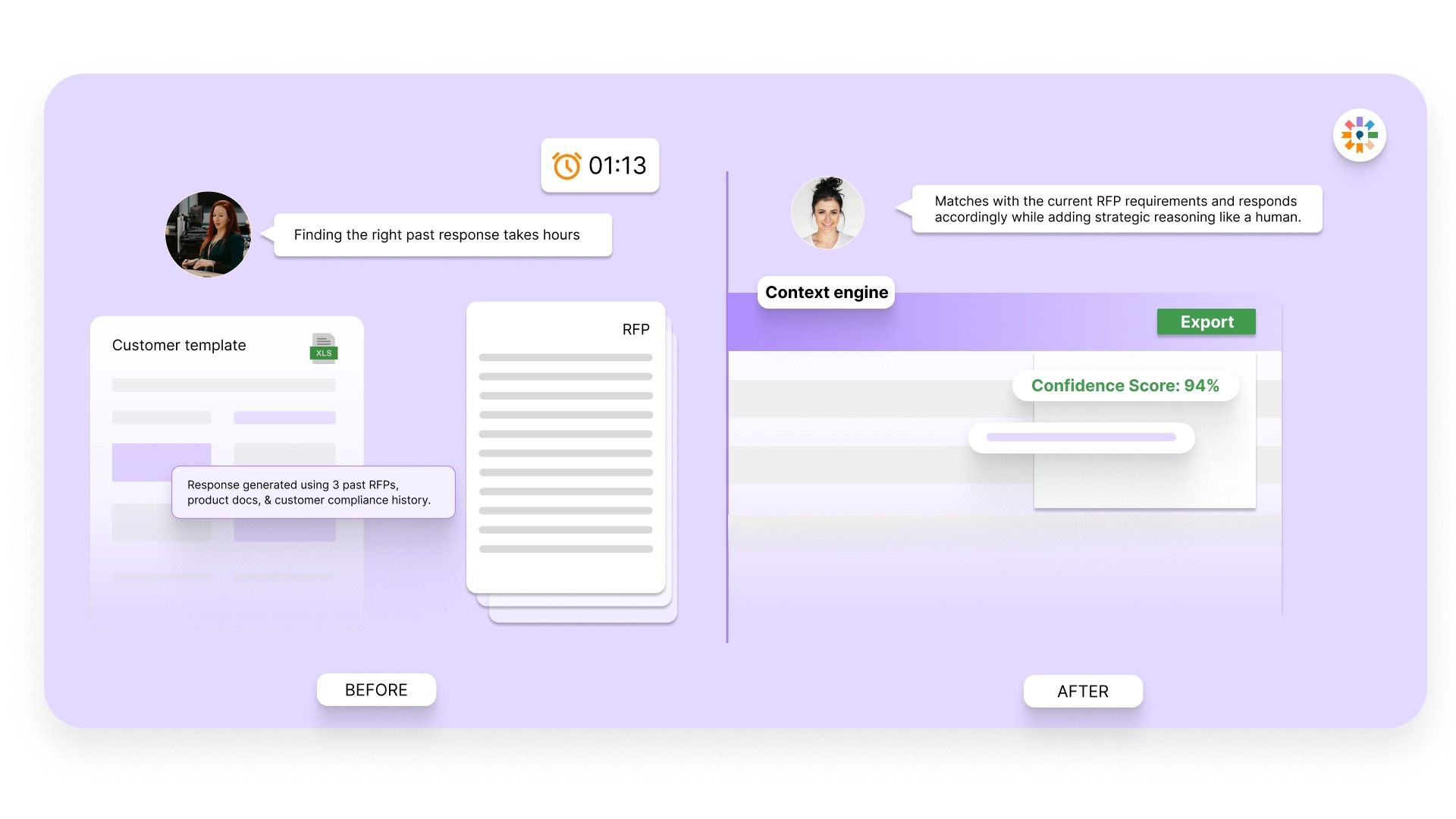
Due diligence questions often overlap across security, compliance, and operations. Inventive AI links related information across responses, ensuring answers remain consistent even when questions are phrased differently.
Instant Conflict Detection Across RFPs and Questionnaires
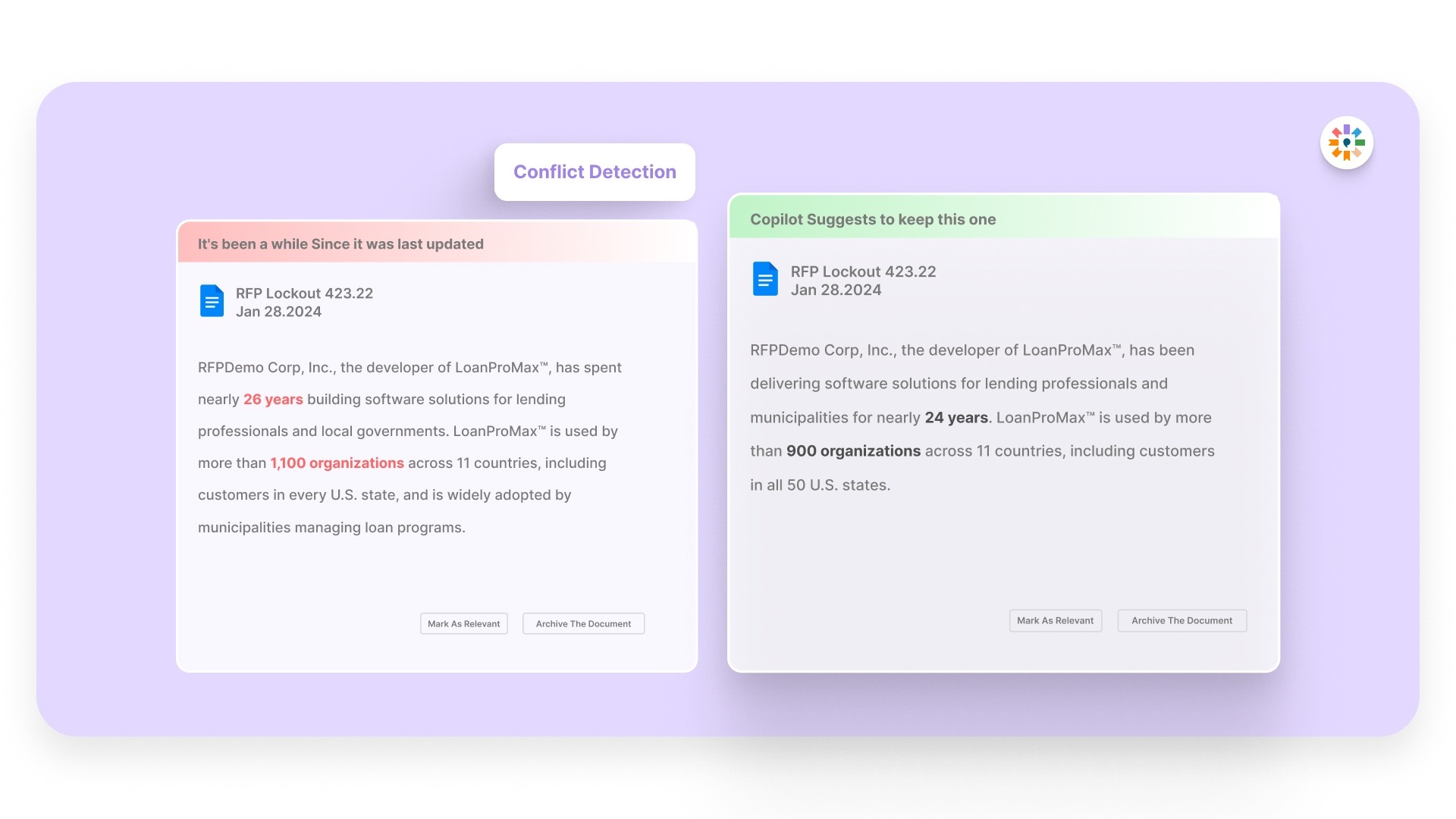
Contradictory answers can trigger follow-ups or escalate reviews. Inventive AI identifies conflicts across RFPs, DDQs, and security questionnaires before submission, allowing teams to fix issues internally and maintain consistent, reliable responses.
Outdated Content Detection to Prevent Policy Mismatches
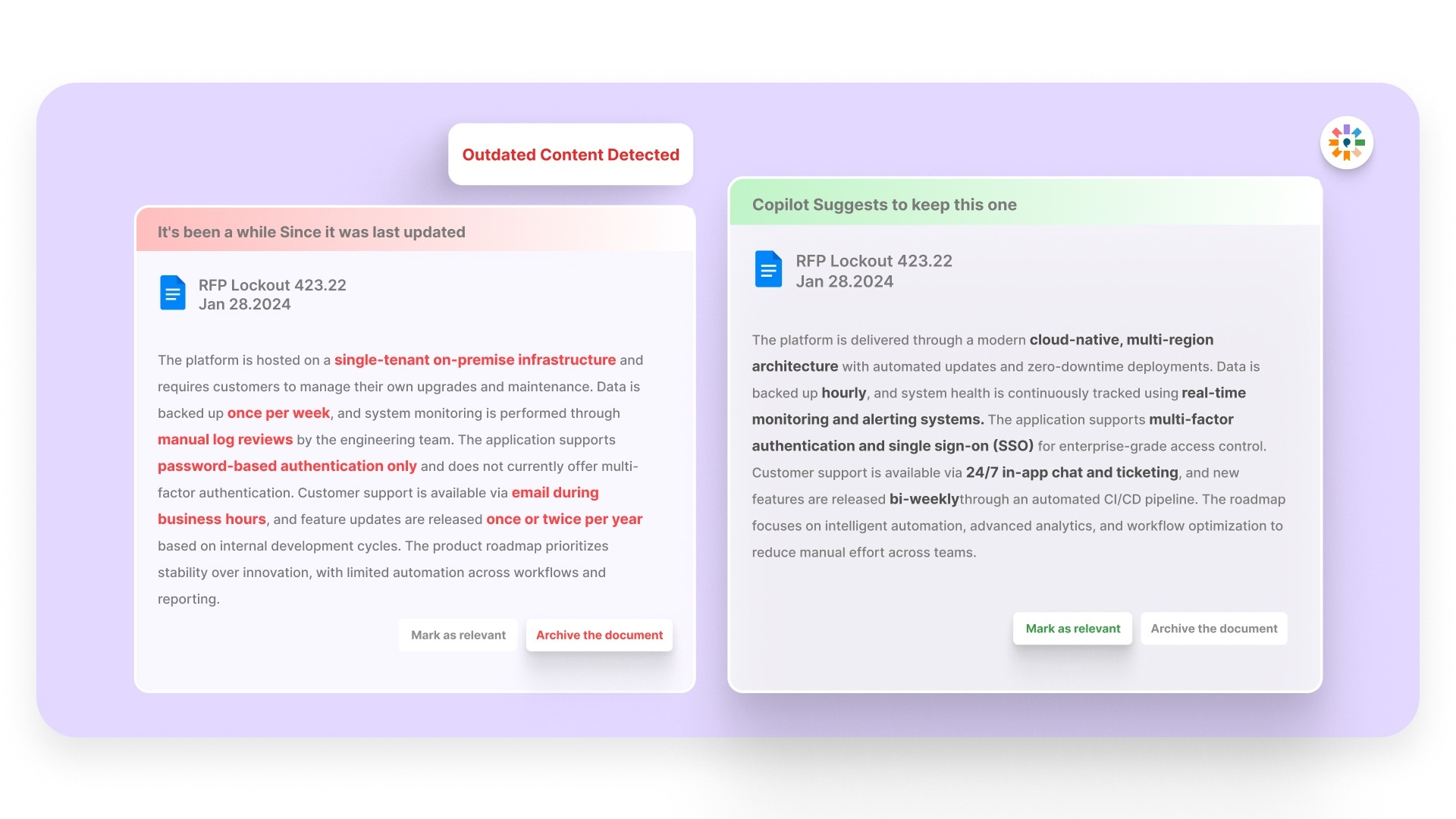
Buyers check policy dates, ownership, and relevance. Referencing outdated documentation weakens confidence. Inventive AI flags responses tied to outdated policies or processes so teams can update them before submission. This reduces risk during compliance and security reviews.
Quality Benchmarking for Defensible Responses
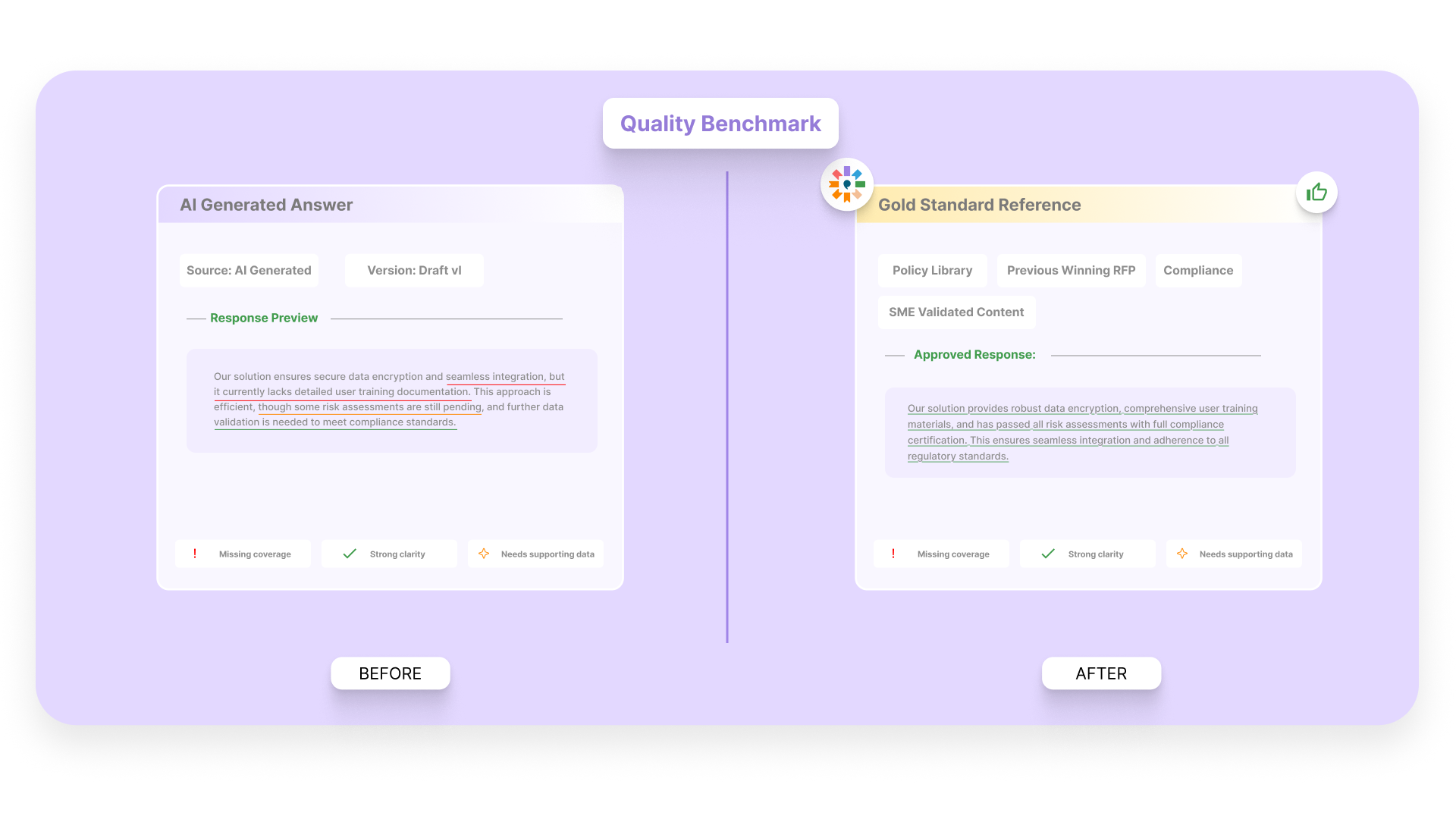
Inventive AI benchmarks responses against approved, high-quality content to ensure clarity and completeness. This improves the efficiency of internal review and reduces rework during due diligence.
Narrative-Style Proposals That Hold Together
Due diligence reviews assess more than checklists. Buyers look for a clear explanation of your operating model. Inventive AI generates cohesive narrative proposals, turning scattered answers into a complete, easy-to-follow overview of your capabilities.
FAQs
1. How can vendors prioritize high-value RFPs effectively?
Vendors should score RFPs based on revenue potential, strategic alignment, and resource requirements. Prioritization ensures that due diligence focuses on proposals with the highest likelihood of success and the greatest impact on business growth.
2. What role does cross-departmental training play in due diligence?
Training sales, legal, and operations teams on due diligence standards ensures consistent responses, reduces errors, and accelerates RFP completion. Knowledge sharing improves collaboration and aligns teams on buyer expectations.
3. How can vendors measure the ROI of their due diligence process?
Track metrics such as time spent per RFP, win-rate improvements, error reductions, and buyer satisfaction. Quantifying efficiency gains helps vendors justify investments in tools, templates, and AI solutions.
4. Can AI help identify gaps in a vendor’s operational readiness?
Yes. AI can analyze past responses, compare them with buyer requirements, and flag missing documents, outdated policies, or compliance gaps, enabling vendors to proactively address weaknesses before submission.
5. How can vendors maintain due diligence quality under tight deadlines?
Use standardized templates, automated content retrieval, and internal approval workflows. Clear responsibilities, pre-validated content, and AI-assisted drafting ensure accuracy without sacrificing speed, even for urgent RFPs.

.avif)