Best RFP Software for Legal Compliance Teams in 2026

If you sit on the legal or compliance side of RFP responses, you know the deadline pressure looks different for you. Sales wants the proposal out the door. You are the one accountable for every clause, disclosure, certification, and data privacy commitment inside it. One outdated SOC 2 statement or a stale GDPR clause reused from last year’s library can turn a winning proposal into a liability. The stakes keep rising. Gartner found that over 60% of legal leaders are prioritizing improvements in third-party and extended enterprise risk management in 2026 yet most legal and compliance teams still run RFP reviews through email threads, tracked changes, and manually maintained answer libraries.
This guide compares ten RFP platforms legal and compliance teams shortlist in 2026, looking specifically at how each handles content governance, security questionnaire depth, and audit-ready collaboration. For the complete market view across all teams and general use cases, see our guide to the 15 best RFP software tools in 2026.
Best RFP Software for Legal Compliance Teams: At a Glance
| Tool | Best for | Compliance strengths | Pricing | Rating |
|---|---|---|---|---|
| Inventive AI | Compliance-heavy RFP and questionnaire volume | Dedicated compliance agent to flag issues in the response, conflict/staleness detection, role-based review, SOC 2 Type 2 | Usage-based | 5/5 Gartner |
| Loopio | Teams with dedicated content managers | Named answer owners, review cadences, mature approval workflows | Subscription | |
| Responsive (RFPIO) | Large enterprises with complex approval chains | Broad workflow coverage, role-based permissions, enterprise integrations | Subscription | |
| Conveyor | Security questionnaire specialists | Trust portal, SOC/ISO artifact management, NDA-gated sharing | Subscription | |
| SafeBase | Trust-center document sharing | Compliance proof distribution, access controls, audit logs | Subscription | |
| DeepRFP | Small teams, simpler bids | Transparent pricing, quick setup, answer library reuse | From $75/mo | |
| AutoRFP AI | Fast first drafts | Rapid draft generation, template library | From $899/mo | |
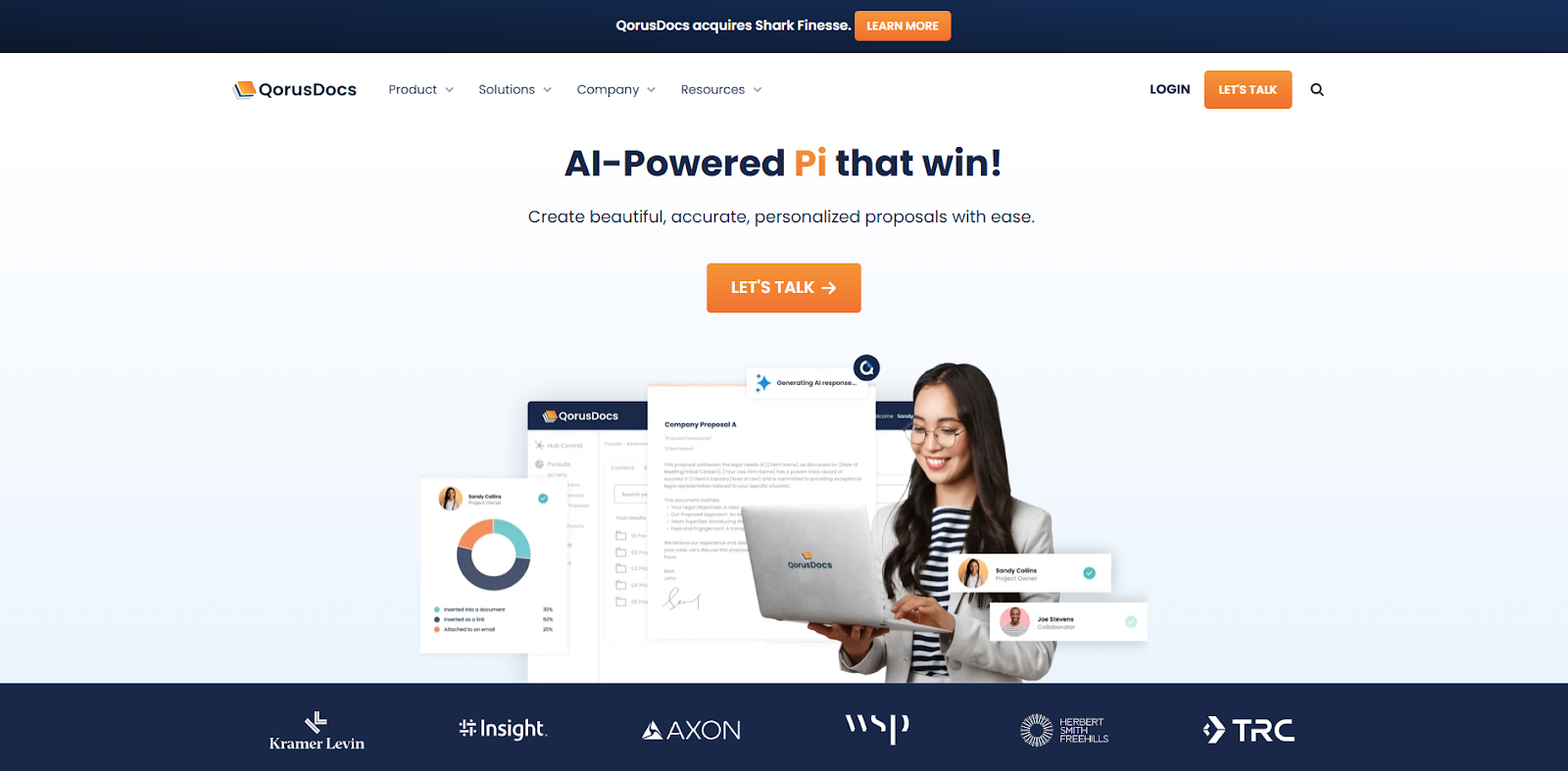
| QorusDocs | Microsoft-invested proposal teams | Document assembly, Office ecosystem integration | Subscription | |
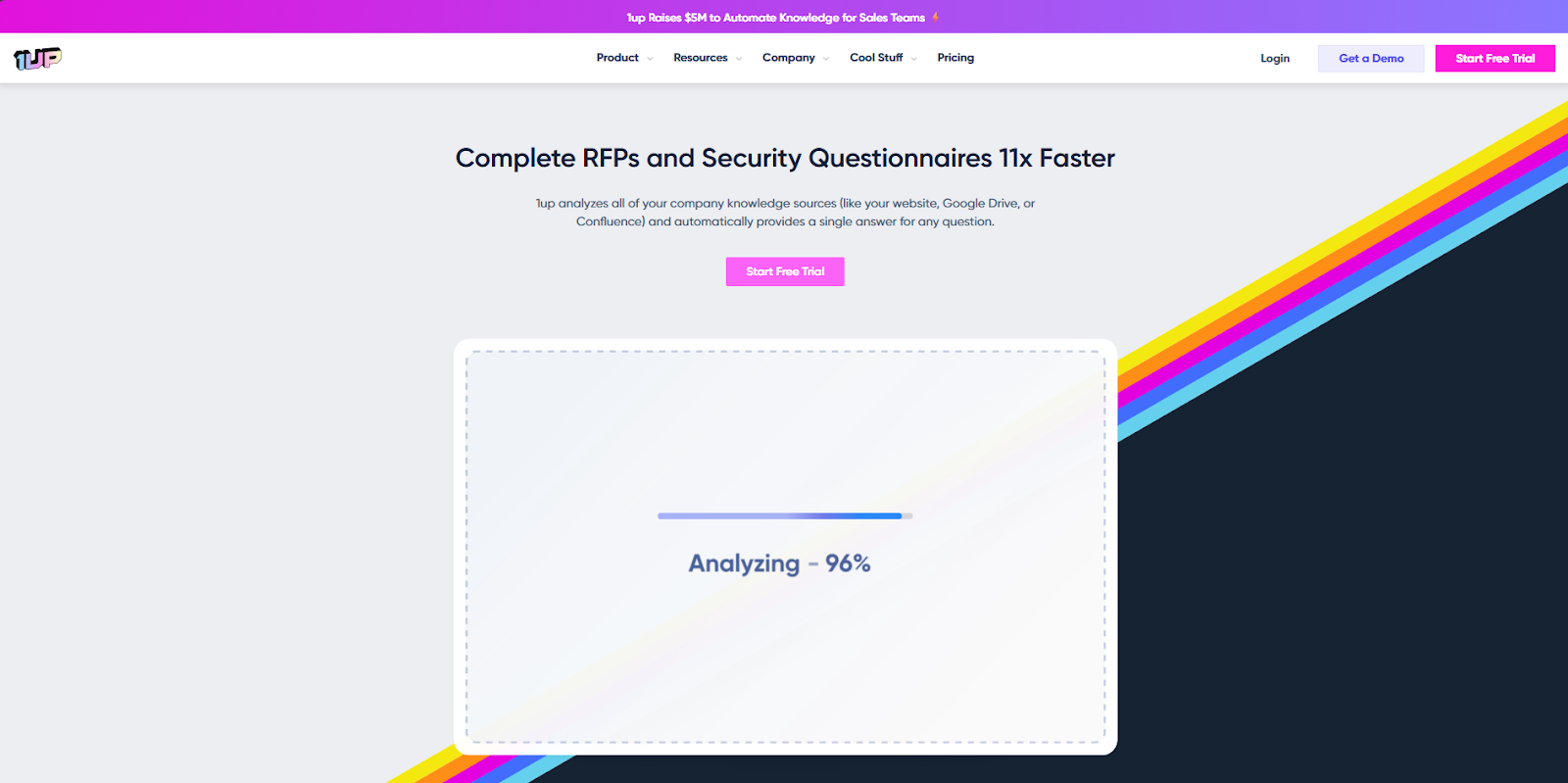
| 1up.ai | Internal knowledge lookups | Fast document search, minimal onboarding | From $300/mo | |
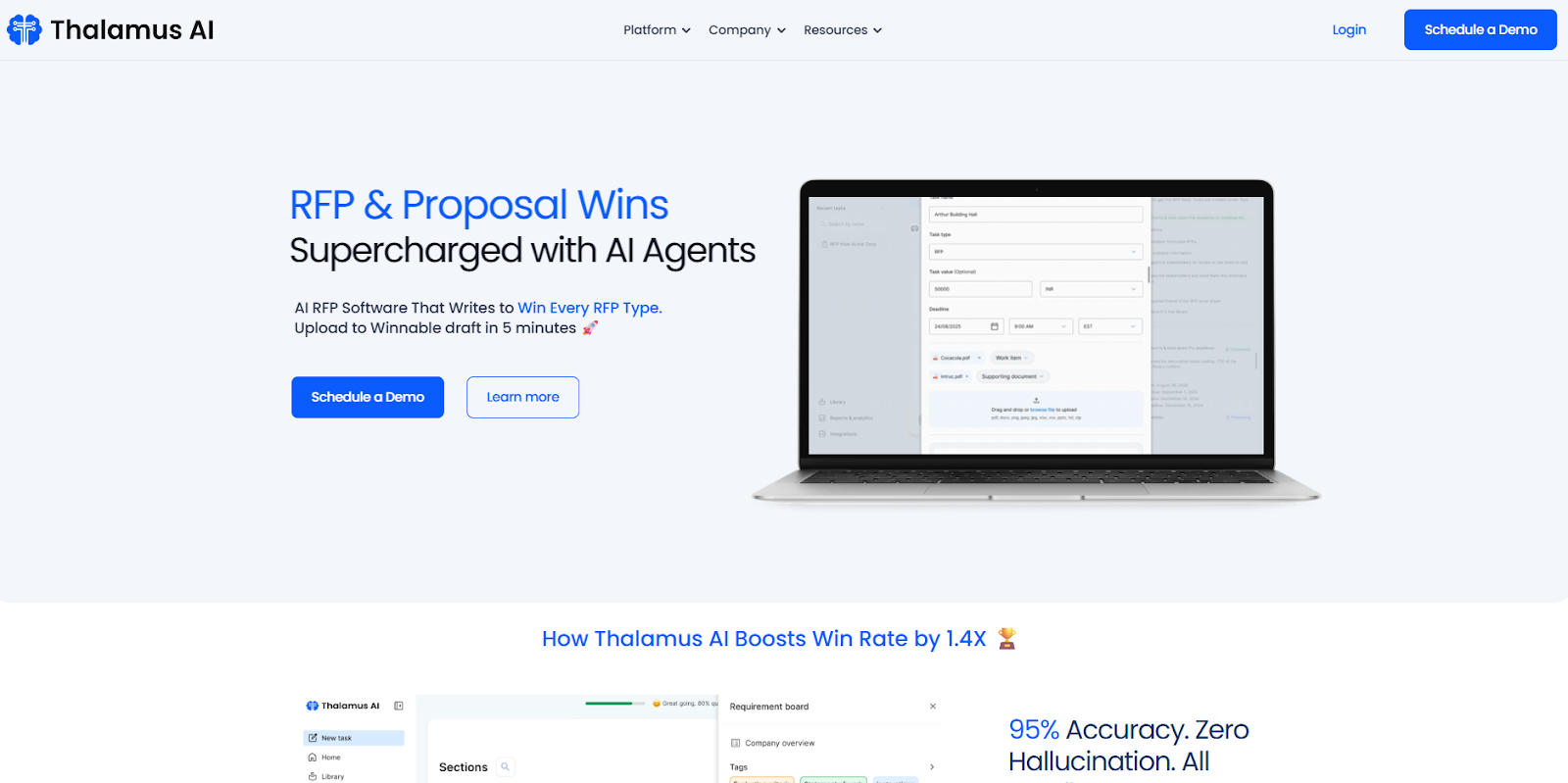
| Thalamus AI | Teams exploring agentic workflows | Modern agent-based architecture, flexible setup | Contact sales |
Key Takeaways
- Legal and compliance teams have different RFP requirements than sales or proposal teams: clause-level accuracy, governed content, privilege awareness, and audit trails matter more than drafting speed alone.
- The best RFP software for legal compliance teams combines AI drafting with content governance — conflict detection, staleness flagging, and source citations for every answer.
- No single tool fits every team. Full-platform options (Inventive AI, Loopio, Responsive) cover end-to-end response workflows, while specialists (Conveyor, SafeBase) excel at security artifact sharing and pair well alongside a drafting platform.
- Manually maintained libraries are the biggest compliance risk — whichever platform you pick, verify how it keeps content current before you buy.
Why Legal and Compliance Teams Need Purpose-Built RFP Software
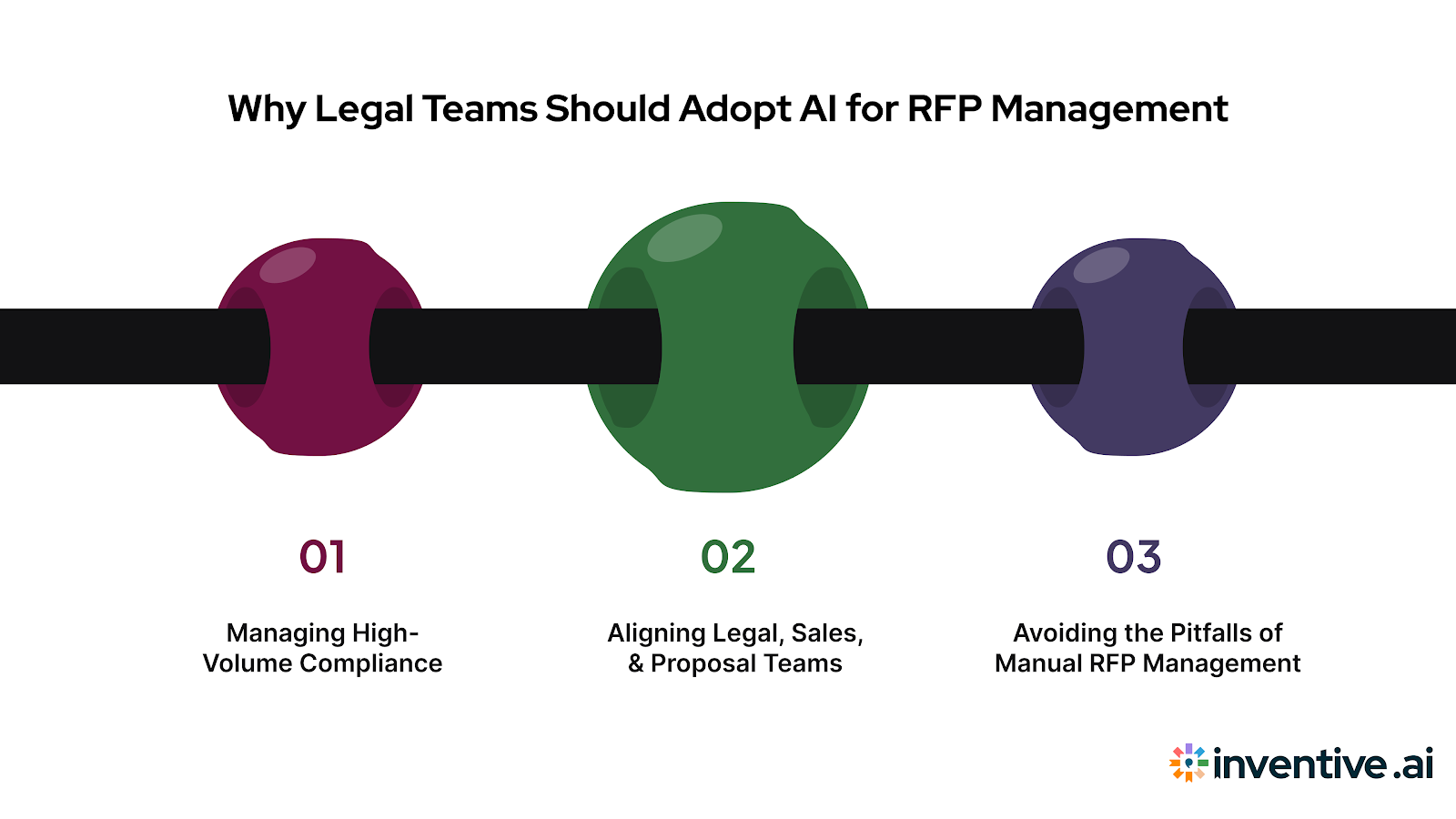
An RFP response is a set of representations your company makes to a buyer. Legal and compliance teams are the ones who own the truth of those representations. That changes what “good software” means.
1. Compliance and security questionnaires dominate the workload
Modern RFPs, DDQs, and vendor risk assessments bury legal and compliance reviewers in questions covering:
- Data privacy regimes (GDPR, HIPAA, CCPA, and state privacy laws)
- Security certifications and attestations (SOC 2, ISO 27001, FedRAMP)
- Confidentiality, IP, and attorney–client privilege handling
- Business continuity, insurance, and operational risk disclosures
Answering these manually is slow and risky. Reviewers reuse last quarter’s clause without noticing the certification renewed, the sub-processor list changed, or the retention policy was updated. RFP software built for compliance-heavy responses matches each question against the latest approved answer, flags inconsistencies, and cites the source document so reviewers can verify rather than rewrite.
2. Every answer needs a defensible source
For a sales team, a plausible answer is a starting point. For a compliance team, an answer without a traceable source is a liability. The platforms worth shortlisting show which policy, prior response, or certification each generated answer came from — so legal review becomes verification, not archaeology.
3. Cross-functional review can’t run on email
Legal reviews compliance language while sales refines positioning and security validates technical controls. When that happens across email threads and competing document versions, deadlines slip and conflicting edits slip through. Purpose-built platforms run these reviews in parallel with role-based permissions, so counsel approves clauses without waiting on — or being bypassed by — the rest of the team.
4. Manual libraries drift into risk
The most common failure mode isn’t a missing answer — it’s a confidently wrong one. Manually maintained answer libraries accumulate outdated clauses, duplicate entries with conflicting language, and approved-once-never-reviewed content. Whether governance is automated or process-driven, it needs to exist — that’s the line between compliance-grade platforms and generic proposal tools.
Pro tip: Keep approved legal templates, past responses, and compliance documents in a single governed knowledge hub with named owners and review dates. A library nobody owns is a library you can’t trust under deadline.
Also read: How to Write an Effective RFP Response
The 10 Best RFP Software Tools for Legal Compliance Teams
1. Inventive AI
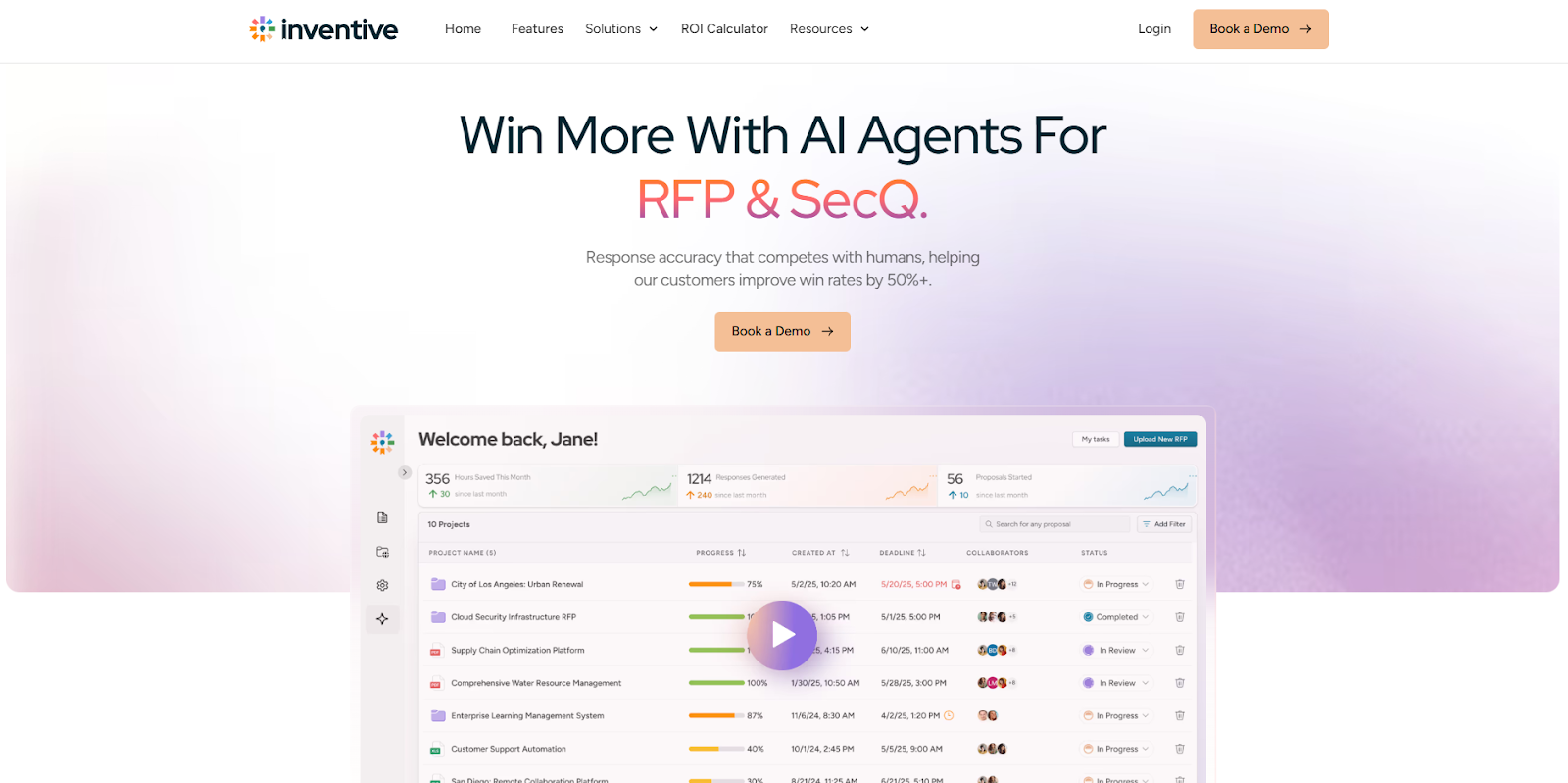
Inventive AI connects prior responses, legal disclosures, security documentation, and policy documents into one governed source of truth, then drafts answers with an inline citation on every sentence so legal review means verifying a source rather than hunting for one.
Compliance strengths
- Dedicated Compliance agent to flag you all the issues which are in your current response.
- Every generated sentence traces to an exact source document
- Conflict and staleness detection flags outdated, duplicate, or contradictory content before it reaches a submission
- Handles dense SOC 2, ISO 27001, GDPR, HIPAA, and DDQ question sets alongside narrative RFP sections
- Role-based collaboration lets legal, compliance, security, and sales review in parallel with full edit history
- SOC 2 Type 2 certified; customer data is not used to train models
Limitations
- Advanced BI/analytics dashboards are still developing
- Usage-based pricing requires estimating your questionnaire volume upfront
Best for: in-house legal and compliance teams handling high volumes of RFPs, DDQs, and security questionnaires who need citation-backed answers and audit-ready governance. Customers report 90% faster responses and higher win rates — see the Insider case study for a worked example.
Inventive AI is ranked #1 for Ease of Use among RFP software on G2.
Book a demo to test it against a real compliance questionnaire.
Gartner rating: 5/5
2. Loopio
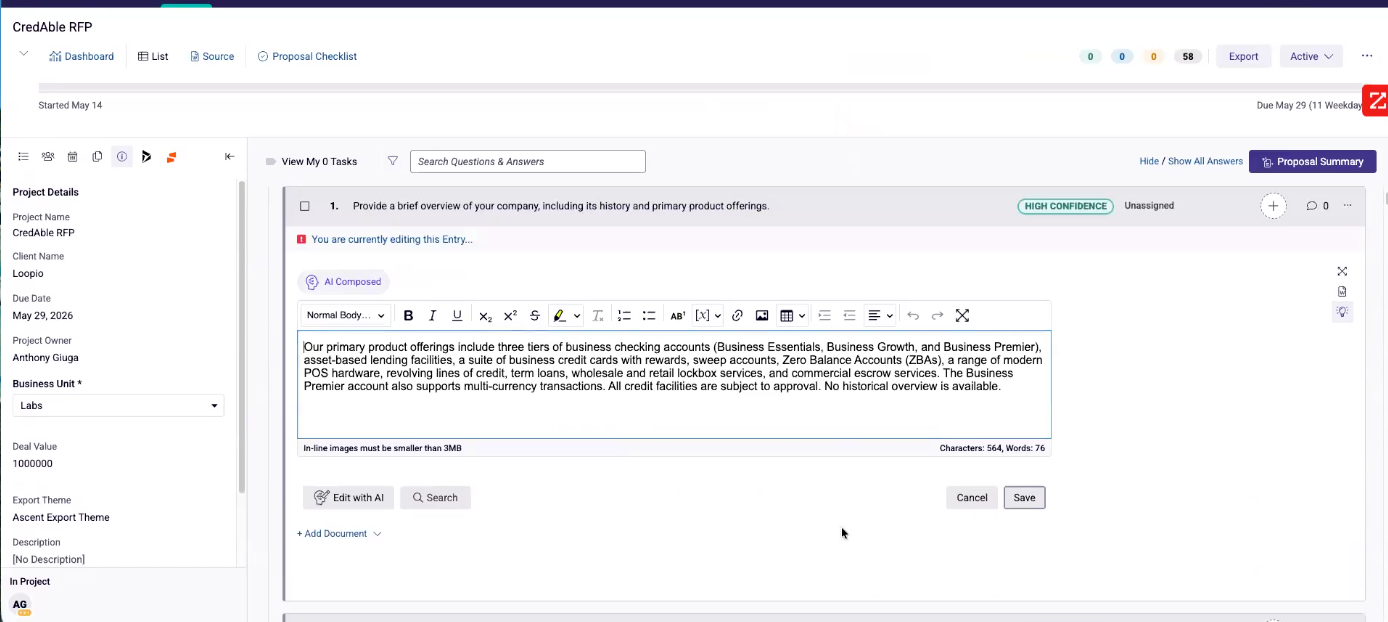
Loopio is one of the most established RFP platforms, built around a structured content library with genuinely useful governance features for compliance teams: each answer block gets a named subject-matter owner and a mandatory review cadence, and entries past their review date are flagged before they can be inserted into a live document. That prevents outdated regulatory language from silently propagating through new RFPs.
Compliance strengths
- Named content ownership with enforced review cycles — strong process-level governance
- Mature assignment and approval workflows across departments
- Wide enterprise adoption, extensive integrations, and a familiar interface that speeds team rollout
Limitations
- Governance is process-driven: it works when a dedicated content manager runs it, and drifts when nobody does
- AI drafting is lighter than AI-native platforms on dense legal and security questionnaires
Best for: teams with a dedicated content manager who want proven library governance and enterprise-grade workflows. See our Loopio comparison for a feature-by-feature breakdown.
Gartner rating: 4.4/5
3. Responsive (formerly RFPIO)
Responsive screenshot
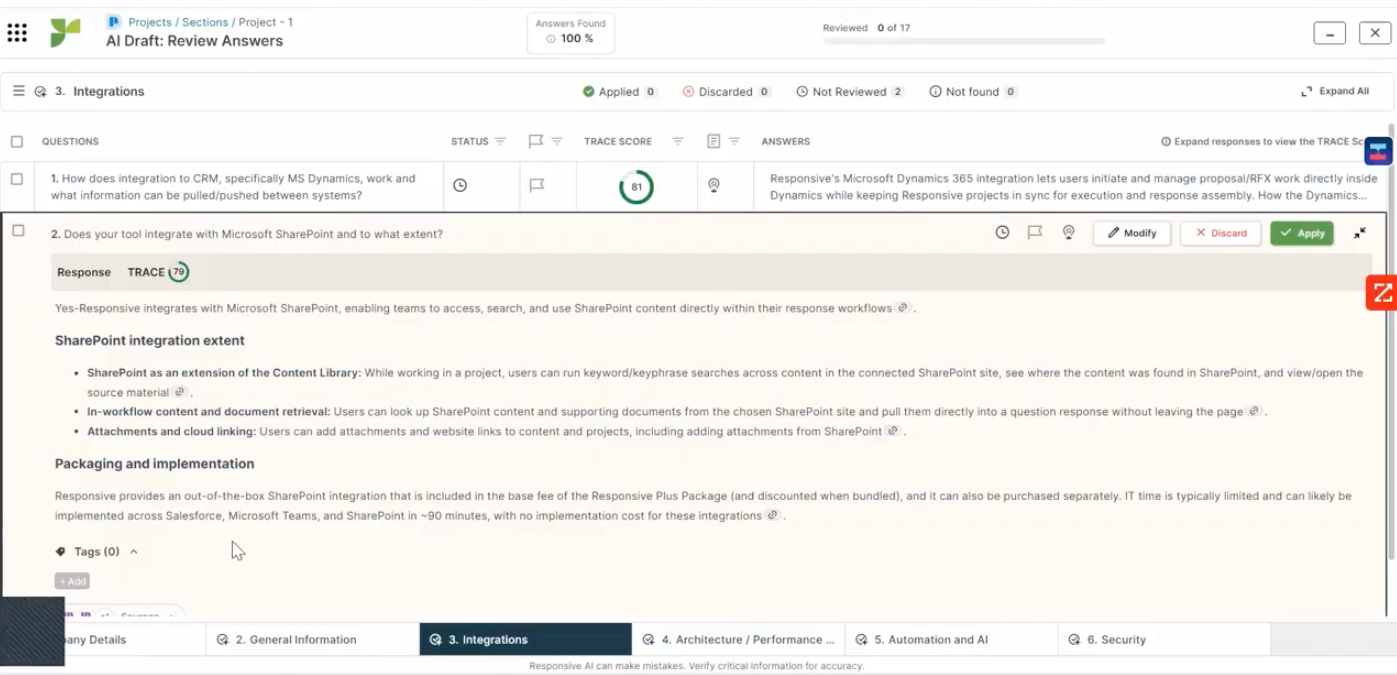
Responsive covers the broadest workflow surface in the category — questionnaires, approvals, content reuse, project management — and is well suited to large enterprises with complex approval chains. Its centralized library stores approved answers tagged by topic and matter type, and role-based permissions ensure only approved language reaches final documents.
Compliance strengths
- Deep workflow and approval management for multi-department reviews
- Content tagging and ML-based question matching against approved past responses
- Strong enterprise deployment record, support, and integration ecosystem
Limitations
- AI suggestions trend generic on nuanced legal questions, pushing clause-level edits back to counsel and SMEs
- Conflict and stale-content detection is limited relative to newer platforms
Best for: large enterprises that prioritize workflow control and approval rigor across many contributors. See how it stacks up in our Responsive comparison.
Gartner rating: 4.3/5
4. Conveyor
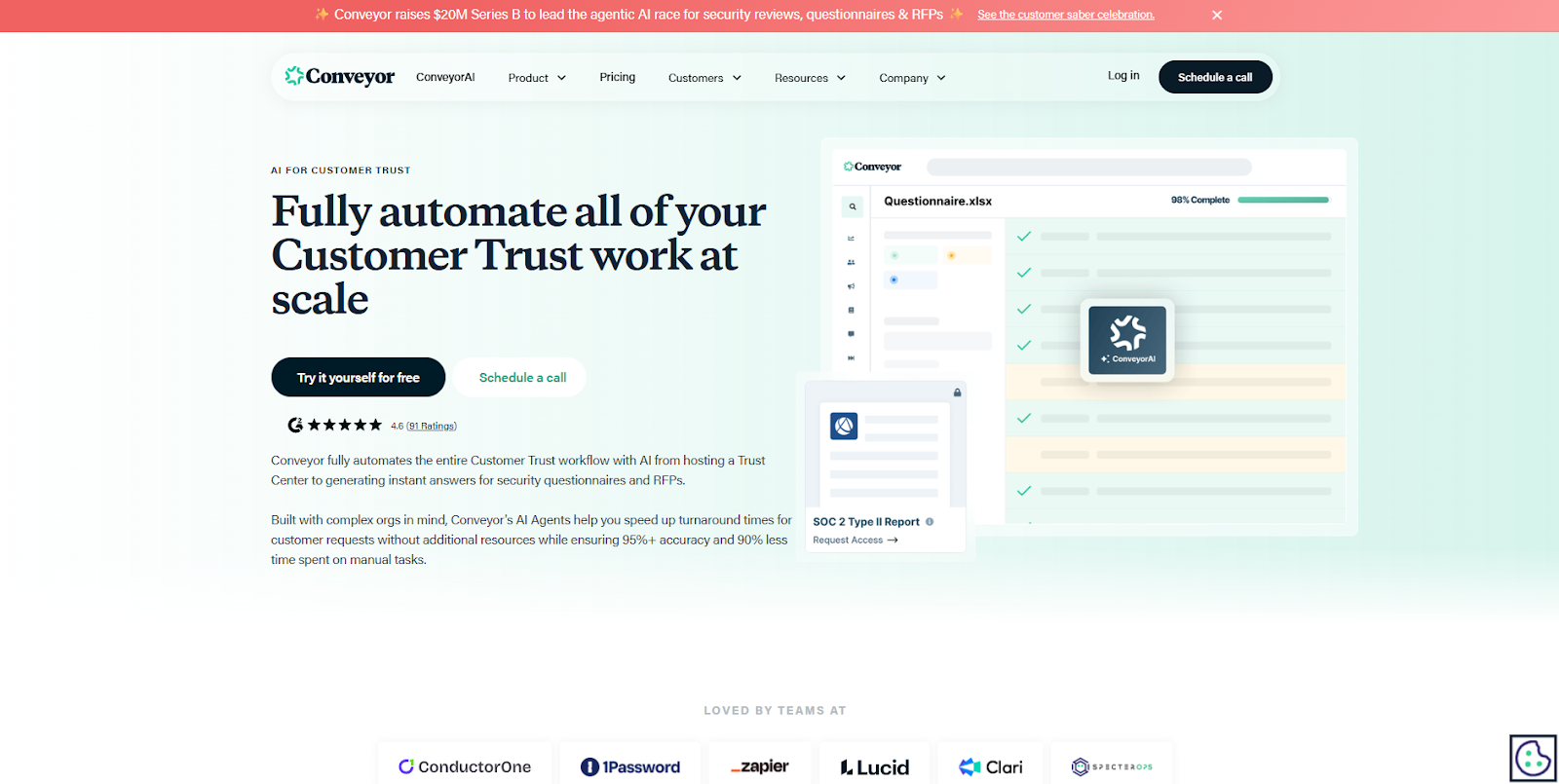
Conveyor screenshot
Conveyor specializes in security questionnaire automation and trust portals, and within that niche it is excellent. Compliance teams use it to manage SOC/ISO artifacts, share proofs through NDA-gated portals, and cut the back-and-forth on security questionnaires dramatically.
Compliance strengths
- Best-in-class evidence library and artifact management for SOC 2, ISO 27001, and third-party audits
- Trust portal reduces repetitive documentation requests from prospects and auditors
- Purpose-built questionnaire automation for security question sets
Limitations
- Scope is security-focused: no full RFP narrative drafting or proposal management
- Typically deployed alongside a drafting platform rather than instead of one
Best for: security and compliance teams whose main pain is questionnaire and evidence-sharing volume, especially paired with a full RFP platform.
5. SafeBase
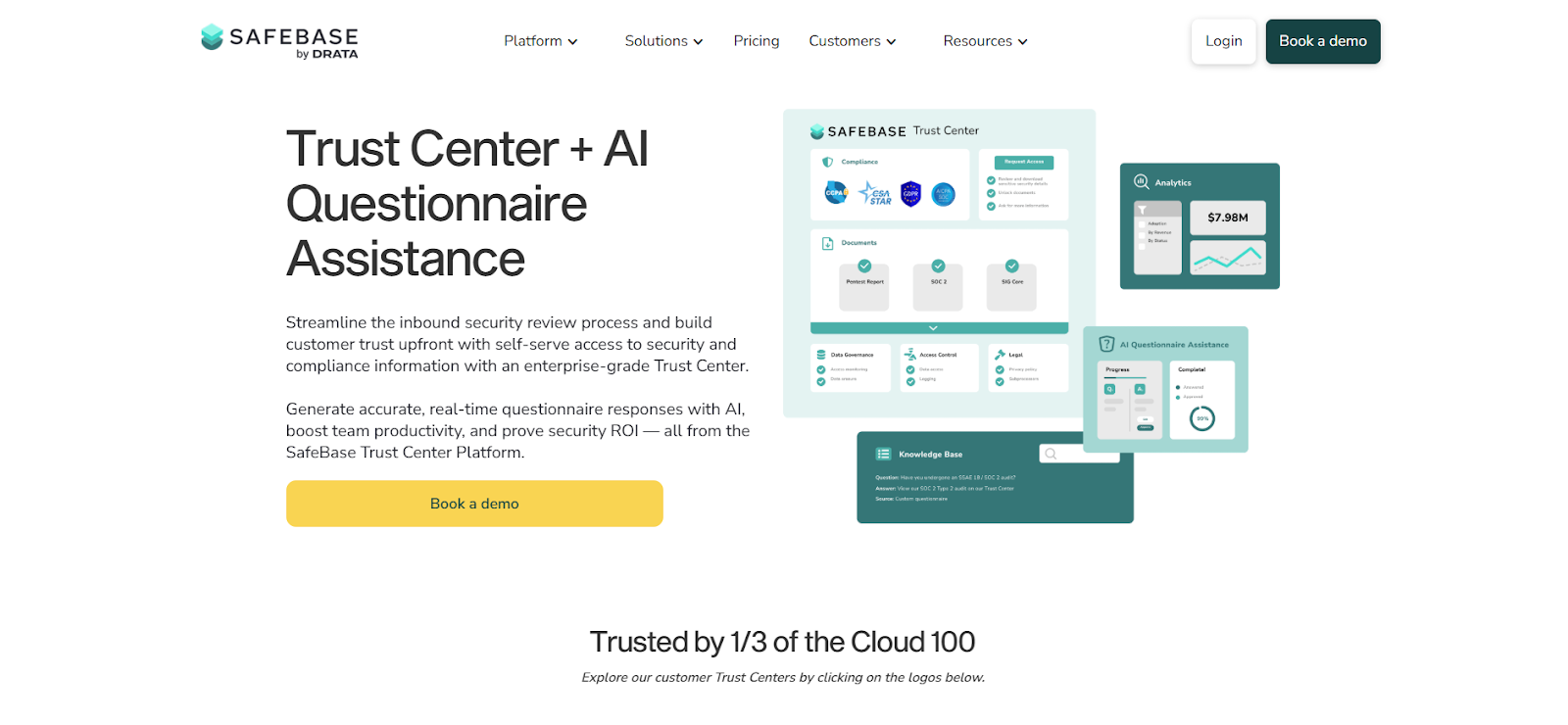
SafeBase screenshot
SafeBase provides a trust center for sharing security documentation, certificates, and vendor artifacts with NDA gating and granular access controls. For compliance teams fielding constant documentation requests, it turns an email-heavy process into a self-serve portal with audit logs.
Compliance strengths
- Clean, buyer-facing trust center for compliance proofs and certifications
- NDA gating, access controls, and audit trails on every document view
- Meaningfully reduces manual requests for standard documentation
Limitations
- No RFP drafting, narrative support, or response workflows
- Like Conveyor, it’s a companion tool for the proof-sharing side of compliance work
Best for: teams that want a polished, self-serve trust center to handle documentation requests before they become questionnaires.
6. DeepRFP
DeepRFP screenshot
DeepRFP offers AI-assisted drafting with a lightweight library, transparent pricing, and a quick start — a practical choice for small teams and consultants handling simpler bids. Its citation features give reviewers visibility into where answers come from, though governance depth is limited for regulated workloads.
Compliance strengths
- Transparent, accessible pricing with no enterprise sales cycle
- Quick onboarding; answer library reuse with source visibility
Limitations
- Limited conflict detection and clause-level governance for regulated responses
- Light multi-department review workflows
Best for: small teams and proposal consultants working lower-risk bids on a budget.
7. AutoRFP AI
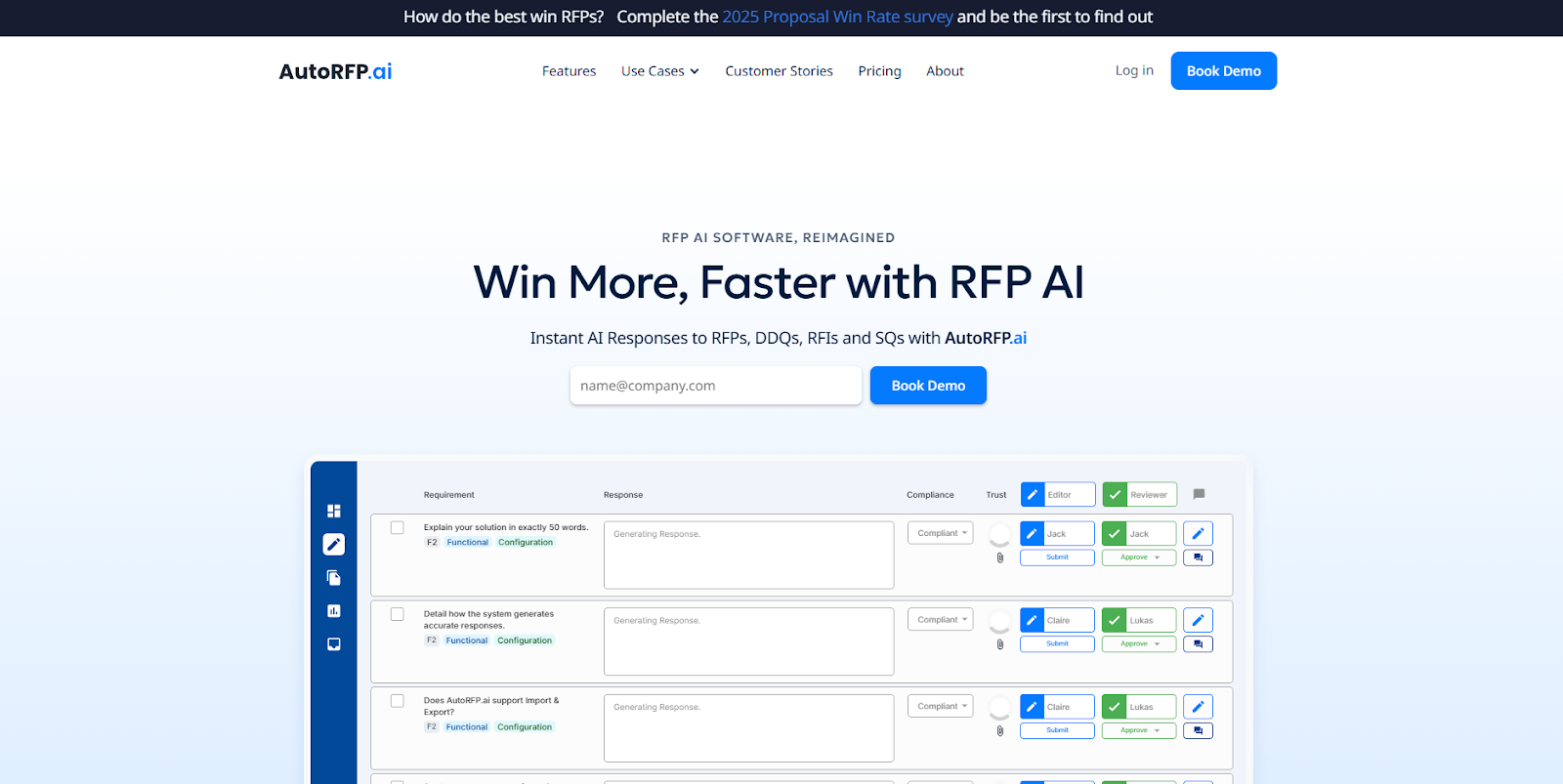
AutoRFP AI screenshot
AutoRFP AI is built for speed on first drafts and holds a strong 4.9/5 Gartner peer rating. For straightforward RFPs it delivers fast, usable output; compliance-heavy question sets require more manual review, since governance around clause freshness and certifications is limited.
Compliance strengths
- Very fast draft generation that shortens response cycles
- Strong peer-review scores for usability and support
Limitations
- Template-driven output needs significant legal editing on nuanced questions
- Minimal content governance and audit workflows — see our AutoRFP alternatives guide for context
Best for: teams whose bottleneck is first-draft speed on lower-complexity RFPs.
Gartner rating: 4.9/5
8. QorusDocs
QorusDocs screenshot
QorusDocs focuses on document automation and proposal assembly with deep Microsoft ecosystem integration. Teams that live in Word, SharePoint, and Teams get polished, consistently branded proposals with minimal friction — the compliance question-answering layer is thinner.
Compliance strengths
- Excellent proposal assembly, formatting, and brand consistency
- Native fit for Office-centric legal and professional services teams
Limitations
- Minimal AI for legal-specific Q&A; dense questionnaires sit outside its core
- Clause freshness and conflict governance are not focus areas
Best for: Microsoft-invested professional services teams that need packaging and assembly more than questionnaire automation.
9. 1up.ai
1up.ai screenshot
1up ai delivers knowledge-base-style AI that searches your documents and suggests answers, with some of the fastest onboarding in the category. It works well as an internal answer-lookup layer; for accountable compliance responses, its governance features are lighter than full platforms.
Compliance strengths
- Minimal training required; teams get value in days
- Fast document search across connected sources
Limitations
- Generic outputs need manual legal editing; limited freshness and conflict detection
- Review workflows are light for multi-stakeholder compliance sign-off — see the 1up alternatives comparison
Best for: teams that want quick internal knowledge lookups alongside existing review processes.
10. Thalamus AI
Thalamus AI screenshot
Thalamus AI takes an agent-based approach to RFP and questionnaire automation with a modern interface and flexible architecture. It’s an interesting option for teams willing to build custom workflows, with the usual early-platform trade-offs in a regulated setting.
Compliance strengths
- Modern agentic architecture with flexible, customizable workflows
- Forward-looking automation for teams that want to shape their own process
Limitations
- Limited enterprise references in compliance-heavy deployments so far
- Integration ecosystem and governance features are still maturing
Best for: teams comfortable adopting earlier-stage tools in exchange for architectural flexibility.
The Compliance Checklist: What to Verify Before You Buy
“Choosing the Right AI Tool” graphic
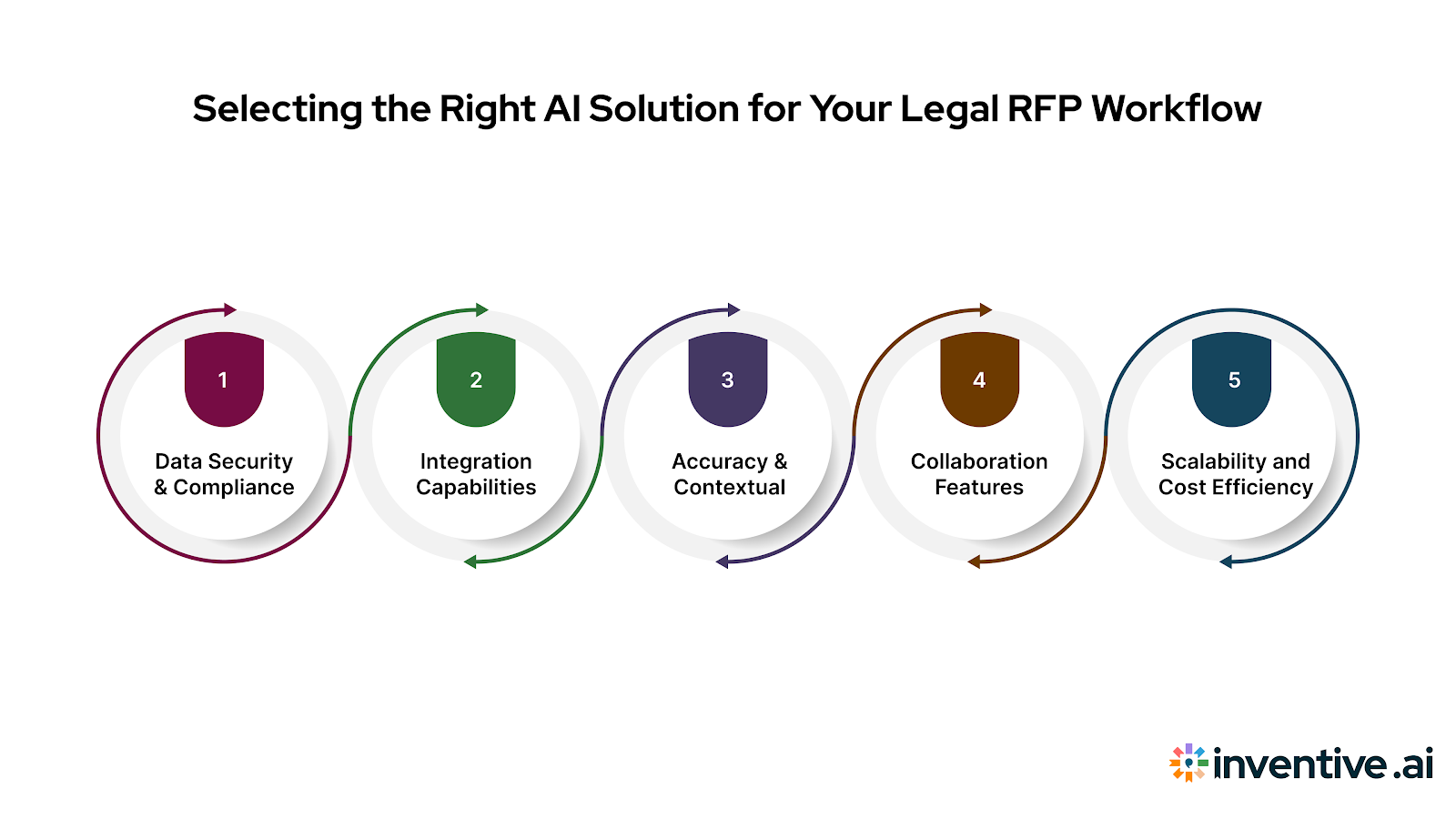
Run every vendor on your shortlist through these checks — with your own content, not their demo data:
- Trace an answer to its source. Generate a response to a real compliance question and ask where each sentence came from. If the platform can’t cite the exact document, legal review will always mean rework.
- Plant a conflict. Load two documents with contradictory clauses (an old and a new data retention policy) and see whether the platform flags the conflict or silently picks one.
- Test a question it has never seen. Compliance questionnaires always contain novel questions. Does the tool flag the gap honestly, or does it produce a confident answer anyway?
- Verify security posture. Require SOC 2 Type 2 evidence, confirm customer data never trains models, and check role-based access, SSO/MFA, and audit trails.
- Check review workflows. Can legal approve clauses in parallel with sales editing narrative — with permissions preventing anyone from overriding approved language?
- Confirm integration depth. “Integrates with SharePoint” can mean live sync or a one-time import. For compliance content, only live sync keeps answers current.
Integration Challenges for Legal and Compliance RFP Workflows
Integration challenges graphic
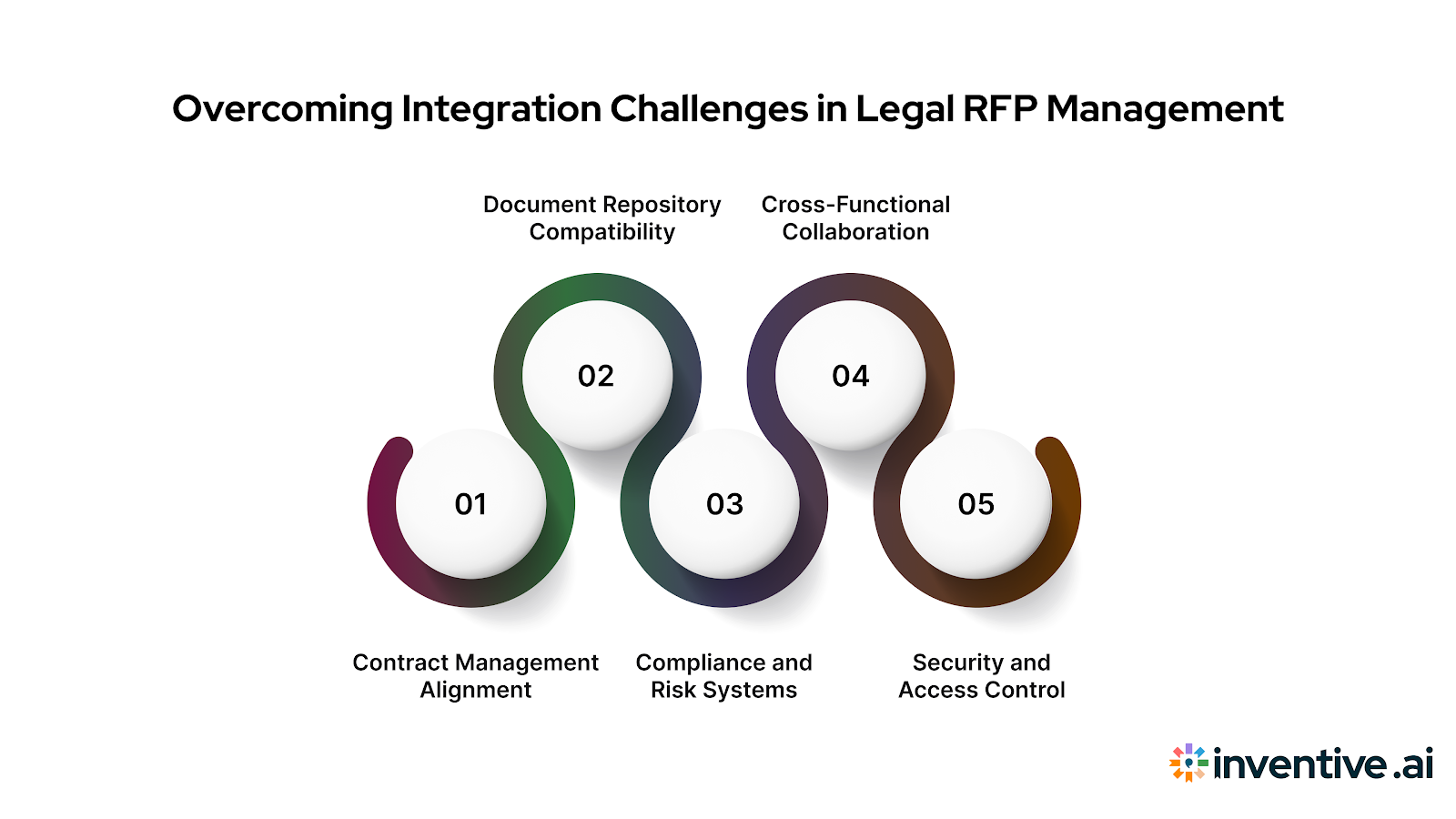
The best RFP software for legal compliance teams has to fit an existing stack — CLM, DMS, and compliance systems — without creating duplicate work:
- CLM alignment: sync key fields (parties, clause IDs, renewal terms) and lock approved clauses to prevent mismatched versions between your contract system and RFP responses.
- DMS compatibility: require direct search-and-insert from iManage, NetDocuments, or SharePoint with automatic source citation, so reviewers can trace every clause.
- Compliance systems: connect your compliance database so the platform pulls current attestations and flags anything expired before approval.
- Collaboration tools: tie comment threads and approvals in Teams or Slack to the exact question — not a separate email chain.
- Access control: enforce role-based permissions, SSO/MFA, and audit trails across every connected system.
Also read: Common AI and Compliance Questionnaire Questions
Choosing the Right Fit for Your Team
The right answer depends on your workload shape:
- High questionnaire volume with legal accountability: a governance-first platform with source citations (Inventive AI) keeps review defensible at scale.
- Strong content operations already in place: Loopio or Responsive extend the processes you have with mature enterprise workflows.
- Security questionnaires are the main pain: Conveyor or SafeBase solve proof-sharing directly, often alongside a drafting platform.
- Small team, simpler bids: DeepRFP or 1up.ai deliver value without enterprise overhead.
Whichever direction you go, test with a real compliance questionnaire before signing — the demo always works; your library is the real test.
Want to see citation-backed compliance responses on your own content? Book a demo with Inventive AI and bring a recent DDQ or security questionnaire.
Frequently Asked Questions
What is the best RFP software for legal compliance teams?
It depends on your workload. For high-volume, compliance-heavy responses where every answer needs a traceable source, governance-first platforms like Inventive AI lead. Teams with dedicated content managers often do well with Loopio’s process-driven library governance, while Responsive suits large enterprises with complex approval chains. Security-questionnaire specialists like Conveyor and SafeBase complement rather than replace a drafting platform.
How is RFP software for compliance teams different from general proposal software?
General proposal tools optimize for drafting speed and formatting. Compliance-grade RFP software adds content governance — source citations, conflict detection, approval controls, and audit trails — so every representation in a response can be traced and defended. If your team is accountable for regulatory accuracy, governance features matter more than drafting features.
Can AI RFP tools handle security questionnaires and DDQs, not just RFPs?
Many can, to different depths. Full platforms like Inventive AI, Loopio, and Responsive handle RFPs, RFIs, DDQs, and security questionnaires in one workspace, while Conveyor and SafeBase specialize in the security artifact side. Check our guides to the best DDQ software and best RFI software for adjacent workflows.
How do compliance teams prevent AI hallucinations in RFP responses?
Choose platforms that ground every answer in your approved content and cite sources, rather than generating from general knowledge. Test this before buying: ask the tool a question your library can’t answer and see whether it flags the gap or fabricates a response. Source-grounded platforms make this failure mode visible; template-driven ones often don’t.
What security standards should RFP software meet for legal teams?
At minimum: SOC 2 Type 2 certification, a contractual commitment that customer data never trains AI models, role-based access controls, SSO/MFA support, and complete audit trails. Legal RFP content includes privileged and confidential material, so vendor security posture is a threshold requirement, not a nice-to-have.
Which metrics show RFP software is working for a compliance team?
Track response turnaround time, percentage of AI answers accepted without edits, win rate, and — specific to compliance — the number of stale or conflicting content items caught before submission. If that last number is zero, your library is drifting, not clean.
This guide covers RFP software specifically for legal and compliance teams. For the complete market view across all 15 leading platforms, team sizes, and use cases, read our pillar guide: 15 Best RFP Software in 2026: Ranked, Reviewed & Compared.