Loopio Pricing 2026: Real Costs, ROI and Features Included
See Loopio's 2026 pricing: entry cost, per-user rates, hidden add-on fees, total cost examples, with AI-native alternatives compared.
Loopio is one of the known platforms for managing responses to RFPs, RFIs, security questionnaires, and DDQs. If you are evaluating it, the questions that usually matter most are what it does, what it costs, how real users rate it, and whether it fits your team's size and complexity.
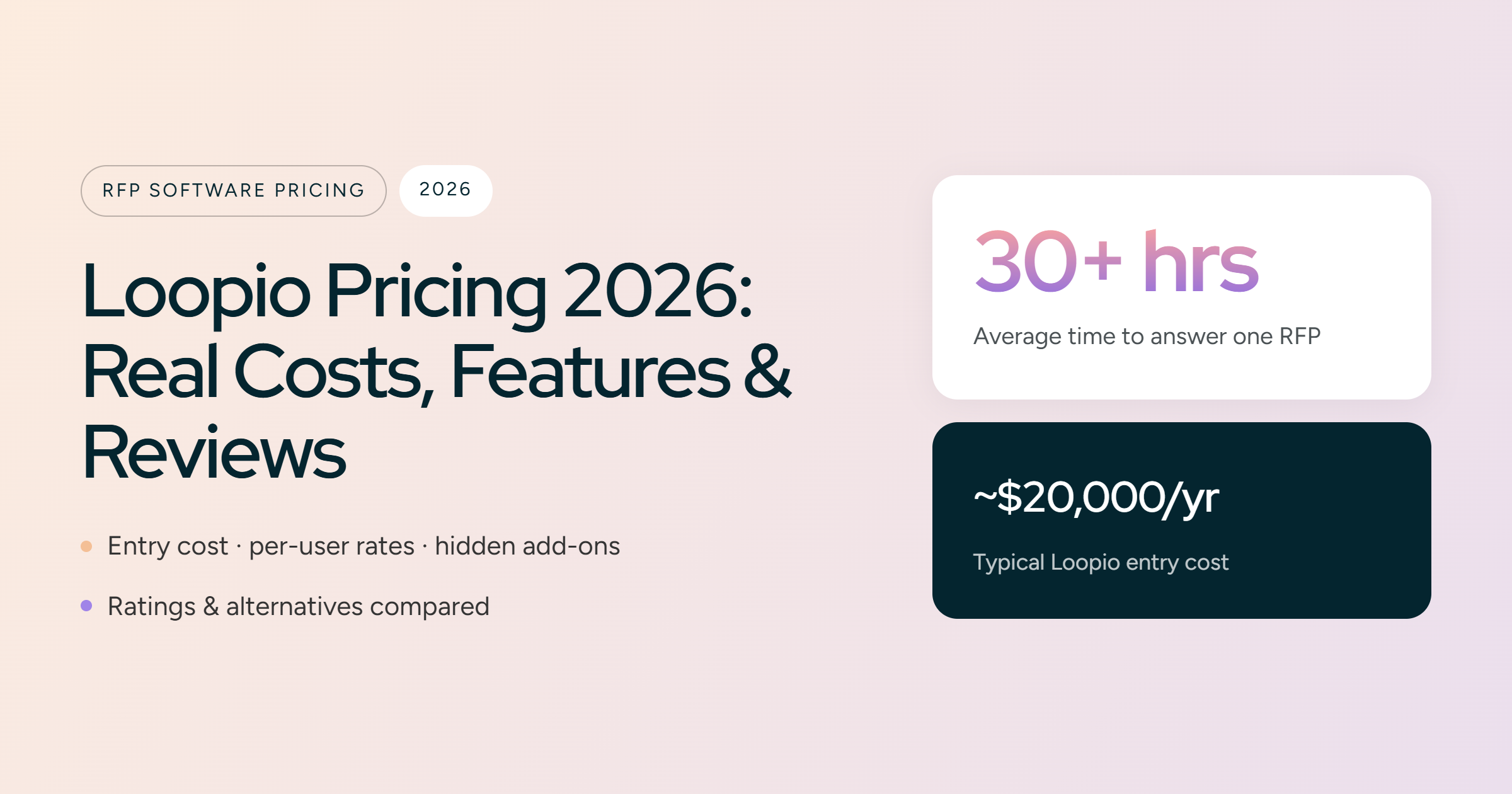
Responding to proposals is time-consuming; the average RFP response takes more than 30 hours of work, which is exactly why response-management tools like Loopio exist. The right fit depends less on any single vendor's marketing and more on your response volume, how much of your content is already organized, and how much scale and customization you need.
This guide walks through Loopio's pricing, features, ratings, strengths, and limitations, and points to a few alternatives worth comparing before you commit.
Key takeaways
- Loopio is an established RFP and proposal response-management platform aimed at teams that handle a steady volume of RFPs, RFIs, and security questionnaires.
- Core capabilities include a content library, AI-assisted drafting (Loopio's "Magic" feature), collaboration and review workflows, intake, and integrations.
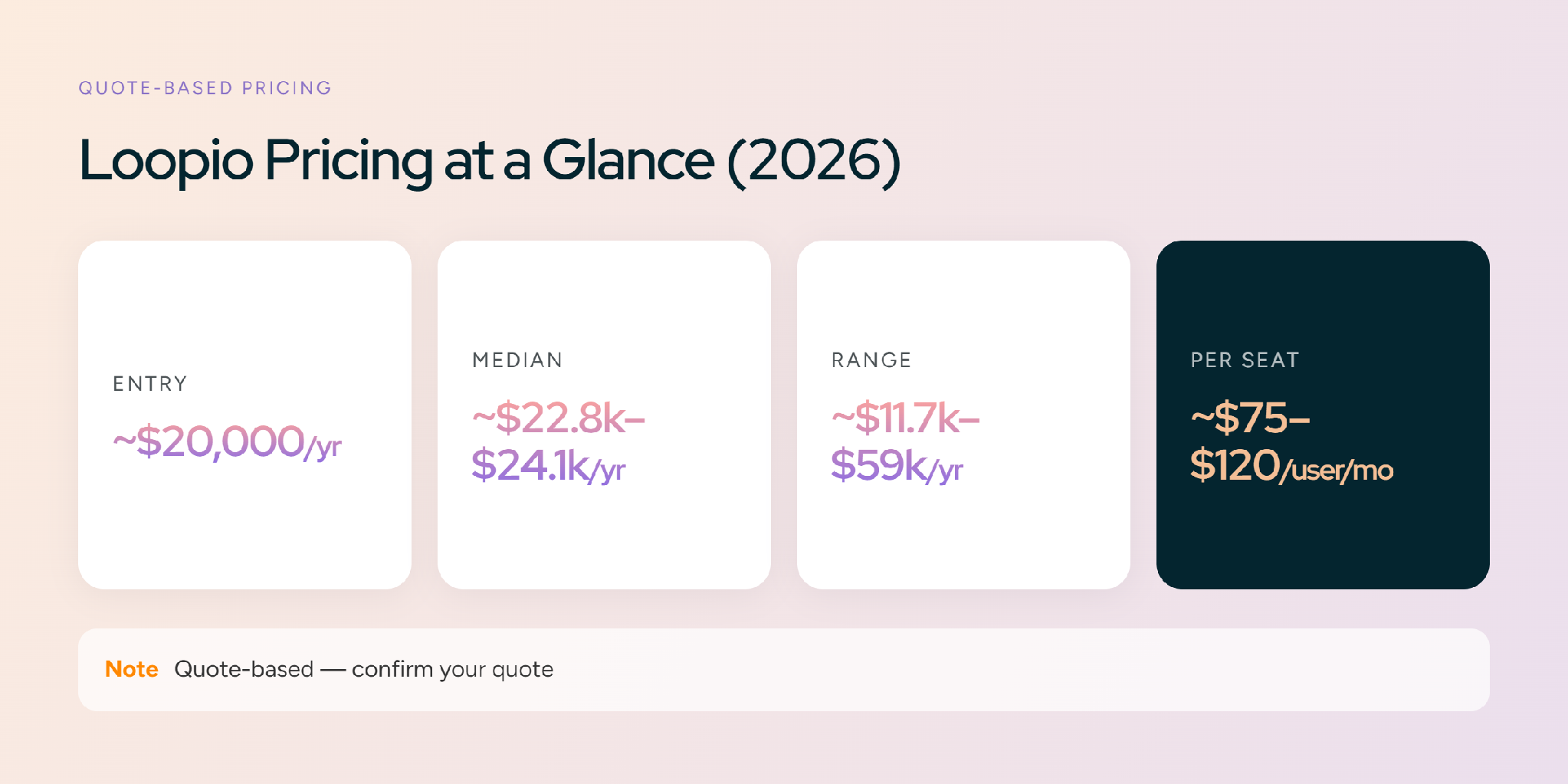
- Loopio does not publish pricing. Third-party procurement data puts entry pricing around $20,000 per year and the median contract near $22,800 to $24,100 per year, with total cost scaling by seats and add-ons. Tier names reported by third parties vary, so confirm the current structure in your quote.
- Loopio is well rated on peer-review sites, roughly 4.6/5 on G2 (200+ reviews) and 4.4/5 on Gartner Peer Insights, with especially strong marks for customer support; the most common critique is that answer quality depends on keeping the library maintained.
- Loopio is one of several tools in this category; teams with very high volume or complex, multi-department needs often shortlist it alongside alternatives such as Responsive, Qvidian, and Inventive AI.
What is Loopio?
Loopio is a response-management platform built to help sales, pre-sales, and proposal teams answer the recurring, document-heavy questions that come with RFPs, RFIs, DDQs, and security questionnaires. Its central idea is a maintained content library: teams store approved answers once, then reuse and adapt them across future responses instead of rewriting from scratch.
Founded in Toronto, Loopio has become one of the more widely adopted tools in the category, with a large customer base and integrations into common sales and collaboration systems. In 2025, the company also introduced a portal-based response management capability, reflecting a broader industry push toward handling more of the response workflow in one place.
Loopio pricing
Loopio does not publish its pricing. The figures below come from third-party procurement platforms (such as Vendr) and buyer-reported data, so treat them as estimates and confirm any quote directly with Loopio.
Loopio runs on annual, quote-based contracts. Entry pricing starts around $20,000 per year, the median buyer pays roughly $22,800 to $24,100 per year, and contracts range from about $11,700 to $59,000 annually depending on seats, tier, and add-ons.
Loopio pricing at a glance
Loopio plans
Loopio markets multiple tiers, but the names reported by third parties are not consistent (an entry tier reported as Foundations or Essentials, a middle tier reported as Enhanced or Plus, and an Enterprise tier at the top). Because Loopio does not publish tier names or prices, confirm the current structure when you request a quote.
What add-ons cost
Base pricing rarely reflects the final invoice. Commonly reported paid add-ons include:
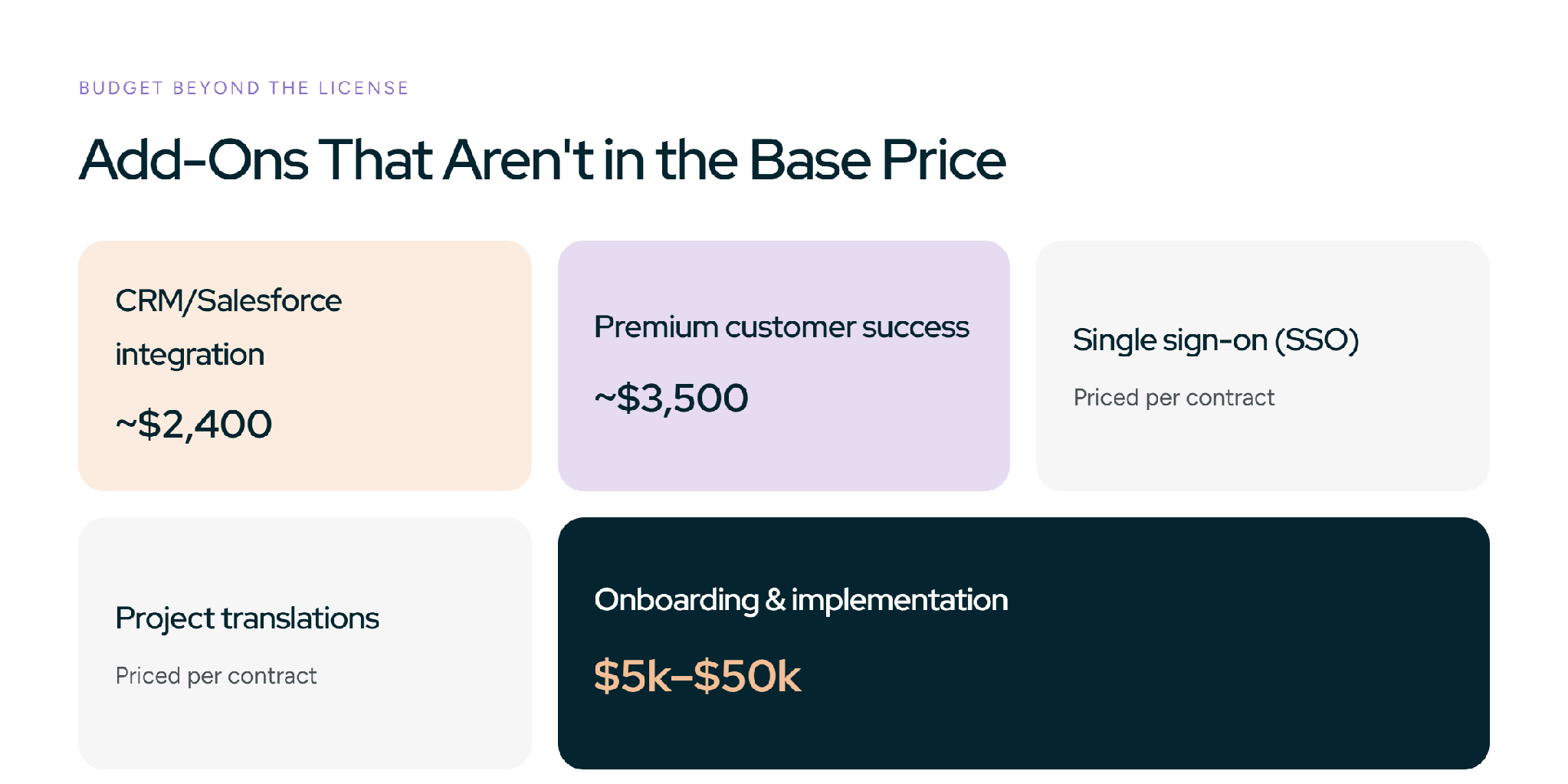
- Salesforce and other CRM integrations (reported around $2,400 standalone)
- Premium customer success (reported around $3,500)
- Single sign-on (SSO)
- Project translations for global teams
- Onboarding and implementation packages, billed separately from the license
Implementation and onboarding
Reported implementation timelines run about 15 to 60 days for standard rollouts and 8 to 12 weeks for complex enterprise deployments. One-time implementation and training is commonly reported in the $5,000 to $50,000 range depending on scope and team size.
Total cost of ownership: two examples
These are illustrative estimates built from third-party per-seat and add-on data, not quotes. Your actual cost depends on tier, negotiation, and the add-ons you select.
How to reduce Loopio costs
- Negotiate add-ons into the base contract upfront. Buyers report saving 35% to 45% versus buying them after signing.
- Benchmark against a competing quote. Procurement data shows around 9% average savings when buyers negotiate.
- Right-size seats. Because pricing is seat-based, paying full price for occasional contributors is a common source of overspend.
- Time your renewal. Buying near quarter-end or year-end can improve terms.
Because most of Loopio's pricing is quote-based, total cost of ownership depends on seats, add-ons, implementation, and the effort to maintain the content library over time. For a deeper cost analysis, see the dedicated Loopio pricing breakdown.
The Hidden Cost Nobody Quotes You: The Library Management Tax
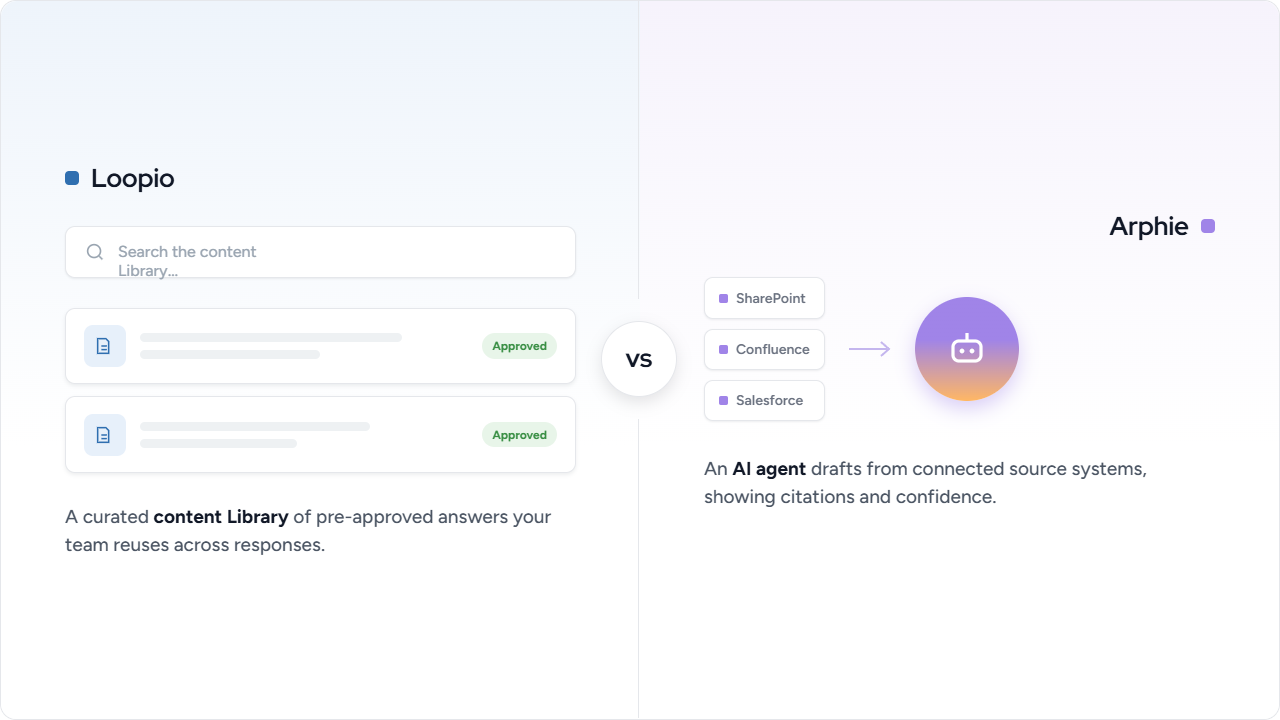
Loopio's value comes from its content library, the curated Q&A database your team builds over time. It works only while the library stays accurate, and keeping it accurate is ongoing manual work. That work adds cost in four ways:

1. Someone has to own curation
New answers need review, duplicates need merging, entries need tagging, and stale content needs archiving. At scale, teams assign a part- or full-time content manager to this. Even a fraction of a role at $40K to $100K a year turns a $25,000 license into a $60,000-plus program.
2. Review cycles don't stop
Loopio's review cadence flags entries for periodic re-verification. That is useful, but it means recurring time from SMEs in security, legal, product, and finance. Every release, price change, or compliance update triggers another pass, and a missed cycle lets the library drift from reality.
3. Stale answers carry risk
An out-of-date library is not just slow, it is exposure. An outdated security answer in a due-diligence questionnaire can create legal risk. A deprecated feature quoted in an RFP sets your customer success team up to fail. The cost includes the risk you carry every time maintenance slips.
4. AI inherits the library's flaws
Loopio's generative AI draws from the same library, so a decayed library produces wrong answers faster. Users report that the "Magic" AI feature struggles with complex requirements and returns answers that need manual correction, and that gets worse as the library ages.
Rule of thumb: take the annual license quote and add 30 to 100 percent for content-operations labor to get the real total cost of ownership.
Loopio key features included in the pricing plan
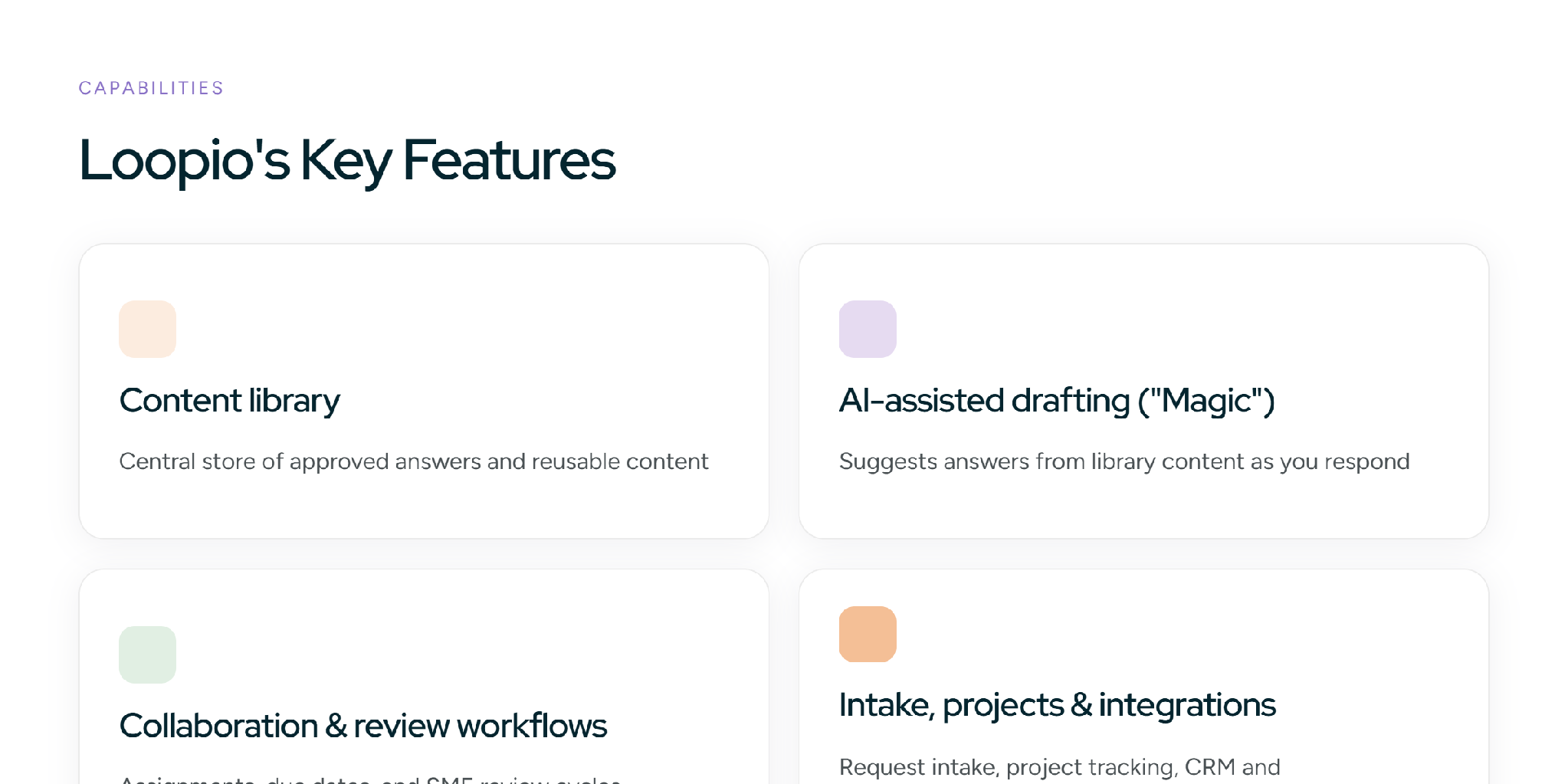
Loopio organizes its capabilities around storing, generating, and collaborating on response content. The main features include:
- Content library. A central repository where teams store and reuse approved RFP responses and proposal content, which helps keep answers consistent across projects. The trade-off is that the library needs ongoing curation to stay accurate.
- AI-assisted drafting ("Magic"). Loopio's AI suggests answers and generates first drafts so teams don't start from a blank page. As with most retrieval-based AI, suggestions are strongest when the underlying library is current, and drafts on nuanced questions still benefit from human review.
- Collaboration and review workflows. Team roles, comment threads, assignments, and multi-step reviews help multiple contributors work on the same response without losing track of who owns what.
- Intake, projects, and integrations. Project structures, import options, and integrations with CRM and collaboration tools support the end-to-end response process.
For a broader view of what to look for across this software category, Inventive's 15 best RFP software guide compares tools on features, fit, and pricing.
Loopio reviews and ratings
Loopio is one of the better-reviewed tools in its category. At the time of writing it holds approximately 4.7/5 on G2 across 200+ reviews, around 4.4/5 on Gartner Peer Insights, and a strong profile on Capterra.
- Praised: responsive, well-regarded customer support (one of Loopio's highest sub-scores on G2), a clean and approachable interface, solid collaboration and governance features, and meaningful time savings on repetitive responses. Reviewers such as Meredith G. on G2 describe time savings from day one and an interface that is less complex than other tools.
- Raised as limitations: answer quality can slip when the content library isn't actively maintained, AI suggestions can feel dated on complex questions, and some reviewers note friction in content import and occasional formatting issues on export. Cost is a recurring theme too, with reviewers like Paul S. on G2 noting it can be pricey for smaller organizations and others flagging the seat-based model as a constraint.
As always, peer-review scores reflect a self-selected sample and change over time, so it's worth reading recent reviews from teams whose size and use case resemble your own.
Loopio strengths and limitations
Like most response-management tools, Loopio is stronger in some scenarios than others.
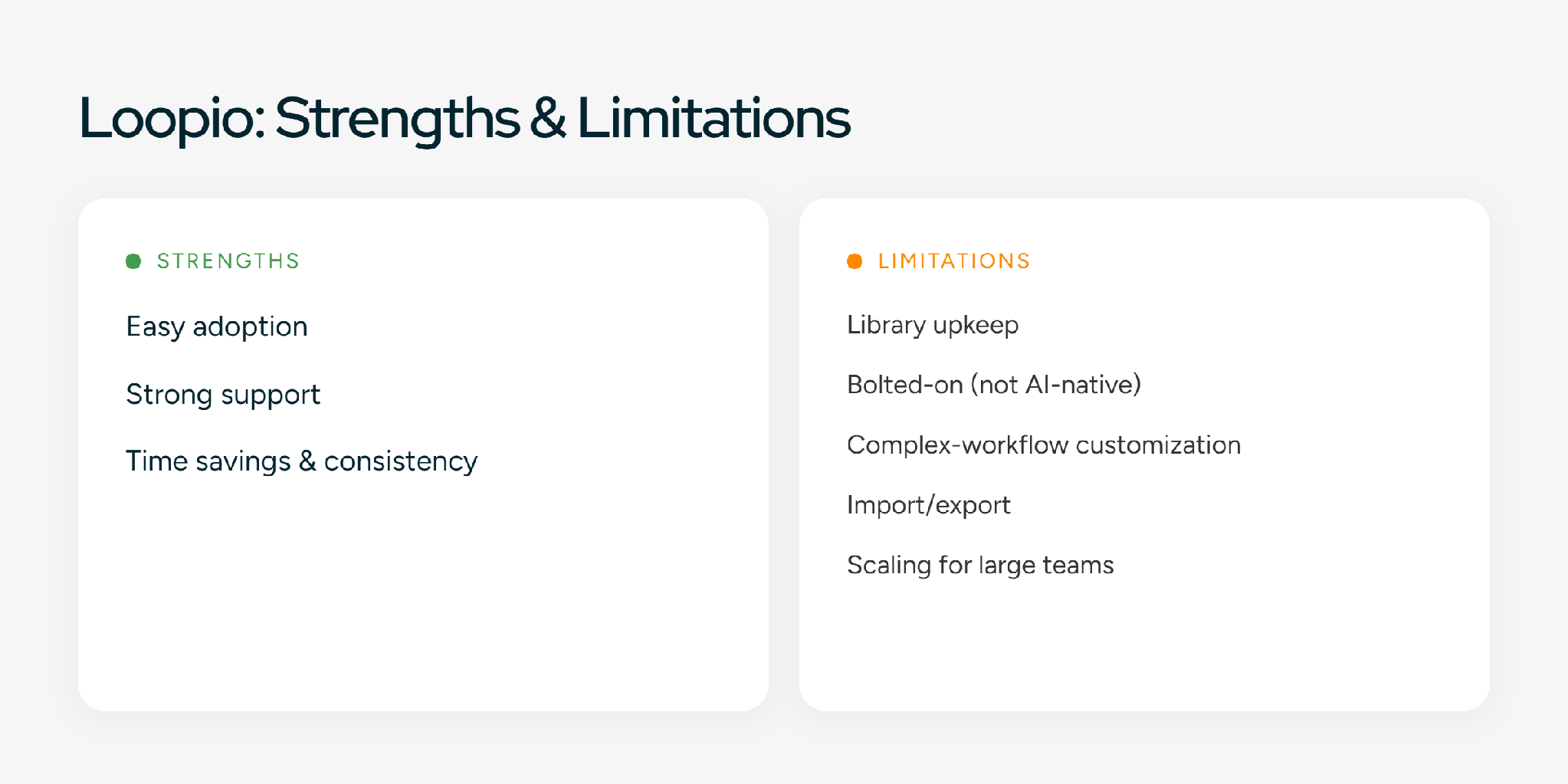
Where Loopio tends to do well
- Ease of adoption. A clean, intuitive interface makes it approachable for teams without deep technical expertise.
- Customer support. Reviewers consistently single out Loopio's support and onboarding as a differentiator.
- Time savings and consistency. A mature content library plus AI-assisted drafting speeds up repetitive responses and keeps answers consistent.
Where users report limitations
- Library upkeep. The quality of AI suggestions and reused answers depends on how well the library is maintained; teams that let it drift report more manual cleanup.
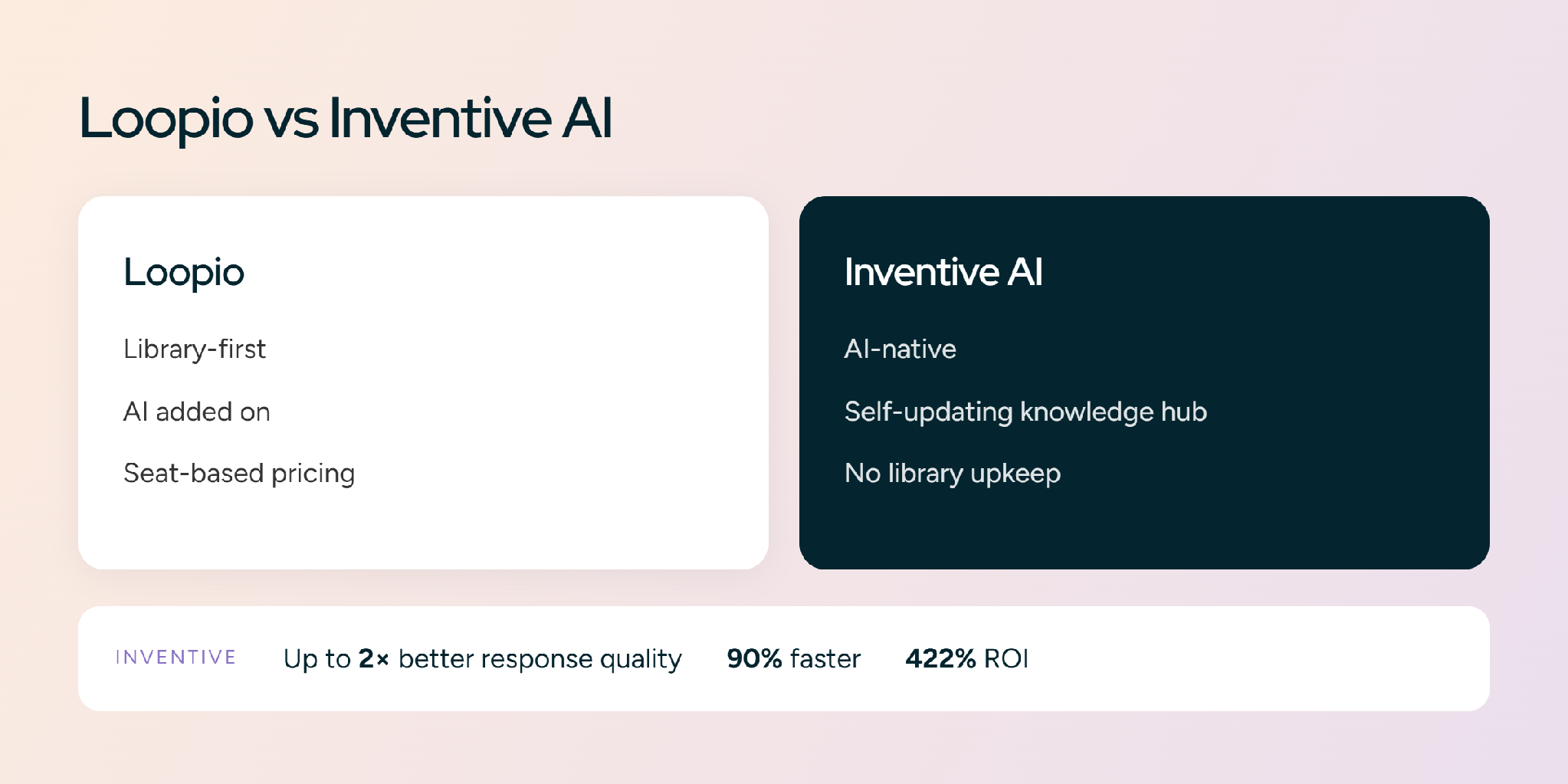
- Bolted-on AI, not AI-native. Loopio started as a content-library platform and added AI on top, so its generative features sit on an older foundation rather than being built AI-first, part of why answer quality depends so heavily on how well the library is kept up.
- Customization for complex workflows. Highly customized, multi-department, or conditional workflows can require more configuration than the standard structure provides.
- Content import and export. Some users cite a slower import process and occasional formatting issues when exporting into client documents.
- Scaling for very large teams. As access, permissions, and integration needs grow, larger organizations sometimes find they need more advanced controls.
Who Loopio is best for (unchanged)
Loopio is a strong fit for small, mid-sized, and many larger teams that want a proven, well-supported content-library platform and process a steady volume of RFPs, RFIs, and questionnaires. Teams that value responsive support and a mature ecosystem tend to be happy with it.
Organizations with very high volume, heavy compliance and audit requirements, or a need for deep customization and AI-native automation should test Loopio against tools built specifically for that scale. Inventive's enterprise RFP software comparison is a useful reference for that segment, as is the analysis of why AI-native tools are challenging established platforms.
Loopio alternatives to consider (unchanged)
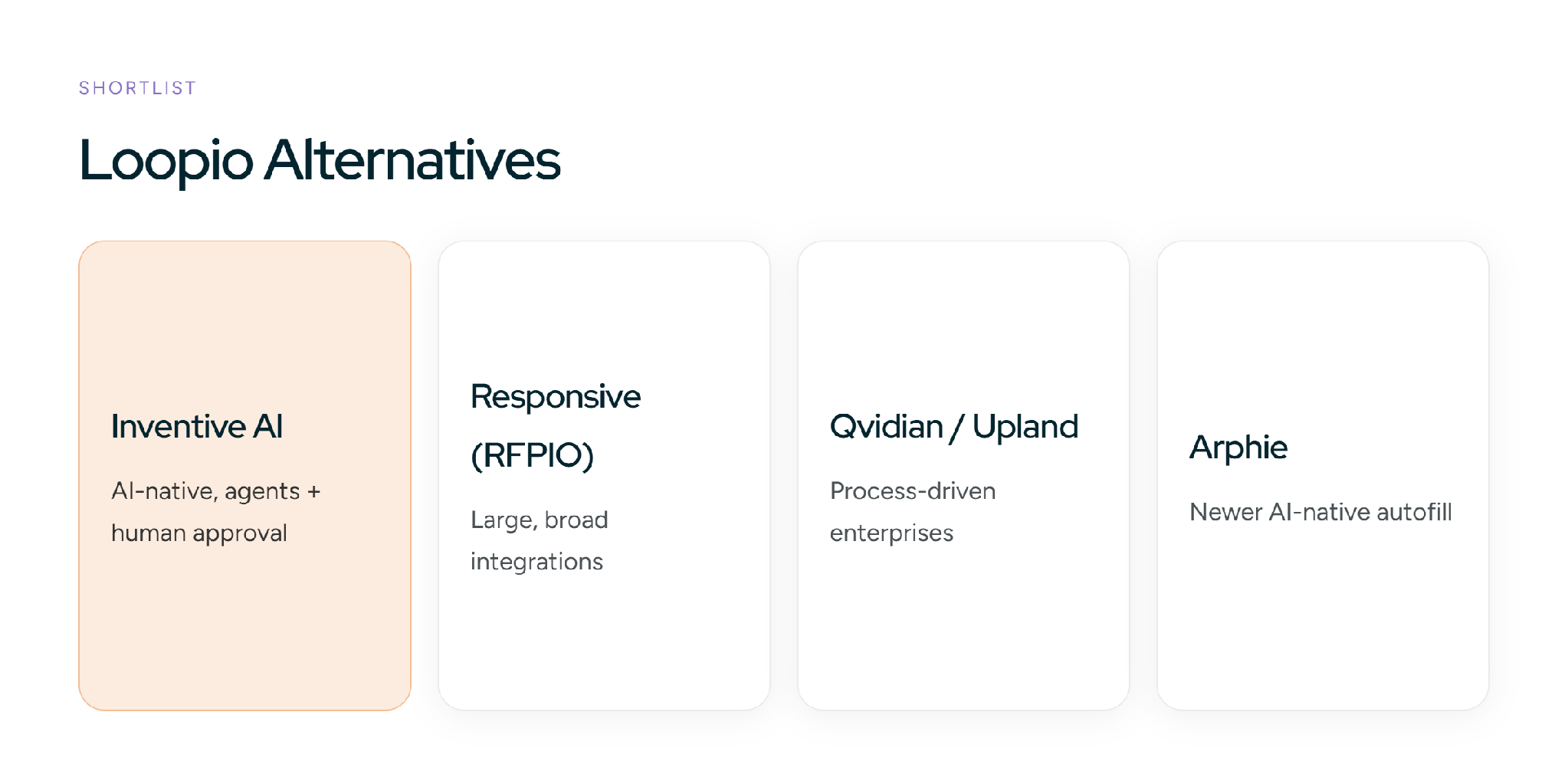
If Loopio isn't the right fit, several established and AI-native tools serve the same jobs. The options below are listed with comparable, one-line summaries; evaluate each against your own volume, integrations, and compliance needs. For a fuller list, see the dedicated Loopio alternatives guide.
- Inventive AI — an AI-native platform that runs the RFP, RFI, DDQ, and security-questionnaire workflow with agents and human approvals; customers report outcomes such as 90% faster responses at MaxVal and 422% ROI at AssetWorks. See the direct Loopio vs. Inventive AI comparison.
- Responsive (formerly RFPIO) — a large, established response-management platform with a broad integration ecosystem and content library; see its pricing, features, and reviews.
- Qvidian / Upland — a long-standing proposal-automation suite oriented toward larger, process-driven organizations.
- Arphie — a newer AI-native entrant focused on autofill and generative drafting for proposal teams.
A common head-to-head among buyers is Loopio versus Responsive; the Responsive vs. Loopio comparison breaks down how the two established platforms differ.
How to choose RFP response software
Rather than starting from a vendor, start from your requirements. A few criteria that reliably separate the right tool from the wrong one:
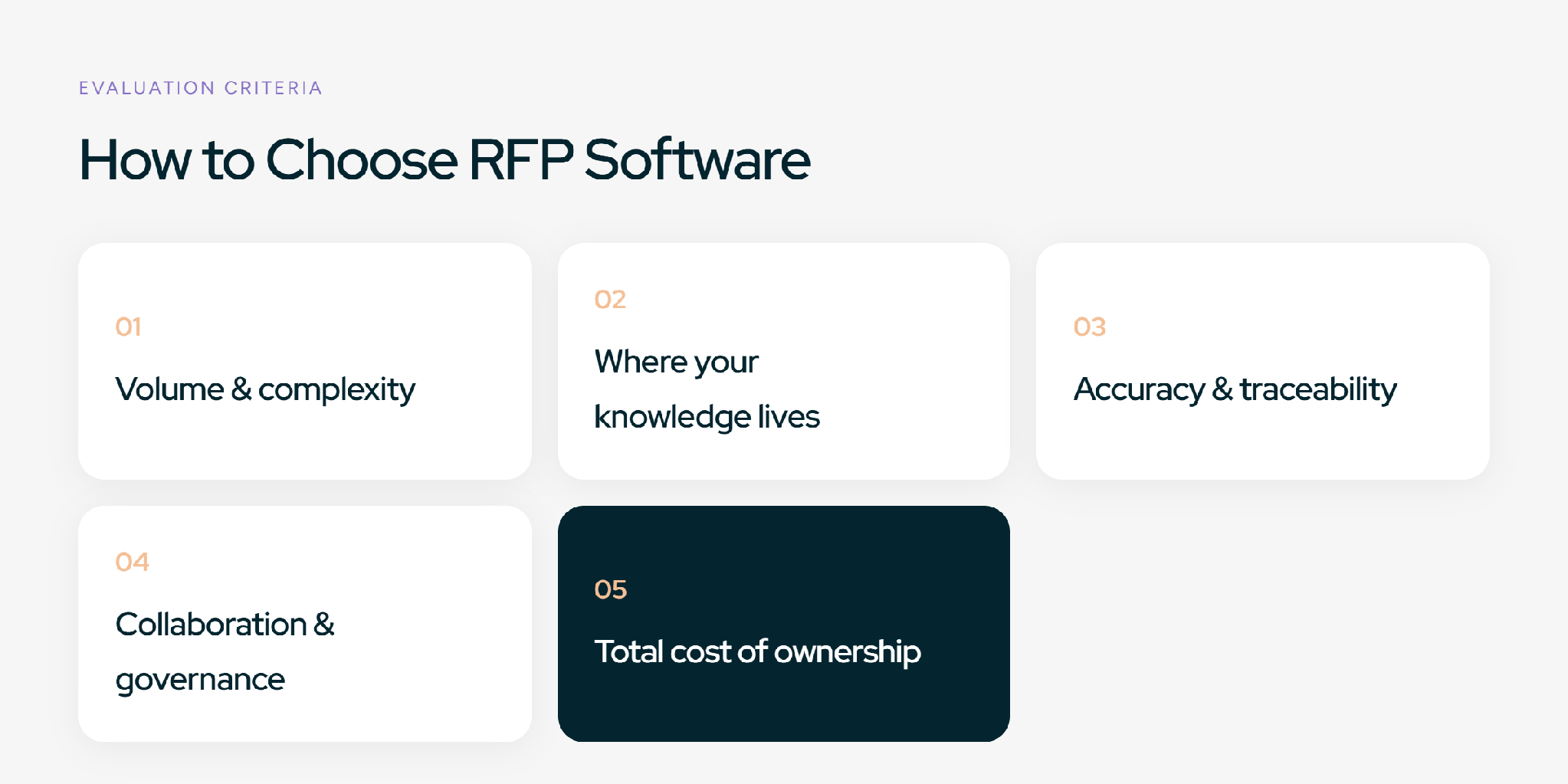
- Volume and complexity. Match the tool to how many responses you produce and how much they vary; high-volume, narrative-heavy work rewards deeper automation.
- Where your knowledge lives. Tools that connect to your existing systems reduce the burden of maintaining a separate library.
- Accuracy and traceability. Look for source citations and confidence signals so reviewers can verify answers, essential for security and compliance content.
- Collaboration and governance. Assignments, approvals, and content-freshness controls keep multi-team responses accurate over time.
- Total cost of ownership. Weigh seats, add-ons, implementation, and ongoing library maintenance, not just the sticker price.
Running a short pilot on a real, recent RFP is usually the fastest way to see how any tool, Loopio or an alternative, performs on your content. Here is our ultimate RFP Response software buying guide.
Loopio vs Inventive AI
Buyers evaluating Loopio on pricing usually shortlist an AI-native option too. Here is how the two compare. Inventive AI performance figures below are vendor-reported from named customer case studies.

.avif)

.png)