Top AutoRFP Alternatives & Competitors For 2026
The best AutoRFP alternatives and competitors for 2026, compared on automation depth, content reuse, pricing, and which teams each tool actually suits.
If you're comparing AutoRFP alternatives, you already know the trade-offs, the library upkeep, the generic drafts that need rewriting, the slowdowns as RFP volume grows. The real question is which tool fixes the problem your team keeps running into.
This guide compares the top AutoRFP alternatives such as Inventive AI, Loopio, Qvidian, AutogenAI, Responsive, and Proposify, on features, strengths, limitations, and pricing, so you can match one to how your team actually works.
Key Insights
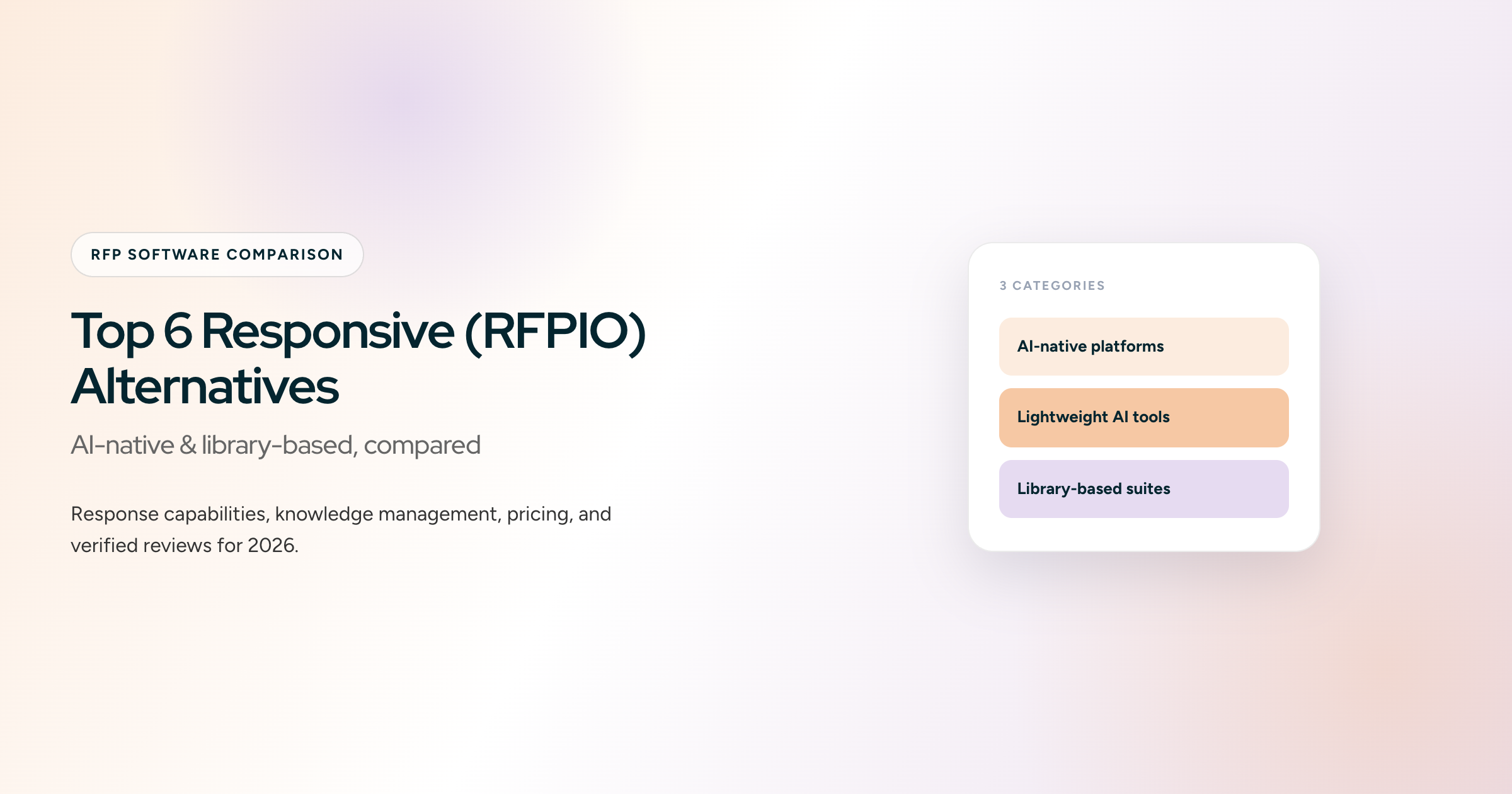
- AutoRFP alternatives: The AI-native alternatives built for context-aware responses are Inventive AI and AutogenAI; the established platforms built around content libraries, workflows are Loopio, Responsive, Qvidian, and Proposify.
- Why teams switch: constant library upkeep, no CRM or call-data context, limited template flexibility, no win/loss analytics.
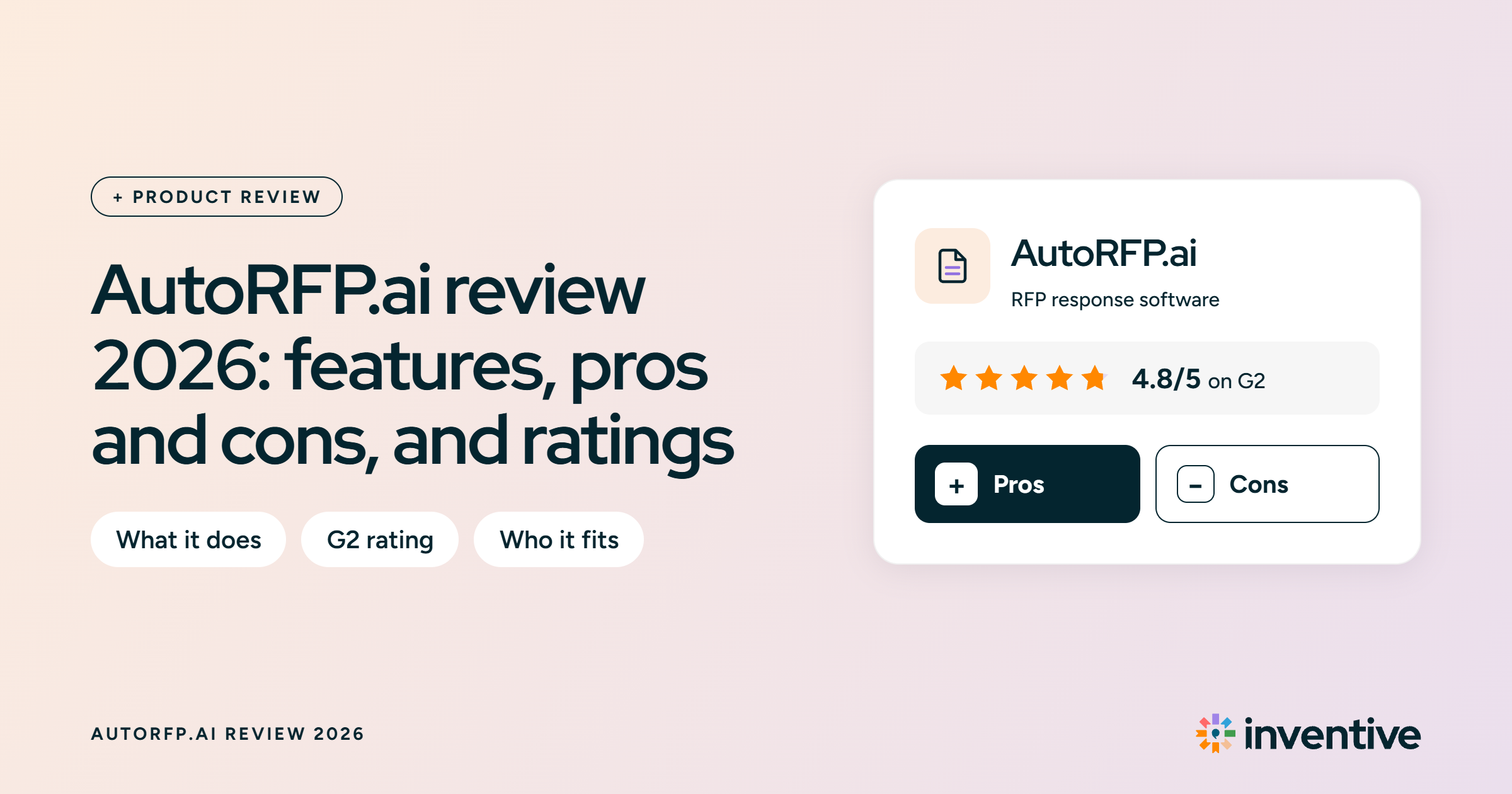
- When AutoRFP still fits: moderate volume, a dedicated content owner, a maintained library, it's rated 4.8/5 on G2 for exactly that.
- How to choose: match the tool to your main problem; response quality, governance, enterprise coordination, or ease of use.
Why teams look for AutoRFP alternatives
AutoRFP.ai is well-rated, 4.8/5 across G2 reviews, with users reporting around 60% time savings on responses. It works best for teams that respond to a moderate number of RFPs and have someone maintaining a well-organized answer library. Teams start looking for alternatives for a few specific reasons:
- The answer library needs constant upkeep. Auto-fill reaches roughly 60% when the library is well maintained, but accuracy drops as stored answers go out of date, so results depend on having someone responsible for keeping content current.
- No live deal context. AutoRFP.ai answers only from your stored answer library, not from your CRM or call recordings (such as Gong), so responses aren't tailored to a specific buyer, industry, or deal stage.
- Limited analytics. There's no win/loss tracking or outcome reporting, so teams can't easily measure which responses win deals or improve over time.
- Not the most intuitive to use. Reviewers say the platform takes time to get comfortable with, and teams often need formal training before they can use it efficiently day to day.
- Complex questionnaires are harder to handle. Large or non-standard formats like long security questionnaires or multi-tab spreadsheets strain the tool as they scale.
Also Read: AutoRFP vs Inventive AI: Which Wins More Deals?
Top AutoRFP Competitors and Alternatives
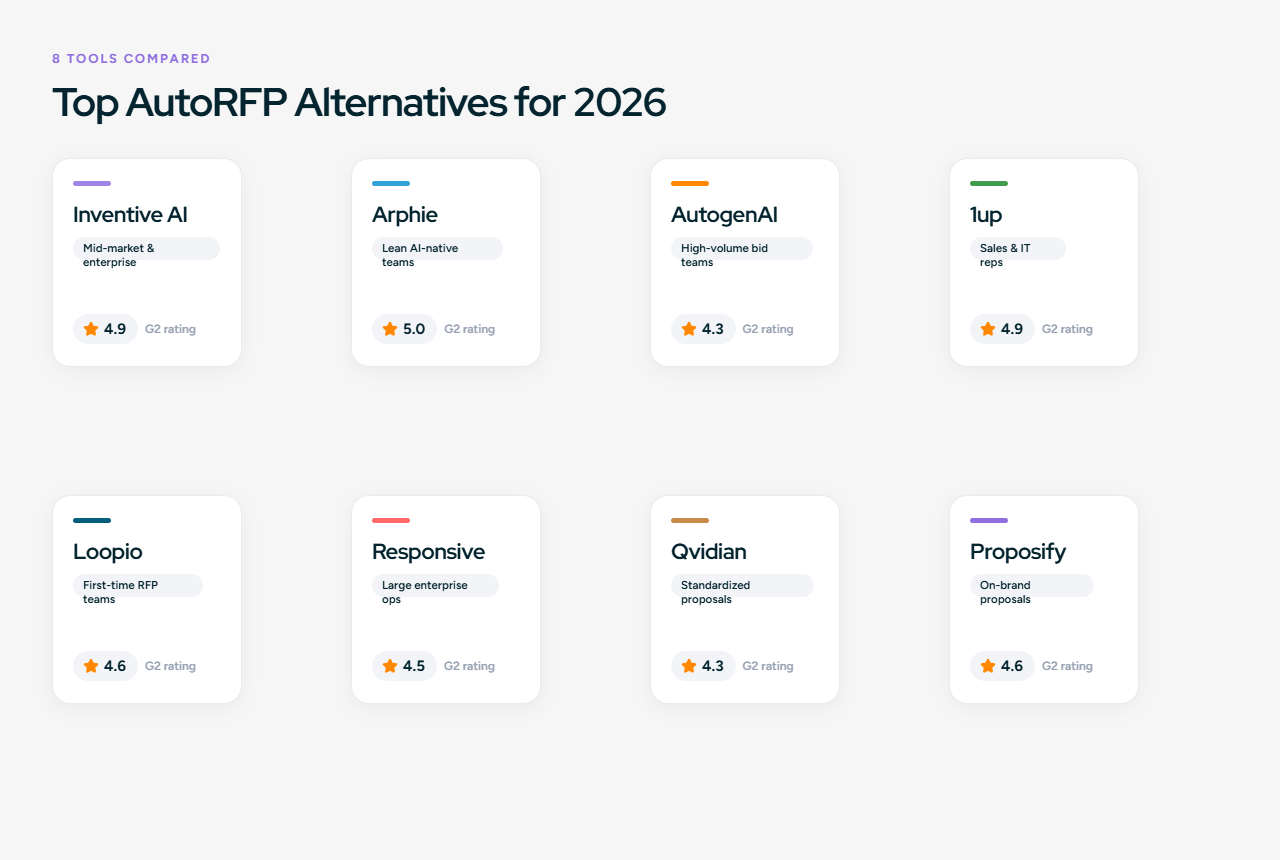
We compare the eight strongest AutoRFP alternatives on strengths, limitations, pricing, and best-fit team, so you can find the right match fast.
| Tool | Overview | Key differentiator | Pricing (2026) | G2 rating |
|---|---|---|---|---|
| Inventive AI | Autonomous, agentic RFP, RFI, and DDQ automation with human approval for Mid-enterprise teams | Connect existing systems → contextual responses → conflict and outdated content checks → better quality and cited responses | Usage-based, unlimited users | 4.9/5 |
| Arphie | AI-native RFP automation for lean teams | Auto-fills RFPs and questionnaires from connected knowledge, no static library | Custom quote (per-project) | 5/5 |
| 1up | Fast, self-serve setup for sales and IT teams | Generates answers from existing docs; Q&A inside Slack and Teams | Free; Starter $300/mo; Plus $900/mo; Enterprise custom | 4.9/5 |
| AutogenAI | AI bid and proposal writing | Fast first drafts with built-in bid project management | Custom quote | 4.3/5 |
| Loopio | Content library management + governance | Structured Q&A library with tagging and approval workflows | Median around $23,915/year, depending on tier | 4.6/5 |
| Responsive (formerly RFPIO) | Enterprise, multi-team proposal operations | Deep governance, granular permissions, and analytics at scale | $5000/yr; quote-based | 4.5/5 |
| Qvidian (Upland) | Template-driven, repeatable proposals | Central content repository + structured templates | ~$15,000–25,000/yr; quote-based | 4.3/5 |
| Proposify | Proposal design + e-signatures | Branded, interactive proposals with engagement tracking | Basic $29/user/mo; Team $49/user/mo | 4.6/5 |
1. Inventive AI

Inventive AI is an autonomous, AI agentic software for RFPs, RFIs, DDQs, and security questionnaires. The agents work from the systems your team already uses, draft contextual responses, and keep humans in the loop for approvals, so teams stop maintaining a Q&A library and stop drafting from scratch.
Best for: Mid-market and enterprise proposal, presales, and InfoSec teams that want to cut manual drafting and library upkeep while keeping approval control.
What sets it apart
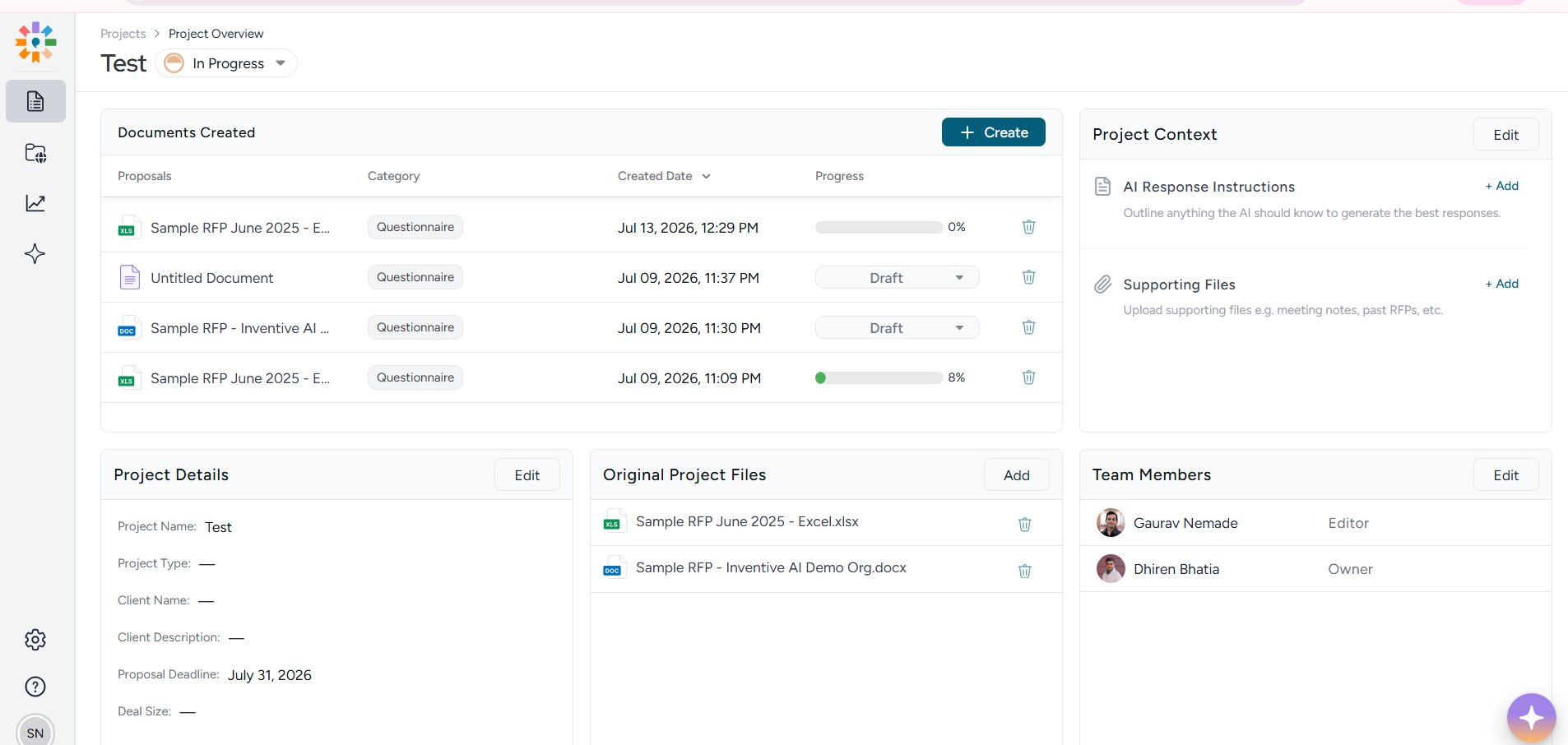
- AI-generated first drafts: Reads the RFP and drafts every answer from your connected knowledge, so teams start from a near-complete draft, not a blank page.
- Knowledge Hub: Connects SharePoint, Salesforce, Google Drive, Confluence, and more into one live source that updates automatically, so there's no Q&A library to maintain.
- Context Engine: Uses deal and customer context so each answer fits the specific opportunity, not generic library copy.
- Content Governance Agent: Flags outdated, conflicting, or duplicate content automatically, no content owner needed.
- Cited, confidence-scored answers: Every response shows sources and a confidence score, and flags "information unavailable" instead of guessing.
- Strategic agents: Go/No-Go checks deal fit early, the Competitive Intelligence Agent positions you against named competitors, and the Full Response Analyzer catches gaps and contradictions before submission.
- Format flexibility: Handles both Excel-based questionnaires and long-form narrative proposals in one workflow.
- Review and approval workflow: Assign sections, track progress, approve, with approved answers flowing back into the Knowledge Hub.
Strengths
- Rated the #1 easiest-to-use RFP tool on G2, with fast adoption and minimal onboarding.
- Quick to implement compared with traditional library-based tools.
- High-quality, contextually accurate first drafts that need little editing.
- Customer support is frequently praised as responsive.
Limitations
- Mobile experience is thin, hard to review drafts from a phone between meetings.
- Analytics are limited for ROI tracking and QBR-style reporting.
- No native Gong integration yet for conversation-intelligence data.
- Focused on RFPs, RFIs, and DDQs, not battlecards, pre-call briefs, or broader sales collateral.
Pricing
Simple and transparent, usage-based with unlimited users.
What customers say about Inventive AI
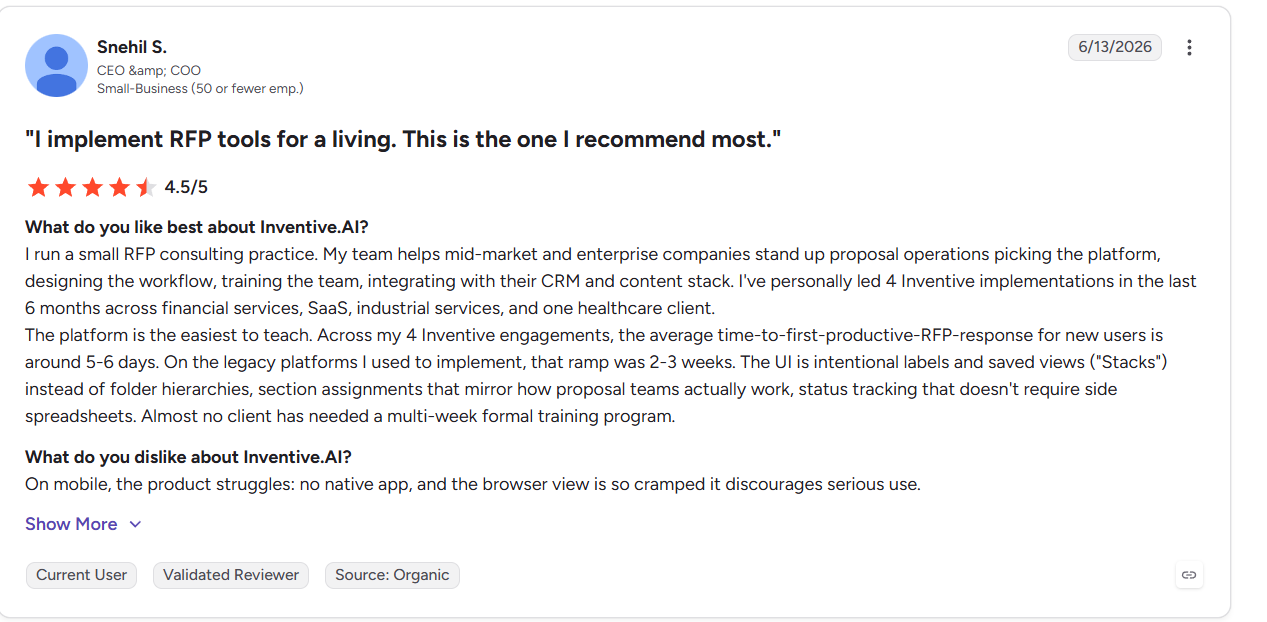
A verified G2 review (Snehil S., 4.5/5) says it's the easiest RFP tool to teach, with users productive in 5–6 days vs 2–3 weeks on legacy tools; the one gripe is a weak mobile experience with no native app.
Better answers win more RFPs.
See how context-aware responses, tailored to each buyer, improve win rates, not just turnaround time.
Book a demo2. Arphie
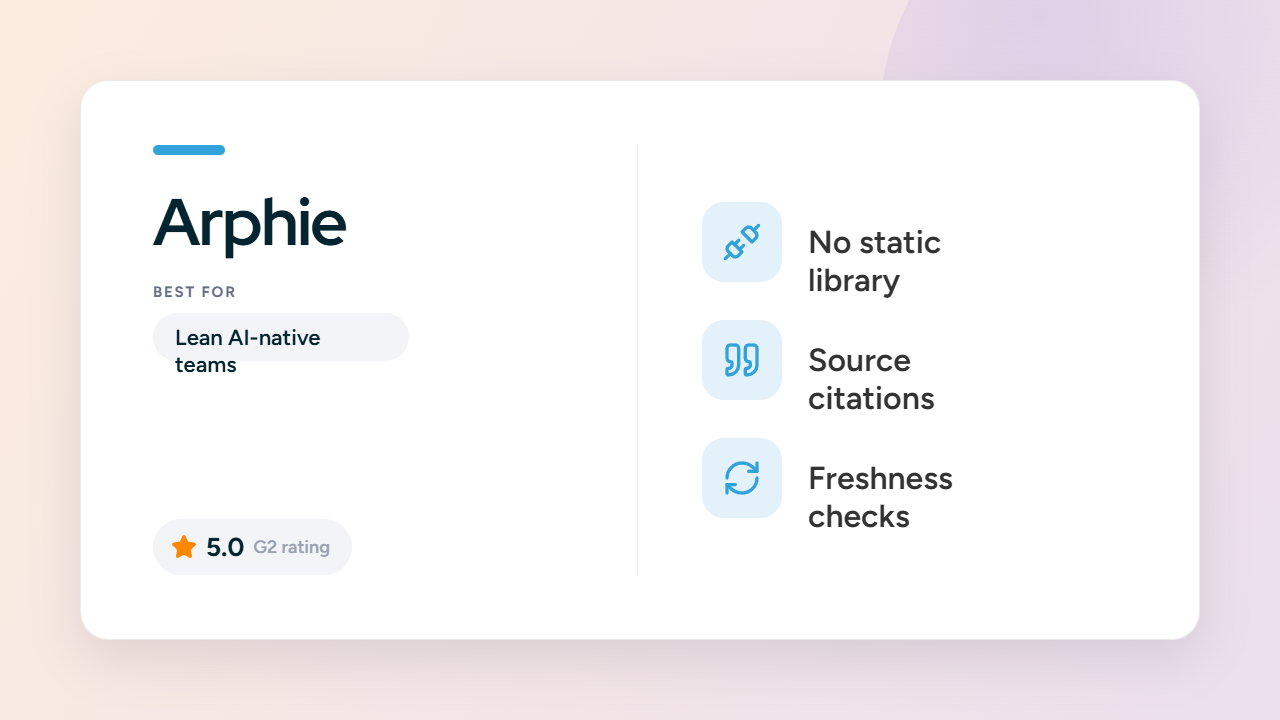
Arphie is an AI-native platform for RFPs, RFIs, DDQs, and security questionnaires, built around human-in-the-loop workflows. It connects to your business information where it already lives, so there's no Q&A library to assemble or update.
Best for: Lean sales, solutions, and security teams that want AI-native automation without maintaining a library.
What sets it apart
- Connects to information where it lives: Draws answers from existing sources rather than a Q&A library, cutting setup and upkeep.
- Transparent AI drafts: Every first draft shows its source citations and confidence signals, so reviewers can trust and verify fast.
- Automatic freshness checks: Flags responses that may be outdated when the underlying documents change.
Strengths
- Reviewers consistently report major time savings on responses.
- Intuitive interface and easy onboarding.
- Scores high on meeting requirements, usability, and ease of setup.
Limitations
- No mobile support as reported by reviewers.
- Limited import/export formats, Excel is primary; Word and PDF are still developing.
- Less mature Salesforce integration than some alternatives.
- Does not have competitive intelligence ability to check competitors trends before responding
Pricing
Custom quote (per-project model).
What customers say about Arphie
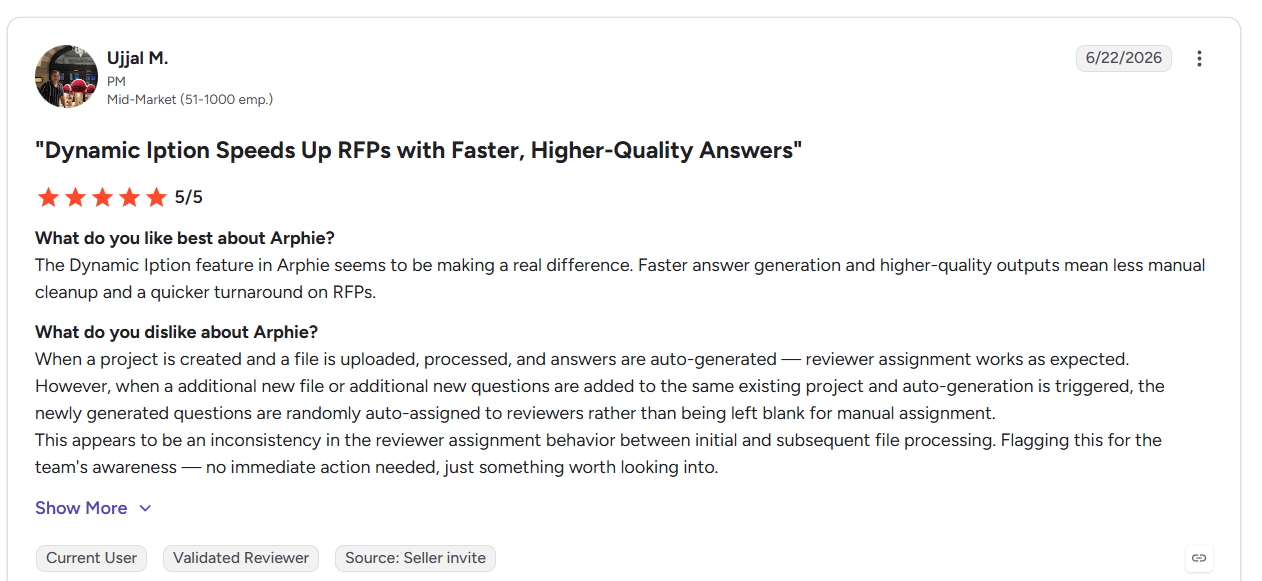
According to G2, a verified customer (Ujjal M., 5/5) says its Dynamic Option feature delivers faster, higher-quality answers with less cleanup; the drawback is inconsistent reviewer auto-assignment when new questions are added.
3. AutogenAI
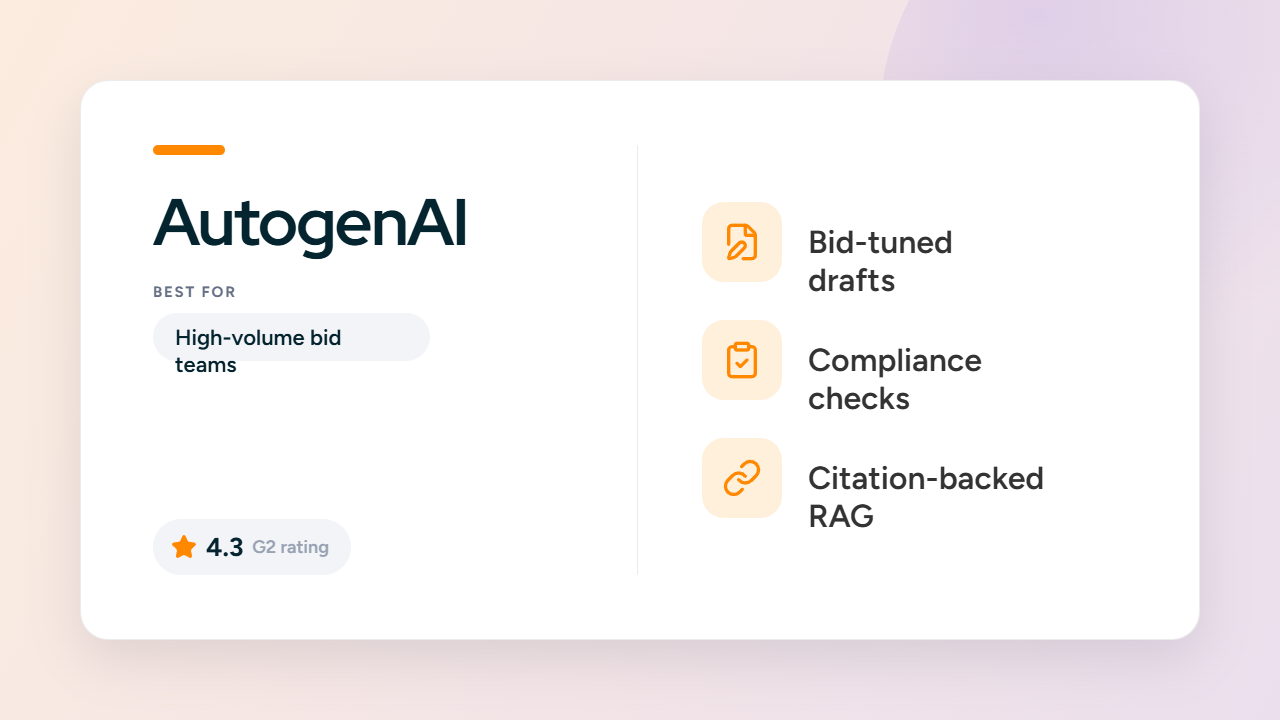
AutogenAI is an AI-first platform for proposal and bid writing that helps teams draft compliant proposals and manage the full bid process in one place.
Best for: Bid and proposal teams handling high volumes of tenders with strict response requirements.
What sets it apart
- Bid-focused drafting: Generates first drafts tuned to bid and tender requirements, saving time upfront.
- Gamma Review: Automates requirement extraction and compliance checking so drafts meet response criteria.
- Citation-backed RAG: Forces the AI to cite corporate history and brand-approved language, keeping outputs on-message.
Strengths
- Reviewers consistently cite faster first drafts.
- Feels built for bid writing rather than a generic AI tool.
- Useful with large volumes of tender information and technical input.
Limitations
- No built-in graphics or charts, so teams rely on other tools for visuals.
- Version control and real-time editing feel basic for multi-user work.
- High-risk responses still need manual accuracy and compliance checks.
- Minimum seat commitments and onboarding fees make it hard for smaller teams.
Pricing
Custom quote (enterprise).
What customers say about Autogen AI
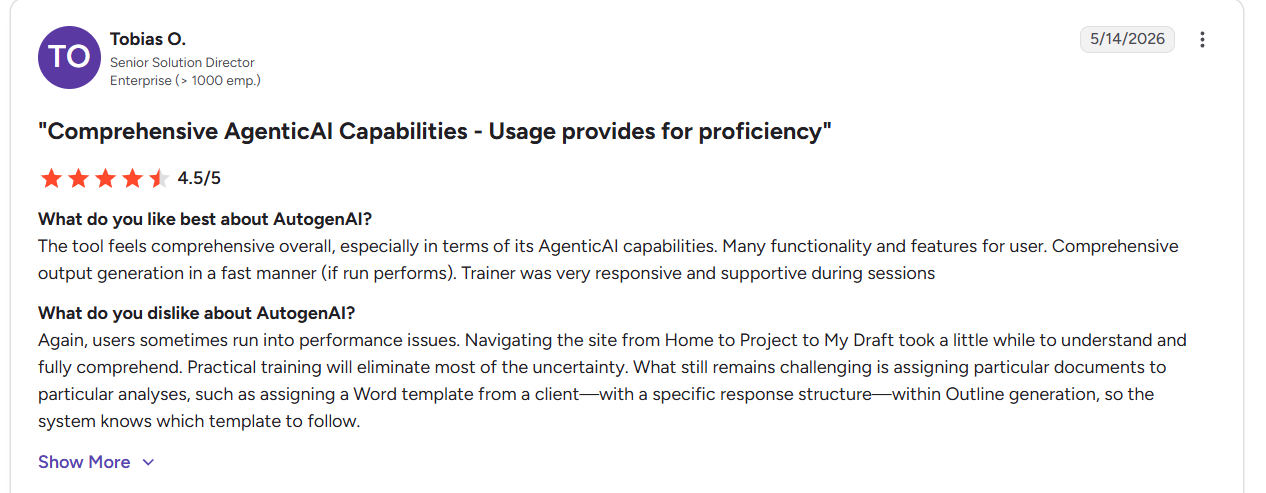
A verified G2 review (Tobias O., 4.5/5) praises its agentic AI capabilities and responsive trainer, but flags performance lags and difficulty assigning specific templates to an analysis.
4. 1up
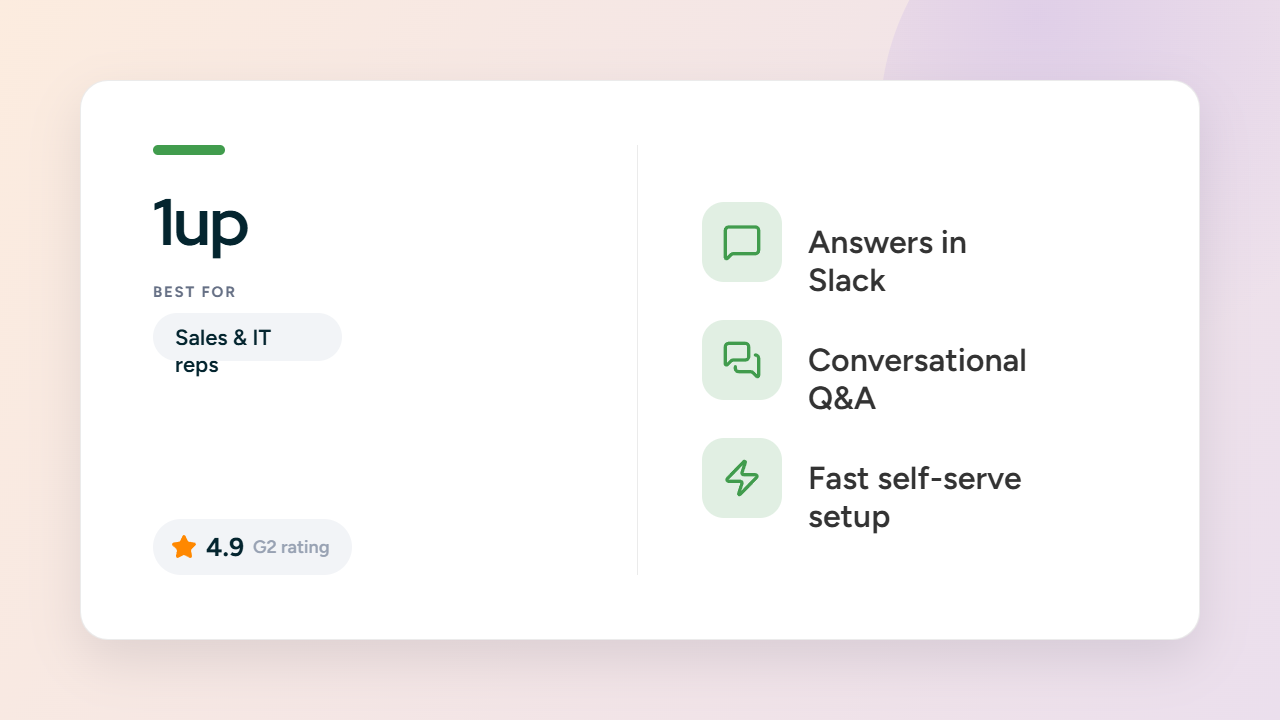
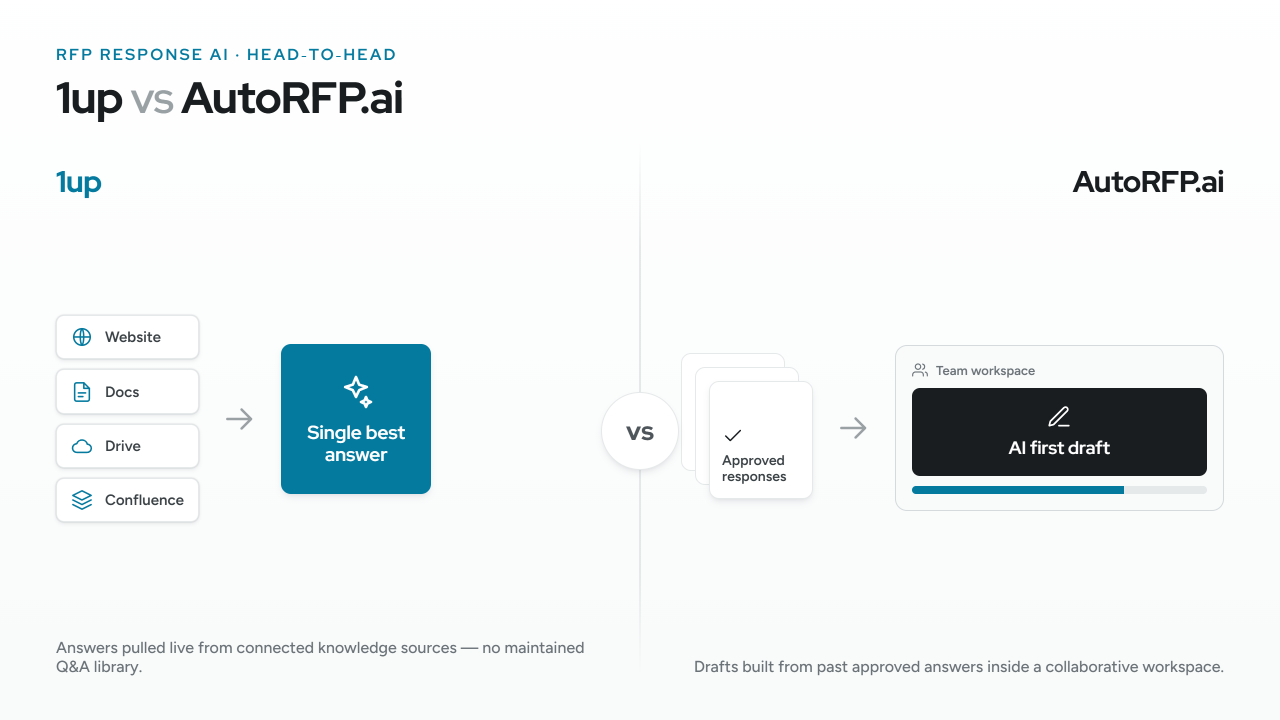
1up helps sales and IT teams answer RFPs, security questionnaires, and everyday sales questions fast. It connects to existing content sources and delivers respnses inside the tools reps already use, without a separate Q&A library to maintain.
Best for: Sales and pre-sales teams that need instant, trusted answers inside Slack, Salesforce, or a browser.
What sets it apart
- Answers in your workflow: Works inside Slack, Teams, and Salesforce, so reps get answers without switching tools.
- Conversational Q&A: Reps ask questions in natural language and get instant, sourced answers for live deals.
- Broad use cases: Handles RFPs, security questionnaires, and everyday sales questions, not just formal RFPs.
Strengths
- Setup is fast, often live within a couple of days.
- Reviewers praise its speed and ease of use.
- Support is responsive and quick to act on feedback.
Limitations
- It struggles with complex, multi-part questions and can return inaccurate answers.
- It is not a full RFP project tool, with no approval workflows, multi-gate review, or document assembly.
- Analytics are lighter than some teams expect.
- Answer quality depends on how well content is kept current.
Pricing
Free plan; Starter $300/mo; Plus $900/mo; Enterprise custom.
What customers say about 1up
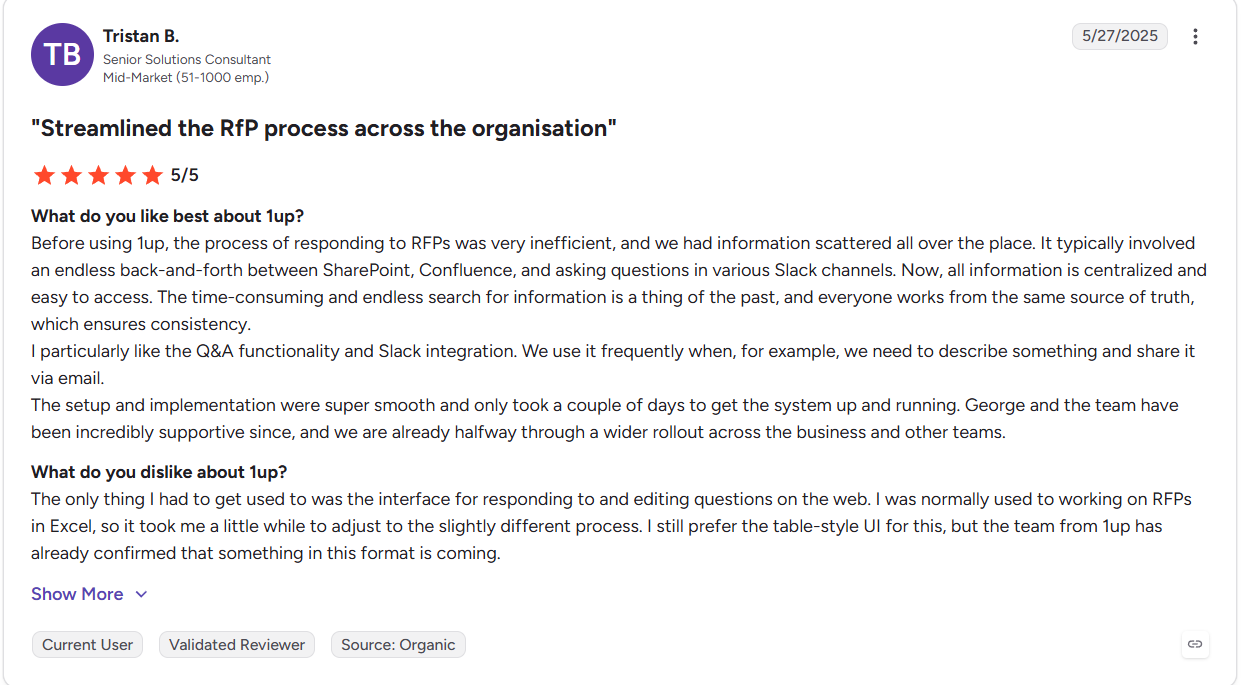
According to G2, a verified customer (Tristan B., 5/5) says it centralized scattered info with strong Slack Q&A and setup in days; the only dislike is adjusting to the web editor after Excel.
Also Read: 1Up vs AutoRFP: Best RFP Tools for 2026
5. Loopio
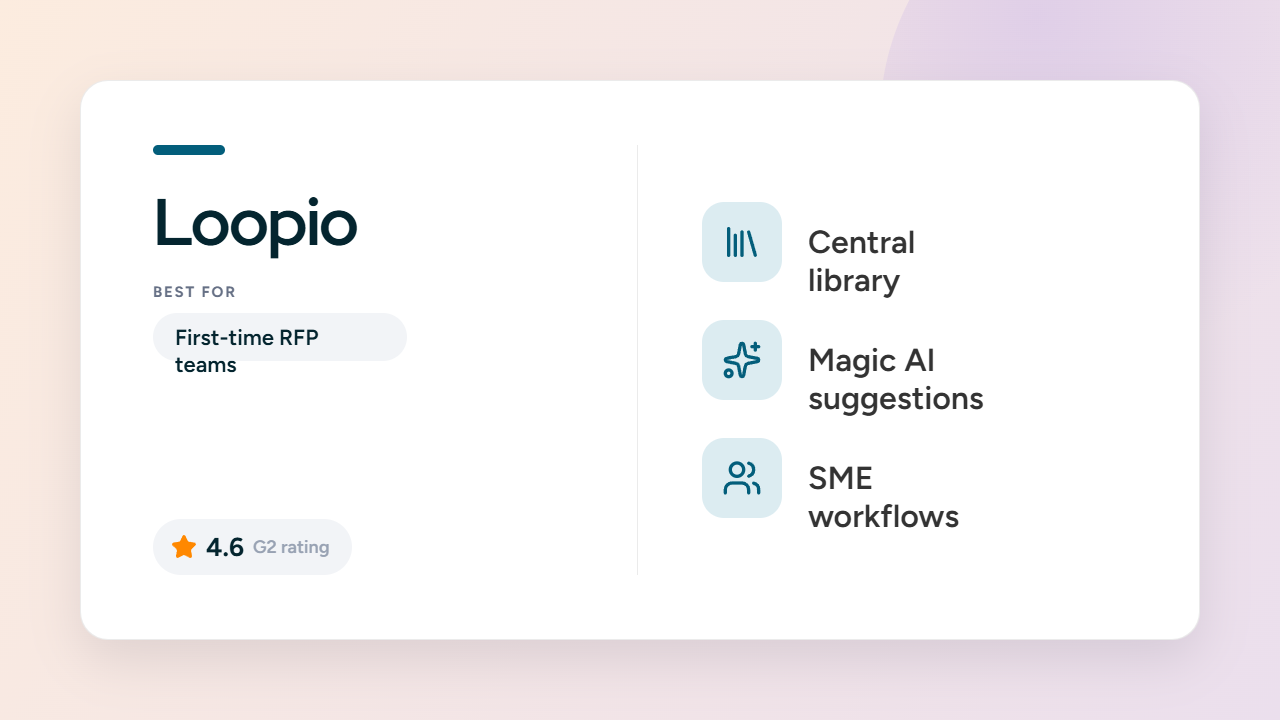
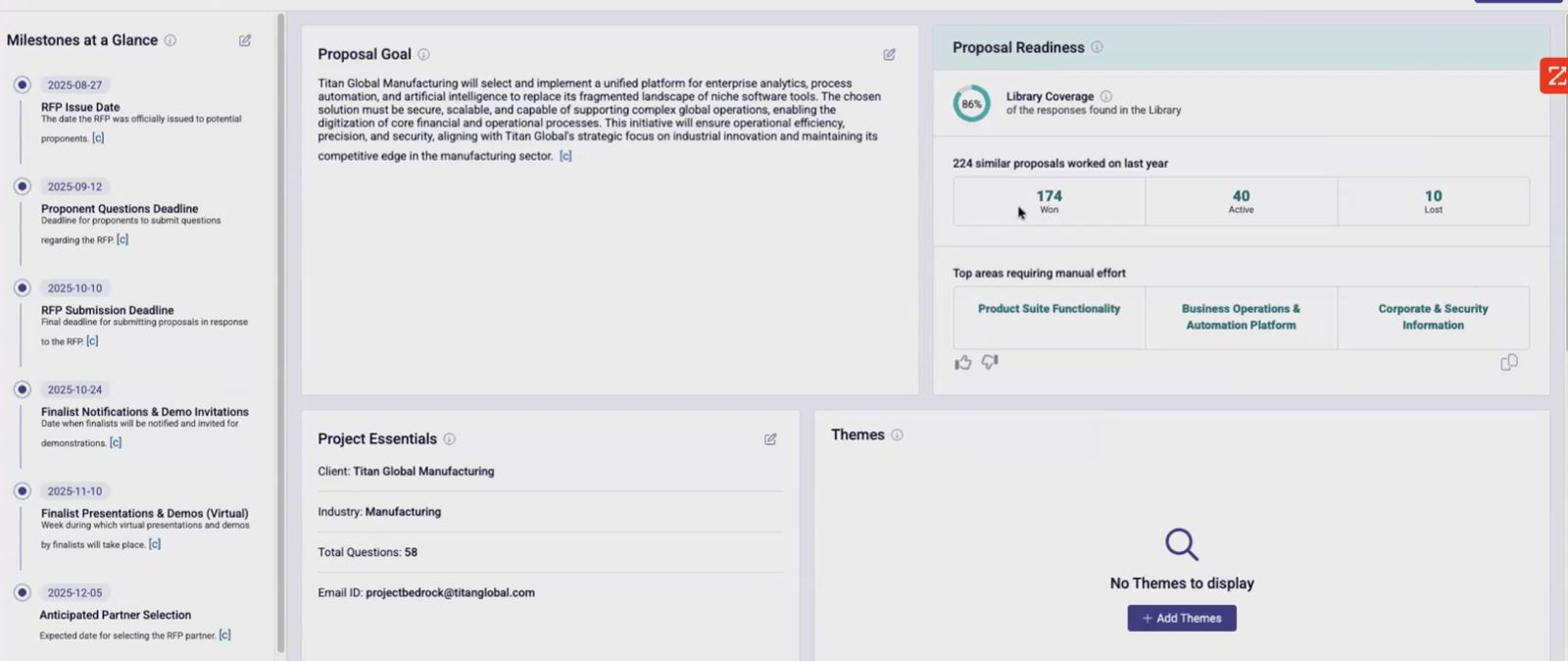
Loopio is a response management platform built around a centralized content library and structured team workflows, used for RFPs, security questionnaires, and DDQs.
Best for: Teams formalizing their RFP process for the first time who want fast onboarding.
What sets it apart
- Centralized library: Stores approved answers with tags and categories, so content is easy to find and reuse.
- Magic AI suggestions: Surfaces responses from approved content to speed up drafting.
- SME workflows: Assigns questions and tracks progress, keeping multi-contributor projects organized.
Strengths
- Fast and intuitive, so teams onboard quickly.
- Reliable for repetitive, well-covered questions.
- Support and implementation help are frequently praised.
Limitations
- The library needs ongoing upkeep or answer accuracy drops.
- The AI respond from a static library rather than drafting context-aware answers, so responses often need rewriting.
- There is no conflict detection, so contradictory or outdated answers go unnoticed unless caught manually.
- User-based pricing gets expensive when adding many occasional contributors.
- AI was added to an established Q&A platform rather than built in from the start, so drafts often need editing.
Pricing
Median around $23,915/year, typically $11,770 to $58,277 depending on tier (Vendr data)
What customers say about Loopio
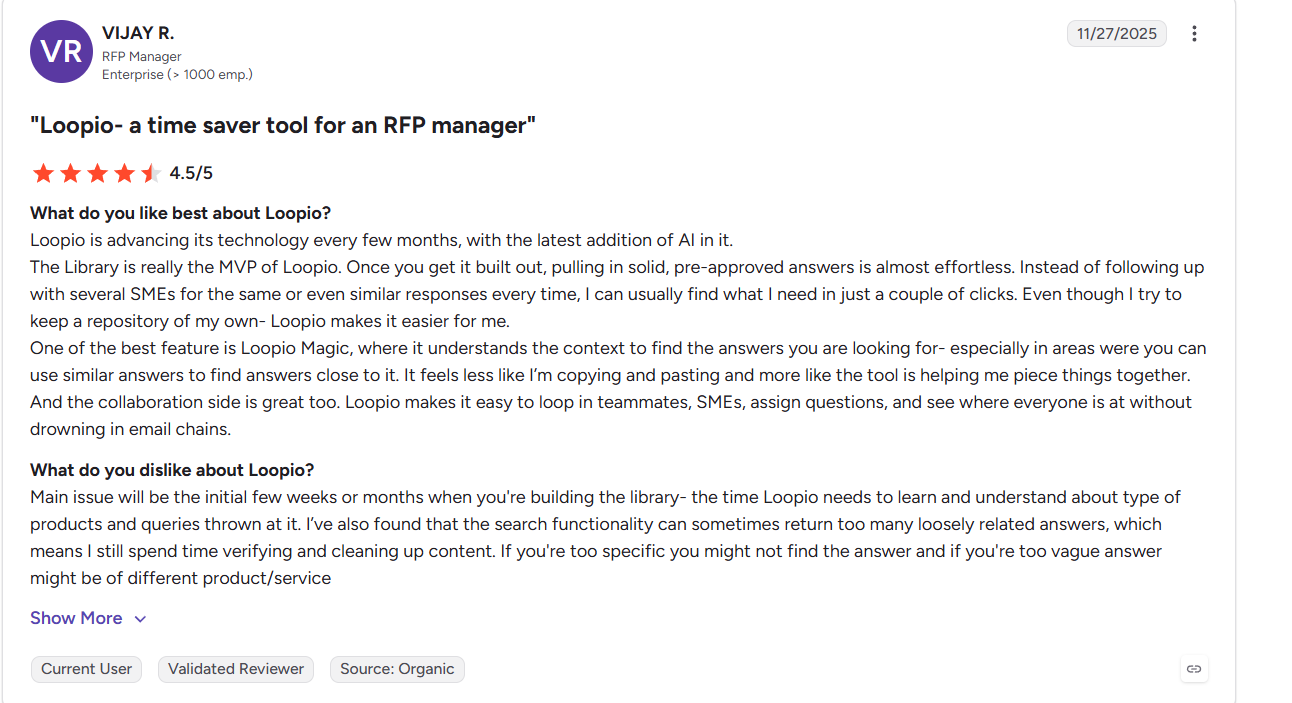
A verified G2 review (Vijay R., 4.5/5) calls the Library its best asset with context-aware suggestions, but notes heavy upfront library-building and search that returns too many loose matches.
Also Read: Loopio vs Responsive: Which RFP Software Is Better in 2026?
6. Responsive (formerly RFPIO)
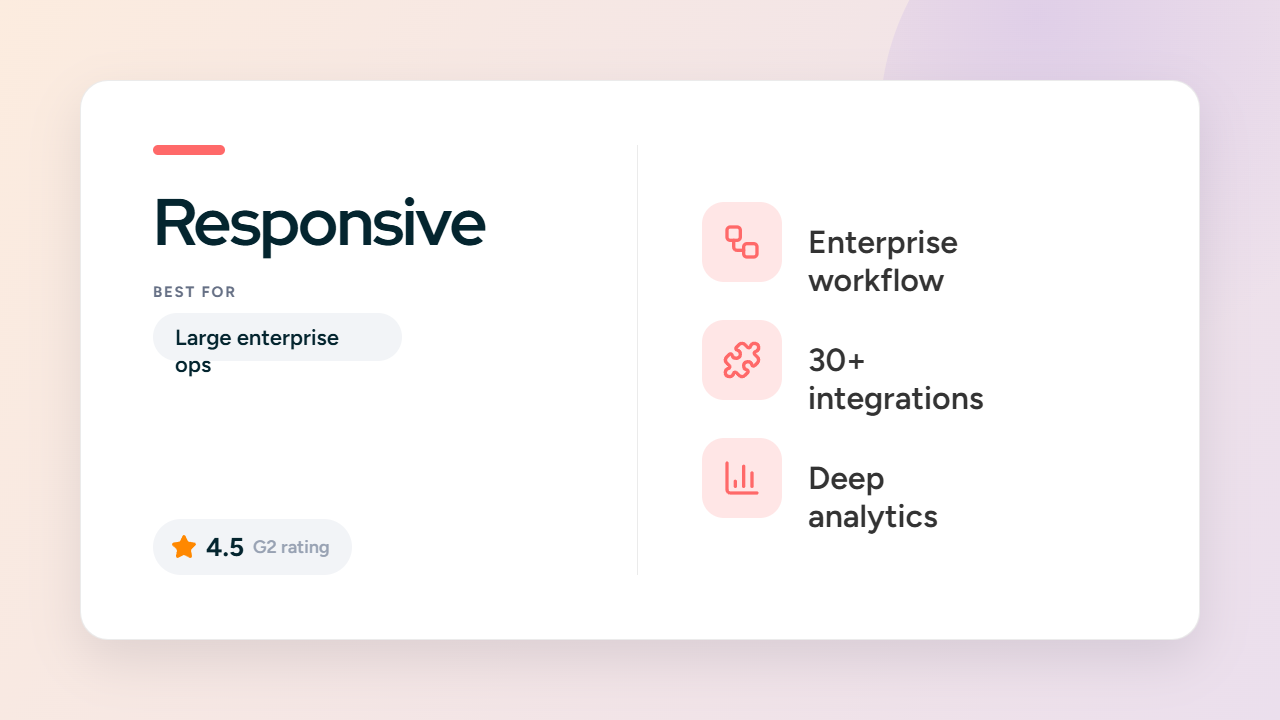
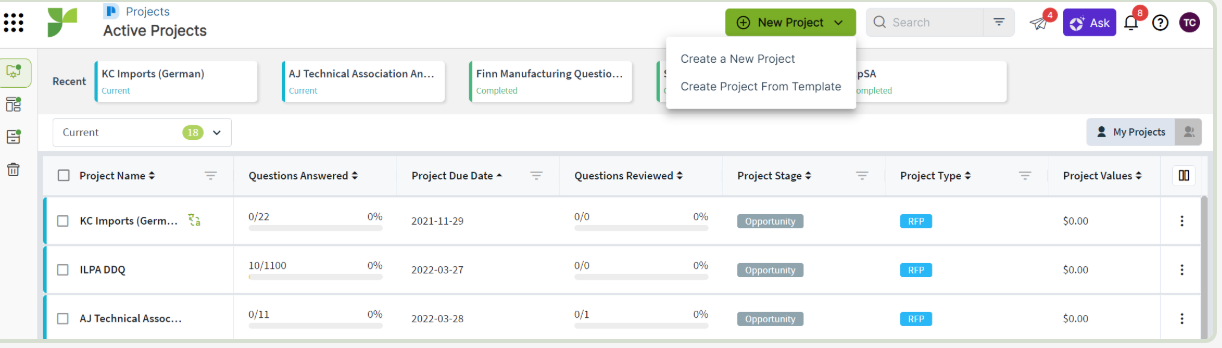
Responsive is an enterprise response management platform for RFPs, security questionnaires, DDQs, and proposals at scale.
Best for: Large, multi-department teams with complex, high-volume proposal operations.
What sets it apart
- AI retrieval and drafting: Ask and LookUp generate source-cited drafts, with TRACE Score validating responses.
- Broad integrations: Close to 30 native integrations plus 75+ open APIs for custom workflows.
- Enterprise workflow: Handles multi-team routing, permissions, and large-scale project orchestration.
Strengths
- Handles complex, high-volume questionnaires well.
- Offers deep CRM coverage, granular permissions, and strong analytics.
- Reviewers note frequent AI and feature updates.
Limitations
- The feature-dense interface has a steeper learning curve.
- The AI can generate answers from outside approved content, per user reports.
- Costs are higher and harder to forecast with per-user licensing and add-ons.
- TRACE Score checks individual answers but does not catch contradictions across the library.
Pricing
From $5,000/year (Lite, 5 users); mid and enterprise tiers custom-quoted.
What customers say about Responsive
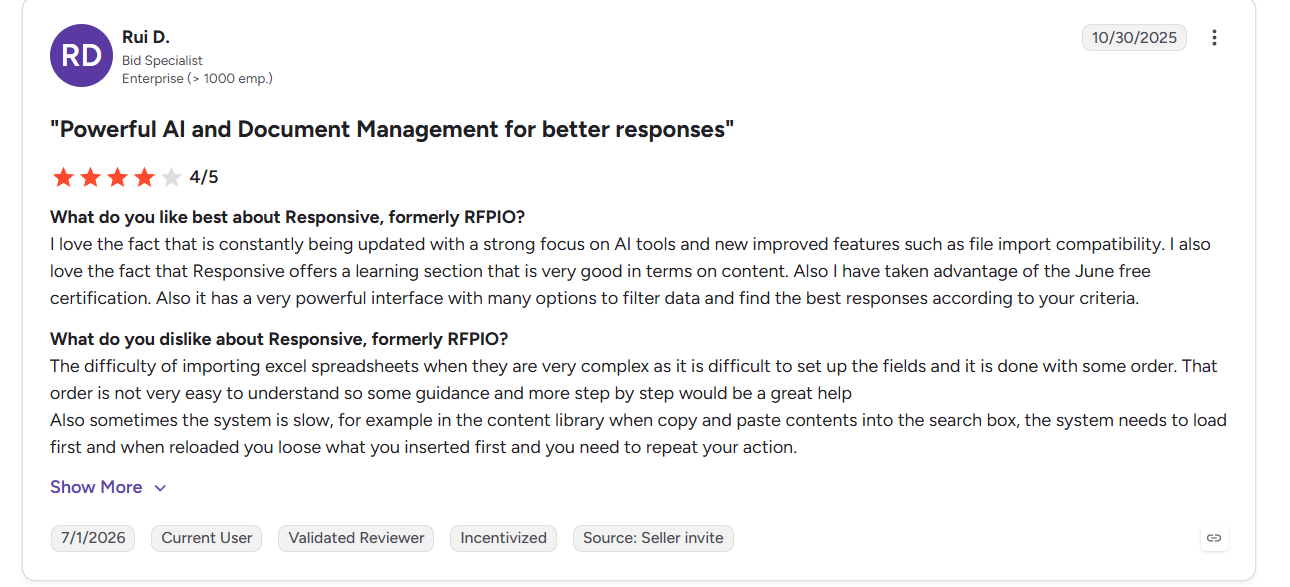
According to G2, a verified customer (Rui D., 4/5) likes its constant AI updates and powerful filtering, but cites trouble importing complex Excel files and occasional slowness that loses entered content.
7. Qvidian (Upland)
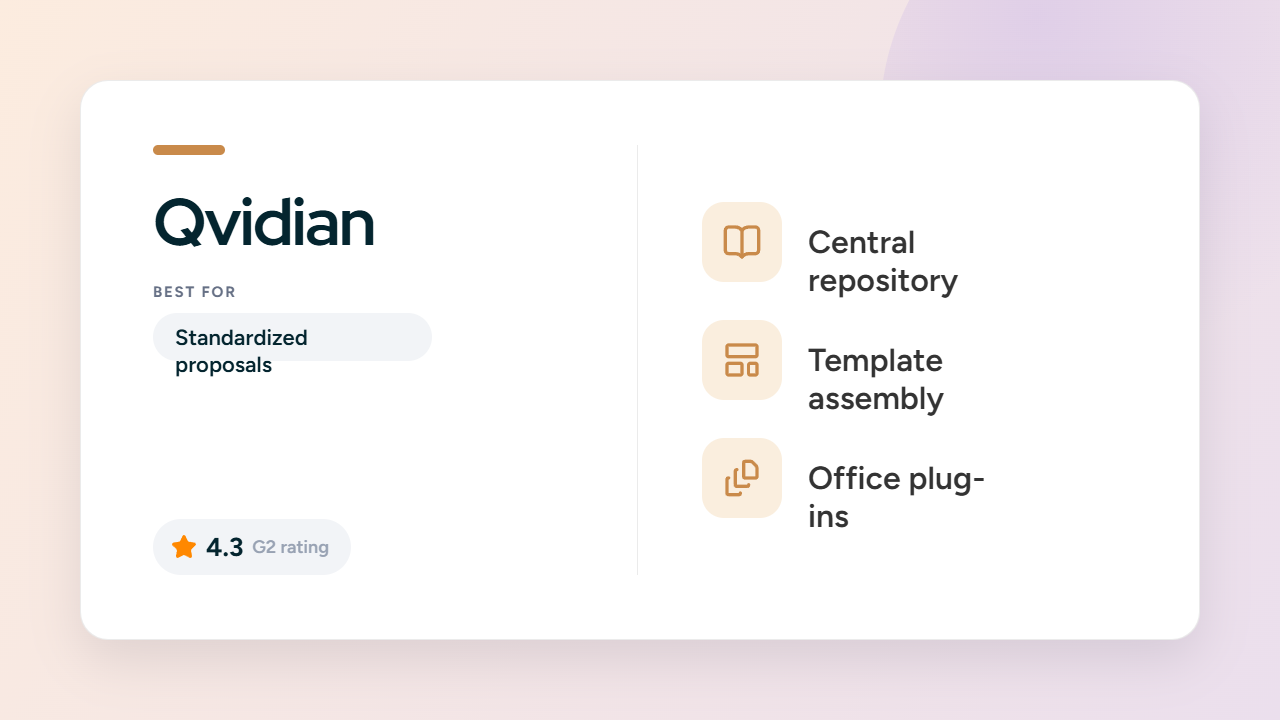
Qvidian is a proposal and RFP response platform built around a central content repository and structured templates, best suited to standardized, repeatable proposals.
Best for: Teams with highly standardized proposals and repeatable content needs.
What sets it apart
- Central repository: Stores approved responses and corporate content for consistent reuse.
- Template-driven assembly: Builds proposals from structured templates for uniform formatting.
- Office integration: Microsoft Office plug-ins make it familiar for Office-based teams.
Strengths
- Strong content storage and reuse that makes libraries more effective.
- Intuitive interface with robust search.
- Familiar for teams that already work in Microsoft Office.
Limitations
- Uploading and updating content is manual and time-consuming.
- Search lacks a semantic approach, so the best answers are not always surfaced first.
- Reporting is rigid and often needs custom setup for routine data.
- AI was added to an older template-based platform and is still maturing, so it does limited context-aware drafting.
Pricing
Around $15,000 to $25,000/year, quote-based (vendr data).
What customers say about Qvidian
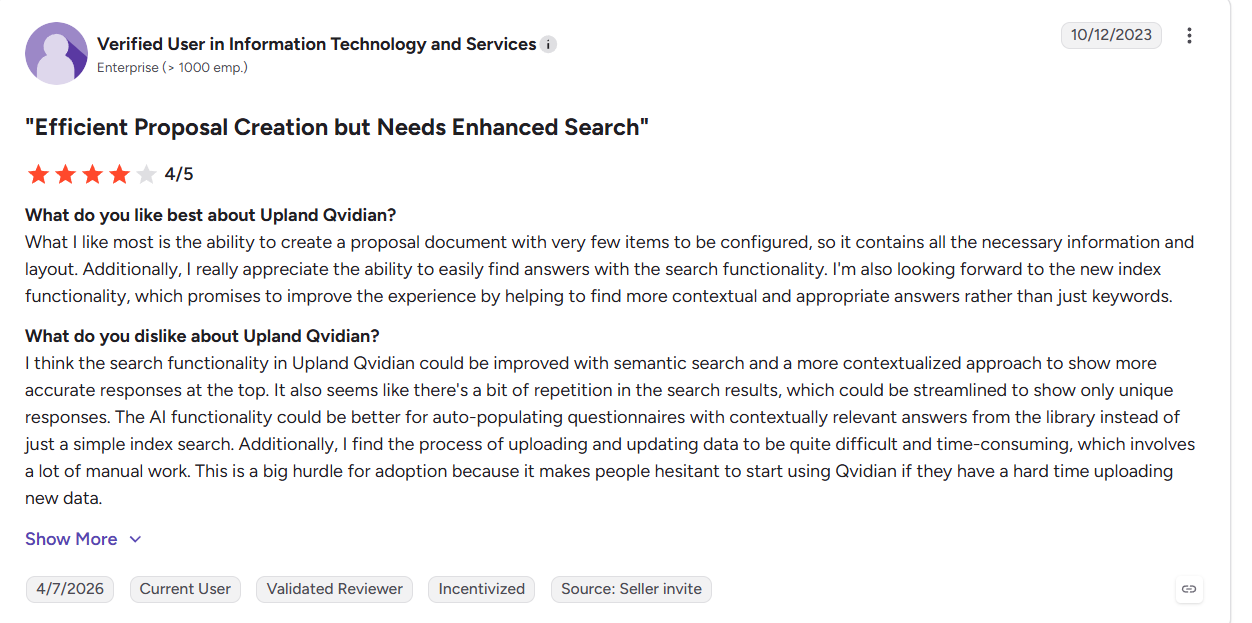
A verified G2 review (4/5) says proposal creation is efficient with easy search, but wants semantic search and finds uploading and updating data difficult and time-consuming.
8. Proposify
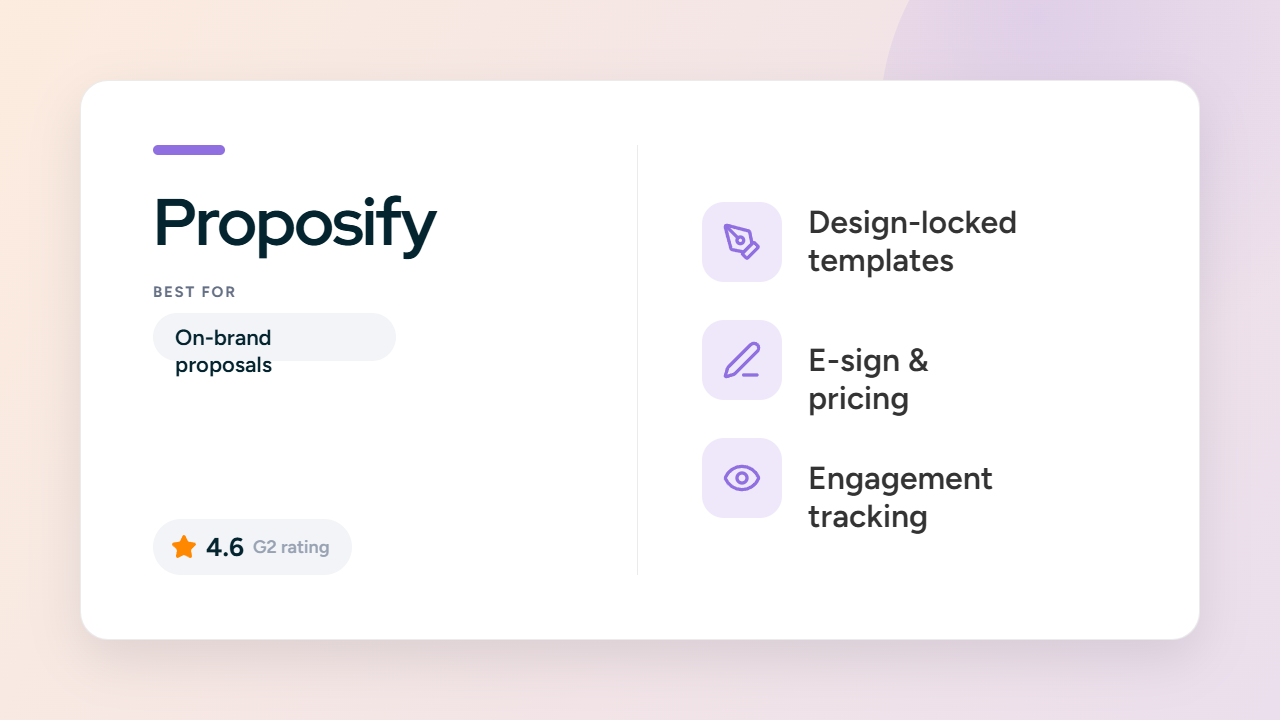
Proposify is a proposal design and e-signature platform for creating branded, interactive sales proposals and tracking engagement.
Best for: Sales teams that need polished, on-brand proposals and quotes, not large-scale RFP automation.
What sets it apart
- Design-locked templates: Reps edit text but cannot break branding, so proposals stay on-brand.
- Interactive pricing and e-sign: Built-in quoting and signatures close deals in one document.
- Engagement tracking: Shows when prospects open and read proposals, guiding follow-up.
Strengths
- Easy to create professional, visually appealing proposals.
- Templates keep every proposal on-brand.
- Engagement tracking helps teams time their follow-ups.
Limitations
- Customization and layout flexibility frustrate some users.
- It cannot auto-answer large or complex RFPs.
- The Basic plan caps sends at 5 per month for up to 2 users, forcing upgrades.
- It covers proposals and quotes only, not contracts or broader document workflows.
Pricing
Basic $19/user/month; Team $49/user/month.
What customers say about Proposify
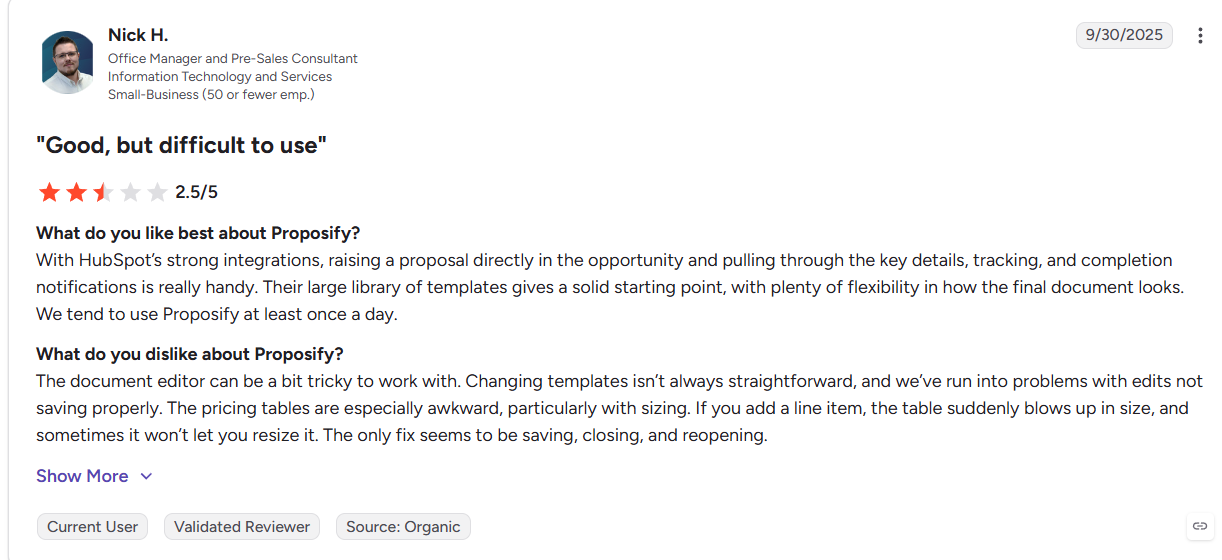
According to G2, a verified customer (Nick H., 2.5/5) values the HubSpot integration and template library, but finds the editor clunky, edits that don't save, and awkward pricing tables.
How to choose the right AutoRFP alternative
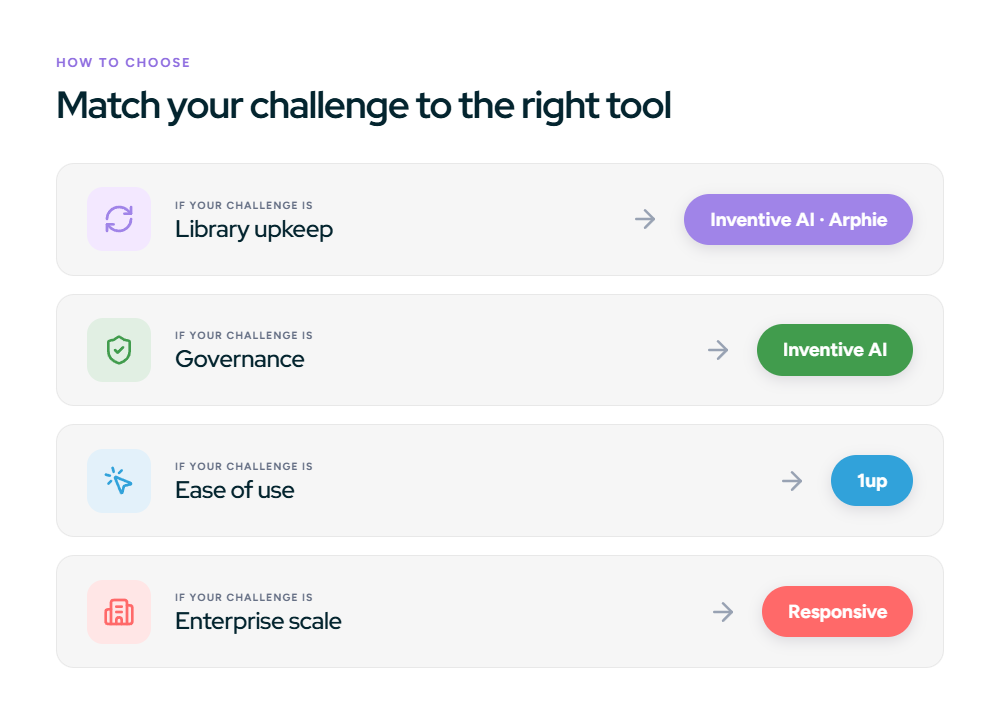
The best alternative is the one that fixes your specific bottleneck. Match your main challenge to the tool.
| If your main challenge is | Consider | Why |
|---|---|---|
| Library upkeep is hurting answer accuracy | Inventive AI, Arphie | Both work from your existing systems- Notion, Slack, Confluence, Salesforce, Hubspot and more so there is no Q&A library to maintain |
| Reps need fast answers inside Slack or Salesforce | 1up | Answers questionnaires and sales questions directly in the tools reps already use |
| Deal-specific response quality and AI governance | Inventive AI | Context Engine tailors each answer per deal, with citations and automatic content checks |
| High-volume bids and tenders with strict compliance | AutogenAI, Inventive AI | Built for bid writing, with requirement extraction and compliance checking |
| Formalizing your RFP process for the first time | Loopio | Structured library and workflows with fast onboarding |
| Enterprise, multi-team proposal operations | Responsive | Deep governance, permissions, integrations, and analytics at scale |
| Standardized, repeatable proposals | Qvidian | Template-driven assembly from a central content repository |
| Polished, on-brand proposals and e-signatures | Proposify | Design-locked templates, interactive pricing, and engagement tracking |
Make Your Next RFP Response Faster to Win
The right alternative fixes your specific problem. For library upkeep and accuracy, look at AI-native tools like Inventive AI, Arphie, or 1up. For enterprise governance, Responsive or Loopio. For on-brand proposals, Proposify. If AutoRFP still handles your volume, you may not need to switch.
Before committing, shortlist two tools and run a real RFP through each in the trial, using your own content and a few edge-case questions. Confirm pricing, data-security terms, and implementation time in writing.
AI built for RFPs from the ground up.
Inventive AI delivers 2x better response quality, as reported by RAD-AI.
Book a demoFAQs
Do AutoRFP alternatives keep my data private, or train AI on it?
Most keep it private. AutoRFP alternatives like Inventive AI and 1up state customer data is never used to train public models, and most are SOC 2 Type II compliant. Confirm data residency and training-data terms in the contract.
Are AutoRFP alternatives more accurate than AutoRFP?
AI-native alternatives ground answers in your approved content with source citations and confidence scores, and report accuracy around 95 percent. Like AutoRFP, they still need manual review on pricing, legal, and compliance answers.
How long do AutoRFP alternatives take to implement?
Library-based alternatives like Responsive and Qvidian take 4 to 8 weeks. AI-native alternatives like Inventive AI, Arphie, and 1up can be live in days, since there is no library to build first.
Which AutoRFP alternatives handle security questionnaires and DDQs?
Inventive AI, Arphie, Responsive, and 1up cover RFIs, DDQs, and security questionnaires. Proposify does not, since it focuses on proposal design.
How hard is it to switch from AutoRFP to another tool?
The main cost is migrating and re-tagging your content, heaviest for library-based tools. Alternatives that read from existing systems reduce it. Confirm data export terms before signing.
Do AutoRFP alternatives still need a dedicated content manager?
Library-based ones like Loopio, Responsive, and Qvidian do, or accuracy drops. Alternatives with automated governance, like Inventive AI, reduce that need by flagging outdated content automatically.