Education RFP Template: Create Winning School Proposals

You have probably answered the same questions on FERPA, integrations, accessibility, and pricing across multiple education RFPs. Yet every new opportunity still forces your team to rewrite, reformat, and reorganise those answers.
A structured education RFP template helps you understand how institutions frame requirements. A response template helps vendors organise answers clearly and reuse content effectively.
In this guide, you will learn how an education RFP template works and how vendors can use response templates to reply faster and more accurately.
Must Read: Government AI RFP Response: Comparison and Alternatives
The Ultimate Education RFP Template in 2026 (for Buyers)
Education RFPs often follow a predictable structure. Once you understand that structure, preparing responses becomes much easier.
With a template, you can plan your responses in advance instead of starting from scratch each time. Your team already knows which sections will appear and what information institutions expect.
To help you prepare better, we have provided a downloadable buyer-side education RFP template. It includes the most common sections used by schools and institutions when issuing RFPs.
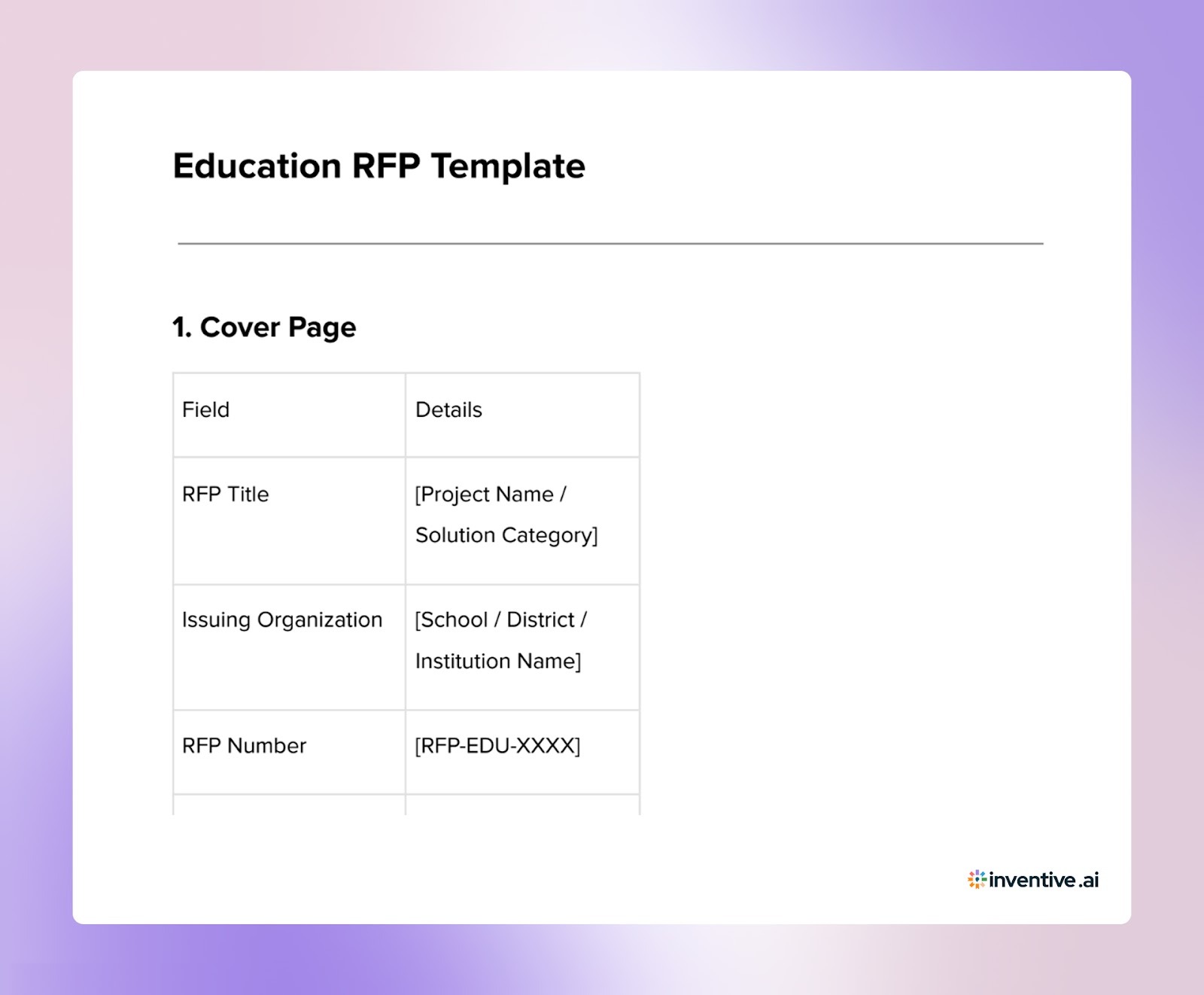

What’s included in this Education RFP Template?
A good education RFP template makes sure that schools get similar, consistent information from vendors, which speeds up and improves the evaluation process.
The following components should always be included:
1. Project Overview: A summary of the project, why it's needed, and what the institution aims to achieve.
2. Institution Background: Details about the school, district size, student population, campuses, and existing systems for context.
3. Scope of Work: A clear list of what the vendor needs to provide, such as technology, services, integrations, training, or ongoing support.
4. Technical Requirements: Specific functional and non-functional needs such as:
- Integrations with SIS/LMS
- Data migration
- FERPA and student data privacy requirements
- Accessibility standards (WCAG)
- Infrastructure expectations
5. Implementation Timeline: Required milestones, deployment phases, go-live expectations, and any school-year constraints.
6. Vendor Qualifications: Information vendors must provide, including experience in education, certifications, case studies, and references.
7. Evaluation Criteria: Prices, features, compliance, training, support quality, and long-term value will all be taken into account when scoring proposals.
8. Pricing Structure: A detailed breakdown of costs: licenses, hardware, services, training, maintenance, and renewal terms.
9. Data Security & Privacy Requirements: Expectations for protecting student information, encryption standards, access controls, and FERPA compliance.
10. Support, Training & Service Levels: Requirements for onboarding, teacher/staff training, response times, support availability, and SLAs.
11. Submission Instructions: Format, required documents, deadlines, contact details, and clarification procedures.
With these components outlined, schools don’t need to start from scratch. A pre-built template simplifies the entire process and ensures consistency across all vendor submissions.
The Winning Education RFP Response Template in 2026 (for Vendors)
To help you respond faster, we have created a ready-to-use Education RFP response template for vendors. This template gives you a clear structure to organize your proposal and address the sections buyers usually include in education RFPs.
You can download the template and customize it based on the buyer’s requirements. Instead of starting every proposal from scratch, you can adapt this structure and update the details to match the specific RFP.
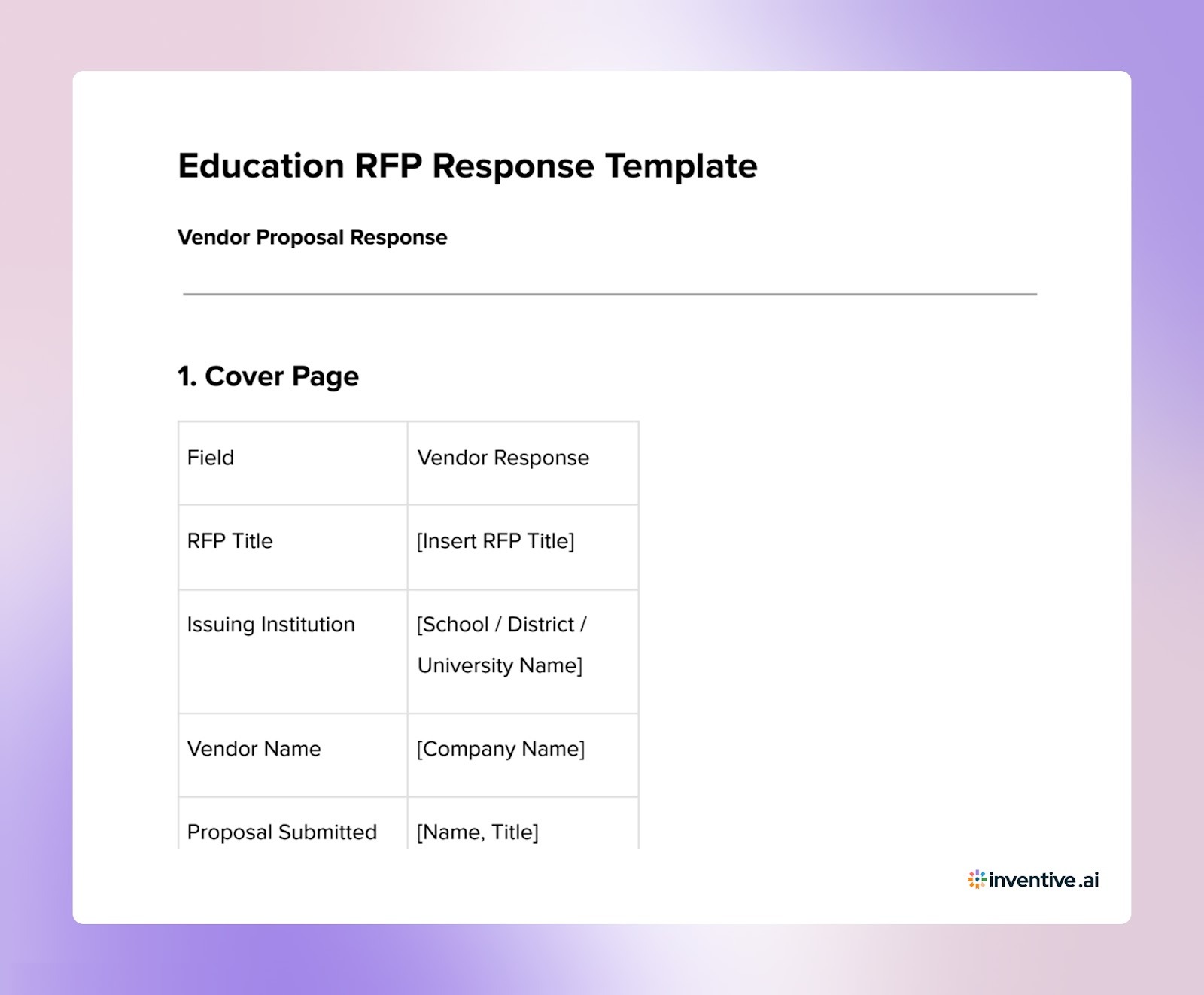

Why Use an Education RFP Template?
- Understand buyer expectations early: Vendors can see what information institutions will request and prepare responses in advance.
- Respond to RFPs faster: Knowing the typical structure reduces time spent analysing each document.
- Improve response quality: Vendors can organise content clearly across technical, compliance, and pricing sections.
- Prepare reusable response content: Teams can maintain structured answers for common education requirements.
- Reduce last-minute proposal work: Having a template allows teams to focus on tailoring responses instead of building them from scratch.
A well-structured education RFP template helps both schools and vendors work with clearer expectations. Vendors can prepare stronger proposals and respond with greater confidence.
Must Read: Patient Engagement RFPs: How Healthcare Vendors Can Respond Faster and Win More Contracts?
10 Proven Customization Tips to Improve Your Education RFP Responses
By customizing each section of your response template, you can show how your solution fits the buyer’s specific requirements rather than presenting a generic proposal.
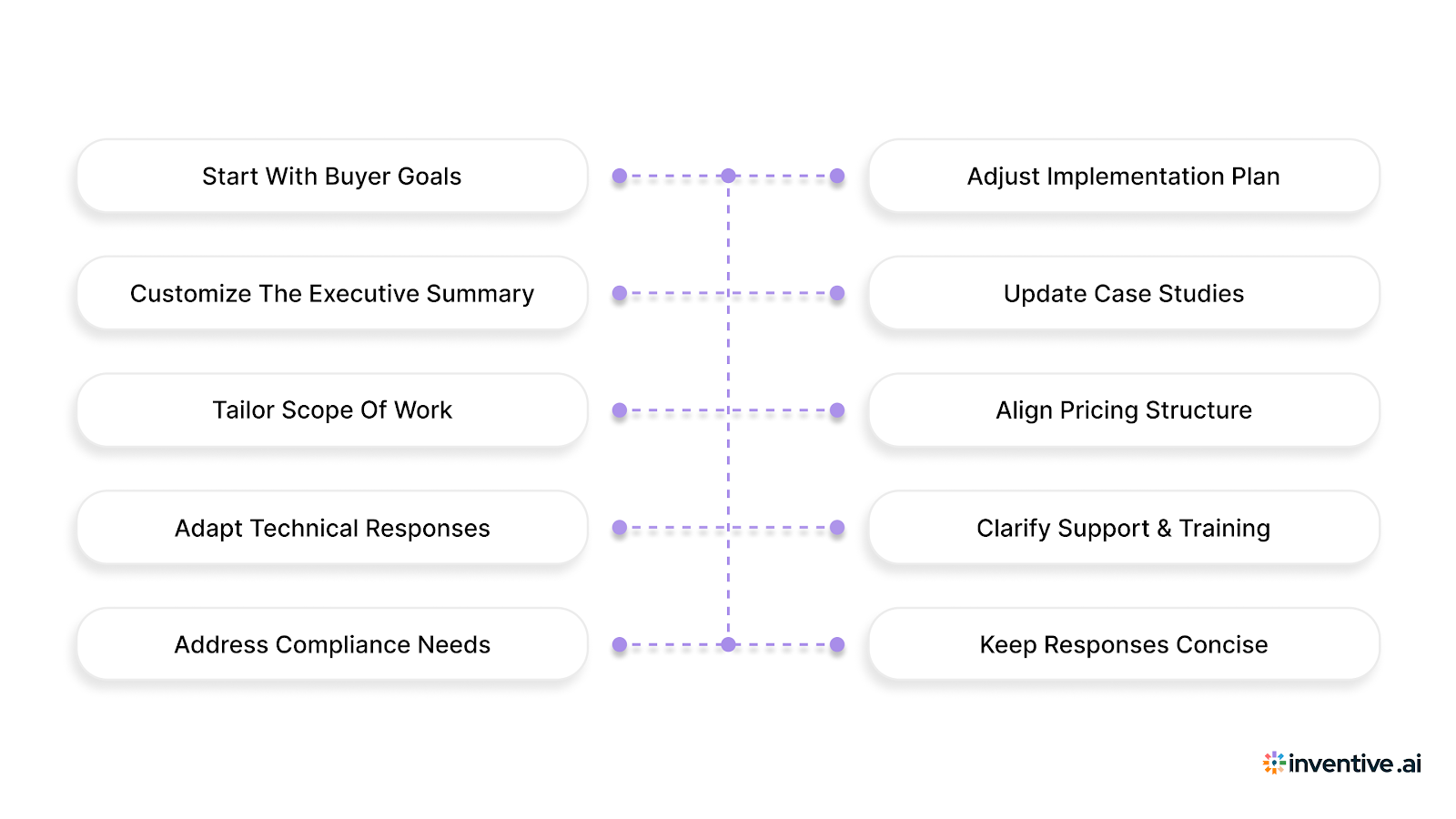
Here are practical ways to customize your education RFP responses:
1. Start with the Buyer’s Goals
Review the project overview and align your response with the institution’s objectives. Address the problems they want to solve.
2. Adapt Your Executive Summary
Do not reuse the same introduction. Mention the institution’s priorities, timeline, or project scope to make your proposal relevant.
3. Tailor the Scope of Work Section
Match your services directly to the requirements listed in the RFP. Highlight the features or services that address their needs.
4. Customize Technical Responses
Update integration details, infrastructure requirements, and deployment options based on the systems mentioned in the RFP.
5. Address Compliance Requirements Clearly
Education buyers care about FERPA, accessibility, and student data protection. Adapt your responses to reflect the exact compliance expectations.
6. Adjust the Implementation Plan
Modify timelines and rollout strategies to match the buyer’s academic calendar and operational constraints.
7. Update Case Studies and Experience
Use examples from similar institutions or projects. This helps buyers see how your solution performs in comparable environments.
8. Align Pricing with the Buyer’s Structure
Follow the pricing format requested in the RFP. Present costs in the structure that the buyer expects.
9. Clarify Support and Training Plans
Explain how teachers, staff, and administrators will receive training and support after implementation.
10. Keep Responses Clear and Focused
Avoid unnecessary detail. Answer each question directly and structure your response so evaluators can review it easily.
Customizing your response template for each education RFP helps buyers see how well your solution fits their needs. It also improves clarity, strengthens your proposal, and increases your chances of moving forward in the evaluation process.
Handle Complex Education RFPs Faster with Inventive AI
Education RFPs often include long questionnaires, compliance sections, and detailed technical requirements. AI helps vendors respond faster by generating answers from existing content and past proposals. Inventive AI organizes response content and helps vendors prepare accurate proposals more efficiently.
1. 2× Higher Quality Responses
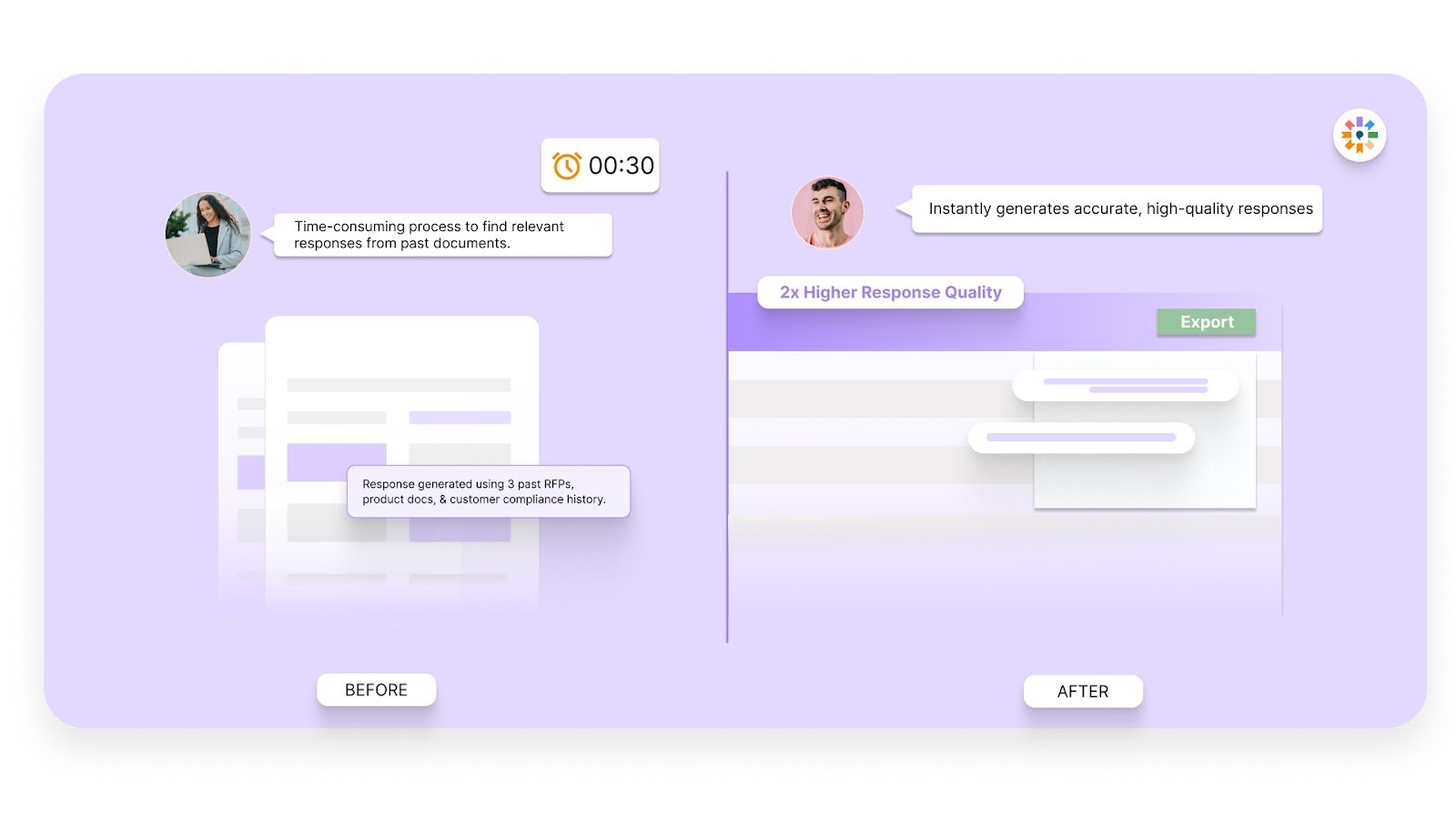
Inventive AI helps vendors create stronger responses by using approved company content and past answers. This improves clarity and makes proposals more relevant to buyer requirements. Teams can produce more complete and relevant proposals without rewriting the same information for every RFP.
2. Context Engine
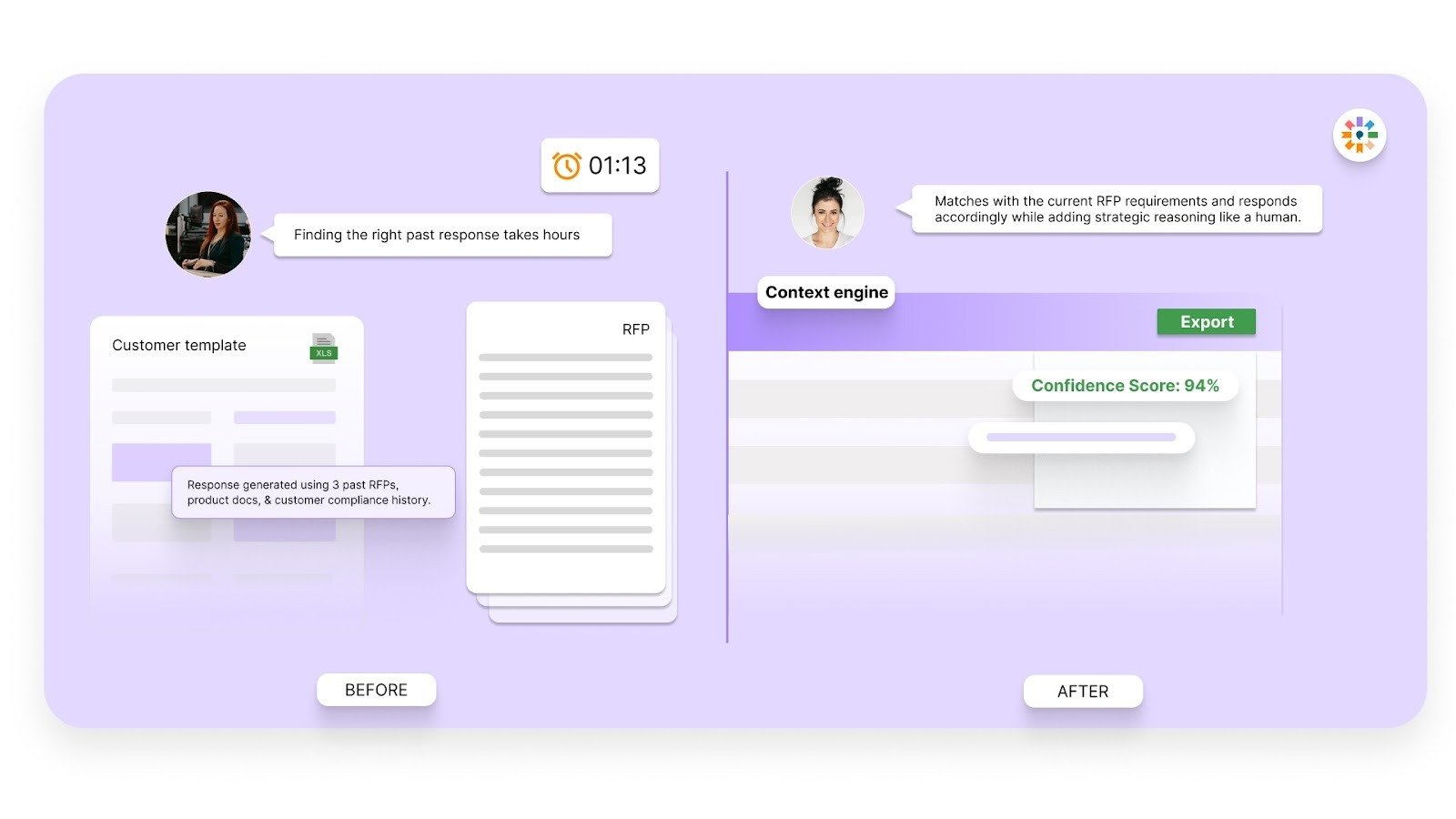
The Context Engine analyzes each RFP question and retrieves the most relevant information from your stored knowledge sources. This helps generate responses that match the buyer’s intent.
3. Conflict Detection
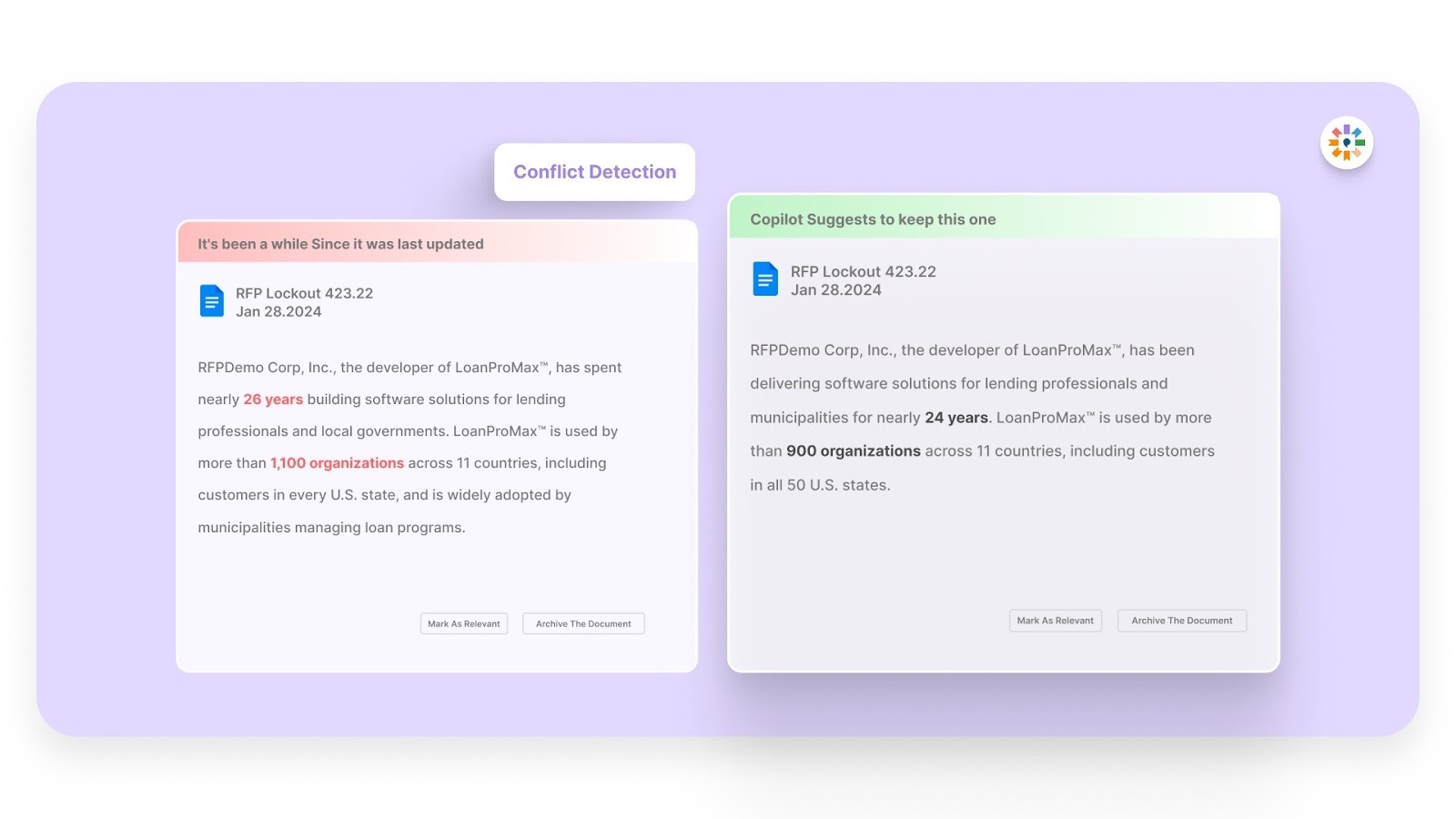
Inventive AI identifies conflicting statements across different responses and documents. This helps vendors maintain consistent messaging across technical, compliance, pricing, and service sections. It reduces the risk of submitting proposals with contradictory information.
4. Outdated Content Detection
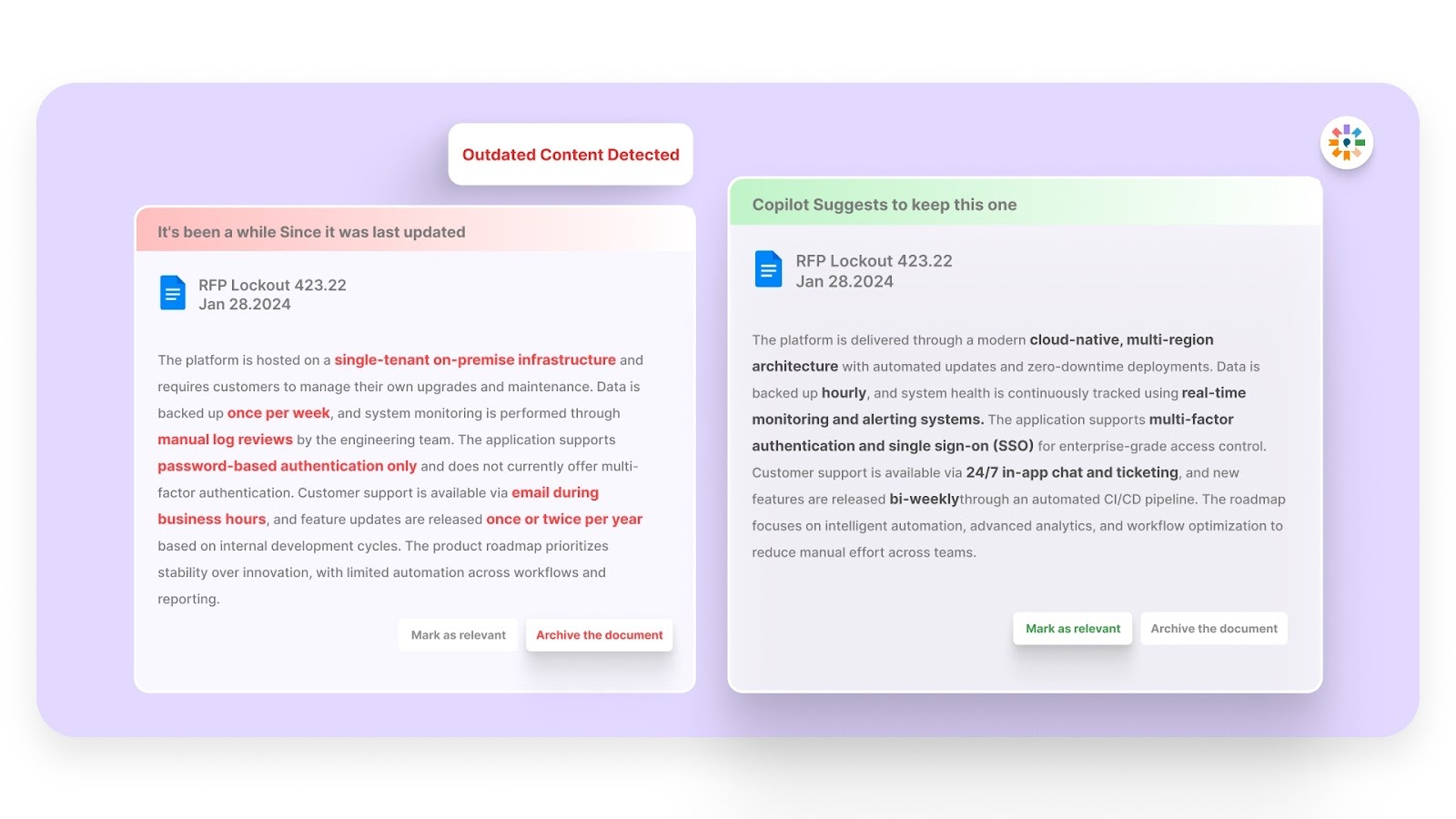
Inventive AI highlights outdated or incorrect information stored in previous responses. Vendors can quickly update these sections before submitting proposals. This helps teams keep responses accurate and aligned with their latest product capabilities and policies.
5. Simple, Easy-to-Use Interface
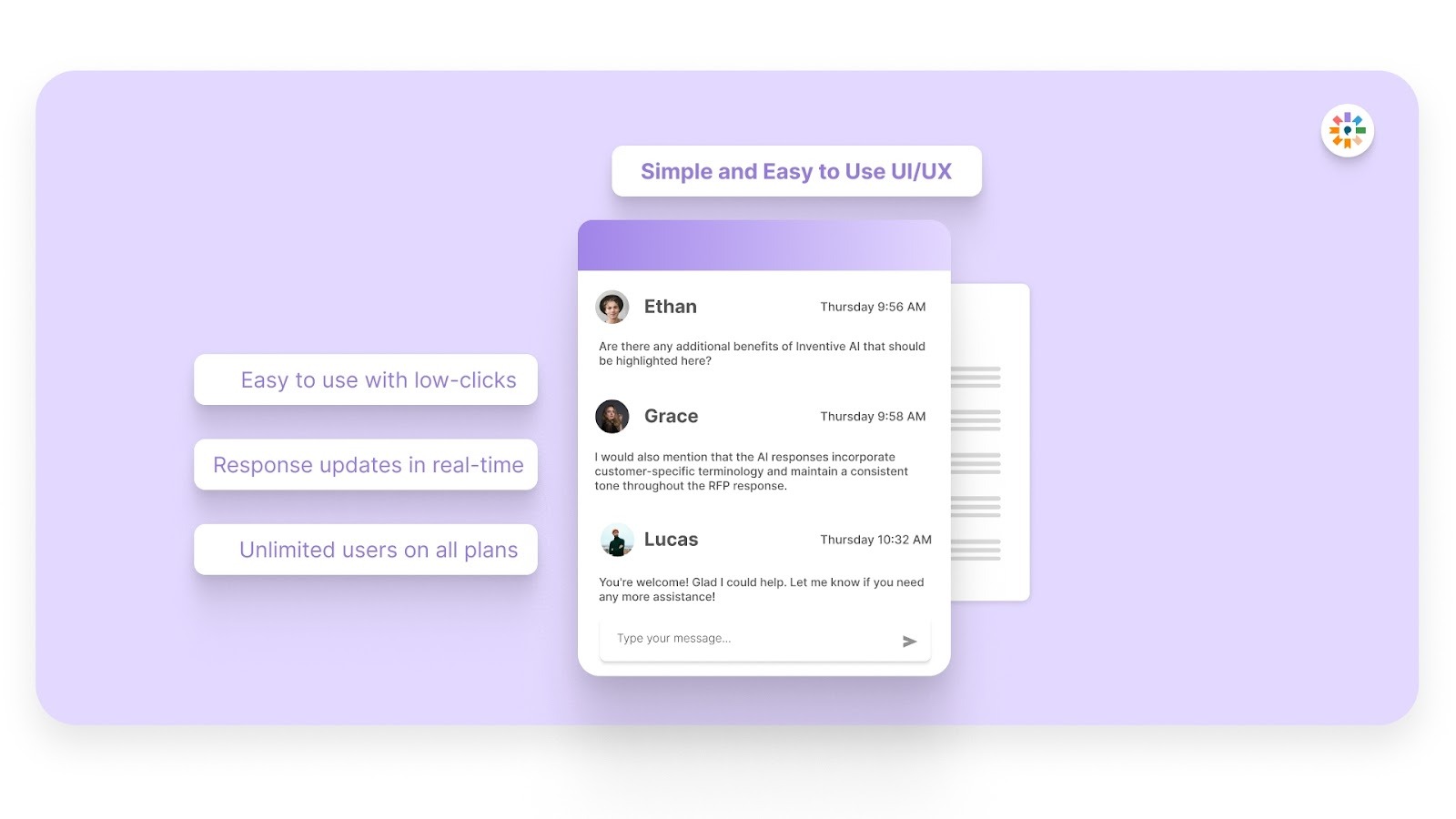
The platform is designed to be simple and practical for proposal teams. Users can generate drafts, review answers, and collaborate with internal teams in one place. This makes it easier for vendors to manage large RFP responses without complicated workflows or long training sessions.
Inventive AI helps vendors reduce manual drafting, organize response content, and submit stronger proposals when responding to education RFPs.
FAQs
1. How should vendors decide which education RFPs to respond to?
Not every RFP is worth pursuing. Vendors should evaluate factors such as project scope, budget range, timeline, and alignment with their product capabilities. If the requirements closely match your solution and past experience, the opportunity is more likely to justify the time and resources needed for a proposal.
2. How can vendors organize internal information before responding to an education RFP?
Before starting a response, vendors should collect commonly requested materials such as security documentation, case studies, product specifications, and compliance certifications. Having these resources prepared in advance helps reduce delays and keeps responses consistent across multiple proposals.
3. What mistakes should vendors avoid when responding to education RFPs?
Common mistakes include submitting generic answers, overlooking compliance questions, missing required documentation, and failing to follow the buyer’s formatting instructions. Review the RFP carefully and check every requirement before submission to avoid disqualification.
4. How can vendors reuse past proposal content without sounding repetitive?
Vendors can reuse core information such as product capabilities, implementation approach, and security documentation. However, each response should still address the specific needs of the institution. Updating examples, references, and use cases helps keep the proposal relevant.

.avif)