Free Pest Control Request for Proposal (RFP) Templates 2026
%20Templates%202026.png)
Pest infestations create health risks, compliance issues, and operational disruption for commercial facilities. Organizations issuing pest control RFPs often struggle with unclear scope, inconsistent vendor responses, and difficult comparisons.
At the same time, pest control vendors spend hours manually creating tailored proposals, gathering service details, and updating content, which slows response time and reduces win rates.
This guide provides a pest control RFP template for organizations and ready-to-use proposal RFP response templates for vendors. These templates help buyers define clear requirements and help vendors respond faster with structured, competitive proposals for healthcare, food, education, and commercial environments.
Pest Control RFP Template for Organizations and Facility Managers (Buyers)
If you are issuing a pest control RFP template, your document must create clarity across service scope, treatment methods, compliance requirements, and vendor evaluation criteria.
While requirements may differ for healthcare facilities, food production sites, commercial buildings, or educational institutions, the following components form the foundation of a well-structured pest control RFP.
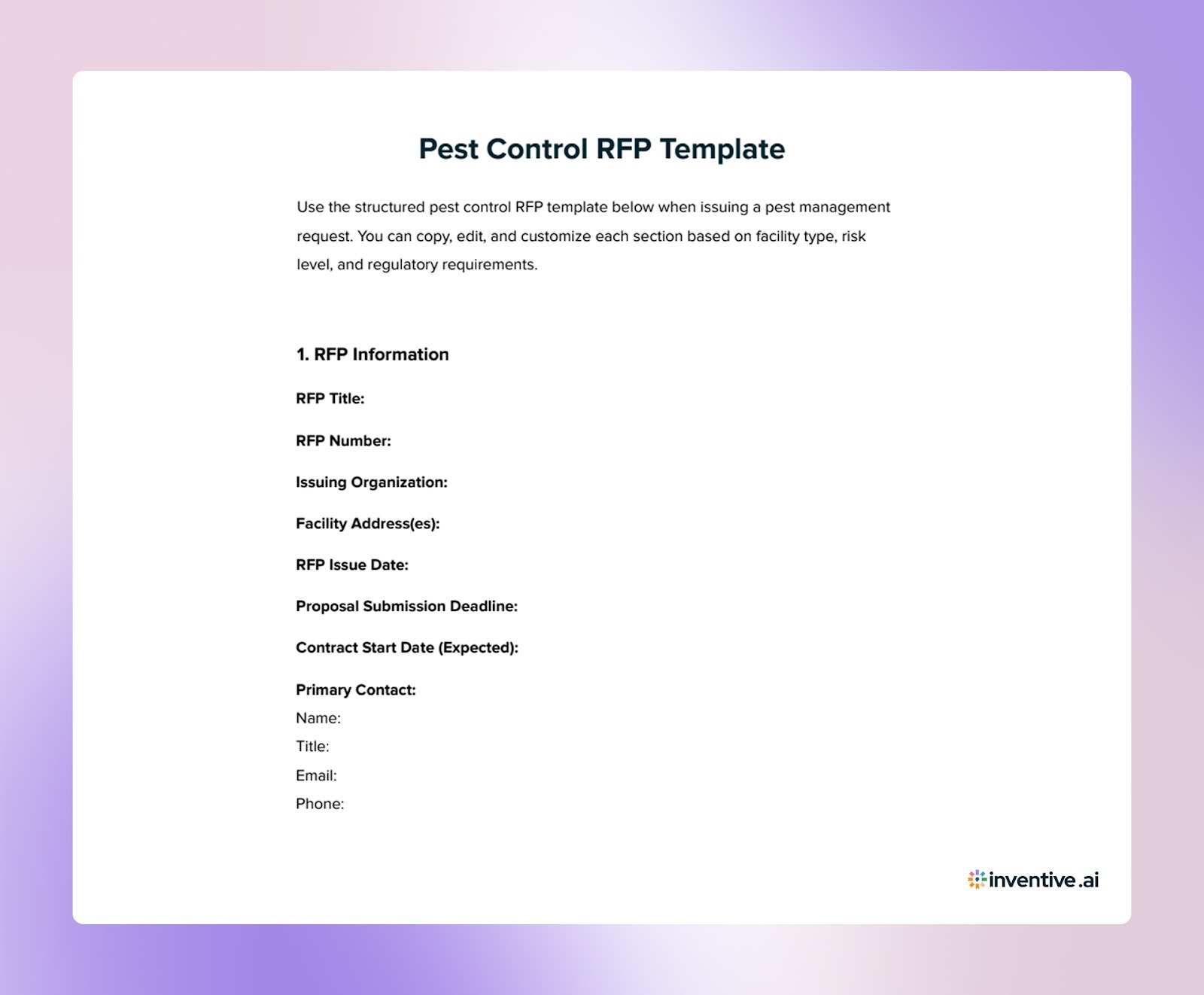

Once organizations issue a structured pest control RFP, vendors must respond with clear, complete, and competitive proposals to qualify and win the contract.
Pest Control RFP Templates For Vendors: 3 Different Types
Using pre-built proposal and RFP response templates helps teams organize service details, present qualifications professionally, and respond faster to opportunities.
Below are three ready-to-use pest control templates vendors can copy and customize:
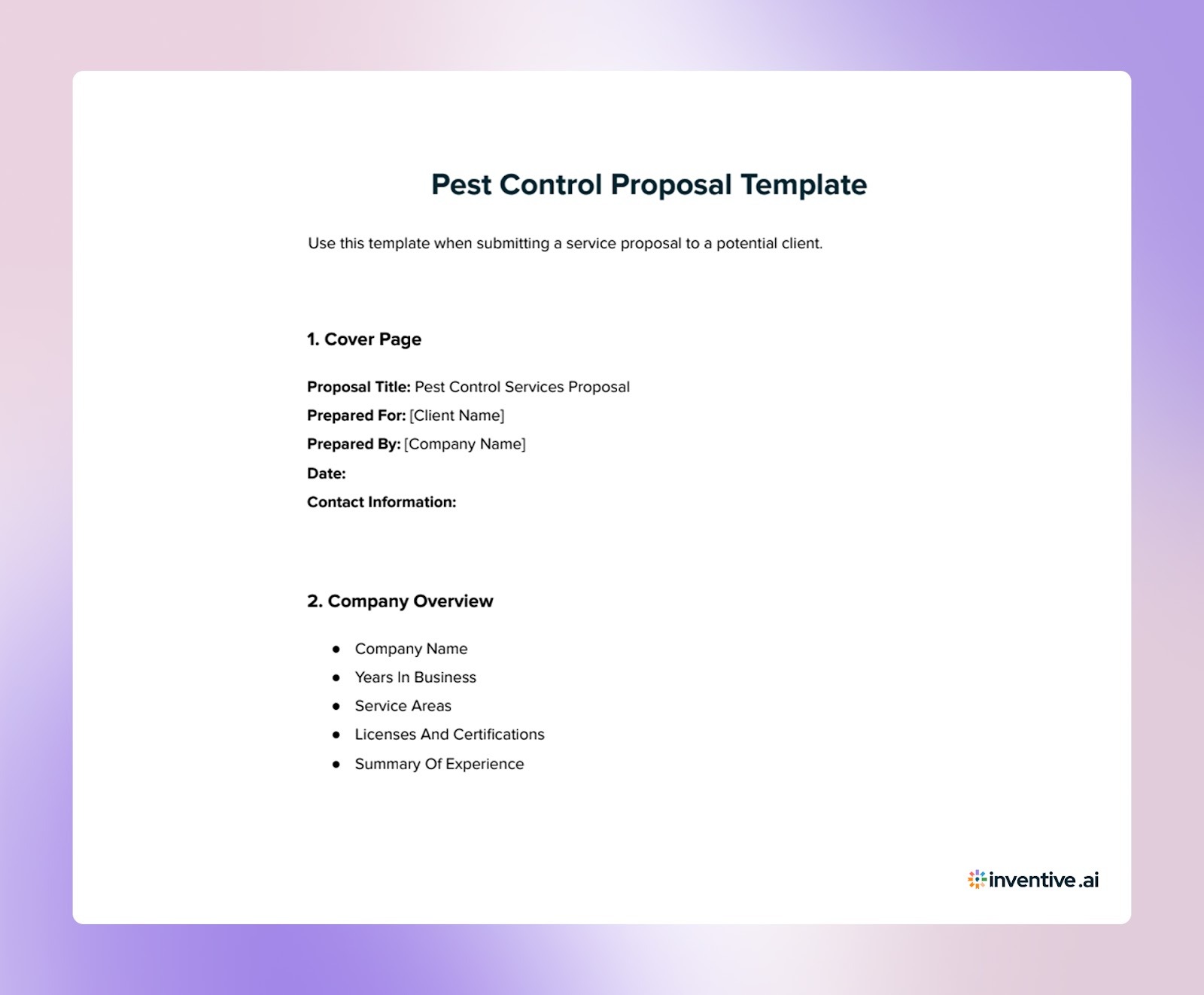
Template 1: Pest Control Proposal Template
Use this template when submitting a service proposal to a potential client.
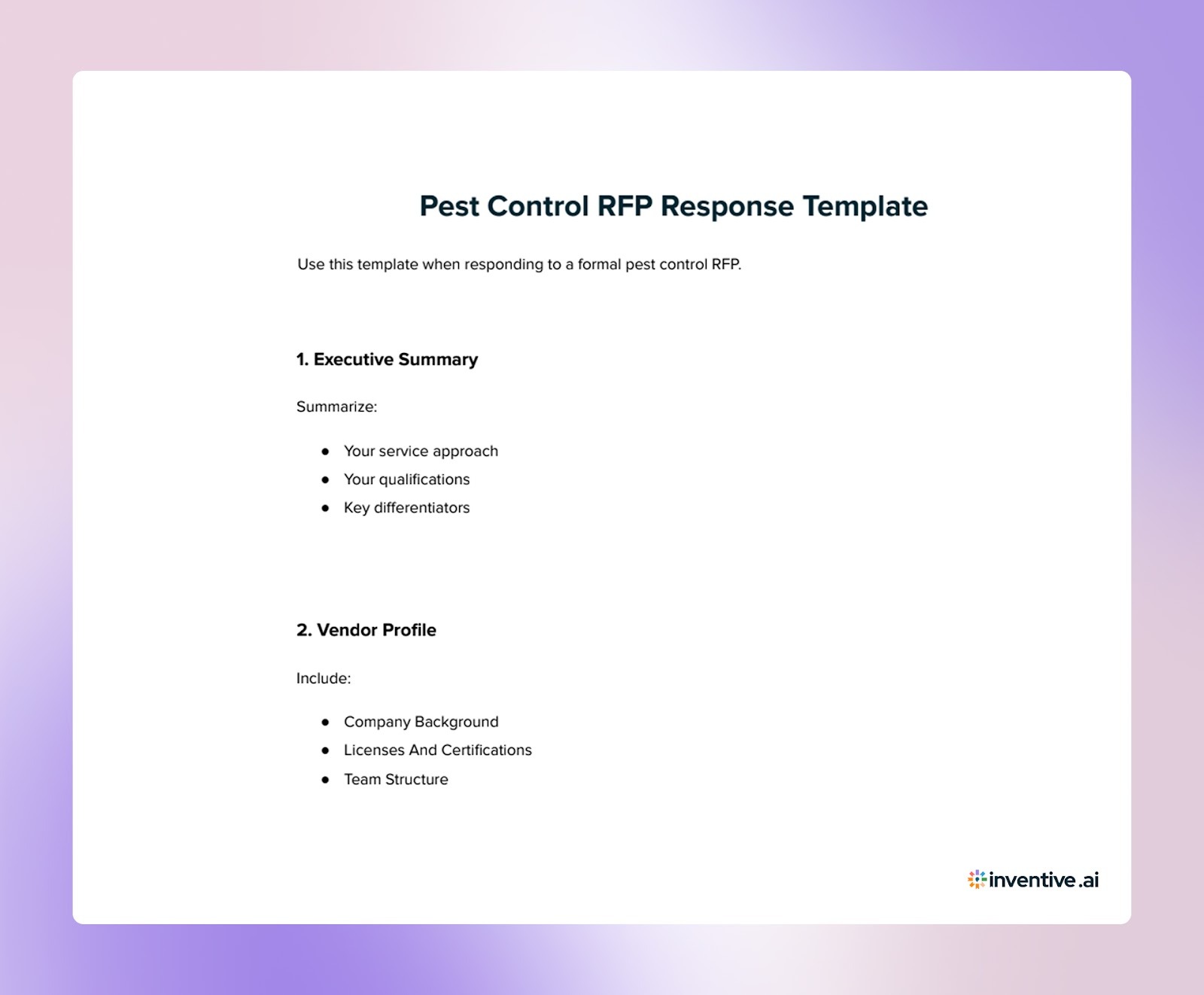
Template 2: Pest Control RFP Response Template
Use this template when responding to a formal pest control RFP.
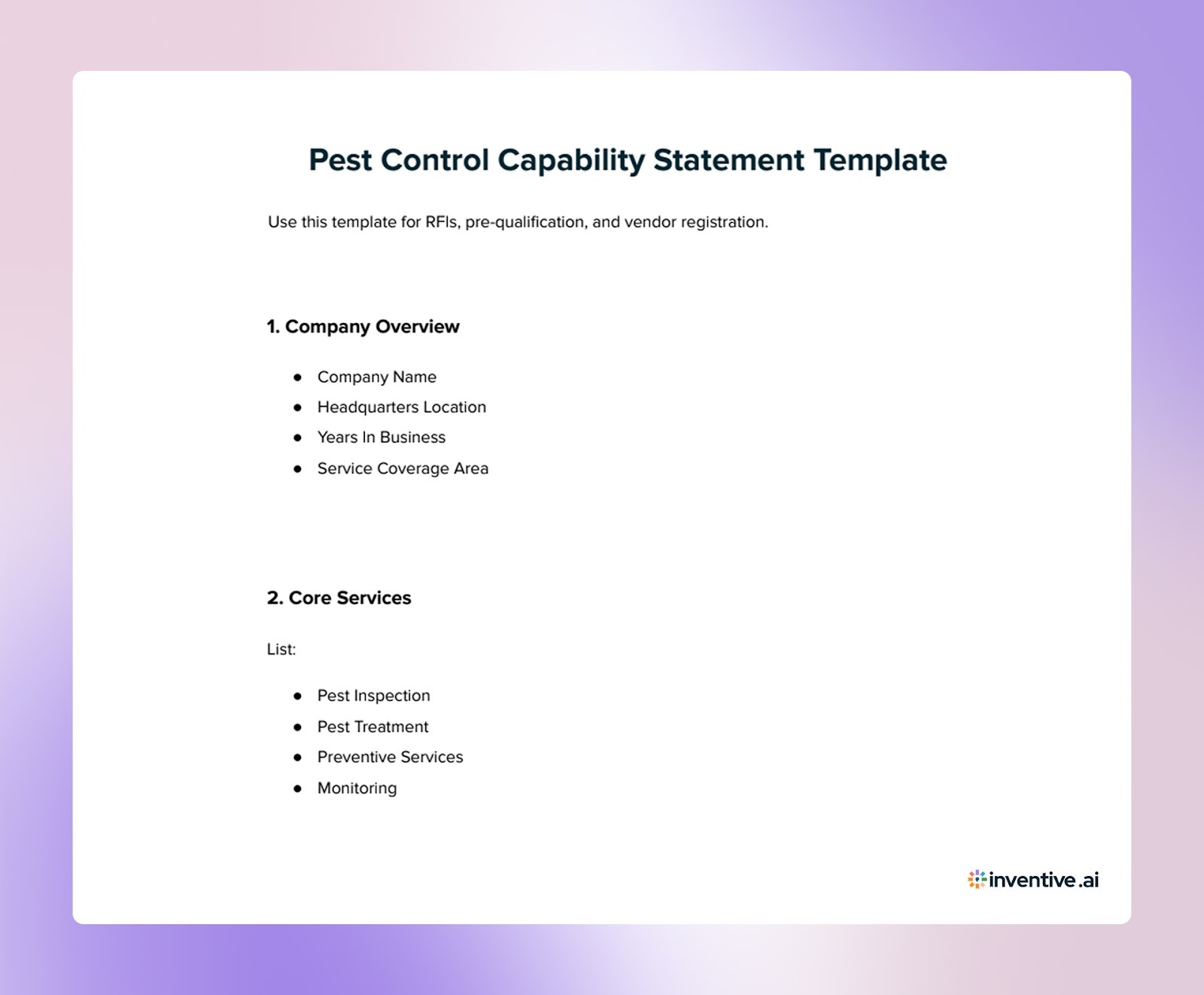
Template 3: Pest Control Capability Statement Template
Use this template for RFIs, pre-qualification, and vendor registration.
Using these pest control proposal and RFP response templates helps vendors respond faster, present their qualifications clearly, and improve their chances of winning commercial pest control contracts.
How Pest Control RFP Templates Help Buyers and Vendors?
A pest control RFP template is a pre-structured document that helps organizations define their pest management requirements and helps vendors submit consistent, complete proposals.
It creates a standardized format for outlining service scope, compliance standards, timelines, and evaluation criteria.
A typical pest control RFP template includes:
- Facility details, including size, type, and locations
- Target pests, such as rodents, insects, or termites
- Service frequency and treatment methods
- Compliance requirements and safety expectations
- Reporting, documentation, and inspection standards
- Pricing structure and contract terms
For vendors, RFP response templates provide a clear framework to organize treatment plans, safety protocols, service schedules, and pricing. This helps teams respond faster, improve proposal quality, and increase their chances of winning pest control contracts.
How to Respond to Pest Control RFPs Effectively
Responding to pest control RFPs requires more than submitting pricing and service details. Buyers evaluate vendors based on response completeness, accuracy, compliance readiness, and how well the proposal addresses their specific facility needs.
To improve your chances of winning, teams need to focus on three critical areas:
1. Improve Response Speed Without Compromising Quality
Pest control RFPs often include detailed questions about treatment methods, safety protocols, certifications, and reporting. Instead of rewriting answers from scratch each time, teams should build a structured approach to reuse and adapt high-quality responses.
Faster turnaround times help meet deadlines, reduce last-minute errors, and allow more time for review and refinement.
2. Centralize Your Content for Faster, Complete Responses
Licenses, service plans, pricing details, certifications, and past responses are often scattered across emails, spreadsheets, and internal systems. Bringing this information into a single, organized source makes it easier to access accurate data when needed.
A centralized knowledge base ensures responses are more complete, consistent, and easier to assemble under tight timelines.
3. Ensure Accuracy and Consistency Across Every Response
Outdated pricing, expired certifications, or inconsistent service descriptions can weaken your proposal. Buyers notice discrepancies quickly, and even small errors can impact evaluation scores.
Teams should regularly update their core content and ensure alignment across all sections of the RFP response to maintain credibility and strengthen buyer confidence.
Better answers improve evaluation outcomes and increase win rates. That’s why response quality and speed play a critical role in competitive pest control RFPs.
FAQs
1. What is the difference between a pest control RFP and a pest control proposal?
A pest control RFP is issued by an organization requesting services, while a pest control proposal is the vendor’s response explaining their treatment plan, pricing, and qualifications.
2. How long does it take vendors to respond to a pest control RFP?
Most pest control RFP responses take several days to complete, depending on facility size, compliance requirements, and the level of customization required.
3. What information should vendors prepare before responding to a pest control RFP?
Vendors should prepare service plans, licensing details, insurance certificates, past client references, pricing structures, and safety documentation before responding.
5. Are pest control RFPs required for commercial facilities?
Many commercial, healthcare, and food facilities use pest control RFPs to ensure vendor selection follows structured, compliant, and competitive procurement processes.
6. How do pest control RFPs help organizations reduce risk?
RFPs ensure vendors provide documented service plans, compliance information, and qualifications, helping organizations select reliable and accountable pest control providers.

.avif)




.jpg)

.avif)