Document Management System RFP Template to Win More Deals (2026)
.jpg)
You receive a document management system RFP, open the file, and see hundreds of detailed questions about security, integrations, workflows, and compliance. Finding the right answers across past proposals, product documents, and internal knowledge can take days. Many vendors lose valuable time searching for information instead of improving their proposal quality.
Using a document management system RFP template helps vendors respond faster, organize responses properly, and maintain consistency across proposals.
This guide explains how to use an effective template, what sections it should include, and how vendors can improve response quality when buyers evaluate document management solutions.
Proven Document Management System RFP Template (for Buyers)
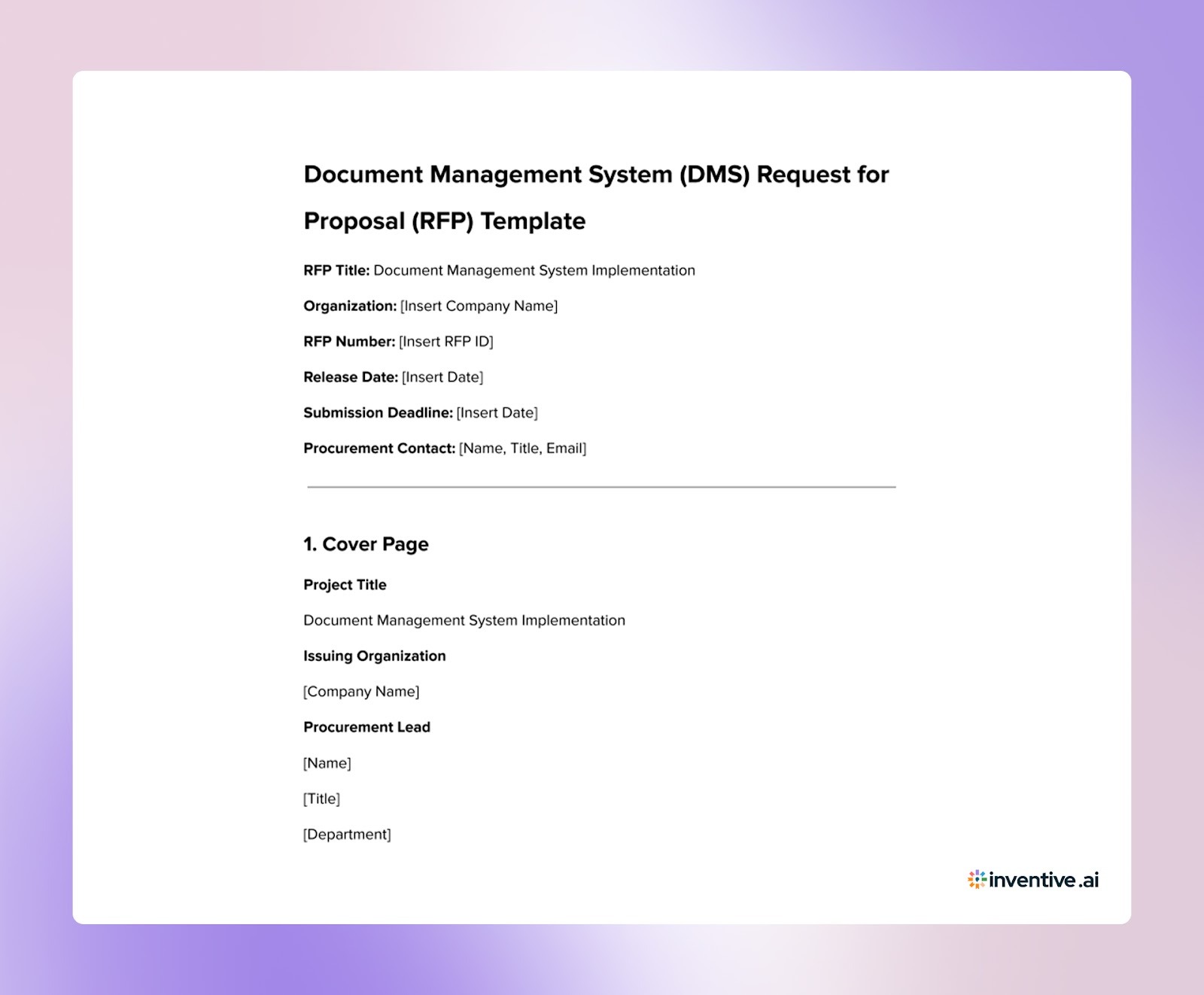
A document management system RFP provides a structured framework that buyers use to request information from vendors offering document storage, collaboration, and workflow platforms.
From a vendor perspective, this template acts as a standard structure of questions you must answer in your proposal. These questions usually cover security, integrations, scalability, document lifecycle management, and compliance requirements.
Because document management systems often store sensitive business data, buyers use RFPs to compare vendors consistently and ensure each proposal answers the same requirements.

Important Components Inside a Winning DMS RFP Template
Most document management system RFPs follow a structured format to help buyers compare vendors effectively.
Common sections include:
- Company Overview: Buyers ask about your company background, customer base, and experience delivering document management solutions.
- Product Architecture: Questions about system design, storage methods, APIs, and deployment options such as cloud or hybrid infrastructure.
- Security and Compliance: Buyers review encryption, access control, audit logs, and certifications such as SOC 2 or ISO standards.
- Document Lifecycle Management: This section evaluates version control, retention policies, indexing, search functionality, and automated workflows.
- Integration Capabilities: Buyers want to understand how your platform connects with tools like ERP systems, CRM platforms, and identity management tools.
- Pricing and Licensing: Vendors provide pricing models, subscription tiers, and implementation costs.
A structured template ensures that buyers receive consistent information from every vendor responding to the RFP.
Also Read: The Ultimate Guide to Crafting Data Management RFP Responses
Key Scenarios That Lead Buyers to Issue DMS RFPs
Buyers typically issue document management system RFPs in the following situations:
- Digital transformation initiatives: Organizations replace legacy document storage systems with modern cloud platforms.
- Compliance and data governance upgrades: Companies must adopt secure document management systems to meet regulatory standards.
- Enterprise system modernization: Businesses integrate document management with ERP, CRM, and workflow platforms.
- Large-scale document migration projects: Organizations moving from paper or legacy archives evaluate new document management solutions.
- Vendor consolidation efforts: Companies reduce the number of software providers and evaluate platforms through competitive RFPs.
Understanding when buyers issue RFPs helps you prepare stronger proposals and anticipate buyer expectations.
Also Read: A Complete Guide on IT RFPs
Ready-to-Use DMS RFP Response Template for Vendors
While buyers use an RFP template to ask questions, vendors rely on an RFP response template to organize their answers clearly.
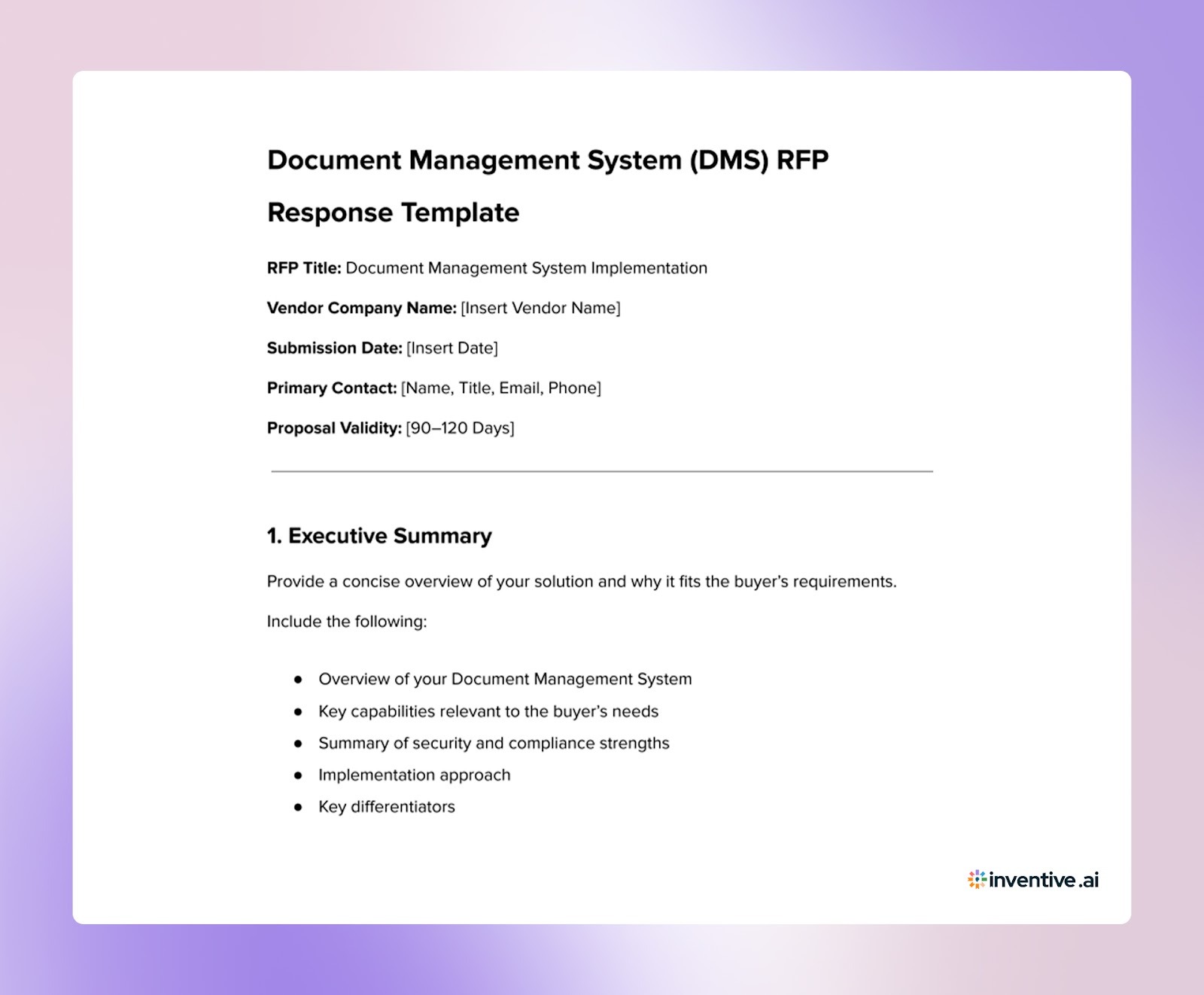
A document management system RFP response template gives you a ready-to-use structure for answering buyer requirements in your proposal. Instead of creating a new document every time an RFP arrives, you already have a framework that works.
5 Reasons Vendors Rely on Document Management RFP Templates
For vendors responding to multiple RFPs, templates help maintain structure and efficiency across proposals.
Key reasons vendors use RFP templates include:
- Faster proposal preparation: A standardized format reduces time spent organizing responses.
- Consistent response quality: Templates help maintain uniform messaging across multiple proposals.
- Improved accuracy: Structured sections reduce the risk of missing important questions.
- Simplified collaboration: Proposal teams can assign sections to subject-matter experts more easily.
- Better compliance coverage: Templates ensure security, regulatory, and technical questions are addressed clearly.
Using a structured template allows vendors to focus more on response quality rather than document formatting.
5 Proven Tips to Strengthen Your Document Management RFP Response
A template provides structure, but customization is necessary to create a strong proposal. When responding to document management system RFPs, consider the following practices:
- Customize responses to the buyer’s industry: Document workflows differ across healthcare, finance, government, and enterprise environments.
- Address security requirements carefully: Buyers evaluating document platforms prioritize encryption, identity access management, and audit tracking.
- Highlight real implementation examples: Case studies or deployment examples demonstrate your platform’s effectiveness.
- Align with buyer evaluation criteria: Carefully review scoring frameworks included in the RFP.
- Clarify integration capabilities: Buyers want proof that your platform integrates smoothly with existing enterprise tools.
Pro Tip: Before drafting your proposal, map each RFP question to the buyer’s evaluation criteria. This helps you prioritize responses that influence scoring.
Customizing responses ensures that your proposal aligns directly with the buyer’s operational needs.
Also Read: Top and Best Software for Automating Security Questionnaires in 2026
Craft Faster Document Management RFP Responses With Inventive AI
Responding to document management system RFPs often involves hundreds of technical questions, security reviews, and integration details. Searching for answers across internal documents slows down proposal teams and affects response quality.
Inventive AI’s AI-Powered RFP Response Software helps vendors respond faster while maintaining accuracy and consistency across proposals.
1. 2× Higher Quality Responses

Inventive AI analyzes your past proposals, product documentation, and internal knowledge sources to generate well-structured responses. This helps you maintain consistent messaging across proposals while improving the overall quality of your answers.
2. Context Engine
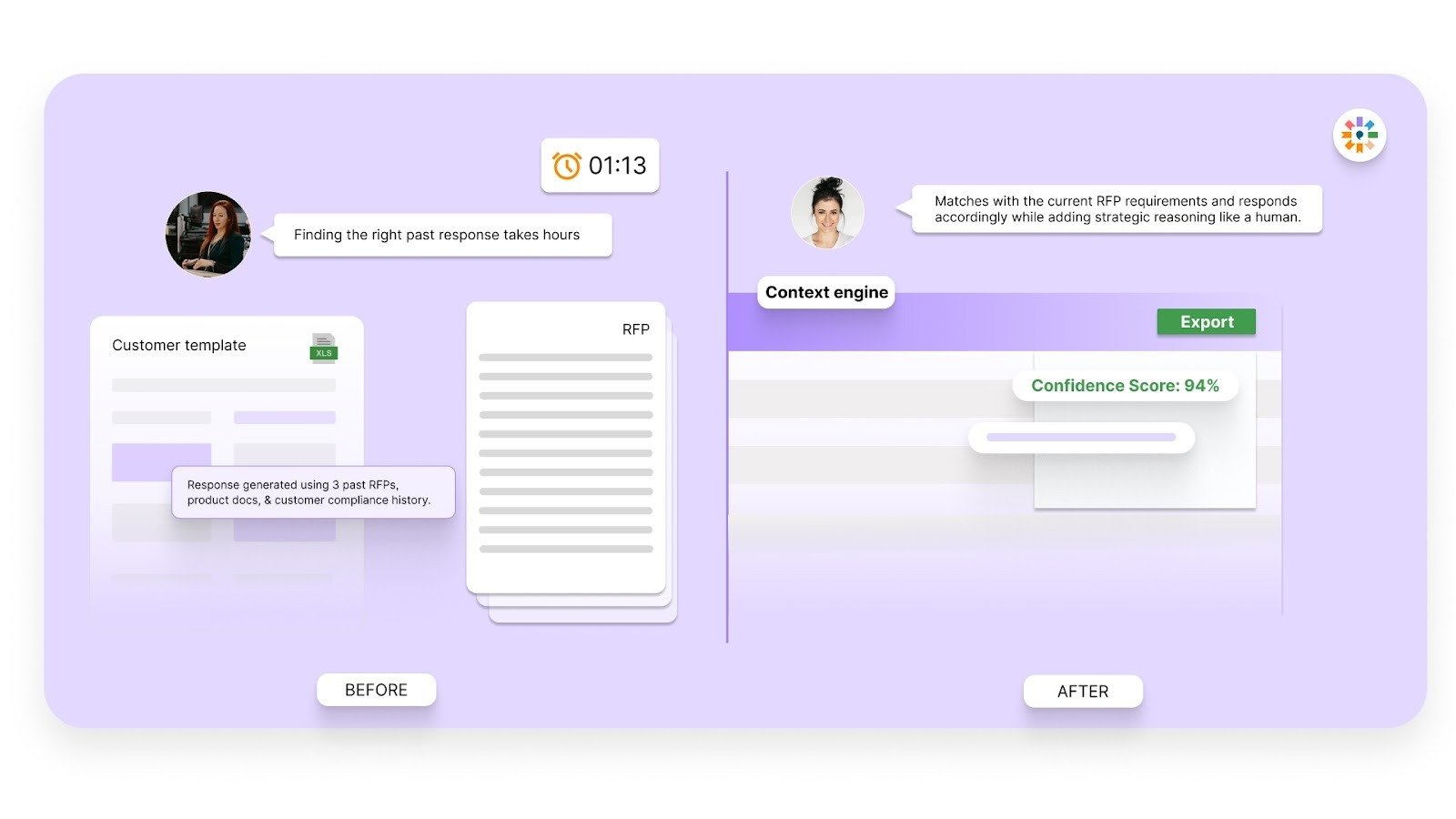
The platform pulls relevant information from multiple knowledge sources, including previous RFP responses and internal documentation. This allows you to quickly retrieve the right information instead of manually searching through different systems.
3. Conflict Detection
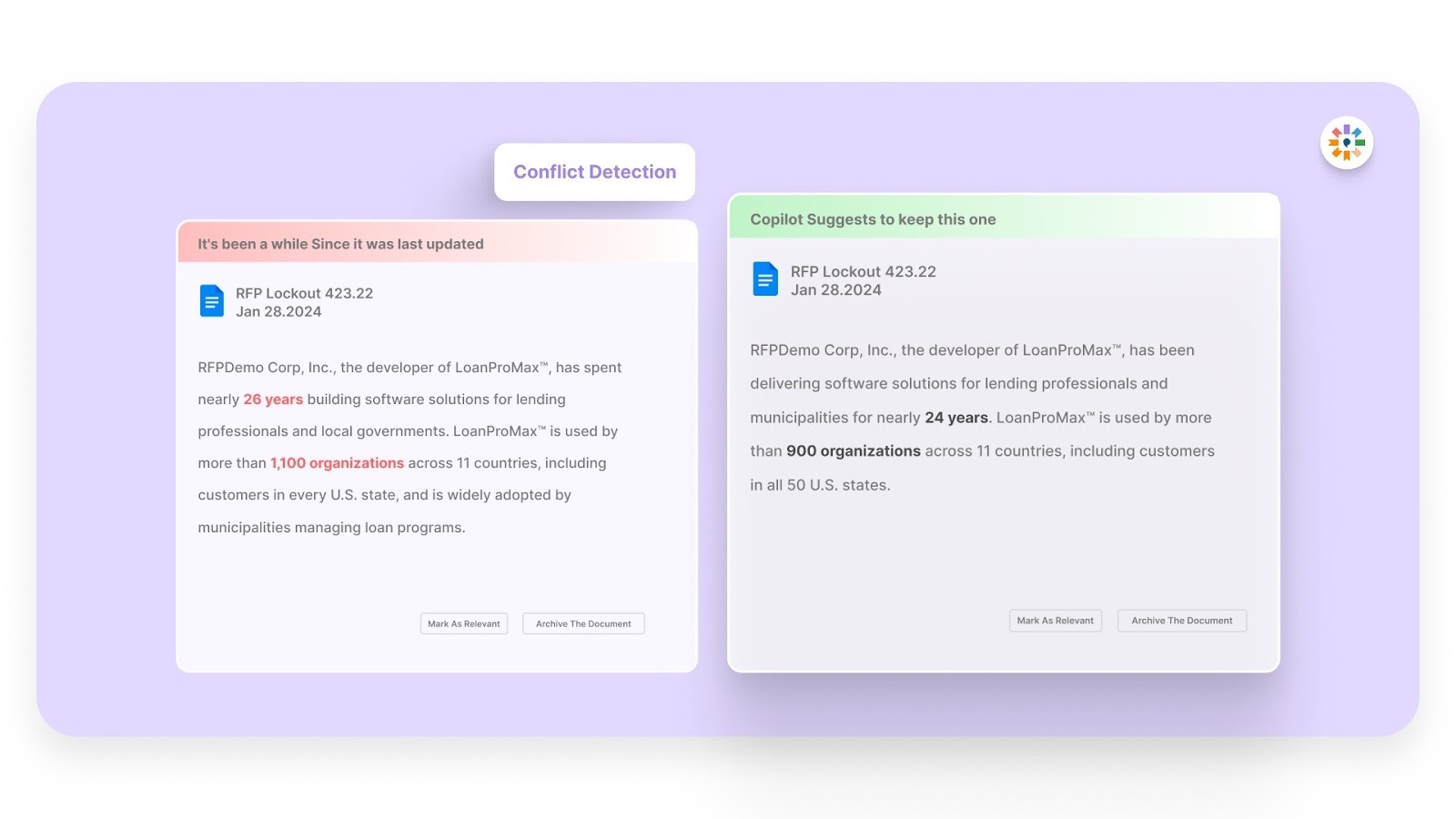
When multiple teams contribute to an RFP response, inconsistencies can appear across sections. Inventive AI identifies conflicting information and alerts you before the proposal is finalized, helping you maintain clear and accurate responses.
4. Outdated Content Detection
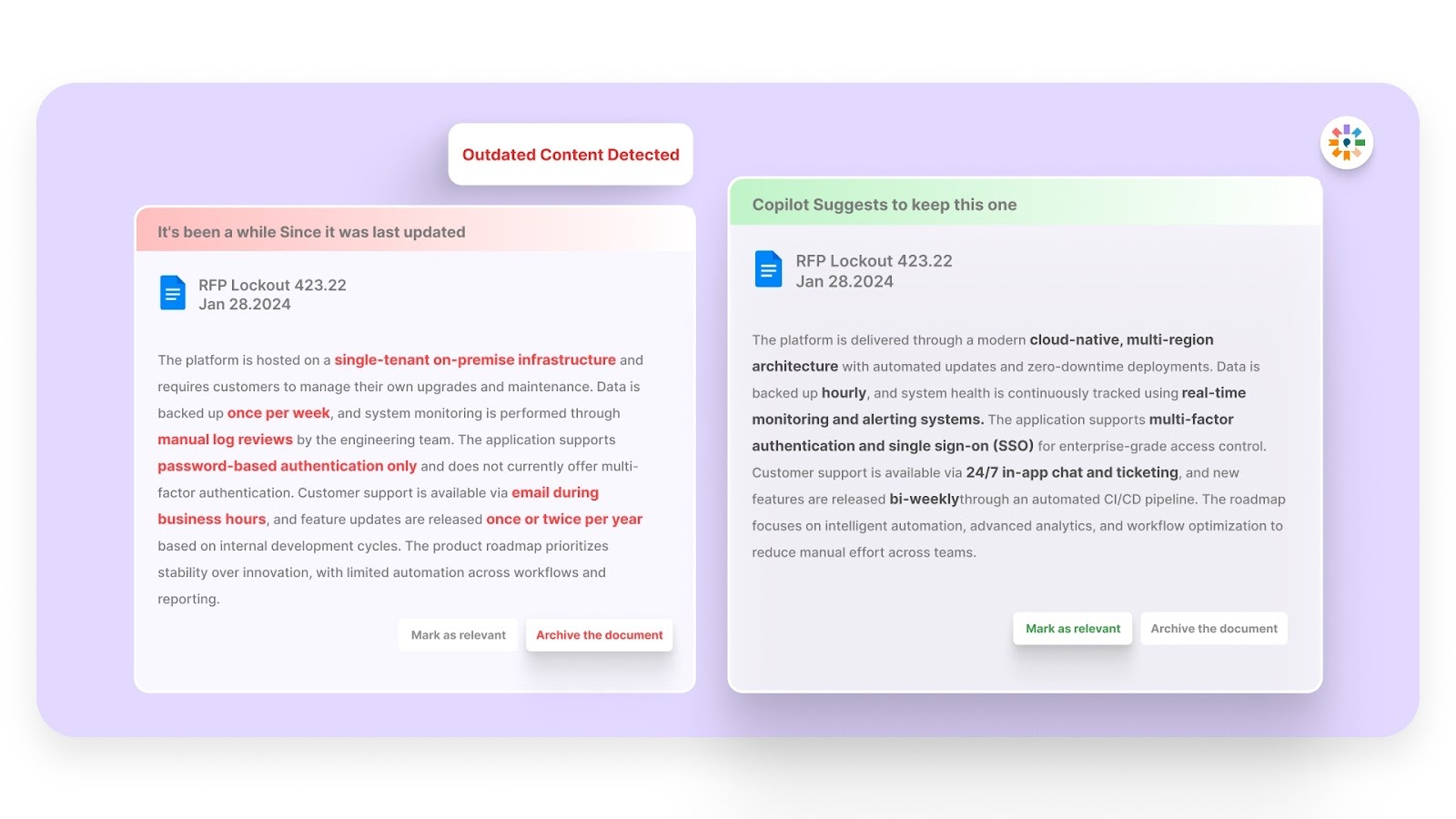
Using the AI Content Manager, Inventive AI flags outdated or irrelevant content stored in your knowledge base. This helps you avoid using old product information and ensures that your responses reflect your latest capabilities.
5. Simple, Easy-to-Use Interface
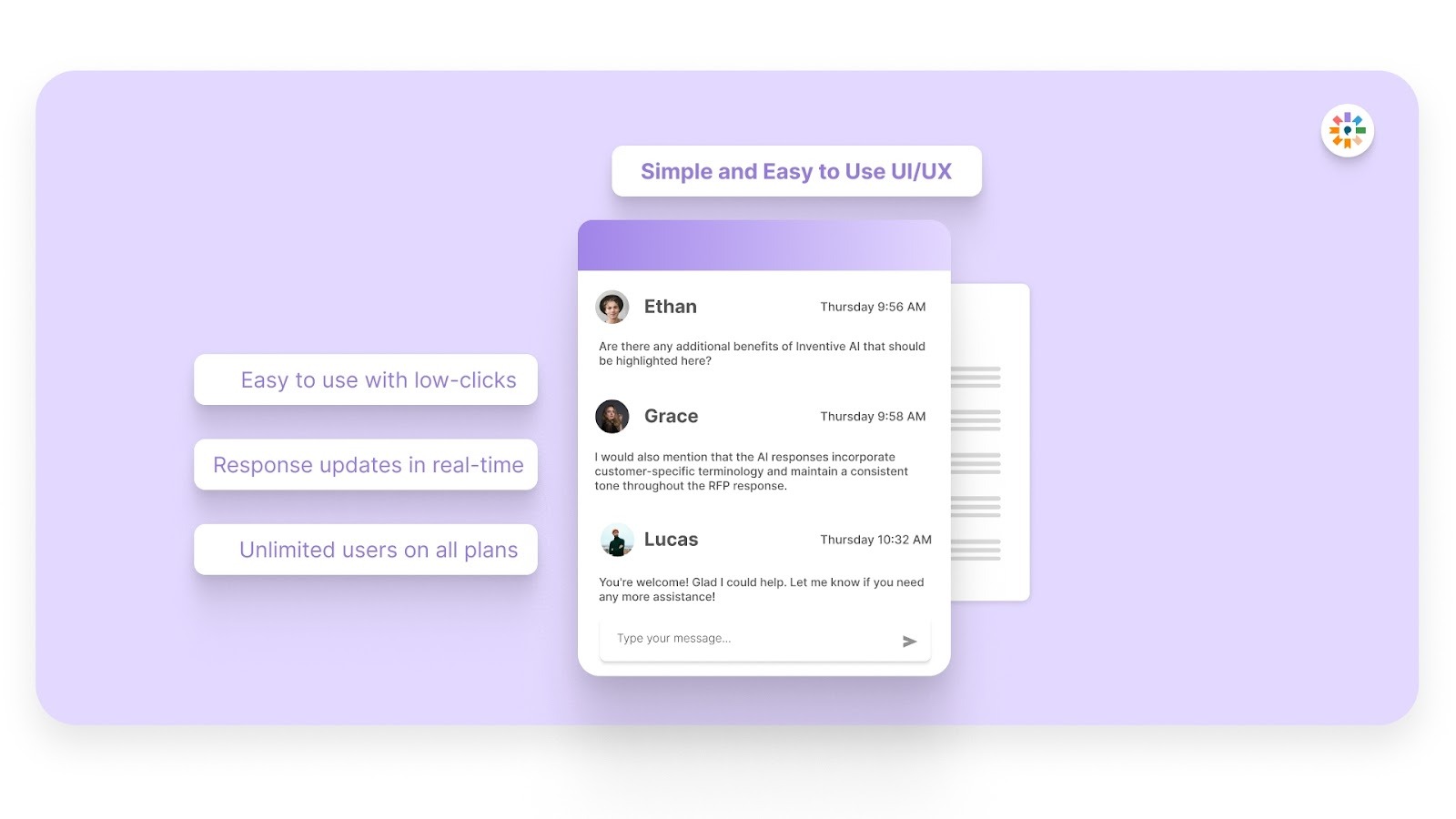
Inventive AI provides a clean workspace where proposal teams can draft responses, collaborate with subject matter experts, and manage proposal content in one place. This simplifies coordination and reduces the time spent switching between tools.
Using Inventive AI RFP Automation, vendors can generate first drafts 10x faster with 95% accuracy, helping proposal teams focus on improving response quality.
Frequently Asked Questions (FAQs)
1. What format should a document management system RFP template follow?
Most document management RFP templates follow a structured format with sections covering company background, technical architecture, security controls, integrations, pricing, and implementation details.
2. How long does it typically take vendors to respond to a document management system RFP?
Depending on complexity, vendors may spend several days or weeks preparing responses. Large enterprise RFPs often contain hundreds of technical and compliance questions.
3. What security questions appear in document management system RFPs?
Buyers commonly request information about encryption standards, identity access management, audit logs, data residency, and compliance certifications such as SOC 2 or ISO 27001.
4. What documents should vendors prepare before responding to DMS RFP?
Vendors typically gather previous RFP responses, product documentation, security policies, compliance certifications, and technical architecture descriptions.

.avif)