The Complete Guide to Contract Management RFP Templates in 2026

Have you ever found yourself reviewing a contract management RFP and realizing you're spending more time trying to get the format right than actually addressing the requirements? This happens often, especially when dealing with complex contract terms, timelines, and compliance sections—every detail matters and the clock is ticking.
A contract management RFP template can make a big difference by providing a framework that simplifies the proposal process. Add a response template into the mix, and you can quickly personalize your submissions while sticking to the buyer’s expectations.
In this blog, we’ll explore how using a contract management RFP template and response template can save you valuable time and improve the quality of your proposals. Plus, we’ll show you how AI-powered RFP response software can help make your work even more efficient, letting you focus on what matters most.
Contract Management RFP Template: Plan Your Proposals in 2026
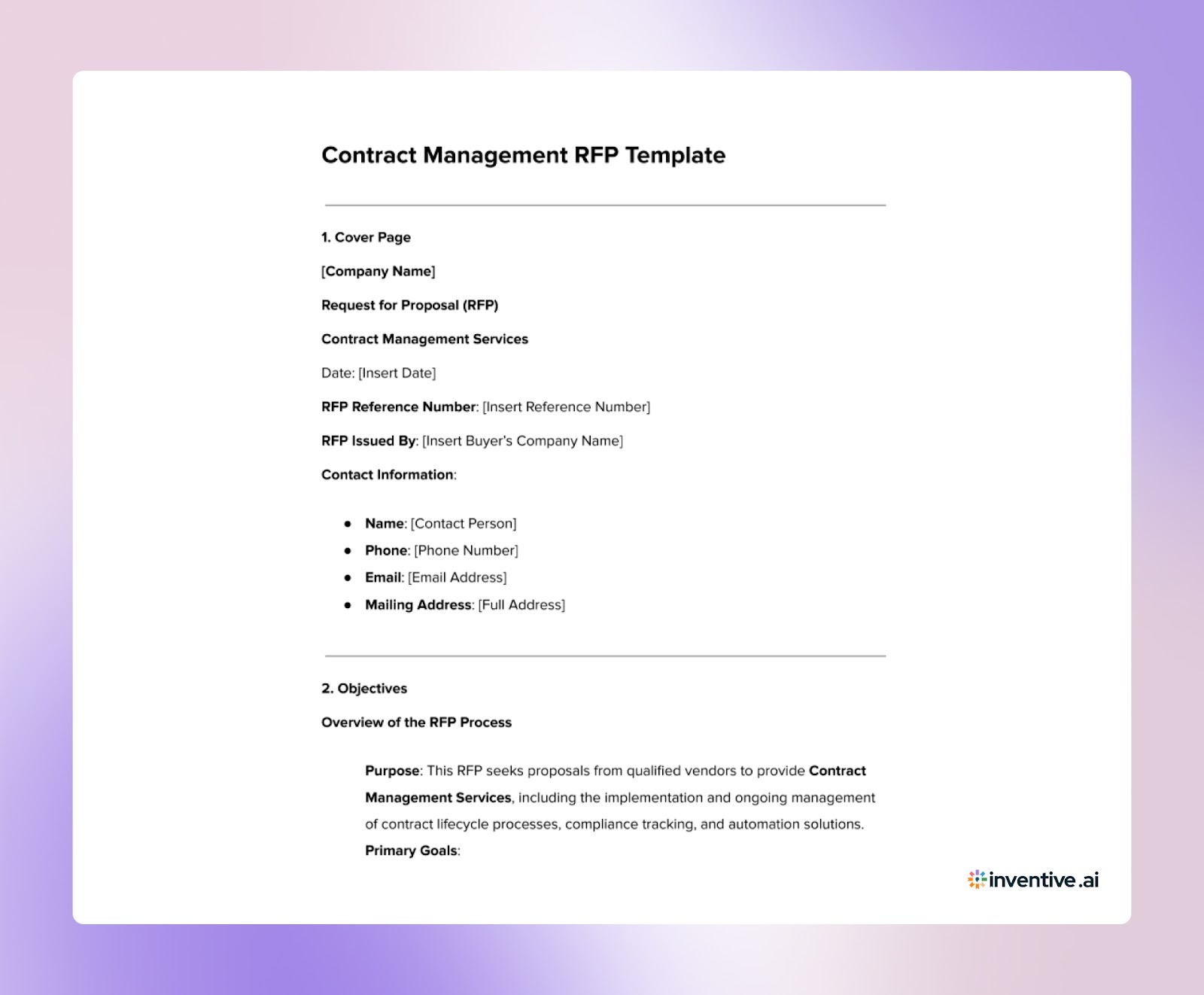
A contract management RFP template includes all the key elements, helping the buyer create a comprehensive and complete RFP without missing any important details.
Below is a downloadable contract management RFP template for buyers, and vendors can also refer to it to understand what buyers typically include.

Inside The Contract Management RFP Template: Key Components Explained
The contract management RFP template is a comprehensive document that includes all the key sections a buyer typically expects. While each RFP may vary, here are some common components:
- Company Overview: A brief introduction to the vendor, outlining their background, expertise, and what sets them apart in the contract management space.
- Scope of Work: A clear description of the contract management services being offered, specifying what is included and what’s outside the project’s scope.
- Methodology & Approach: An explanation of the vendor’s plan to execute the project, detailing the steps they will take to meet the buyer’s requirements.
- Pricing Structure: A transparent breakdown of the costs associated with the services, including any potential add-ons or additional fees.
- Timeline & Milestones: A clear outline of the project timeline, with important delivery dates and key milestones that the vendor will meet.
- Compliance & Security Measures: A section that reassures the buyer about the vendor's adherence to relevant regulations and security standards.
By using this template, buyers can ensure that their RFPs are complete, organized, and aligned with the key expectations of vendors.
Also Read: The Ultimate Guide to Crafting Winning Manufacturing RFP Responses
The Importance of Using a Contract Management RFP Template
Using a contract management RFP template can significantly improve the performance and quality of the RFP process. Here’s why it benefits the buyer:
- Saves Time: The template allows the buyer to avoid reinventing the wheel, making it easier to create a complete RFP without starting from scratch each time.
- Improves Consistency: It ensures every RFP follows the same structure, providing consistency across responses and reducing errors.
- Ensures Compliance: Key requirements are built into the template, minimizing the risk of missing any essential details or compliance factors.
- Helps Meet Vendor Expectations: With pre-defined sections, the buyer can be confident that the RFP addresses all necessary criteria, making it clear and easy for vendors to respond.
A well-designed template improves the RFP process, making it faster, more organized, and more aligned with vendor expectations.
A Practical Contract Management RFP Response Template in 2026
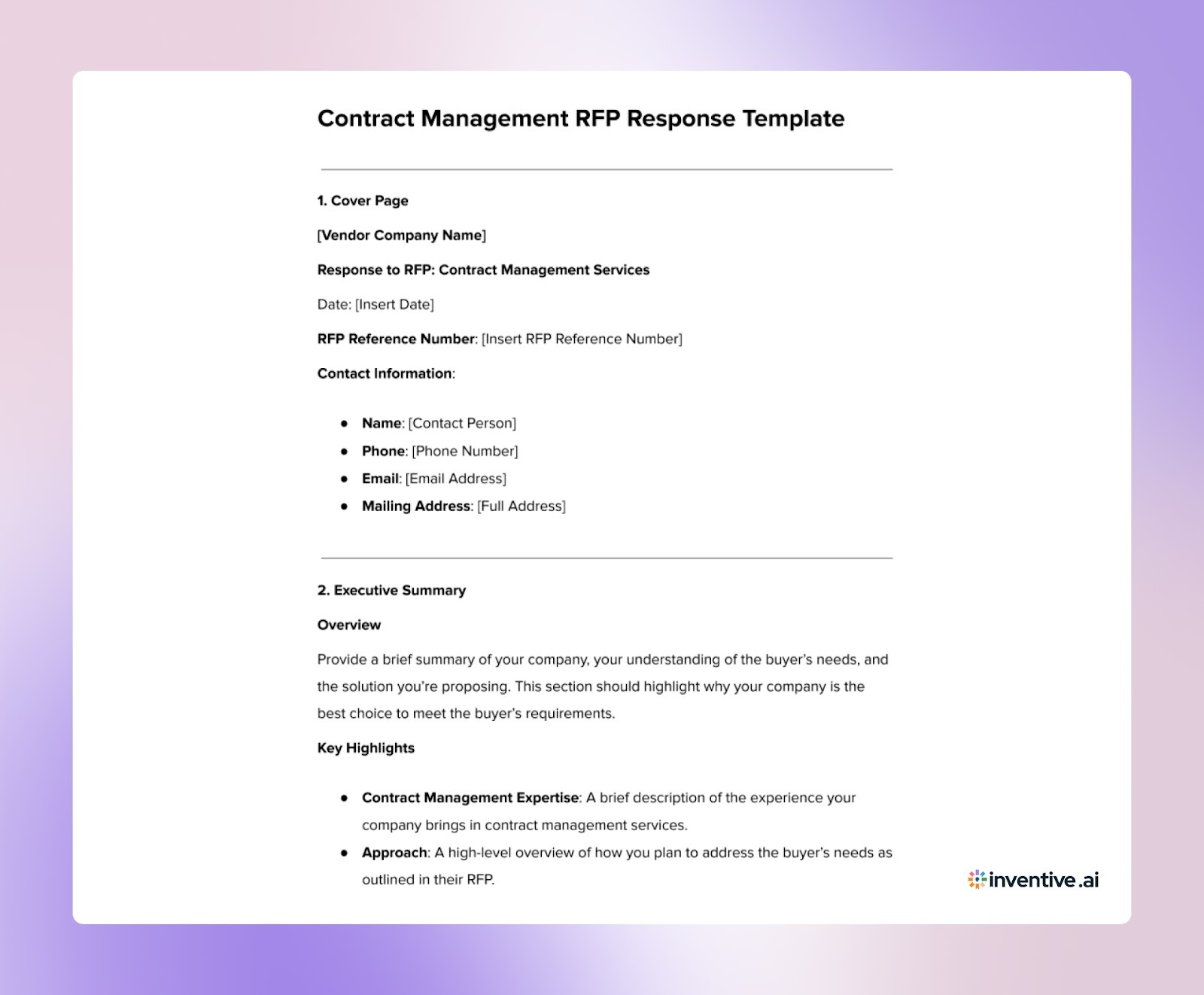
A contract management RFP response template helps vendors respond to RFPs without having to start from scratch each time. With a ready-to-use template, you can quickly fill in the necessary details while addressing all the important aspects that the buyer is looking for.
7 Customization Tips for a Strong Contract Management RFP Response
Customizing your contract management RFP response template to suit the buyer’s needs is key to standing out. Here are some tips for maximum impact:
- Align with Buyer Requirements: Adjust your responses to directly address the buyer’s needs, using industry-specific language and examples that speak to their unique challenges.
- Highlight Your Strengths: Focus on relevant experience, past projects, and case studies that align with the buyer’s scope of work and demonstrate your ability to meet their expectations.
- Be Specific with Pricing: Customize your pricing structure based on the buyer’s requirements and the scale of the project, offering clarity and flexibility.
- Showcase Your Expertise: Provide detailed explanations of your methodology and approach, ensuring it aligns with the buyer’s goals and showcases your expertise.
- Incorporate Clear Milestones: Set realistic project milestones and delivery dates that show your ability to meet timelines and manage expectations.
- Highlight Compliance and Security: If applicable, emphasize your adherence to industry-specific compliance standards and security protocols, ensuring that the buyer feels confident in your ability to handle sensitive data.
- Be Concise but Detailed: While the response should be comprehensive, avoid overwhelming the buyer with unnecessary information. Stick to what’s most relevant to their objectives.
By customizing your responses for each RFP, you increase your chances of making a lasting impression and securing the contract.
Benefits of Using a Contract Management RFP Response Template
Using a contract management RFP response template brings several advantages that can enhance your proposal process:
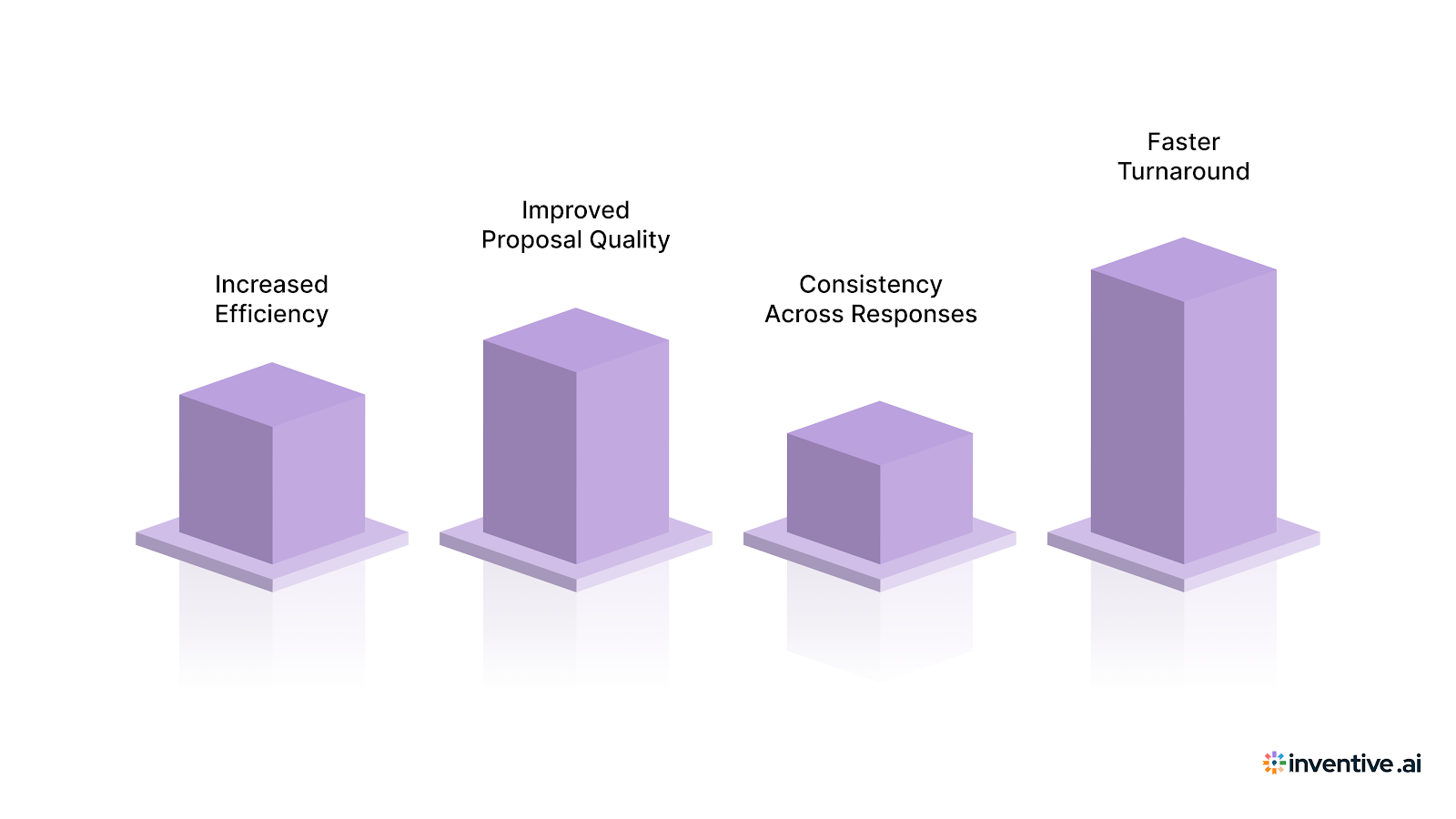
- Increased Efficiency: Templates eliminate the need to start from scratch, reducing the time spent on repetitive tasks and allowing your team to focus on refining the response.
- Improved Proposal Quality: With a predefined structure, you can ensure that your responses are thorough, well-organized, and aligned with the buyer’s specific needs and expectations.
- Consistency Across Responses: Standardized sections in the template guarantee that your responses remain uniform, ensuring they meet both internal standards and the buyer’s requirements.
- Faster Turnaround: By streamlining and automating the drafting process, you can respond to more RFPs in a shorter time, increasing your chances of securing more contracts.
Incorporating a response template into your workflow enhances both the speed and quality of your proposals, ultimately improving your chances of success.
Also Read: Top 10 Best RFI Software and Tools for 2026: Features, Pricing & more
Breaking Down the RFP Process: A Step-by-Step Overview
Understanding the entire RFP process is important for vendors to navigate each stage effectively. Here’s a breakdown:
1. RFP Issuance: The buyer issues an RFP, outlining the project scope, requirements, and expectations. This document serves as the foundation for the vendor's response.
2. Response Preparation: Vendors review the RFP carefully, then begin drafting their responses. Using a contract management RFP response template can help organize content efficiently, ensuring all necessary sections are addressed.
3. Proposal Submission: Vendors submit their completed proposals to the buyer, ensuring the response is tailored to meet the specific needs outlined in the RFP.
4. Review and Evaluation: The buyer reviews the submitted proposals, evaluating them based on factors like alignment with project requirements, pricing, and vendor qualifications.
5. Contract Negotiation: Once a vendor is selected, the final contract terms are negotiated, solidifying the agreement between both parties.
While this process can be time-consuming, using a response template can help vendors address each stage with greater efficiency and precision.
Also Read: How to Develop Effective RFP Win Themes for Proposal Success
The Power of Inventive AI in Simplifying Contract Management RFP Responses
Inventive AI transforms the way vendors handle their contract management RFP templates by streamlining the process and enhancing the quality of responses. Here’s how it works:
1. 2x Higher Quality Responses
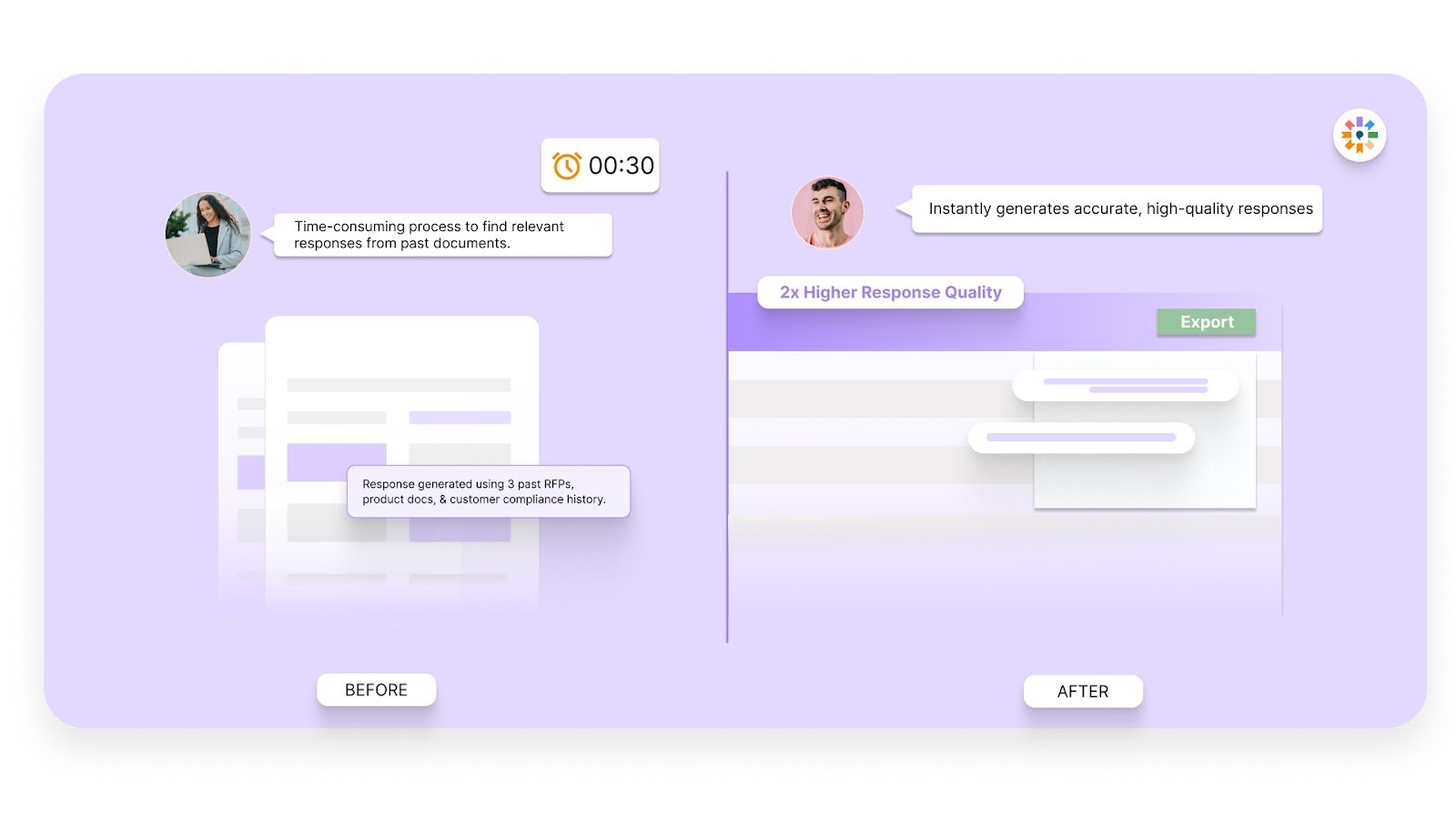
Inventive AI uses advanced algorithms to generate high-quality responses that align with buyer expectations every time. The AI ensures your responses are clear, complete, and tailored to the buyer’s specific needs, enhancing your chances of winning the contract.
2. Context Engine
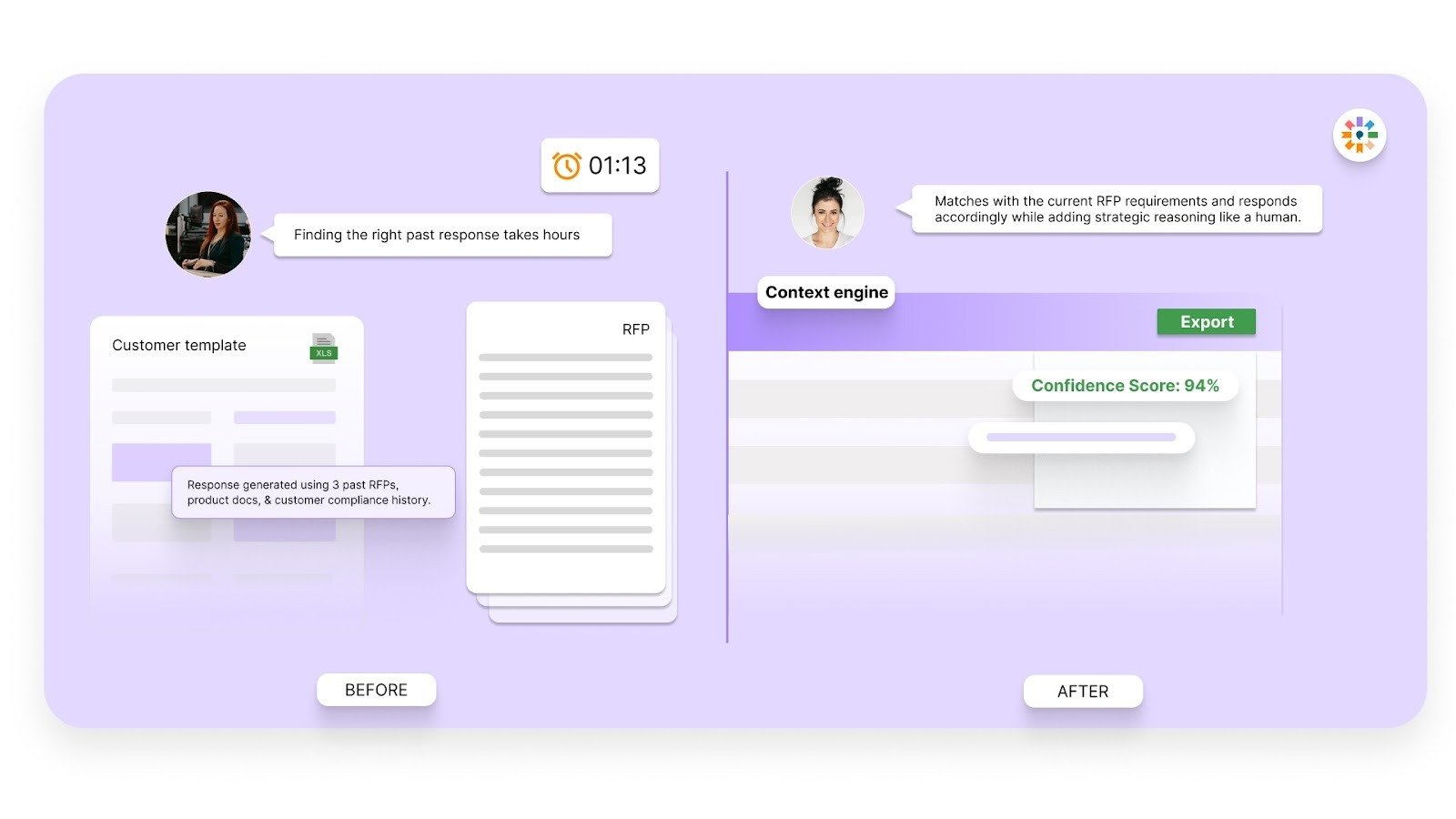
The AI-powered context engine understands the buyer’s requirements in detail and adapts your responses to reflect them. It customizes the content based on the buyer's preferences, ensuring that your proposal is relevant and compelling.
3. Conflict Detection
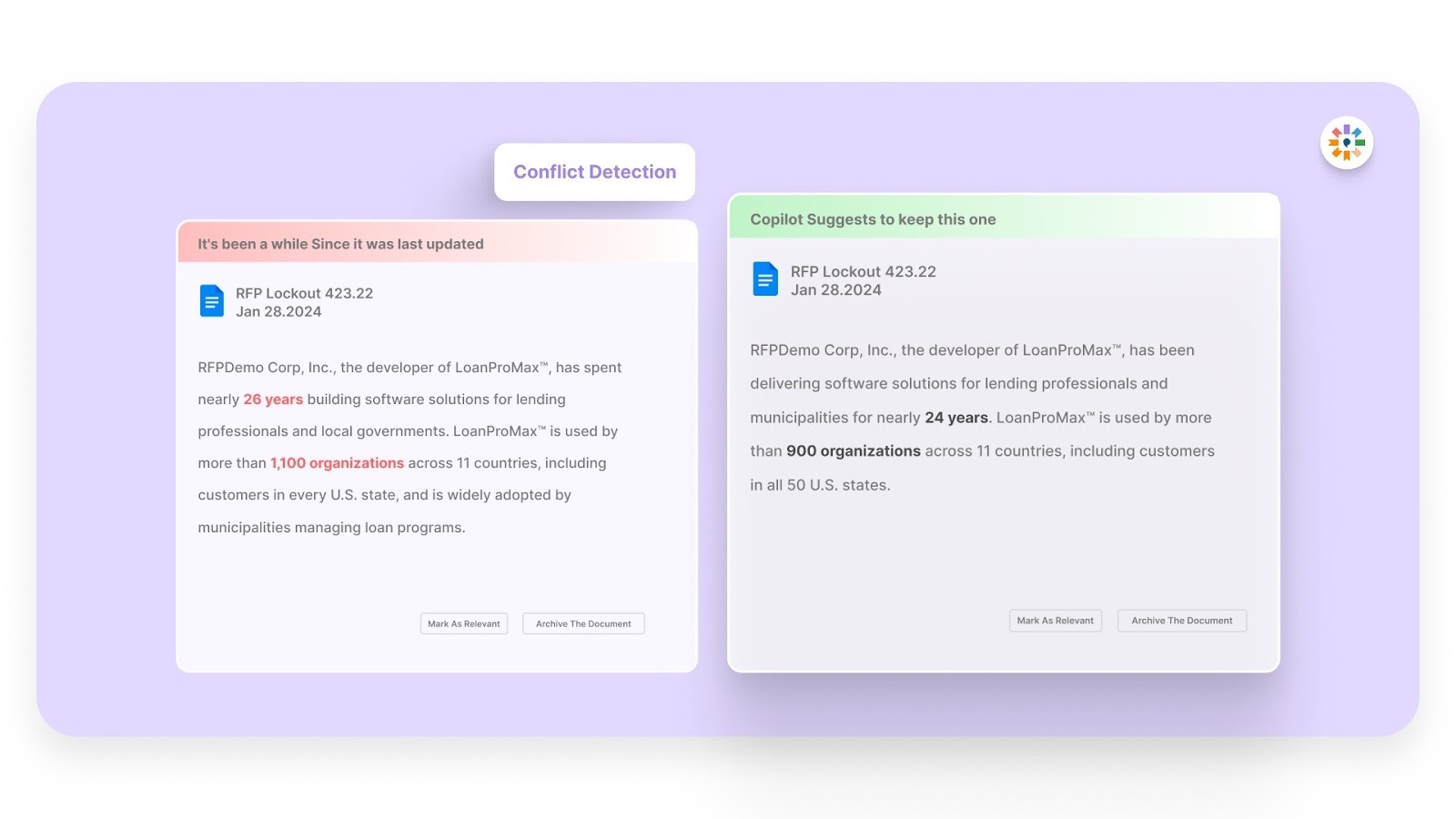
Inventive AI automatically identifies conflicting content within your RFP responses, helping maintain consistency and avoiding any discrepancies that could raise concerns during the evaluation process.
4. Outdated Content Detection
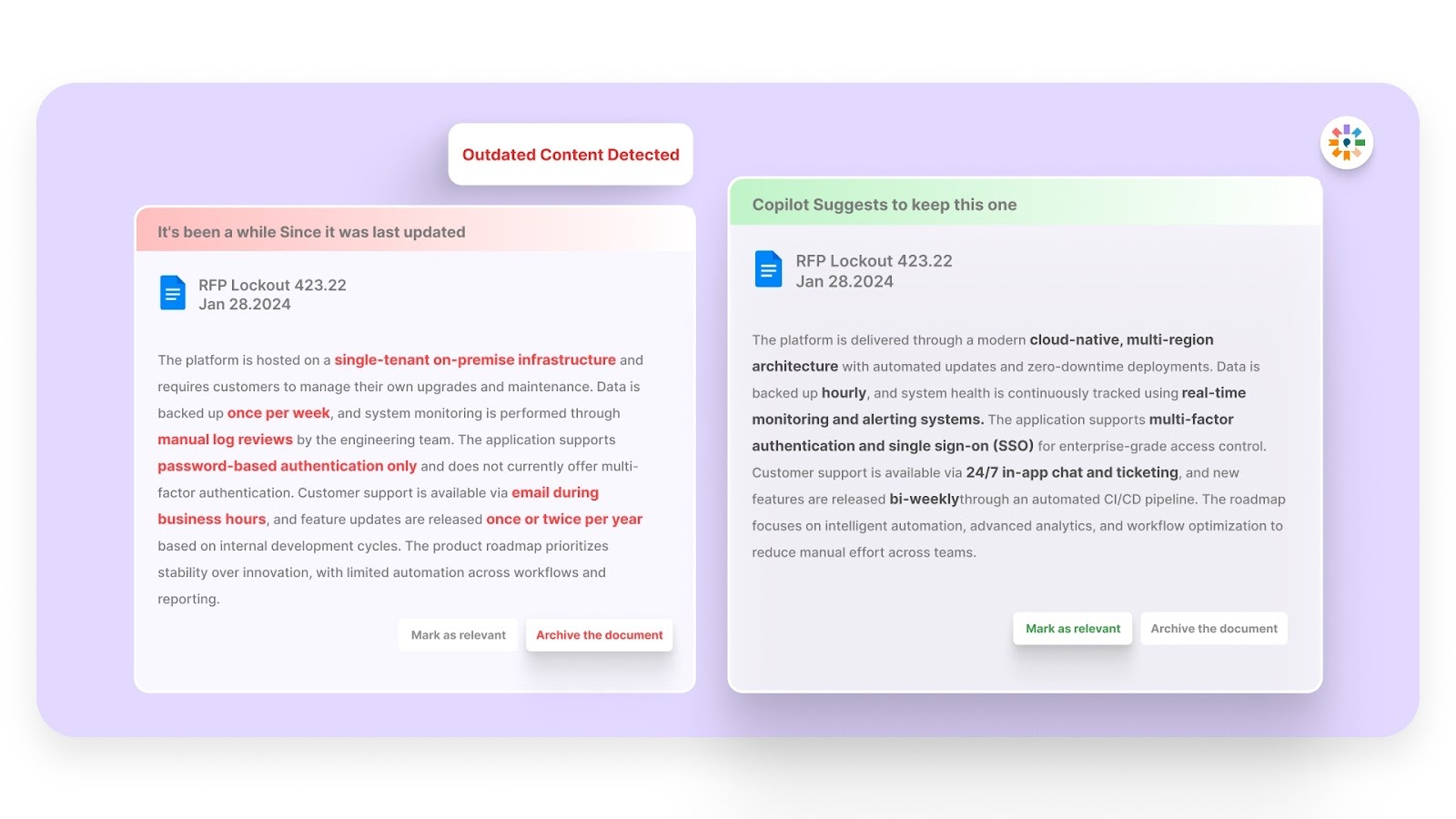
The AI continuously monitors your responses for outdated information, flagging sections that need updating to ensure only the most relevant and up-to-date content is included. This saves your team from manually searching for and updating older documents.
5. Simple, Easy-to-Use Interface
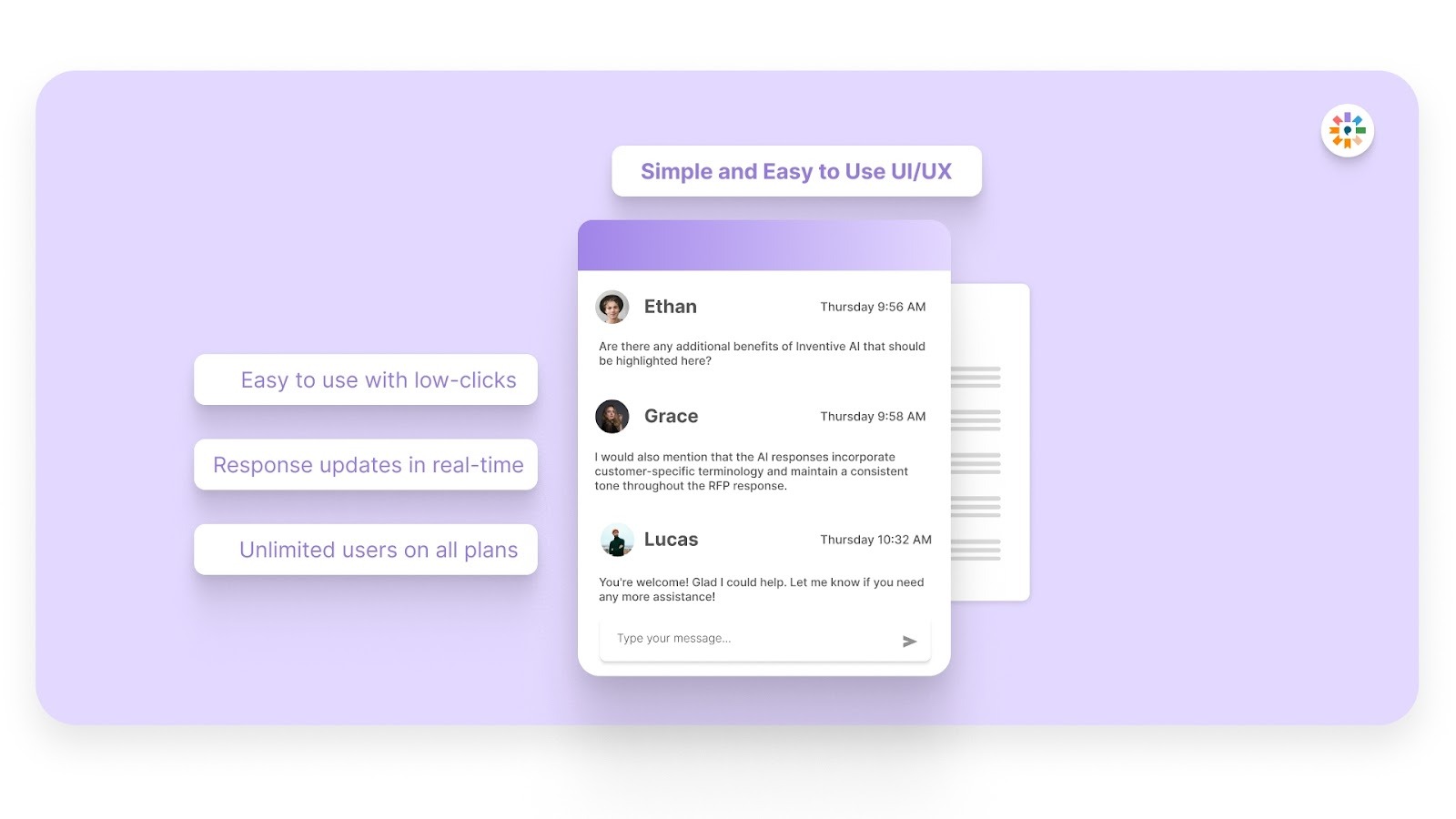
Inventive AI's user-friendly interface allows your team to quickly learn and navigate the system, making the entire RFP process faster and more efficient. Its intuitive design means less time spent on training and more time focusing on refining proposals.
By integrating Inventive AI into your RFP workflow, you can enhance the accuracy, consistency, and speed of your contract management proposals, increasing your win rates and reducing the time spent on each response.
Frequently Asked Questions (FAQs)
1. What’s the difference between an RFP, an RFI, and an RFQ in contract management?
An RFP (Request for Proposal) asks vendors for detailed proposals, including approach and pricing. An RFI (Request for Information) is used earlier to gather information about vendors’ capabilities before issuing an RFP, while an RFQ (Request for Quotation) focuses mainly on pricing when requirements are already clear.
2. Can I use the same contract management RFP template for different industries?
Yes. A well‑designed contract management RFP template can be adapted across industries. You may adjust specific sections like compliance, technical requirements, or deliverables based on industry standards, but the core template remains useful for multiple project types.
3. What common mistakes do buyers make when creating a contract management RFP?
Buyers often include too many unrelated requirements, lack clear scoring criteria, or fail to provide sufficient project context. This can lead to incomplete or confusing responses from vendors and more back‑and‑forth clarification.
4. How detailed should the statement of work in a contract management RFP be?
The statement of work (SOW) should describe project deliverables, timelines, activities, and expected outcomes with enough detail so that vendors can provide accurate responses and realistic delivery estimates.
5. Do all buyers include evaluation criteria in their RFP templates?
Not always, but it’s highly recommended. Clear evaluation criteria help vendors understand how proposals will be scored and tailor their responses accordingly. Without it, vendors may miss key priorities important to the buyer.




.jpg)

.avif)