RFP Invitation Email Template: A Vendor’s Guide to Responding Effectively
Copy-paste RFP email templates: the invitation email buyers send to vendors, a request-for-proposal email, and a vendor response email, plus what to include in each.
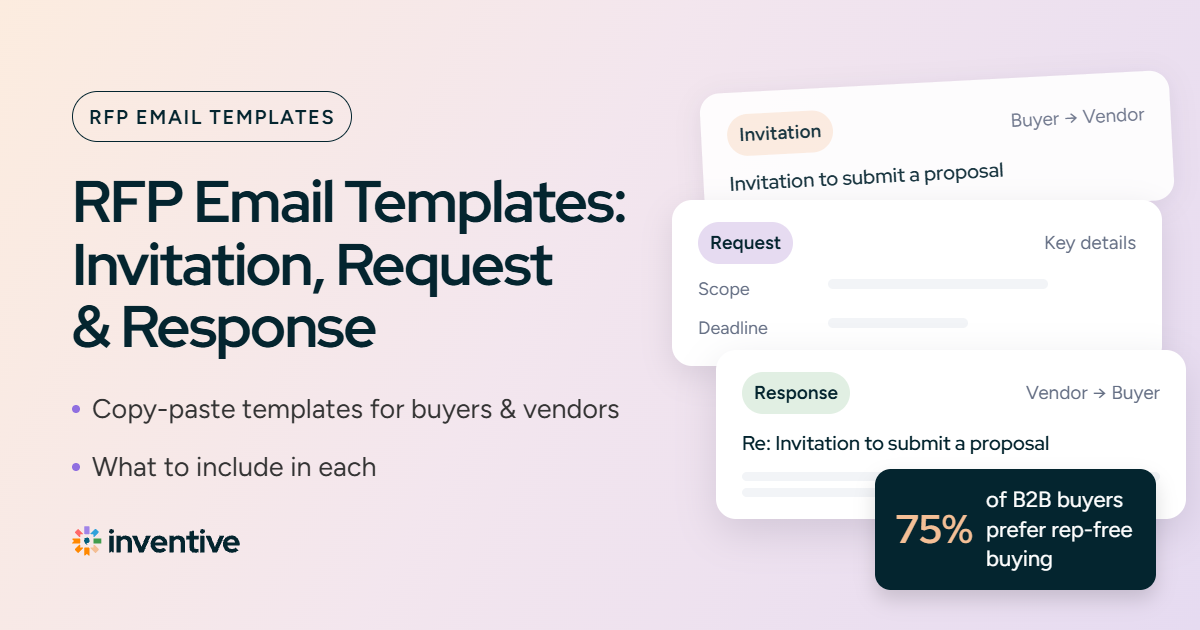
An RFP invitation email starts a high-stakes, time-pressured process. One message triggers a chain of work: reviewing requirements, aligning the right people, and planning a response against a tight deadline.
The pressure runs both ways. The buyer has to define requirements clearly, and the vendor has to read them correctly and reply on time. It matters more than it used to: Gartner reports that 75% of B2B buyers prefer a rep-free buying experience, so much of the evaluation now happens through the RFP and your written response, not a sales call. Unclear or late communication here is hard to recover from.
This guide covers what an RFP invitation email includes, how to respond effectively, the mistakes to avoid, and where AI can speed up the response without lowering quality.
RFP email templates for buyers
If you are the buyer inviting vendors to bid, your email needs to give them enough to decide quickly: what you need, when it is due, and how to submit. Use either template below, fill in the brackets, and attach your full RFP.
RFP response email templates for vendors
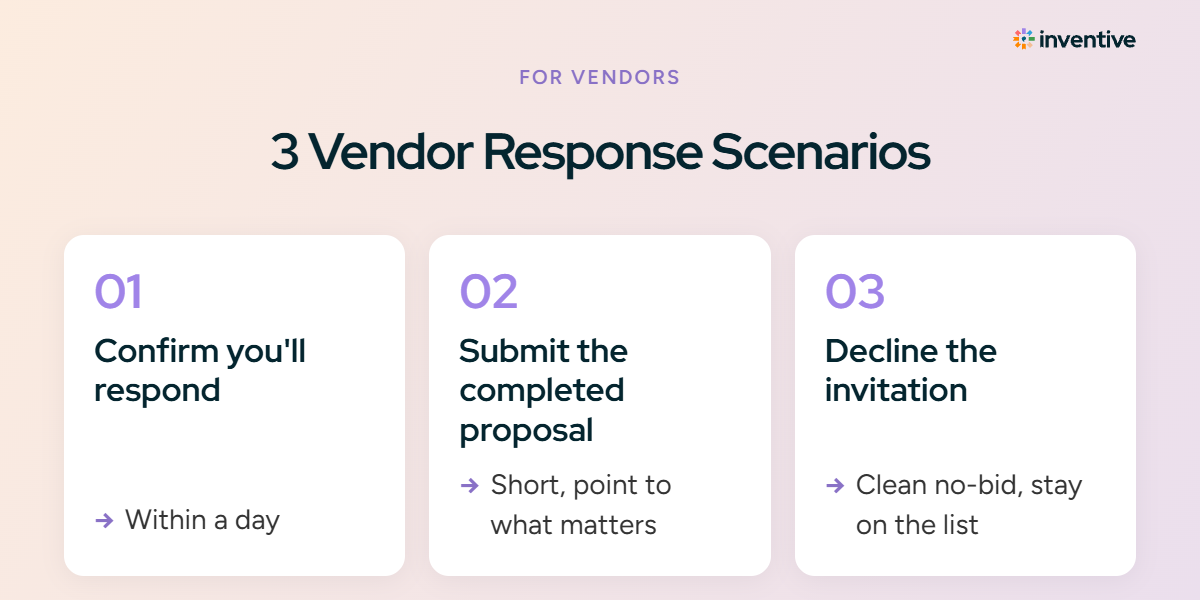
If you are the vendor replying to an RFP invitation, the email you send sets the tone before the proposal does. Use the template that matches your situation: confirming you will respond, submitting the finished proposal, or declining without burning the relationship.
Scenario 1: Confirming you will respond
Send this within a day of receiving the invitation. It signals intent and buys you room to ask questions.
Scenario 2: Submitting your completed proposal
Send this with the finished proposal attached. Keep it short and point the evaluator to what matters.
Scenario 3: Declining the invitation
Send this when it is a no-bid. A clean decline keeps you on the list for the next opportunity.
How do buyers write an RFP invitation email?
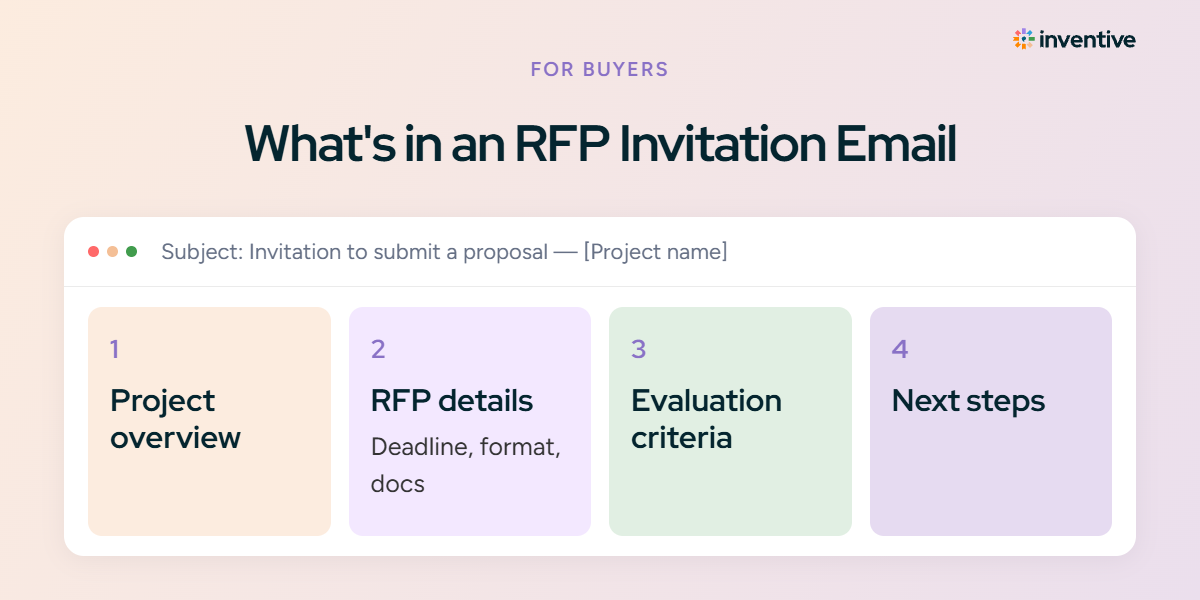
It’s important to understand the key elements that buyers typically include in their invitations. This will help you recognize the structure of an invitation and understand what is expected of you.
An RFP invitation email from a buyer usually includes the following:
1. Project overview: A brief description of the project or service they need, outlining the objectives and scope of the work.
2. RFP details: Information about the RFP process, including submission deadlines, format, and the documentation required.
3. Evaluation criteria: The factors on which vendors will be assessed, such as pricing, experience, and solution fit.
4. Next steps: Instructions on how to submit the proposal, ask questions, or seek clarification.
By understanding these points, you can prepare a focused, accurate response and ensure you’re meeting all the buyer’s expectations.
Why RFP invitation emails are important?
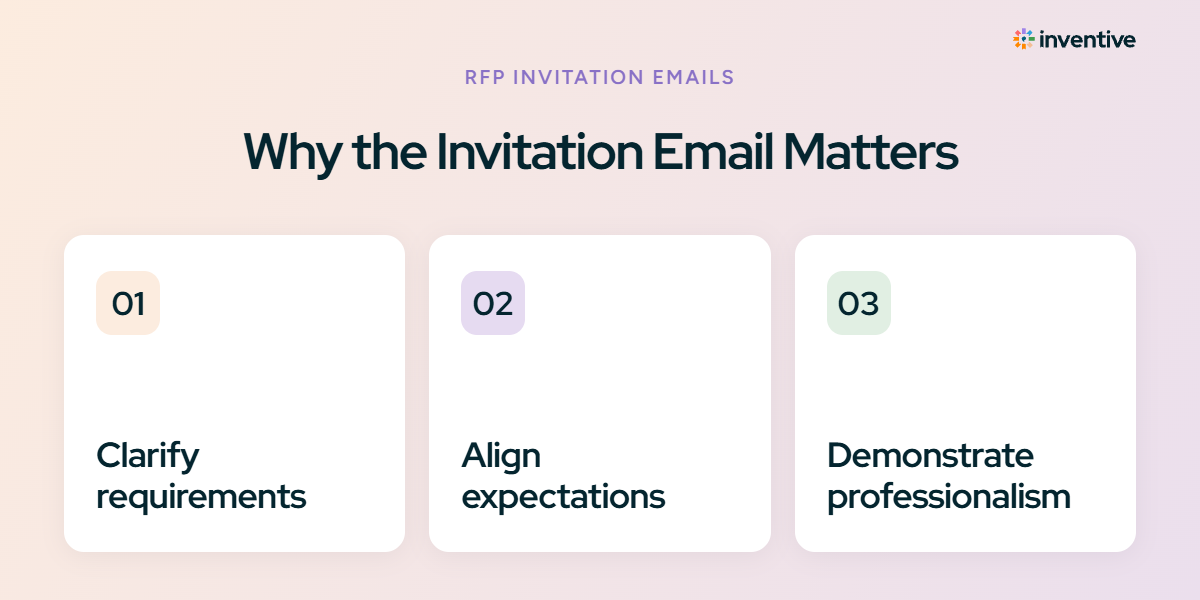
An RFP invitation email is more than just a formality; it’s an important step in the vendor selection process. For vendors, this is the moment to start shaping how you will approach the proposal. It sets the stage for the entire engagement and gives vendors like you the opportunity to:
1. Clarify requirements: Understand exactly what the buyer is looking for in a proposal.
2. Align expectations: Ensure your proposal addresses the buyer’s needs and aligns with their goals.
3. Demonstrate professionalism: A well-written, timely response to an RFP invitation shows that you’re a reliable, professional vendor who can be trusted with important projects.
By responding thoughtfully, you also show the buyer that you’re serious about the opportunity and ready to collaborate.
How to respond to an RFP invitation email effectively?
When you receive an RFP invitation email, your response must be timely, professional, and aligned with the buyer’s requirements. Here’s how to craft an effective response:
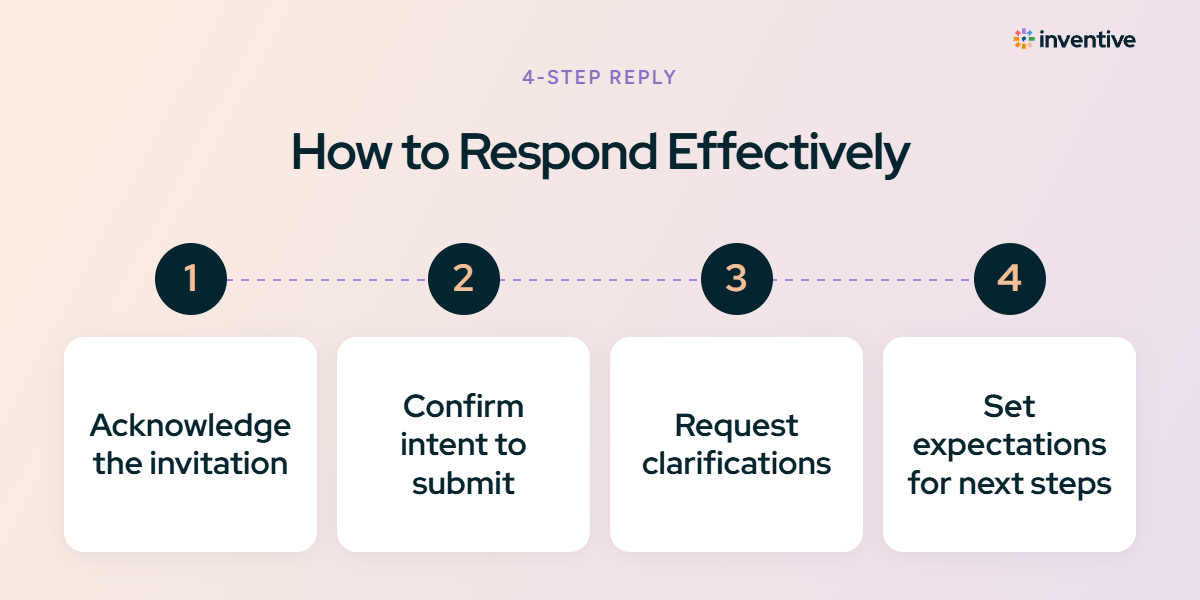
1. Acknowledge the Invitation
Start by thanking the buyer for the invitation. Acknowledge the importance of the RFP and express your enthusiasm about the opportunity.
Example: "Thank you for inviting [Your Company] to participate in the RFP process for [Project Name]. We are excited about the opportunity to collaborate and provide our solution."
2. Confirm your intent to submit a proposal
Make it clear that you intend to submit a proposal and outline any initial steps you’ll be taking. If you need more information or clarification, let them know here.
Example: "We are pleased to confirm our intent to submit a proposal for this project. We will review the RFP details and ensure we meet all submission requirements."
3. Request clarifications (if necessary)
If anything in the RFP is unclear, this is the time to ask. This helps ensure you provide a proposal that directly addresses the buyer’s needs.
4. Set expectations for the next steps
Let the buyer know when they can expect to receive your proposal and if there are any additional steps involved.
Example: "We will ensure that our proposal is submitted by the specified deadline of [Submission Deadline] and look forward to addressing all your requirements."
A well-structured response to an RFP invitation email not only shows professionalism but also sets the foundation for a successful proposal submission, ensuring that all expectations are aligned from the start.
Also Read: RFP Response Process Guide
Do’s and don’ts of responding to RFP invitation emails
To ensure your response is professional, clear, and well-received by the buyer, it's crucial to follow best practices. Below are some key dos and don’ts to keep in mind when crafting your response to an RFP invitation email.
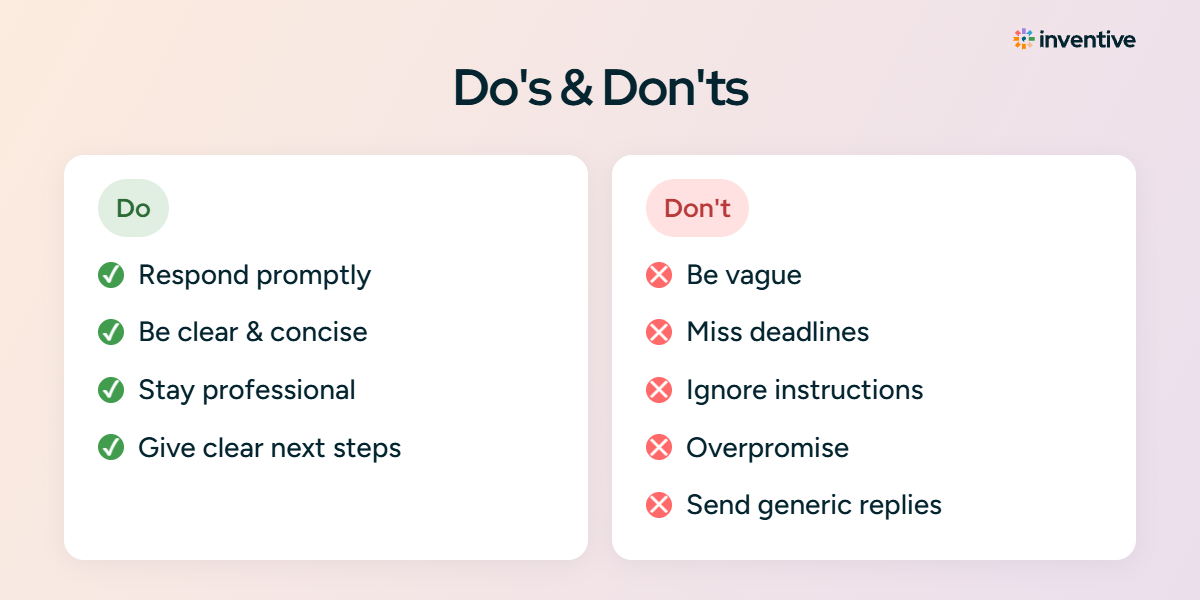
Do’s:
1. Respond promptly
Timely acknowledgment is crucial. Responding as soon as possible shows that you're engaged, professional, and eager to participate in the process. A prompt response helps you stay top-of-mind for the buyer.
2. Be clear and concise
While it’s important to provide necessary details, avoid over-explaining. Keep your response brief yet comprehensive—buyers appreciate clarity and a direct approach. This makes it easier for them to quickly assess your intent and professionalism.
3. Be professional
Your tone should always be formal, polite, and respectful. A professional response reflects your company’s values and sets the tone for future communication. Avoid using overly casual language or slang.
4. Provide clear next steps
Let the buyer know when they can expect to receive your proposal and outline any preliminary steps, such as reviewing the RFP, aligning with internal teams, or gathering necessary information.
Don’ts:
1. Avoid vague responses
Never leave the buyer uncertain about whether you'll be submitting a proposal. Make your intent clear from the outset to show you’re reliable and committed.
2. Don’t miss deadlines
Adhering to the timeline is critical. Missing the deadline can signal that you’re not organized or that you don’t prioritize the buyer’s needs, which can hurt your chances of being selected.
3. Ignore instructions
Every RFP comes with specific instructions regarding the format, content, or submission requirements. Make sure you follow these instructions carefully to avoid disqualifying yourself from consideration. Disregarding guidelines can give the impression that you’re unprofessional or disorganized.
4. Don’t overpromise or underestimate
It’s tempting to present a bold promise, but you should always remain realistic about your capabilities. Overpromising and underdelivering can damage your reputation, while underestimating your capabilities can make you seem unsure of your solution.
5. Avoid generic responses
Personalize your response to the specific project and buyer. Generic responses can give the impression that you’re not paying attention to the details of the RFP, which may make you appear disengaged or less committed to the opportunity.
By following these do's and don'ts, you ensure that your response to an RFP invitation email reflects professionalism and attention to detail. A thoughtful, well-crafted reply not only sets the tone for the upcoming proposal process but also increases your chances of standing out and securing the opportunity.
Also Read: How to Create an Effective RFP Response
The importance of AI-automated tools in responding to RFP invitation emails
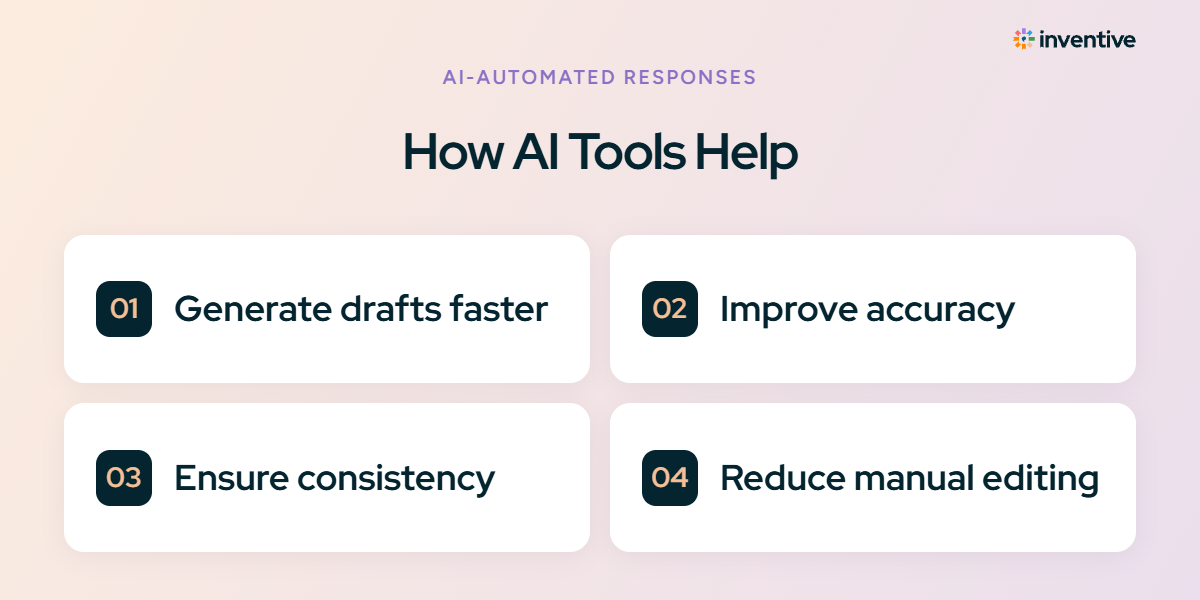
Responding to RFP invitations can be an overwhelming and time-consuming process. That’s where AI-powered tools come in. Here’s how they help:
1. Generate drafts faster: AI tools can quickly generate initial drafts by pulling from past proposals and internal knowledge bases. This helps vendors save valuable time that would otherwise be spent drafting content from scratch.
2. Improve accuracy: AI tools automatically align responses with company standards, ensuring accuracy across the proposal. By reducing manual effort, AI minimizes the risk of human error, leading to more precise, high-quality proposals.
3. Ensure consistency: With AI, all responses are consistent in tone, style, and messaging. This is particularly important for vendors who need to send multiple proposals or responses simultaneously, ensuring each one maintains a unified voice and is tailored to the buyer's specific needs.
4. Reduce time spent on manual editing: AI automation takes over tasks like formatting, checking for grammatical errors, and organizing content, reducing the need for repetitive manual editing. This allows teams to focus on high-level strategy and ensure the proposal aligns with the buyer's goals.
AI-powered tools don't just speed up the process; they help vendors produce proposals that are more relevant, aligned with the buyer’s needs, and professionally crafted.
Inventive AI: a smarter way to handle RFP responses

Once you accept the invitation and commit to bid, the goal is a strong response submitted on time. Inventive AI helps you get there with less manual effort by turning your existing content into a usable draft fast. In practice it:
- Generates a first draft in minutes, so your team starts from a working response instead of a blank page.
- Pulls from your past proposals and approved content, producing answers that reflect your real capabilities (2x more accurate than other RFP AI tools in testing).
- Keeps your knowledge current on its own with the Content Governance Agent, so there is no library to manually maintain and answers stay accurate.
- Lets the team draft, review, and finalize together in one collaborative workspace, so responses move faster and nothing slips before the deadline.
The result is faster turnaround, fewer errors, and more time to focus on the answers that win.

.avif)



%20Definition%20and%20Process.avif)