Vendor Relationship Management in 2026: The Strategies That Actually Win Deals

Vendor relationships can quietly decide whether you win a deal or lose it.
It’s rarely just about the proposal. Buyers notice how you communicate, how quickly you respond, and how consistent you are across every interaction. That experience often matters as much as what you submit.
But here’s where most teams fall short. They treat vendor relationships like a checklist: reply, submit, move on. Over time, this leads to scattered communication, repeated work, and responses that don’t fully connect.
If that sounds familiar, you’re not alone.
The teams that stand out approach this differently. They treat every interaction as part of a larger system, one that improves clarity, builds trust, and makes each response stronger than the last.
In this guide, you’ll see how to do exactly that. We’ll break down practical ways to manage vendor relationships better, build consistency across deals, and improve how buyers experience your responses.
Key Takeaways
- Vendor relationship management goes beyond proposals. It includes every interaction with buyers before, during, and after each deal.
- Keeping buyer data in one place and using structured responses helps you stay consistent, reduce errors, and respond faster.
- A clear 5-step process improves coordination, avoids delays, and helps you build stronger relationships across deals.
- Strong relationships improve communication, trust, and long-term opportunities, not just immediate deal outcomes.
- Platforms like Inventive AI help you create accurate, consistent responses faster, improving clarity and increasing win rates.
What Vendor Relationship Management Really Is? (And What it Covers?)
Vendor relationship management is how you handle every interaction with buyers across the full lifecycle of a deal. It covers how you communicate, align expectations, and maintain continuity across proposals and ongoing engagements.
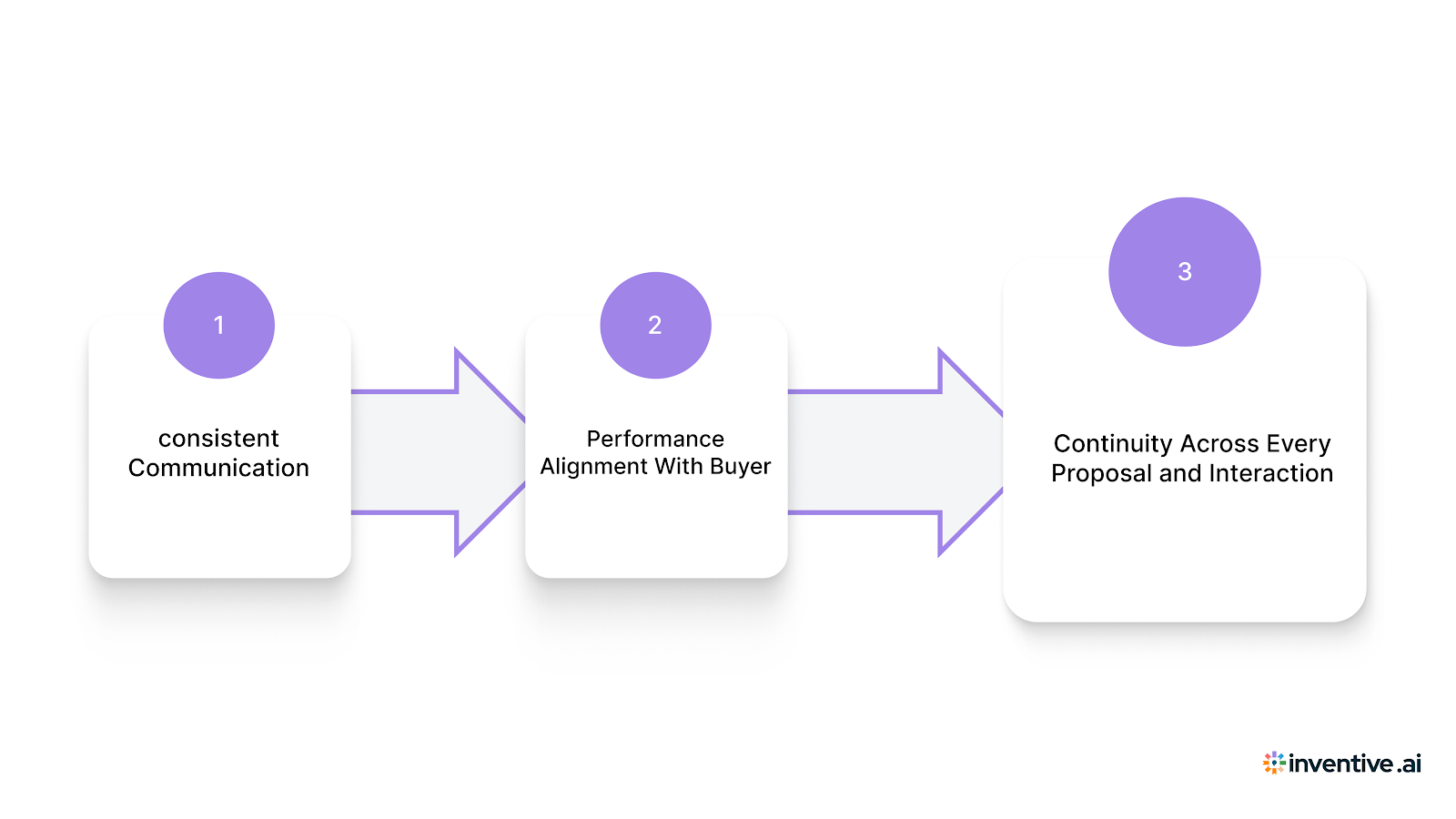
When managed well, it ensures your responses stay consistent, relevant, and aligned with what buyers expect at every stage.
Here’s how it shows up in your day-to-day work:
1. Consistent Communication
You need structured communication with buyers to avoid confusion or missed expectations. This includes timely updates, clear responses, and documented discussions across every interaction.
Without this, buyers often face gaps in understanding, which affects trust and slows down decision-making.
2. Performance Alignment With Buyer Expectations
Your responses and delivery must match what buyers are evaluating. This includes timelines, quality benchmarks, and compliance requirements defined in RFPs.
When alignment is missing, buyers notice inconsistencies across responses, which reduces confidence in your proposal.
3. Continuity Across Every Proposal and Interaction
Vendor relationships should not restart with each new RFP. You should build on past conversations, feedback, and submitted responses.
This continuity helps you respond faster, avoid repeated work, and maintain consistency across multiple deals.
Vendor relationship management ensures that every interaction moves you closer to winning the deal instead of creating unnecessary friction.
Also Read: Ultimate RFP Response Toolkit for US Vendors (2026)
5 Proven Vendor Relationship Practices That Strengthen Your Every Deal
Vendor relationships are not built in one big moment. They are built in small, everyday actions across every deal you handle. The way you manage your relationships behind the scenes shows up directly in your proposals.
Here are a few practices that make a real difference:
1. Keep All Buyer Information in One Place
If your data is spread across emails, docs, and different tools, you end up wasting time searching and reworking answers. Instead, keep everything in one place. Past responses, buyer questions, and supporting documents should be easy to access.
This helps you respond faster and avoids situations where two answers say different things. It also gives you more confidence in what you’re submitting.
2. Use a Clear Structure for Every Response
Starting from scratch every time sounds good, but it often leads to uneven responses. Some sections end up detailed, while others feel incomplete. Buyers can spot this quickly.
A simple structure helps you stay consistent. It keeps your answers clear and makes it easier for buyers to review everything without confusion.
3. Focus on What Buyers Really Care About
Buyers don’t just look at answers. They look at what those answers say about your reliability. Are you addressing risks clearly? Are you showing you understand their priorities? Pay attention to patterns in their questions. That tells you what matters most to them. When you respond with that in mind, your answers feel more relevant and thoughtful.
4. Learn Something From Every Submission
Once a proposal is submitted, most teams move on. But that’s where useful insights are often missed. Take a step back and review. Which parts took the most time? Where did the buyer ask follow-ups? These small observations help you improve your next response without extra effort.
5. Get Everyone on the Same Page Early
RFPs usually involve multiple teams. If everyone works separately, responses start to feel disconnected. Align early. Make sure everyone understands the buyer’s expectations and the approach. This reduces confusion and helps your final response feel like one clear, complete story.
When you follow these practices, your responses start feeling smoother, faster, and easier to trust. And over time, that consistency is what helps you stand out across multiple deals.
The 5-Step Vendor Relationship Management Process That Scales Without Breaking Down
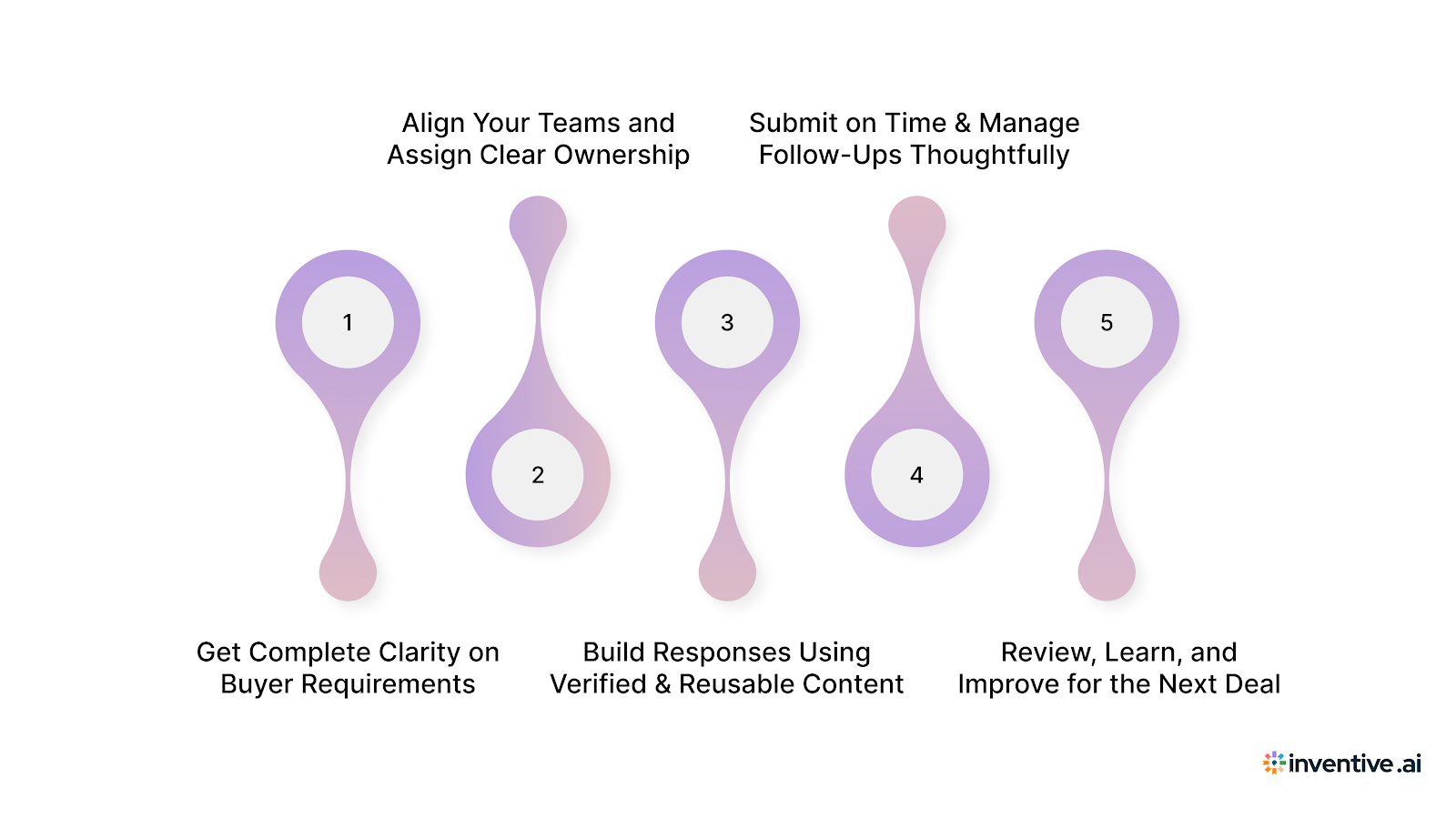
Managing vendor relationships without a clear process often leads to delays, confusion, and repeated work. A structured approach helps you stay aligned, respond faster, and build consistency across deals.
Here’s a simple process you can follow:
Step 1: Get Complete Clarity on Buyer Requirements
Start by fully understanding what the buyer is asking for. Go beyond surface-level questions and break down scope, timelines, and evaluation criteria.
This step sets the direction for everything that follows. When you get this right, your responses become more focused and relevant from the start.
Step 2: Align Your Teams and Assign Clear Ownership
Before you begin drafting, decide who is responsible for each part of the response. Sales, solutions, and proposal teams should all be aligned on expectations.
Clear ownership avoids last-minute confusion and reduces back-and-forth. Everyone knows what they are responsible for and when.
Step 3: Build Responses Using Verified and Reusable Content
Use past responses and validated information instead of starting from scratch. This helps you maintain consistency and avoid errors.
At this stage, review everything for clarity, accuracy, and alignment. A well-reviewed response is easier for buyers to understand and evaluate.
Step 4: Submit on Time and Manage Follow-Ups Thoughtfully
Timely submission shows reliability. But what you do after submission matters just as much.
Track buyer feedback and respond to follow-ups in a structured way. This keeps communication clear and shows that you are organized and responsive.
Step 5: Review, Learn, and Improve for the Next Deal
Once the process is complete, take time to review what happened. Look at delays, repeated edits, and buyer questions.
These insights help you refine your approach. Over time, this makes your responses faster and more effective.
When you follow a clear process like this, each deal builds on the previous one. You spend less time fixing issues and more time improving your responses.
Also Read: Vendor Comparison Template for Procurement and Evaluation Teams
What a Strong Vendor Relationship Management Actually Delivers Beyond Winning Deals?
Vendor relationships are built through every interaction you have with a buyer: before, during, and after a deal. Buyers don’t just evaluate what you submit. They pay attention to how you communicate, how you handle feedback, and how easy you are to work with over time.
Here’s how it actually impacts your outcomes:
1. Your Conversations Become More Clear and Productive
When you have a good relationship, communication becomes smoother. Buyers share more context, clarify expectations faster, and respond more openly. This helps you avoid misunderstandings and makes every interaction more efficient.
2. You Understand Buyer Expectations Earlier
Strong relationships give you better visibility into what buyers actually care about. You start picking up on their priorities, concerns, and decision criteria even before they are fully documented. This helps you stay aligned across discussions, not just in proposals.
3. Your Responses Feel More Aligned and Thoughtful
When you already understand the buyer’s context, your responses feel less generic and more intentional. You are not just answering questions. You are addressing what matters to them, which makes your submissions easier to trust.
4. You Build Trust Beyond a Single Deal
Trust is not created in one interaction. It builds over time through consistent, reliable engagement. When buyers see that you communicate clearly and follow through, they are more confident working with you again.
5. You Stay Relevant Across Future Opportunities
Strong relationships keep you in the loop even outside active RFPs. Buyers are more likely to involve vendors they trust early in discussions, which gives you better positioning before the process even begins.
Vendor relationships shape how buyers experience working with you at every stage, and that directly influences who they choose.
5 Vendor Relationship Gaps That Are Quietly Costing You Deals Right Now
Even strong teams face challenges when managing multiple buyers and complex requirements. Here are some key challenges you may face:
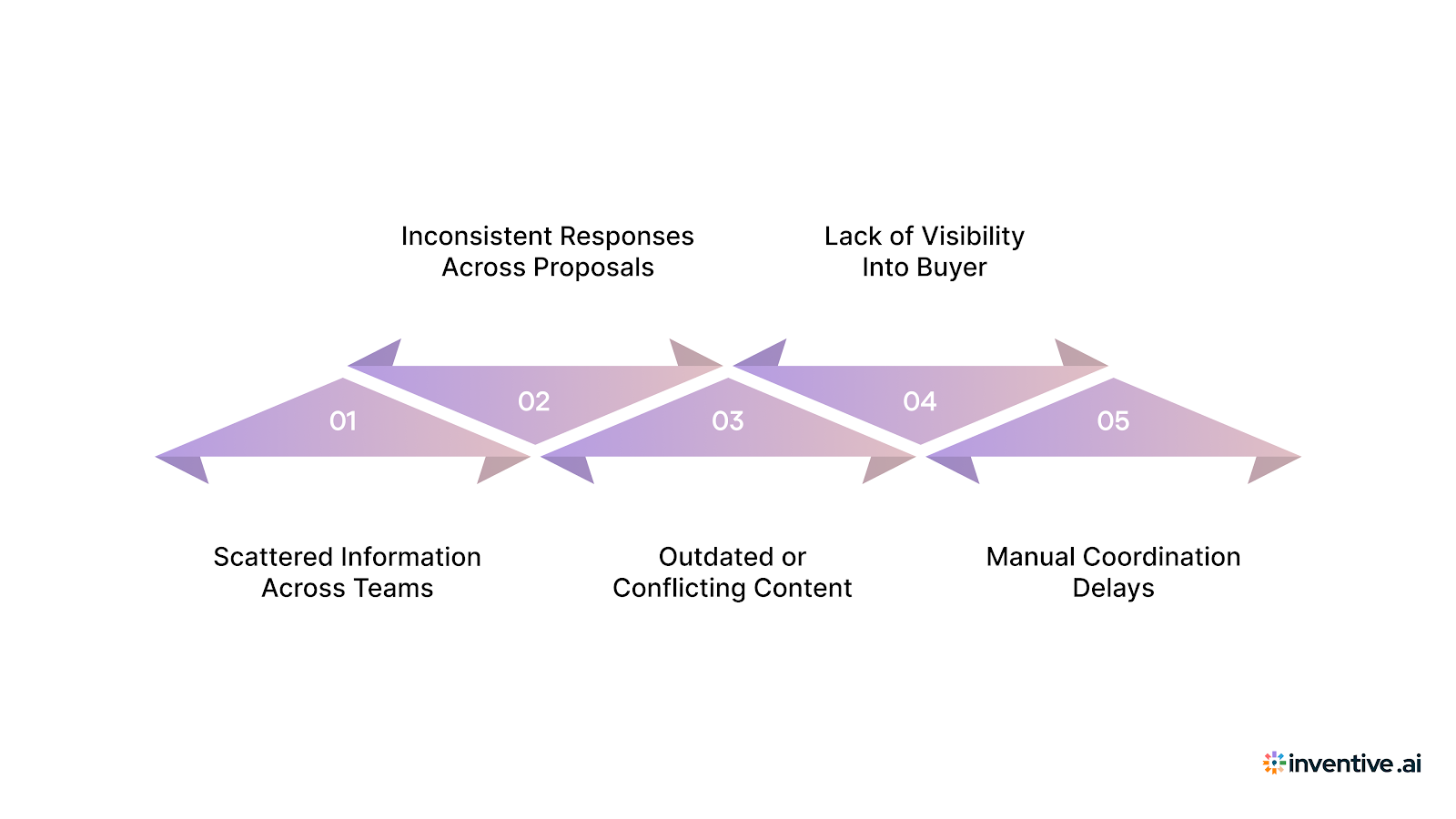
1. Scattered Information Across Teams: Important data often sits in emails, documents, or internal tools. This makes it hard to find accurate information when responding quickly.
2. Inconsistent Responses Across Proposals: Different team members may provide different answers for similar questions. This creates confusion and reduces credibility.
3. Outdated or Conflicting Content: Old responses may not match current offerings or compliance requirements. Using such content can lead to rework or rejection.
4. Lack of Visibility Into Buyer Expectations: Without clear tracking, you may miss what matters most to buyers. This leads to generic responses that fail to stand out.
5. Manual Coordination Delays: Managing inputs from multiple teams manually slows down the process. This often results in missed deadlines or rushed submissions.
Addressing these challenges requires structured systems, not just better effort.
Also Read: Bid List Template: Maximize Vendor Shortlist Inclusion & Win Rates
Enhance Your Vendor Relationship Management with Consistent, Accurate and Aligned Responses with Inventive AI
Managing vendor relationships across multiple deals is about making sure every response you send feels consistent, accurate, and aligned with what the buyer expects.
When this is handled manually, gaps start to appear. Responses feel disconnected, information gets outdated, and teams spend more time fixing issues than improving quality.
Inventive AI’s AI-powered RFP response software helps you bring structure, consistency, and speed into every interaction.
1. 2× Higher Quality Responses
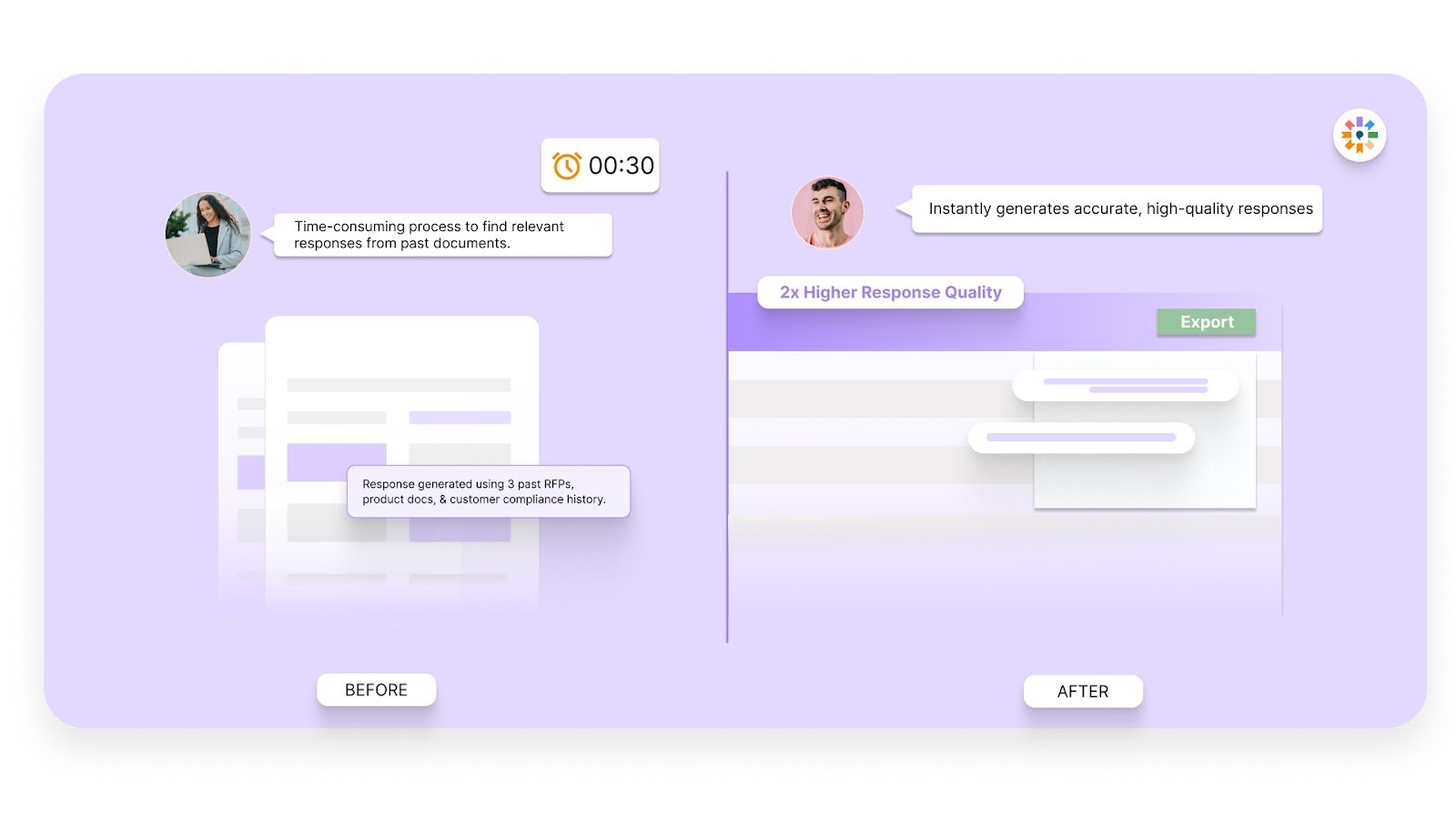
Inventive AI helps you create complete, structured responses using your past data and real context. This means your answers are not just filled in. They are aligned, relevant, and easier for buyers to evaluate without confusion.
2. Context Engine
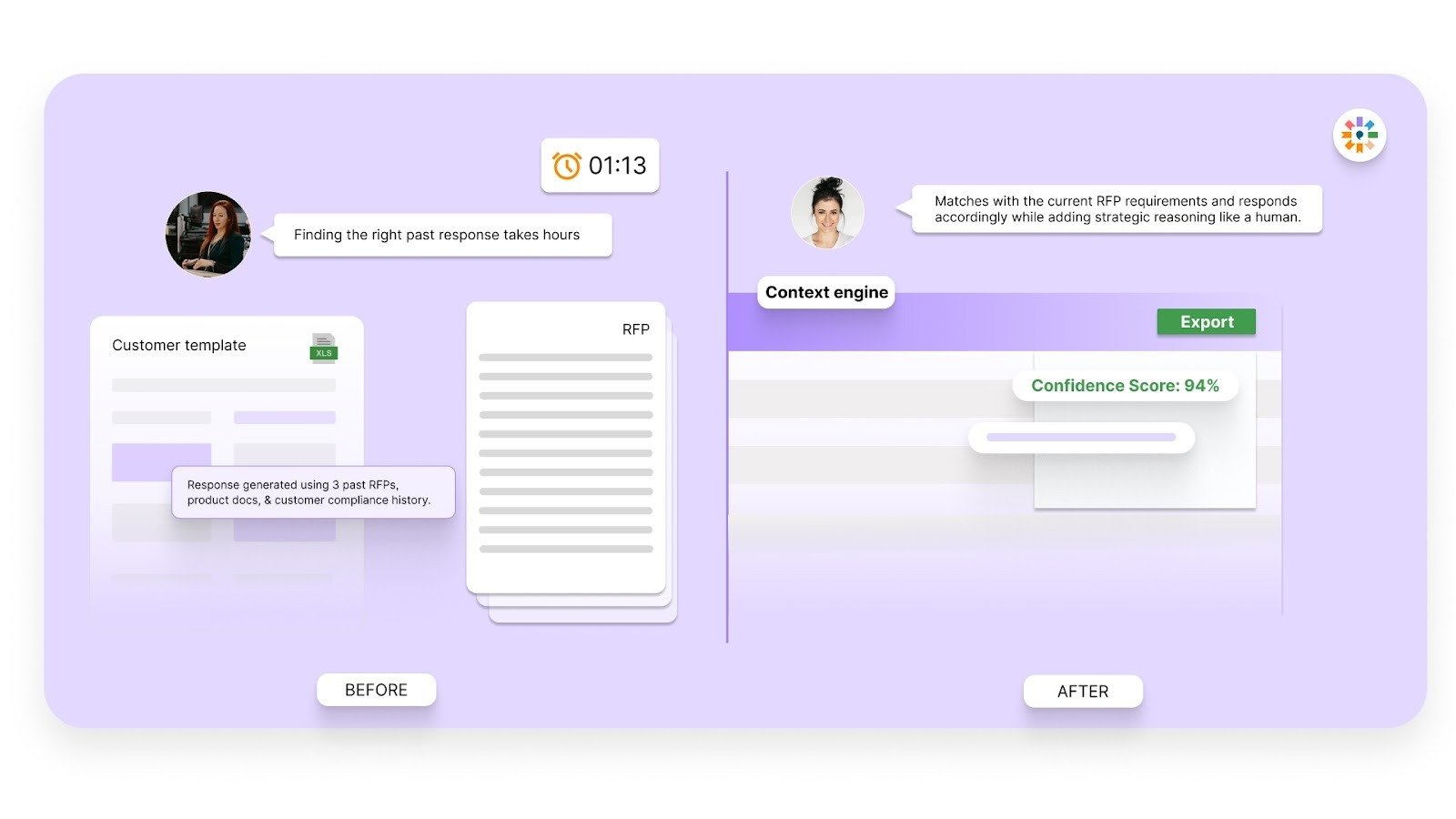
The Context Engine pulls from your historical responses, documents, and internal knowledge sources. Instead of relying on generic templates, you get answers that match the specific requirements of each RFP.
3. Conflict Detection
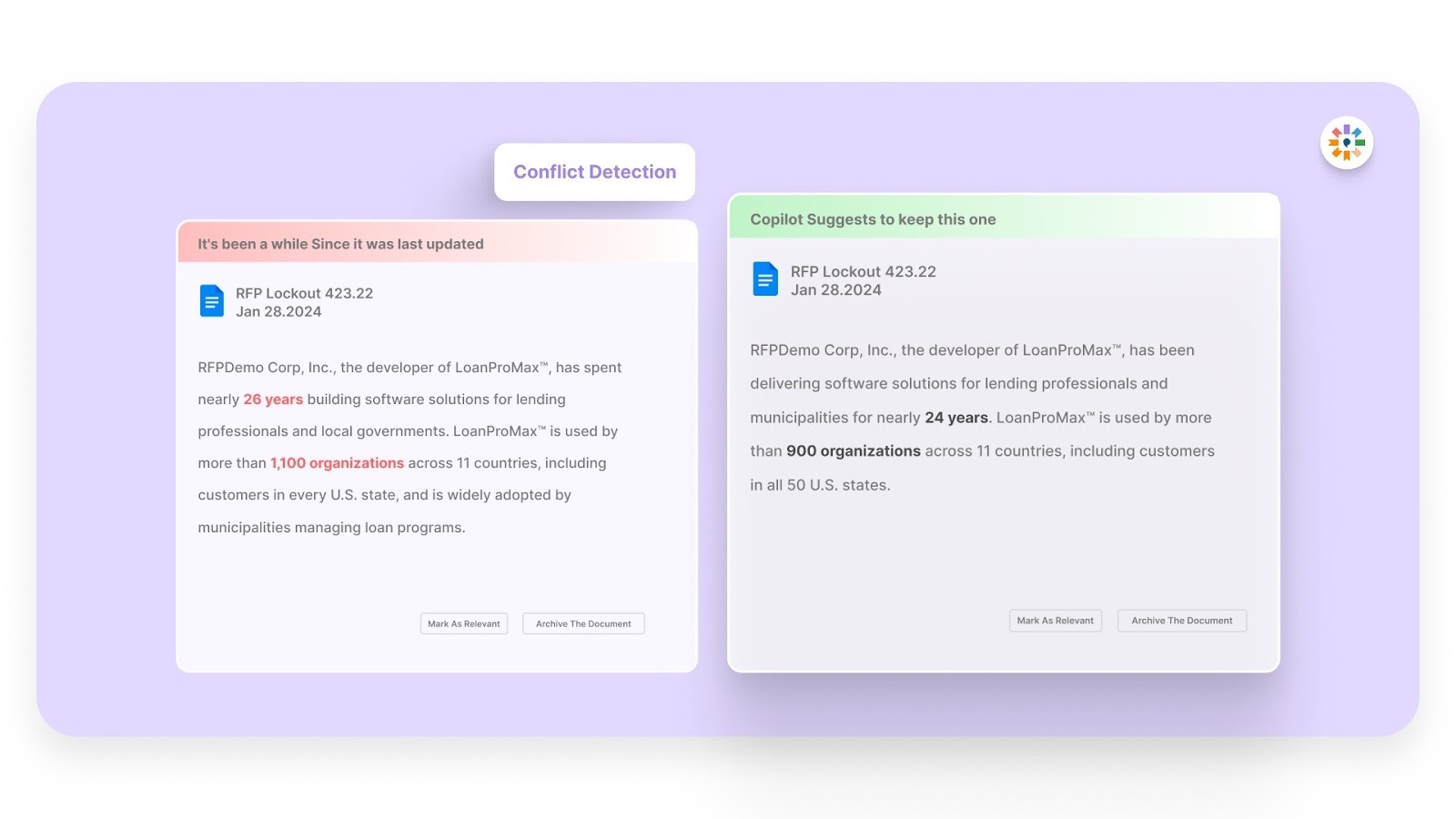
When multiple teams contribute, inconsistencies are common. Inventive AI flags these conflicts automatically. This ensures your responses stay aligned across sections, which improves clarity and builds buyer confidence.
4. Outdated Content Detection
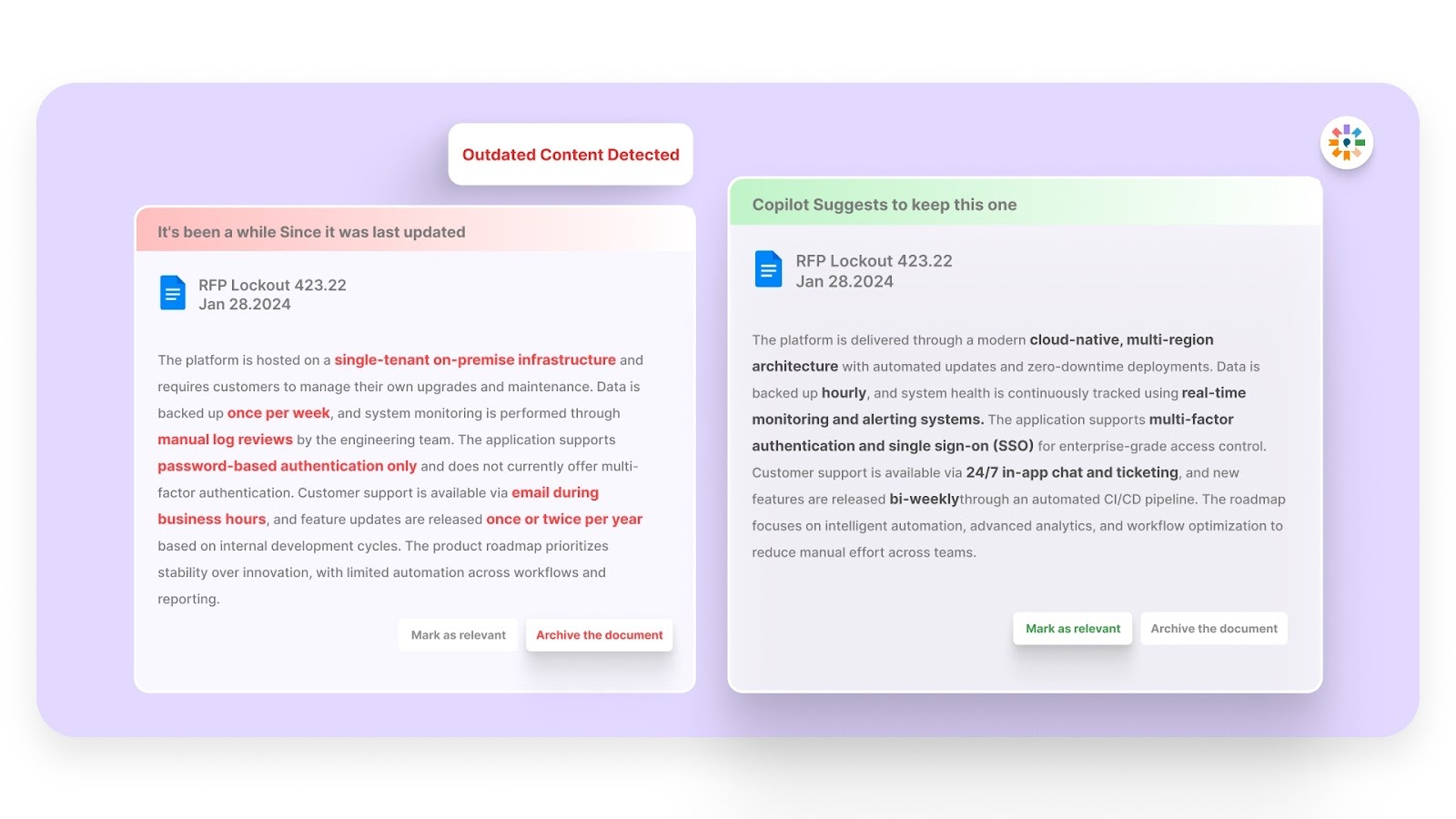
Old or irrelevant content can weaken your proposal. Inventive AI identifies and flags such content before it gets used. You always respond with updated, accurate information that reflects your current capabilities.
5. Narrative Style Proposals
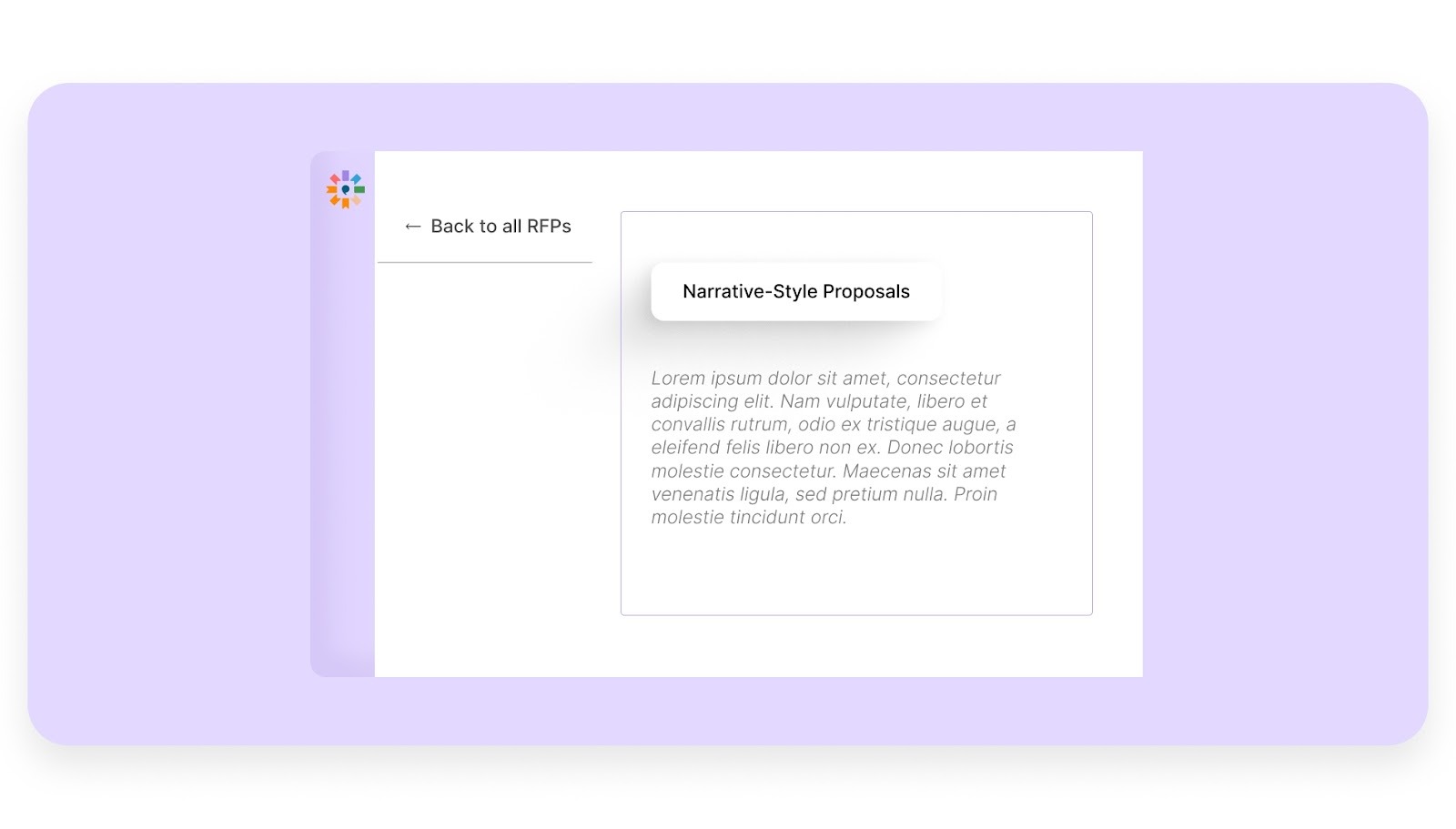
Inventive AI enables you to create detailed, well-structured proposals that flow logically. This helps buyers understand your solution clearly instead of piecing together fragmented answers.
6. Simple, Easy-to-Use Interface
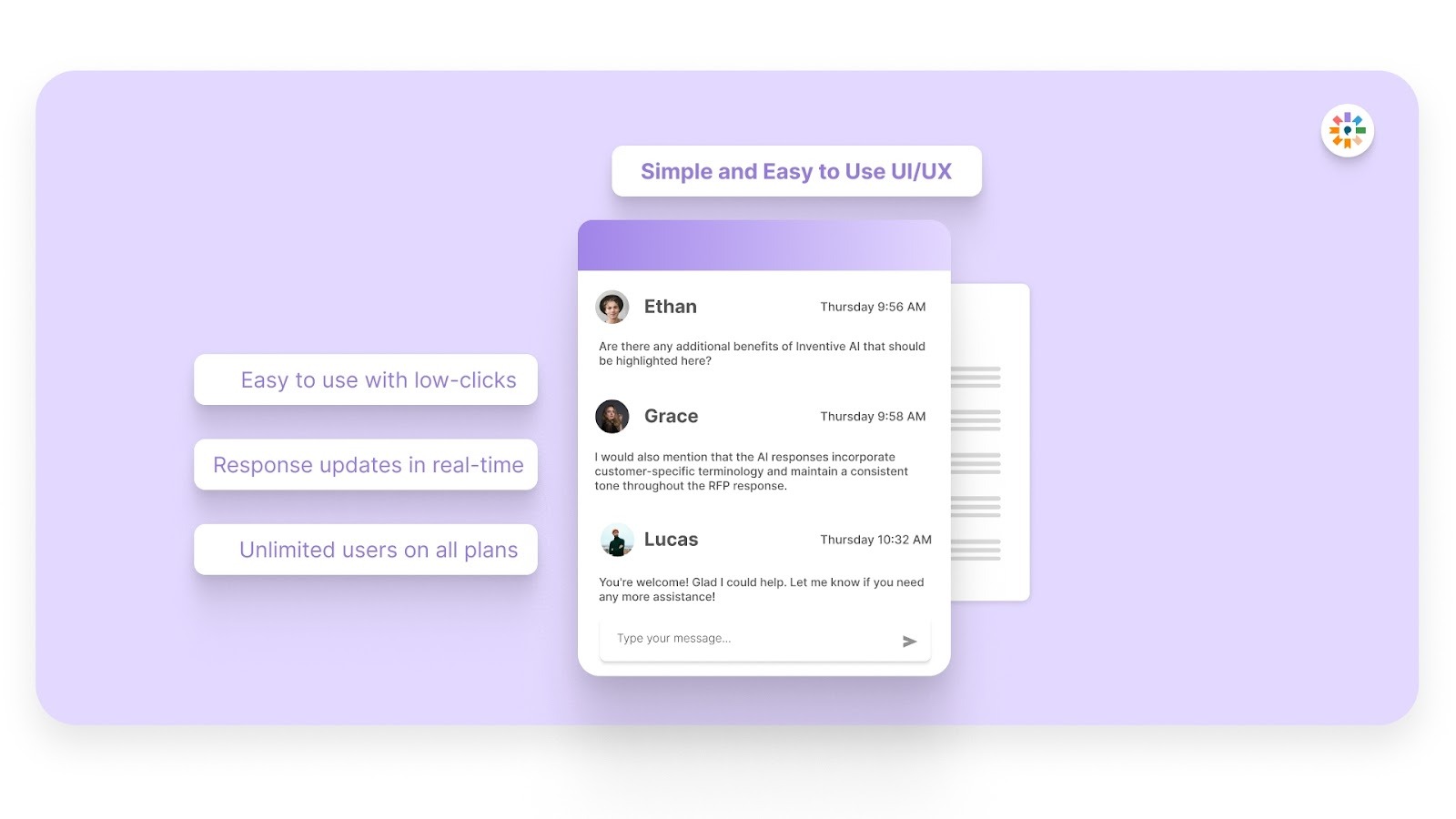
The platform is designed for real collaboration across sales, solutions, and proposal teams. You can manage responses, track progress, and align inputs without unnecessary complexity or delays.
Inventive AI RFP Automation helps you respond up to 10x faster, maintain 95% accuracy, and improve win rates by over 50%.
When your internal process is this consistent, your vendor relationships start reflecting clearly in every deal you pursue.
Frequently Asked Questions (FAQs)
1. How do you measure vendor relationship success beyond contract delivery?
You should track response quality, turnaround time, and how consistently buyers engage with your submissions. Repeat business, fewer clarification requests, and smoother follow-ups are strong indicators that your relationship is working well.
2. What role does data play in improving vendor relationships?
Data helps you understand buyer expectations, past responses, and where gaps exist in your process.
When your data is organized, you can respond with more context, avoid repeated mistakes, and maintain consistency across deals.
3. How can vendors handle multiple buyer relationships at scale?
You need a central system that stores past responses, buyer interactions, and key documents.
Along with that, clear workflows and ownership help you manage multiple RFPs without losing speed or consistency.
4. How do vendor relationships impact proposal differentiation?
Strong relationships give you deeper insight into what buyers prioritize, beyond what is written in the RFP. This allows you to tailor responses more effectively, making your proposal feel more relevant and aligned.
5. What internal teams should be involved in vendor relationship management?
Sales, proposal, solutions, and compliance teams should all work together from the start. Each team brings a different perspective, and alignment across them ensures your responses stay accurate and complete.