Bid List Template: Maximize Vendor Shortlist Inclusion & Win Rates

Did you know that about 75% of procurement teams use vendor scorecards to evaluate bidders? Structured bid lists and dashboards help buyers compare vendors on delivery, pricing, quality, and compliance. This approach makes supplier selection data-driven and repeatable.
For vendors, knowing how bid lists are used is essential. Well-prepared, structured responses help vendors showcase capabilities, demonstrate compliance, and highlight performance strengths. These submissions directly influence shortlist eligibility, future RFP awards, and even renewal opportunities for ongoing engagements.
In this blog, you’ll see how buyers evaluate bid lists and learn how you can respond with accurate, professional, and winning submissions.
Bid List Template: Download Free & Get Insight How Buyers Evaluate Vendors

Enterprise buyers rely on structured bid lists to evaluate vendor capabilities, pricing, compliance, and delivery reliability. This framework explains how buyers decide which vendors to shortlist and to invite to submit formal proposals.
- Bid List Overview: Captures key project and procurement details, including RFP title, ID, department, scope, dates, and evaluation committee members. Provides context and ensures all evaluators reference the same project.
- Bidder & Submission Details: Lists all bidders with contact info, submission timestamps, compliance verification, and attached documents. Ensures traceability and confirms bids meet basic submission requirements.
- Evaluation Criteria & Weighting: Defines the scoring categories, weights, and notes for evaluation (e.g., price, technical compliance, delivery, quality, risk). Helps evaluators objectively compare bidders on project-specific priorities.
- Scoring Matrix: Allows evaluators to score each bidder against all criteria, calculate weighted totals, and rank vendors. Promotes transparency and minimizes bias in decision-making.
- Compliance & Responsiveness Checks: Verifies that each bid meets mandatory requirements before scoring, such as submission deadlines, required forms, certifications, or bonds. Helps exclude non-compliant bids early.
- Summary & Recommendation: Aggregates evaluation results, identifies the top bidder(s), and provides rationale and risk notes. Guides procurement decisions and documents justification for award or shortlist recommendations.
- Approval & Sign-Off (Optional for Legal/Compliance): Records sign-offs from committee leads and procurement directors, with legal/compliance approval included if required. Ensures accountability, governance, and supports audit trails.
Also Read: Language Translation Services RFP and Government Bids
With insights into how buyers evaluate bids, it’s your turn to present responses that clearly showcase your performance and professionalism.
Bid List Response Template: How You Can Prepare Submissions in Structured Way?
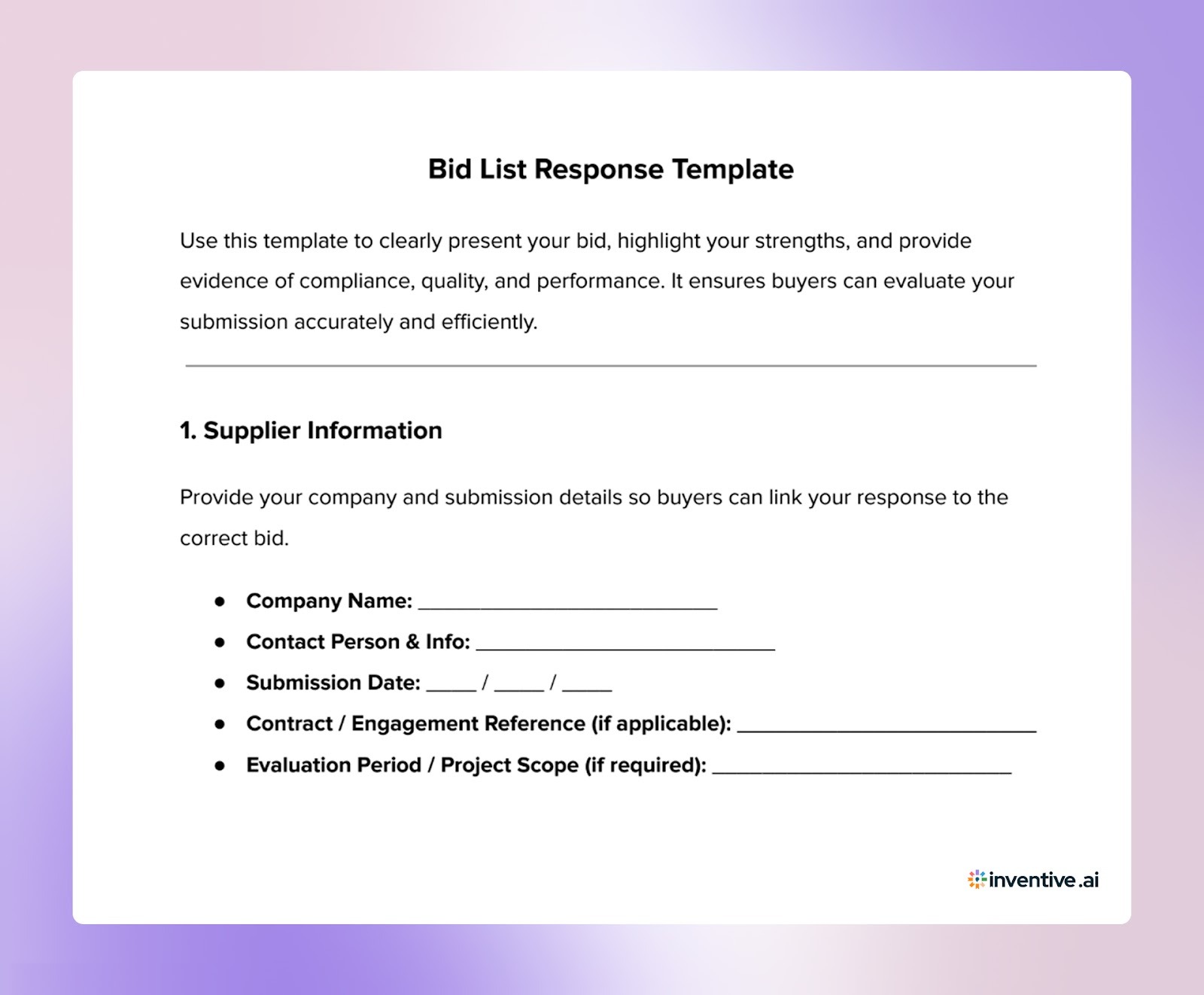
Vendors play a critical role in clarifying, contextualizing, and responding to bid evaluations. Structured responses ensure buyers accurately understand the vendor's capabilities, past performance, and proposed solutions, increasing the likelihood of shortlisting.
- Supplier Information: This section identifies your company and links your response to the correct bid or sourcing event. Accurate details ensure your submission is reviewed and routed correctly.
- Service Delivery Performance: Use this section to show how reliably you meet delivery timelines, SLAs, and service commitments. Buyers use these metrics to assess execution capability.
- Quality & Outcome Assessment: Highlight measurable quality results, certifications, and client satisfaction indicators. This helps buyers validate consistency and delivery standards.
- Commercial & Financial Review: Demonstrate pricing discipline, invoicing accuracy, and cost control. Buyers review this to assess financial reliability and long-term value.
- Compliance & Risk Management: Provide proof of regulatory, contractual, and security compliance. This reassures buyers that your organization meets mandatory requirements and manages risk effectively.
- Relationship & Governance Assessment: Show how you communicate, collaborate, and resolve issues with stakeholders. Strong governance signals partnership readiness and operational maturity.
- Performance Gaps & Action Plan: Acknowledge any gaps honestly and outline corrective actions with timelines. Buyers value transparency and proactive improvement plans.
- Overall Summary & Comments: Use this space to reinforce your strengths and contextualize your metrics. It allows you to align your story with buyer priorities.
- Preparer Details: Identify who prepared the response to ensure accountability. This supports follow-ups, clarifications, and audit requirements.
Also Read: How AI Transforms Proposal and Bid Writing
By completing this response template, vendors ensure buyers have a clear, evidence-backed view of their capabilities, improving their chances of being shortlisted and future RFP opportunities.
Buyer expectations may be clear, but execution errors are what most often determine bid list outcomes. Let’s break down the mistakes that weaken bid list submissions.
Why Many Bid List Responses Fail Despite Good Capabilities?
Even strong vendors lose shortlist opportunities due to avoidable errors in bid list responses. Enterprise buyers use bid lists to compare vendors side-by-side, so gaps, inconsistencies, or vague claims are quickly penalized.
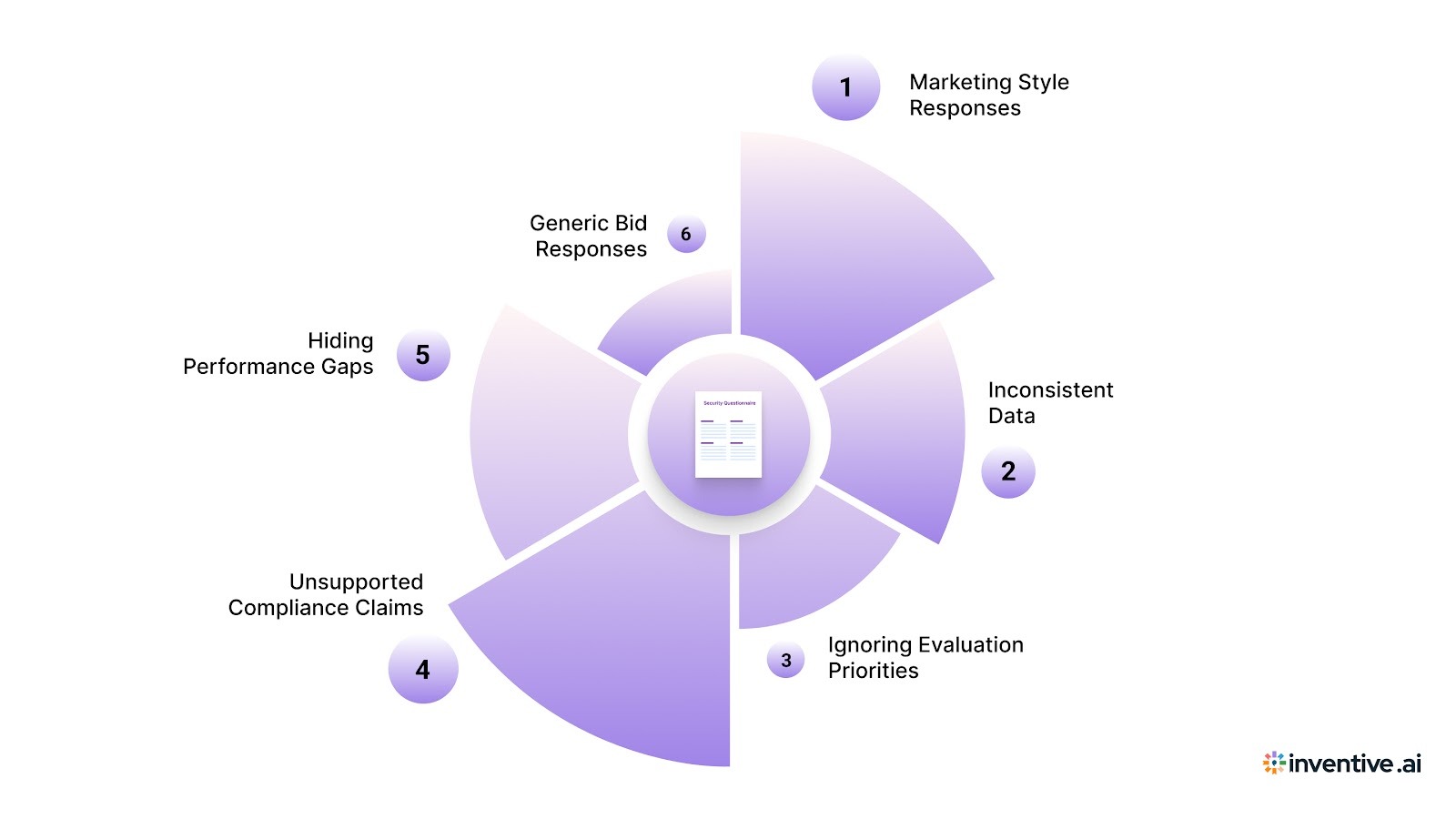
Here are the most common mistakes vendors make and how you can avoid them:
1. Treating the Bid List Like a Marketing Document
Overly promotional language and generic capability statements make it difficult for buyers to score your submission. Bid lists are designed for evaluation, not persuasion.
How to avoid it: Align every response to measurable criteria, contractual requirements, and documented outcomes.
2. Providing Incomplete or Inconsistent Data
Missing metrics or conflicting numbers across pricing, delivery, and compliance sections reduce credibility. Buyers often cross-verify data during evaluations.
How to avoid it: Validate all figures against a single internal source before submission and ensure consistency across sections.
3. Ignoring Weighting and Evaluation Priorities
Vendors sometimes spend equal effort on low-weight criteria while under-addressing high-impact areas like price, compliance, or delivery capacity.
How to avoid it: Focus depth and evidence on the highest-weighted criteria in the bid list.
4. Claiming Compliance Without Proof
Stating compliance without attaching certifications, audit reports, or policy references weakens trust and can disqualify submissions.
How to avoid it: Attach evidence and clearly reference it in the relevant section.
5. Avoiding Performance Gaps
Trying to present a perfect picture often backfires. Buyers expect some gaps and value transparency.
How to avoid it: Acknowledge issues and present clear corrective actions with timelines.
6. Submitting Generic Responses Across Bids
Reusing the same responses across different bid lists signals low engagement and poor alignment with buyer requirements.
How to avoid it: Customize responses to each bid list, evaluation framework, and sourcing objective.
Avoiding common mistakes is essential, but maintaining accuracy and consistency across bid list responses at scale often depends on having the right support, such as Inventive AI.
Streamline Bid List Responses in a Structured Way with Inventive AI
Even with structured templates, maintaining accuracy across multiple bid lists is challenging. Inventive AI simplifies the process by centralizing content, detecting conflicts, and aligning submissions with evaluation criteria, enabling faster, more accurate, and professional responses.
Key Capabilities of Inventive AI includes:
Context-Aware Response Generation
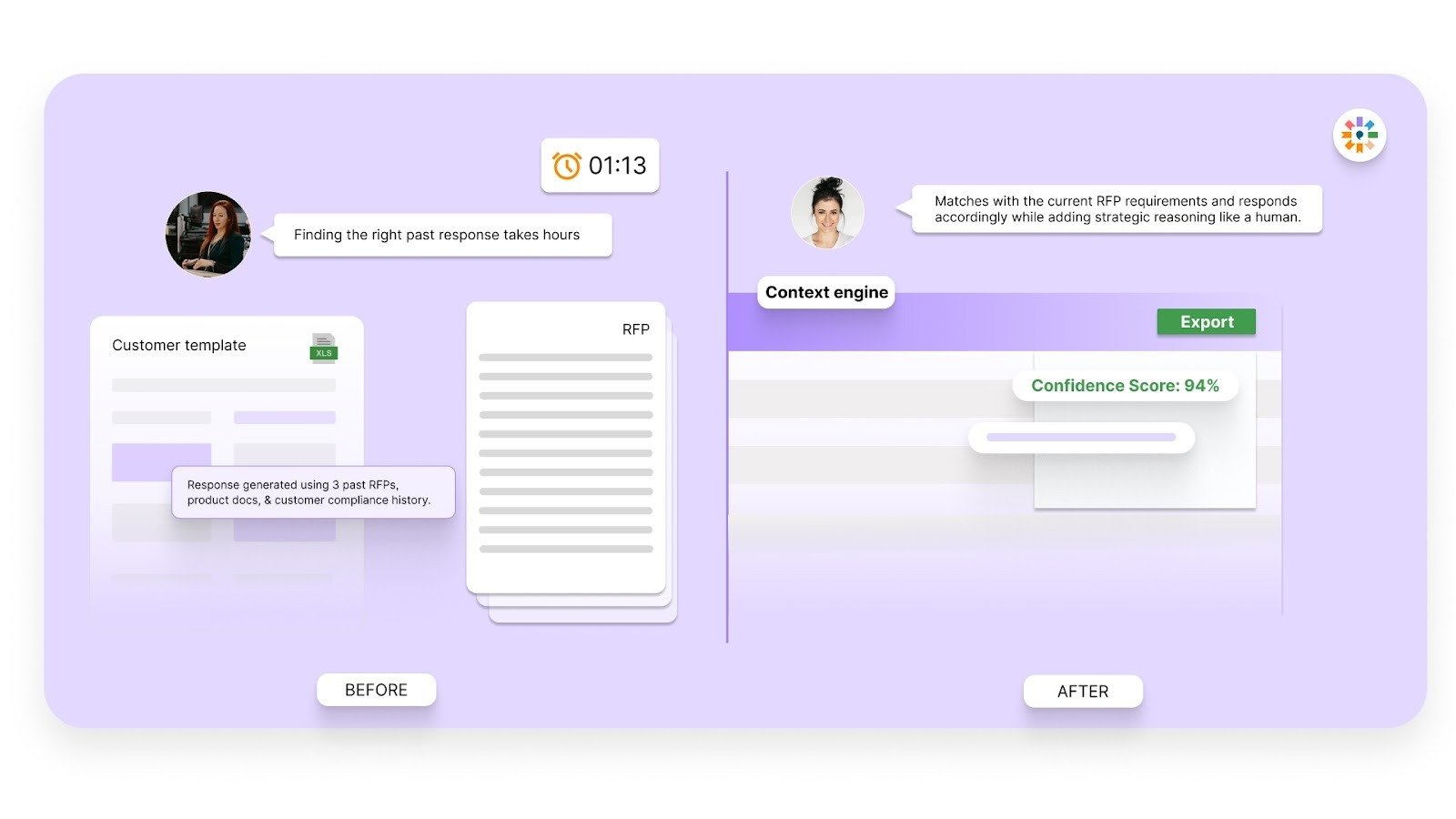
Inventive AI evaluates the entire RFP, including scope, compliance requirements, and evaluation criteria. Responses align with project-specific requirements rather than relying on static boilerplate, helping vendors achieve up to 50% higher win rates.
Conflict Detection
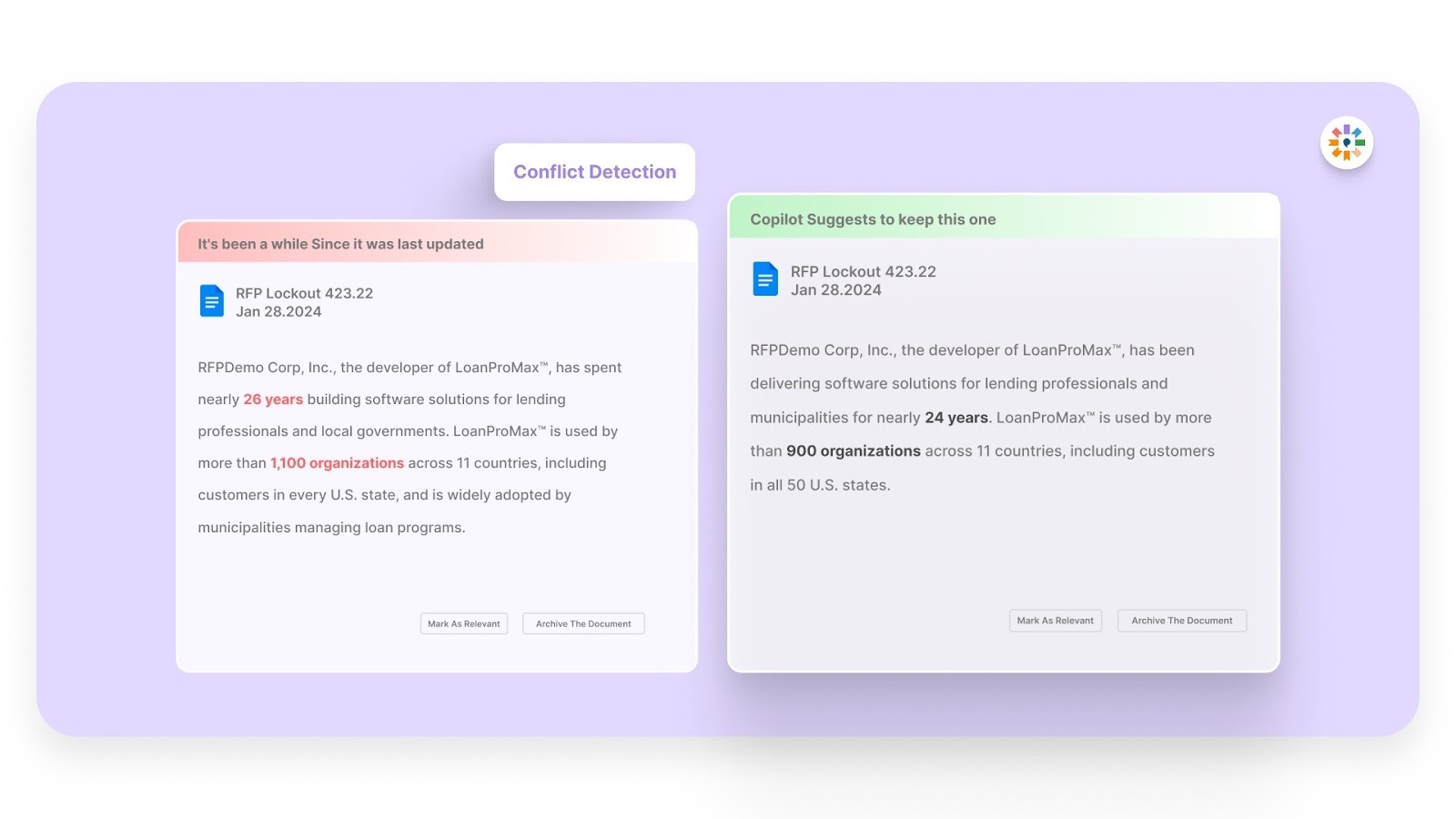
The system automatically identifies contradictions across technical plans, pricing sections, and compliance disclosures, thereby reducing submission risk.
Outdated Content Detection
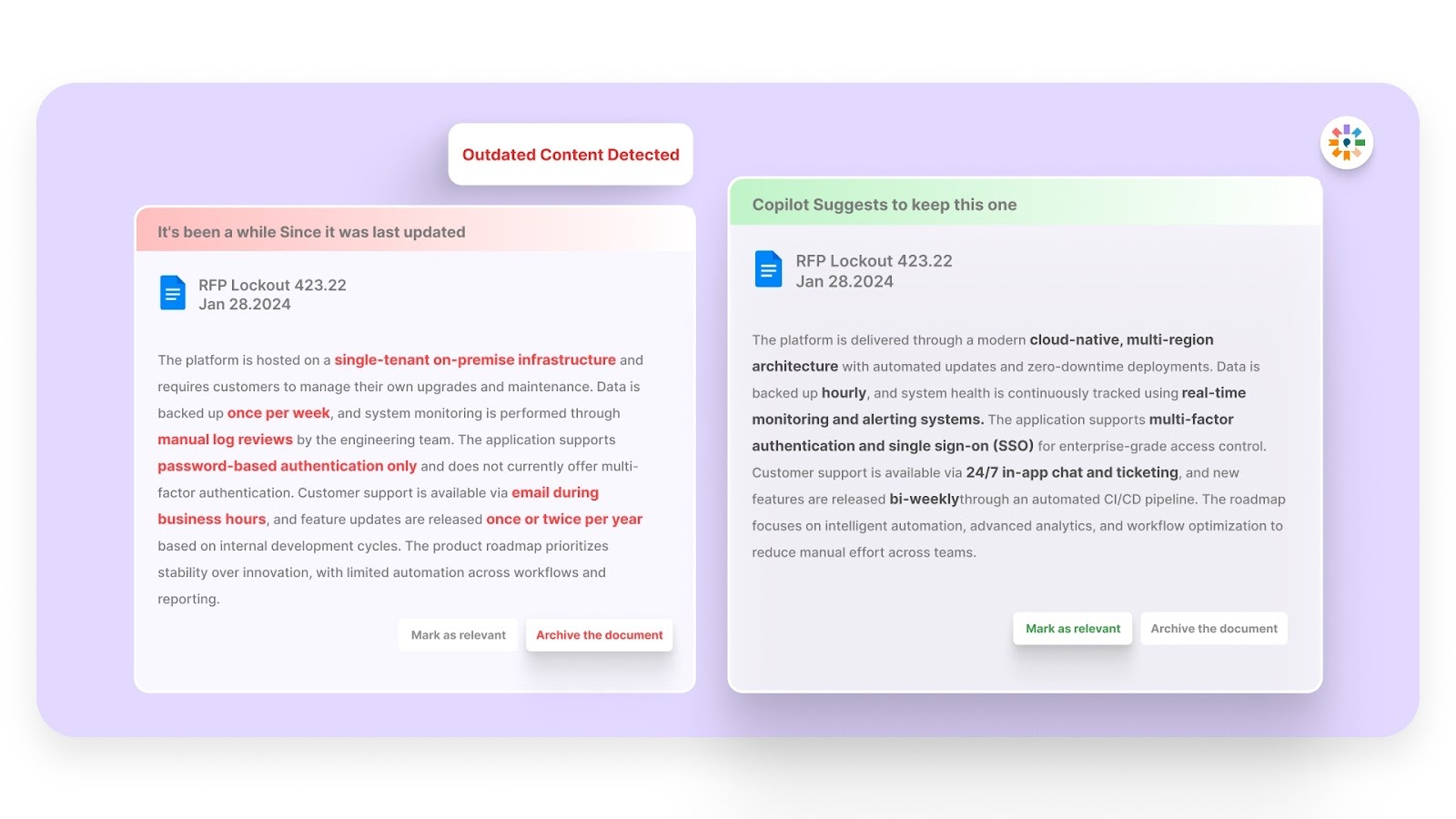
Inventive AI flags expired licenses, superseded safety language, or stale project references before they are reused in new bids.
2x Response Quality
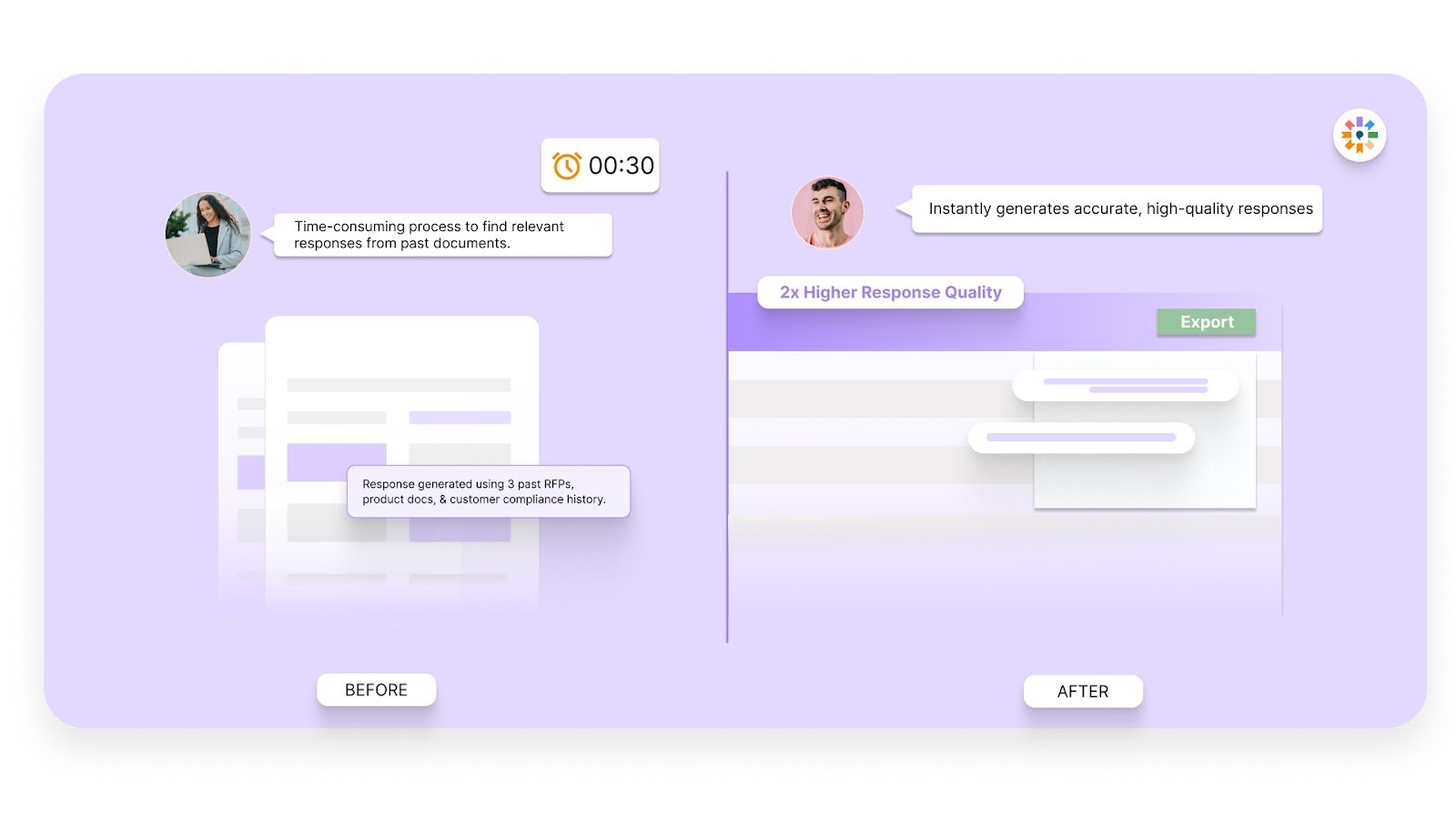
Multi-agent AI generates structured, complete responses that typically require minimal revision, improving submission consistency.
Simple, High-Adoption Interface
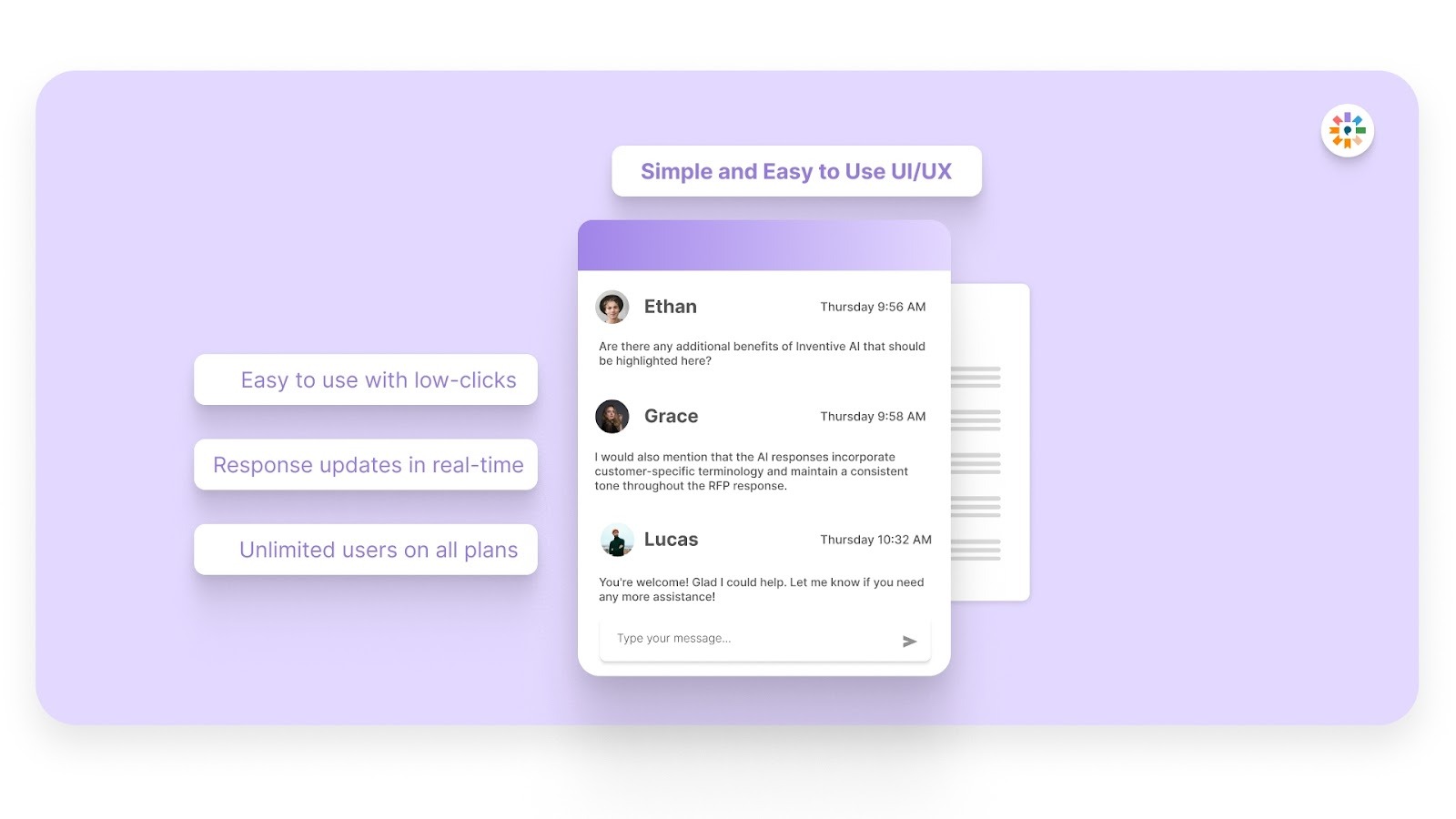
The platform supports fast onboarding and practical daily use across sales, preconstruction, and proposal teams.
Narrative Proposal Generation
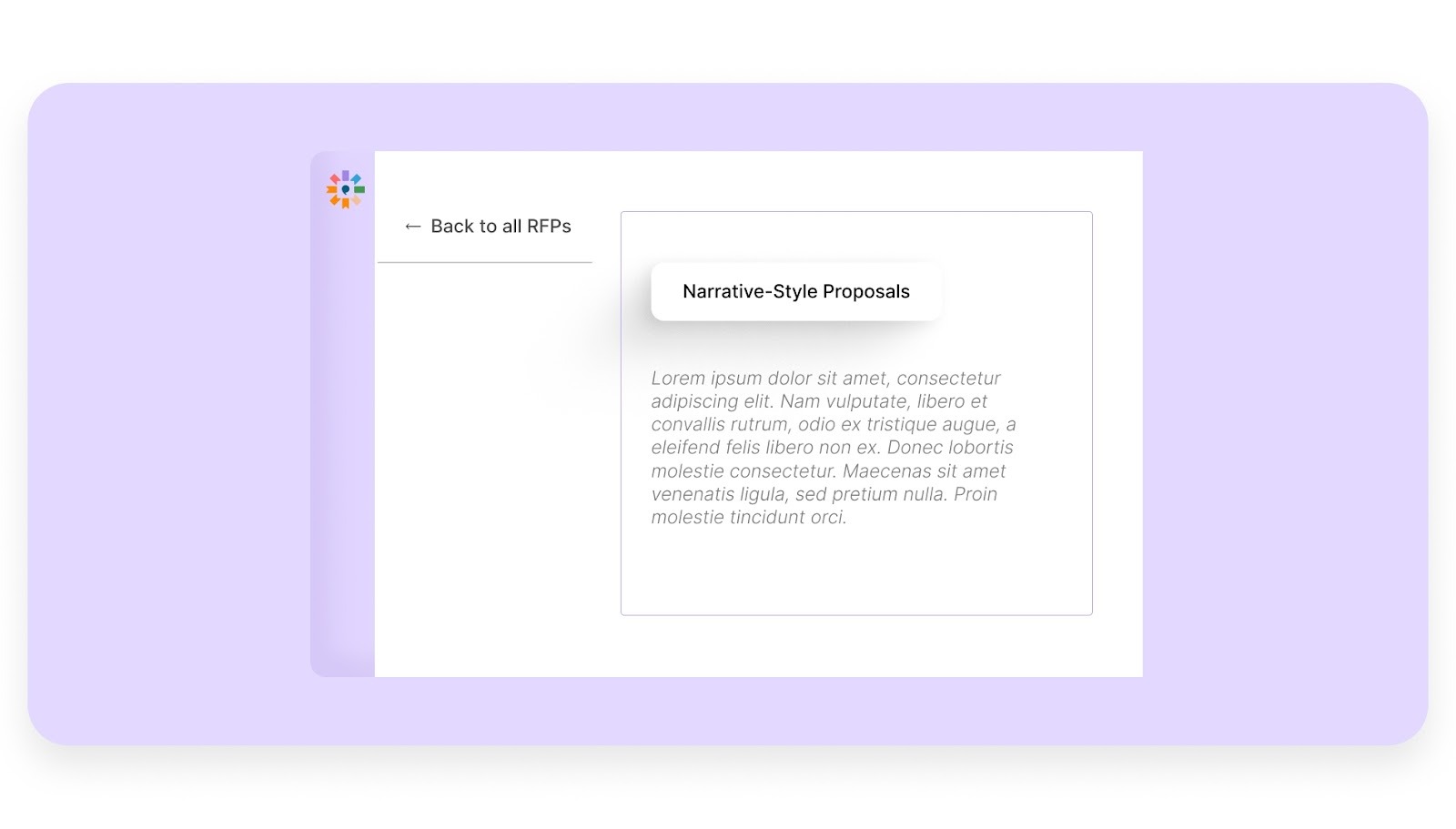
Beyond Q&A responses, Inventive AI generates executive summaries, methodology narratives, safety statements, and value-engineering explanations for full construction proposal documents.
FAQs
1. How do buyers use bid lists during internal approval cycles?
Buyers often use bid lists to justify decisions to finance, legal, and executive stakeholders. Clear documentation, scoring rationale, and risk notes help approvals move faster and reduce follow-up questions about vendor selection.
2. Do bid list submissions influence negotiation leverage?
Yes. Strong bid list responses with clear pricing logic, delivery confidence, and evidence of compliance can strengthen a vendor’s position in commercial negotiations by reducing perceived execution and risk concerns.
3. How important is internal consistency compared to competitive differentiation?
Internal consistency is foundational. Buyers typically penalize inconsistencies more heavily than weak differentiation because mismatched data raises execution risk, even when a vendor’s solution appears technically strong.
4. Can bid list responses affect incumbent vendor renewals?
Absolutely. Buyers frequently reuse bid list frameworks during renewals to reassess incumbent performance against current market options, making accurate and up-to-date responses critical even for existing suppliers.
5. What role does governance maturity play in bid list evaluations?
Governance maturity influences buyer confidence in long-term delivery. Vendors that document escalation paths, review cadence, and accountability structures often score higher in risk and relationship-related criteria.