Avnio Alternatives and Competitors in 2026

RFP responses are a critical part of the sales process, but the tools many vendors use to manage them often create more headaches than solutions. Avnio, a popular player in the RFP automation space, has its own share of strengths. However, as many users have discovered, it comes with limitations that can hinder efficiency and quality, especially when it comes to speed, content management, and customization.
For many organizations, relying on Avnio or any tool that doesn’t address the full spectrum of RFP pain points can cost you valuable time and revenue.
If your team needs a better way to handle RFPs, you should look at stronger alternatives that address real response challenges. In this blog, we’ll cover those options, compare their strengths and limitations, and show you where Inventive AI stands out.
Key Takeaways
- Avnio has limitations in speed, content management, and customization for complex RFPs, making it less efficient for vendors.
- The top 10 alternatives to Avnio are evaluated for their features, pricing, and capabilities to help improve RFP response processes.
- Inventive AI stands out with 90% faster responses, 95% accuracy, and 50% higher win rates, offering advanced AI-powered automation.
- Key features to look for in an Avnio alternative include faster draft creation, real-time insights, and advanced content management.
Top 10 Avnio Alternatives Every Vendor Should Consider in 2026
It’s important to explore tools that offer enhanced automation, better customization, and superior collaboration features. Here are the top 10 alternatives to Avnio that help improve your RFP response process.
| Tool | Features and Capabilities | Pricing | Gartner Rating |
|---|---|---|---|
| Inventive AI | Inventive AI offers AI‑Powered RFP Automation Software with 90% faster draft generation, 95%+ accuracy, a centralized knowledge hub, AI content manager that flags outdated content, and Win Themes for competitive advantage. | Usage-based | 5/5 |
| Loopio | It provides a centralized content library, AI‑assisted response suggestions, and team collaboration for managing RFP responses. But it relies on static libraries and does not offer real‑time AI content updates from multiple live sources. | Starts at $20,000/year | 4.4/5 |
| Responsive | It offers tools to manage RFPs, security questionnaires, and DDQs with automated drafts and collaboration features. But it has basic automation compared to modern AI native systems and heavier implementation complexity. | Subscription-based pricing | 4.3/5 |
| Arphie | It provides AI agents that generate first‑draft answers from connected knowledge sources, proactive content merge suggestions, and integrations with cloud storage. But it still lacks deeper contextual automation and advanced strategic AI found in Inventive AI. | Subscription-based pricing | 5/5 |
| Autorfp AI | It delivers AI‑powered draft responses, unlimited collaboration, and real‑time progress tracking. But it doesn’t offer advanced content conflict detection and deep contextual agent insights. | Starts at $899/month | 4.9/5 |
| Sifthub | It offers AI content generation and knowledge centralization to accelerate sales tasks and RFP responses. But it has limited support for multi‑department proposal workflows and depth of integrations. | Contact for pricing | 4.6/5 |
| Autogen | It provides generative content and proposal lifecycle features with automation. But it often requires manual review and editing for complex RFPs and lacks deeper AI‑driven analytics. | Subscription-based pricing | 4.4/5 |
| Qvidian | It offers enterprise‑grade content libraries, autofill, collaboration, and version control. But it depends on heavy manual library maintenance and slower response quality without live contextual AI. | Subscription-based pricing | 4.7/5 |
| 1Up | It generates AI-assisted draft responses quickly with minimal setup but lacks advanced collaboration features and content control for complex RFPs. | Starts at $300/month | 4.9/5 |
| Tribble | It automates repetitive tasks like content generation and document organization, but lacks advanced features and sometimes generates inaccurate responses. | Contact for pricing | 4.9/5 |
Now, let’s understand these tools in detail and explore their features, strengths, and limitations.
Inventive AI
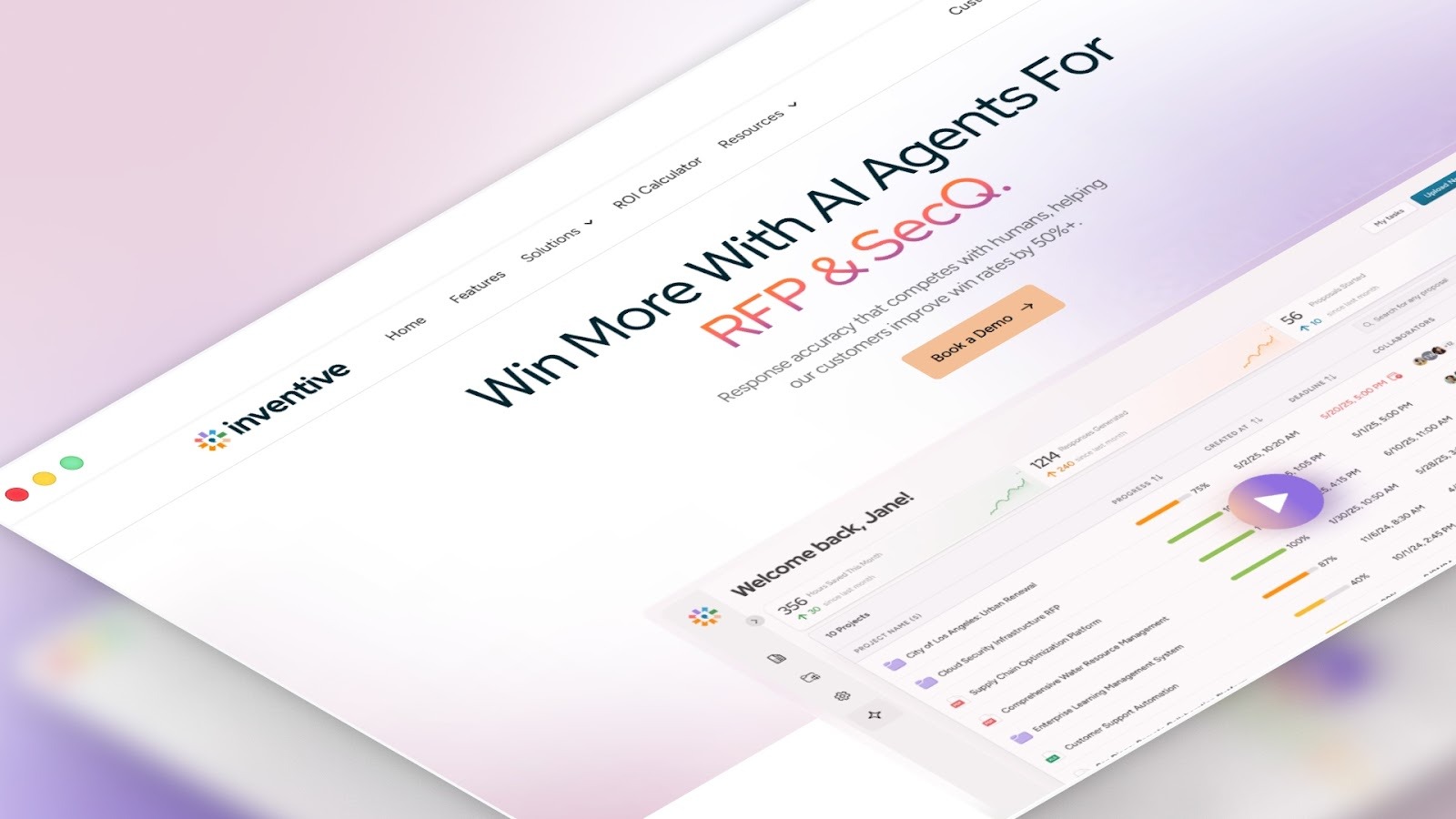
Built with AI at its core, Inventive AI delivers unmatched efficiency in responding to complex RFPs and security questionnaires, empowering teams to win more deals with faster, higher-quality submissions. Unlike traditional tools, which still rely on manual processes, Inventive AI uses AI-powered automation. It reduces time spent on drafting responses while ensuring the highest standards of proposal quality.
Key Features
1. 2x Better Response Quality

Inventive AI enables teams to produce proposals that are not only faster but also of higher quality. This ensures that each response is personalized and precise, doubling the effectiveness compared to other tools. In fact, nearly 66% of the responses generated require no editing, making the process even more efficient.
2. Context Engine for Accurate, Tailored Responses for up to 50% Higher Win Rates
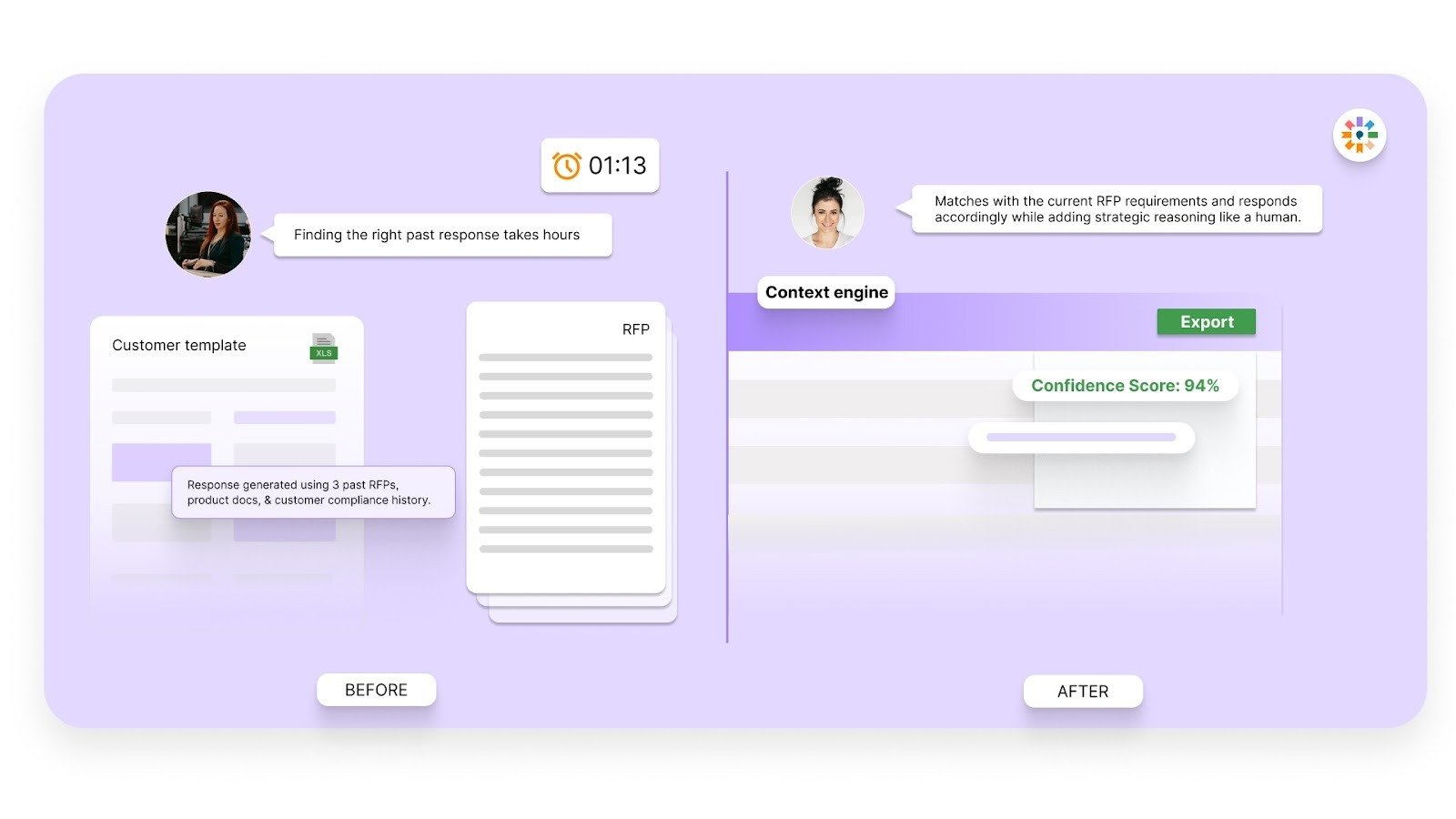
The platform’s powerful Context Engine ensures that each proposal is customized to meet the exact needs of the client, delivering responses that align perfectly with the buyer’s requirements.
3. Instant Conflict Detection
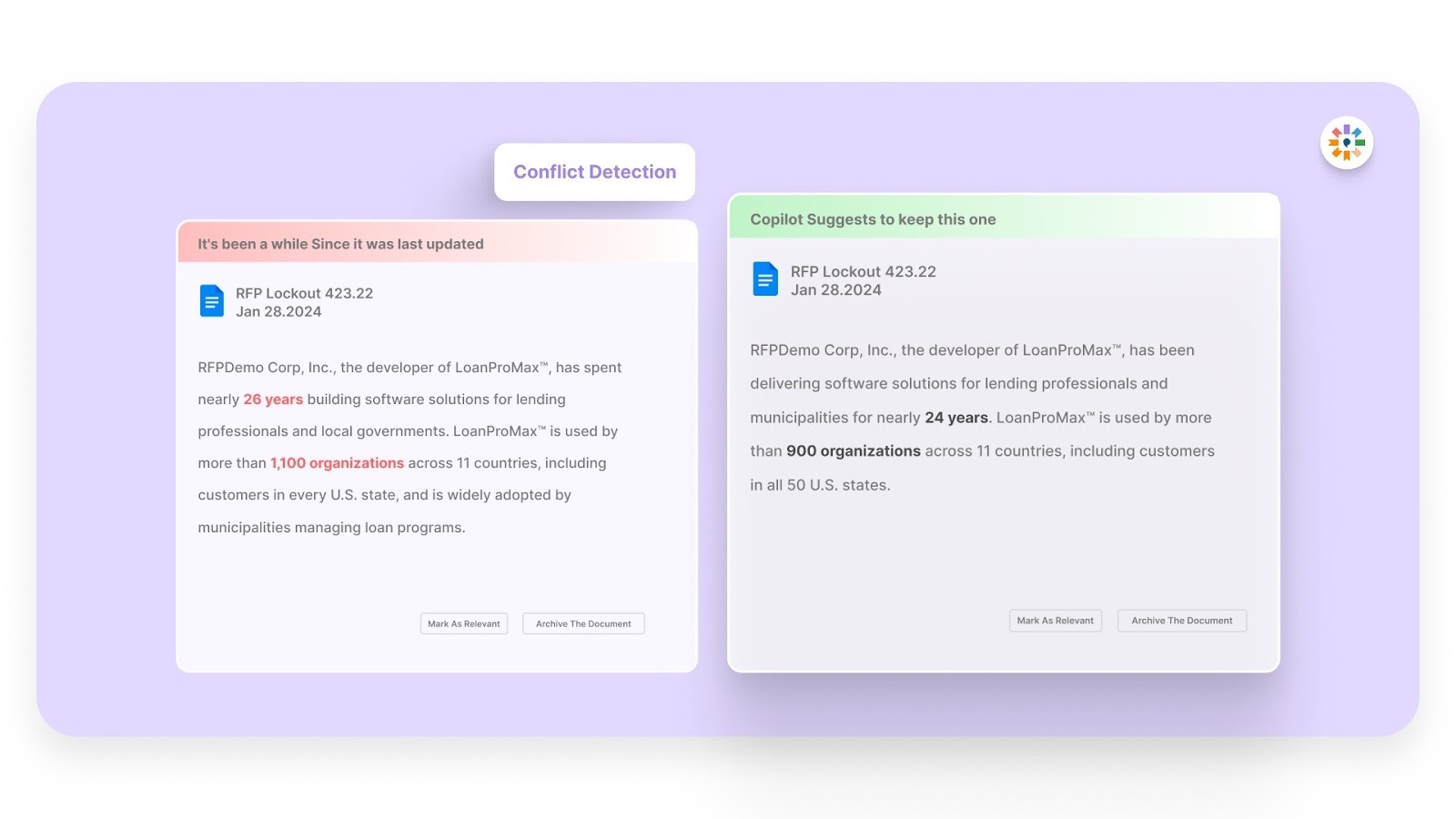
Inventive AI includes real-time conflict detection, which automatically identifies inconsistencies or discrepancies in the proposal, allowing teams to address issues before submitting the final version. This will help in boosting 50% higher win rates.
4. Real-Time Outdated Content Detection
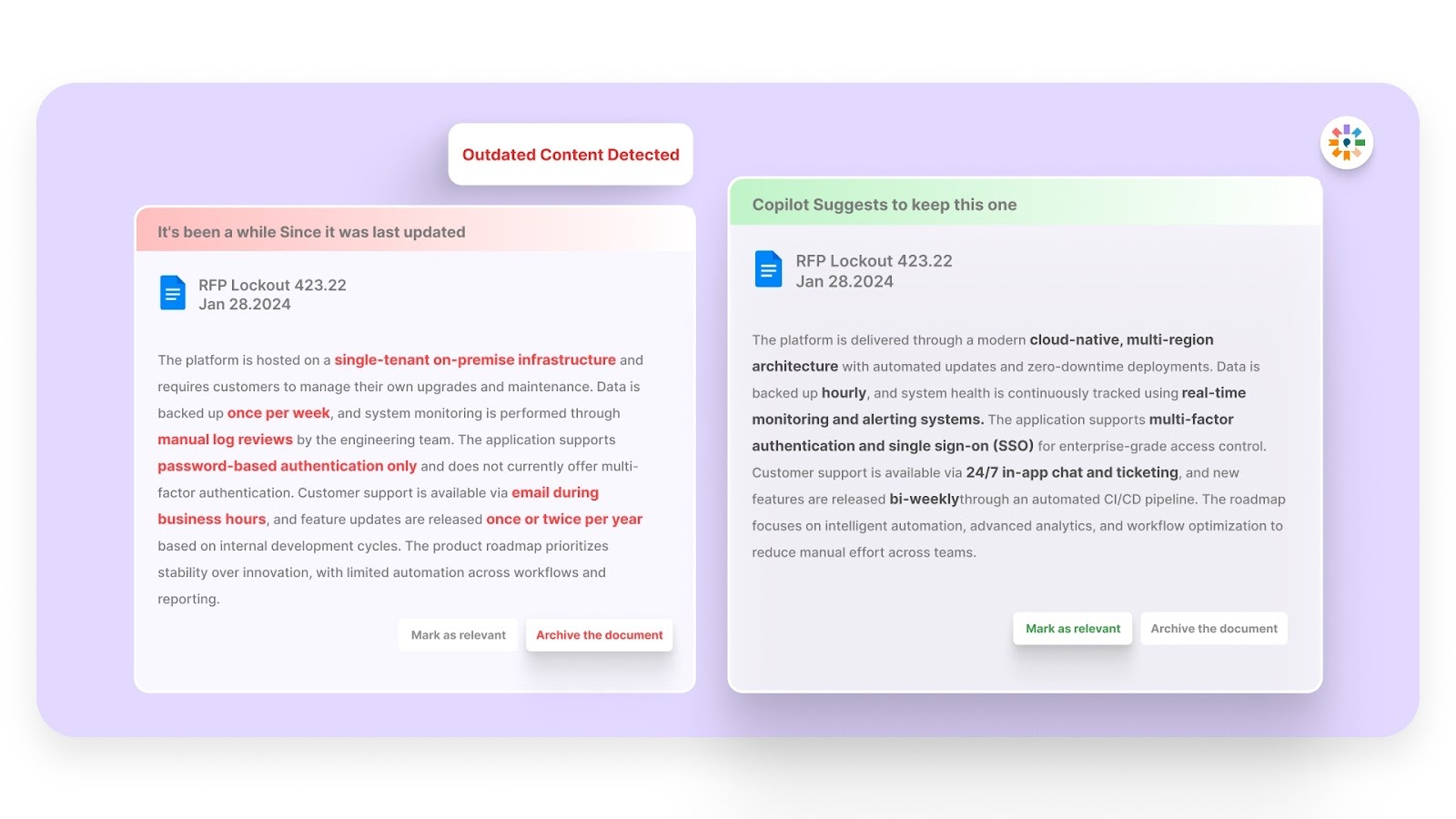
This feature automatically scans for outdated or irrelevant content, ensuring that only the most current and accurate information is used, preventing errors from slipping through.
5. Narrative Style Proposals
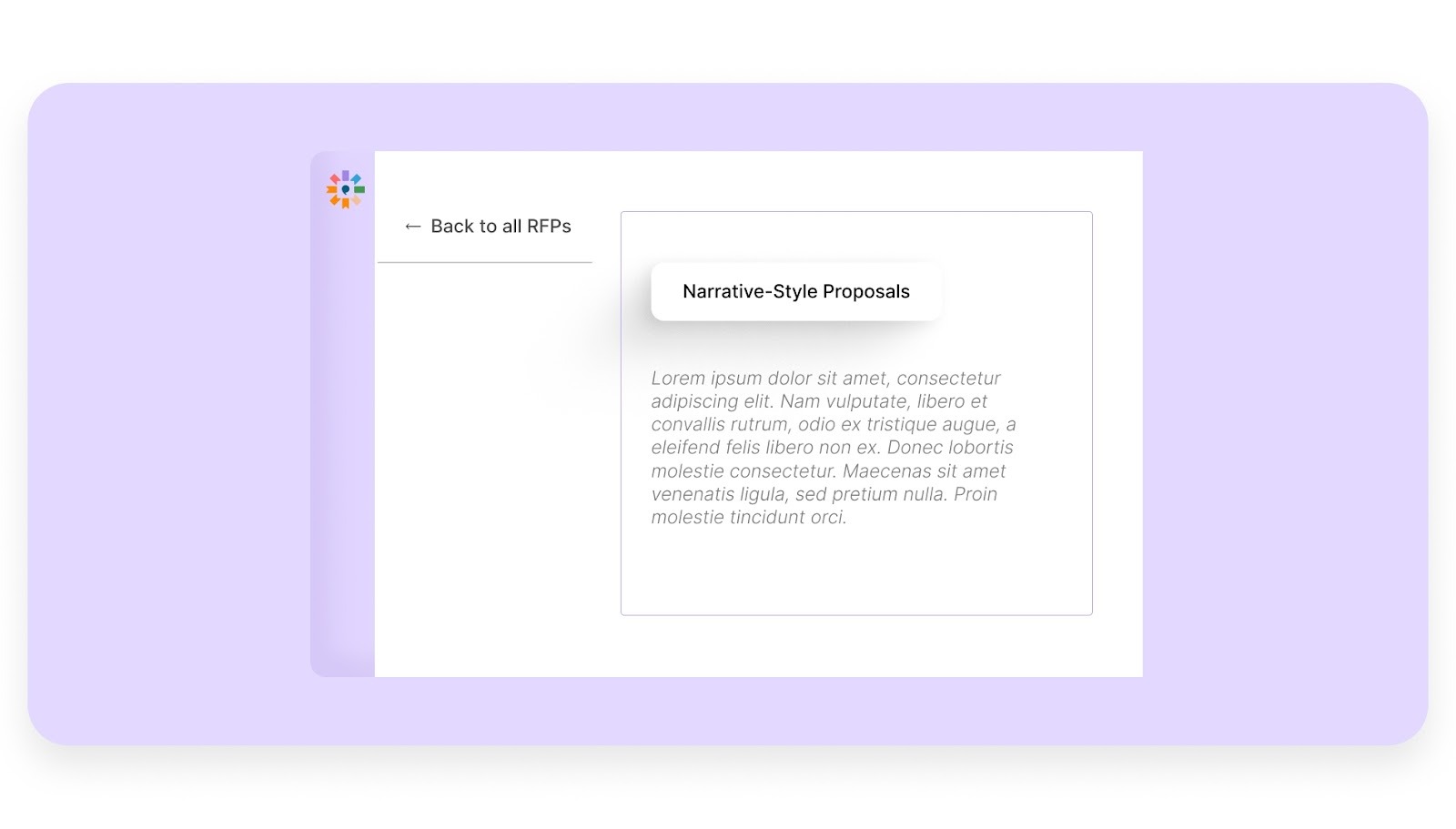
Transforms fragmented, question-by-question answers into a cohesive proposal narrative. This makes your submission easier for buyers to review and helps you present a more complete, polished story.
6. Simple, Easy-to-Use Interface
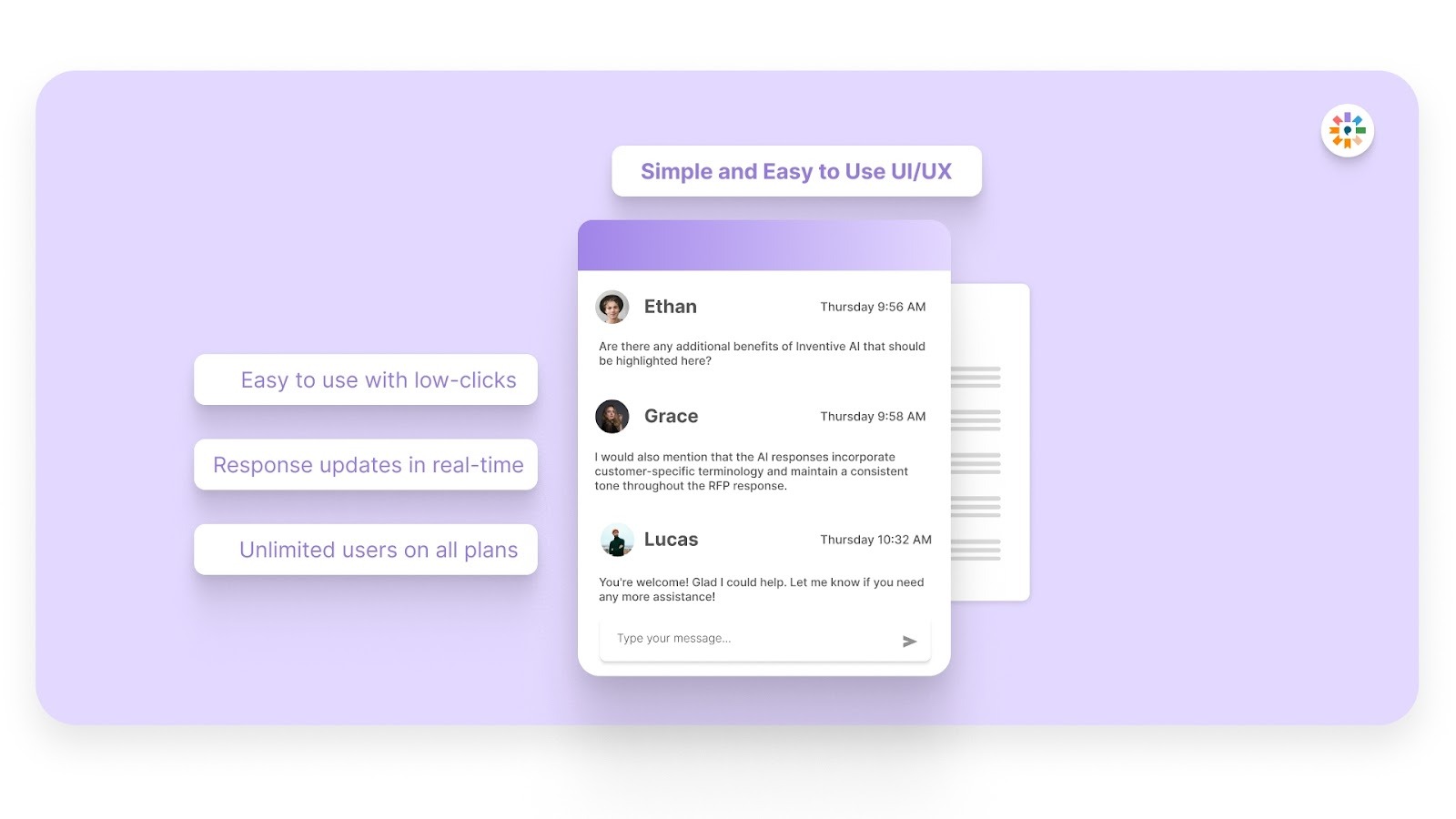
Designed for quick onboarding and everyday usability. Your team can collaborate, review, and manage responses in one place without relying on multiple tools or complex workflows.
Pros
1. Faster Response Times
With 10x faster drafting capabilities, Inventive AI allows teams to cut down on time spent drafting responses and move quickly through the RFP process.
2. AI-Driven Accuracy
The AI ensures that responses are accurate and aligned with the client’s needs, improving the chances of winning the bid.
3. Real-Time Updates
Integration with collaboration tools like Slack and Microsoft Teams enables real-time updates and ensures all team members stay aligned throughout the RFP process.
4. Easy to Use
The platform’s intuitive interface allows teams to quickly adopt it without requiring significant training, making it easy to get started right away.
5. Centralized Knowledge Hub
Inventive AI’s knowledge hub centralizes all RFP content, making it easy to access, manage, and reuse relevant information across proposals, saving time and improving response consistency.
6. Upto 50% Higher Win Rates
Teams using Inventive AI have seen a 50% higher win rate, thanks to more accurate, faster, and more consistent responses.
Cons
- Limited analytics capabilities.
| Plan Type | Pricing |
|---|---|
| Usage-based pricing | Varies by usage and team size |
Best For
- Startups: Companies looking to streamline their RFP response process with minimal manual effort while maintaining quality.
- Enterprise Solutions: Large organizations needing fast, accurate responses to high volumes of RFPs across different departments.
- Sales Teams: Teams looking to improve win rates by automating RFP responses and ensuring the highest proposal quality.
- Proposal Managers: Professionals who need to organize and manage RFP content efficiently while reducing the time spent on manual work.
- Revenue Teams: Teams focused on closing deals faster with smarter, AI-driven insights to respond to RFPs in record time.
Rating and Reviews
Rating: 5/5
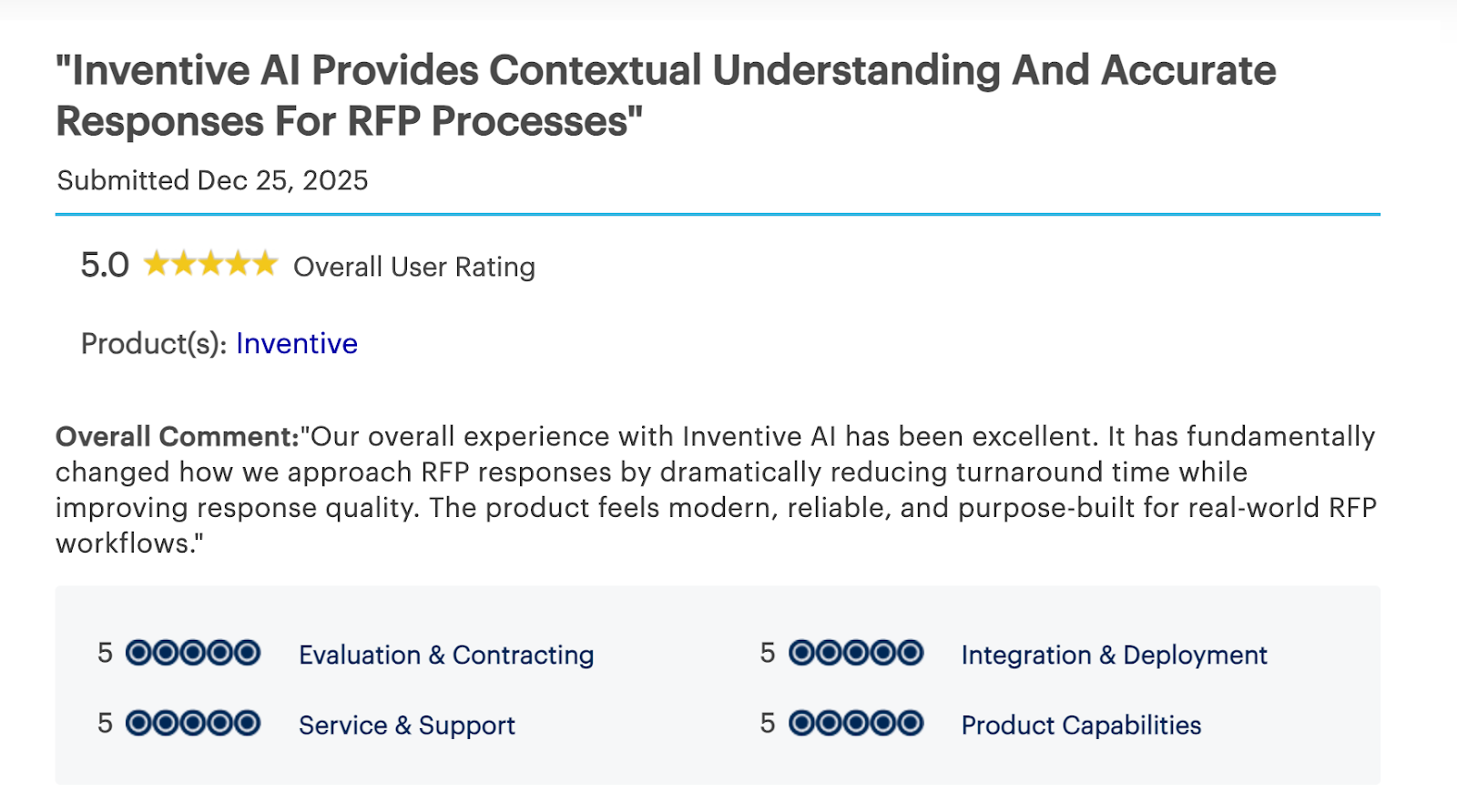
Inventive AI is the industry leader in RFP automation. It offers a complete solution for teams looking to speed up their response process, improve accuracy, and collaborate more effectively.
Loopio
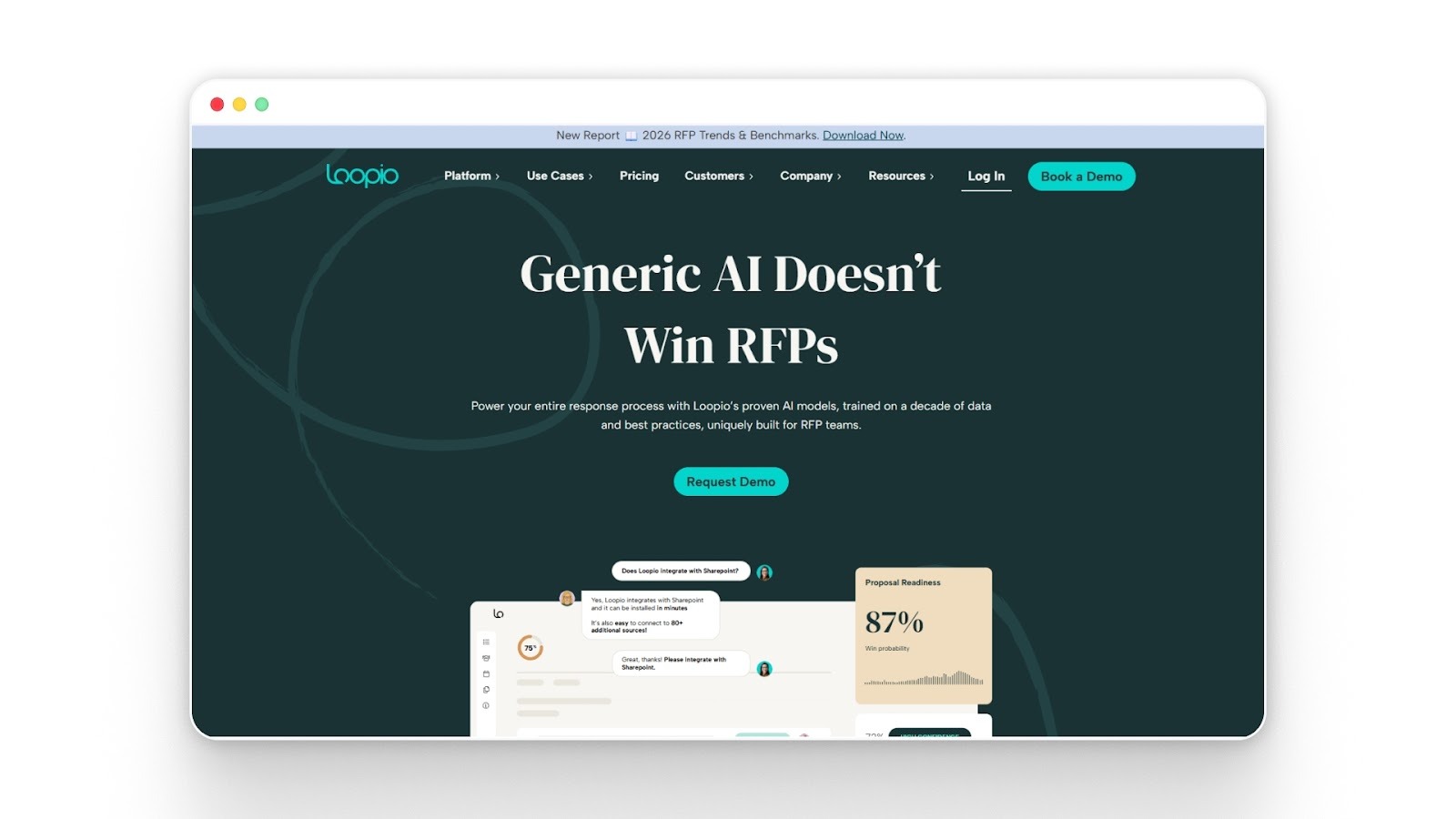
Loopio provides a centralized content library, AI-assisted response suggestions, and team collaboration for managing RFP responses. But it relies on static libraries and does not offer real-time AI content updates from multiple live sources.
Key Features
- Centralized Content Library: Loopio’s platform offers a centralized library to store all previous RFP responses, standard content, and proposal templates. This helps teams easily access and reuse approved content across multiple proposals, saving time and ensuring consistency.
- Automated Response Generation: The tool uses AI-assisted content suggestions to generate responses based on past proposals. While this can save time, it lacks the advanced AI that updates content dynamically, which can lead to outdated or generic responses.
- Collaboration Tools: Loopio facilitates real-time collaboration by allowing team members to edit, comment, and track tasks simultaneously. This feature supports team coordination and ensures all involved members stay aligned on deadlines and updates.
Pros
- Affordable and Easy to Set Up: The platform is user-friendly and simple to implement, making it an affordable option for teams that need to get started quickly.
- Efficient Content Management: The centralized content library helps teams organize and manage their RFP content, making it easier to find and reuse information.
Cons
- Lacks Real-Time AI Content Updates: While Loopio can generate responses based on past proposals, it does not offer real-time AI-driven content updates. This means that responses can become outdated or less tailored to specific client needs, especially when information changes rapidly.
- Limited Customization: The platform's ability to customize responses for complex RFPs is somewhat limited. For teams dealing with highly detailed or specialized proposals, Loopio’s fixed templates and response generation tools may not provide the flexibility needed for personalized responses.
- Search Function Limitations: The search functionality in Loopio can be inaccurate, requiring additional manual effort to find the most relevant content. As a result, teams may spend more time searching for information rather than focusing on drafting high-quality proposals.
Pricing
| Plan Type | Pricing |
|---|---|
| Subscription | Starts at $20,000/year |
Best For
- Teams need a centralized content management system.
- Mid-sized companies with less complex RFP needs.
- Businesses seeking an easy-to-use tool without needing deep customization.
Rating and Reviews
Rating: 4.4/5
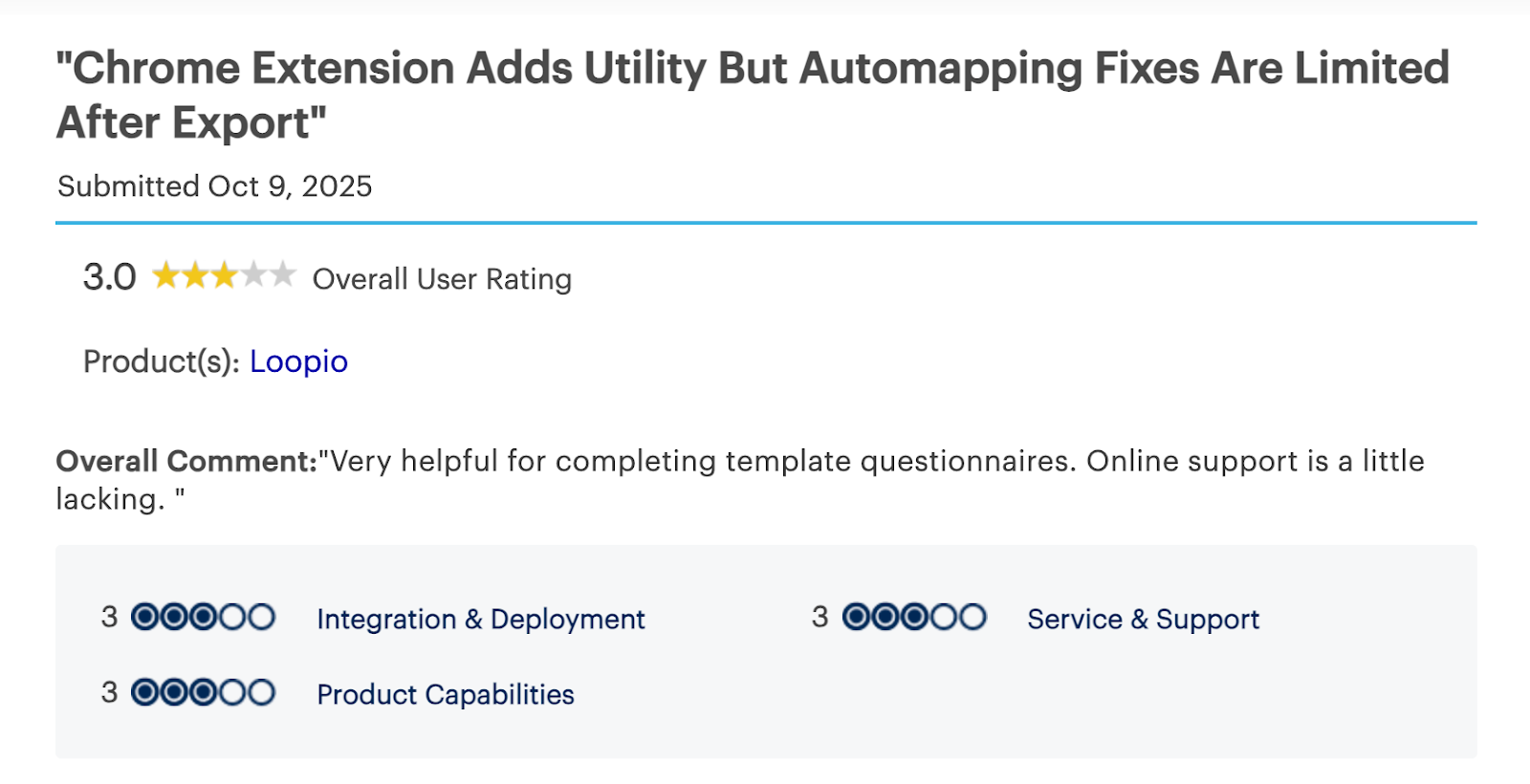
Loopio is a good choice for teams looking for content management and collaboration tools, but its limited customization and response accuracy could be a dealbreaker for teams handling complex, high-stakes proposals.
Suggested Alternative: Inventive AI
For teams wanting advanced automation and AI-driven accuracy in RFP responses, Inventive AI offers a comprehensive solution that improves response quality and speed, providing customized content and real-time insights that Loopio lacks.
Responsive
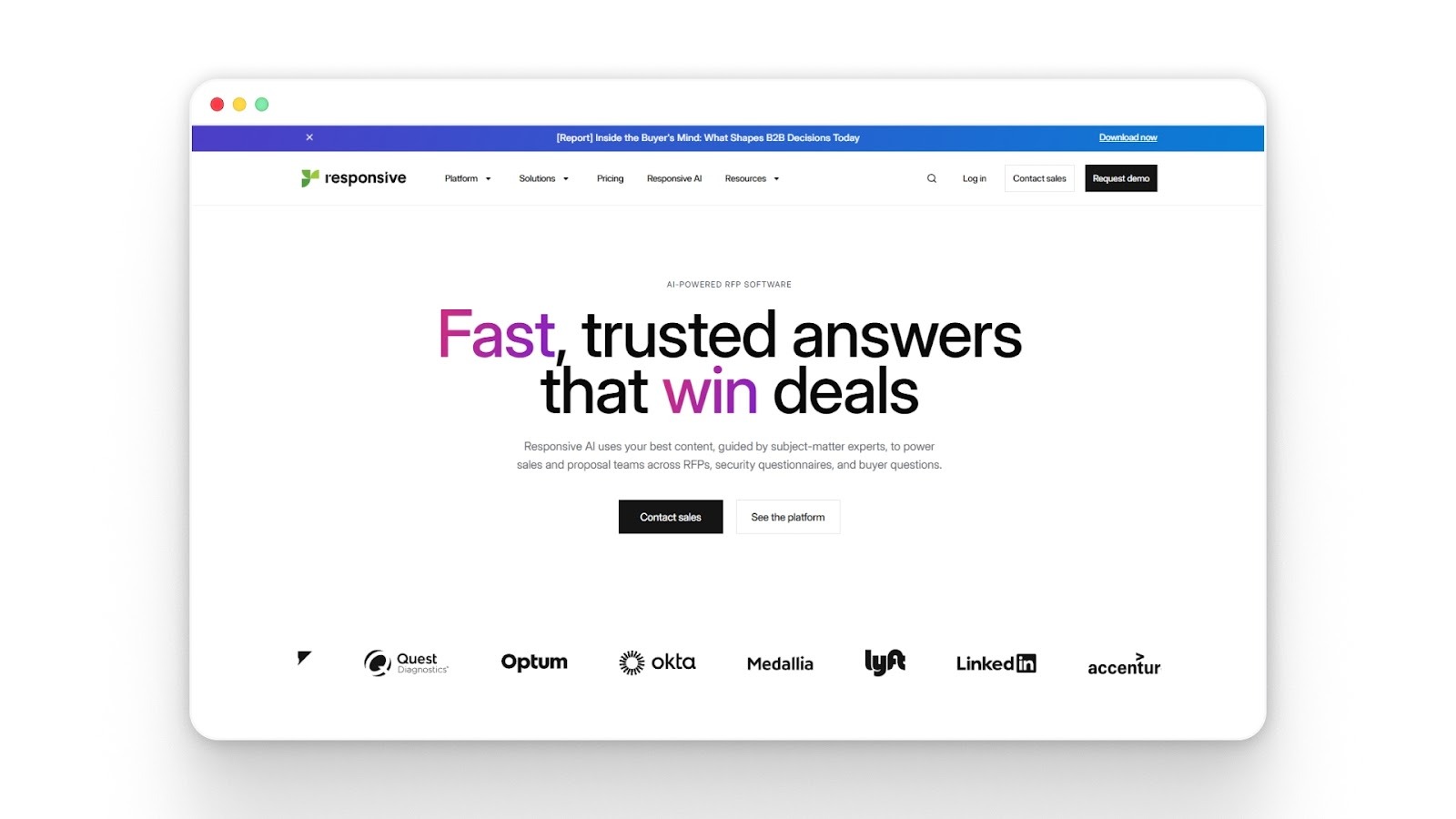
Responsive offers tools to manage RFPs, security questionnaires, and DDQs with automated drafts and collaboration features. But it has basic automation compared to modern AI-native systems and heavier implementation complexity.
Key Features
- RFP Management Tools: Responsive allows teams to manage and track responses for RFPs, security questionnaires, and DDQs. It centralizes all your RFP-related content, providing an organized way to handle multiple proposals and related documents.
- Automated Drafts: The tool helps generate initial draft responses, saving time on repetitive tasks. However, it lacks the sophisticated AI-driven content generation found in more advanced tools.
- Collaboration Features: With real-time collaboration, teams can provide input, make updates, and track progress across multiple departments. This feature improves team efficiency, especially when managing large proposals.
Pros
- Helps Organize with Volumes of Responses: Responsive is good for organizing multiple responses and documents, helping teams stay on top of their RFP pipeline.
- Supports Complex Review and Approval Workflows: Ideal for teams that need to follow strict approval processes, as it allows for complex workflows and version control during proposal review.
Cons:
- Limited AI Automation: While it provides automated draft generation, Responsive lacks real-time AI-driven content updates. This limits the tool's ability to provide tailored, dynamic responses to evolving requirements.
- Slow to Implement: Setting up and integrating Responsive into your existing workflow can be time-consuming, which may cause delays for teams looking for a quicker deployment.
- Lacks Scalability: As teams and project complexity grow, Responsive’s basic automation and workflows may not scale effectively, leading to inefficiencies in larger organizations or more complex RFP processes.
Pricing
| Plan Type | Pricing |
|---|---|
| Subscription | Contact for pricing |
Best For
- Large teams with formal governance needs.
- Vendors handling high volumes of similar questionnaires.
- Compliance-driven industries with strict approval needs.
Rating and Reviews
Rating: 4.3/5
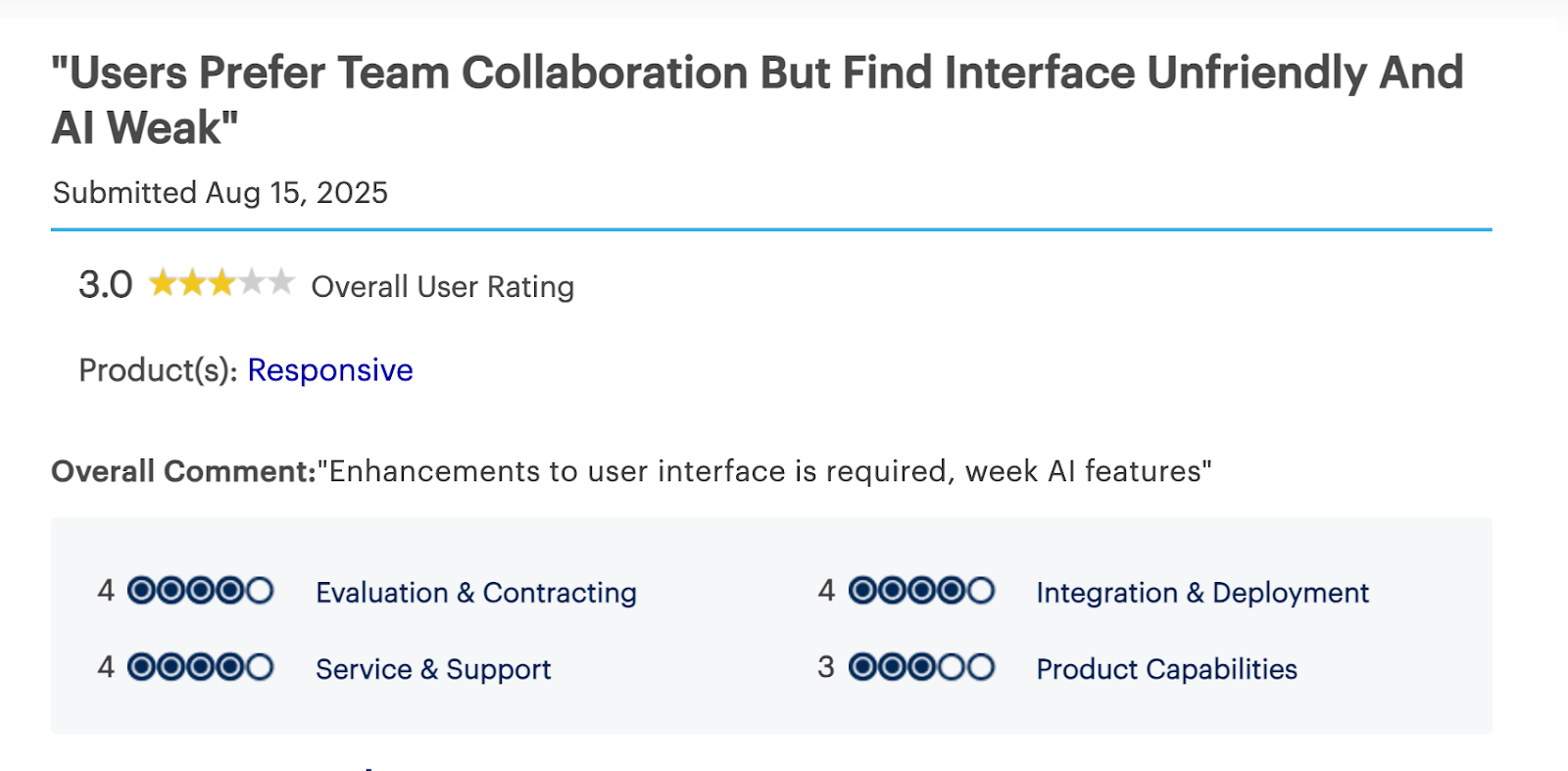
Responsive is best for large teams seeking standardized tender response management at scale. However, its lack of AI-driven customization and slow implementation make it less ideal for teams prioritizing speed and flexibility.
Suggested Alternative: Inventive AI
Inventive AI is built for vendors who need speed without sacrificing response quality, accuracy, or control, even as tender volume and complexity increase.
Arphie
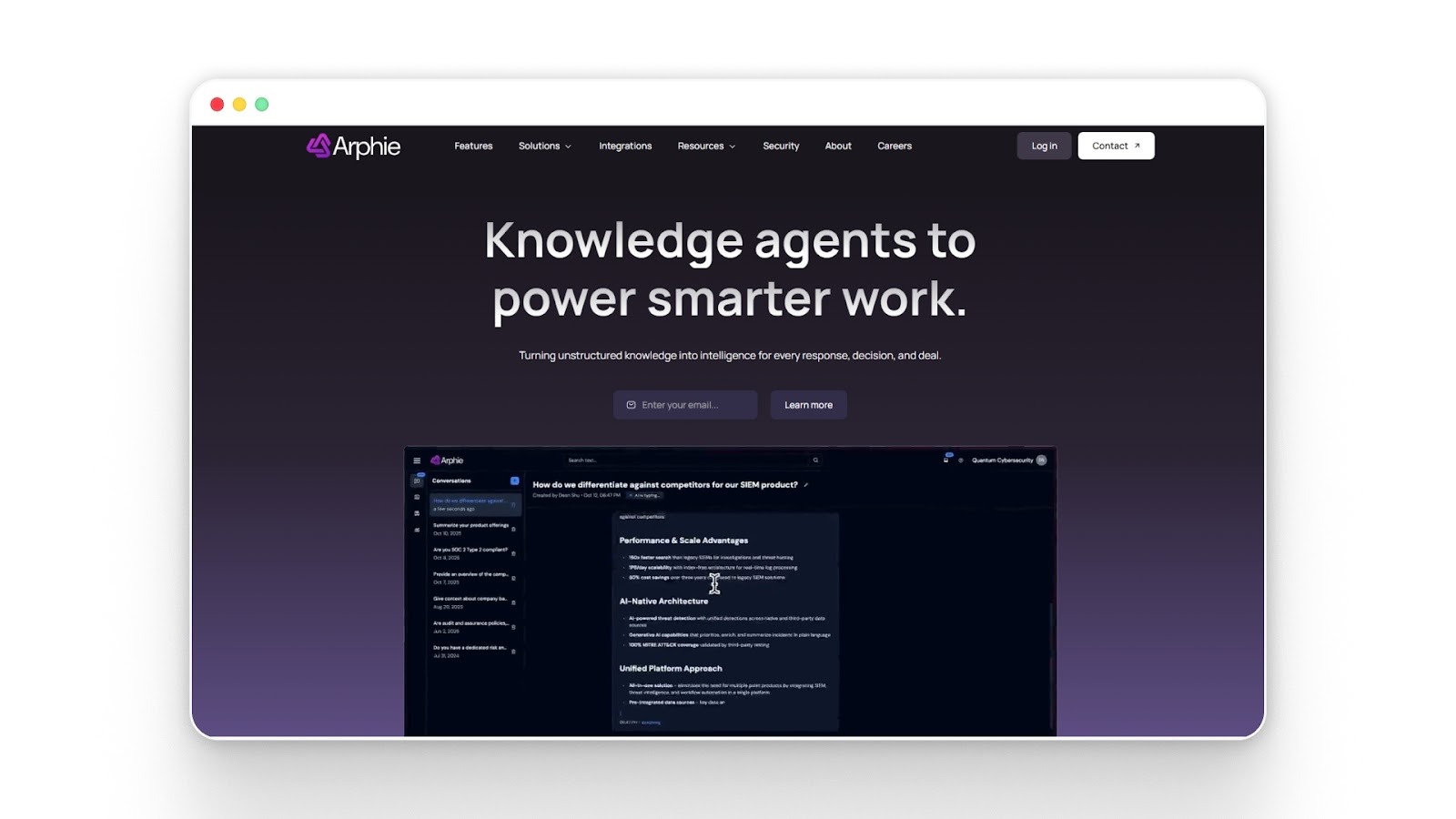
Arphie provides AI agents that generate first-draft answers from connected knowledge sources, proactive content merge suggestions, and integrations with cloud storage. But it still lacks deeper contextual automation and advanced strategic AI found in Inventive AI.
Key Features
- AI-Driven Draft Generation: It helps teams generate first-draft responses quickly by using AI to pull from existing knowledge sources. This saves time during the proposal creation process, but responses may not always be fully customized.
- Proactive Content Merge Suggestions: The platform uses AI to merge existing content in real-time, suggesting improvements and combinations that enhance the overall proposal.
- Cloud Storage Integrations: It integrates seamlessly with cloud storage tools like Google Drive and Dropbox, allowing teams to pull in existing content and documents for proposal drafting.
Pros
- Easy to Integrate with Cloud Tools: Its integration with popular cloud storage solutions helps streamline content access and management, improving workflow efficiency.
- Generates Drafts Quickly: By automating the first draft generation process, Arphie helps teams save significant time during the proposal creation phase.
Cons
- Lacks Deeper Contextual AI: While Arphie generates drafts efficiently, it does not provide contextual AI capable of tailoring responses to specific buyer needs. This can result in proposals that are less precise or relevant.
- Limited Customization: Arphie is not well-suited for handling complex RFPs that require in-depth, personalized responses. It lacks the advanced customization capabilities that more powerful tools offer.
- Basic Integration: Although it integrates with cloud storage tools, Arphie does not support advanced multi-tool integrations, limiting its effectiveness in more complex workflows.
Pricing
| Plan Type | Pricing |
|---|---|
| Subscription | Contact for pricing |
Best For
- Small to mid-sized teams looking for basic AI-assisted automation.
- Companies that need quick draft generation without heavy customization.
- Teams prioritize ease of use and integration with existing systems.
Rating and Reviews
Rating: 5/5
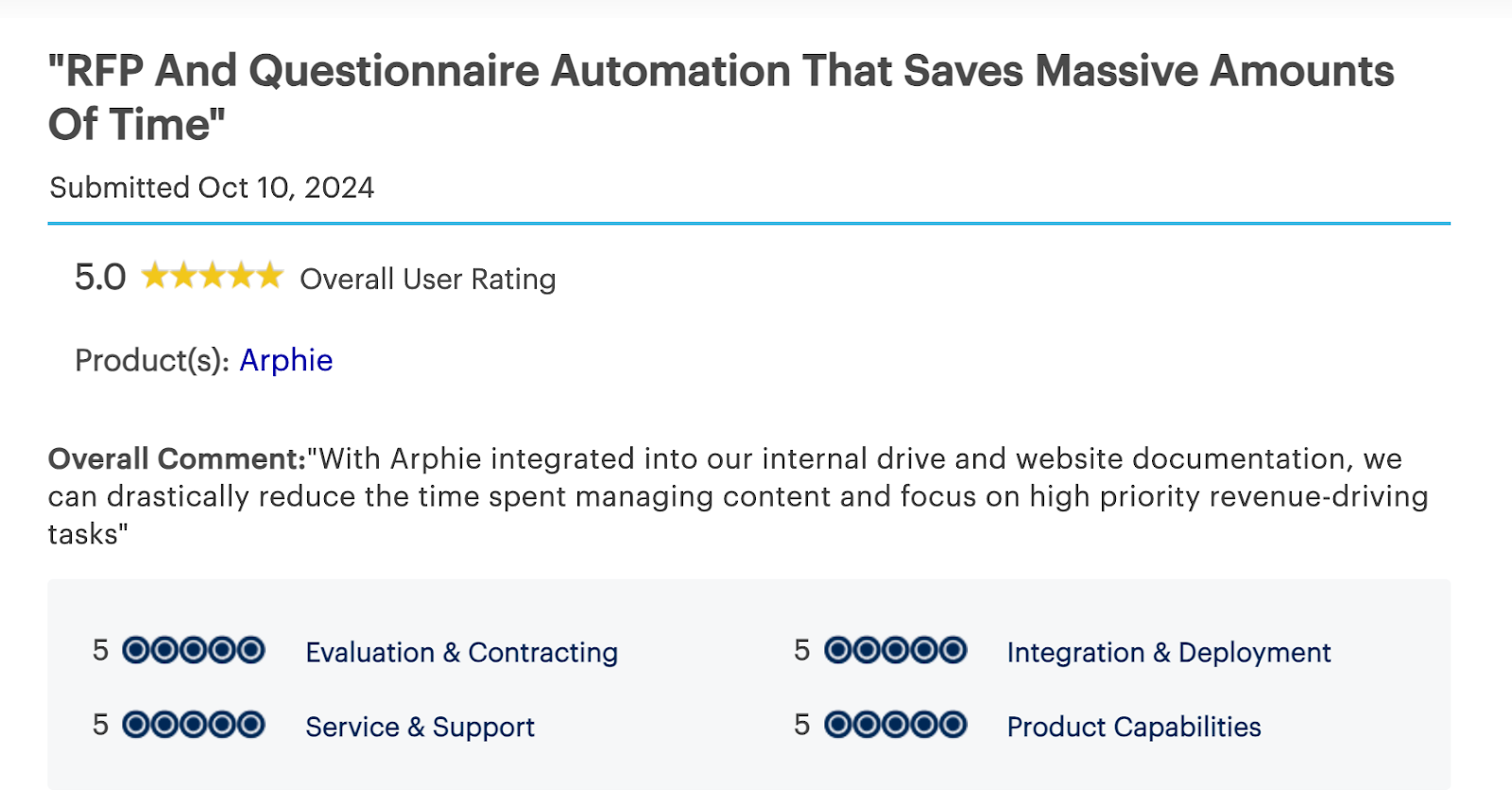
Arphie is ideal for teams seeking basic automation in response drafting. However, it lacks the depth of contextual and strategic AI required for more complex proposals.
Autorfp AI
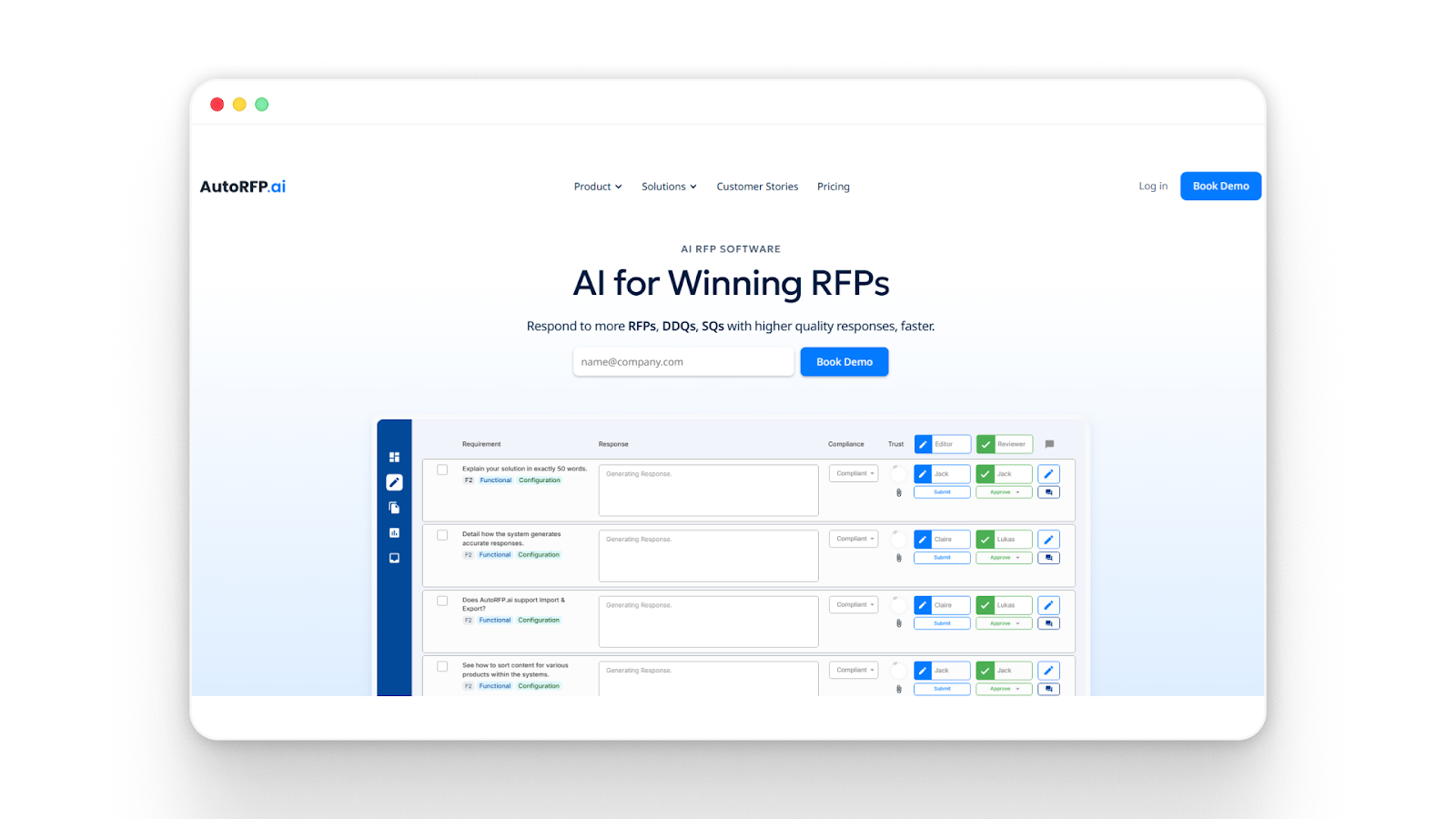
AutoRFP AI delivers AI-powered draft responses, unlimited collaboration, and real-time progress tracking. But, it doesn’t offer advanced content conflict detection and deep contextual agent insights.
Key Features
- Collaborative Platform: It enables real-time collaboration, allowing multiple users to work on the same proposal simultaneously. This ensures that updates and feedback are instantly reflected, improving team coordination and efficiency, especially under tight deadlines.
- Automated Response Generation: The platform generates draft responses based on previous content, reducing the need for teams to start from scratch. This feature can save significant time, especially when responding to repetitive or similar RFPs.
- RFP Tracking and Analytics: It provides real-time tracking of proposal progress and deadlines, along with performance analytics to help teams stay on track and improve their efficiency over time.
Pros
- Smooth Team Collaboration: The real-time collaboration feature allows all team members to contribute seamlessly, ensuring everyone stays aligned and up-to-date throughout the proposal process.
- Time-saving: By automating much of the RFP response process, AutoRFP AI helps teams save valuable time, allowing them to focus on more strategic aspects of the proposal rather than drafting responses manually.
Cons
- Not Intuitive: Many users report that AutoRFP AI’s user interface is confusing for new users, making it harder to get started quickly. The learning curve can be steep for teams unfamiliar with AI-driven platforms.
- Poor Interface Design: The platform’s navigation is not optimized, especially for complex tenders. This can slow down efficiency and create friction during the proposal drafting process.
- Feature Usability Lacking: Despite its automation features, some tasks in AutoRFP require manual workarounds to function effectively. This undermines the purpose of automation and can lead to inefficiencies.
Pricing
| Plan Type | Pricing |
|---|---|
| Subscription | Starts at $899/month |
Best For
- Small to mid-sized teams prioritizing faster drafts.
- Teams with simpler RFP response needs.
- Organizations willing to invest time in onboarding and training.
Rating and Reviews
Rating: 4.9/5
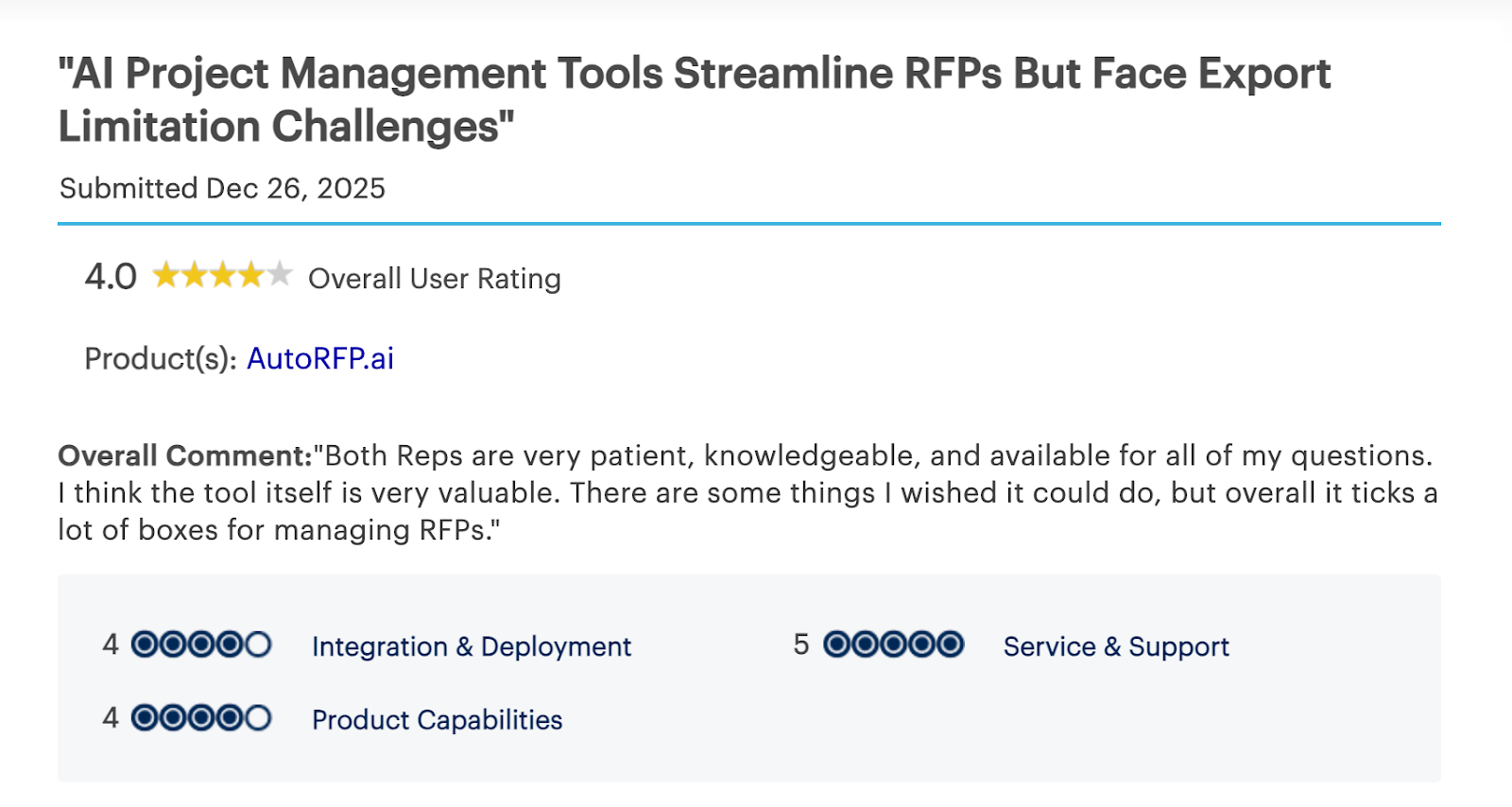
AutoRFP is a good option for teams focused on collaboration, but its interface issues and difficult usability make it less ideal for teams needing speed and simplicity.
Suggested Alternative: Inventive AI
Inventive AI is built for vendors who want speed without sacrificing response quality, accuracy, or control. It provides deeper contextual insights and automation, solving the usability and response quality issues that AutoRFP faces.
Sifthub
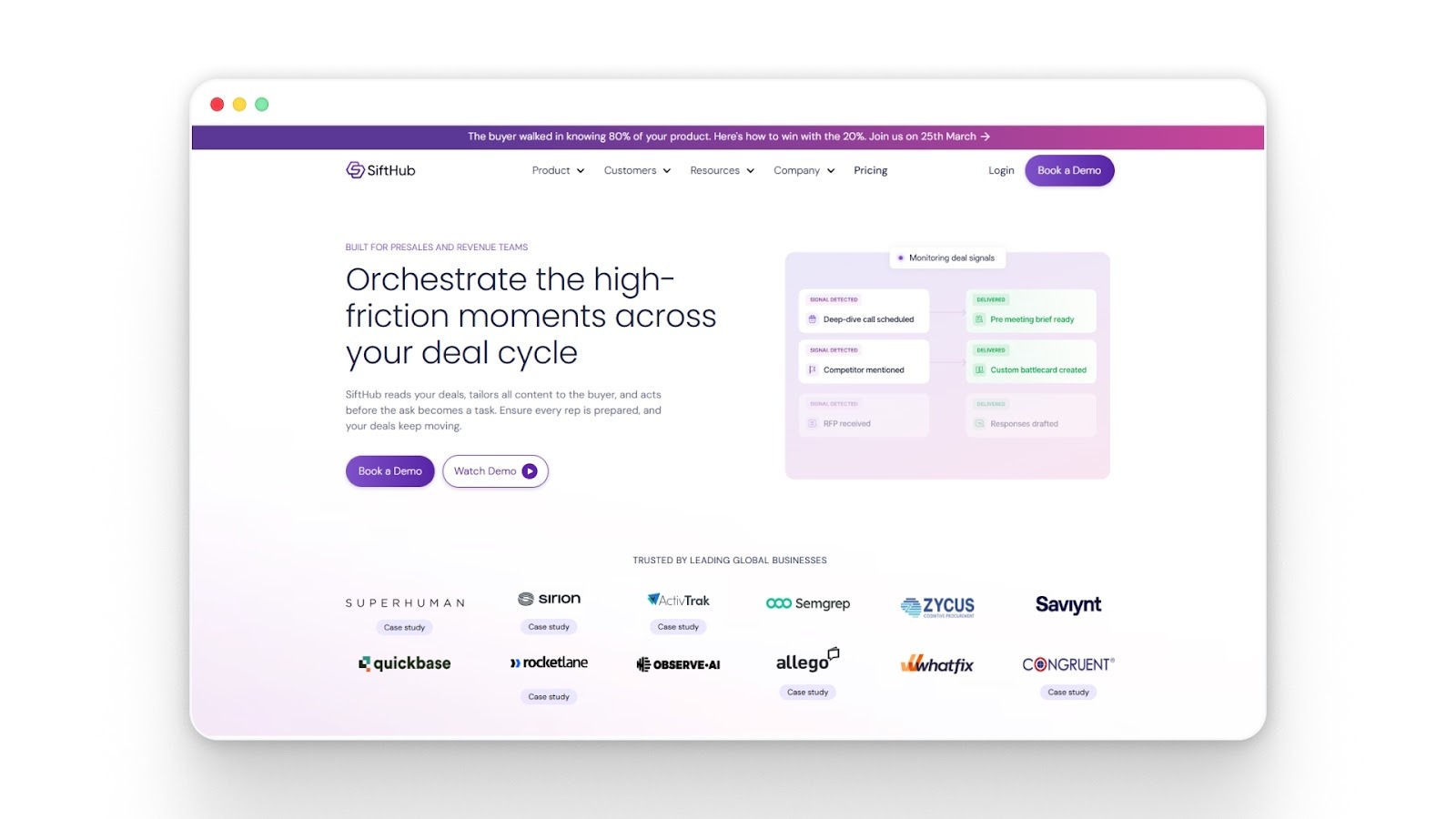
Sifthub offers AI content generation and knowledge centralization to accelerate sales tasks and RFP responses. But, it has limited support for multi-department proposal workflows and depth of integrations.
Key Features
- AI Content Generation: It helps automate RFP responses by pulling content from existing knowledge sources, reducing the need for manual drafting. The AI can generate responses based on pre-existing data, but its contextual understanding is not as advanced as some other tools.
- Centralized Knowledge Hub: The platform stores all proposal-related content in one place, making it easy for teams to access and reuse relevant information across different proposals. This helps save time on content management and retrieval.
- Automation Tools: It includes basic automation tools that help streamline tasks like response generation and document formatting, improving efficiency and speeding up proposal creation.
Pros
- Easy to Use: It has a user-friendly interface that is simple to set up and navigate, making it a good choice for teams with limited technical expertise or experience with automation tools.
- Time-Saving: By automating basic tasks like content generation and document formatting, the platform helps reduce manual work, which speeds up response times and allows teams to focus on more strategic aspects of the proposal.
Cons
- Limited Scalability: Its features are not well-suited for large teams or complex proposals. As team size and proposal complexity grow, the platform’s capabilities may not scale effectively to meet demands.
- Lacks AI Sophistication: The platform’s AI capabilities are less advanced, meaning it may not always generate accurate or contextually relevant responses. This can lead to less tailored proposals, which may impact proposal success rates.
- Not Ideal for Complex Proposals: It struggles with handling larger, multi-department proposals. Teams that require deeper customization, real-time updates, and more sophisticated content management may find this platform lacking.
Pricing
| Plan Type | Pricing |
|---|---|
| Custom pricing | Contact for pricing |
Best For
- Small teams needing a basic solution for RFP response automation.
- Organizations looking for a simple, centralized knowledge hub for proposals.
- Teams focusing on reducing manual effort for simpler RFPs.
Rating and Reviews
Rating: 4.6/5
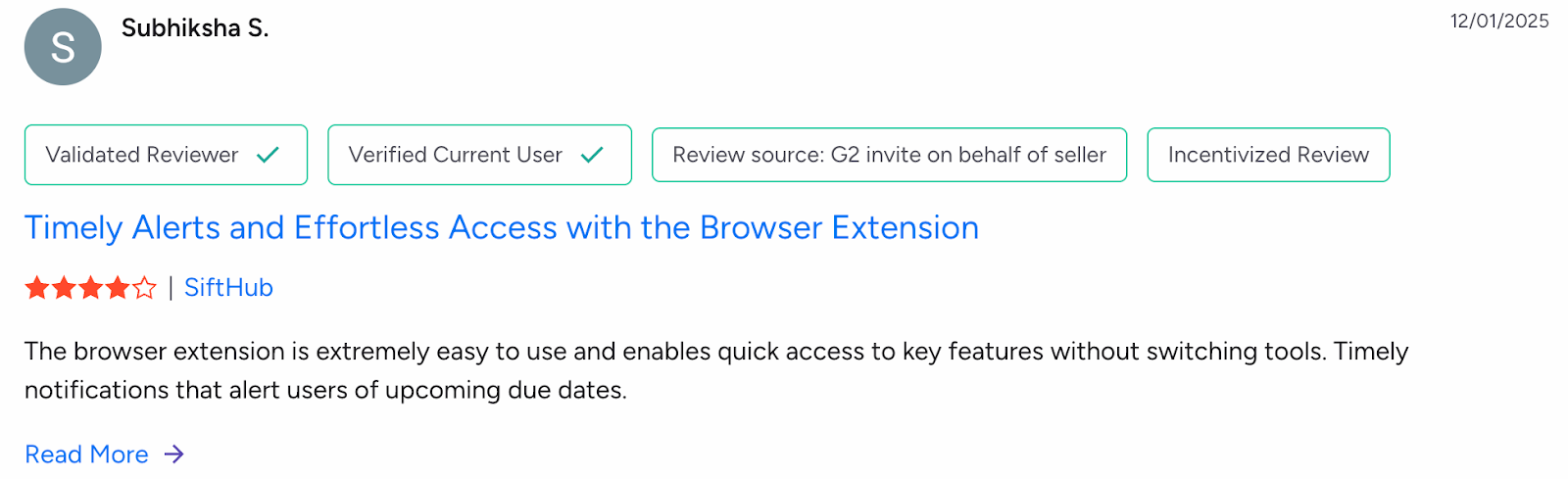
Sifthub offers great value for small teams, but its AI limitations and scalability issues make it less suitable for more demanding RFP processes.
Autogen AI
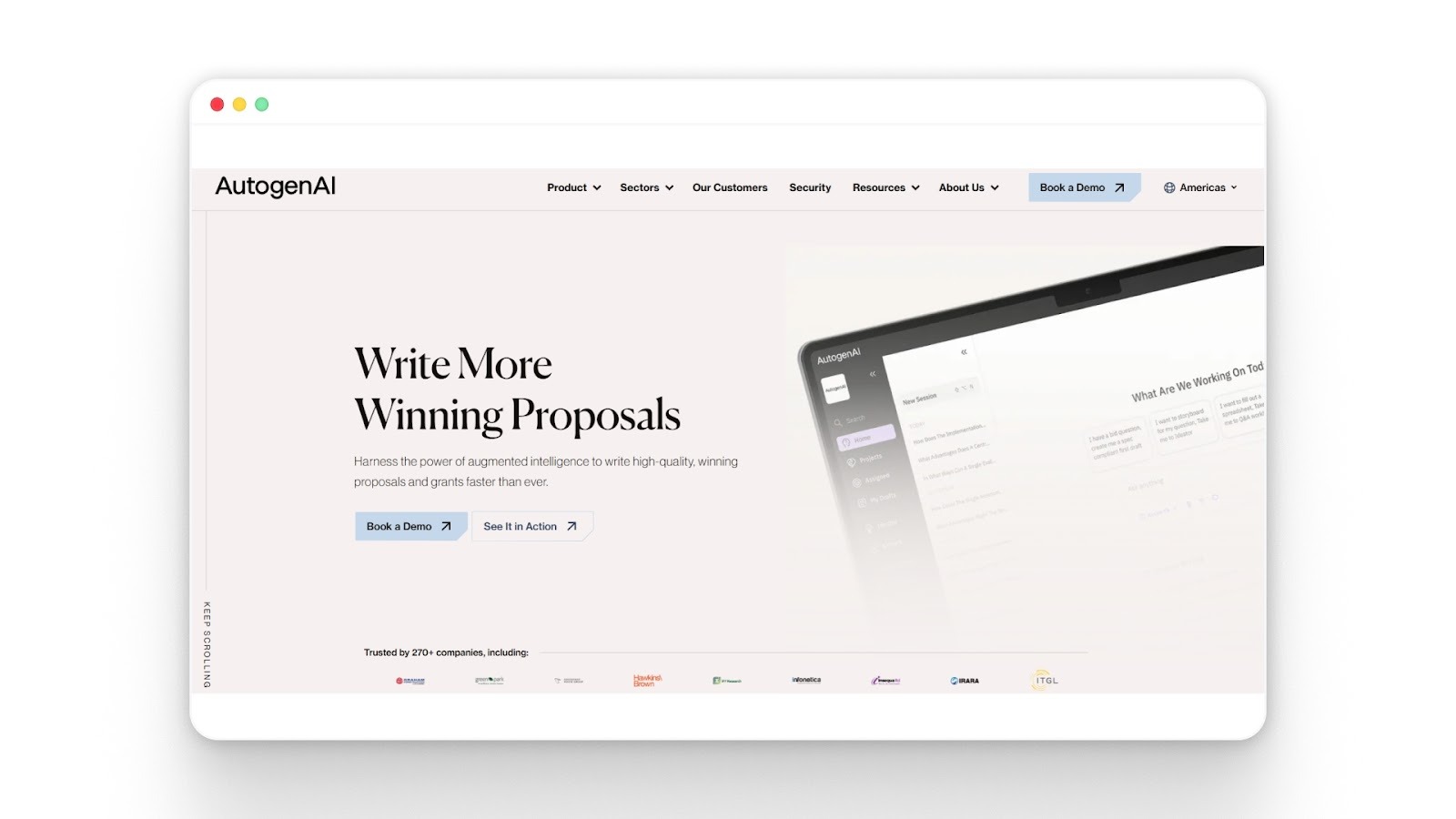
Autogen AI provides generative content and proposal lifecycle features with automation. But, it often requires manual review and editing for complex RFPs and lacks deeper AI-driven analytics.
Key Features
- AI-Powered RFP Response Generation: It uses machine learning to generate draft responses based on historical content and data. This helps teams get started quickly, but for more complex or highly customized proposals, manual adjustments are often necessary.
- Collaborative Bid Writing: The platform facilitates collaborative writing, enabling multiple team members to work on proposals simultaneously. This improves coordination and ensures that the entire team stays aligned on deadlines and content.
- Customizable Templates: It offers a range of customizable templates that can be adapted for different types of RFPs. These templates save time on formatting, but they may not provide the flexibility needed for highly specialized proposals.
Pros
- Time-saving: It significantly reduces the time spent on drafting proposals by automating content creation, allowing teams to focus on more strategic tasks. While it may still require manual review for complex cases, the overall efficiency is greatly improved, speeding up the RFP process.
- Helpful Customer Support: It is known for providing excellent customer support, particularly during onboarding. Teams can get up to speed quickly with guidance from the support team, making adoption smoother.
Cons
- Steep Learning Curve: While the platform is easy to use initially, its extensive features can be overwhelming, and users may need more time to master the full range of functionalities.
- Non-Intuitive Interface: The layout and navigation can be difficult to navigate, which can hinder productivity, especially when dealing with large and complex proposals.
- Frequent Updates: The platform undergoes regular updates, which may confuse users, especially if these updates alter the interface or features without adequate documentation or training.
Pricing
| Plan Type | Pricing |
|---|---|
| Subscription | Based on company size and needs |
Best For
- Teams looking for AI-powered proposal automation.
- Businesses require a collaborative platform for multi-user bid writing.
- Organizations need integrations with existing resources for a smoother workflow.
Rating and Reviews
Rating: 4.4/5
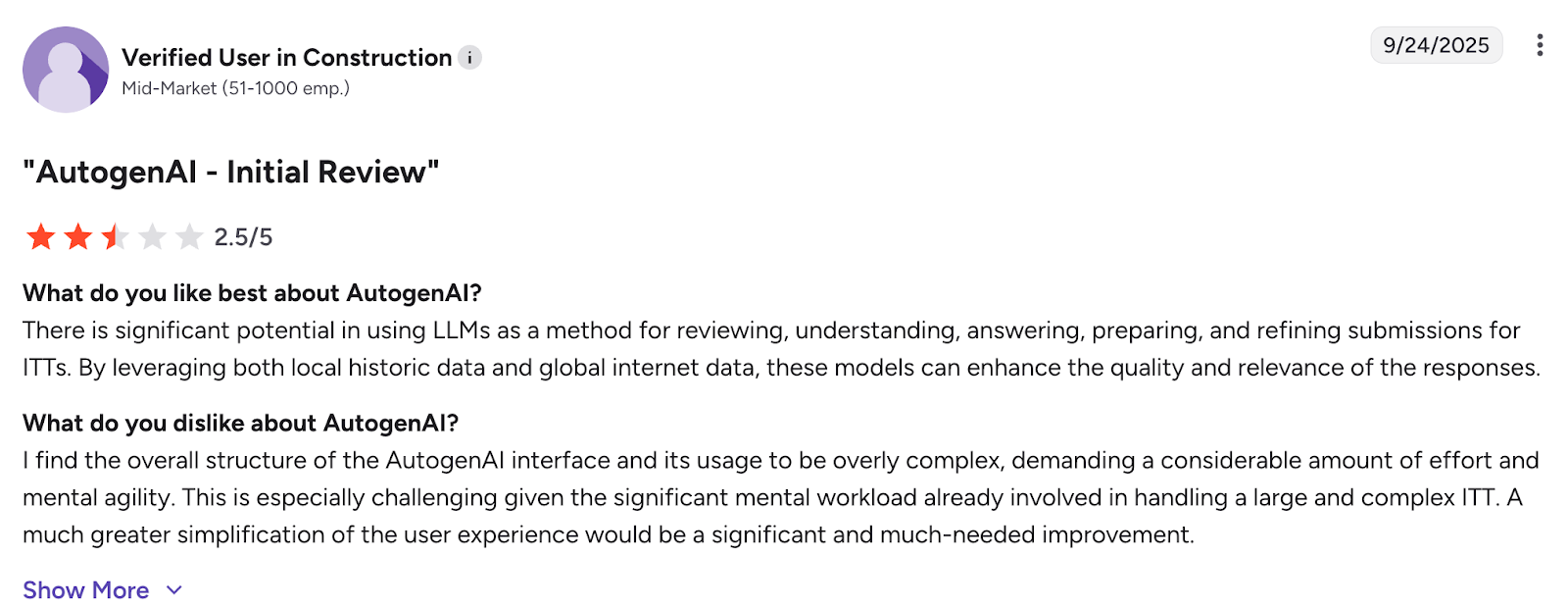
Autogen AI offers strong AI-powered features but struggles with usability and user interface design, which may be a challenge for teams looking for a simpler, faster solution.
Qvidian
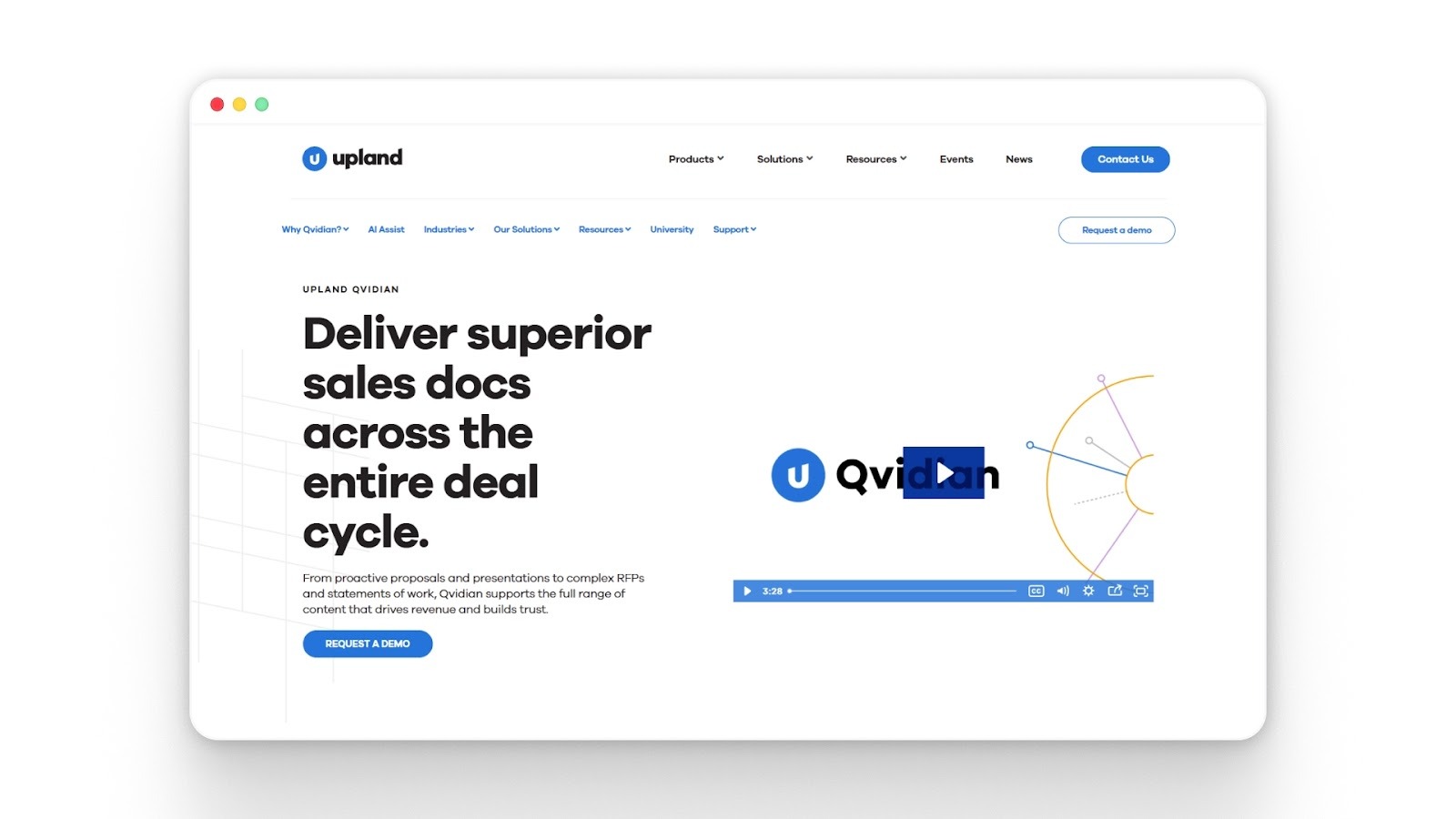
Qvidian is an enterprise-focused proposal and tender response management platform. It helps large organizations manage content, templates, and approvals across high volumes of proposals and tenders.
Key Features
- Proposal Content Management: Qvidian centralizes all approved proposal content, making it easy for teams to access, store, and reuse materials across multiple RFPs and proposals. This feature saves time on content creation and ensures consistency across submissions.
- Template Library: The platform offers a wide selection of templates for various proposal types, allowing teams to quickly start drafting proposals without needing to create them from scratch. These templates help maintain consistent formatting and structure.
- Collaboration and Workflow Tools: Qvidian includes collaboration features that support task management, feedback tracking, and version control. Teams can work together more efficiently, even when managing multiple proposals and contributors.
Pros
- Efficient Content Management: Qvidian excels at organizing and storing proposal content, allowing teams to quickly access relevant materials and reuse them across multiple proposals, improving efficiency.
- Time-Saving: The platform automates response drafting and content reuse, helping teams save time and meet proposal deadlines more effectively.
- Comprehensive Collaboration Tools: With integrated task management and feedback tracking, Qvidian makes it easier for teams to collaborate on proposals, ensuring alignment throughout the drafting process.
Cons
- Slow Performance: Qvidian can experience lag when working with large documents or multiple proposals at once, which may hinder productivity, especially for teams dealing with tight deadlines.
- Interface Not Intuitive: Many users find the platform’s user interface difficult to navigate, which can lead to frustration for new users trying to familiarize themselves with the system.
- Steep Learning Curve: Due to the platform’s complexity, new users often face a steep learning curve before they can effectively use all its features. This can slow down adoption and impact team efficiency in the short term.
Pricing
| Plan Type | Pricing |
|---|---|
| Subscription | Varies depending on team size |
Best For
- Large enterprises requiring advanced content management.
- Teams with a high volume of proposals to manage.
- Businesses needing robust templates for specific industries or proposal types.
Rating and Reviews
Rating: 4.7/5
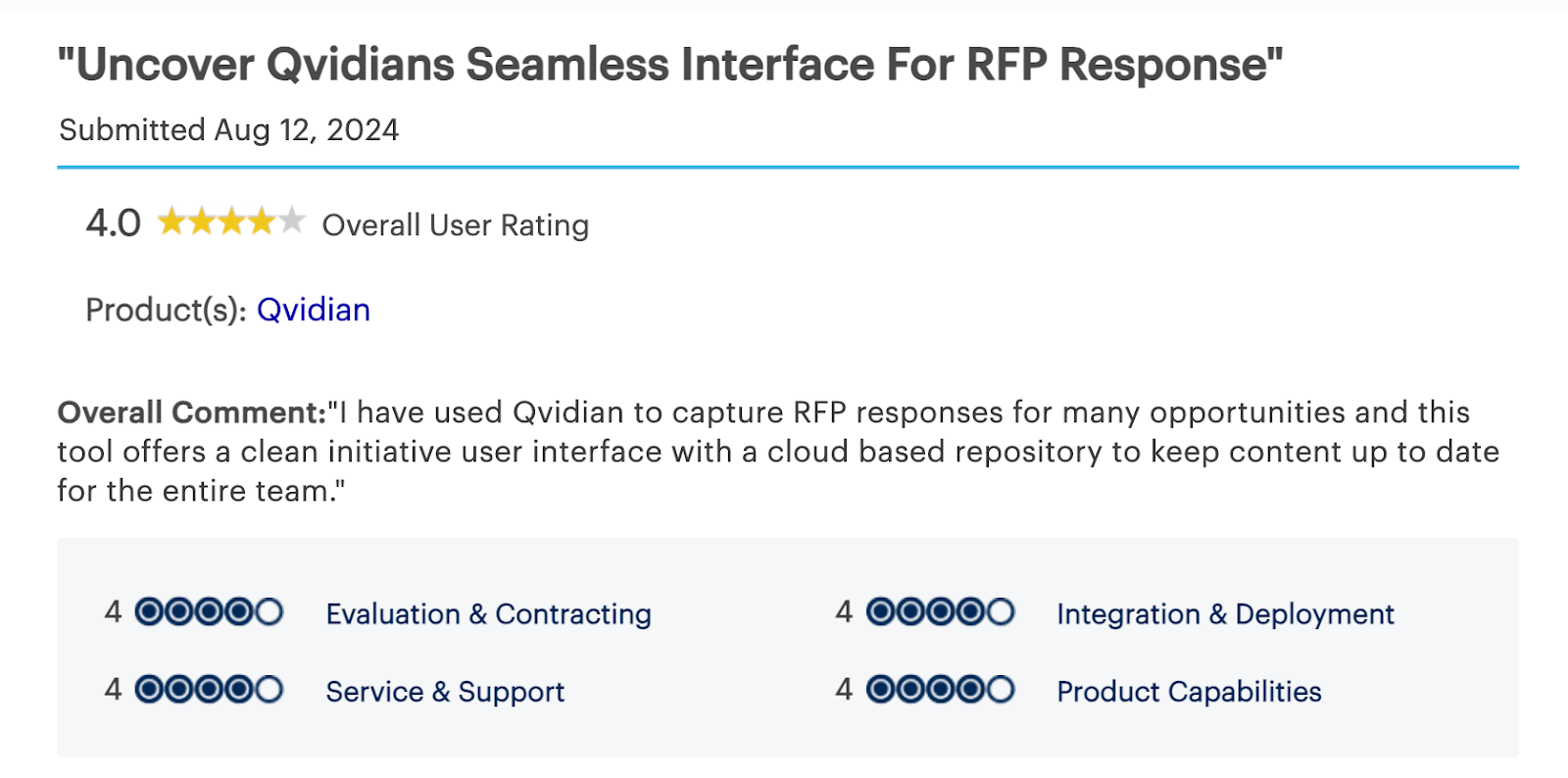
Qvidian excels at content management and workflow, but its slow performance and steep learning curve make it less ideal for teams that need speed and flexibility.
1Up
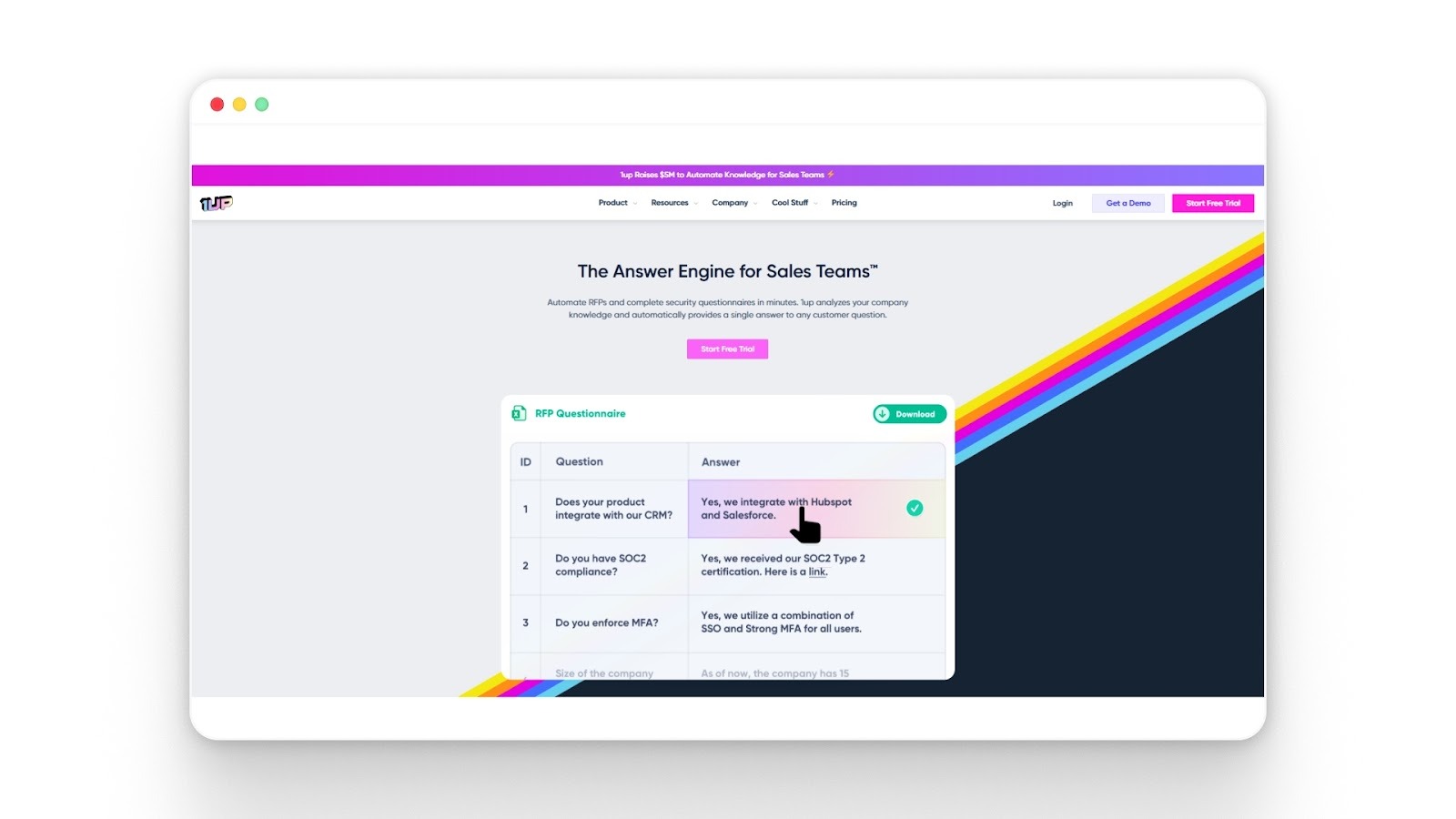
1Up is an RFP and tender response tool focused on speed and ease of use. It aims to help vendors generate responses quickly with minimal setup. However, it lacks the advanced features necessary for handling complex proposals, making it a better fit for teams with basic RFP needs.
Key Features
- AI-Assisted Drafting: 1Up uses AI-assisted drafting to generate responses quickly, helping teams reduce time spent on initial drafts. The platform automates the writing process, allowing teams to focus on refining and customizing responses.
- Lightweight Setup: The platform’s minimal configuration makes it ideal for teams looking for a quick and easy way to start automating their RFP responses. It’s well-suited for teams that don’t need extensive customization or integration.
Pros
- Easy to Use: 1Up features a simple interface that allows teams to get started quickly, without requiring much technical experience or training.
- Time-Saving for Basic Tenders: The AI-generated drafts help reduce writing time, particularly for simple or less complex tenders, allowing teams to move faster through the RFP process.
Cons
- Limited Functionality: 1Up lacks advanced features such as content control and conflict detection, which are essential for handling complex, high-stakes proposals.
- Inaccurate Responses: The AI-generated drafts may struggle with nuanced or detailed requirements, often needing manual corrections to ensure accuracy and relevance.
- Basic Collaboration Tools: The platform has limited workflow and role management capabilities, making it less suitable for larger teams or those handling more intricate RFPs that require multiple layers of review.
Pricing
| Plan Type | Pricing |
|---|---|
| Subscription | Starts at $300/month |
Best For
- Small teams responding to simple tenders.
- Vendors are new to AI-assisted tender responses.
- Low-complexity RFPs or questionnaires.
Rating and Reviews
Rating: 4.9/5
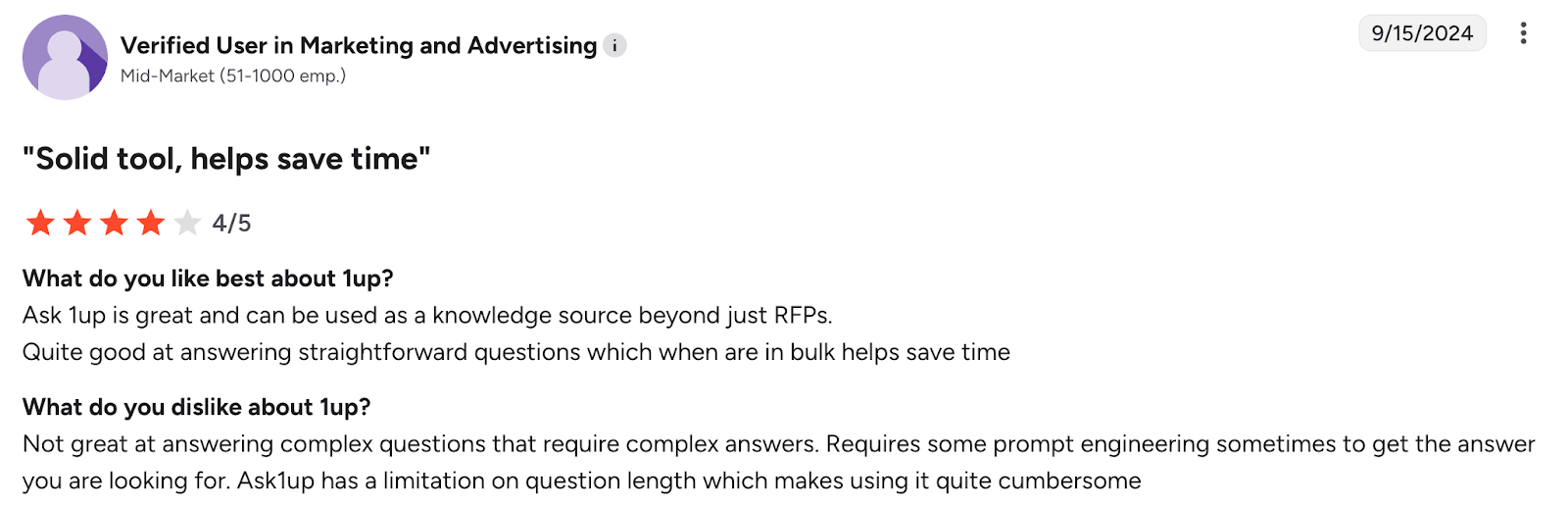
1Up is great for vendors looking for a lightweight AI response tool. However, its feature limitations make it less suitable for teams handling complex or high-stakes tenders.
Tribble
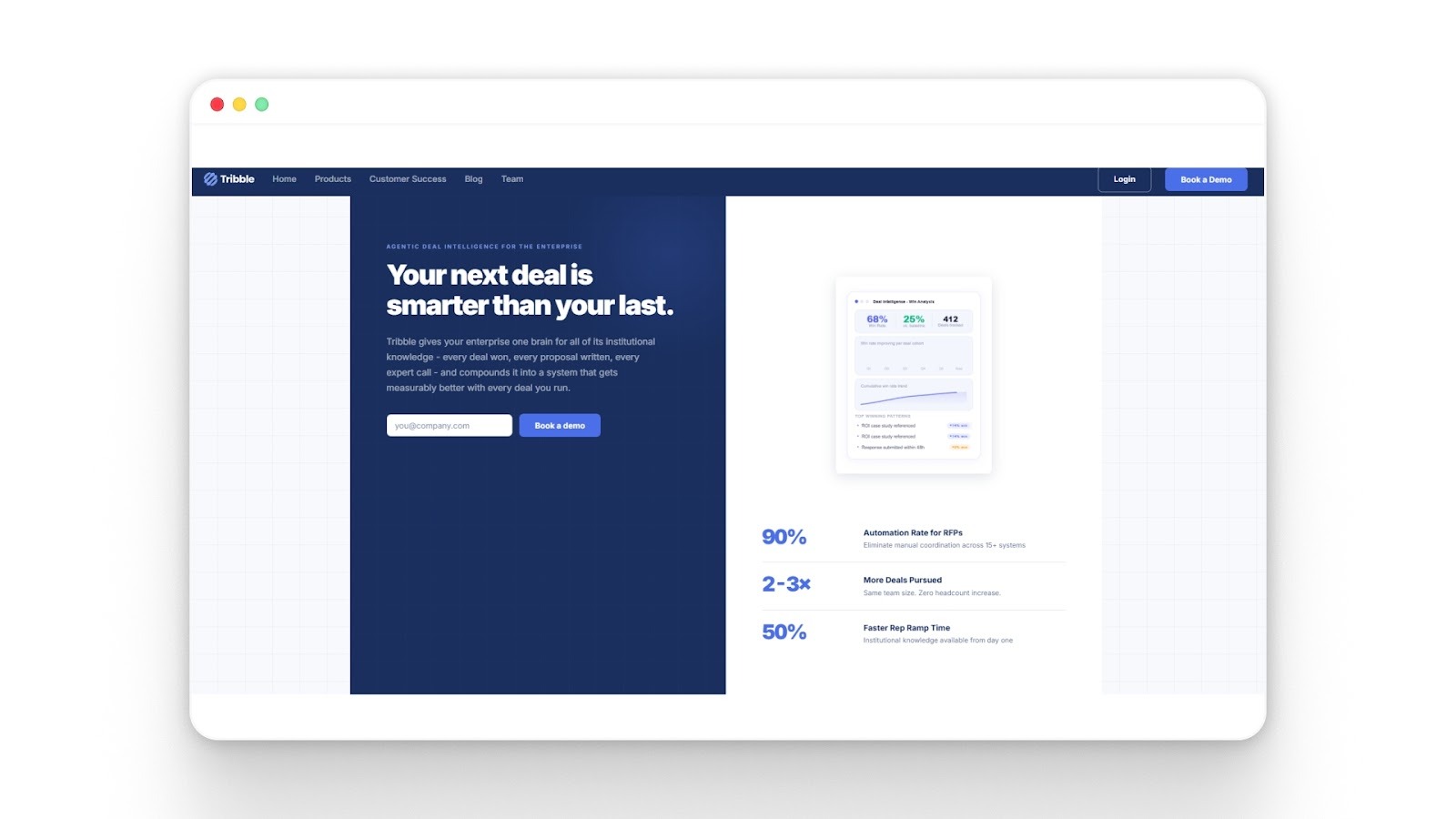
Tribble is an RFP response platform designed to help teams save time and improve the accuracy of their RFP submissions. It focuses on streamlining workflows and organizing proposal content to create a more efficient RFP response process.
Key Features
- Time-Saving Automation: Tribble automates a significant portion of the RFP response process, including content generation and document organization, reducing the time spent on manual tasks and helping teams respond faster.
- Ease of Use: The platform boasts a simple, intuitive interface that is easy to navigate, allowing teams to adopt it quickly without the need for extensive training.
- Search Efficiency: Tribble’s efficient search functionality allows users to quickly find relevant content from the knowledge base, saving time and improving response accuracy.
Pros
- Time-Saving Capabilities: By automating repetitive tasks such as content generation and formatting, Tribble helps teams save valuable time and increase productivity.
- Simple to Use: With its intuitive interface, Tribble is easy to adopt, making it a good fit for teams that are new to RFP automation or have limited technical expertise.
Cons
- Inaccurate Responses: The platform sometimes generates inaccurate or incomplete responses, which can require additional work to correct and tailor the content to specific RFP requirements.
- Limited Features: Tribble offers a basic set of features that may not be sufficient for handling complex RFPs. Teams working on more intricate proposals may find the platform lacking in advanced capabilities.
- Insufficient Training: There is a lack of comprehensive training materials, which can hinder new users from getting the most out of the platform and may delay the onboarding process.
Pricing
| Plan Type | Pricing |
|---|---|
| Custom pricing | Contact for pricing |
Best For
- Small to mid-sized teams looking for an easy-to-use solution to automate basic RFP tasks.
- Businesses that need a tool to save time and improve team collaboration without requiring advanced customization.
- Teams that prioritize simplicity and quick implementation.
Rating and Reviews
Rating: 4.9/5
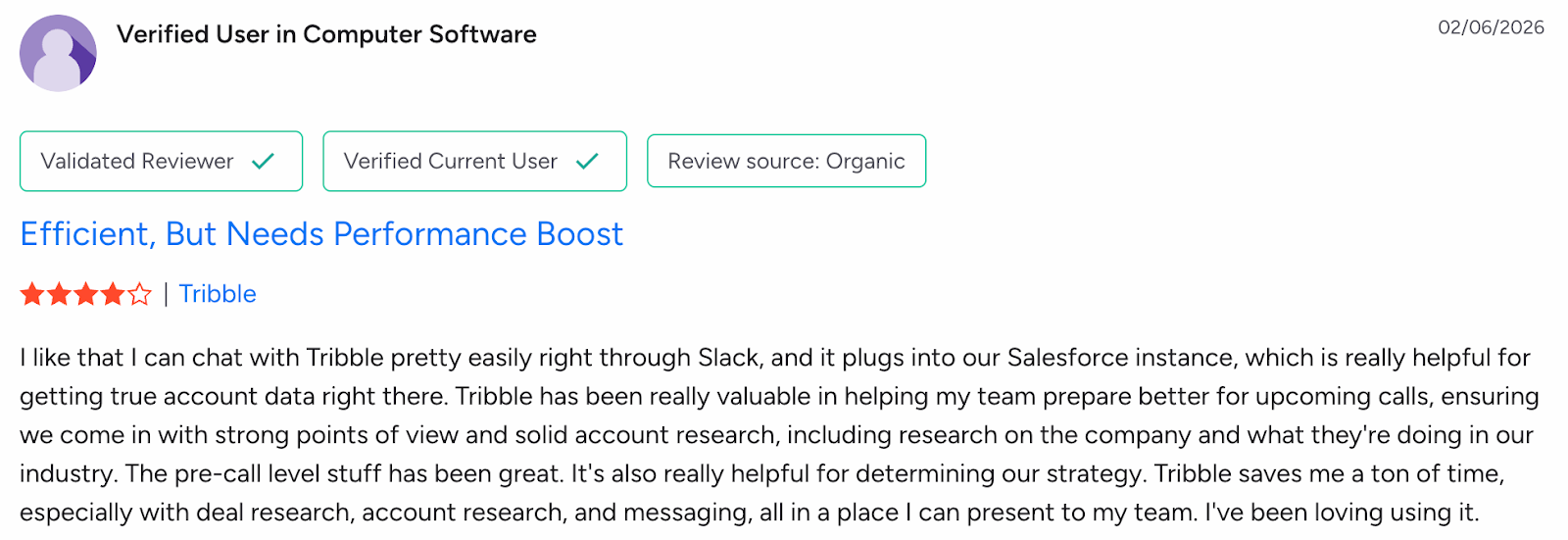
While it is good at automating basic RFP tasks, its limited features and inaccurate responses make it less suitable for teams requiring high-level customization and precision.
While each of these tools offers unique strengths for managing RFP responses, Inventive AI stands out with its advanced AI capabilities and faster response times. Its tailored content generation makes it the best option for teams looking to optimize their RFP process.
Features That Matter Most When Evaluating Avnio Alternatives
Selecting the right tool to replace Avnio requires careful consideration of the features that directly impact your team’s efficiency and success in RFP response management. While there are many options available, not all alternatives are built to meet the unique challenges of managing complex, high-volume proposals.
Here are the key features to prioritize when choosing an alternative:
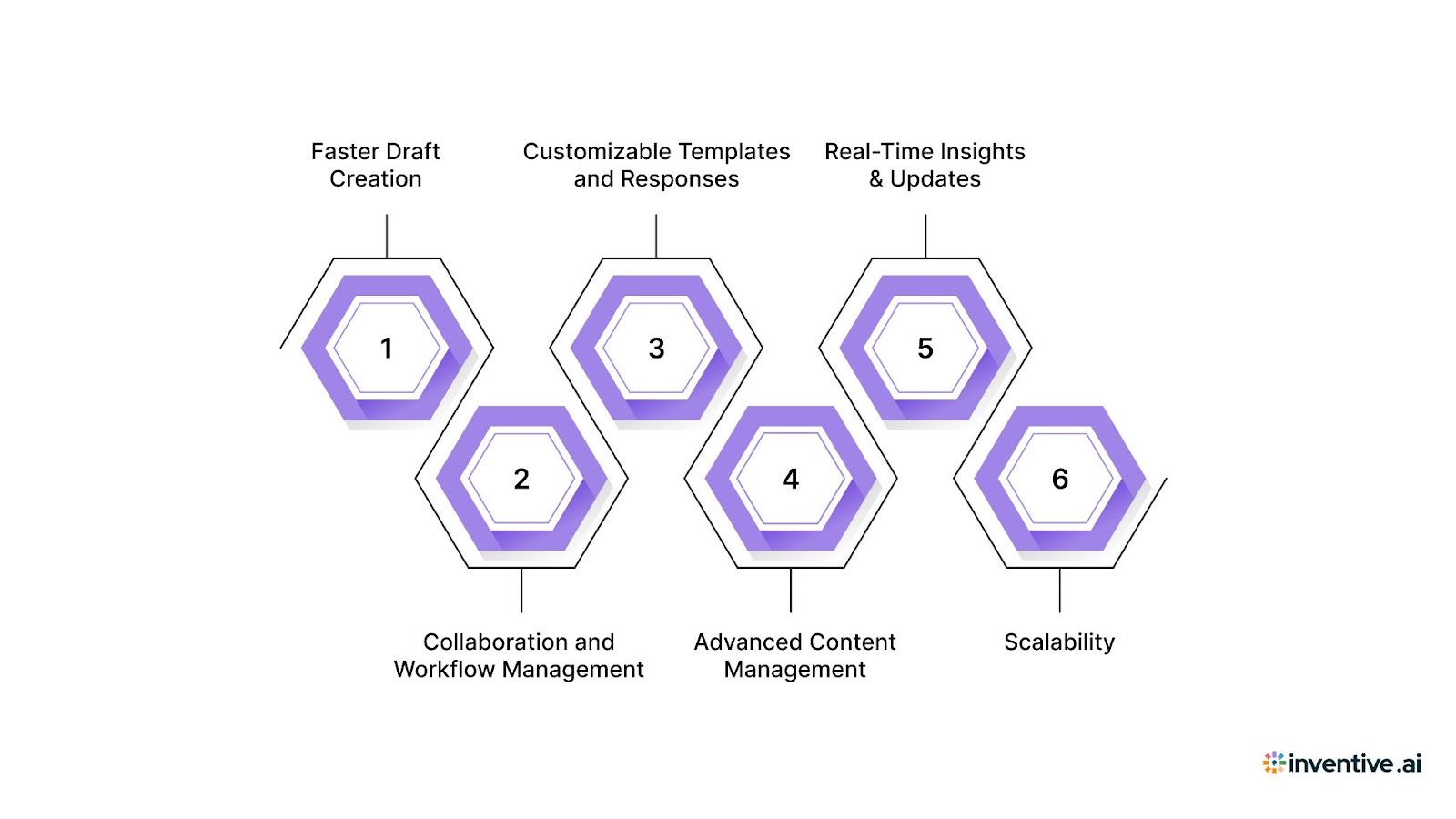
- Faster Draft Creation: The tool should help you generate proposal drafts quickly to reduce the time spent on repetitive tasks.
- Collaboration and Workflow Management: Look for a solution that enables smooth collaboration across teams, allowing for faster decision-making and input gathering.
- Customizable Templates and Responses: Your chosen tool should allow for flexibility in tailoring responses to meet specific requirements and buyer preferences.
- Advanced Content Management: A good alternative should allow easy storage and retrieval of content from previous RFPs and integrate with other systems for efficient document management.
- Real-Time Insights and Updates: Choose a tool that offers live, actionable insights and regularly updates content to keep proposals relevant and error-free.
- Scalability: Consider a solution that can grow with your business and handle larger, more complex RFPs as your needs evolve.
By keeping these factors in mind, you can select the right alternative to Avnio and better meet your team's RFP management needs.
Inventive AI: The Ultimate RFP Solution for Modern Teams
When it comes to replacing Avnio, Inventive AI offers unmatched value for vendors looking to improve their RFP response process. With its AI-powered automation, Inventive AI significantly reduces drafting time, boosts proposal accuracy, and helps teams stay aligned and efficient throughout the process.
Here’s how Inventive AI stands out:
- 50% higher win rate and 90% faster responses.
- 2x better response quality and 95% accuracy.
- 66% of responses require zero edits, meaning less time spent refining and more time closing deals.
With Inventive AI, you’re adopting a tool that's transforming your entire RFP process. Experience the difference with a solution that delivers both speed and quality, all backed by intelligent automation.
Frequently Asked Questions (FAQs)
1. What types of RFP workflows can modern alternatives handle that Avnio might not?
Modern RFP response tools go beyond basic proposal creation. Many newer platforms include features like automated question classification, up‑to‑date content suggestions, AI‑powered bid/no‑bid analysis, and first‑draft generation based on company knowledge. These capabilities help reduce manual data entry and support higher‑quality, tailored responses.
2. How do AI RFP response tools differ from traditional proposal management software?
Traditional tools focus on organizing a content repository and enabling collaboration around stored answers. AI RFP response platforms use machine learning to suggest contextually relevant responses, offer deeper insights into document requirements, and reduce repetitive work, ultimately saving time and reducing manual errors.
3. Can I switch from a legacy RFP tool like Avnio to an AI‑first platform without disrupting my current workflow?
Most modern AI RFP tools support migrations from legacy systems by importing existing content libraries and integrating with your current data sources. This helps keep your historical responses while adding advanced automation. However, the transition effort depends on volume, complexity, and how well content libraries are organized.
4. Is AI‑assisted proposal drafting secure for compliance‑sensitive RFPs?
Security and compliance are common concerns. Many next‑generation RFP platforms include built-in checks for compliance requirements and content governance. These systems can flag risky content or outdated responses, helping teams maintain compliance without losing speed. You should always confirm that the vendor adheres to industry‑standard security practices.
5. What’s the impact of using an AI‑powered tool on team productivity and RFP turnaround time?
AI‑empowered RFP tools can significantly reduce manual work, in many cases, cutting turnaround time by large margins. Teams benefit from faster draft generation, reduced content rewriting, and fewer edits required, freeing up time to focus on strategic review and customization of responses.

.avif)