Cloud Computing RFP Template: Master Your Responses with the Right Template

Have you ever opened a cloud computing RFP and wondered how to structure your response without missing key details?
Many vendors lose time rewriting the same sections, adjusting formats, and chasing scattered technical inputs.
That pressure is real, especially when deadlines are tight and requirements feel unclear. If you’ve faced that last-minute scramble before submission, you’re definitely not alone. A well-designed cloud computing RFP template changes that experience.
Instead of starting from scratch, you work with a consistent response framework. This guide explains how to use, customize, and benefit from a practical template built for vendors.
The Ultimate Cloud Computing RFP Template in 2026 (For Buyers)
A cloud computing RFP response often demands technical clarity, security explanations, pricing logic, and service commitments.
Using a reusable template helps you organize these elements without rebuilding your structure every time.
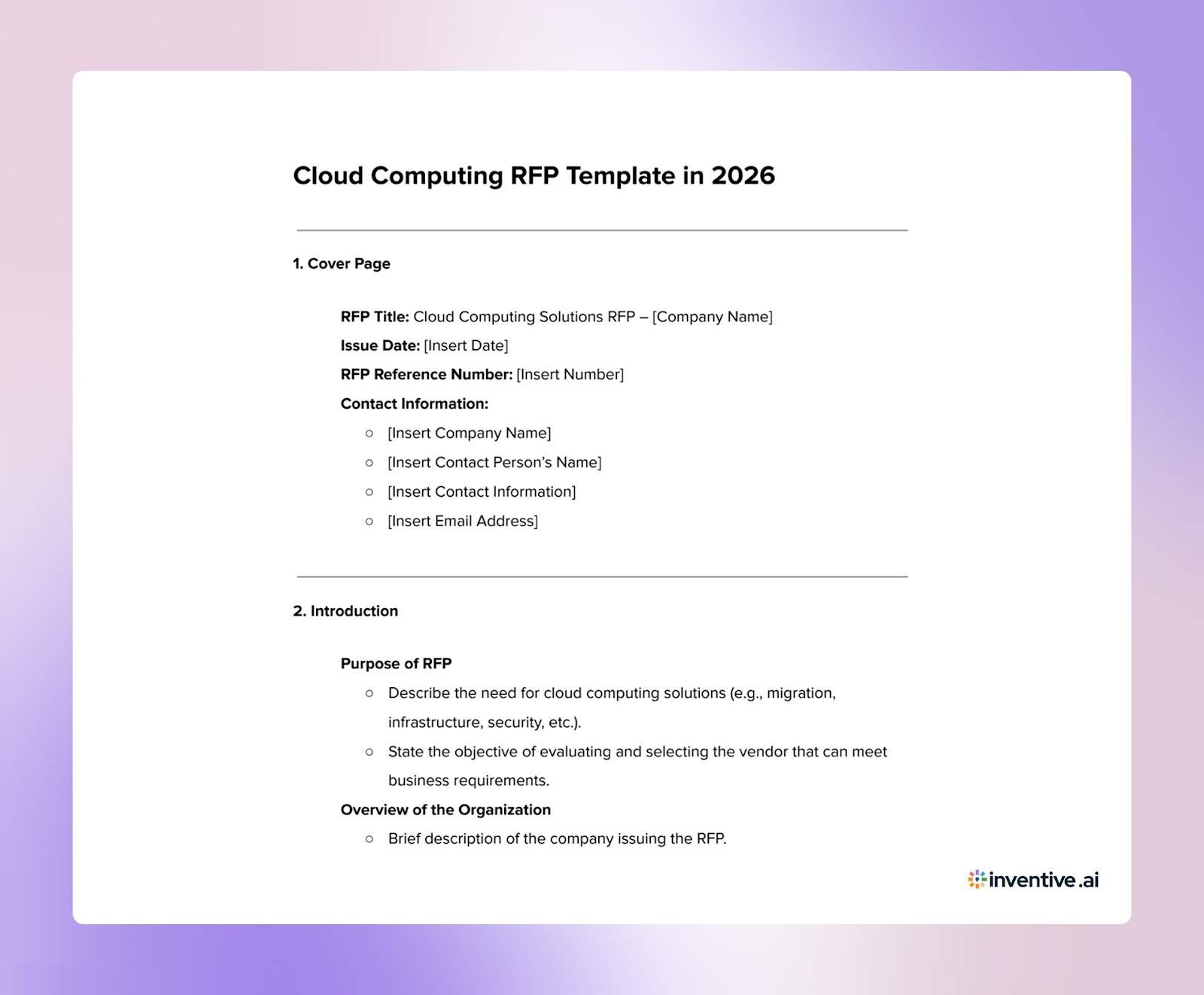

About the Cloud Computing RFP Template
A cloud computing RFP template reflects how enterprise buyers typically structure their evaluations. It outlines the sections procurement, security, and infrastructure teams expect to review, giving vendors a clear reference point before drafting responses.
Why Use a Cloud Computing RFP Template?
- Understand common buyer evaluation categories before responding
- Anticipate mandatory sections such as security, SLAs, and compliance
- Align responses with typical scoring and technical review criteria
- Reduce structural inconsistencies across submissions
- Improve coordination between security, cloud, legal, and finance teams
- Start from a proven framework instead of rebuilding each proposal
What’s Included in the Template?
- Executive summary and solution overview structure
- Cloud architecture and deployment model sections
- Security controls and compliance documentation framework
- SLA and performance commitment formats
- Implementation and migration planning outline
- Pricing and commercial response structure
- Evaluation alignment matrix template
- Assumptions and risk declaration section
A well-structured template turns complex cloud RFP requirements into an organised, evaluation-ready response framework.
Now that the buyer-side structure is clear, let’s shift focus to the vendor perspective. Examine how to respond strategically using a well-structured RFP response framework.
The Ultimate Cloud Computing RFP Response Template in 2026 (For Vendors)
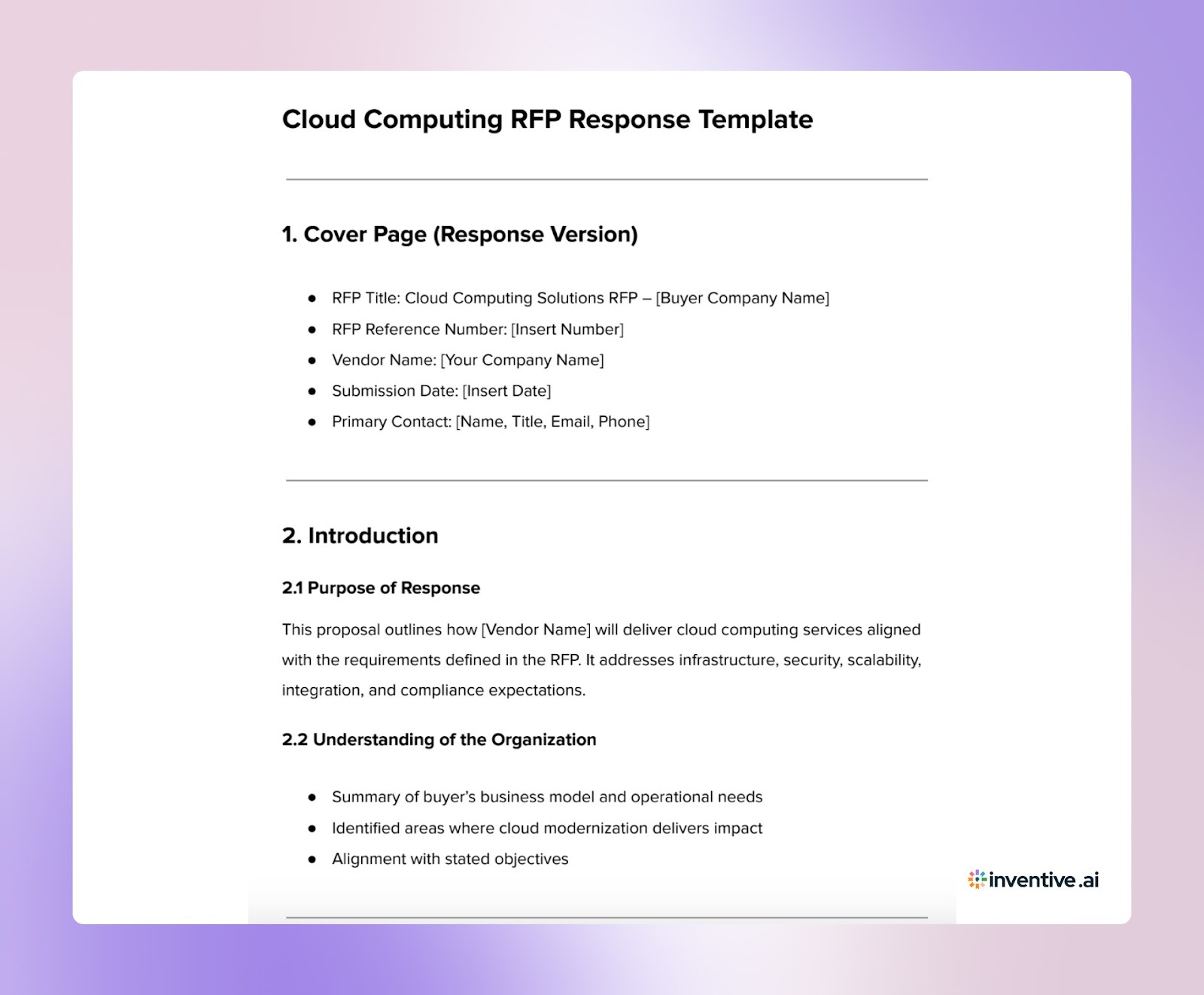

The Role of Proposal Templates in Cloud Computing RFP Success
A cloud computing RFP response template provides a predefined structure for answering buyer requirements. Instead of rebuilding your responses, you work with a stable framework that keeps your messaging, technical explanations, and commercial details aligned.
Cloud RFPs often demand inputs from multiple teams, including security, infrastructure, legal, and finance. Without a template, responses can easily become inconsistent, incomplete, or difficult to review.
A well-designed template brings order, clarity, and repeatability to your proposal workflow.
Why use a template?
- Reduces repetitive writing across similar RFPs.
- Maintains consistent response formatting.
- Prevents missing mandatory response sections.
- Improves internal collaboration efficiency.
- Simplifies technical content organization.
- Speeds up review and approval cycles.
A structured template turns a scattered response process into a controlled workflow.
Also Read: Construction RFP Guide: How Winning Teams Respond
6 Tips for Customizing the Cloud Computing RFP Template for Your Benefit
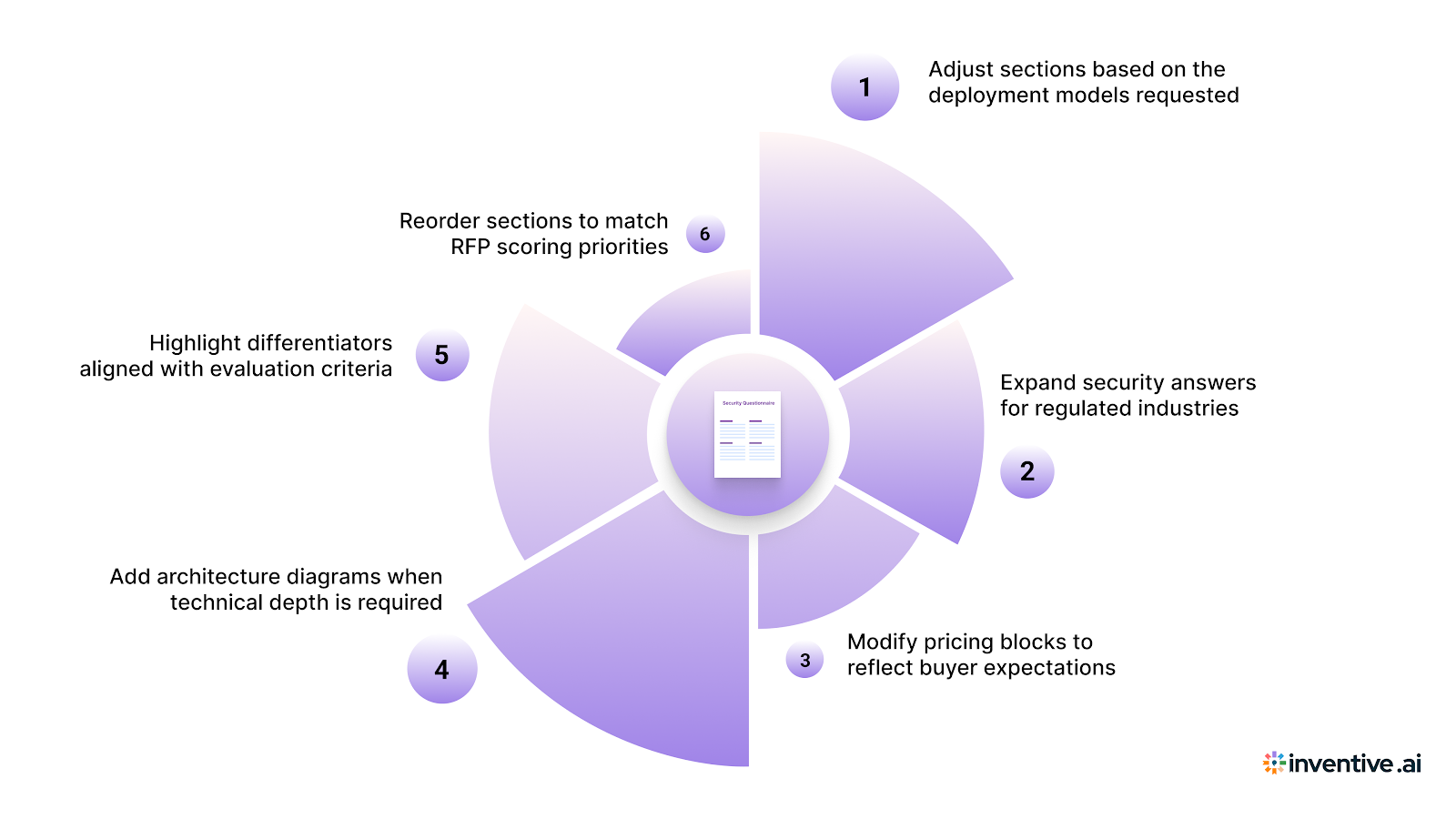
Not all cloud computing RFPs request the same information.
Customizing your template ensures your responses remain relevant and persuasive.
1. Adjust sections based on the deployment models requested
Buyers evaluating public, private, or hybrid cloud solutions prioritize different technical concerns. Tailoring these sections prevents generic answers that weaken proposal credibility.
2. Expand security answers for regulated industries
Healthcare, finance, and government RFPs typically demand deeper compliance and risk explanations. Strengthening these areas helps avoid clarification cycles and evaluation delays.
3. Modify pricing blocks to reflect buyer expectations
Some RFPs emphasize cost transparency, while others focus on value justification. Aligning pricing narratives improves clarity during commercial reviews.
4. Add architecture diagrams when technical depth is required
Visual representations often communicate system design more effectively than text-heavy explanations. This supports faster evaluator understanding.
5. Highlight differentiators aligned with evaluation criteria
RFP scoring frameworks usually reward specific capabilities. Emphasizing relevant strengths increases response impact without overloading reviewers.
6. Reorder sections to match RFP scoring priorities
Placing high-weight sections earlier improves readability and ensures critical content receives immediate attention. Template flexibility allows you to adapt without losing structural consistency.
Strengthening Cloud Computing Proposals With Inventive AI
Drafting cloud computing proposals manually often creates quality and consistency issues. Inventive AI addresses these challenges through its AI-driven response intelligence. It helps you generate first drafts 10x faster.
1. 2× Higher Quality Responses
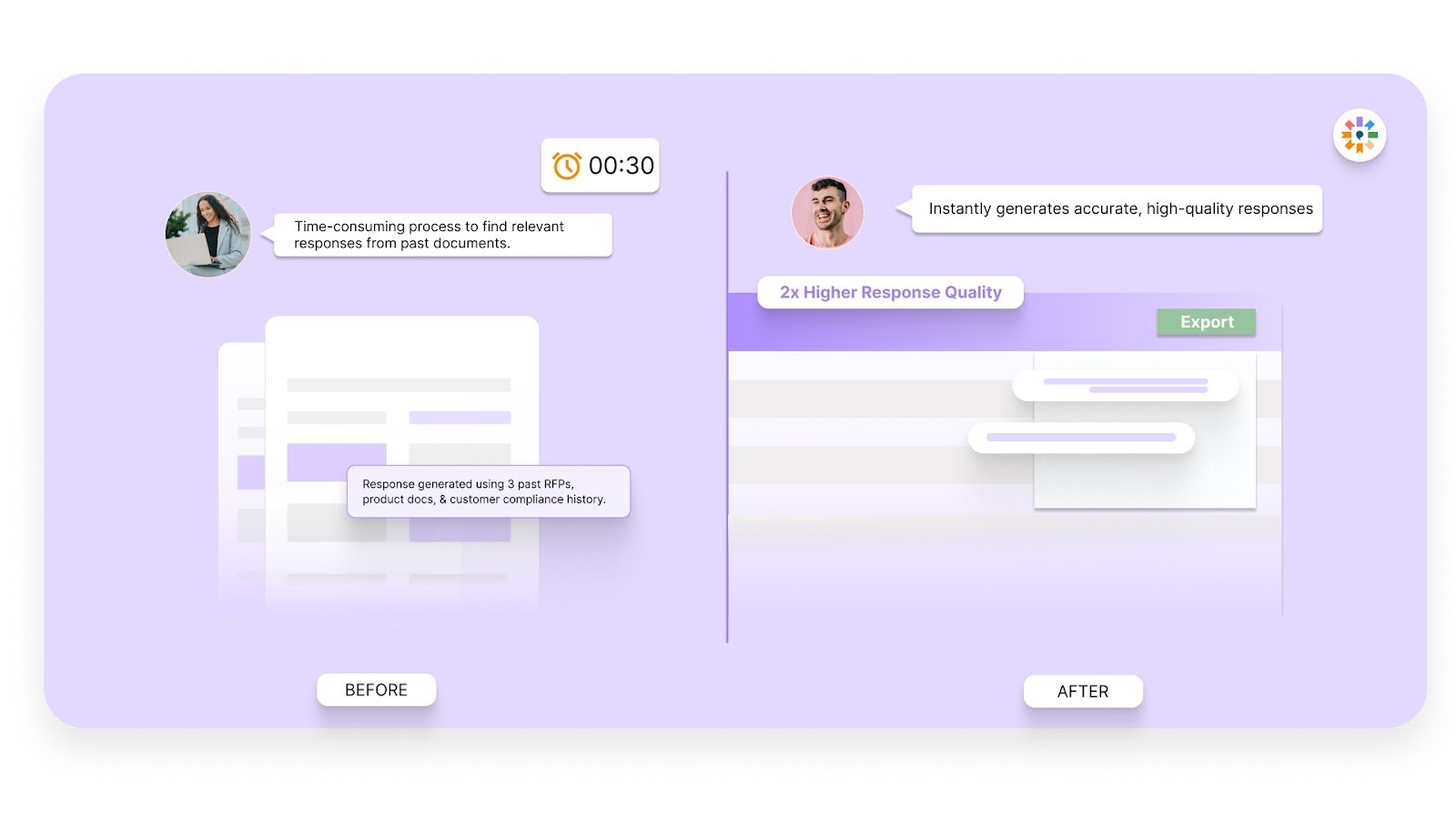
Inventive AI improves proposal depth by analyzing historical responses, technical repositories, and deal-specific context. This ensures your answers remain precise, consistent, and aligned with buyer evaluation priorities.
2. Context Engine
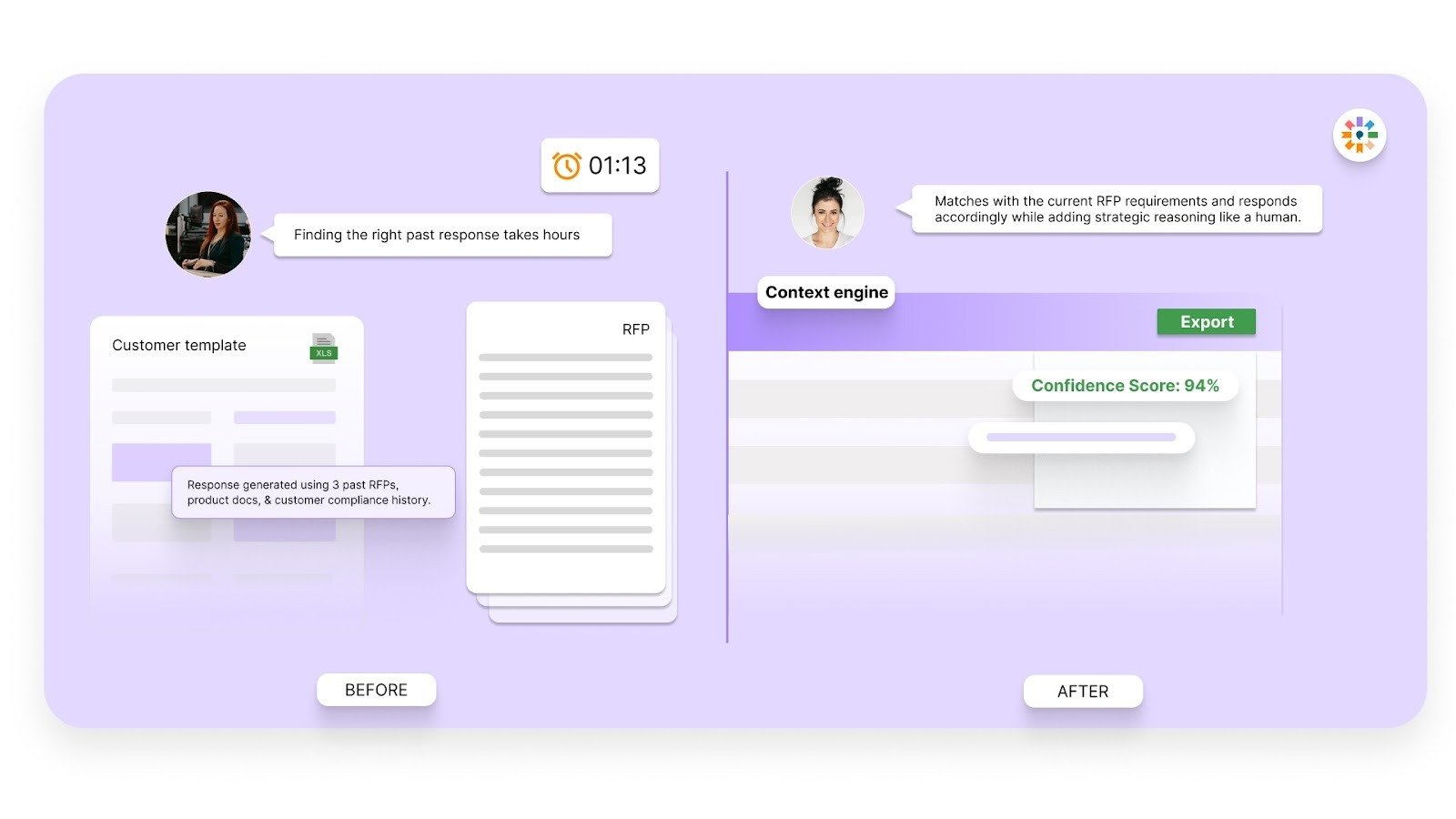
The platform interprets RFP intent and dynamically connects relevant knowledge without manual searching. Teams spend less time locating information and more time refining proposal strategy.
3. Conflict Detection
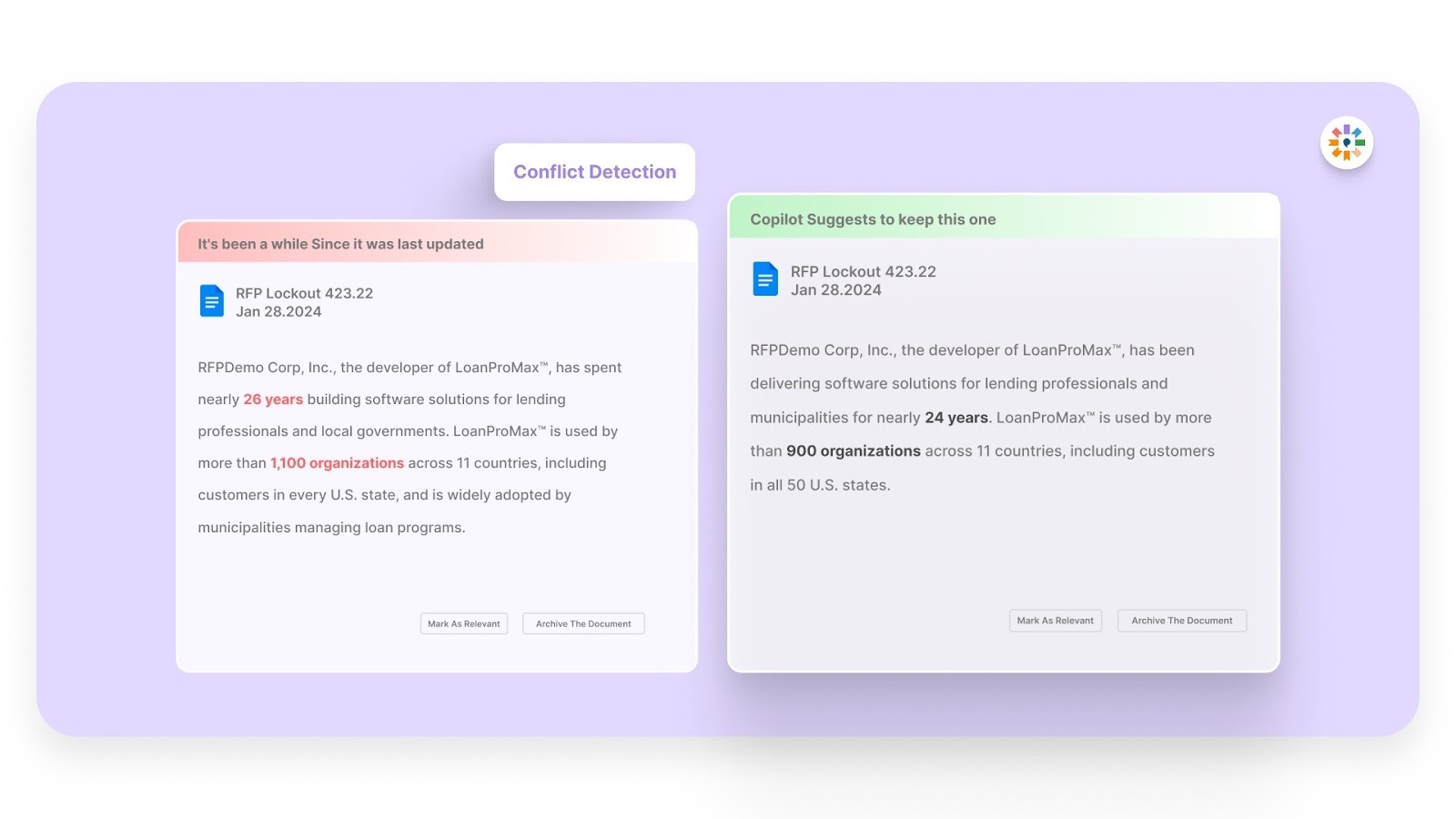
Inventive AI proactively flags contradictory claims across documents and prior responses. This prevents inconsistencies that can weaken evaluator confidence or delay procurement decisions.
4. Outdated Content Detection
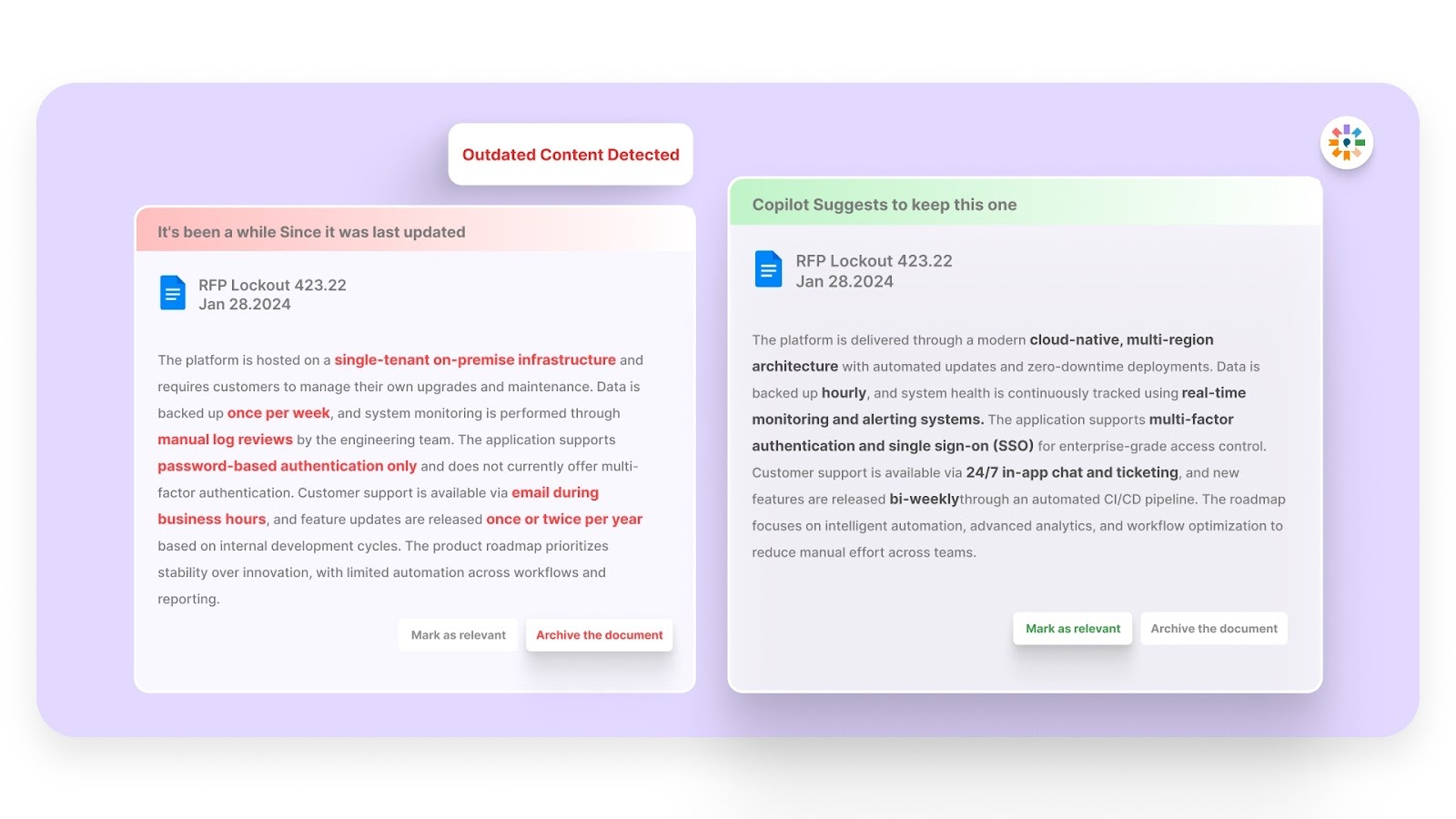
The system identifies stale technical, security, or compliance details before submission. Your responses remain aligned with current offerings, policies, and service capabilities.
5. Simple, Easy-to-Use Interface
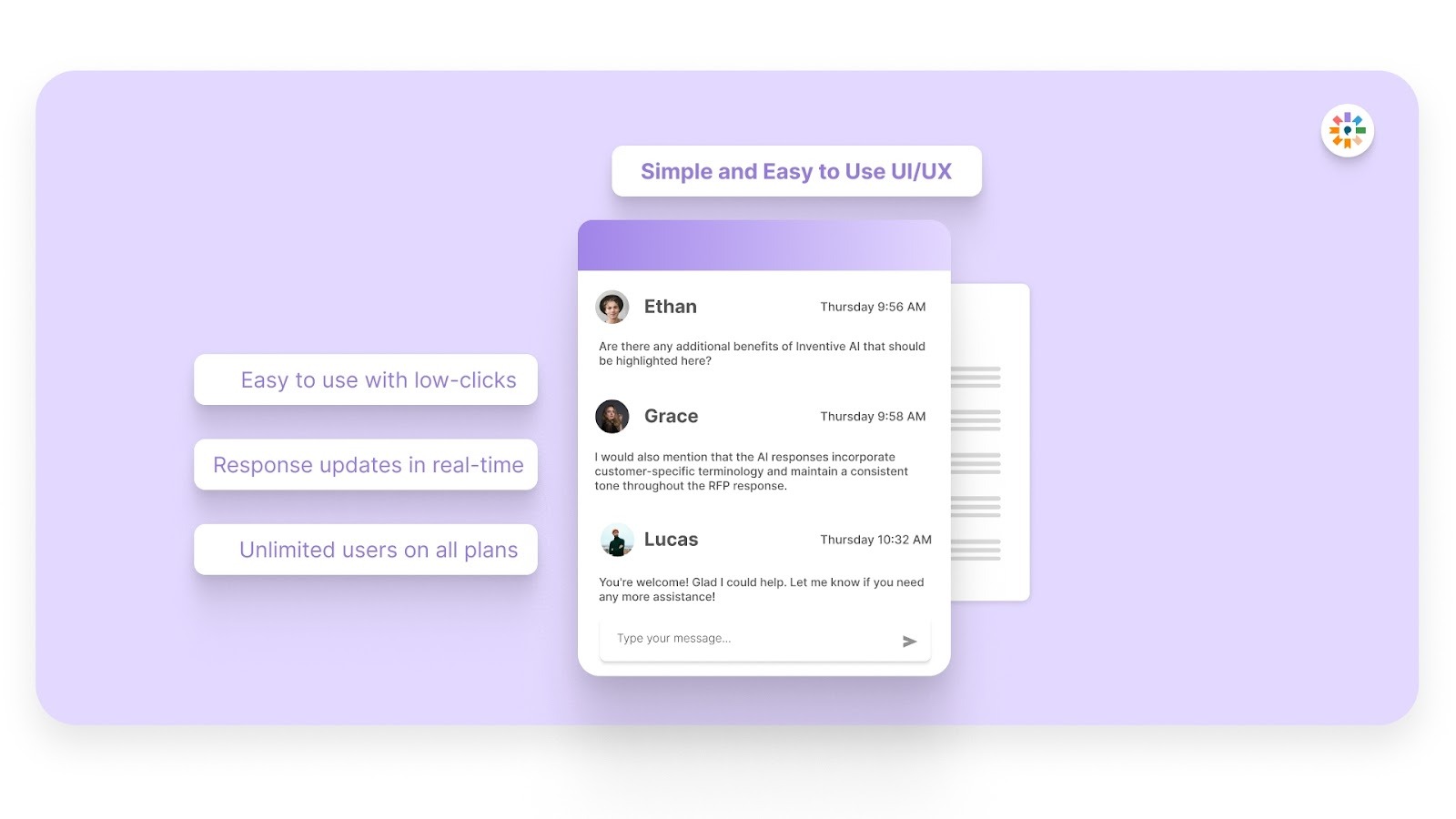
Inventive AI supports collaboration, review, and refinement without introducing workflow complexity. Proposal teams maintain momentum even when multiple contributors are involved.
This approach improves drafting efficiency, strengthens response credibility, and reduces proposal management friction.
Frequently Asked Questions (FAQs)
1. How detailed should a cloud computing RFP response be?
Your response should match the buyer’s evaluation depth. Focus on clarity, technical accuracy, and alignment with stated requirements. Avoid excessive detail that does not support decision criteria.
2. Can a single template work for different cloud service models?
Yes, if the template is modular. You can expand or compress sections based on SaaS, PaaS, or IaaS expectations. Structural consistency remains intact while content adapts.
3. What common mistakes weaken cloud computing proposals?
Vendors often submit generic responses, inconsistent technical claims, and outdated security statements. Missing buyer-specific alignment also reduces evaluation scores.
4. How often should vendors update their RFP templates?
Update templates whenever service offerings, compliance standards, or pricing structures change. Regular updates prevent misalignment and stale content risks.
5. Why do cloud computing RFPs require extensive security sections?
Buyers assess operational risk, data protection controls, and regulatory compliance exposure. Security responses help them validate vendor reliability and trustworthiness.

.avif)



.jpg)
.avif)