How to Write a Tender with AI in 2026: A Complete Guide

Every tender comes with a deadline you cannot miss and a decision you cannot control. What you can control is the quality of your response, and that is where most teams struggle.
You are expected to submit answers that are accurate, consistent, and clearly show your value. In reality, you spend hours pulling inputs from different teams, reusing old responses, and fixing inconsistencies just before submission. Most of your effort goes into managing the process, not improving the response.
According to research, 75% of organizations using workflow automation save over 4 hours per employee each week. In tender workflows, this time is often lost in manual drafting, coordination, and rework, which directly affects response quality and speed.
AI addresses this gap by changing how the work gets done. You start with structured drafts built from your existing knowledge, keep responses aligned across sections, and reduce the need for last-minute fixes.
This guide explains how to write a tender with AI in 2026, with a clear process to improve response quality, reduce effort, and submit proposals that are easier to evaluate and more likely to win.
Key Takeaways
- AI helps you move from manual, scattered workflows to a structured process, so you spend less time managing and more time improving responses.
- You start with context-based drafts instead of a blank page, which saves time and improves response quality from the beginning.
- Consistency and accuracy improve across sections, which makes your proposal easier to evaluate and reduces the risk of rejection.
- Following a clear step-by-step approach helps you understand requirements, structure responses, and submit stronger tenders with less rework.
- Inventive AI helps you apply this process at scale with faster drafts, better accuracy, and higher win rates.
Submit More Accurate and Consistent Tender Responses with AI
.png)
Most content explains AI as a faster way to write answers. That view is incomplete. When used correctly, AI reshapes how you manage the entire tender response process, from gathering inputs to submitting the final document.
1. Connecting your existing knowledge
You already have most of the answers needed for a tender. They are just spread across past responses, internal documents, and different tools. AI brings that information together and uses it to generate relevant responses.
2. Keeping responses consistent
Many tenders fall short because answers do not align across sections. Even small differences in wording can create confusion during evaluation. AI helps maintain consistency across technical, commercial, and compliance sections. Your responses stay aligned, which strengthens credibility and makes your proposal easier to evaluate.
3. Reducing rework before submission
A large part of tender work happens after drafting. You review, rewrite, and fix inconsistencies before submission. AI reduces this effort by generating structured drafts that already reflect your past responses and current requirements.
4. Improving response positioning
Strong tenders are not just complete. They clearly show why your solution is the right choice. AI helps you build responses that align with buyer priorities. You can focus on refining your message, highlighting differentiators, and presenting a clear narrative across sections.
5. Creating a repeatable process
Without a structured approach, every tender feels like starting from zero. AI helps you build a repeatable system. You reuse validated responses, follow a consistent structure, and reduce dependency on manual effort. Over time, this improves both speed and response quality.
The real impact of AI is not limited to faster drafting. It helps you submit responses that are aligned, accurate, and easier to evaluate.
Handle Every Stage of the Tender Process Faster and with Better Control
.png)
To understand how to write a tender with AI, you need to see how it fits into your workflow. AI supports you at every stage, not just during writing.
1. Tender intake and qualification
When a tender comes in, you first need to understand what is required and decide if it is worth your time.
AI helps you go through the document quickly. It highlights key requirements, evaluation criteria, and important details. You get clarity faster and avoid spending time on the wrong opportunities.
2. Structuring the response
Before writing, you need a clear structure. Without it, responses can feel messy and hard to follow.
AI helps you organize your response based on the tender requirements. It gives you a clear starting point, so you are not figuring everything out on your own.
A well-structured response improves your chances of success in an invitation to tender.
3. Drafting the response
This is where most of your time goes. Starting from a blank page slows you down.
AI gives you a first draft using your past responses and available content. You are not copying old answers, but building on what you already have.
You focus on improving the draft instead of starting from scratch. This is where AI becomes more efficient.
4. Collaboration across teams
Tenders involve inputs from different teams, which can slow things down.
AI keeps everything in one place. You do not need to chase updates across emails or messages. Everyone works on the same response, which makes the process smoother.
5. Review and final submission
Before submitting, you need to check that everything is correct and aligned.
AI helps you catch inconsistencies and outdated content. This reduces last-minute fixes and improves the quality of your final response.
AI makes each stage easier to handle. You spend less time managing the process and more time improving your response.
This prepares you for the next step, where you learn exactly how to write a tender with AI.
Also Read: Understanding Request for Tender (RFT) and Related Processes
Follow a Clear Process to Write Stronger Tender Responses with AI
Let’s break down how to write a tender with AI step by step. This is where your process changes from manual effort to a structured, repeatable workflow.
Step 1: Understand what the tender is really asking
Most delays start here. You read through a long document, try to interpret requirements, and still feel unsure about what matters most.
AI helps you cut through that noise. It highlights key requirements, surfaces evaluation criteria, and brings attention to details that can impact your response. You get clarity early, which helps you avoid misalignment later.
Step 2: Build a clear response structure
Once you understand the requirements, the next step is organizing your response.
Without a clear structure, answers feel scattered and incomplete. AI helps you map sections directly to the tender requirements and organize them in a logical flow. You are no longer guessing how to structure your response.
Step 3: Start with a strong draft, not a blank page
This is where most teams lose time. Starting from scratch slows everything down, especially when deadlines are tight.
AI changes that starting point. You begin with a draft built from your past responses and available knowledge. The content is already aligned with the tender, so you are not piecing together answers manually.
Instead of writing everything yourself, you focus on improving what is already there.
Step 4: Adjust your response to the buyer
A complete answer is not enough. It needs to feel relevant to the buyer.
AI helps you refine your responses, but this is where your input matters most. You shape the answers around the buyer’s priorities, address their specific concerns, and make your solution easier to understand.
Step 5: Check for alignment across sections
Even strong answers can fail if they do not align.
You might have different teams contributing to different sections, which often leads to small inconsistencies. These can create doubt during evaluation.
AI helps you identify these gaps early. You can fix misalignment before submission, instead of discovering it at the last moment.
Step 6: Strengthen your positioning
At this stage, your response should already be complete. Now the focus shifts to how it is presented.
You refine how your solution is positioned, highlight what makes you different, and make sure your message flows clearly across sections. The goal is to make it easy for the evaluator to see why you are the right choice.
Step 7: Prepare for submission with confidence
The final stage is about making sure everything is ready to go.
You check that all requirements are covered, responses are aligned, and the document is clear and complete. AI supports this by flagging anything that needs attention, so you are not rushing through last-minute fixes.
You move into submission knowing your response is strong and consistent.
When you follow this process, writing a tender becomes less about managing chaos and more about improving quality. That is the real advantage of using AI.
Avoid Common AI Mistakes That Reduce Response Quality and Cost You Deals
Many teams use AI but do not see better results. The issue is usually how AI is applied in the process.
1. Using generic AI tools
Generic AI tools create broad answers that are not specific to your company or solution.
To avoid this, use AI with access to your past responses and internal content. This ensures answers reflect your actual capabilities. When you do this, your responses become more relevant and easier for evaluators to trust.
2. Missing context
AI without the right inputs produces incomplete or incorrect answers.
You need to provide access to documents, product details, and past tenders. This gives AI the context needed to answer properly. When context is clear, your responses match the tender requirements more closely.
3. Not checking consistency
Different sections of a tender are often written by different teams. This can lead to conflicting answers.
Review your responses for alignment before submission. AI can help identify inconsistencies, but they still need to be corrected. When your responses are consistent, your proposal is easier to evaluate and more reliable.
4. Reusing outdated content
Old responses may include outdated features, timelines, or examples.
Keep your content updated and review reused answers before including them. AI can help flag outdated information if your data is maintained properly. When your content is current, your responses stay accurate and reduce the risk of rejection.
5. Skipping final review
AI can generate drafts, but it does not replace final review.
Always check that responses are complete, clear, and aligned with the tender. Focus on accuracy and relevance, not just speed. When you review properly, you reduce errors and improve the overall quality of your submission.
Avoiding these mistakes helps you use AI effectively. You get better responses, fewer errors, and stronger submissions.
Also Read: Tips for Effective Tender Writing Proposals
5 Key Benefits of Using AI in Tender Management
When used correctly, AI makes the tender process easier and improves your results.
1. Faster drafting: Writing from scratch takes time. AI gives you a draft based on your existing content. You spend less time writing and more time improving the response.
2. Higher accuracy: Manual work can lead to errors or missing details. AI helps you use the right information, so your responses are more accurate and complete.
3. Better consistency: Different sections of a tender can sometimes say different things. AI helps keep your answers aligned across the entire response.
4. Less rework: A lot of time goes into editing and fixing responses. AI gives you a stronger starting point, so you spend less time rewriting.
5. Higher win rates: Clear and consistent responses are easier to evaluate. This improves your chances of moving forward and winning the deal.
These benefits make the process simpler and help you submit stronger responses every time.
Also Read: Checklist for Tender Response Management (+ Template)
Submit Higher-Quality Tender Responses Using Inventive AI
Inventive AI’s AI RFP Agent is designed to simplify your RFP response process. When you apply the steps discussed above, Inventive AI helps you execute them with better quality, consistency, and speed.
1. 2× higher quality responses
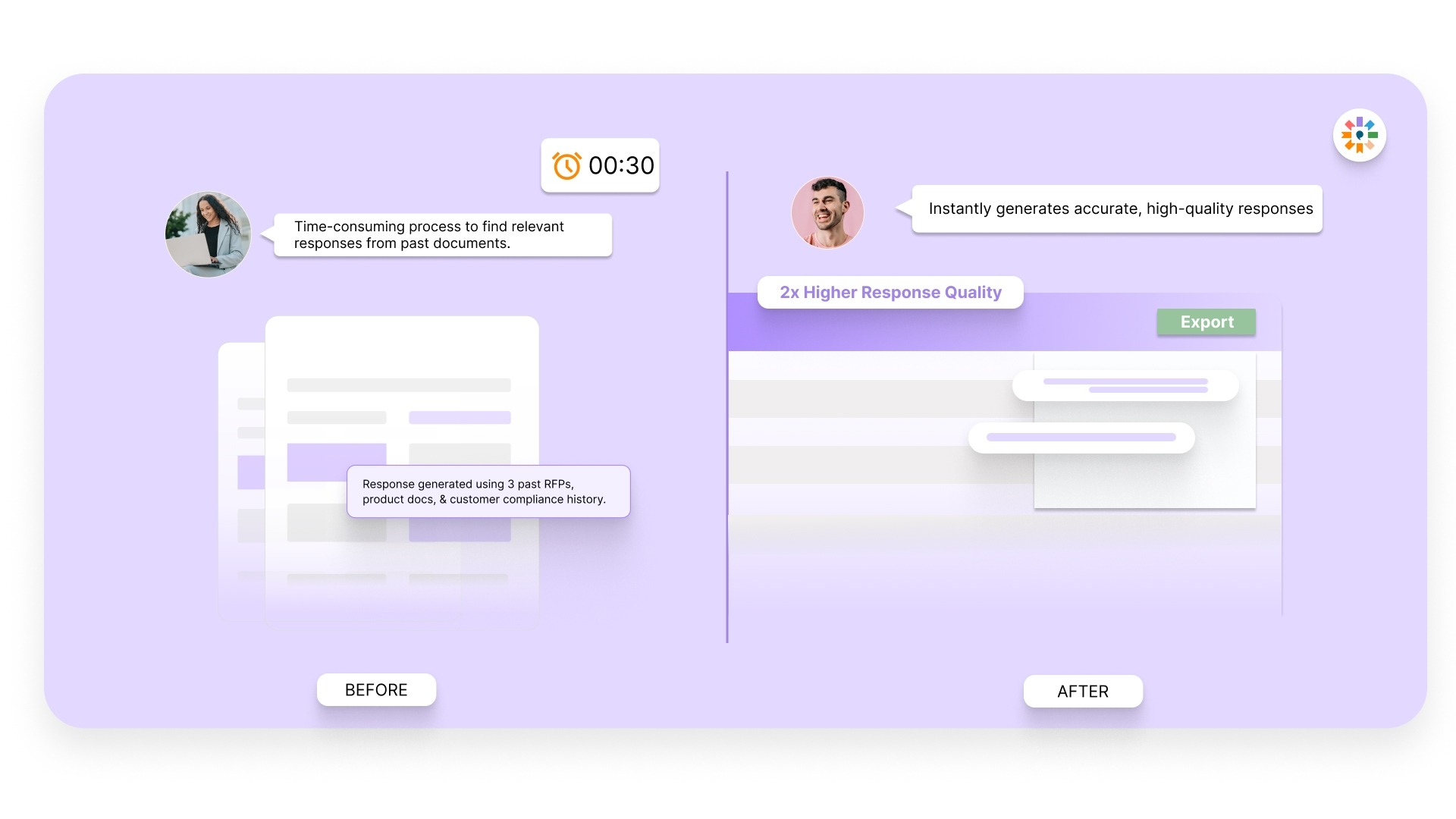
You do not just respond faster. You submit stronger responses with Inventive AI.
Inventive AI helps you generate answers that are complete, relevant, and aligned with the tender requirements. This reduces gaps and improves how your proposal is evaluated.
2. Context engine
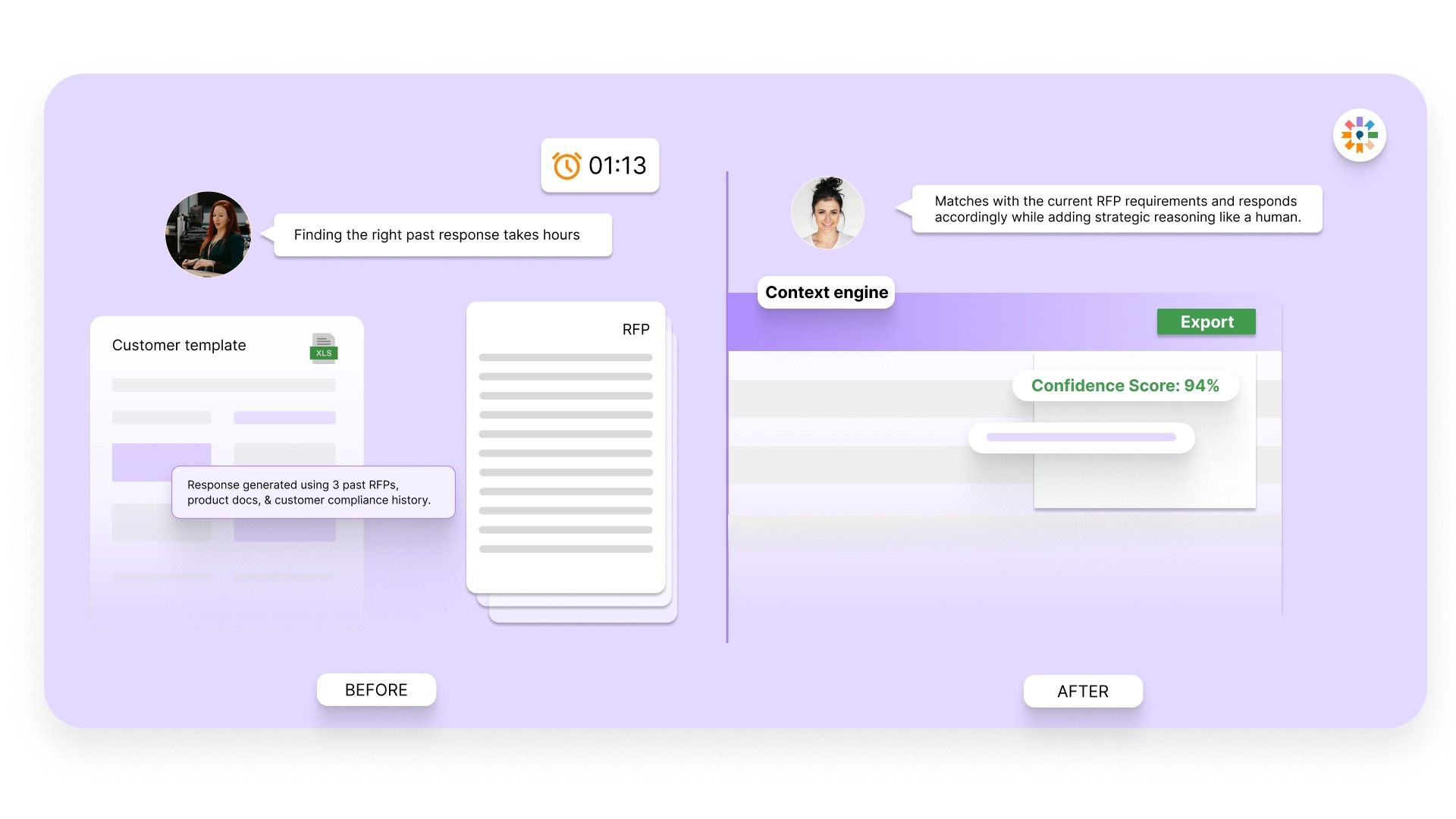
Your responses are built using your actual data, not generic inputs.
The context engine pulls from your past RFPs, documents, and knowledge sources. This ensures your answers reflect your capabilities and stay relevant to the tender.
3. Conflict detection
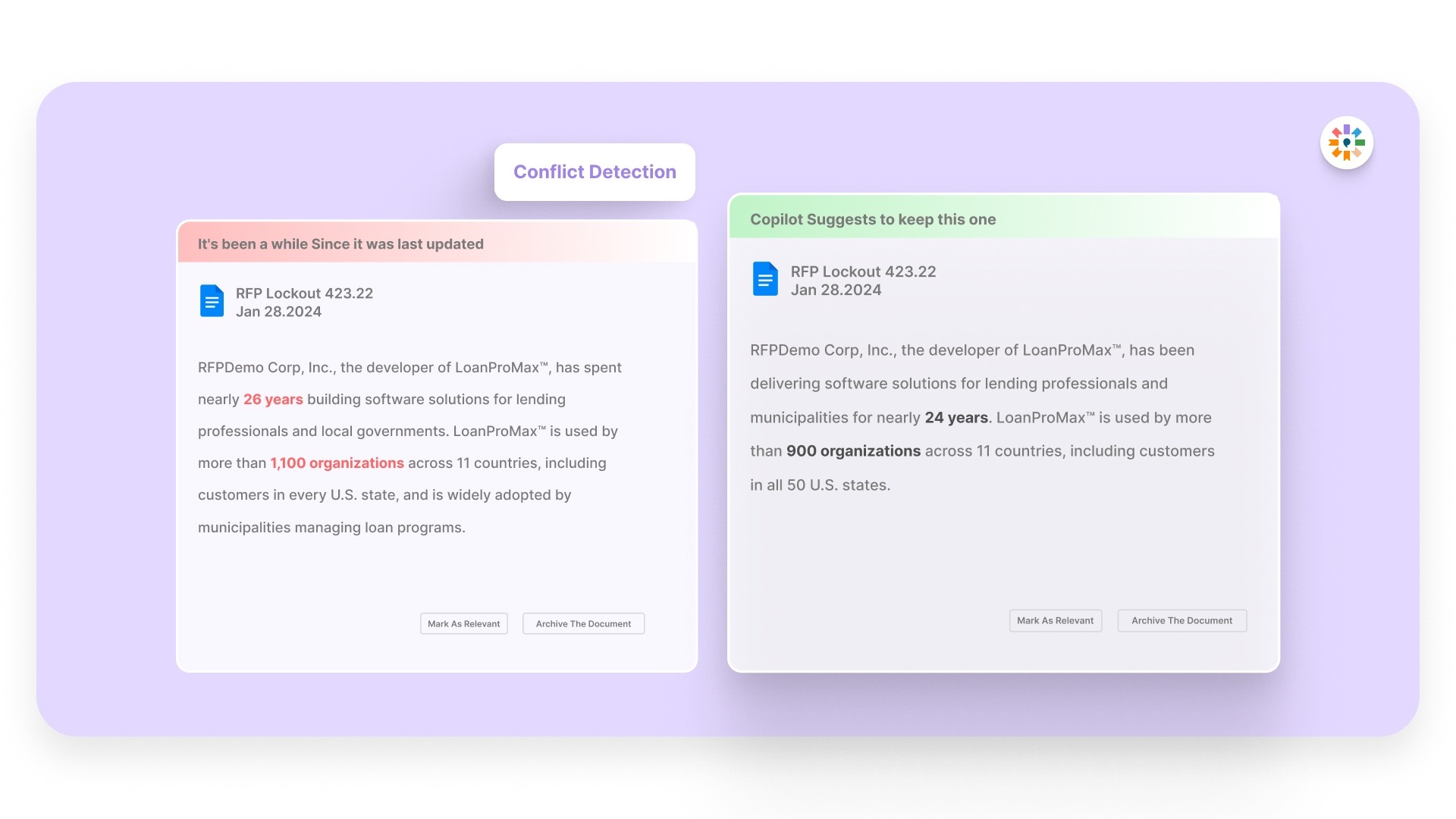
Inconsistencies across sections can weaken your proposal.
Inventive AI identifies conflicting information in real time, so you can fix issues before submission. This helps you maintain alignment across the entire response.
4. Outdated content detection
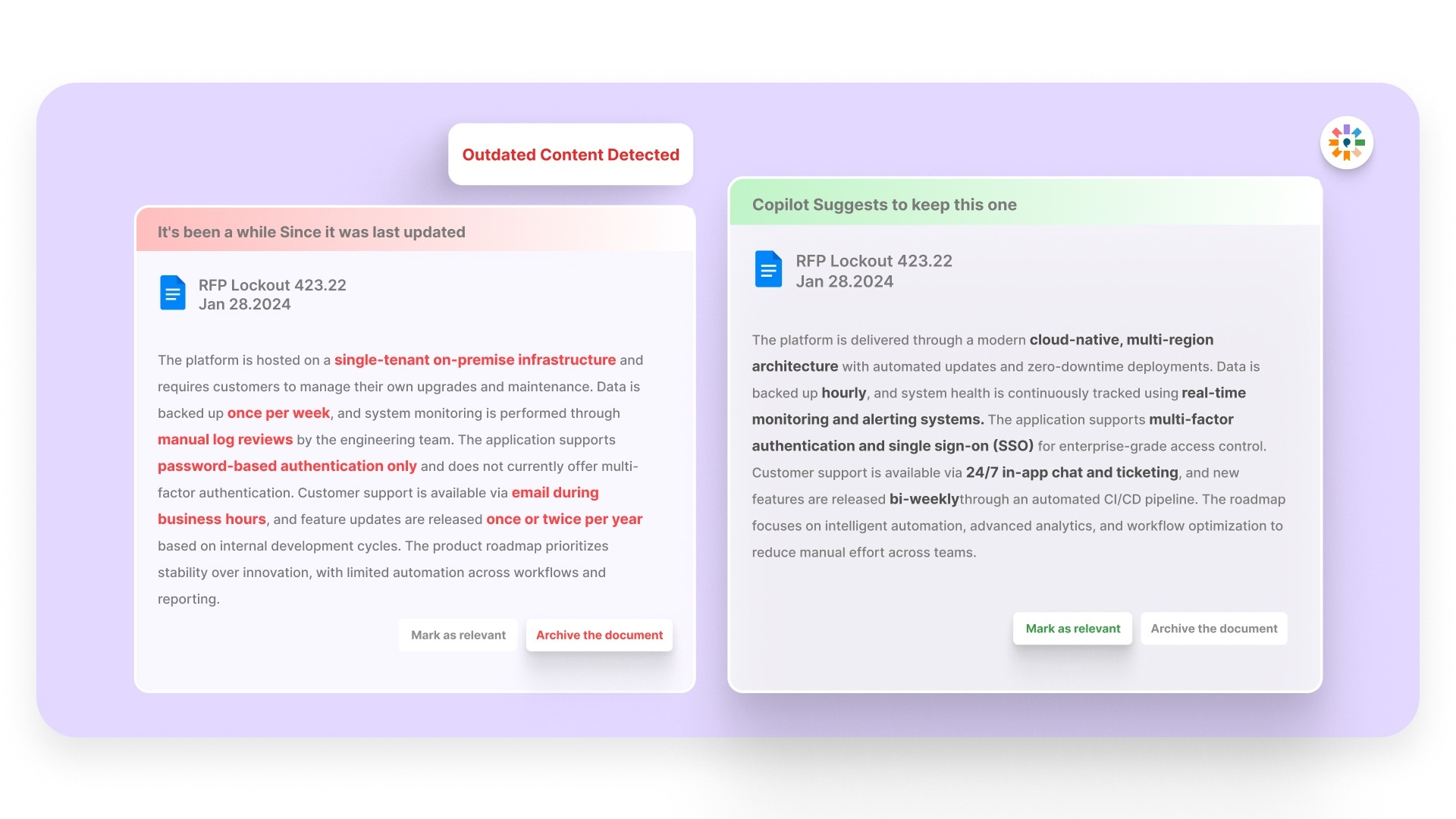
Old or incorrect information can reduce credibility.
Inventive AI flags outdated content and ensures you use only current and accurate information. This helps you maintain up to 95% accuracy in your responses.
5. Narrative-style proposals
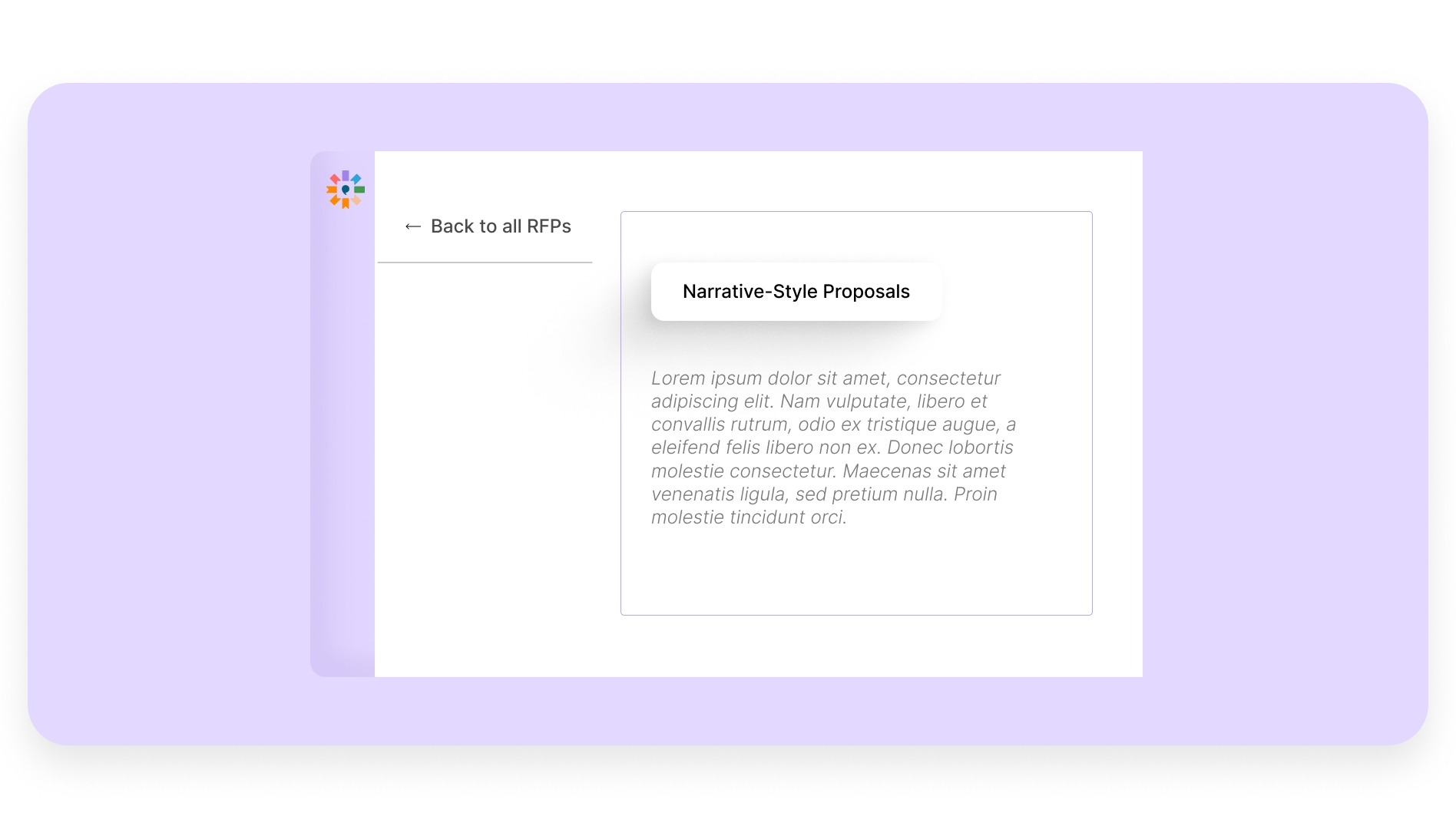
A strong tender is not just a set of answers. It needs to flow clearly.
Inventive AI helps you create responses that connect across sections and present a clear message. This makes your proposal easier to understand and evaluate.
6. Simple, easy-to-use interface
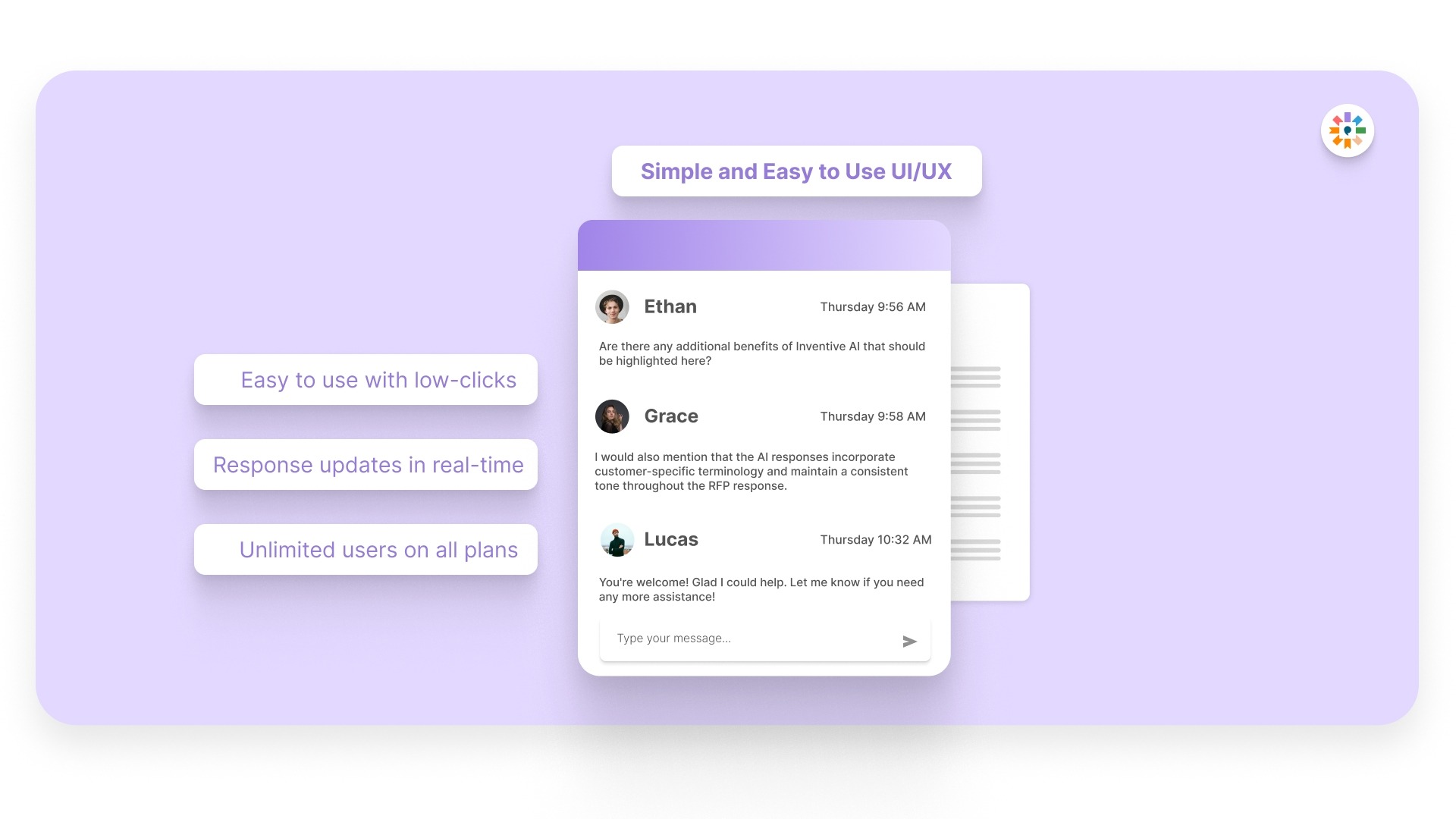
You do not need a complex setup to get started.
Inventive AI is designed to be easy to use, so your team can quickly start creating high-quality responses without a steep learning curve.
With AI-powered RFP response software, Inventive AI helps you move from manual effort to a structured process. You spend less time managing responses and more time improving them.
Frequently Asked Questions (FAQs)
1. How do you ensure AI-generated tender responses match your company’s voice?
AI can generate structured drafts, but your company’s tone and positioning come from your existing content and inputs. When your knowledge base is well-organized, AI uses it to produce responses that reflect your messaging. Regular review and updates help maintain consistency over time.
2. Can AI handle complex or technical tender requirements?
AI can support technical responses if it has access to the right documents and past answers. It helps organize and draft responses, but subject matter experts should still review technical sections to ensure accuracy and completeness.
3. How much time can teams realistically save using AI for tender responses?
Time savings depend on your current process, but most teams reduce drafting and coordination time significantly. Instead of starting from scratch, you work with structured drafts and existing content, which speeds up the overall response cycle.
4. Is AI suitable for large, multi-team tender responses?
Yes. AI is especially useful when multiple teams are involved. It helps keep all inputs in one place, reduces back-and-forth communication, and ensures that responses stay aligned across sections.
5. What should you prepare before using AI for tender responses?
You should organize your past responses, product information, and key documents. A clean and updated knowledge base helps AI generate more accurate and relevant responses, which improves the overall quality of your submission.

.avif)



.avif)