Best Tender Response Software in 2026 for Vendors

If you’re responding to tenders regularly, you already know the pattern. A high-value opportunity lands in your inbox. Deadlines are tight. Content is scattered. Sales, solutions, and compliance all need to weigh in fast.
Now ask yourself one question: how much revenue time is being spent just assembling responses? Administrative tasks like responding to an RFP can consume most of the sales team's time. For enterprise vendors, that time adds up quickly, delaying active deals and pushing revenue targets further out of reach.
That strain is forcing vendors to rethink how tender responses are handled in 2026.
Modern tender response software helps you move faster without sacrificing accuracy. It keeps answers consistent, reduces rework, and ensures every submission reflects what buyers actually expect.
Key Takeaways
- Tender response software helps vendors respond faster, stay accurate, and manage tenders at scale without burning valuable selling time.
- In 2026, AI-powered tools outperform manual and rules-based systems by improving response quality, consistency, and speed.
- Tools vary widely: some focus on structure and workflows, others on design, while AI-native platforms focus on response quality.
- Inventive AI stands out by delivering higher-quality, context-aware responses with built-in conflict and outdated content detection.
- Choosing the right tool is a revenue decision; vendors need software that improves win rates, not just organizes documents.
Below are the widely used tender response tools vendors consider in 2026. Each serves a different maturity level and sales motion.
Best Tender Management Response Software for Vendors in 2026
| Tool | Features and Capabilities | Pricing | Rating |
|---|---|---|---|
| Inventive AI | AI RFP Agent with context-aware drafting, intelligent conflict & outdated content detection, unified knowledge hub, and productivity AI agents. It has advanced automation built for high-accuracy tender responses. | Usage-based pricing | 5/5 |
| Loopio | Centralized content library with workflow and automated suggestions, but automation is less adaptive and requires manual upkeep compared to modern AI-native systems. | Starts at $20,000/year | 4.4/5 |
| Proposify | Visual proposal builder with templates and branding focus, strong for polished sales materials, but not built for structured, requirement-driven tender responses. | Starts from $29/month | 4.2/5 |
| Qwilr | Interactive web-based proposals with engagement analytics, great for visual sales documents but lacks deep tender automation and structured question-response workflows. | Starts at $39/month | 4.6/5 |
| Responsive (formerly RFPIO) | Broad RFP and questionnaire automation with deep integrations and governance, strong for complex enterprise workflows, but often heavier to manage. | Subscription-based pricing | 4.3/5 |
| AutoRFP | Project-based AI RFP response automation with unlimited users and straightforward pricing, good speed and adoption, but less governance depth for complex enterprise tenders. | Starts at $899/month | 4.9/5 |
| Qvidian | Enterprise-grade proposal & RFP automation with branded templates and governance, solid for large teams, but automation and AI features lag newer AI-native tools. | Subscription-based pricing | 4.7/5 |
| 1Up | AI-native RFP tool that focuses on automation and speed. It is useful for rapid drafts, but still catching up in contextual accuracy and governance compared with leading tools. | Starts at $300/month | 4.9/5 |
Top 8 Tender Response Software Vendors Are Using in 2026
Responding to tenders efficiently is key to winning contracts, and the right tender response software can make all the difference.
Here, we’ll take a look at the top 8 tender response software vendors that are helping businesses succeed in tender submissions.
1. Inventive AI
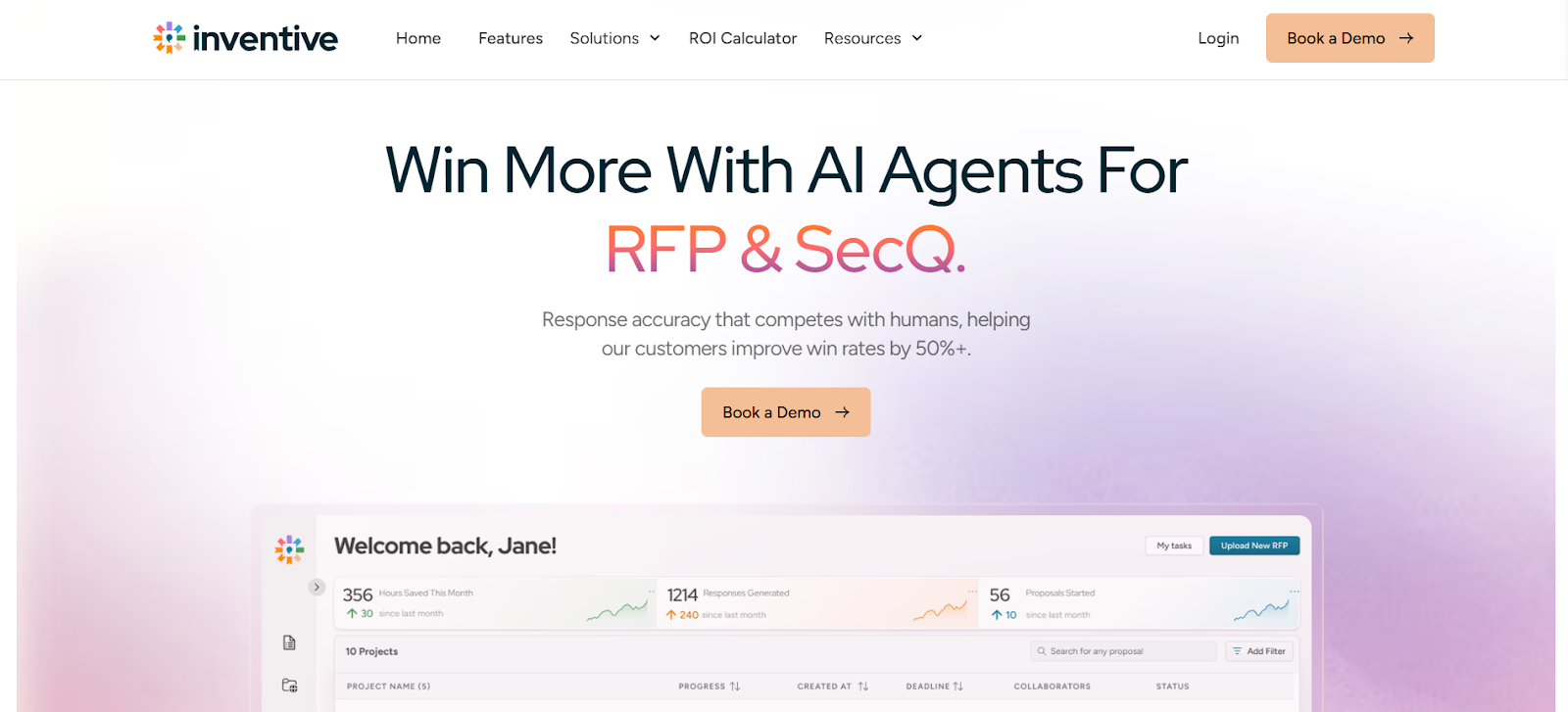
Inventive AI stands out as a market leader in tender response automation, combining industry-leading response quality with powerful AI-driven workflows. Its capabilities go beyond basic drafting tools to help vendors generate tailored, accurate, and evaluator-aligned tender responses that directly impact win rates and efficiency.
Inventive AI is designed for teams that treat tender responses as strategic revenue opportunities, not paperwork.
Key Features
2× Higher Quality Responses
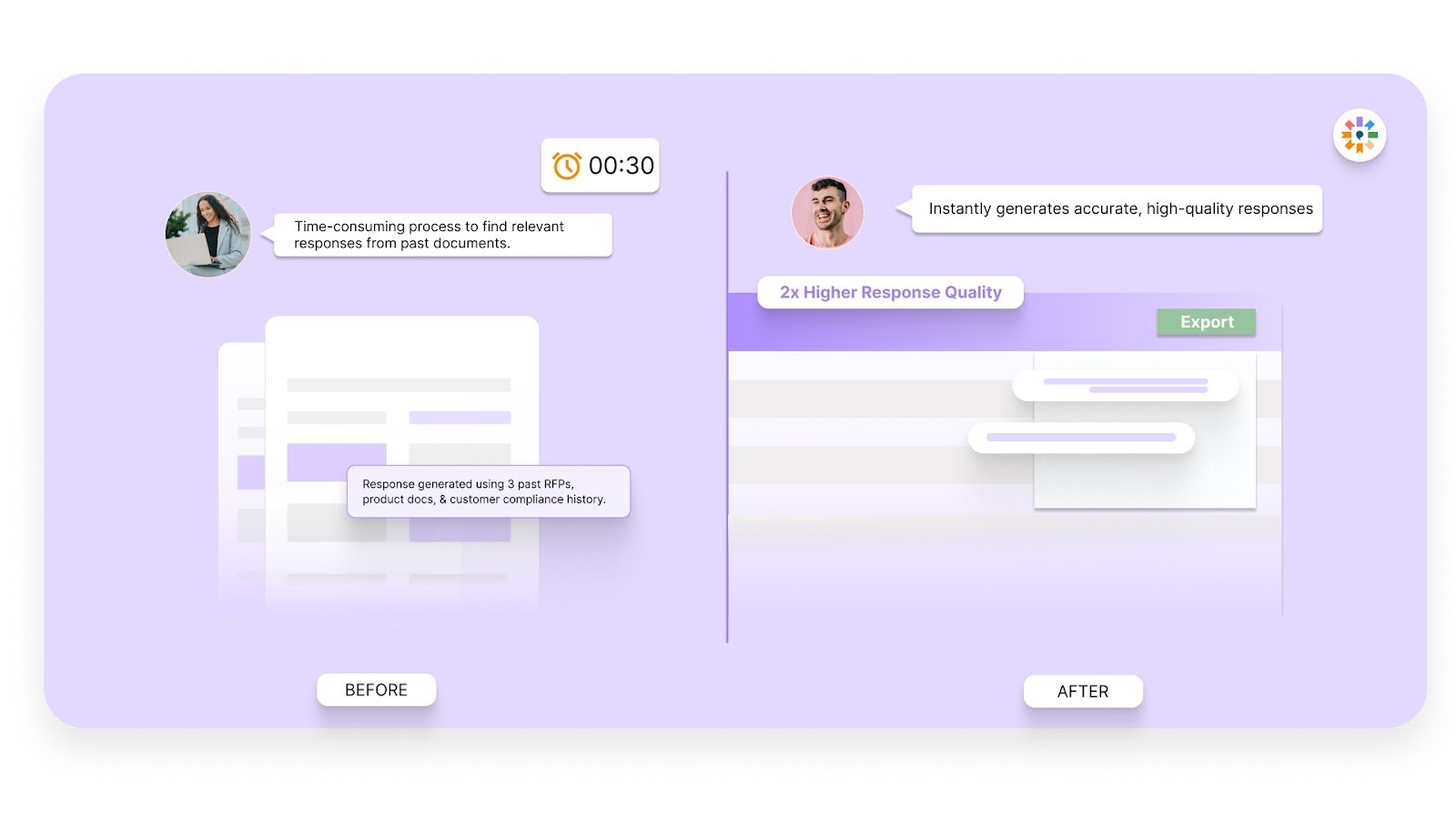
Inventive AI generates drafts that closely match tender requirements using approved knowledge sources. This results in responses that need only minor refinements, reducing rewrite cycles and improving evaluator confidence.
Context Engine
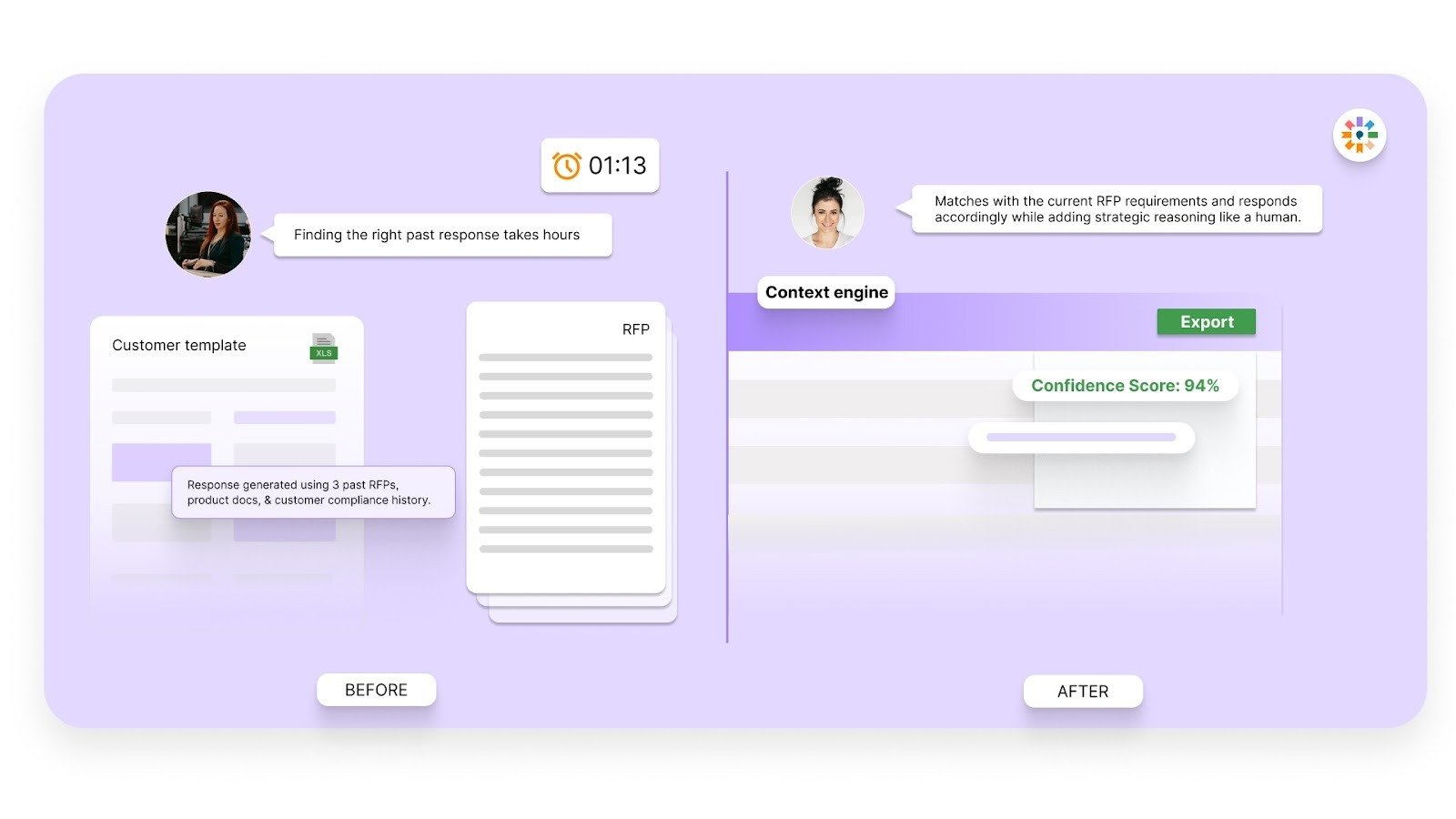
The Context Engine interprets tender questions in relation to scope, terminology, and evaluation criteria. This allows responses to stay specific to the opportunity instead of relying on generic or recycled language.
Conflict Detection
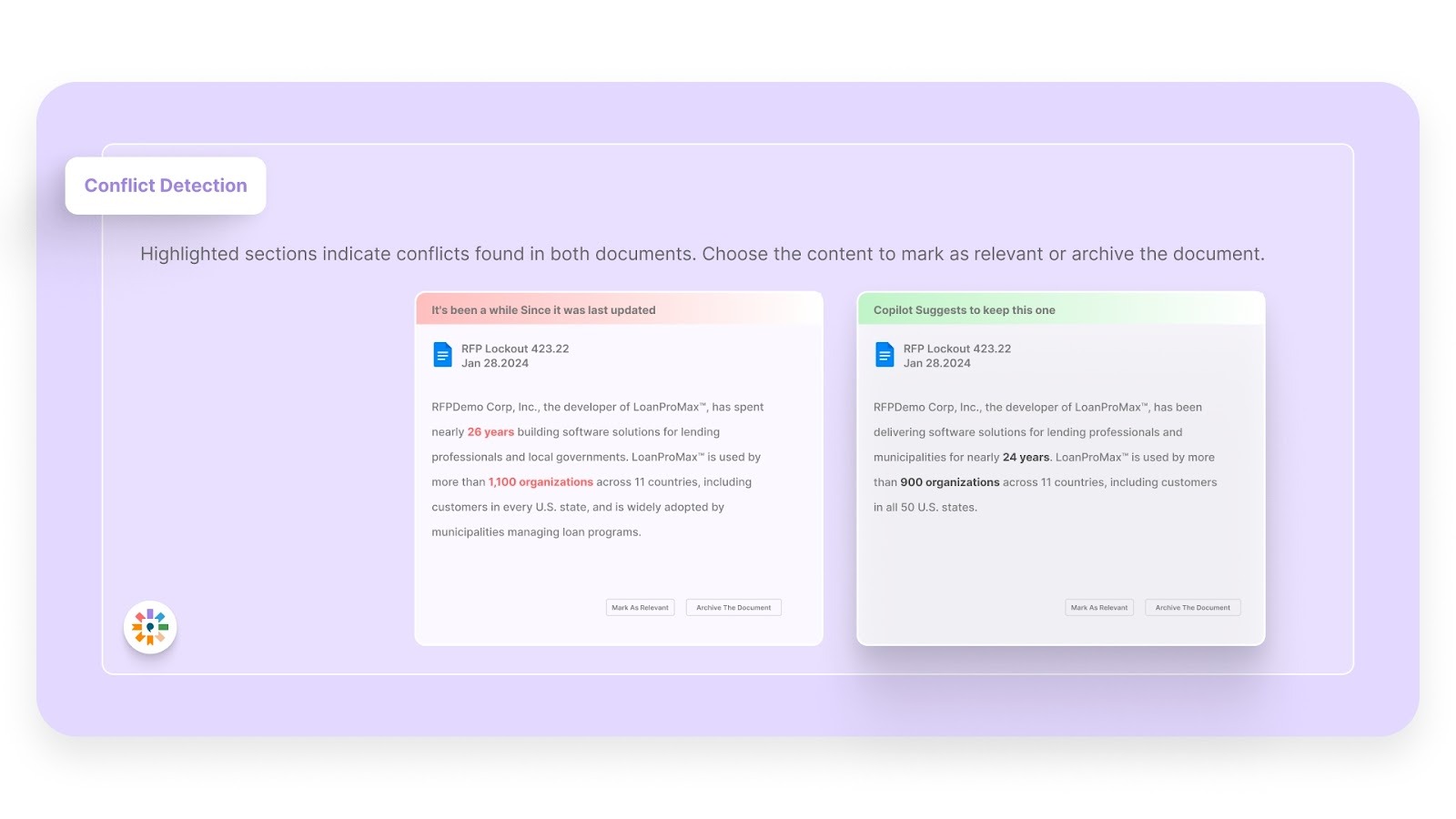
Inventive AI automatically identifies contradictory statements across answers and source content. This helps vendors avoid inconsistencies that often surface during buyer reviews and compliance checks.
Outdated Content Detection
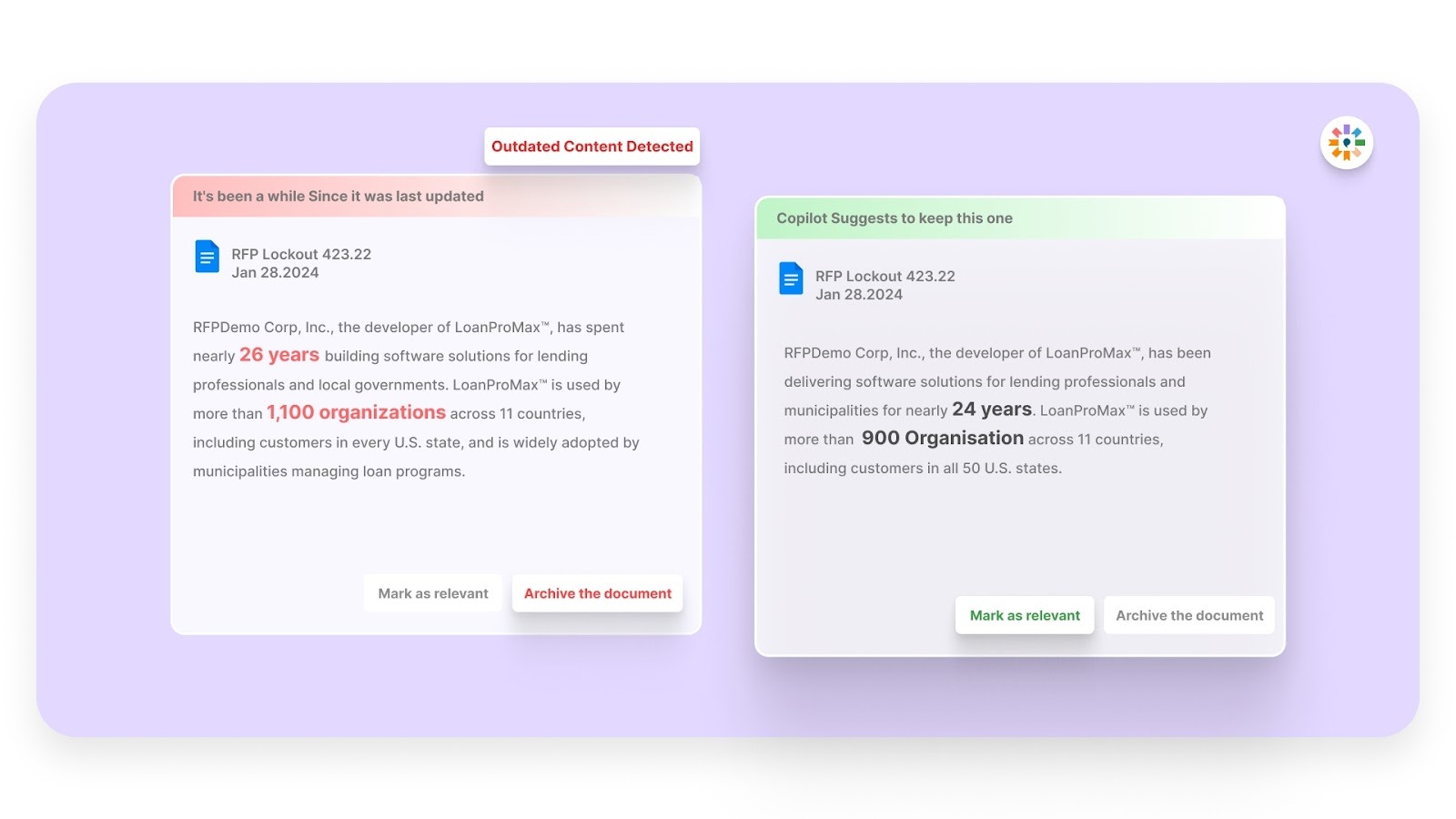
The platform flags stale or superseded information during drafting. This ensures every submission reflects current offerings, policies, and capabilities, reducing the risk of credibility issues.
Simple, Easy-to-Use Interface
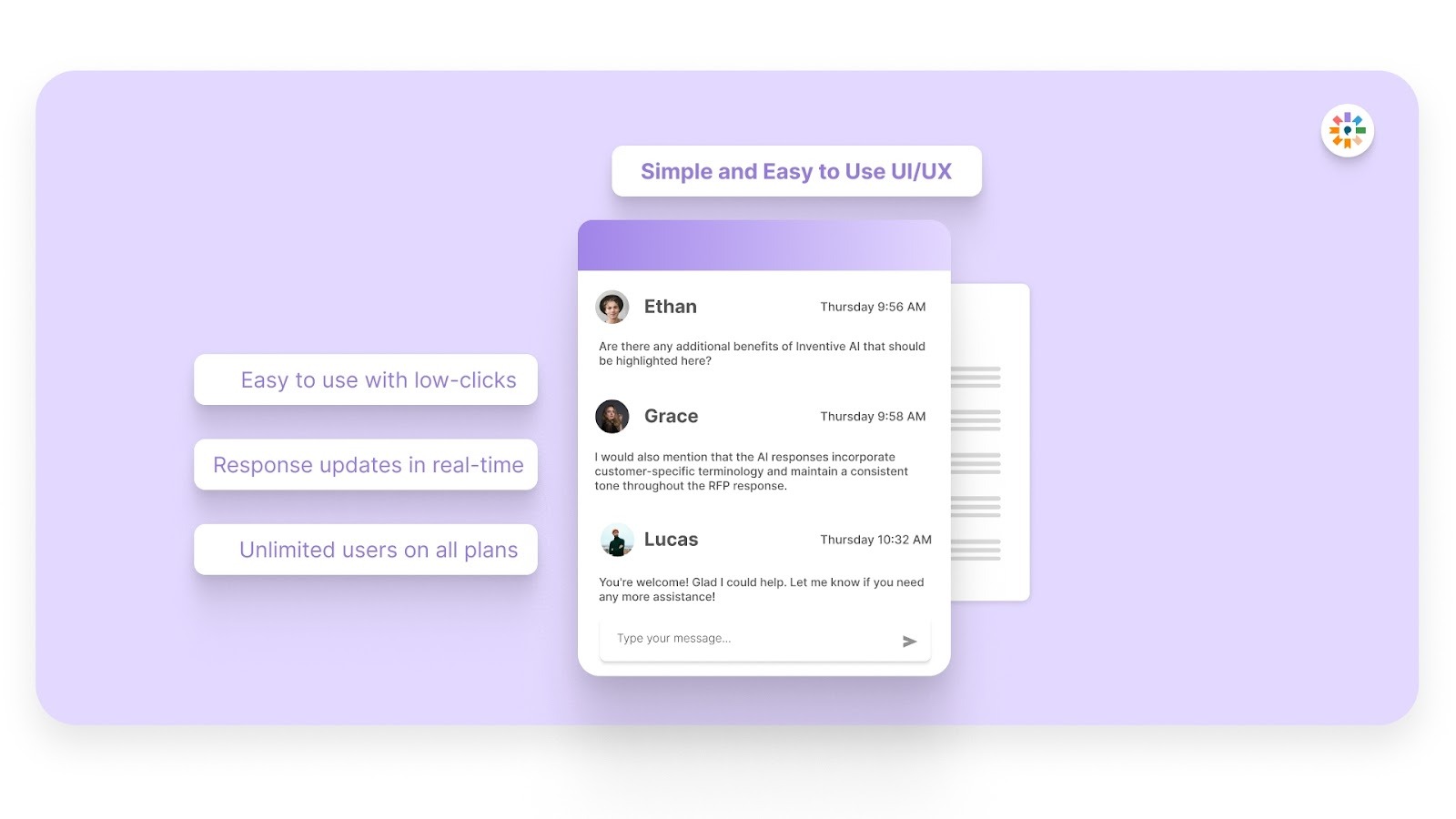
Inventive AI is designed for fast adoption across sales, solutions, and proposal teams. Clear workflows and intuitive navigation allow teams to collaborate effectively without extensive training.
What Makes Inventive AI Stand Out?
- 50% Higher Win Rate: Many users report significant improvements in tender success rates after switching to Inventive AI.
- 90% Faster Responses: Teams complete responses far quicker than manual workflows, freeing capacity for more opportunities.
- 95% Accurate Responses: Users highlight the platform’s ability to produce contextually accurate answers with little editing needed.
- 66% Responses Need No Editing: A large share of AI-generated answers require minimal adjustments before submission, reflecting strong baseline accuracy.
The Limitations Of Inventive AI
- Limited analytics: Leadership-level dashboards for tracking content performance, reuse trends, and deep reporting are still maturing.
Best For
Inventive AI serves a wide range of vendor scenarios, including:
- Proposal teams handling frequent public and private tenders
- Sales teams responding to high-stakes, complex RFIs or security questionnaires
- Mid-market vendors scaling their tender efforts without adding headcount
- Enterprise sales operations requiring consistent, brand-aligned responses
- Cross-functional teams need unified knowledge management with minimal manual governance
Pricing
| Plan Type | Pricing |
|---|---|
| Usage-based pricing | Varies by usage and team size |
Ratings and Reviews
Ratings: 5/5
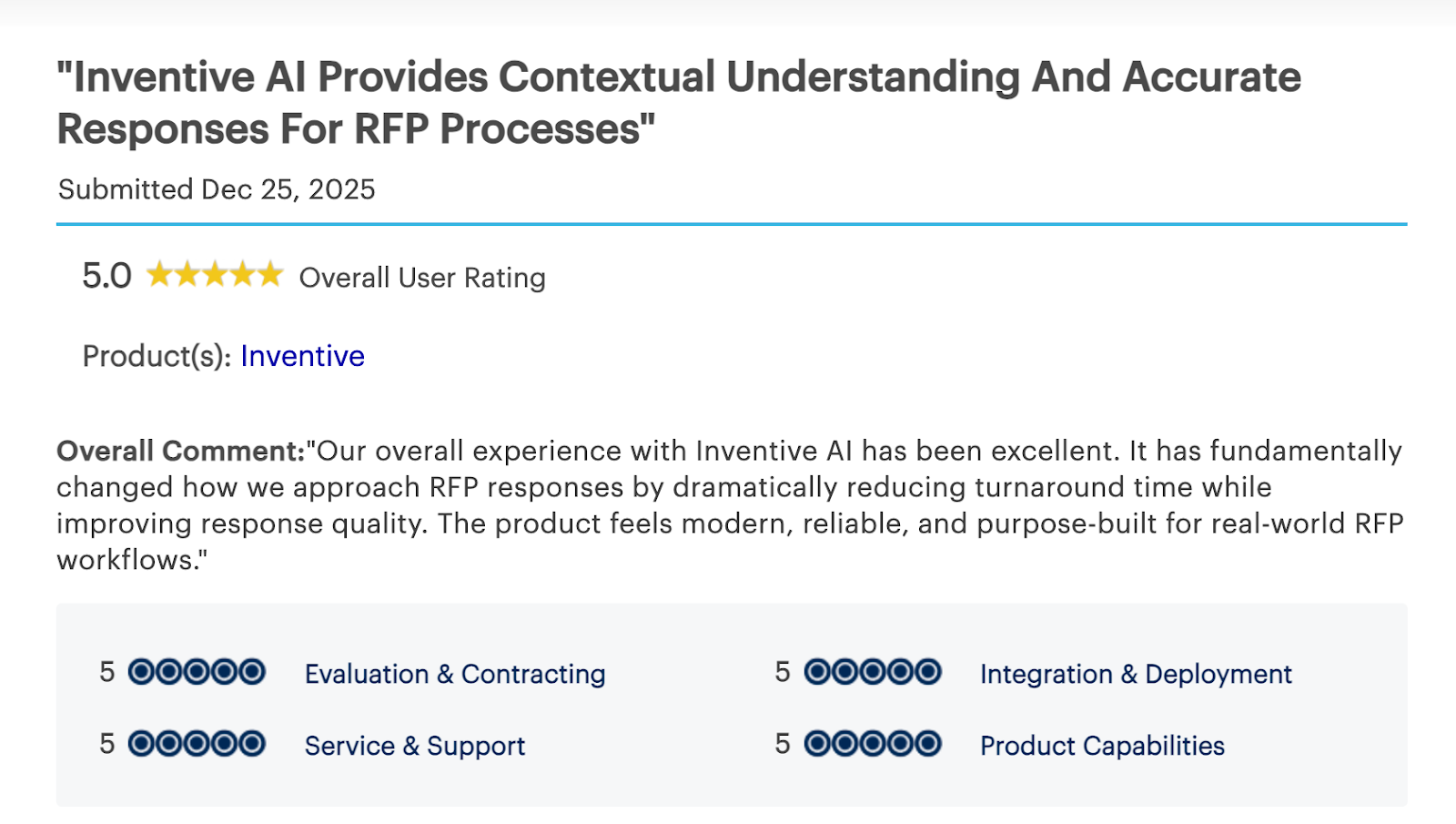
Inventive AI delivers advanced capabilities that help vendors improve response quality, complete tenders faster, and increase their chances of winning.
2. Loopio
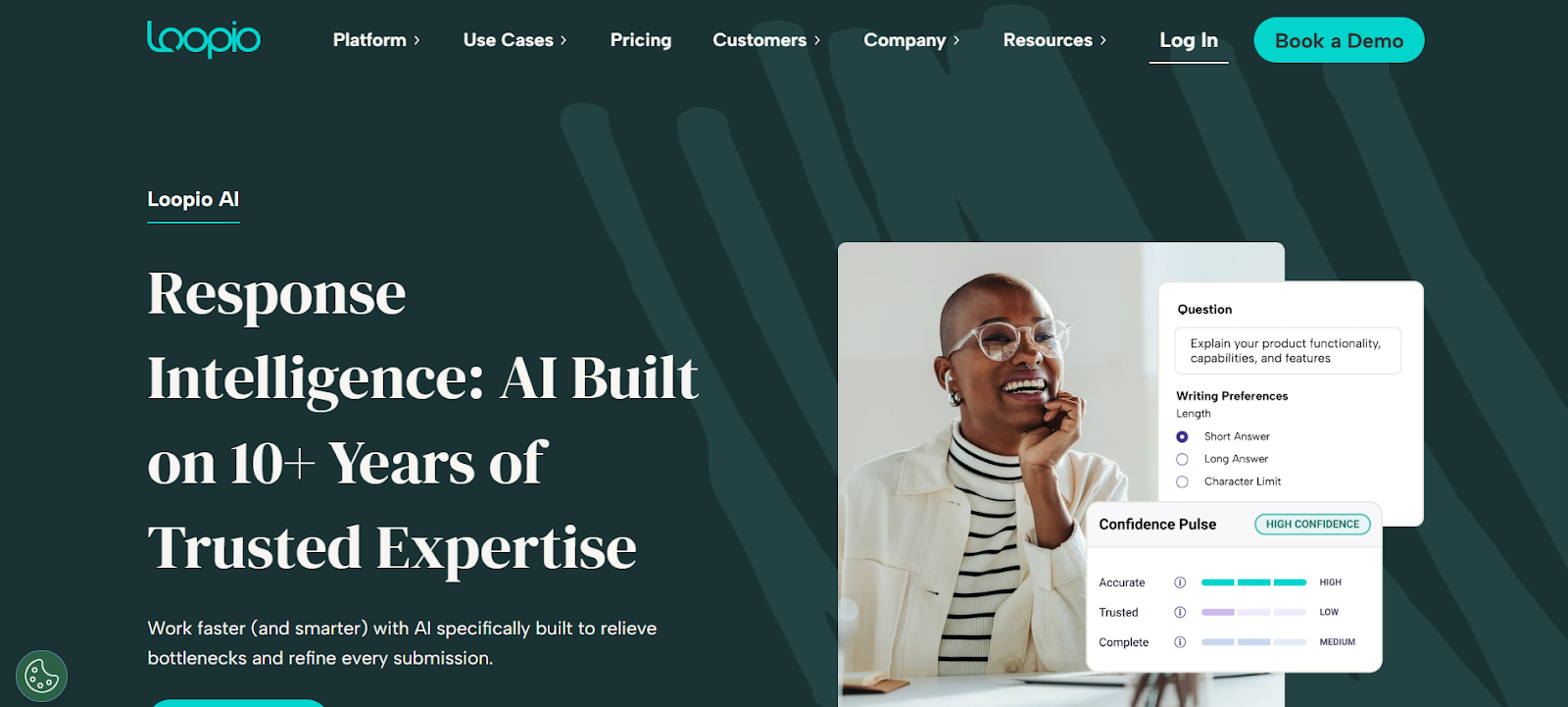
Loopio is a well-established tender and RFP response platform known for its structured content library and workflow controls. It is widely used by teams that want consistency and predictability in how responses are managed, especially when multiple contributors are involved.
However, its approach remains largely rules-based, relying heavily on manual content maintenance rather than adaptive intelligence.
Key Features
- Centralized Content Library
Loopio stores approved answers in a shared repository that teams can reuse across tenders. This helps reduce duplication and ensures everyone pulls from the same source material. - Assignment and Deadline Tracking
The platform allows proposal managers to assign questions to contributors and track progress against deadlines, helping teams stay organized during active tenders. - CRM Integrations
Loopio integrates with CRM systems to surface opportunity context alongside responses, helping teams align submissions with account information.
What Makes Loopio Stand Out
- Clear workflows and structure: Its task assignments, ownership tracking, and review stages make it easier to manage multi-user participation without confusion.
- Predictable response management: It suits organizations that rely on standardized answers and well-defined internal processes rather than dynamic customization.
The Limitations of Loopio
- Lack of Contextual or deal-specific responses: Loopio has limited ability to generate contextual or deal-specific responses. Answers often rely on stored content, which can feel repetitive or generic when tenders require tailored narratives.
- Significant manual rewriting: Many teams find that responses still require significant manual rewriting to sound persuasive or align with evaluation criteria.
- Less suited for complex enterprise narratives: It is also less suited for complex enterprise narratives, where tenders demand value-led storytelling rather than direct question-answer reuse.
Best For
Loopio works best for:
- Mid-to-large teams with structured proposal processes
- Vendors responding to repetitive tenders with similar requirements
- Organizations prioritizing workflow control over deep customization
- Teams with dedicated content owners maintaining libraries
Pricing
| Plan Type | Pricing |
|---|---|
| Subscription | Starts at $20,000/ year |
Ratings and Reviews
Ratings: 4.4/5
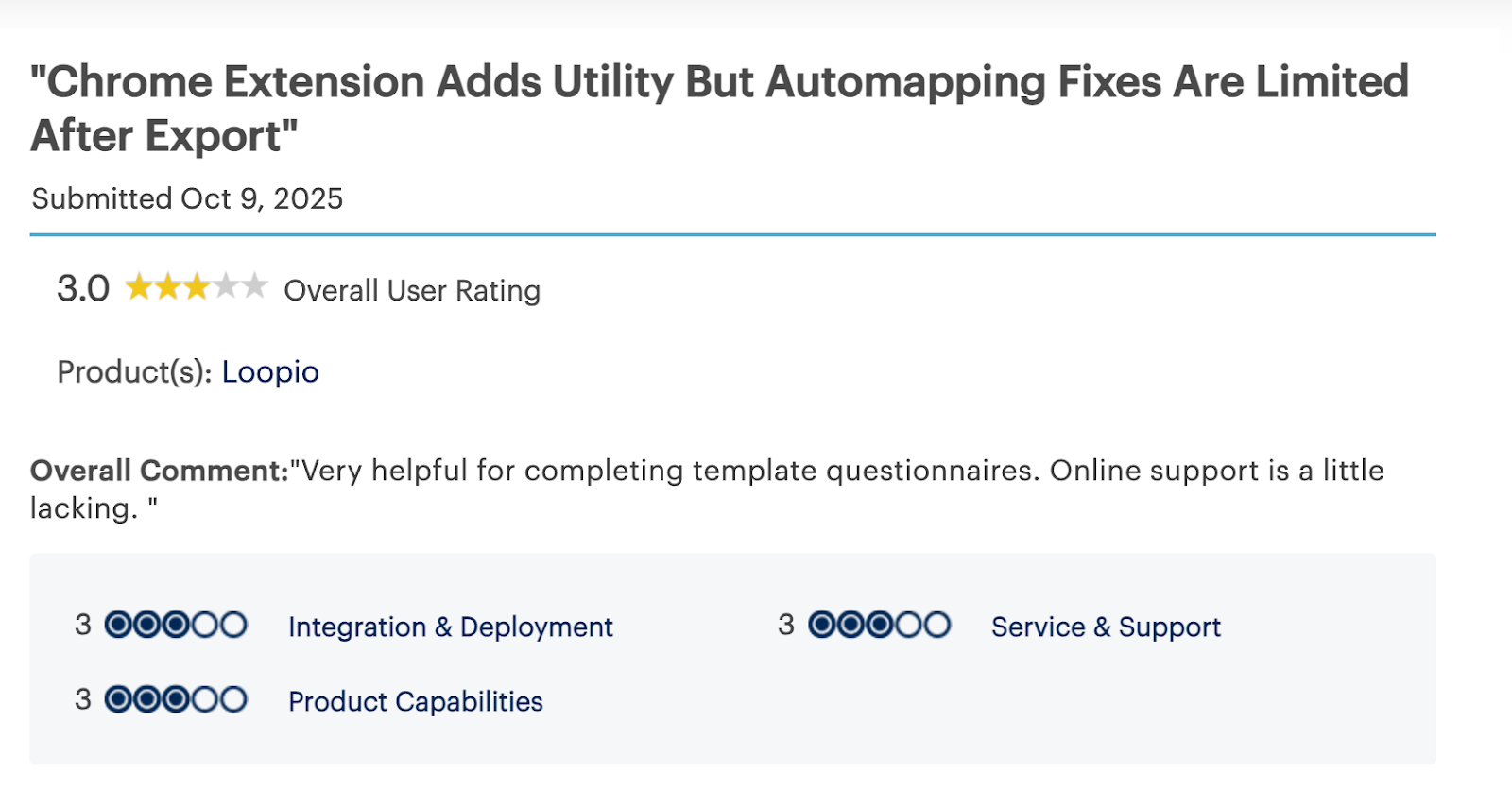
Loopio is a dependable choice for vendors seeking structure and consistency in tender responses. However, teams focused on response quality and customization may find its manual dependency limiting as tenders become more competitive.
Suggested Alternative: Inventive AI
Inventive AI is designed for vendors who need more than structured workflows and content reuse. It focuses on improving response quality, relevance, and differentiation at scale.
3. Proposify
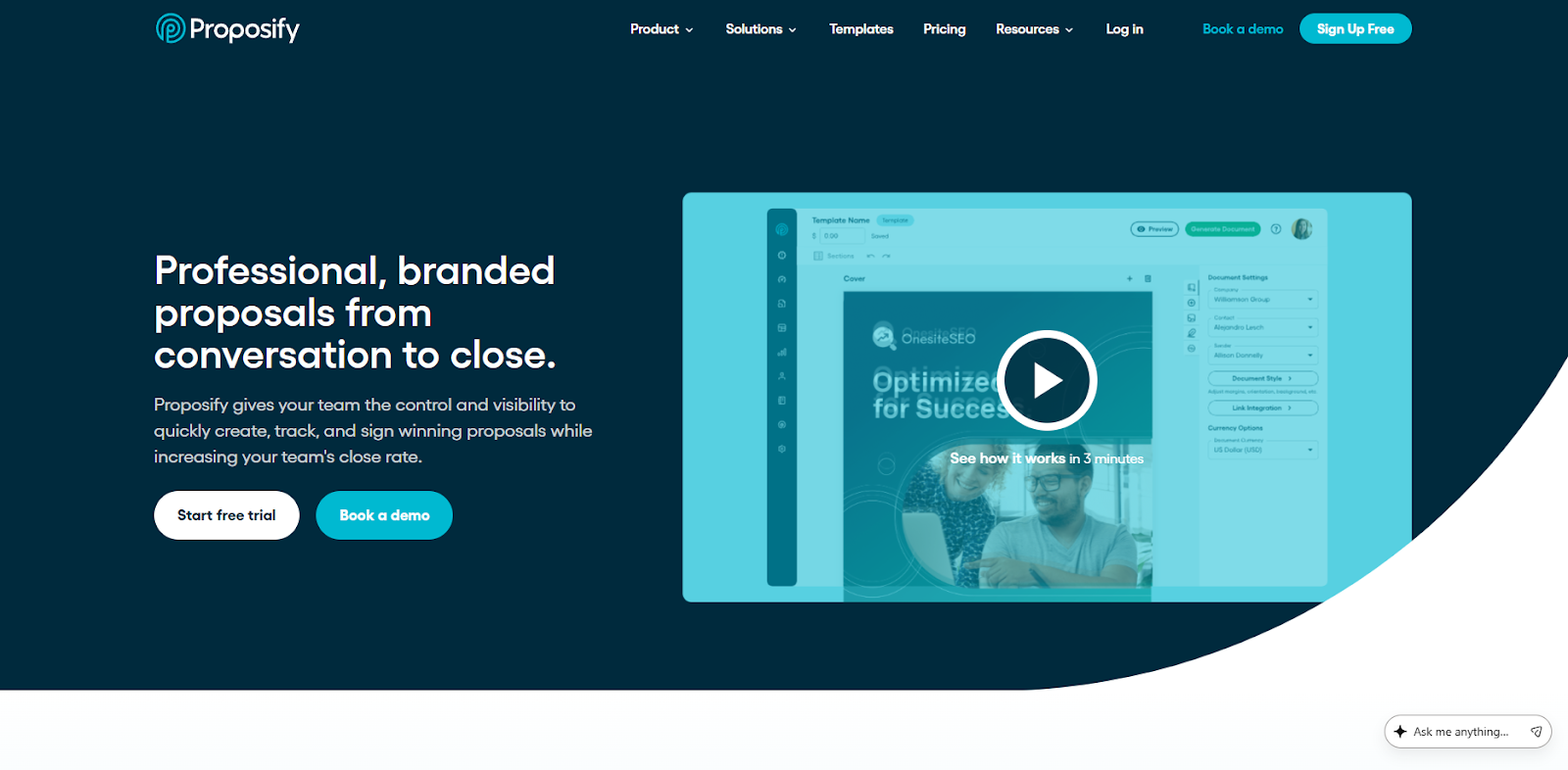
Proposify is a proposal-focused software designed to help sales teams create visually structured proposals quickly.
For vendors responding to formal tenders, Proposify can support proposal creation, but it is not purpose-built for structured, requirement-driven tender responses. Its strengths lie in layout and presentation rather than managing complex tender questionnaires.
Key Features
- Customizable Proposal Templates
Proposify offers pre-built and customizable templates that help teams create consistent, branded proposals. This works well for standard sales proposals but is less effective for tenders with strict formats. - Proposal Tracking and Analytics
The platform provides basic engagement tracking, such as when a proposal is opened or viewed. These insights are useful for sales follow-ups but have a limited impact on tender evaluation outcomes. - Real-Time Collaboration
Teams can collaborate on proposals simultaneously, allowing contributors to edit content and leave comments during the drafting process. - CRM Integration
Proposify integrates with popular CRM tools to pull customer and deal information into proposals, helping maintain alignment with sales records.
What Makes Proposify Stand Out
- Intuitive and easy to use: Proposify is easy for sales teams to adopt. Its interface is clean and straightforward, allowing users to create and update proposals quickly without extensive training or setup time.
- Customizable templates: The platform offers flexible templates that help teams maintain consistent branding and layout. This works well for repeatable sales proposals where structure is predictable and presentation matters.
The Limitations of Proposify
- Editing difficulties: Long, question-driven tender documents can be cumbersome to manage. The platform is not optimized for navigating and editing large volumes of structured questions efficiently.
- Limited customization: When tenders require tailored narratives across multiple sections, teams often need to rewrite content manually. Proposify does not adapt responses dynamically based on tender context.
- Formatting issues: Strict tender formats, compliance tables, and buyer-mandated structures are harder to maintain consistently, increasing the risk of rework before submission.
- Limited design capabilities for complex tenders: While suitable for visually clean proposals, the platform prioritizes presentation over depth. This can be restrictive for complex tenders that demand detailed explanations rather than polished layouts.
Best For
Proposify is best suited for:
- Sales teams focused on commercial proposals rather than formal tenders
- Small to mid-sized vendors with presentation-driven sales cycles
- Organizations prioritizing speed and branding over structured response management
- Teams with minimal compliance or tender-specific requirements
Pricing
| Plan Type | Pricing |
|---|---|
| Subscription | Starts from $29/month |
Ratings and Reviews
Ratings: 4.2/5
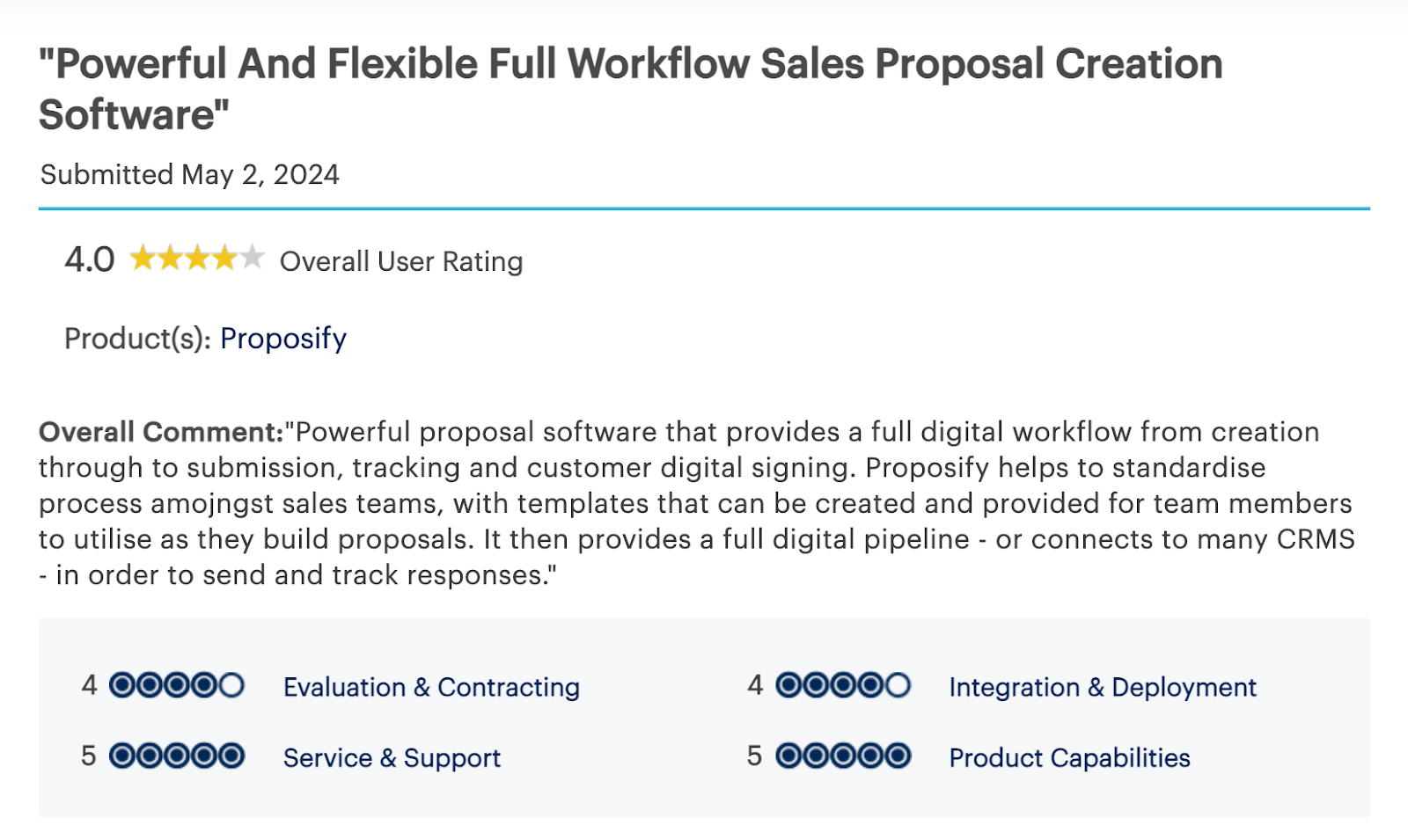
Proposify is a strong proposal creation tool for visually driven sales documents. For vendors responding to structured tenders, its limited tender-specific capabilities may require additional tools to manage complexity and compliance.
4. Qwilr
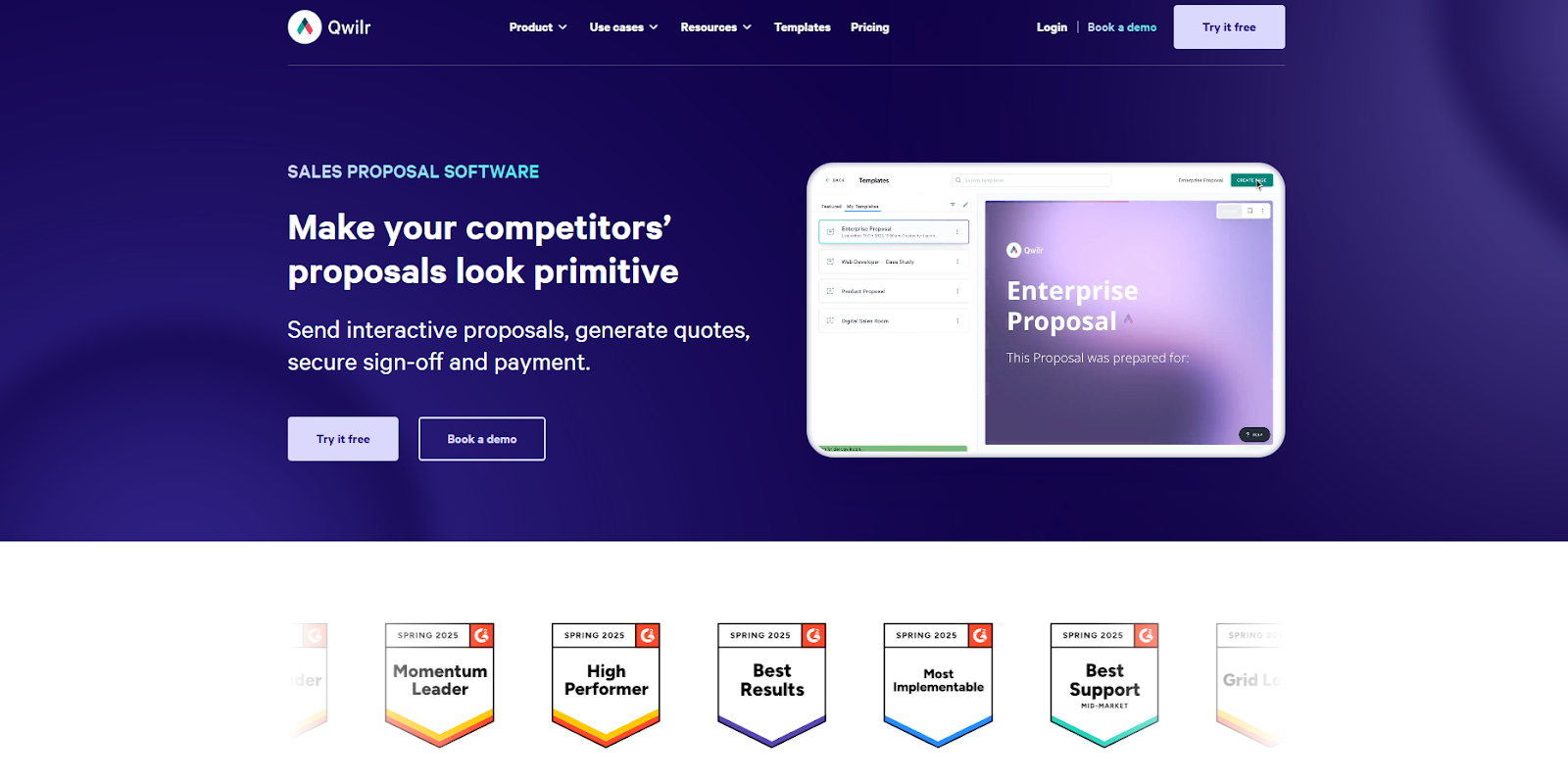
Qwilr is a proposal creation platform focused on helping sales teams build interactive, web-based proposals quickly. It emphasizes visual presentation and ease of use, making it popular for client-facing proposals where engagement and design matter.
In the context of tender responses, Qwilr works best for lightweight or commercial proposals. It is not built for structured, compliance-heavy tenders that require detailed question-by-question responses.
Key Features
- Web-Based Proposal Pages
Qwilr allows teams to create proposals as interactive web pages rather than static documents. This can improve readability for buyers but offers limited control for strict tender formats. - Collaboration and Commenting
Multiple users can collaborate on proposals and leave comments during the drafting process, supporting basic team coordination. - Basic Analytics and Engagement Tracking
The platform provides visibility into when proposals are opened or viewed, which helps sales teams track engagement rather than response quality.
What Makes Qwilr Stand Out
- Fast and easy experience for creating proposals: Qwilr enables teams to create visually appealing proposals quickly, making it attractive for time-sensitive sales situations.
- Easy setup process: The platform requires minimal configuration, allowing teams to get started without lengthy onboarding or technical setup.
The Limitations of Qwilr
- Limited customization options: Qwilr offers less flexibility when proposals require deep tailoring across multiple sections, which is common in formal tenders.
- Lacking advanced editing features: Complex edits, structured questionnaires, and compliance-driven formats are difficult to manage within Qwilr’s page-based approach.
- Integration issues: While Qwilr integrates with some sales tools, its integrations are limited for end-to-end tender workflows involving knowledge management and approvals.
Best For
Qwilr is best suited for:
- Sales teams creating short, interactive proposals
- Vendors with presentation-led sales cycles
- Small teams prioritizing speed and design
- Opportunities without strict tender or compliance requirements
Pricing
| Plan Type | Pricing |
|---|---|
| Subscription | Starts at $39/month |
Ratings and Reviews
Ratings: 4.6/5
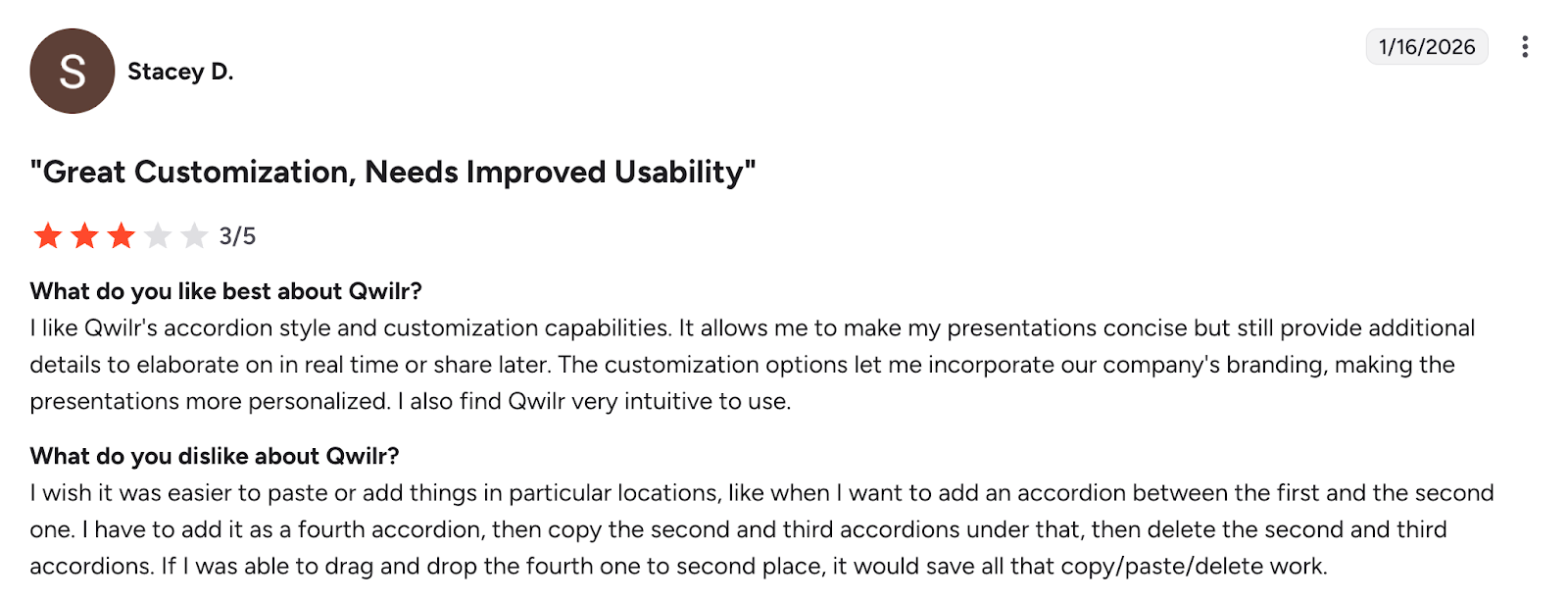
Qwilr is a strong option for vendors focused on visually engaging proposals. For structured tender responses, its limited customization and editing depth may require additional tools to manage complexity and compliance.
5. Responsive
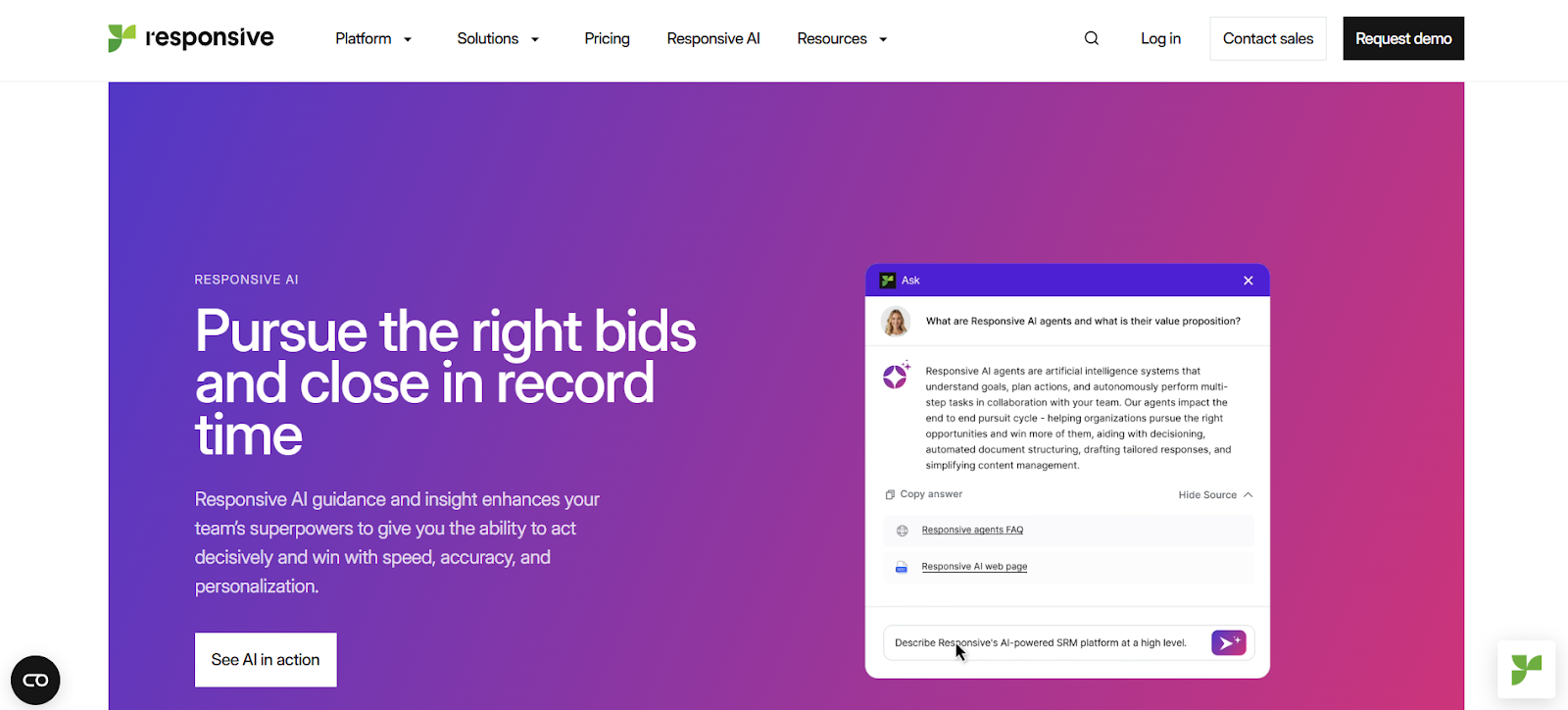
Responsive (formerly RFPIO) is a mature RFP and tender response platform designed for enterprise-scale operations. It emphasizes standardization, governance, and collaboration across large teams handling high volumes of questionnaires.
For vendors dealing with frequent RFIs, security questionnaires, and compliance-heavy tenders, Responsive offers a strong framework to manage responses centrally. Its strength lies in process coverage rather than adaptive response quality.
Key Features
- Centralized Answer Library
Responsive maintains a shared knowledge base of approved responses that teams can reuse across tenders, helping ensure consistency. - Workflow and Approval Management
The platform supports complex approval chains and review workflows, making it suitable for regulated environments. - CRM and Collaboration Integrations
Responsive integrates with CRM systems and collaboration tools to support cross-functional response efforts.
What Makes Responsive Stand Out
- Standardization across large teams: Responsive helps large organizations maintain consistent language and structure across tender responses.
- High-volume questionnaire handling: The platform is well-suited for managing frequent RFIs, security questionnaires, and standardized forms.
The Limitations of Responsive
- Limited contextual awareness: Responsive relies heavily on stored answers, which can lead to generic responses when tenders require tailored messaging or value-based narratives.
- Manual rewriting for differentiation: Narrative and strategic sections often require significant manual editing to stand out, especially when differentiation is critical to winning the tender.
- Slower return on investment for quality-focused teams: For vendors prioritizing response quality and customization over rigid structure, setup, and governance overhead can slow time-to-value.
Best For
Responsive is best suited for:
- Large enterprises with formal governance requirements
- Vendors handling high volumes of similar questionnaires
- Compliance-driven industries with strict approval needs
- Teams prioritizing consistency over customization
Pricing
| Plan Type | Pricing |
|---|---|
| Subscription | Contact for pricing |
Ratings and Reviews
Ratings: 4.3/5
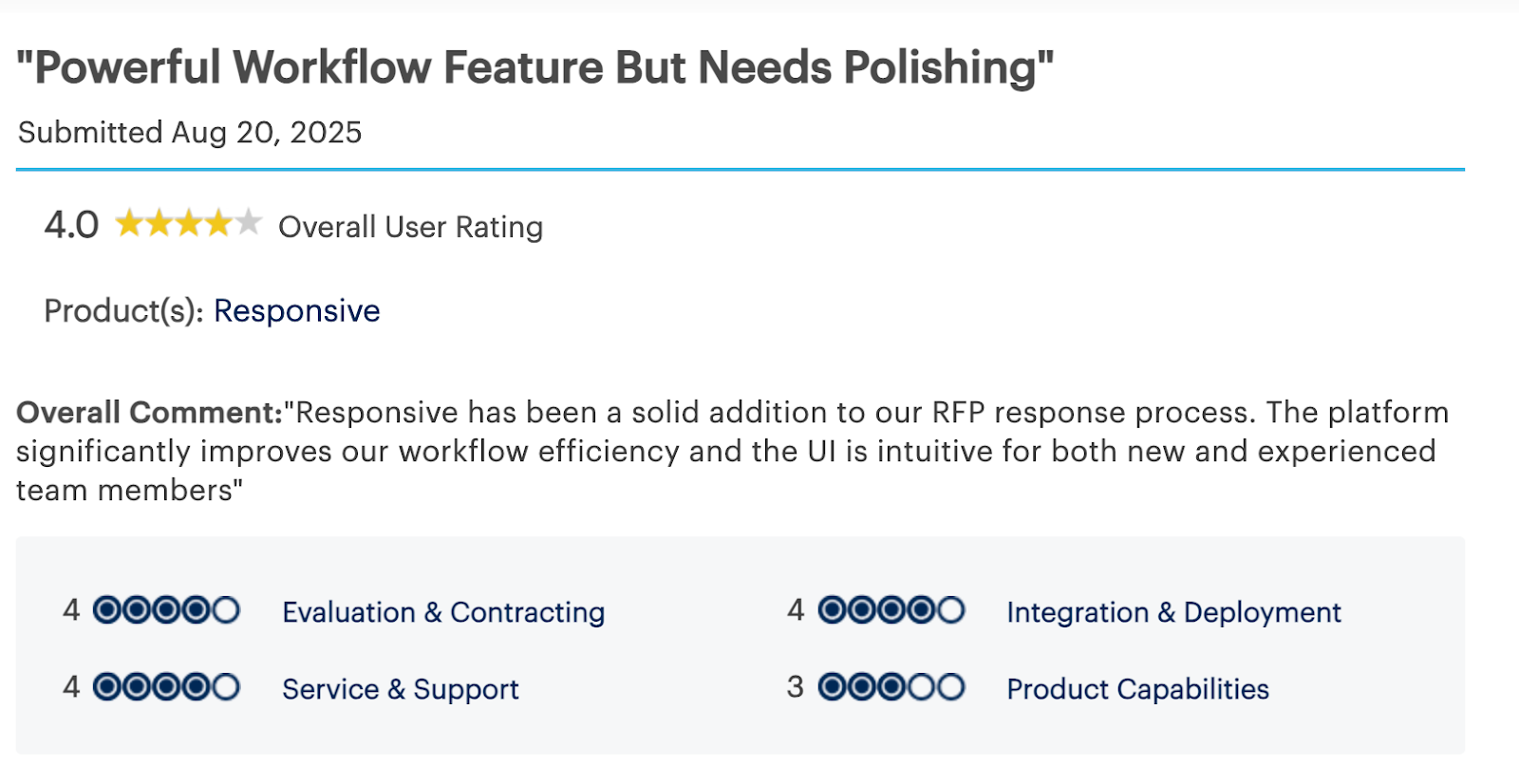
Responsive is a good choice for enterprises seeking standardized tender response management at scale. Vendors focused on differentiation and response quality may find its structure heavy when compared to AI-driven alternatives.
6. AutoRFP
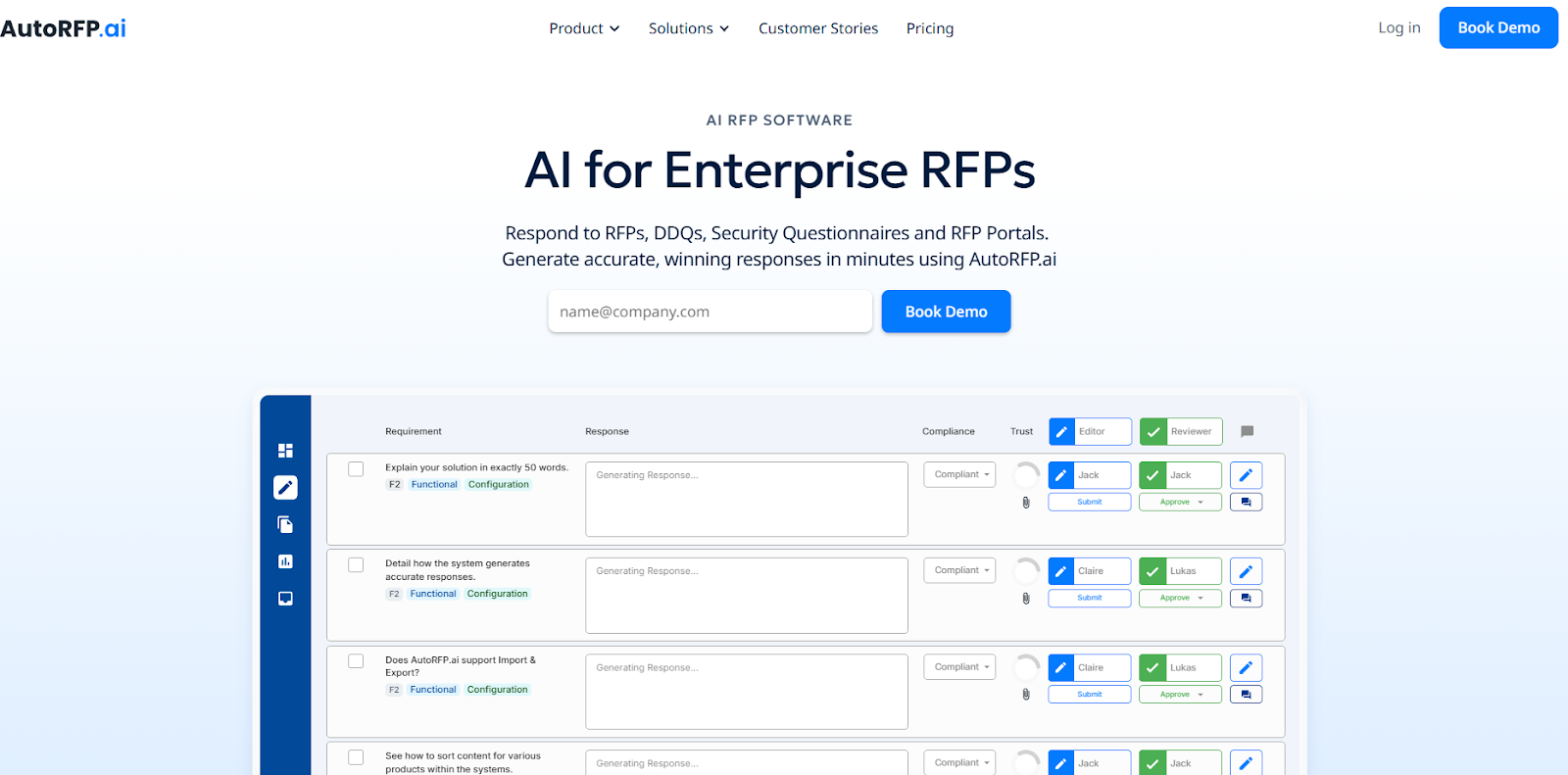
AutoRFP is an AI-assisted tender and RFP response platform designed to help vendors generate responses faster through automation and collaboration.
For vendors responding to a moderate volume of tenders, AutoRFP offers speed advantages. However, its usability and interface design can create friction during adoption, especially for larger or less technical teams.
Key Features
- Collaborative Platform
AutoRFP supports multi-user collaboration, allowing teams to work on responses simultaneously and share inputs during the drafting phase. - Automated Response Generation
The platform uses AI to generate draft responses based on existing content, helping teams reduce the time spent starting from scratch.
What Makes AutoRFP Stand Out
- Smooth team collaboration: AutoRFP allows multiple contributors to work on tender responses at the same time. This helps reduce bottlenecks when sales, solutions, and proposal teams need to contribute under tight deadlines.
- Time-saving through automation: AI-assisted drafting helps teams create initial responses faster than starting from scratch. This is useful for vendors handling repetitive or moderately complex tenders.
- Flexible access for smaller teams: The platform supports collaboration without heavy governance requirements, making it easier for smaller teams to get started quickly.
The Limitations of AutoRFP
- Platform not intuitive: AutoRFP’s interface can feel unintuitive for new users, especially proposal managers handling multiple tenders simultaneously. Key actions are not always easy to locate, slowing early adoption.
- Poor interface design: Navigation and layout are not optimized for complex, multi-section tenders. Managing large responses can feel fragmented, increasing reliance on manual coordination.
- Difficult learning curve: Teams often require extended onboarding before they can use the platform efficiently. This delays time-to-value, particularly for vendors expecting quick productivity gains.
- Feature usability lacking: Some automated features require manual workarounds to function effectively, which reduces the overall efficiency gains promised by automation.
Best For
AutoRFP is best suited for:
- Small to mid-sized teams prioritizing faster drafts
- Vendors new to AI-assisted tender responses
- Teams with simpler tender requirements
- Organizations willing to invest time in onboarding
Pricing
| Plan Type | Pricing |
|---|---|
| Subscription | Starts at $899/month |
Ratings and Reviews
Ratings: 4.8/5
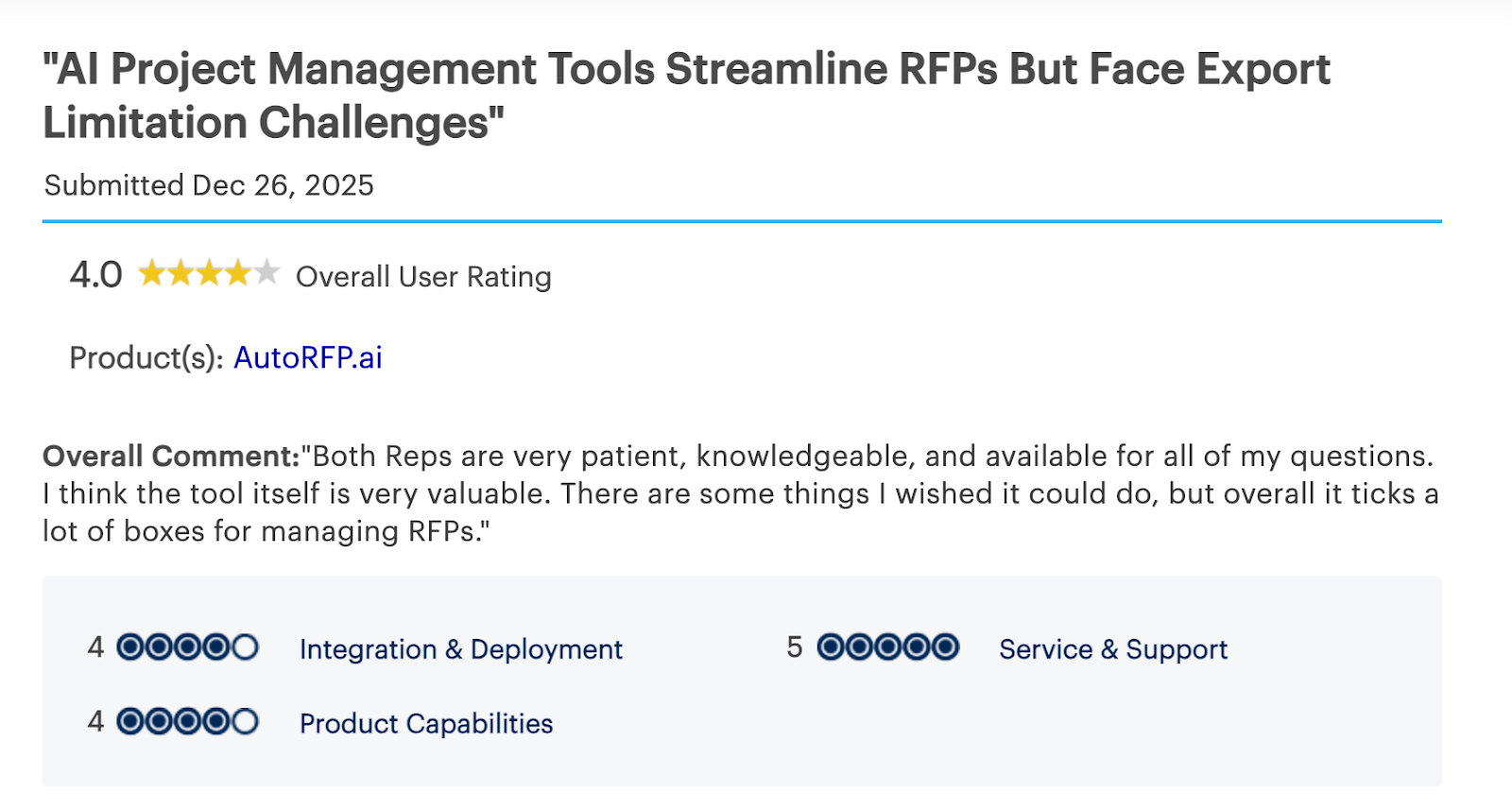
AutoRFP can help vendors speed up tender drafting. For teams focused on ease of use and response quality at scale, usability limitations may slow long-term value.
Suggested Alternative: Inventive AI
Inventive AI is built for vendors who want speed without sacrificing response quality, accuracy, or control, even as tender volume and complexity increase.
7. Qvidian
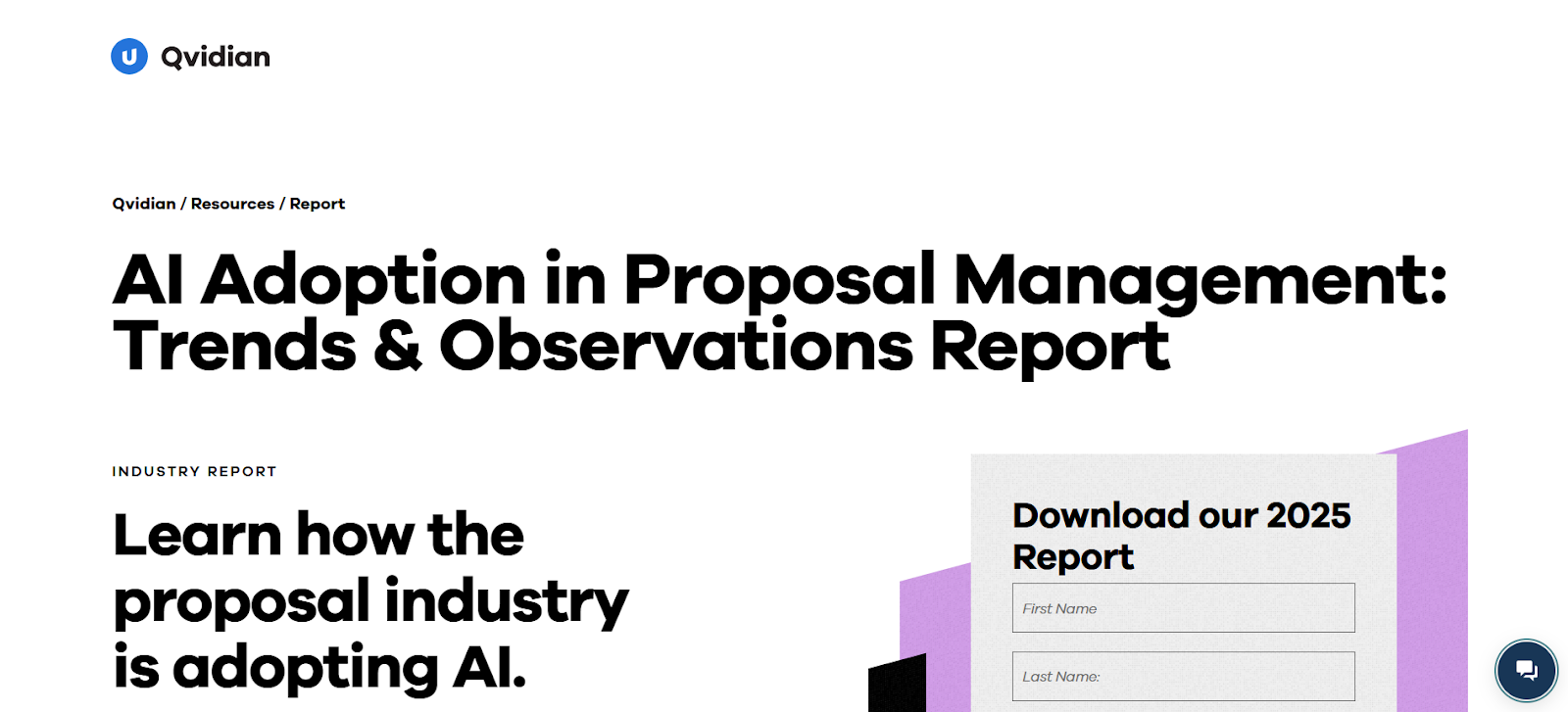
Qvidian is an enterprise-focused proposal and tender response management platform. It is designed to help large organizations manage content, templates, and approvals across high volumes of proposals and tenders.
Qvidian is commonly used in regulated industries where governance and standardization matter more than flexibility or speed.
Key Features
- Proposal Content Management: Qvidian centralizes approved proposal and tender content, allowing teams to reuse material across submissions.
- Template Library: The platform offers structured templates that help enforce consistency across proposals and tenders.
- CRM and Document Management Integrations: Qvidian integrates with CRM and document management systems to support enterprise workflows.
What Makes Qvidian Stand Out
- Efficient content management: Qvidian excels at organizing large volumes of approved proposals and tender content. Teams can store, categorize, and reuse material across submissions with strong control.
- Good standardization across responses: Templates and governance controls help ensure consistent language and structure across tenders, which is important in regulated or compliance-heavy environments.
- Time-saving for repeatable tenders: For vendors responding to similar tenders frequently, Qvidian reduces duplication by enabling structured reuse of approved content.
The Limitations of Qvidian
- Slow performance: Qvidian can experience lag when working with large documents or complex templates. This impacts productivity during tight tender deadlines.
- Steep learning curve: The platform’s depth and configuration options require significant training. New users often take time to become comfortable with daily workflows.
- Update and content maintenance issues: Keeping content current can be time-consuming. Updating approved answers or templates across the system often involves multiple steps, slowing responsiveness.
Best For
Qvidian is best suited for:
- Large enterprises with strict governance needs
- Compliance-driven industries
- Teams prioritizing control and standardization
- Organizations with dedicated proposal operations
Pricing
| Plan Type | Pricing |
|---|---|
| Subscription | Subscription-based pricing |
Ratings and Reviews
Ratings: 4.7/5
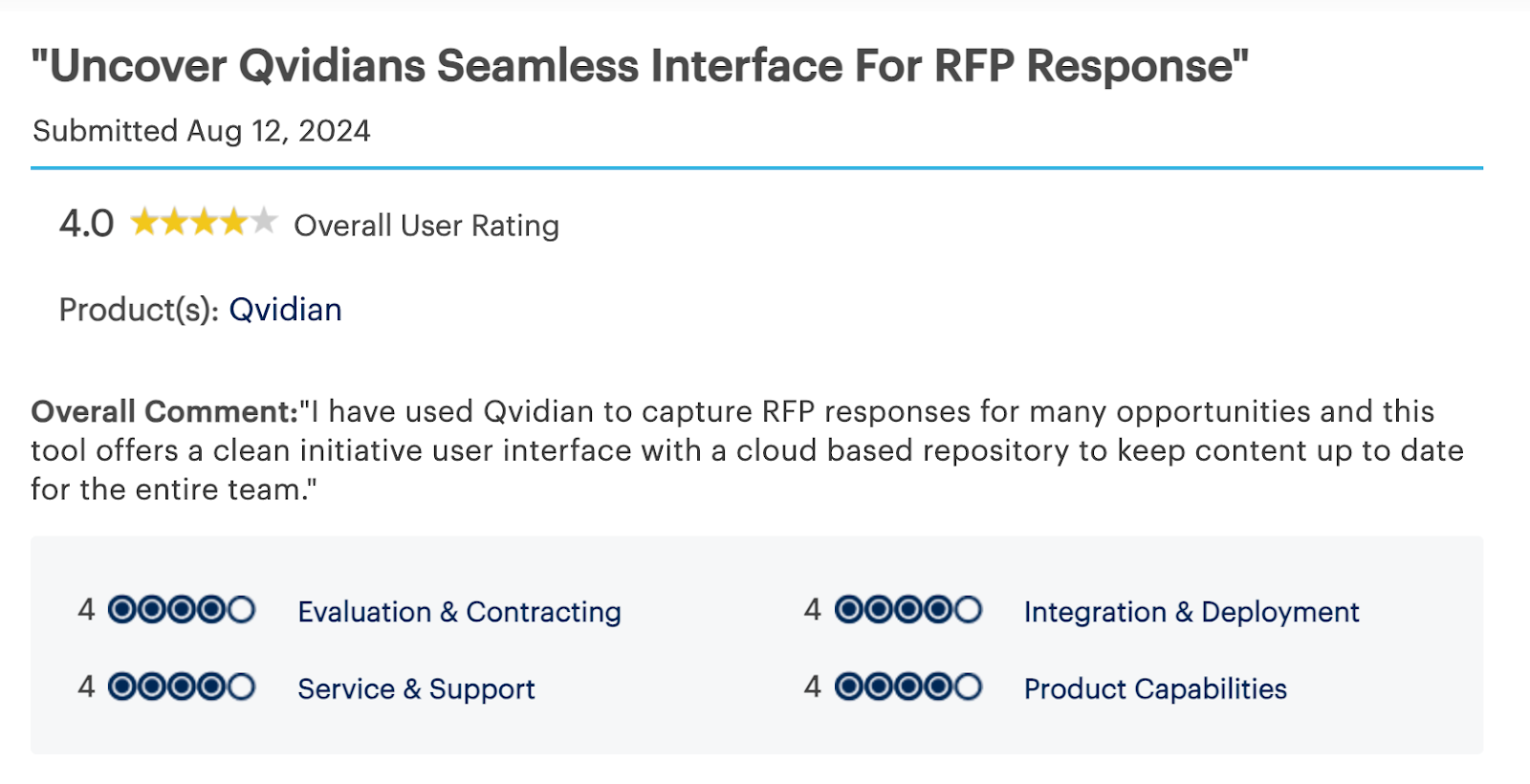
Qvidian provides robust governance and content control. For vendors seeking agility and response quality, its complexity may limit adaptability.
8. 1Up
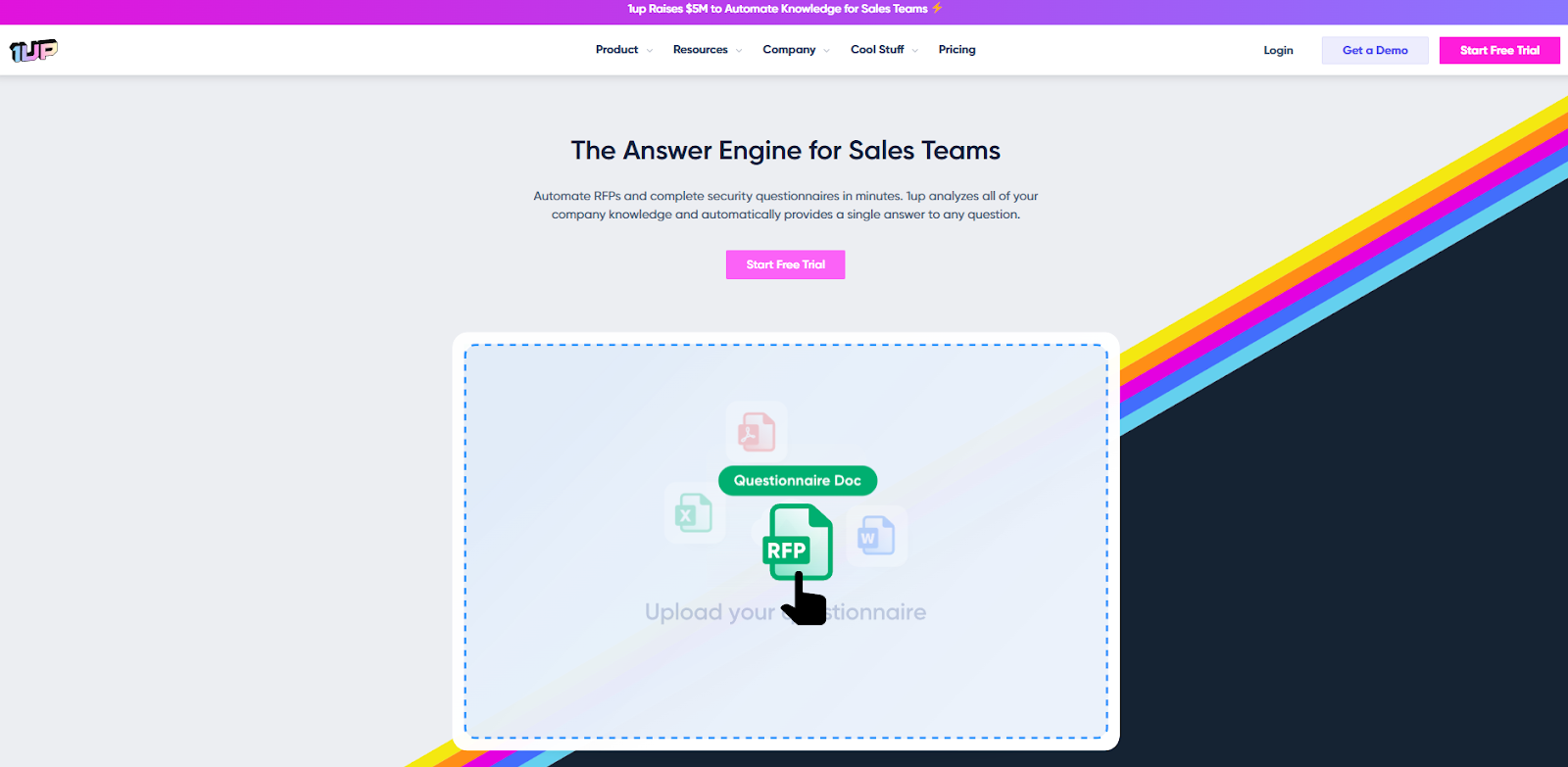
1Up is an RFP and tender response tool focused on speed and ease of use. It aims to help vendors generate responses quickly with minimal setup.
While promising for fast drafting, 1Up is still developing depth across the features required for complex tender responses.
Key Features
- AI-Assisted Drafting: 1Up generates responses using AI to help teams reduce time spent writing initial drafts.
- Basic Collaboration Tools: The platform supports simple collaboration, allowing teams to review and edit responses together.
What Makes 1Up Stand Out
Easy to use: 1Up offers a simple interface that allows teams to start generating responses quickly. This lowers the barrier to entry for vendors new to AI-assisted tender responses.
Time-saving for straightforward tenders: AI-generated drafts help reduce writing time for basic or low-complexity tenders, allowing teams to move faster in the early stages.
Lightweight setup: The platform requires minimal configuration, making it suitable for teams that want quick experimentation without heavy implementation effort.
The Limitations of 1Up
Limited results due to missing features: 1Up lacks advanced governance capabilities such as deep content control, conflict detection, and structured approvals, which limit effectiveness for complex tenders.
Inaccurate responses for complex tenders: AI-generated drafts may struggle with nuanced or highly specific requirements, requiring frequent manual correction before submission.
Access and control limitations: Permission settings and workflow controls are basic, making it harder for larger teams to manage roles, reviews, and accountability at scale.
Best For
1Up is best suited for:
- Small teams responding to simple tenders
- Early-stage vendors exploring AI tools
- Low-complexity RFPs or questionnaires
- Teams prioritizing speed over control
Pricing
| Plan Type | Pricing |
|---|---|
| Subscription | Starts at $300/month |
Ratings and Reviews
Ratings: 4.9/5
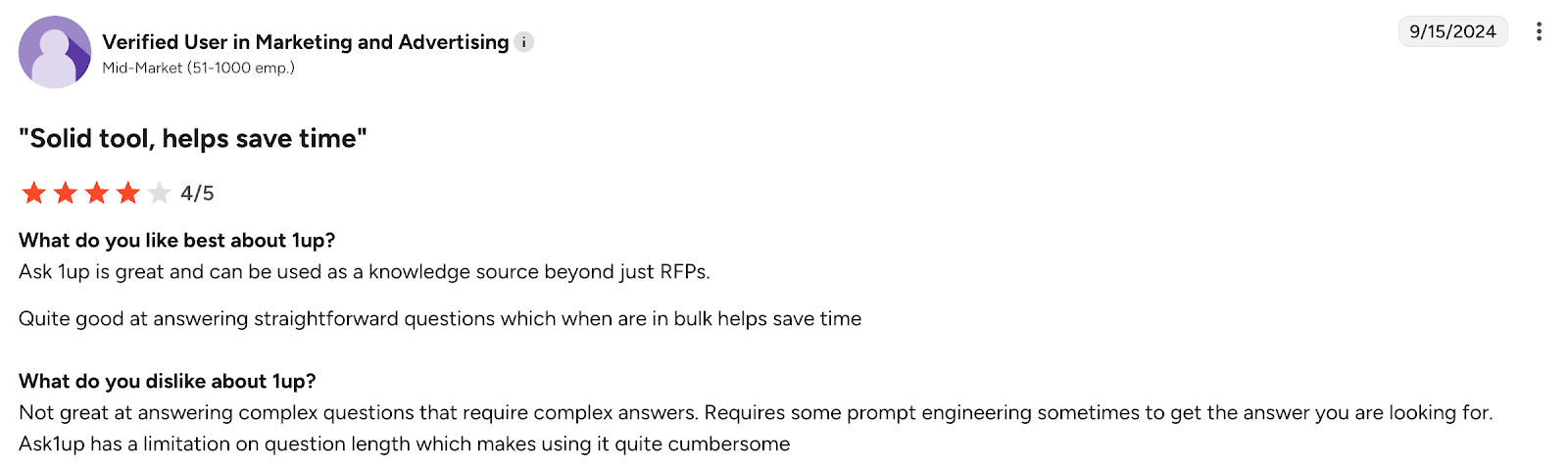
1Up offers a lightweight entry into AI-assisted tender responses. For vendors handling complex or high-stakes tenders, feature limitations may restrict effectiveness.
Every tool reviewed here serves a different purpose, but the right choice depends on how much quality, accuracy, and scale matter to your tender responses.
As tenders grow more competitive, vendors need software that goes beyond organizing content and actively improves how responses are written, reviewed, and submitted.
Inventive AI is built for vendors who treat tender responses as a revenue-critical process. Its AI RFP Agent helps you produce higher-quality responses faster, maintain accuracy across submissions, and scale tender volume without losing control or consistency.
5 Most Important Features in Tender Response Software That Directly Impact Response Quality and Accuracy
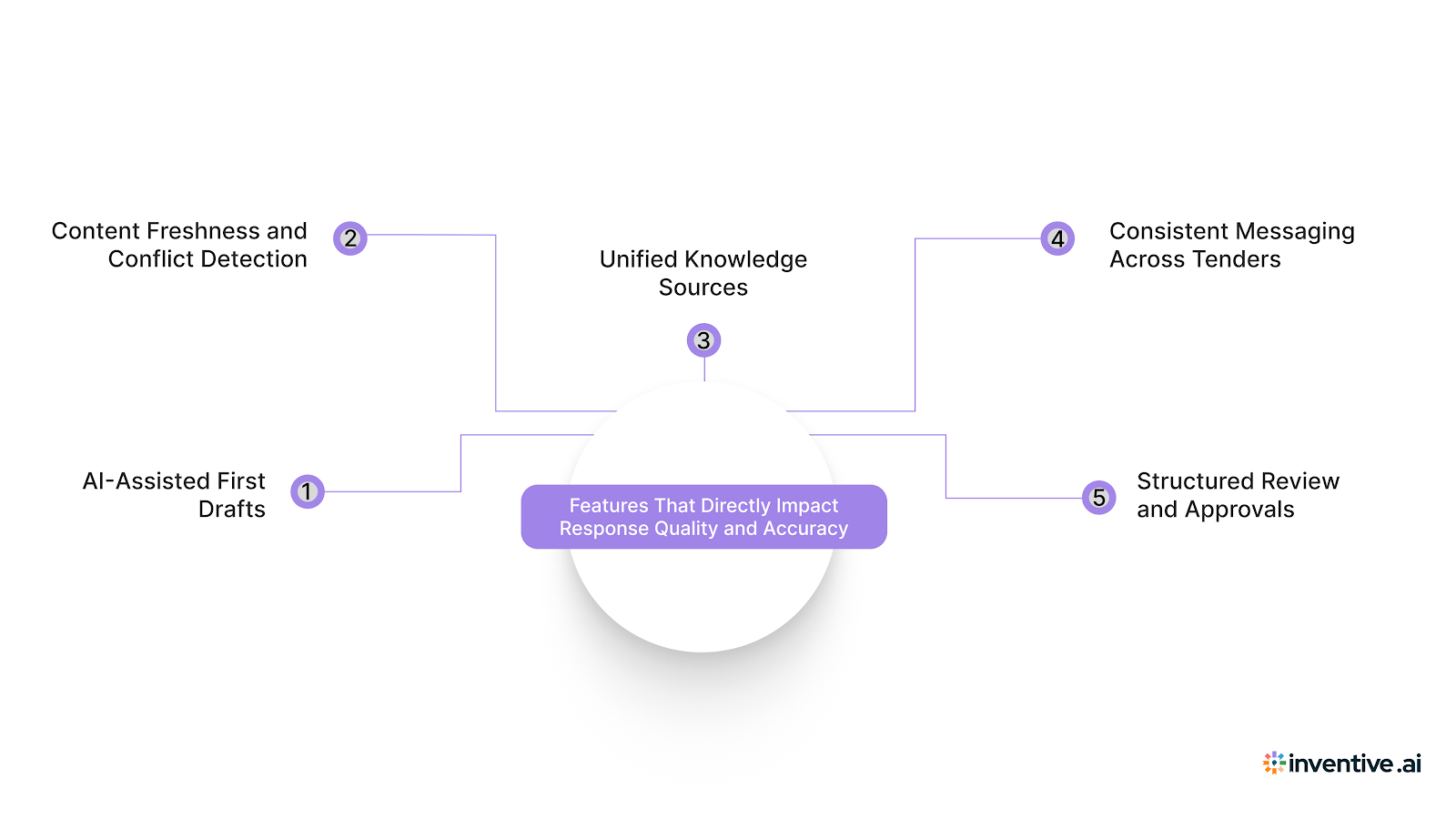
Choosing tender response software based on surface features creates friction later. In 2026, vendors need capabilities that hold up under tight deadlines, large teams, and complex tenders.
1. AI-Assisted First Drafts
The software should generate usable first drafts from your approved content. This reduces manual writing time and helps teams start with accurate, structured responses instead of blank documents.
2. Content Freshness and Conflict Detection
Tender responses often fail due to outdated or conflicting answers. Strong platforms flag stale content early, so unsupported claims never reach the buyer.
3. Unified Knowledge Sources
Your responses should pull from one connected knowledge base, not scattered documents. This ensures sales, solutions, and compliance teams reference the same information every time.
4. Consistent Messaging Across Tenders
Repeated tenders expose inconsistencies quickly. The right software enforces approved language so value propositions and technical claims stay aligned across submissions.
5. Structured Review and Approvals
Reviews should happen inside the platform, not through email chains. Clear approval stages reduce delays and prevent last-minute rewrites.
Together, these features protect response quality while helping vendors meet deadlines without sacrificing accuracy or credibility.
Also Read: Tender Management: Process, Software, Best Practices (2026)
How to Integrate Tender Response Software Into Your Sales Process?
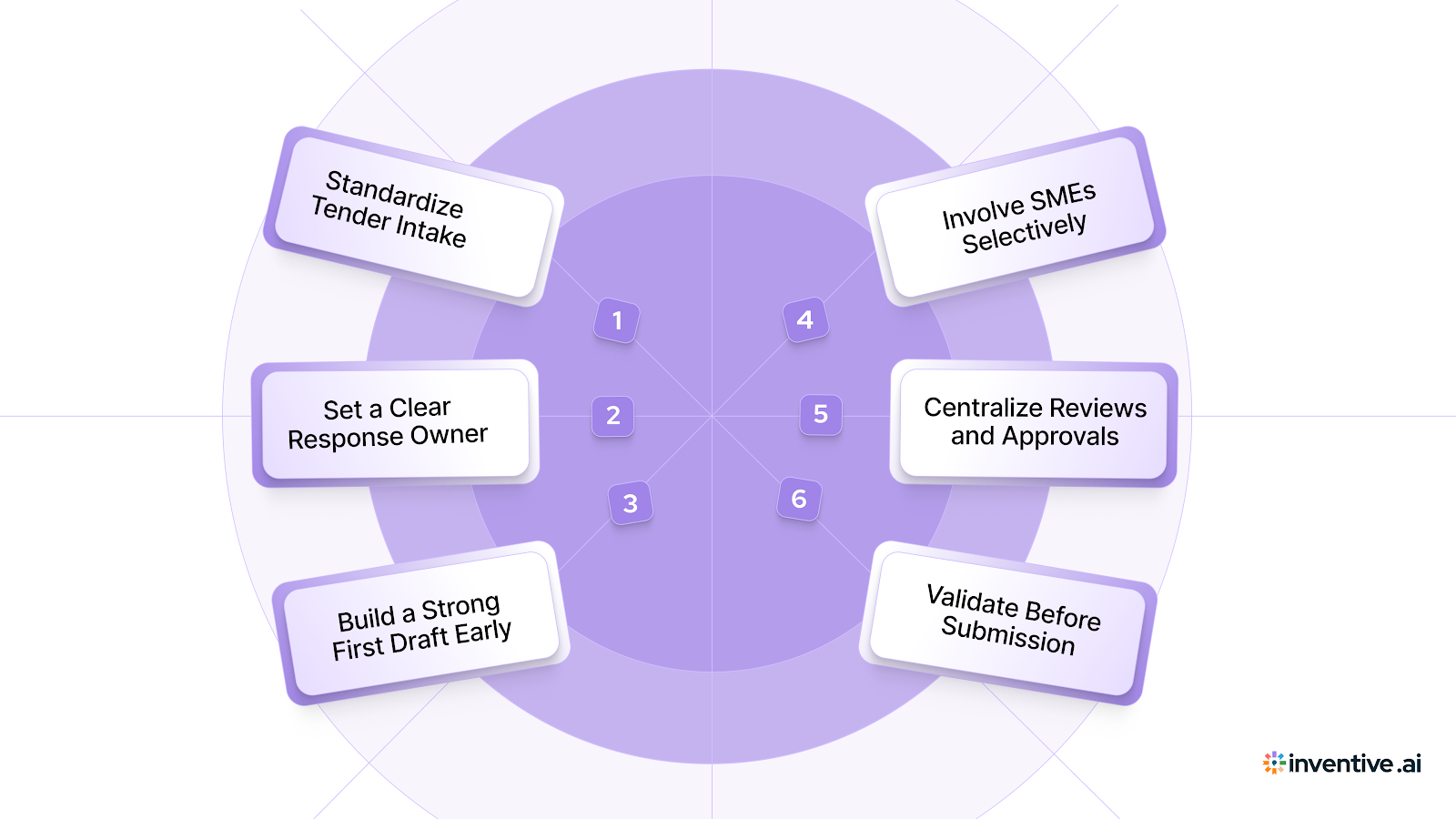
Successful integration starts by aligning tender response software with how your sales process already works. The goal is adoption without disruption.
Step 1: Standardize Tender Intake
Route all tenders through a single intake process. This prevents missed deadlines and gives teams early visibility into workload and priorities.
Step 2: Set a Clear Response Owner
Assign ownership at the start of each tender. One owner keeps the response moving and avoids confusion across sales and proposal teams.
Step 3: Build a Strong First Draft Early
Use AI-generated drafts to establish a baseline response. This gives teams structure and reduces pressure later in the cycle.
Step 4: Involve SMEs Selectively
Pull in subject matter experts only for sections that require validation. This limits unnecessary back-and-forth and speeds reviews.
Step 5: Centralize Reviews and Approvals
Complete all reviews within the platform. Clear approval stages replace scattered feedback and last-minute rewrites.
Step 6: Validate Before Submission
Confirm that every section is complete, current, and approved before submitting. This reduces risk and increases submission confidence.
When integrated this way, tender response software becomes part of your sales rhythm rather than an extra step teams work around.
Also Read: How to Develop Effective RFP Win Themes for Proposal Success
How to Select a Tender Response Platform That Protects Both Margin and Quality?
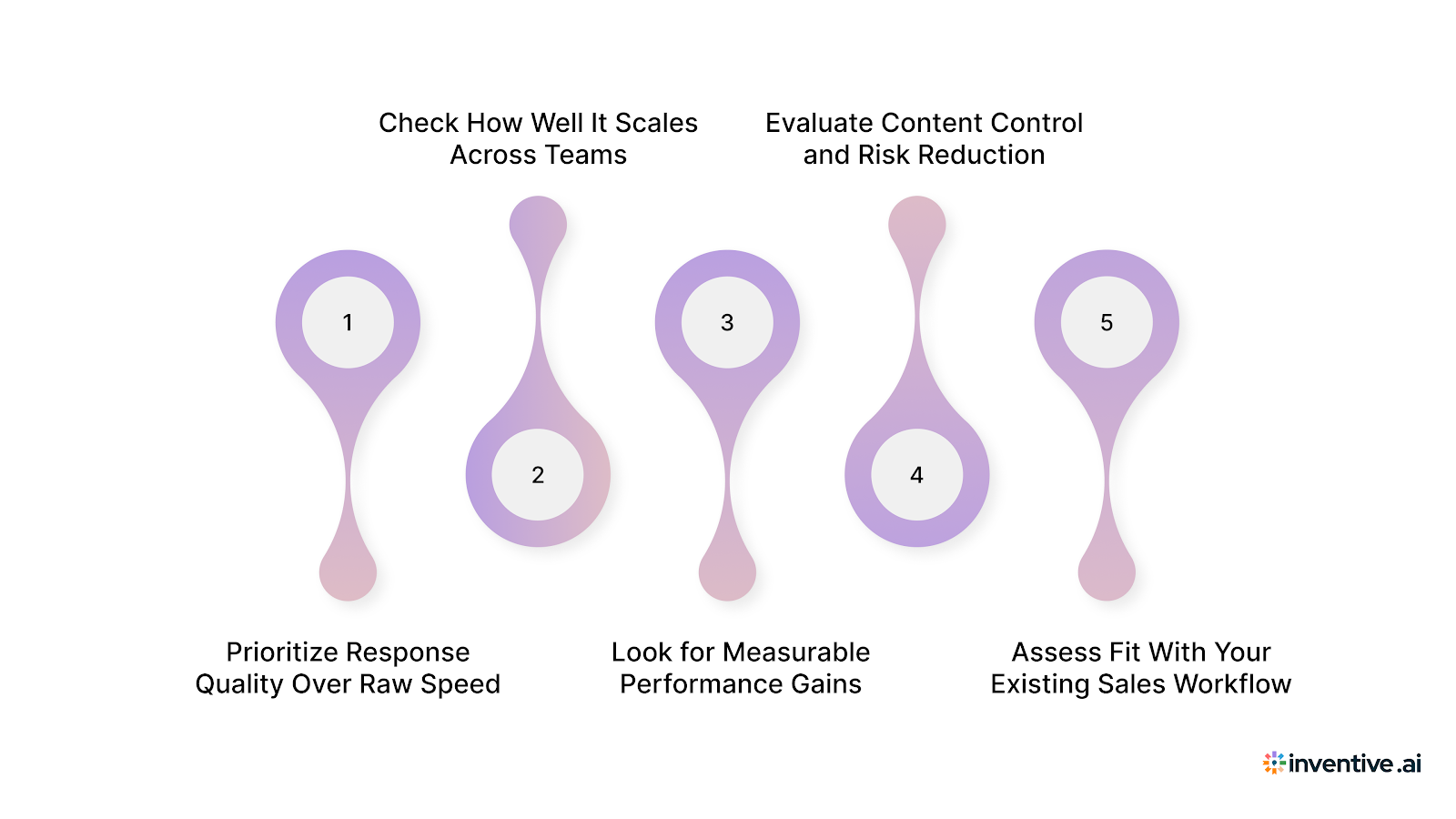
Choosing tender response software is a revenue decision, not a tooling decision. The right platform supports how you win deals, not just how you complete tasks.
1. Prioritize Response Quality Over Raw Speed
Fast submissions mean little if answers feel generic or inconsistent. Look for software that improves clarity, relevance, and alignment with tender requirements.
2. Check How Well It Scales Across Teams
As tender volume grows, content quality often drops. The right platform maintains consistency even when sales, solutions, and compliance teams contribute simultaneously.
3. Look for Measurable Performance Gains
Strong platforms show clear improvements in turnaround time and response accuracy. These metrics matter to sales leaders tracking pipeline efficiency.
4. Evaluate Content Control and Risk Reduction
Outdated or conflicting answers weaken credibility. Software should actively prevent stale content from reaching buyers.
5. Assess Fit With Your Existing Sales Workflow
Adoption fails when tools feel forced. Choose software that fits naturally into your response process instead of reshaping it.
Choosing the right tender response software comes down to supporting quality, scale, and control across every submission.
Inventive AI brings these priorities together in one platform, combining accurate AI drafting, consistent content control, and workflow fit designed for vendors responding at scale.
Why Leading Vendors Are Choosing Inventive AI to Win More Tenders in 2026?
By 2026, winning bids are about more than fast typing. It is about protecting your team from burnout and keeping your data accurate. Most tools are just digital folders. Inventive AI is different. It is a system built to help you win without the usual chaos.
Choosing Inventive AI helps your team work smarter:
- Save Your Experts: Stop asking engineers the same questions. Our system handles the repetitive work so your experts can focus on their actual jobs.
- Trust Your Answers: You get one version of the truth for every bid. With no AI hallucinations, you can stop worrying about factual errors in your drafts.
- Do More with Less: Handle five times your current bid volume. You won't need to hire more people to grow your revenue.
- Beat Every Deadline: Move from a new lead to a finished bid in hours. You can chase bigger deals with total confidence and fewer late nights.
Inventive AI does more than just hold your files. It turns what your team knows into a real business advantage. You will save time, reduce stress, and win more often.
Frequently Asked Questions (FAQs)
1. Is tender response software suitable for public sector tenders?
Yes. Tender response software is commonly used for public sector and government tenders that require structured answers, strict formatting, and detailed compliance sections.
2. How long does it take to see value after implementing tender response software?
Most vendors see improvements in response turnaround and internal coordination within a few weeks, once past tenders and approved content are added.
3. Can tender response software support industry-specific tender requirements?
Yes. Effective platforms allow vendors to reuse technical, regulatory, and sector-specific content, making it easier to respond to specialized tenders.
4. Does using AI in tender responses increase compliance or accuracy risks?
No. When AI generates responses from approved knowledge and flags unsupported information, it helps reduce accuracy and compliance risks.
5. What is the difference between proposal software and tender response software?
Proposal software focuses on creating sales documents, while tender response software manages structured, requirement-driven responses from intake to submission.
6. Can tender response software support distributed or global sales teams?
Yes. Cloud-based tender platforms allow teams in different locations to collaborate in real time without document version issues.
.avif)