Bid Leveling Templates for Buyers and Vendors in 2026

Bid leveling templates are widely used in supplier selection, contractor evaluation, and procurement decisions to improve clarity and support confident award outcomes.
Evaluating supplier bids requires more than comparing final prices. Teams need a structured bid leveling template to align scope items, capture supplier quotes, and review bids using consistent criteria. Without a standardized format, differences in inclusions, exclusions, and assumptions remain unclear, increasing the risk of inaccurate evaluation.
To simplify this, we’ve created a practical bid leveling template that helps buyers organize bids and vendors present pricing in a clear structure. It allows teams to adjust for scope differences and compare bids on an equivalent basis.
Bid Leveling Template For Procurement And Supplier Bid Evaluation (For Buyers)
An effective bid leveling template clearly organizes scope, pricing, exclusions, and adjusted totals. Your document must clearly organize scope items, supplier pricing, inclusions, exclusions, and adjusted totals.
While details may differ for contractor selection, supplier sourcing, or service procurement, the following components form the foundation of an effective bid leveling template.
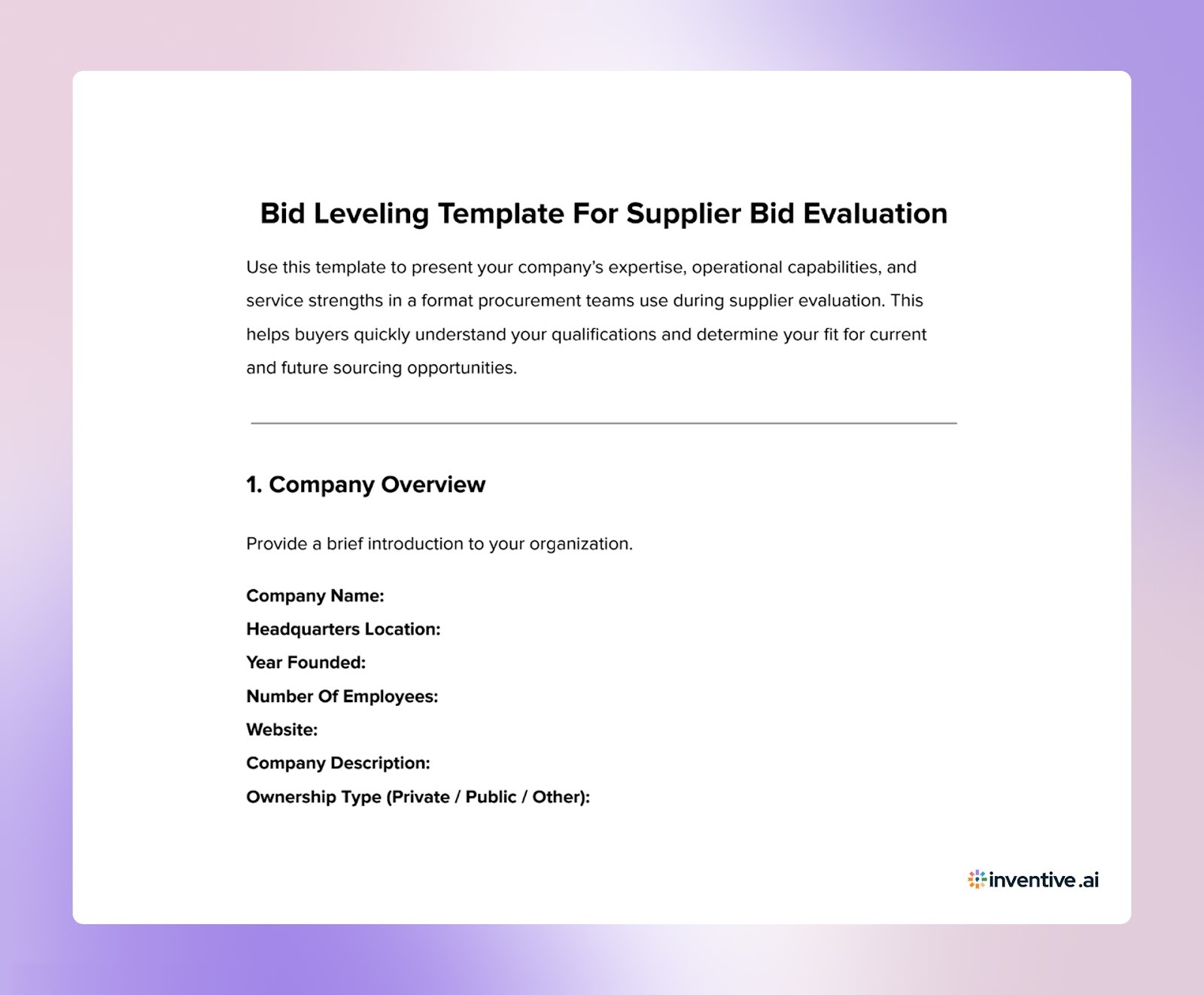

For vendors (suppliers), bid leveling templates define how buyers review and compare bids. Understanding the leveling structure helps vendors submit complete pricing, clarify inclusions, and present their bid in a way that improves their chances of progressing in the selection process.
Bid Leveling Templates For Vendors To Submit Structured Bids
The templates below help vendors prepare leveled bid submissions faster, present their pricing clearly, and compete more effectively during supplier selection.
Template 1: Bid Leveling Pricing Template
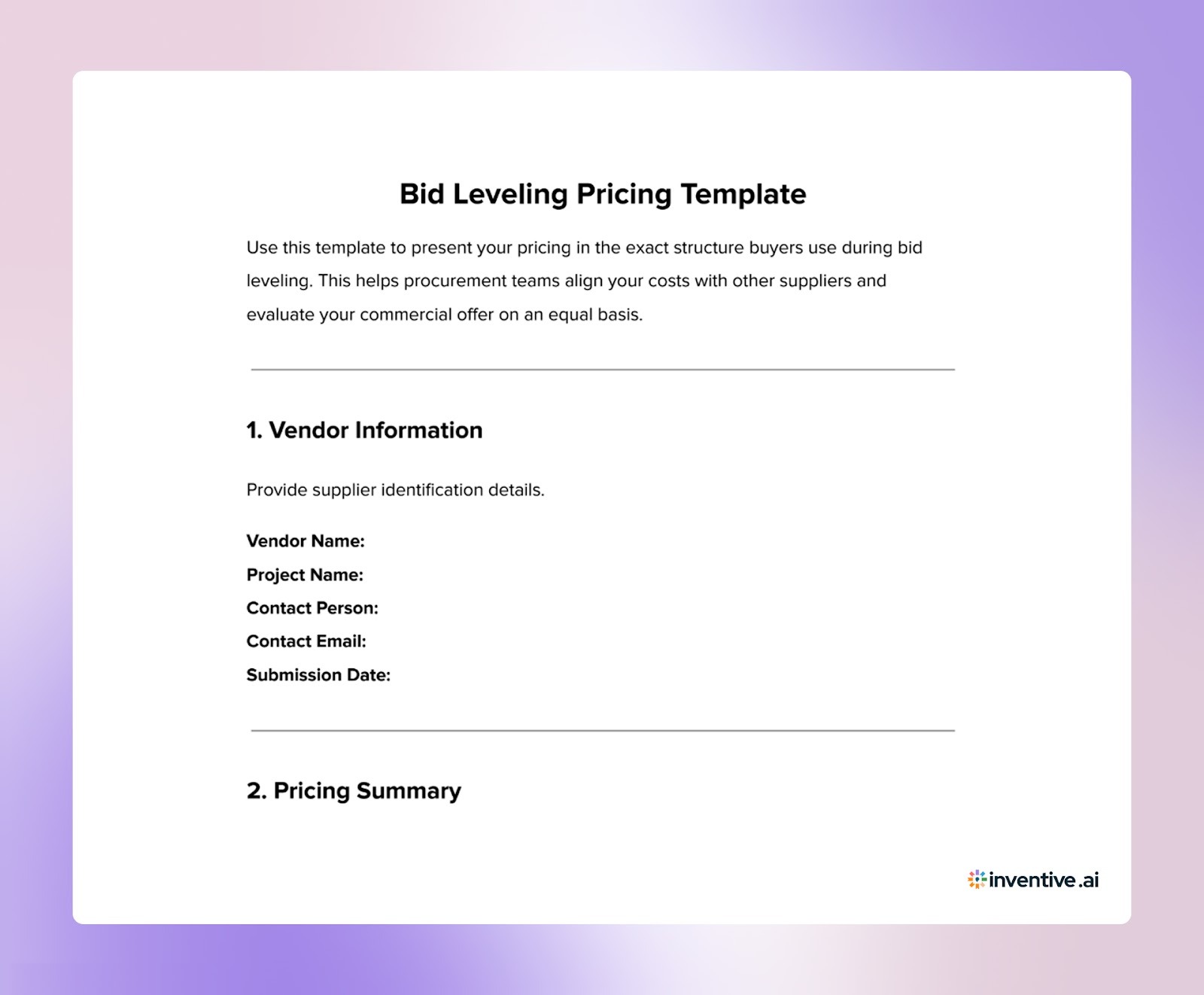
Use this template to present your bid pricing across defined scope categories. It helps buyers align their costs with those of other suppliers and ensures your commercial offer is evaluated correctly.

Template 2: Bid Leveling Scope Alignment Template
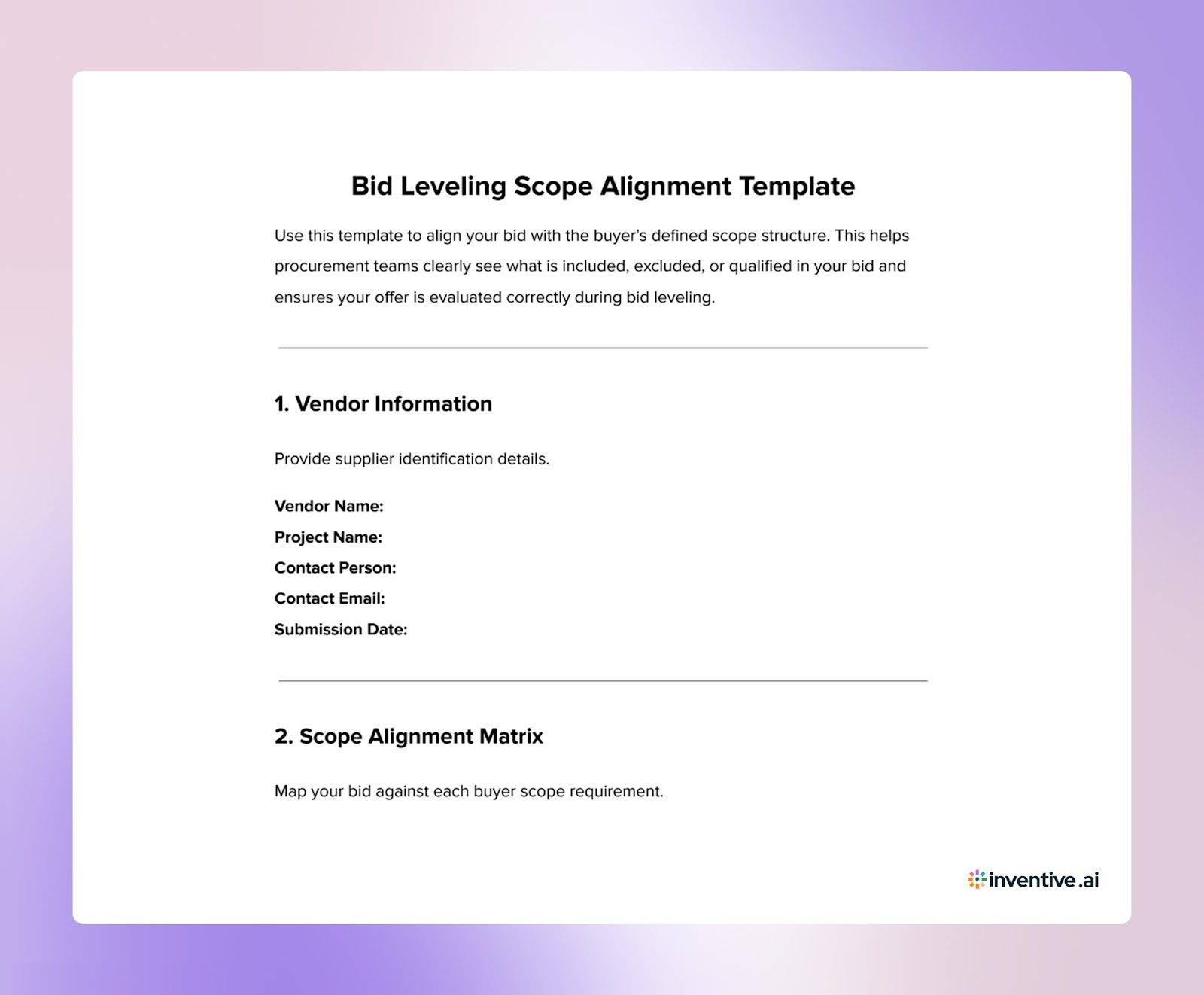
Use this template to map your bid against the buyer’s defined scope. It helps you clearly show inclusions, exclusions, and assumptions so evaluators understand your coverage.

Template 3: Bid Leveling Comparison Template
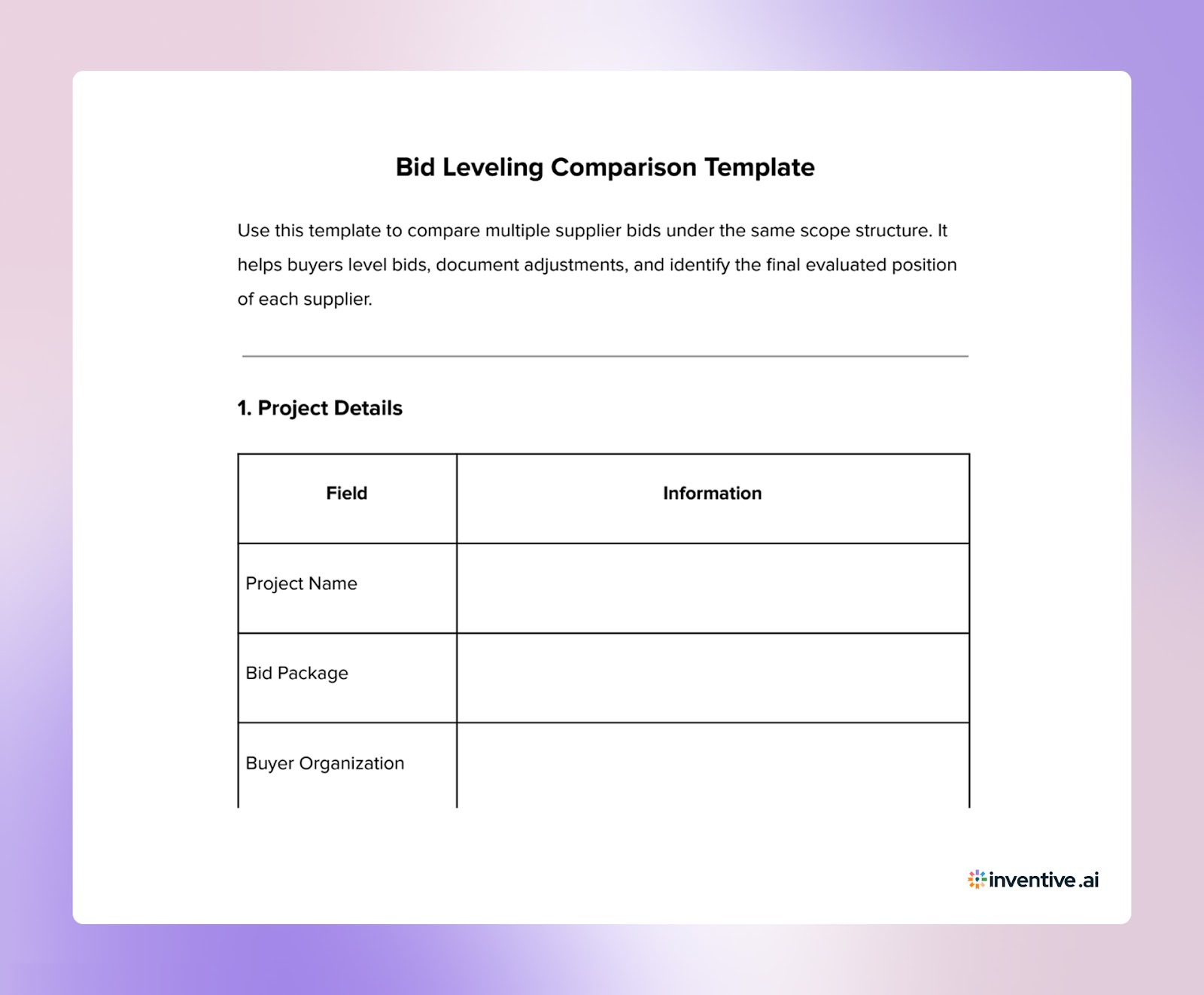
Use this template to structure your bid for direct comparison during leveling. It helps ensure your pricing and scope are easy to review and adjust if needed.

Why Bid Leveling Templates are Important for Buyers and Vendors?
Bid leveling templates provide a standardized structure that buyers and vendors use to align and review supplier bids. They ensure each bid is evaluated against the same scope and commercial criteria, making comparisons clearer and more reliable.
Buyers use bid leveling templates to:
- Align all supplier bids under a consistent scope format
- Identify exclusions, assumptions, and missing cost elements
- Compare supplier pricing on an equivalent basis
- Adjust bids to reflect complete scope coverage
- Maintain clear documentation for evaluation and approvals
This improves commercial accuracy and reduces the risk of incorrect supplier selection.
Bid leveling templates help vendors:
- Present pricing and scope in the buyer’s required format
- Ensure all required components are properly included
- Avoid misunderstandings during commercial evaluation
- Communicate assumptions and inclusions transparently
- Improve their chances of progressing in the selection process
Since bid leveling directly affects award decisions, submitting complete and well-structured bid information is critical for remaining competitive.
How To Prepare Strong Bid Leveling Template Submissions?
Vendors who submit structured, complete, and transparent bid information make it easier for evaluators to level their bids correctly.
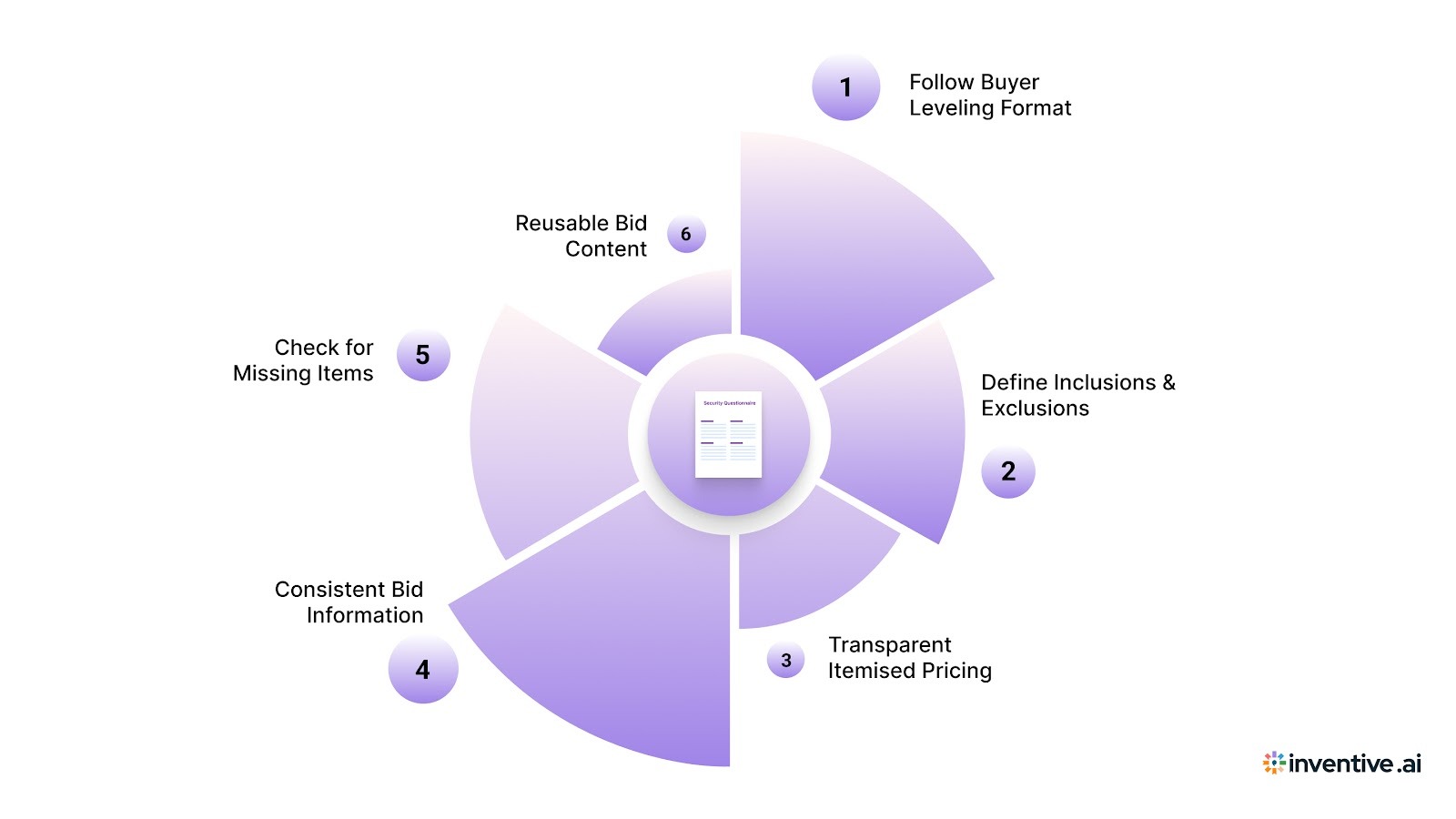
Well-prepared bid leveling submissions improve shortlist chances and overall win rates.
- Align Your Bid With The Buyer’s Leveling Structure: Bid leveling templates follow defined scope categories and cost breakdowns. Vendors should submit pricing and scope details exactly as requested without changing the structure. This ensures your bid can be leveled and evaluated without delays.
- Clearly Define Inclusions and Exclusions: Buyers use bid leveling to identify what each supplier has included or excluded. Clearly stating your scope coverage helps evaluators understand your true commercial offer. This reduces confusion and prevents incorrect cost assumptions.
- Present Itemized and Transparent Pricing: Bid leveling relies on detailed pricing across scope components. Vendors should ensure all cost elements are complete, accurate, and aligned with the template format. Transparent pricing improves evaluation clarity and buyer confidence.
- Maintain Consistency Across Your Entire Bid: Your pricing, scope descriptions, and assumptions should align across all sections. Inconsistent information makes leveling difficult and weakens your credibility. Consistency helps buyers accurately position your bid.
- Review Your Bid for Missing or Incomplete Items: Incomplete bids create gaps during leveling and may require downward or upward adjustments. Always review your submission to confirm all required items are included. Complete bids improve your chances of progressing further.
- Maintain Ready-To-Use Bid Content for Future Opportunities: Many bid leveling requirements repeat across projects. Keeping structured, reusable bid content helps your team respond faster and more accurately. This improves response efficiency and increases participation in more opportunities.
Preparing your bid using a structured bid leveling template helps buyers evaluate your offer accurately, strengthens your commercial position, and improves your chances of winning.
Must Read: RFP Software Comparison for Transportation 2025
Win More Leveled Bids Faster with Inventive AI
Bid leveling templates determine how buyers align, adjust, and evaluate supplier bids before making final award decisions. Many vendors prepare bid submissions using scattered files, reused pricing sheets, and outdated scope details. This often leads to gaps, inconsistencies, and unclear inclusions that weaken their position during bid leveling.
Inventive AI’s AI RFP Agent helps vendors generate structured, complete bid responses that align with bid leveling requirements. It ensures your pricing, scope, and supporting information are clear, accurate, and easy for buyers to understand.
1. Context Engine
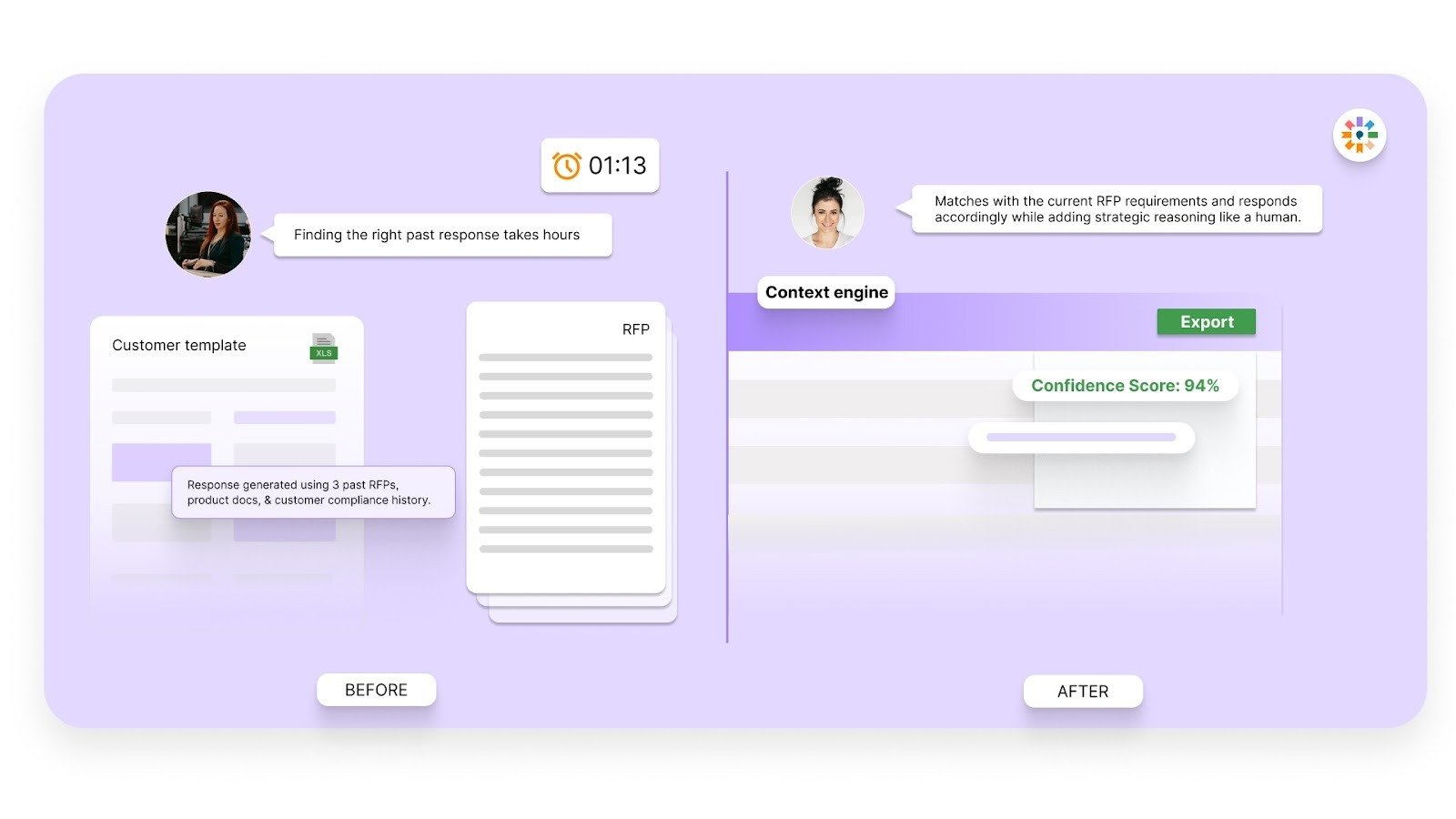
Inventive AI analyzes the full bid request, including scope details, commercial requirements, and evaluation priorities. It generates responses aligned with the buyer’s leveling structure instead of relying on generic past content.
This ensures your bid is relevant, complete, and competitive.
2. Conflict Detection
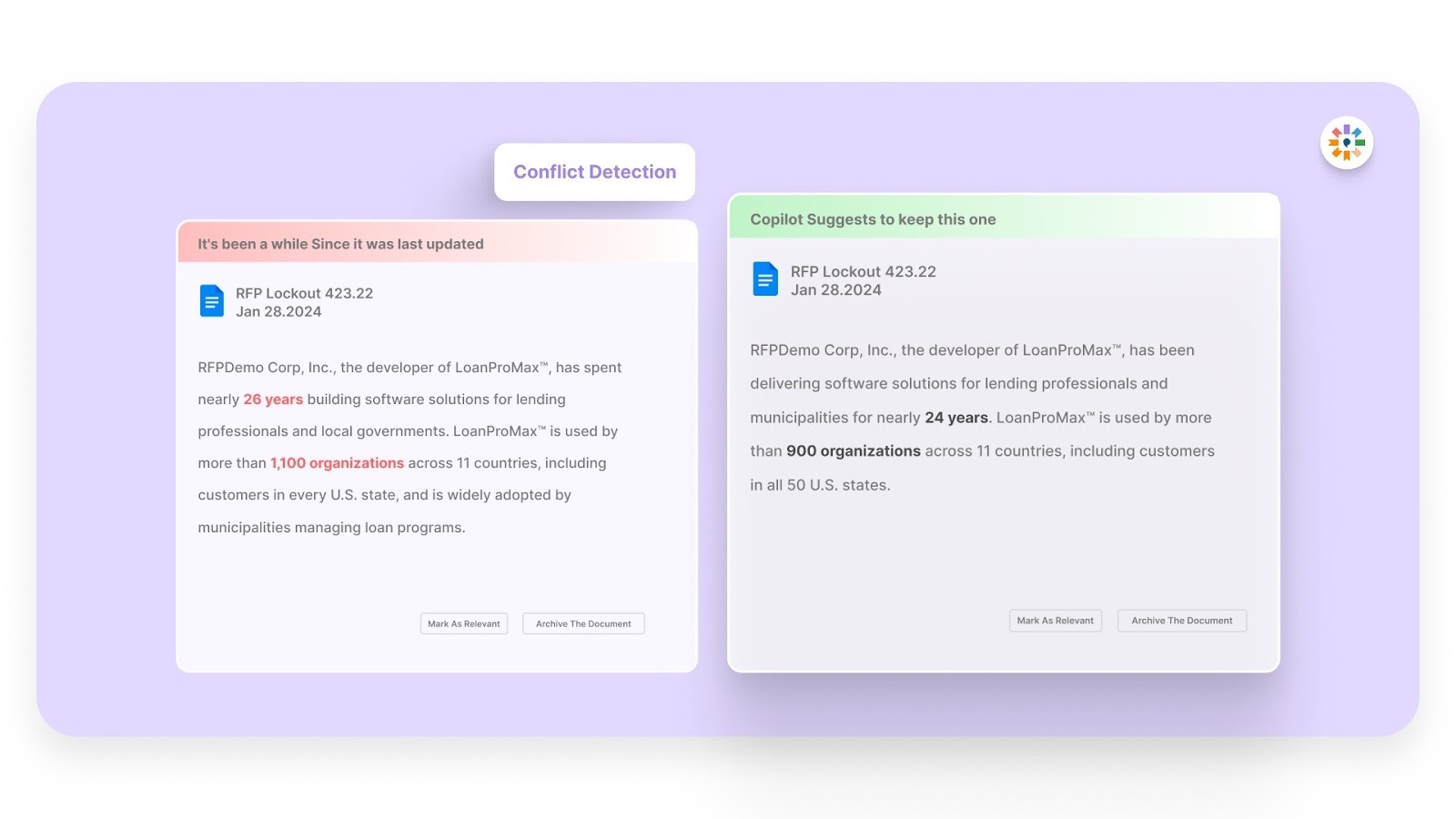
Bid leveling exposes inconsistencies between pricing, scope, and supporting documents. Inventive AI automatically detects conflicting information across your bid content.
This helps you correct issues before submission and avoid negative adjustments.
3. Outdated Content Detection
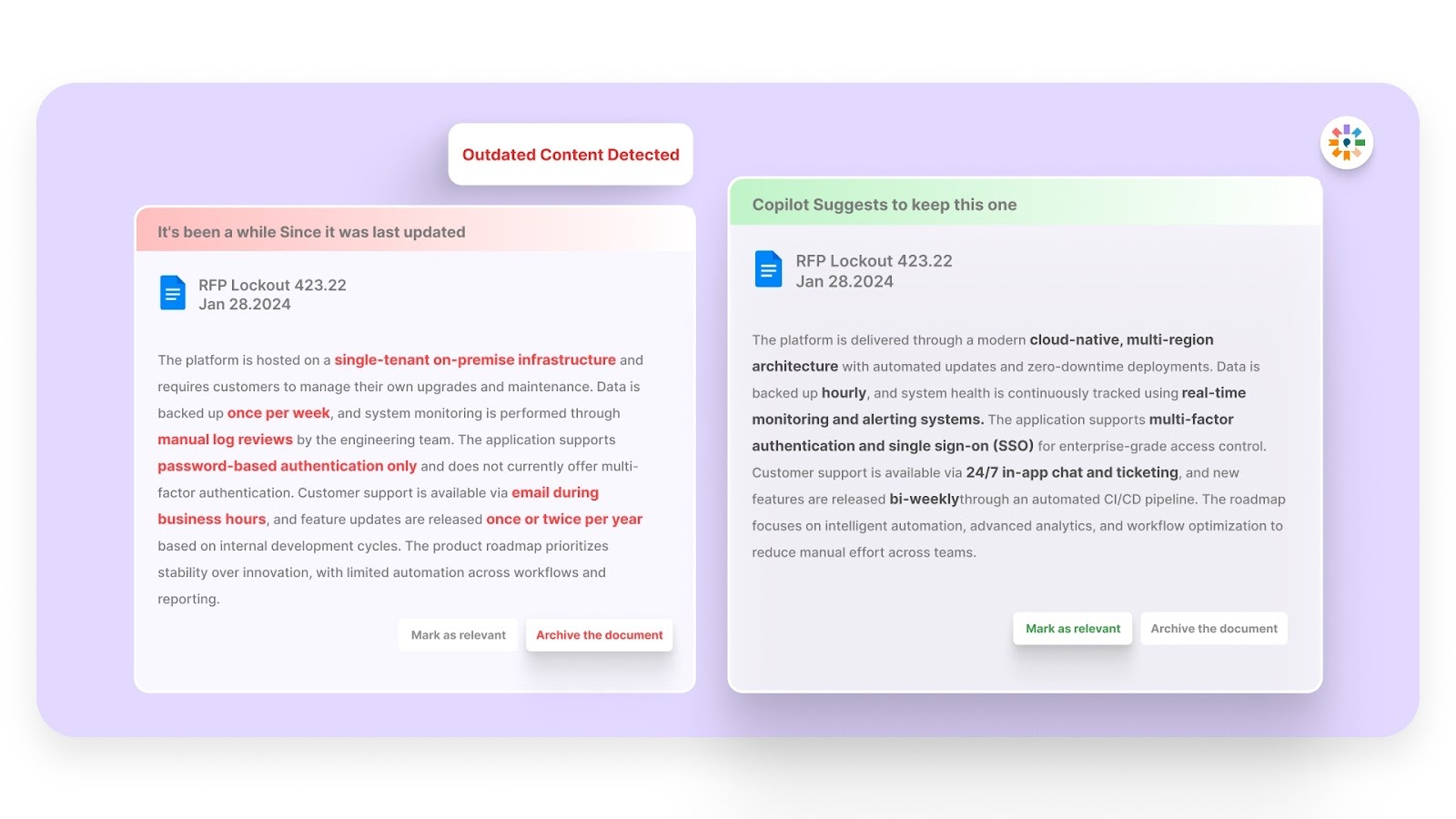
Using outdated pricing, scope details, or capability information weakens your leveled position. Inventive AI flags outdated content and ensures only current information is used.
This improves accuracy and strengthens buyer confidence.
4. 2× Better Quality Responses
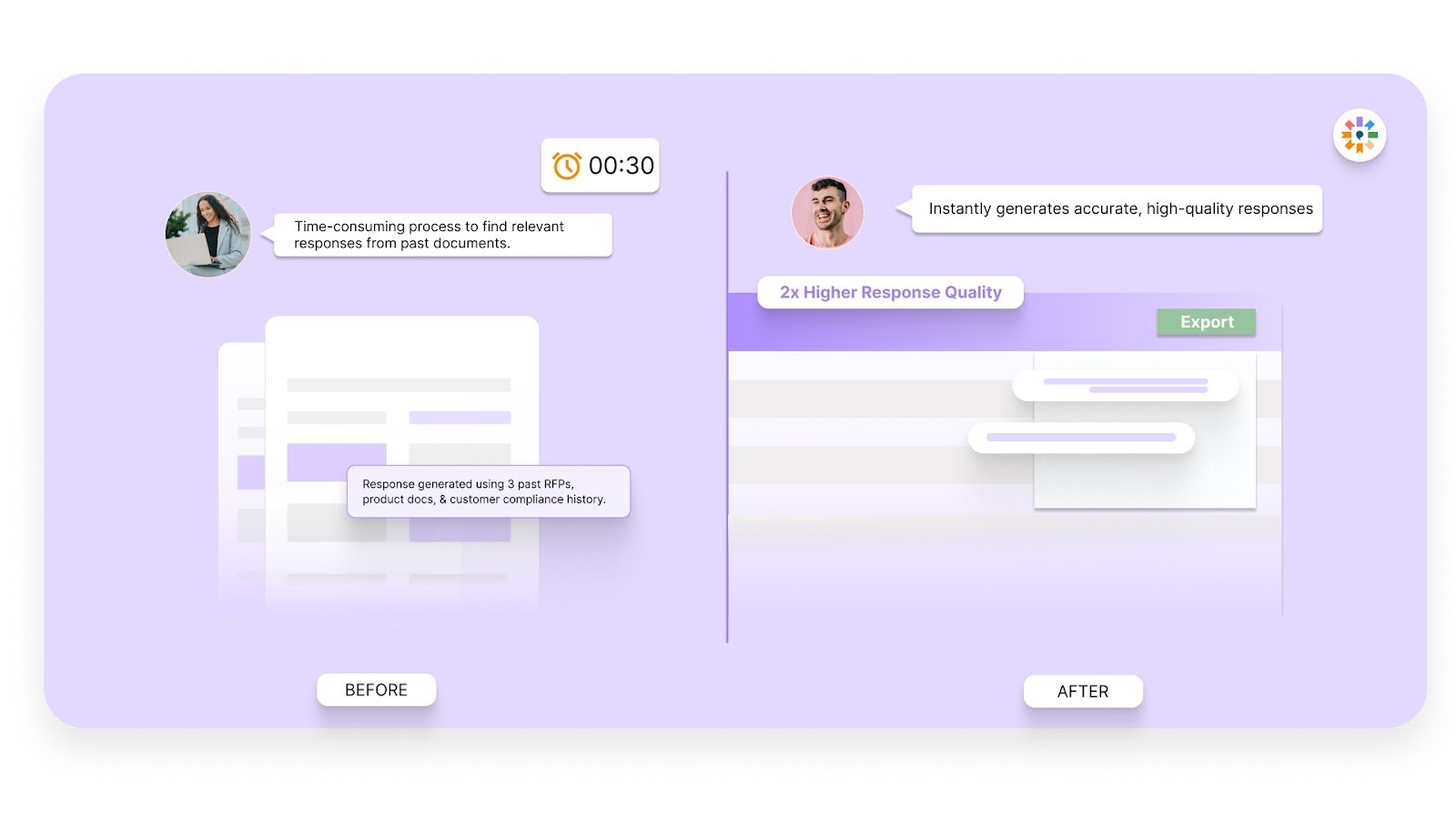
Inventive AI’s multi-agent system generates structured bid responses aligned with buyer leveling formats. Responses are clear, complete, and require minimal manual edits.
This improves evaluation outcomes and increases shortlist rates.
5. Simple and Easy-To-Use Interface
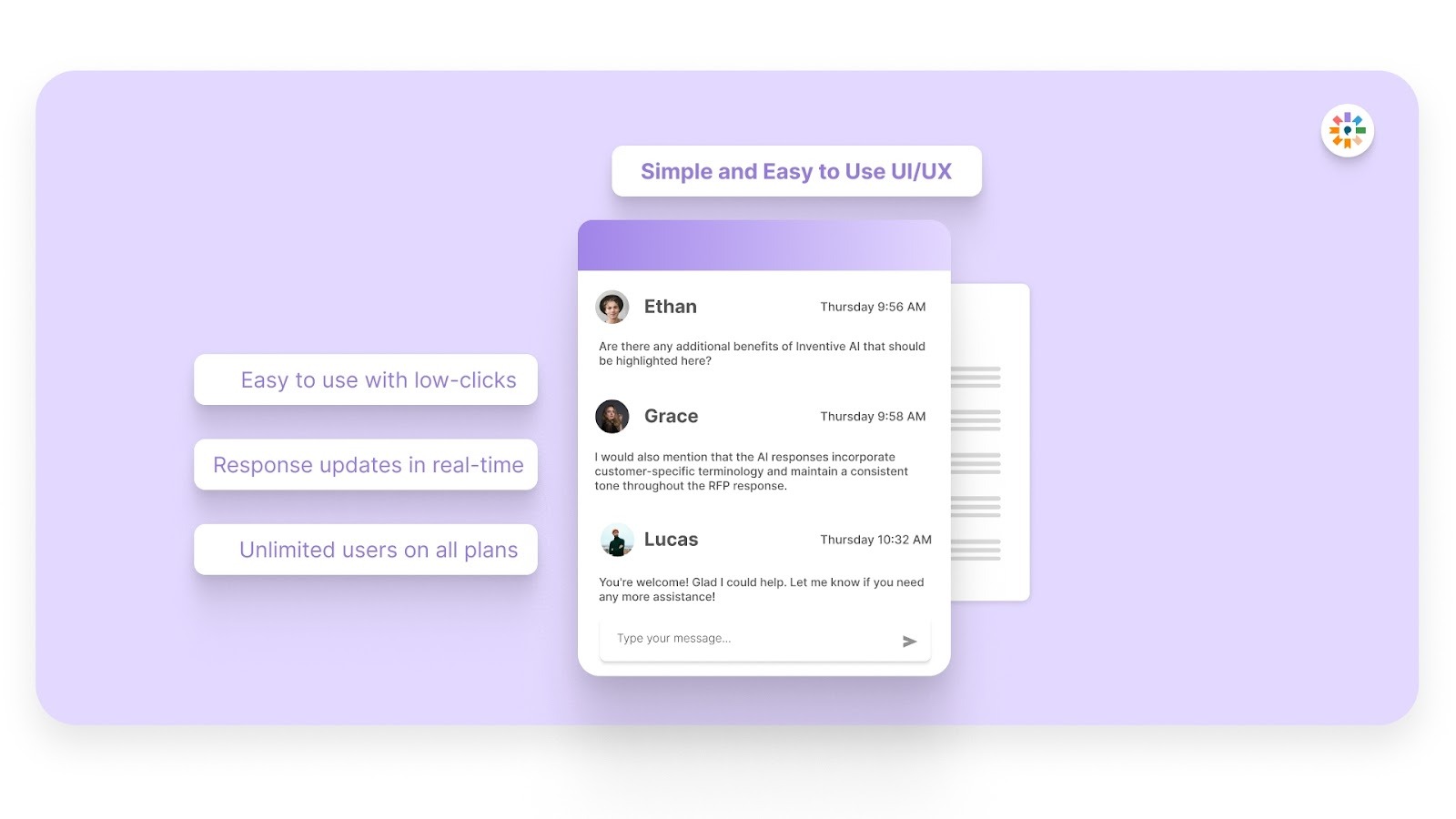
Teams can quickly generate, review, and update bid responses without managing multiple spreadsheets or files. The platform supports fast adoption across sales and proposal teams.
This enables teams to respond faster, handle more bid opportunities, and achieve up to 50% higher win rates through improved response quality.
6. Narrative Proposal Generation
Inventive AI converts structured bid inputs into clear, cohesive narratives that align with buyer evaluation expectations. Instead of fragmented answers, teams can present a unified, easy-to-understand proposal.
This helps buyers quickly interpret your bid, reduces ambiguity during leveling, and strengthens your overall evaluation position.
FAQs
1. What Is The Difference Between Bid Leveling And Bid Comparison?
Bid comparison reviews total prices at a high level. Bid leveling goes deeper by adjusting bids to account for scope gaps, exclusions, and assumptions. This ensures each bid reflects the same scope before selection.
2. Who Is Responsible For Creating The Bid Leveling Template?
The buyer or procurement team typically creates the bid leveling template. They define the scope structure and use the template to align and evaluate all supplier submissions consistently.
3. Can Bid Leveling Change A Supplier’s Final Evaluated Cost?
Yes. During bid leveling, buyers may add estimated costs for excluded items or adjust scope differences. This creates a leveled cost that reflects the true total value of the bid.
4. How Do Scope Exclusions Affect Bid Leveling Results?
Scope exclusions can make a bid appear lower than it actually is. During leveling, buyers account for these exclusions, which may increase the evaluated bid value.
5. Is Bid Leveling Used Only For Construction And Procurement Projects?
No. While common in construction, bid leveling is also used in software sourcing, outsourcing, equipment purchasing, and service procurement where multiple suppliers submit bids.
6. What Happens After Bid Leveling Is Completed?
After leveling, buyers review the adjusted results, clarify final details with suppliers, and select the vendor that offers the best overall commercial and technical fit.

.avif)