Colocation RFP Template: How Vendors Can Submit Compliant Responses?

As enterprises distribute workloads across on-prem, cloud, and third-party data centers, colocation sourcing has become a strategic, long-term decision rather than a tactical one.
For colocation vendors, these sourcing decisions are high-stakes and often involve long-term revenue and capacity commitments. You are evaluated through structured colocation RFP templates that assess facility design, power resilience, security, and commercial terms, directly influencing shortlist, contract, and expansion decisions.
In this blog, you will learn how buyers evaluate colocation providers using RFP templates and how you can submit structured, compliant, evaluation-aligned response templates.
Colocation RFP Template: Free Download (For Buyers)
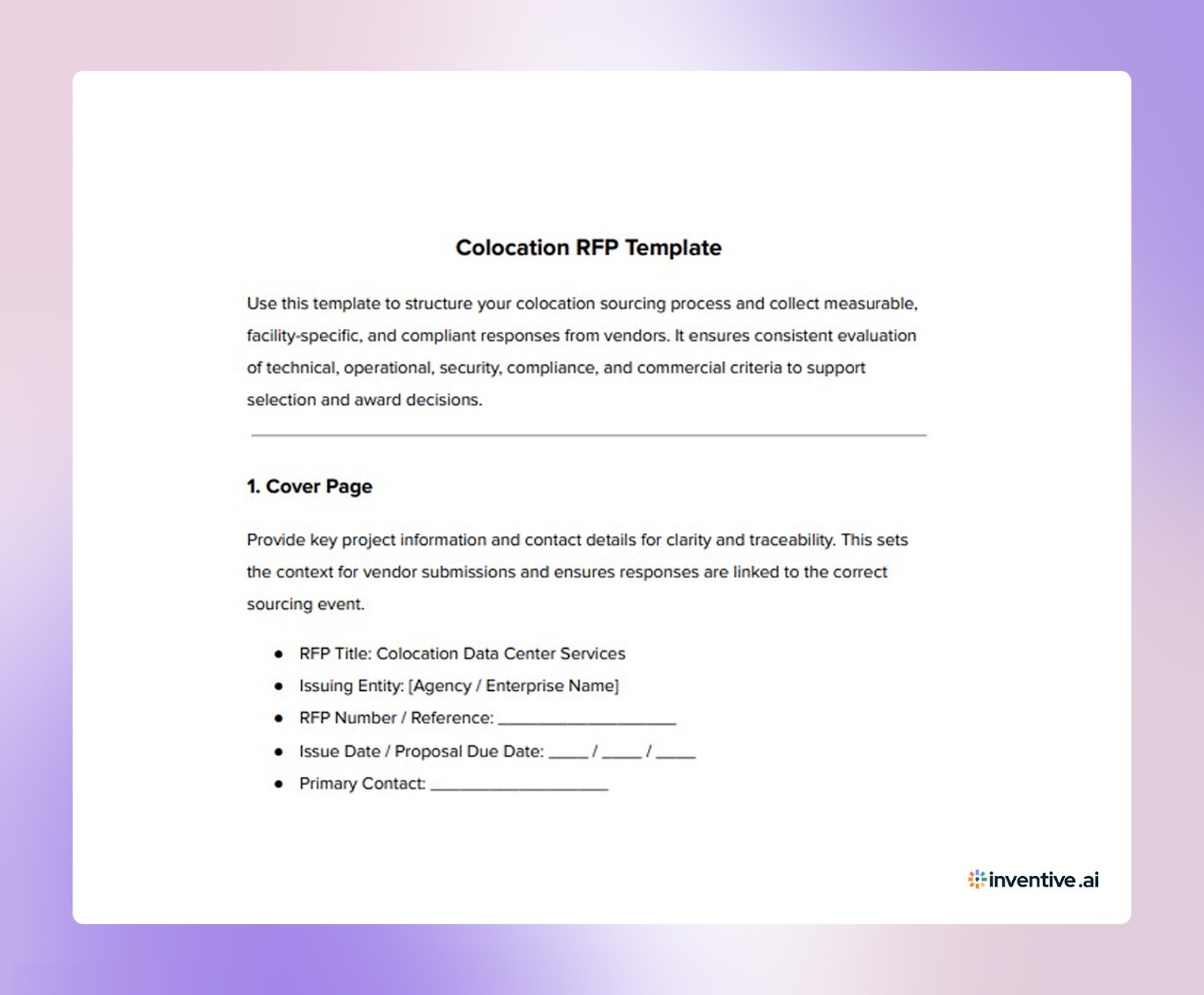

Buyer evaluation templates define what’s measured, but your responses show how your capabilities and risk management stand out.
Colocation RFP Response Template Free Download (For Vendors)
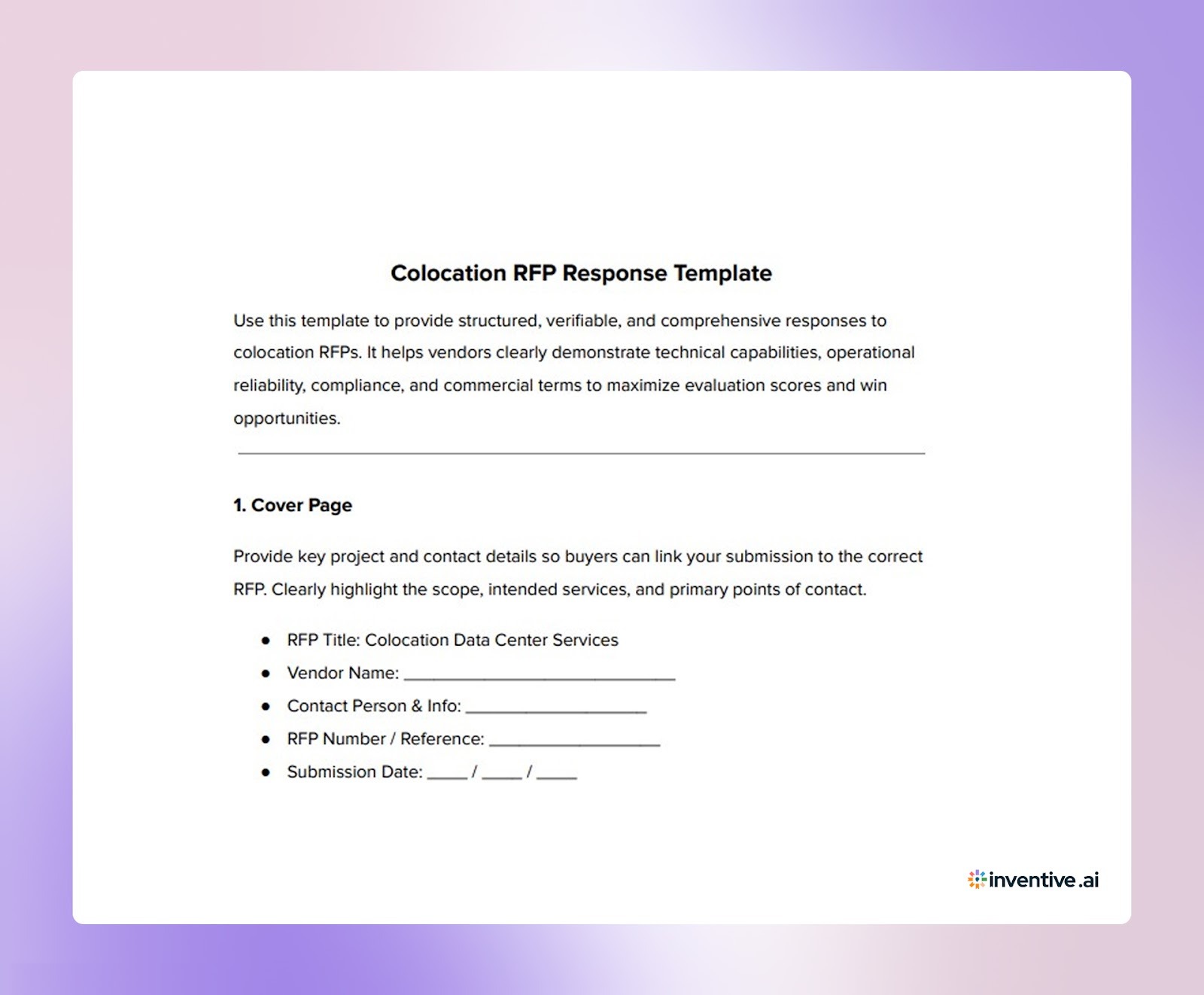

A structured response makes it easier for buyers to evaluate your facility’s suitability, minimizes clarification cycles, and strengthens your chances of being shortlisted. This template helps colocation providers present information clearly and align it with buyer scoring criteria.
- Cover Page: Provide your company and submission details so the buyer can easily link your response to the correct RFP. Include RFP title, issuing entity, reference number, dates, and primary contact.
- Facility & Technical Requirements: Demonstrate your facility’s capabilities with verifiable, site-specific details. Highlight power, cooling, network, redundancy, uptime, and expansion capacity to demonstrate reliability and readiness.
- Security & Compliance: Show adherence to industry standards and regulatory requirements. Provide evidence of certifications, audit reports, and physical security measures to reassure buyers of risk mitigation.
- Operations & Support: Explain your operational practices, including staffing, remote hands, incident management, change processes, and disaster recovery. Show buyers your ability to maintain uptime and resolve issues efficiently.
- Commercial & Pricing: Provide transparent, itemized pricing for space, power, connectivity, and services. Include contract terms, renewal options, and assumptions to demonstrate fairness, clarity, and commercial reliability.
- Vendor Qualifications & References: Highlight your experience, stability, and relevant past projects. Share references and financial information to build trust and credibility with the buyer.
- Alignment to Evaluation Criteria: Map your responses to the buyer’s scoring model. Provide evidence and metrics to show how your offerings meet or exceed technical, operational, security, and commercial expectations.
- Submission Instructions Confirmation: Confirm adherence to all RFP instructions, including format, page limits, attachments, and deadlines. Show buyers your attention to detail and compliance with submission requirements.
Also Read: Top RFP Software for Small-Sized Companies & Startups to Win More Deals
Even with a well-structured template, vendors often lose points due to small but critical errors. Understanding these common pitfalls can help you submit evaluation-ready responses that earn higher scores.
How to Prevent Scoring Mistakes in Colocation RFPs? 5 Tips to Follow
Submitting a colocation RFP response requires precision. Vendors often risk lower evaluation scores due to avoidable mistakes, which can affect shortlist eligibility. Here’s how to safeguard your submission:
- Generic Facility Descriptions
Vendors often provide high-level descriptions of data centers without measurable details. Include site-specific metrics like power capacity, cooling redundancy, and expansion options to clearly demonstrate operational readiness.
- Missing Compliance Proof
Listing certifications without attaching documentation weakens trust. Attach current SOC, ISO, or HIPAA certificates, audit reports, and physical security evidence to prove regulatory adherence.
- Technical Details Not Aligned to Buyer Criteria
Overly detailed technical descriptions that don’t map to scoring sections are often overlooked. Link every technical claim (network architecture, redundancy, connectivity) directly to the buyer’s evaluation factors.
- Incomplete Commercial & Pricing Information
Unclear or unstructured pricing, contract terms, or service assumptions create confusion. Provide itemized costs, contract duration, renewal options, and escalation processes to demonstrate transparency and reliability.
- Operational & Support Gaps
Claims about staffing, remote hands, or incident resolution without evidence lower scores. Include shift coverage, support processes, escalation workflows, and disaster recovery plans to reassure evaluators of operational maturity.
To make submissions more efficient and error-free, vendors can use RFP automation solutions, such as Inventive AI, to streamline responses and simplify the RFP process.
Streamline and Scale Your Colocation RFP Responses with Inventive AI
Preparing accurate colocation RFP responses across multiple facilities, regions, and internal teams requires significant coordination. Inventive AI’s AI-powered RFP response software helps colocation vendors centralize technical content, maintain consistency across submissions, and align responses with enterprise evaluation criteria.
Key Capabilities of Inventive AI:
2x Higher Response Quality
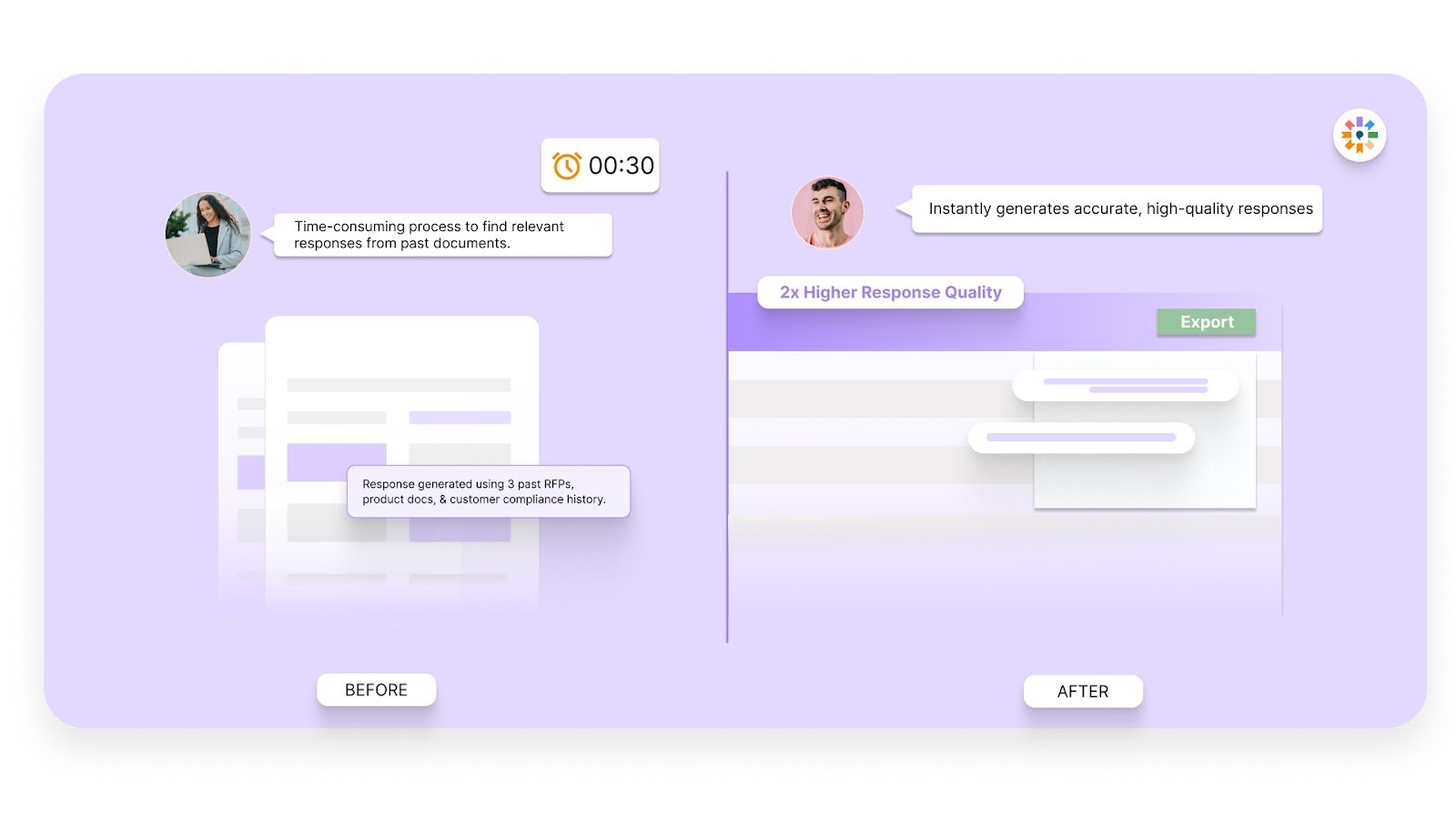
Multi-agent AI generates structured, complete responses that typically require minimal revision, improving submission consistency and enabling RFPs to be completed up to 90% faster.
Context-Awareness
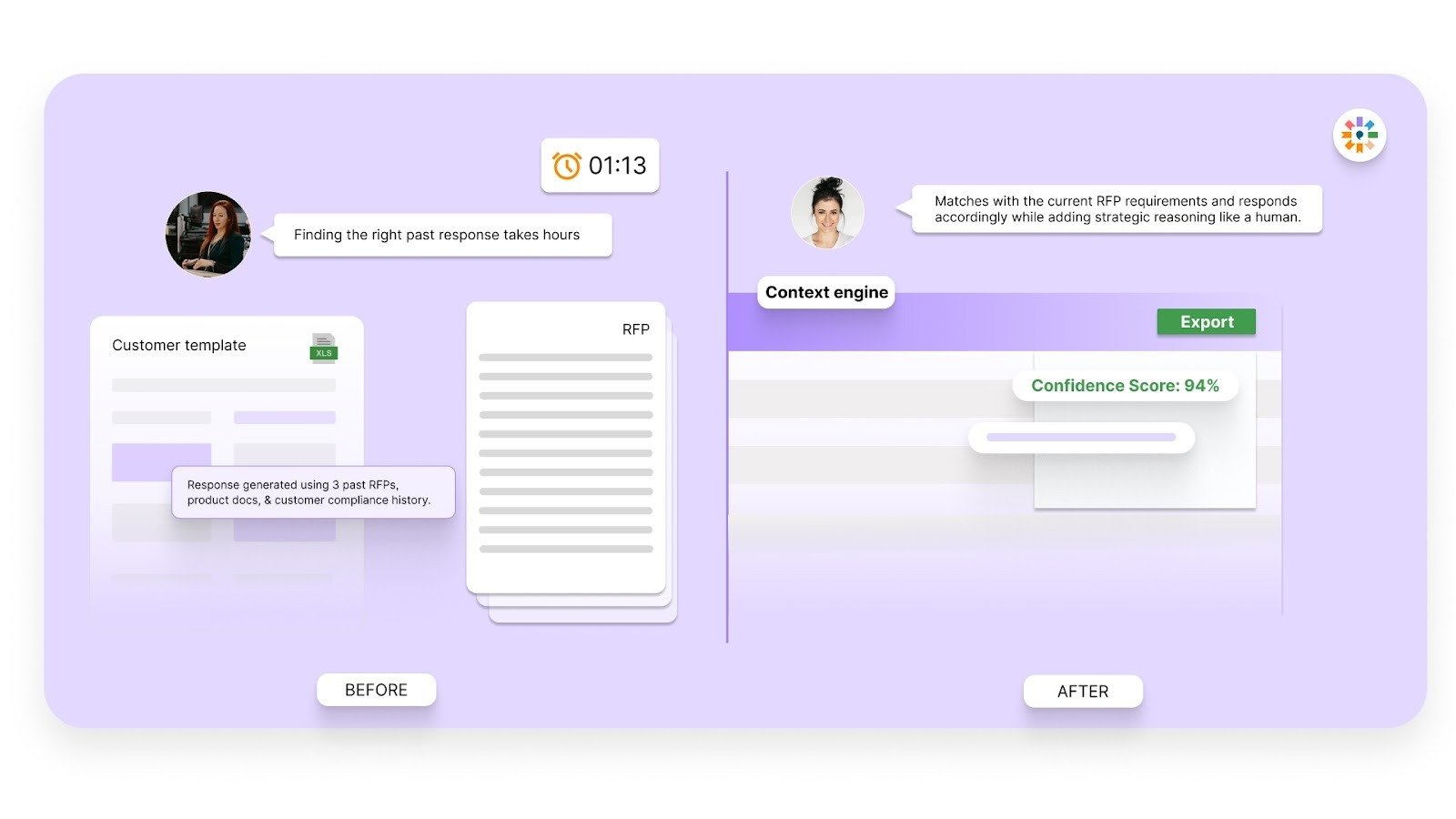
Inventive AI evaluates the entire RFP, including scope, compliance requirements, and evaluation criteria. Responses align with project-specific requirements rather than relying on static boilerplate, helping vendors achieve up to 50% higher win rates.
Instant Conflict Detection Before Submission
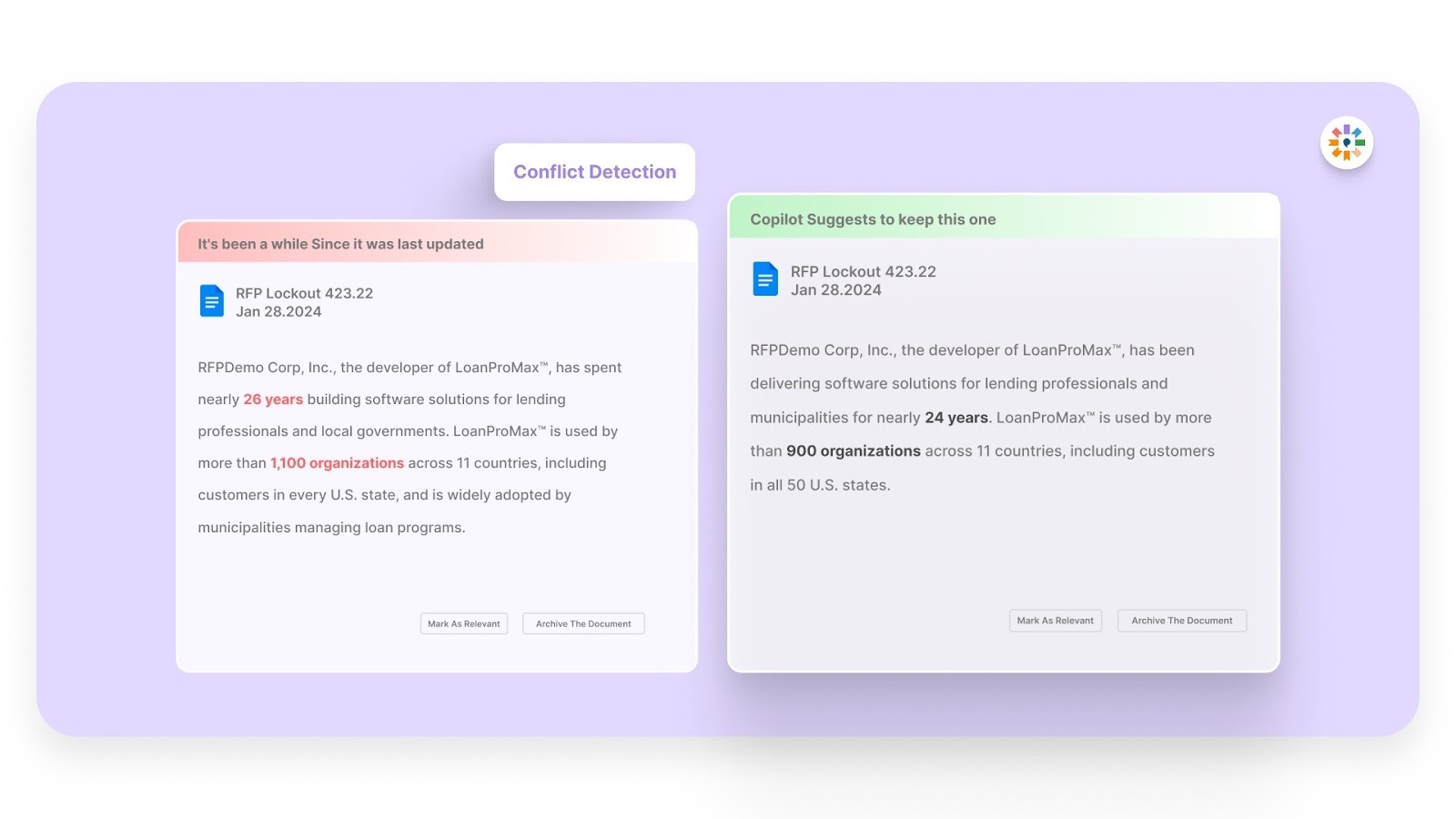
Avoid costly mistakes by having Inventive AI as it identifies and resolve any inconsistencies or conflicts in your responses before submission, ensuring that everything is aligned and accurate.
Outdated Content Detection
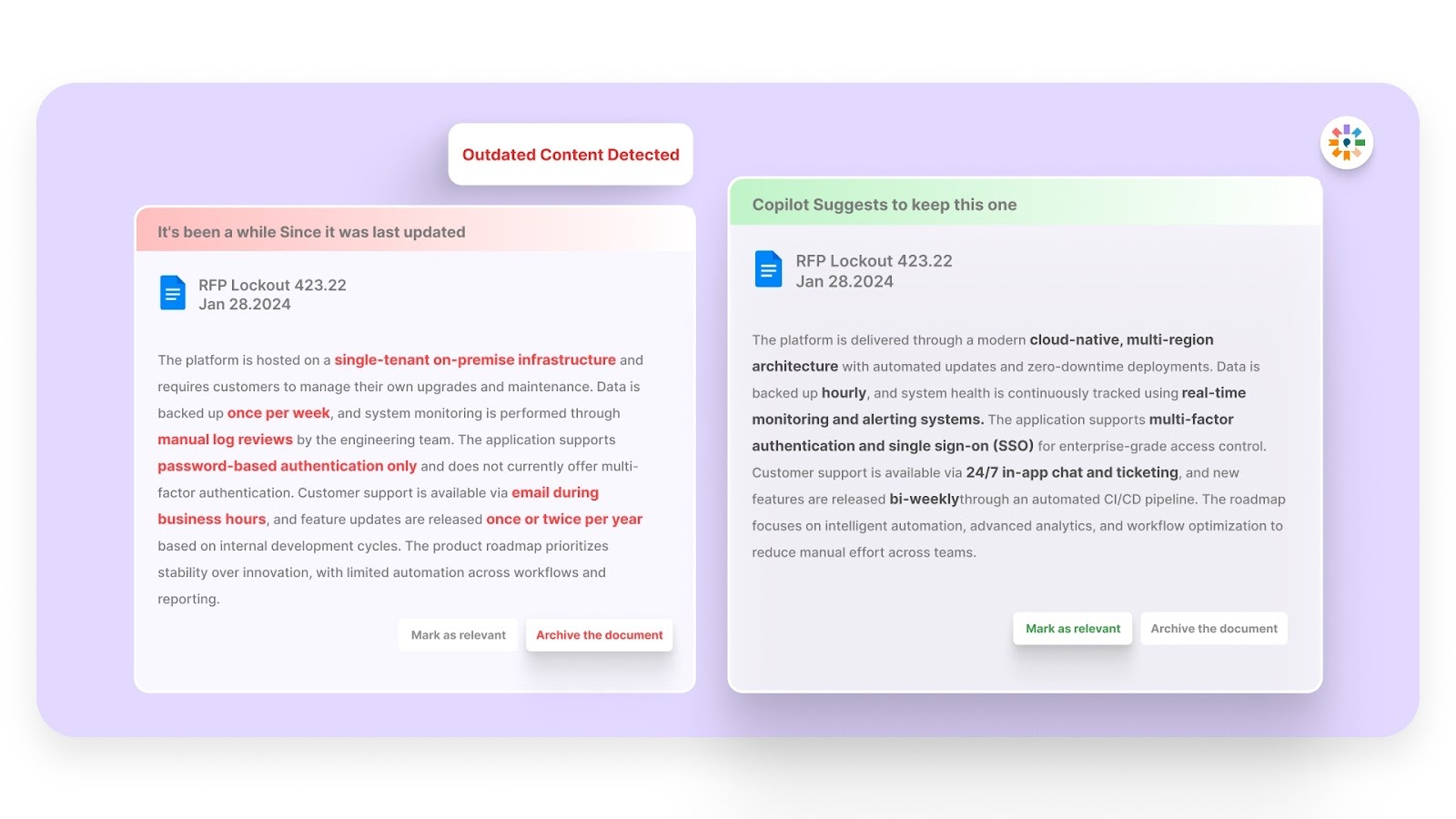
Never submit outdated information again. Inventive AI automatically flags and updates any content that is no longer relevant, so your responses stay fresh and aligned with the latest industry standards.
Narrative-Style Proposals
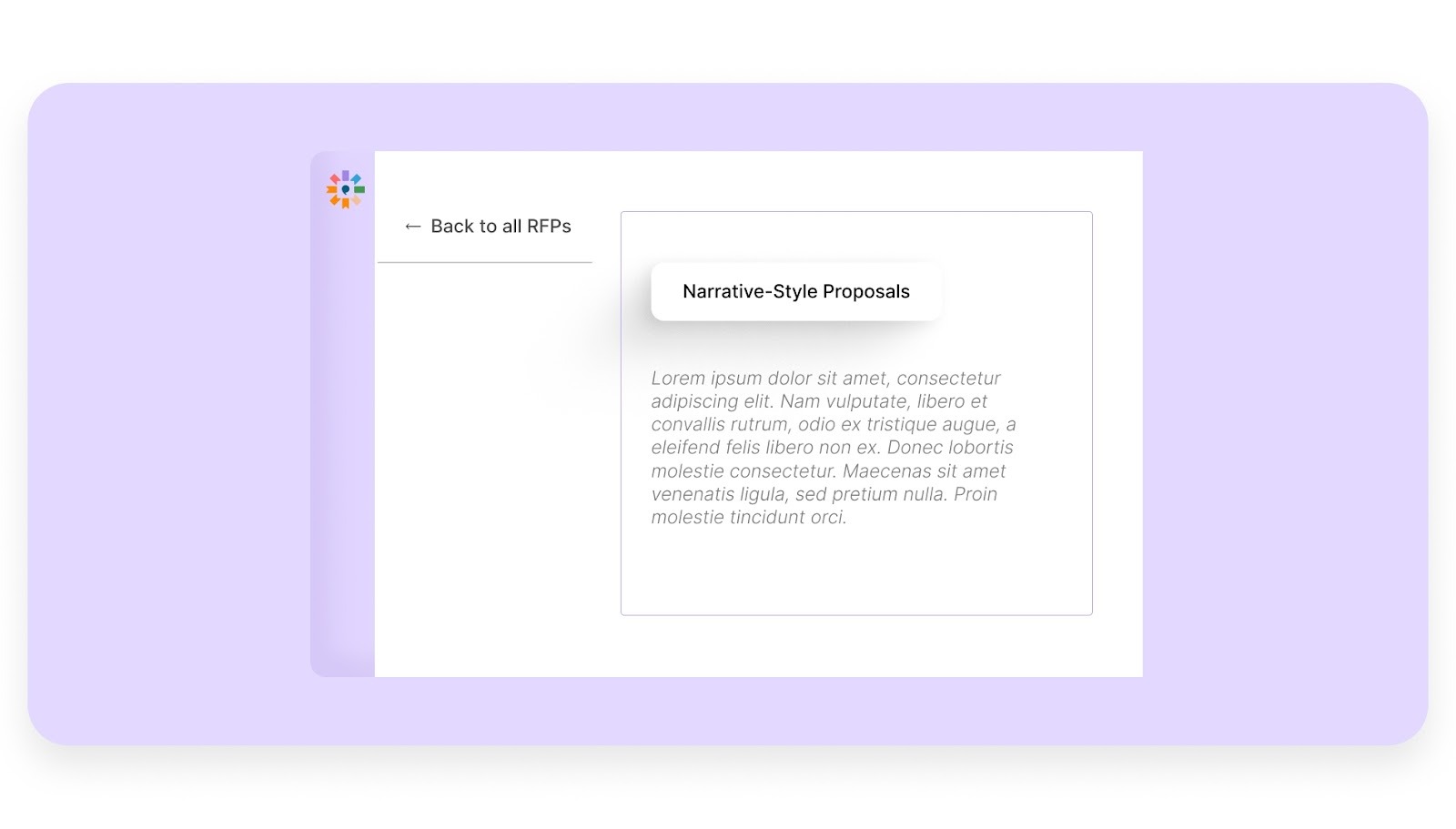
Say goodbye to fragmented, disjointed answers. Inventive AI ensures your proposals are cohesive, professional, and tell a compelling story that resonates with the buyer.
Simple, Easy-to-Use Interface
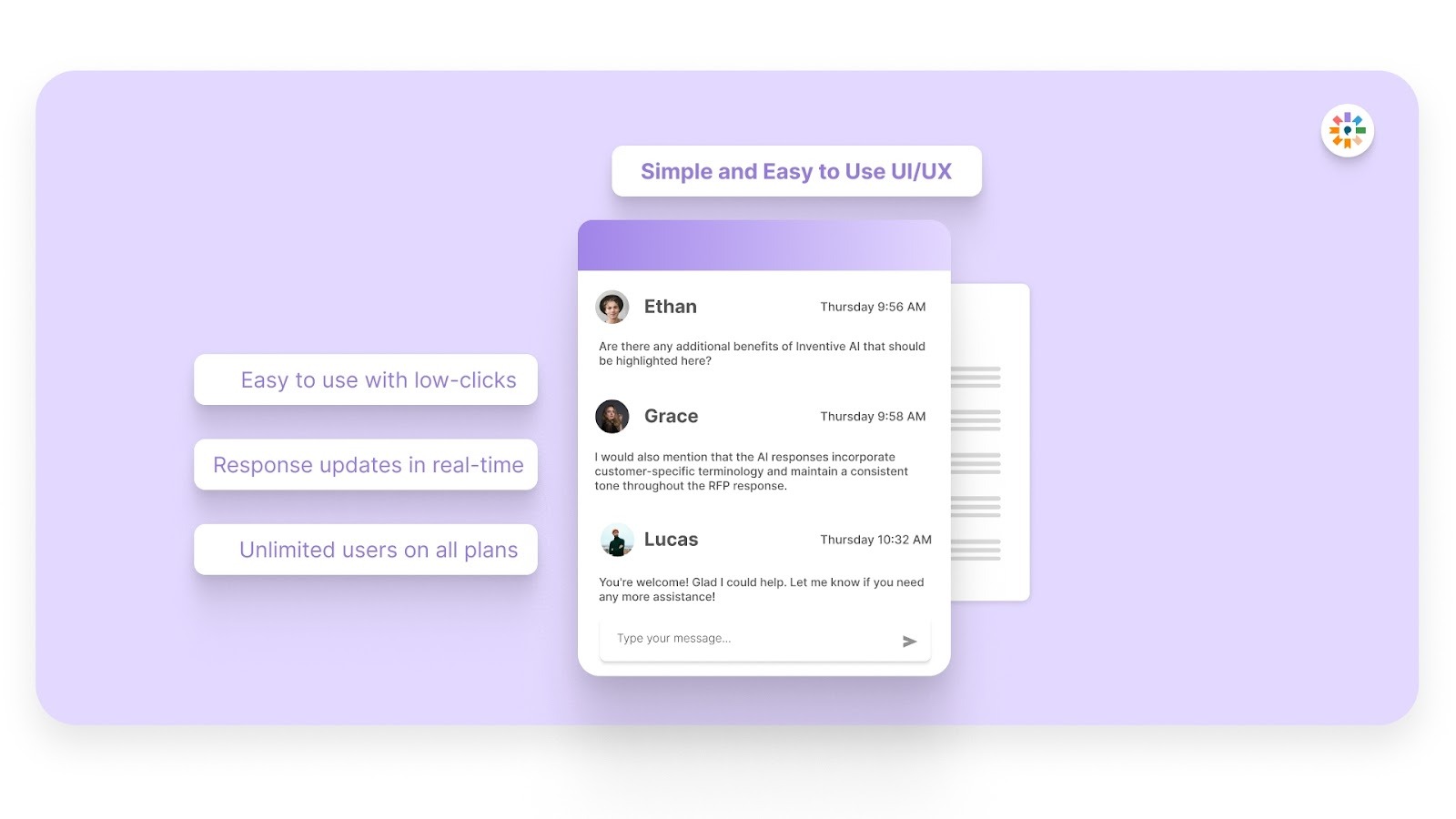
Inventive AI is designed for real proposal teams, not just technical users. Stakeholders across HR, sales, legal, and compliance can contribute without training overhead, reducing coordination friction and keeping responses moving forward.
Inventive AI enables vendors to create complete, polished proposals, including executive summaries, value propositions, and capability narratives. Automating these tasks helps you respond faster, improve quality, and compete more effectively.
FAQs
1. How detailed should I be when describing my colocation facility in an RFP?
Vendors should provide site-specific metrics, including power density, cooling redundancy, network connectivity, and expansion capacity. Detailed diagrams and measurable specifications demonstrate reliability and help buyers accurately assess operational suitability.
2. What’s the best way to present uptime and SLA commitments for a colocation site?
Ensure all uptime percentages, redundancy levels, and SLA guarantees are consistent across sections. Include historical performance data, maintenance schedules, and verification reports to build credibility and avoid evaluation conflicts.
3. Which compliance certifications are most relevant for colocation RFP submissions?
Include certifications like SOC 2, ISO 27001, HIPAA, or PCI-DSS if applicable. Attach supporting audit reports or security assessments to prove regulatory adherence and assure buyers of risk mitigation capabilities.
4. How should pricing be structured for colocation proposals?
Provide transparent, itemized pricing for space, power, cross-connects, and optional services. Include contract terms, escalation clauses, and renewal options to allow buyers to compare total cost and ensure financial clarity.
5. What operational details strengthen a colocation RFP response?
Outline staffing coverage, remote hands availability, incident management processes, and disaster recovery plans. Demonstrating operational maturity reassures buyers that your facility can maintain uptime and handle unexpected events effectively.



%20Craft%20Winning%20Vendor%20Responses%20Quickly.jpg)