The Complete Guide to Responding to Due Diligence Forms Faster and Smarter

When it comes to RFP submissions, due diligence forms are often a critical part of the process. For buyers, these forms are important for gathering the necessary information to assess potential vendors. But for vendors, filling out these detailed forms can be time-consuming and repetitive, especially when faced with multiple requests.
The back-and-forth, endless revisions, and starting from scratch every time can quickly become overwhelming. However, using a due diligence form template can simplify the process, ensuring consistency and saving time.
In this guide, we’ll walk through how to use these templates effectively, provide examples, and offer a response template that can speed up your submissions.
Let’s explore how you can make responding to due diligence forms more efficient and improve your RFP win rates in 2026.
The Ultimate Due Diligence Form Template
In the world of RFP responses, buyers often include a due diligence form as part of their request. This form is typically used to gather important details about your company, its capabilities, financial health, and compliance with industry standards. These forms are important for the buyer to evaluate whether you meet the requirements of the RFP.
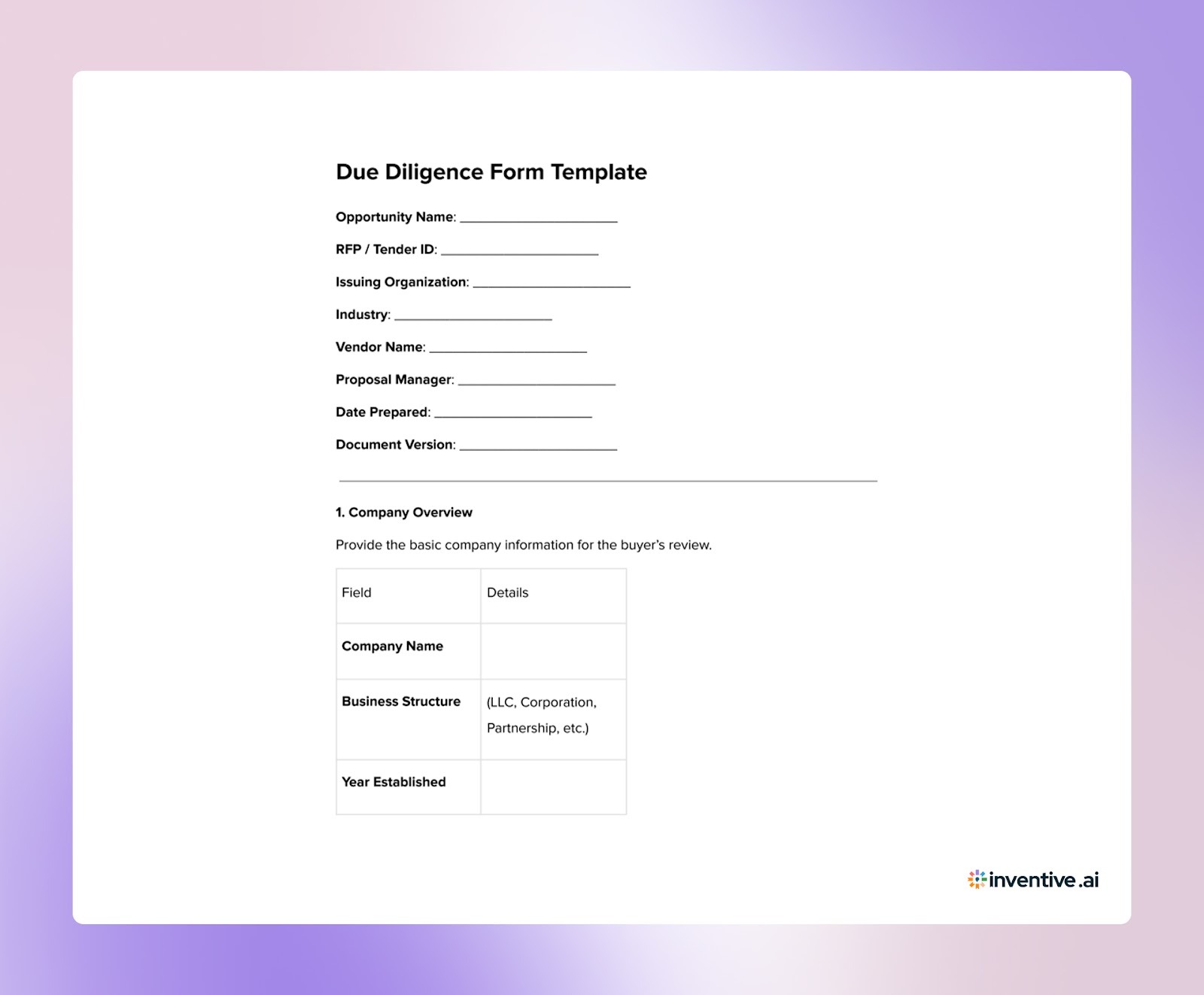

Example of Due Diligence Form
Here are a few examples of that you might come across when responding to RFPs:
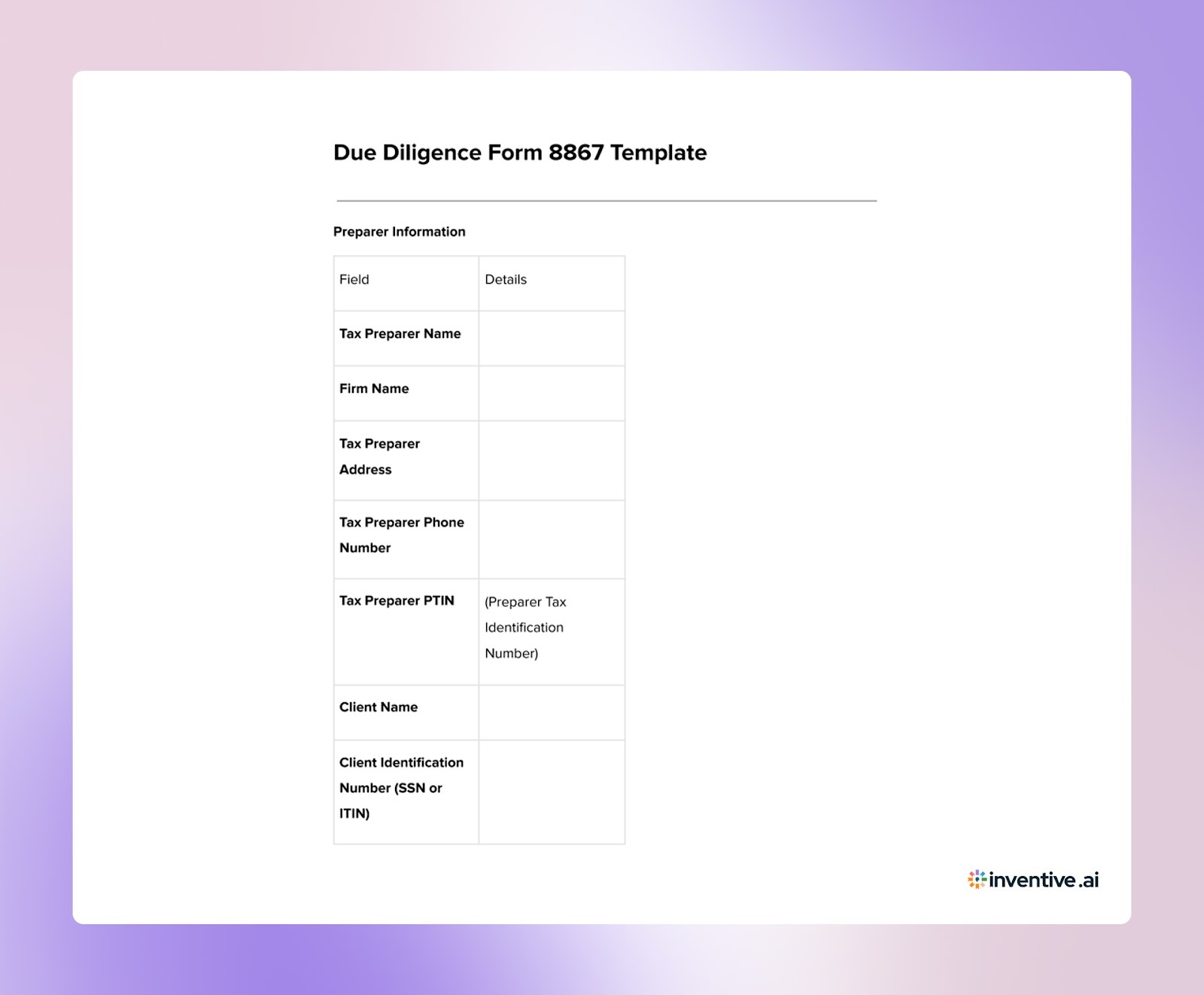
Due Diligence Form 8867
This form helps buyers assess whether a vendor complies with tax-related obligations, especially when claiming tax credits.

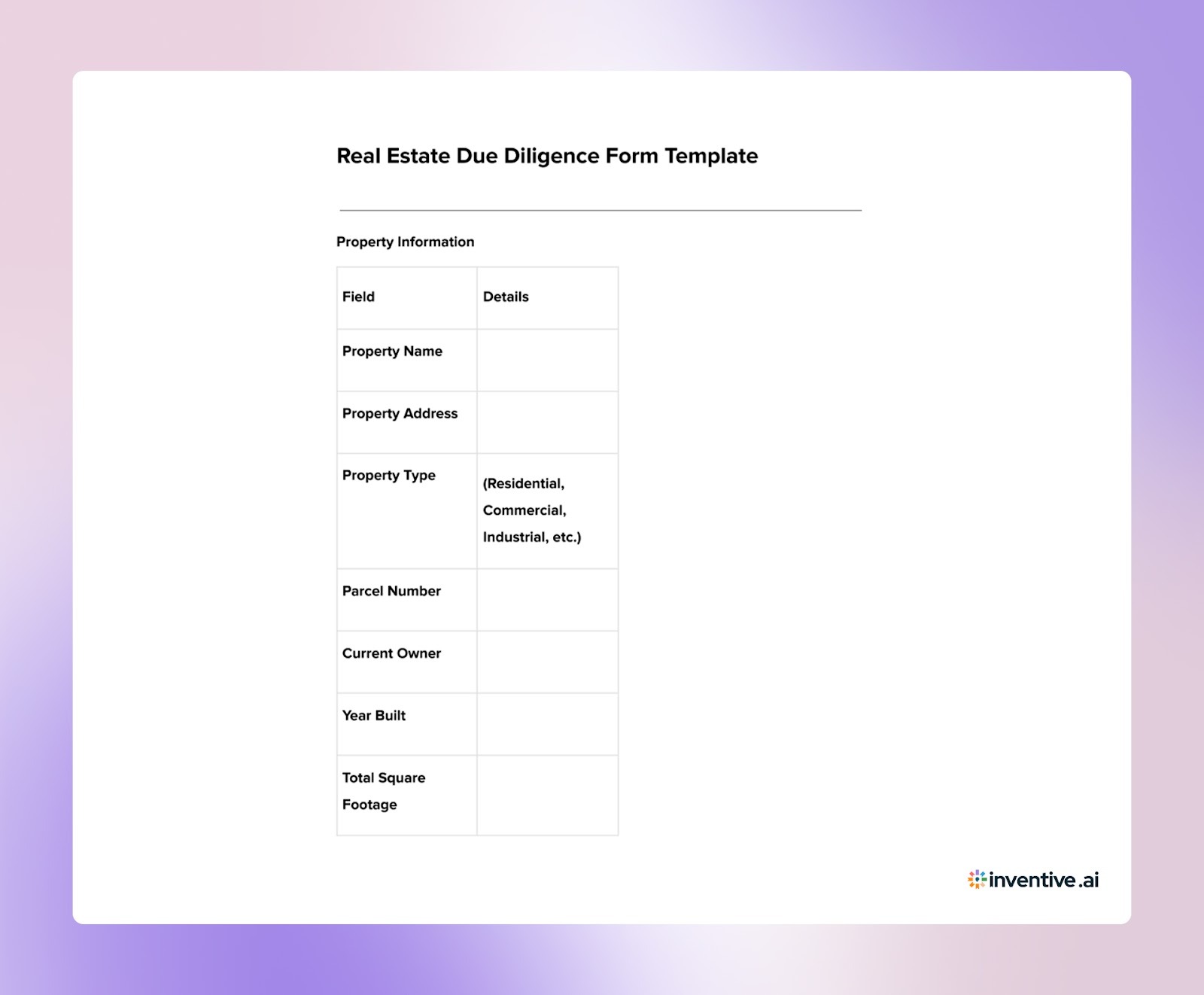
Real Estate Due Diligence Form
Used by buyers in the real estate sector to evaluate the vendor’s property and legal status, including ownership and compliance.

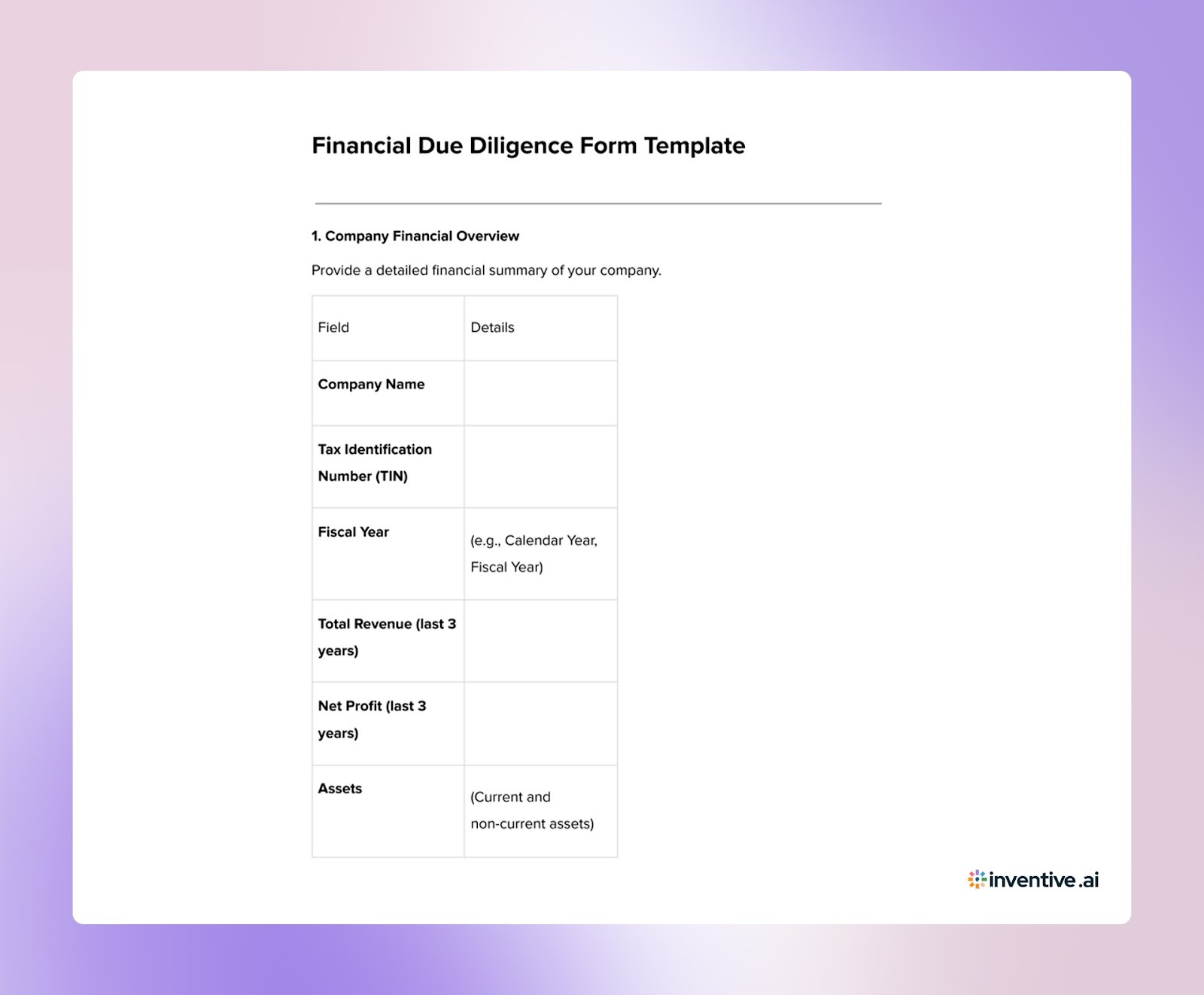
Financial Due Diligence Form
This form focuses on assessing the vendor’s financial health, including profitability, liabilities, and overall financial stability.

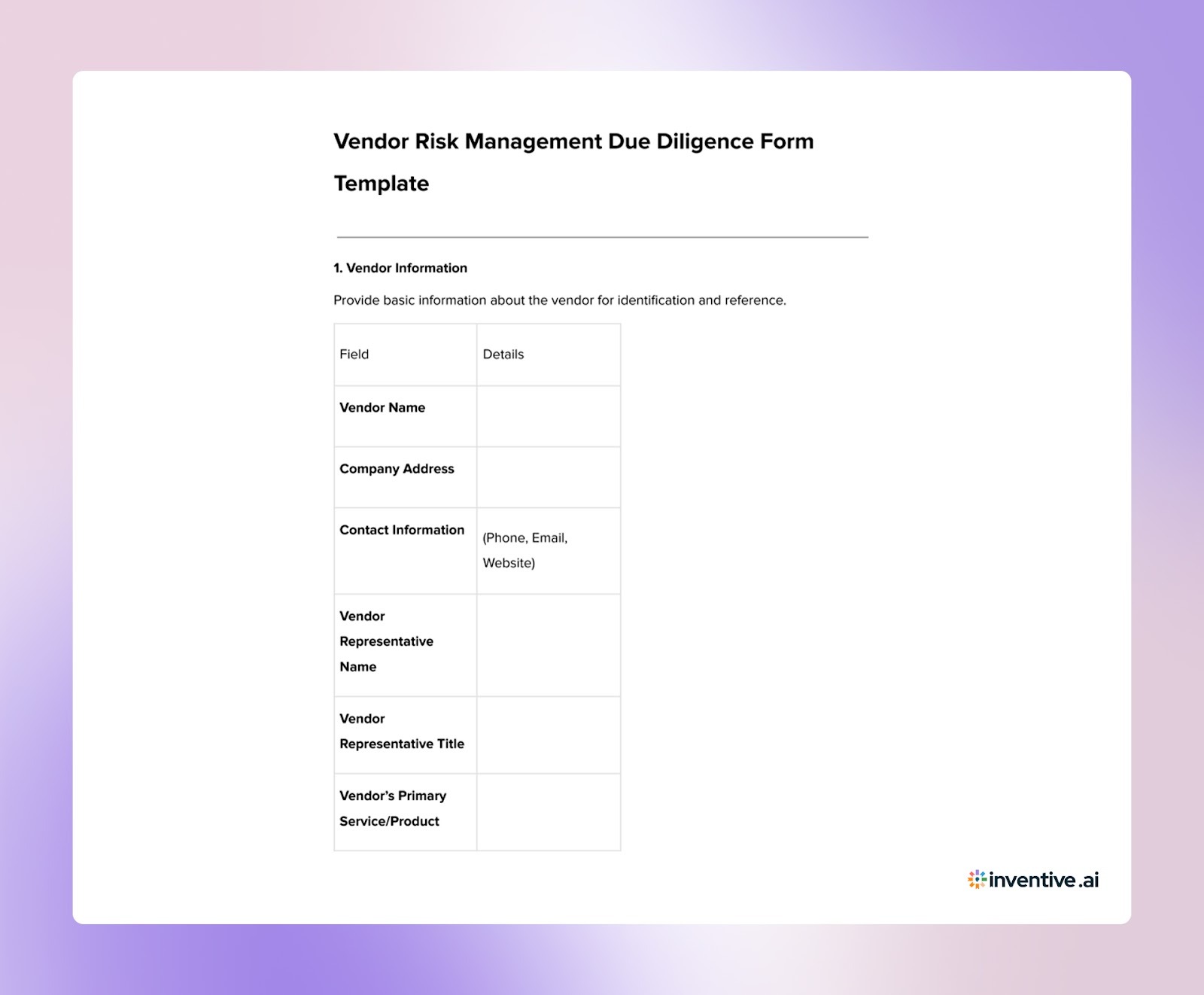
Vendor Risk Management Due Diligence Form
Used to evaluate the operational and compliance risks associated with a vendor, including cybersecurity practices and regulatory adherence.

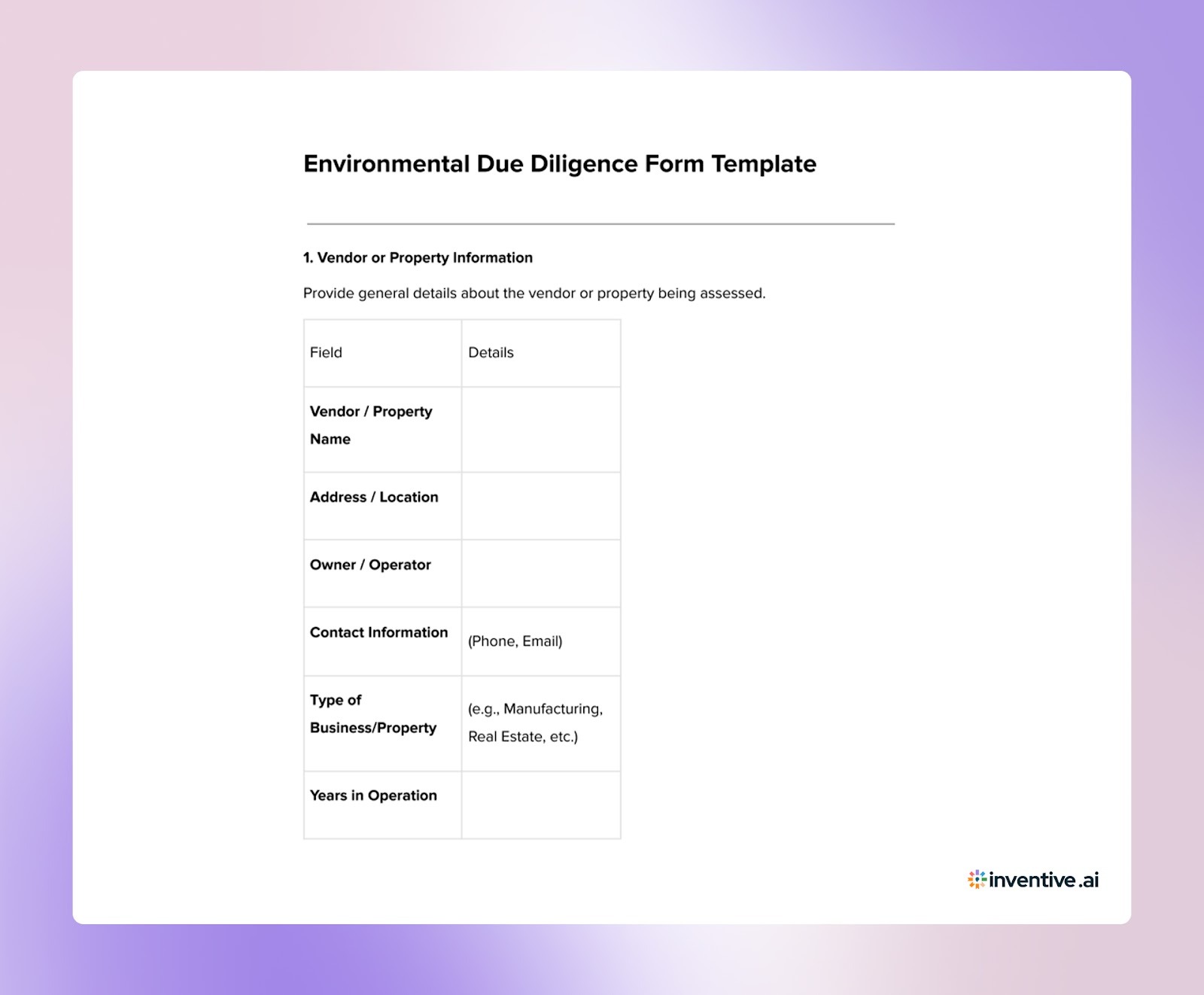
Environmental Due Diligence Form
Relevant to industries like construction or manufacturing, where the buyer needs to confirm that the vendor meets environmental regulations and sustainability standards.

Now that you understand what a buyer’s due diligence form looks like, let’s talk about how you, as a vendor, can respond to these forms effectively.
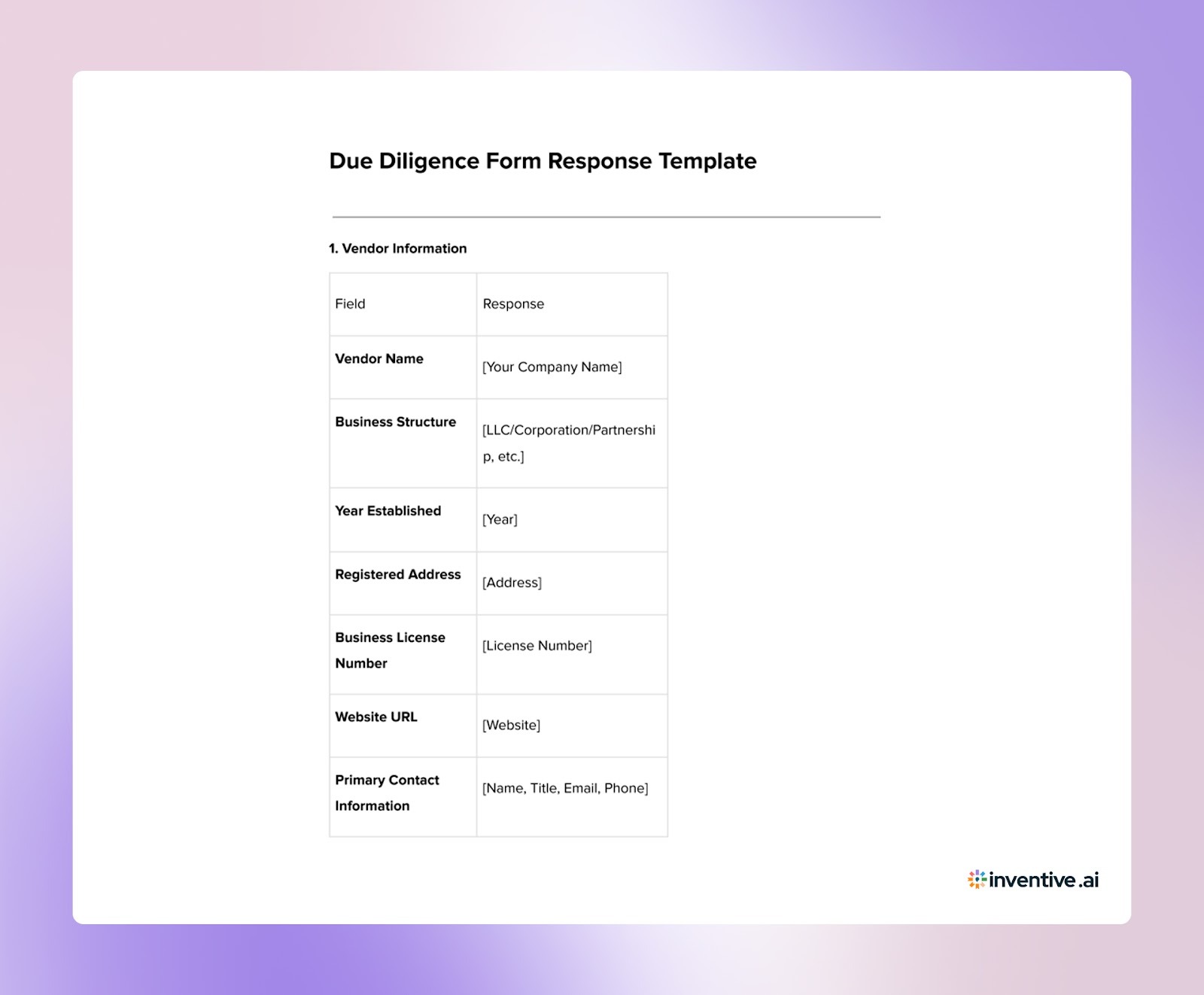
Vendor’s Guide to Responding to Due Diligence Forms with a Template
This template includes standard responses for common due diligence questions, company financials, compliance records, certifications, and risk management practices. Instead of rewriting the same information repeatedly, you can simply update specific details for each new opportunity.

6 Customization Tips for Maximizing Your Due Diligence Form Impact
Customizing your due diligence form response is key to showing the buyer that you understand their needs and are the right fit for the job.
Here’s how you can customize your response effectively:
- Understand Buyer Needs: Read the RFP carefully to understand what the buyer values most, such as financial stability or compliance.
- Show Relevant Experience: Highlight past projects that match the buyer’s industry or requirements to demonstrate your experience.
- Use Key Metrics: Include measurable data like time savings or project success rates to show your impact.
- Address Concerns: If the buyer has specific concerns, address them directly in your response to show you understand their challenges.
- Highlight Certifications: If the buyer values certain certifications, be sure to include them in your response to build credibility.
- Provide Clear Solutions: Offer straightforward next steps or solutions that make it easy for the buyer to move forward with you.
By customizing your responses, you align your proposal with the buyer’s expectations, increasing your chances of success.
Also Read: The Ultimate Guide to Crafting Winning Manufacturing RFP Responses
Unlock Faster, More Accurate Due Diligence Form Responses with Inventive AI
With Inventive AI, responding to due diligence forms becomes faster, more accurate, and far less tedious. Here’s how Inventive AI helps you streamline the process, ensuring you meet all the buyer’s requirements with ease:
1. 2× Higher Quality Responses

With AI-powered RFP response software, you generate accurate, high-quality responses in half the time, meeting buyer expectations with precision, especially for detailed forms like due diligence.
2. Context Engine
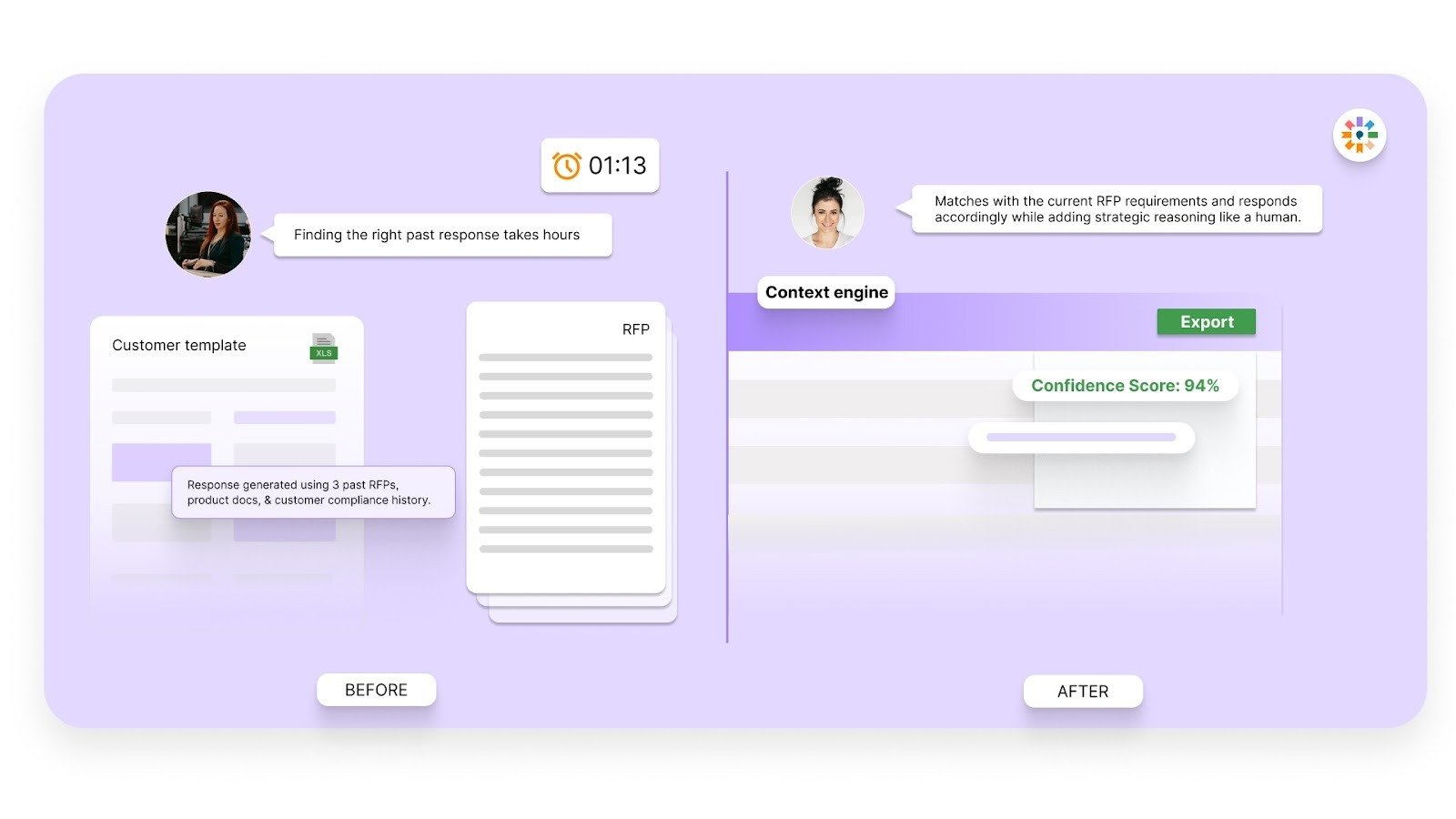
Inventive AI’s context engine pulls data from your previous submissions, allowing you to reuse relevant information while ensuring your responses are tailored to each new opportunity. This makes filling out due diligence forms faster and more precise.
3. Conflict Detection
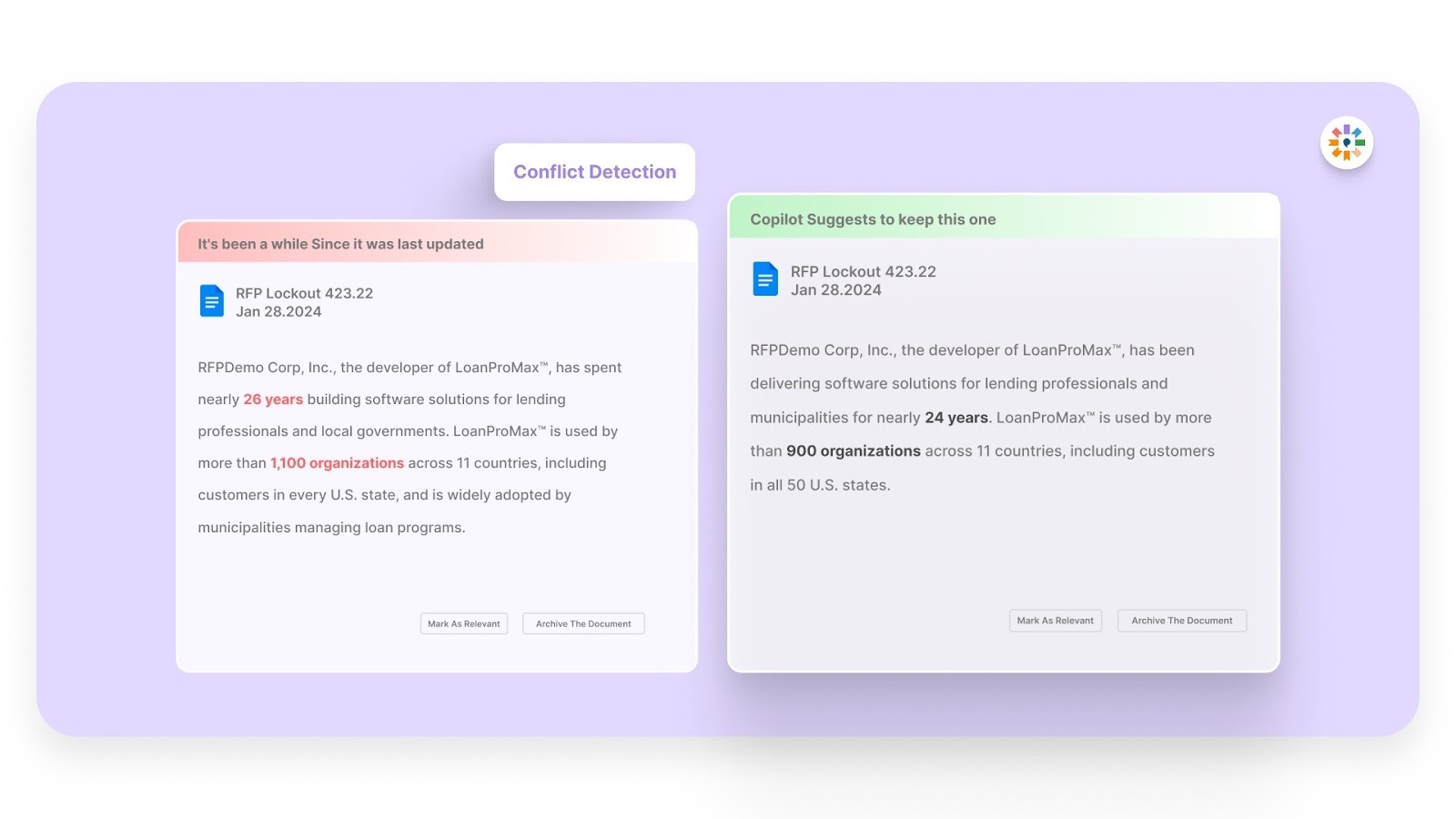
Inventive AI automatically detects inconsistencies in your responses, reducing the risk of errors and omissions that could jeopardize your chances of winning the bid.
4. Outdated Content Detection
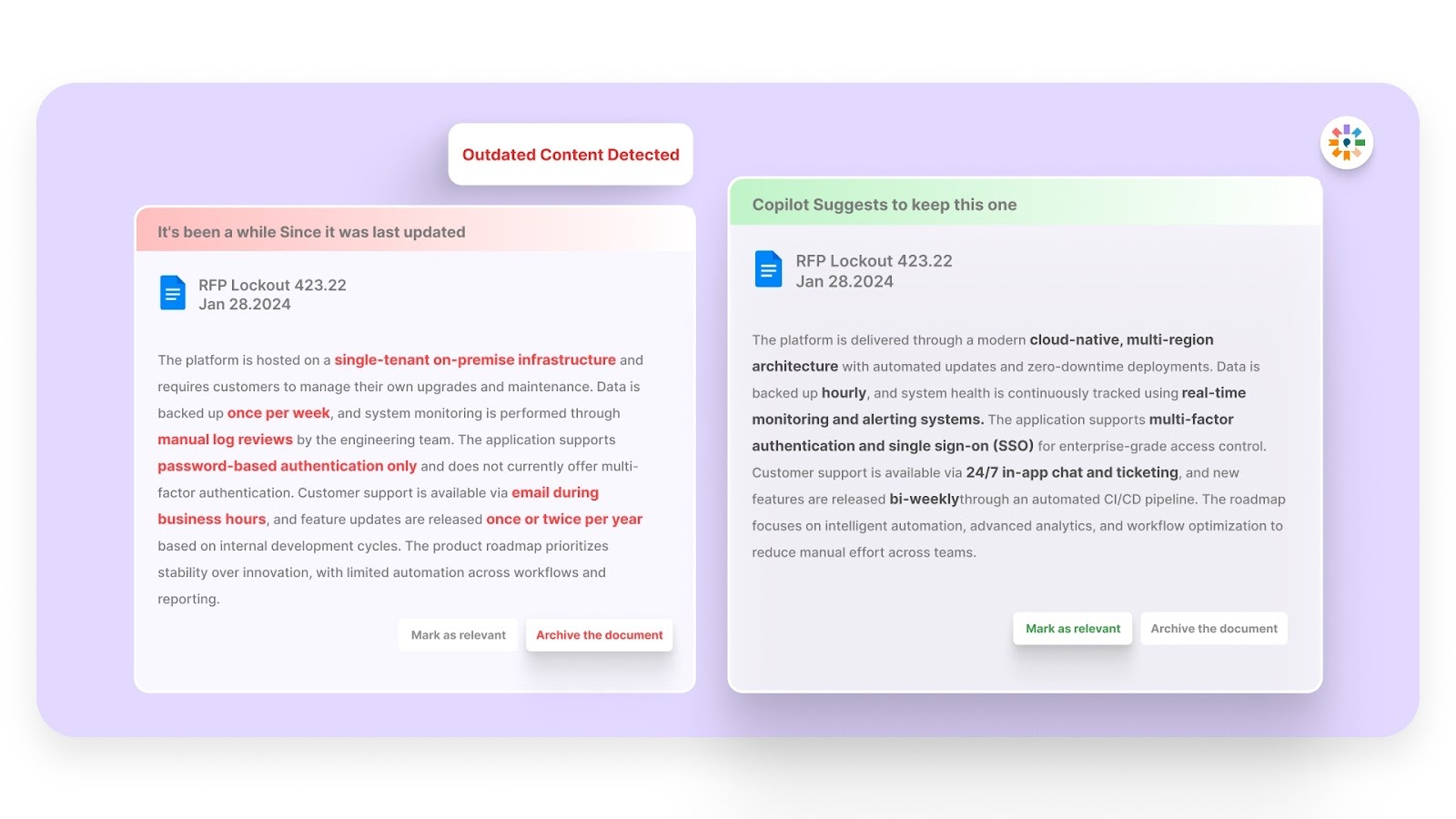
Inventive AI flags outdated information, making sure that your responses are always up-to-date with the latest regulations, reducing the risk of non-compliance.
5. Narrative Style Proposals
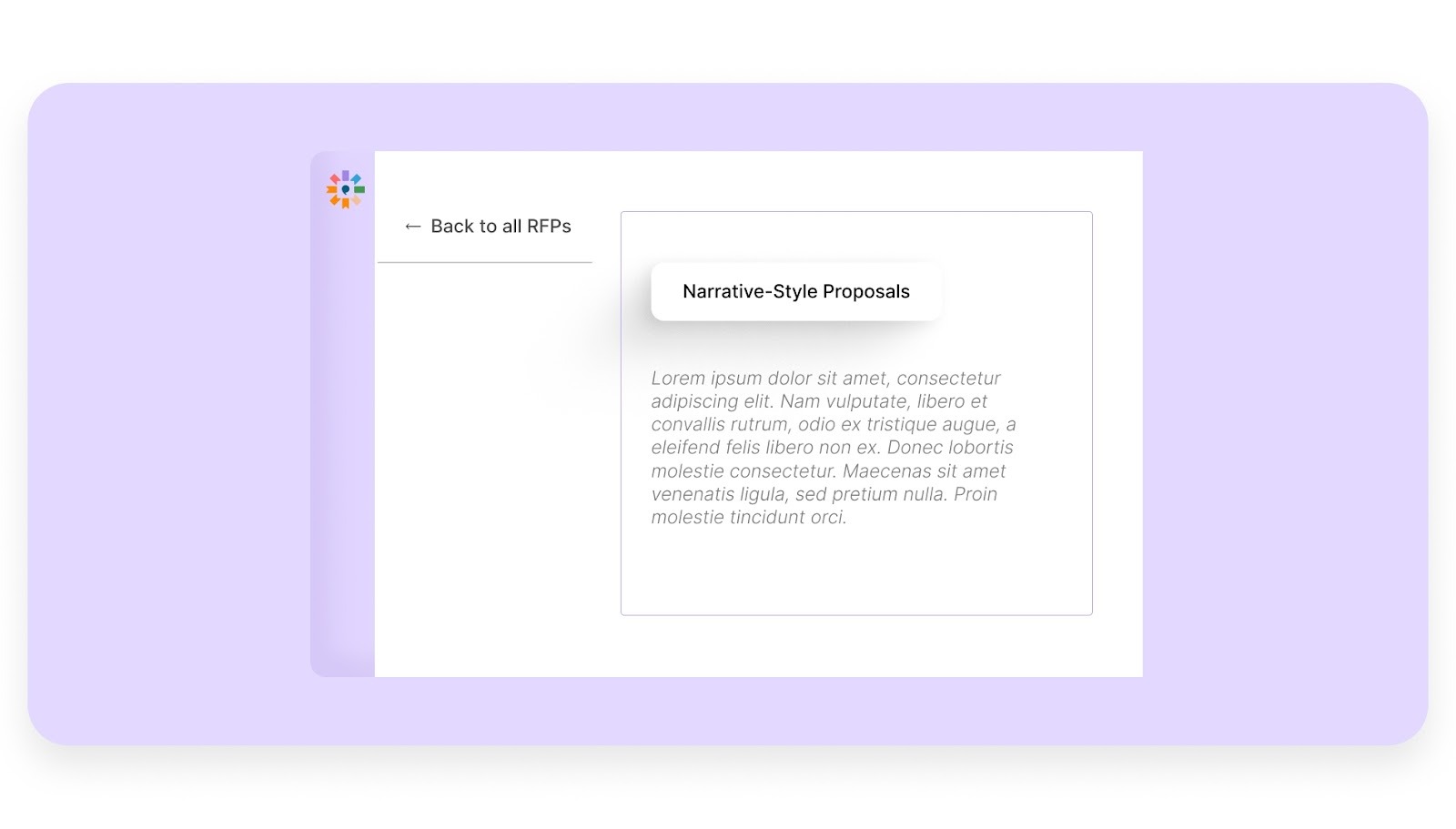
Converts fragmented answers into a structured, easy-to-follow narrative. This makes your responses easier for buyers to review and helps you present a clear, cohesive story.
6. Simple, Easy-to-Use Interface
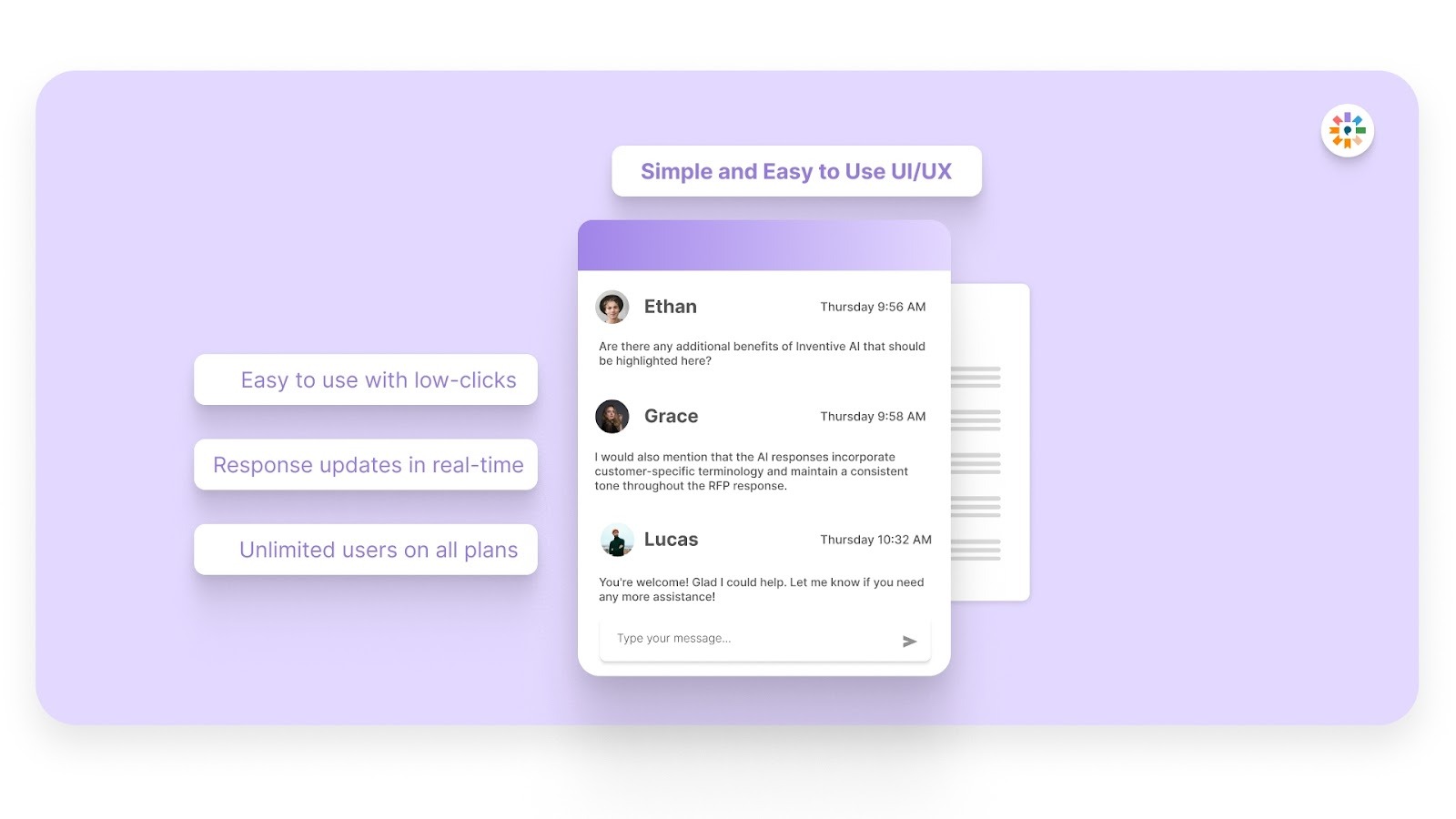
The platform is intuitive, meaning your team can focus on high-value tasks instead of spending unnecessary time on administrative work, freeing up resources to improve the quality of other aspects of your proposals.
With Inventive AI’s AI RFP Automation, you can speed up your submissions, saving time and ensuring accurate, complete responses every time.
Frequently Asked Questions (FAQs)
1. What types of businesses typically require vendors to fill out due diligence forms?
Buyers from industries like finance, healthcare, government contracting, and real estate often require due diligence forms from vendors. These sectors prioritize thorough vetting to ensure vendors meet regulatory standards, financial stability, and compliance requirements.
2. How does Inventive AI handle sensitive data in due diligence form responses?
Inventive AI ensures that all vendor information processed through its platform is encrypted and complies with data protection regulations. The AI-powered solution allows for secure data management and seamless handling of sensitive information during due diligence form responses.
3. How often should vendors update their due diligence form responses?
Vendors should review and update their due diligence form responses annually or whenever there are significant changes to their business operations, financials, or compliance statuses. Regular updates help maintain accurate and competitive responses for future RFPs.
4. What risks do vendors face if they don't properly complete due diligence forms?
Incomplete or inaccurate responses can result in disqualification from the bid, loss of credibility with potential clients, and potential legal or financial consequences.