Best Landscaping RFP Template + Winning Response Example

Have you ever lost a contract because your proposal did not fully match the client’s expectations in a landscaping RFP template? For contractors, each bid represents months or even years of recurring revenue, yet the submission process often feels repetitive and detail-heavy.
You manage site inspections, maintenance schedules, seasonal planting plans, irrigation details, and pricing breakdowns under tight deadlines. When specifications vary across commercial properties, even small gaps in scope or documentation can weaken your credibility.
In this blog, we’ll explore a practical landscaping RFP template, a ready-to-use RFP response template, and clear guidance on how to customize your proposal so you can submit stronger, more competitive bids for commercial landscaping projects.
Professional Landscaping RFP Template for Commercial Properties (For Buyers)
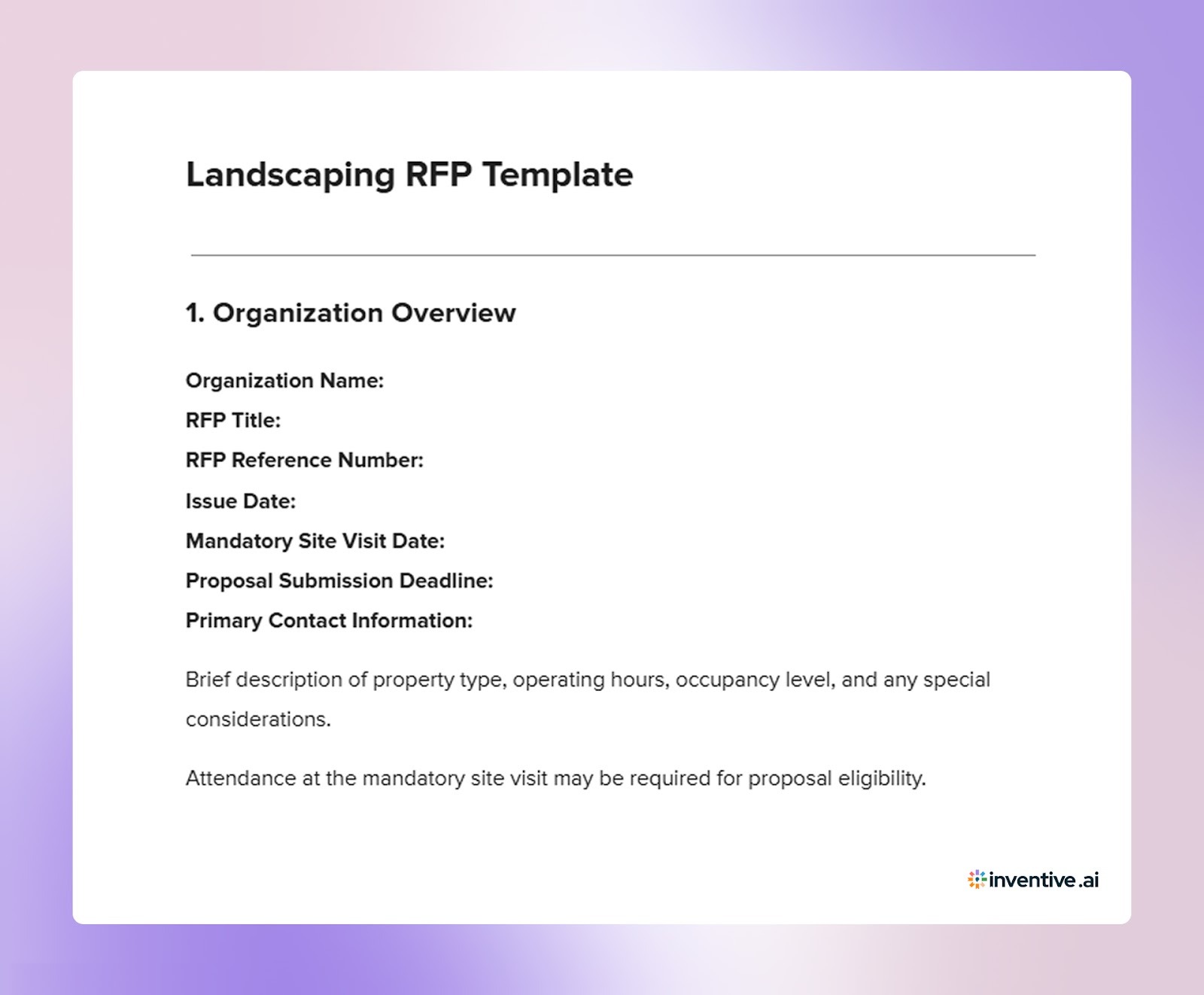
This template is designed to help property managers and procurement teams issue a clear, structured, and measurable landscaping RFP. It outlines scope, service frequency, sustainability expectations, reporting requirements, and pricing structure in a format that allows for consistent vendor comparison.
Once you understand how property managers define scope and service standards, you can prepare a response that mirrors those expectations clearly.
Landscaping RFP Response Template That Wins Evaluators (For Vendors)
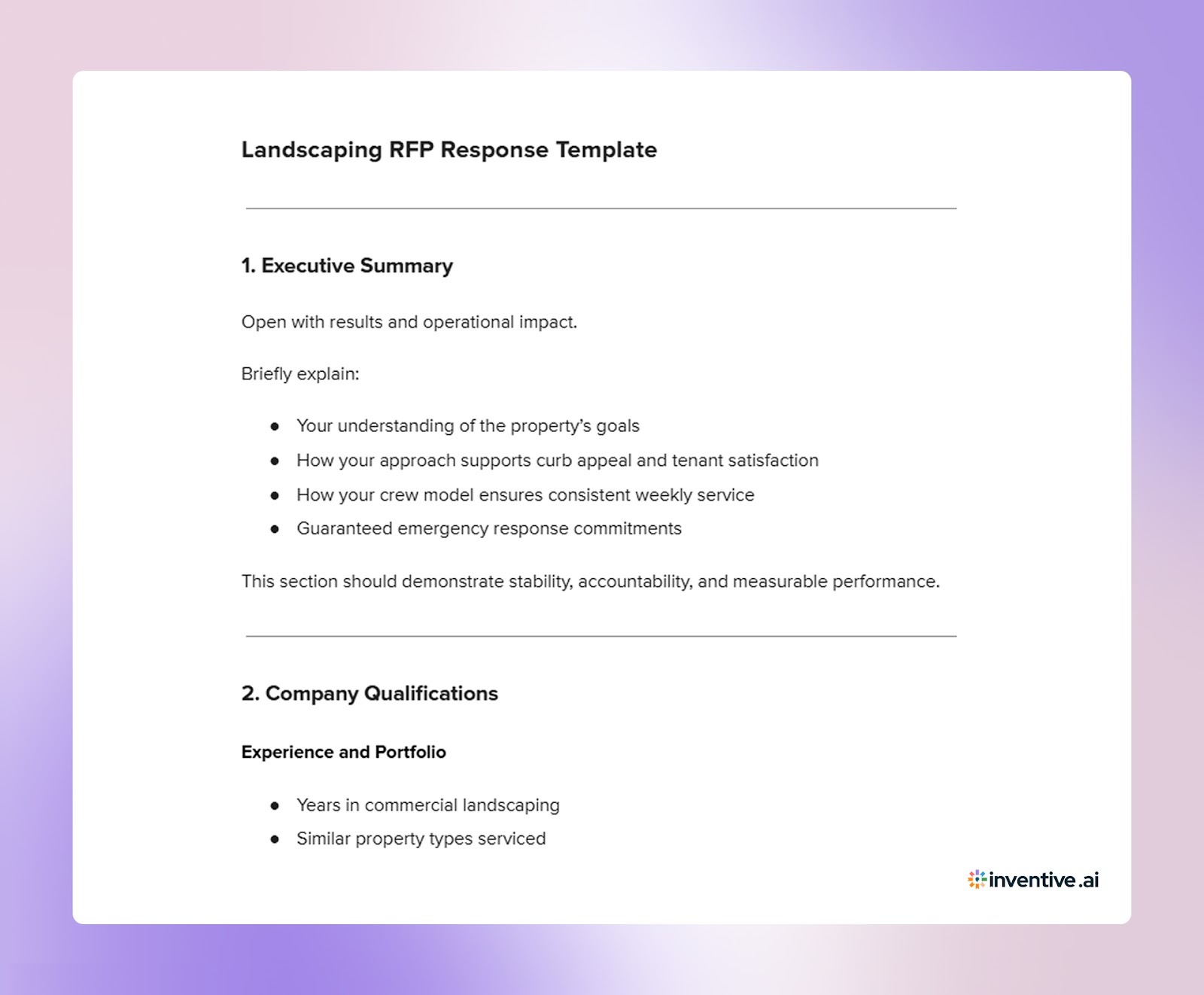
This template is designed to help landscaping contractors submit structured, compliant, and evaluator-friendly proposals for commercial and municipal properties. It aligns directly with how property managers review bids in a format that simplifies comparison and reduces decision risk.
Use the framework below to present your qualifications, technical approach, and guarantees in a way that makes it easy for evaluators to verify performance commitments and award with confidence.
1. Executive Summary
Open with results and operational impact.
Briefly explain:
- Your understanding of the property’s goals
- How your approach supports curb appeal and tenant satisfaction
- How the crew model keeps weekly service consistent
- Guaranteed emergency response commitments
This section should demonstrate stability, accountability, and measurable performance.
2. Company Qualifications
Experience and Portfolio
- Years in commercial landscaping
- Similar property types serviced
- Portfolio size
- Client references
Staffing Model and Labor Stability
Property managers value crew consistency and reliability.
Include:
- In-house crews or subcontractors
- Employee retention rate
- Average crew tenure
- Year-over-year crew consistency percentage
- Dedicated account manager
You may present this in table format:
This demonstrates workforce stability and reduces concerns about no-show crews.
Safety Record
- EMR rating
- OSHA compliance
- Incident response protocol
Insurance and Bonding Verification
Explicitly confirm:
- General liability coverage
- Workers’ compensation coverage
- Umbrella policy limits
- Bonding capacity if required
Example table:
Certificates of insurance available upon request.
3. Visual Proof and Case Studies
Include:
- Before and after photos
- Property type similarity
- Scope summary
- Client testimonial
This adds credibility beyond written claims.
4. Technical and Service Approach
Turf and Plant Maintenance
- Mowing schedule and turf height compliance
- Fertilization and weed control plan
- Pruning cycles
- Seasonal cleanup
Highlight reduced noise impact where electric equipment is used.
Irrigation Management
- Inspection frequency
- Leak response time
- Water conservation approach
- Seasonal startup and shutdown
Confirm guaranteed response windows.
5. Sustainability and Operational Impact
- Electric equipment fleet percentage
- Reduced noise for tenants
- Integrated Pest Management
- Water reduction strategy
- Drought-tolerant recommendations
6. Technology and Reporting
- Client portal access
- GPS-stamped service verification
- Monthly reporting format
- Emergency hotline
- Work order tracking software used
Identify the primary point of contact.
7. Compliance Matrix with Proposal Map
To make evaluation easier, include page references for verification.
This gives evaluators a direct roadmap to supporting details.
8. Pricing Proposal
Include:
- Monthly base maintenance
- Seasonal services
- Irrigation repair rates
- Snow removal pricing if applicable
- Unit pricing
- Fuel surcharge policy
State pricing validity period.
9. Emergency Response Plan
Define guaranteed response commitments.
Clear timelines reduce risk concerns.
10. Transition Plan
Provide a structured 90-day phase-in schedule:
- Site audit
- Crew deployment
- Irrigation review
- Stakeholder communication
- Performance check
11. Assumptions and Clarifications
Document:
- Site accessibility
- Utility access
- Soil conditions
- Scope exclusions
This prevents future disputes.
12. Value Engineering and Long-Term Cost Savings
Provide recommendations such as:
- Native planting transitions
- Irrigation zoning adjustments
- Multi-year seasonal planning
- Equipment upgrades for noise reduction
This positions your team as a long-term partner.
While a structured response improves clarity, tailoring it to the specific property often determines whether you reach the final shortlist.
How to Tailor a Landscaping RFP Response Template for Each Property?
A structured response template gives you consistency, but customization is what makes your proposal stand out during evaluation. Property managers compare multiple bids side by side, and generic language is easy to spot.
Tailoring your response to the specific property, goals, and risk concerns shows preparation and professionalism.
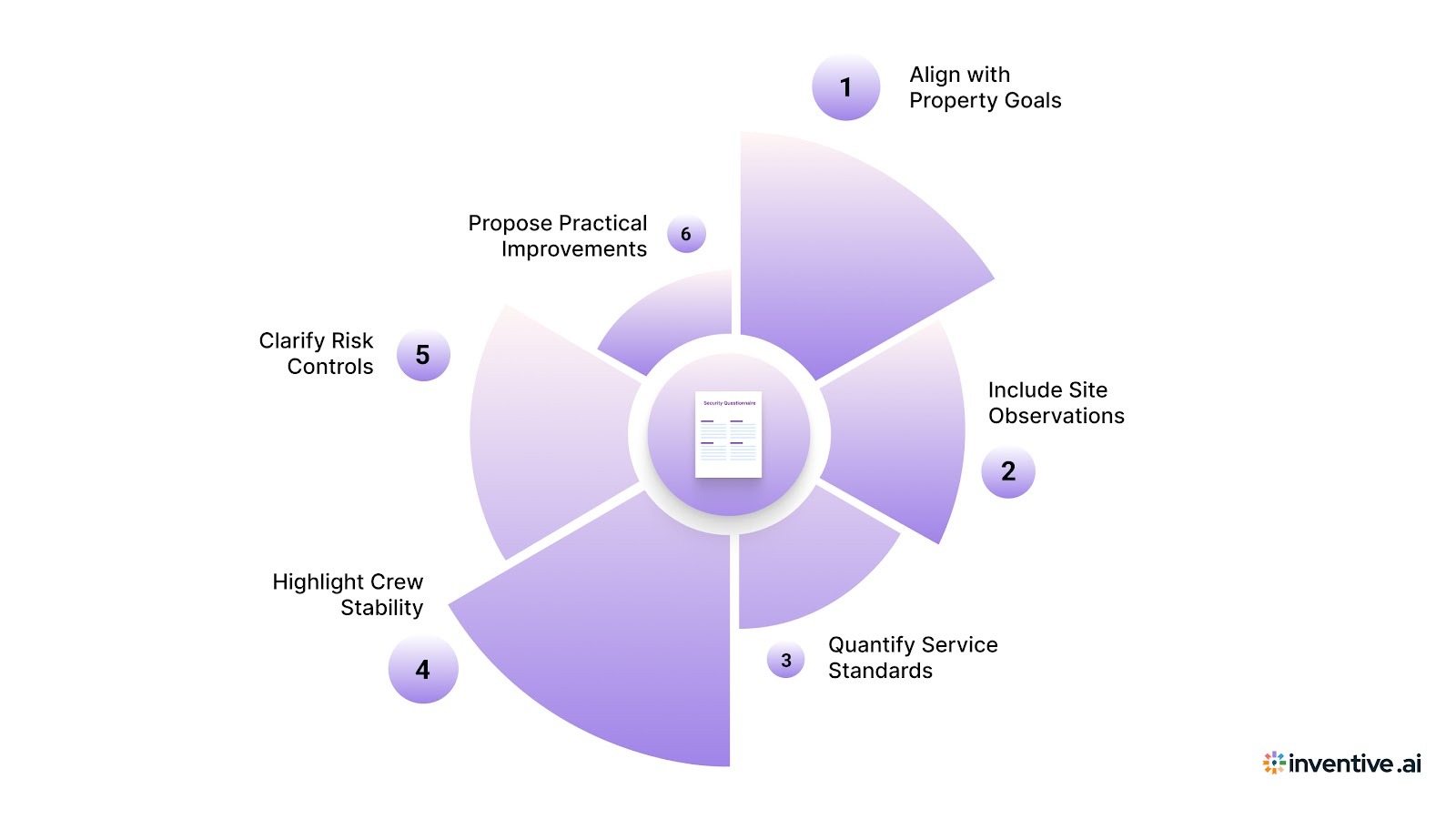
To strengthen your landscaping RFP response, focus on these areas:
- Reflect the Property’s Goals: Reference occupancy targets, tenant expectations, or cost control priorities mentioned in the RFP so your proposal connects directly to stated objectives.
- Incorporate Site-Specific Observations: Mention details from the site visit, such as drainage issues, worn turf areas, irrigation inefficiencies, or high-traffic zones, to demonstrate careful assessment.
- Quantify Service Commitments: Replace general promises with measurable standards like maximum turf height, response time guarantees, and supervisor inspection frequency.
- Highlight Crew Stability: Include retention rates and year-over-year crew consistency to reassure evaluators concerned about service interruptions.
- Clarify Risk Controls: Address insurance limits, emergency response timelines, and transition planning clearly so there are no unanswered compliance questions.
- Propose Practical Improvements: Suggest phased planting upgrades, water reduction strategies, or equipment changes that reduce noise and support long-term property value.
Customizing each proposal requires coordination across operations, finance, and account management teams, which can slow internal review cycles. This is where automation becomes necessary.
Respond to Landscaping RFPs Faster with Inventive AI
Responding to landscaping RFPs requires careful coordination across operations, finance, safety, and sustainability teams. When proposals are built manually, inconsistencies, outdated content, and compliance gaps can slip through review.
Inventive AI supports revenue and proposal teams by improving answer accuracy, reducing internal risk, and strengthening submission quality across every section of your bid.
Context-Aware Answers That Reflect the Full RFP
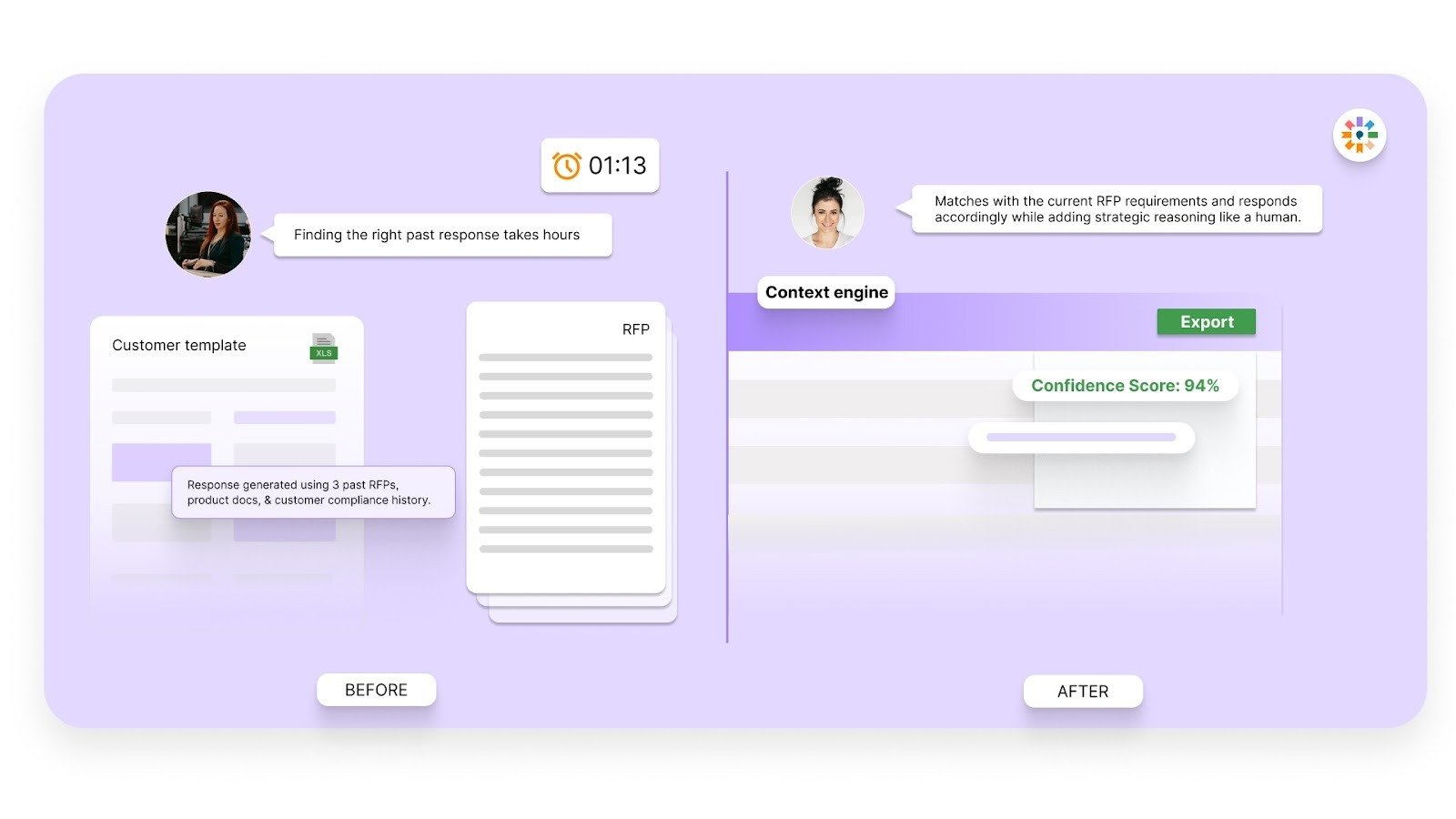
Many AI tools generate generic responses based on surface-level keyword matching. Inventive AI uses multi-layer reasoning to understand the full RFP context. It connects responses directly to your approved knowledge sources, producing tailored drafts that reflect the property’s specific goals and operational priorities.
Conflict Detection That Prevents Risky Submissions
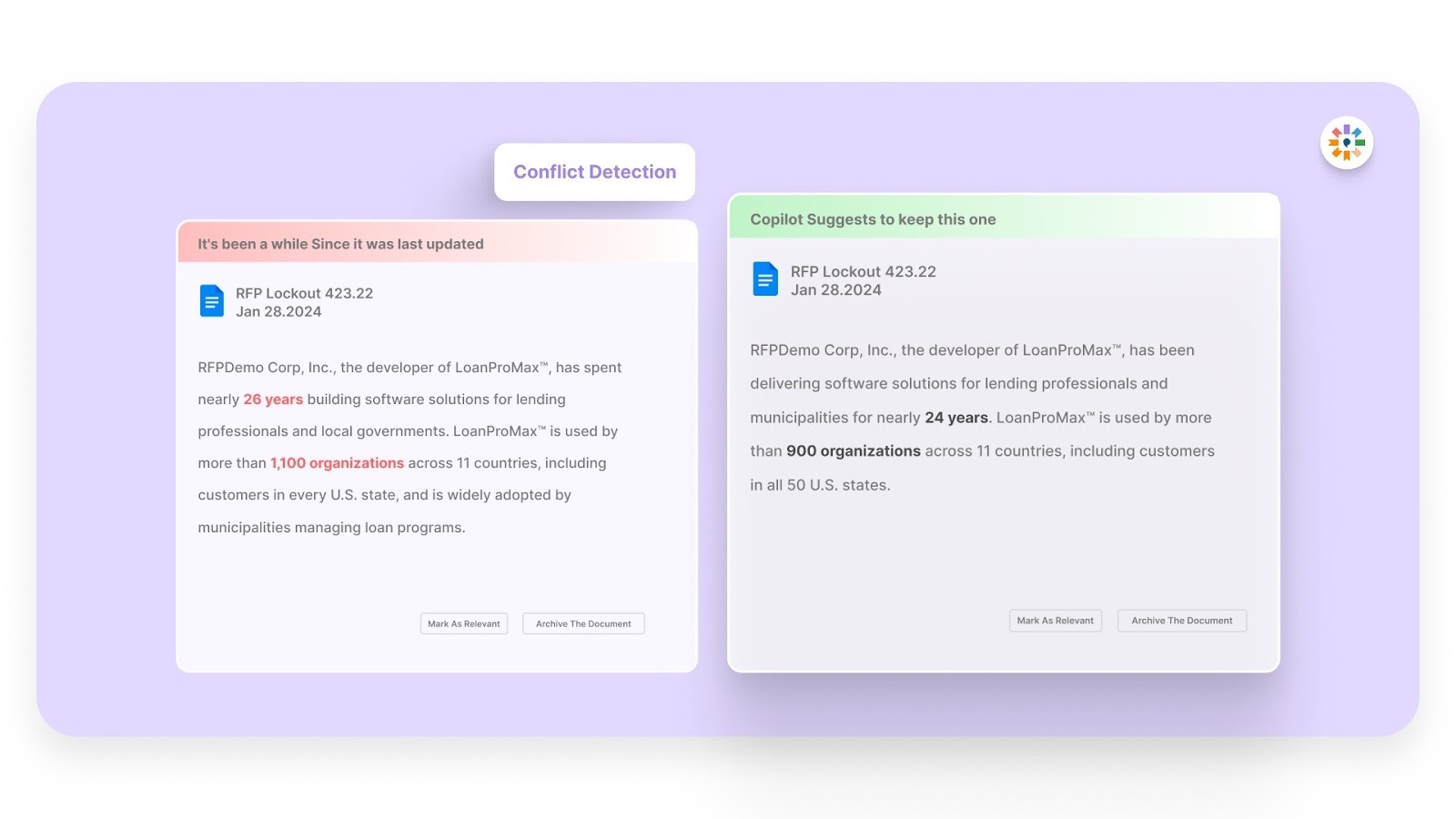
Landscaping proposals often involve multiple contributors, increasing the risk of conflicting statements across sections. Inventive AI automatically flags inconsistencies such as mismatched emergency response timelines, pricing terms, or insurance limits before submission. This helps your team correct issues early and prevents avoidable compliance risks during evaluation.
Outdated Content Detection for Compliance-Sensitive Bids
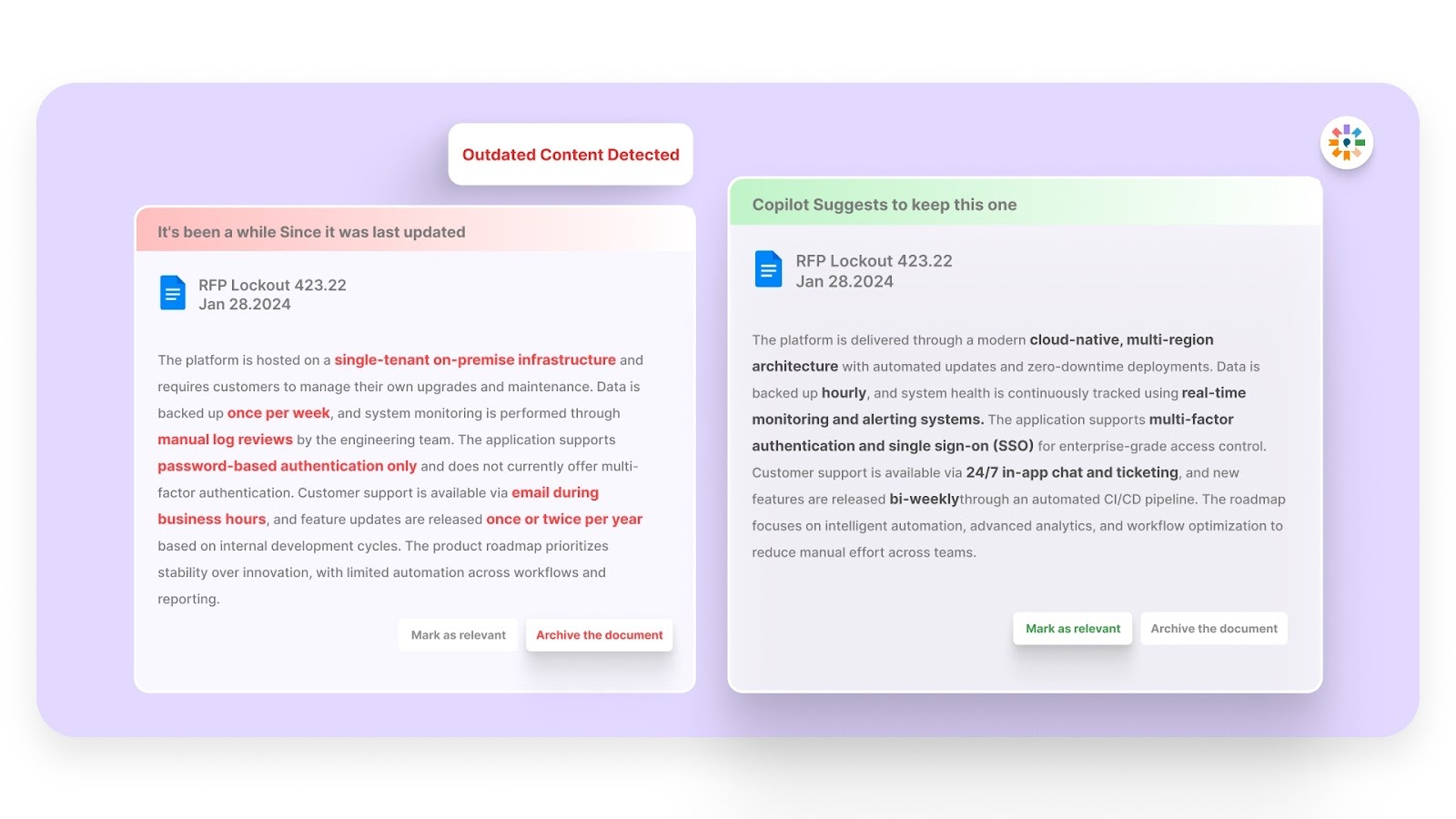
Many contractors rely on past RFP responses that may reference expired certifications, outdated insurance coverage, or older sustainability commitments. Inventive AI identifies outdated or non-compliant content within your knowledge base before it appears in a proposal. This reduces manual review effort and lowers the chance of submitting inaccurate operational claims.
2X Higher Quality Responses with Multi-Agent AI
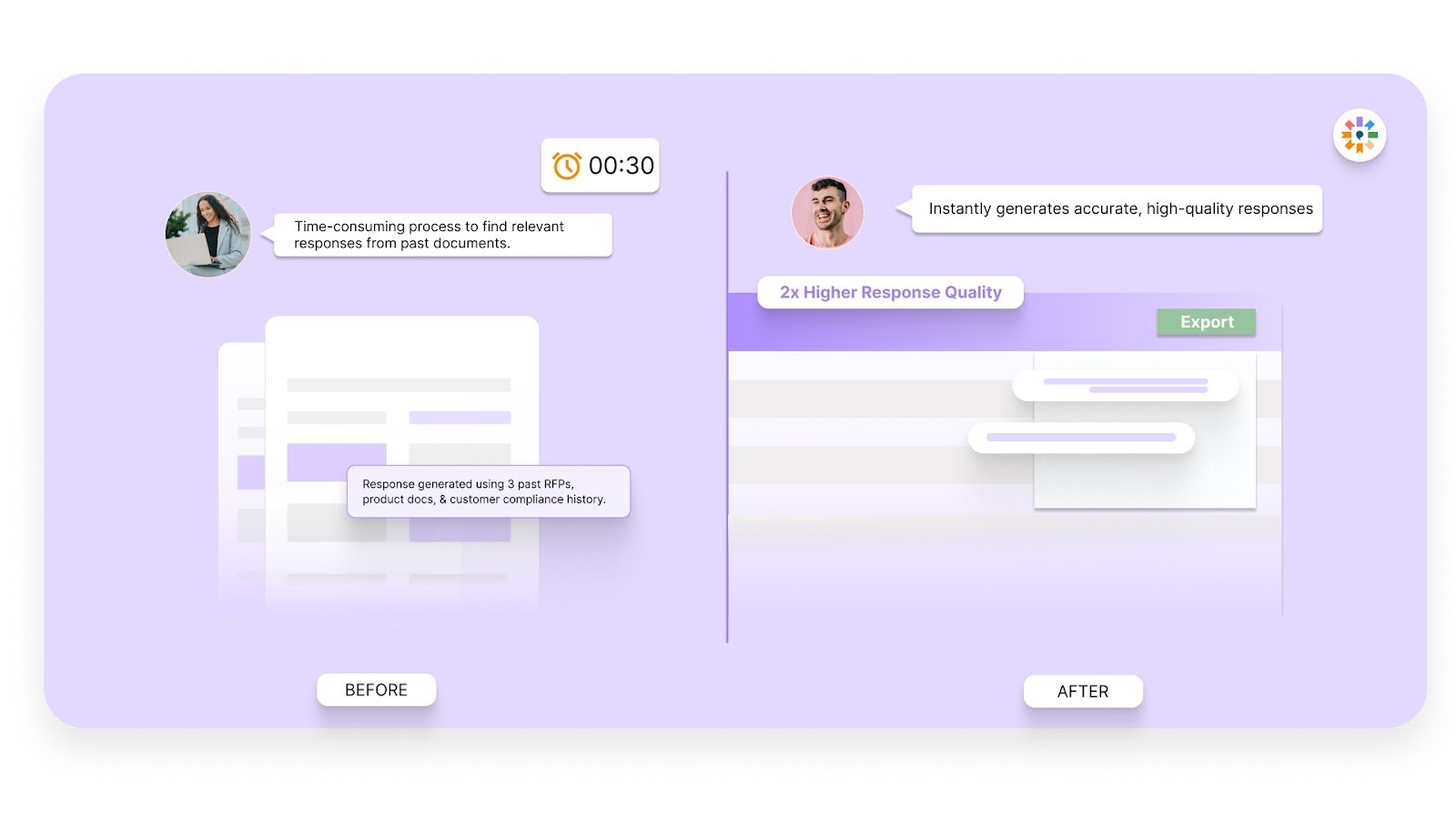
Inventive AI’s multi-agent system evaluates each answer for intent, completeness, and clarity before presenting it to your team. For landscaping RFPs, this results in stronger responses around service standards, transition planning, insurance verification, and value recommendations. Your submissions become more consistent and comprehensive without adding extra review cycles.
Simple Interface with Full Team Adoption
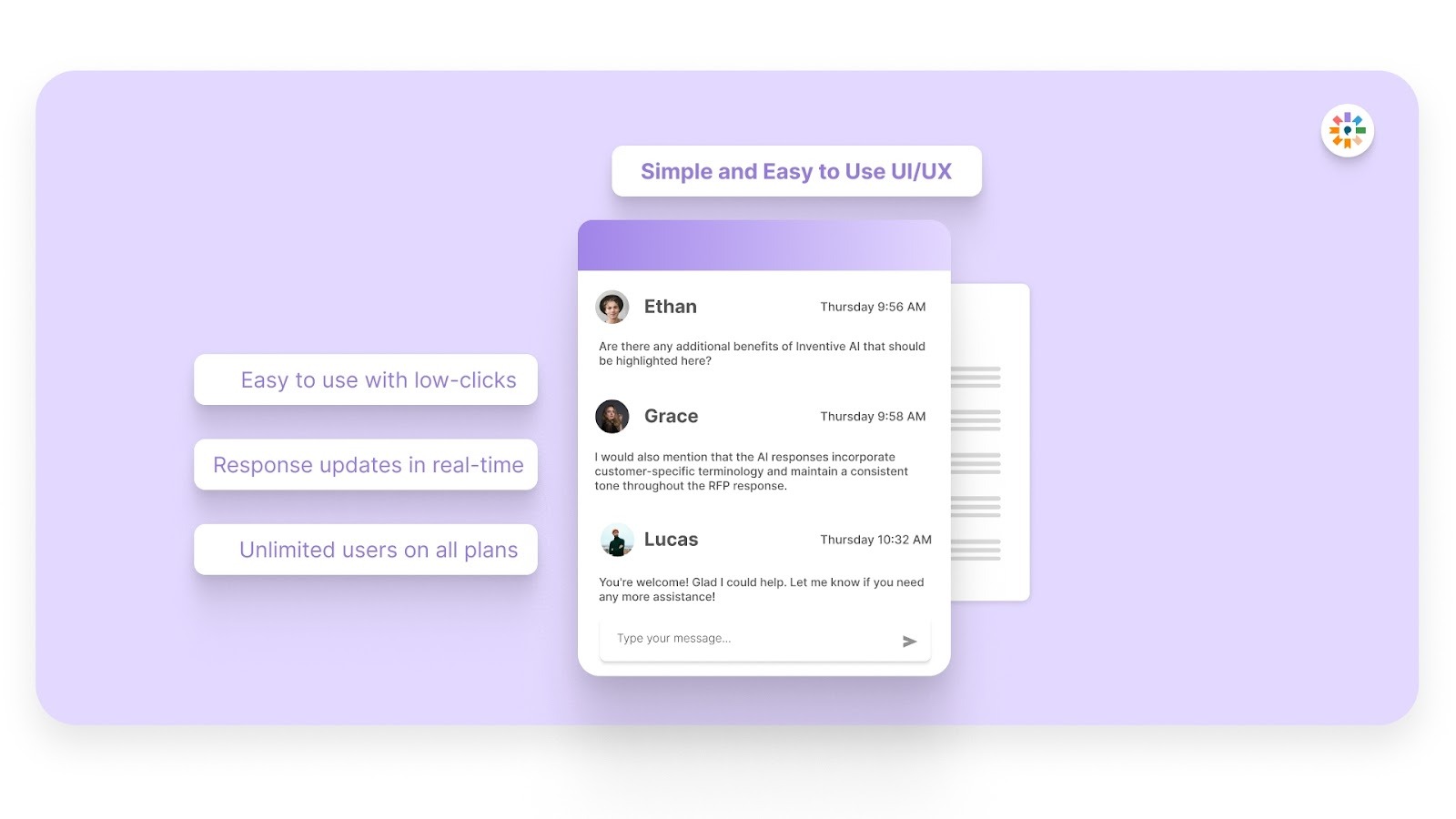
Proposal software only works when teams consistently use it. Inventive AI is ranked as the easiest-to-use RFP software on G2 and has achieved full adoption across its customer base. Sales, operations, and proposal teams can begin working within the platform quickly, even if they are new to AI-driven tools.
FAQs
1. How long should a landscaping RFP response be?
The length depends on the property size and complexity, but most commercial responses range from 15 to 40 pages, including attachments. Focus on clarity and proof rather than volume. Evaluators prefer organized content with supporting documentation over lengthy marketing language.
2. Should small landscaping companies respond to large commercial RFPs?
Yes, if the scope matches your operational capacity and crew availability. Review staffing requirements, equipment expectations, and financial thresholds carefully before submitting. It is better to submit fewer well-matched bids than stretch resources across contracts you cannot support consistently.
3. What attachments should be included in a landscaping RFP response?
Common attachments include certificates of insurance, safety records, pesticide licenses, equipment lists, client references, and sample reports. Providing organized appendices improves credibility and reduces back-and-forth clarification requests during evaluation.
4. How can contractors stand out when pricing is similar?
When pricing is close, clarity, measurable commitments, and documentation quality often influence the final decision. Demonstrating crew stability, reporting transparency, and structured transition planning can create differentiation without lowering price.
5. What is the typical contract length for commercial landscaping agreements?
Most commercial contracts run one to three years with renewal options. Multi-year agreements may include pricing review clauses tied to fuel or material costs. Always review renewal terms and termination provisions before signing.





%20That%20Gets%20Shortlisted.png)