Consulting RFP Template + 7 Response Templates to Win Bids

Losing a deal because of poor structure is painful. You have the expertise. You have the team. But if your proposal hides the answers, you lose points. Evaluators use a strict scoring rubric. They penalize any bid that makes them hunt for information. Even the most qualified consulting firms fail this way.
Winning requires a mirror. Your response must reflect the exact patterns the buyer expects. This guide provides templates that align with these predictable evaluation rules. You will give evaluators exactly what they need to justify a high score. Use these tools to turn your knowledge into a winning submission.
But first, let us see what buyers include while submitting the RFP with a template:
What a Consulting RFP Template Looks Like?
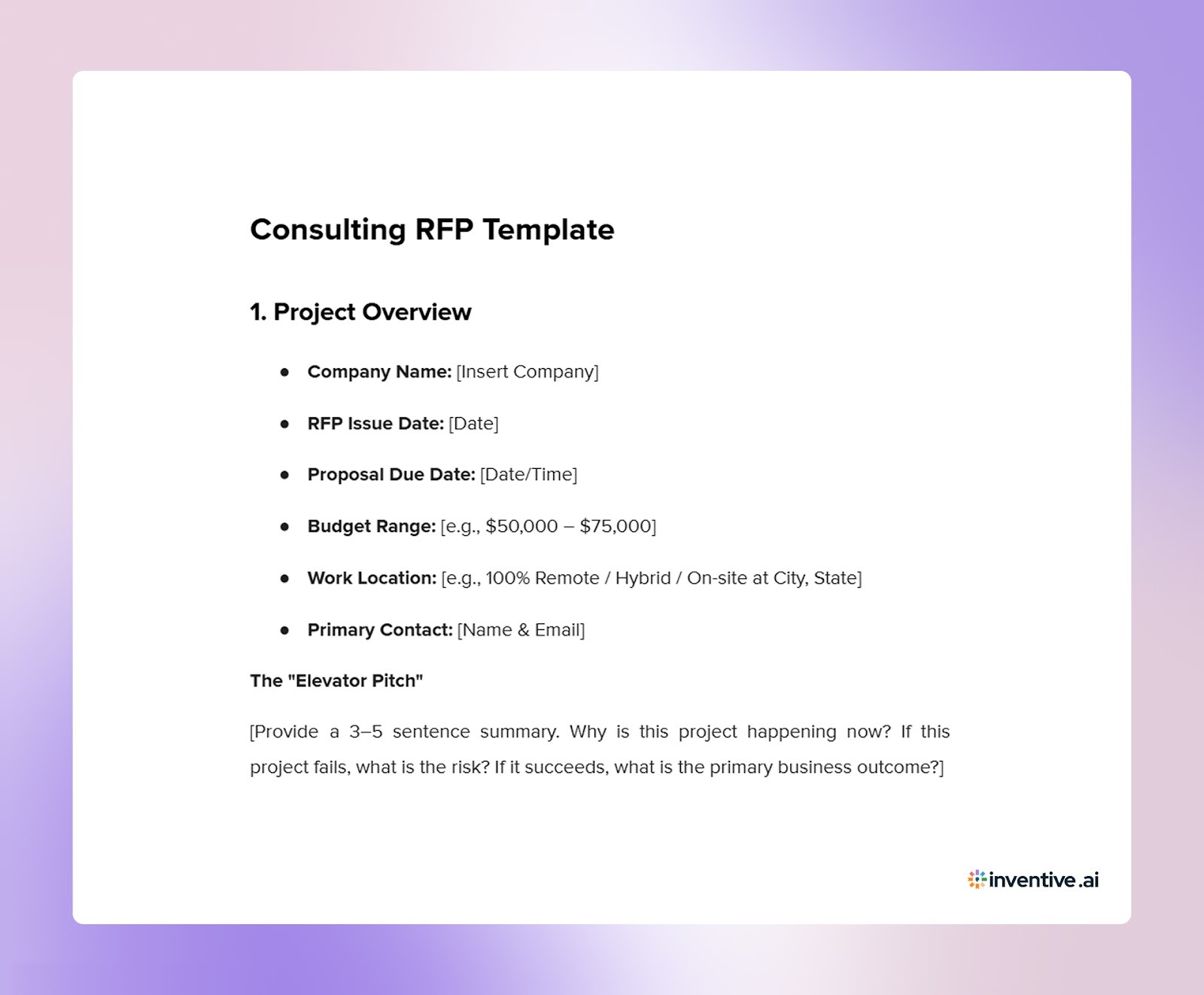
This consulting RFP template is used by organizations requesting consulting services. It outlines project background, scope, timeline, and evaluation criteria so vendors can submit comparable proposals.

Reviewing this structure helps you understand what information evaluators expect to see addressed in your proposal.
Consulting RFP Response Template
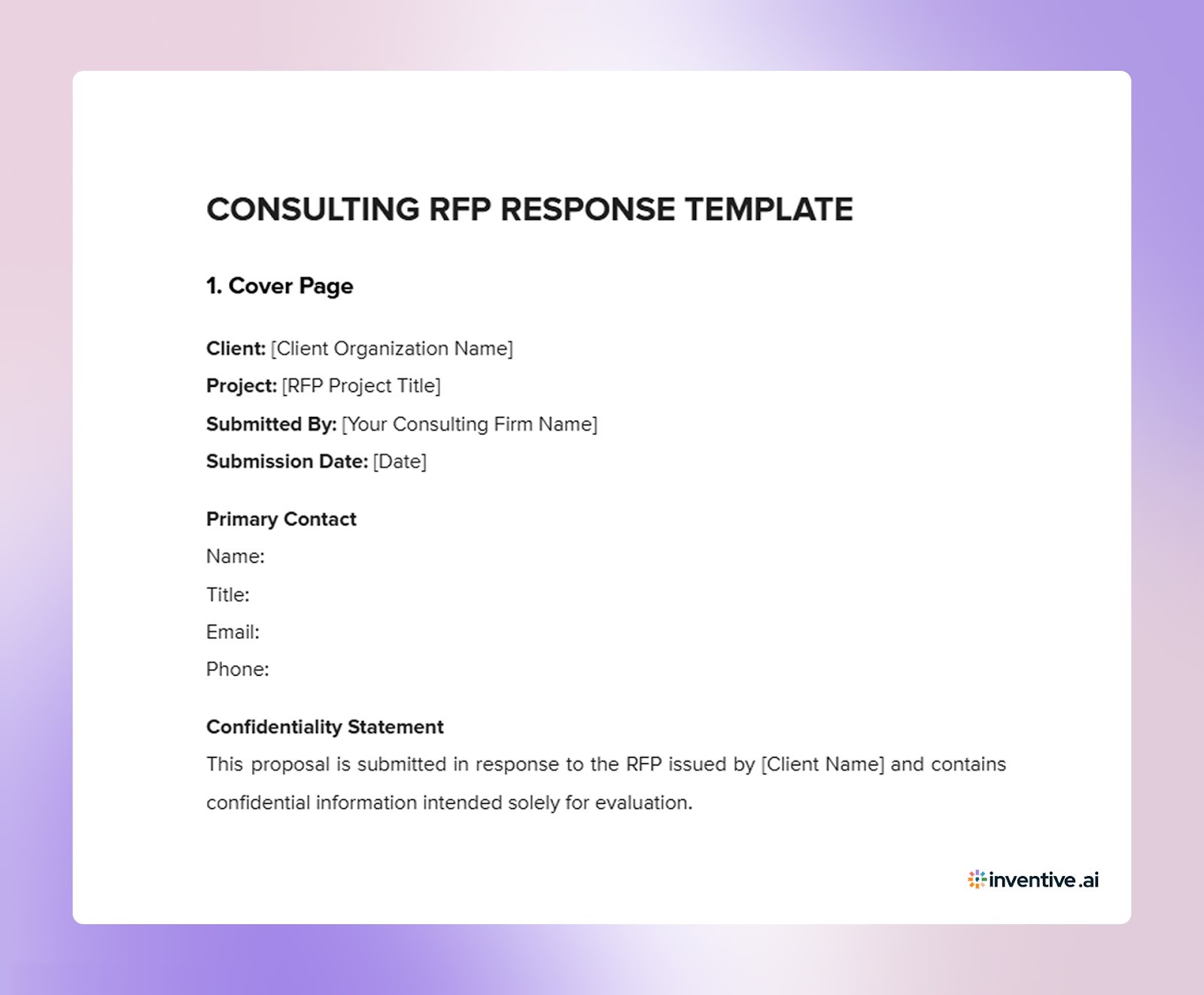

If you need a reliable starting point, this consulting RFP response template mirrors how evaluators review proposals, so your answers remain organized and scorable.
1. Cover Page
Client: [Client Organization Name]
Project: [RFP Project Title]
Submitted By: [Your Consulting Firm Name]
Submission Date: [Date]
Primary Contact
Name:
Title:
Email:
Phone:
Confidentiality Statement
This proposal is submitted in response to the RFP issued by [Client Name] and contains confidential information intended solely for evaluation.
2. Executive Summary
(Keep under 1 page — evaluators often score this first)
Our Understanding of Your Objective
[Summarize the client’s problem using their language]
Why This Matters Now
[Business urgency, risk, or opportunity]
Our Recommended Approach
[High-level description of how you will solve it]
Expected Business Outcomes
[Quantified impact — cost reduction, revenue lift, risk reduction, speed improvement]
Why Our Firm
[Only differentiators relevant to THIS engagement]
3. Requirement Understanding & Response Mapping
| Client Requirement | Our Interpretation | How We Address It | Success Metric |
|---|---|---|---|
| [Requirement from RFP] | Operational meaning | Method or deliverable | KPI |
| [Requirement] | Constraint / risk | Mitigation | KPI |
This section helps evaluators confirm compliance quickly and assign points without searching across the proposal.
4. Proposed Methodology & Approach
Execution Overview
Our delivery model is structured to move from validation → solution → implementation → adoption while minimizing business disruption.
Methodology Summary Table
| Phase | Objective | Key Activities | Client Involvement | Deliverables | Business Outcome |
|---|---|---|---|---|---|
| Discovery | Validate current state | Interviews, data audit, process mapping | SME workshops | Assessment report | Clear baseline |
| Analysis | Identify solutions | Root cause analysis, modeling | Working sessions | Solution options | Decision clarity |
| Design | Prepare execution | Roadmap & architecture | Approval workshop | Implementation plan | Execution readiness |
| Implementation | Deploy solution | Configuration & rollout | UAT support | Live deployment | Operational improvement |
| Stabilization | Ensure adoption | Training & monitoring | Feedback sessions | SOPs & dashboard | Sustained results |
Each phase clearly shows where every requirement is satisfied in the delivery plan.
Phase Details (Brief Supporting Explanation)
Discovery – Confirm assumptions and risks
Analysis – Develop viable solution options
Design – Prepare executable plan
Implementation – Execute with minimal disruption
Stabilization – Transfer ownership and ensure adoption
5. Deliverables Matrix
| Deliverable | Description | Format | Acceptance Criteria |
|---|---|---|---|
| Current State Assessment | Baseline performance & issues | PDF/PPT | Client approval |
| Implementation Roadmap | Step-by-step rollout plan | Roadmap | Steering committee sign-off |
| Training & SOPs | Operational documentation | Docs & workshops | Adoption confirmed |
| Final Report | Outcomes & recommendations | Executive deck | Final acceptance |
6. Project Timeline & Milestones
| Milestone | Estimated Timing | Client Participation | Output |
|---|---|---|---|
| Kickoff | Week 1 | Sponsor alignment | Project charter |
| Discovery Complete | Week 3 | SME workshops | Assessment |
| Solution Approval | Week 6 | Leadership review | Approved plan |
| Implementation Complete | Week 12 | UAT | Operational system |
| Closure | Week 13 | Executive review | Final report |
7. Team Structure & Relevant Experience
Assigned TeamName
| Milestone | Estimated Timing | Client Participation | Output |
|---|---|---|---|
| Kickoff | Week 1 | Sponsor alignment | Project charter |
| Discovery Complete | Week 3 | SME workshops | Assessment |
| Solution Approval | Week 6 | Leadership review | Approved plan |
| Implementation Complete | Week 12 | UAT | Operational system |
| Closure | Week 13 | Executive review | Final report |
Relevant Case Studies
Client Industry:
Challenge:
Our Work:
Result (quantified):
(Repeat 2–3 times)
8. Risk Management Plan
| Risk | Likelihood | Impact | Mitigation Strategy |
|---|---|---|---|
| Data availability | Medium | High | Early validation sprint |
| Stakeholder alignment | Medium | Medium | Weekly steering meetings |
| Adoption resistance | High | High | Training & change champions |
9. Communication & Governance
Meeting Cadence
- Weekly working sessions
- Bi-weekly leadership review
- Monthly steering committee
Collaboration Tools
[Teams / Slack / Jira / Email]
Escalation Path
Consultant PM → Client PM → Executive Sponsors
10. Commercial Proposal
Pricing Structure
| Component | Pricing Model | Cost |
|---|---|---|
| Discovery | Fixed | |
| Implementation | Time & Materials | |
| Optional Support | Monthly Retainer |
Total Estimated Investment: [Amount]
Payment Milestones
- 30% Kickoff
- 40% Midpoint
- 30% Completion
11. Assumptions & Dependencies
- Client provides required data access
- Stakeholders available for workshops
- Decisions provided within the agreed timeframe
12. Success Criteria
The engagement will be considered successful when:
- Agreed KPIs achieved
- Deliverables approved
- Knowledge transfer completed
13. Legal & Compliance
- Confidentiality
- Data protection
- IP ownership
- Contract subject to final agreement
14. Appendix
- Detailed resumes
- Certifications
- Additional case studies
- Technical documentation (if applicable)
Consulting engagements are scored using different priorities across industries, so your response structure should match sector-specific evaluation criteria.
7 Industry-Specific Consulting RFP Response Templates
Consulting proposals are not evaluated the same way across industries. Each sector emphasizes different risks, proof points, and decision criteria during scoring.
The templates below highlight what each sector prioritizes so you can tailor your response accordingly.
1. IT Consulting Services RFP Response Template
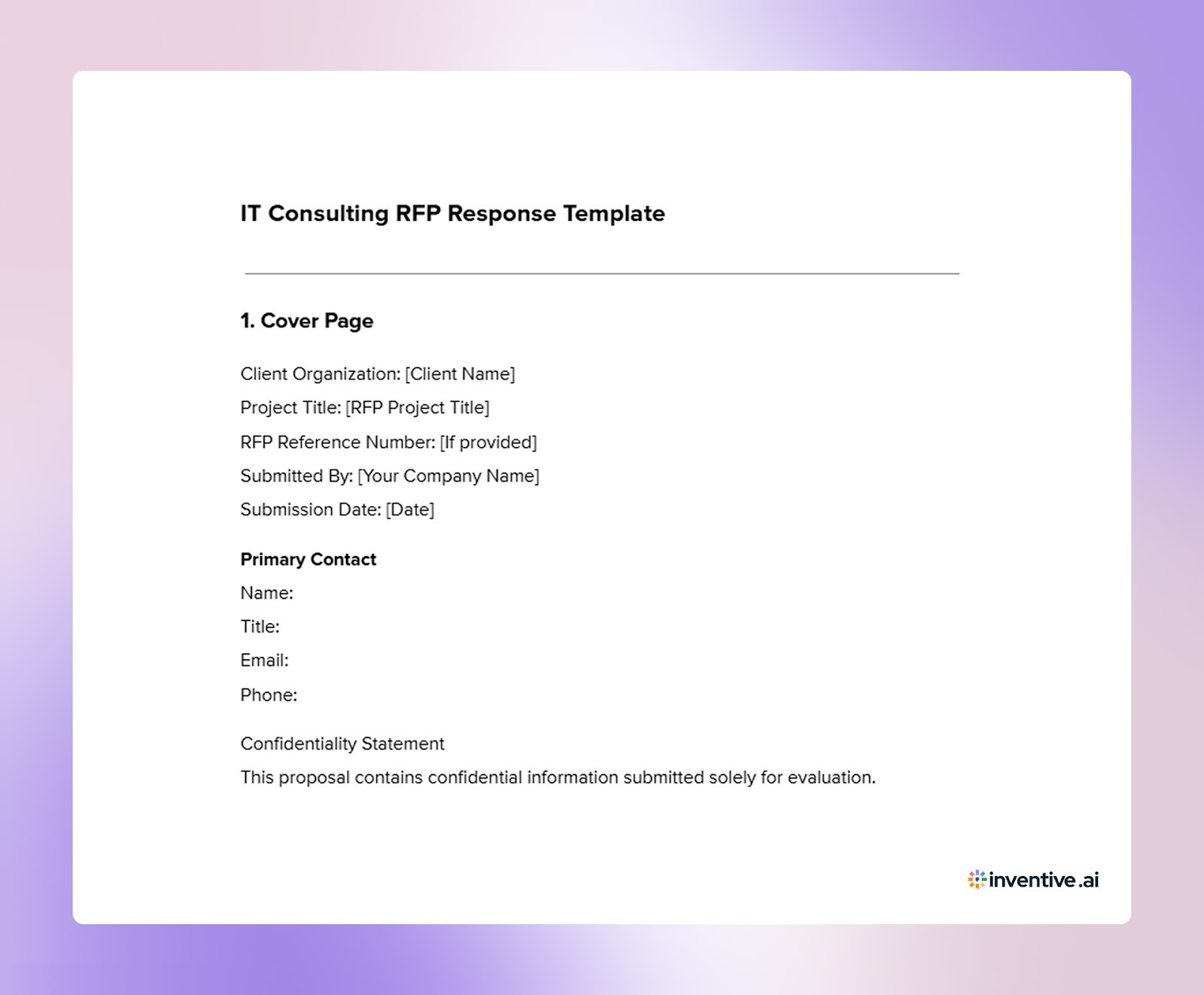
This IT consulting response template applies to cloud migration, cybersecurity, ERP modernization, and infrastructure transformation engagements where evaluators emphasize technical validation and operational reliability.
Your response should address:
- Client objectives and expected business outcomes
- Current environment assessment and identified risks
- Compliance mapping to mandatory requirements
- Proposed architecture and security controls
- Implementation methodology and migration approach
- Milestone-based delivery plan
- Operational targets and service levels
- Supporting credentials and relevant experience
This structure works best for consulting teams bidding on technically complex IT projects where evaluation depends on architecture clarity, risk reduction, and execution readiness.

2. Healthcare Consulting Services RFP Response Template
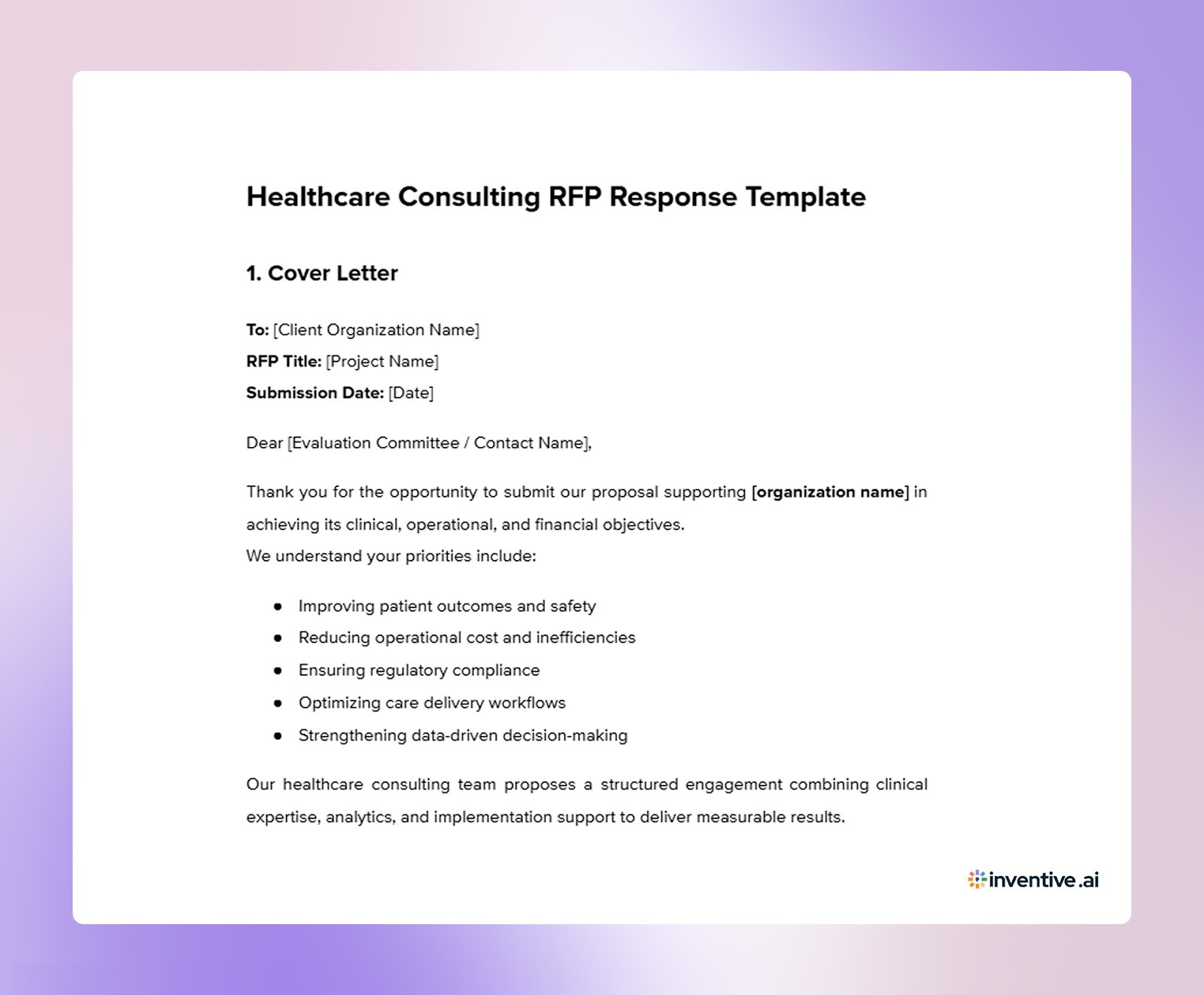
This healthcare consulting response template applies to hospital and health system engagements where evaluators prioritize patient safety, regulatory compliance, and measurable operational improvement.
Your response should address:
- Clinical and operational objectives tied to performance outcomes
- Facility environment, care volumes, and operational constraints
- Compliance mapping to accreditation and regulatory standards
- Workflow redesign and pilot validation approach
- Change adoption and staff training plan
- Data reporting and performance monitoring framework
- Relevant experience in comparable healthcare settings
This structure works best for consulting teams bidding on clinical, operational, or regulatory improvement projects where selection depends on safety assurance, adoption feasibility, and documented results.

3. Financial Consulting Services RFP Response Template
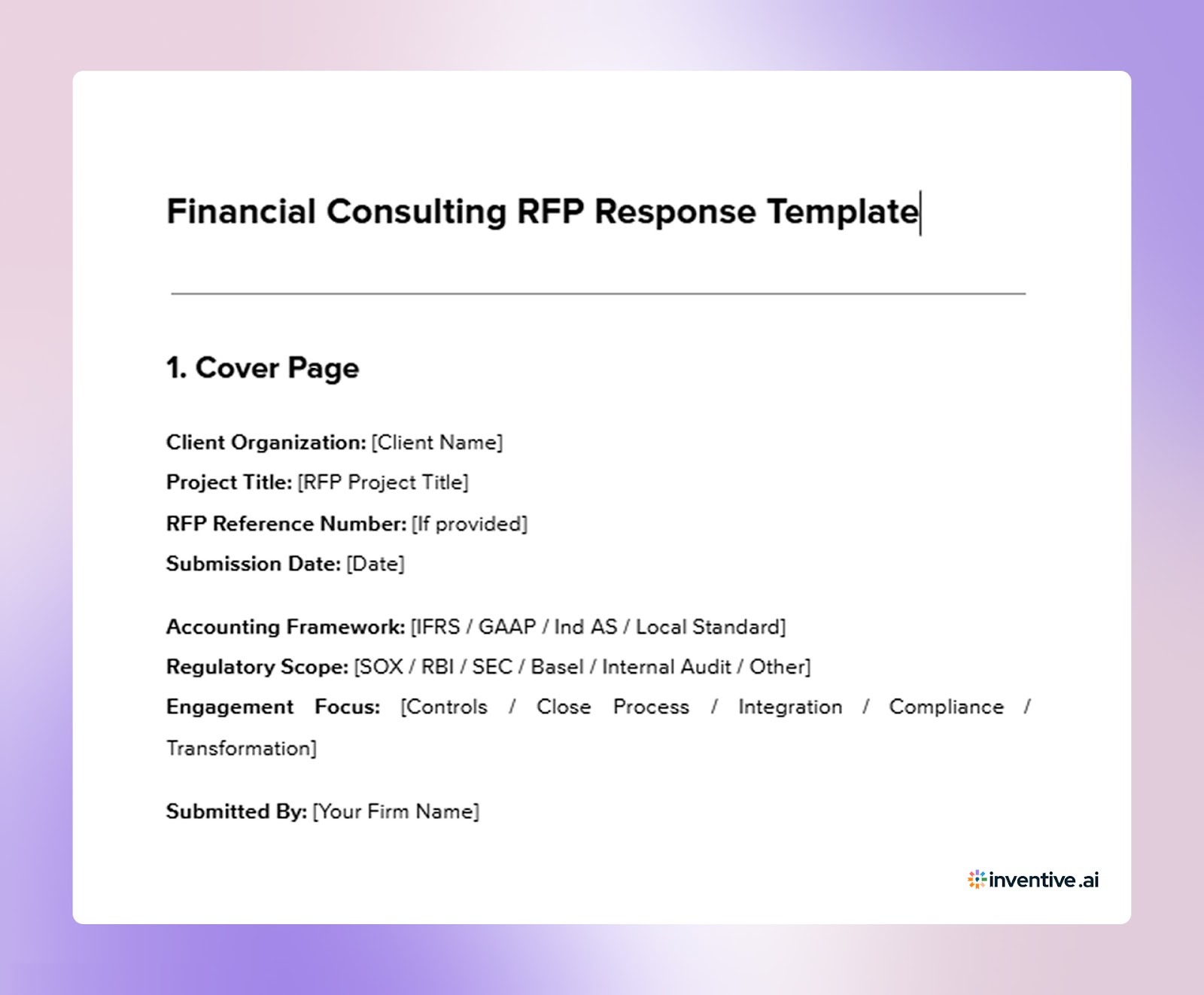
This financial consulting response template applies to audit transformation, regulatory alignment, post-merger integration, and finance system improvement engagements where evaluators focus on accuracy, compliance defensibility, and control reliability.
Your response should address:
- Financial objectives and measurable business impact
- Current reporting environment and organizational context
- Diagnostic findings and regulatory mapping
- Control framework and supporting documentation
- Implementation and validation milestones
- Risk management and data integrity safeguards
- Relevant credentials and comparable experience
This structure works best for advisory teams bidding on audit-sensitive or compliance-driven financial engagements where selection depends on verified controls, reporting reliability, and readiness for review.

4. Government Consulting Services RFP Response Template
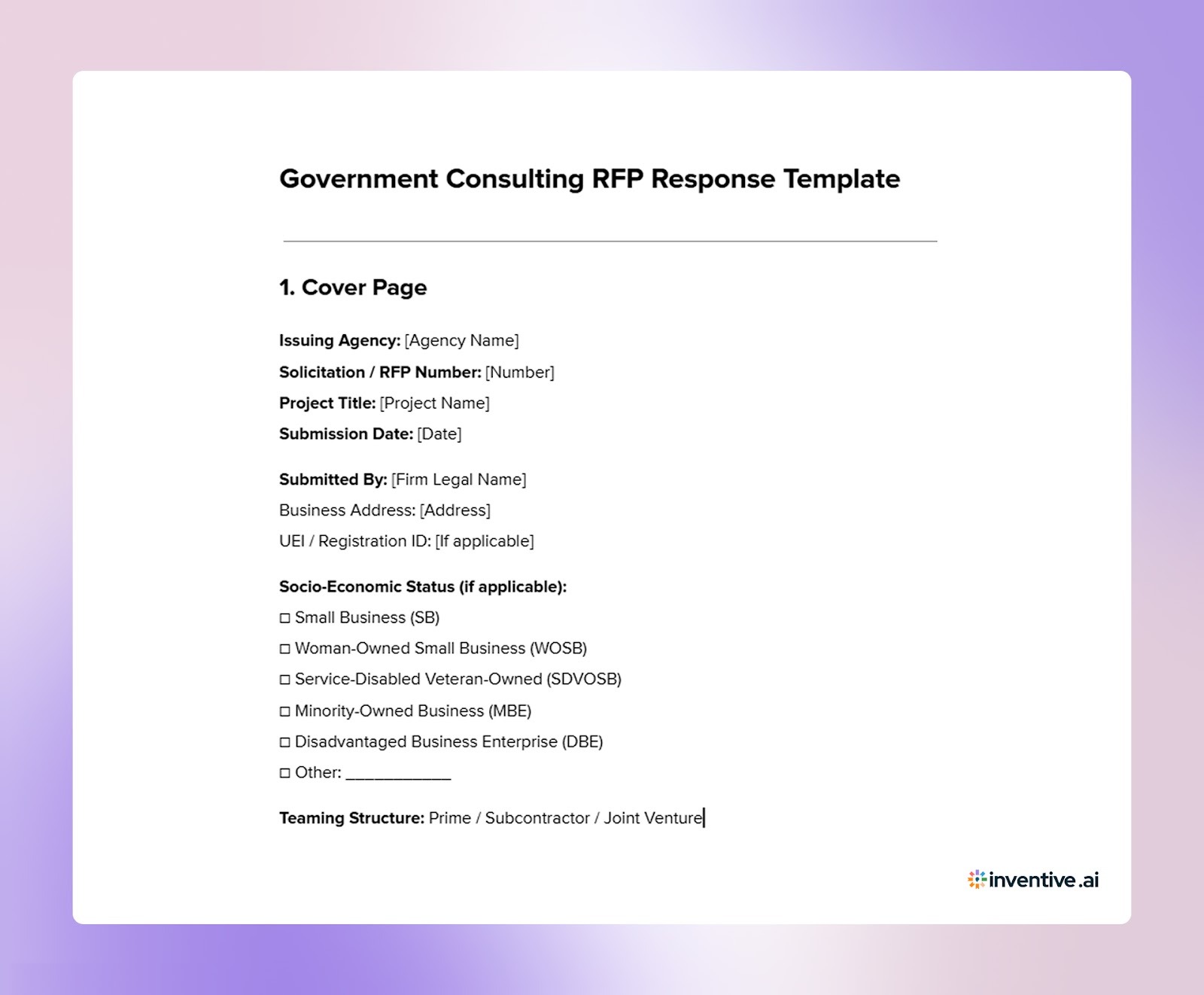
This government consulting response template applies to public sector engagements where evaluators prioritize compliance completeness, auditability, and alignment with procurement rules.
Your response should address:
- Solicitation scope, funding context, and agency objectives
- Public impact measures and regulatory alignment
- Deliverables and ownership responsibilities
- Milestones aligned with agency review cycles
- Socio-economic disclosures and eligibility certifications
- Past performance evidence and evaluation factors
- Submission requirements and coordination expectations
This structure works best for consulting teams bidding on regulated public sector contracts where selection depends on documentation accuracy, compliance assurance, and verifiable past performance.

5. HR & Talent Consulting RFP Response Template
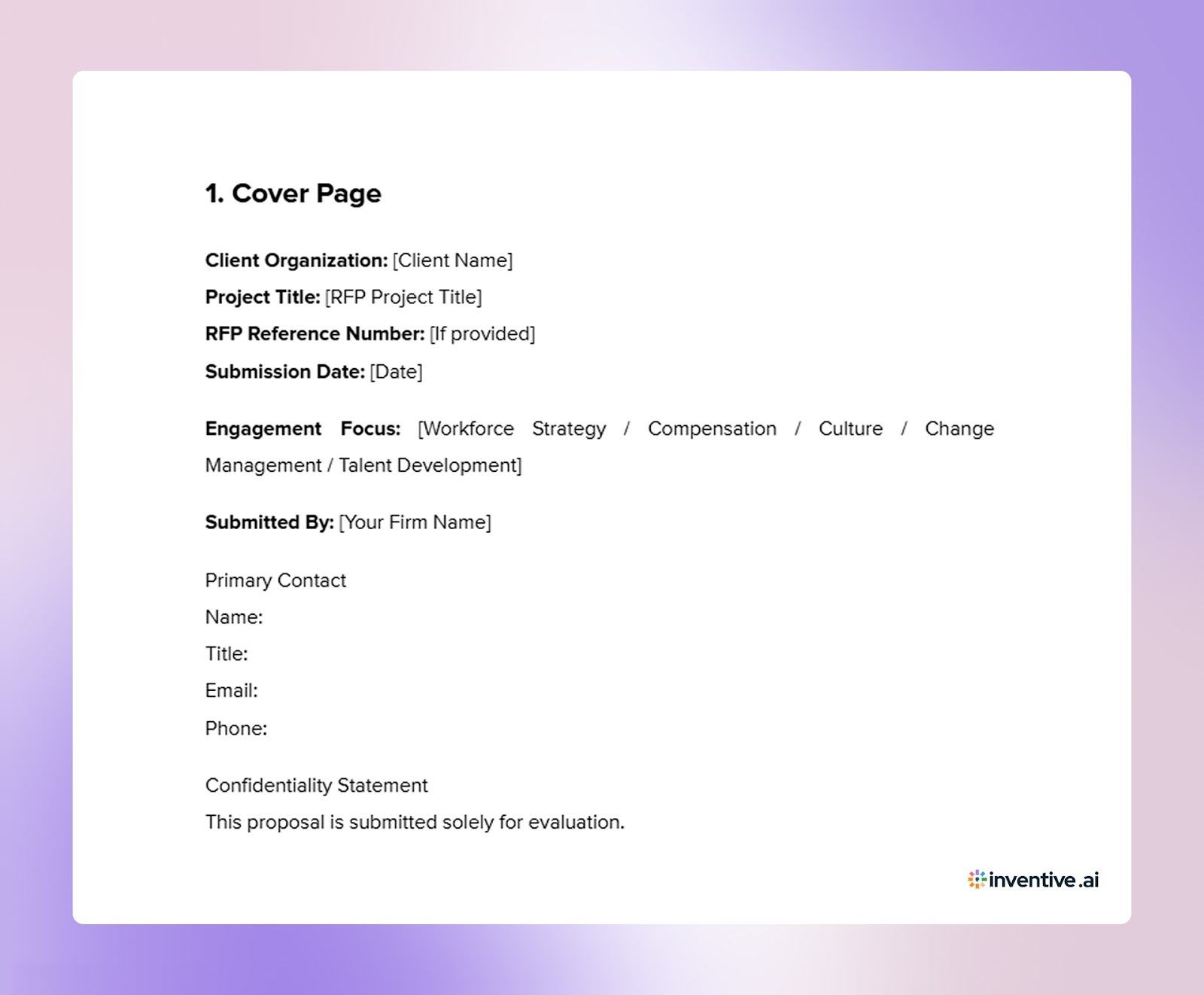
This HR and talent consulting response template applies to workforce strategy, compensation redesign, DEI initiatives, and culture improvement engagements where evaluators focus on adoption and measurable people outcomes.
Your response should address:
- Workforce objectives and organizational context
- Current workforce composition and HR capacity
- People performance metrics and success measures
- Proposed policies, frameworks, and enablement materials
- Change management and stakeholder engagement
- Relevant experience and cultural alignment
This structure works best for consulting teams bidding on organizational change programs where selection depends on stakeholder buy-in and sustained improvement.

6. Management Consulting RFP Response Template
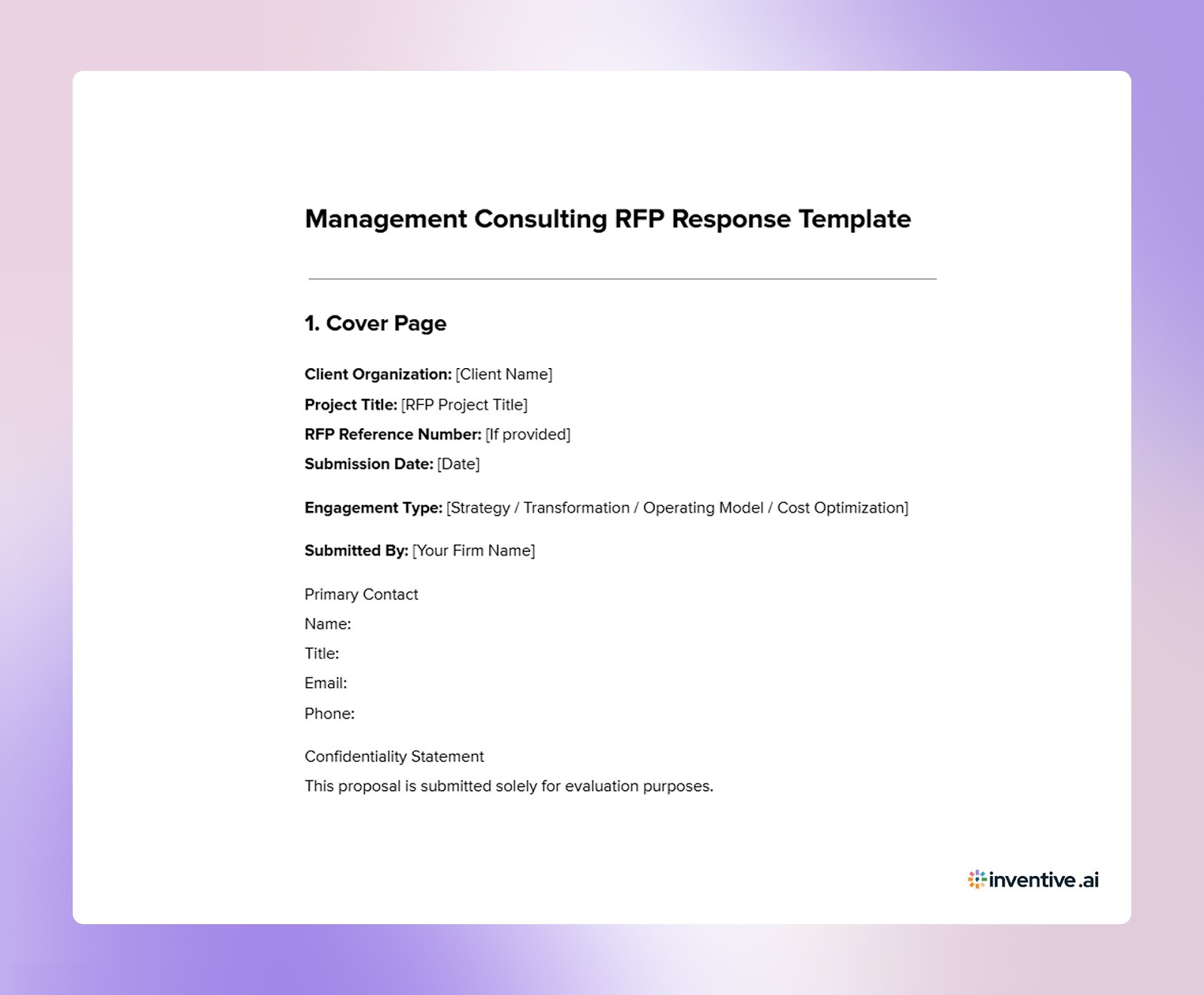
This management consulting response template applies to enterprise strategy, operating model, and multi-year transformation engagements where evaluators assess strategic clarity and execution feasibility.
Your response should address:
- Strategic objectives and leadership alignment
- Market position and business context
- Growth and cost performance metrics
- Proposed roadmap and supporting analysis
- Milestone-based execution plan
- Risks, governance, and team credentials
This structure works best for consulting teams bidding on executive-level strategy and operational improvement programs where selection depends on clear direction and practical implementation.
7. Marketing Consulting Services RFP Response Template
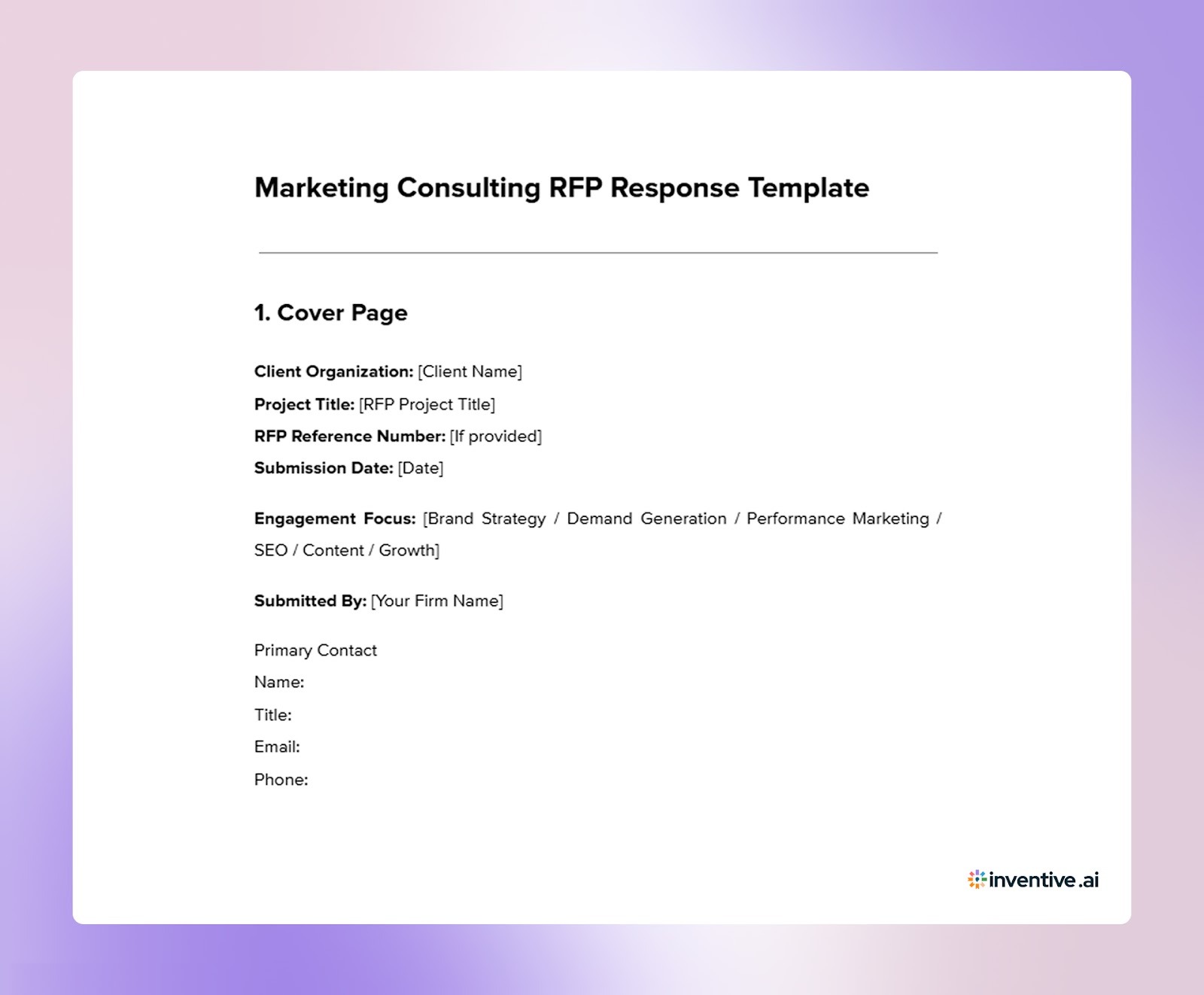
This marketing consulting response template applies to brand strategy, demand generation, SEO, content, and growth marketing engagements where evaluators prioritize measurable business impact and positioning clarity.
Your response should address:
- Growth objectives and target audience context
- Current marketing environment and technology stack
- Scope of work and prioritization of activities
- Performance metrics such as traffic, conversion rate, and acquisition cost
- Methodology, case studies, and risk considerations
- Budget structure and delivery timeline
This structure works best for consulting teams bidding on growth and performance marketing programs where selection depends on measurable results and execution credibility.

Even after choosing the closest match, refine your responses to reflect the client’s specific objectives, constraints, and evaluation weighting.
Turn a Consulting RFP Template into a Winning Response With These Best Practices
A template gives you structure, but customization is what wins the deal. To stand out, your proposal must reflect the client’s language, priorities, and decision criteria.
Before you submit, focus on refining these critical areas:
- Mirror the RFP language: Use the same terminology, headings, and evaluation criteria the buyer uses to make scoring easier.
- Prioritize evaluation weightings: Spend more space on sections that carry the highest percentage in the scoring matrix.
- Quantify impact: Replace generic claims with measurable outcomes, such as cost reduction percentages or timeline improvements.
- Address risks directly: Acknowledge potential challenges and explain how your team will mitigate them.
- Tailor the executive summary: Make it client-specific, highlighting their goals rather than your company history.
- Align team bios to the project: Feature only relevant experience that directly supports the scope.
When done correctly, customization turns a standard template into a focused, client-ready response that feels built for that opportunity.
Scale Your Consulting RFP Responses with Inventive AI
Inventive AI applies AI-driven quality control across your entire response library. It evaluates answers in context, flags inconsistencies, and ensures your proposal reflects the specific opportunity rather than recycled boilerplate.
Here’s how Inventive AI supports consulting RFP teams:
Context Engine
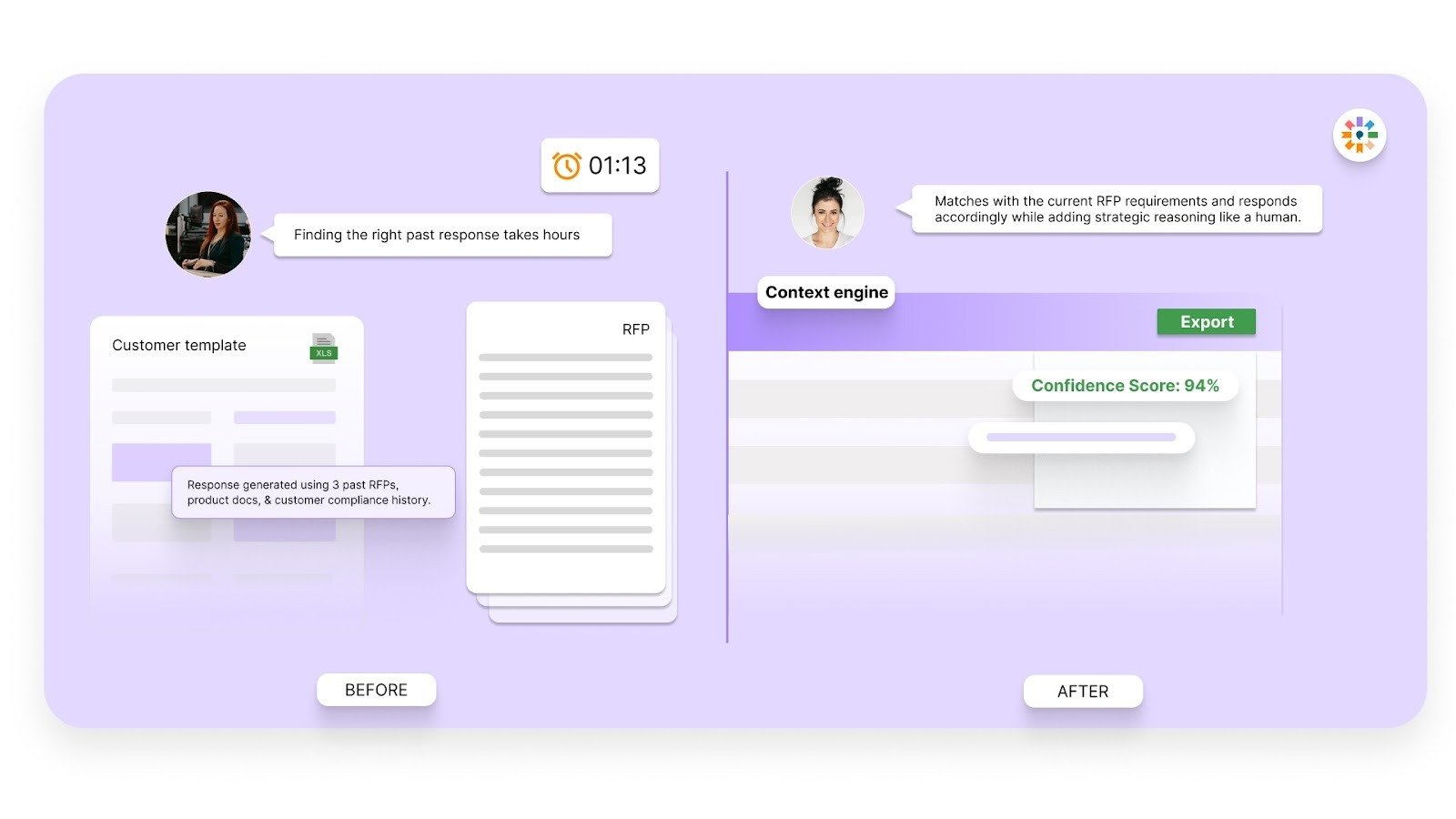
Many competitors rely on shallow ChatGPT or basic RAG lookup, which produces generic answers detached from the full solicitation. Inventive uses multi-layer reasoning that understands the entire RFP context, including objectives, evaluation weightings, scope dependencies, and deliverable structure. This yields accurate, tailored responses that feel like a human SME wrote them and fit directly into scoring frameworks.
Conflict Detection
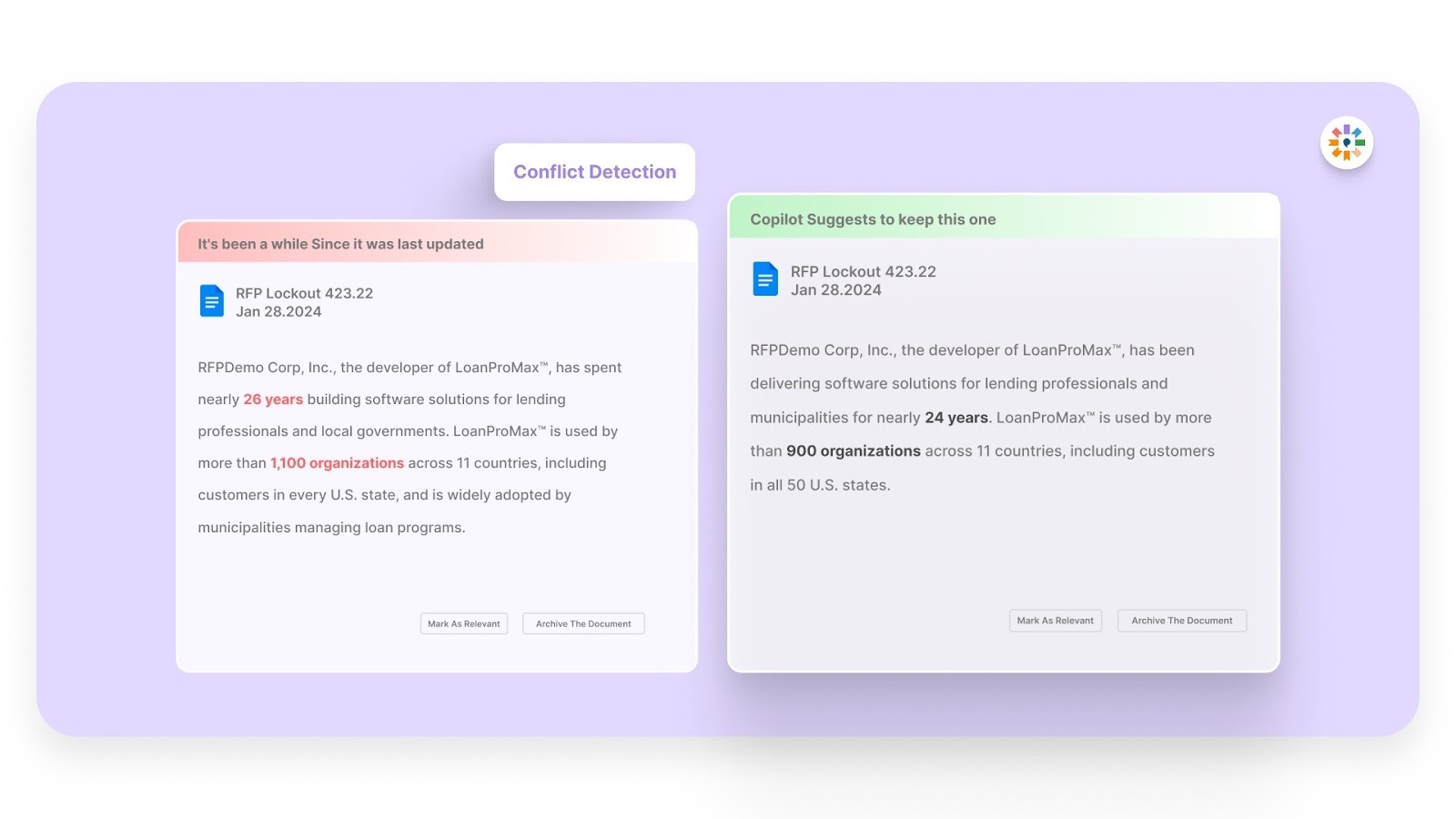
Consulting proposals contain interdependent sections such as methodology, timeline, staffing, pricing, and case studies. Other tools cannot detect contradictions across these areas. Inventive flags conflicting statements instantly, preventing mismatched timelines, inconsistent impact metrics, or staffing discrepancies that weaken evaluator confidence.
Outdated Content Detection
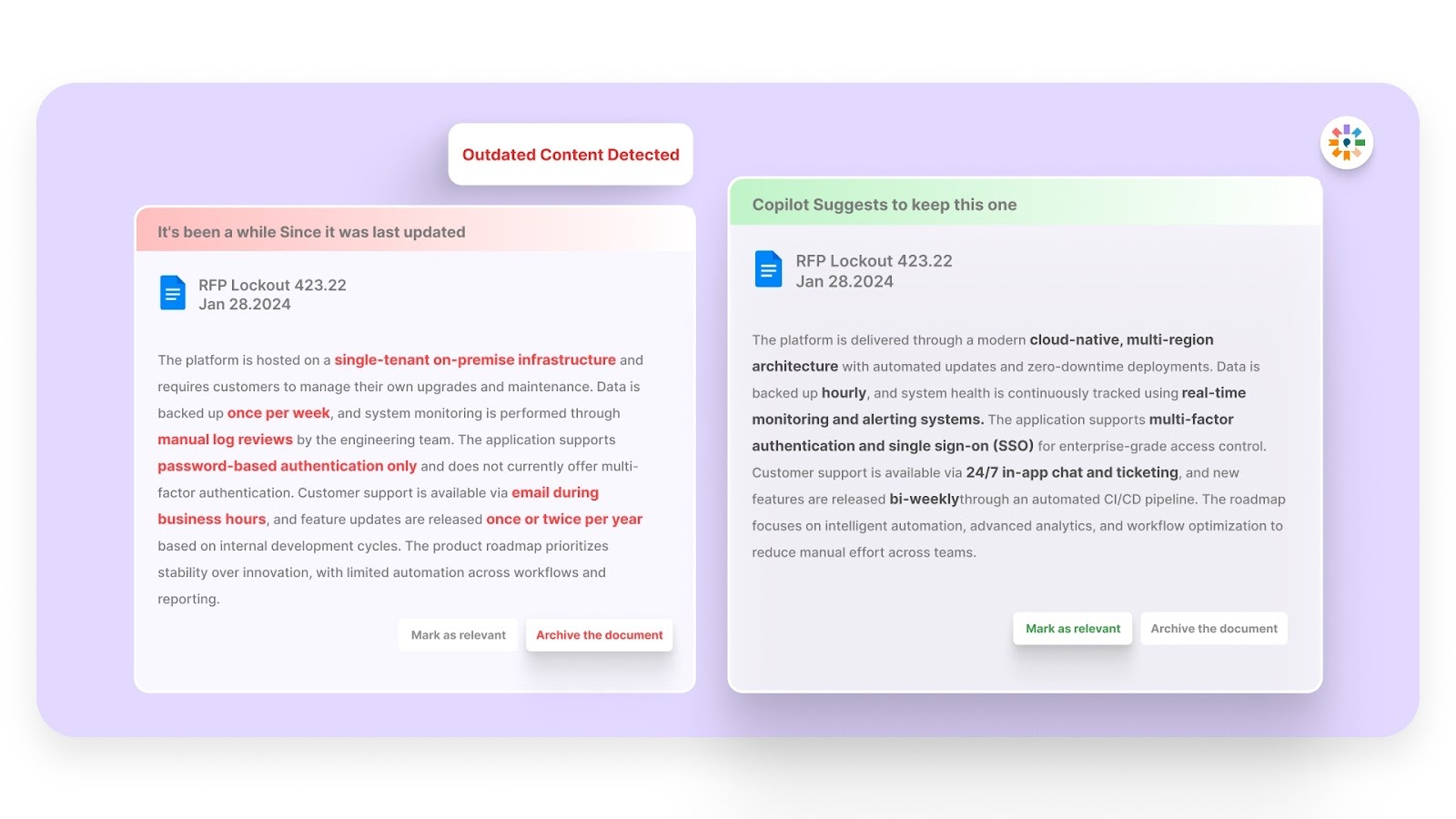
Case studies, certifications, and team allocations change over time. Many firms store large libraries of past material that may no longer reflect current data. Inventive automatically catches outdated or non-compliant content before submission. This drastically reduces manual review and rewriting time.
2X Quality Response
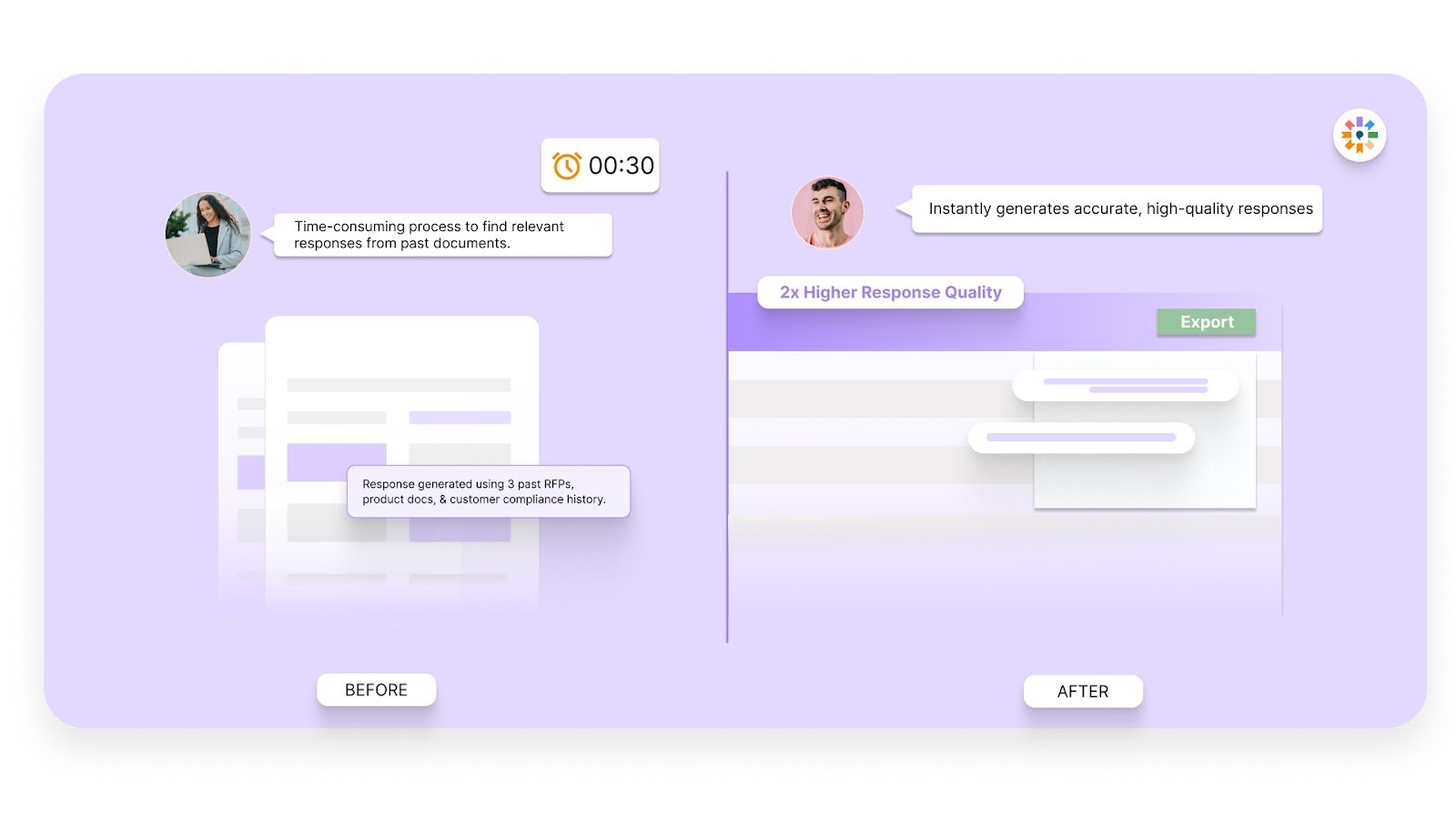
With its multi-agent AI system, Inventive offers strategic answers that interpret the true intent behind each consulting requirement. Responses are accurate, clear, and complete, reinforcing business outcomes, mitigating risk, and delivering measurable impact in a format that evaluators can score quickly.
Simple and Easy to Use UI and UX
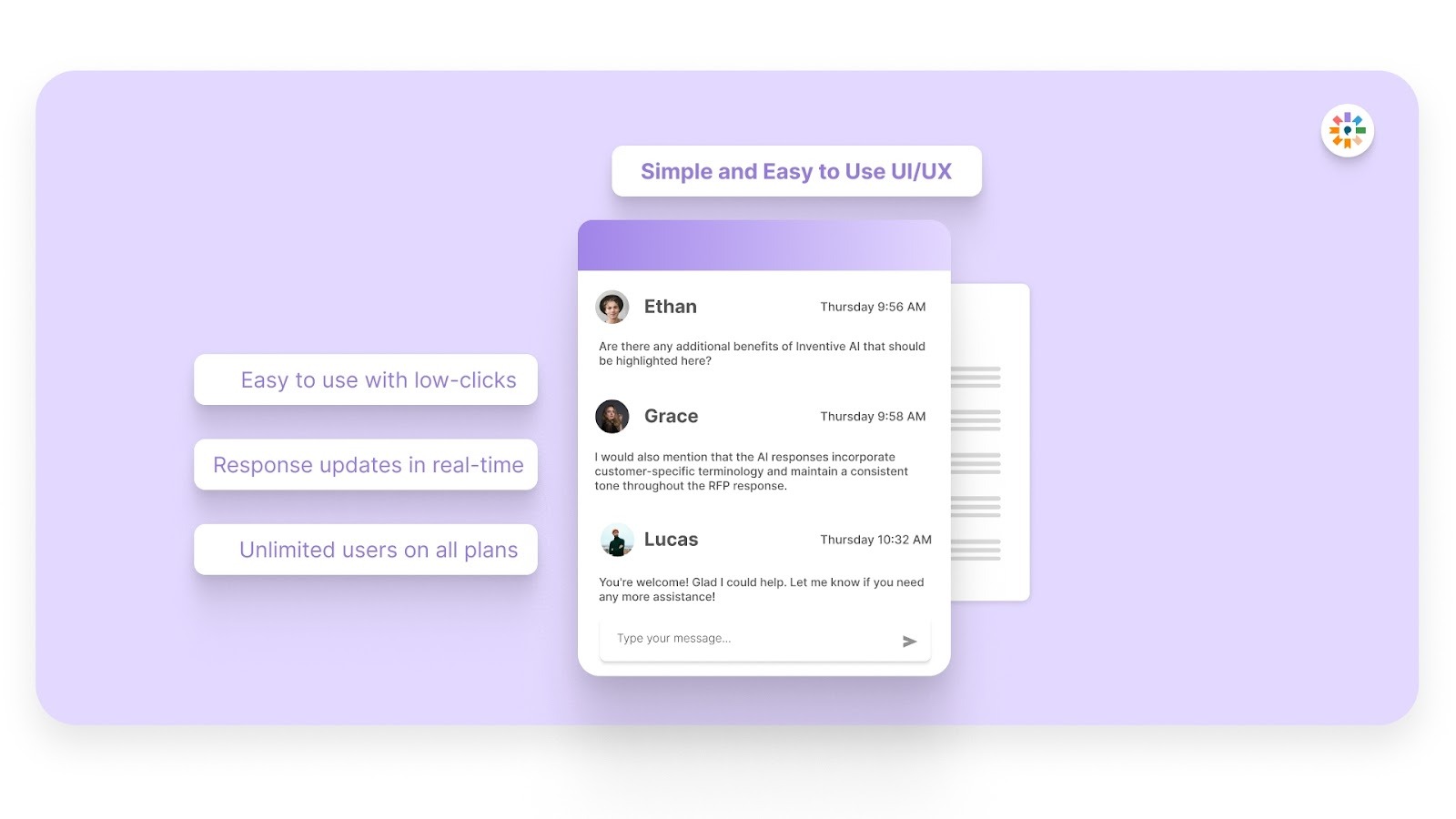
Inventive maintains a 100 percent adoption rate across its current customer base and is ranked the easiest-to-use RFP software on G2. Consulting teams can adopt the platform quickly, even if they are new to AI-based proposal tools, and begin producing structured, high-quality submissions without disruption.
FAQs
1. What should I write in a consulting proposal?
Outline your understanding of the client’s problem, approach, scope, timeline, team, and pricing. Include relevant case studies, measurable outcomes, and any required compliance details to demonstrate you can deliver results.
2. How long should a consulting proposal be?
It depends on the RFP and project size. Small projects may need 5–10 pages, while enterprise or government bids can exceed 30. Focus on relevance and address every evaluation requirement.
3. What’s the difference between a proposal and a contract?
A proposal presents your recommended solution and pricing in response to an RFP. A contract is a binding agreement signed after selection, defining final terms and obligations.
4. Should I include pricing upfront in RFP?
If requested, provide a clear cost breakdown. If optional, you can share a range or defer detailed pricing until discovery, as long as it aligns with defined deliverables.
5. How can I make my consulting proposal stand out?
Align your summary to the client’s goals, mirror their terminology, quantify outcomes, and address risks directly. Clear structure and relevant proof strengthen your response.


%20That%20Gets%20Shortlisted.png)

%20for%20Sales%20Teams.jpg)


%20Industry%20Examples.png)