LTL RFP Template & Response Guide to Win Freight Bids

Are you sending the same freight RFP response again and again, only to lose bids to another carrier? For carriers and logistics providers, responding to freight RFPs often means tight deadlines, repeated questionnaires, and input from multiple teams.
Pricing details, service coverage, technology capabilities, and compliance information must all be gathered and presented clearly to win the contract. Many teams start by reviewing an LTL RFP template to understand what shippers expect before preparing their response.
In this guide, we’ll explore what an LTL RFP template includes, how to structure an effective response template, best practices for winning LTL freight contracts, how AI tools can help vendors respond faster, and answer common questions about freight RFPs.
Free LTL RFP Template Used in Freight Procurement (For Buyers)
Most freight RFPs follow a structured format, allowing shippers to compare multiple carriers using the same criteria. A well-structured template helps carriers understand shipment characteristics, service expectations, pricing terms, and compliance requirements before submitting their proposal.
Below is a Free LTL RFP Template outlining the common sections companies include when requesting proposals from Less Than Truckload carriers.
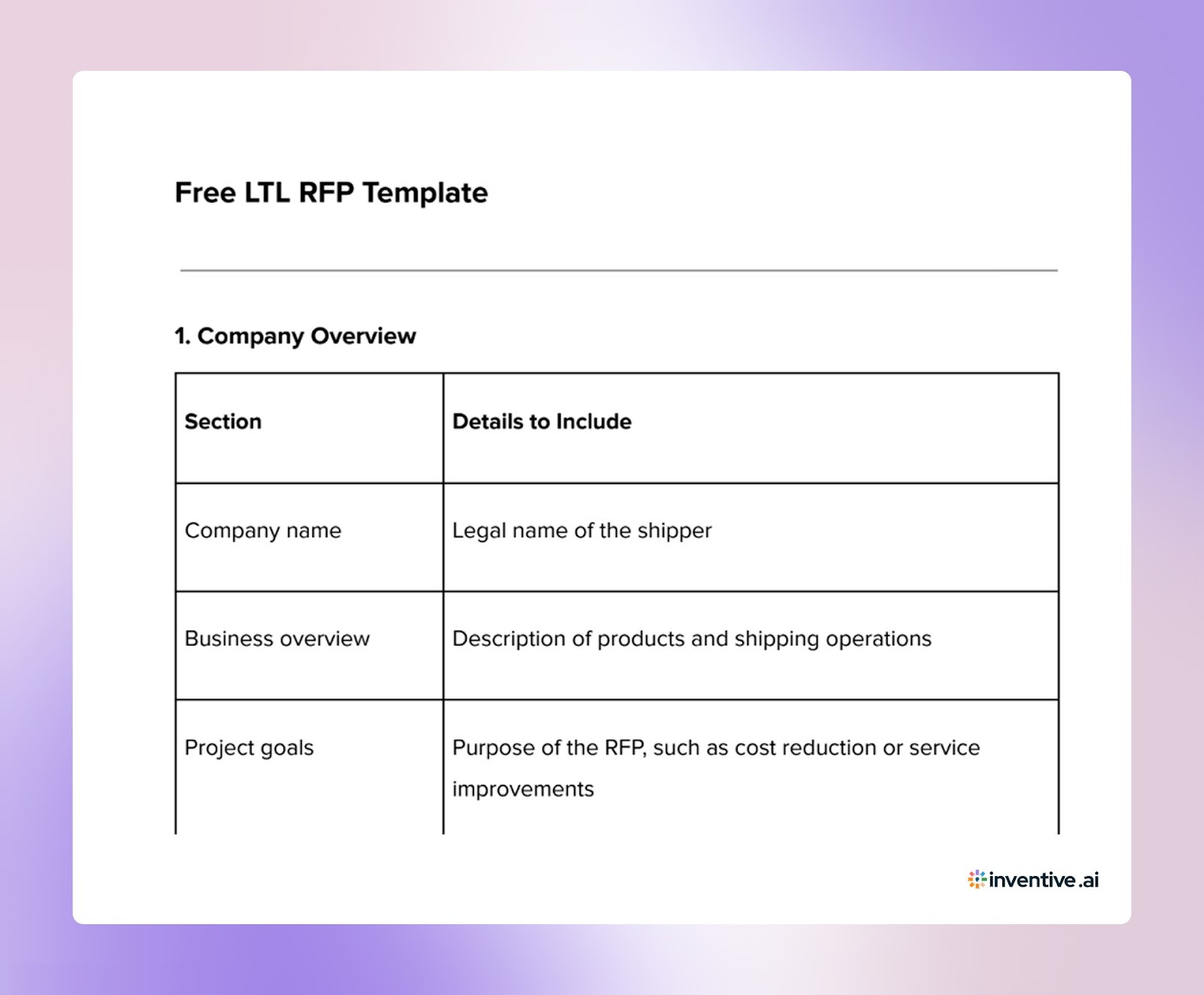

Once you understand how shippers structure their freight requests, the next step is preparing a clear and compelling response.
LTL RFP Response Template Carriers Can Use to Win Bids (For Vendors)
A strong proposal does more than present pricing and service coverage. Procurement teams evaluate carriers based on network fit, service performance, operational support, and long-term reliability. A structured response makes it easier for shippers to compare proposals and assess which carrier can support their freight program.
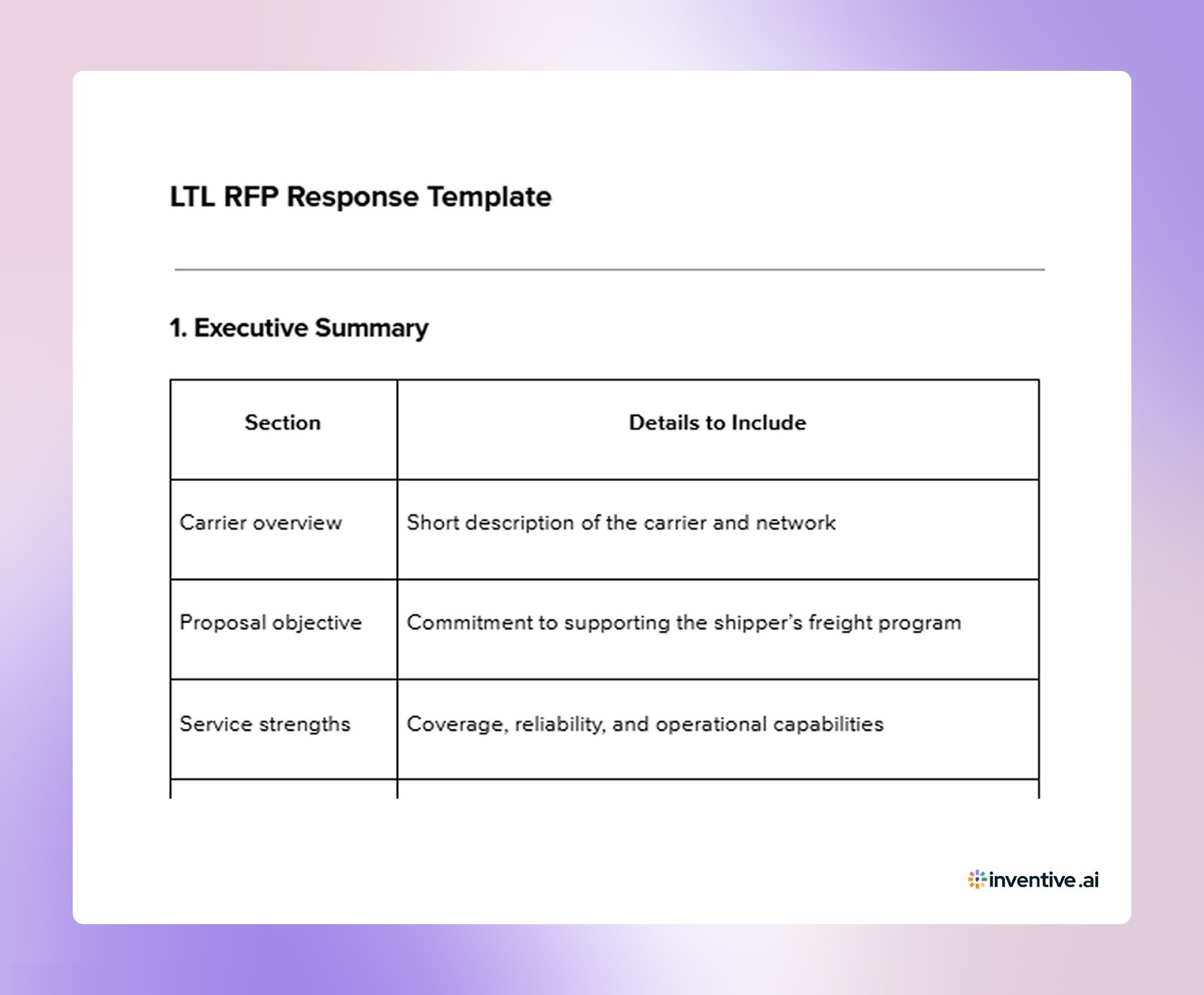

Below is a structured template carriers can follow when responding to an LTL freight RFP:
1. Executive Summary
2. Service Coverage and Network Operations
Network Coverage Details
This information helps shippers evaluate whether the carrier’s network aligns with their shipping lanes.
3. Pricing Proposal
4. Accessorial Pricing
5. Equipment and Capacity Availability
Providing this information helps shippers confirm the carrier has the equipment needed for their freight profile.
6. Technology and Shipment Visibility
7. Account Management and Support
Clear support structures reassure shippers that operational issues will be addressed quickly.
8. Performance Scorecard
9. Claims Resolution Process
A shorter claims resolution timeline can significantly influence carrier selection.
10. Compliance and Risk Coverage
11. Sustainability Reporting
12. Financial Stability
Financial transparency reassures shippers that the carrier can support the contract throughout its duration.
A well-structured response template provides the foundation, but winning freight contracts requires careful attention to how you present your capabilities.
Best Practices for Winning LTL Freight Contracts
Freight RFPs often attract many carriers, and procurement teams compare proposals side by side. Clear performance data, transparent pricing, and dependable service details often influence which carrier moves forward. Proposals that present measurable results and operational clarity tend to stand out during evaluation.
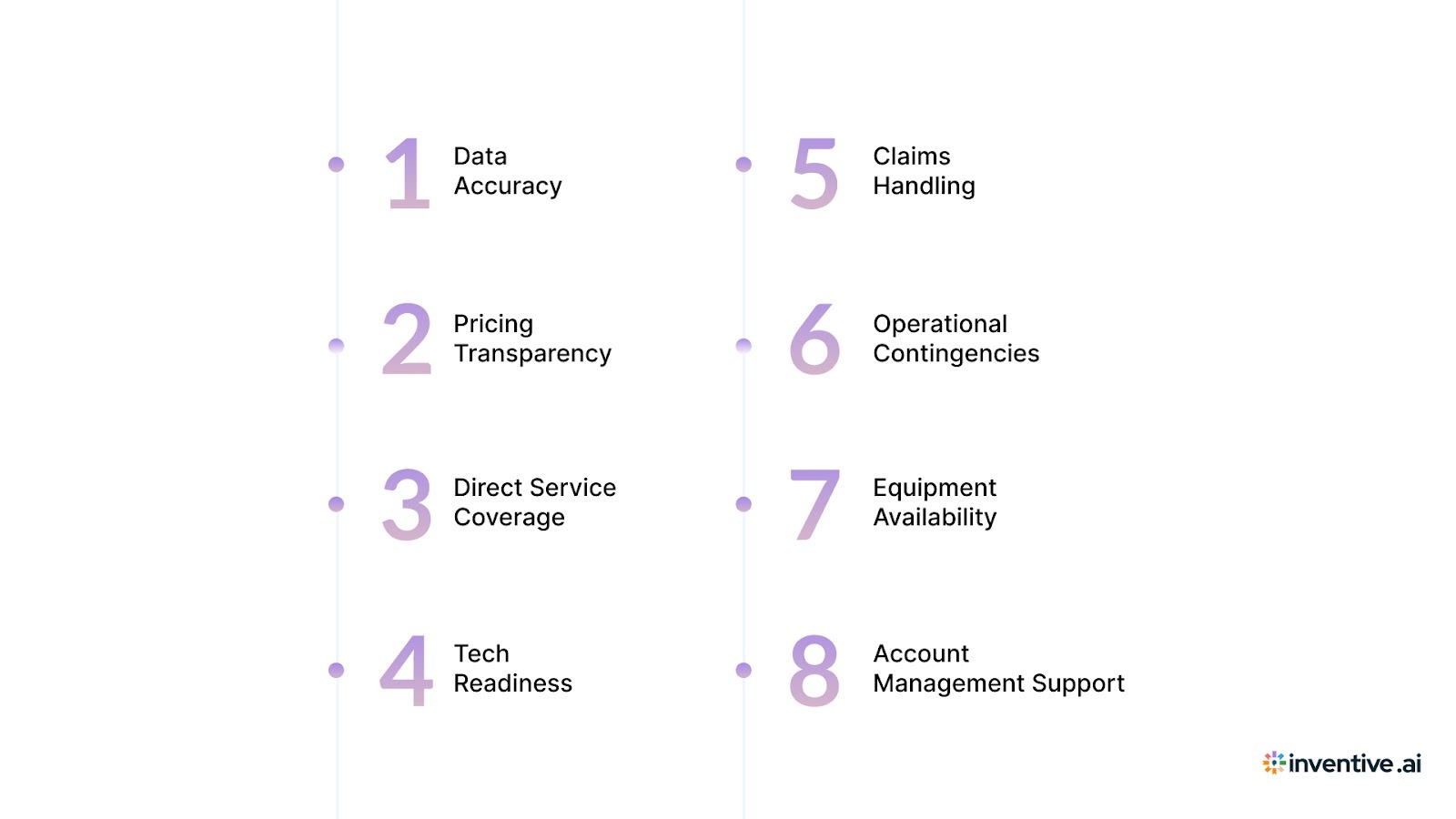
Focus on the following practices when preparing your proposal:
- Data Accuracy: Provide historical performance data for the requested lanes. Include actual on-time delivery percentages and claims ratios from the last 12 months to show how your network performs with similar freight patterns.
- Pricing Transparency: Break down base rates, discount levels, minimum charges, and fuel surcharge schedules clearly. Define when accessorial fees apply so the shipper understands the full cost structure.
- Direct Service Coverage: Identify lanes served directly through your network and those handled through partner carriers. Direct service reduces freight transfers and lowers the chance of damage.
- Tech Readiness: Show support for API based shipment tracking, rating, and digital invoicing. A customer portal where shippers can view shipment status and reports strengthens your proposal.
- Claims Handling: Outline the process used for handling freight loss or damage and include the average number of days required to close claims.
- Operational Contingencies: Describe how capacity is managed during peak seasons or equipment shortages so the shipper understands how freight will continue moving during high demand.
- Equipment Availability: Provide details about liftgate trailers, protect from freeze service, or other equipment required for specialized shipments.
- Account Management Support: Identify the representative responsible for the account and explain escalation steps used when service issues occur.
As RFP questionnaires grow longer and more detailed, you may find that automation and AI tools help your team prepare accurate responses more consistently.
How Inventive AI Helps You Respond Faster with Freight RFPs?
Responding to freight RFPs often requires input from sales, operations, pricing, and technical teams. Many questions repeat across different bids, yet answers are often scattered across past proposals, spreadsheets, and internal documents. This slows down response teams and increases the risk of inconsistent answers.
AI-based proposal tools help teams prepare responses faster while maintaining accuracy and consistency. Below are some ways Inventive AI supports vendors responding to freight RFPs:
Context Aware Answer Generation
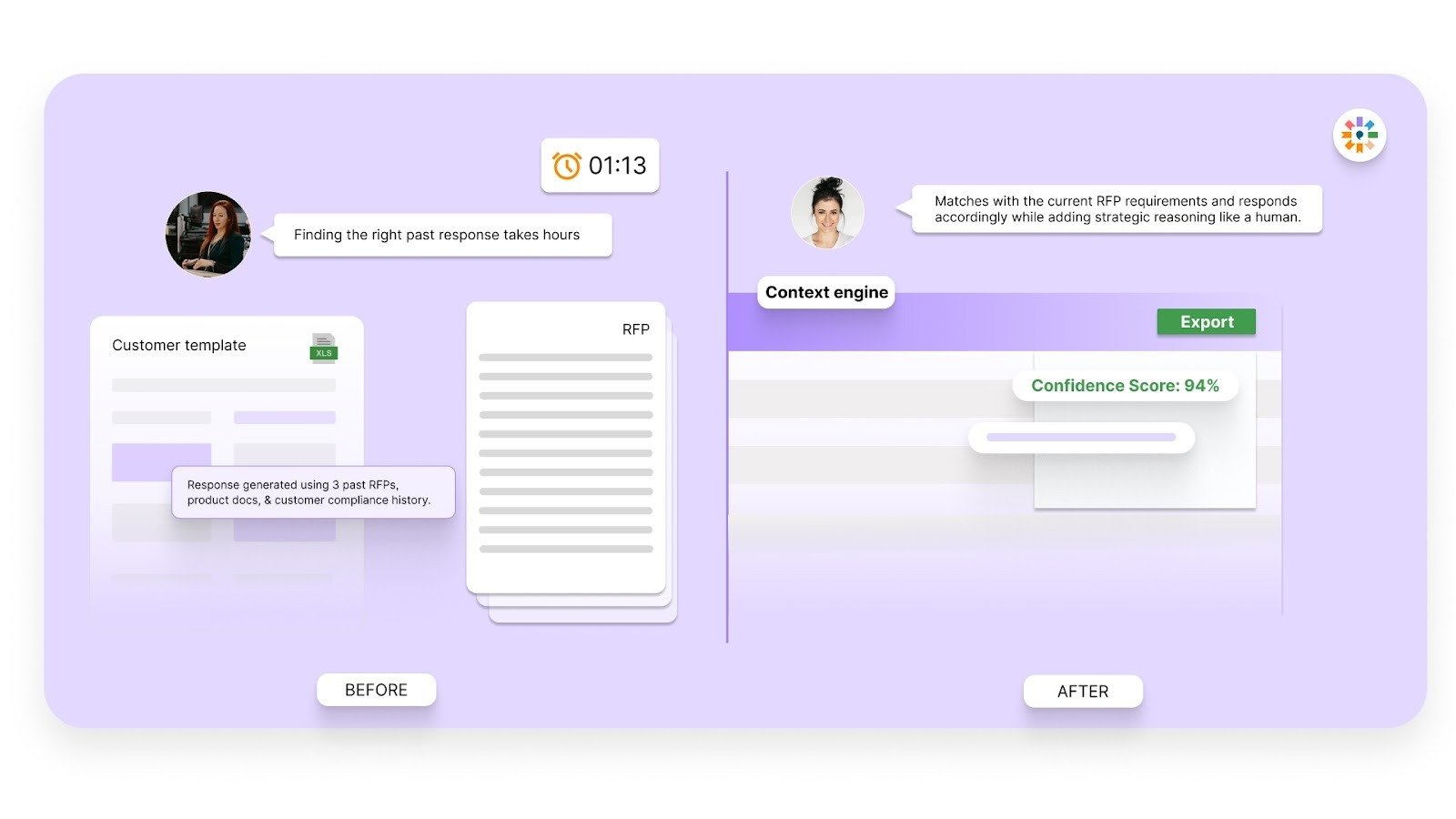
Inventive AI uses a context engine that reviews the entire RFP section before generating an answer. This allows the system to produce responses grounded in your knowledge sources, such as past RFPs, internal documents, and company data. The result is an answer that reflects the intent of the question.
Conflict Detection Across Responses
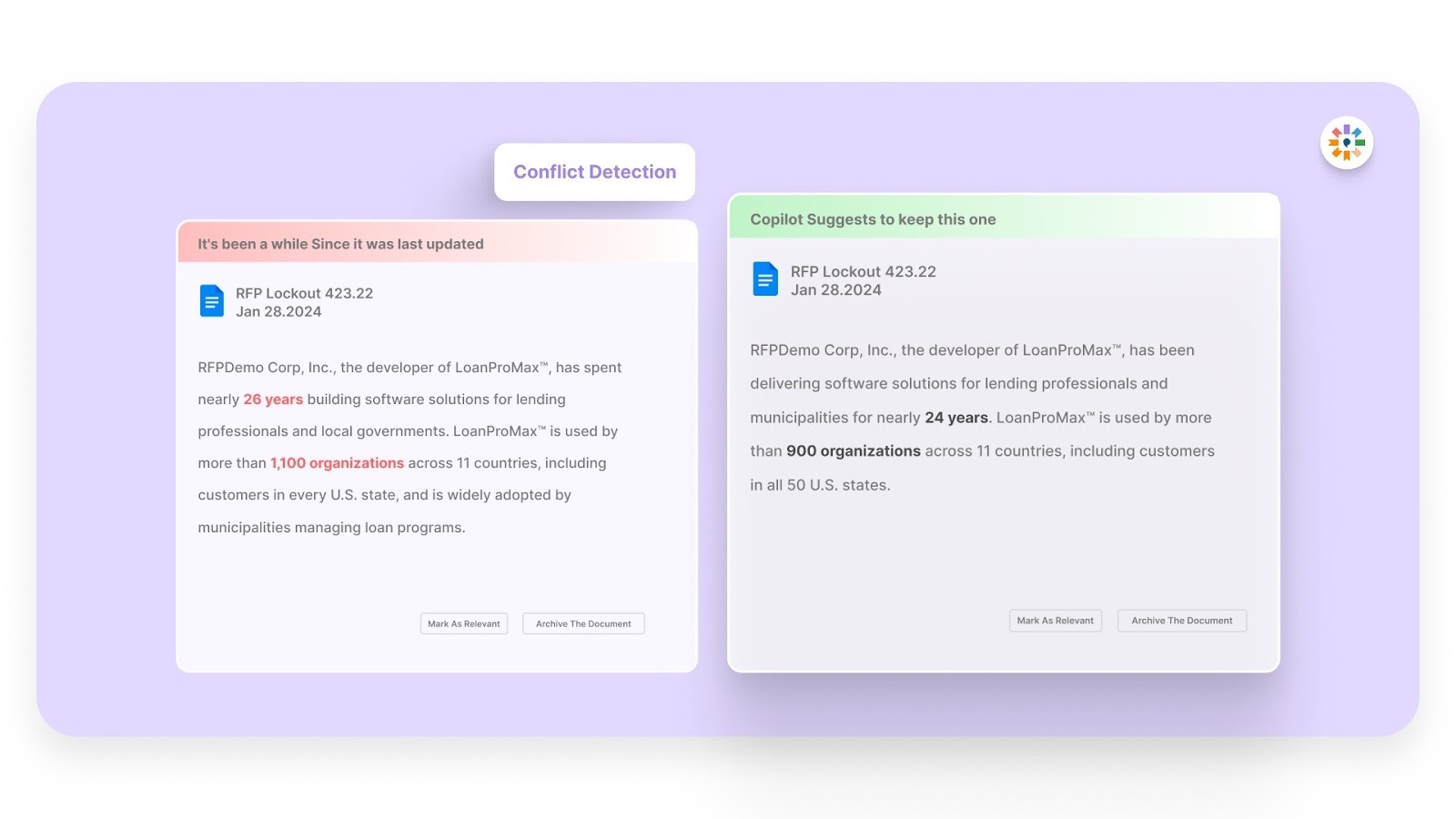
When multiple teams contribute to an RFP, conflicting statements can appear across different sections. Inventive AI identifies these contradictions and flags them for review. This helps proposal teams correct inconsistencies before submitting the response.
Outdated Content Detection
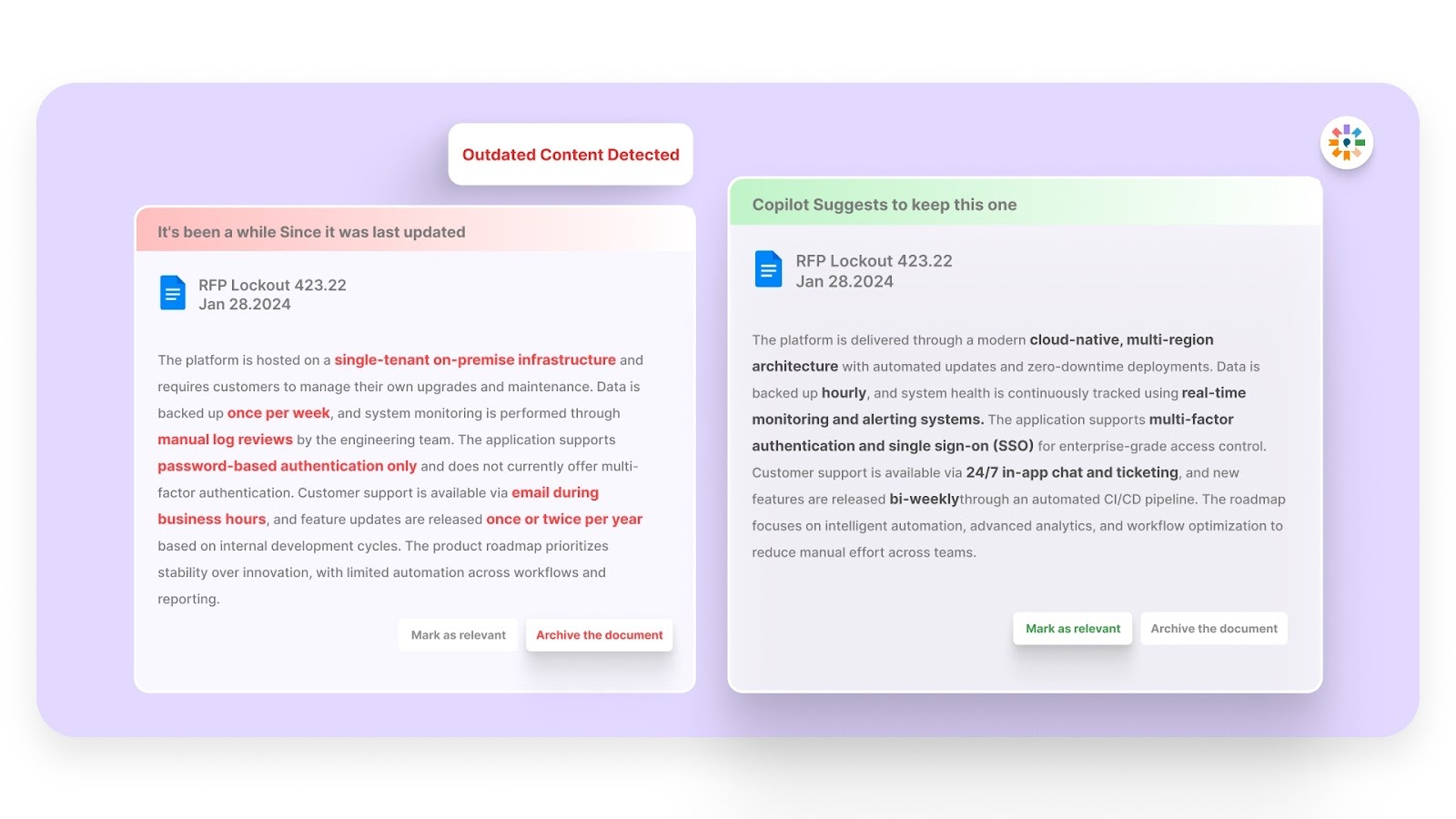
Proposal libraries often contain old answers related to pricing, operations, or policies. Inventive AI reviews stored knowledge and highlights content that may be outdated or inaccurate. Teams can then update responses before they are used in a proposal.
2x Higher Quality Responses
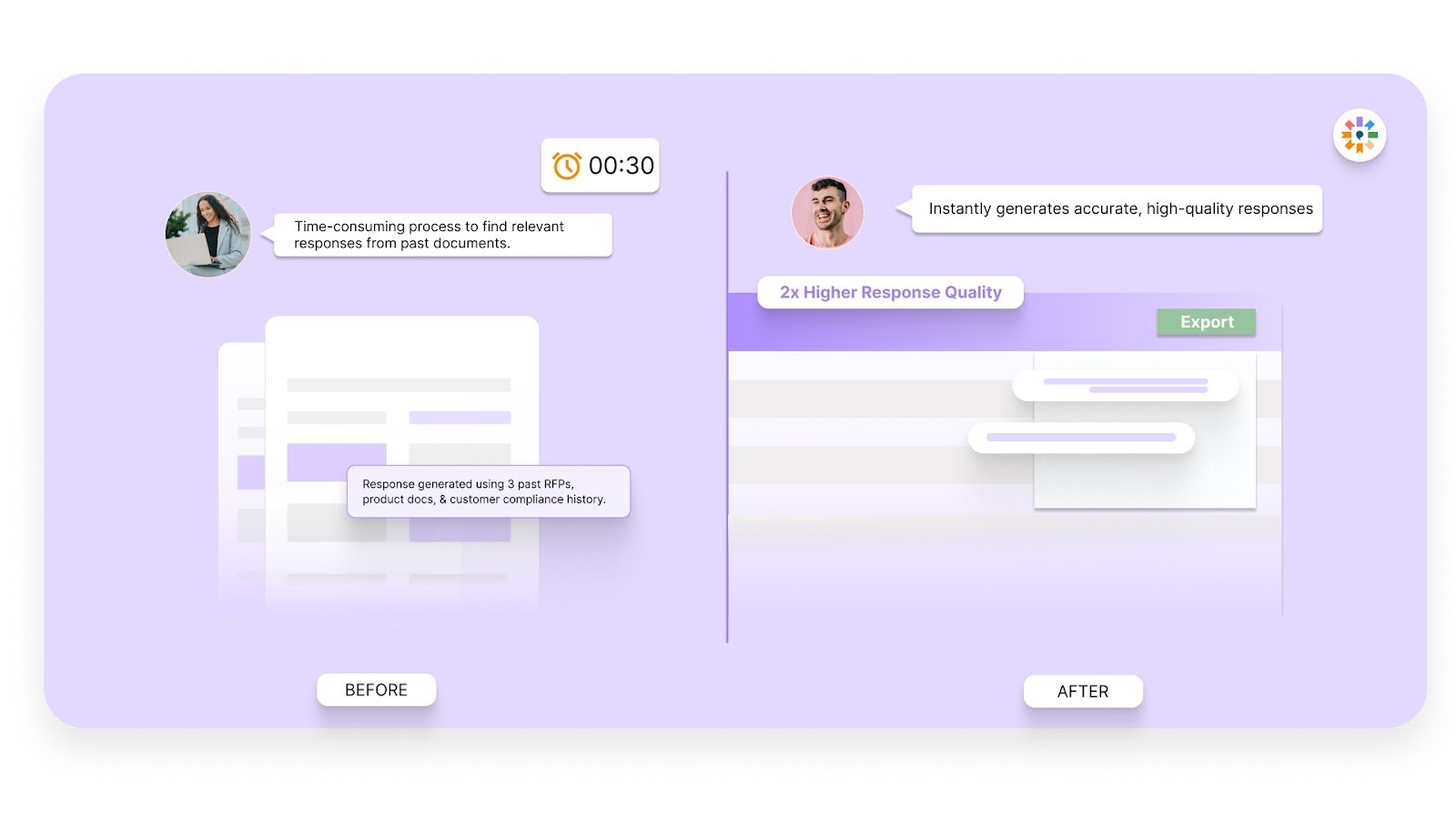
Inventive AI uses multiple AI agents that examine the intent behind each question. This approach focuses on clarity, accuracy, and completeness so that responses address what the buyer is actually asking.
Simple Interface for Proposal Teams
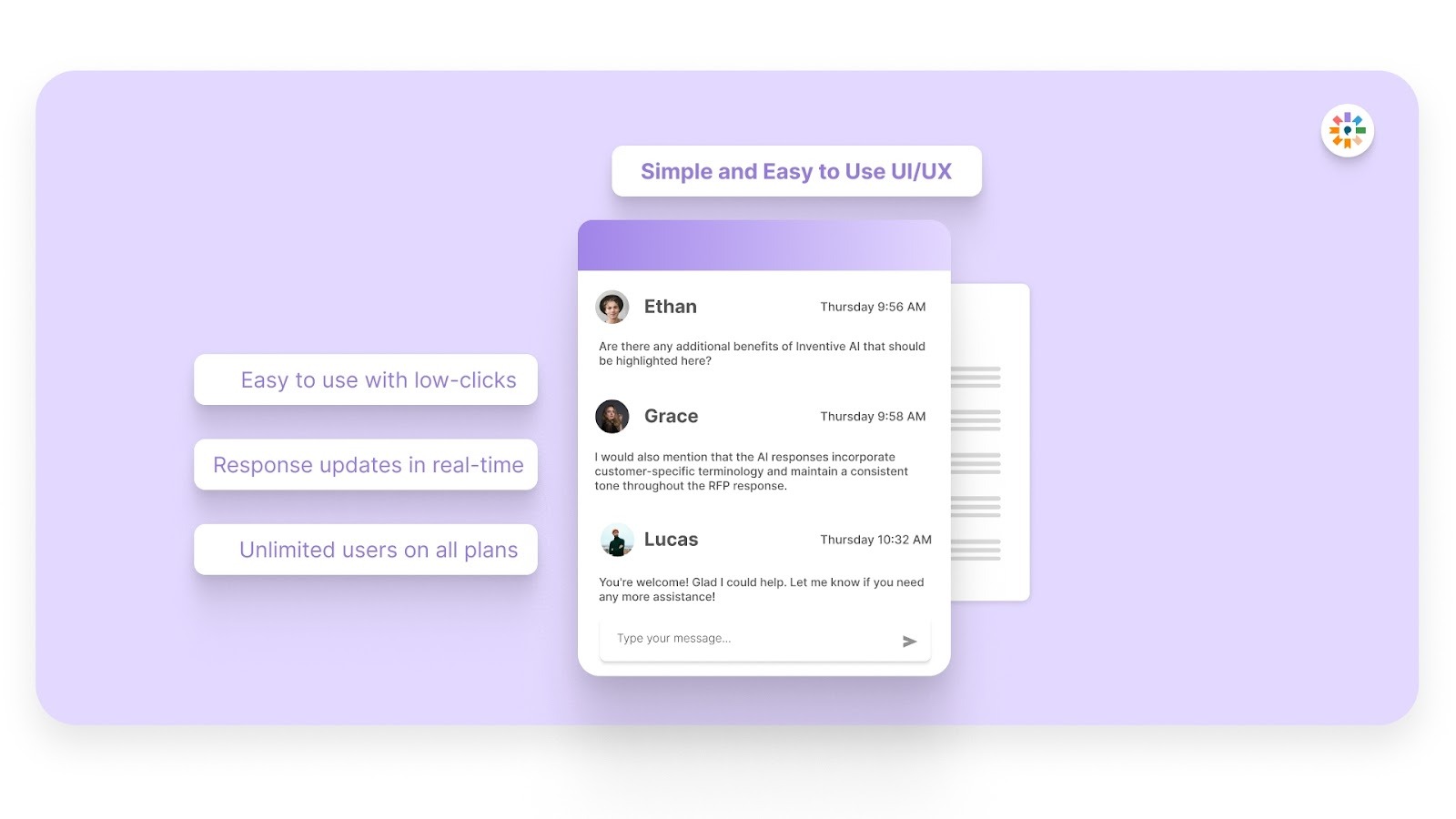
Inventive AI provides a clean interface where teams can upload knowledge sources, review AI-generated responses, and collaborate on proposals in one workspace. This allows proposal managers and subject matter experts to work together without relying on complex tools or scattered documents.
If your team handles multiple RFPs each quarter, seeing how AI assists with response preparation can be helpful.
FAQs
1. How should a carrier handle lanes where they lack direct service?
If a lane falls outside your core network, identify the partner carrier handling the interline portion. Provide the partner’s on-time delivery history and explain where the freight transfer takes place. This level of transparency helps the shipper evaluate handling risk and expected transit reliability.
2. What is the typical duration of an LTL contract after an RFP award?
Most LTL freight agreements run for about twelve months before the next bid cycle begins. Some shippers also conduct shorter bid updates during the year if market rates shift quickly. Your proposal should clearly state how long your pricing remains valid.
3. How do carriers present density-based pricing in an RFP response?
When shipments vary in size and weight, some shippers prefer density-based pricing instead of NMFC classes. Carriers can include a rate table based on cost per cubic foot, along with dimensional calculation examples. This allows procurement teams to compare bids using consistent shipment measurements.
4. What additional safety documentation can strengthen an RFP response?
Beyond basic safety ratings, carriers may include SMS safety data, driver training programs, and fleet maintenance policies. Information about fleet age and inspection procedures can also build confidence in cargo handling practices. These details help shippers assess operational reliability.
5. Can carriers include extra services that were not listed in the RFP?
Yes, carriers can present optional services in a separate section of the proposal. Examples include white glove delivery, inside pickup, or debris removal. Listing these options with clear pricing gives the shipper flexibility without changing the main contract terms.
.avif)




%20That%20Gets%20Shortlisted.png)