RFI Template Guide for HR Services Vendors

Most teams spend days gathering payroll and benefit data, only to never hear a word back from the buyer. This manual effort feels like a total drain when you are unsure how the client actually evaluates your response.
HR services RFIs act as early filters that buyers use to test your compliance and reliability before discussing pricing. These initial reviews determine if your service capabilities can actually handle the technical demands of a large-scale workforce.
A structured RFI template acts as a strategic blueprint to keep your team organized and focused on key priorities. Using this professional framework ensures your expertise gets noticed because your answers are finally clear, fast, and remarkably consistent.
Also Read: How to Develop Effective RFP Win Themes for Proposal Success
HR Services RFI Template for Buyers Evaluating HR Vendors
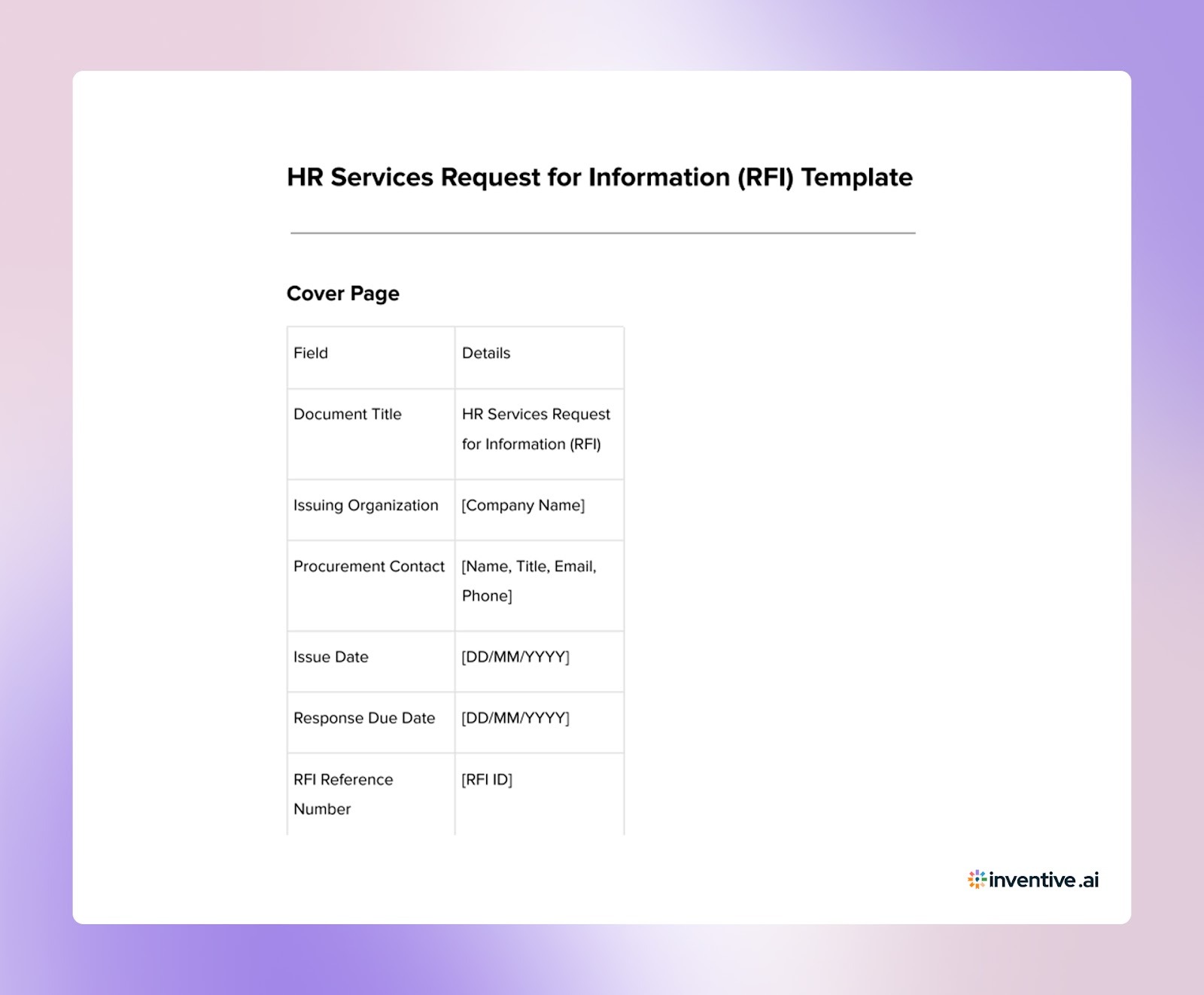

About the HR Services RFI Template
An HR Services RFI template outlines the type of information organizations typically request when evaluating HR service providers. Procurement and HR leadership teams use this structure to collect consistent information from potential vendors before moving forward with a formal proposal process.
The template highlights the areas buyers usually review during early vendor screening. By using a standardized RFI format, organizations can compare vendors using the same evaluation criteria and identify providers that meet their operational requirements.
What This Template Includes:
- Company Overview: Organizations request background information to understand the vendor’s history, scale of operations, HR expertise, and experience supporting similar industries or workforce sizes.
- Service Scope: Buyers review the full range of HR services offered, such as payroll processing, benefits administration, workforce management, or compliance support, to determine whether the vendor’s capabilities align with their needs.
- Compliance & Risk Management: This section helps organizations evaluate how vendors manage regulatory obligations, employee data protection, and operational risk within HR service delivery.
- Service Delivery & Support: Buyers assess how HR services are delivered, including operational structure, support coverage, escalation processes, and ongoing service management.
- Technology & Integration: Organizations review how a vendor’s HR services integrate with existing HR systems, payroll tools, benefits platforms, or workforce management software.
- Pricing & Engagement Models: While RFIs typically do not request detailed pricing, buyers may request high-level engagement models or pricing structures to understand how services are packaged and delivered.
Now that you understand what a buyer’s HR services RFI typically looks like, the next step is preparing the response. Let's see how a well-structured RFI response template helps you organize your proposals effectively.
Winning HR Services Proposals with the Right RFI Response Template
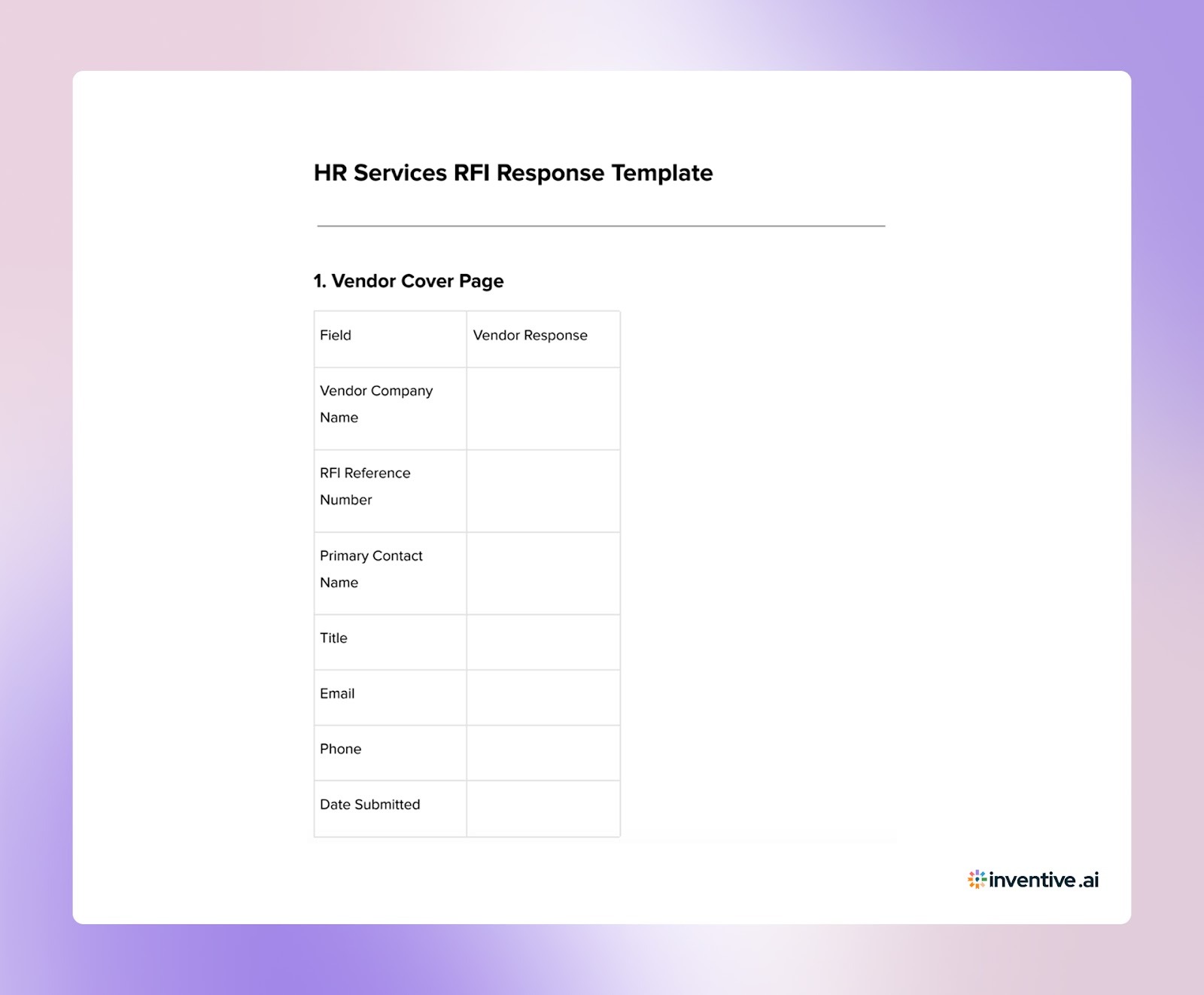

7 Effective Tips for Customizing Your HR Services RFI Response Template
A ready-to-use HR services RFI response template gives you a strong starting point. However, every buyer has different priorities, systems, and workforce requirements. Customizing the template helps you align your responses with what the buyer is evaluating.
Here are a few practical ways to tailor your response template:
1. Review the Buyer’s RFI Before Filling the Template
Start by carefully reading the buyer’s RFI document. Identify their priorities, such as compliance requirements, workforce size, payroll complexity, or system integrations, and adjust your responses accordingly.
2. Adapt the Service Scope Section to the Buyer’s Needs
Your template may list multiple HR services, but focus on the services that are most relevant to the buyer. Highlight capabilities that match their specific requirements.
3. Align Technology and Integration Details
If the buyer mentions their existing HR systems or payroll platforms, update the integration section in your template to reflect how your services connect with their environment.
4. Update Compliance and Security Information
Different organizations operate under different regulatory requirements. Modify this section to reflect the compliance standards relevant to the buyer’s industry and geography.
5. Include Relevant Experience and Case Examples
Replace generic examples in the template with examples from clients or projects that are similar to the buyer’s workforce structure or HR challenges.
6. Adjust the Delivery and Support Model
Customize details about service coverage, support hours, escalation processes, and reporting to match the buyer’s operational expectations.
7. Attach Supporting Documents When Needed
Where the RFI asks for proof of capabilities, including relevant certifications, case studies, or service documentation, alongside your template responses.
Customizing your response template ensures your answers reflect the buyer’s priorities while keeping your submission organized and consistent.
Also Read: How to Develop Effective RFP Win Themes for Proposal Success
Well-structured, operationally clear responses help buyers quickly understand your capabilities and evaluate whether your services fit their requirements.
How Inventive AI Improves HR Services RFI Responses
Inventive AI’s RFP Agent is designed to streamline your RFP response process. With AI-powered RFP response software, Inventive AI helps your team create structured, reliable answers 90% faster, with 95% accuracy and 0% hallucination, even when responses involve detailed HR service operations and compliance information.
When HR RFIs require input from operations, compliance, payroll, and benefits teams, coordination becomes the biggest bottleneck. That’s where Inventive AI changes how your team works.
1. 2x Quality Responses
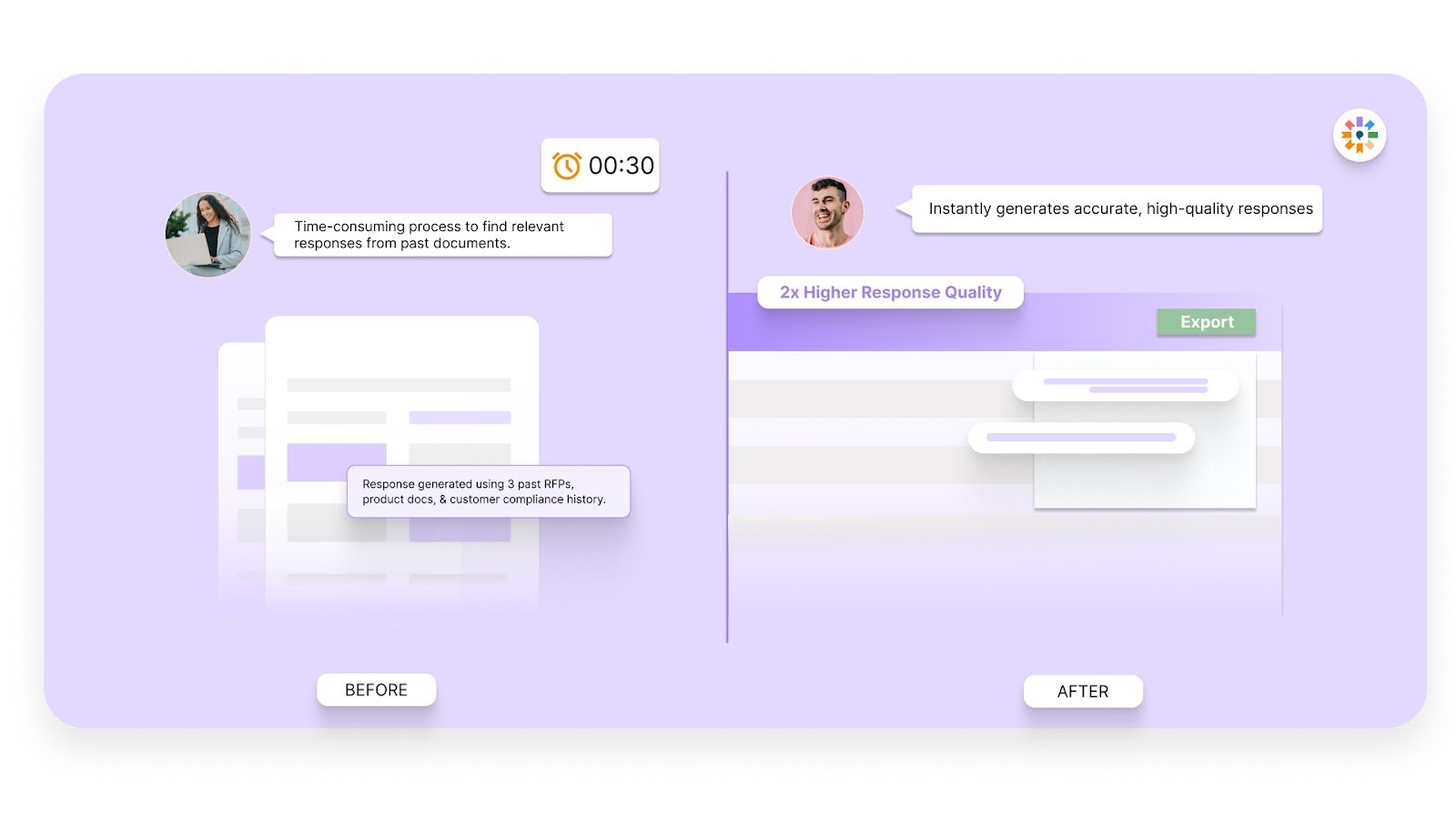
Instead of piecing answers together from scattered documents, your responses become clearer, more complete, and directly aligned with what buyers evaluate: service capability, compliance, and delivery reliability.
2. Context Engine
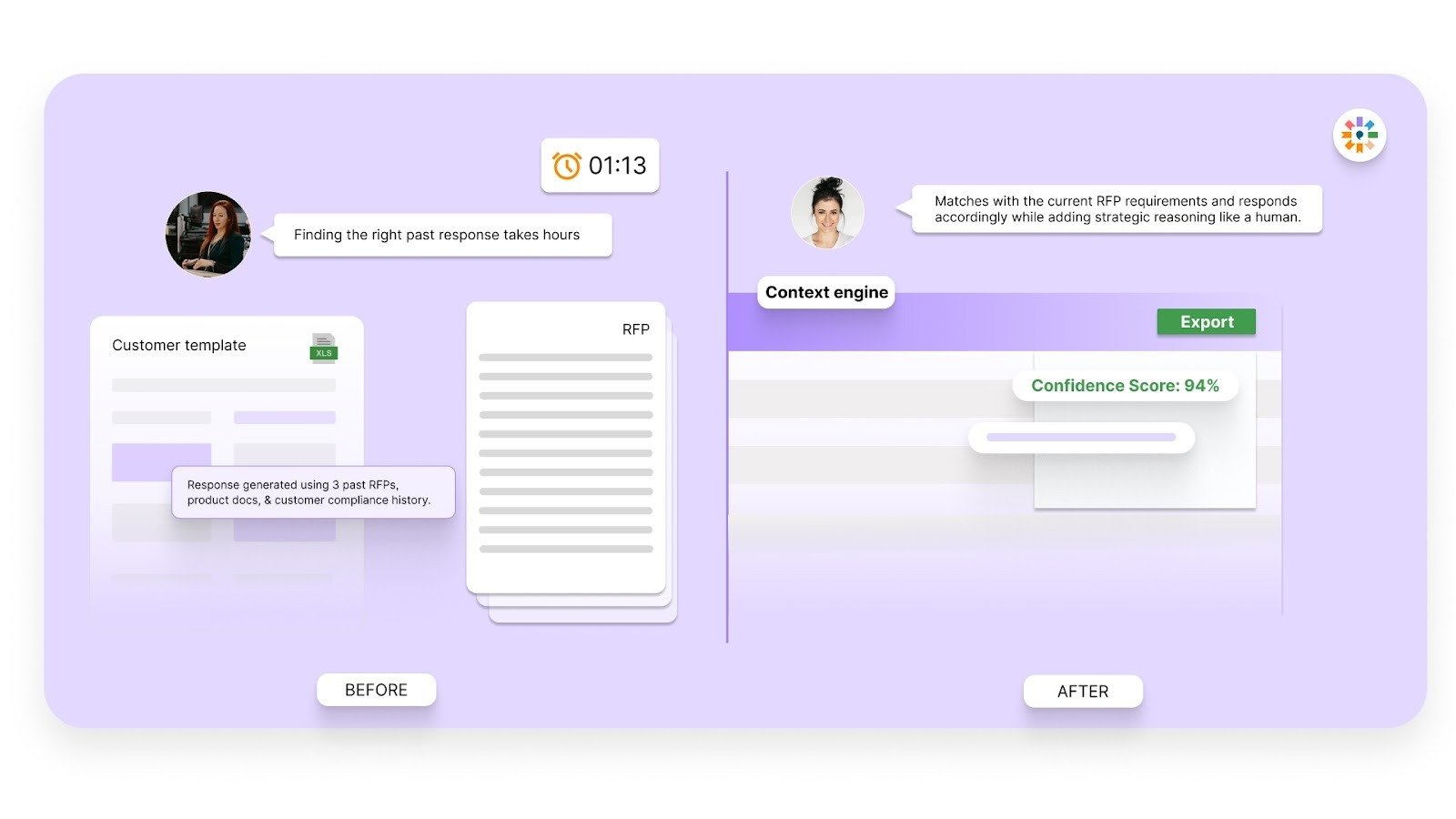
Inventive AI understands the intent behind each question. If the buyer asks about payroll accuracy or compliance processes, the system pulls the most relevant operational and policy information, not generic content.
3. Conflict Detection
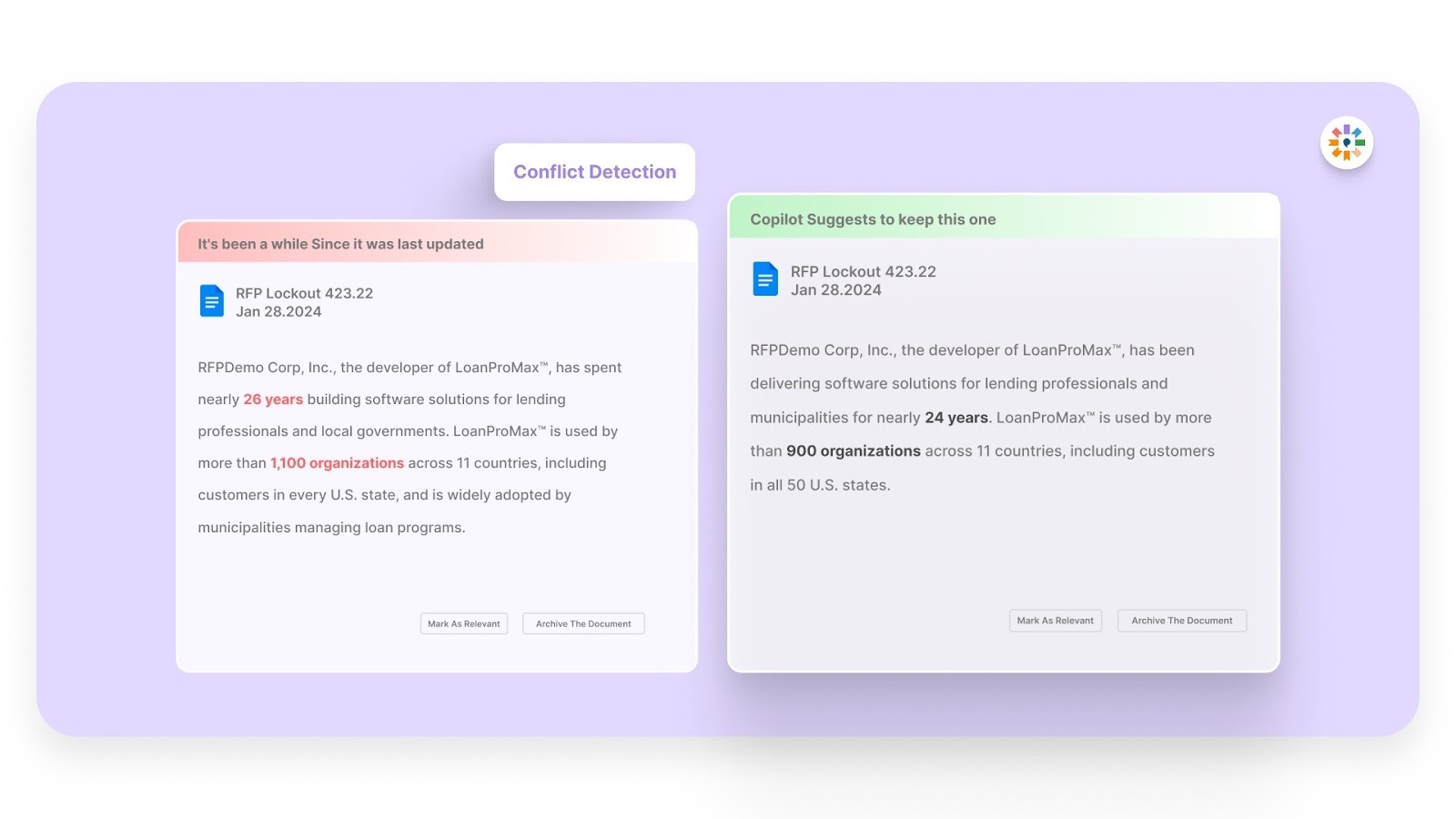
HR services involve policies, SLAs, and compliance details that change over time. Inventive AI flags conflicting information across sources so you don’t submit inconsistent answers that can reduce buyer confidence.
4. Outdated Content Detection
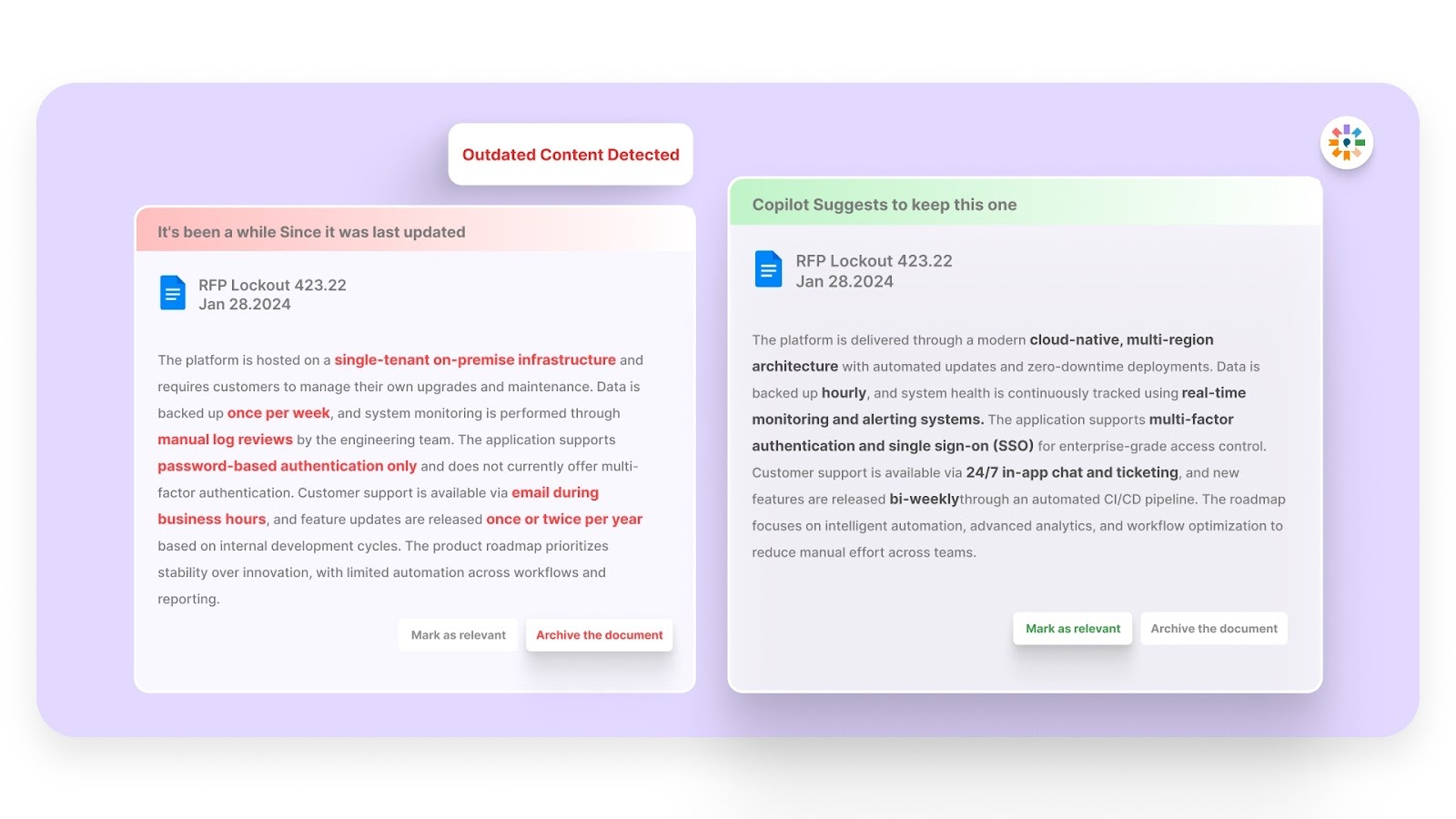
Using last year’s service description or an old compliance process can hurt credibility. Inventive AI identifies outdated information before it reaches your final response.
5. Simple, Easy-to-Use UI/UX
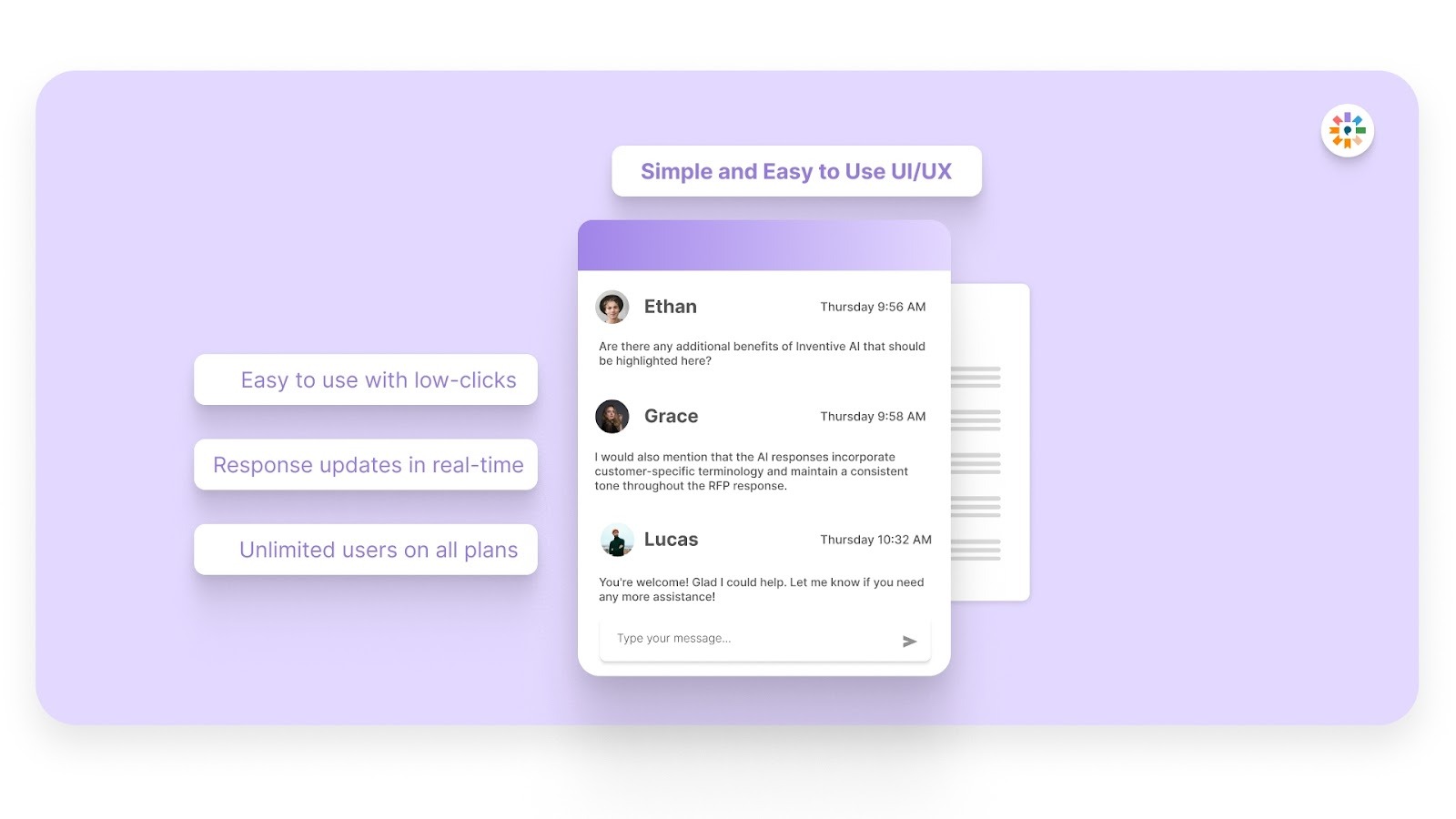
HR, compliance, and sales teams can collaborate without complicated setups. This makes it practical to manage RFIs even when timelines are tight.
Inventive AI helps your team deliver clear, consistent, and up-to-date responses that improve how buyers assess your HR services from the start.
Frequently Asked Questions (FAQs)
1. How long should an HR services RFI response typically take to prepare?
Preparation time depends on the complexity of services requested and the number of internal teams involved. RFIs covering payroll, benefits, and compliance usually require coordination across operations, HR tech, and compliance teams.
2. Can smaller HR service providers compete effectively in RFIs against large vendors?
Yes, if they demonstrate focused expertise, strong service reliability, and relevant experience. Buyers often look for fit and specialization, not just company size.
3. What common mistakes cause vendors to be filtered out at the RFI stage?
Incomplete answers, inconsistent information, unclear service scope, and vague compliance responses are common reasons vendors fail to move forward.
4. Should vendors include detailed pricing in an HR services RFI response?
Usually no. RFIs focus on capability and fit, while detailed pricing is typically requested during the RFP stage.
5. Who usually reviews HR services RFI responses on the buyer’s side?
Procurement teams often lead the process, with input from HR leadership, IT, and compliance teams depending on the scope of services.
.avif)



%2010%20Free%20Response%20Templates%20By%20Industry%20%26%20Service.jpg)
.jpg)