RFI Template for Software Development: How to Write Strong Vendor Responses
A free, editable software RFI template, plus a full vendor guide: what buyers ask, how to read each section, and best practices for strong responses.
Have you ever lost a deal before the RFP even landed because your RFI response did not stand out? Hours spent pulling technical details, chasing SMEs, and digging through old documents, while competitors responded faster and cleaner and made the next round.
Software development RFIs look straightforward, but buyers use them to filter vendors on technical capability, delivery readiness, and reliability. A well-organized RFI template changes that: it saves time, raises response quality, and turns RFIs into qualification wins rather than paperwork.
The software RFI template for buyers
This is the template a buyer uses to structure a software RFI. If you are a vendor, read it as your checklist: each row is something you will likely need to answer, so use it to prepare your response before the RFI even arrives. Replace the bracketed prompts with your own details.
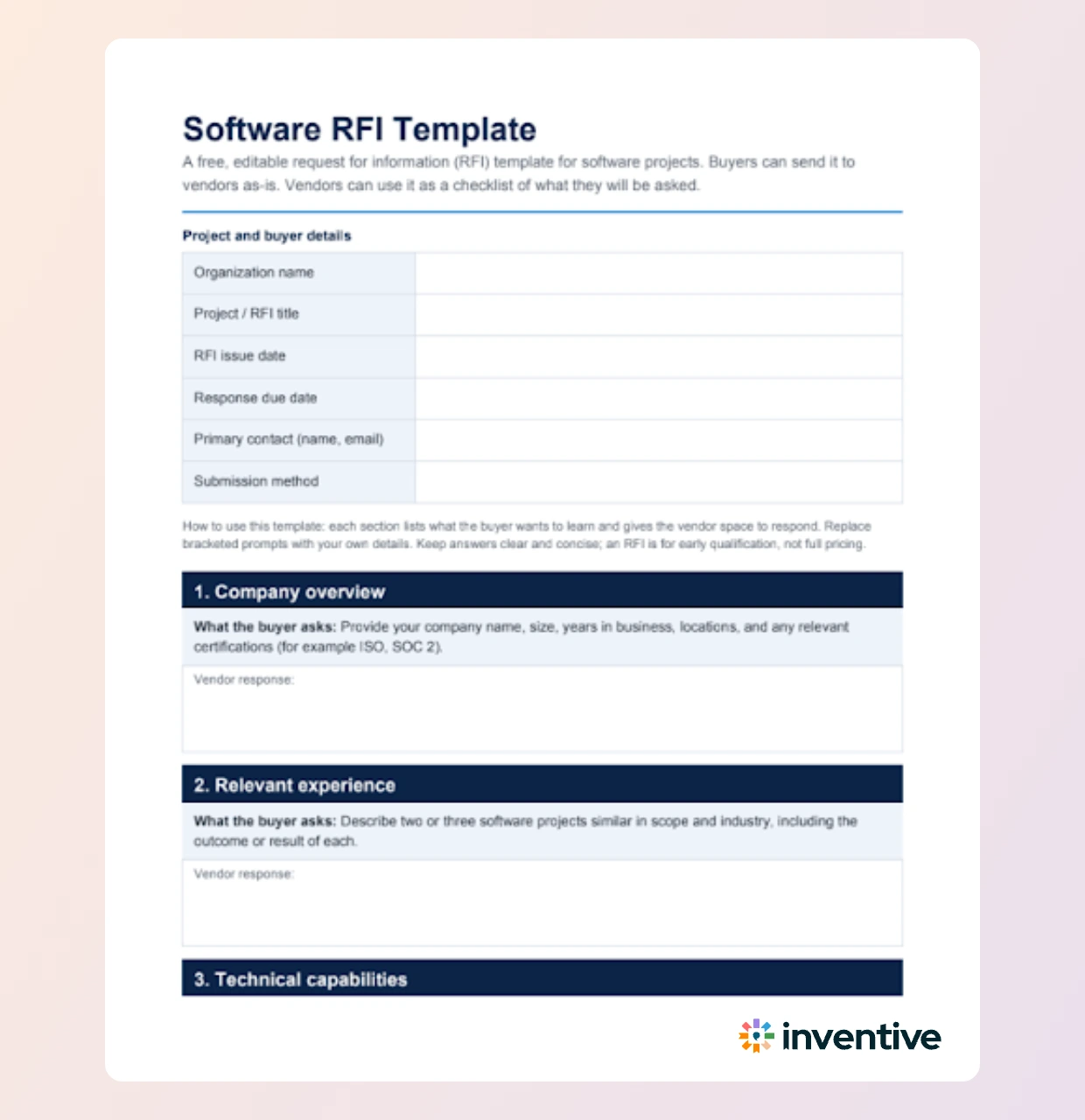
The ultimate RFI template for software development responses
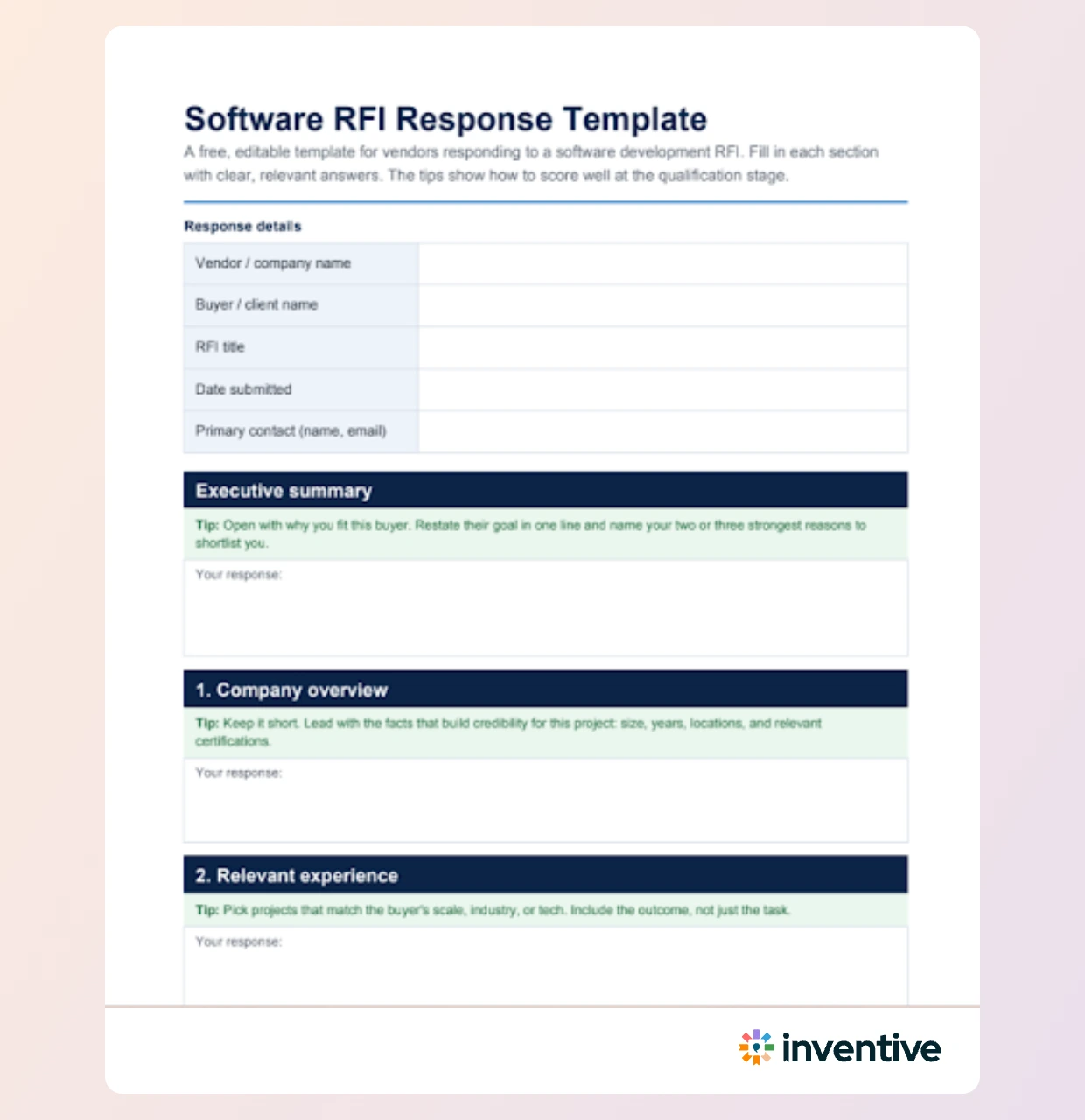
About the RFI template for software development
A software RFI template is a ready-made structure for answering a request for information from a software buyer. It lays out each section the buyer asks about, so you can answer quickly, keep your responses consistent, and show your technical expertise.
Why use an RFI template?
- Streamline Your Process: A well-designed template helps you save time by providing a structured format that you can reuse for multiple RFIs.
- Ensure Consistency: Using a template ensures that all your responses are uniform, reducing the risk of inconsistencies or missing information across different RFIs.
- Focus on Relevant Details: It allows you to focus on providing the most relevant and valuable information to the buyer, without getting bogged down by formatting or structural issues.
- Improve Accuracy: A template guides you through the essential components that need to be addressed, helping you avoid missing key details.
- Professional Presentation: By following a structured approach, you present your responses in a polished and professional manner that’s easier for buyers to review.
Using an RFI template helps ensure that your responses are complete, clear, and aligned with what the buyer is looking for, improving your chances of moving forward in the selection process.
If you need more industry-specific RFI templates, check out: RFI Template (Word): 10 Free Response Templates By Industry & Service
Tips for customizing the RFI template for software development
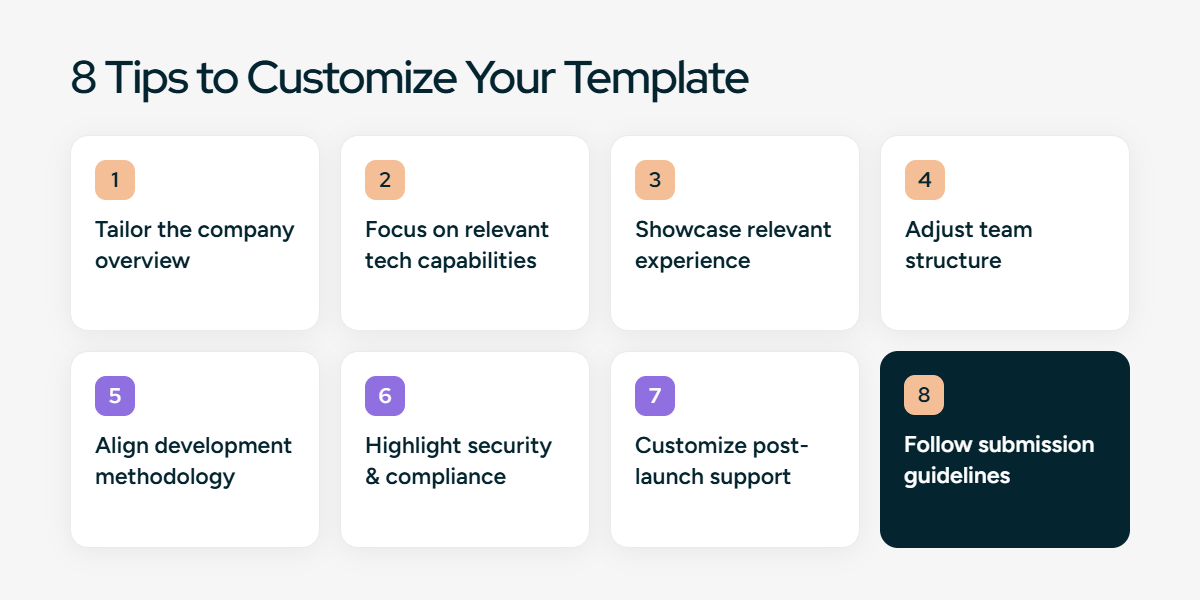
Here are some simple tips to help you effectively customize the RFI template:
1. Tailor the company overview: Personalize the template by highlighting your experience relevant to the buyer’s industry or project.
2. Focus on relevant technical capabilities: Only mention the technologies most relevant to the buyer's needs, and provide examples of how you’ve used them in past projects.
3. Showcase relevant experience: Highlight past projects that are closely related to the buyer’s challenges and provide results or outcomes.
4. Adjust team structure: Emphasize the team roles and expertise that best match the buyer’s project size and complexity.
5. Align development methodology: Customize your approach to match the buyer’s preferred project management style, whether it’s Agile, Scrum, or another method.
6. Highlight security & compliance: Address industry-specific security and compliance standards (e.g., GDPR, HIPAA) that are important to the buyer.
7. Customize post-launch support: Tailor the support section to the buyer's needs, specifying SLAs, response times, and ongoing maintenance options.
8. Follow submission guidelines: Ensure you follow the buyer’s response format and clarify any unclear questions before submitting.
Customizing the template this way ensures your responses are clear, relevant, and stand out to the buyer.
Also Read: Top & Best RFX Software in 2026: Features, Pricing & Reviews
Key components in an RFI document for software development
When a buyer creates an RFI for a software project, the document is meant to help them compare vendors at a high level, not choose a final solution yet. That’s why most software RFIs follow a fairly structured format.
Here are the sections you’ll almost always see:
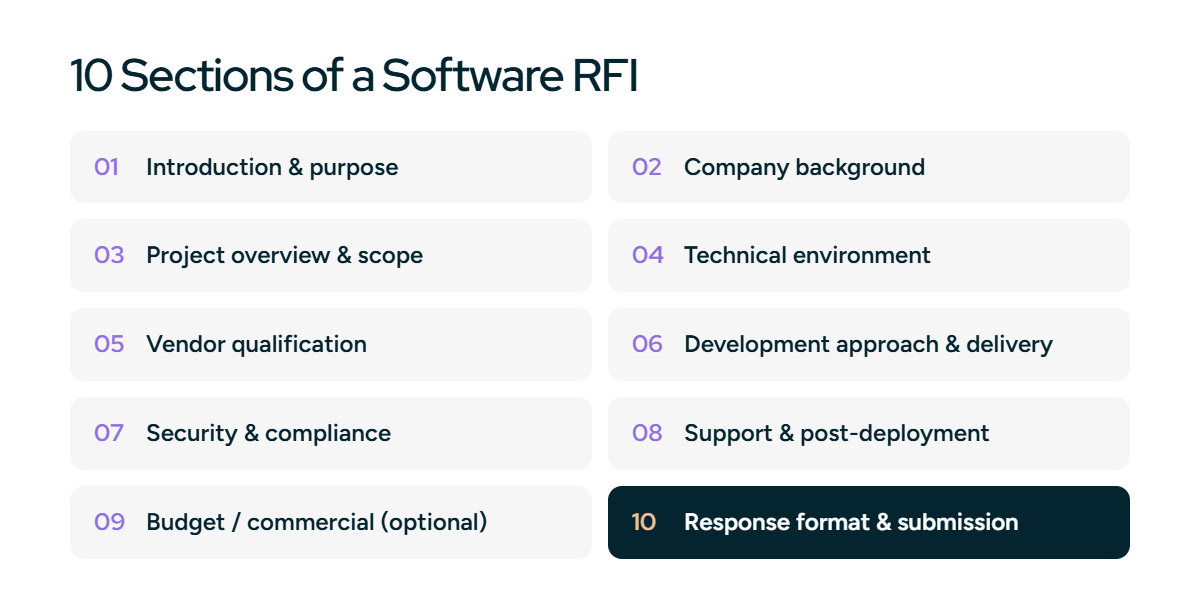
1. Introduction & purpose
This explains why the RFI is being issued and what the buyer is trying to learn. It often outlines the business problem, goals, and the type of vendor they are exploring. This section tells you how to position your response.
2. Company background
Buyers share an overview of their organization, industry, size, and challenges. This context helps you align your examples, technical approach, and past experience to their environment.
3. Project overview & scope
This describes what the buyer wants to build, upgrade, or replace. It may include objectives, high-level functionality, users involved, and expected outcomes. Details are broad here, deeper requirements usually come in the RFP.
4. Technical environment
Buyers outline existing systems, platforms, integrations, or constraints. This helps them see whether your technology experience matches their ecosystem and whether integration risks exist.
5. Vendor qualification requirements
This section focuses on your credibility. Buyers ask about experience with similar projects, industry exposure, certifications, and team expertise to understand your ability to deliver. Vendors offering Software Development Outsourcing often highlight case studies and delivery models here to show buyers exactly how a distributed engineering team would be structured for their project.
6. Development approach & delivery model
Some RFIs ask how you manage projects, methodologies, testing approaches, quality checks, and collaboration. Buyers want to see if your way of working fits their expectations.
7. Security & compliance expectations
For software handling data or integrations, buyers want to understand your security practices, data protection approach, and risk management standards.
8. Support & post-deployment expectations
Buyers look at what happens after launch, maintenance, updates, issue handling, and long-term support. Reliability after delivery is part of early evaluation.
9. Budget or commercial context (optional)
Some RFIs include budget ranges or ask about engagement models to ensure vendors are within a feasible range. Detailed pricing usually comes later.
10. Response format & submission guidelines
Buyers specify how responses should be structured, documents to include, and deadlines. Following these instructions matters; it shows professionalism and makes evaluation easier.
An RFI document is how buyers structure their early evaluation of software vendors. By understanding these components, you can better interpret what buyers are really looking for.
7 best practices in responding to a software development RFI
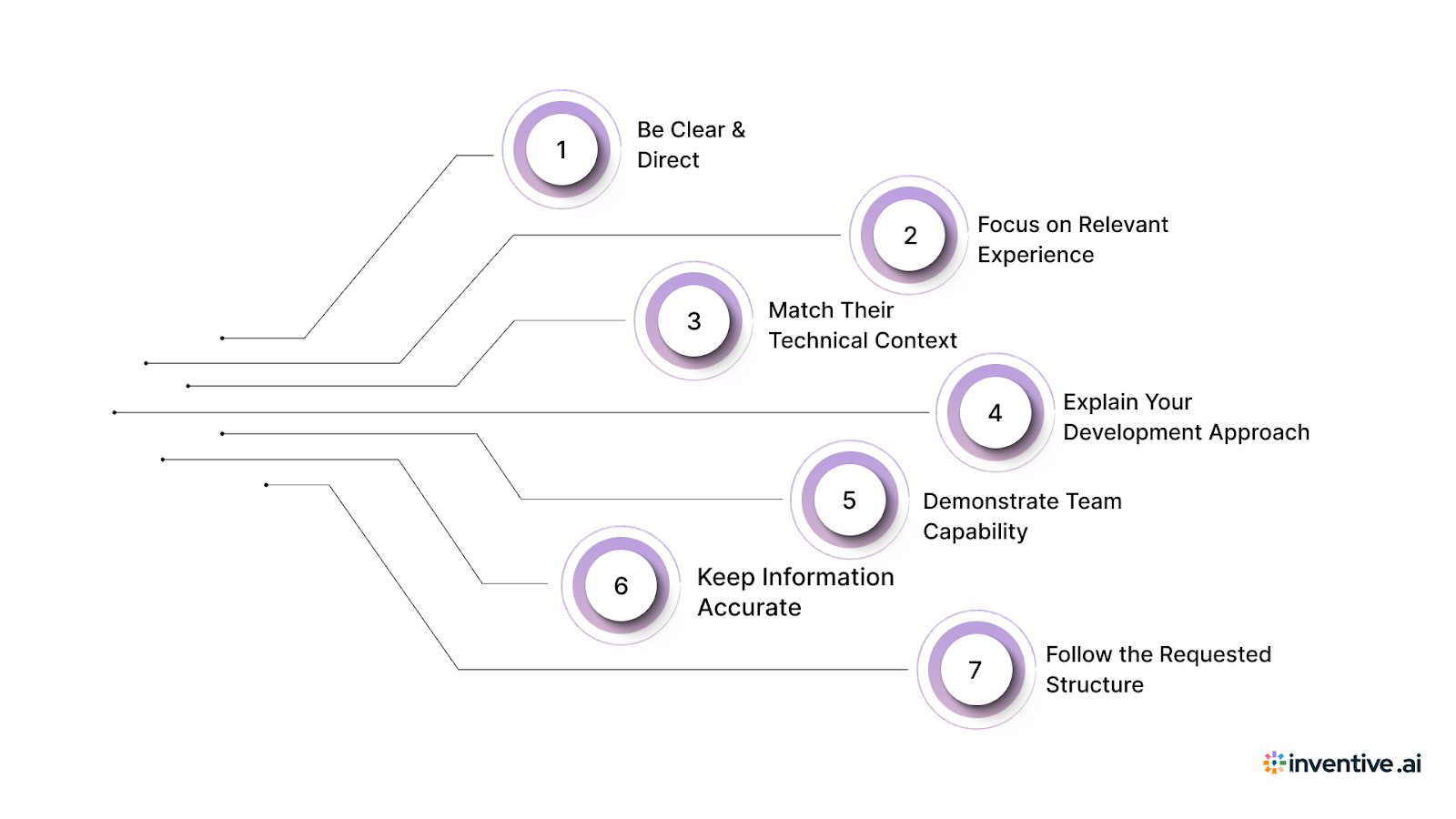
An RFI response is not a sales pitch. It’s your chance to prove you’re capable, experienced, and reliable enough to move to the RFP stage. Buyers are comparing multiple vendors side by side, so clarity and relevance matter more than volume.
Here’s how to respond effectively:
1. Be clear and direct
Answer exactly what is asked. Keep responses structured and easy to scan. Long explanations that don’t connect to the question can make your response harder to evaluate.
2. Focus on relevant experience
Show projects, use cases, and examples that are close to the buyer’s situation. Similar scale, industry, or technical complexity builds confidence quickly.
3. Match their technical context
If they mention specific platforms, integrations, or environments, address them directly. Buyers want to see that your capabilities align with their ecosystem.
4. Explain your development approach
Briefly outline how you manage projects, collaboration, testing, quality checks, and delivery processes. This helps buyers understand how you work, not just what you build.
5. Demonstrate team capability
Clarify roles, expertise, and how your team typically handles similar projects. Buyers want assurance that you have the right people, not just the right tools.
6. Keep information accurate
Timelines, technologies, certifications, and experience must be correct. Inconsistent or inflated claims reduce credibility quickly.
7. Follow the requested structure
Stick to the format the buyer provides. Missing sections or disorganized responses make evaluation difficult and can hurt your chances.
A strong RFI response shows that you understand the buyer’s needs, have relevant experience, and can deliver reliably. When your answers are clear, aligned, and credible, you make it easier for buyers to move you forward to the next stage.
Also Read: Tender Management: Process, Software, Best Practices (2026)
How Inventive AI helps you respond to software RFIs
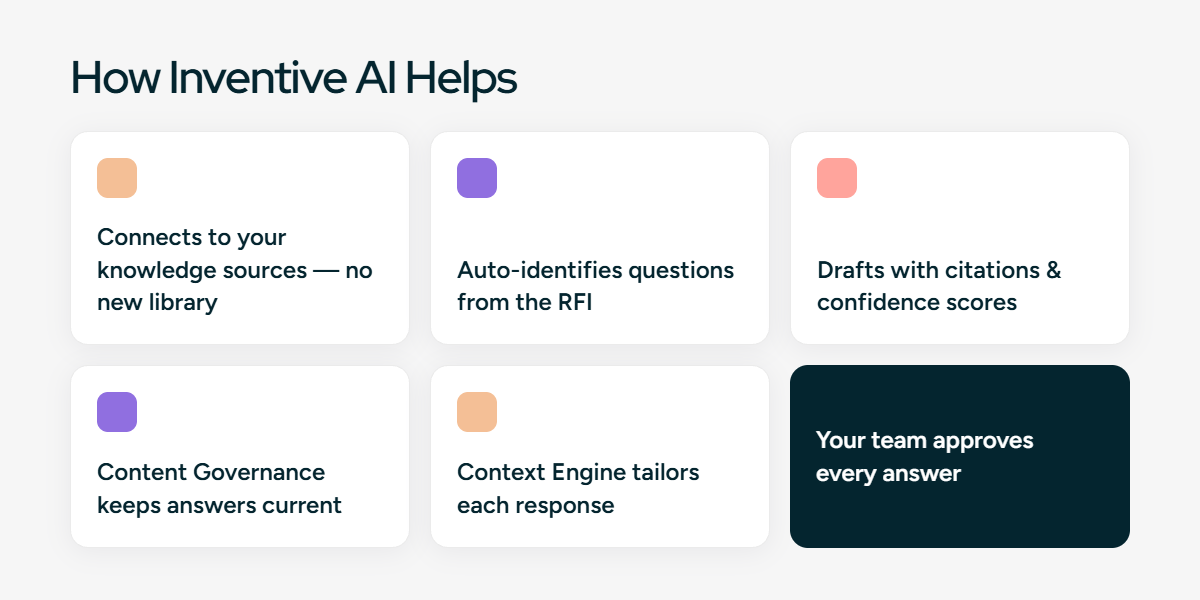
On a software RFI, the answers sit across your engineers, security team, and past responses. Inventive AI connects to that knowledge and turns it into a drafted, source-cited response you approve:
- Connects to your knowledge sources, no new content library. Links to SharePoint, Google Drive, Salesforce, and Confluence and drafts from them, so you stop chasing SMEs for stack, integration, and compliance answers.
- Auto-identifies questions from the RFI. Reads the uploaded RFI and tags every question and section, so you skip manual parsing.
- Drafts with citations and confidence scores. Every answer shows its source and confidence, and flags "information unavailable" instead of guessing. It doesn’t hallucinate.
- Content Governance Agent keeps answers current. Flags outdated, duplicate, or conflicting content before it reaches a buyer.
- Context Engine tailors each response. Pulls in customer and deal context, with your team approving every answer before it goes out.

.avif)

%2010%20Free%20Response%20Templates%20By%20Industry%20%26%20Service.jpg)
.jpg)