RFI Template (Word): 10 Free Response Templates By Industry & Service
%2010%20Free%20Response%20Templates%20By%20Industry%20%26%20Service.jpg)
Did you know that 83 % of procurement professionals use RFIs (Request for Information) regularly to clarify requirements, evaluate vendors, and gather structured data before formal bids? RFIs reduce ambiguity, streamline decision-making, and help buyers assess capabilities efficiently.
We know responding effectively can be challenging, but delivering clear, complete, and customized responses sets you apart. Well-structured RFI submissions increase evaluation accuracy, strengthen credibility, and improve your chances of being shortlisted for RFPs or RFQs.
In this blog, you will learn how to create accurate, professional, and project-specific RFI responses across industries, helping your team win more opportunities and streamline submissions.
RFI Template (Word) for Download: How Buyers Collect Complete Vendor Responses?
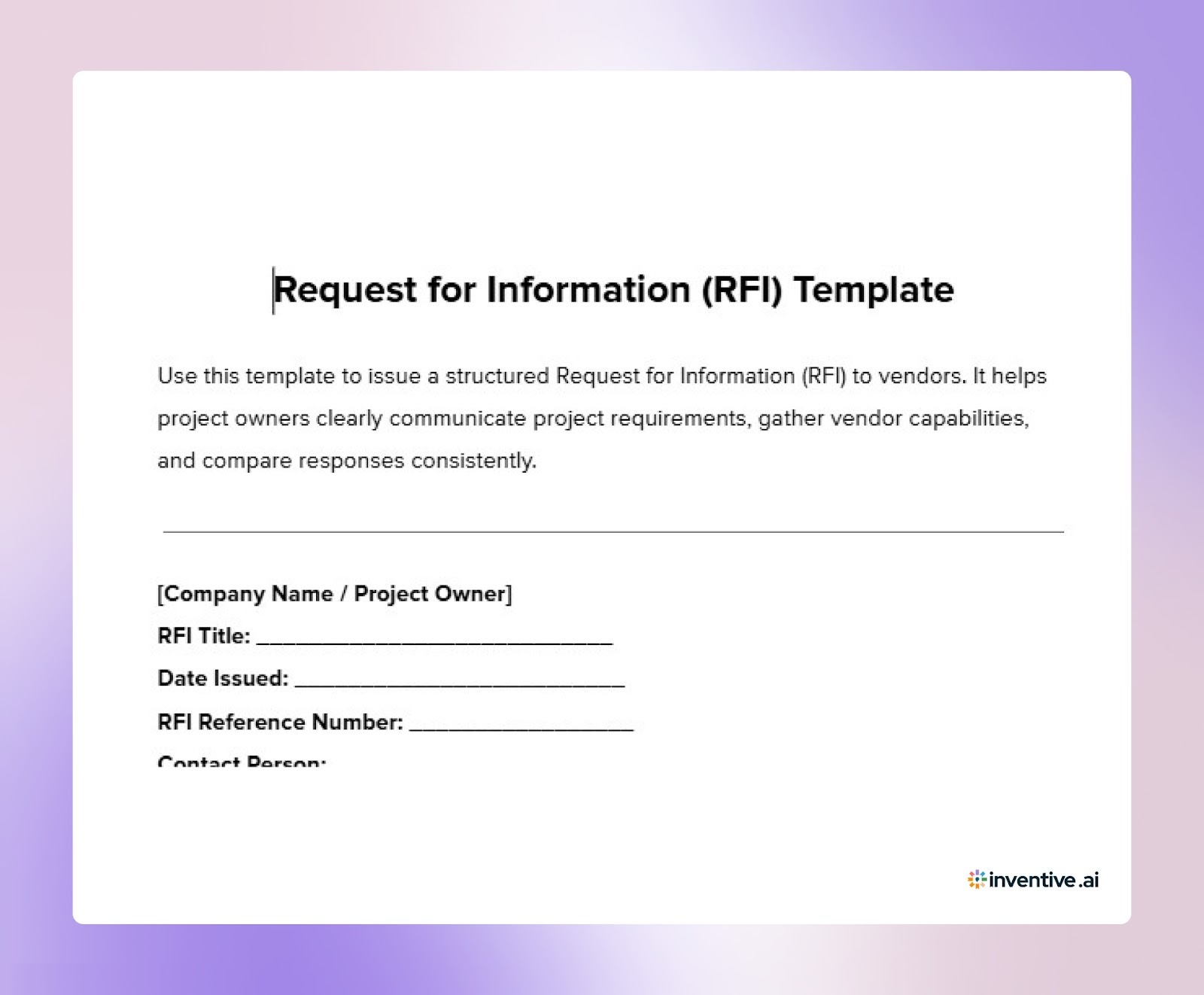

Use this structured RFI format to clearly outline project requirements, set submission expectations, and gather consistent vendor information. It ensures responses are easy to evaluate and comparable across all submissions.
1. Project Overview: Provide vendors with context about the project, including objectives, scope, and type. Clear background information ensures buyers receive responses that accurately reflect vendor capabilities.
2. Purpose of RFI: Explain why the RFI is being issued and what information you aim to gather. Setting expectations clearly helps buyers obtain relevant and actionable vendor data.
3. Information Requested from Vendors: List specific details vendors must provide, such as technical capabilities, certifications, and relevant experience. Structured requests allow buyers to compare responses consistently and evaluate suitability efficiently.
4. Submission Instructions: Specify format, deadlines, contact person, and delivery method for responses. Clear instructions help buyers receive all submissions correctly and streamline the evaluation process.
5. Evaluation Criteria: Outline how vendor responses will be assessed, including completeness, relevance, and compliance. Defining criteria ensures buyers can effectively rank and prioritize vendors.
6. Follow-Up Process: Describe next steps after receiving responses, such as clarifications, additional questions, or timelines for vendor engagement. Buyers can anticipate how responses will influence subsequent RFP or procurement decisions.
7. Additional Notes / Attachments: Include supporting documents, drawings, or reference materials needed for vendors to provide complete information. This ensures buyers have all the necessary context for accurate evaluation.
Also Read: Top 10 Best AI Proposal Software for 2026
RFIs gather critical vendor information. If you are responding to a buyer’s request, use the template below to structure your answers professionally.
10 RFI Word Templates by Industry & Service to Shorten Your RFI Response Time
Streamline RFI submissions and respond quickly across different industries and service categories. Each template provides a clear framework for answering buyer questions, documenting experience, and including compliance details. Using them helps save time, reduce errors, and ensure consistent, high-quality responses.
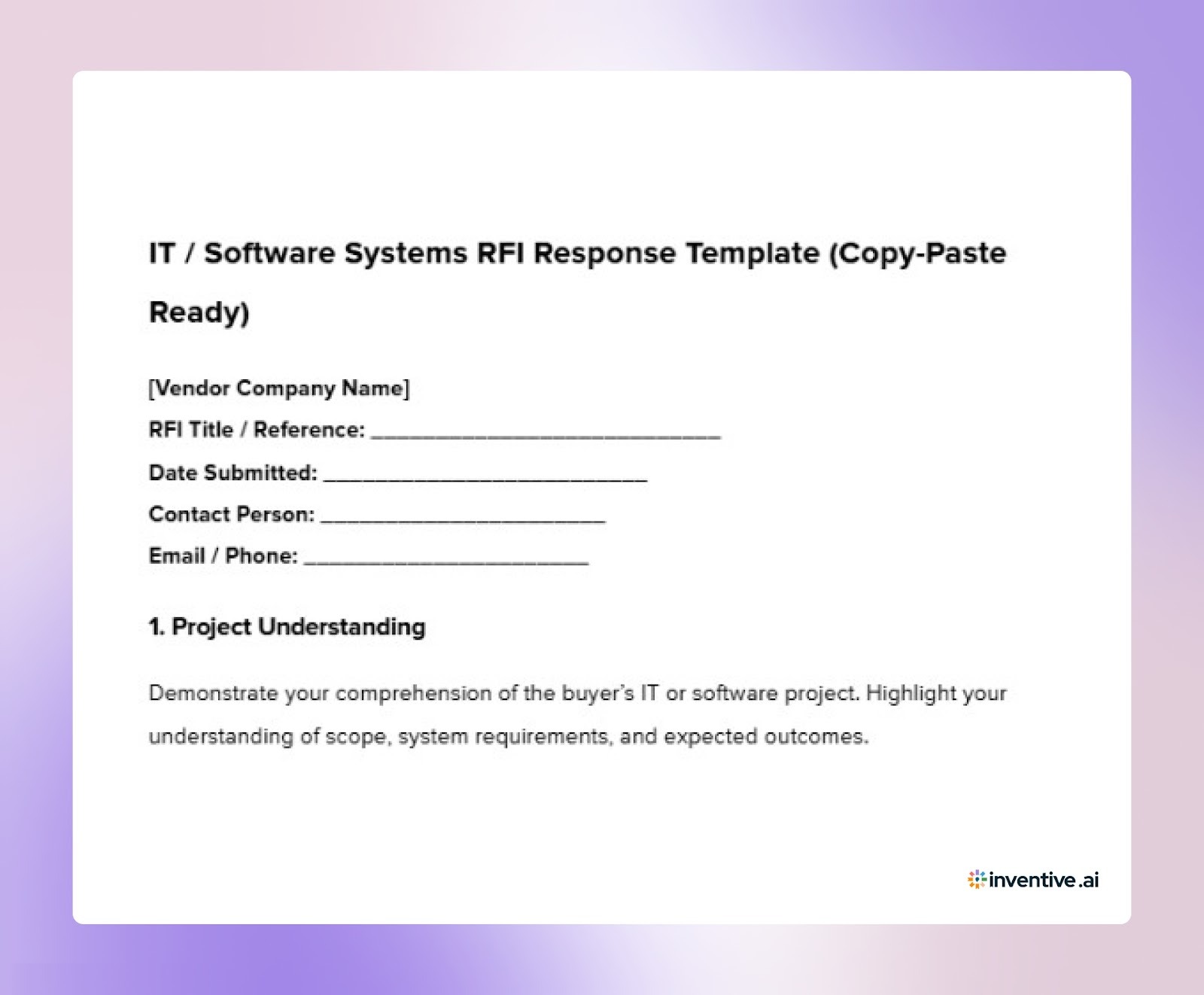
1. IT / Software Systems RFI Response Template (Word)
This template helps vendors clearly present their technical capabilities, methodologies, and relevant project experience. It ensures buyers can efficiently evaluate solutions, compliance, and prior IT project success.

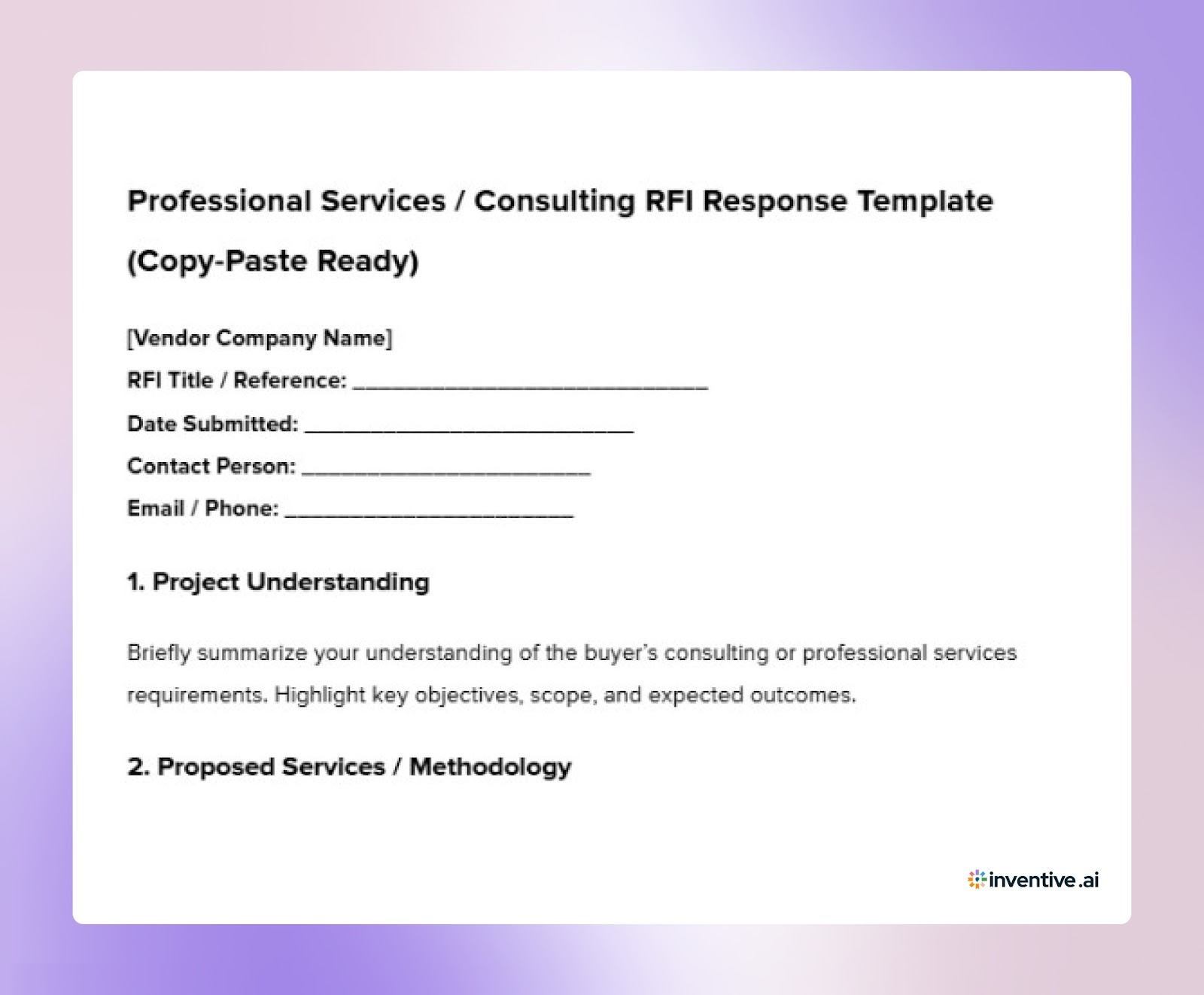
2. Professional Services / Consulting RFI Response Template (Word)
This template helps vendors showcase consulting methodology, team expertise, and relevant client success stories. It ensures buyers can efficiently evaluate vendor capabilities, certifications, and prior project outcomes.

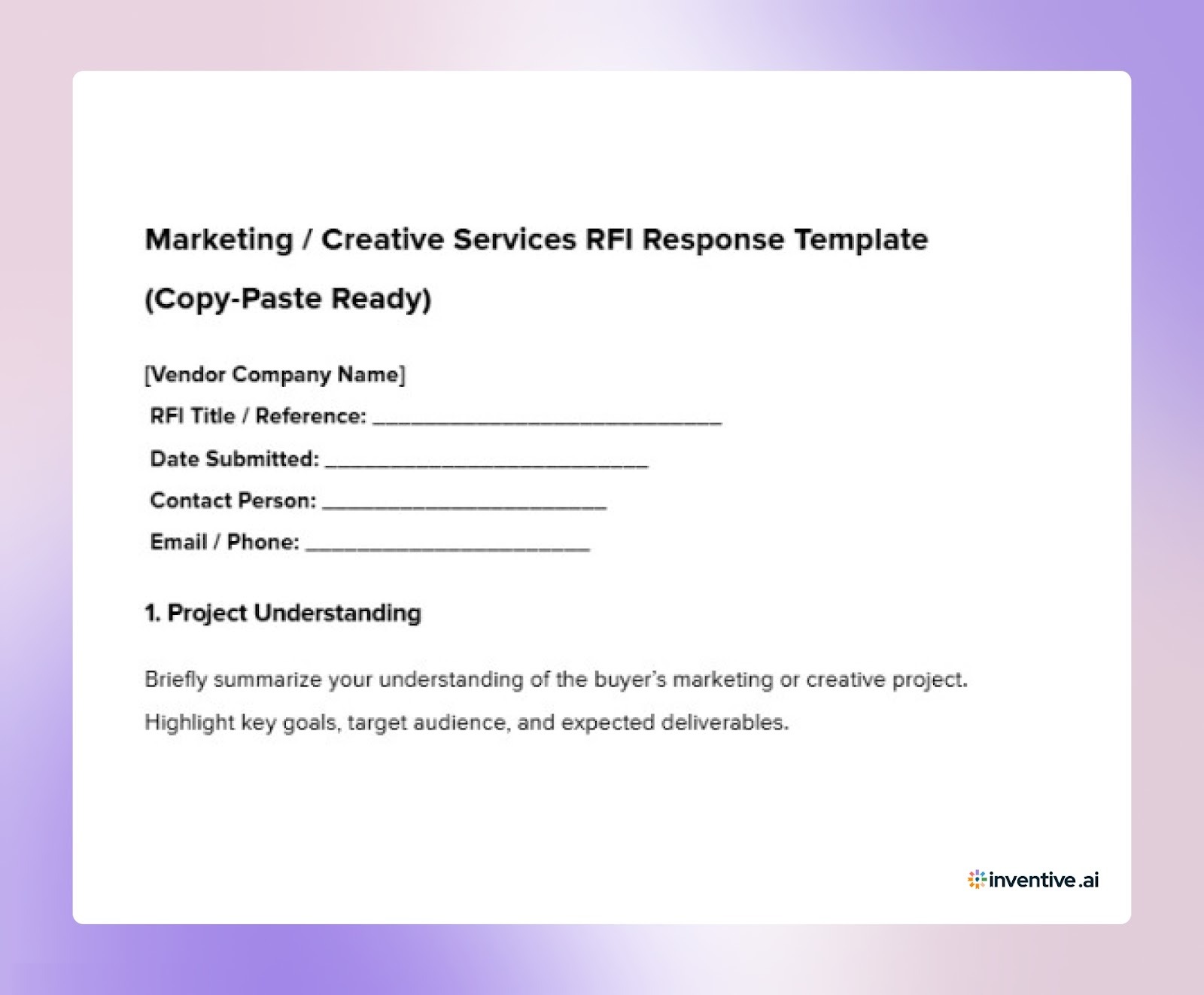
3. Marketing / Creative Services RFI Response Template (Word)
This template guides vendors in clearly presenting their creative capabilities, past campaigns, and measurable results. Buyers can efficiently assess vendor experience, creative quality, and alignment with project objectives.

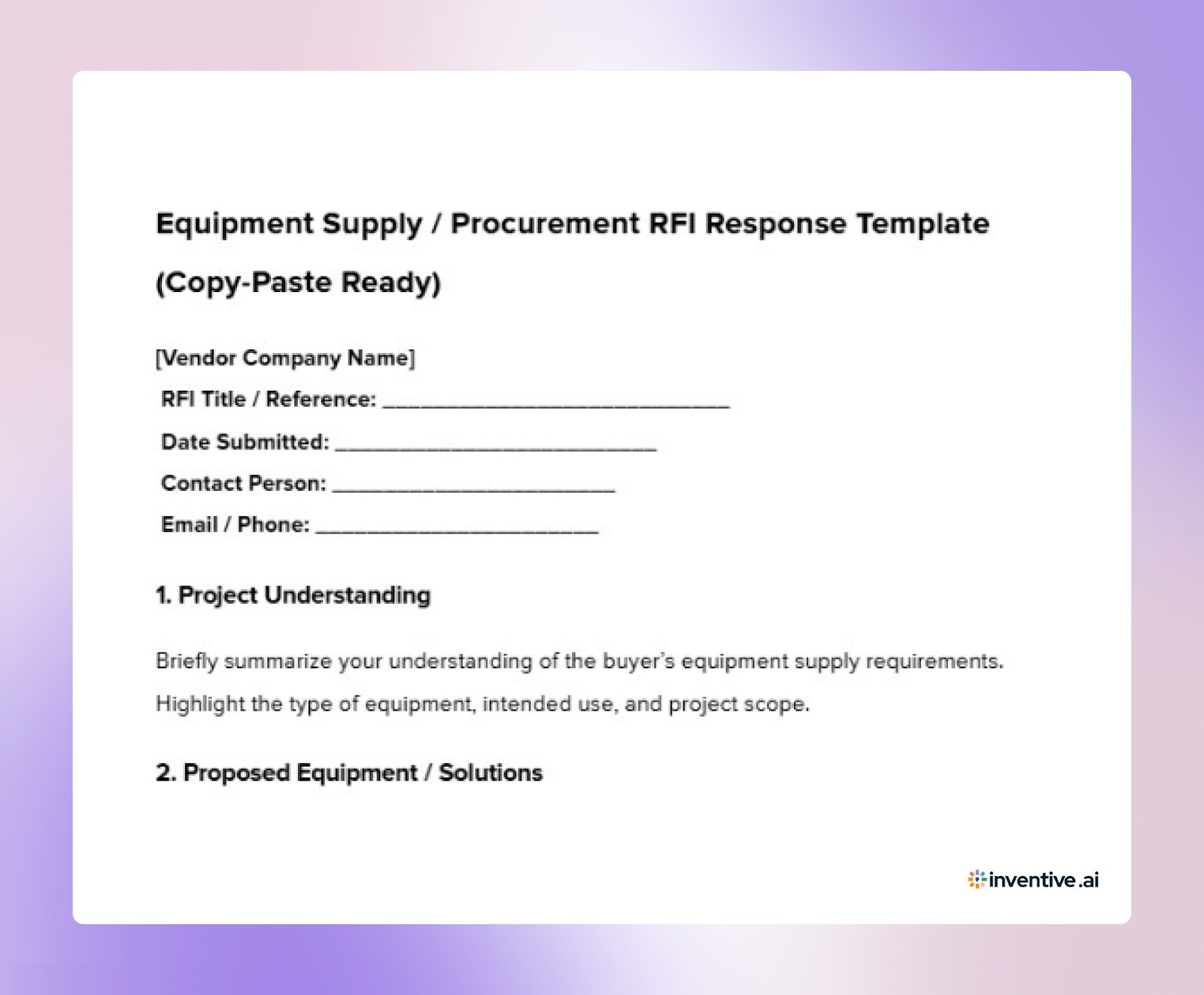
4. Equipment Supply/Procurement RFI Response Template (Word)
It helps vendors clearly provide product specifications, supply capacity, and maintenance capabilities. Buyers can efficiently evaluate vendor reliability, compliance, and product suitability.

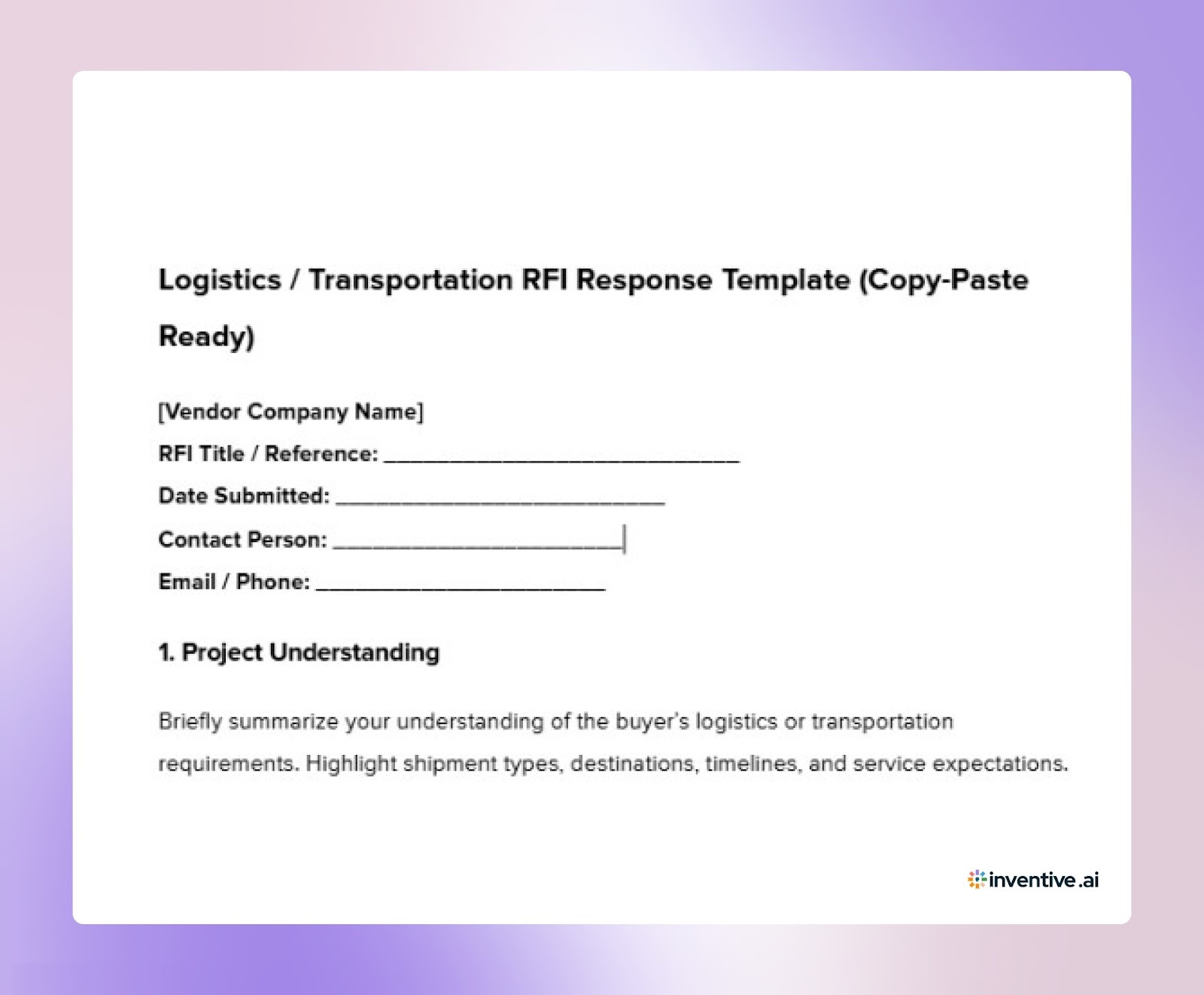
5. Logistics / Transportation RFI Response Template
This template enables vendors to clearly present fleet capabilities, delivery timelines, and regulatory compliance. Buyers can assess operational efficiency, past project experience, and reliability efficiently.

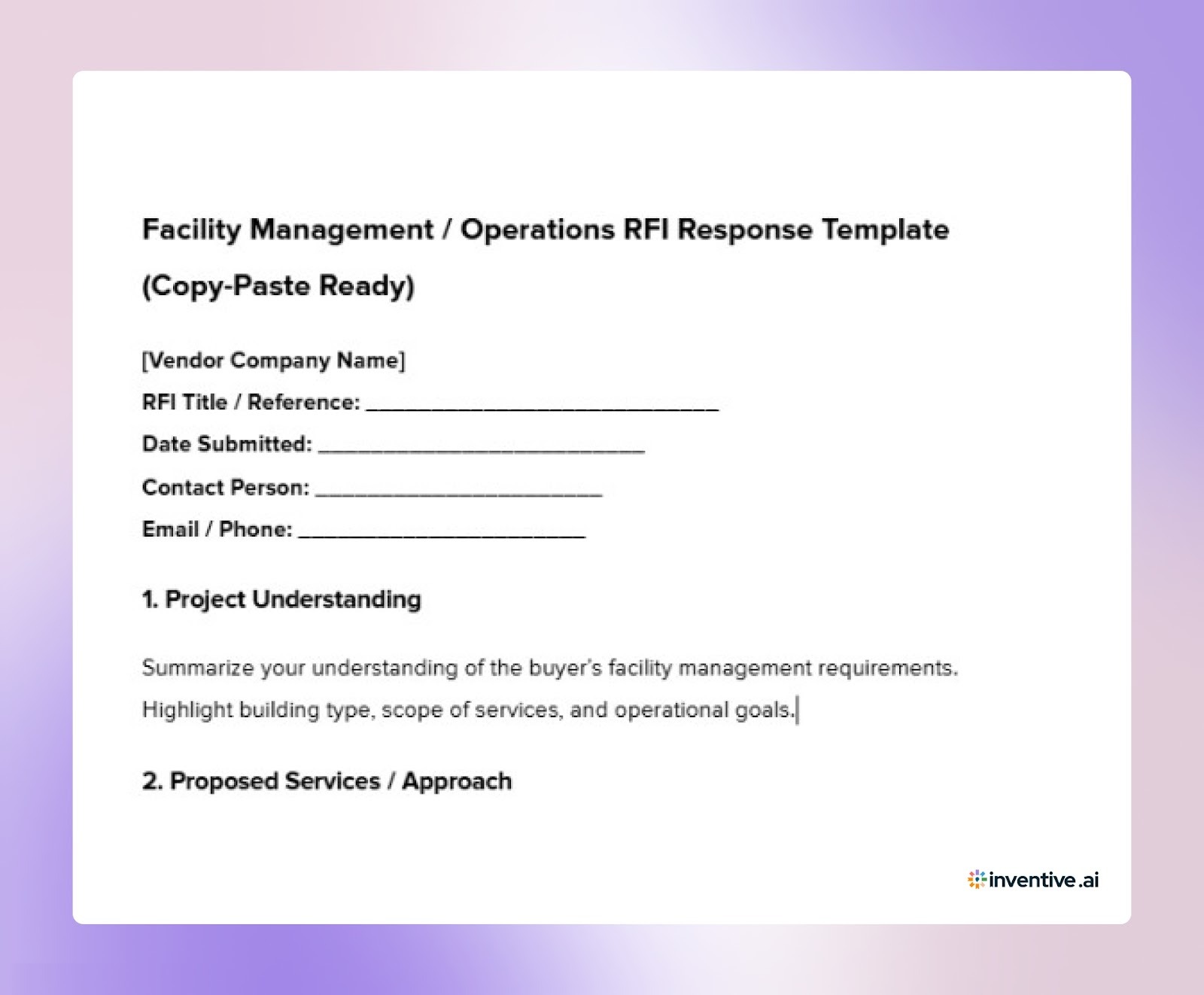
6. Facility Management/Operations RFI Response Template
It helps vendors showcase operational capabilities, service quality, and compliance certifications. Buyers can evaluate vendor efficiency, reliability, and prior facility management experience.

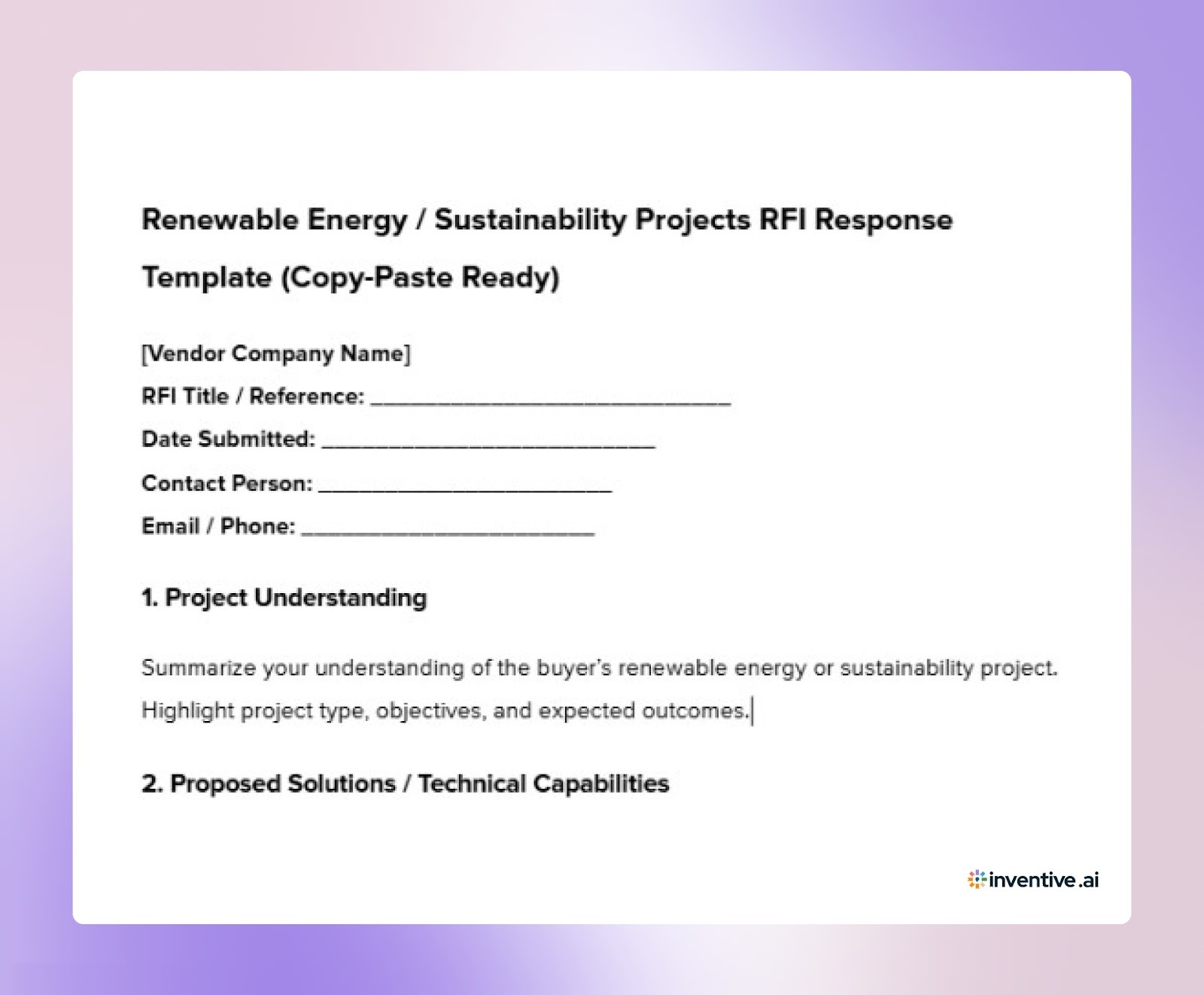
7. Renewable Energy/Sustainability Projects RFI Response Template
This template guides vendors in clearly presenting technical solutions, prior projects, and environmental compliance. Buyers can efficiently assess vendor expertise, certifications, and sustainability performance.

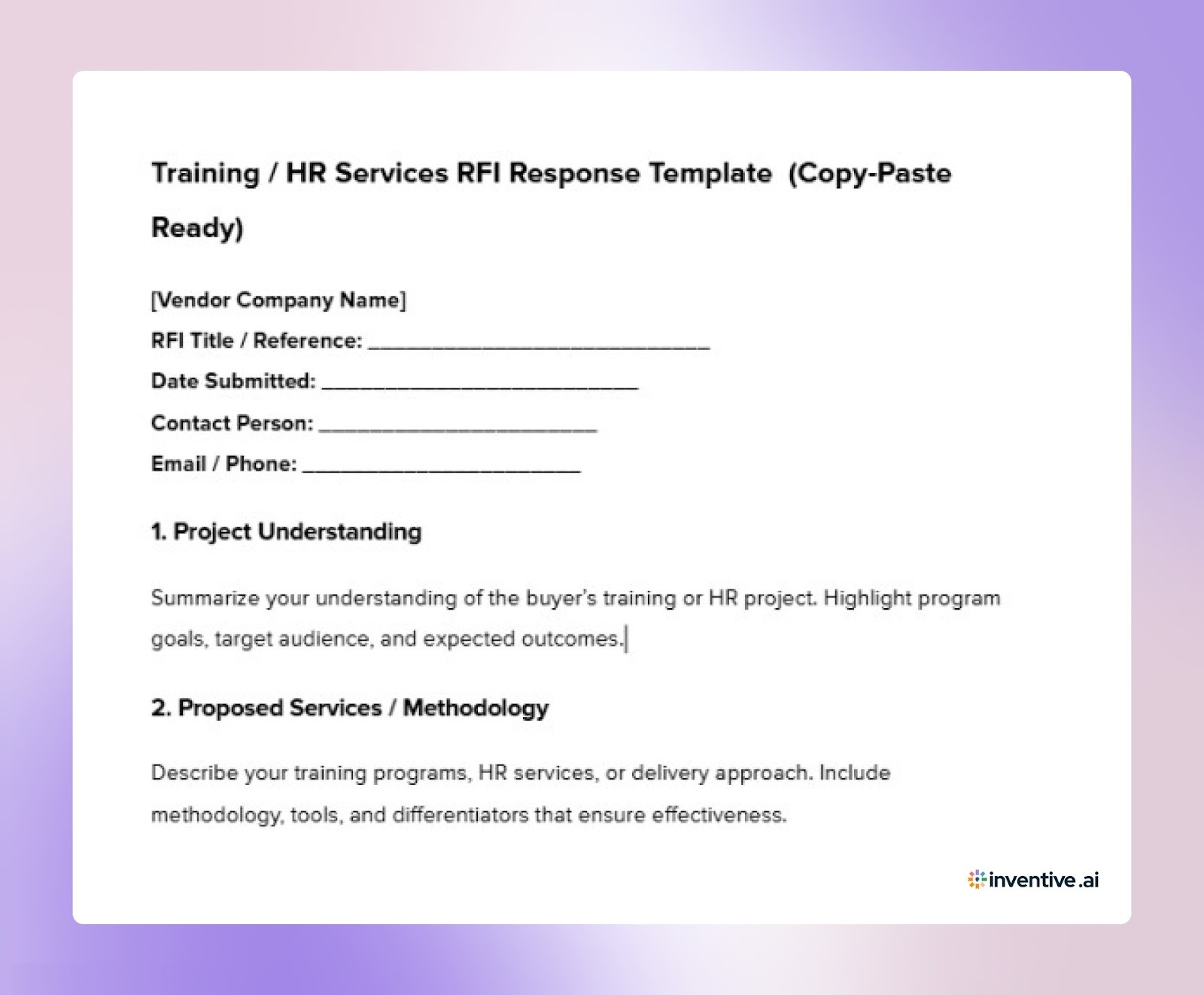
8. Training / HR Services RFI Response Template
This template highlights program design, trainer expertise, and measurable outcomes. Buyers can efficiently evaluate vendor capabilities, methodologies, and relevant client success.

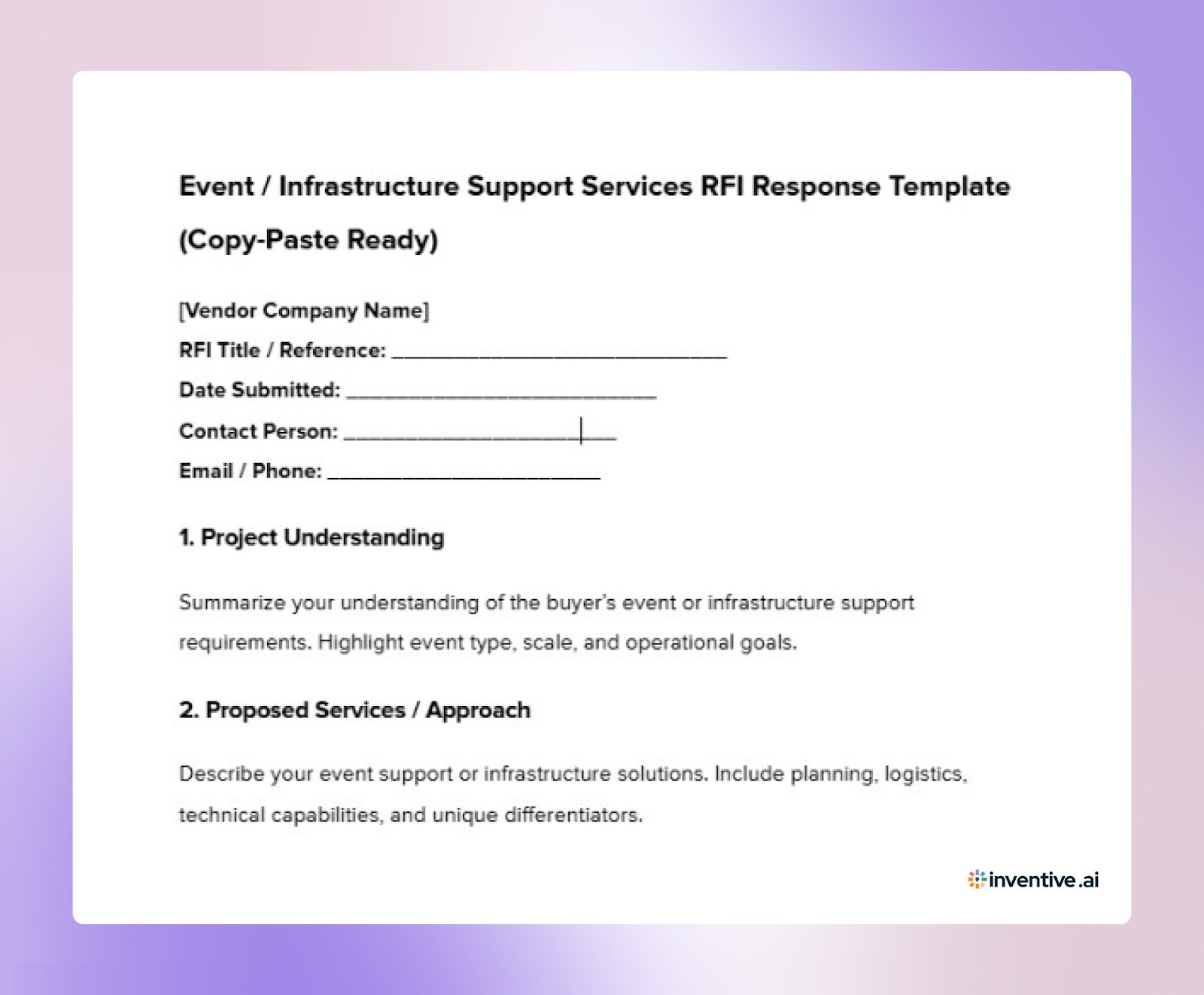
9. Event / Infrastructure Support Services RFI Response Template
This template enables vendors to clearly present past events or infrastructure projects, technical capabilities, and compliance. Buyers can efficiently assess vendor reliability, execution skills, and prior experience.
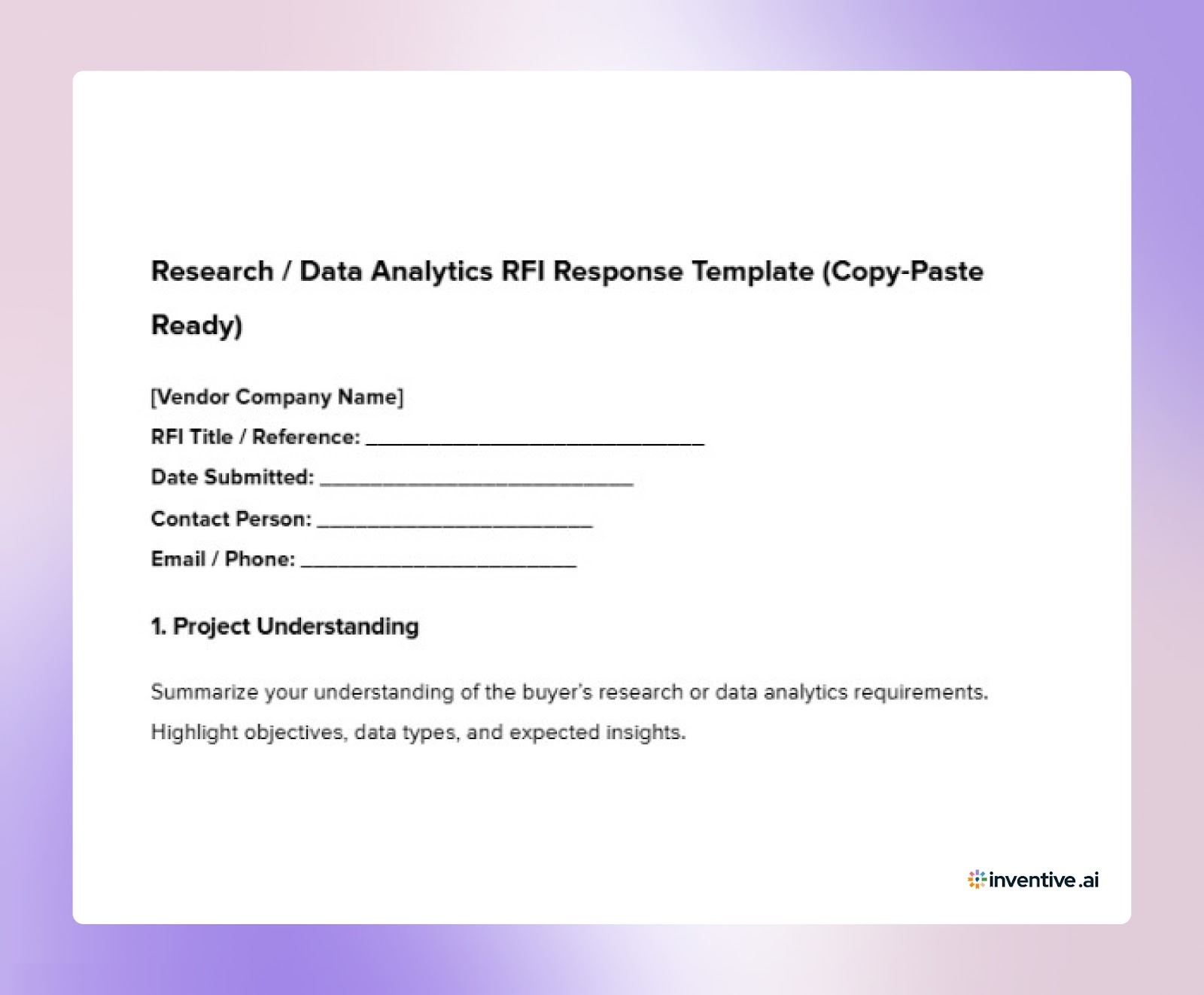
10. Research / Data Analytics RFI Response Template
This template helps vendors showcase their methodologies, analytical tools, and prior research projects. Buyers can efficiently evaluate a vendor's technical expertise, accuracy, and past performance.

Also Read: Complete Guide to Vendor Selection Procedure Steps
To maximize efficiency and response quality, vendors can use AI to streamline their RFI submissions while maintaining project-specific accuracy.
Draft Competitive RFI Responses at Scale With Inventive AI
Responding to RFIs can be slow and error-prone due to scattered content and manual processes. Inventive AI centralizes knowledge, flags outdated information, and generates consistent, customized responses, saving time and improving accuracy.
Key Capabilities of Inventive AI:
Context-Aware Response Generation
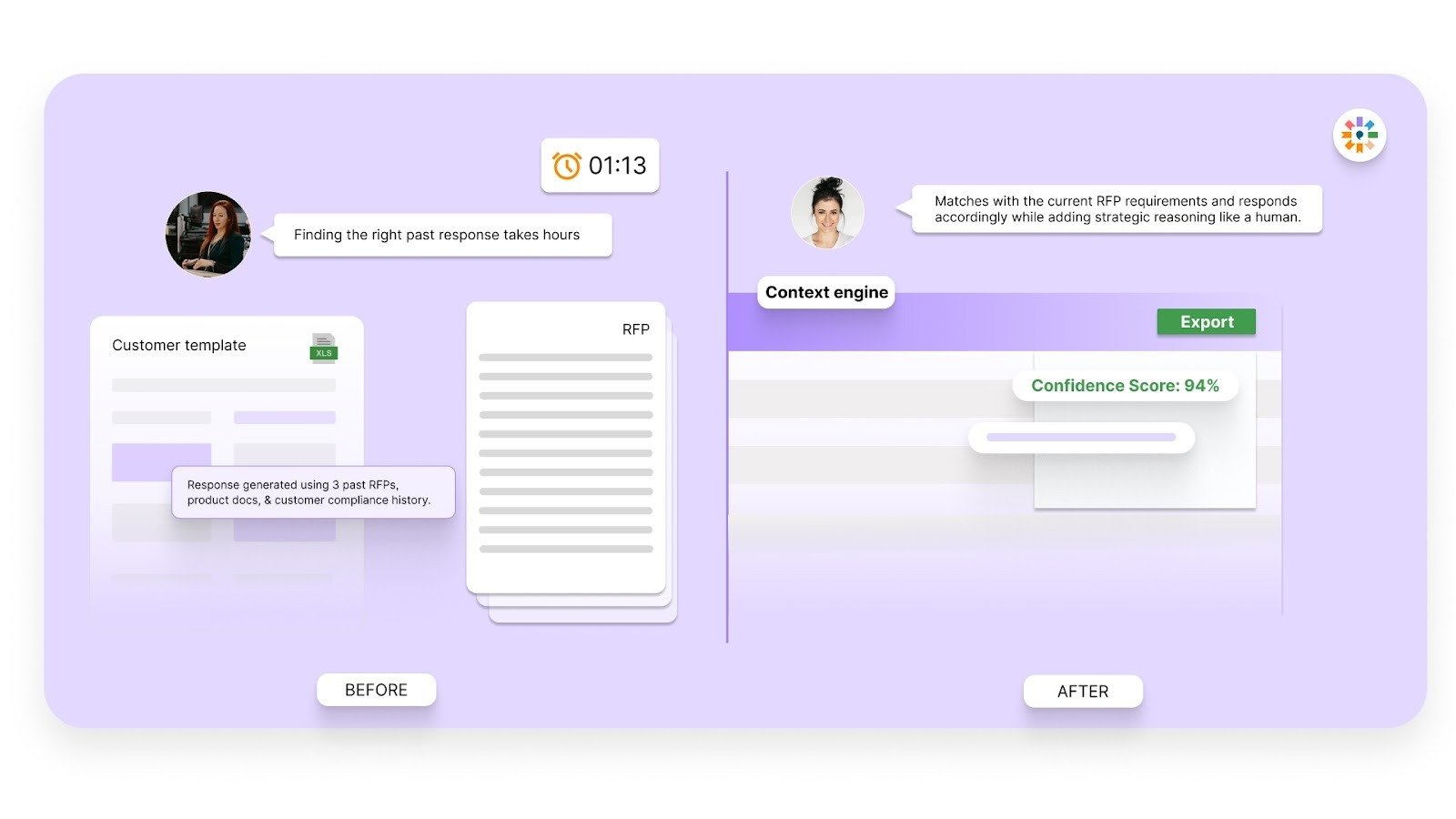
Inventive AI evaluates the entire RFP, including scope, compliance requirements, and evaluation criteria. Responses align with project-specific requirements rather than relying on static boilerplate, helping vendors achieve up to 50% higher win rates.
Conflict Detection
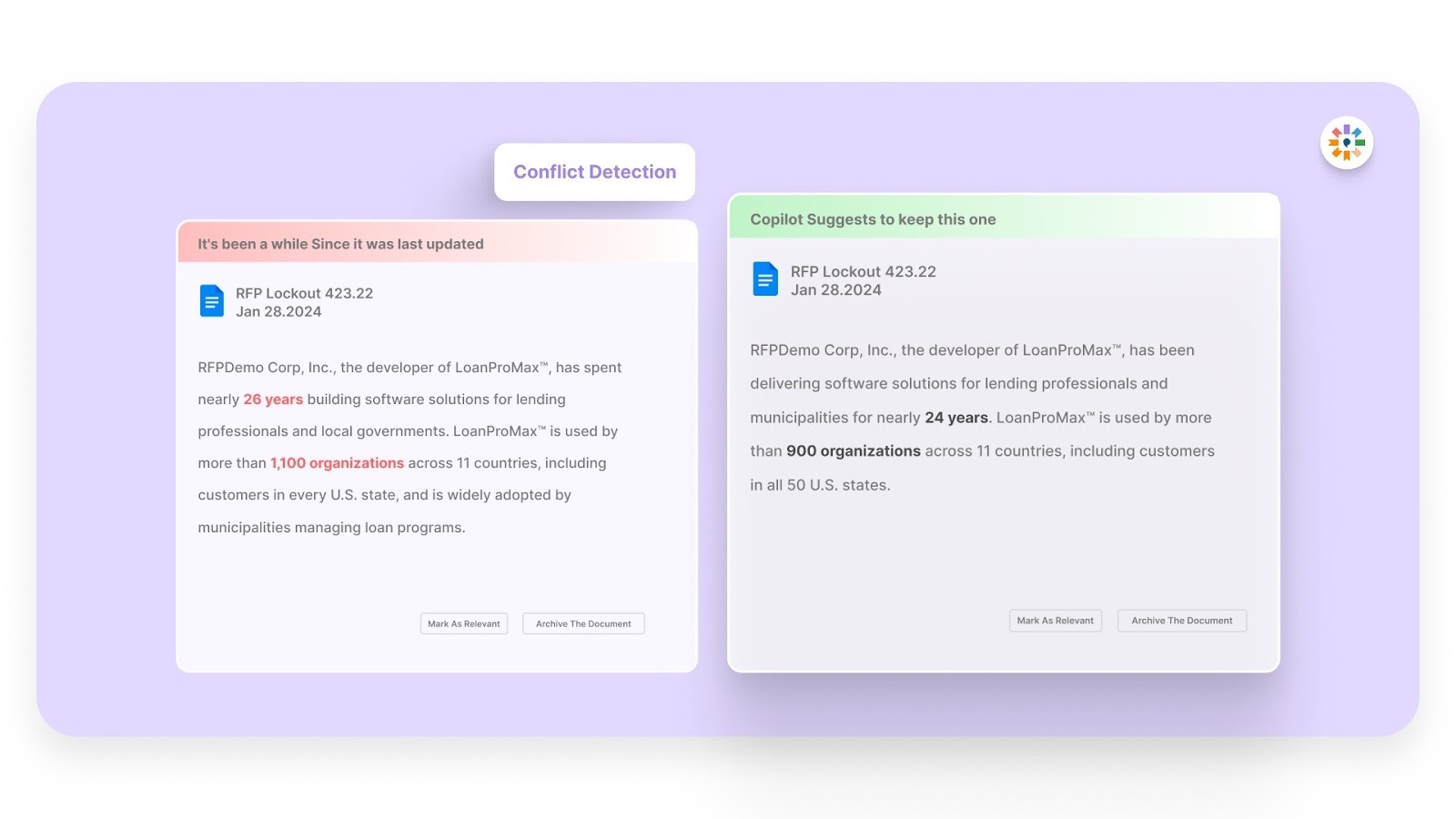
The system automatically identifies contradictory statements across technical plans, pricing sections, and compliance disclosures, reducing submission risk.
Outdated Content Detection
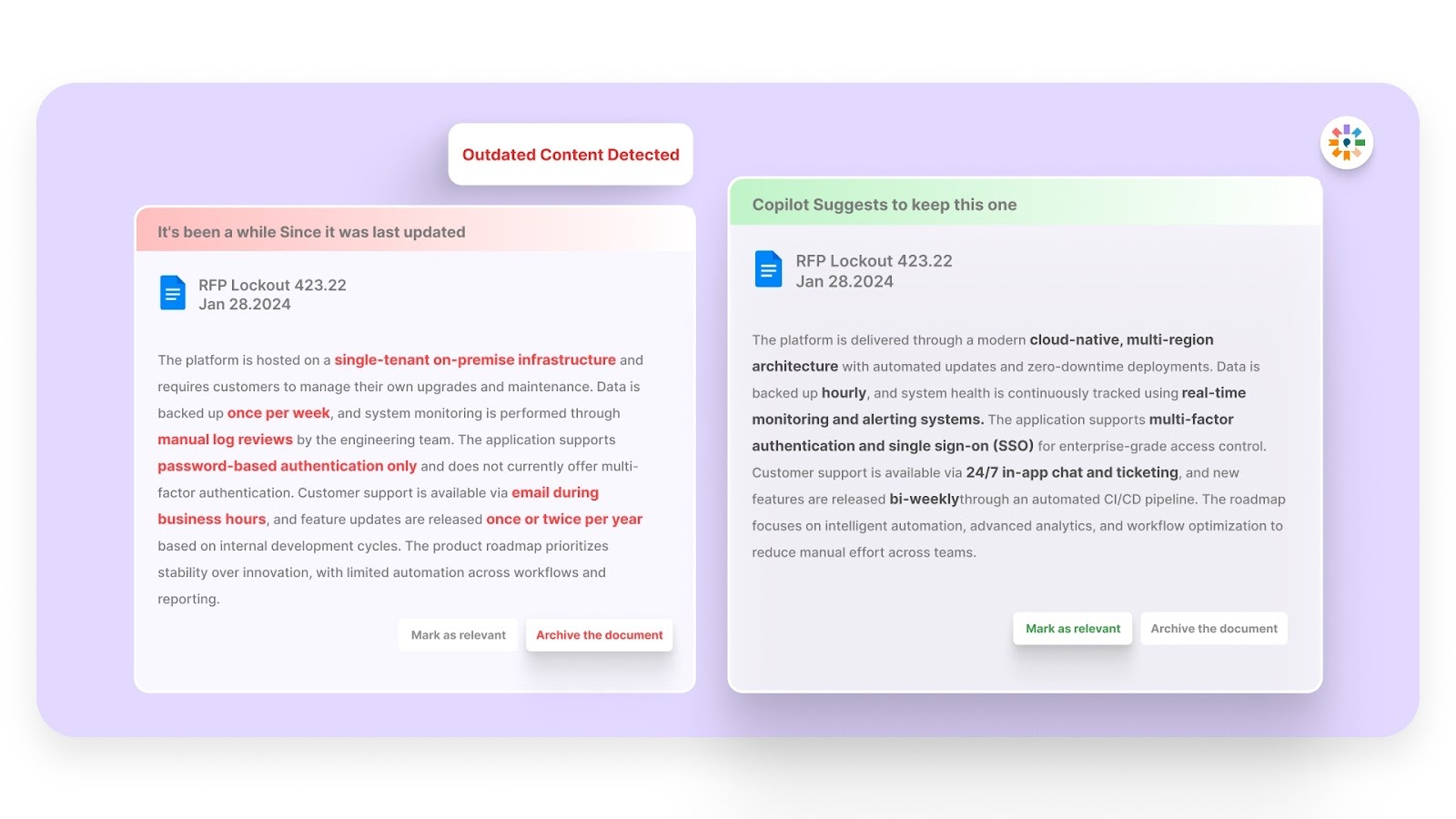
Inventive AI flags expired licenses, superseded safety language, or stale project references before they are reused in new bids.
2x Response Quality
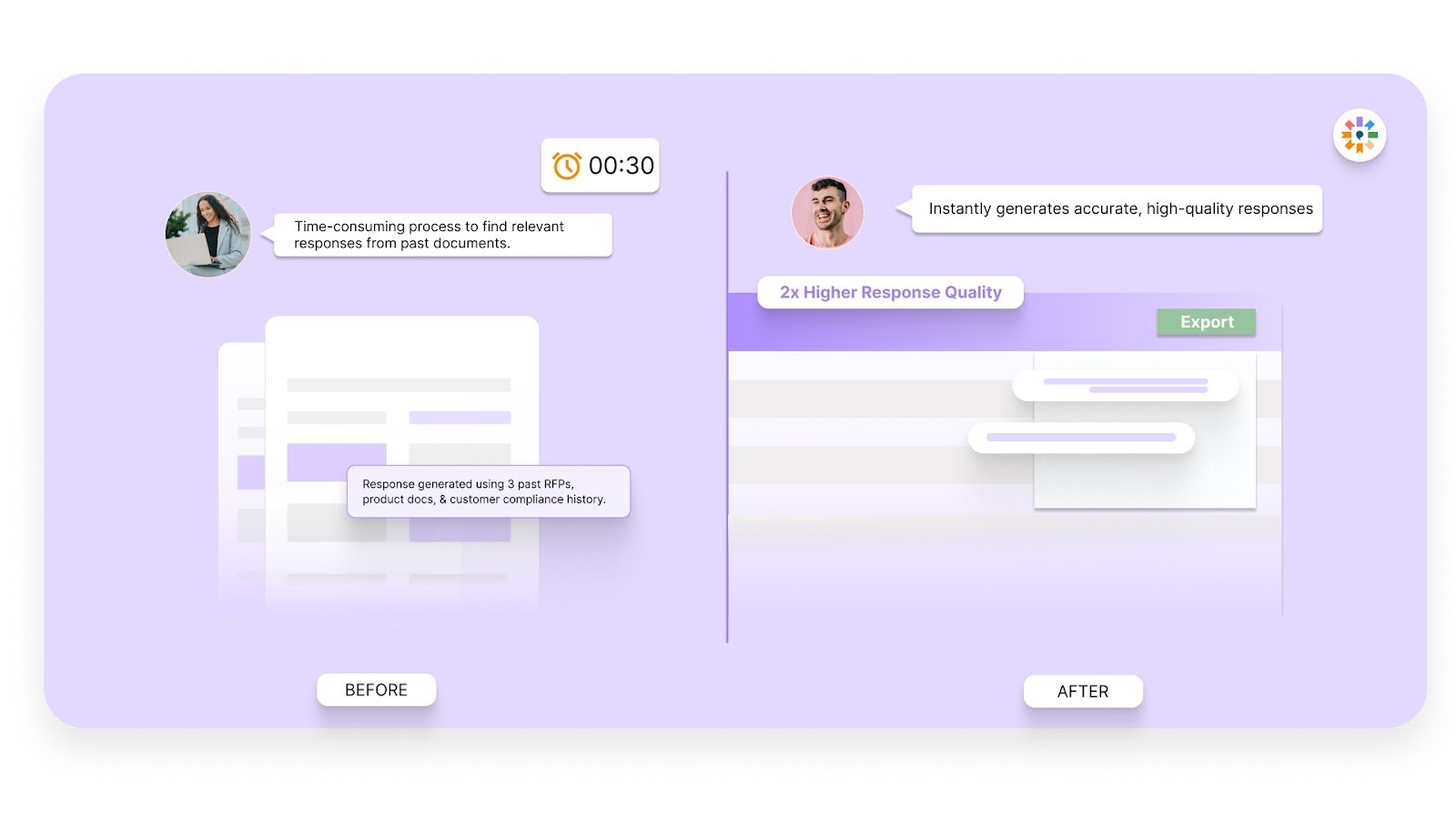
Multi-agent AI generates structured, complete responses that typically require minimal revision, improving submission consistency and enabling RFPs to be completed up to 90% faster.
Simple, High-Adoption Interface
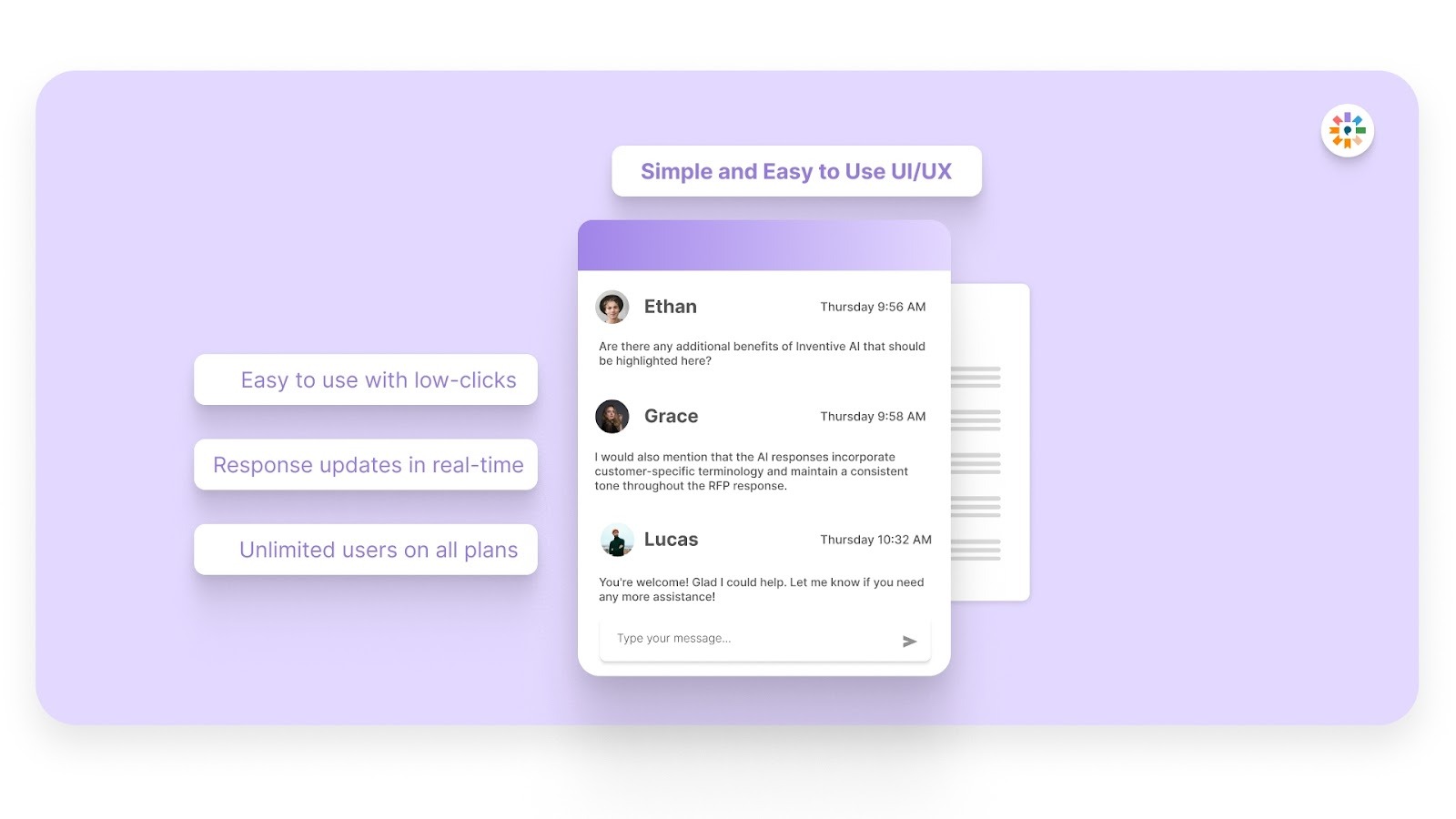
The platform supports fast onboarding and practical daily use across sales, preconstruction, and proposal teams.
Narrative Proposal Generation
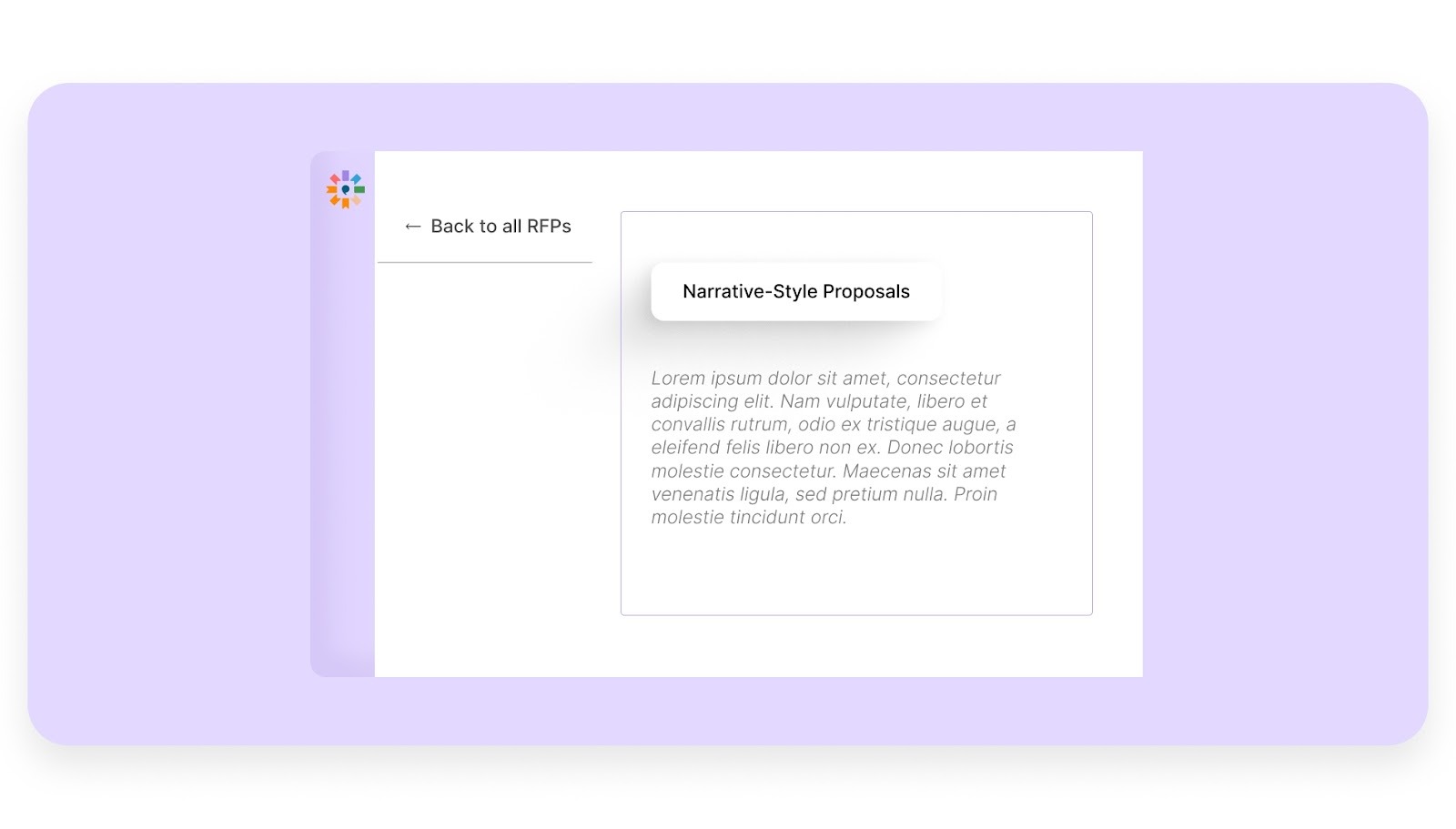
Beyond Q&A responses, Inventive AI generates executive summaries, methodology narratives, safety statements, and value-engineering explanations for full construction proposal documents.
FAQs
1. Can I reuse my RFI response template for multiple projects?
Yes, you can reuse standard sections such as company profile, certifications, and compliance details. Always update project-specific answers, scope clarifications, and references. Tailoring ensures relevance to each RFI. Reusing without updates may lead to disqualification.
2. What is the difference between an RFI and an RFP for vendors?
An RFI collects preliminary information about your capabilities, experience, and proposed solutions. An RFP requires detailed proposals, pricing, and project execution plans. Treat RFIs as discovery and RFPs as formal bidding. Accurate RFI responses improve your chance of being shortlisted.
3. How can AI help me respond to RFIs?
AI organizes responses, aligns them with RFI questions, and ensures consistency across sections. It automatically flags contradictory or outdated content. Structured outputs reduce drafting errors and save time. This helps you submit accurate, professional RFI responses.
4. What should I include in a vendor RFI response?
Include relevant technical capabilities, certifications, compliance evidence, and past project experience. Answer all requested questions factually and concisely. Highlight standards adherence and regulatory compliance. Avoid assumptions or generic statements.
5. How can I make my RFI response stand out?
Provide clear, quantifiable information aligned with the RFI scope. Include case studies, metrics, or references that demonstrate capability. Ensure formatting is professional and easy to review. Avoid vague language or incomplete answers.

.avif)



.jpg)
.jpg)