Vendor Selection Criteria Template Buyers Use to Shortlist Vendors in 2026

Ever been part of a vendor selection process where every team had a different opinion on who should win?
One team pushes for the lowest cost. Another raises compliance concerns. Someone else questions the delivery capability. Without clear criteria, decisions drag on, and comparisons become messy.
Buyers often deal with scattered inputs, subjective scoring, and long review cycles before finalizing a vendor. It becomes hard to compare vendors fairly when everyone is using a different yardstick.
That’s where a vendor selection criteria template comes in. It gives buyers a clear way to score vendors, align teams, and make faster decisions.
In this guide, you will see how these templates work, what buyers include in them, and how understanding this process helps you respond more effectively.
Inside the Vendor Selection Criteria Template Buyers Use
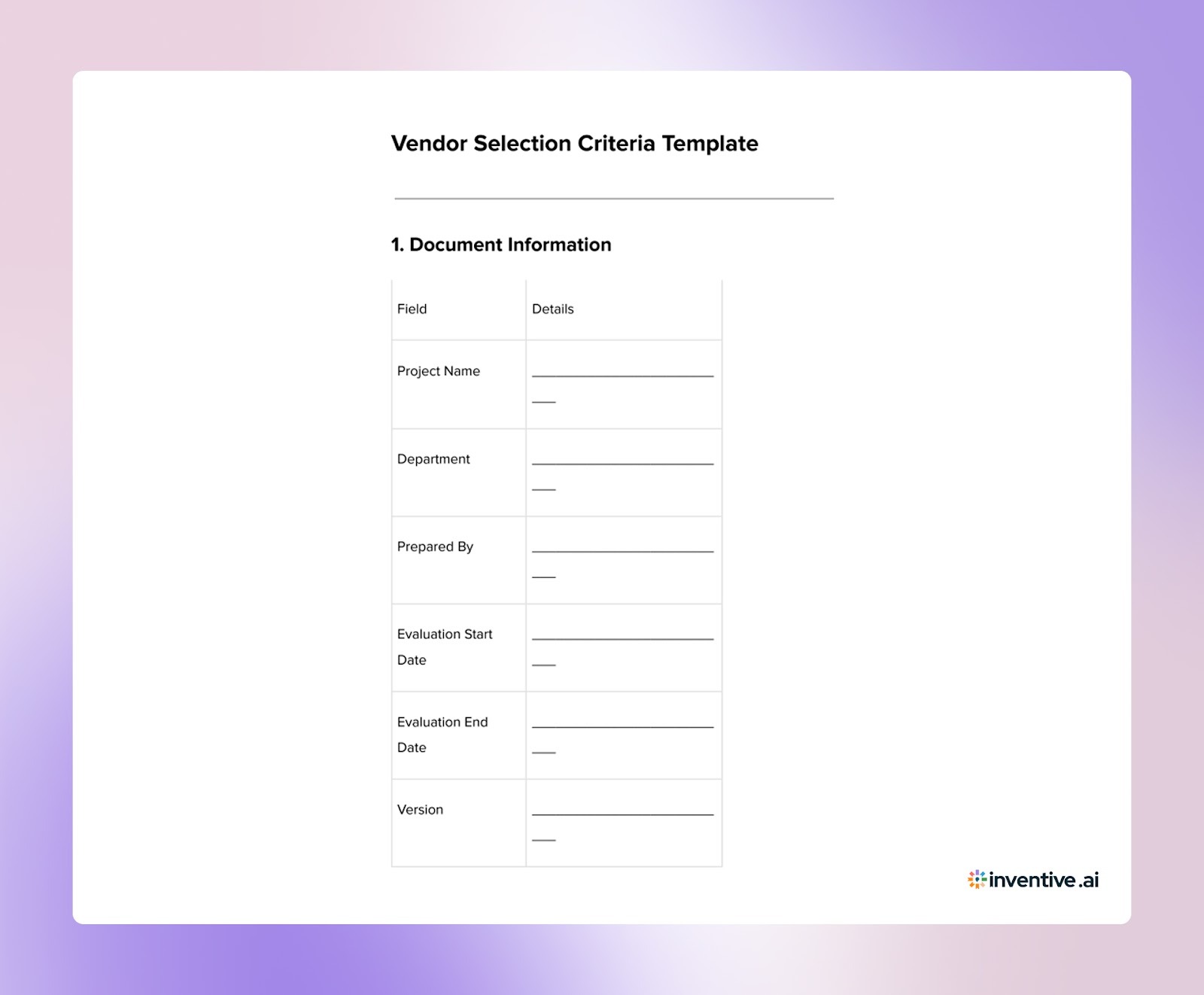
Buyers use a vendor selection criteria template to compare vendors based on predefined factors.
This template helps them score each vendor objectively across multiple evaluation areas. These templates are usually shared during RFPs, RFIs, or onboarding stages.
Here, we have included a ready-to-use vendor selection criteria template that reflects how buyers evaluate vendors across key parameters.

What Drives Buyers to Use Vendor Scoring Templates?
Buyers use templates to bring consistency and clarity into vendor evaluation.
This reduces bias and improves decision-making.
Key reasons include:
- Standardized comparison across all vendors
- Clear scoring based on predefined criteria
- Reduced manual evaluation effort
- Faster decision-making across teams
- Better alignment between stakeholders
Templates help buyers make decisions based on data instead of assumptions.
Real-World Examples of Vendor Selection Criteria Template
Vendor selection templates are used across industries, but scoring priorities change based on business needs. Below are common scenarios where buyers apply different evaluation criteria.
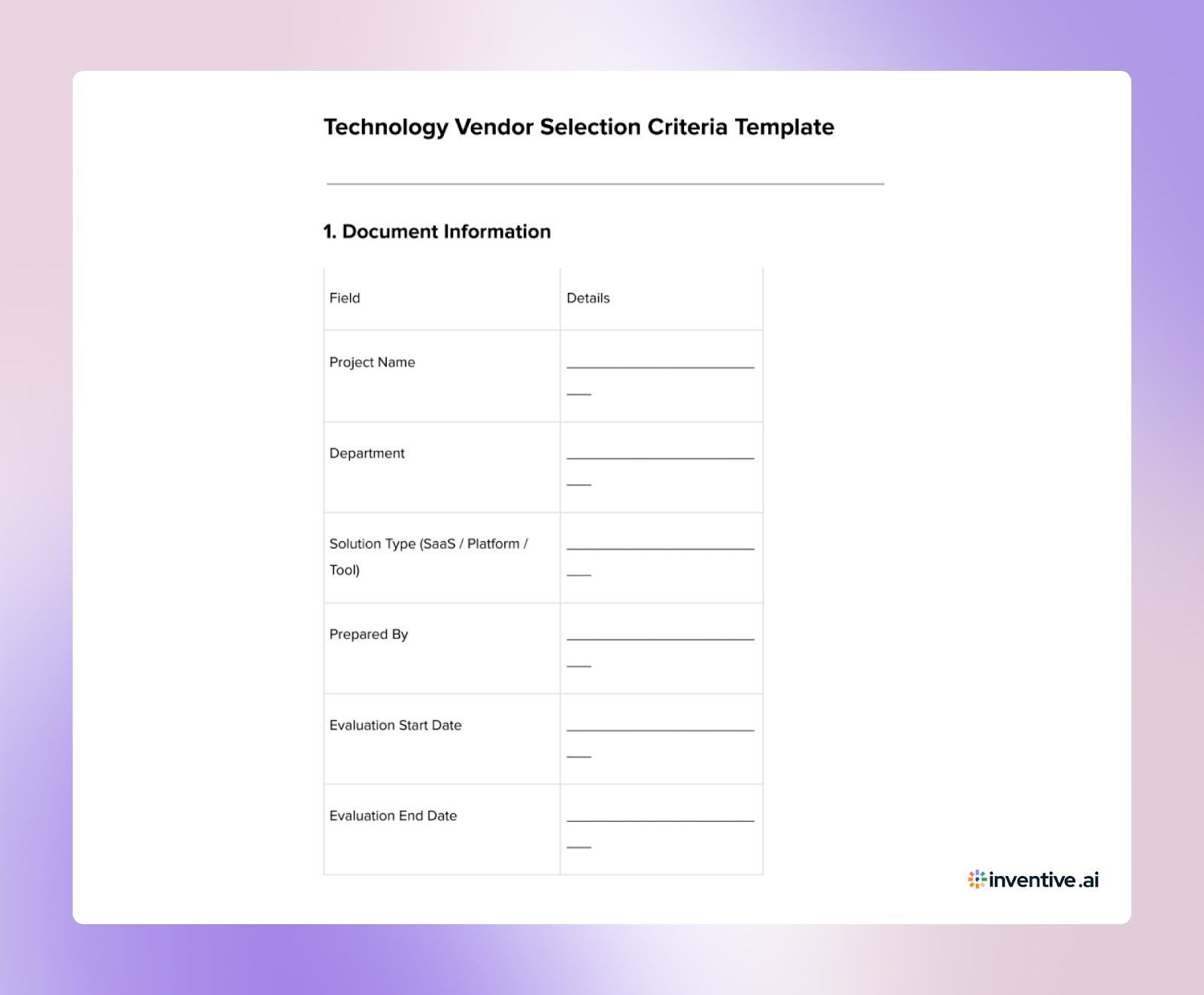
Technology Vendor Selection Criteria Template
Technology buyers focus on product capabilities, integrations, scalability, and support quality. They evaluate how well your solution fits into their existing systems and future growth plans.

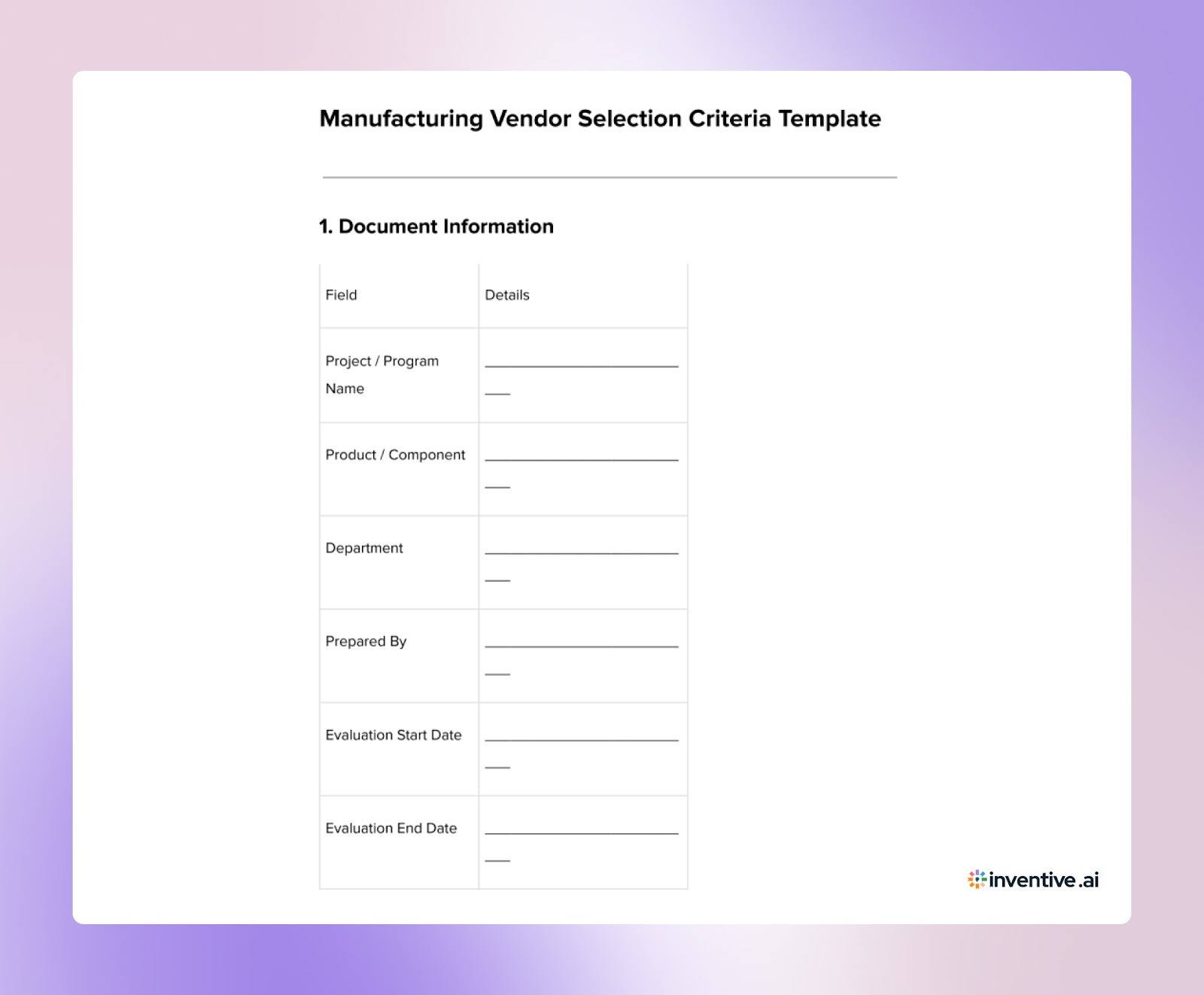
Manufacturing Vendor Selection Criteria Template
Manufacturing buyers prioritize cost efficiency, delivery timelines, and operational reliability. They assess your ability to meet production demands without delays or quality issues.

Healthcare Vendor Selection Criteria Template
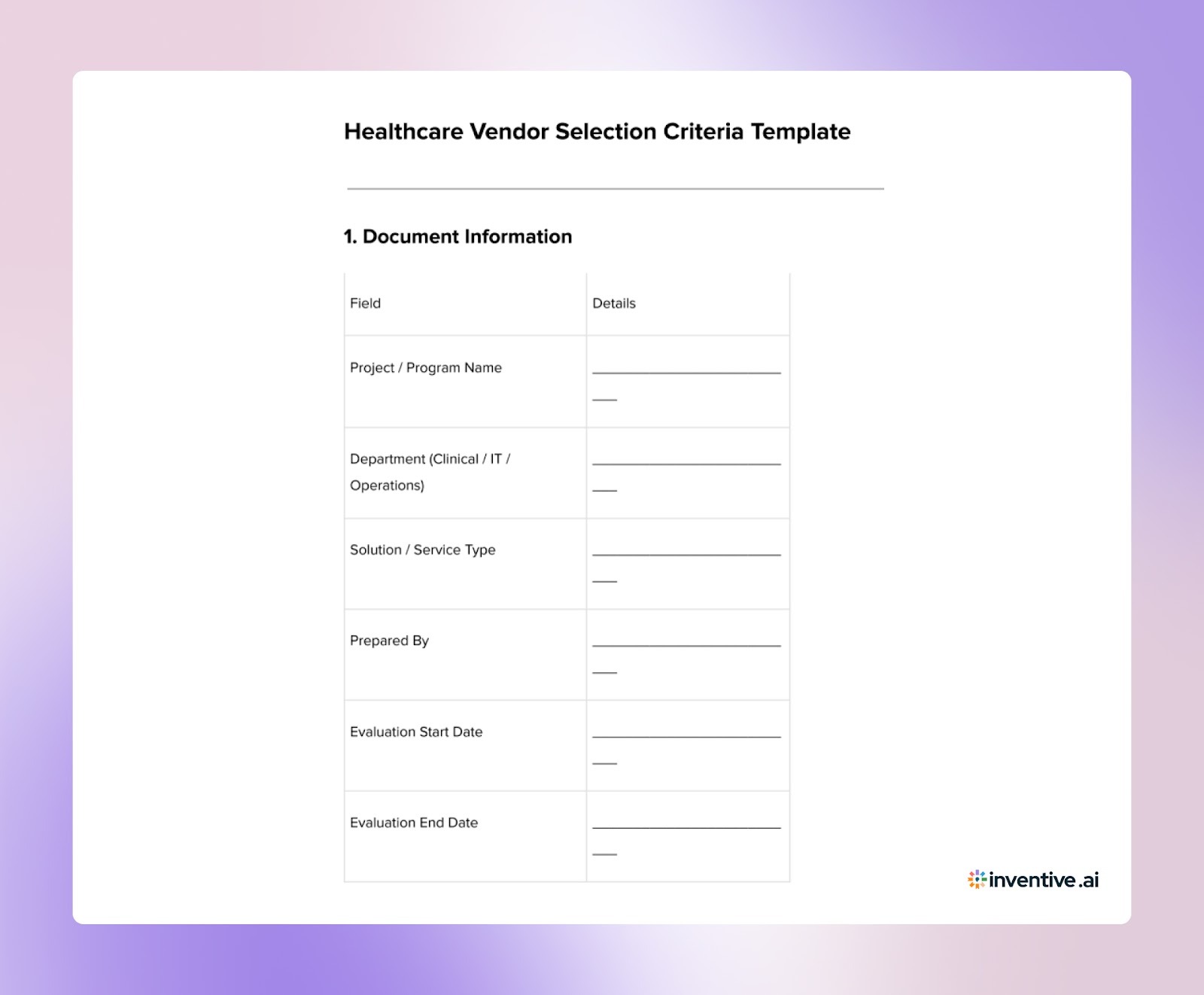
Healthcare buyers emphasize compliance, data security, and regulatory standards. They evaluate how well your solution meets strict industry requirements and protects sensitive data.

8 Core Sections Buyers Use to Score Vendors
The following criteria help buyers evaluate and compare vendors on the same parameters.
1. Business Profile and Company Background: Buyers review company size, years in operation, ownership structure, and industry experience to understand stability and credibility.
2. Financial Stability and Past Performance: Financial health, revenue trends, and past project outcomes are assessed to evaluate long-term reliability and risk.
3. Pricing and Cost Structure: Buyers compare pricing models, cost transparency, and total cost of ownership to understand value beyond initial pricing.
4. Technical Capabilities and Service Delivery: Product features, implementation approach, scalability, and service quality are reviewed to assess fit with business needs.
5. Compliance and Security Standards: Buyers check certifications, data protection practices, and regulatory compliance to evaluate risk and adherence to standards.
6. Implementation Timeline and Support: Delivery timelines, onboarding plans, and ongoing support models are evaluated to understand how quickly and effectively services can be deployed.
7. Customer References and Case Studies: Buyers look at past clients, success stories, and testimonials to validate performance and real-world outcomes.
8. Innovation and Differentiation: Unique capabilities, product roadmap, and ability to adapt to future needs are considered to assess long-term value.
Each section allows buyers to assign scores and rank vendors objectively, making comparisons clearer and more structured.
Key Benefits Vendors Gain from Understanding Buyer Evaluation Criteria
Understanding how buyers evaluate vendors gives you a clear advantage.
It helps you prepare responses that match their expectations.
- Clear understanding of what buyers prioritize: You can focus on the criteria that directly influence scoring instead of covering everything equally.
- Better alignment of your proposal with evaluation criteria: Your responses can directly map to how buyers score vendors, making it easier for them to evaluate you.
- Reduced guesswork during submissions: You spend less time figuring out what to include and more time strengthening the right sections.
- Higher consistency across responses: Standardized answers across documents reduce confusion and prevent contradictions during reviews.
- Faster review cycles and fewer follow-ups: Clear and relevant responses reduce the need for clarifications, helping buyers move faster.
- Stronger positioning during evaluation: When your responses reflect buyer priorities, you stand out more clearly against other vendors.
- Better use of internal resources: Your team spends less time rewriting answers and more time improving quality where it matters.
When your responses align with buyer evaluation criteria, you reduce delays, improve clarity, and increase your chances of moving forward in the selection process.
Also Read: Consulting RFP Template + 7 Response Templates to Win Bids
Accelerate Your Responses With Inventive AI
Responding to vendor evaluation templates often involves RFPs, RFIs, and detailed questionnaires.
Each section maps to specific scoring criteria, and missing that alignment can affect how buyers evaluate you.
Inventive AI’s AI RFP Agent is designed to simplify your RFP response process.
1. 2× Higher Quality Responses
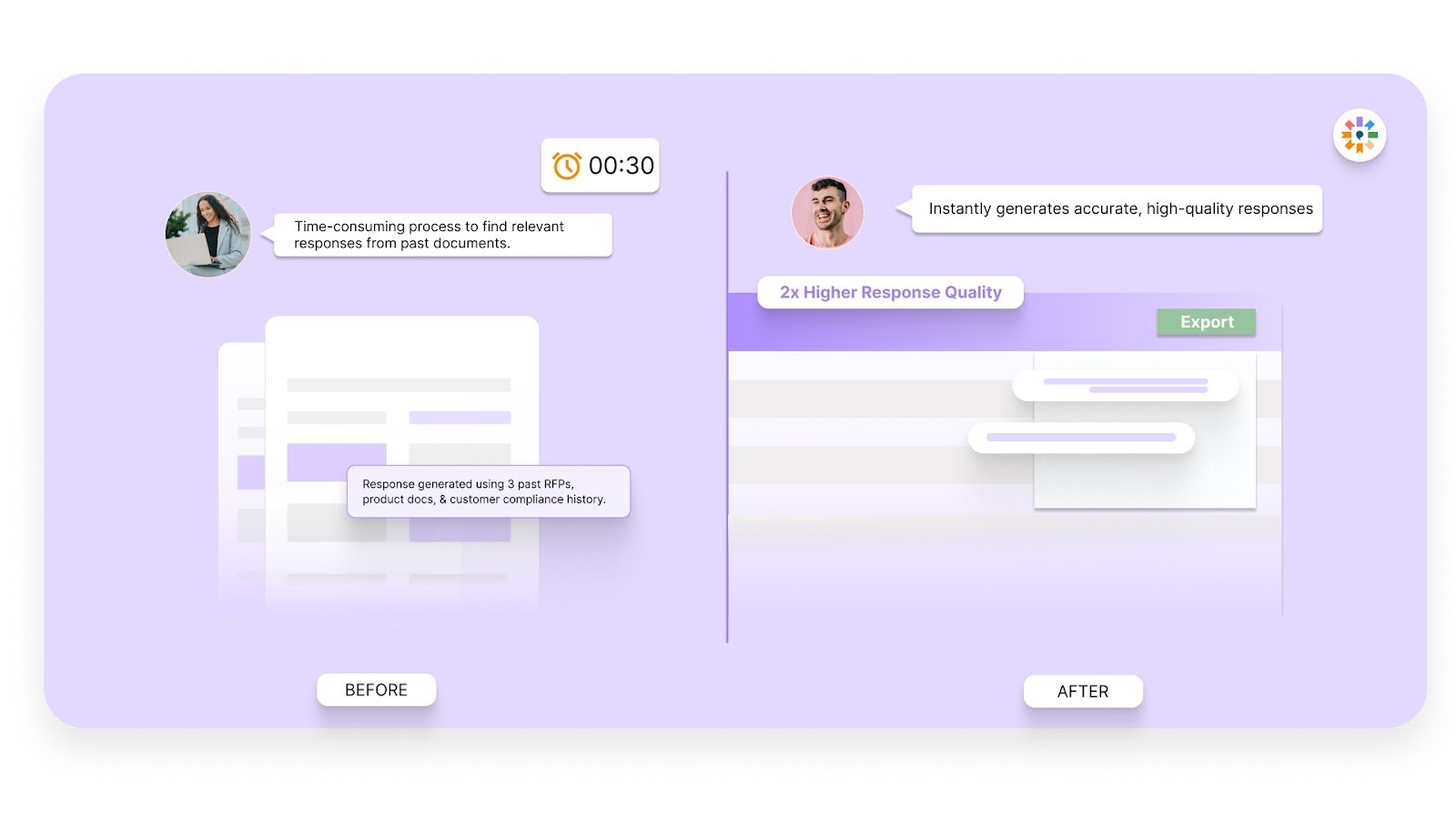
Inventive AI helps generate responses that align closely with buyer evaluation criteria such as pricing, compliance, and capabilities. This allows you to present relevant information under the right sections, making it easier for buyers to score your responses accurately.
2. Context Engine
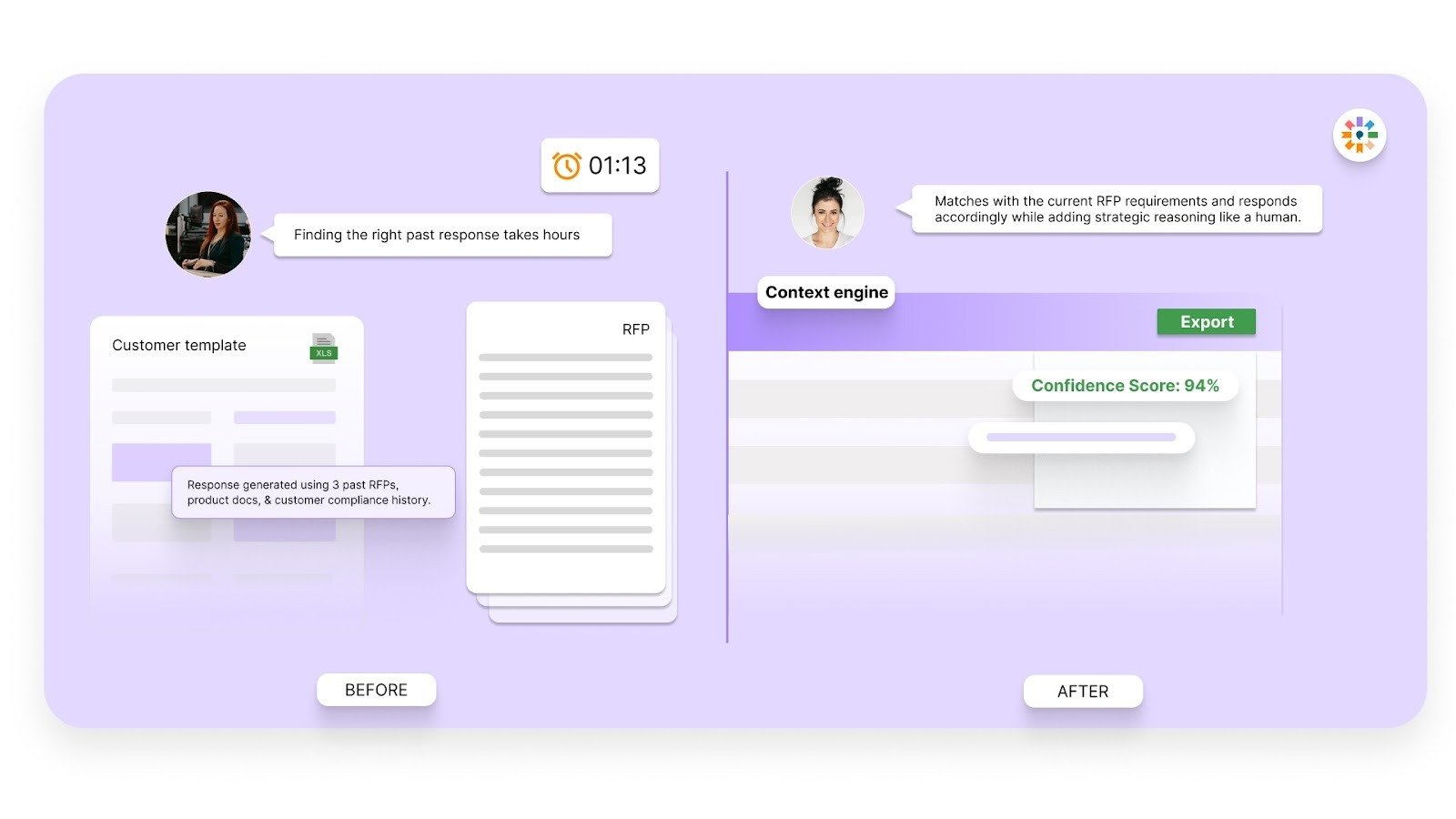
Inventive AI helps you pull relevant information from past responses, documents, and internal sources. This ensures your answers stay consistent across submissions and match the evaluation parameters buyers use during scoring.
3. Conflict Detection
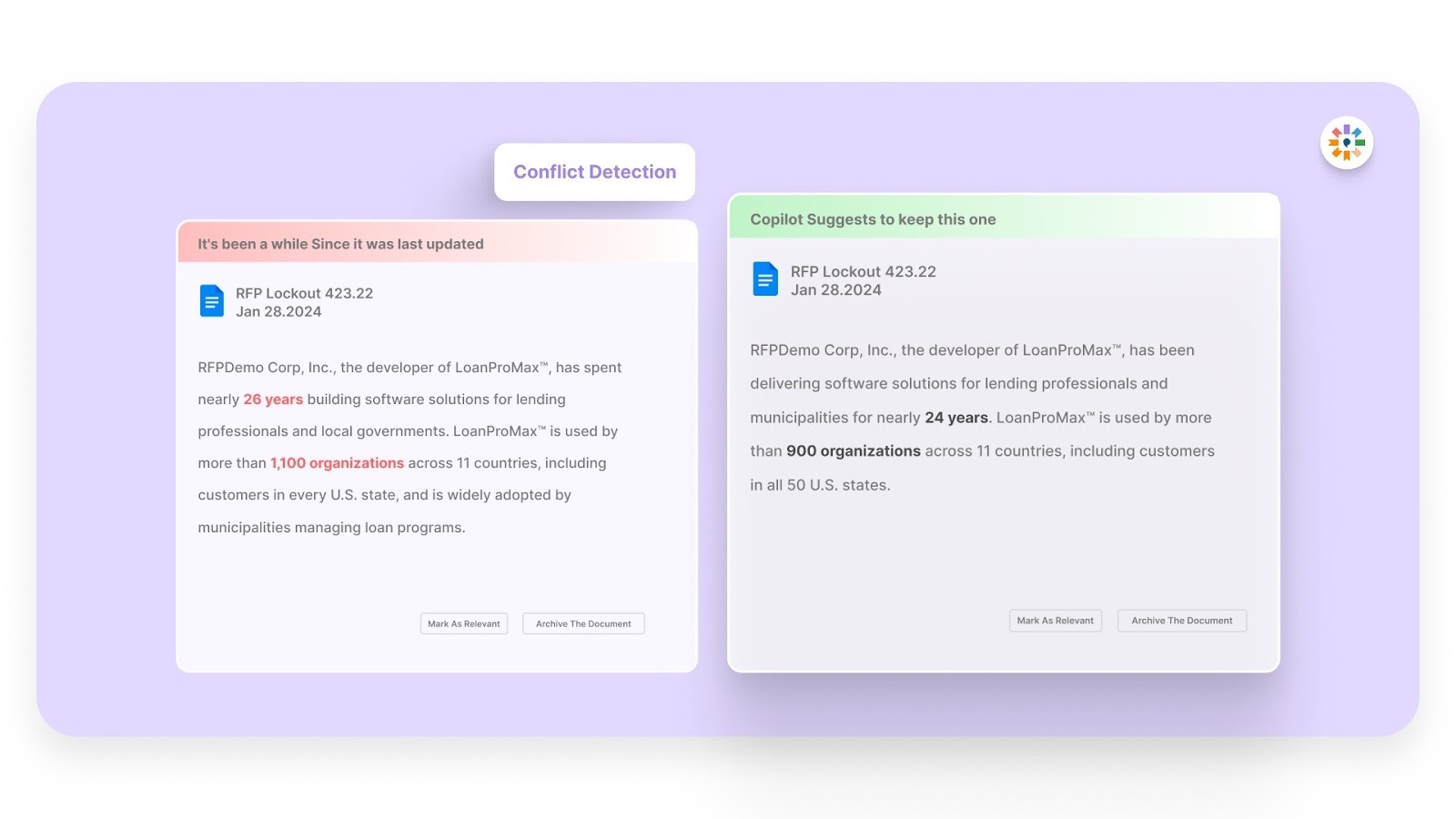
Inventive AI helps identify conflicting or mismatched information across different sections of your response. This reduces confusion during evaluation and prevents delays caused by follow-up questions.
4. Outdated Content Detection
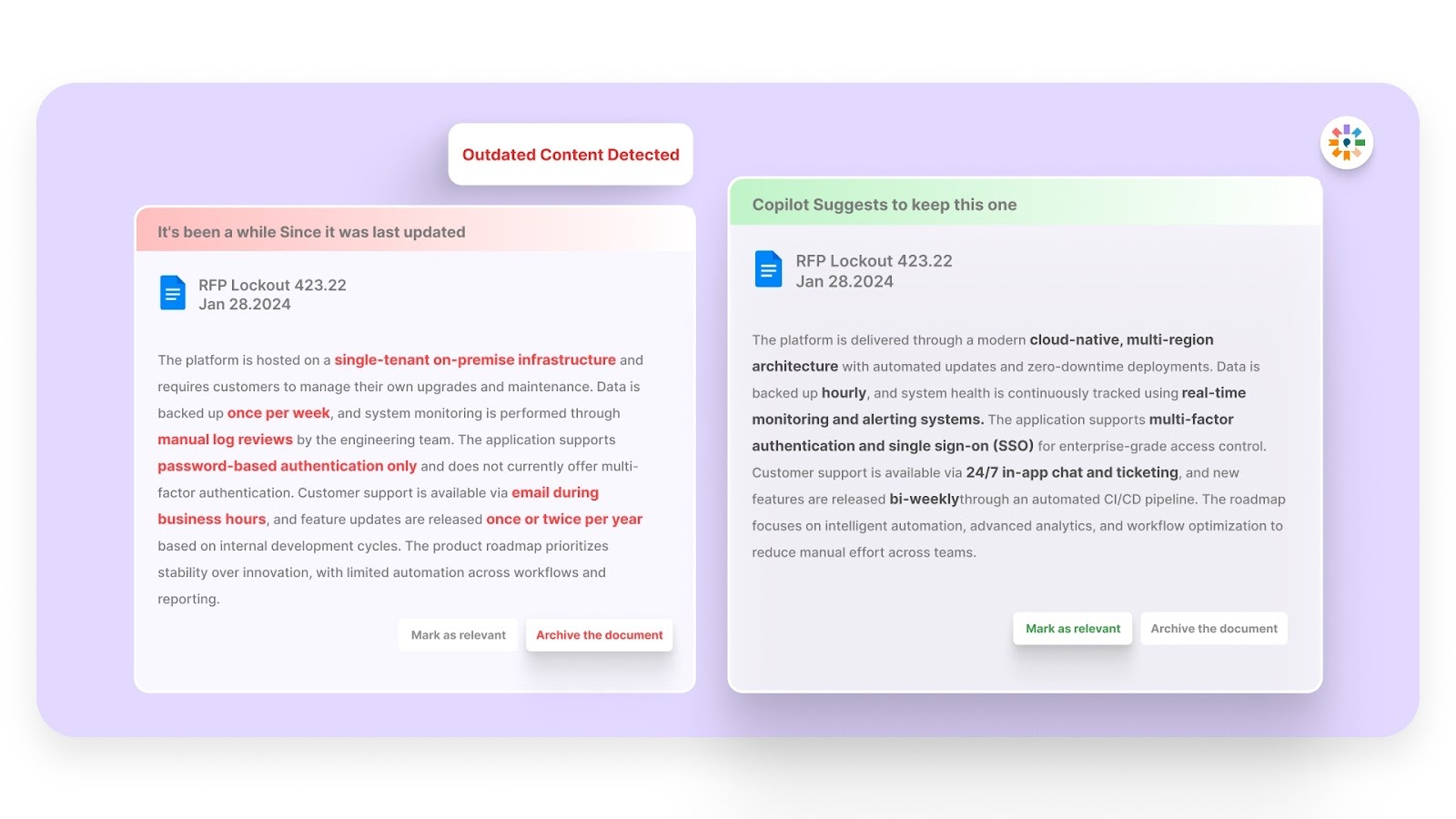
Inventive AI helps flag outdated or irrelevant content before submission. This ensures your responses reflect your latest capabilities, which improves accuracy during evaluation.
5. Narrative Style Proposals
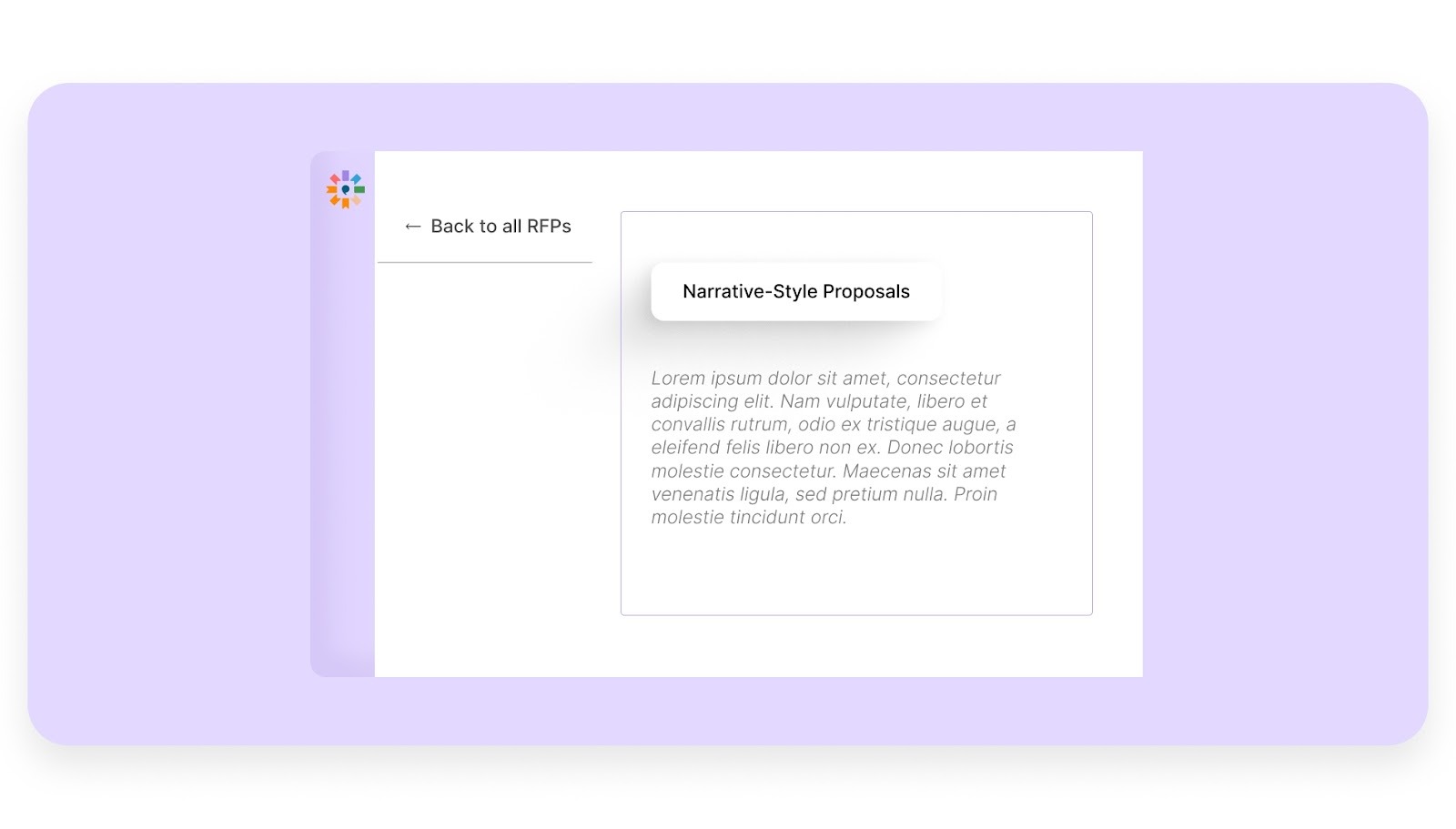
Inventive AI helps present your responses in a clear, structured format that is easy to review. This improves readability for buyers and helps them understand your strengths across different evaluation criteria.
6. Simple, Easy-to-Use Interface
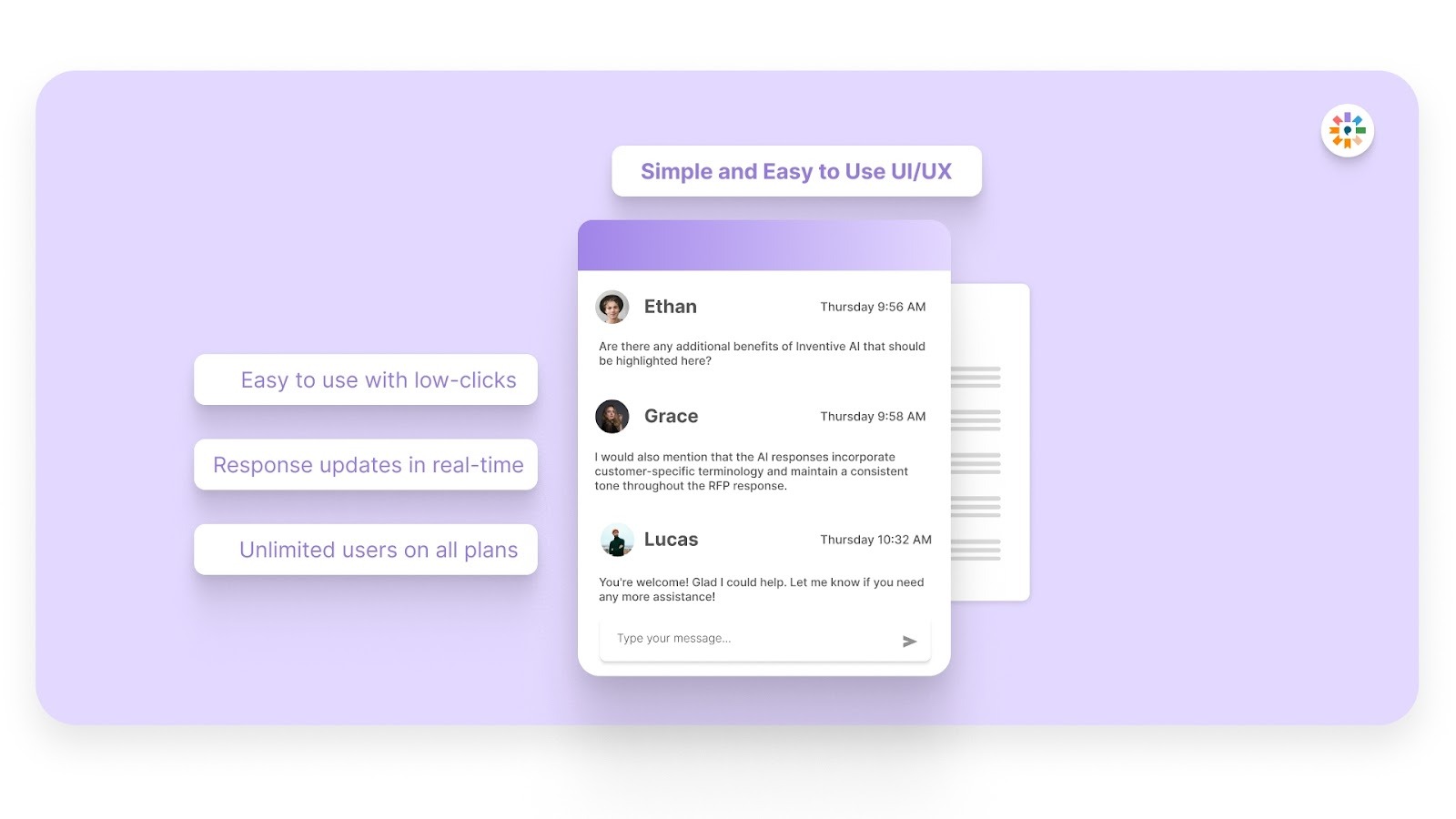
Inventive AI helps your team build and refine responses quickly within a single platform. This allows you to respond faster while keeping each answer aligned with the buyer’s scoring framework.
When your responses clearly map to buyer evaluation criteria, reviews become faster, scoring becomes easier, and your chances of moving forward improve.
Frequently Asked Questions (FAQs)
1. What mistakes can lower your score during vendor evaluation?
Common mistakes include inconsistent information across sections, incomplete answers, and using outdated data. Buyers also look for relevance, so generic responses that do not address the specific criteria can reduce your chances of moving forward.
2. How can you prepare in advance for vendor evaluation templates?
You can prepare by maintaining a library of past responses, compliance documents, and company information. Having this information ready allows you to respond faster and ensures consistency across different evaluation templates.
3. Do buyers use the same evaluation criteria for every vendor?
Buyers often use a standard template, but the weight of each criterion may vary depending on the project or industry. For example, some may prioritize cost, while others focus more on technical capabilities or compliance requirements.
4. How do vendor selection criteria affect shortlisting decisions?
Buyers use scoring criteria to rank vendors and create a shortlist. Even small differences in scoring can impact your position, so aligning your responses with evaluation criteria can improve your chances of being selected.
5. How do buyers score vendors using these templates?
Buyers assign scores to each criterion, such as cost, compliance, and capability. These scores help rank vendors objectively.
6. Can vendor selection criteria vary by industry?
Yes, different industries prioritize different factors. For example, healthcare focuses on compliance, while manufacturing focuses on cost and reliability.
.avif)



.avif)