Supplier Scorecard Templates: A Curated Set for 2026
.jpg)
Procurement teams need a reliable way to measure supplier consistency, service quality, and delivery performance over time. Without a formal scorecard, performance reviews often depend on fragmented data, making it difficult to identify risks or top-performing partners.
To support this process, we’ve created a supplier scorecard template for procurement teams, along with structured templates suppliers can use to present their performance and capabilities. These resources help organizations monitor supplier effectiveness and help vendors communicate their value more clearly.
You can use and adapt these templates to evaluate manufacturers, service partners, logistics providers, technology vendors, and other suppliers using criteria such as delivery reliability, quality standards, responsiveness, and cost control.
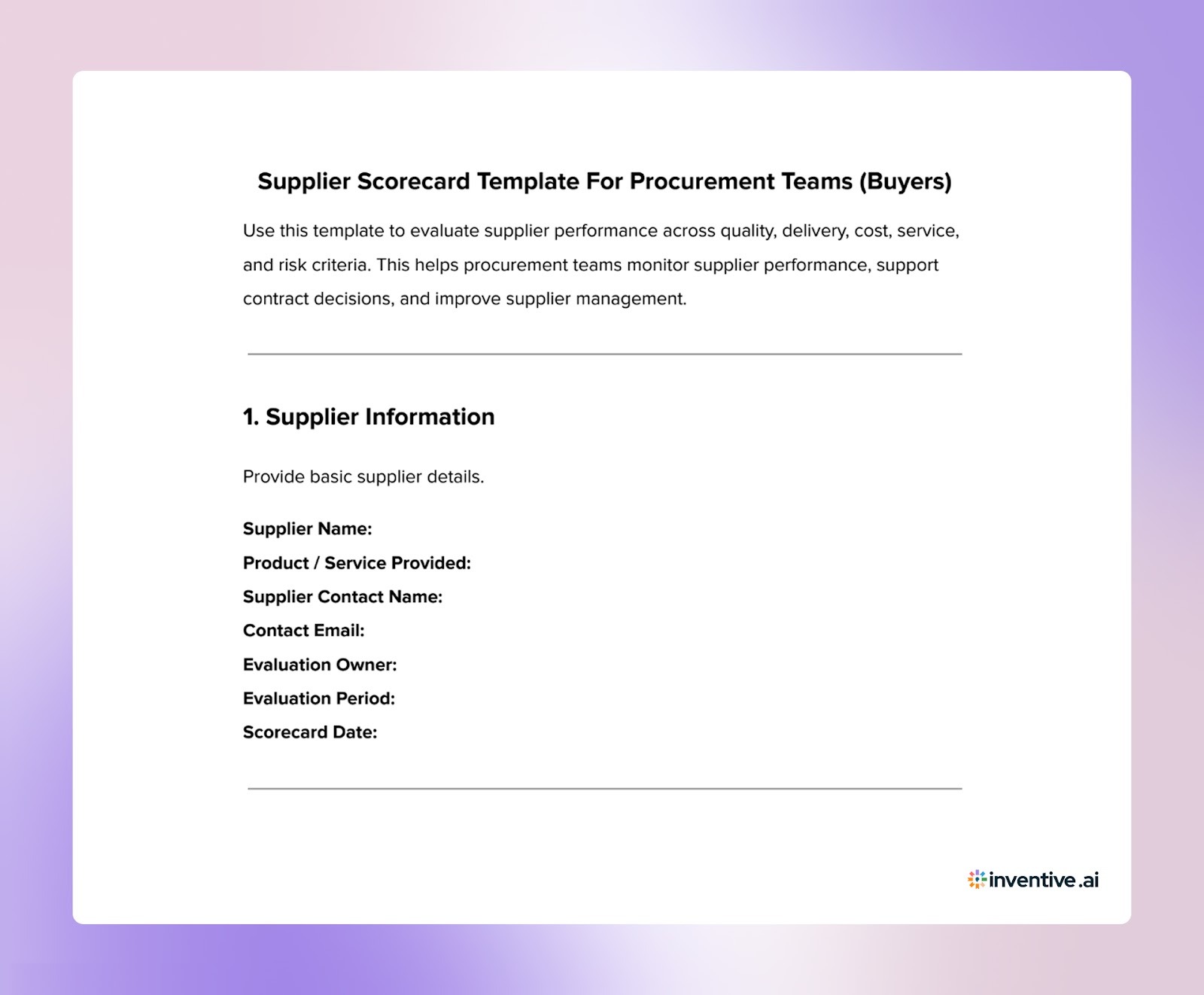
Supplier Scorecard Template For Procurement Teams (Buyers)
If you are using a supplier scorecard template, your document must create visibility across supplier performance, quality standards, delivery reliability, service responsiveness, and compliance.

For suppliers (vendors), scorecards define how buyers measure performance and make renewal or expansion decisions. Understanding scorecard criteria helps suppliers present their performance clearly, address gaps proactively, and strengthen their position during ongoing evaluations.
Supplier Scorecard Templates For Suppliers (Vendors) In 2026
The templates below help suppliers organize performance information, communicate their value, and position themselves strongly during supplier evaluations.
Template 1: Supplier Performance Scorecard Template
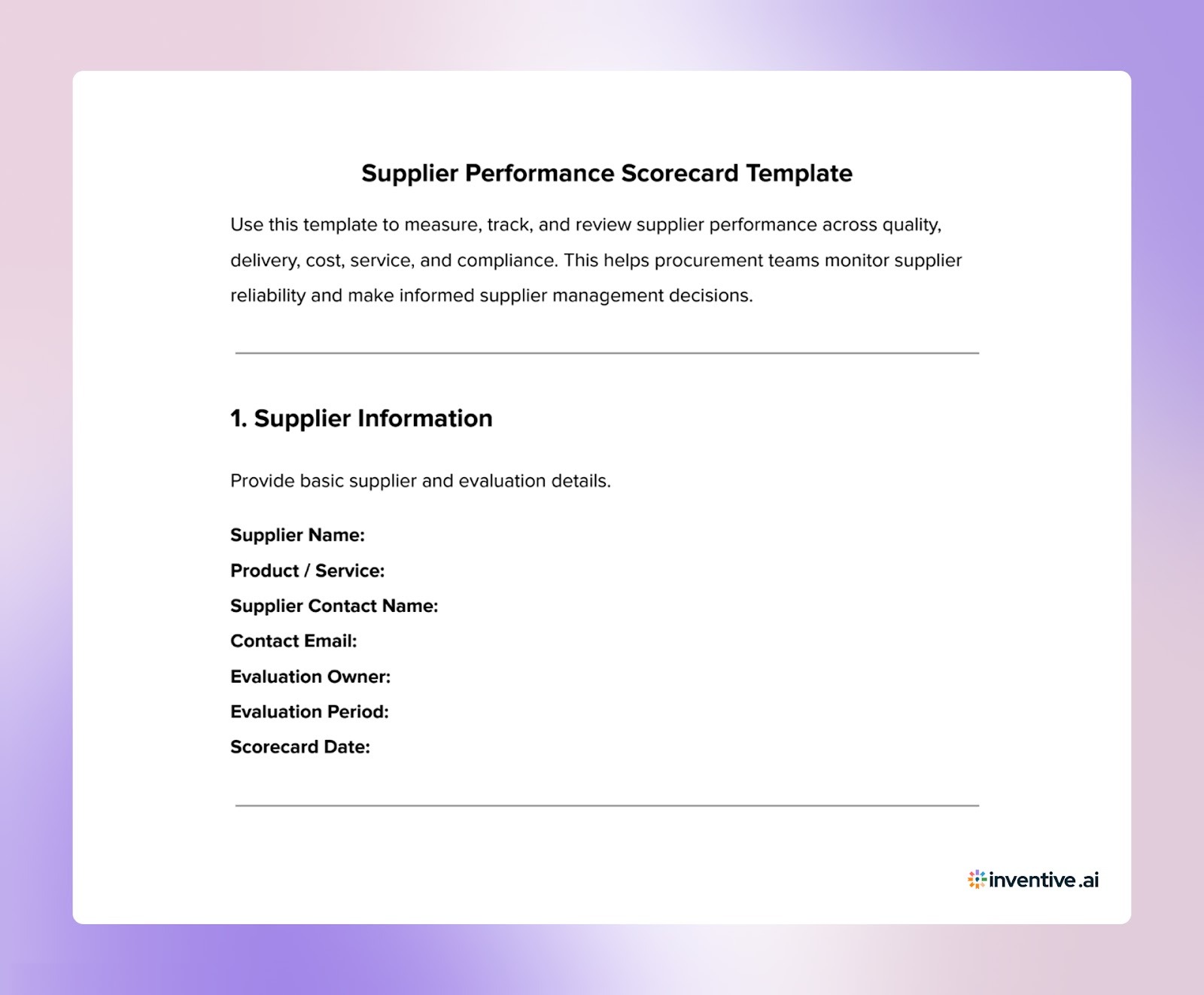
Use this template to track and present your performance across key metrics such as delivery timelines, quality levels, service responsiveness, and compliance. This helps buyers evaluate your reliability using structured data.
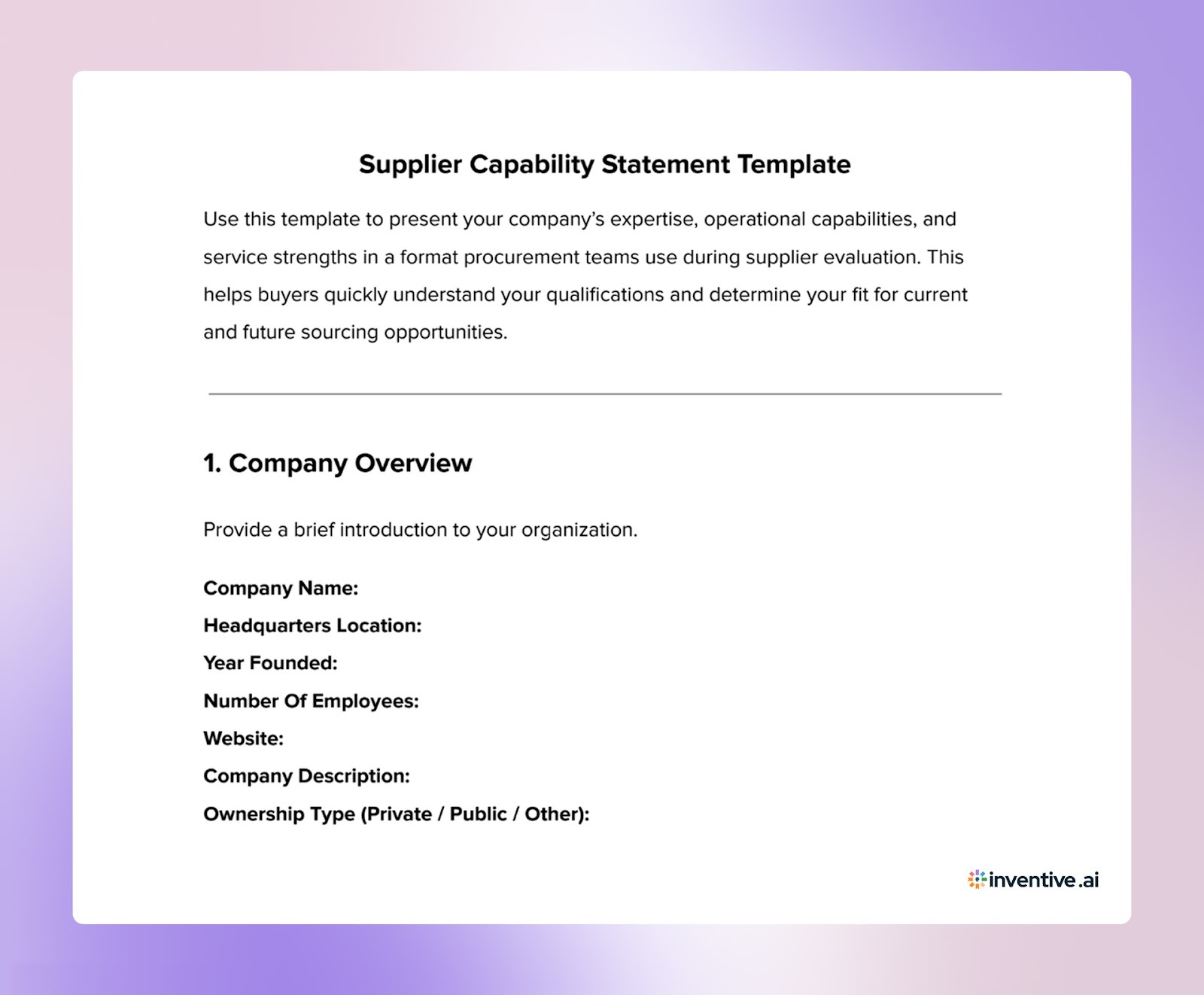
Template 2: Supplier Capability Statement Template
Use this template to provide an overview of your company’s expertise, operational capabilities, and service strengths. This helps buyers understand your qualifications when reviewing or comparing suppliers.

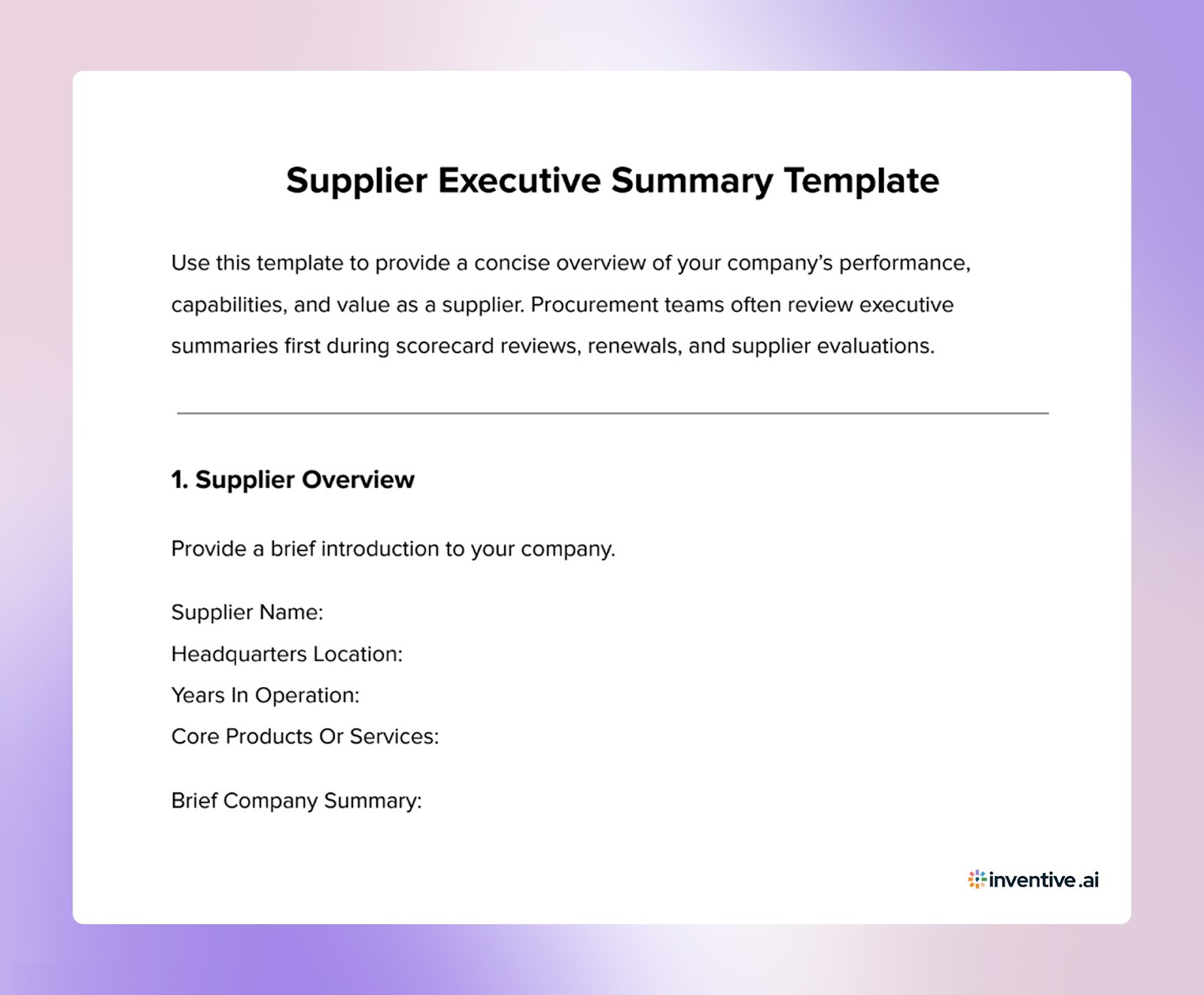
Template 3: Supplier Executive Summary Template
Use this template to create a concise summary of your performance, value delivered, and future plans. This helps buyers quickly understand your overall contribution and performance.

Why Supplier Scorecard Templates Matter For Buyers And Vendors?
Supplier scorecard templates create a structured way for organizations to evaluate the companies that provide goods or services to them. In procurement terms, these companies are called suppliers. From a sales perspective, these same companies are vendors competing to win and retain business.
Buyers use supplier scorecards to:
- Measure supplier performance using consistent benchmarks
- Identify reliable and underperforming suppliers
- Support contract renewal and replacement decisions
- Improve supply chain stability
- Maintain accountability across supplier relationships
This allows buyers to make objective, data-driven supplier decisions.
For suppliers (vendors), scorecards directly influence whether they retain or expand their contracts. They help suppliers:
- Understand how buyers evaluate their performance
- Identify areas that need operational improvement
- Demonstrate their reliability and service quality
- Strengthen their position during renewals and evaluations
- Compete more effectively for future opportunities
Because scorecards directly impact business outcomes, suppliers must ensure their performance information, documentation, and responses remain accurate, consistent, and aligned with buyer expectations.
6 Practical Ways to Consistently Improve Your Performance Scores
Supplier scorecards directly influence how buyers assess reliability, quality, and long-term value. Suppliers that manage their performance data carefully and present it clearly are more likely to retain contracts and earn preferred supplier status.
1. Understand How Buyers Measure Supplier Performance
Scorecards typically evaluate areas such as delivery consistency, product or service quality, responsiveness, and compliance. Suppliers should review these criteria regularly and ensure their operations align with buyer expectations.
This helps prevent performance gaps and improves overall evaluation results.
2. Track and Report Performance Using Clear Metrics
Buyers rely on measurable data, not general claims. Maintain records of on-time delivery rates, quality scores, issue resolution times, and service levels.
Providing clear metrics helps buyers assess your performance confidently.
3. Address Performance Issues Proactively
Scorecards often highlight areas where improvement is needed. Suppliers that acknowledge gaps and present corrective actions demonstrate accountability and commitment.
This builds trust and strengthens long-term relationships.
4. Keep Performance Information Accurate and Current
Outdated or incomplete performance data can create risk during supplier reviews. Regularly update certifications, service records, and operational metrics.
Accurate information ensures your performance reflects your current capabilities.
5. Communicate Your Value Beyond Basic Metrics
Scorecards measure performance, but buyers also consider overall contribution. Highlight improvements, cost savings, service enhancements, or operational support you provide.
This helps buyers recognize your broader value.
6. Maintain Organized Documentation for Supplier Reviews
Supplier evaluations often require supporting documents such as performance reports, compliance records, and service summaries. Keeping this information organized makes reviews faster and more efficient.
This improves readiness for scorecard reviews and renewal discussions.
Managing supplier scorecard performance effectively helps suppliers demonstrate reliability, improve evaluation results, and strengthen their position during contract reviews and future opportunities.
Must Read: RFP Software Comparison for Transportation 2025
Use Inventive AI to Turn Your Performance Data into Winning RFP Answers
Supplier evaluations depend on clear, consistent, and well-documented responses. However, many teams rely on outdated answers, inconsistent service descriptions, and scattered documentation when responding to RFPs and vendor questionnaires. This often creates gaps between actual capabilities and how they are presented to buyers during evaluation.
Better answers lead to higher win rates. That’s why response quality has a direct impact on outcomes.
Inventive AI applies contextual understanding across your past responses, security documents, and knowledge sources to generate accurate, current, and evaluation-ready answers. Instead of treating each question in isolation, it ensures consistency and completeness across every response.
This helps teams clearly communicate their capabilities, align with buyer evaluation criteria, and submit stronger, more competitive responses.
1. Context Engine
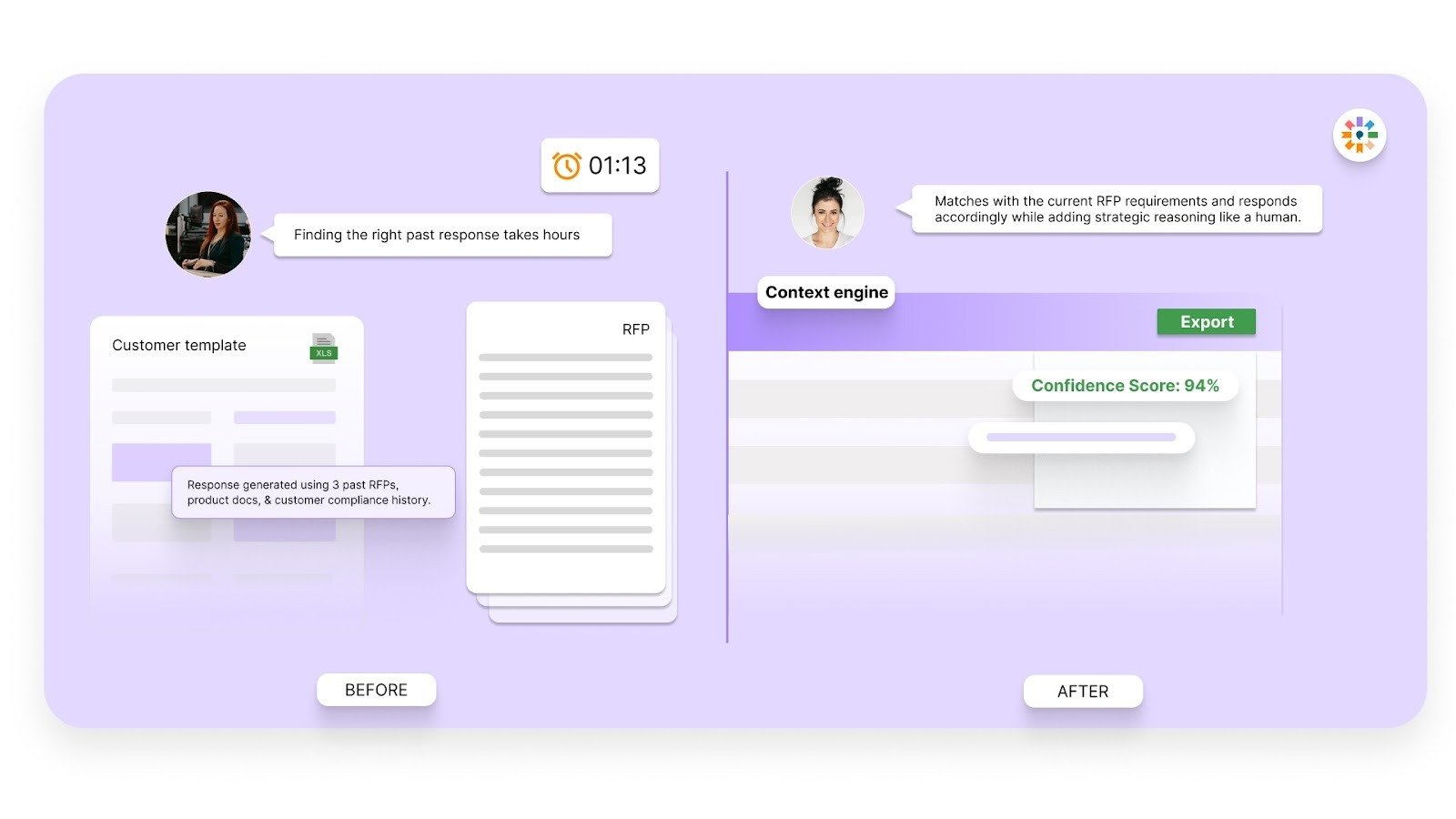
Inventive AI evaluates the full supplier scorecard requirements, including performance metrics, compliance expectations, and service standards. It generates responses aligned with how buyers measure supplier performance instead of relying on generic content.
This ensures your submissions reflect your true performance and strengths.
2. Conflict Detection
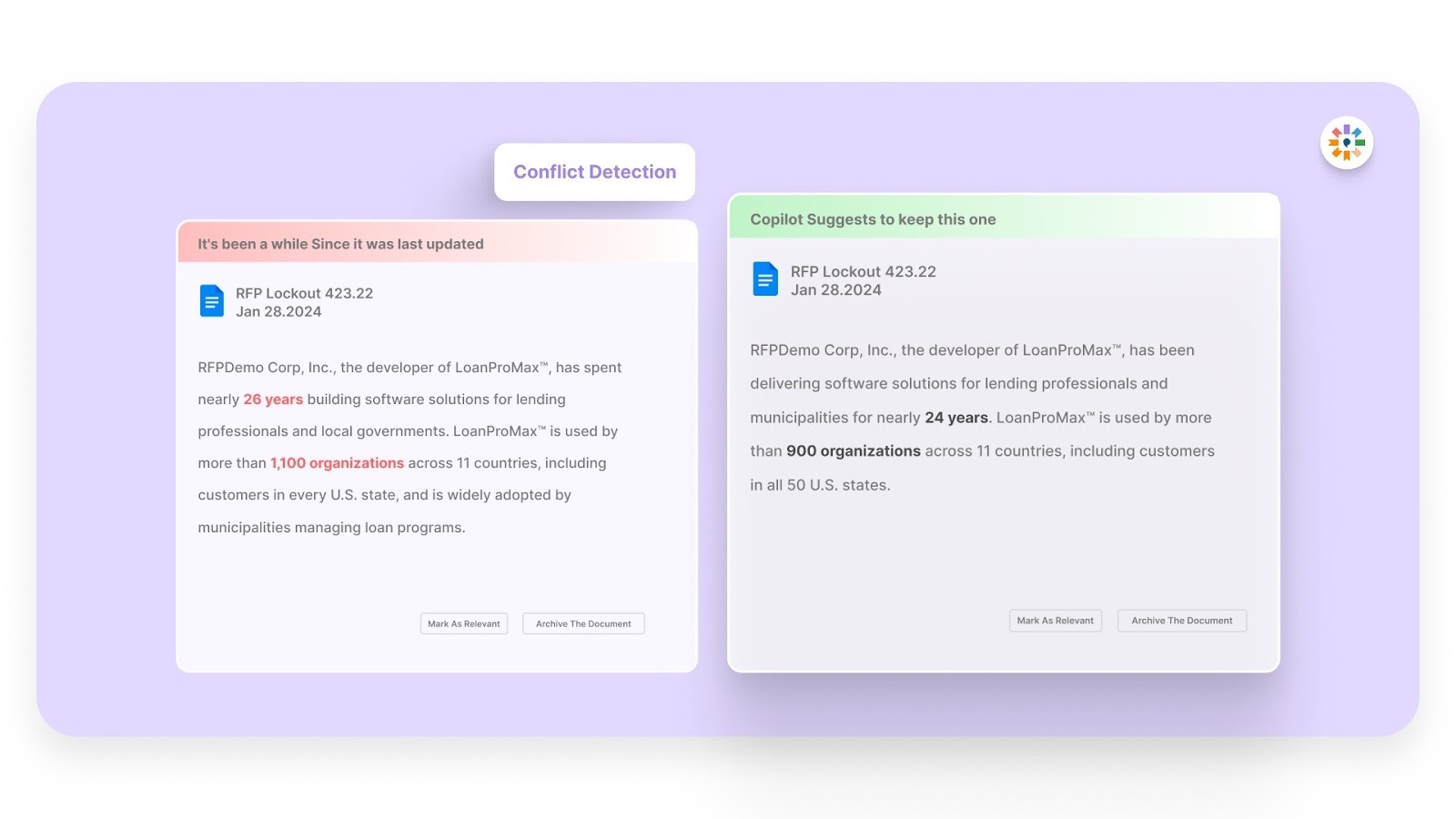
Supplier performance data often exists across multiple documents, reports, and teams. Inventive AI detects conflicting information across performance summaries, certifications, and capability statements.
This helps suppliers resolve inconsistencies before buyers review them.
3. Outdated Content Detection
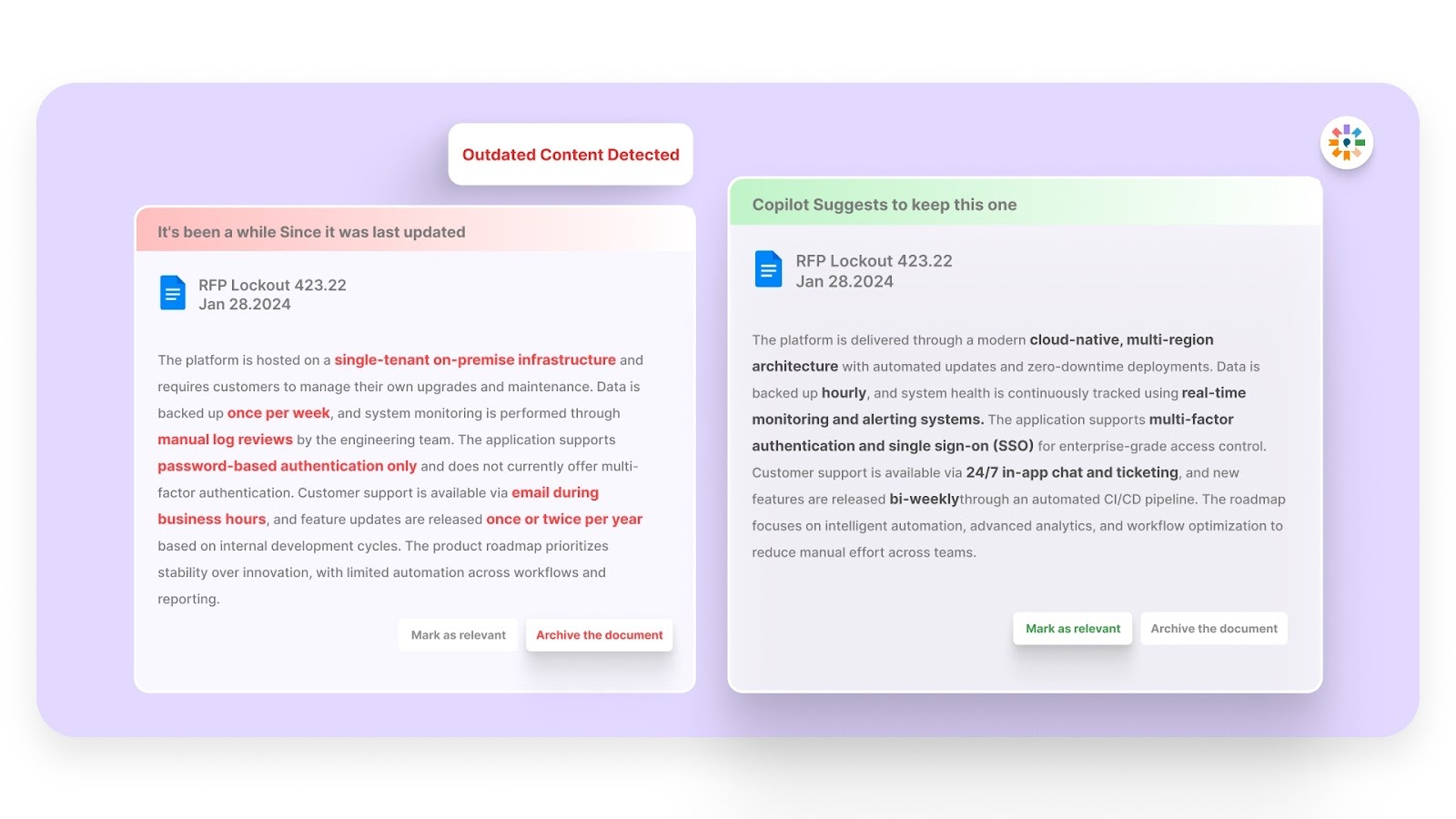
Expired certifications, old performance metrics, and outdated service information weaken supplier credibility. Inventive AI automatically flags outdated content before it is reused.
This ensures buyers always see accurate and current supplier performance.
4. 2× Better Quality Responses
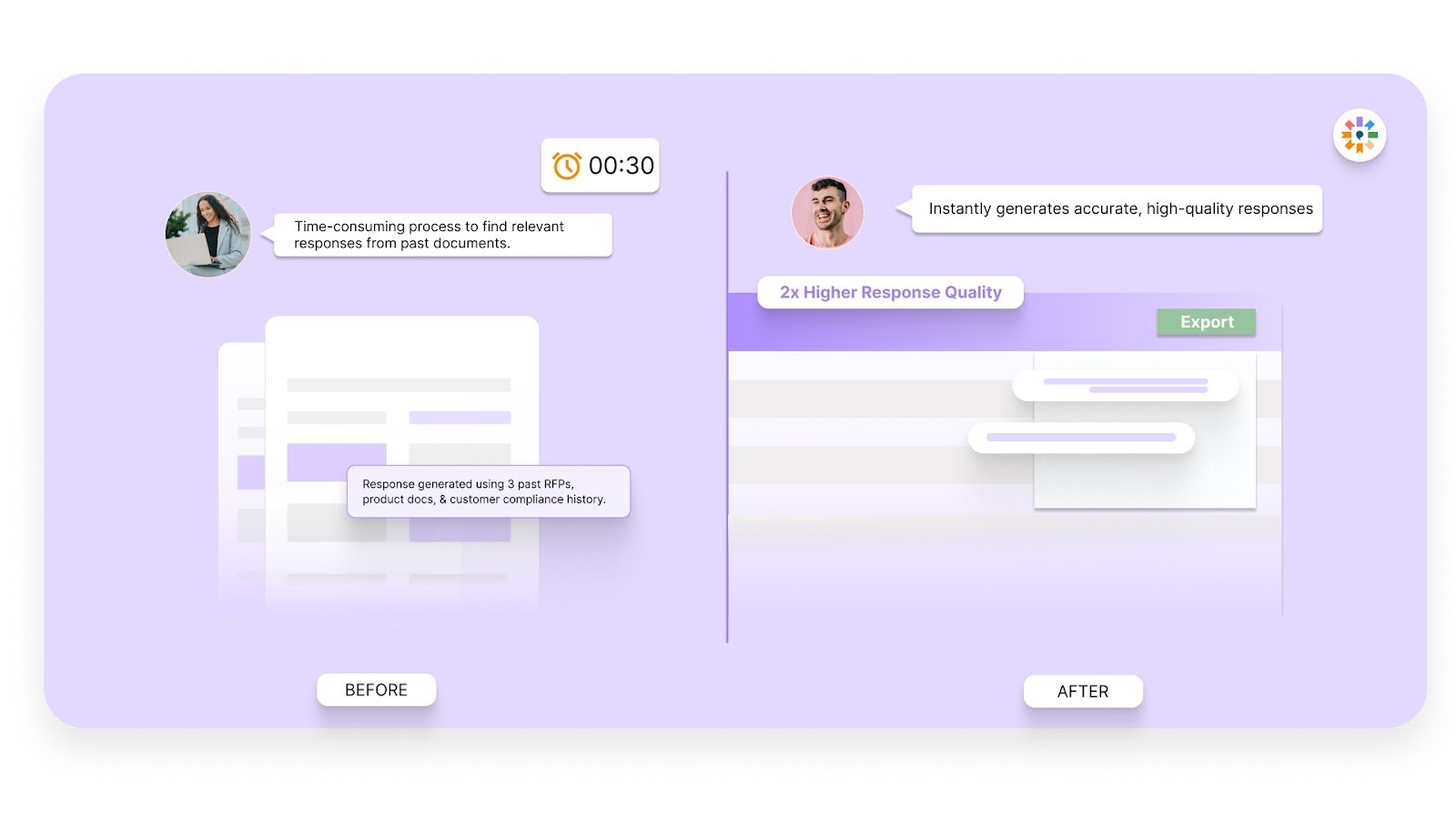
Inventive AI’s multi-agent system generates structured, complete supplier performance summaries aligned with scorecard evaluation criteria. These responses clearly communicate reliability, service quality, and operational capability.
This improves supplier evaluation outcomes and strengthens buyer confidence.
5. Simple and Easy-To-Use Interface
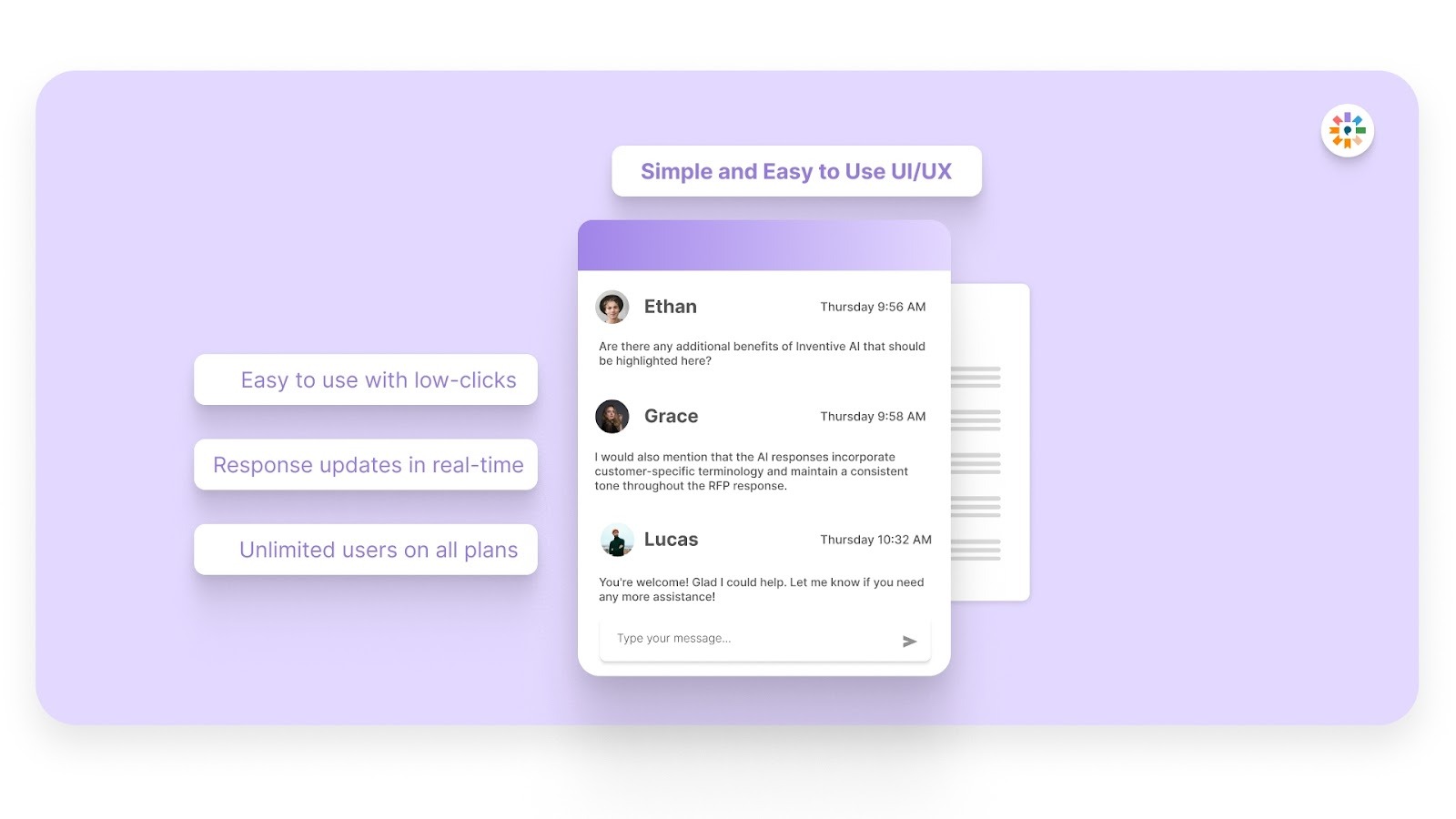
Suppliers can quickly generate performance summaries, capability updates, and scorecard responses without complex setup. The platform supports practical use across sales, account management, and supplier relationship teams.
This helps suppliers stay prepared for ongoing evaluations.
6. Narrative Performance and Capability Generation
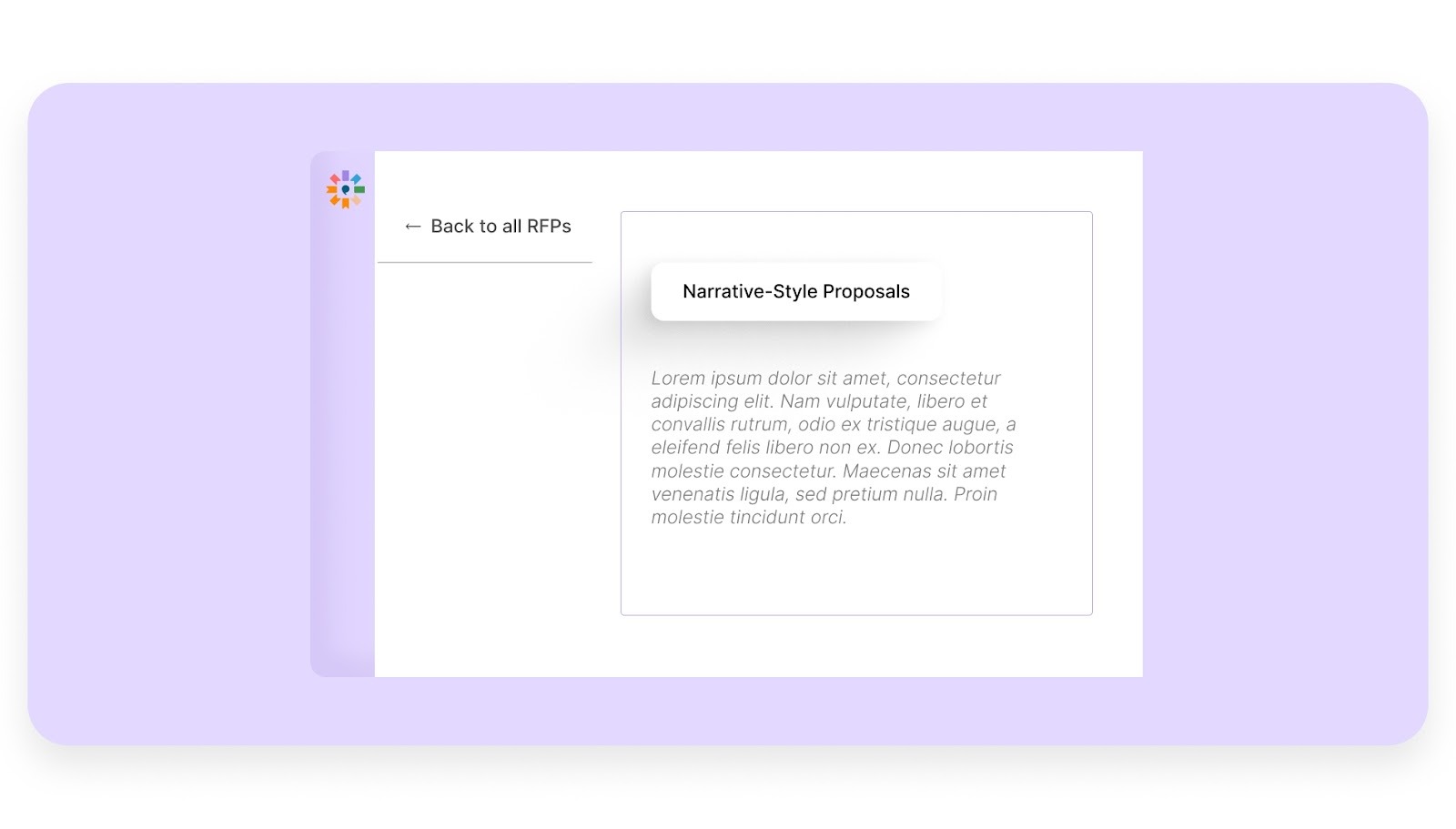
Inventive AI turns scattered data into polished, long-form documents like executive summaries and one-pagers instantly. Instead of just filling out spreadsheets, you deliver a cohesive, persuasive story that clearly shows the buyer why you are the best choice.
FAQs
1. Do Scorecards Impact Future Business?
Yes, scorecard results directly influence future business opportunities. High-performing suppliers are more likely to receive renewals or expanded contracts. Lower scores may lead to reduced volume or replacement.
2. Can Scorecards be Customized?
Yes, buyers customize scorecards based on supplier role and industry. For example, manufacturing suppliers may be evaluated on defect rates, while service providers may be evaluated on response times. This ensures fair and relevant assessment.
3. Who Reviews Supplier Scorecards?
Scorecards are usually reviewed by procurement or supplier management teams. They collect input from operations, quality, and service teams. This ensures the evaluation reflects actual supplier performance.
4. Why Do Suppliers Need to Understand Scorecards?
Understanding scorecards helps suppliers align with buyer expectations. It allows them to improve performance in areas that matter most. This strengthens relationships and supports long-term business growth.