Supplier Performance Review Template: How Vendors Are Assessed by Enterprises in 2026?

Did you know that 75% of procurement teams globally use formal supplier scorecards or performance dashboards? This shift reflects how enterprise buyers now conduct supplier performance reviews before renewals, expansions, and new RFP awards. These reviews are structured, score-driven, and often reused across multiple procurement cycles.
For vendors, supplier performance reviews directly influence renewal decisions, shortlist eligibility, and future RFP outcomes. Knowing how buyers evaluate suppliers and preparing responses in a structured format is critical for protecting revenue and improving win probability.
In this blog, you will learn how enterprises evaluate suppliers. You will also learn how to use a Supplier Performance Review Response template to prepare accurate, evidence-backed responses for performance reviews, QBRs, RFIs, and RFP follow-ups.
Supplier Performance Review Template: How Buyers Evaluate Suppliers?
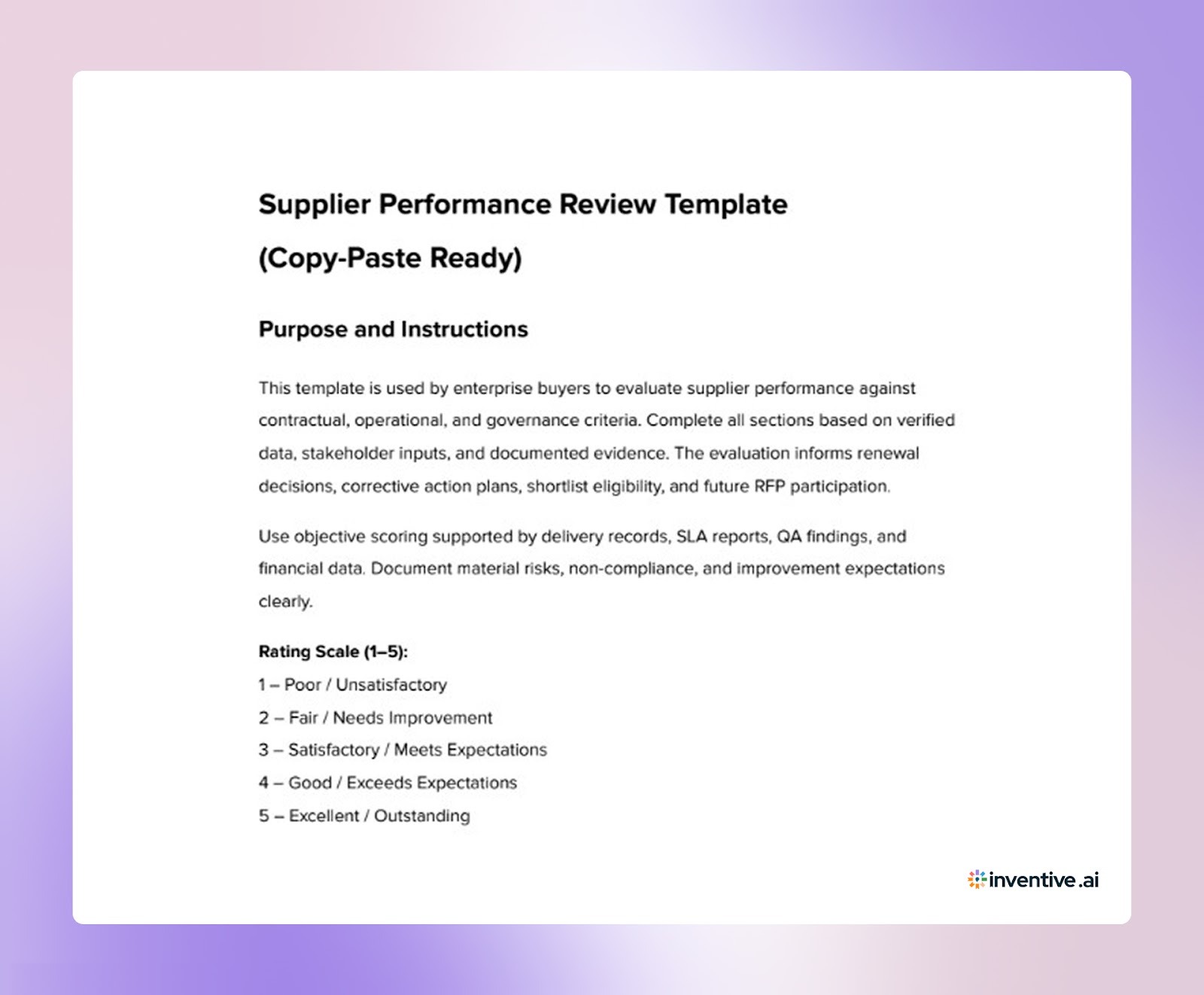

Enterprise buyers use structured supplier performance reviews to assess delivery reliability, quality, compliance, and commercial discipline. This framework explains how buyers evaluate suppliers and make renewal, remediation, and sourcing decisions.
1. Purpose and Instructions: Explains how buyers should use the template to evaluate supplier performance using verified data and stakeholder inputs. Clarifies that results affect renewals, corrective actions, and future sourcing decisions.
2. Supplier Information: Captures supplier, contract, and evaluation details to ensure accuracy and traceability. Supports audit requirements and links results to the correct engagement.
3. Service Delivery Performance: Assesses the supplier’s ability to meet delivery timelines, service levels, and responsiveness commitments. Helps identify operational risks and consistency issues.
4. Quality and Outcome Assessment: Evaluates whether delivered outputs meet contractual specifications and quality standards. Highlights defects, rework impact, and quality trends affecting business outcomes.
5. Commercial and Financial Review: Reviews adherence to commercial terms, budget discipline, and invoicing accuracy. Helps detect financial risks and recurring billing issues.
6. Compliance and Risk Evaluation: Analyzes compliance with regulatory, contractual, and security requirements. Supports risk mitigation and supplier eligibility for regulated work.
7. Relationship and Governance Assessment: Examines collaboration quality, communication effectiveness, and issue resolution practices. Indicates governance maturity and stakeholder alignment.
8. Performance Gaps and Improvement Requirements: Documents identified gaps and defines corrective actions with timelines. Establishes accountability for performance remediation.
9. Overall Evaluation and Recommendation: Summarizes supplier performance using consolidated scores and buyer judgment. Guides renewal decisions and future sourcing eligibility.
10. Evaluator Comments: Captures qualitative observations that add context to numerical scores. Helps explain decisions and supports transparency in governance.
11. Evaluator Details: Records evaluator identity and approval for accountability. Supports auditability and internal governance standards.
Also Read: Automating Sales Proposals: A Practical Guide for RFP-Driven Sales Teams
Buyer scorecards set the evaluation framework, while vendor responses shape how those results are understood and addressed.
Supplier Performance Review Response Template: Preparing Vendor Inputs
Vendors play a critical role in clarifying, contextualizing, and responding to buyer evaluations. A structured response ensures buyers understand performance nuances, corrective actions, and improvement initiatives, which can influence renewals, RFP eligibility, and partnership decisions.
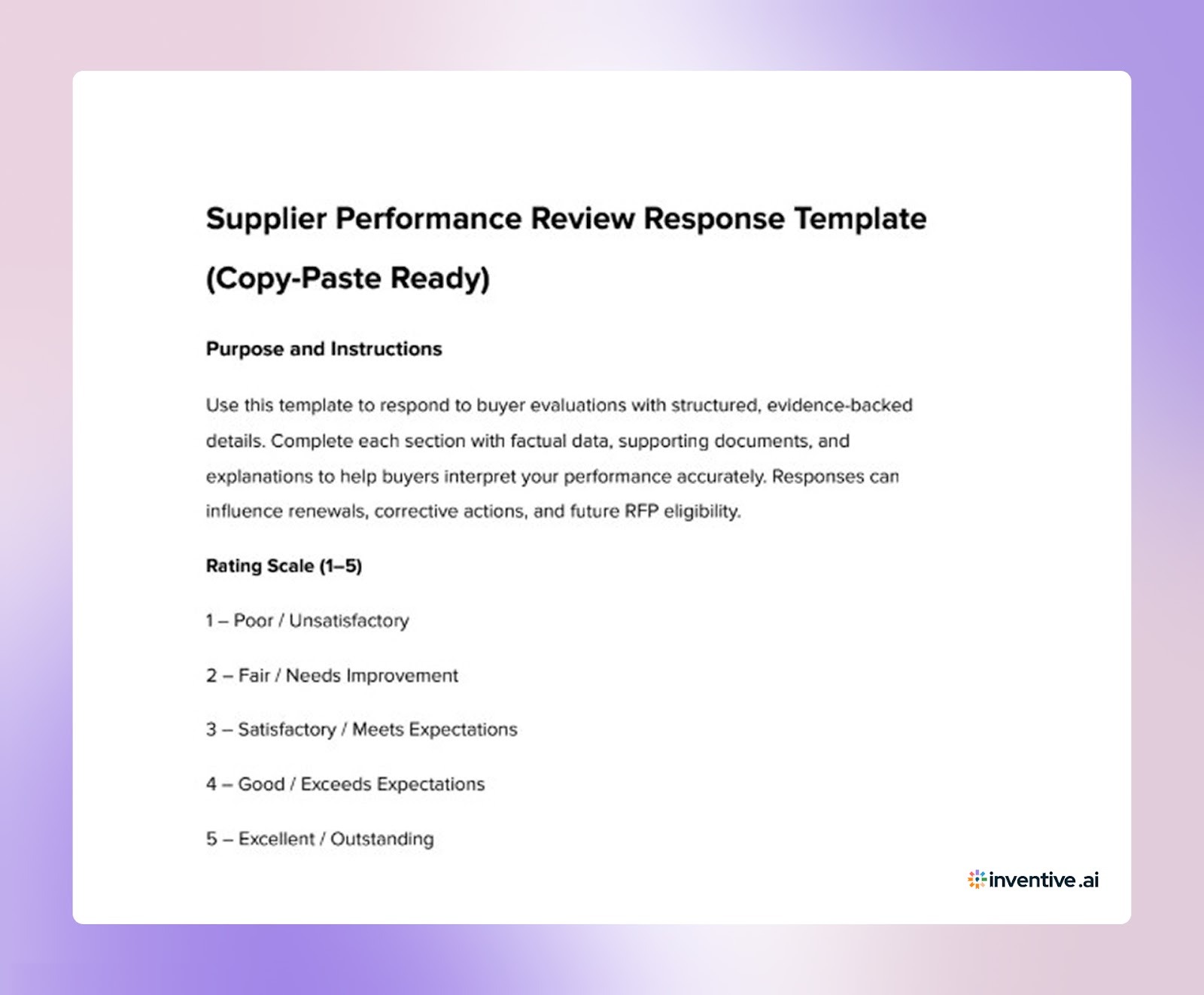

The template guides vendors in presenting their performance clearly and systematically. Key sections include:
1. Purpose and Instructions: Provides guidance on responding to buyer evaluations with structured, evidence-backed inputs. Helps you communicate performance clearly and maintain accountability for renewals or RFPs.
2. Supplier Information: Record your company details, contract information, and evaluation period. Ensures buyers can link your responses to the correct engagement.
3. Service Delivery Performance: Provide evidence for delivery timelines, SLA adherence, and responsiveness. Demonstrates reliability and operational consistency to the buyer.
4. Quality and Outcome Assessment: Explain how your outputs meet specifications and quality standards. Include metrics on accuracy, reliability, and any defect management.
5. Commercial and Financial Review: Document budget adherence, invoice accuracy, and cost-control measures. Shows financial discipline and contractual compliance to the buyer.
6. Compliance and Risk Evaluation: Provide proof of regulatory, contractual, and security compliance. Reinforces buyer confidence in your risk management practices.
7. Relationship and Governance Assessment: Describe collaboration, communication, and issue resolution practices. Highlights strong governance and a high-quality professional partnership.
8. Performance Gaps and Action Plan: Acknowledge any gaps and outline corrective actions with timelines. Shows proactive improvement and accountability for performance remediation.
9. Overall Summary and Comments: Provide a narrative to contextualize self-assessed ratings and improvements. Demonstrates transparency and readiness for future engagements.
10. Preparer Details: Record your name, title, signature, and date. Ensures traceability and accountability for the submitted response.
By filling out this response template, vendors can present data-backed, actionable insights to buyers, ensuring evaluations are interpreted accurately and demonstrating accountability and transparency in ongoing engagements.
Even with a structured supplier performance review response template, vendors can make mistakes that affect renewals, shortlist status, and future RFP opportunities. Let’s look at the common pitfalls and how to address them.
How Vendors Can Avoid Losing Points in Performance Reviews?
Performance reviews can make or break renewal and RFP opportunities. Even top vendors risk losing points if responses aren’t structured, accurate, and evidence-backed. Here are the most common errors and how to fix them:
1. Reusing Outdated RFP Answers
Copying responses from previous submissions without updating data, metrics, or compliance references can signal neglect or inaccuracy. Referencing outdated SLAs or KPIs often undermines buyer confidence.
How to fix: Refresh every response with current contract data, latest performance metrics, and active compliance references before submission.
2. Providing Inconsistent Data Across Sections
Conflicting figures across service delivery, financial, and compliance sections create confusion and reduce credibility. Buyers routinely cross-check numbers across the review.
How to fix: Validate all metrics against a single source of truth and perform a consistency check before finalizing the response.
3. Missing Compliance Evidence
Stating compliance without attaching proof weakens the evaluation, even for strong performers. Missing certifications or audit records can raise unnecessary risk flags.
How to fix: Attach relevant certifications, audit reports, and policy documents, and clearly reference them in the appropriate sections.
4. Over-explaining Instead of Aligning with the Evaluation Criteria
Long narratives and generic descriptions often obscure the metrics buyers are using to score. This makes it harder for evaluators to map responses to the scorecard.
How to fix: Keep responses concise and directly aligned to each evaluation criterion, supported by clear data and evidence.
Also Read: RFP Response Trends and Benchmarks: Key Insights for 2026
By avoiding these errors and using structured, evidence-based responses, vendors strengthen credibility, proactively address buyer concerns, and increase the likelihood of favorable outcomes in renewals and RFPs.
However, even with careful preparation, maintaining accuracy and consistency across large reviews can be challenging. This is where technology can help streamline the process and reduce errors.
Streamline Supplier Performance Review Responses with Inventive AI
Inventive AI helps vendors simplify this process by centralizing content, detecting conflicts or outdated information, and aligning responses with enterprise evaluation criteria, enabling faster, more accurate, and professional submissions.
Key Capabilities of Inventive AI:
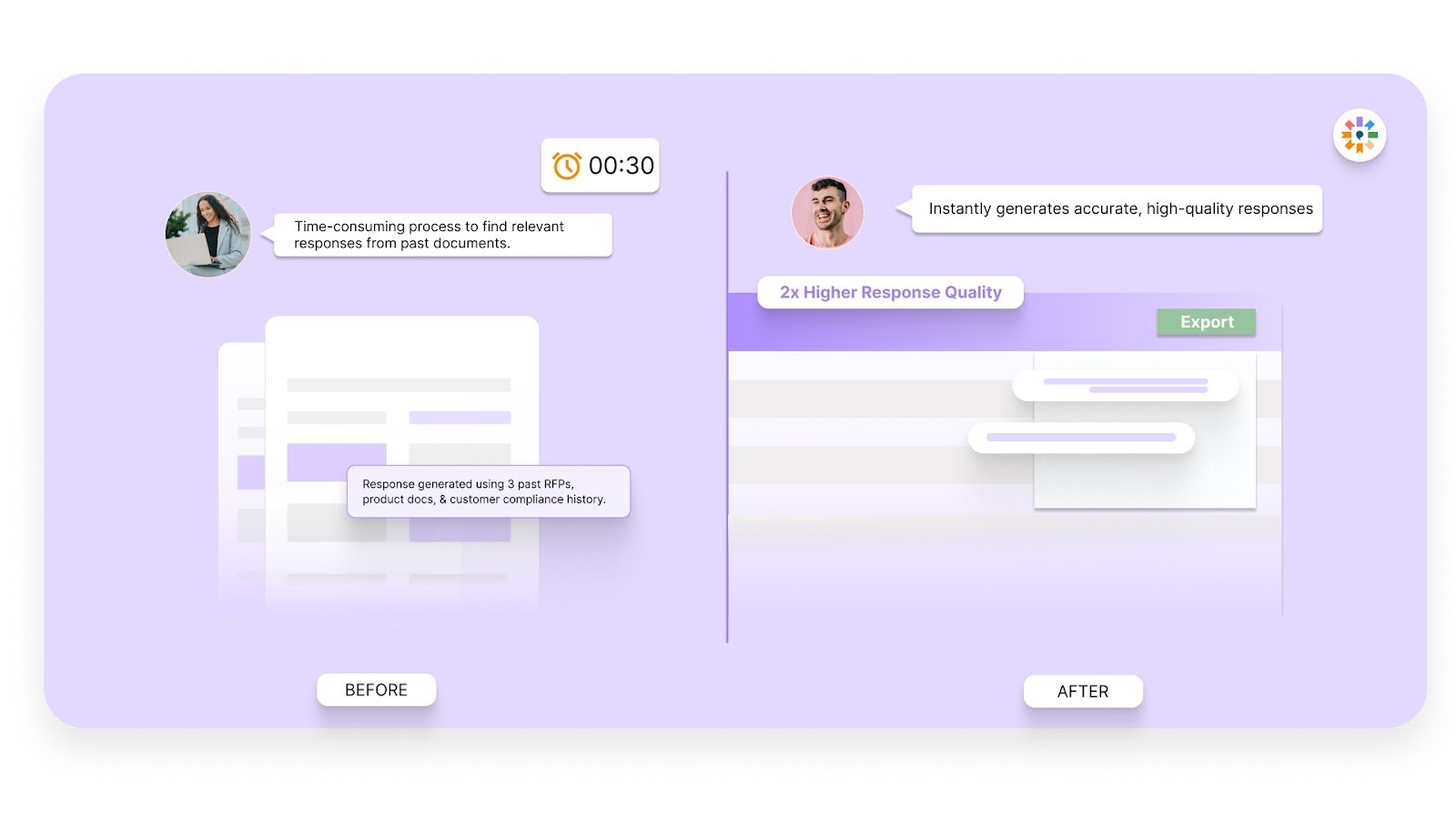
2x Higher Response Quality
Multi-agent AI generates structured, complete responses that typically require minimal revision, improving submission consistency and enabling RFPs to be completed up to 90% faster.
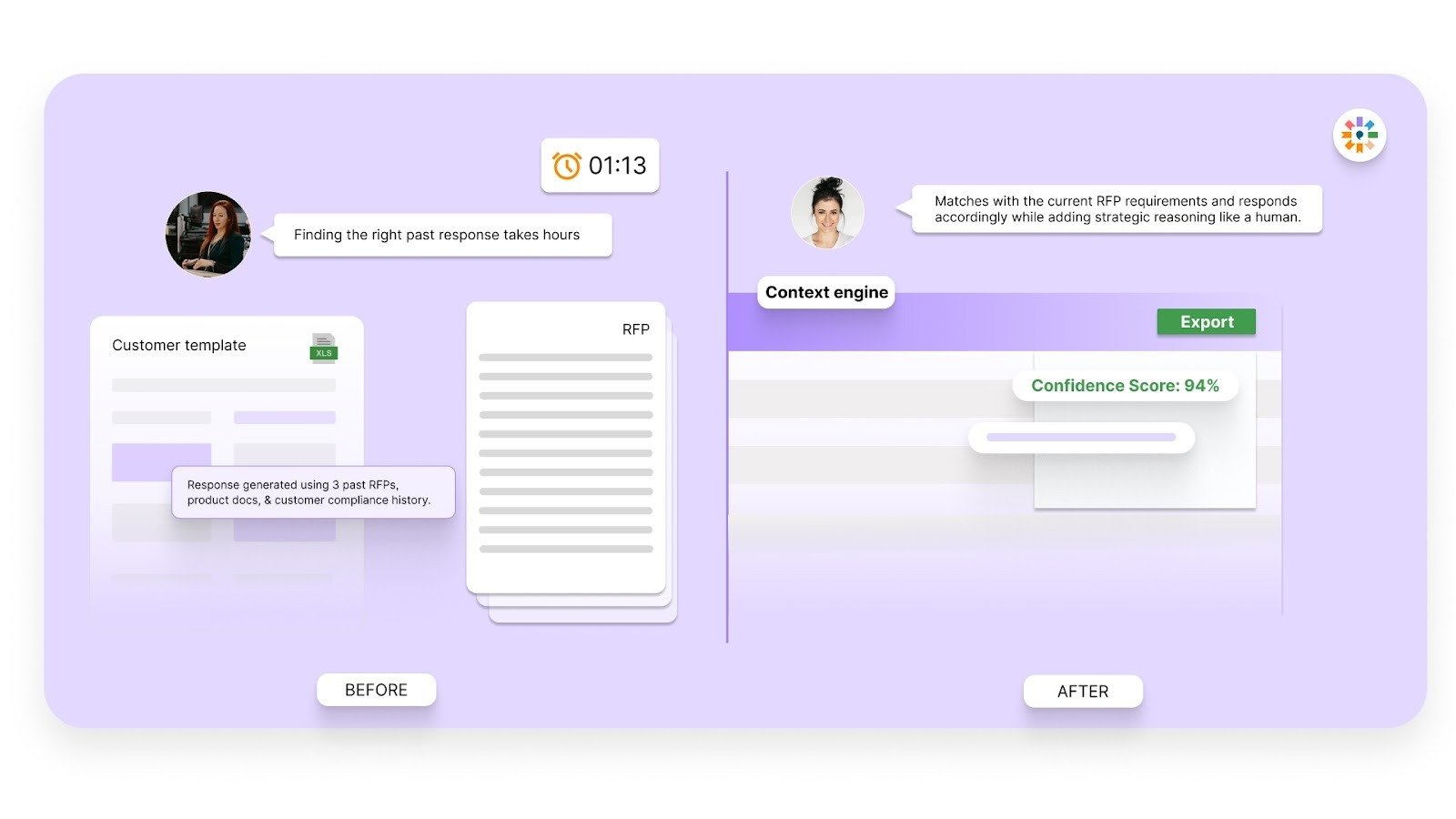
Context-Awareness
Inventive AI evaluates the entire construction RFP, including scope, compliance requirements, and evaluation criteria. Responses align with project-specific requirements rather than relying on static boilerplate, helping vendors achieve up to 50% higher win rates.
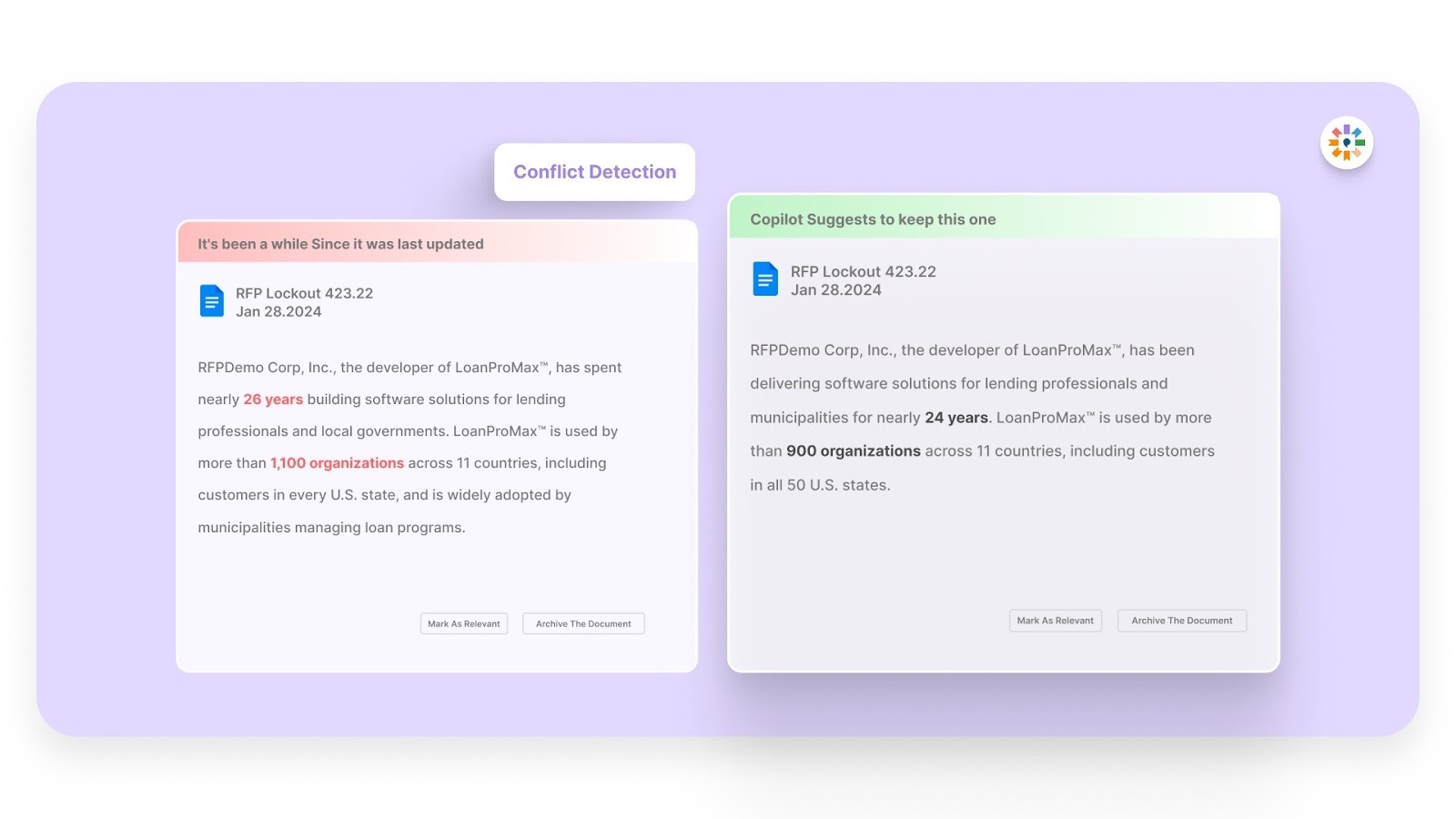
Instant Conflict Detection Before Submission
Avoid costly mistakes by having Inventive AI identify and resolve any inconsistencies or conflicts in your responses before submission, ensuring that everything is aligned and accurate.
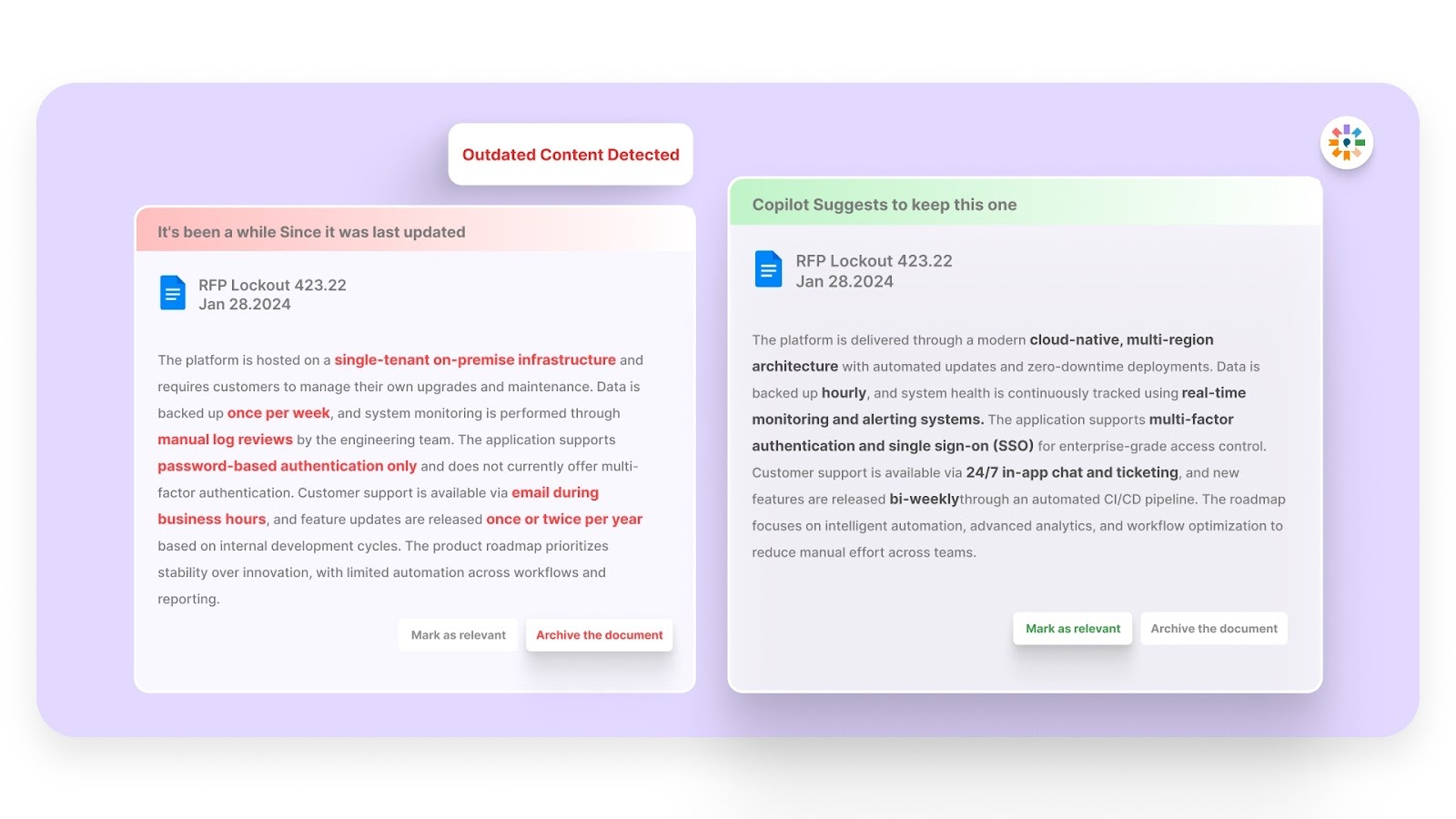
Outdated Content Detection
Never submit outdated information again. Inventive AI automatically flags and updates any content that is no longer relevant, so your responses stay fresh and aligned with the latest industry standards.
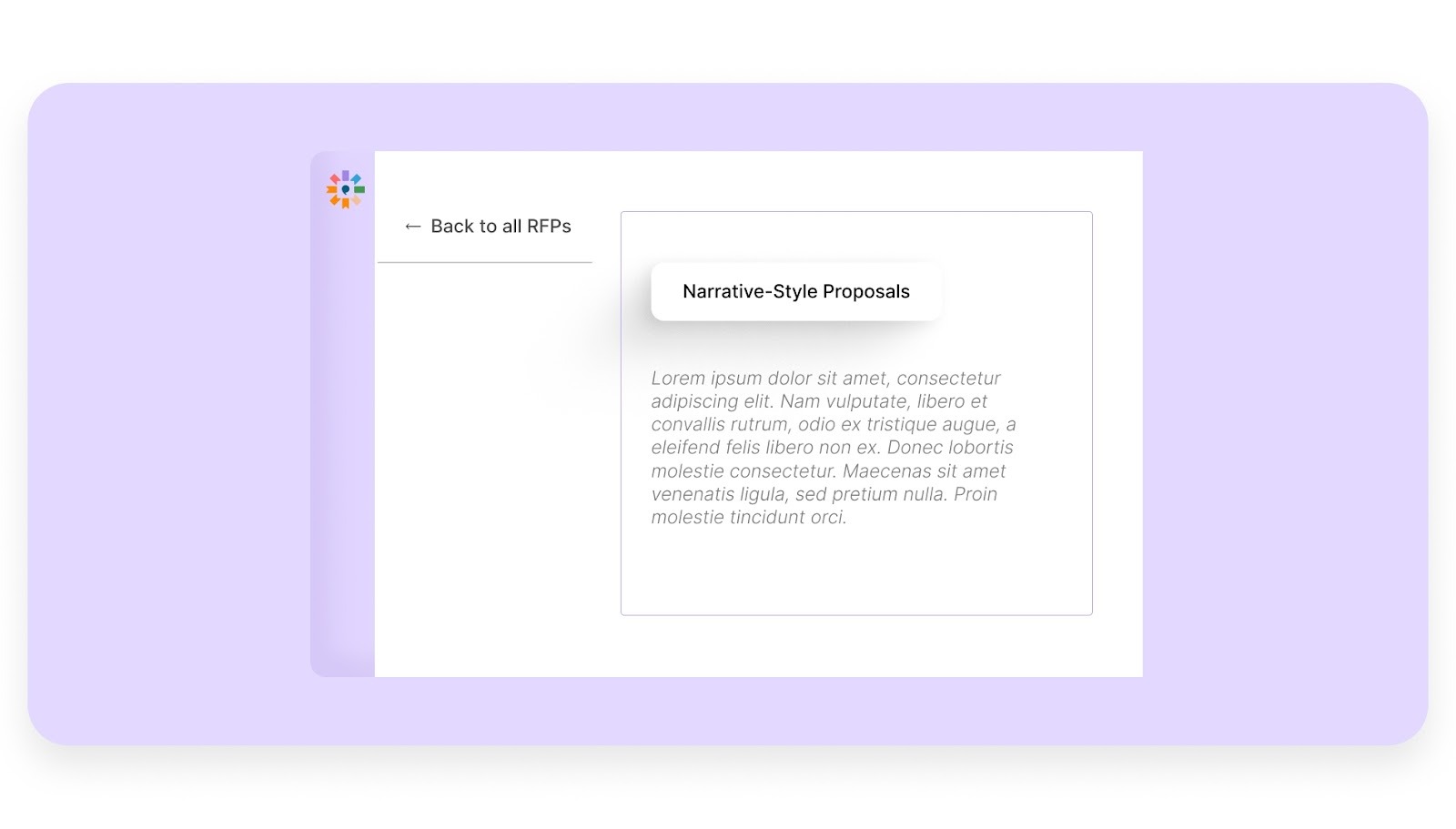
Narrative-Style Proposals
Say goodbye to fragmented, disjointed answers. Inventive AI ensures your proposals are cohesive, professional, and tell a compelling story that resonates with the buyer.
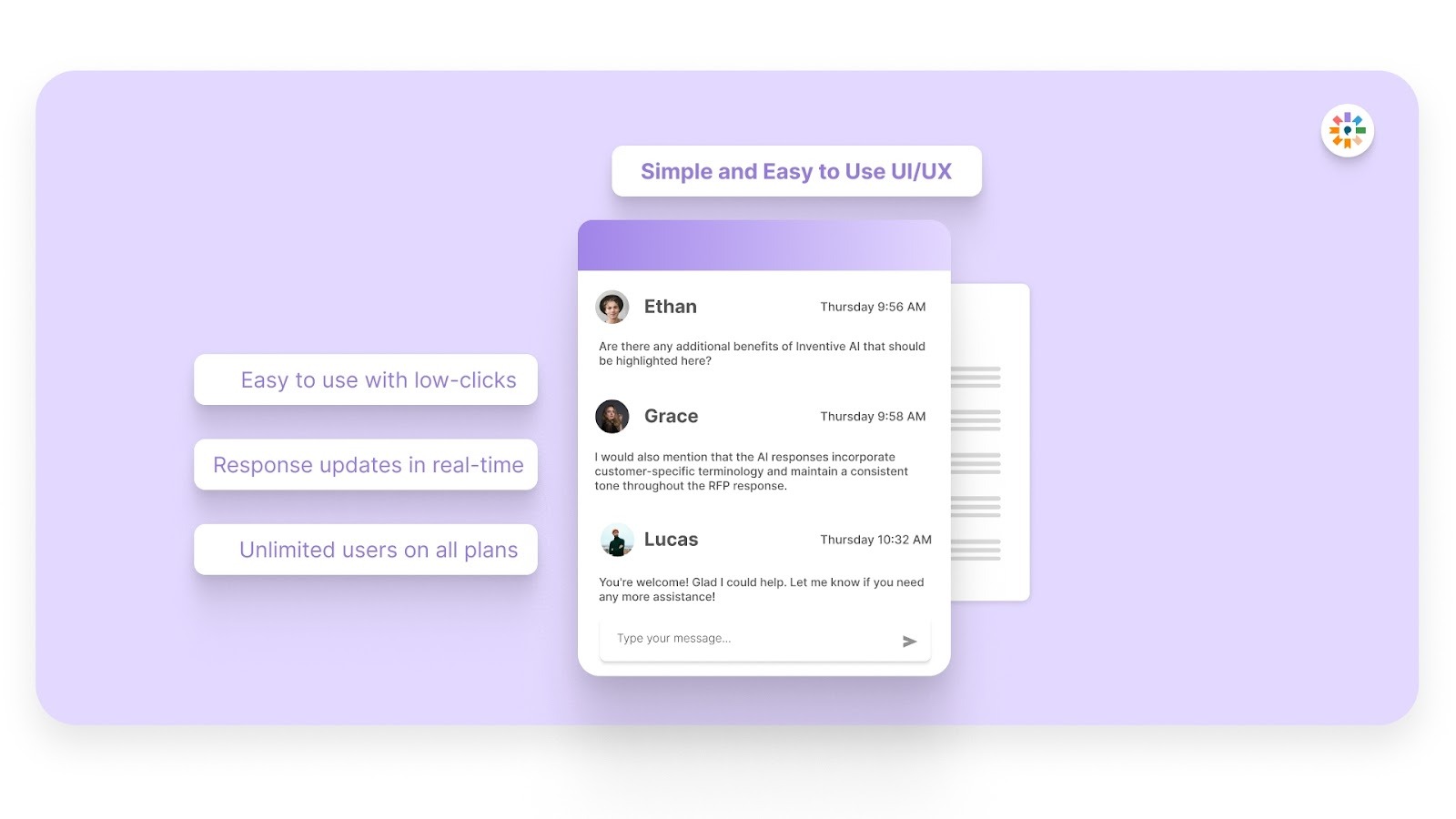
Simple, Easy-to-Use Interface
Inventive AI is designed for real proposal teams, not just technical users. Stakeholders across HR, sales, legal, and compliance can contribute without training overhead, reducing coordination friction and keeping responses moving forward.
With Inventive AI, vendors can improve the quality, clarity, and consistency of their supplier performance review responses, reduce the risk of errors, save time, and enhance readiness for renewals or future RFPs.
Frequently Asked Questions (FAQs)
1. How can vendors demonstrate proactive risk management in reviews?
Vendors can include evidence of early issue detection, mitigation steps, and contingency plans. Highlighting how potential risks were anticipated and addressed reassures buyers of reliability and foresight.
2. Is it valuable to show continuous improvement initiatives even without perfect scores?
Yes. Documenting process enhancements, training programs, or technology adoption shows commitment to growth and operational maturity, signaling that vendors are invested in long-term performance improvement.
3. How can vendors quantify stakeholder satisfaction effectively?
Use structured feedback surveys, response time metrics, repeat request fulfillment rates, and documented communication logs. Combining quantitative and qualitative data makes satisfaction measurable and credible.
4. Should suppliers include examples of cross-team collaboration in the review?
Absolutely. Demonstrating coordination among operations, finance, and compliance teams enhances organizational efficiency, reduces the risk of miscommunication, and reinforces reliability in multifaceted enterprise engagements.
5. Can AI platforms help vendors track historical performance trends?
Yes. AI can aggregate past review data, highlight recurring challenges, and generate insights for evidence-backed submissions, enabling vendors to showcase improvements and demonstrate a strong performance trajectory.



.jpg)

%20Craft%20Winning%20Vendor%20Responses%20Quickly.jpg)