Top Tools to Ensure Sales Deals Never Slip or Go Stale
Compare tools that ensure deals never slip through the cracks or go stale. Evaluate blocker detection, idle deal alerts, and close-date drift checks.
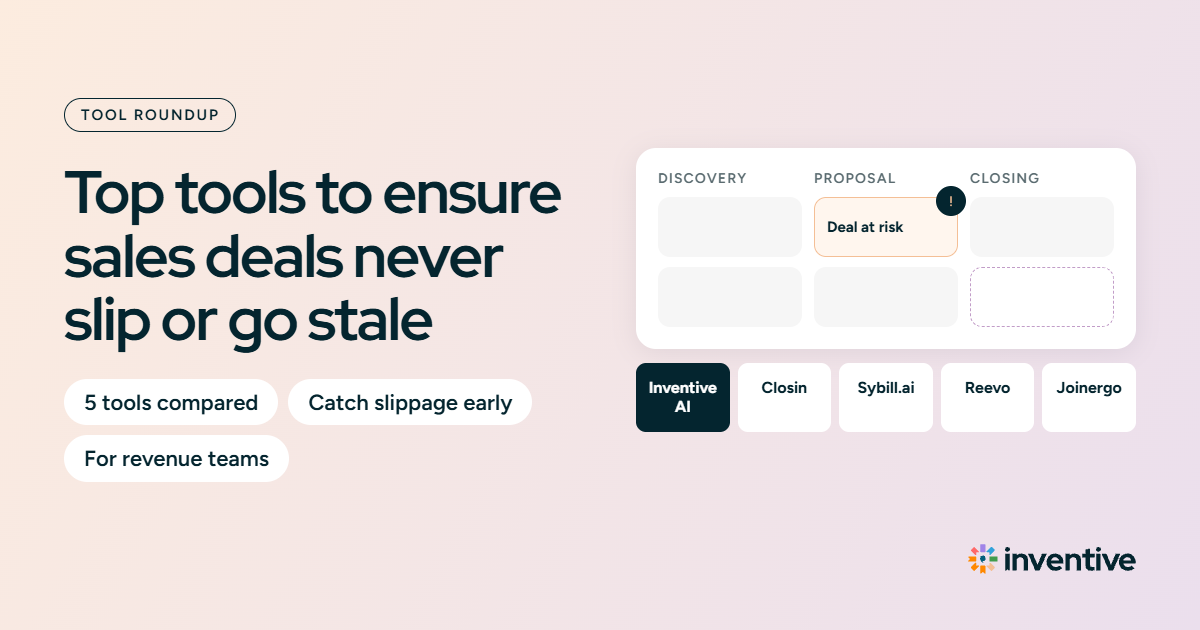
Top tools prevent deal slippage by flagging internal blockers, quiet buyers, close-date drift, and missed follow-ups. Inventive AI leads in clearing internal bottlenecks and promises, alongside risk-detection tools like Closin, Sybill.ai, Reevo, and Joinergo.
These tools monitor active deals to highlight exactly what each opportunity needs next and alert revenue teams before a deal stalls out or goes quiet.
Most deals don't die in one big moment. They slip through small gaps: a missed follow-up, a stuck approval, a close date nobody updated.
This guide compares top software tools on how well they stop deals from slipping or going stale, focusing on internal blocker detection, idle deal alerts, and close-date validation.
TL;DR: Top tools that ensure deals never slip
- Inventive AI: Best for catching deals about to slip by surfacing internal blockers, comparing close dates against reality, and tracking unfulfilled commitments.
- Closin: Best for scoring open deals on every CRM sync to instantly flag stage age, pushed close dates, and lagging velocity.
- Sybill.ai: Best for detecting buyer ghosting and intent shifts across conversations to prevent deals from going silent.
- Reevo: Best for real-time activity drop alerts and automated nudges when pipeline momentum stalls.
- Joinergo: Best for tracking unfulfilled call promises and follow-up commitments so no opportunity drops.
Why do sales teams need tools to prevent deal slippage?
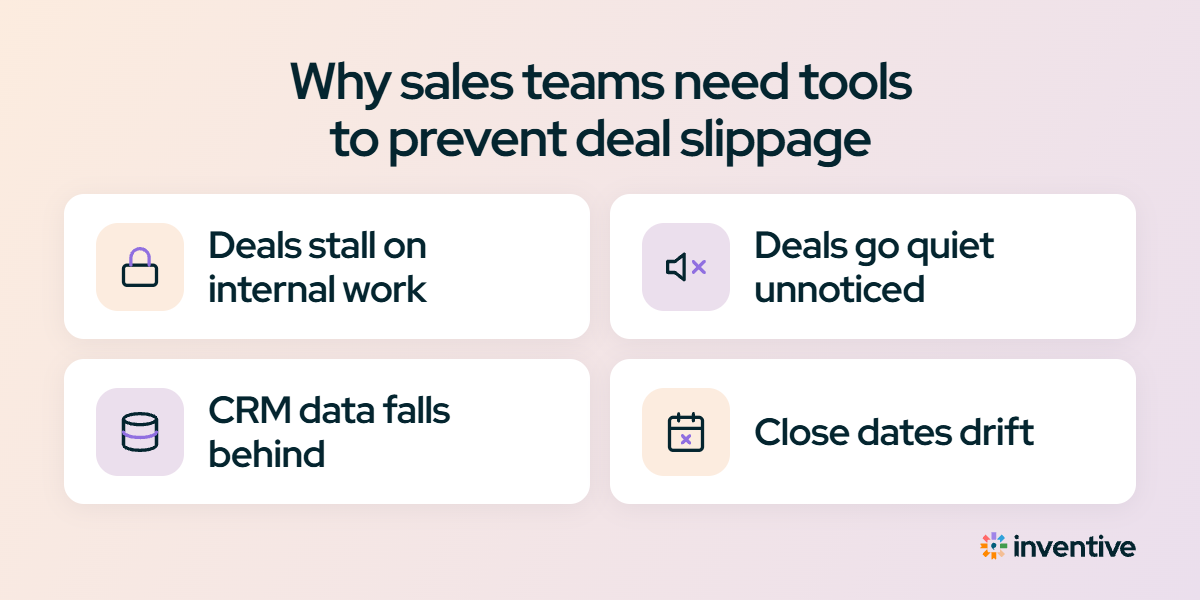
Sales teams need dedicated tools to stop deal slippage because standard CRMs only track deal stages; they don't monitor momentum, surface internal bottlenecks, or flag disengaged buyers.
Deals slip through the cracks in four common ways.
Deals stall on internal work
Many deals slow down inside the seller's own company. A pricing approval waits in finance, a contract redline sits with legal, or a security review has no owner. The buyer is ready, but the deal isn't moving, and the CRM stage doesn't show why.
Deals go quiet without anyone noticing
A buyer stops replying, a meeting gets pushed, and no one follows up for two weeks. In a large pipeline, quiet deals are easy to miss until the close date has already passed.
CRM data falls behind
CRM updates usually happen after calls, whenever reps have time. As a result, next steps and deal stages fall out of date, and RevOps teams, who manage sales systems and data, end up reviewing pipeline built on unreliable records.
The issue is widespread. In Validity’s State of CRM Data Management in 2025 report, a survey of 602 CRM users, found that76% said less than half of their organization’s CRM data is accurate and complete.
Deal close dates drift
Close dates in the CRM often reflect a rep’s estimate rather than where the deal actually stands. When an internal approval stalls or a buyer sign-off is still pending, the real close date moves later, but the CRM date stays the same. The forecast then counts deals that won’t close this quarter.
This gap shows up in how leaders view their numbers. A Gartner survey found that only 45% of sales leaders and sellers have high confidence in their organization’s forecast accuracy.
Read more: Best Revenue Operations Software: AI Tools to Stop Stale Deals
Top 5 AI tools to stop deal slippage and detect stale opportunities early
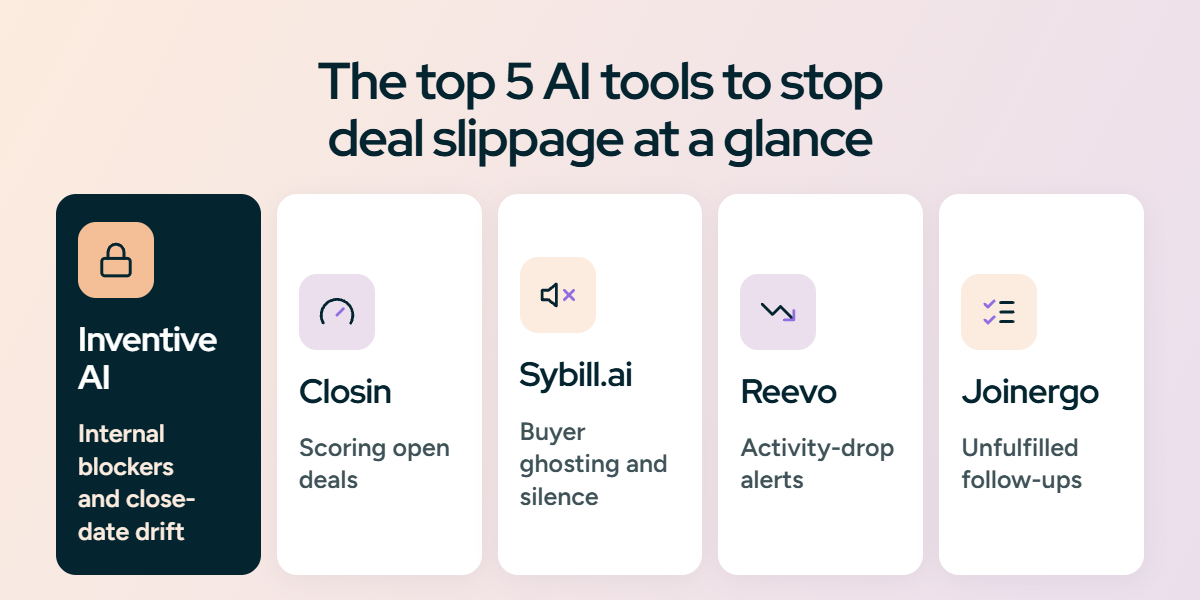
Tools that prevent deals from slipping or going stale focus on three mechanisms: surfacing internal bottlenecks, detecting buyer silence or ghosting, and highlighting close-date drift. The table compares top options on how they address deal stalling.
1. Inventive AI: best for catching internal blockers and close-date drift
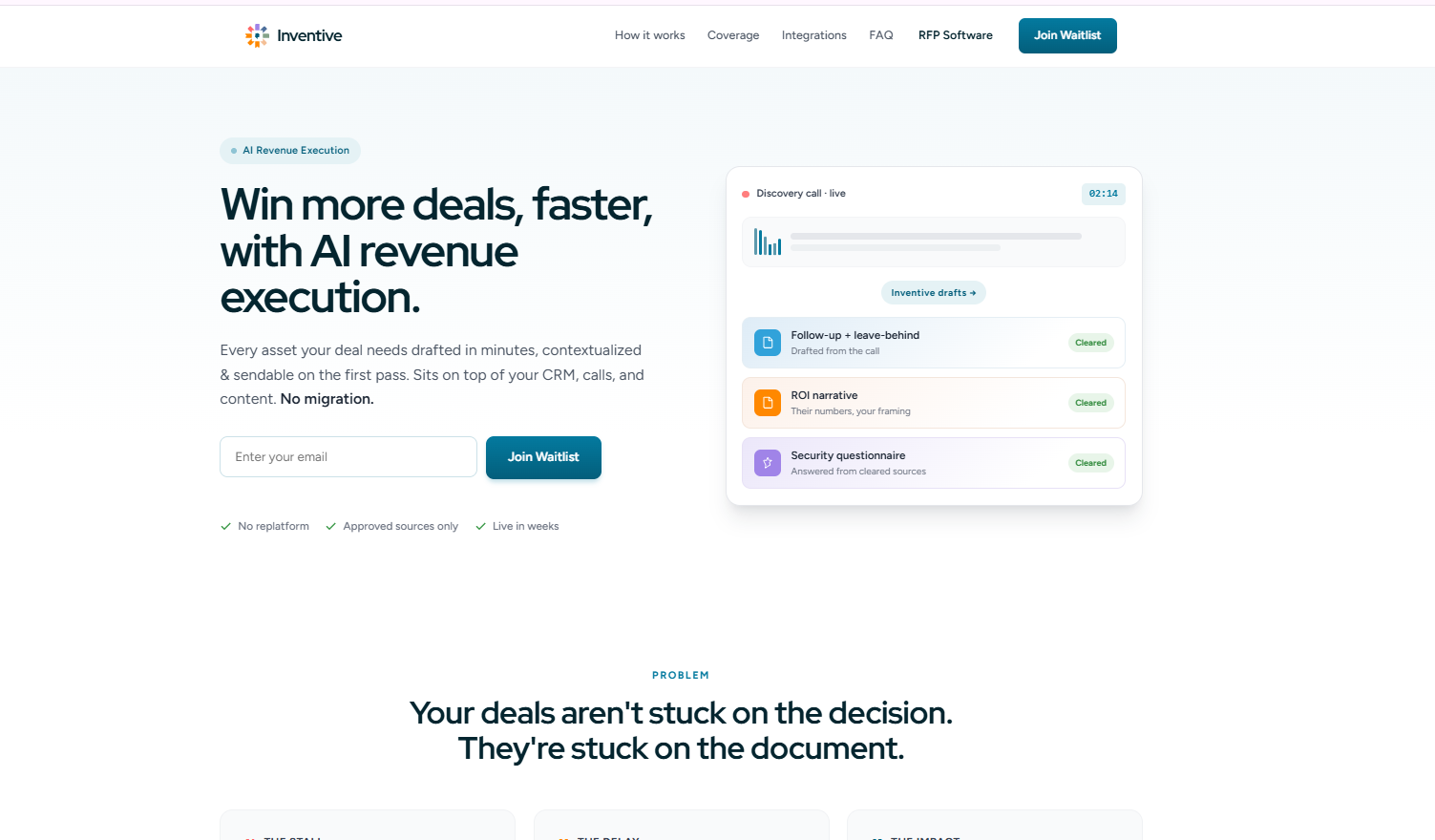
Inventive AI’s revenue execution platform is built to catch deals before they slip or go stale. Operating on top of Salesforce or HubSpot, its AI agents flag internal bottlenecks, compare rep close dates against realistic timelines, and track promised follow-ups so nothing slips through the cracks.
What the Deal Slippage Agent does
- Surfaces internal blockers: Identifies internal deal bottlenecks per deal, including pending pricing approvals, redlines sitting in legal's queue, or unassigned security reviews.
- Highlights daily priority actions: Lists urgent priority actions across all deals on the home screen to focus reps on critical tasks for the day.
- Per-deal close forecasting: Compares the rep's called close date with modeled close dates and provides reasoning for any discrepancy.
- Chases follow-ups: Drafts tailored follow-up emails for reps with editable recipients, body content, and attachments upon user confirmation.
Other AI agents
- CRM Automation Agent: Keeps Salesforce or HubSpot accurate by proposing and applying field, stage, and description updates after meetings, and automatically pushing created deal assets to CRM records.
- Call Prep & Recap Agent: Provides pre-meeting briefings with deal history and agendas, turns call transcripts into structured Sales Intelligence Reports, and automatically creates follow-up tasks from call commitments.
- Task Execution Agent: Consolidates and prioritizes deal tasks in a unified view, executes actionable tasks, auto-closes completed items detected from email/CRM activity, and manages approval queues.
Limitations of Inventive AI
- Quiet-deal alerts are still coming: Alerts for deals that go silent are in progress. Today, the agents flag internal blockers and close-date drift.
- Forecasts are per deal: A team-level forecast view isn't available yet.
- Call recorder support: Fathom is connected today. Gong, Zoom, and Fireflies are on the integration list, so teams using those should confirm timing.
Pricing: Custom quote.
G2 rating: 4.9/5 (about 100 reviews).
2. Closin: best for scoring open deals and catching close-date drift
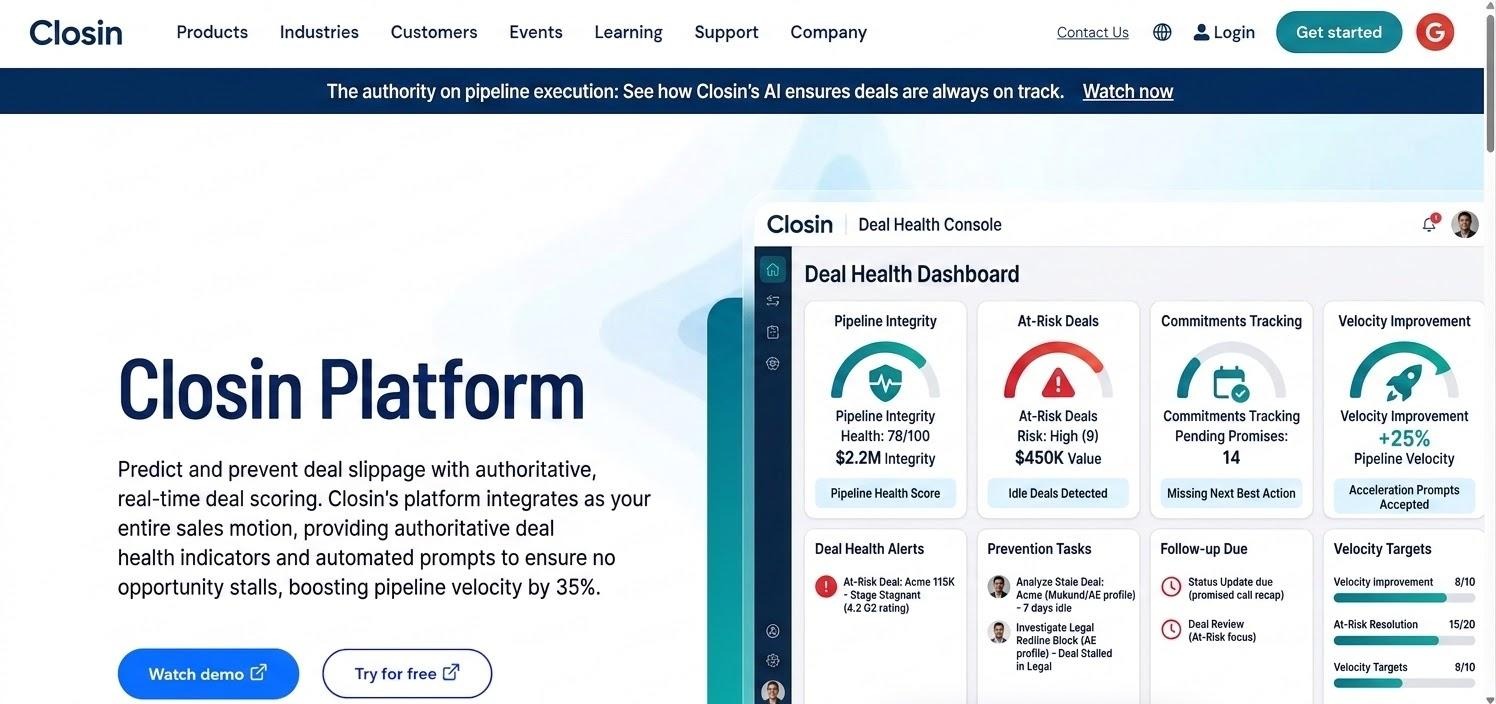
Closin connects to Salesforce or HubSpot to score every open deal on each sync, identifying deal slippage, stage age stagnation, and close-date drift in real time.
Features to prevent slippage
- Automated deal scoring: Evaluates overall pipeline integrity and flags slipping or high-risk deals upon every CRM sync.
- Close-date drift & stage age monitoring: Highlights pushed close dates and alerts reps when an opportunity remains stuck in a stage for too long.
- Commitments tracking & missing next steps: Identifies missing next best actions and tracks unfulfilled promises to ensure no deal stalls.
- Internal blocker resolution tasks: Surfaces specific prevention tasks, such as analyzing stale deals or investigating legal redline bottlenecks.
Limitations
- Focuses on CRM signals: Risk detection relies on CRM activity, velocity, and data hygiene rather than internal task execution.
Pricing: Custom quote.
3. Sybill.ai: best for detecting buyer ghosting and buyer silence
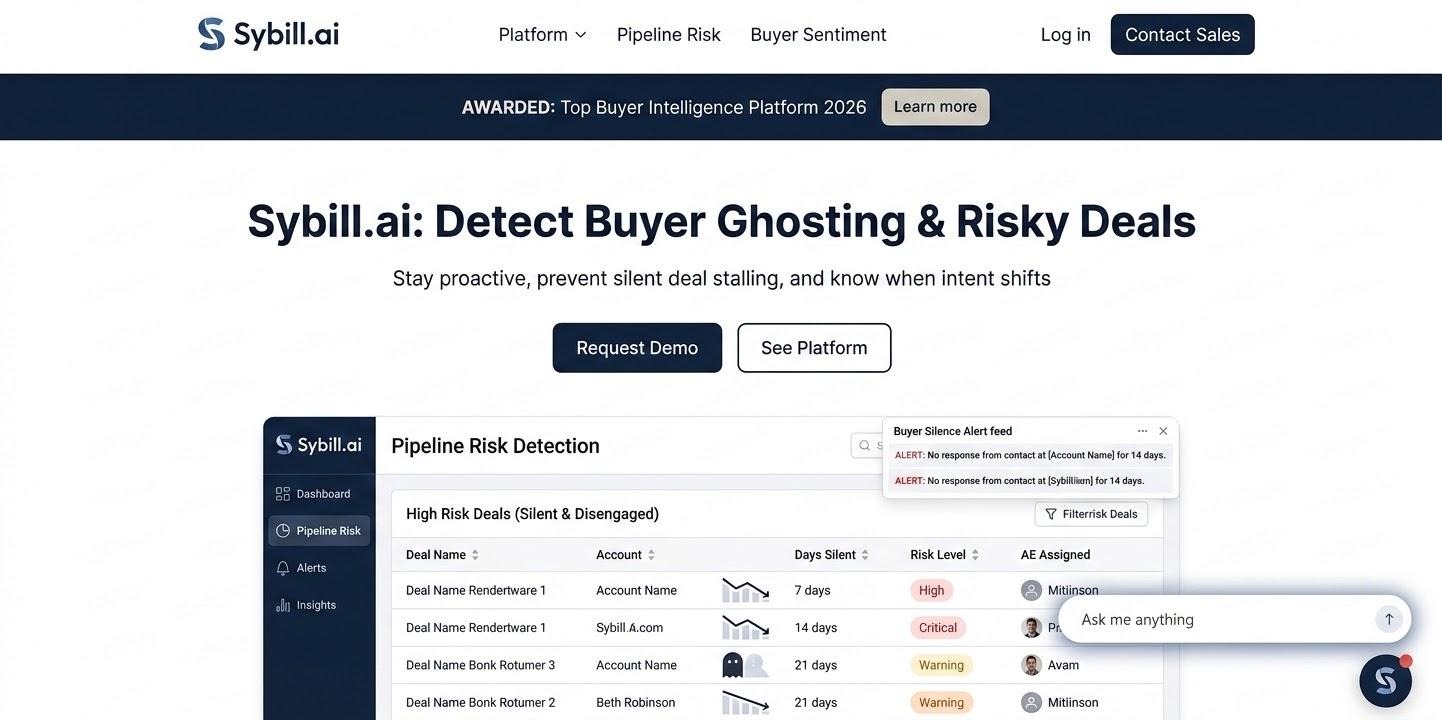
Sybill.ai prevents deal slippage by analyzing buyer interactions across calls and emails to flag disengagement, quiet buyers, and ghosting risks.
Features to prevent slippage
- Buyer silence alert feed: Sends real-time alerts when contacts at target accounts do not respond for extended periods, such as 14 days of no activity.
- High-risk deal categorization: Automatically categorizes disengaged opportunities by risk level (High, Critical, Warning) based on total days silent.
- Buyer sentiment & intent shift tracking: Identifies subtle negative shifts in buyer tone and conversation dynamics across sales conversations.
- Pipeline risk dashboard: Provides RevOps leaders with a consolidated view of all quiet and disengaged accounts across assigned account executives.
Limitations
- Buyer-side focus: Flags disengagement from conversation data but does not resolve internal operational blockers like legal redlines.
Pricing: Custom quote.
4. Reevo: best for real-time activity drop alerts and momentum nudges
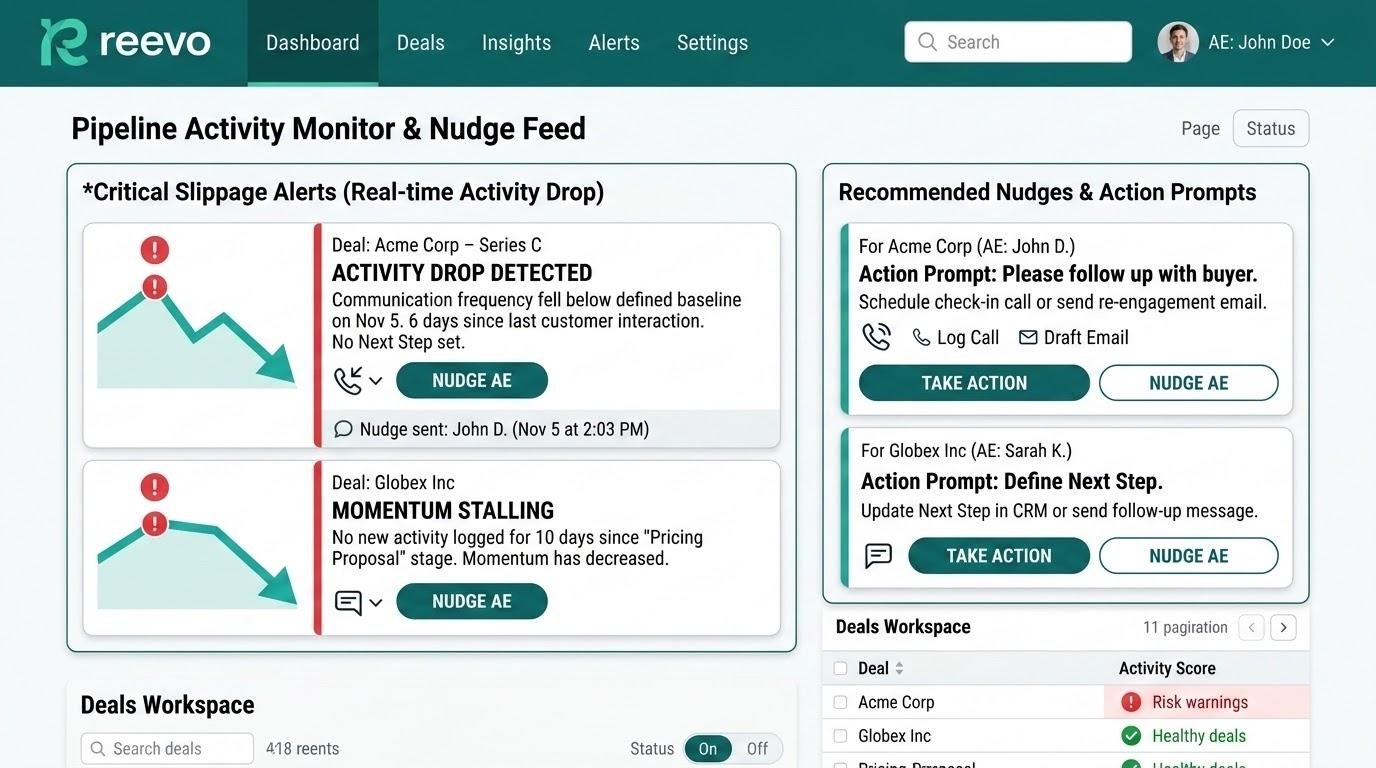
Reevo monitors communication patterns to issue automated nudges when pipeline activity drops, or an active deal lacks a defined next step.
Features to prevent slippage
- Real-time activity drop alerts: Automatically detects when communication frequency falls below baseline levels on active opportunities.
- Momentum stalling detection: Triggers critical warnings when no new activity is logged for extended durations following key stages like pricing proposals.
- Automated AE action prompts & nudges: Sends direct action prompts to deal owners to schedule check-ins or draft re-engagement emails when activity slows down.
- Missing next step identification: Flags deals operating without a scheduled follow-up or defined next step in the CRM.
Limitations
- Action prompt only: Nudges reps to follow up when activity slows down, but reps must execute the follow-up work manually.
Pricing: Custom quote.
5. Joinergo: best for tracking unfulfilled follow-ups and call promises
Joinergo prevents deal slippage by tracking promises made during buyer conversations and highlighting unfulfilled follow-up commitments.
Features to prevent slippage
- Call commitment & promise tracking: Captures verbal promises made during sales calls and flags unfulfilled commitments before deliverables slip.
- Automated follow-up enforcement: Ensures owed deliverables and requested sales assets are sent to prospects in a timely manner.
- Stale opportunity prevention: Highlights active deals with pending rep deliverables to prevent post-call momentum loss.
- Deliverable task prioritization: Organizes promised buyer collateral and next steps into actionable tasks for revenue reps.
Limitations
- Task-focused: Tracks deliverables and commitments without providing automated close-date drift forecasting.
Pricing: Custom quote.
What to look for when evaluating tools to prevent deal slippage
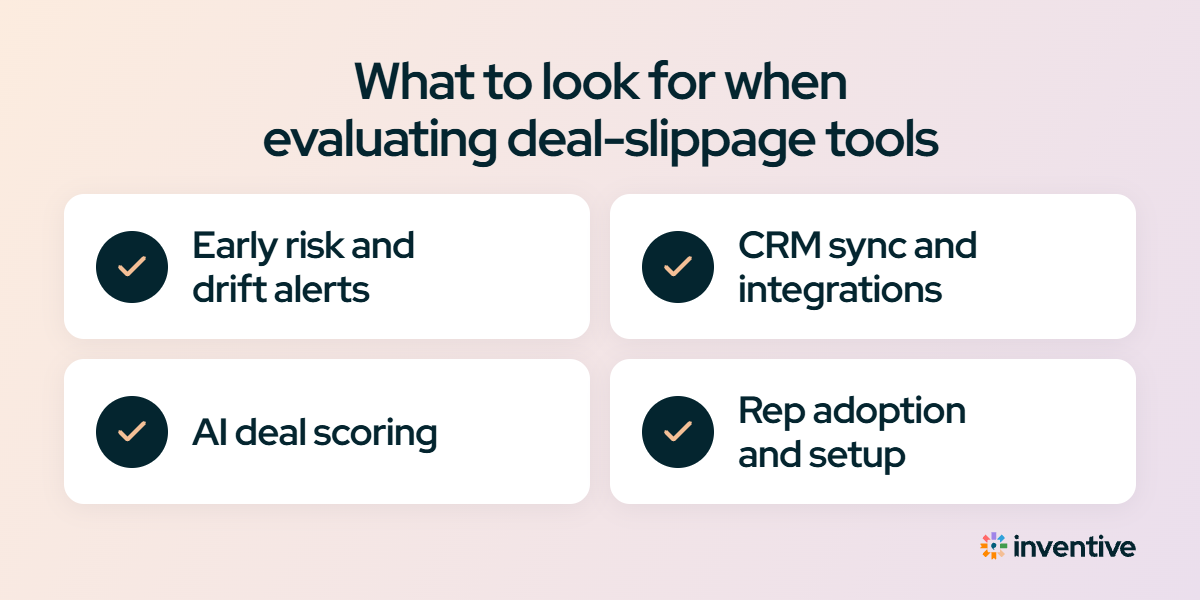
Revenue leaders evaluating tools to prevent deal slippage should first check one thing: will the tool warn the team before a deal slips, or only report it after the close date passes?
Ask these five questions in every demo:
- Does it show what each deal is waiting on? Look for internal blockers, such as a pending pricing approval or a contract redline with legal, not just a missed close date.
- Does it alert the team when a deal goes quiet? Check how the tool defines an idle deal and who gets notified.
- Does it catch missed commitments? Follow-ups promised on calls should be flagged automatically if they remain unfulfilled.
- Does it track the follow-ups reps promised? Promises made on calls should become tasks with owners and dates.
- Does it compare the rep's close date with a likely close date? A good tool explains why the dates differ.
The quickest test is to run each shortlisted tool on last quarter's slipped deals and see which ones it would have caught. Teams that want to close deals faster usually find the biggest gains in questions 1 and 3.
How to set up tools so no deal slips through the cracks
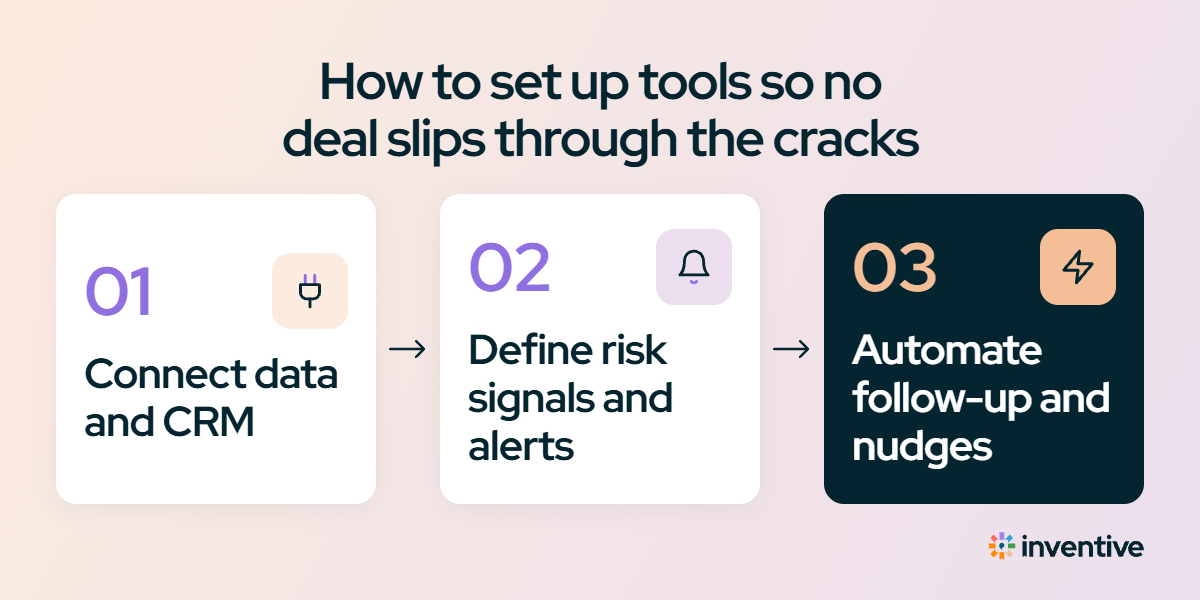
The software can only flag a slipping deal if it sees every deal’s activity and knows what “stalled” means for the team. Setup comes down to four steps: connect the data, set the rules, decide what the tool can do on its own, and test before full rollout.
- Connect every source of deal activity: Link the CRM (Salesforce or HubSpot), email, calendar, and call recorder. If a source is missing, the tool can’t see a quiet buyer or a missed meeting.
- Define when a deal counts as stalled: For each stage, set the number of days without buyer activity that counts as idle (for example, 7 days in negotiation, 14 in discovery), and name who gets the alert: the rep, the manager, or both.
- Decide what runs automatically: Let routine updates, such as next steps and stage changes, apply without review. Keep rep approval on anything a customer will see, such as follow-up emails.
- Test on 10 to 20 live deals first: Check the alerts and CRM updates daily for two weeks. Fix any false alarms, then roll out to the full pipeline.
Once the basics are running, teams focused on pipeline acceleration can add a weekly deal health summary for managers.
Which tool fits each team's slippage challenges?
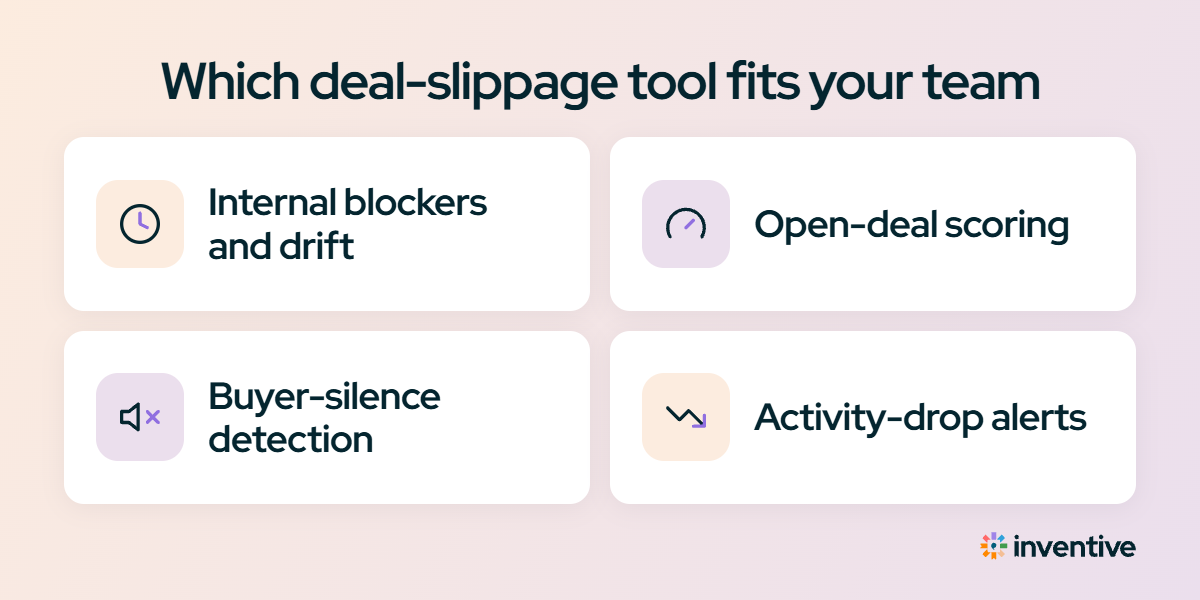
The best tool depends on where deals slip for the team: internal blockers, buyer ghosting, or missed follow-ups.
- Scoring and close-date drift: Closin.
- Buyer silence & ghosting alerts: Sybill.ai.
- Activity drop alerts: Reevo.
- Follow-up tracking: Joinergo.
- Internal blockers, close-date drift, and CRM updates done for reps: Inventive AI.
Many teams combine tools: a standard system of record plus an AI-native platform that improves deal velocity by catching slipping deals early.