Construction Bid Template to Win More US Projects

Did you know that one small oversight can hide the true value of your work and your team? Tight deadlines, shifting material prices, and last-minute scope changes make every bid submission a high-pressure task.
If you’re juggling multiple projects, updating cost sheets, and double-checking compliance documents, creating each bid from scratch wastes time and increases risk. A clear construction bid template helps you stay organized, consistent, and ready to submit with confidence.
Standard Construction Bid Template for US Projects (Copy-Paste Ready)
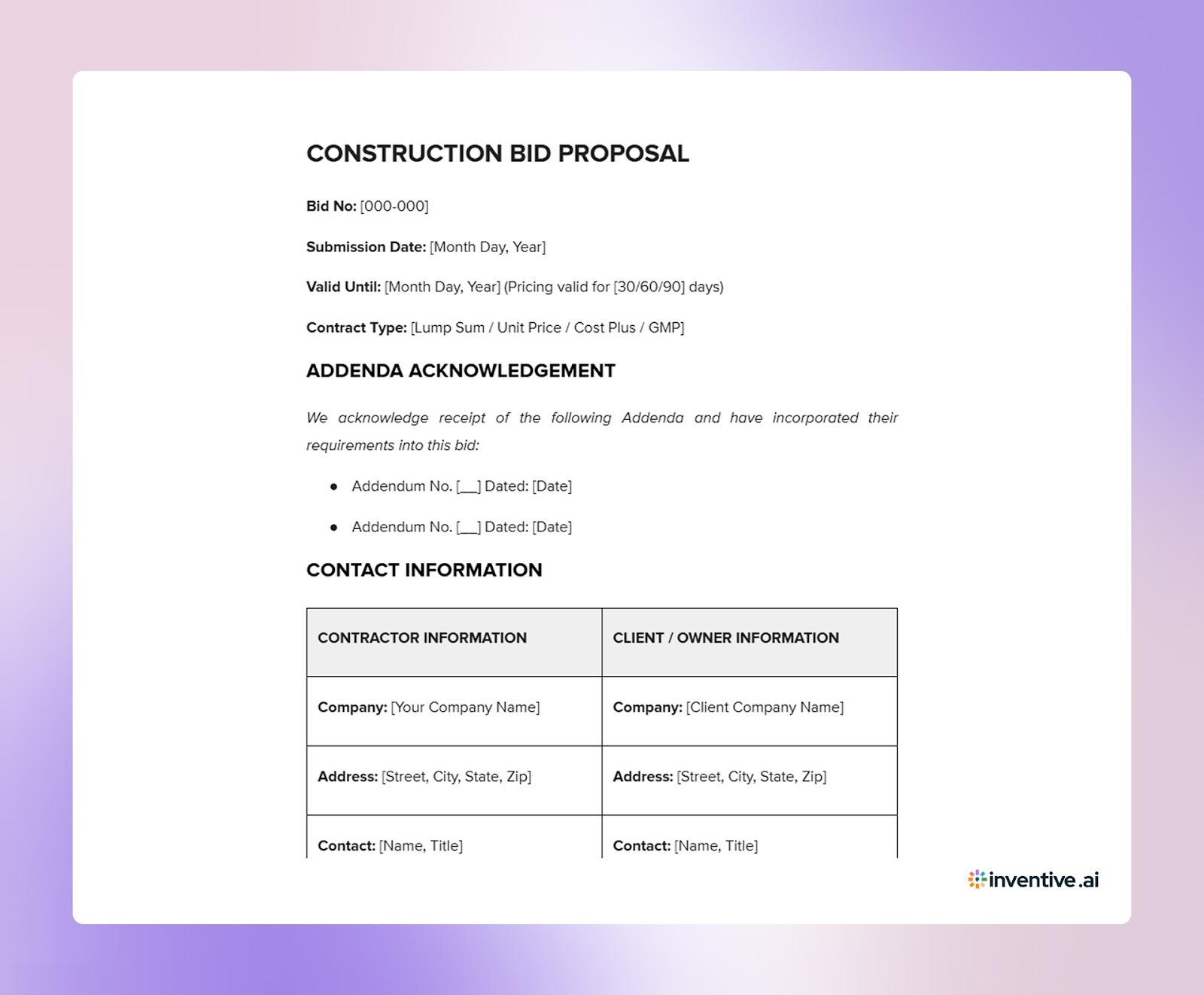

Each section below includes a ready-to-use structure and placeholders. Replace the fields with your company details, project scope, quantities, and pricing. You can remove, adjust, or expand sections based on project size, contract type, and submission requirements.
Bid No: [000-000]
Submission Date: [Month Day, Year]
Valid Until: [Month Day, Year] (Pricing valid for [30/60/90] days)
Contract Type: [Lump Sum / Unit Price / Cost Plus / GMP]
ADDENDA ACKNOWLEDGEMENT
We acknowledge receipt of the following Addenda and have incorporated their requirements into this bid:
- Addendum No. [__] Dated: [Date]
- Addendum No. [__] Dated: [Date]
CONTACT INFORMATION
SCOPE OF WORK & PROJECT DESCRIPTION
Project Baseline
[Your Company Name] proposes to furnish all labor, materials, equipment, supervision, and insurance necessary to complete the project in strict accordance with:
- Architectural Drawings: Prepared by [Architect Name], dated [Date], Sheets [A101 - A500].
- Specifications: Section(s) [00 00 00] through [00 00 00], dated [Date].
Specific Inclusions
- Site Logistics: Mobilization, temporary fencing, erosion control, and daily debris removal.
- Division 03 (Concrete): Supply and install rebar, formwork, and [PSI rating] concrete for foundations.
- Division 06 (Carpentry): Structural framing, blocking, and backing as per structural drawings S-101.
- Division 09 (Finishes): Level 4 drywall finish, primer + 2 coats of paint (Sherwin Williams or eq).
- MEP: Electrical rough-in and trim (lighting schedule attached); Plumbing rough-in and fixture setting.
Permits & Inspections
- Contractor Responsibility: Scheduling all required municipal inspections; Trade-specific permits (Electrical/Plumbing).
- Owner Responsibility: Building Permit fees, Impact fees, and Utility connection fees.
Project Assumptions
- Site access is available [Monday-Friday, 7:00 AM - 4:00 PM].
- Existing utilities are adequate and located as shown on survey drawings.
- No hazardous materials (asbestos/lead) constitute part of this scope.
COST BREAKDOWN (BILL OF QUANTITIES)
Allowances & Alternates
- Allowance #1 (Fixtures): $[Amount] included in base bid for lighting fixtures. Selection by Owner.
- Alternate #1 (Add): Upgrade flooring to Porcelain Tile: Add $[Amount].
- Alternate #2 (Deduct): Delete exterior landscaping: Deduct ($[Amount]).
PROJECT TIMELINE
- Commencement: Work shall commence within [10] working days of Notice to Proceed (NTP).
- Duration: Substantial Completion shall be achieved within [00] calendar days.
- Liquidated Damages: $[Amount] per day for unexcused delays beyond the completion date (if applicable).
- Weather Delays: The schedule includes [Number] anticipated weather days. Delays beyond this allowance will be added to the contract duration.
- Lead Times: Timeline is subject to material availability. Current lead time for [Key Material, e.g., Steel/Glass] is [X] weeks.
TERMS & CONDITIONS
1. Payment Terms
- Progress payments to be submitted monthly based on % of work completed.
- Retainage: Owner may withhold [5% / 10%] retainage until substantial completion. Retainage applies to all subcontractors.
- Payment due within [30] days of invoice date.
2. Change Orders
Any deviation from the scope defined in Section 3 must be approved in writing via Change Order. Additional work will be billed at the cost of Labor & Materials plus [15]% for overhead, supervision, and profit.
3. Warranty
Contractor provides a [1-Year] warranty on all workmanship from the date of Substantial Completion. Manufacturer warranties for equipment/materials shall be transferred to the Owner.
4. Unplanned Events
Contractor is not liable for delays caused by acts of God, strikes, pandemics, or supply chain embargoes beyond reasonable control.
5. Dispute Resolution
Any dispute arising from this agreement shall first be resolved through mediation in [County, State]. If unresolved, binding arbitration shall follow under the rules of the American Arbitration Association.
6. Governing Law
This proposal shall be governed by the laws of the State of [State].
7. Termination
Either party may terminate this agreement with [7] days' written notice for material breach of contract.
ACCEPTANCE OF PROPOSAL
The prices, specifications, and conditions are satisfactory and are hereby accepted. You are authorized to execute the work as specified.
While a standard template works for many projects, different job types require adjustments to structure and documentation.
Construction Bid Templates by Project Types
One format does not fit every job. A kitchen remodel, a retail build-out, and a public school project each carry different documentation standards, pricing expectations, and legal requirements.
Below are structured adjustments to help you customize your bid template based on project type.
1. Residential Construction Bid Template
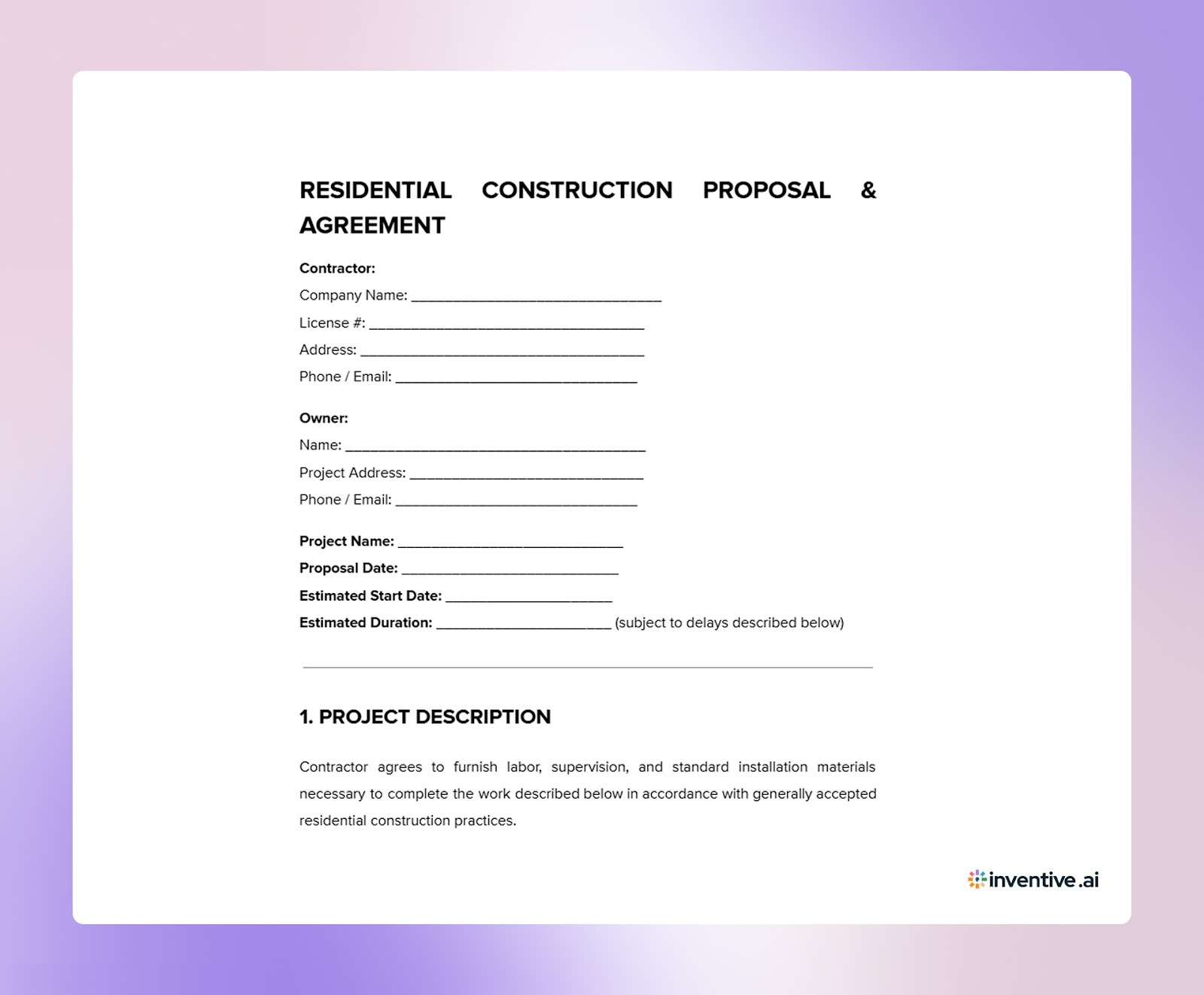
This template is designed for home renovations, additions, and small-scale residential builds where clarity, allowances, and homeowner protection clauses are critical.
Homeowners typically prioritize budget transparency, milestone payments, and written protection against hidden conditions.
The structure includes:
- Detailed room-by-room scope of work
- Clearly defined exclusions to reduce disputes
- Allowance schedule for owner-selected finishes
- Milestone-based payment schedule
- Change the order documentation process
- Owner responsibility section
- 12-month workmanship warranty
- Consumer protection “Right to Cancel” clause
- Mediation and termination terms
This format works best for contractors managing direct-to-owner projects where trust, clarity, and written protection reduce conflict.

2. Commercial Construction Bid Template
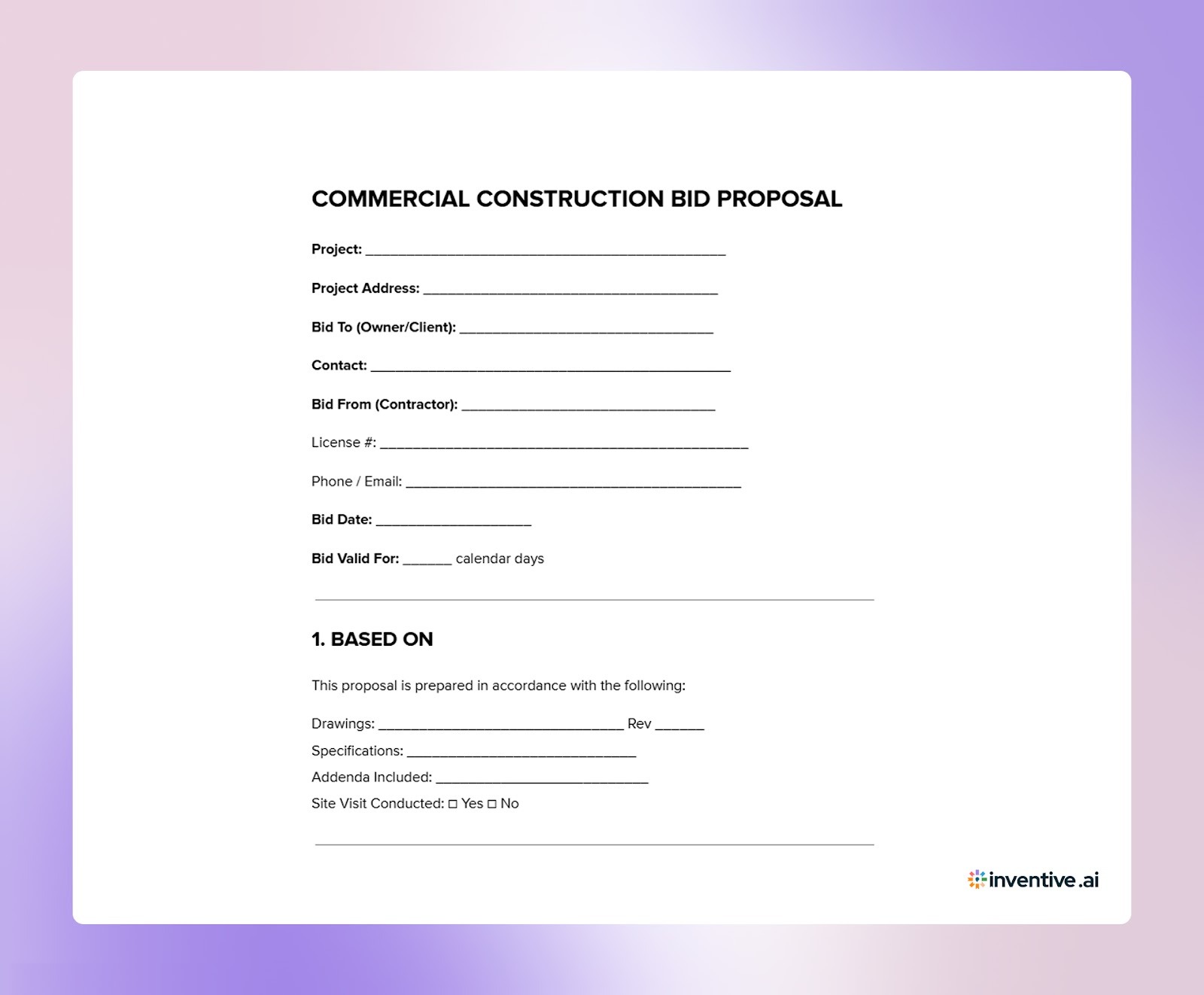
This template is structured for office build-outs, retail spaces, industrial projects, and multi-family developments where documentation discipline and specification adherence are expected.
Commercial projects are reviewed by architects, project managers, and procurement teams who evaluate scope clarity, exclusions, alternates, and assumptions before pricing.
The structure includes:
- Reference to drawings, specifications, and addenda
- Defined scope aligned to construction documents
- Detailed exclusions section
- Allowance schedule for finish selections
- Alternates section with add/deduct pricing
- Unit price schedule (if required)
- Contract sum breakdown (base bid + taxes + permits)
- Assumptions section clarifying site and sequencing conditions
- Formal acceptance block for contract execution
This format supports contractors responding to structured bid invitations where compliance with plans and written assumptions is required.

3. Government / Public Works Bid Template
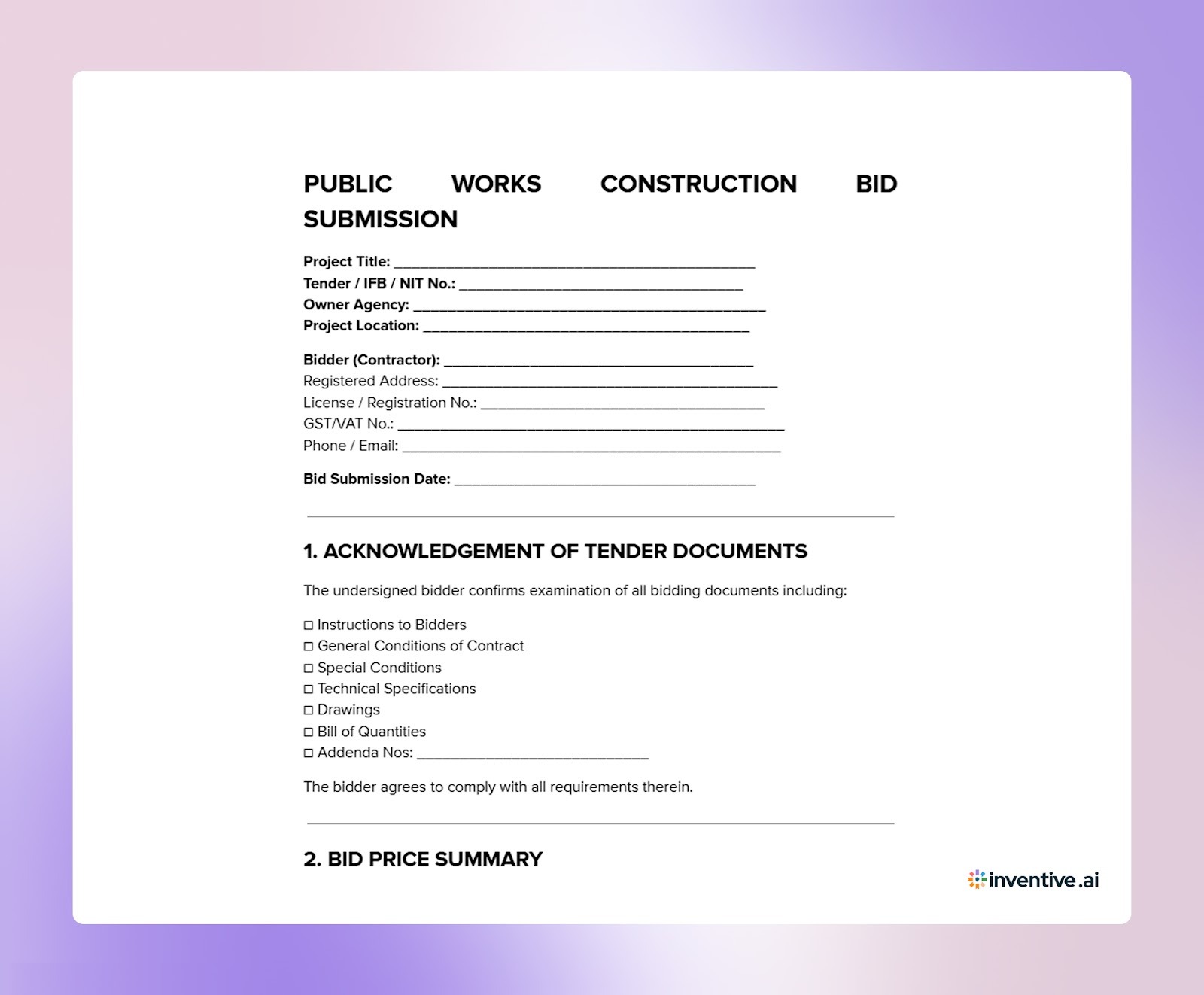
This template aligns with municipal, state, and federally funded projects where formal procurement rules apply and documentation errors can lead to disqualification.
Public agencies evaluate both pricing and qualification before award, often under “lowest responsible bidder” criteria.
The structure includes:
- Acknowledgment of all tender documents and addenda
- BOQ-based bid price summary
- Separate bill of quantities attachment reference
- Bid validity declaration
- Earnest money/bid security documentation
- Time for completion statement
- Contractor declarations regarding compliance and eligibility
- Technical capability section (experience, personnel, equipment)
- Subcontractor disclosure
- Statutory compliance confirmation
- Attachment checklist for mandatory documents
- Authorized signatory certification
This format is suited for contractors submitting formal bids under public procurement guidelines where compliance, transparency, and qualification documentation are mandatory before award.

Choosing the right format is only part of the process; careful review prevents costly submission errors.
7 Common Mistakes to Avoid When Using Construction Bid Templates
A template reduces drafting time, but careless edits or missing details can create pricing disputes or contract risk. Most bid issues come from skipped sections, outdated numbers, or unclear scope language.
Before submitting your bid, check for these common mistakes:
- Leaving Placeholder Text in the Document: Remove bracketed fields and sample language before submission.
- Incorrect Math in Cost Tables: Double-check quantities, unit prices, taxes, and final totals.
- Ignoring Addenda or Plan Revisions: Confirm all issued addenda are acknowledged and reflected in pricing.
- Using Generic Scope Descriptions: Match your wording to the actual drawings and specifications.
- Forgetting Allowance Clarifications: Specify whether allowances include labor, tax, freight, and markup.
- Missing Exclusions: Clearly state work not included to prevent scope disputes.
- Overlooking Compliance Requirements: Attach bonds, insurance certificates, or required declarations when applicable.
If your firm handles multiple formal submissions each month, consistency across responses becomes more difficult to maintain.
How Inventive AI Helps Construction Teams Manage Complex Bids at Scale?
When construction firms handle multiple commercial or public bids at once, content reuse, version control, and compliance tracking become difficult to manage manually. Drafting similar responses across projects can lead to outdated language, conflicting statements, or missed requirements.
Inventive AI supports construction teams responding to structured RFPs, RFIs, and security questionnaires by improving accuracy and reducing manual rework.
Here’s how it supports bid teams:
Generate Draft Responses 90% Faster
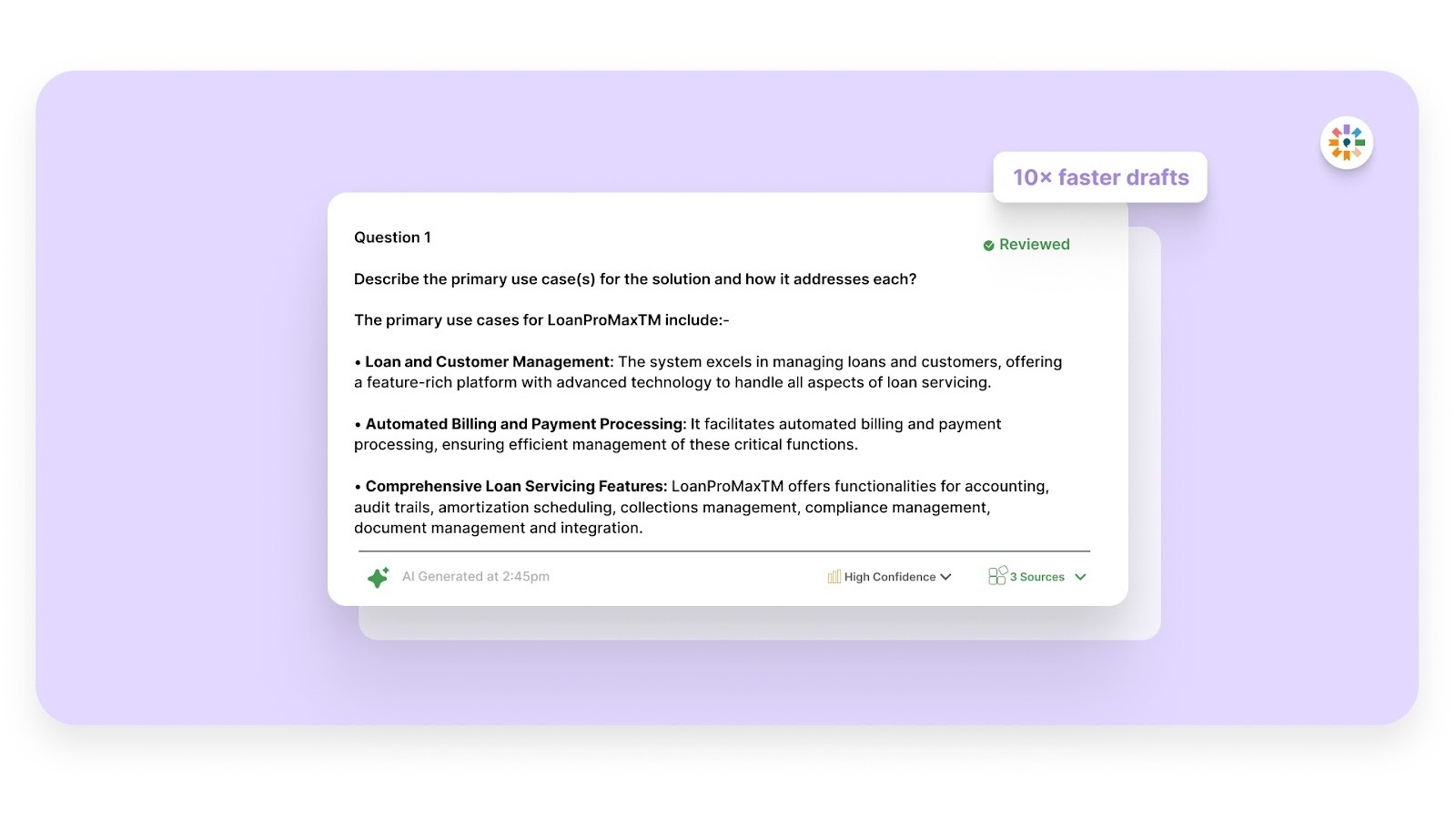
Create first drafts based on past bids, approved content, and internal documents. Responses stay aligned with your company’s language and project history.
Single Hub for All Bid Knowledge
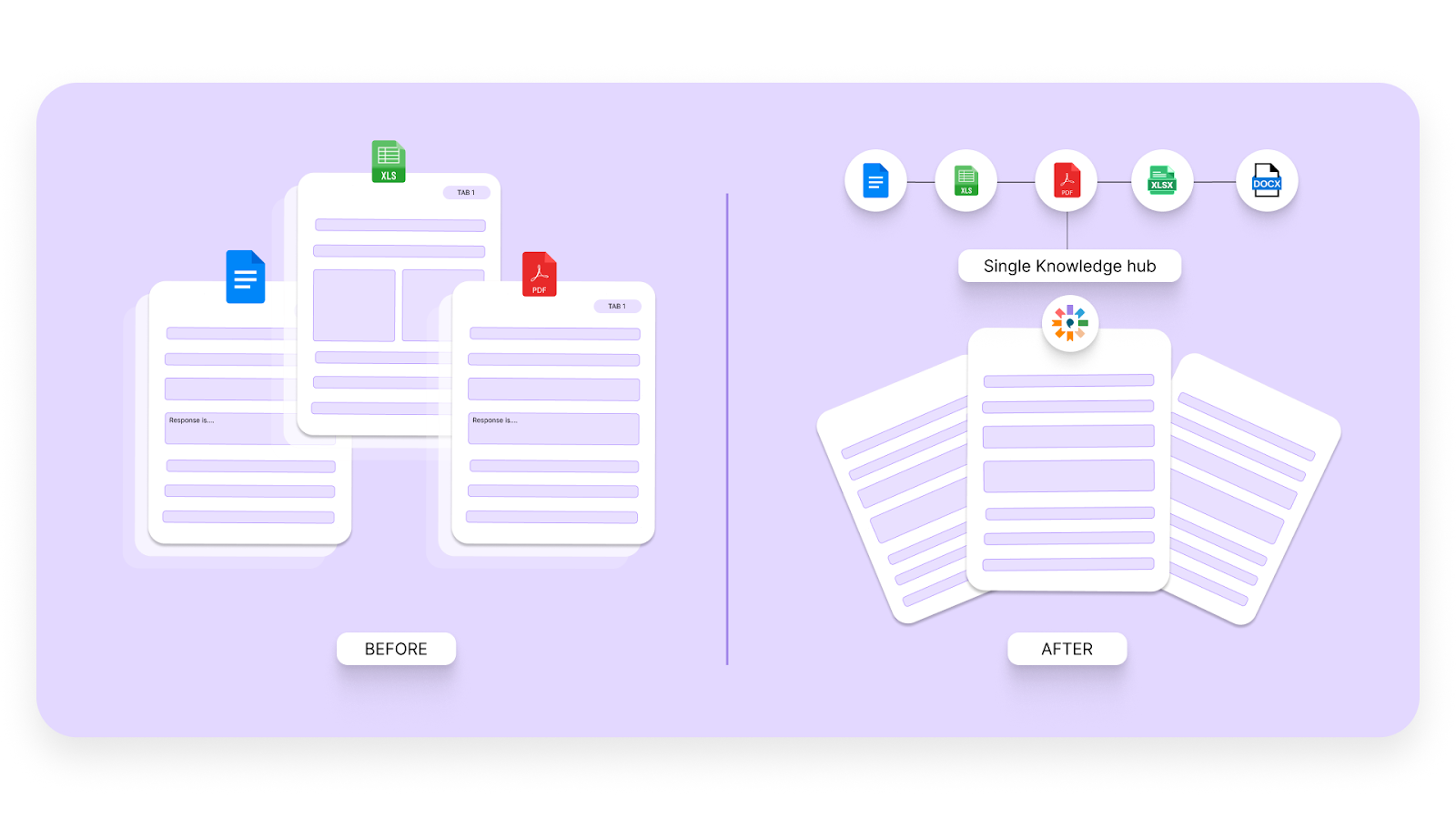
Store previous proposals, certifications, insurance documents, and technical narratives in one searchable system connected to tools like Google Drive and SharePoint.
Detect Stale or Conflicting Content
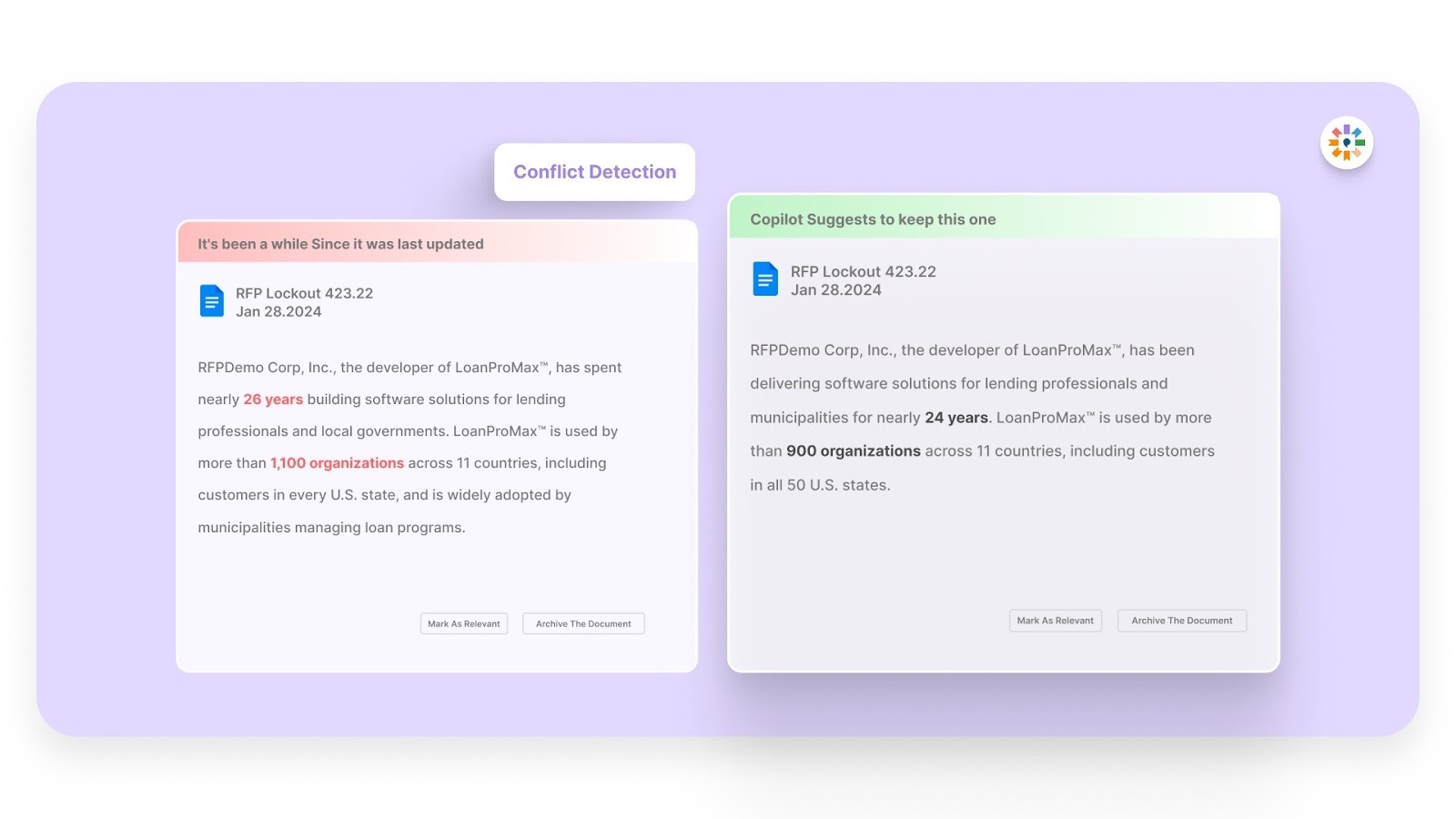
The AI Content Manager flags outdated pricing language, expired certifications, and inconsistent scope descriptions before submission.
Identify Content Gaps That Impact Win Rates
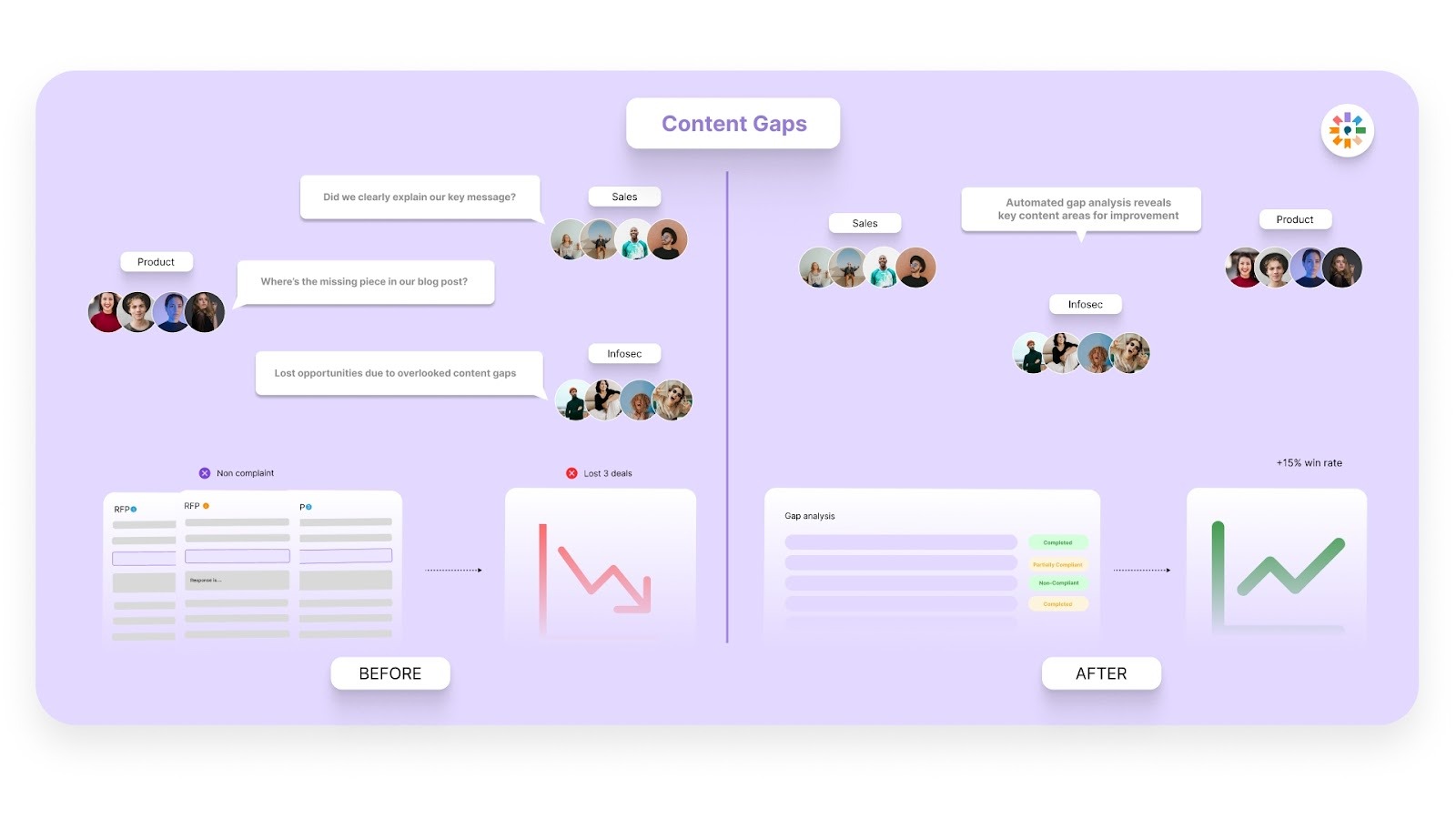
Surface missing differentiators or incomplete answers that could affect scoring in competitive commercial or government bids.
Collaborate Across Estimating, Sales, and Operations
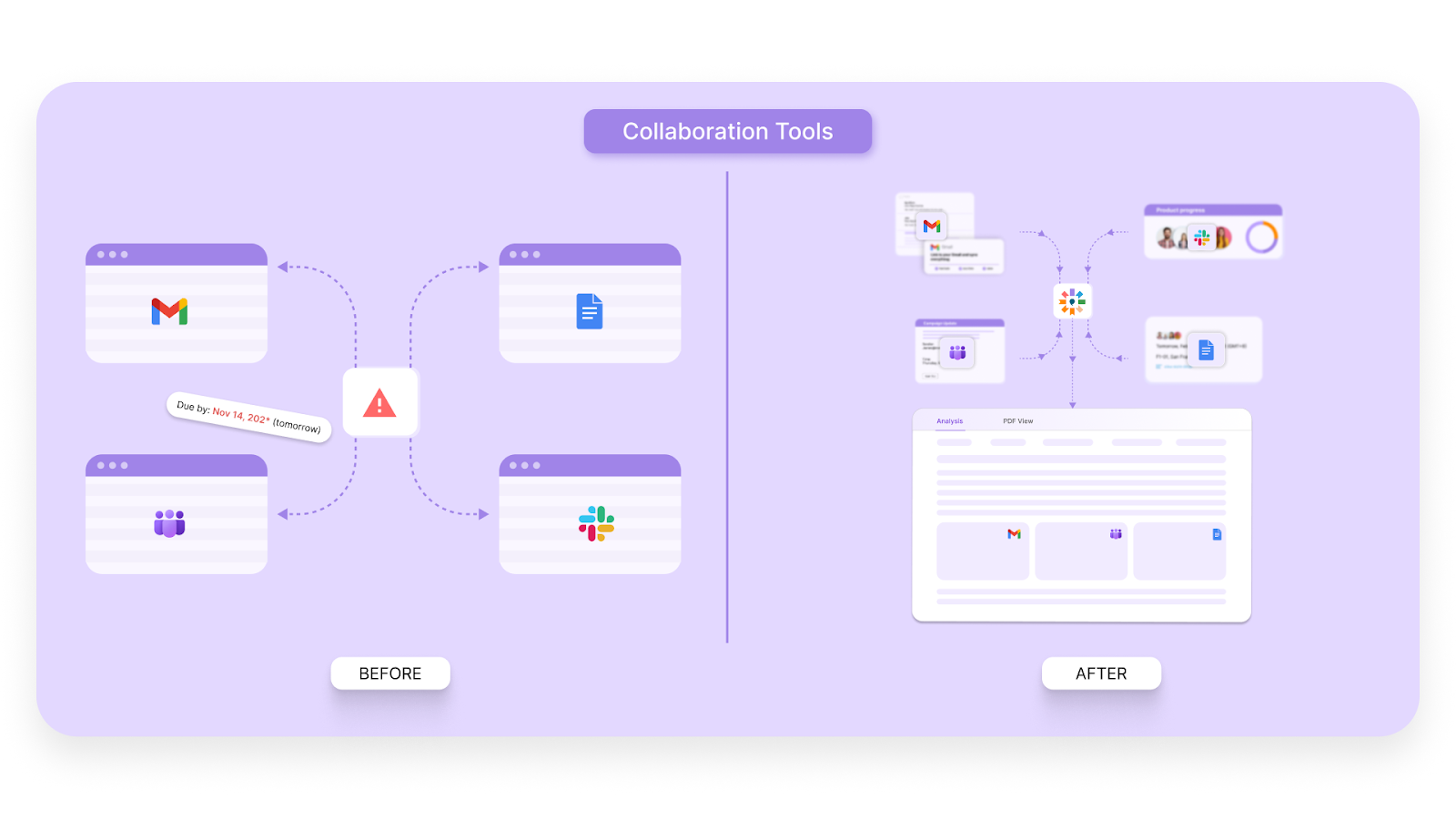
Assign tasks, leave comments, and manage bid workflows within a shared workspace.
For construction teams bidding at higher volumes, structured AI support reduces risk and keeps responses consistent across projects.
If your team is responding to multiple construction RFPs or formal bid packages each month, see how Inventive AI can improve response accuracy and reduce turnaround time.
FAQs
1. What is the difference between a construction bid and a quote?
A construction bid is typically a formal price submission based on detailed drawings, specifications, and defined contract terms. It may become legally binding once accepted. A quote is usually less formal and often based on limited information. Quotes are common for small jobs, while bids are standard for commercial and public projects.
2. How do I protect myself from rising material costs in a bid?
You can include material price escalation clauses, define allowance amounts for volatile items, and limit bid validity to a set number of days. Clearly state that pricing is based on current supplier quotes. For longer projects, consider adding language that allows adjustments if material costs increase beyond a defined percentage.
3. How do I calculate overhead and profit for a construction bid?
Overhead typically includes office expenses, supervision, insurance, vehicles, and administrative costs. Profit is the margin added after covering direct costs and overhead. Many contractors apply a percentage markup to total direct costs. The percentage depends on project size, risk level, and market conditions.
4. Why do construction bids get rejected?
Common reasons include missing addenda acknowledgment, incomplete forms, math errors, unclear scope descriptions, or failure to meet compliance requirements. In public projects, even a missing signature can result in disqualification. Careful review before submission reduces these risks.
5. Can I withdraw a construction bid after submitting it?
Withdrawal rules depend on contract terms and local regulations. Some bids can be withdrawn before the official opening time. After opening, withdrawal may be restricted unless a clear clerical error is proven. Always review the bid instructions and applicable laws before attempting to withdraw a submission.

.avif)

%20Industry%20Examples.png)

%20That%20Gets%20Shortlisted.png)