Request for Quote Template Word - The Ultimate RFQ Templates in 2026

Drafting a Request for Quote (RFQ) can be a detailed and time-sensitive process for buyers. They need to clearly define product details, quantities, compliance requirements, pricing expectations, and delivery timelines. If the RFQ is not structured properly, it can lead to confusion, incomplete quotes, and delays in evaluation.
At the same time, responding to multiple RFQs is also a challenge for vendors. Different formats, missing details, and tight deadlines often require extra time for formatting and coordination. It becomes easy to overlook important sections or misalign pricing and compliance information.
A clear template helps both sides work more efficiently.
In this blog, we’ll share RFQ templates that buyers can use to create well-structured requests, along with response templates that vendors can use to submit clear, organized, and professional quotations.
Request for Quote Template (Word) for Download - Crafting an Effective RFQ
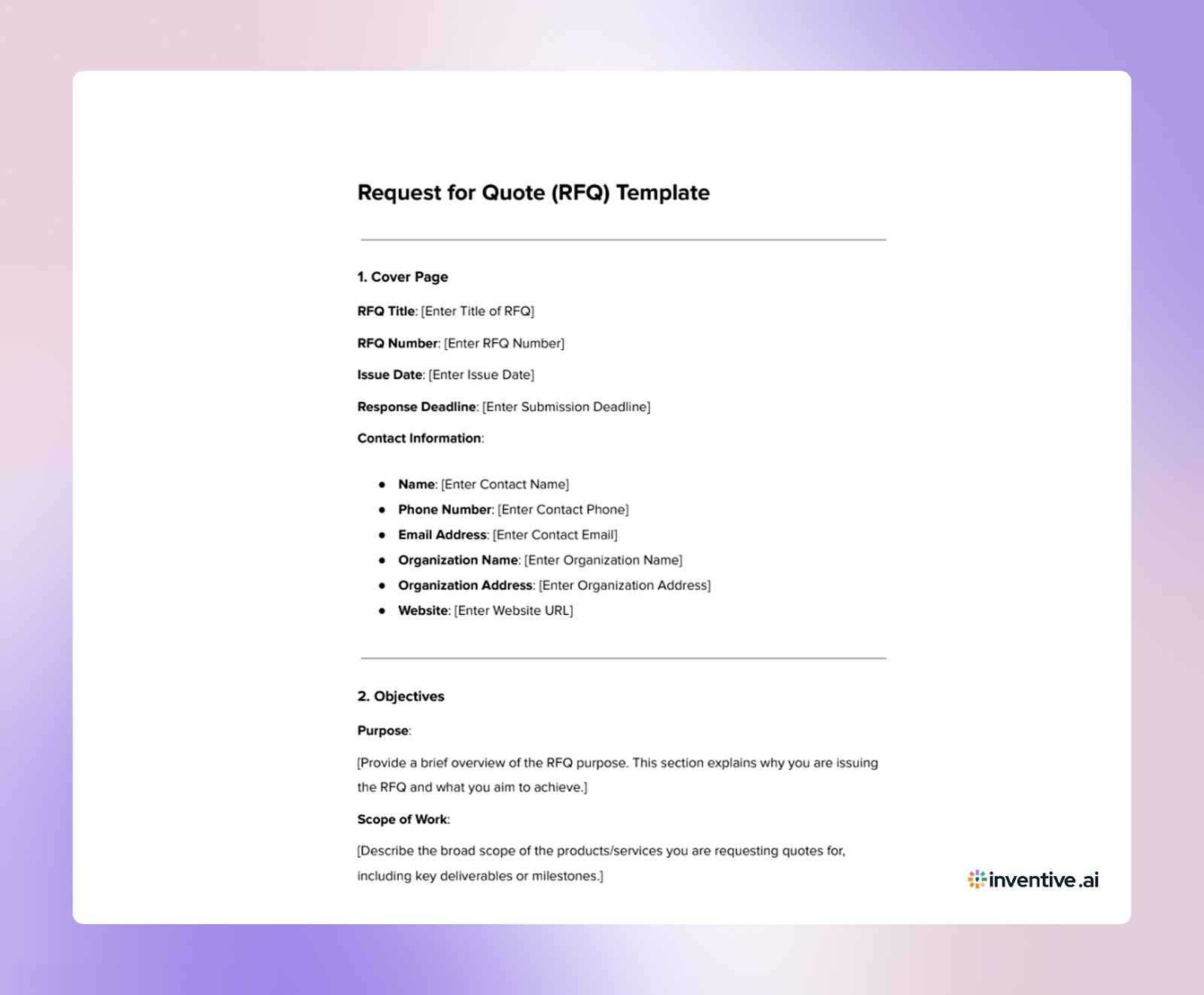

About the RFQ Template
An RFQ response template provides vendors with a structured way to submit pricing, delivery terms, and compliance details in line with buyer expectations. Instead of reacting to each RFQ differently, you respond using a consistent format that makes your quotation clear, complete, and easy to evaluate.
Why Use an RFQ Template?
- Standardized Structure: Present pricing, timelines, and commercial terms in a consistent format across bids.
- Faster Turnaround: Reuse a proven layout instead of rebuilding your quotation for every request.
- Clear Pricing Presentation: Organize unit costs, taxes, and additional fees in a transparent way.
- Stronger Commercial Positioning: Highlight delivery capabilities, reliability, and compliance clearly.
- Improved Internal Coordination: Align sales, finance, and operations inputs within one structured document.
What’s Included in an RFQ Word Template?
- Vendor Information: Company details, experience, and contact info.
- Product/Service Specifications: Clear descriptions, quantities, and any special requirements.
- Pricing Breakdown: Unit costs, taxes, shipping, and discounts.
- Delivery Schedule: Timelines and logistics.
- Terms and Conditions: Payment terms and warranties.
- Compliance: Industry certifications or regulations.
A structured RFQ response template helps you submit organized, professional quotations that are easier for buyers to review and compare.
Also Read: Top 10 Best RFI Software and Tools for 2026: Features, Pricing & more
5 RFQ Templates (Word) to Optimize Your Procurement Process
Different industries require different levels of detail when issuing a Request for Quote (RFQ). A structured RFQ template helps buyers clearly define specifications, pricing expectations, compliance requirements, and delivery timelines before inviting vendor quotations.
While also giving vendors a clearer framework to submit accurate and comparable responses.
Below are five RFQ templates tailored to specific industries, designed to help procurement teams issue clear, consistent, and evaluation-ready requests that vendors can respond to with confidence.
1. Government Project RFQ Template
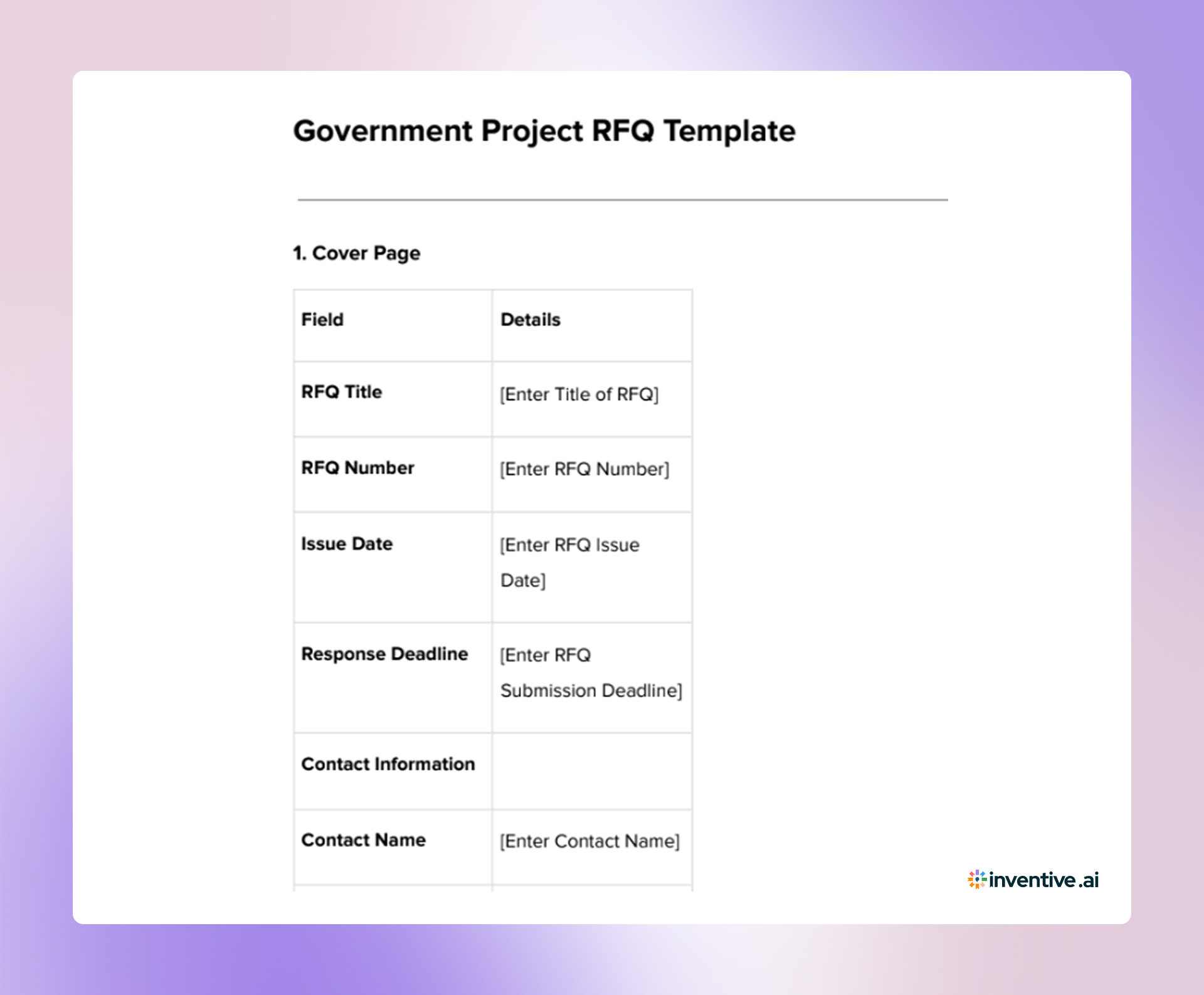
This RFQ template is structured to meet public procurement standards and regulatory requirements. It includes sections for compliance with government policies, required certifications, security clearances, and legal disclosures.
Procurement teams can use this format to ensure all statutory and documentation requirements are clearly defined before soliciting vendor bids.

2. Construction Project RFQ Template
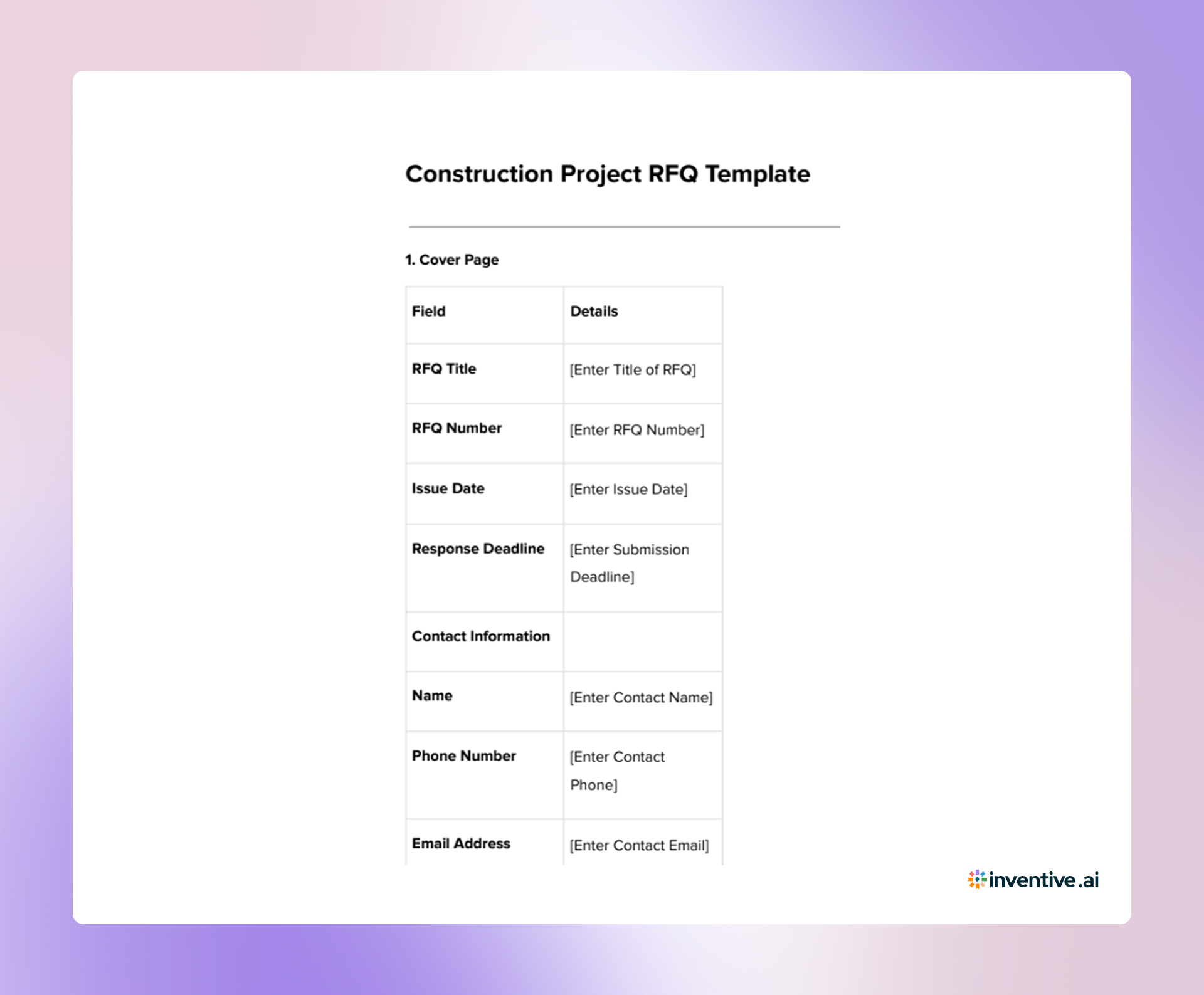
Designed for construction procurement, this RFQ template focuses on material specifications, labor requirements, project timelines, safety standards, and regulatory compliance.
It allows project managers and procurement teams to clearly outline technical specifications, health and safety obligations, and environmental standards to reduce ambiguity during vendor evaluation.

3. Manufacturing RFQ Template
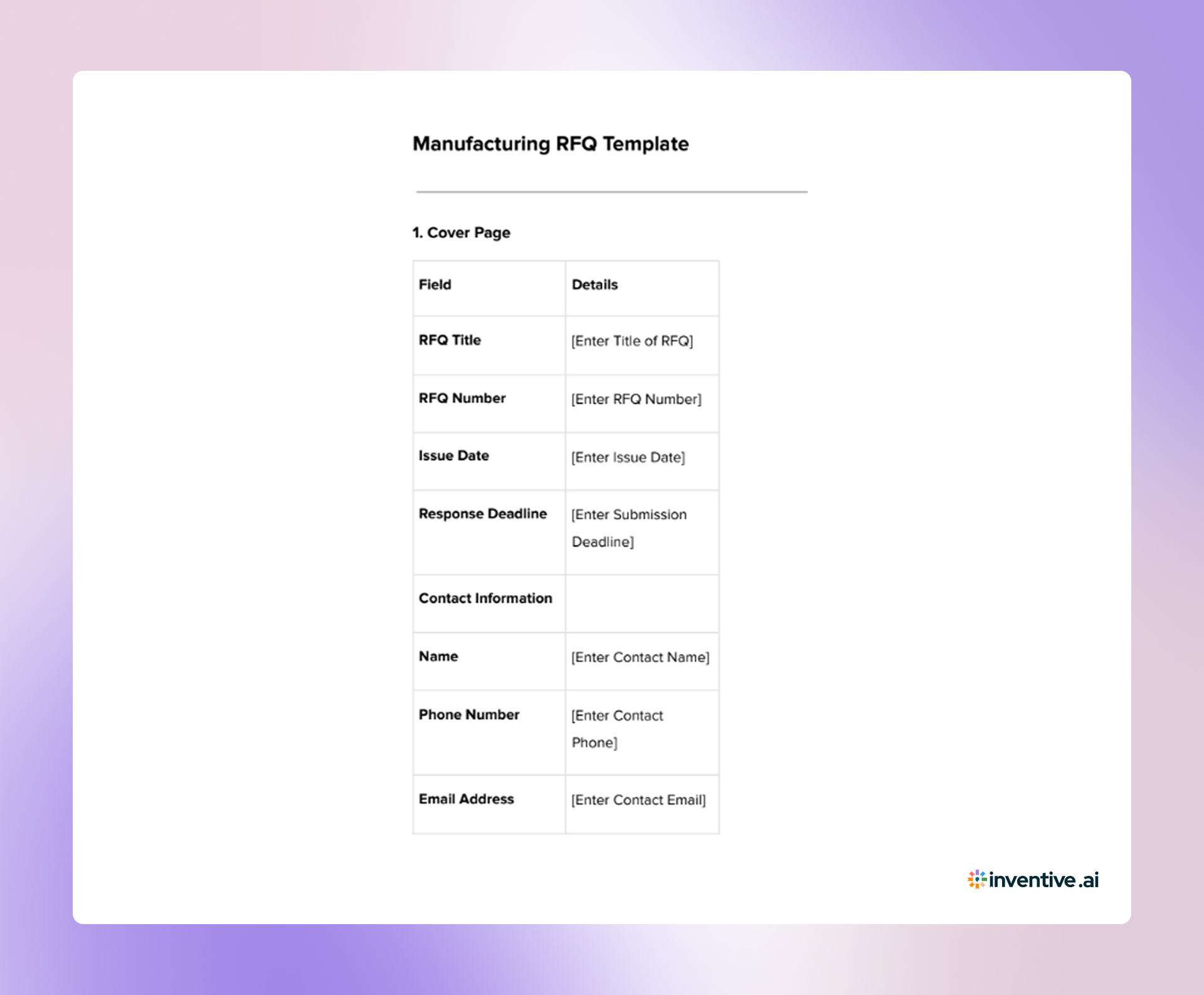
This RFQ template supports procurement for raw materials, machinery, or custom components. It includes detailed sections for quantity requirements, technical standards, quality expectations, and delivery schedules.
Manufacturing buyers can use this format to define production needs clearly and enable vendors to submit accurate, comparable quotes.

4. Nonprofit RFQ Template

Nonprofit organizations often operate within defined budgets and program objectives. This template helps them outline service requirements, budget constraints, project scope, and impact expectations.
It enables nonprofit procurement teams to communicate financial parameters and program goals clearly when requesting vendor quotes.

5. Freight RFQ Template
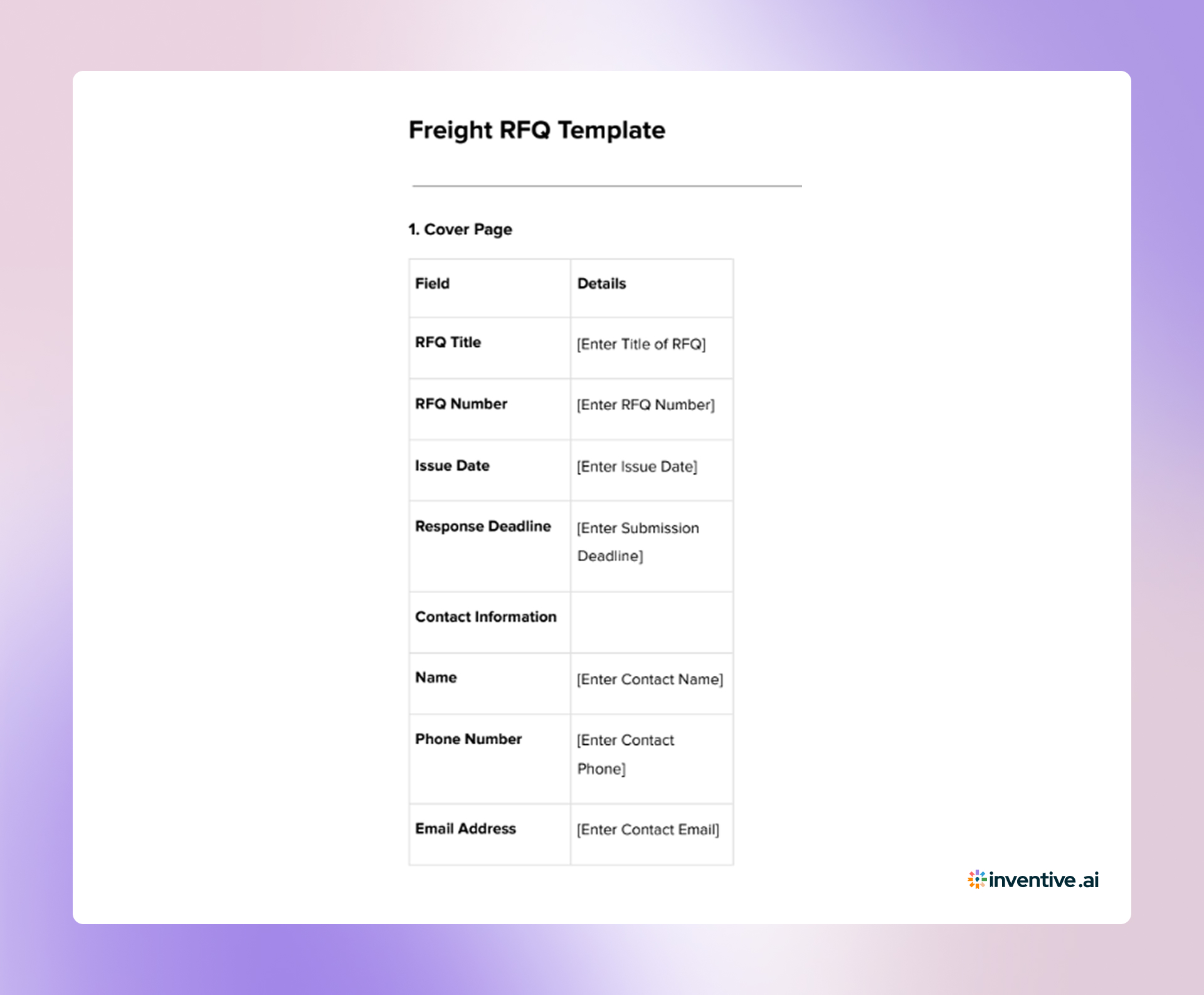
Used for logistics and transportation procurement, this RFQ template includes sections for freight routes, shipping terms, delivery schedules, warehousing needs, and tracking requirements.
It helps supply chain and operations teams specify transportation expectations clearly to receive accurate and competitive logistics quotations.

These RFQ templates are designed to help you respond effectively and efficiently to buyer requests across different industries. By using a tailored RFQ template, you ensure your responses are organized, compliant, and aligned with buyer expectations, increasing your chances of winning business.
Also Read: Top DDQ Automation Software of 2026: A Detailed Comparison
Structured RFQ Response Template (Word) to Improve Bid Outcomes (Template for Vendors)
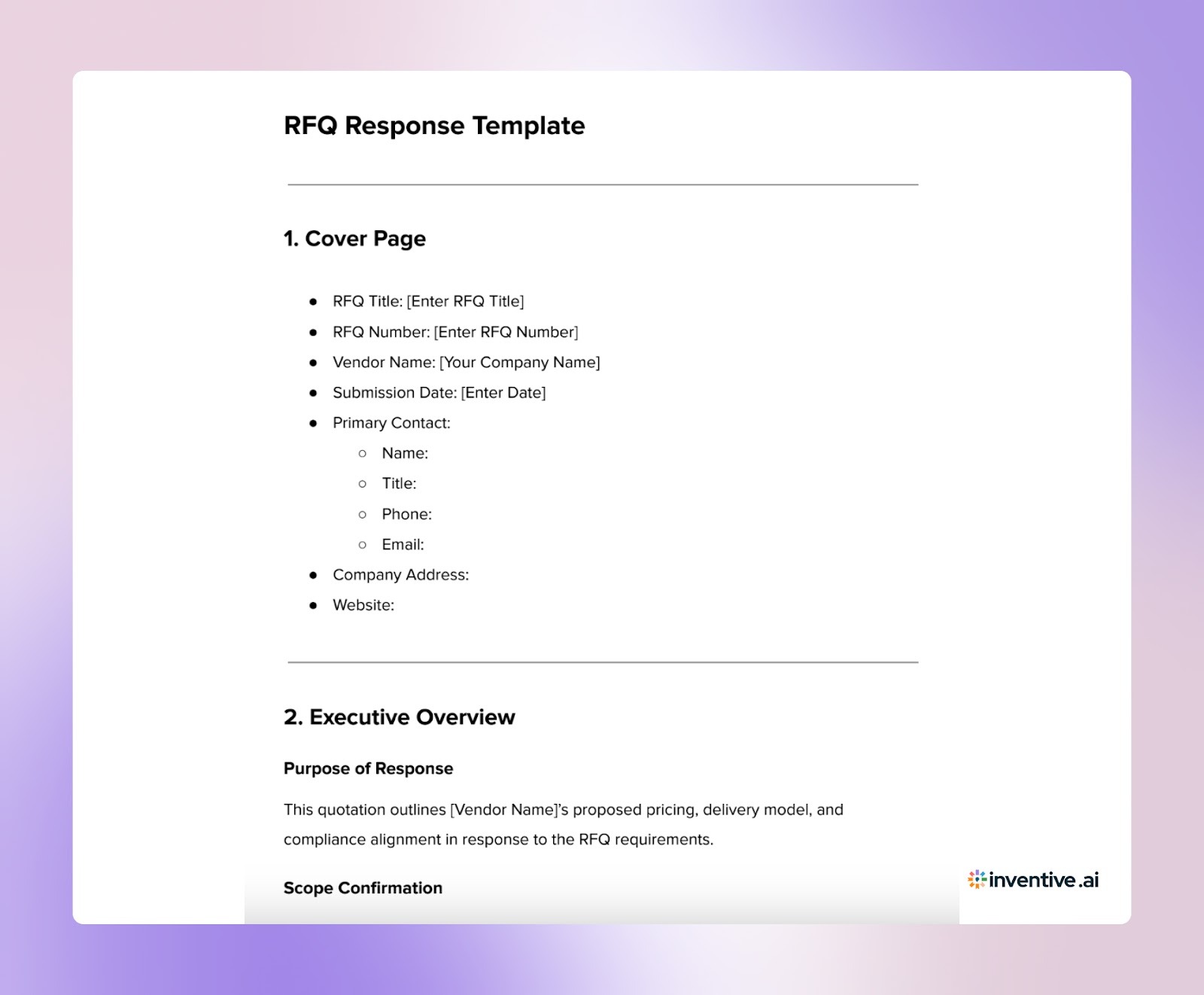

Why use an RFQ template?
An RFQ is a formal document issued by buyers to request pricing information from vendors for specific products or services. It is typically used when the buyer knows exactly what they need and is seeking competitive pricing.
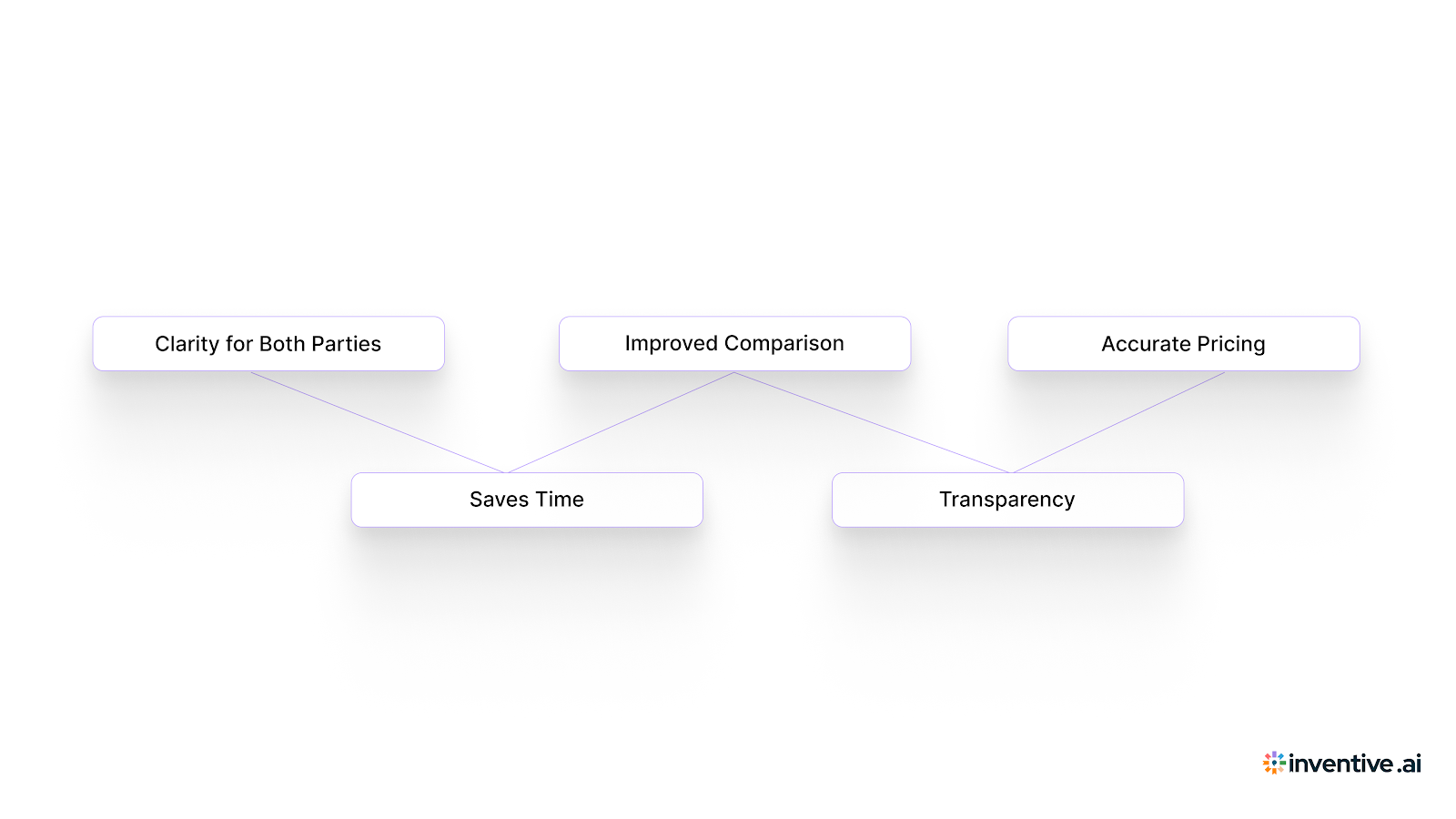
- Clarity for Both Parties: An RFQ template helps ensure that you and the buyer are aligned on expectations and requirements. By responding to the RFQ, you avoid confusion and can provide the exact details the buyer needs.
- Saves Time: Using an RFQ template allows you to quickly organize and submit your response, saving you time while ensuring you don’t miss any important details.
- Improved Comparison: RFQs allow buyers to compare quotes easily. By submitting a well-structured response, you ensure that your offering stands out and is easy for the buyer to evaluate.
- Transparency: The RFQ process ensures clear communication between you and the buyer. By responding clearly, you show that you are transparent about your pricing, terms, and capabilities, building trust with the buyer.
- Accurate Pricing: RFQs help you accurately reflect the cost of your products or services. With all requirements clearly laid out, you can provide precise pricing without any ambiguity.
Using an RFQ template helps you submit clear, complete, and easy-to-review quotes — improving credibility and increasing your chances of selection.
7 Tips to Customize Your RFQ Template for Better Results
To stand out in the RFQ process, you need to tailor your responses to fit the buyer’s specific needs. Here are seven simple tips to help you customize your RFQ template and increase your chances of success.
- Adjust the Introduction to Address the Buyer’s Needs: Start by customizing the introduction to highlight the buyer’s goals and needs. Use their language to show you understand what they’re looking for.
- Focus on the Most Relevant Solutions: Only include the solutions that match the buyer’s requirements. Keep it focused on what’s most important to them.
- Align Your Case Studies and References: Use case studies or references that are similar to the buyer’s industry or needs, showing that you’ve successfully handled similar challenges.
- Modify Your Approach Based on the Buyer’s Timeline: Make sure your solution fits with the buyer’s timeline. Be clear about how you can meet their deadlines and deliver on time.
- Highlight Key Differentiators Based on Their Needs: Point out what sets you apart from other vendors, especially in areas the buyer cares most about, like cost, efficiency, or support.
- Tailor Your Pricing to the Buyer’s Requirements: Adjust your pricing to match the buyer’s needs. If they’re looking for long-term value, offer flexible pricing or discounts to make your proposal more appealing.
- Ensure Your Response is Clear and Concise: Avoid unnecessary details. Keep your response short, clear, and to the point so the buyer can quickly understand the value you offer.
Customizing your RFQ template helps ensure your response is relevant and focused on the buyer’s needs. By following these tips, you can submit stronger proposals and increase your chances of winning the business.
Maximize Your RFQ Success with Inventive AI
Inventive AI offers a powerful solution to simplify your RFQ responses, ensuring faster, more accurate, and higher-quality submissions. With AI-driven automation, your responses will be more aligned with buyer expectations, helping you secure more business and outperform competitors.
2× Higher Quality Responses
Automate your RFQ responses, improving accuracy and ensuring that your answers are highly relevant and aligned with the buyer’s needs.
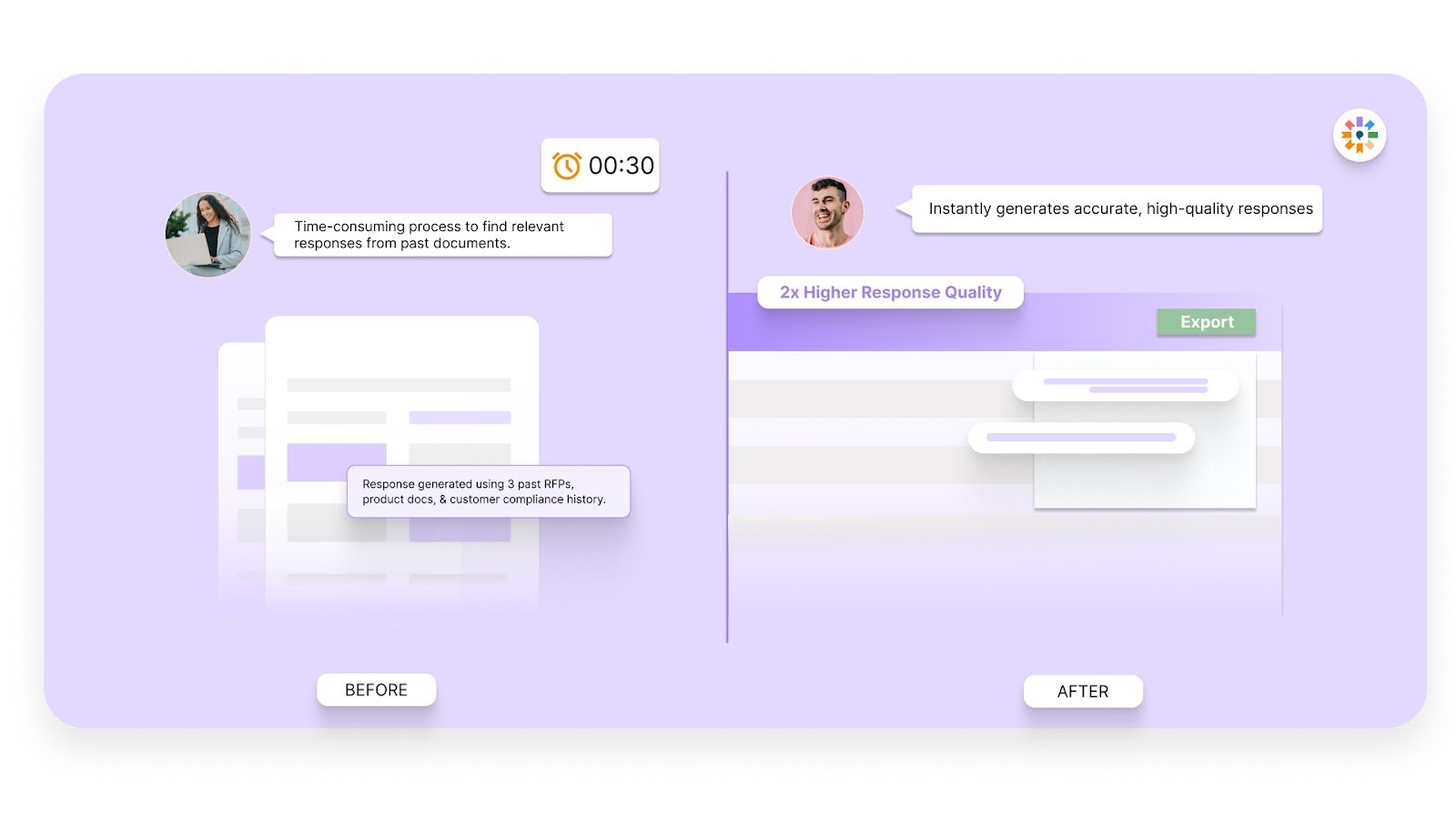
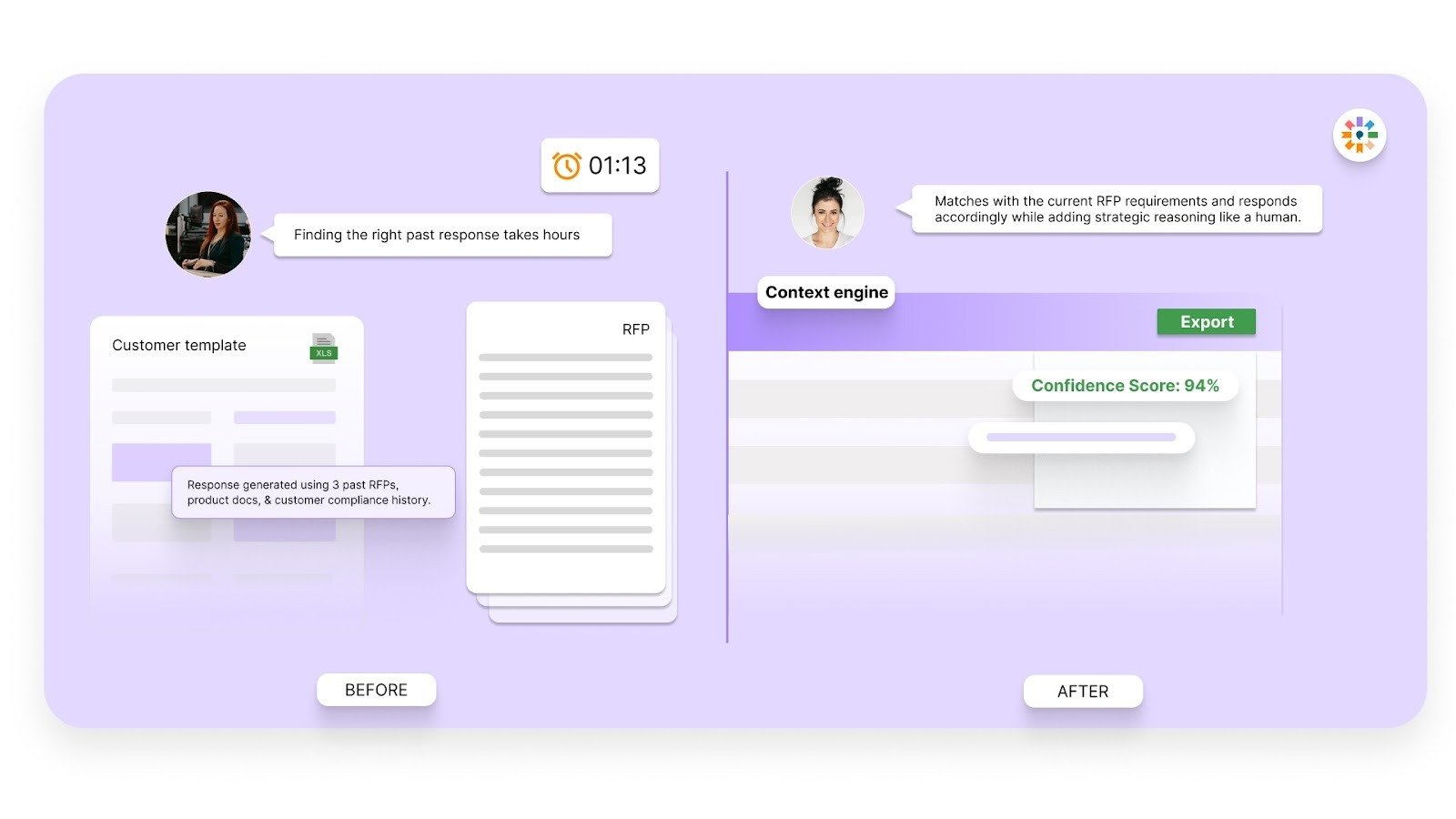
Context Engine
Use data to ensure your responses are precisely tailored to the buyer’s requirements, increasing your chances of success.
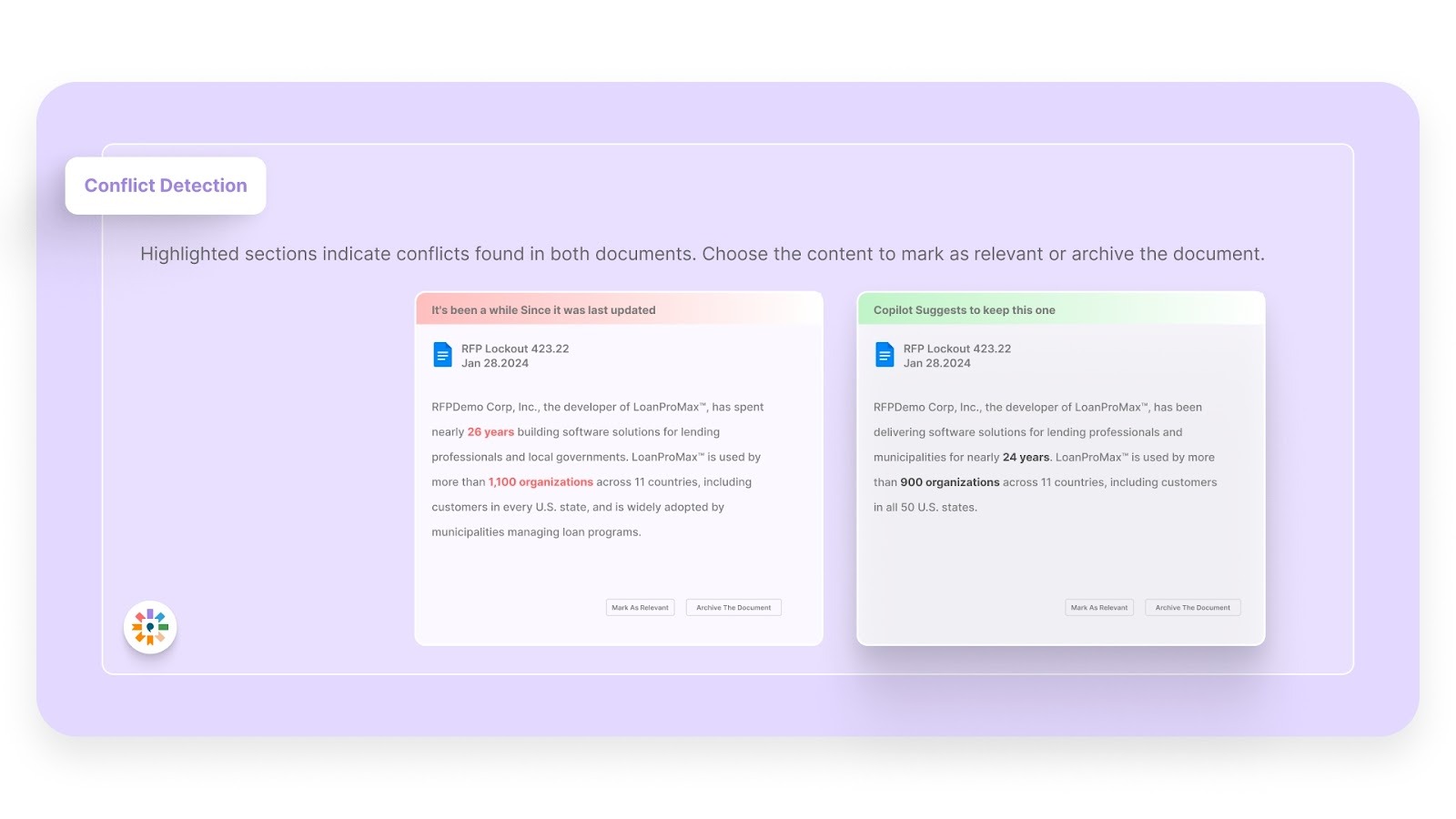
Conflict Detection
Instantly identify and flag any inconsistencies in your responses, ensuring error-free, reliable proposals every time.
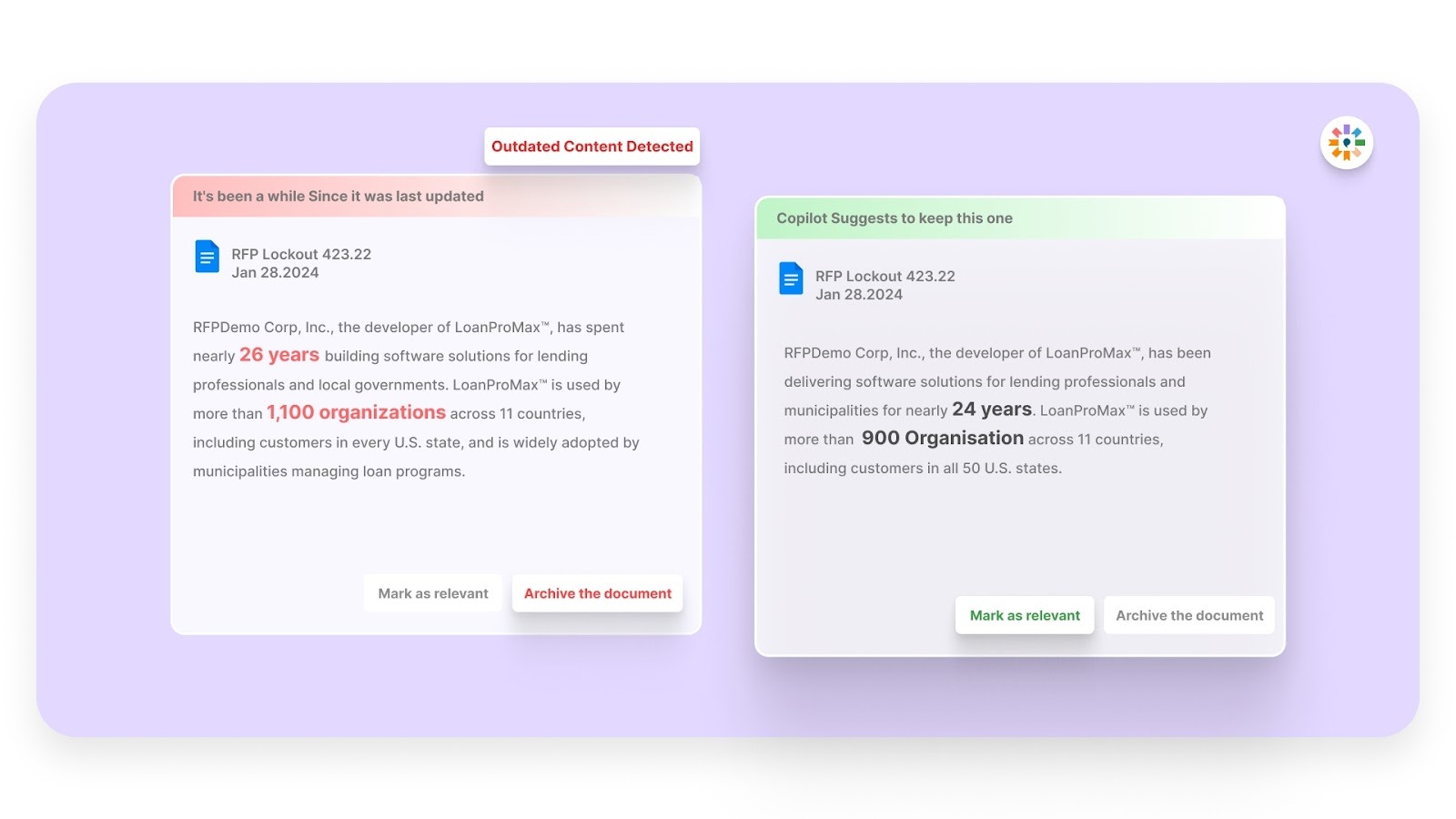
Outdated Content Detection
Stay ahead by automatically flagging outdated content, ensuring your responses are always current and relevant.
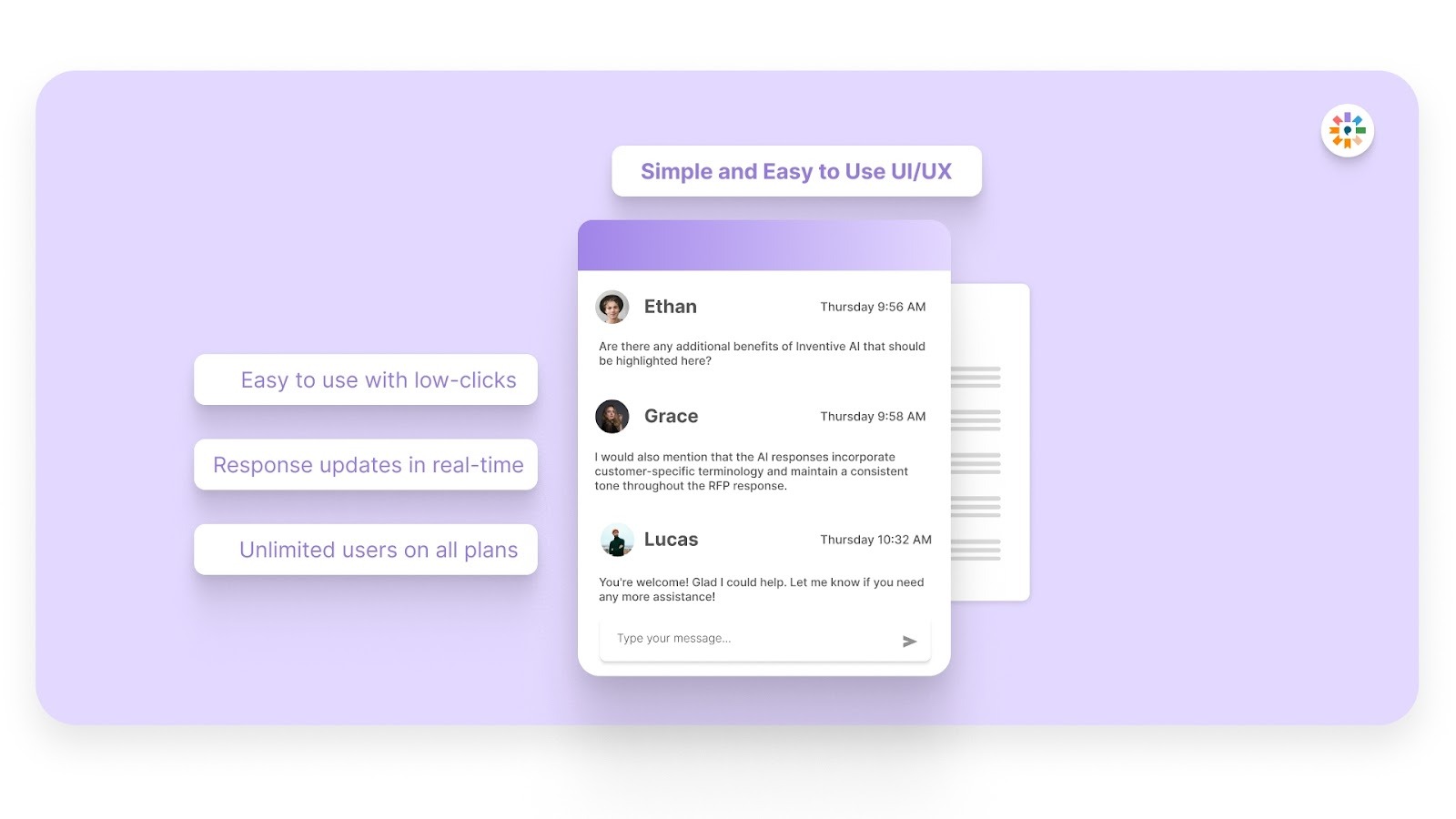
Simple, Easy-to-Use Interface
With an intuitive design, anyone on your team can easily use Inventive AI, improving response quality and speed without needing technical expertise.
By integrating Inventive AI into your RFQ process, you save time and ensure that your responses are faster, more accurate, and fully aligned with buyer expectations.
Frequently Asked Questions (FAQs)
1. What is the difference between an RFQ, RFI, and RFP?
An RFI (Request for Information) is used to gather general information from vendors about their capabilities. An RFQ (Request for Quote) is more specific and focuses on getting pricing information for defined products or services. An RFP (Request for Proposal) is the most detailed request, asking vendors to submit comprehensive proposals that include pricing, timelines, and methodologies.
2. How can I ensure my RFQ response stands out to buyers?
To stand out, ensure that your response is clear, concise, and tailored to the buyer’s specific needs. Highlight your strengths, provide relevant case studies, and make sure your pricing is competitive. Show how your solution directly addresses the buyer’s challenges and goals.
3. What information should I include in my RFQ response to make it competitive?
A competitive RFQ response should include accurate pricing, detailed product/service descriptions, a clear delivery schedule, and any additional value-added services. It’s also important to include references, testimonials, or case studies that demonstrate your expertise and past success in similar projects.
.avif)





.png)