RFQ RFP Templates + Vendor Proposal and Quote Formats

In most procurement processes, RFP and RFQ do not compete with each other. They appear at different stages of the sourcing journey. One helps buyers understand how vendors will approach the problem. The other helps them compare supplier pricing once the scope is clear.
Getting that sequence right is important for both sides of the process. Buyers need the right document to collect the information required for evaluation. Vendors need clarity on whether they are expected to propose a solution or simply submit a quote. When this distinction is unclear, buyers receive proposals that cannot be compared, and vendors respond with information that was never requested.
This guide provides structured RFP and RFQ templates for buyers and vendors. Buyers can use these formats to request solution proposals or supplier quotes at the appropriate stage of procurement, while vendors can structure their responses to align with the intent of each document.
RFP Templates for Buyers to Structure Vendor Proposal Requests
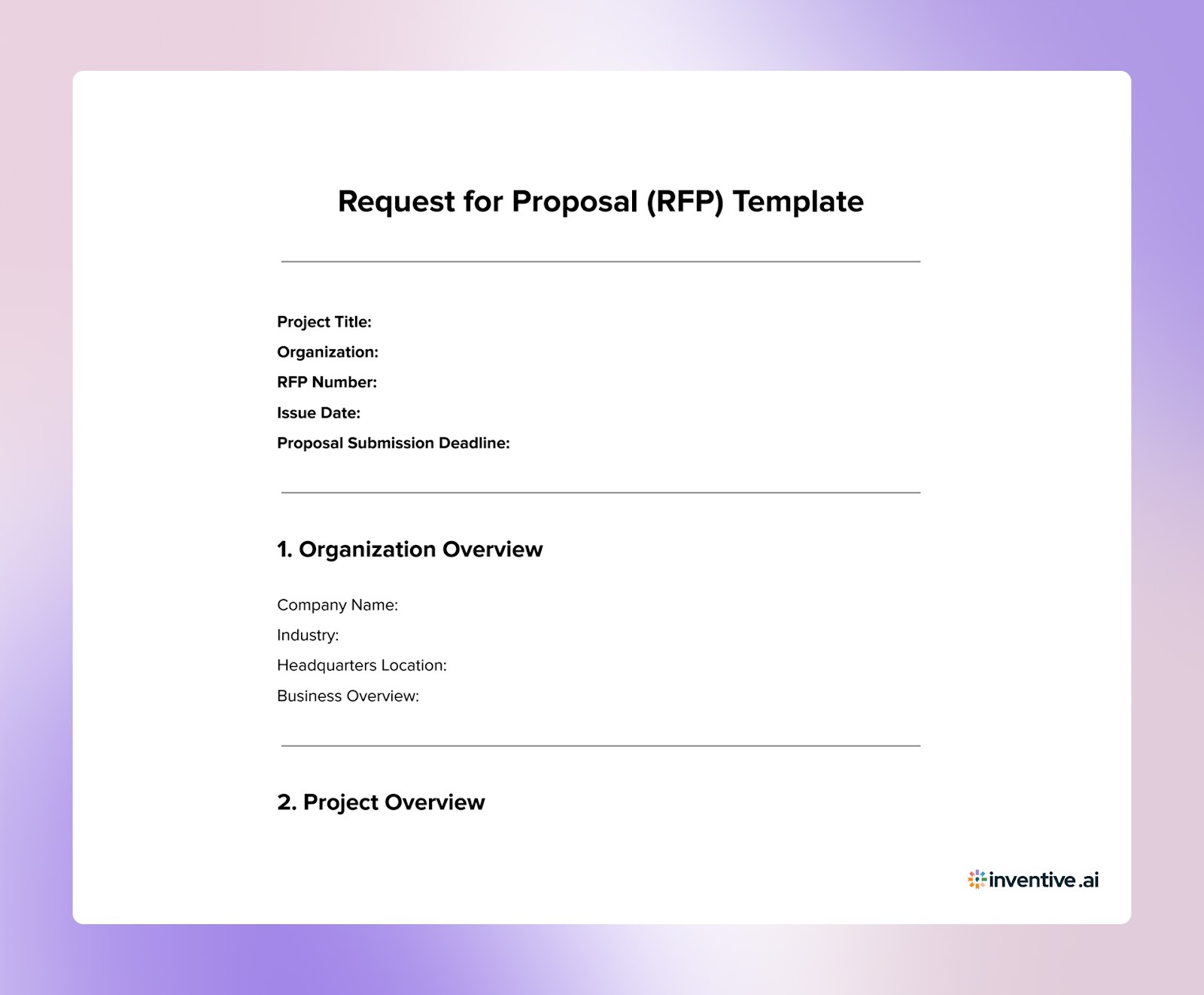
An RFP only works if vendors respond using comparable structures. When the document lacks clear sections or asks for information in inconsistent formats, proposals quickly become difficult to evaluate. Some vendors describe technical solutions, others focus on pricing, and procurement teams spend time aligning responses instead of assessing them.
Using a structured RFP template prevents this problem by defining exactly what information vendors must provide.

What to Ask in an RFP
- Project Overview: Provide the business context for the procurement. Describe the organization, the project background, and the problem the buyer wants to solve so vendors understand the operational environment.
- Scope of Work: Define the services, deliverables, or outcomes expected from the vendor. This section should outline the responsibilities the selected vendor will take on during the project.
- Technical Requirements: List the functional and technical specifications vendors must meet. This may include system integrations, security requirements, compliance standards, or product capabilities.
- Implementation Timeline: Outline the expected project schedule, including major phases, milestone dates, and delivery deadlines. Vendors use this section to plan staffing and project execution.
- Vendor Qualifications: Specify the experience, certifications, or industry expertise vendors must demonstrate. This helps buyers filter suppliers with relevant capabilities.
- Pricing Structure: Request a clear cost breakdown for services, products, or implementation activities. Structured pricing formats make vendor proposals easier to compare.
- Evaluation Criteria: Explain how proposals will be assessed. Buyers may evaluate submissions based on factors such as solution quality, technical capability, delivery approach, and cost.
RFQ Templates to Collect Comparable Supplier Pricing Quotes (for Buyers)
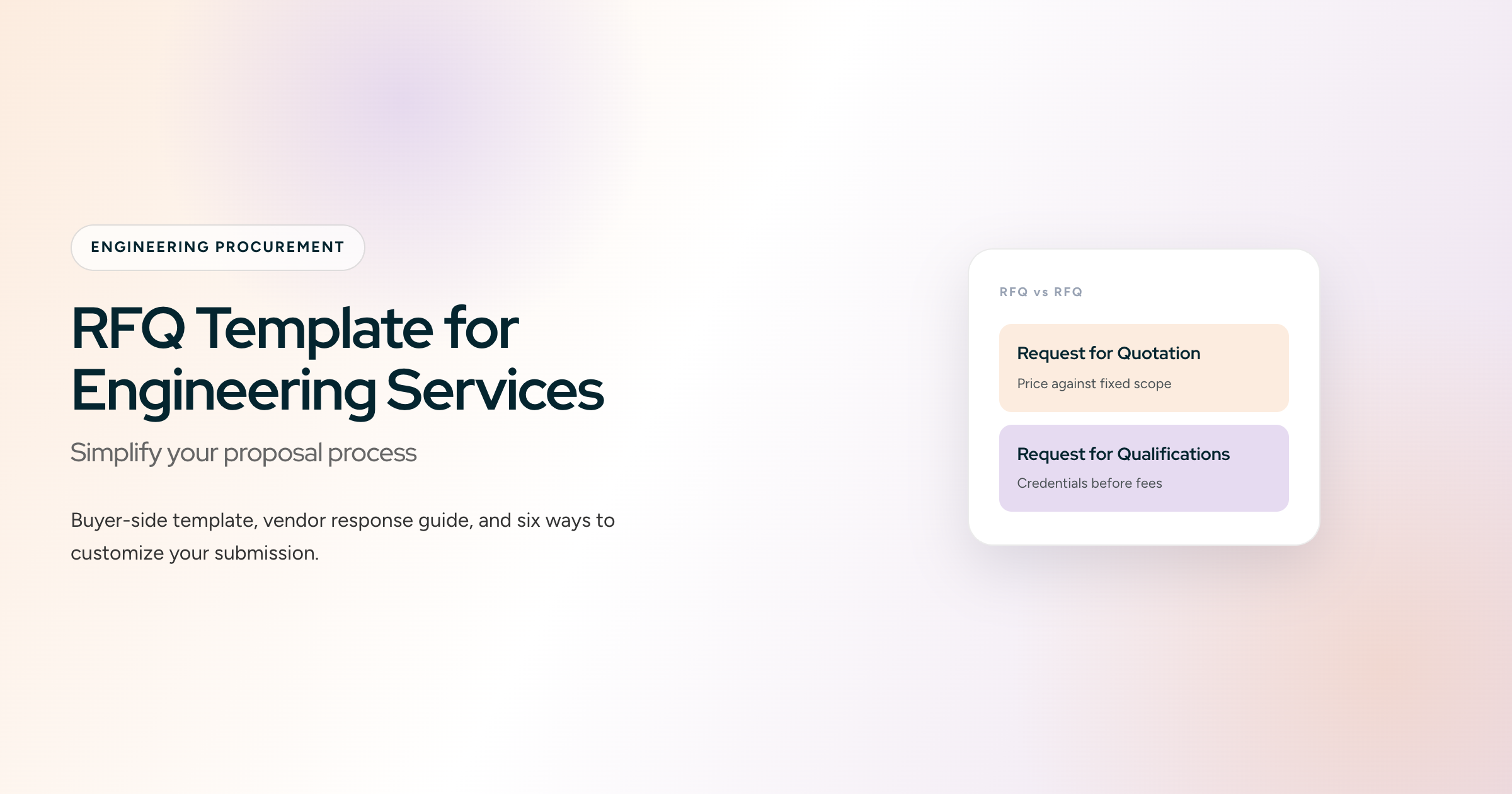
RFQs are issued when buyers already know what they need and want suppliers to submit pricing based on defined specifications. A structured RFQ ensures vendors quote using the same format, making supplier pricing easier to compare during vendor selection.
The template below can be used for RFQ documents, so suppliers submit consistent price quotations.
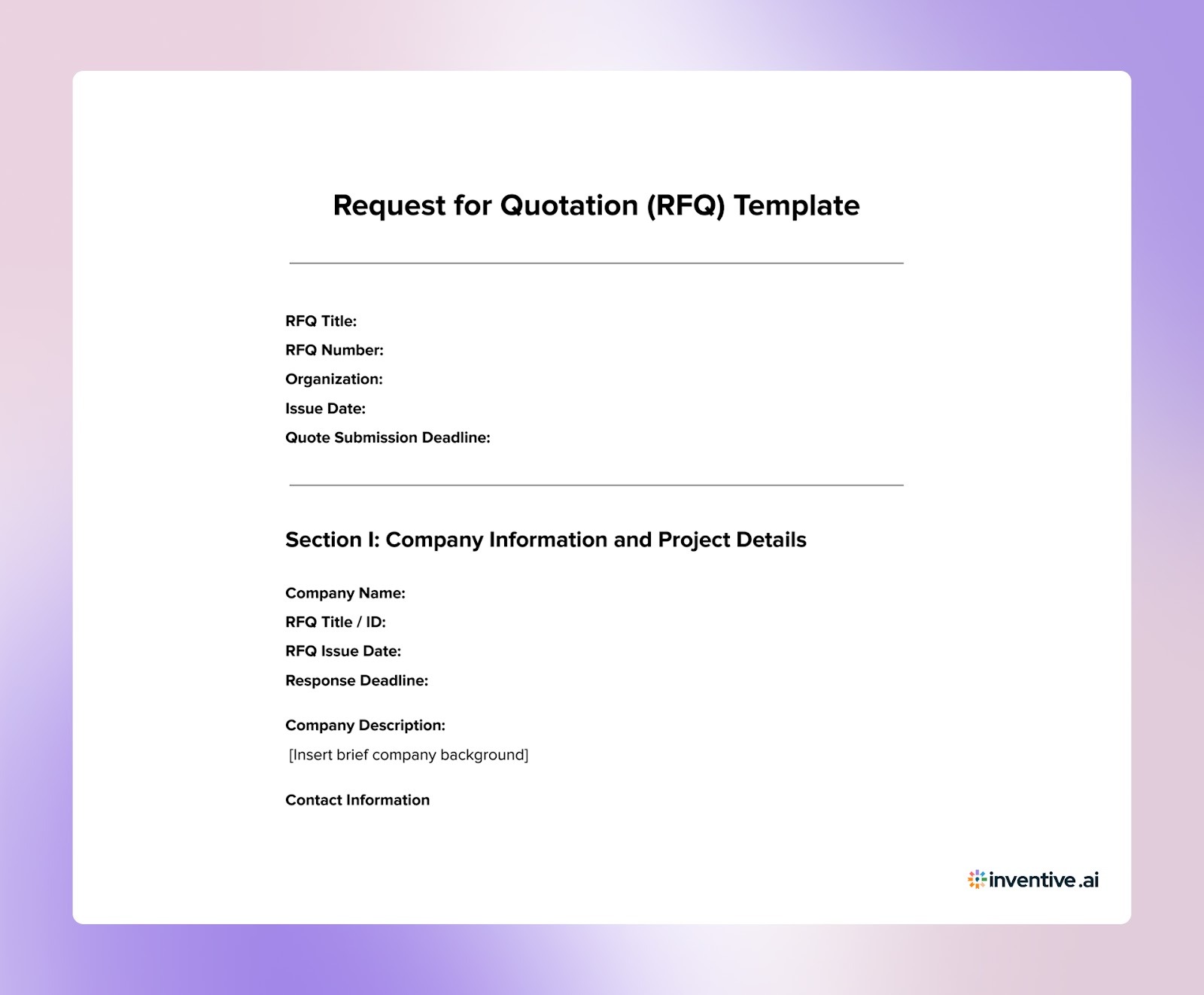

What to Ask in an RFQ
- Company Information: Organization name, RFQ title, issue date, response deadline, and primary contact information.
- Project Description: Brief overview of the procurement requirement and the objectives of the purchase.
- Product or Service Specifications: Detailed description of the goods or services suppliers are expected to quote for.
- Quantity Requirements: Number of units required or service duration.
- Delivery Requirements: Delivery schedule, logistics expectations, and delivery location.
- Pricing Table: Structured pricing format so all suppliers submit quotes using the same fields.
- Selection Criteria: Factors used to evaluate quotes, such as price competitiveness, compliance with specifications, and delivery capability.
- Terms and Conditions: Legal requirements, payment terms, and contractual conditions.
If you are responding to an RFP or RFQ issued by a buyer, you can use the templates below to structure your response.
RFP Response Templates to Structure Proposal Submissions (for Vendors)
When responding to an RFP, vendors are expected to present their solution, delivery approach, and pricing in a format that procurement teams can evaluate consistently. Using a structured response template ensures proposals address the buyer’s requirements while keeping information organized for review.
The template below can be used by vendors to structure RFP proposal submissions.
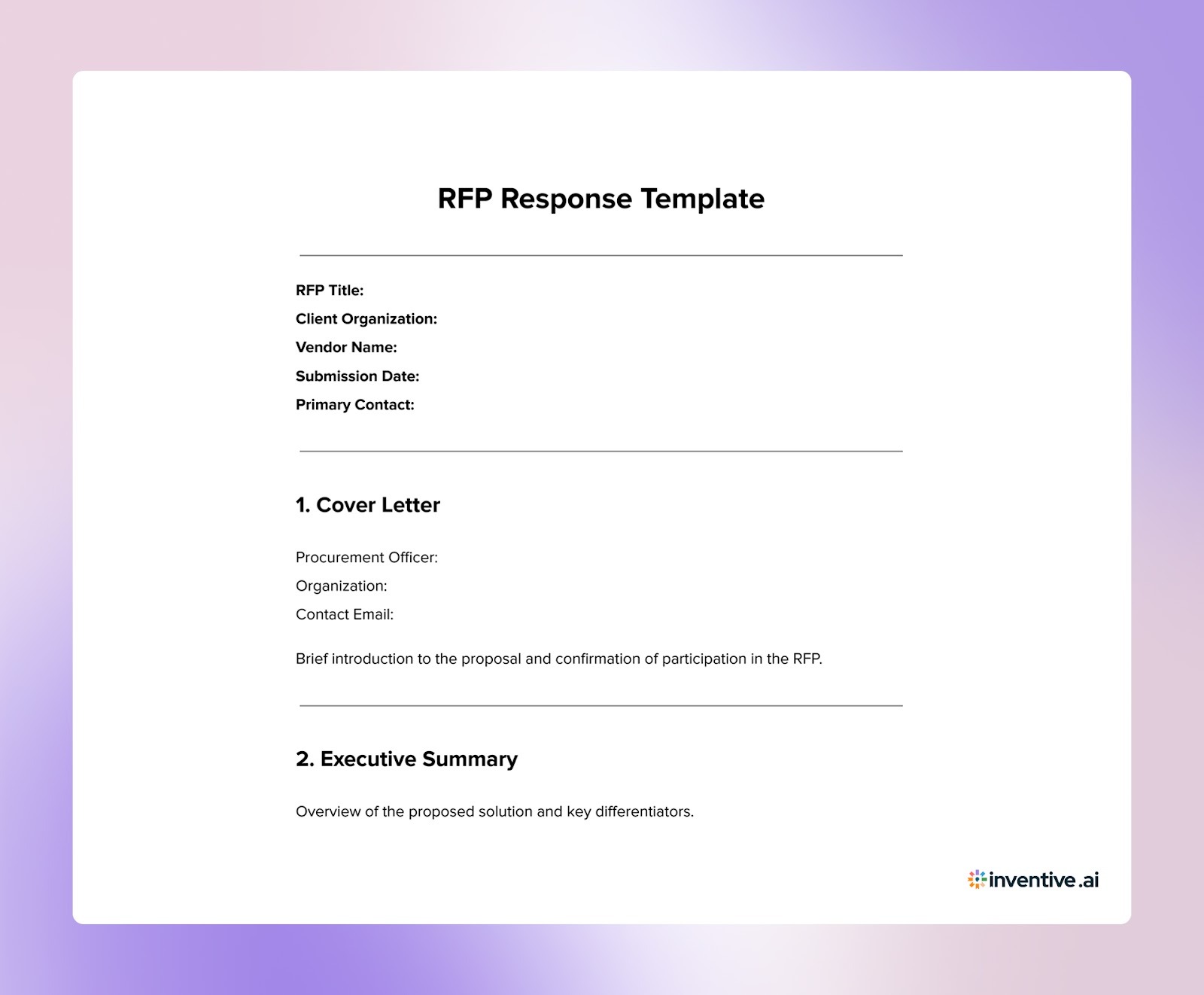

What to Include in an RFP Response
- Executive Summary: Brief overview of the proposed solution and how it addresses the buyer’s requirement.
- Proposed Solution: Description of the product, service, or methodology that will deliver the requested outcome.
- Technical Approach: System architecture, integrations, compliance standards, and technical capabilities relevant to the project.
- Implementation Plan: Project phases, milestones, deployment steps, and delivery timeline.
- Project Team: Key personnel responsible for delivery, including roles, experience, and certifications.
- Relevant Experience: Case studies or past projects that demonstrate similar work delivered successfully.
- Pricing Proposal: Detailed breakdown of costs, including implementation, services, and ongoing support.
RFQ Response Templates to Submit Structured Supplier Quotes (for Vendors)
When responding to an RFQ, vendors are expected to provide pricing and delivery information in accordance with the buyer’s specifications. Unlike RFP responses, RFQ submissions focus on confirming product details, quoting prices, and outlining delivery or service terms.
The template below can be used by suppliers to structure RFQ responses so buyers can compare pricing quotes consistently.
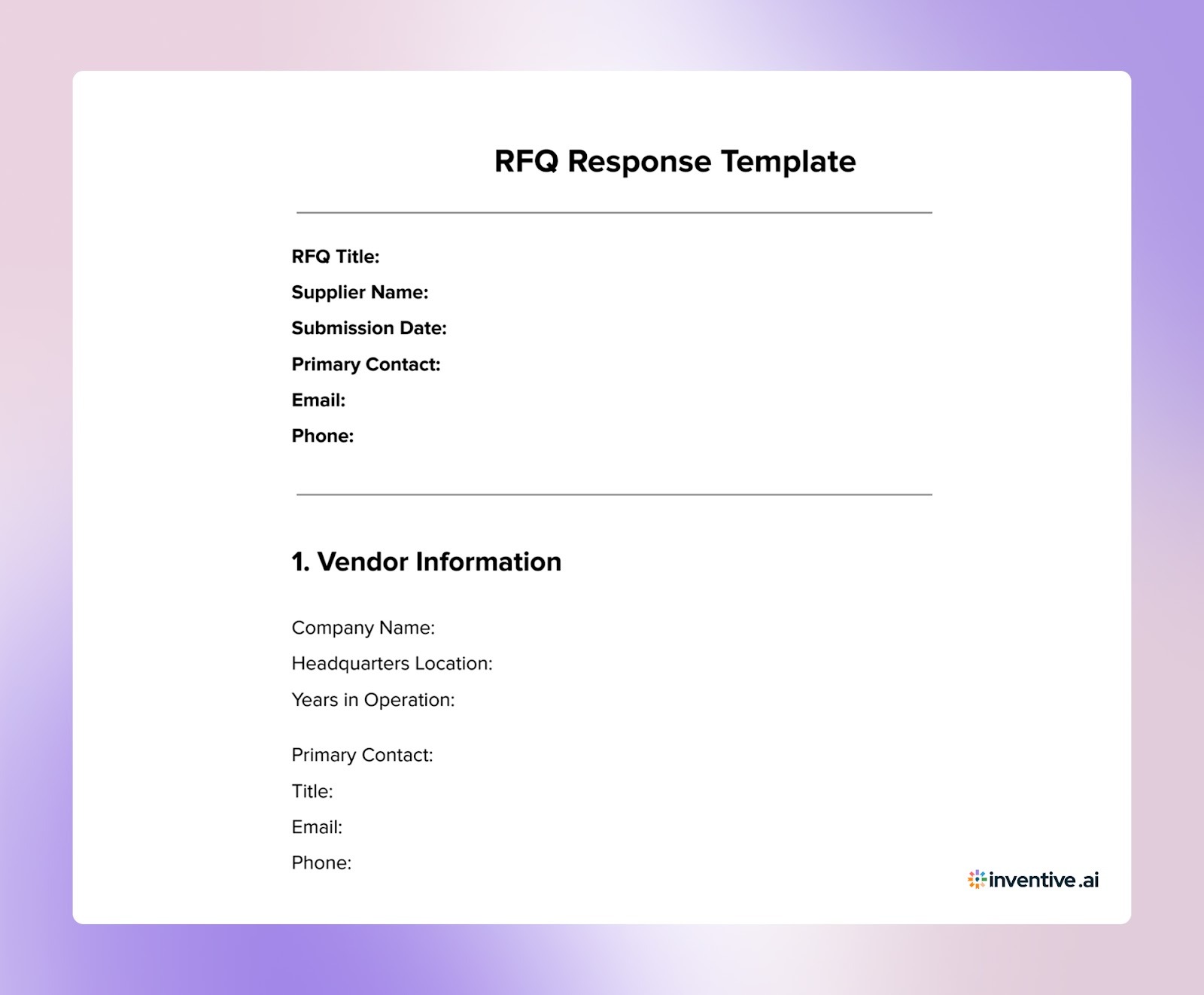

What to Include in an RFQ Response
- Vendor Information: Company name, contact details, and the supplier representative responsible for the quote.
- Product or Service Confirmation: Confirmation that the supplier can meet the specifications outlined in the RFQ.
- Technical Specifications: Product features, compliance standards, or service requirements relevant to the request.
- Pricing Table: Itemized quote including quantities, unit pricing, and total cost.
- Delivery Schedule: Estimated delivery timeline, production lead times, and shipping details.
- Warranty or Support Terms: Product warranty coverage or service support terms offered by the supplier.
- Payment Terms: Accepted payment conditions and invoicing requirements.
RFQ vs RFP Template Comparison to Identify When to Issue Each Document?
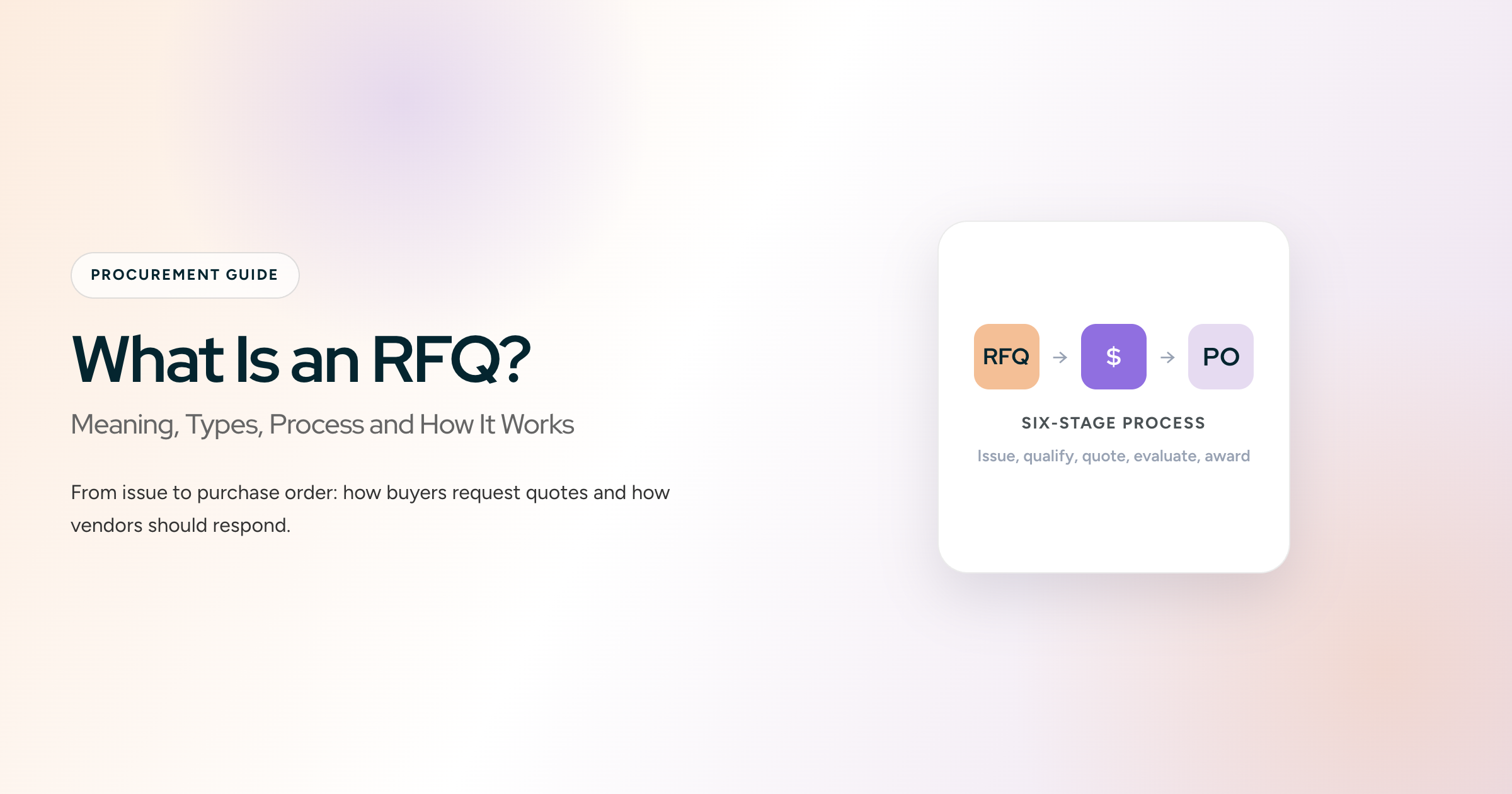
Buyers use RFPs and RFQs at different points in a sourcing process, depending on what decision needs to be made. An RFP helps evaluate how vendors plan to deliver a solution, while an RFQ focuses on collecting comparable pricing once the scope and specifications are already defined.
The table below shows how these two documents differ in terms of buyer objective, vendor response, and procurement stage.
Also read: RFI, RFP, and RFQ: Understanding the Key Differences
Generate Accurate RFP and RFQ Responses With Inventive AI
Inventive AI helps vendors generate structured proposal responses faster while maintaining accuracy across submissions. Instead of manually assembling answers, teams can generate context-aware responses aligned with buyer requirements.
Below are the key capabilities that improve vendor RFP and RFQ responses.
1. Context Engine
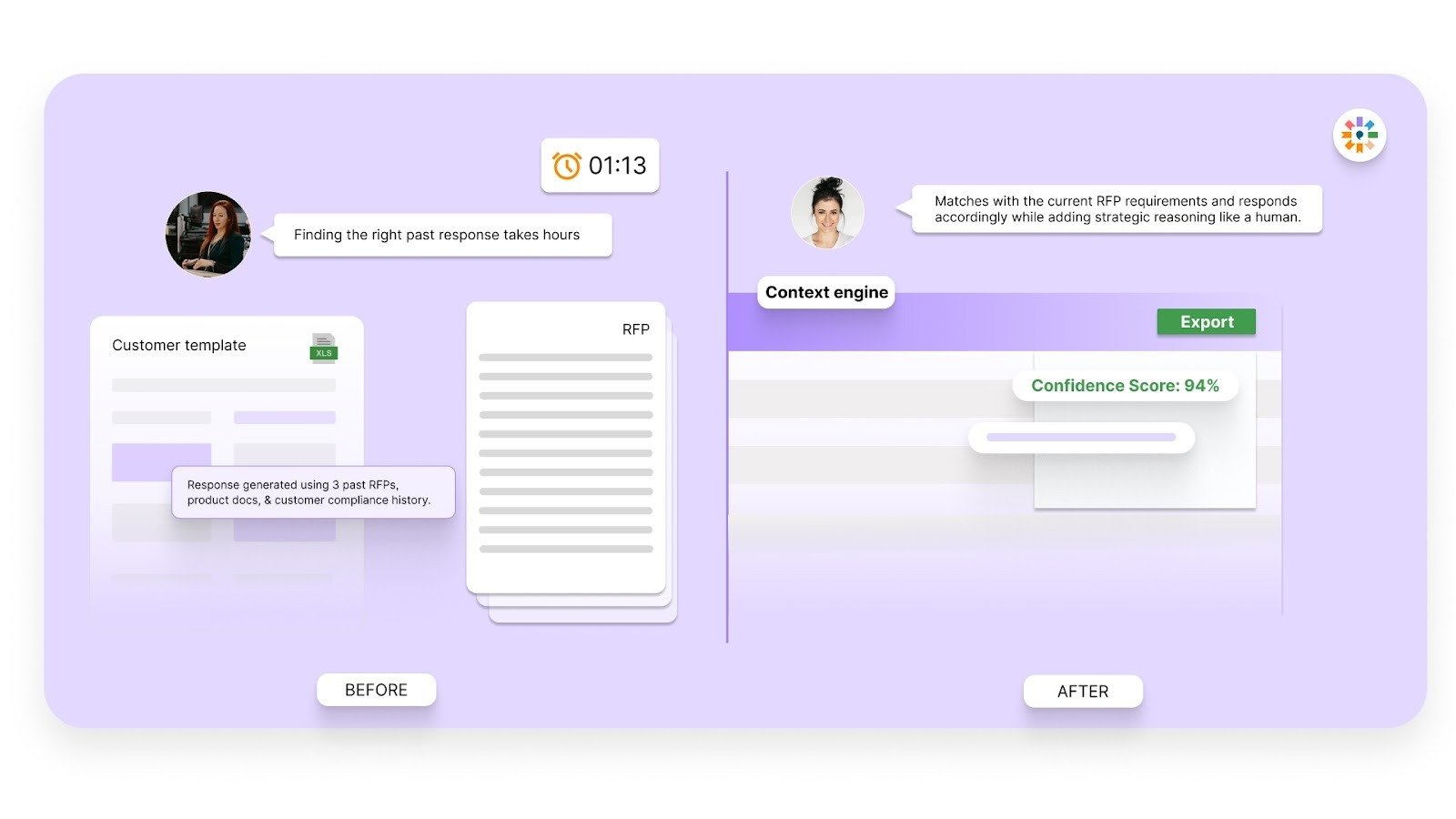
Most proposal tools rely on keyword retrieval that produces generic answers. Inventive AI analyzes the entire RFP document, including scope of work, technical requirements, and evaluation criteria.
This allows proposal teams to generate responses that directly address the buyer’s documented requirements instead of reusing boilerplate content.
2. Conflict Detection
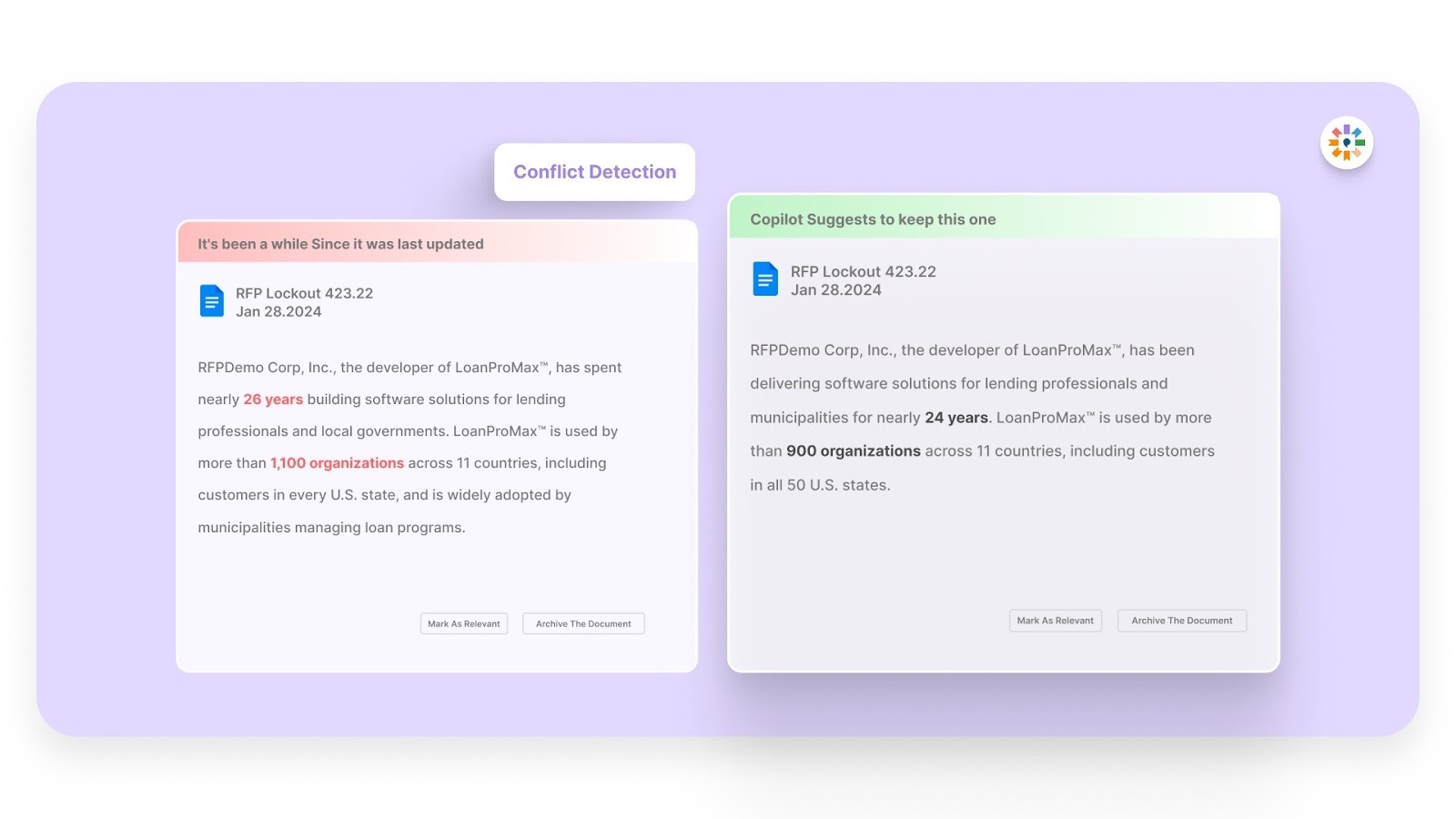
Large proposals often contain overlapping sections such as implementation timelines, staffing plans, and delivery commitments. Manual proposal assembly can introduce contradictions between these sections.
Inventive AI identifies conflicting responses across the proposal so teams can correct inconsistencies before submission.
3. Outdated Content Detection
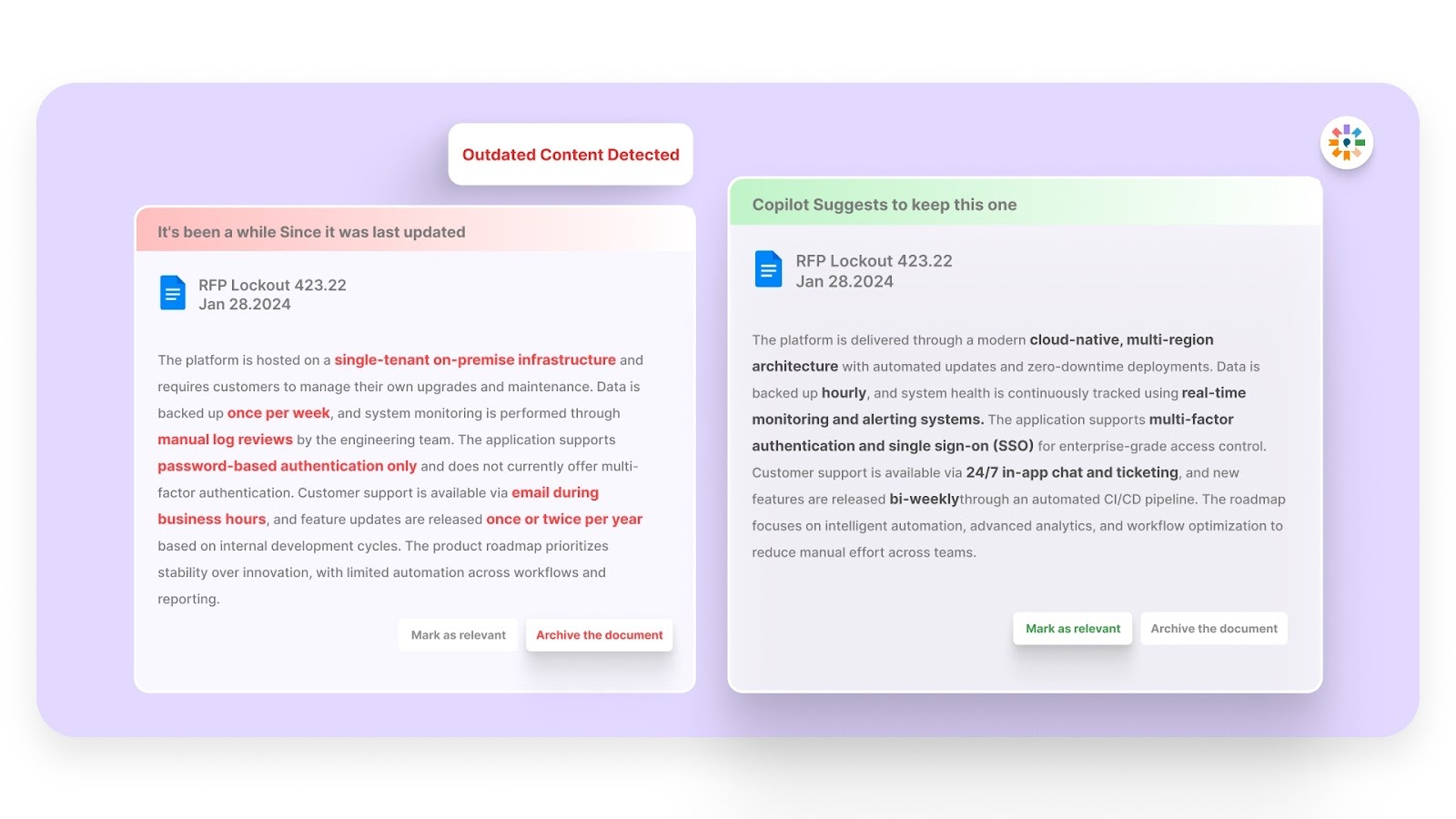
Proposal libraries frequently contain responses that reference outdated certifications, product capabilities, or past project examples.
Inventive AI scans proposal content and flags outdated information before it appears in the submission, ensuring vendors respond with current capabilities and documentation.
4. 2X Higher Quality Responses
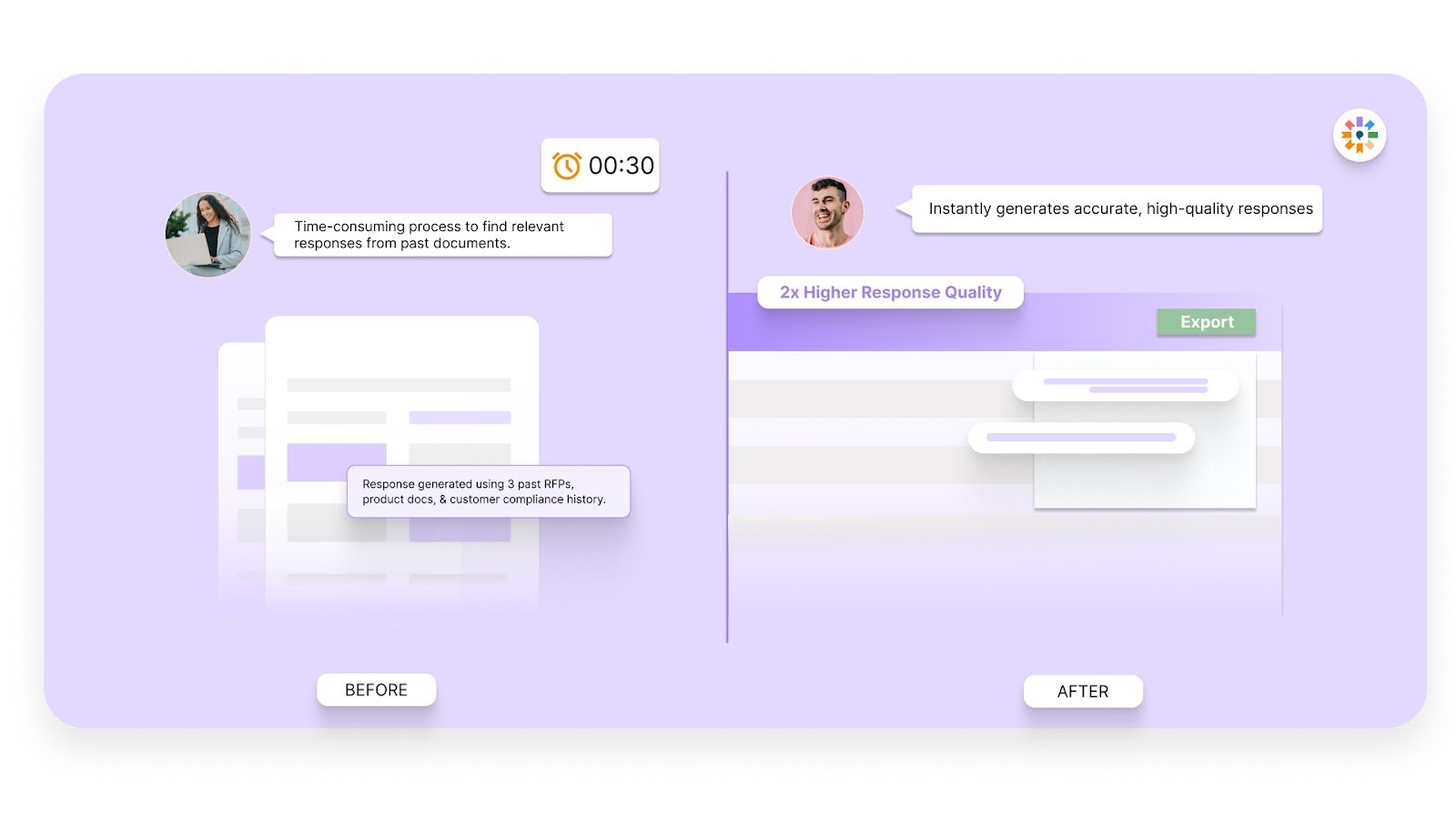
Inventive AI’s multi-agent system analyzes buyer requirements and generates responses with greater clarity and completeness.
The platform produces answers that directly address project scope, solution approach, and delivery plans, improving proposal quality during evaluation.
5. Narrative Proposal Generation
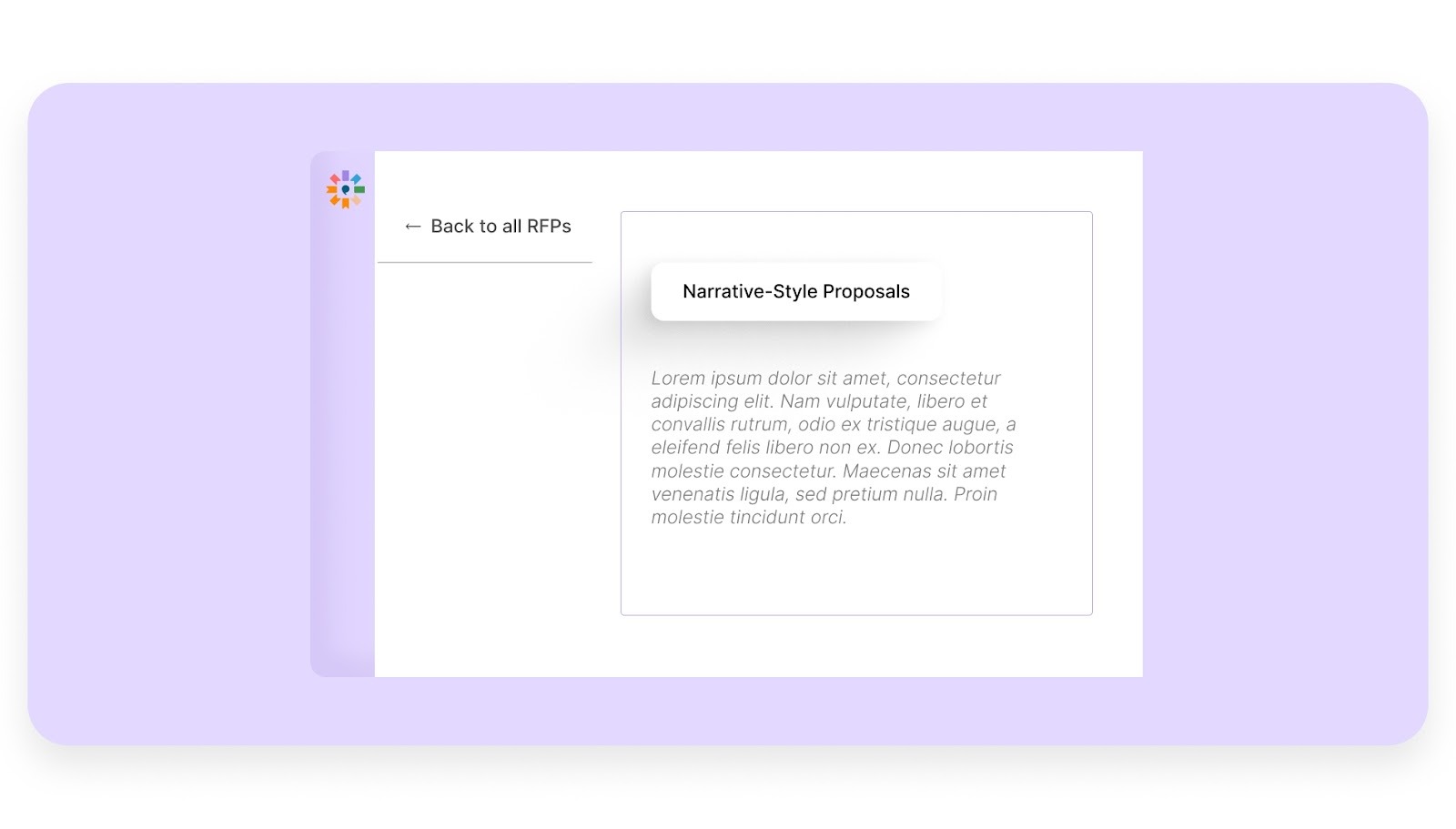
Many RFPs require narrative sections such as executive summaries, solution approaches, and implementation methodologies.
Inventive AI generates structured narrative responses aligned with buyer requirements, allowing vendors to produce complete proposals without drafting each section manually.
6. Simple and Easy-to-Use Interface
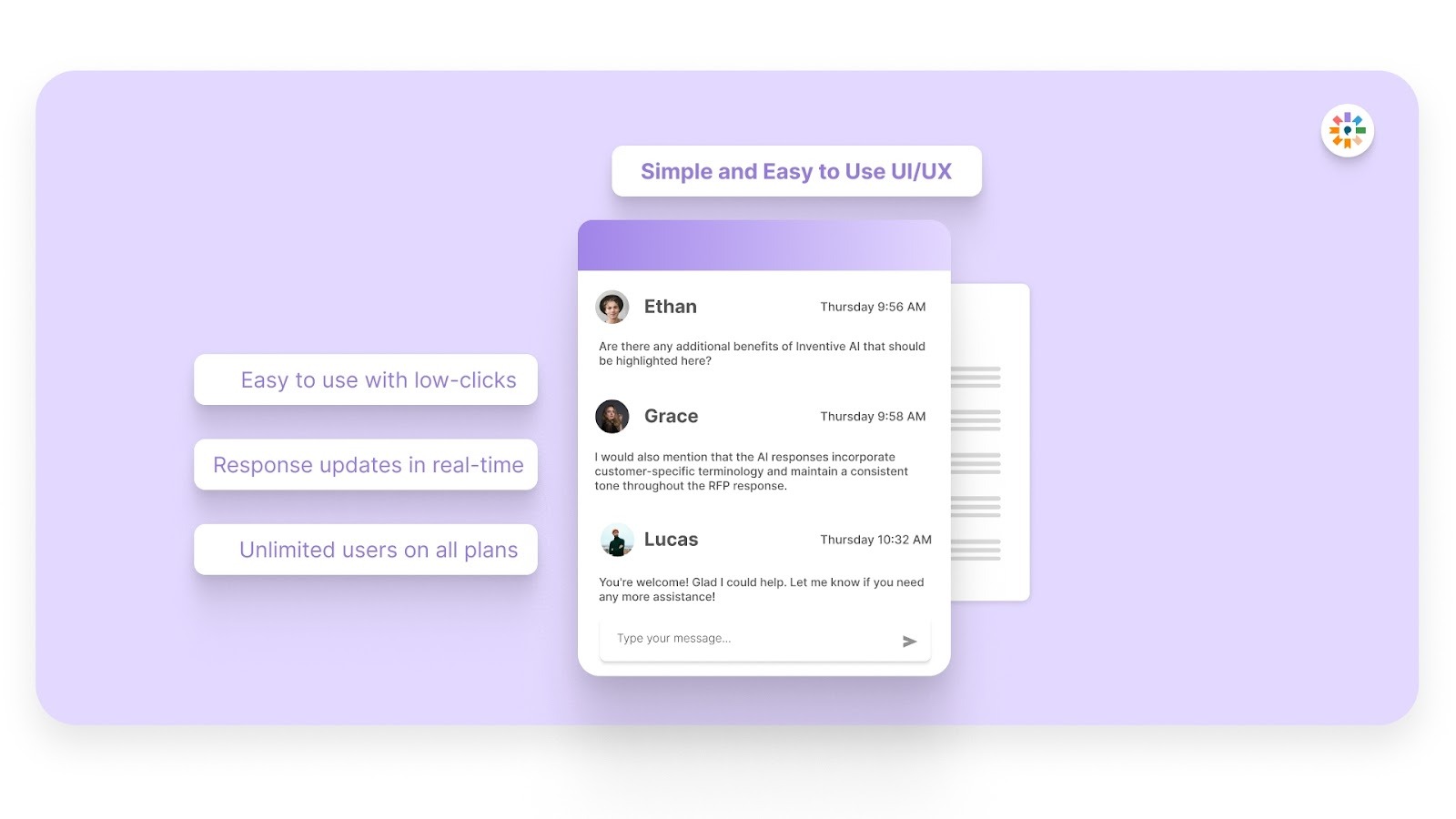
Proposal teams often coordinate responses across sales, product, engineering, and legal teams.
Inventive AI provides a simple interface that allows teams to generate responses, review proposal content, and refine submissions without complex workflows.
FAQs About RFQ and RFP Templates
1. When should a buyer issue an RFQ instead of an RFP?
Buyers typically issue an RFQ when product or service specifications are already defined, and the primary goal is to compare supplier pricing. If the organization still needs vendors to propose different solution approaches or implementation strategies, an RFP is usually the better starting document.
2. What information do vendors need before responding to an RFQ?
Vendors generally need clear product specifications, quantity requirements, delivery expectations, and pricing format instructions. Without these details, suppliers may submit quotes using different assumptions, making price comparisons difficult for procurement teams.
3. Why do procurement teams standardize RFP and RFQ templates?
Standardized templates ensure vendors submit proposals and quotes using the same structure. This helps buyers compare responses more efficiently and reduces the time required to review proposals during vendor evaluation.
4. How do vendors manage large volumes of RFP responses?
Many organizations maintain proposal libraries that store reusable answers, technical documentation, and case studies. Proposal management software and AI-powered response tools help vendors retrieve relevant information quickly and generate structured responses aligned with buyer requirements.
.avif)




.png)